Article

Iron-Coated Pine Bark as Biosorbents for Textile Wastewater Treatment: A Sustainable Approach

by
Pedro Gonçalves
,
Ariana Pintor
,
Olivia S. G. P. Soares
,
Manuel F. R. Pereira
,
Cidália M. S. Botelho
* and
Ricardo M. Ferreira
*
LSRE-LCM, ALiCE, Faculty of Engineering, University of Porto, Rua Dr. Roberto Frias, 4200-465 Porto, Portugal
*
Authors to whom correspondence should be addressed.
Water 2025, 17(24), 3591; https://doi.org/10.3390/w17243591
Submission received: 18 November 2025 / Revised: 12 December 2025 / Accepted: 16 December 2025 / Published: 18 December 2025
(This article belongs to the Section Wastewater Treatment and Reuse)

Abstract

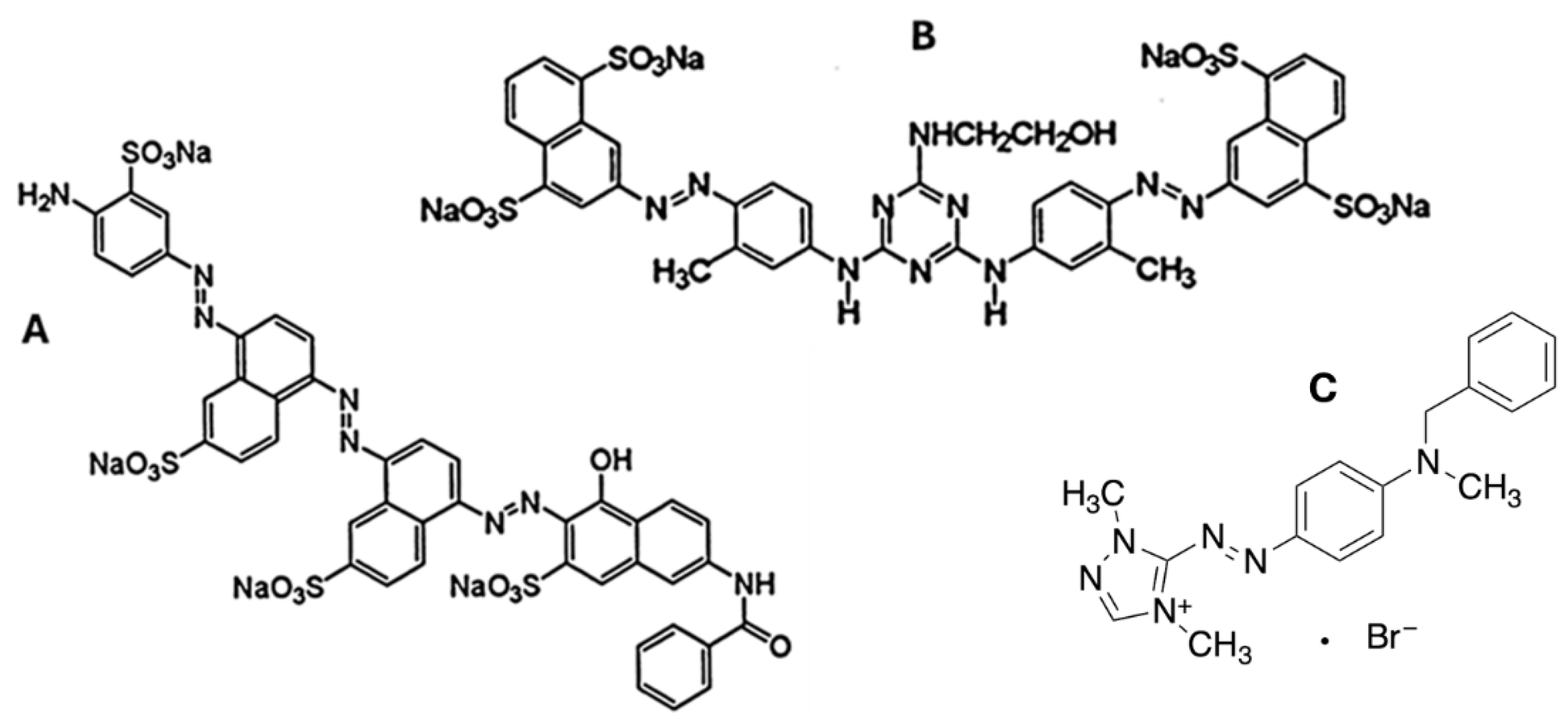
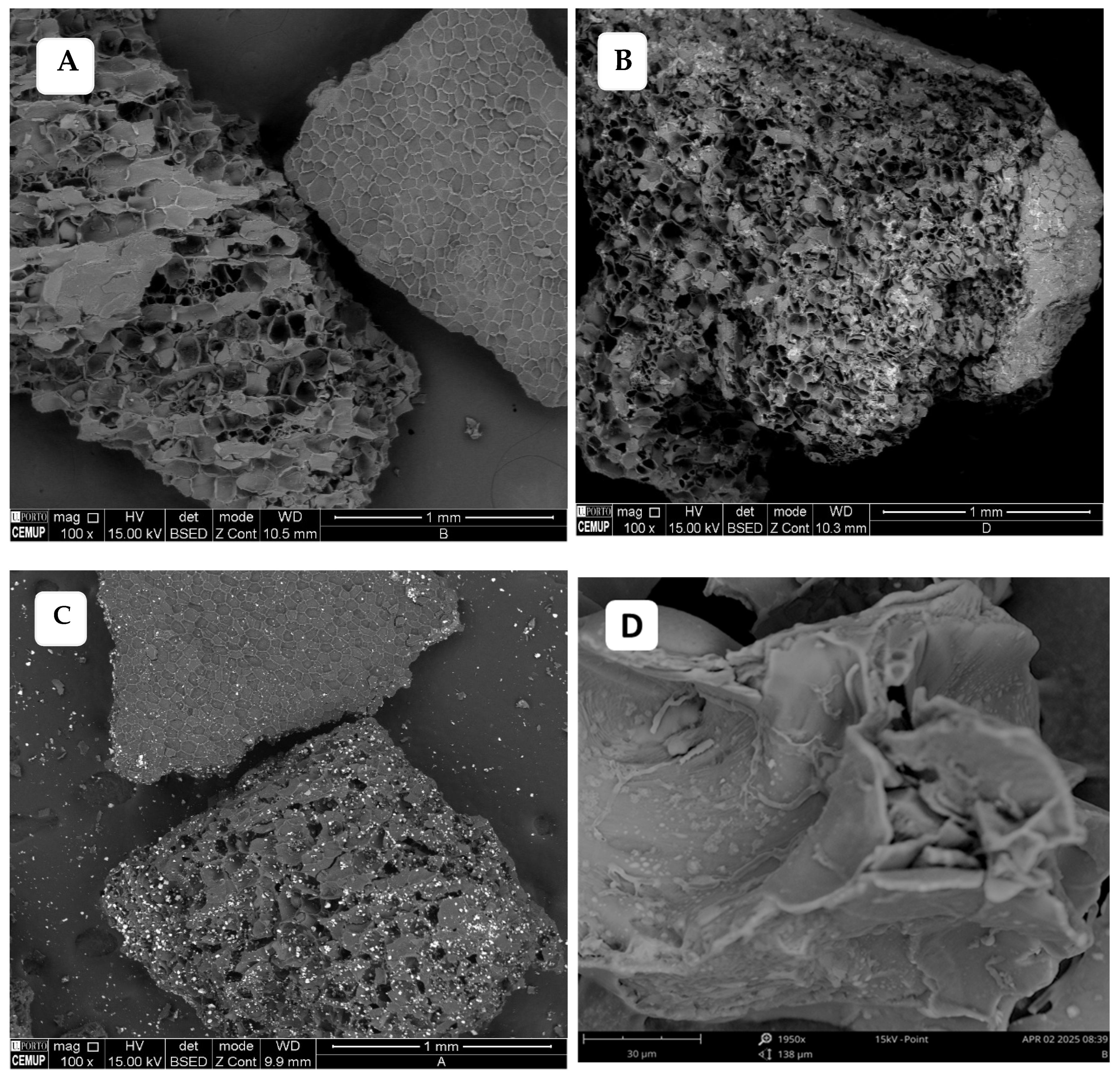
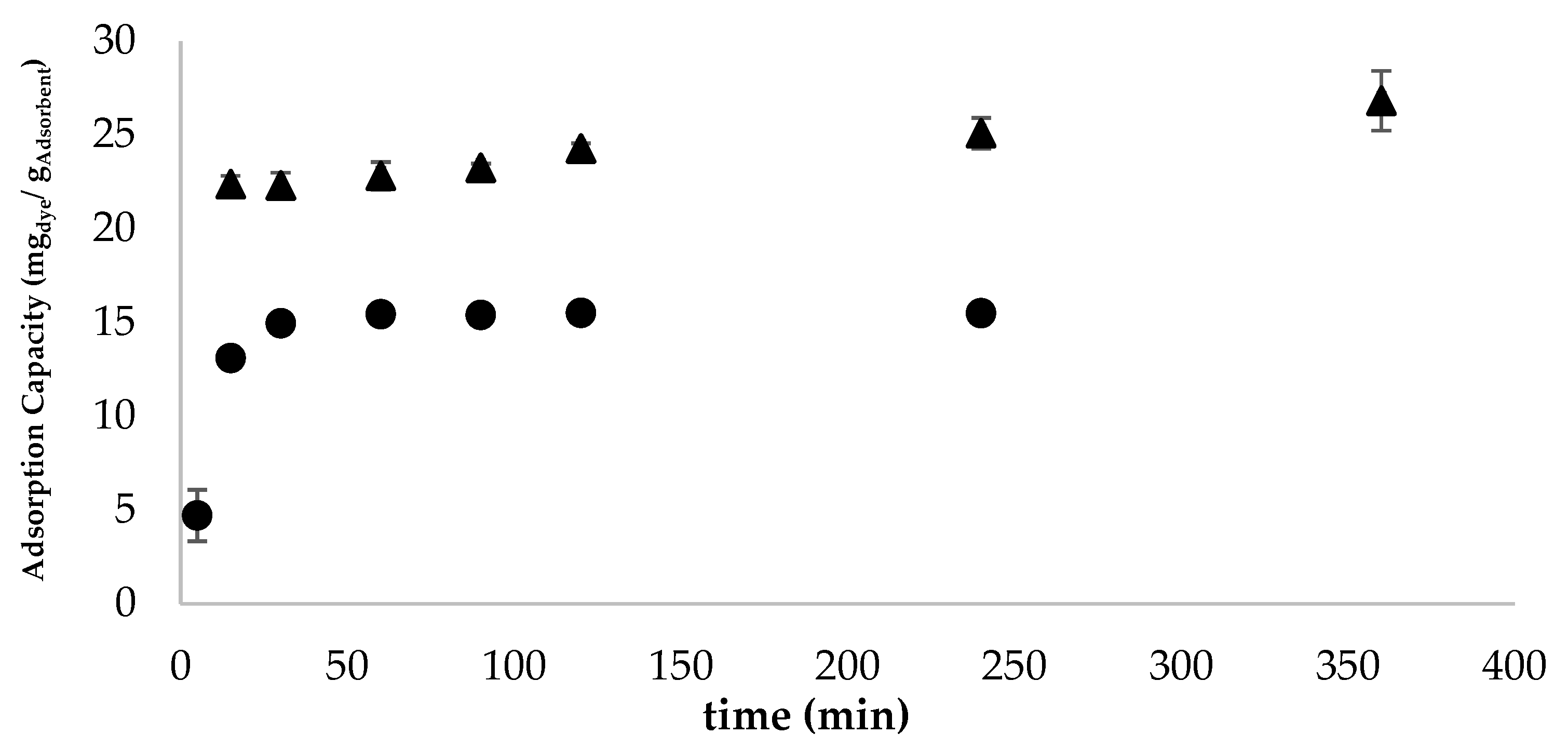
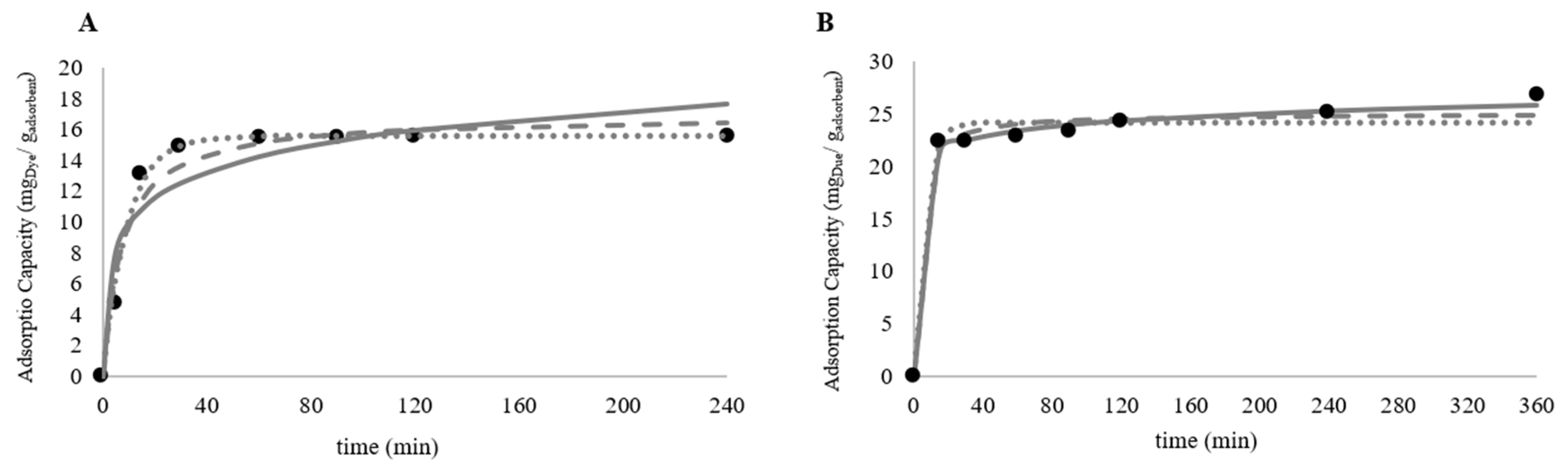
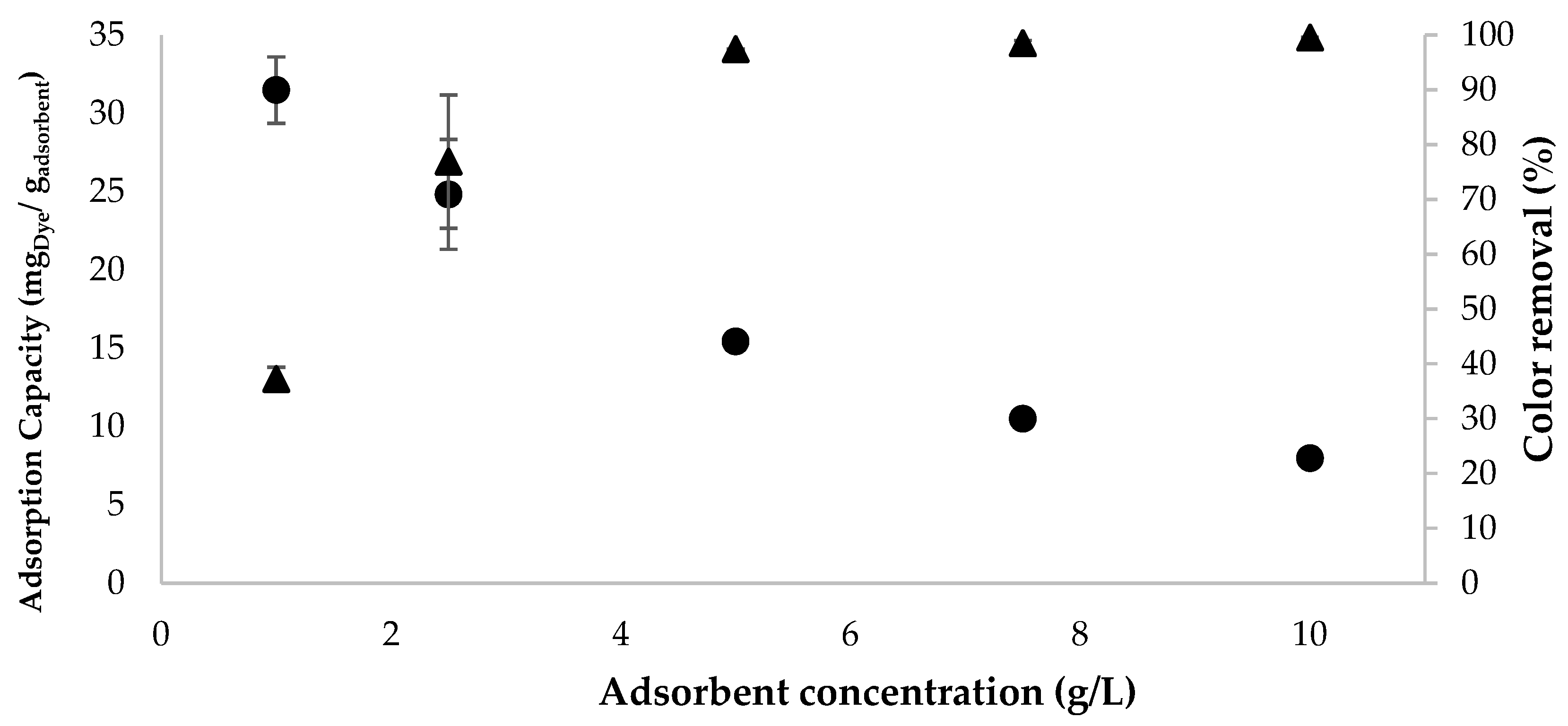
Dyes are widely used in textile processing and are frequently discharged without adequate treatment, posing risks to aquatic ecosystems through reduced water quality, toxicity to organisms, and long-term environmental degradation. To address the need for sustainable remediation solutions, this study investigated the use of pine bark (Pinus pinaster), an abundant forestry byproduct, as a low-cost biosorbent for textile dye removal. Powdered (<0.5 mm) and granular (>1 mm) bark fractions were washed, dried, and modified through iron impregnation (10 wt.% Fe) via sonication in an FeCl3·6H2O solution, with one iron-coated variant subsequently subjected to thermal treatment at 400 °C under nitrogen (1 h) and hydrogen (3 h). Adsorption performance was evaluated using synthetic effluents containing Sirius Blue, Astrazon Red, and Sirius Yellow, individually and as a ternary mixture (80 mg/L each), with added NaCl and NaHCO3 to simulate realistic conditions. Thermally treated granular iron-coated bark showed the highest removal efficiency, achieving >90% dye elimination within 24 h without detectable iron leaching, along with strong iron retention (~80%) and a 53% thermal-treatment yield. Maximum adsorption reached 15.51 mg/g at 5.0 g/L, while lower adsorbent doses increased capacity (26.8 mg/g) but reduced overall removal (~83%). Kinetic analysis was dose-dependent: the pseudo-first-order model provided the best fit at 5.0 g/L, reflecting the rapid approach to equilibrium, whereas the Elovich model fitted best at 2.5 g/L (R > 0.99), consistent with heterogeneous surface interactions under limited adsorbent availability. These results demonstrate the potential of thermally treated iron-coated pine bark as an efficient and sustainable biosorbent for textile wastewater treatment.
Keywords: iron-impregnated biosorbents; textile dye adsorption; forestry byproduct valorization; granular lignocellulosic materials; sustainable wastewater treatment iron-impregnated biosorbents; textile dye adsorption; forestry byproduct valorization; granular lignocellulosic materials; sustainable wastewater treatment