The 43-year (1978–2020) DSM is shared to PANGAEA and available for free download at
https://doi.pangaea.de/10.1594/PANGAEA.940409 websit (accessed on 23 July 2022). It contains 15,402 images, one image per day, with a total data volume of 13.6 G. The data is in integer format and the valid range is from 1 to 10,000, null or invalid values are represented by 0. To obtain the true SM in volumetric (m
3/m
3), the dataset should be multiplied by 0.0001.
4.1. The Spatial Distribution of Downscaled 9 km Soil Moisture
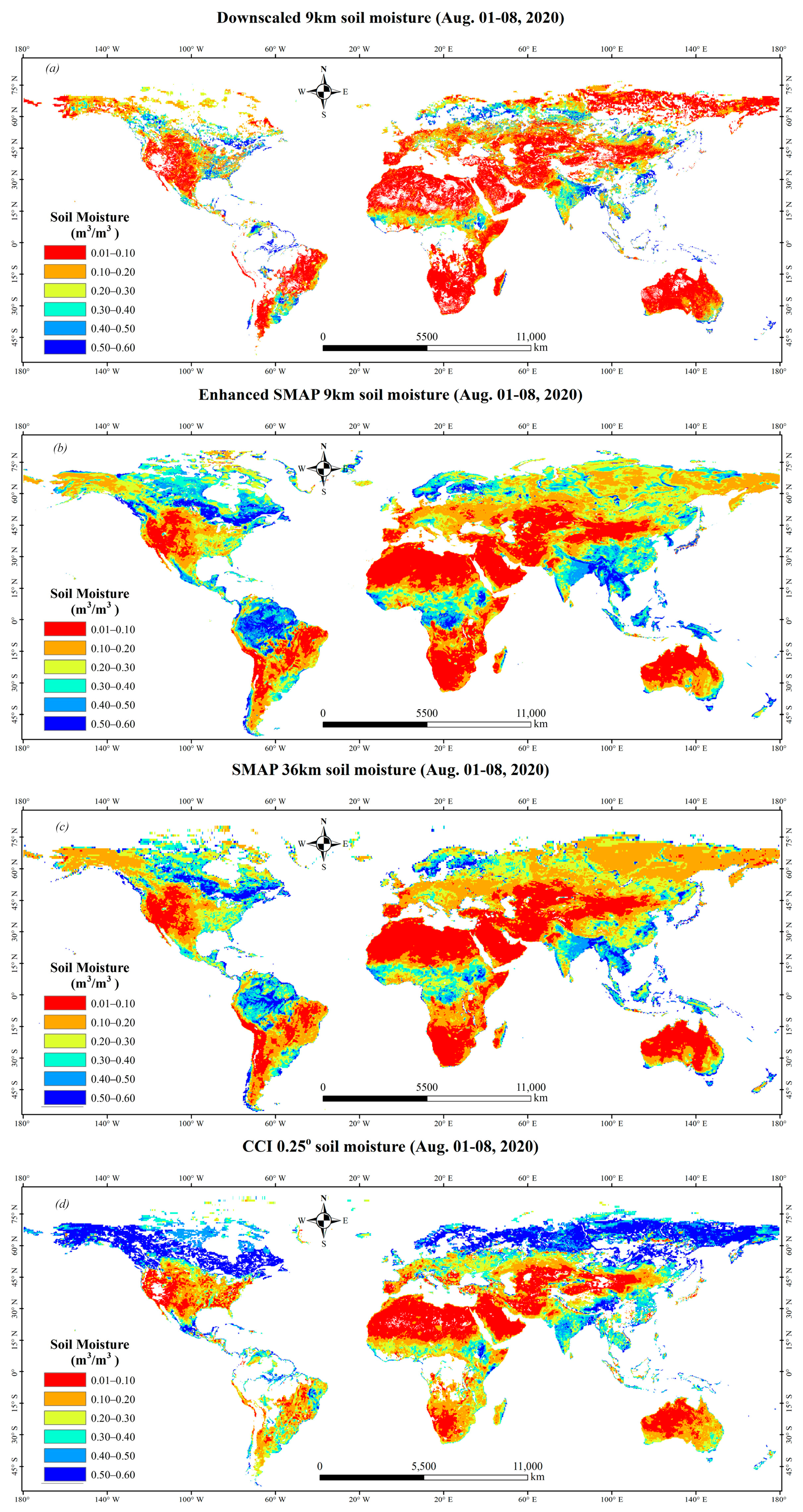
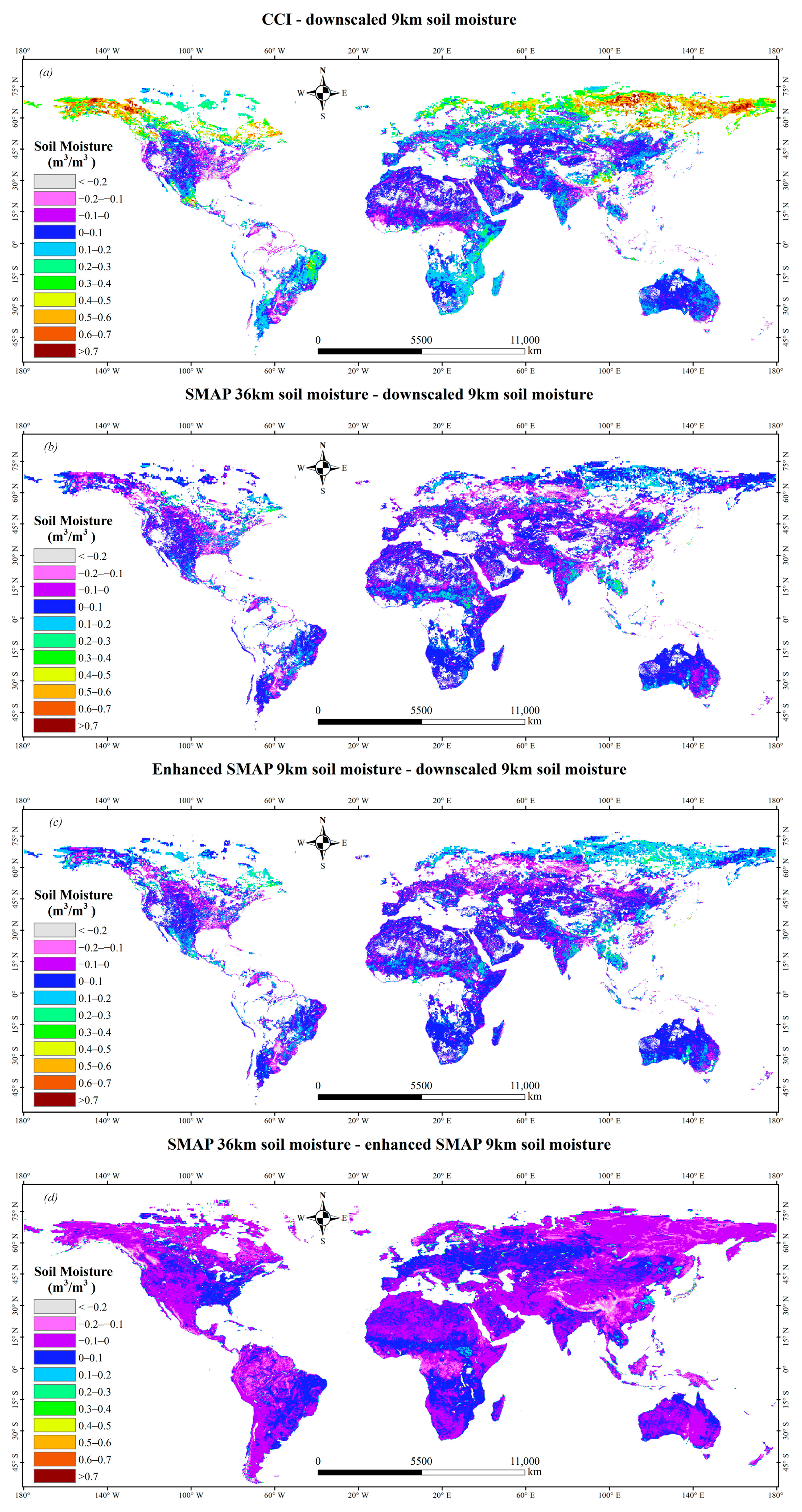
Figure 4 shows the spatial distribution of 8-day averaged (1–8 August 2020) DSM, enhanced SMAP 9 km SM, SMAP 36 km SM and CCI SM. The spatial coverage of DSM is less than CCI. As the temporal variation parameters of STFM are calculated by the paired reference data and daily CCI data, 9 km SM is estimated only in areas with the existed two data simultaneously. Meanwhile, the CCI and SMAP data are not spatio-temporal seamless and there is a phenomenon of inconsistent positions of void data. The spatial coverage of the intersection between CCI and SMAP data should be smaller than the spatial coverage of any data. Therefore, it suggests that the spatial coverage of daily DSM is not greater than the corresponding reference data and the daily CCI data.
The spatial distribution of DSM and CCI data is quite different, however, the difference between DSM and SMAP SM is relatively small (
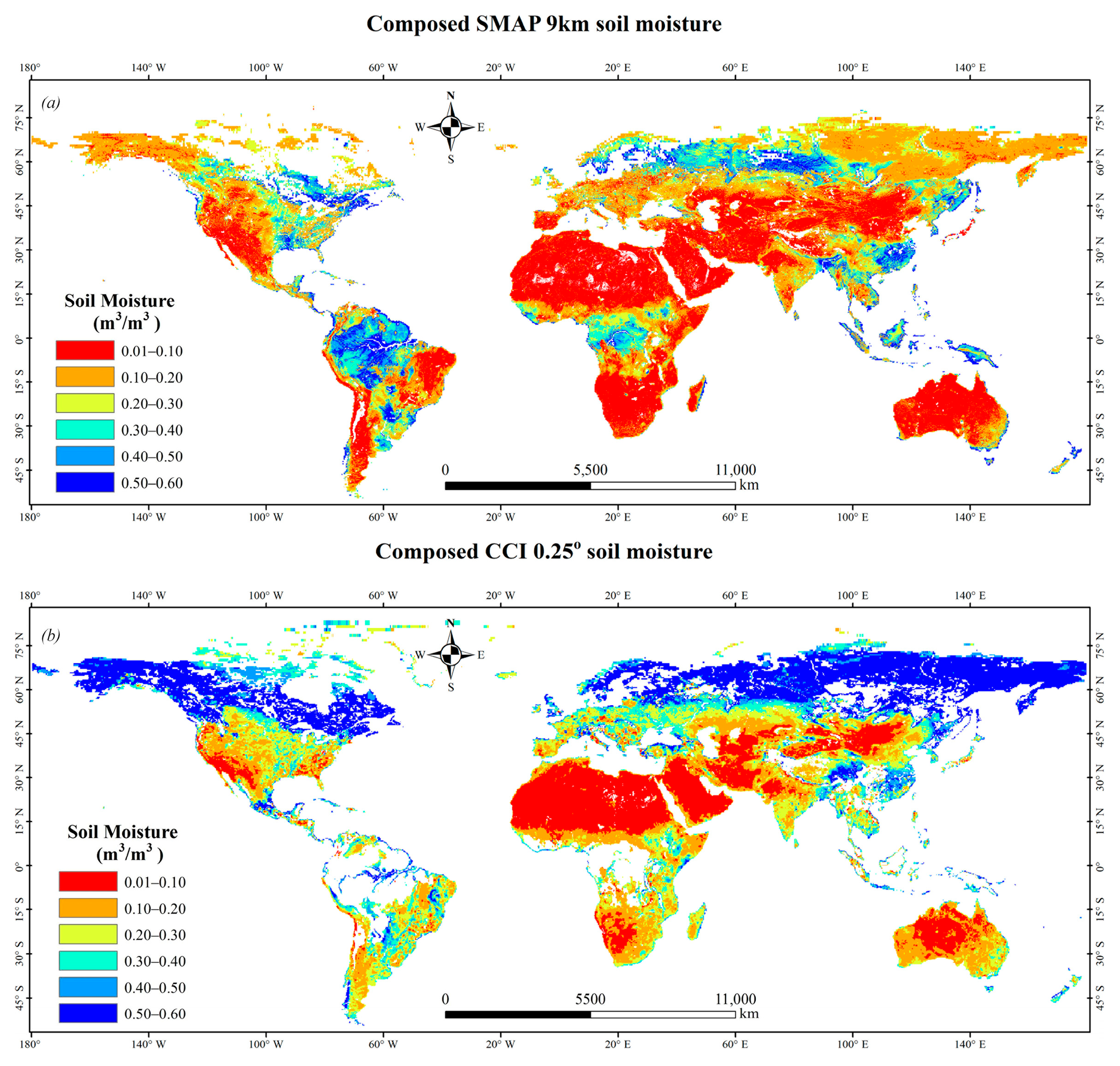
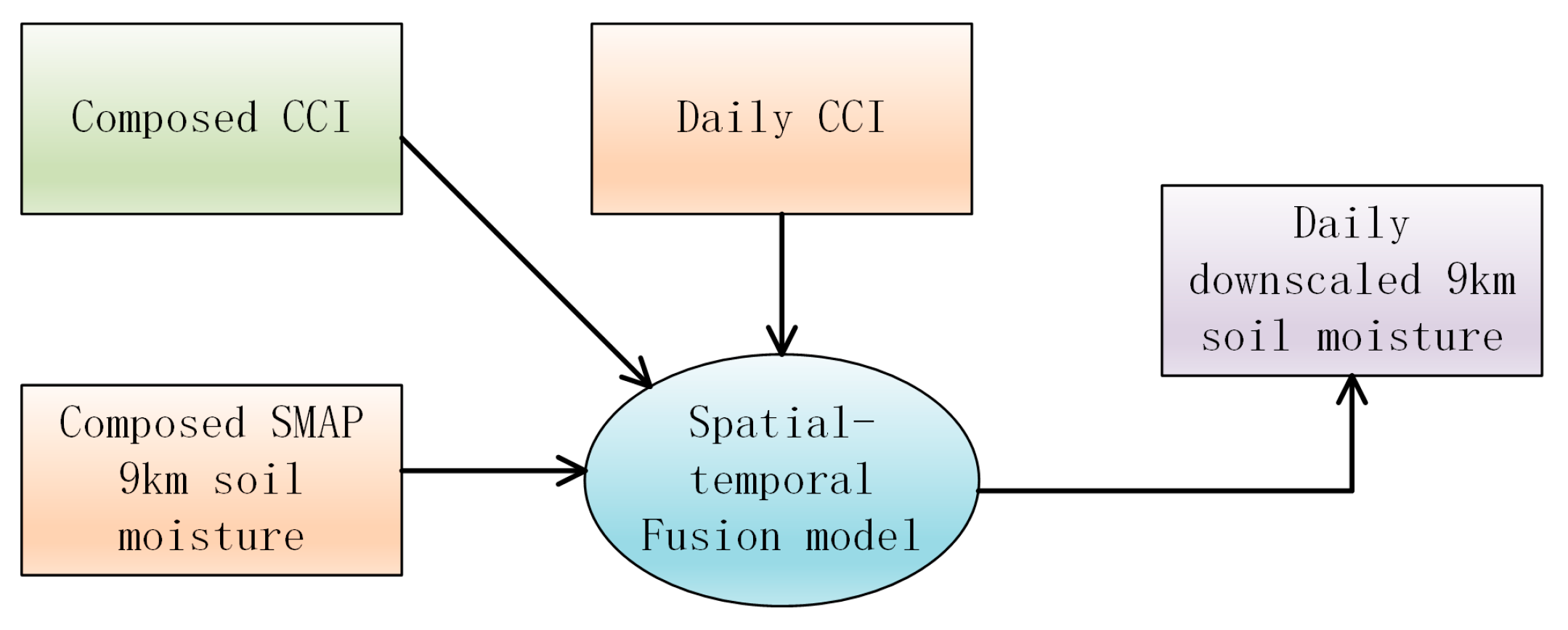
Figure 4). It mainly because that the temporal variation parameters of STFM are calculated by the daily CCI and composed CCI in reference data (
Figure 2b) and then the parameters are applied to the composed SMAP 9 km SM in reference data (
Figure 2a) for DSM estimation. Essentially, there is a linear relationship between DSM and the composed SMAP 9 km SM in reference data without considering the influence of similar pixels. Therefore, it can be regarded that the spatial distribution of DSM should be consistent with SMAP SM.
The spatial difference between the 8-day (1–8 August 2020) averaged SM (
Figure 5) shows that CCI and SMAP SM are more or less greater than DSM in numerical across most areas of the world. The difference between CCI and DSM is larger than 0.2 m
3/m
3 at many regions of the world, especially at the high latitude areas (
Figure 5a). This phenomenon does not appear in
Figure 5b and most of the differences between DSM and SMAP SM fluctuate within 0.2 m
3/m
3. Due to the consistency of the spatial distribution of SMAP SM products [
42,
43], it can be confirmed that the spatial distribution of DSM is inherited by SMAP SM.
4.2. The Detailed Spatial Information of Downscaled 9 km Soil Moisture
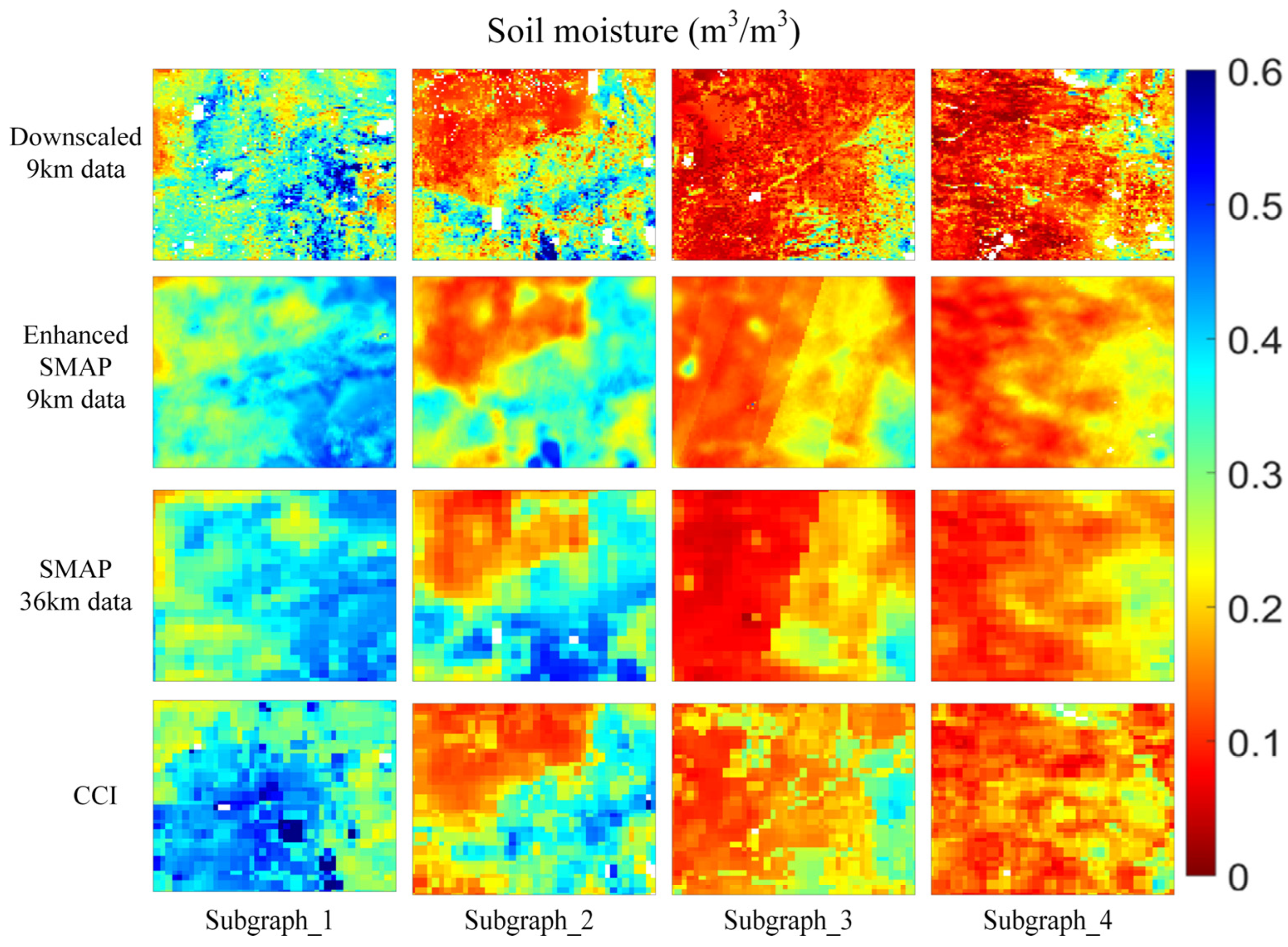
The detailed spatial information of 8-day (1–8 August 2020) averaged SM under the varied vegetation density is shown in
Figure 6. The
is used as the quantitative evaluation index for characterizing the richness of detailed spatial information (
Table 3). Notably, the data contains richer spatial details, which should enhance its adaptability in characterizing heterogeneous regions.
DSM significantly enhances the spatial resolution and enriches the detailed information of CCI data. It shows that the heterogeneity of surface feature is more clearly in DSM (
Figure 6). In the subgraph of the third column, there is a linear surface feature in the middle of DSM, but CCI and SMAP SM cannot show the surface feature very well. In the subgraph of the fourth column, there is a clear linear object in DSM, while the linear features in the CCI and SMAP SM are not very clear. It suggests that the DSM has more abundant spatial information and may be beneficial to improve the application scopes of CCI data.
The
of DSM is greater than CCI obviously and the
increases about twice from CCI data with 0.25° to DSM data with 9 km for each subgraph (
Table 3). The
of SMAP 36 km SM is less than CCI as the spatial resolution of CCI data is slightly greater than SMAP 36 km SM. The interpolation ratio to 9 km for CCI data (~25 km/9 km = 2.8) is less than for SMAP 36 km SM (36 km/9 km = 4). The
of SMAP 36 km SM and enhanced SMAP 9 km SM are comparable, because enhanced SMAP 9 km SM is retrieved by Backus-Gilbert interpolated passive SMAP brightness temperature. In essence, the SMAP 36 km SM and enhanced SMAP 9 km SM are derived from the same earth observation data with different calculation processes. Hence, it suggests that the spatial interpolation of CCI data can maintain the detailed spatial information of 9 km SM better than SMAP data. Overall, DSM gets the best
among the pixel SM indicating the more abundant spatial information for study at heterogeneous regions.
4.3. The Temporal Variation of Downscaled 9 km Soil Moisture Against CCI Data
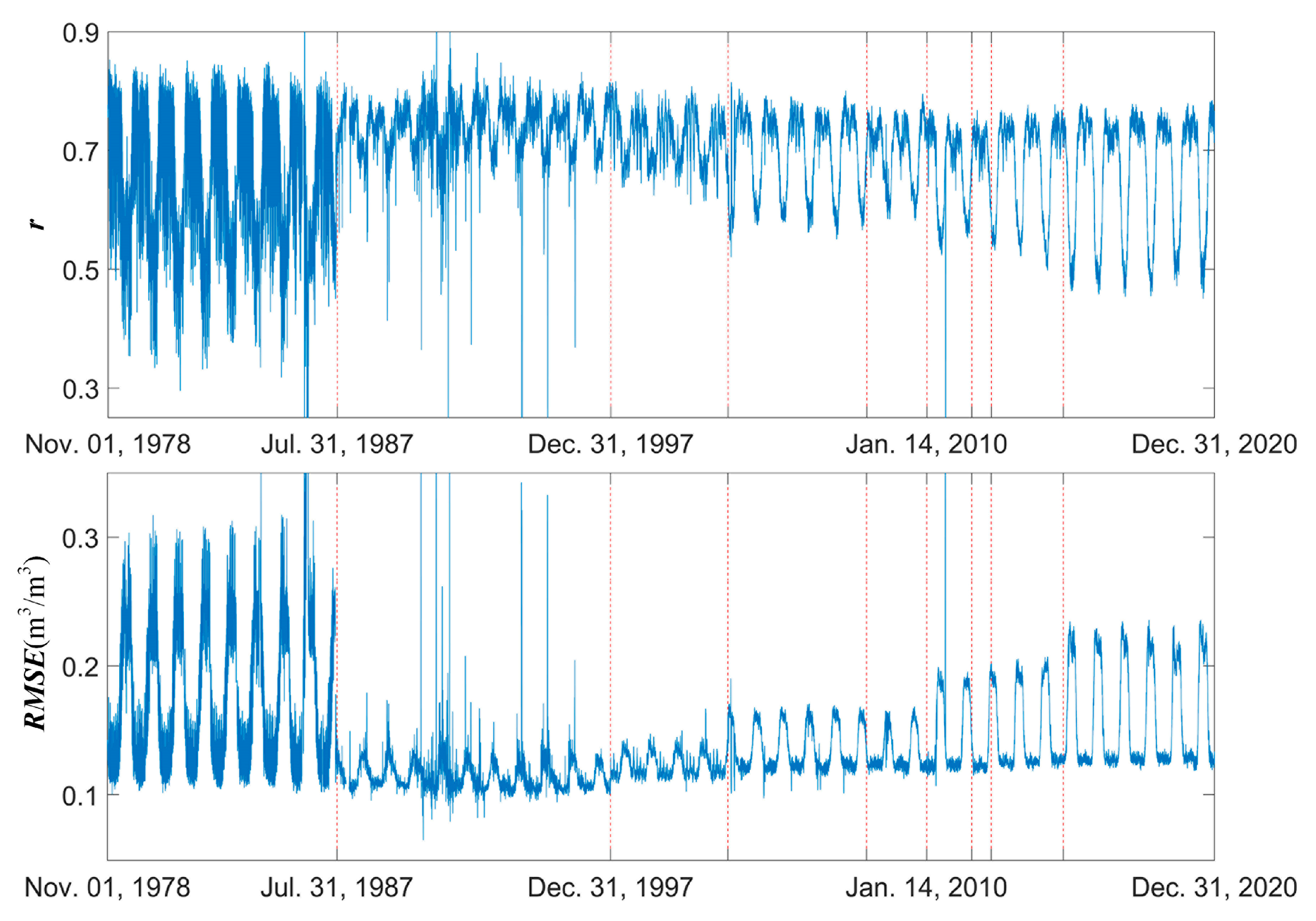
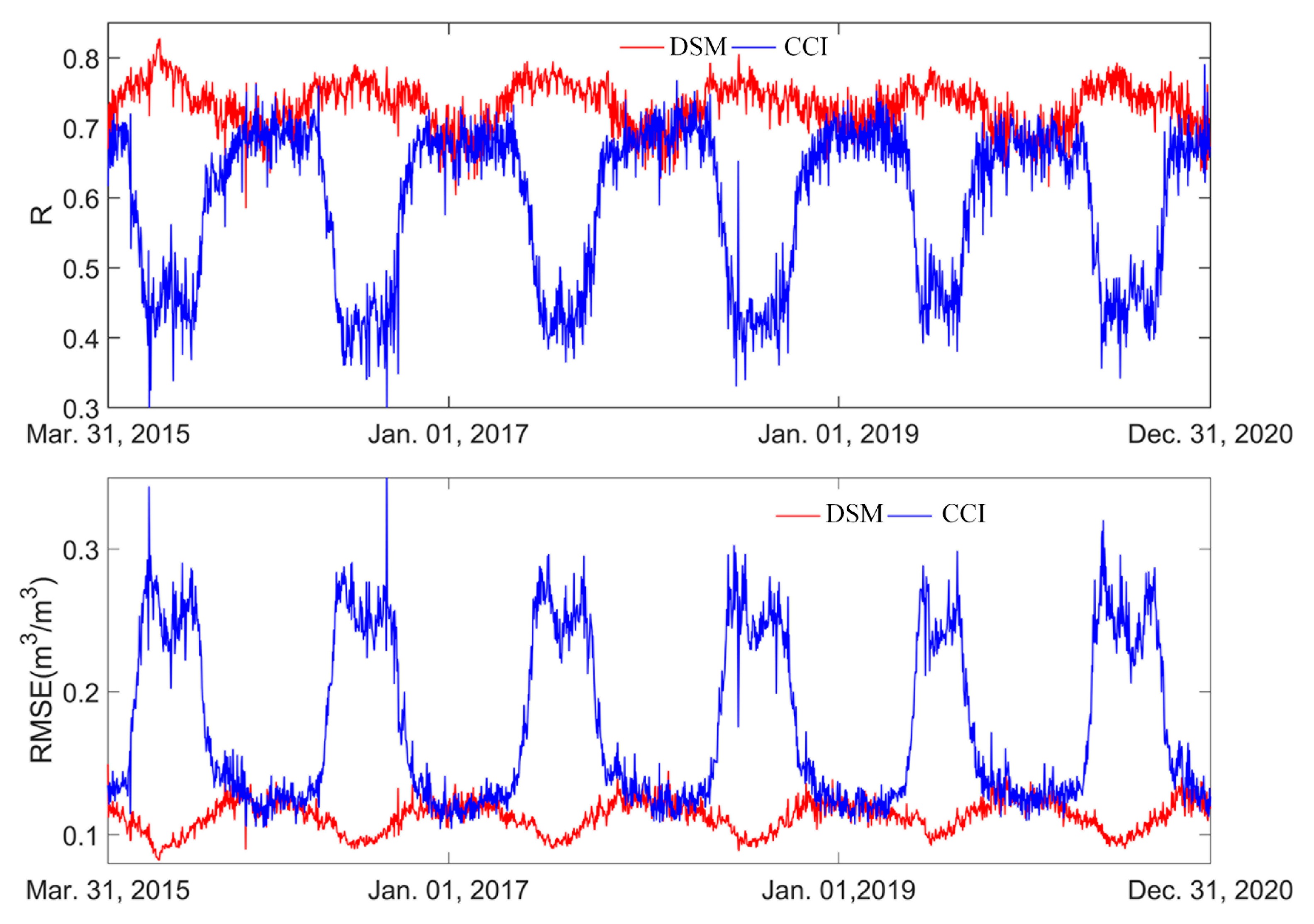
Although DSM is the SMAP-like 9 km SM in spatial distribution, it is estimated by CCI downscaling using STFM from 1978 to 2020. Whether DSM can maintain the characteristics of CCI data in temporal variation remains to be further confirmed. Moreover, the temporal variation of SM plays an indispensable role in practical applications such as flood prediction, drought warning and world climate change [
44]. To investigate the temporal variation difference, the DSM is aggregated to 0.25° maintaining the same pixel size as CCI data. The temporal
r and
RMSE are calculated between aggregated DSM (0.25°) and CCI SM at pixel scale globally.
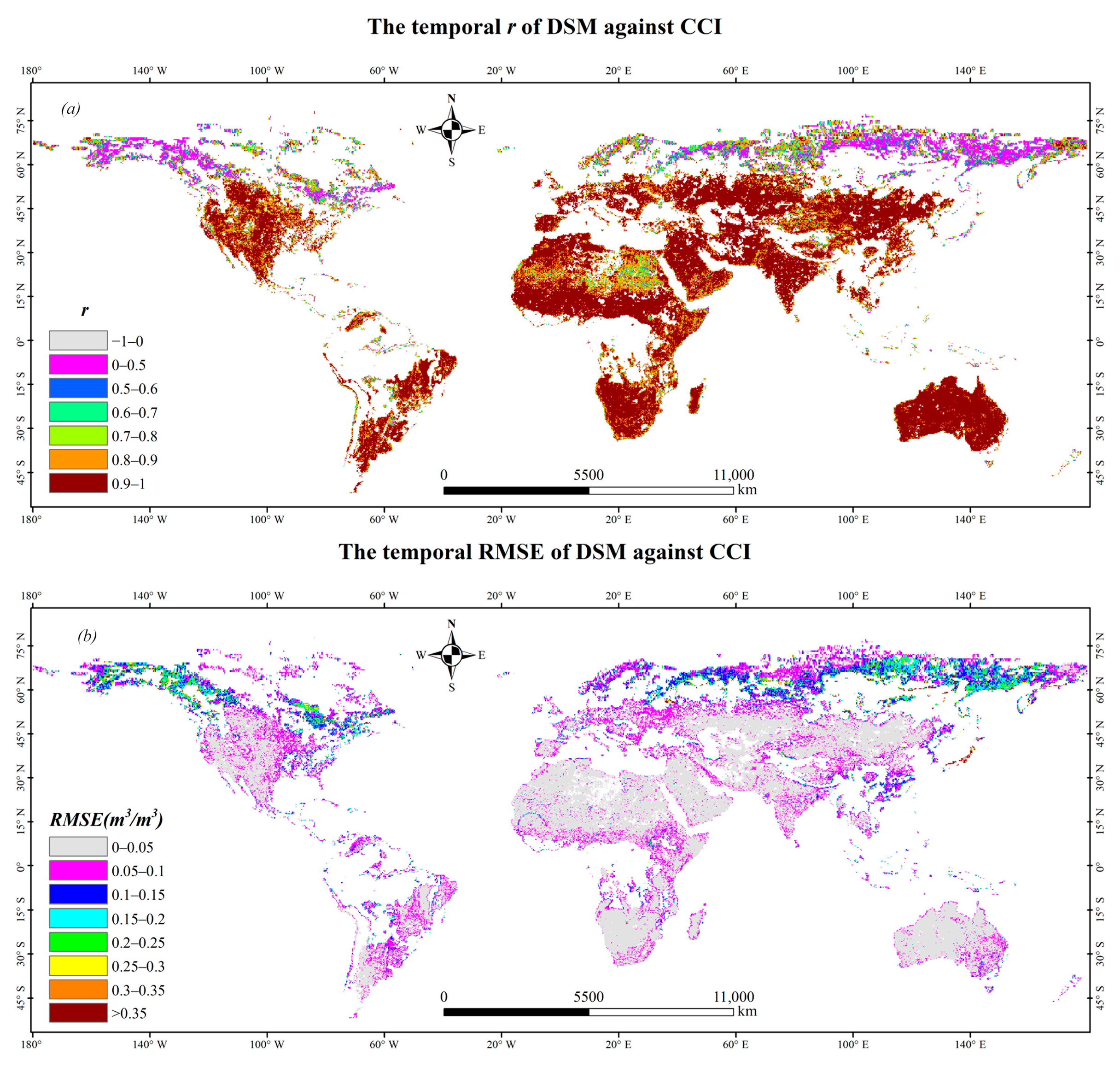
It can be seen that the areas with temporal
r lower than 0.9 are mainly concentrated in the high latitude, high vegetation coverage and arid regions (
Figure 7). Nevertheless, the global mean temporal
r in the whole period (1978–2020) is very high and larger than 0.97 (
Table 4). In terms of temporal
RMSE, the spatial distribution is similar with the temporal
r. It shows that the high temporal
r is consistent with the low temporal RMSE. The global mean temporal
RMSE is very high for whole period and each sub-period of CCI data. Except the sub_2 and sub_7 periods, the temporal
RMSE of other periods is not less than 0.1 m
3/m
3 (
Table 4). Therefore, it can be considered that the temporal variation of CCI can be well captured by DSM because of the high mean temporal
r. Meanwhile, the high temporal
RMSE agrees with the results shown in
Figure 5 indicating the large uncertainty between DSM and CCI data in temporal variation. Nevertheless, it will not affect the applications that need the high resolution SM focusing on the relative temporal variation of SM.
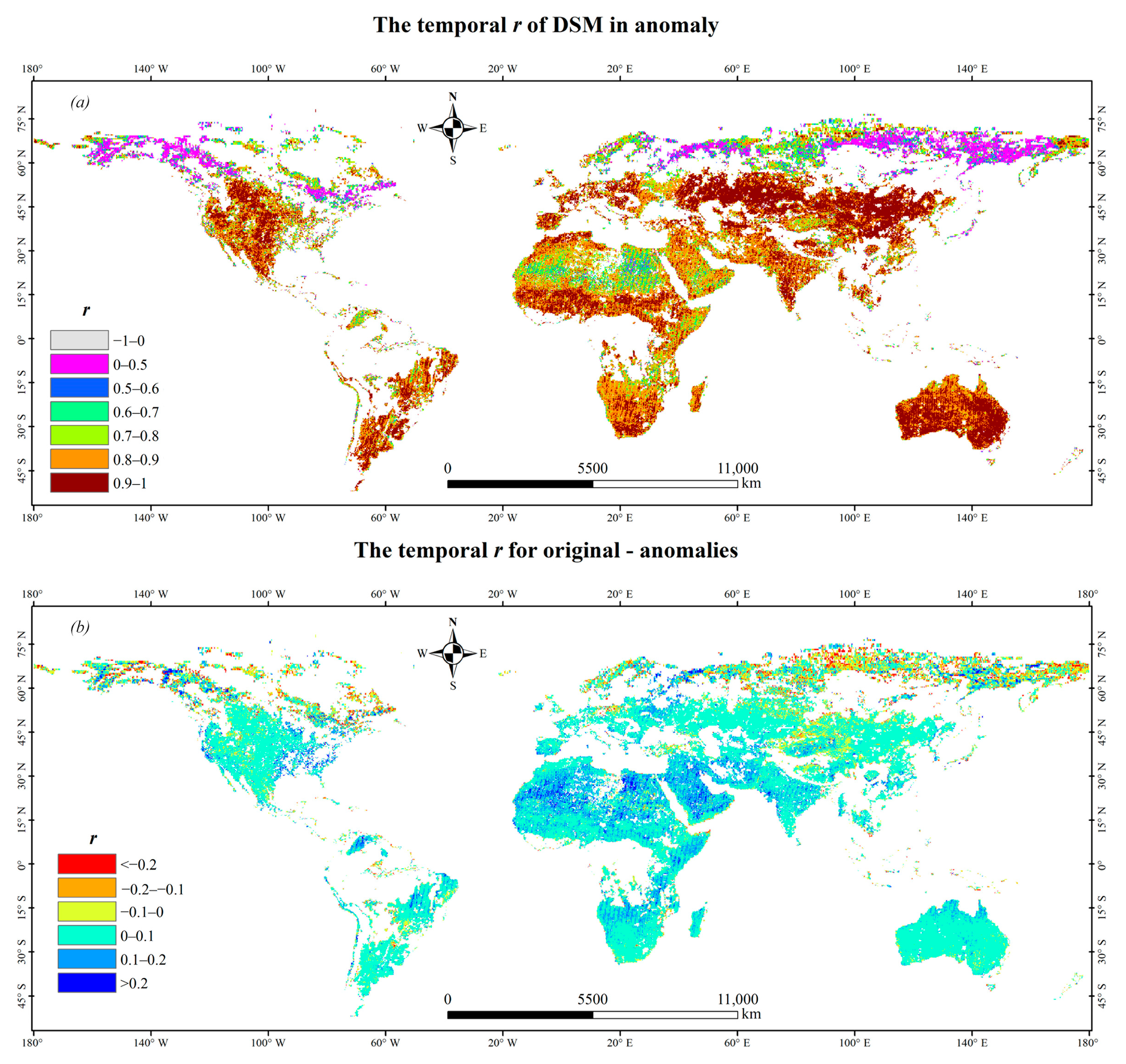
Spatial distribution of the temporal
r in anomaly is shown in
Figure 8. The temporal
r of anomaly remains very high; meanwhile, it is lower than that of the original across most parts of the world (
Figure 8b). It shows that the seasonal variation of SM has promoted the temporal
r in original. It is consistent with the previous studies [
45,
46]. With the removal of seasonal factors, the global mean of temporal
r in anomaly for DSM is 0.948, slightly less than the temporal
r in original shown in
Table 4. The results show that DSM can well capture the temporal variation of CCI data in anomaly (e.g., precipitation and drought events). It further confirms the ability of DSM to capture CCI data, suggesting that DSM can reveal the global climate change of CCI data at finer scale.
4.4. Evaluation of Downscaled 9 km Soil Moisture Against ISMN In Situ Data
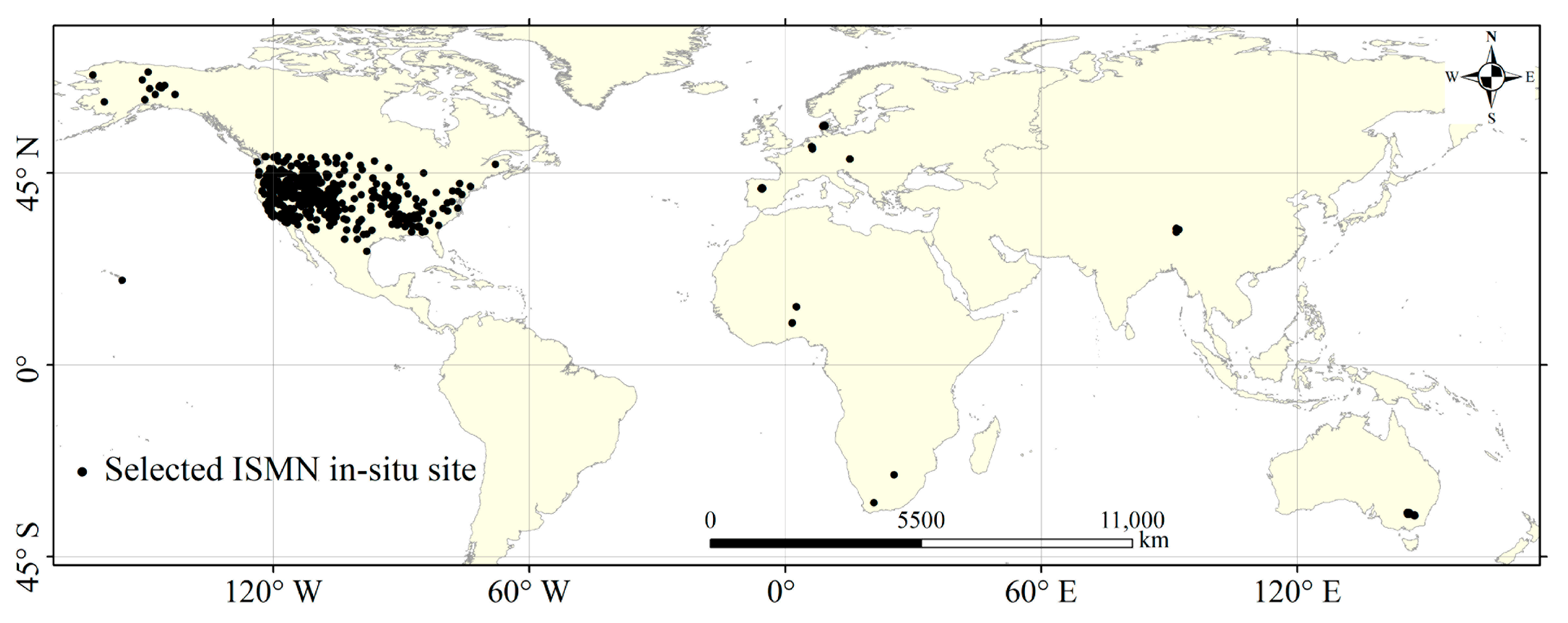
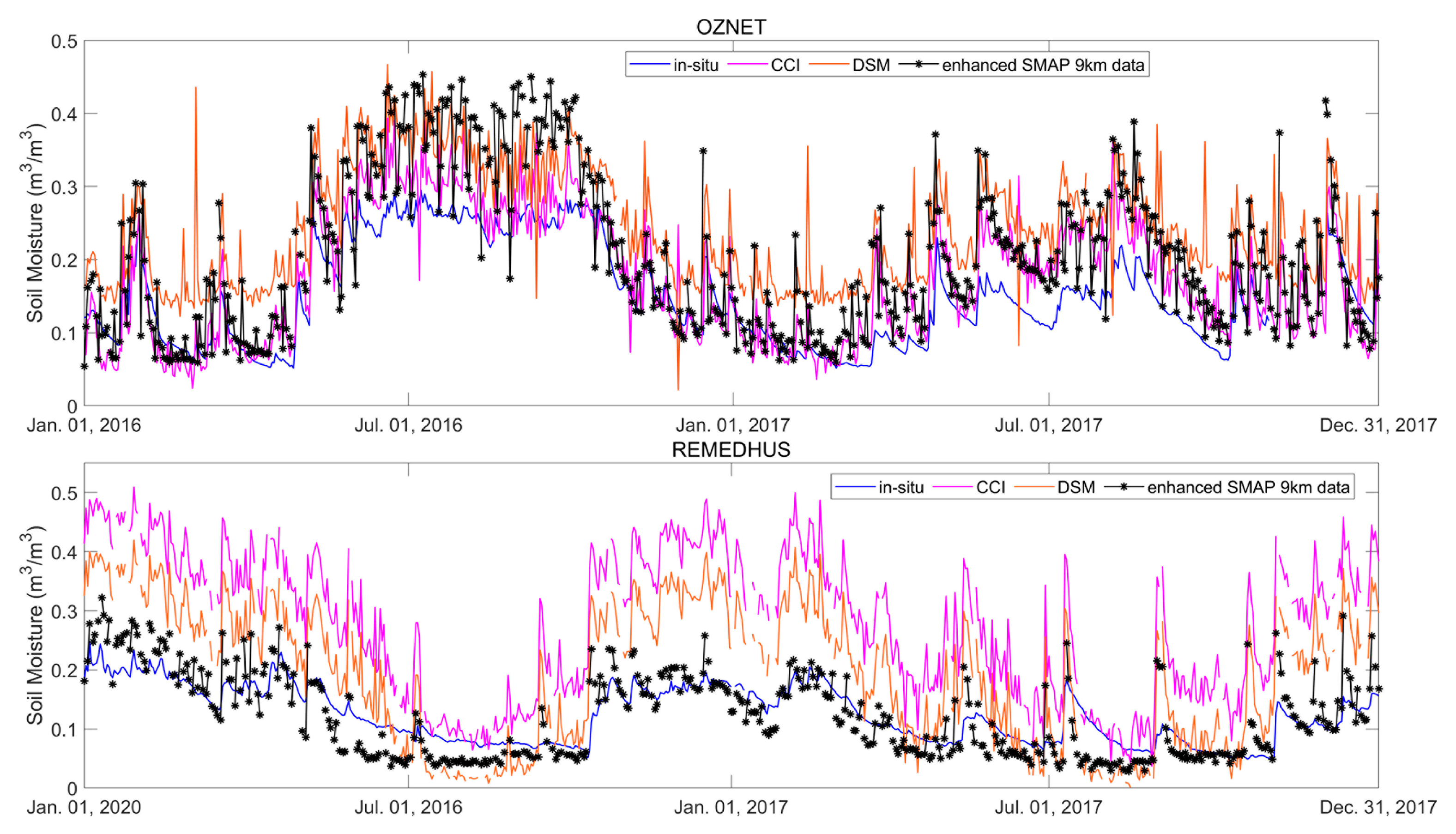
The temporal variations of DSM, CCI, enhanced SMAP 9 km SM and in-situ SM are shown in
Figure 9 in case of Oznet and REMEDHUS SM monitoring network from 1 January 2016 to 31 December 2017. Note that all the valid pixel SM and in-situ SM over Oznet and REMEDHUS are arithmetically averaged. It can be obviously seen that the three types of pixel scale SM data can well capture the temporal variation of in-situ measurements in OZNET and REMEDHUS. CCI and DSM exhibit similar temporal volatility and both overestimate in-situ measurements across the two monitoring networks. Enhanced SMAP 9 km SM is closer to in-situ data than DSM and CCI in numeric. Meanwhile, the enhanced SMAP 9 km SM is numerically closer to the in-situ measurements compared to the other two datasets. Nevertheless, due to its 2–3-day revisit cycle, the enhanced SMAP 9 km SM is significantly inferior to the daily CCI and CAP datasets in terms of temporal continuity.
There is a certain mismatch between ISMN in-situ sites and pixel SM in spatial resolution, observation time and detection depth. The reliability of the temporal variation evaluation results is disputed by previous works in a single spare site [
43,
47,
48,
49]. Therefore, this study only calculates the arithmetically averaged evaluation results of the ISMN monitoring networks. Prior to the launch of the SMAP satellite in 2015, the global spatial resolution of SM was approximately 25 km, and 9 km global SM data remained unavailable. Based on the acquisition time of SMAP SM data, the study divides the evaluation against ISMN in-situ data into two phases: pre-SMAP and post-SMAP. This two-period division is more appropriate for assessing the temporal accuracy of 9 km pixel scale SM. To enhance the comparability of evaluation results between the two phases, the in-situ monitoring networks selected from ISMN are kept consistent across both periods.
As most ISMN monitoring stations operate normally after 2000, the evaluations based on ISMN in-situ data began in 2000 in this study.
Table 5 shows the evaluations against ISMN SM from 1 January 2000 to 12 April 2015 (pre-SMAP). The best value for each index is in bold. The temporal accuracy of CCI SM varies significantly among different ISMN monitoring networks. It is consistent with the previous studies and gets the similar evaluation results [
50,
51,
52]. Generally, it can be seen that the temporal accuracies of DSM are very close to CCI. It suggests that the temporal accuracy of DSM inherits from CCI. For
bias and
RMSE, there is no clear directionality in the performance of DSM and CCI at different in-situ networks. Nevertheless, the temporal
r and
μbRMSE of DSM are slight better than CCI at most monitoring networks (Bold font in
Table 5). Moreover, the average accuracy of DSM (
r = 0.592,
bias = −0.029 m
3/m
3,
RMSE = 0.108 m
3/m
3 and
μbRMSE = 0.066 m
3/m
3) performs slight better than CCI. It is mainly because that the spatial and temporal information are taken into consideration for 9 km SM estimation weakening the outlier information of CCI data.
Table 6 shows the evaluations against ISMN SM from 13 April 2015 to 31 December 2020 (post-SMAP). Unlike
Table 5,
Table 6 is not limited to comparing the accuracy discrepancies between DSM and CCI. It further extends the comparison to the AMSR2 SM retrieved by LPRM algorithm [
53,
54] and the enhanced SMAP 9 km SM. Notably, since AMSR2 has no inherent correlation with DSM, conducting an accuracy difference analysis between them can better demonstrate the performance of DSM. Compared with
Table 5, the average accuracies of CCI and DSM have improved during the period. The possible main reason is that the CCI data in
Table 5 is obtained by fusing observation data from multiple different time periods (
Table 1), and the errors between the data are not fully coordinated. Similar to
Table 5, the temporal accuracy of DSM in
Table 6 is still slightly better than CCI. The average accuracy of DSM (
r = 0.676,
μbRMSE = 0.069 m
3/m
3) is slightly lower than enhanced SMAP 9 km SM (
r = 0.695,
μbRMSE = 0.057 m
3/m
3) and better than AMSR2 (
r = 0.615,
μbRMSE = 0.079 m
3/m
3). The accuracy of DSM is not yet comparable to that of SMAP data, but this accuracy is also slightly improved compared to CCI. More importantly, the time series of DSM is same as CCI data. The compromise between accuracy and long time series may give DSM an advantage in climate data research.
Overall, DSM can provide abundant spatial detailed information in fine scale for the future applications and studies with the temporal accuracy no less than CCI data. Meanwhile, DSM can be taken as the SMAP-like SM in spatial distribution, but the temporal accuracy is less than SMAP SM (The target μbRMSE < 0.04 m3/m3). Nevertheless, it can be considered that DSM is the extension of SMAP SM before 2015. Therefore, CCI downscaling using STFM and SMAP 9 km SM data can acquire the SMAP-like long time series 9 km SM providing the choice for studies and applications at regional scale.






 ,
,