Electrolyte-Driven Oxidant Generation on Ti/IrO2–SnO2–Sb2O5 Electrodes for the Efficient Removal of Alachlor and Isoproturon from Water
 ,
,  and
and 
Abstract
1. Introduction
2. Experimental Section
2.1. Chemicals
2.2. Analytical Procedures
2.3. Reactor Design
2.4. Operating Conditions
3. Results and Discussion
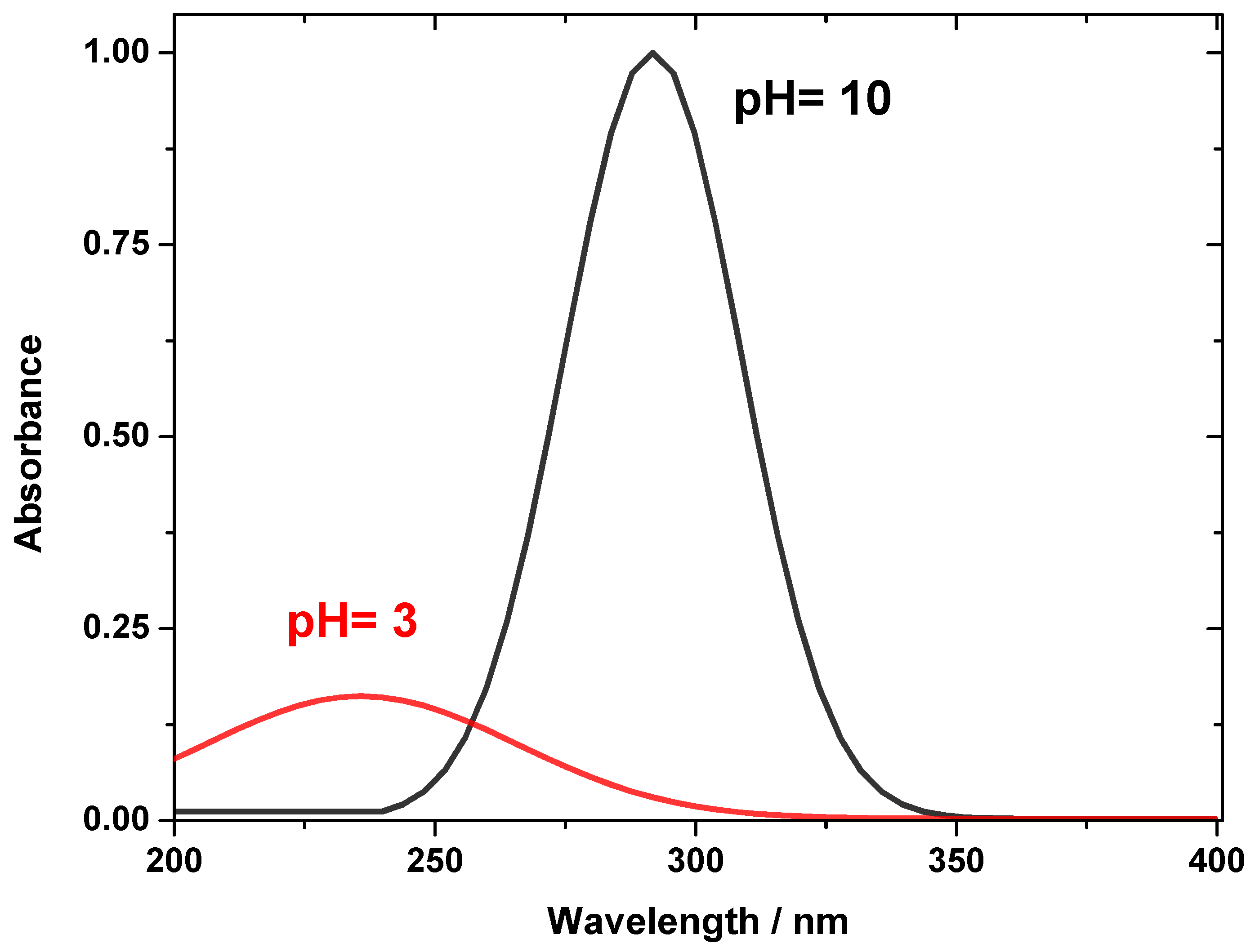
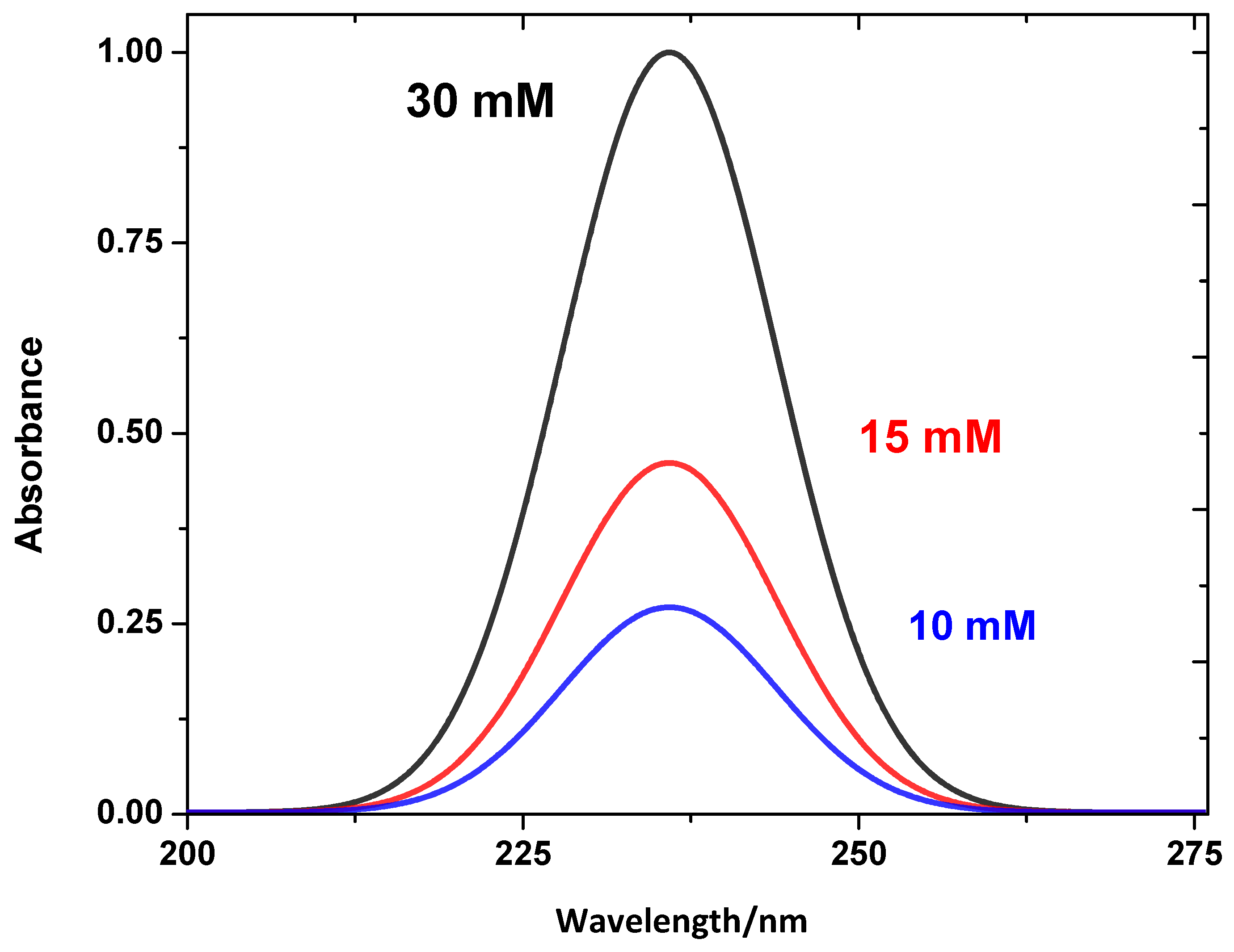
3.1. UV–Vis Analysis of a NaClO Solution
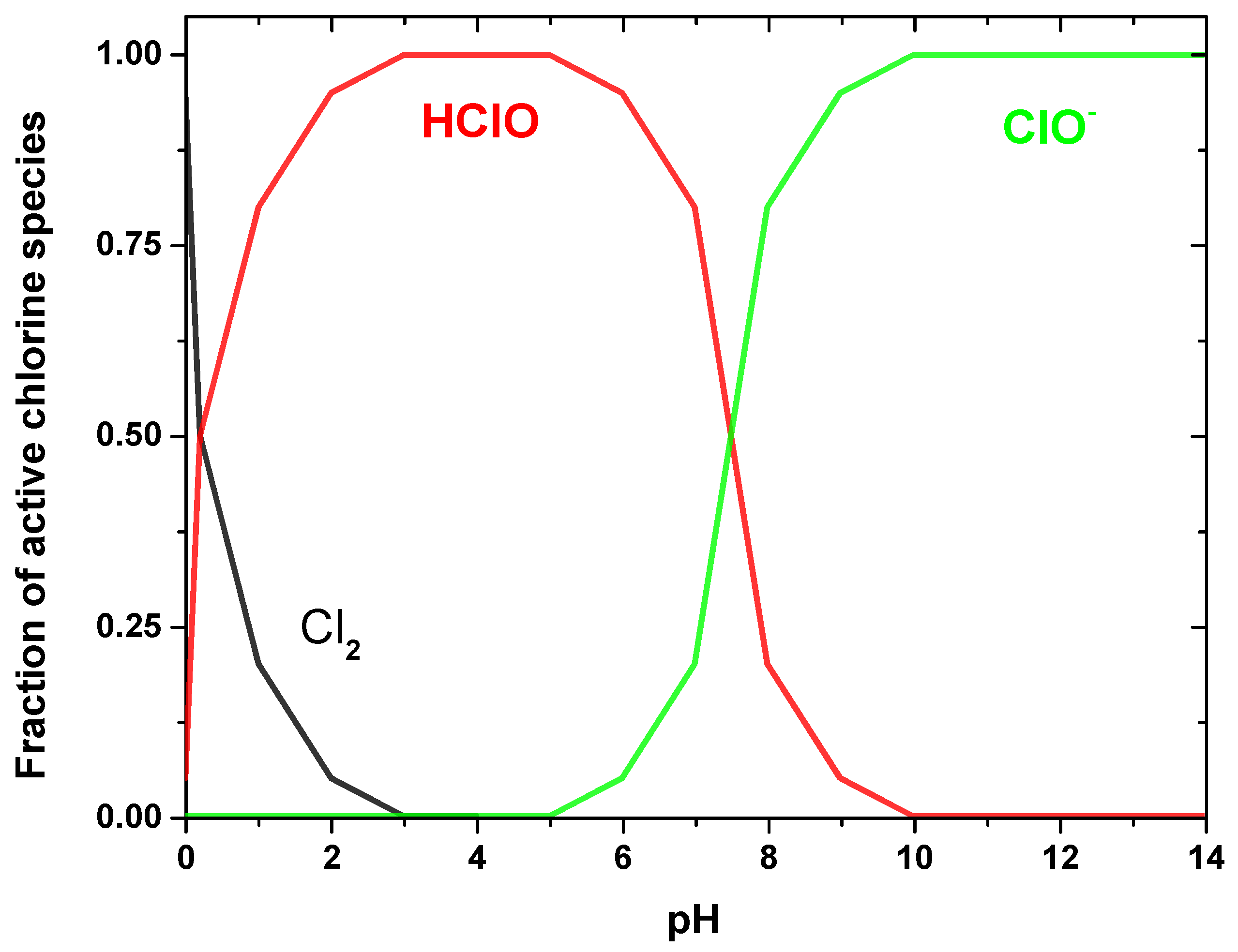
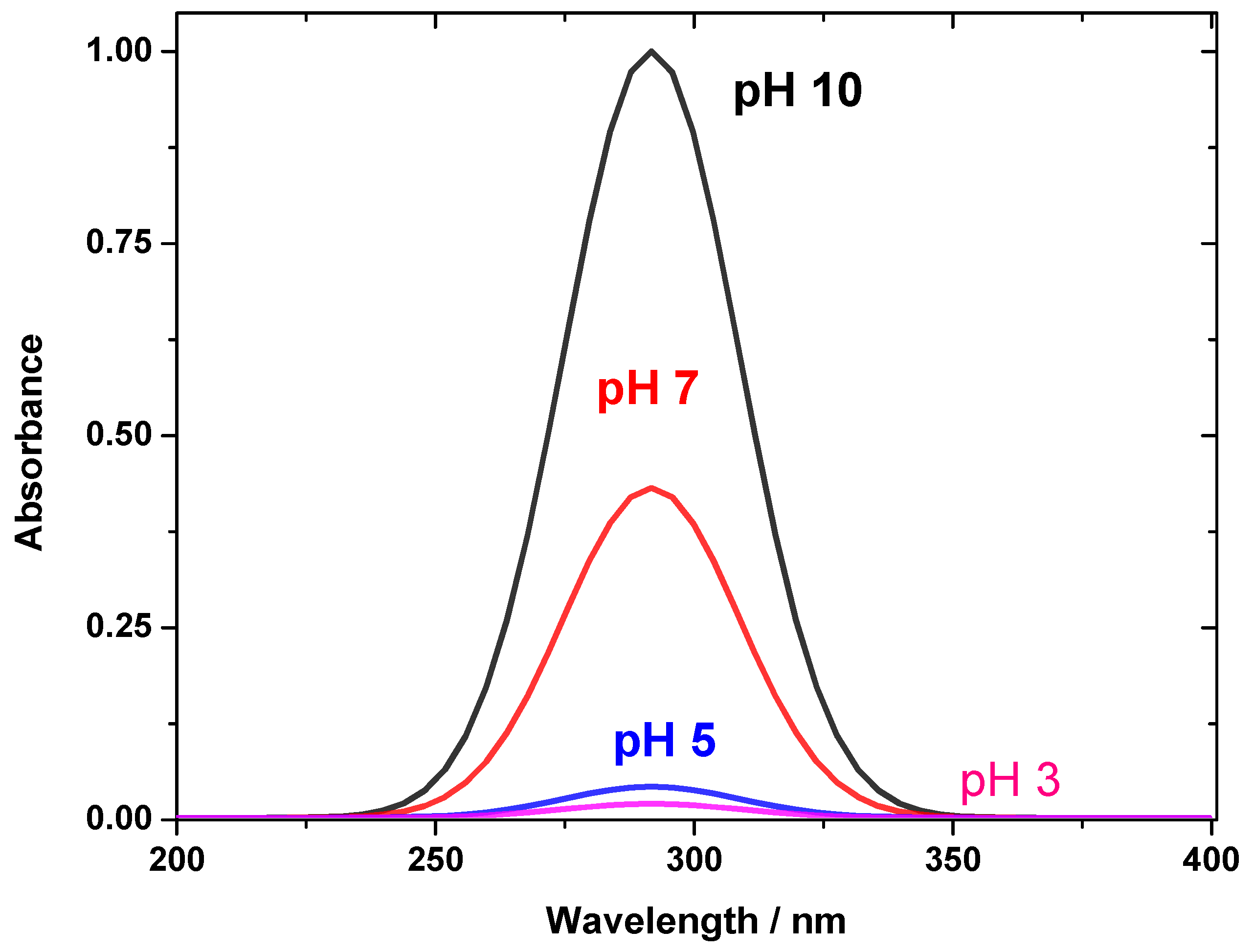
3.2. Electrogeneration of Hypochlorite Ion on Ti/IrO2-SnO2-Sb2O5
3.3. Effect of NaCl Concentration
3.4. Anodic Oxidation of Isoproturon and Alachlor
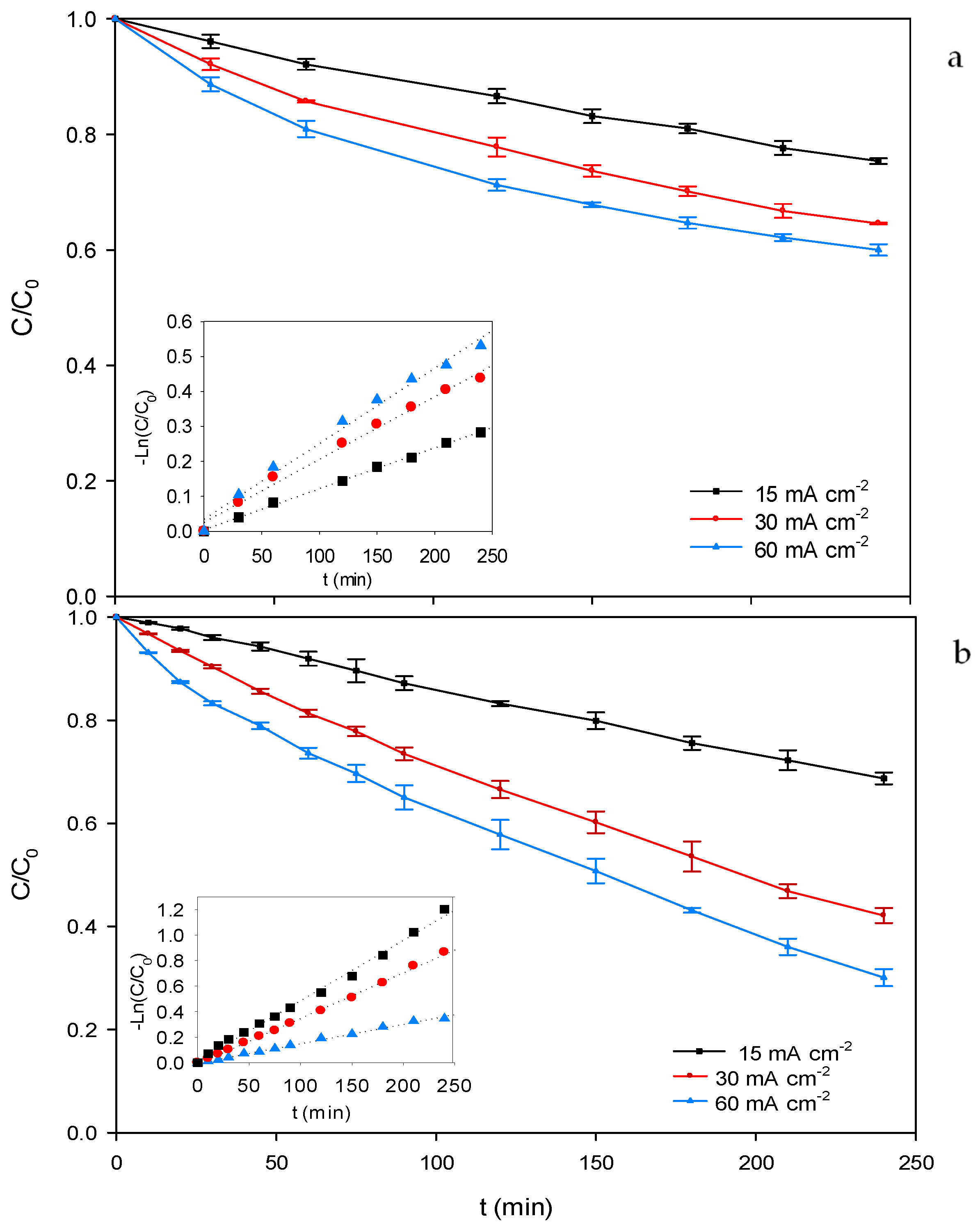
3.4.1. Effect of Current Density
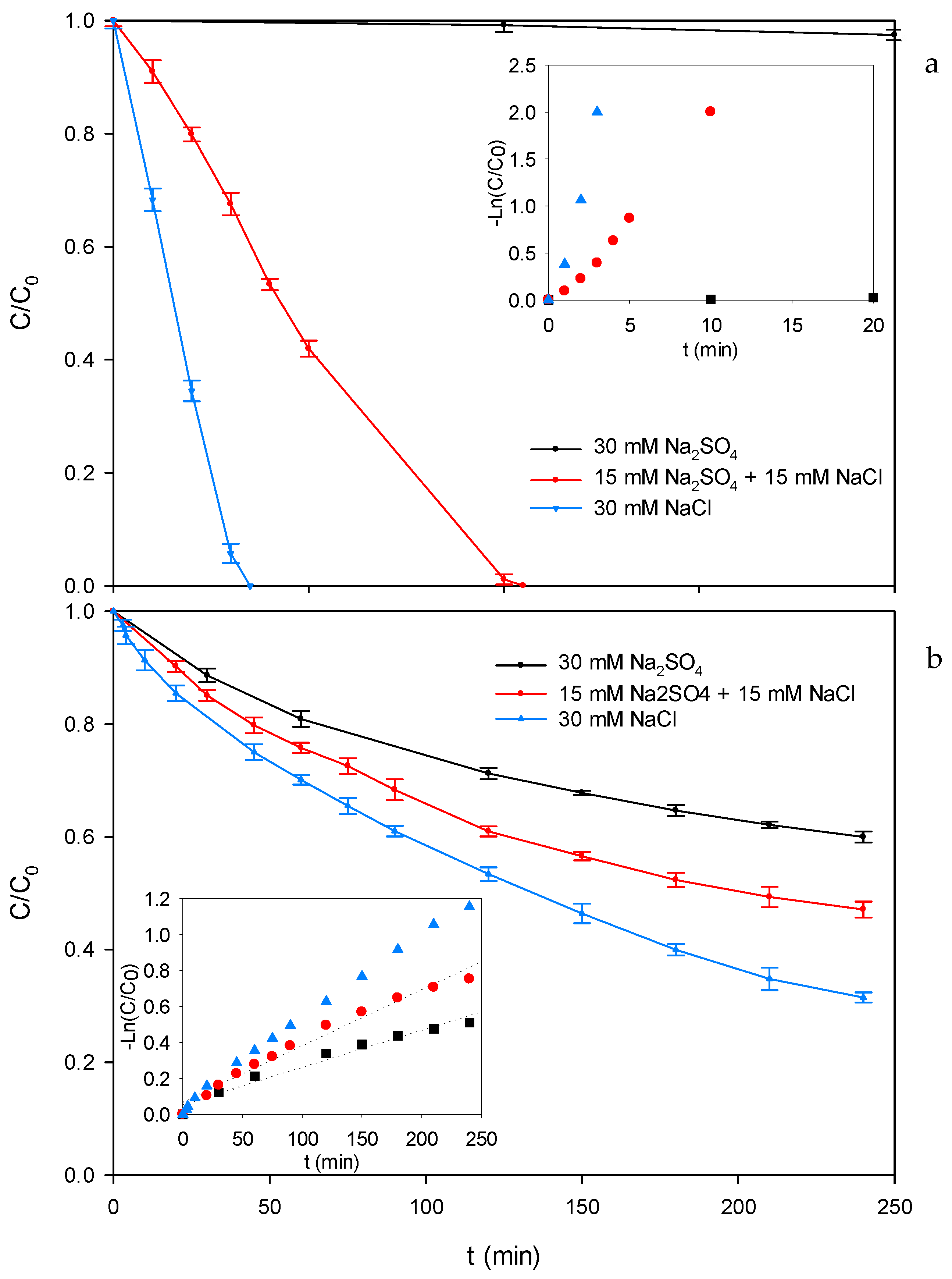
3.4.2. Effect of Electrolyte Support
3.5. Electro-Fenton and Photoelectro-Fenton Performance
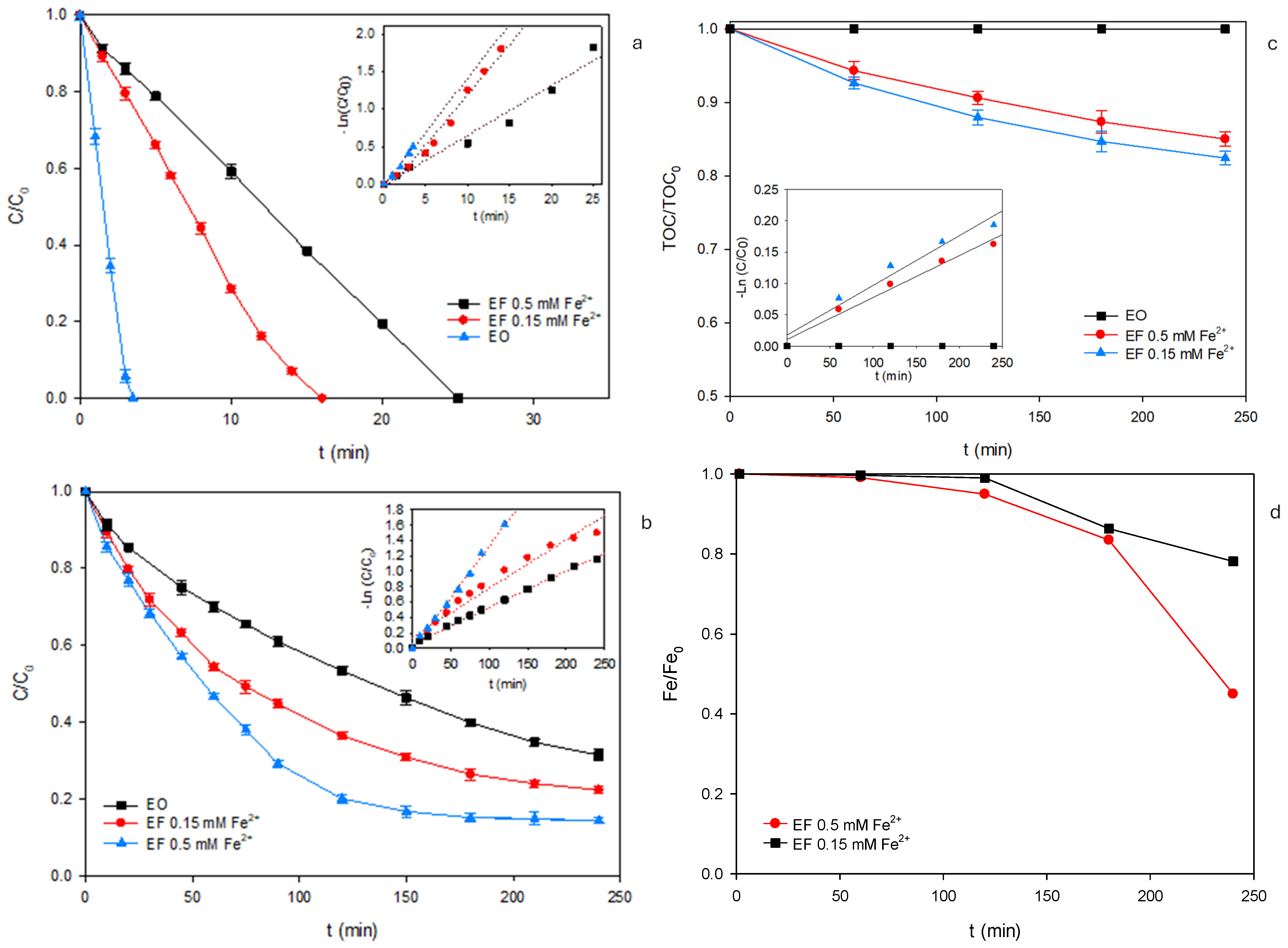
3.5.1. Effect of Fe2+ in EF Process
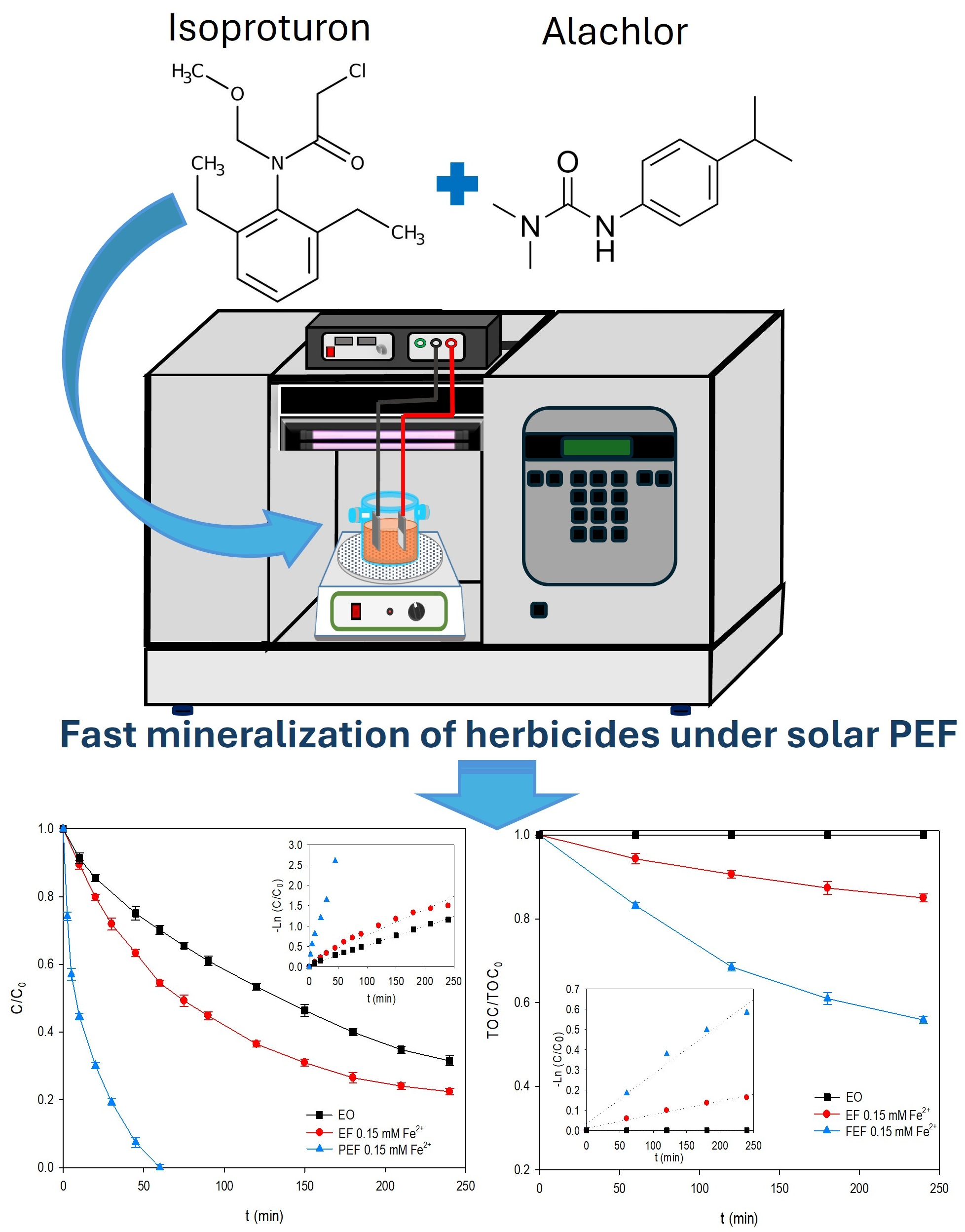
3.5.2. Effect of Fe2+ in Photoelectro-Fenton

| Process | Contaminant | Experimental Conditions | %TOC Removal | ECTOC | Ref. |
|---|---|---|---|---|---|
| PEF (BDD/ADE, 300 mA) | Alachlor (0.60 mM) | Volume 100 mL; pH 3; 0.05 M Na2SO4; Fe2+ = 0.5 mM; UVA 6 W; 300 mA; T = 25 °C | 98% | ≈5 Ah·L−1 | [56] |
| BDD electro-oxidation (1.55 mA/cm2) | Paraquat (70 mg/L) | Volume 0.65 L; 0.05 M Na2SO4; J = 1.55 mA/cm2; flow 500 mL/min | 91% | 0.10 kWh/gTOC | [57] |
| BDD electro-oxidation (1.0 mA/cm2) | Diquat (70 mg/L) | Volume 0.65 L; 0.05 M Na2SO4; J = 1.0 mA/cm2; flow 500 mL/min | 92% | 0.24 kWh/gTOC | [57] |
| UV/Fe(II)–citrate/H2O2 | Alachlor (10 mg/L) | Volume 20 mL; pH 5; Fe2+ 2 × 10⁻⁴ M; H2O2 4 × 10⁻³ M; citrate 5 × 10⁻⁴ M; Xe lamp 990 W | ≈100% (26 h) | Not reported | [43] |
| Gamma irradiation + H2O2 (1.0 mM) | Alachlor (40 µM) | Volume 15 mL; Co-60 source; 20 kGy; H2O2 = 1 mM; aerobic; 20 °C | 83.8% | Not reported | [58] |
| Cu/Al2O3-catalyzed ozonation | Alachlor (100 mg/L) | Volume 75 mL; pH 6.39; Cu/Al2O3 honeycomb; 0.488 mg O3/min; 20 °C | ≈60% (180 min) | Not reported | [59] |
| Solar TiO2/H-MOR (15 wt%) | Isoproturon (1.14 × 10⁻⁴ M) | Volume 50 mL; catalyst load 1.5 g/L; solar light 11–15 h; open dish reactor | ≈80% (5 h) | Not reported | [60] |
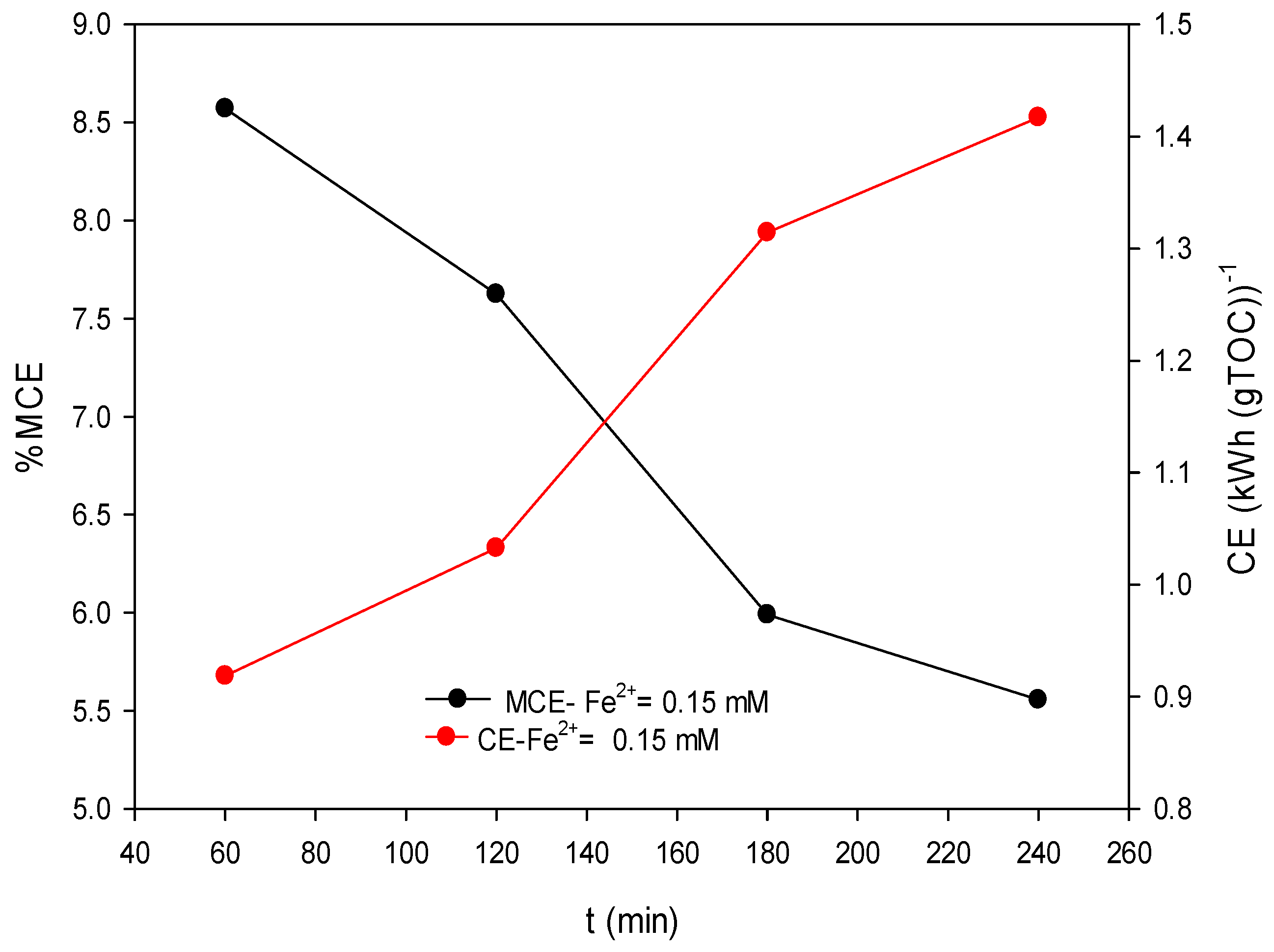
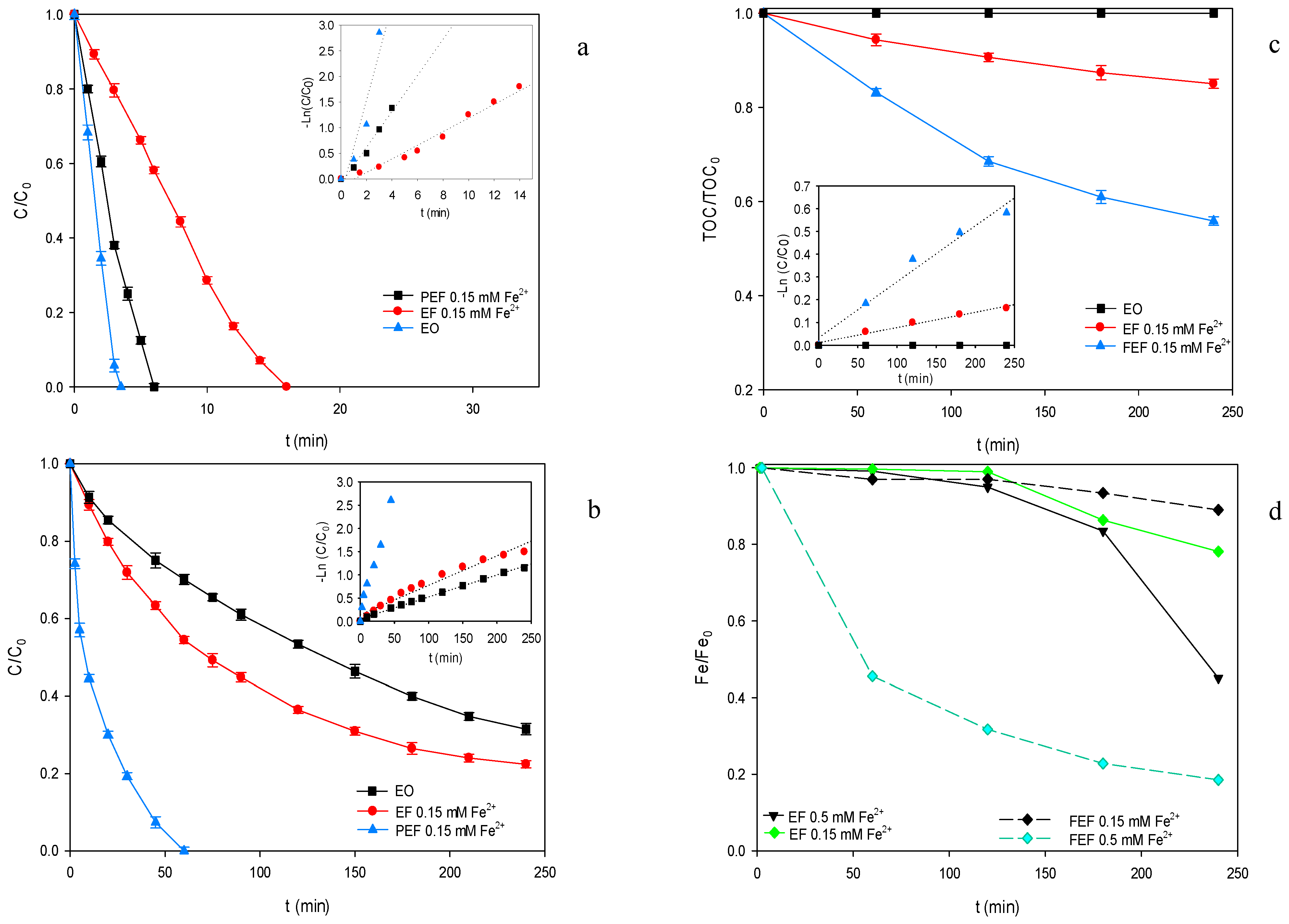
| Photoelectro-Fenton (DSA/BDD) | Isoproturon (50 mM) + Alachlor (50 mM) | Volume 500 mL; pH 3; J = 30 mA/cm−2; 30 mM NaCl; 240 min, 0.15 mM Fe2+; UV source 290 nm, 32 W m−2 | 76% (240 min) | 1.4 kWh/gTOC | This work |
4. Conclusions
Author Contributions
Funding
Data Availability Statement
Acknowledgments
Conflicts of Interest
References
- Thomas, S.; Alatrache, A.; Pons, M.-N.; Zahraa, O. Degradation of the Herbicide Isoproturon by a Photocatalytic Process. Comptes Rendus Chim. 2014, 17, 824–831. [Google Scholar] [CrossRef]
- Traunspurger, W.; Schäfer, H.; Remde, A. Comparative Investigation on the Effect of an Herbicide on Aquatic Organisms in Single Species Tests and Aquatic Microcosms. Chemosphere 1996, 33, 1129–1141. [Google Scholar] [CrossRef]
- Genter, M.B.; Burman, D.M.; Bolon, B. Progression of Alachlor-Induced Olfactory Mucosal Tumours. Int. J. Exp. Pathol. 2002, 83, 303–308. [Google Scholar] [CrossRef]
- Noyrod, P.; Chailapakul, O.; Wonsawat, W.; Chuanuwatanakul, S. The SimultanAOus Determination of Isoproturon and Carbendazim Pesticides by Single Drop Analysis Using a Graphene-Based Electrochemical Sensor. J. Electroanal. Chem. 2014, 719, 54–59. [Google Scholar] [CrossRef]
- Lundqvist, J.; von Brömssen, C.; Rosenmai, A.K.; Ohlsson, Å.; Le Godec, T.; Jonsson, O.; Kreuger, J.; Oskarsson, A. Assessment of Pesticides in Surface Water Samples from Swedish Agricultural Areas by Integrated Bioanalysis and Chemical Analysis. Environ. Sci. Eur. 2019, 31, 53. [Google Scholar] [CrossRef]
- Sanchez-Camazano, M.; Lorenzo, L.F.; Sanchez-MartÍn, M.J. Atrazine and Alachlor Inputs to Surface and Ground Waters in Irrigated Corn Cultivation Areas of Castilla-Leon Region, Spain. Environ. Monit. Assess. 2005, 105, 11–24. [Google Scholar] [CrossRef]
- Kong, L.; Kadokami, K.; Wang, S.; Duong, H.T.; Chau, H.T.C. Monitoring of 1300 Organic Micro-Pollutants in Surface Waters from Tianjin, North China. Chemosphere 2015, 122, 125–130. [Google Scholar] [CrossRef]
- Bravo-Yumi, N.P.; Espinoza-Montero, P.; Brillas, E.; Peralta-Hernández, J.M. Electrochemical Abatement of Atrazine Solutions Using an Undivided Stirred Tank Cell with Pt or BDD Anode. J. Mex. Chem. Soc. 2018, 62, 295–304. [Google Scholar] [CrossRef]
- Fu, R.; Zhang, P.-S.; Jiang, Y.-X.; Sun, L.; Sun, X.-H. Wastewater Treatment by Anodic Oxidation in Electrochemical Advanced Oxidation Process: Advance in Mechanism, Direct and Indirect Oxidation Detection Methods. Chemosphere 2023, 311, 136993. [Google Scholar] [CrossRef]
- Brillas, E. A Review on the Photoelectro-Fenton Process as Efficient Electrochemical Advanced Oxidation for Wastewater Remediation. Treatment with UV Light, Sunlight, and Coupling with Conventional and Other Photo-Assisted Advanced Technologies. Chemosphere 2020, 250, 126198. [Google Scholar] [CrossRef]
- Karlsson, R.K.B.; Cornell, A. Selectivity between Oxygen and Chlorine Evolution in the Chlor-Alkali and Chlorate Processes. Chem. Rev. 2016, 116, 2982–3028. [Google Scholar] [CrossRef] [PubMed]
- Pirsaheb, M.; Moradi, M.; Hossaini, H.; Shabanloo, M. Enhancement Oxidation of the 2,4-Dinitrophenol Using Electro-Activated Persulfate: Effect of Degradation Process Parameters. Desalination Water Treat. 2024, 318, 100370. [Google Scholar] [CrossRef]
- Farhat, A.; Keller, J.; Tait, S.; Radjenovic, J. Assessment of the Impact of Chloride on the Formation of Chlorinated By-Products in the Presence and Absence of Electrochemically Activated Sulfate. Chem. Eng. J. 2017, 330, 1265–1271. [Google Scholar] [CrossRef]
- Clematis, D.; Panizza, M. Electro-Fenton, Solar Photoelectro-Fenton and UVA Photoelectro-Fenton: Degradation of Erythrosine B Dye Solution. Chemosphere 2021, 270, 129480. [Google Scholar] [CrossRef]
- Ou, B.; Wang, J.; Wu, Y.; Zhao, S.; Wang, Z. Treatment of Polyaniline Wastewater by Coupling of Photoelectro-Fenton and HeterogenAOus Photocatalysis with Black TiO2 Nanotubes. ACS Omega 2019, 4, 9664–9672. [Google Scholar] [CrossRef]
- Mostafa, E.; Reinsberg, P.; Garcia-Segura, S.; Baltruschat, H. Chlorine Species Evolution during Electrochlorination on Boron-Doped Diamond Anodes: In-Situ Electrogeneration of Cl2, Cl2O and ClO2. Electrochim. Acta 2018, 281, 831–840. [Google Scholar] [CrossRef]
- Zhang, J.; Liu, Y.; Chen, Y.; Liu, S. Electro-Activated Persulfate Degradation of Chlorophene (CP): Kinetics, Mechanisms and ThAOretical Calculations. J. Taiwan. Inst. Chem. Eng. 2024, 164, 105684. [Google Scholar] [CrossRef]
- Zhang, M.; Li, X. Quantitative Analysis of Research Literature on Degradation of Pollutants by Fenton and Fenton-like AOPs Based on CiteSpace. Desalination Water Treat. 2024, 320, 100894. [Google Scholar] [CrossRef]
- Brillas, E. Recent Development of Electrochemical Advanced Oxidation of Herbicides. A Review on Its Application to Wastewater Treatment and Soil Remediation. J. Clean. Prod. 2021, 290, 125841. [Google Scholar] [CrossRef]
- Jiang, Y.; Zhao, H.; Liang, J.; Yue, L.; Li, T.; Luo, Y.; Liu, Q.; Lu, S.; Asiri, A.M.; Gong, Z.; et al. Anodic Oxidation for the Degradation of Organic Pollutants: Anode Materials, Operating Conditions and Mechanisms. A Mini Review. Electrochem. Commun. 2021, 123, 106912. [Google Scholar] [CrossRef]
- Clemente, E.; Domingues, E.; Quinta-Ferreira, R.M.; Leitão, A.; Martins, R.C. Solar Photo-Fenton and Persulphate-Based Processes for Landfill Leachate Treatment: A Critical Review. Sci. Total Environ. 2024, 912, 169471. [Google Scholar] [CrossRef]
- Thiam, A.; Salazar, R.; Brillas, E.; Sirés, I. In-Situ Dosage of Fe2+ Catalyst Using Natural Pyrite for Thiamphenicol Mineralization by Photoelectro-Fenton Process. J. Environ. Manag. 2020, 270, 110835. [Google Scholar] [CrossRef]
- Murrieta, M.F.; Sirés, I.; Brillas, E.; Nava, J.L. Mineralization of Acid Red 1 Azo Dye by Solar Photoelectro-Fenton-like Process Using Electrogenerated HClO and Photoregenerated Fe(II). Chemosphere 2020, 246, 125697. [Google Scholar] [CrossRef]
- Bravo-Yumi, N.; Espinoza-Montero, P.; Picos-Benítez, A.; Navarro-Mendoza, R.; Brillas, E.; Peralta-Hernández, J.M. Synthesis and Characterization of Sb2O5-Doped Ti/SnO2-IrO2 Anodes toward Efficient Degradation Tannery Dyes by in Situ Generated Oxidizing Species. Electrochim. Acta 2020, 358, 136904. [Google Scholar] [CrossRef]
- Jaafarzadeh, N.; Barzegar, G.; Ghanbari, F. Photo Assisted Electro-Peroxone to Degrade 2,4-D Herbicide: The Effects of Supporting Electrolytes and Determining Mechanism. Process Saf. Environ. Prot. 2017, 111, 520–528. [Google Scholar] [CrossRef]
- Eguiluz, K.I.B.; Hernandez-Sanchez, N.K.; Dória, A.R.; Santos, G.O.S.; Salazar-Banda, G.R.; Ponce de Leon, C. Template-Made Tailored Mesoporous Ti/SnO2-Sb2O5-IrO2 Anodes with Enhanced Activity towards Dye Removal. J. Electroanal. Chem. 2022, 910, 116153. [Google Scholar] [CrossRef]
- Panizza, M.; Cerisola, G. Direct and Mediated Anodic Oxidation of Organic Pollutants. Chem. Rev. 2009, 109, 6541–6569. [Google Scholar] [CrossRef] [PubMed]
- Alam, M.M.; Das, A.; Adak, A. Hydroxyl and Sulfate Radicals-Based Electrochemical Advanced Oxidation Process for Treating Dye-Bearing Wastewater—A Review. Water Pr. Technol. 2024, 19, 4816–4838. [Google Scholar] [CrossRef]
- Saha, P.; Wang, J.; Zhou, Y.; Carlucci, L.; Jeremiasse, A.W.; Rijnaarts, H.H.M.; Bruning, H. Effect of Electrolyte Composition on Electrochemical Oxidation: Active Sulfate Formation, Benzotriazole Degradation, and Chlorinated by-products Distribution. Environ. Res. 2022, 211, 113057. [Google Scholar] [CrossRef] [PubMed]
- Zhang, W.; Chen, J.; Wang, J.; Cui, C.X.; Wang, B.; Zhang, Y. Impact of Active Chlorines and •OH Radicals on Degradation of Quinoline Using the Bipolar Electro-Fenton Process. Water 2021, 13, 128. [Google Scholar] [CrossRef]
- Barisci, S.; Suri, R. Evaluation of Chlorate/Perchlorate Formation during Electrochemical Oxidation of PFAS: The Roles of Free Chlorine and Hydroxyl Radical. J. Water Process Eng. 2022, 50, 103341. [Google Scholar] [CrossRef]
- Domingo-Torner, C.; Pérez-Herranz, V.; Mestre, S.; García-Gabaldón, M. Electrolyte Influence on Light-Assisted Electrooxidation of an Herbicide Employing an Sb-SnO2 Electrode Coated with a Bi2WO6 Photocatalyst. Sep. Purif. Technol. 2025, 366, 132859. [Google Scholar] [CrossRef]
- Lei, Y.; Cheng, S.; Luo, N.; Yang, X.; An, T. Rate Constants and Mechanisms of the Reactions of Cl• and Cl2•− with Trace Organic Contaminants. Environ. Sci. Technol. 2019, 53, 11170–11182. [Google Scholar] [CrossRef]
- Araújo, K.C.F.; dos Santos, E.V.; Nidheesh, P.V.; Martínez-Huitle, C.A. Fundamentals and Advances on the Mechanisms of Electrochemical Generation of Persulfate and Sulfate Radicals in Aqueous Medium. Curr. Opin. Chem. Eng. 2022, 38, 100870. [Google Scholar] [CrossRef]
- Divyapriya, G.; Nidheesh, P.V. Electrochemically Generated Sulfate Radicals by Boron Doped Diamond and Its Environmental Applications. Curr. Opin. Solid. State Mater. Sci. 2021, 25, 100921. [Google Scholar] [CrossRef]
- Rodríguez, J.F.; Nava, J.L. Active Chlorine Electrosynthesis from Dilute Chloride Solutions in a Flow Cell Equipped with a Ti|Ti-Ru-Ir-Oxides Anode. Chem. Eng. Process. Process Intensif. 2024, 196, 109634. [Google Scholar] [CrossRef]
- Yin, H.; Zhang, Q.; Jing, J.; Wang, X.; Yin, X.; Zhou, M. An Efficient Fe2+ Assisted UV/Electrogenerated-Chlorine Process for Carbamazepine Degradation: The Role of Fe(IV). Chemosphere 2022, 307, 136168. [Google Scholar] [CrossRef]
- Wen, Z.; Ren, S.; Zhang, Y.; Li, J.; Zhang, Z.; Wang, A. Performance of Anode Materials in Electro-Fenton Oxidation of Cefoperazone in Chloride Medium: New Insight into Simultaneous Mineralization and Toxic Byproducts Formation. J. Clean. Prod. 2022, 377, 134225. [Google Scholar] [CrossRef]
- Vogt, H.; Balzer, R.J. The Bubble Coverage of Gas-Evolving Electrodes in Stagnant Electrolytes. Electrochim. Acta 2005, 50, 2073–2079. [Google Scholar] [CrossRef]
- Rodríguez, E.M.; von Gunten, U. Generation of Hydroxyl Radical during Chlorination of Hydroxyphenols and Natural Organic Matter Extracts. Water Res. 2020, 177, 115691. [Google Scholar] [CrossRef]
- Aguilar, Z.G.; Brillas, E.; Salazar, M.; Nava, J.L.; Sirés, I. Evidence of Fenton-like Reaction with Active Chlorine during the Electrocatalytic Oxidation of Acid Yellow 36 Azo Dye with Ir-Sn-Sb Oxide Anode in the Presence of Iron Ion. Appl. Catal. B 2017, 206, 44–52. [Google Scholar] [CrossRef]
- Lou, Y.-Y.; Geneste, F.; Soutrel, I.; Amrane, A.; Fourcade, F. Alachlor Dechlorination Prior to an Electro-Fenton Process: Influence on the Biodegradability of the Treated Solution. Sep. Purif. Technol. 2019, 232, 115936. [Google Scholar] [CrossRef]
- Katsumata, H.; Kaneco, S.; Suzuki, T.; Ohta, K.; Yobiko, Y. Photo-Fenton Degradation of Alachlor in the Presence of Citrate Solution. J. Photochem. Photobiol. A Chem. 2006, 180, 38–45. [Google Scholar] [CrossRef]
- Gernjak, W.; Fuerhacker, M.; Fernández-Ibañez, P.; Blanco, J.; Malato, S. Solar Photo-Fenton Treatment—Process Parameters and Process Control. Appl. Catal. B 2006, 64, 121–130. [Google Scholar] [CrossRef]
- Pipi, A.R.F.; De Andrade, A.R.; Brillas, E.; Sirés, I. Total Removal of Alachlor from Water by Electrochemical Processes. Sep. Purif. Technol. 2014, 132, 674–683. [Google Scholar] [CrossRef]
- Ziembowicz, S.; Kida, M. Limitations and Future Directions of Application of the Fenton-like Process in Micropollutants Degradation in Water and Wastewater Treatment: A Critical Review. Chemosphere 2022, 296, 134041. [Google Scholar] [CrossRef] [PubMed]
- Kubo, D.; Kawase, Y. Hydroxyl Radical Generation in Electro-Fenton Process with in Situ Electro-Chemical Production of Fenton Reagents by Gas-Diffusion-Electrode Cathode and Sacrificial Iron Anode. J. Clean. Prod. 2018, 203, 685–695. [Google Scholar] [CrossRef]
- Flox, C.; Garrido, J.A.; Rodríguez, R.M.; Cabot, P.-L.; Centellas, F.; Arias, C.; Brillas, E. Mineralization of Herbicide Mecoprop by Photoelectro-Fenton with UVA and Solar Light. Catal. Today 2007, 129, 29–36. [Google Scholar] [CrossRef]
- Deng, F.; Olvera-Vargas, H.; Zhou, M.; Qiu, S.; Sirés, I.; Brillas, E. Critical Review on the Mechanisms of Fe2+ Regeneration in the Electro-Fenton Process: Fundamentals and Boosting Strategies. Chem. Rev. 2023, 123, 4635–4662. [Google Scholar] [CrossRef]
- Sopaj, F.; Oturan, N.; Pinson, J.; Podvorica, F.I.; Oturan, M.A. Effect of Cathode Material on Electro-Fenton Process Efficiency for Electrocatalytic Mineralization of the Antibiotic Sulfamethazine. Chem. Eng. J. 2020, 384, 123249. [Google Scholar] [CrossRef]
- Qiang, Z.; Chang, J.-H.; Huang, C.-P. Electrochemical Regeneration of Fe2+ in Fenton Oxidation Processes. Water Res. 2003, 37, 1308–1319. [Google Scholar] [CrossRef]
- Coledam, D.A.C.; Sánchez-Montes, I.; Silva, B.F.; Aquino, J.M. On the Performance of HOCl/Fe2+, HOCl/Fe2+/UVA, and HOCl/UVC Processes Using in Situ Electrogenerated Active Chlorine to Mineralize the Herbicide Picloram. Appl. Catal. B 2018, 227, 170–177. [Google Scholar] [CrossRef]
- Gozzi, F.; Sirés, I.; Thiam, A.; de Oliveira, S.C.; Junior, A.M.; Brillas, E. Treatment of Single and Mixed Pesticide Formulations by Solar Photoelectro-Fenton Using a Flow Plant. Chem. Eng. J. 2017, 310, 503–513. [Google Scholar] [CrossRef]
- Brillas, E. Solar Photoelectro-Fenton: A Very Effective and Cost-Efficient Electrochemical Advanced Oxidation Process for the Removal of Organic Pollutants from Synthetic and Real Wastewaters. Chemosphere 2023, 327, 138532. [Google Scholar] [CrossRef] [PubMed]
- Özcan, A.A.; Özcan, A. Investigation of Applicability of Electro-Fenton Method for the Mineralization of Naphthol Blue Black in Water. Chemosphere 2018, 202, 618–625. [Google Scholar] [CrossRef] [PubMed]
- Diaw, P.A.; Oturan, N.; Seye, M.D.G.; Coly, A.; Tine, A.; Aaron, J.J.; Oturan, M.A. Oxidative Degradation and Mineralization of the Phenylurea Herbicide Fluometuron in Aqueous Media by the Electro-Fenton Process. Sep. Purif. Technol. 2017, 186, 197–206. [Google Scholar] [CrossRef]
- Teutli-Sequeira, E.A.; Vasquez-Medrano, R.; Prato-Garcia, D.; Ibanez, J.G. The Electrooxidation of Synthetic Bipyridyl Herbicide Wastewaters with Boron-Doped Diamond Electrodes: A Technical and Economic Study to Boost Their Application for Pollution Prevention in the Agricultural Sector. Processes 2024, 12, 2486. [Google Scholar] [CrossRef]
- Choi, D.; Lee, O.M.; Yu, S.; Jeong, S.W. Gamma Radiolysis of Alachlor Aqueous Solutions in the Presence of Hydrogen Peroxide. J. Hazard. Mater. 2010, 184, 308–312. [Google Scholar] [CrossRef]
- Qu, J.; Li, H.; Liu, H.; He, H. Ozonation of Alachlor Catalyzed by Cu/Al2O3 in Water. Catal. Today 2004, 90, 291–296. [Google Scholar] [CrossRef]
- Sharma, M.V.P.; Durgakumari, V.; Subrahmanyam, M. Solar Photocatalytic Degradation of Isoproturon over TiO2/H-MOR Composite Systems. J. Hazard. Mater. 2008, 160, 568–575. [Google Scholar] [CrossRef]
- Walling, S.A.; Um, W.; Corkhill, C.L.; Hyatt, N.C. Fenton and Fenton-like Wet Oxidation for Degradation and Destruction of Organic Radioactive Wastes. Mater. Degrad. 2021, 5, 50. [Google Scholar] [CrossRef]
- Larralde-Piña, I.A.; Acuña-Askar, K.; Villanueva-Rodríguez, M.; Guzmán-Mar, J.L.; Murillo-Sierra, J.C.; Ruiz-Ruiz, E.J. An Optimized Electro-Fenton Pretreatment for the Degradation and Mineralization of a Mixture of Ofloxacin, Norfloxacin, and Ciprofloxacin. Chemosphere 2023, 344, 140339. [Google Scholar] [CrossRef] [PubMed]
- San juan-Garisado, Y.; Luna-Guevara, F.; Herrera, P.A.; Soto-Paz, J.; Alvarez-Trujillo, J.D.; Mejia-Parada, C.; Parra-Orobio, B.A. Optimization of the Photo-Fenton Process for the Effective Removal of Chemical Oxygen Demand and Phenols in Portable Toilet Wastewater: A Treatment Study under Real World Conditions. Heliyon 2024, 10, e35286. [Google Scholar] [CrossRef] [PubMed]


Disclaimer/Publisher’s Note: The statements, opinions and data contained in all publications are solely those of the individual author(s) and contributor(s) and not of MDPI and/or the editor(s). MDPI and/or the editor(s) disclaim responsibility for any injury to people or property resulting from any ideas, methods, instructions or products referred to in the content. |
© 2025 by the authors. Licensee MDPI, Basel, Switzerland. This article is an open access article distributed under the terms and conditions of the Creative Commons Attribution (CC BY) license (https://creativecommons.org/licenses/by/4.0/).
Share and Cite
Bravo-Yumi, N.; Oller, I.; Ruiz-Delgado, A.; Pacheco-Álvarez, M.O.A.; Peralta-Hernández, J.M. Electrolyte-Driven Oxidant Generation on Ti/IrO2–SnO2–Sb2O5 Electrodes for the Efficient Removal of Alachlor and Isoproturon from Water. Water 2025, 17, 3472. https://doi.org/10.3390/w17243472
Bravo-Yumi N, Oller I, Ruiz-Delgado A, Pacheco-Álvarez MOA, Peralta-Hernández JM. Electrolyte-Driven Oxidant Generation on Ti/IrO2–SnO2–Sb2O5 Electrodes for the Efficient Removal of Alachlor and Isoproturon from Water. Water. 2025; 17(24):3472. https://doi.org/10.3390/w17243472
Chicago/Turabian StyleBravo-Yumi, Nelson, Isabel Oller, Ana Ruiz-Delgado, Martin O. A. Pacheco-Álvarez, and Juan M. Peralta-Hernández. 2025. "Electrolyte-Driven Oxidant Generation on Ti/IrO2–SnO2–Sb2O5 Electrodes for the Efficient Removal of Alachlor and Isoproturon from Water" Water 17, no. 24: 3472. https://doi.org/10.3390/w17243472
APA StyleBravo-Yumi, N., Oller, I., Ruiz-Delgado, A., Pacheco-Álvarez, M. O. A., & Peralta-Hernández, J. M. (2025). Electrolyte-Driven Oxidant Generation on Ti/IrO2–SnO2–Sb2O5 Electrodes for the Efficient Removal of Alachlor and Isoproturon from Water. Water, 17(24), 3472. https://doi.org/10.3390/w17243472