Article

Spatiotemporal Variation Characteristics of Industrial Structure in the Yellow River Basin, China, and Its Impact on the Water Environment


1
State Key Laboratory of Environment Criteria and Risk Assessment, Chinese Research Academy of Environmental Sciences, Beijing 100012, China
2
School of Energy and Environmental Engineering, University of Science and Technology Beijing, Beijing 100083, China
3
College of Environment, Hohai University, Nanjing 210098, China
4
College of Geography and Environmental Science, Northwest Normal University, Lanzhou 730070, China
*
Author to whom correspondence should be addressed.
Water 2025, 17(22), 3326; https://doi.org/10.3390/w17223326
Submission received: 24 October 2025 / Revised: 16 November 2025 / Accepted: 18 November 2025 / Published: 20 November 2025
(This article belongs to the Section Water Quality and Contamination)

Abstract

The Yellow River Basin (YRB) is a vital water source and an essential ecological barrier in northern China. Currently, it faces pressing challenges related to water resource security and displays pronounced disparities in regional economic development. In recent years, with the elevation of Ecological Protection and High-Quality Development to a national strategy, examining the interaction between industrial growth and water environmental quality within the basin has become a priority. This study focuses on the mainstem of the YRB. By compiling relevant data from 2000 to 2021 and collecting water samples from 20 mainstem sites, and by integrating spatial distribution information of key industrial sectors with water quality records (including representative heavy metals and anions), we found that the basin’s economic output expanded significantly over the past two decades, approximately 11.7 times. The industrial structure evolved across provinces within the basin, exhibiting an overall upward trend in industrial upgrading; nevertheless, substantial differences in industrial composition and transformation persist between the upper and lower reaches. Spatial variations in different industries are closely associated with pollutant concentrations. In particular, major industries in the middle–lower reaches, notably concentrated in regions such as Shandong, possess high total asset values. Output from certain sectors (e.g., petroleum extraction, coal mining and processing, non-metallic mineral mining and processing) is strongly correlated with pollution changes, with marked spatial linkages between their geographic distribution and concentrations of critical heavy metals (Cu, Se, Mo, Mn, Ni). Moreover, spatial analysis of the industry–pollution nexus reveals an apparent paradox in the middle–lower YRB: high industrial output coupled with relatively low levels of heavy metal contamination. This finding highlights the pivotal role of an advanced industrial structure and elevated regional development quality in mediating the balance between economic expansion and environmental pressure. In conclusion, as a globally significant large river basin, the YRB demonstrates a tight coupling between water quality and industrial structure. The results provide spatially explicit scientific evidence and policy guidance for the coordinated advancement of industrial green transformation and water quality improvement in the YRB, offering broader insights into industrial structure patterns and pollution control strategies applicable to major river basins worldwide.

1. Introduction

Since the late 20th century, China’s economy has undergone rapid expansion, predominantly driven by a resource-intensive development model. Characterized by substantial resource inputs, this model primarily generates simple primary goods, with production sectors persistently marked by high consumption, high pollution, low added value, and low efficiency. Such extensive growth patterns have significantly intensified pressures on the ecological environment [1,2,3]. Currently, as China advances the comprehensive Beautiful China initiative, tensions between industrial development in the Yellow River Basin (YRB) and the demands of high-quality development strategies have become increasingly pronounced. As a representative region, the basin has suffered from decades of industrial pollution, continually exacerbating water resource stress [4], rendering industrial restructuring an essential pathway for achieving high-quality development [3]. Since 2000, optimization of industrial structure has been recognized as a core policy instrument for environmental governance. Following the implementation of the 13th Five-Year Plan, further priority has been accorded to industrial structure adjustment as a means of realizing high-quality development. Within this context, determining how to reshape the industrial structure and identifying effective approaches to achieve high-quality development have emerged as central research questions across multiple disciplines.
The YRB is indispensable for safeguarding national economic growth, food security, energy supply, and ecological stability. Nevertheless, challenges to water security in the basin remain acute, characterized by stark east–west economic disparities and substantial fluctuations in high-quality development levels among central cities [5]. Previous studies have revealed marked spatial heterogeneity in high-quality development: cities in the middle–upper reaches tend to exhibit lower composite development levels but higher subsystem equilibrium (“low-level equilibrium”), whereas downstream regions possess higher composite levels yet poorer subsystem equilibrium (“high-level imbalance”). Overall, the basin suffers from pronounced developmental imbalances and deficiencies, coupled with suboptimal high-quality development. Such regional disparities are particularly evident across five key dimensions—innovation, coordination, green growth, openness, and sharing [6]. Against this backdrop, industrial restructuring is regarded as a strategic mechanism for stimulating economic growth and achieving high-quality development [7,8], representing a pivotal means of achieving both objectives simultaneously. Importantly, productive water use imposes considerably greater stress on water resources than domestic use. In this regard, economic expansion and industrial scaling constitute major drivers of pressure on the water system, while improved industrial water efficiency and structural adjustments act as critical mitigating factors [9]. Thus, implementing development strategies differentiated to reflect local conditions—particularly through industrial restructuring—is essential for enhancing basin water quality [8].
Accordingly, reconciling industrial sector expansion with environmental protection remains a critical challenge in the YRB, with the industry–environment linkage receiving sustained research attention. In particular, understanding the influence of spatiotemporal industrial restructuring on water quality represents a key focus area. The role of industrial upgrading in environmental remediation and high-quality development has become increasingly prominent [10]. Industrial structure adjustment serves as a crucial lever for promoting high-quality development, yet few studies have explored the relationship between industrial structure and river basin water environments. This study aims to address this gap and enrich the existing literature. Focusing on the response of water environments to industrial structural evolution, the research first integrates recent industrial statistical data, multi-period water quality monitoring records, and characteristic pollutant emission data from the Yellow River Basin to establish a foundation for cross-dimensional correlation analysis. Second, by comparing historical data, it traces the coupling patterns between long-term industrial structural changes and water quality evolution. Finally, based on the spatial distribution of key pollutants, it reveals the spatial differentiation of how regional industrial structures affect water environments. The findings are expected to provide empirical support—with both temporal continuity and spatial specificity—for optimizing industrial structures and formulating precise water resource protection policies across large river basins.

2. Materials and Methods

2.1. Data Collection and Sources

Quantitative assessment of industrial structural changes was conducted using the proportion of tertiary industry output value to GDP as the core indicator. Primary data included the output value of the tertiary industry, the gross industrial output value, and total assets for eight provinces/autonomous regions within the YRB—Qinghai, Gansu, Ningxia, Inner Mongolia, Shaanxi, Shanxi, Henan, and Shandong—covering the period 2000–2021. These datasets were obtained mainly from provincial statistical yearbooks and the China Statistical Yearbook. As the YRB covers less than 4% of Sichuan Province’s territory and no systematic data for this part were available, Sichuan was excluded from the analysis. Historical water quality classification data for the YRB were extracted from the China Ecological and Environmental Status Bulletin for the corresponding years.

2.2. Sample Collection and Analytical Testing

Summer, as the high-flow season in the Yellow River Basin, presents a distinctive interaction between the pollutant dilution effect and the intensive emissions during the industrial peak period. This interaction not only reflects the actual impact of industrial activities on the aquatic environment but also demonstrates the buffering capacity of the basin’s hydrological system against pollution. Such an “emission–dilution” coupling pattern is highly representative in studies of environmental responses at the basin scale. Therefore, based on the analysis of spatiotemporal industrial structural characteristics in the YRB, twenty water samples were collected mainly along the mainstem of the YRB in July 2023 to explore potential links between industrial structure with the water environment (Figure 1). Sampling sites were categorized into three representative segments: upper–middle (Qinghai, Gansu, Ningxia), middle (Inner Mongolia, Shanxi, Shaanxi), and middle–lower reaches (Henan, Shandong). The middle reach, being the industrial core zone of the Yellow River Basin—encompassing coal, petroleum refining, and non-ferrous metal smelting industries—represents a key area for investigating interactions between industry and water environment. Therefore, sampling density was increased in this segment. Although fewer sampling sites were selected for the upper and lower reaches, they still covered major industrial cities and ecological conservation areas, ensuring the validity of the core relational analysis. The upper–middle reach segment comprised sites M01–M03, all within Lanzhou City. Due to its significant industrial concentration, the middle reach segment included fourteen sites: M04–M06 in Baotou City, Inner Mongolia; M07–M09 in Yulin City, Shaanxi Province; M10–M11 in Hancheng, Shaanxi; M12 in Yuncheng, Shanxi; and M13–M17 covering Sanmenxia, Luoyang, and Gongyi in Henan Province. The middle–lower reach segment contained three sites: M18 in Tai’an, M19 in Zibo, and M20 in Dongying, Shandong Province.
Water samples were filtered through 0.45 μm membranes and subsequently analyzed for heavy metals using ICP-MS (Agilent 7800, Santa Clara, CA, USA). To ensure analytical reliability and accuracy, rhodium (Rh), rhenium (Re), and thorium (Th) were used as internal standards. The recovery ranges obtained were Rh: 90.1–120.9%, Re: 98.6–113.5%, and Th: 93.9–107.7%, demonstrating that the analytical precision and reliability fell within acceptable limits. Furthermore, parallel samples were analyzed to verify the repeatability of metal detection.
Filtered water samples were examined for F, Cl, NO2, NO3, and SO42− using an ion chromatograph (Dionex ICS-2000; Dionex Corporation, Sunnyvale, AC, USA). Perchlorate was determined via liquid chromatography–tandem mass spectrometry (Waters, Milford, MA, USA) equipped with a SynergiTM Max-RP reversed-phase column (2.0 × 100 mm, 2.5 μm). The mobile phases comprised: (A) 0.1% formic acid in water and (B) methanol, delivered at 0.40 mL/min with a column temperature of 30 °C and an injection volume of 10 μL, at a ratio of 50:50 (A:B). Additional MS parameters included: capillary voltage 0.5 kV, source temperature 110 °C, desolvation gas temperature 500 °C, desolvation gas flow rate 800 L/h, cone gas flow rate 50 L/h, and collision cell pressure 3.5 × 10⁻³ mbar. Calibration curves ranged from 2.00 to 200 μg/L, with quantification performed using the internal standard method.

2.3. Statistical Analysis

Industrial gross output value and total assets by sector can serve as partial indicators of enterprise scale. However, due to significant variations in price levels over the years, direct comparison of output value data from different years may result in substantial deviations from the actual changes in industrial scale. To eliminate distortions arising from price fluctuations in assessing industrial scale, the GDP deflator was applied to adjust cross-year output data for comparability [11]. Using 2000 as the base year, price deflation was performed employing the GDP deflator values published by the National Bureau of Statistics, according to the following formula:
R e a l   O u t p u t   V a l u e = N o m i n a l   O u t p u t   V a l u e G D P   D e f l a t o r
where the base year (2000) GDP deflator equals 1, calculated using the GDP deflator issued by the National Bureau of Statistics. Annual GDP deflators are provided in Table 1.
Relying solely on industrial proportion metrics provides an incomplete representation of the comprehensive optimization level of specific industrial structures. Therefore, this study employed the industrial structure advancement index (C) to conduct an in-depth assessment of the upper, middle, and lower reaches of the YRB (Table 2). The industrial structure advancement index reflects the progression of industrial structures from lower to higher levels, driven by technological advancement. It serves as a benchmark for evaluating structural shifts and is defined by changes in inter-sectoral proportions [12]. Denoted as C, a higher value indicates greater advancement in industrial structure. The analytical formula is as follows:
C = Y 3 Y 2
where Y3 represents the value-added of the tertiary sector and Y2 denotes the value-added of the secondary sector.
Based on measured pollutant concentrations at the sampling sites, we found that some heavy metal elements were not detected at 20 sampling sites in the watershed. With reference to the Environmental Quality Standards for Surface Water (GB 3838-2002) [13] and the Standards for Drinking Water Quality (GB 5749-2022) [14], China. it was found that the detection limits of all elements were far lower than their corresponding environmental risk threshold values (e.g., detection limit of Bi < 0.1 ng/L). Therefore, elements with concentrations below the detection limits were preliminarily ruled out. elements with concentrations below detection limits were initially excluded. The coefficient of variation (CV) was subsequently calculated to identify metals exhibiting relatively high concentrations and significant variability, namely Mn, Co, Ni, Cu, Zn, Se, Mo, Sb, As, Mg, Sr, and Ba. These elements displayed substantial concentration fluctuations, indicative of potential localized pollution hotspots. Although arsenic (As) is classified as a metalloid, it was retained owing to its pronounced ecotoxicity and bioaccumulation potential. In addition, Ni, As, Cr, and Pb were selected for separate analysis as priority pollutants with confirmed carcinogenic risks according to the classification criteria of the International Agency for Research on Cancer (IARC). Given that several sampling sites were located within designated drinking water source areas, measured pollutant concentrations were further compared against the Standards for Drinking Water Quality (GB 5749-2022) [14] to identify exceedance parameters.

3. Analysis of Results

3.1. Characteristics of Industrial Structure Transformation in the Yellow River Basin

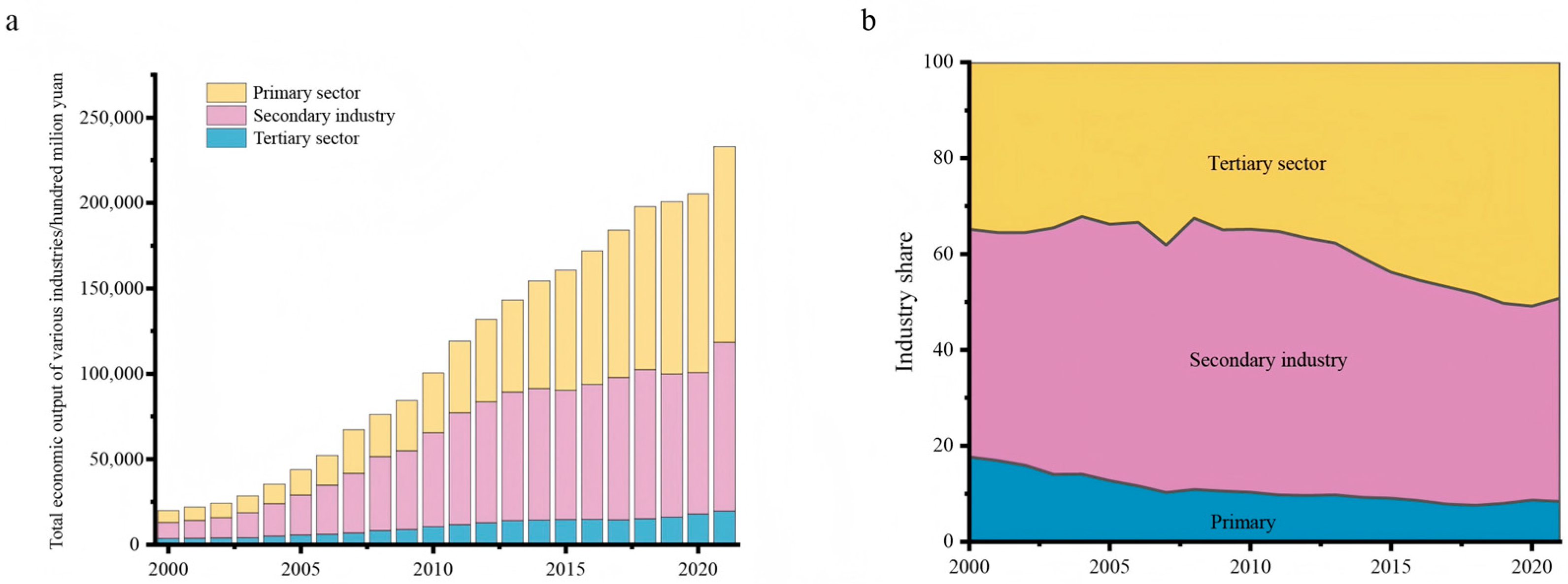
Following adjustment using the deflator index, the total economic output of the YRB experienced substantial growth between 2000 and 2021 (Figure 2a). Gross Domestic Product (GDP) expanded from 1.9898 trillion yuan to 23.3 trillion yuan, representing an approximately 11.7-fold increase. Industrial restructuring occurred in distinct phases: early-stage growth was primarily driven by the secondary sector, whereas subsequent acceleration was led by the tertiary sector, indicating phase-dependent drivers of regional economic expansion. As shown in Figure 2b, the evolution of the industrial structure maintained a secondary–tertiary–primary configuration for a defined period but underwent notable compositional shifts. Since 2000, the primary sector’s share declined steadily from 17.68% to 8.43%—a reduction of 9.25 percentage points—making it the slowest-growing sector. The tertiary sector’s proportion increased steadily from 34.84% to 49.19%, exhibiting the most pronounced annual growth rate. The secondary sector’s share remained within a central range of ~45% over the long term, although showing a slight downward trend in recent years. Overall, the YRB’s industrial structure has tended towards a tertiary–secondary–primary arrangement, reflecting sustained tertiary sector advancement. Nevertheless, the current tertiary share remains insufficient, highlighting the need for further strengthening of the industrial base.
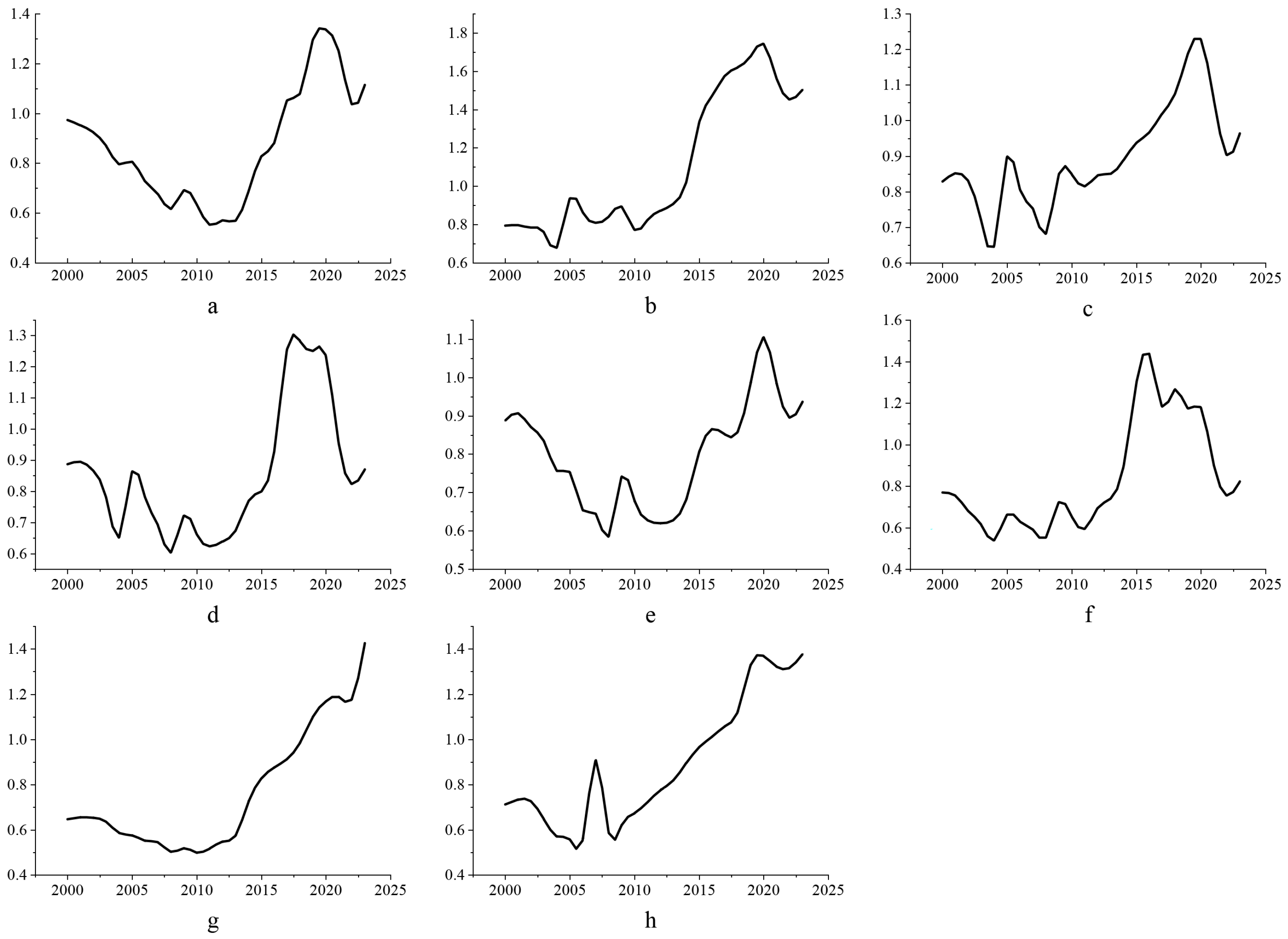
An evaluation of industrial structure advancement (index C) was undertaken for the upper–middle, middle, and middle–lower reaches (Table 2). In 2000, the advancement indices of the upper–middle and middle reaches were significantly higher than those of the middle–lower reaches. The advancement index in the middle–lower reaches declined continuously until 2008, when an inflection point was reached, after which accelerated industrial restructuring prompted upgrading in this region. By contrast, the middle reach displayed marked fluctuations, peaking at 1.160 in 2020 before dropping sharply to 0.829. In recent years, industrial structure upgrading across the entire YRB has intensified, albeit with pronounced regional disparities. In the middle reach, a stronger emphasis on shifting industries towards the secondary sector rather than the tertiary sector directly contributed to the persistent decline in its advancement index. By 2022, the middle–lower reaches had established a more balanced and rational industrial structure compared to the middle reach. Although overall economic development in the upper–middle reach still lags behind that of the middle–lower reaches, its industrial structure upgrading has proceeded at a comparatively faster pace.
We further analyzed the industrial structure advancement index (C) for provinces from the upper to lower reaches of the YRB (Figure 3). All provinces exhibited fluctuating advancement levels; for example, Shanxi Province rose sharply to a peak in 2015 before entering a gradual decline. With the exception of Henan and Shandong—where industrial structures maintained a consistently upward trajectory—the remaining provinces displayed unstable structural patterns over time. Nevertheless, long-term analysis indicates that industrial structures across the YRB have undergone continuous adjustment since 2000, with the advancement index showing an overall sustained improvement.

3.2. Spatial and Temporal Distribution Characteristics of Typical Industries in the Yellow River Basin

The total industrial assets in the middle–lower reaches were substantially greater than those in the upper–middle reaches. Industrial enterprises were predominantly concentrated in Shandong, Henan, and Shanxi. Over the study period, total industrial assets in the middle reach increased, whereas those in the upper reach remained relatively stable or declined. By sector, the secondary industry in the YRB comprised both traditional and strategic emerging industries. Key regional industries were dominated by heavy chemical sectors such as coal and oil extraction, as well as metal smelting, with the chemical industry in the Shandong Peninsula urban cluster maintaining a consistently leading national position.
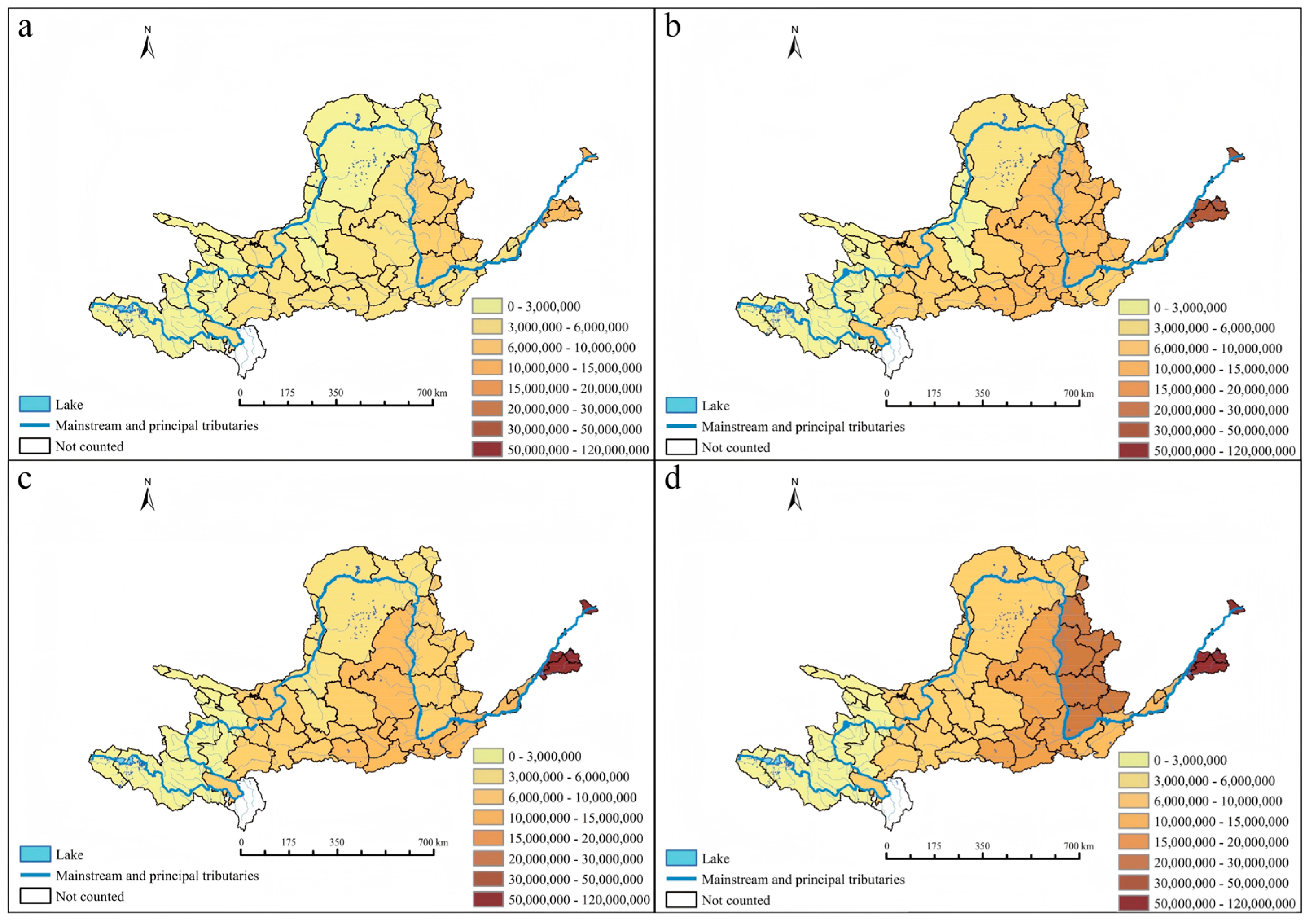
Petroleum processing, coking, and nuclear fuel manufacturing—representative sectors within the YRB—exhibited substantial growth in recent years. Using this sector as an example, Figure 4 depicts quinquennial changes in gross industrial output value from 2005 onwards (with 2019 data substituted for the Ningxia Hui Autonomous Region owing to unavailability of 2020 data). Industrial manufacturing was concentrated primarily in the lower-reach Shandong region, with all other areas recording significantly lower output values. Between 2005 and 2010, Shanxi (middle reach) and Shaanxi, together with Henan (middle–lower reach), experienced rapid output growth, whereas other regions showed only marginal increases. Following 2010, sectoral output values declined progressively across all provinces. Similar rapid growth patterns were observed in ferrous metal smelting and related processing sectors. The accelerated economic development of the YRB has inevitably driven rapid expansion in manufacturing and processing industries as a whole. Concurrently, the resulting industrial value-added has increased the basin’s pollution load, imposing heightened environmental pressures on the region.

3.3. Historical Characteristics of Water Quality Changes in the Yellow River Basin

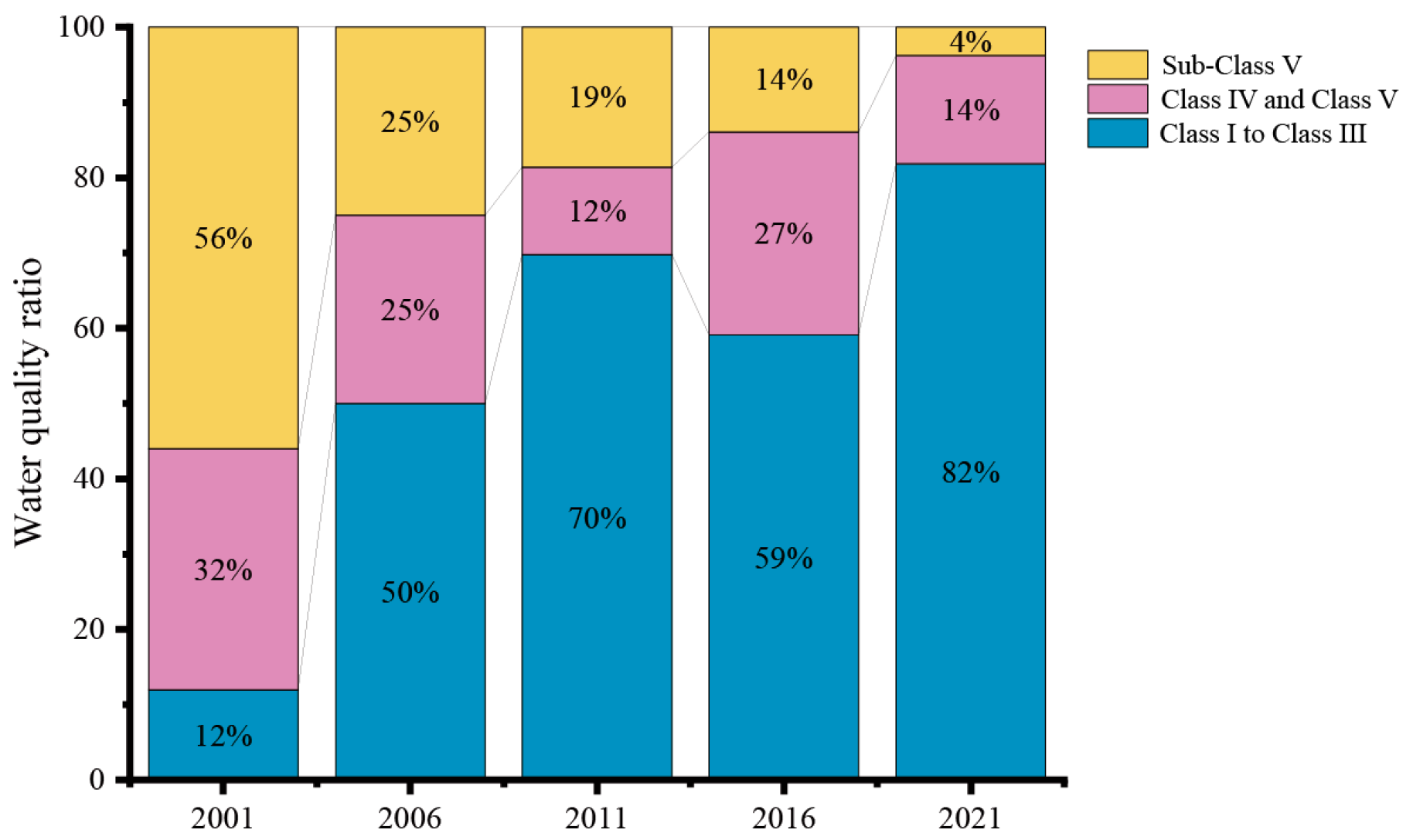
Based on water quality assessment data from national monitoring sections in the YRB between 2001 and 2021, the proportional distribution of water quality classes was compared at quinquennial intervals. Historical trends in water quality categories across comparable sections are shown in Figure 5. The results reveal that water quality in the YRB was relatively poor in 2001 but improved substantially by 2021. In 2001, Inferior Class V water dominated the monitored sections, accounting for 56% of the total; Classes IV and V made up most of the remaining sections, while Class I–III (‘good-quality’ water) collectively accounted for only 12%. Over the 2001–2021 period, Class I–III water displayed a consistent upward trend across sections, except for a slight decline in proportion in 2016. The most pronounced improvement occurred during 2001–2006. By 2021, Class I–III water accounted for 82% of comparable sections, Classes IV–V for 14%, and Inferior Class V for 4%. Compared with 2001, the proportion of Class I–III sections increased by 70 percentage points, while the proportion of Classes IV–V and Inferior Class V decreased by 18 and 52 percentage points, respectively. Taken together, these changes indicate significant progress in industrial restructuring and ecological conservation efforts throughout the YRB.

3.4. Current Distribution Status and Pollution Characteristics of Anions and Heavy Metals in Water Bodies at Cross-Sections Along the Main Course of the Yellow River

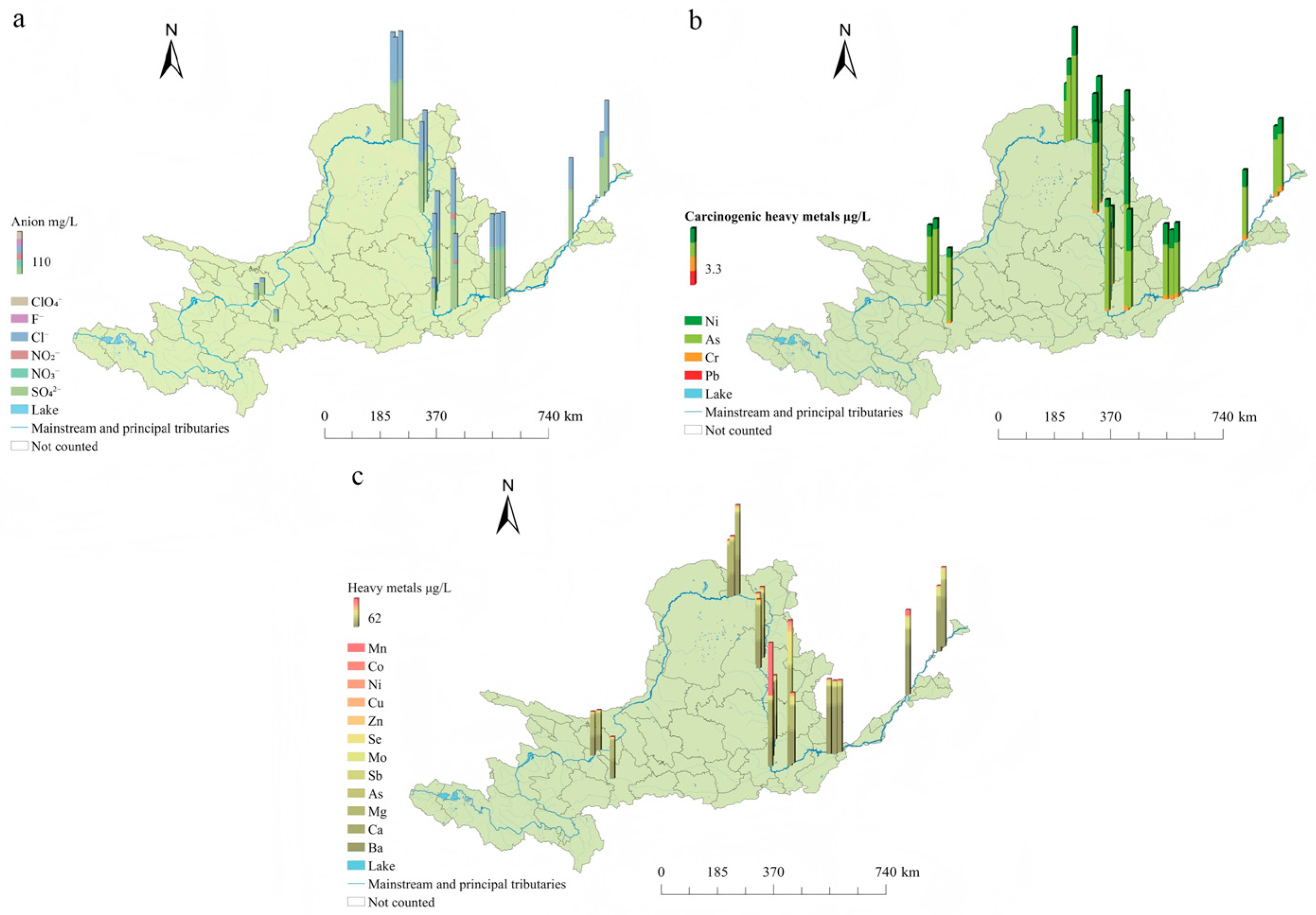
Under the hydrological conditions of the July 2023 flood season in the YRB, the distribution of anion and heavy metal pollution exhibited significant spatial heterogeneity (Figure 6). Pollution levels were consistently highest in the middle reach, particularly at the Sanmenxia section (Henan Province), where all measured indices exceeded those at other sampling sites. Spatial analysis identified the lowest anion and heavy metal concentrations in the upper–middle reach, intermediate levels in the middle–lower reach, and the highest levels in the middle reach. Monitoring data from all sites were categorized into anions and heavy metals and visualized as stacked bar plots overlaid on the YRB map (Figure 6). Elevated anion concentrations were primarily found in the middle–lower reach, exhibiting a marked increasing trend downstream of Baotou, Inner Mongolia (Site M4), and peaking at Sanmenxia, Henan (Site M13). Chloride (Cl) and sulfate (SO42−) dominated the anion profiles, together accounting for over 90% of total measured ions. Conversely, nitrite (NO2) and nitrate (NO3) were minimal in the upper reach but increased abruptly in the middle reach (Site M13), with NO2 levels rising nearly 50-fold before declining sharply downstream. Nitrate concentrations stabilized at moderate levels following this increase. Perchlorate (ClO4) exhibited a pronounced upward trend downstream of Taian, Shandong (Site M18), increasing over ten-fold compared with upstream levels. Although concentrations remained below regulatory thresholds, its persistence and potential for chronic low-dose effects warrant targeted attention. Fluoride (F) concentrations were generally low throughout the basin, with a notable increase only at Site M13.
Heavy metals showing relatively high concentrations and pronounced variability included Mn, Cu, Zn, Se, Mo, Mg, and Ba. Concentrations were lowest in the upper–middle reach but increased markedly downstream of Baotou (Site M06), peaking at Sanmenxia (Site M13). Eight elements—Co, Ni, Cu, Zn, Se, Mo, Sb, and Mg—exhibited the steepest increases at Site M13, reaching their maximum levels. Manganese (Mn) was rarely detected basin-wide, yet at Yuncheng, Shanxi (Site M12), concentrations surged to 115 μg/L—nearly 1000-fold higher than upstream values—requiring particular attention. Arsenic (As) was ubiquitously detected but showed minimal spatial variation, with a slight increase at Site M12. Strontium (Sr) concentrations varied little, with higher levels at Sites M06–M08 and M12; barium (Ba) was the most abundant among the 12 metals, peaking at Sites M15–M18. Overall, both anion and metal concentrations followed the spatial trend: middle reach > middle–lower reach > upper–middle reach.
Analysis of four carcinogenic heavy metals (Ni, As, Cr, Pb) indicated that Ni and As were detectable throughout the basin, albeit at low concentrations. At Sanmenxia (Site M13), Ni reached 6.6 μg/L—below the limit stipulated in China’s Standards for Drinking Water Quality (GB 5749-2022) [14]—but remains of concern. Chromium (Cr) was mainly detected in the middle–lower reach and absent upstream, while Pb was only found at low concentrations in Yulin, Shaanxi (Site M8). Comparison with GB 5749-2022 identified NO2 and NO3 as the principal parameters with potential exceedance risk from a potability perspective (Table 3).

4. Discussion

Given the vast geographical extent of the YRB, spanning multiple provinces and supporting a dense concentration of diverse industrial enterprises, the interplay among different sectors creates a highly complex set of factors influencing regional water quality [5,15]. Building on the results presented above, this study will further explore the specific impacts of representative industrial sectors—namely coal processing, petroleum refining, coking, and metal smelting—on basin-wide water quality. These industries are of particular interest because of their potential contribution to heavy metal contamination and toxic anion pollution within the YRB.

4.1. Historical Characteristics of Industrial Structure Changes in the Yellow River Basin and Their Impact on the Water Environment

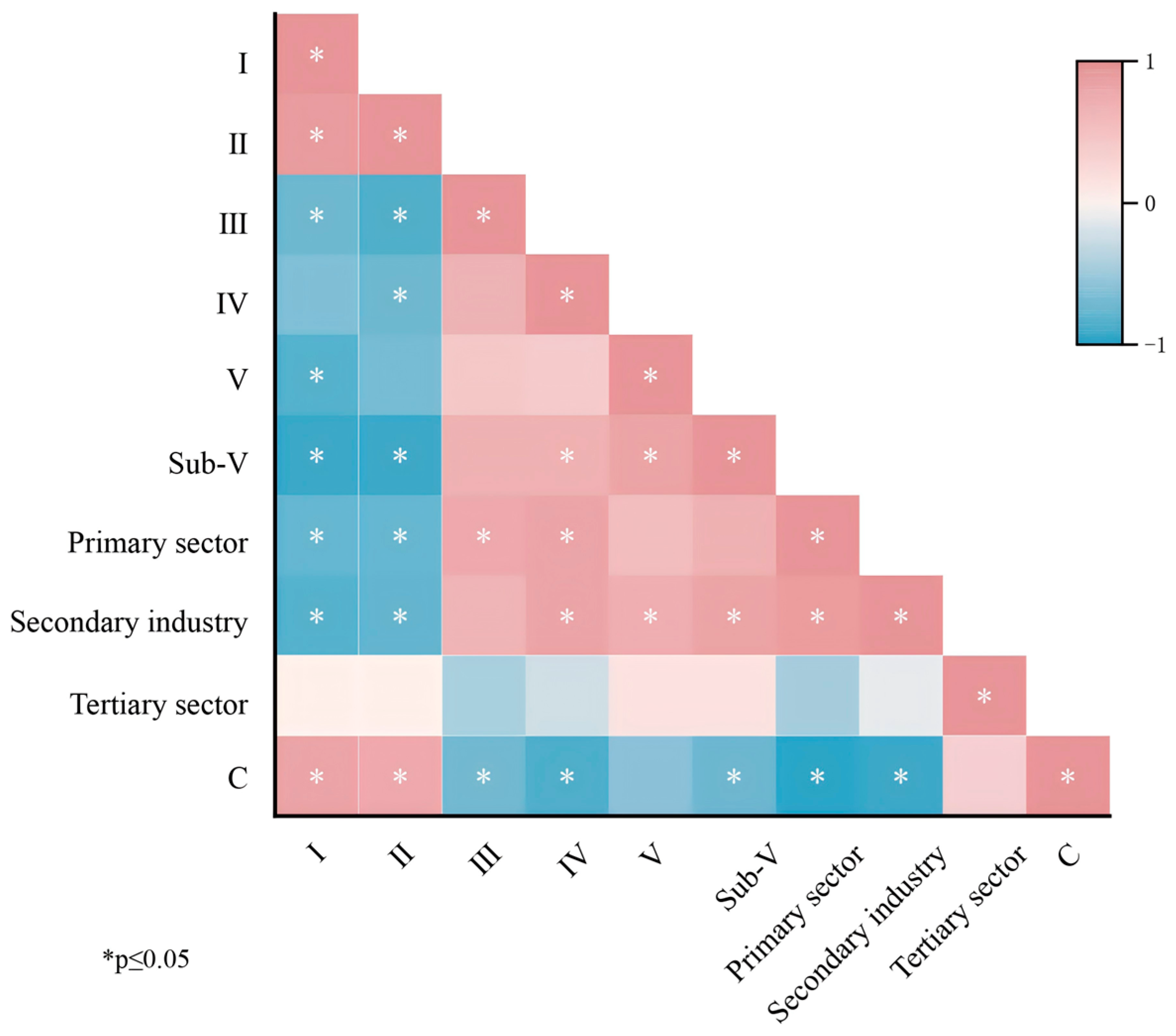
Just like other major river basins, historical shifts in the industrial structure of the YRB have had a significant impact influence on its aquatic environment (Figure 7). Specifically, expansion of the primary and secondary sectors has shown clear negative feedback effects on water quality, whereas growth in the tertiary sector has had a negligible impact. In contrast, the industrial structure optimization index (C) demonstrated a notably positive effect on YRB water quality.
Current research on strategic emerging industries in the YRB remains exploratory [16]. According to the White Paper on High-Quality Industrial Development in the Yellow River Basin, overall industrial development quality in the YRB lags behind the national average, yet its rate of improvement is comparatively rapid. For decades, mining, energy, and heavy chemical industries have dominated a low-value-added industrial framework, leading to substantial depletion of water resources and persistent environmental pollution [17]. This high-water-consumption industrial pattern not only exacerbates water scarcity but also imposes considerable pressure on the basin’s ecological systems [18]. Consequently, optimization and upgrading of the regional industrial structure represent critical pathways for reconciling ecological conservation with high-quality economic growth in the YRB [19]. Previous studies have identified high-water-consumption sectors—particularly agricultural irrigation, energy extraction, and mineral processing—as primary drivers of aquatic environmental degradation. Earlier research suggested that water consumption per unit of value-added output is markedly lower in industrial and tertiary sectors than in agriculture, implying that structural adjustments within the primary sector could alleviate water resource stress. However, our findings indicate that, within the YRB, the secondary sector exerts a stronger negative impact on water quality than the primary sector. This discrepancy can likely be attributed to the substantially higher output value of the secondary sector, the influence of which overshadows the impact of primary sector fluctuations on basin-wide water quality trends. Therefore, improving water quality in the YRB will likely require substantial structural reform within the secondary sector [20,21]. For example, non-ferrous metal smelting and processing—industries, extensively examined in prior studies—release pollutants including Pb, Cd, As, Hg, Cr, Zn, Cu, and Ni, all of which have significant impacts on the aquatic environment of the basin [22,23,24].
Between 2001 and 2020, the absolute output value increased across all three industrial sectors in the YRB, accompanied by a general upward trend in industrial wastewater generation [25]. Despite this, water quality continued to improve, primarily due to expanded wastewater treatment capacity, higher treatment rates, and stricter discharge controls. Spatial correlations between industrial agglomeration and pollution emissions also contributed to this trend. Empirical evidence suggests that industrial agglomeration can, to some extent, mitigate industrial wastewater pollution, implying that the promotion of industrial clustering may partially ease environmental pressures. In addition, basin-wide implementation of stringent environmental regulations, emission standards, and management practices has curtailed pollutant discharge and accumulation [26]. Some studies have noted that environmental management measures can temporarily inhibit industrial upgrading, potentially reducing emission-reduction efficiency [27]. This dynamic likely explains the initial stagnation or even decline in industrial optimization levels observed in the middle–lower reaches of the YRB. Nevertheless, in the long term, such interventions are expected to strengthen pollution control and promote the restoration of aquatic ecosystems throughout the basin.

4.2. Spatial Characteristics of Industrial Structure Changes in the Yellow River Basin and Their Impact on the Water Environment

Drivers of water resource stress vary substantially across regions. Consequently, historical evolution patterns of the YRB alone provide limited insight into the precise impacts of industrial restructuring on aquatic environments. The basin’s industrial profile is dominated by heavy sectors such as coal and oil extraction and metal smelting [28]. In the upper reaches, ecological fragility coexists with relatively underdeveloped industrial and economic systems. In contrast, traditional industries in the middle–lower reaches face delayed transformation and upgrading, coupled with insufficient endogenous growth momentum. Overall, industrial structures remain largely labor- and capital-intensive, with a comparatively low proportion of technology-intensive manufacturing. Notable disparities in industrial composition and transition dynamics exist between the upper–middle and middle–lower reaches [29], underscoring pronounced regional heterogeneity in industrial restructuring. In general, development levels are higher in the middle–lower reaches than in the upper–middle reaches [30], reflecting considerable spatial variability in industrial structure across the basin.
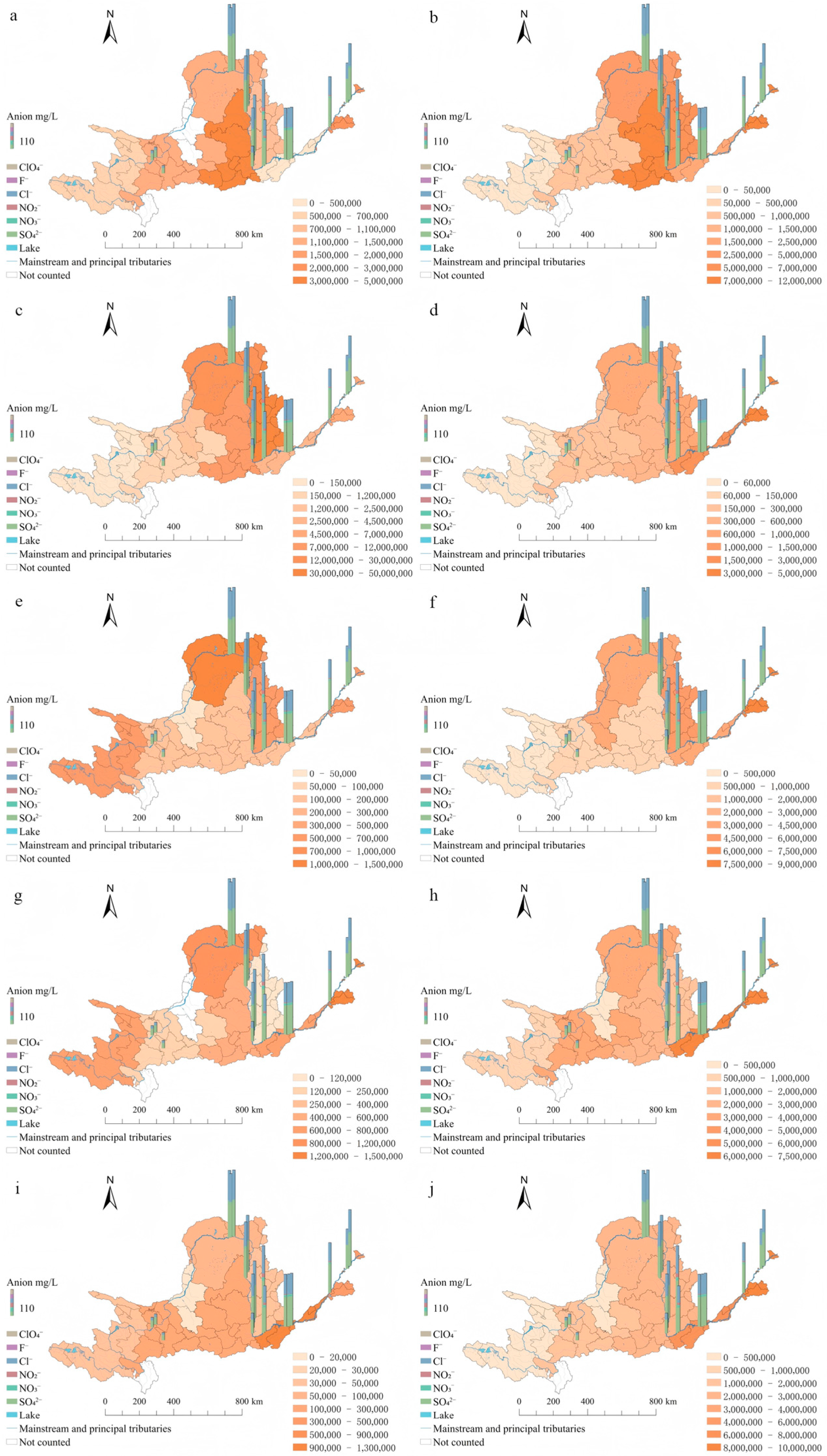
The main stream of the YRB serves as the core carrier for the industry-water environment connection and constitutes the main concentrated area for industrial layout within the basin. Heavy metal pollution in the basin is ultimately transported and flows into the main stream via tributaries; therefore, the water quality of the main stream can comprehensively reflect the cumulative environmental effects of industrial activities across the entire basin. To examine potential linkages between industry and water quality, we correlated pollutant concentrations at 20 mainstream sampling sites with 2021 sectoral industrial assets across YRB provinces. Analysis of anions for ten key sectors (Figure 8) identified Cl and SO42− as dominant, with relatively low concentrations in the upper–middle reaches but a marked increase at Site M04 (Inner Mongolia). Distinct rises in other anions were observed at Site M13 (Sanmenxia, Henan), which borders Yuncheng (Shanxi) and lies downstream of Weinan (Shaanxi), suggesting that upstream pollutants may accumulate. Rapid surges in anion concentrations in these areas likely correspond to industrial activities in Henan, Shanxi, and Shaanxi. Spatial mapping of ferrous/non-ferrous mining output revealed higher production in the upper–middle reaches, yet anion levels at Sites M1–M3 remained low, indicating minimal direct linkage with these sectors. Cl and SO42− rose sharply in Inner Mongolia and sustained elevated levels downstream; spatial alignment with coal mining, petroleum processing, non-metallic products, and ferrous metal industries suggests potential associations. Patterns of other anions appear more strongly related to non-ferrous metal processing and non-metallic industries, with secondary associations to petroleum and coal extraction. Previous studies on the Yangtze River Delta region have confirmed that such highly polluting industries are a key driver behind the rise in water pollutant concentrations [31].
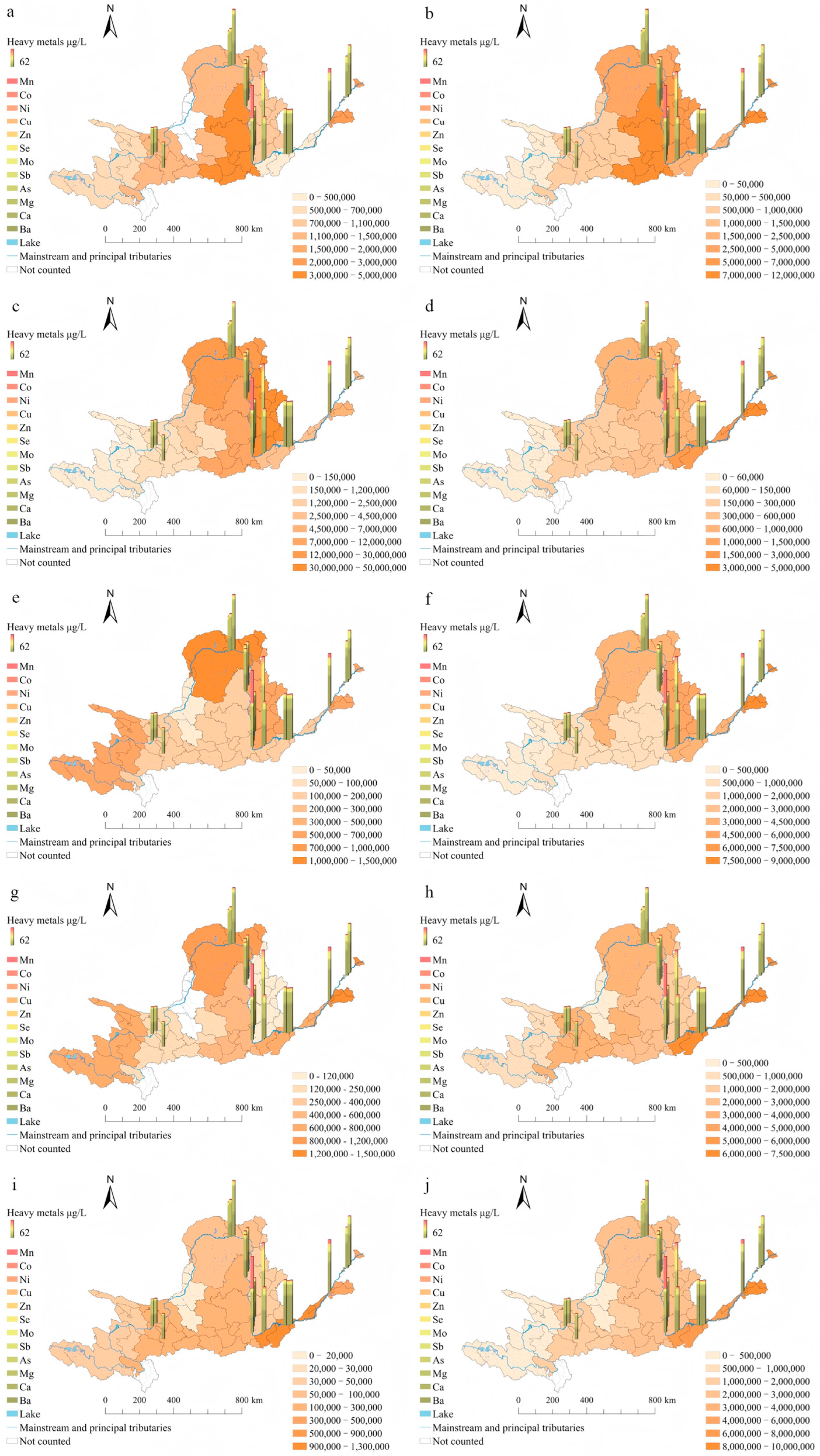
Heavy metal distributions were further assessed against the same ten sectors (Figure 9). Ferrous metal mining is concentrated in the upper–middle reaches but contributes marginally to total industrial output; correspondingly low heavy metal pollution suggests it may not be a priority for basin-wide industrial adjustment. Among elements showing spatial variability, Cu, Se (notably exceeding regulatory limits), and Mo exhibited pronounced surges at Site M13, while Mn peaked sharply at Site M12 (Yuncheng, Shanxi). The spatial concordance between oil/gas extraction activities and peak Mg concentrations at M12 indicates a significant association between this industry and Mg pollution. Simultaneous increases in Cu, Se, Mo, and carcinogenic Ni at M13—downstream of Shaanxi/Shanxi—align with upstream hotspots of coal/oil processing and non-metallic mining. Strong overlaps between non-metallic mining output peaks and tri-element (Cu/Se/Mo) concentration surges point to wastewater discharge from this sector as a likely contributor to contamination [21].
The remaining carcinogenic heavy metals—As, Cr, and Pb—displayed relatively low spatial variability across the basin, with only a slight elevation in As concentrations detected at Site M12. Although current levels of these metals are below established drinking water standards, the potential synergistic effects of combined exposure, together with bioaccumulation risks within aquatic food chains, merit more comprehensive investigation [32,33,34,35]. Previous studies have demonstrated that co-exposure to multiple heavy metals can elicit significantly greater toxicological impacts compared to individual exposures [36,37]. Additional evidence indicates that combined exposure to Pb, Cd, As, and Hg can lead to extensive multi-organ damage [38,39]. Furthermore, in riverine ecosystems, bioaccumulation through trophic transfer may represent a more critical exposure pathway for As and other heavy metals than direct ingestion via drinking water [40,41]. These findings underscore the importance of continuous monitoring and stringent regulation of high-risk elements—particularly As and Pb—in fluvial environments [40]. Source analysis revealed that arsenic-bearing wastewater predominantly may originates from mining and smelting of As-rich ores, improper disposal of residues, and coal combustion [42]. Pb contamination was primarily linked to industrial effluents from mining, smelting, and associated activities [42,43]. Spatial correlation patterns suggest that the modest rise in As at M12 may be attributed to coal and petroleum extraction and processing activities. Cr detections, concentrated in the middle–lower reaches, were spatially aligned with non-metallic mineral mining and processing, metal product fabrication, and non-ferrous smelting operations. Pb was detected exclusively at M8 (Yulin, Shaanxi), and its spatial association with oil/gas extraction and coal mining points to effluent discharges from these sectors as the probable source (Figure 9).
Notably, despite the concentration of high-output industries—particularly metal and non-metal product manufacturing—in the middle–lower reaches (e.g., Shandong Province), no corresponding surges in heavy metal contamination were detected. This finding challenges conventional assumptions that industrial expansion inevitably leads to water quality deterioration [9]. Specifically, although industrial output in these downstream areas substantially exceeds that of the upper–middle reaches, heavy metal and anion pollution levels do not exhibit proportional increases. In fact, certain downstream sections demonstrate superior water quality compared to midstream stretches. Socioeconomic metrics indicate that middle–lower regions possess higher industrial sophistication indices and advanced urban development levels relative to upstream segments. Conversely, resource-dependent cities in the upper–middle and midstream zones underperform in key high-quality development indicators such as economic openness and shared prosperity [44]. Taken together, these observations suggest that enhanced industrial quality in downstream regions may mitigate pollution pressures typically associated with industrial scaling. A study focusing on industrial wastewater treatment provides some support for the findings of this research. It demonstrates that industrial restructuring can exert a significant influence on water pollution through optimizing sectoral composition, reconfiguring spatial layouts, and enhancing operational efficiency [45]. This indicates that regional industrial restructuring may be a key factor in counteracting the water quality pressures arising from industrial expansion, thereby achieving the objectives of “increased production without increased pollution” or “increased production with reduced emissions”. It also partly explains the coexistence of high economic output with relatively lower levels of heavy metal pollution in the middle and lower reaches.

4.3. Limitations

Due to the complexity of socio-ecological system research and the limitations of data availability, this study inevitably has certain constraints that require further refinement in the future. First, all inferences regarding the correlation between industrial structure and pollutant distribution are based on the hydrological conditions and sampling carried out during the high-flow season of the Yellow River in July 2023. In addition, the study recognizes an inherent scale mismatch between provincial-level industrial data and point-based water quality measurements. This discrepancy may cause minor “data spill-over” effects; however, we mitigated this issue by carefully selecting representative sampling sites. Nevertheless, we suggested that future research should adopt industrial data at the municipal level to improve scale matching, enabling a more accurate alignment with the spatial scope of sampling sites. Furthermore, we shall broaden our sampling scope to encompass multiple seasons, including both drought periods and periods of normal flow. By integrating multiple factors such as hydrology, environmental conditions, and policy measures, we would conduct a comprehensive, multidimensional examination of this issue to systematically elucidate the impact of industrial activities upon the aquatic environment.

5. Conclusions and Recommendations

This study shows that the characteristics of water pollution in the Yellow River Basin (YRB) are closely linked to the spatial distribution of industrial structure, with specific heavy metals (Cu, Se, Mo, Mn, Ni) showing marked correlations with regional industrial composition and spatial arrangements. The principal conclusions are as follows: (1) The upper reaches, characterized by smaller industrial scales and stricter water environmental protection policies, currently display lower pollution pressures and may not require priority remediation. (2) The midstream regions exhibit pronounced surges in multiple pollutants: Mn concentrations are spatially associated with petroleum extraction, while notable increases in Cu, Se, Mo, and Ni at Site M13 (Sanmenxia) coincide with intensive coal/petroleum processing and non-metallic mineral mining concentrated in these areas. (3) In contrast, high-output industrial clusters (e.g., metal/non-metal manufacturing in Shandong Province) show only modest increases in pollution levels, challenging the conventional “output-driven pollution” paradigm. This implies that industrial upgrading, sectoral structure optimization, and enhanced regional high-quality development can facilitate “production growth without a proportional increase in pollution.” Specifically, the middle–lower reaches appear to offset the scale effect of industrial expansion through advanced development capacity. Moreover, the upper–middle reaches—with lower total output but a higher share of secondary industries—may offer greater flexibility for industrial upgrading in developing regions.
However, effective water quality management in the Yellow River Basin (YRB) must more comprehensively address the multifactorial complexities involved and fully recognize the research significance of regional industrial characteristics: (1) Composite pollution risks are substantial: although concentrations of individual carcinogenic heavy metals (e.g., Pb, As, Cr, Ni) currently fall below regulatory thresholds, the simultaneous presence of these metals in environmental matrices warrants detailed investigation into possible synergistic toxic effects and bioaccumulation hazards. (2) Pronounced regional heterogeneity is evident in both pollution sources—such as Cr associated with smelting/manufacturing activities in mid-lower reaches and Pb linked to coal/oil extraction—and in driving factors, including environmental policy stringency, technological capacity, and demographic characteristics. These disparities underscore the need for spatially differentiated control strategies. Specifically, the middle reaches, as an industrial core zone, should implement a dual-track management strategy of “controlling emission intensity + promoting industrial upgrading”. For high-pollution industries such as coal and non-ferrous metal smelting in the middle reaches, pollutant emission intensity should be incorporated into local government assessment systems, replacing the traditional “total emission control” approach to avoid a one-size-fits-all policy that restrains reasonable industrial growth. In view of the characteristics of high output and low pollution in the lower reaches, a policy of “experience promotion + collaborative protection” should be implemented. Key mechanisms should be summarized and promoted throughout the basin. A “lower–middle reaches transboundary water quality early warning mechanism” should be established: real-time monitoring points should be set up at the boundary sections. When water quality indicators (e.g., Mn, Cu) exceed the threshold, an emergency response for industrial emission reduction in the middle reaches will be triggered to prevent upstream pollution transmission from affecting the “low-pollution” pattern in the lower reaches. For the ecologically sensitive areas in the upper reaches, a bottom-line management strategy of “restricting industrial activities + protecting ecology” should be implemented. Entry of high-energy-consuming and high-polluting industries in the upper reaches should be strictly restricted, and only industries compatible with ecological protection (such as clean energy and eco-tourism) are allowed. (3) Long-term trends are valuable: historically shaped resource endowments and urban development trajectories serve as stable reference points for assessing and forecasting high-quality development. Thus, the status of water pollution in the YRB is intrinsically linked to local environmental policies, the level of industries technological, and demographic composition. These factors not only dictate the severity of pollution but also play a decisive role in guiding the optimization and restructuring of industrial systems. Future research should elucidate how temporal trends can be leveraged for effective policy formulation and implementation and systematically evaluate the successes and shortcomings of urban environmental governance, thereby offering a reference framework for integrated basin management worldwide.

Author Contributions

Q.Z. and K.W.: Writing—Original Draft and Editing, Visualization, Software, Methodology. Y.Z.: Project administration, Supervision, Writing—Review and Editing, Conceptualization, Funding acquisition. X.B. and J.J.: Editing, Investigation, Visualization. S.H.: Formal analysis, Data curation, Validation. Q.S. and F.C.: Formal analysis, Data curation. All authors have read and agreed to the published version of the manuscript.

Funding

This research was supported by the National Key Research and Development Program of China (No. 2021YFC3200802).

Data Availability Statement

The original contributions presented in this study are included in the article. Further inquiries can be directed to the corresponding author.

Acknowledgments

We thank the anonymous reviewers and the editor for their helpful and constructive comments and feedback.

Conflicts of Interest

The authors declare no conflicts of interest.

References

  1. Wang, G.G.; Liu, S.L. Is technological innovation the effective way to achieve the “double dividend” of environmental protection industrial upgrading? Environ. Sci. Pollut. Res. 2020, 27, 18541–18556. [Google Scholar] [CrossRef]
  2. Liu, C.J.; Ma, C.B.; Xie, R. Structural Innovation Efficiency Effects of Environmental Regulation: Evidence from China’s Carbon Emissions Trading Pilot. Environ. Resour. Econ. 2020, 75, 741–768. [Google Scholar] [CrossRef]
  3. Chen, Y.-P.; Fu, B.-J.; Wang, K.-B.; Zhao, M.M.; Ma, J.-F.; Wu, J.-H.; Xu, C.; Liu, W.-G.; Wang, H. Sustainable development in the Yellow River Basin: Issues strategies. J. Clean. Prod. 2020, 263, 121223. [Google Scholar] [CrossRef]
  4. Yu, Y.; Liu, H.R. Economic growth industrial structure nitrogen oxide emissions reduction prediction in China. Atmos. Pollut. Res. 2020, 11, 1042–1050. [Google Scholar] [CrossRef]
  5. Wang, R.; Xiao, Y.; Huang, H.; Chang, M. Exploring the complex relationship between industrial upgrading energy eco-efficiency in river basin cities: Acase study of the Yellow River Basin in China. Energy 2024, 312, 133498. [Google Scholar] [CrossRef]
  6. Li, L.S.; Li, W. Review on the connotation Evaluation Path of Industrial High Quality Development in the Yellow River Basin. In Proceedings of the 5th International Conference on Renewable Energy Environmental Protection (ICREEP), Shenzhen, China, 23–25 October 2020. [Google Scholar]
  7. Ozturk, M.; Yuksel, Y.E. Energy structure of Turkey for sustainable development. Renew. Sustain. Energy Rev. 2016, 53, 1259–1272. [Google Scholar] [CrossRef]
  8. Ma, W.X. Dwindling regional environmental pollution through industrial structure adjustment higher education development. Environ. Sci. Pollut. Res. 2023, 30, 420–433. [Google Scholar] [CrossRef]
  9. Liu, X.H.; Zhang, C.; Zhao, Z.N. Analysis of Water Resources Stress Its Driving Factors of the Yelow River Basin. Yellow River 2022, 44, 77–83, (In Chinese with English Abstract). [Google Scholar]
  10. Song, M.; Tao, W.; Shen, Z. Improving high-quality development with environmental regulation industrial structure in China. J. Clean. Prod. 2022, 366, 132997. [Google Scholar] [CrossRef]
  11. Zhang, B.; An, W.; Shi, Y.L.; Yang, M. Perchlorate occurrence sub-basin contribution risk hotspots for drinking water sources in China based on industrial agglomeration method. Environ. Int. 2022, 158, 106995. [Google Scholar] [CrossRef]
  12. Zhang, W.M.; Ma, W.R.; Chen, Q.W. Does Regional Development Policy Promote Industrial Structure Upgrading? Evidence from the Yangtze River Delta in China. Sustainability 2022, 14, 8127. [Google Scholar] [CrossRef]
  13. GB3838-2002; Environmental quality standards for surface water. State Environmental Protection Administration: Beijing, China, 2002.
  14. GB5749-2022; Standard for drinking water quality. State Administration for Market Regulation: Beijing, China, 2022.
  15. Zhao, K.; Zhang, R.; Liu, H.; Wang, G.; Sun, X. Resource endowment industrial structure green development of the Yellow River Basin. Sustainability 2021, 13, 4530. [Google Scholar] [CrossRef]
  16. Jiang, L.; Zuo, Q.; Ma, J.; Zhang, Z. Evaluation prediction of the level of high-quality development: Acase study of the Yellow River Basin China. Ecol. Indic. 2021, 129, 107994. [Google Scholar] [CrossRef]
  17. Sui, X.; Sun, Y.; Wang, X.; Yuan, J. Research on ecological quality restoration of fragile mining areas in the Yellow River Basin—The case of Xiegou coal mine. Ecol. Indic. 2025, 174, 113426. [Google Scholar] [CrossRef]
  18. Han, X.; Zhang, X.; Lei, H. Analysis of the spatial association network structure of water-intensive utilization efficiency its driving factors in the Yellow River Basin. Ecol. Indic. 2023, 158, 111400. [Google Scholar] [CrossRef]
  19. Zhou, M.; Chen, Q.; Cai, Y. Optimizing the industrial structure of a watershed in association with economic–environmental consideration: An inexact fuzzy multi-objective programming model. J. Clean. Prod. 2013, 42, 116–131. [Google Scholar] [CrossRef]
  20. Yang, Q.; Li, Z.; Lu, X.; Duan, Q.; Huang, L.; Bi, J. Areview of soil heavy metal pollution from industrial agricultural regions in China: Pollution risk assessment. Sci. Total Environ. 2018, 642, 690–700. [Google Scholar] [CrossRef]
  21. Jiang, L.; Sun, H.; Peng, T.; Ding, W.; Liu, B.; Liu, Q. Comprehensive evaluation of environmental availability pollution level leaching heavy metals behavior in non-ferrous metal tailings. J. Environ. Manag. 2021, 290, 112639. [Google Scholar] [CrossRef] [PubMed]
  22. Li, N.; Guo, Z.; Gao, C.; You, H.; Zhou, H.; Zhang, X.; Zheng, T. Mechanisms pollution characteristics of heavy metal flow in China’s non-ferrous metal industry. J. Clean. Prod. 2025, 515, 145791. [Google Scholar] [CrossRef]
  23. Zhu, Z.Y.; Pang, Q.H.; Zhang, L.N.; Zhou, W.M. Coupling Path Identification Spatial Governance of Advanced Industrial Structure Ecological Efficiency in the Yellow River Basin. Sci. Technol. Manag. Res. 2021, 41, 116–125, (In Chinese with English Abstract). [Google Scholar]
  24. Jiang, Z.; Guo, Z.; Peng, C.; Liu, X.; Zhou, Z.; Xiao, X. Heavy metals in soils around non-ferrous smelteries in China: Status health risks control measures. Environ. Pollut. 2021, 282, 117038. [Google Scholar] [CrossRef]
  25. Wu, Y.; Chen, B.; Zhang, L. Coupling Coordination Situation Driving Factors of Social Economy Eco-environment in Yellow River Basin. Bull. Soil Water Conserv. 2021, 41, 240–249. [Google Scholar]
  26. Qin, Y.M.; Zhang, H.; Zhao, H.M.; Li, D.; Duan, Y.; Han, Z. Research on the spatial correlation drivers of industrial agglomeration pollution discharge in the Yellow River Basin. Front. Environ. Sci. 2022, 10, 1004343. [Google Scholar] [CrossRef]
  27. Han, Y.; Shao, Y.S. Impact Mechanisms of Carbon Emissions Industrial Structure Environmental Regulations in the Yellow River Basin. Pol. J. Environ. Stud. 2022, 31, 5693–5709. [Google Scholar] [CrossRef]
  28. Xue, C.K.; Chen, K.H.; Wang, Q.J.; Zhang, Y.J.; Qu, X.H.; Zhang, M.F.; Ma, H.T. Current Status Challenges Policy Recommendations for Industrial Development in the Yellow River Basin. Bull. Chin. Acad. Sci. 2024, 39, 971–984. [Google Scholar] [CrossRef]
  29. Geng, F.J.; Miao, C.H.; Hu, Z.Q. Industrial Structural Transformation in the Yellow River Basin Its Response to Spatial Agglomeration Patterns. Econ. Geogr. 2020, 40, 30–36. [Google Scholar] [CrossRef]
  30. Ju, H.; Li, T.S.; Zhai, Z.Y. Spatial-temporal differentiation of high-quality industrial development level in the Yellow River Basin based on ecological total factor productivity. Resour. Sci. 2020, 42, 1099–1109. [Google Scholar] [CrossRef]
  31. Wang, L.; Wang, R.; Yan, H. System-dynamics modeling for exploring the impact of industrial-structure adjustment on the water quality of the river network in the Yangtze Delta Area. Sustainability 2021, 13, 7696. [Google Scholar] [CrossRef]
  32. Budi, H.S.; Opulencia, M.J.C.; Afra, A.; Abdelbasset, W.K.; Abdullaev, D.; Majdi, A.; Taherian, M.; Ekrami, H.A.; Mohammadi, M.J. Source toxicity carcinogenic health risk assessment of heavy metals. Rev. Environ. Health 2024, 39, 77–90. [Google Scholar] [CrossRef]
  33. Freire, C.; Amaya, E.; Gil, F.; Murcia, M.; Llop, S.; Casas, M.; Vrijheid, M.; Lertxundi, A.; Irizar, A.; Fernández-Tardón, G.; et al. Placental metal concentrations birth outcomes: The Environment Childhood (INMA) project. Int. J. Hyg. Environ. Health 2019, 222, 468–478. [Google Scholar] [CrossRef]
  34. Kim, S.S.; Xu, X.; Zhang, Y.; Zheng, X.; Liu, R.; Dietrich, K.N.; Reponen, T.; Xie, C.; Sucharew, H.; Huo, X.; et al. Birth outcomes associated with maternal exposure to metals from informal electronic waste recycling in Guiyu China. Environ. Int. 2020, 137, 105580. [Google Scholar] [CrossRef]
  35. Liu, S.H.; Bobb, J.F.; Claus Henn, B.; Gennings, C.; Schnaas, L.; Tellez-Rojo, M.; Bellinger, D.; Arora, M.; Wright, R.O.; Coull, B.A. Bayesian varying coefficient kernel machine regression to assess neurodevelopmental trajectories associated with exposure to complex mixtures. Stat. Med. 2018, 37, 4680–4694. [Google Scholar] [CrossRef]
  36. Feng, W.; Wu, X.; Mao, G.; Zhao, T.; Wang, W.; Chen, Y.; Zhang, M.; Yang, L.; Wu, X. Neurological effects of subchronic exposure to dioctyl phthalate (DOP), lead, and arsenic, individual mixtures in immature mice. Environ. Sci. Pollut. Res. 2020, 27, 9247–9260. [Google Scholar] [CrossRef] [PubMed]
  37. Rai, A.; Maurya, S.K.; Khare, P.; Srivastava, A.; Bandyopadhyay, S. Characterization of Developmental Neurotoxicity of As Cd Pb Mixture: Synergistic Action of Metal Mixture in Glial Neuronal Functions. Toxicol. Sci. 2010, 118, 586–601. [Google Scholar] [CrossRef]
  38. Zhou, F.; Xie, J.; Zhang, S.; Yin, G.; Gao, Y.; Zhang, Y.; Bo, D.; Li, Z.; Liu, S.; Feng, C.; et al. Lead cadmium arsenic mercury combined exposure disrupted synaptic homeostasis through activating the Snk-SPARpathway. Ecotoxicol. Environ. Saf. 2018, 163, 674–684. [Google Scholar] [CrossRef]
  39. Saravanan, P.; Saravanan, V.; Rajeshkannan, R.; Arnica, G.; Rajasimman, M.; Baskar, G.; Pugazhendhi, A. Comprehensive review on toxic heavy metals in the aquatic system: Sources identification treatment strategies health risk assessment. Environ. Res. 2024, 258, 119440. [Google Scholar] [CrossRef]
  40. Jomova, K.; Alomar, S.Y.; Nepovimova, E.; Kuca, K.; Valko, M. Heavy metals: Toxicity human health effects. Arch. Toxicol. 2025, 99, 153–209. [Google Scholar] [CrossRef] [PubMed]
  41. Zaynab, M.; Al-Yahyai, R.; Ameen, A.; Sharif, Y.; Ali, L.; Fatima, M.; Khan, K.A.; Li, S. Health environmental effects of heavy metals. J. King Saud Univ.-Sci. 2022, 34, 101653. [Google Scholar] [CrossRef]
  42. Adnan, M.; Xiao, B.H.; Ali, M.U.; Xiao, P.; Zhao, P.; Wang, H.; Bibi, S. Heavy metals pollution from smelting activities: Athreat to soil groundwater. Ecotoxicol. Environ. Saf. 2024, 274, 116189. [Google Scholar] [CrossRef]
  43. Su, D.; Wang, T.; Liu, L.L.; Bai, L. AStudy on the Spatiotemporal Patterns of Industrial Wastewater Pollutant Discharges in the Liao River Basin. Ecol. Environ. Sci. 2010, 19, 2953. [Google Scholar] [CrossRef]
  44. Zhang, G.X.; Feng, C.D. Research on the Measurement of High-quality Development of Resource-based Cities in the Yellow River Basin. Ecol. Econ. 2021, 37, 20–26, (In Chinese with English Abstract). [Google Scholar]
  45. Yang, W.; Li, L. Efficiency evaluation policy analysis of industrial wastewater control in China. Energies 2017, 10, 1201. [Google Scholar] [CrossRef]
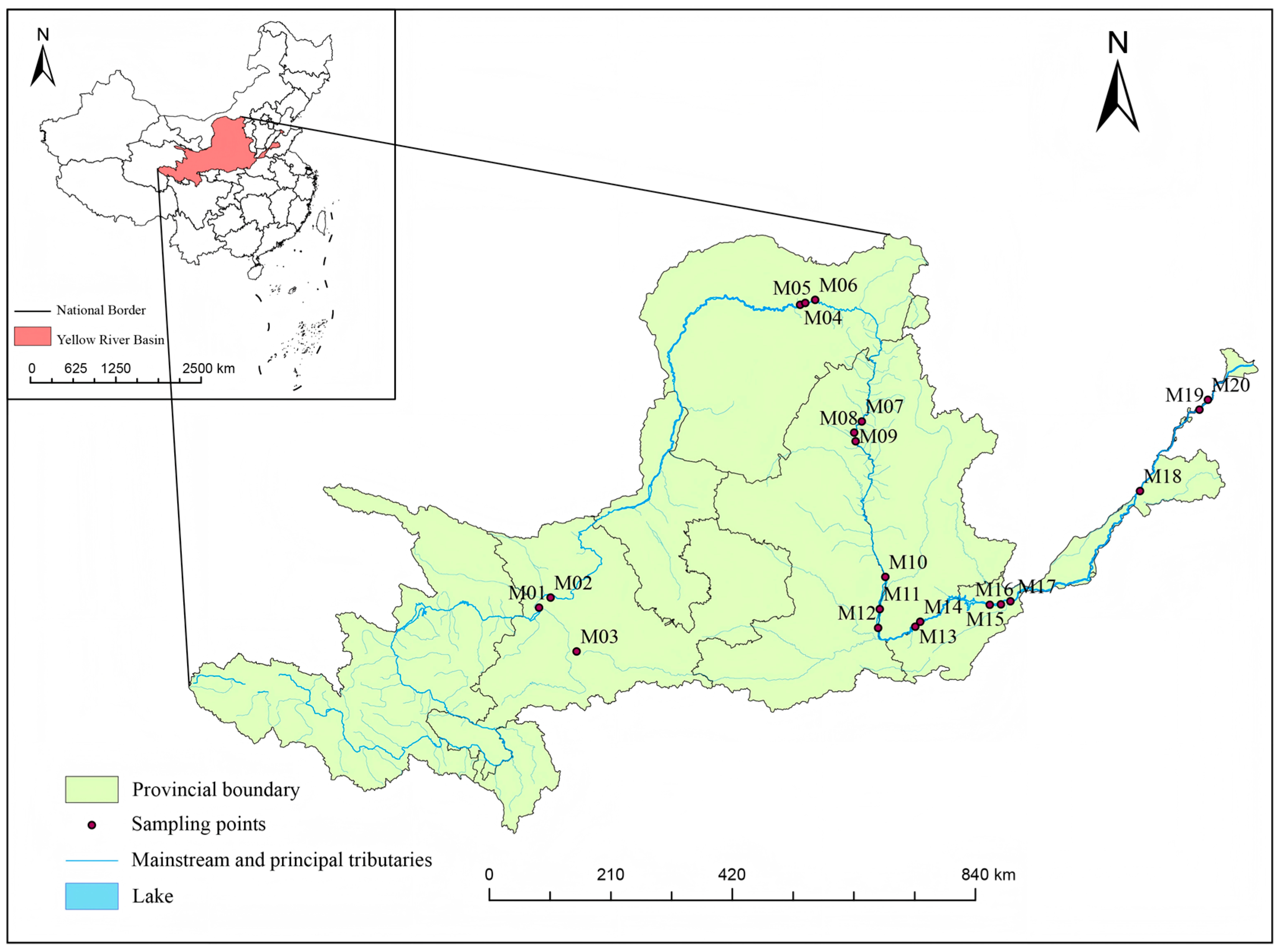
Figure 1. Schematic diagram of sampling sites in the Yellow River basin.
Water 17 03326 g001
Figure 2. Industrial Transformation in the Yellow River Basin. (a) Trend Chart of the Economic Aggregate Changes in the Yellow River Basin from 2000 to 2021 after Adjustment. (b) Proportion Chart of the Industrial Structure of the Yellow River Basin from 2000 to 2021.
Water 17 03326 g002
Figure 3. Industrial structure upgrading levels of the provinces from the upper to lower reaches of the Yellow River Basin, with (a) Qinghai, (b) Gansu, (c) Ningxia, (d) Inner Mongolia, (e) Shaanxi, (f) Shanxi, (g) Henan and (h) Shandong, respectively.
Water 17 03326 g003
Figure 4. Provincial changes in gross industrial output value of petroleum processing, coking and nuclear fuel processing industry, 2005–2020 (Notation: The years numbered (ad) are: 2005, 2010, 2015, 2019).
Water 17 03326 g004
Figure 5. Comparison diagram of water quality assessment of state-controlled sections in the Yellow River Basin every five years from 2001 to 2021. Note: Water quality classification is assessed in accordance with GB 3838-2002.
Water 17 03326 g005
Figure 6. Column stack diagram of pollutant concentrations at 20 sites sampled in 2023, where the pictures, respectively, represent: (a) stack diagram of anion concentration, unit: mg/L; (b) stack diagram of carcinogenic heavy metal concentration, unit: μg/L; (c) stack diagram of heavy metal concentration, unit: μg/L.
Water 17 03326 g006
Figure 7. Heatmap of Correlation Between Industrial Structure and Water Quality in the Yellow River Basin.
Water 17 03326 g007
Figure 8. Spatial Relationship Map of Anion Concentrations at Sampling Points and Provincial Industrial Total Assets by Sector in 2021 Sectors are listed in the following order: (a) Petroleum and Natural Gas Extraction. (b) Petroleum Processing, Coking, and Nuclear Fuel Processing. (c) Coal Mining and Washing. (d) Metal Products Manufacturing. (e) Ferrous metal mining and beneficiation. (f) Ferrous metal smelting and rolling. (g) Non-ferrous metal mining and beneficiation. (h) Non-ferrous metal smelting and rolling. (i) Non-metallic mineral mining and beneficiation. (j) Non-metallic mineral products.
Water 17 03326 g008
Figure 9. Spatial relationship of heavy metals at Sampling Points and Provincial Industrial Total Assets by Sector in 2021 Sectors are listed in the following order: (a) Petroleum and Natural Gas Extraction. (b) Petroleum Processing, Coking, and Nuclear Fuel Processing. (c) Coal Mining and Washing. (d) Metal Products Manufacturing. (e) Ferrous metal mining and beneficiation. (f) Ferrous metal smelting and rolling. (g) Non-ferrous metal mining and beneficiation. (h) Non-ferrous metal smelting and rolling. (i) Non-metallic mineral mining and beneficiation. (j) Non-metallic mineral products.
Water 17 03326 g009
Table 1. Deflator Indexes for Each Year Based on the 2000 Gross Domestic Product Data.
Year20002001200220032004200520062007200820092010
Nominal Output Value
Unit: %
11.0201.0271.0531.1271.1711.2171.3621.6441.9812.550
year20112012201320142015201620172018201920202021
Nominal Output Value
Unit: %
2.7563.0483.4443.9364.4934.5574.8165.2695.8386.5016.797
Table 2. Industrial Optimization Levels of the Upper, Middle and Lower Reaches of the Yellow River Basin.
200020022004200620082010201220142016201820202022
Upper–middle reaches0.8320.8190.6990.8250.7610.7620.7990.9191.1881.3451.5111.203
Middle reaches0.8410.7940.6410.6830.5820.6630.6490.7701.0141.0811.1600.829
Middle–lower reaches0.6900.7000.5770.5600.5550.6080.6870.8330.9611.0711.2801.260
Table 3. Comparison of sampling points with the Standard for Drinking Water Hygiene (mg/L).
Sampling PointsCityFNO2NO3Se
M5Baotou City1.46
M6Baotou City1.20
M13Sanmenxia City1.0915.0914.870.04
M14Sanmenxia City9.5010.56
M15Luoyang City3.54
M16Luoyang City1.49
M17Gongyi City1.31
M18Taian City3.97
Disclaimer/Publisher’s Note: The statements, opinions and data contained in all publications are solely those of the individual author(s) and contributor(s) and not of MDPI and/or the editor(s). MDPI and/or the editor(s) disclaim responsibility for any injury to people or property resulting from any ideas, methods, instructions or products referred to in the content.