Article

Stable Isotope Monitoring in a Semi-Arid Olive Orchard Suggest Changes in Ecohydrological Dynamics from Contrasting Drip Irrigation Regimes

1
International Water Research Institute, Mohammed VI Polytechnic University, Benguerir 43150, Morocco
2
Géosciences Environnement Toulouse, Université de Toulouse/CNRS/IRD/CNES, 31400 Toulouse, France
3
Laboratory of Applied Geology and Geo-Environment, Faculty of Science, Ibn Zohr University, Agadir 80000, Morocco
4
Université de Toulouse, CNRS, CNES, INRAe, IRD, CESBIO, Centre d’Etudes Spatiales de la Biosphère, 31400 Toulouse, France
5
Forest and Soil Ecology, Swiss Federal Institute for Forest, Snow and Landscape Research WSL, Zürcherstrasse 111, 8903 Birmensdorf, Switzerland
6
Centre National de l’Énergie, des Sciences et des Techniques Nucléaires (CNESTEN), Rabat 14000, Morocco
7
Geotop-UQAM, Hydro Sciences, Department of Earth and Atmospheric Sciences, University of Quebec at Montreal (UQAM), Montreal, QC H3C 3P8, Canada
8
Geoenvironment and Civil Engineering (L3G), Laboratory of Georessources, Faculty of Science and Technology, Cadi Ayyad University (UCA), Av. A. El Khattabi, Marrakech 40000, Morocco
9
Center for Remote Sensing Applications, Mohammed VI Polytechnic University, Benguerir 43150, Morocco
*
Author to whom correspondence should be addressed.
Water 2025, 17(21), 3029; https://doi.org/10.3390/w17213029
Submission received: 30 July 2025 / Revised: 20 August 2025 / Accepted: 27 August 2025 / Published: 22 October 2025

Abstract

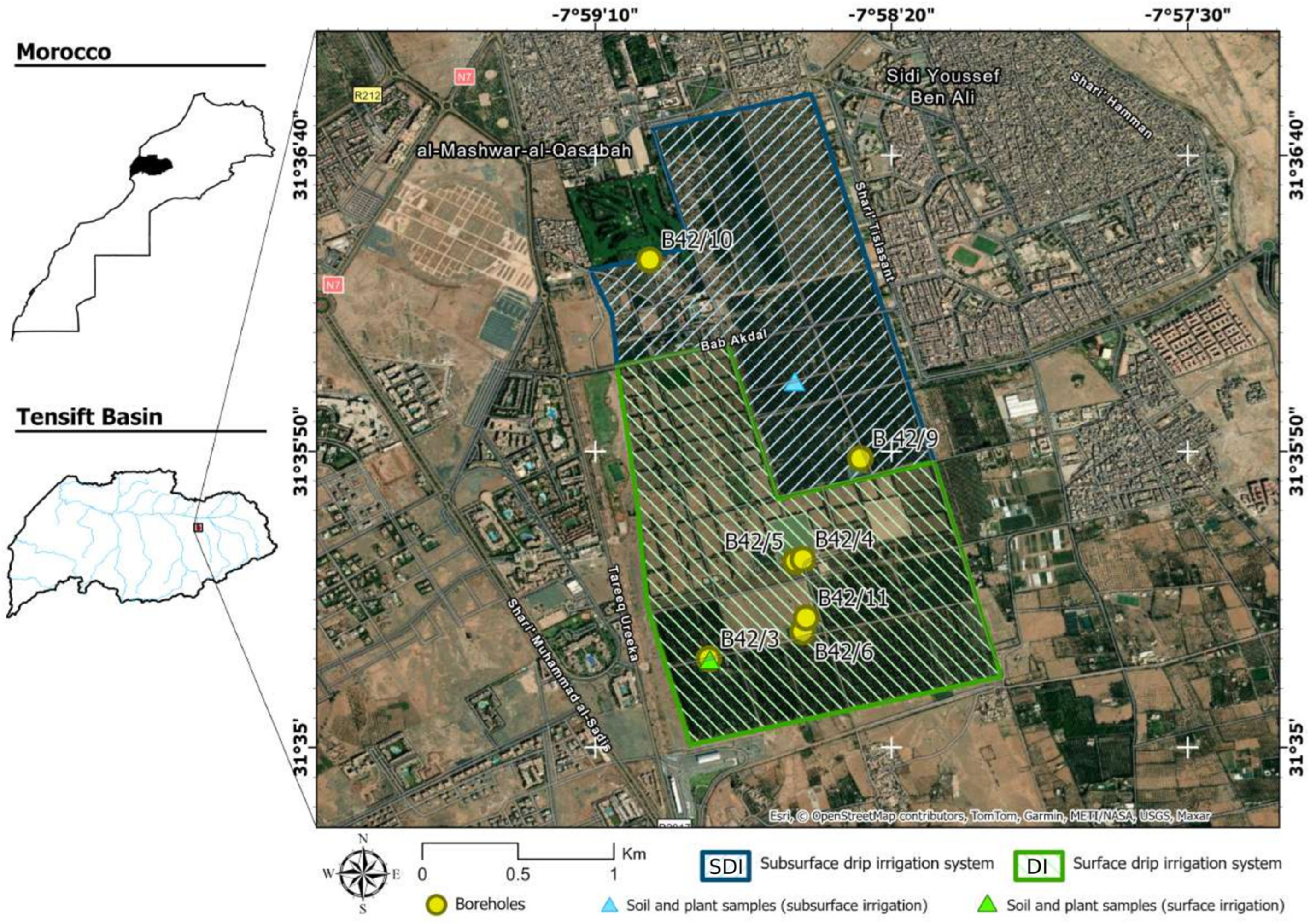
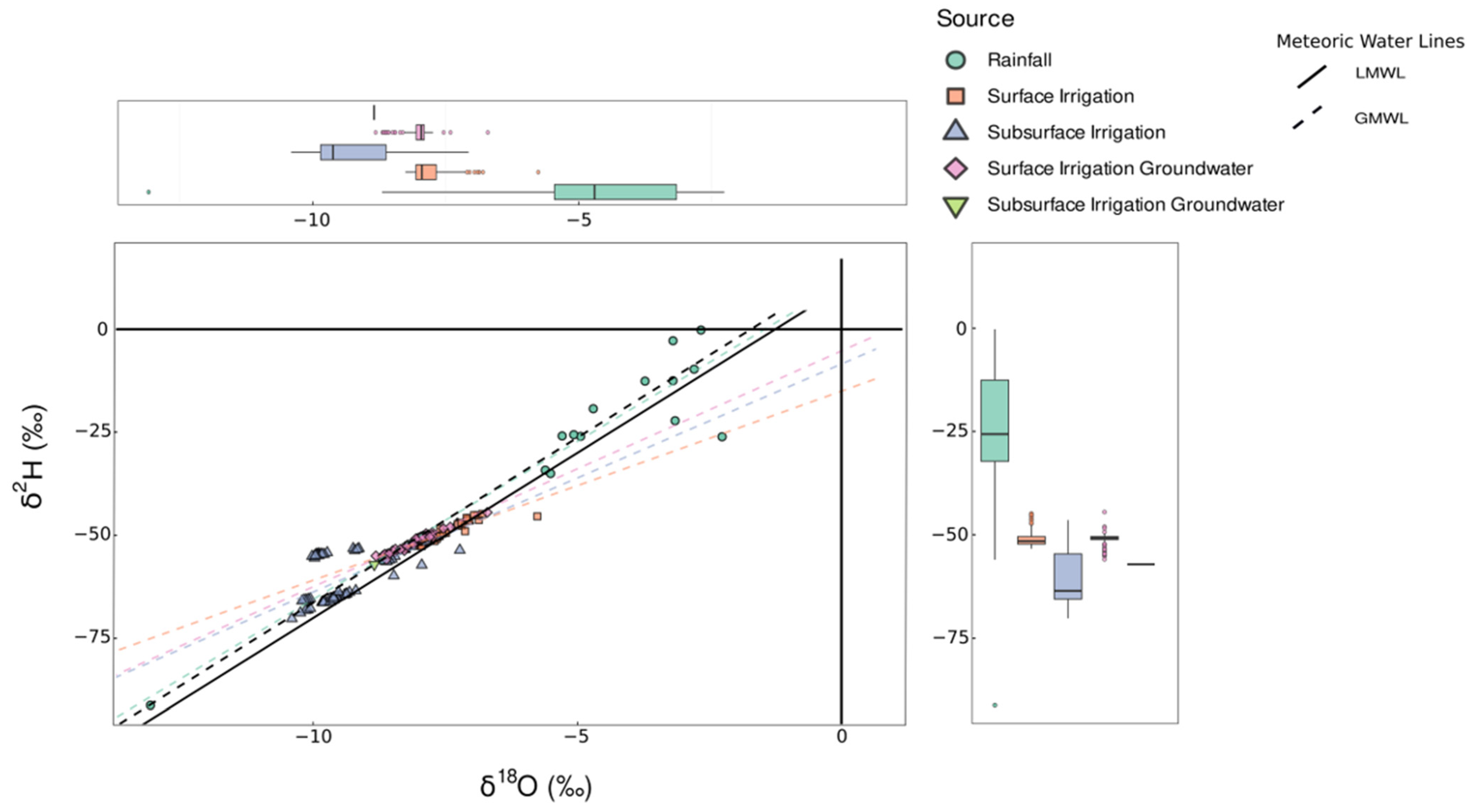
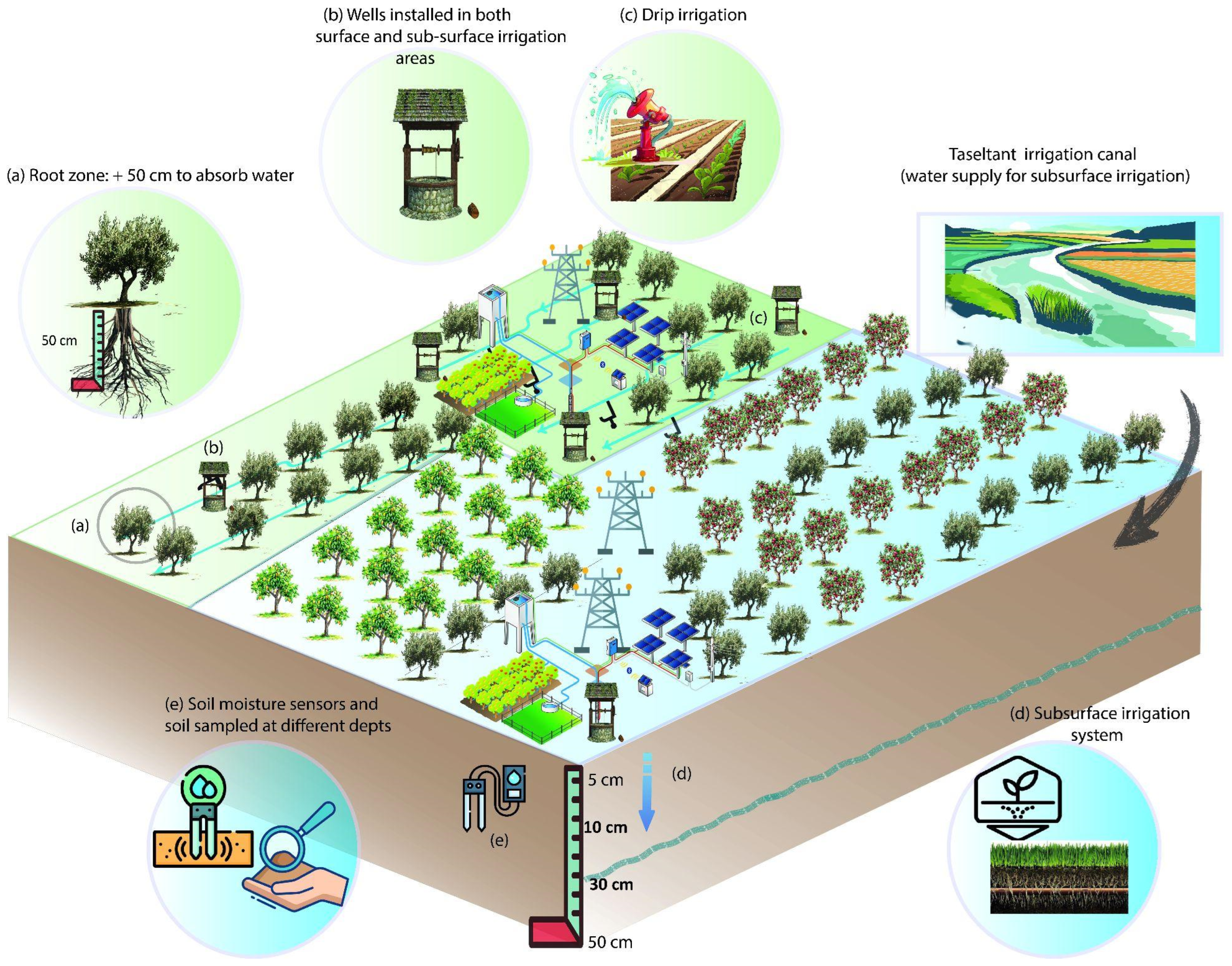
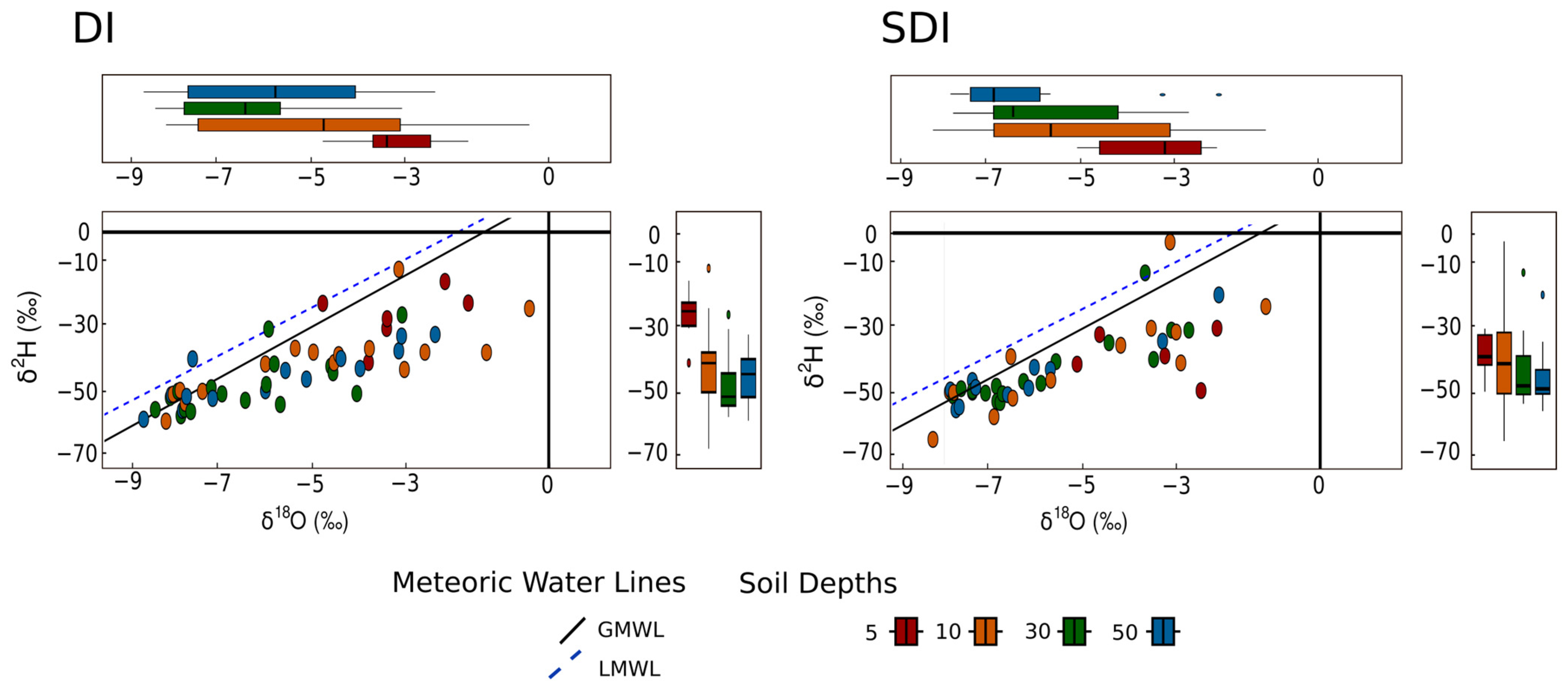
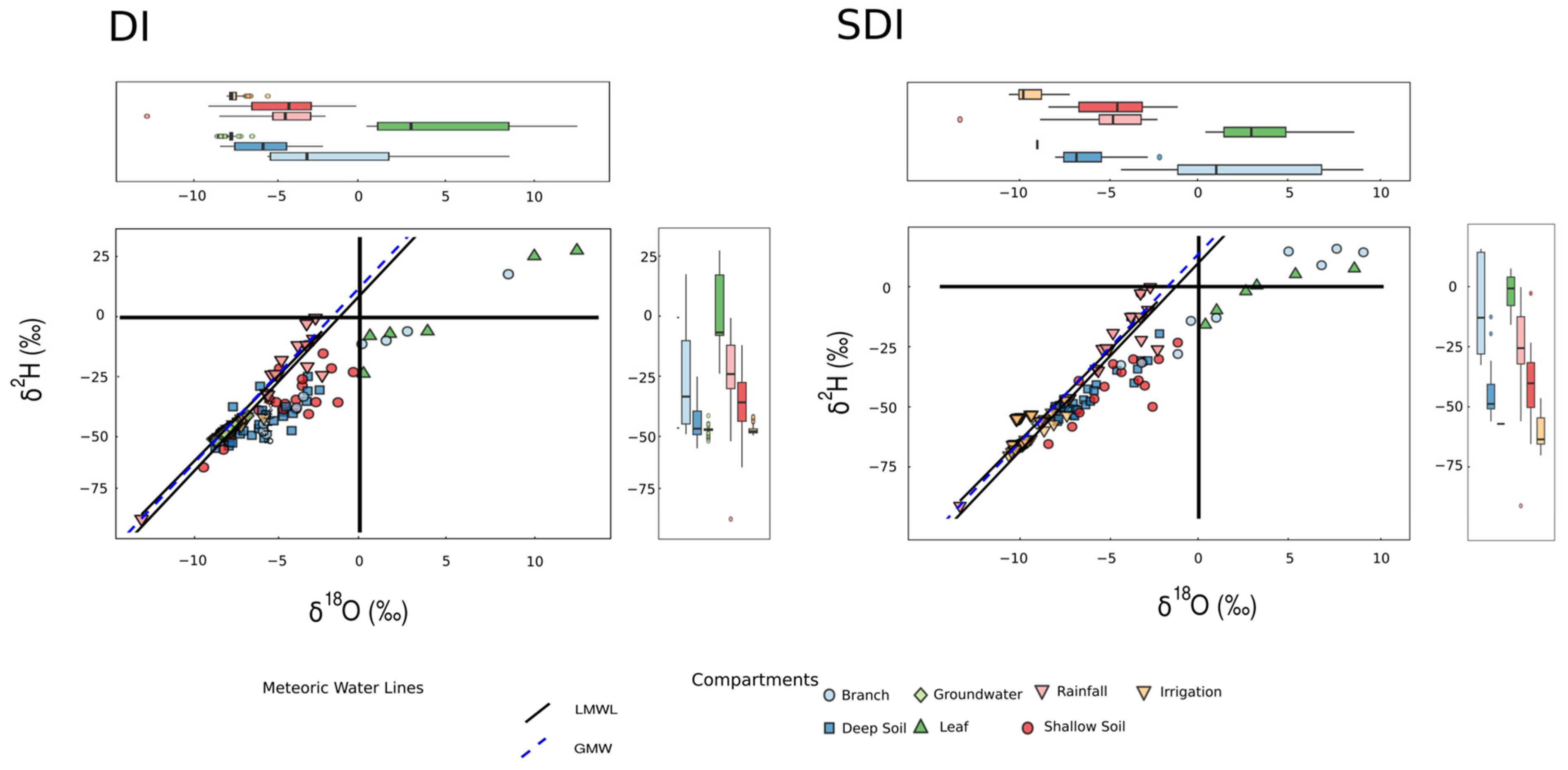
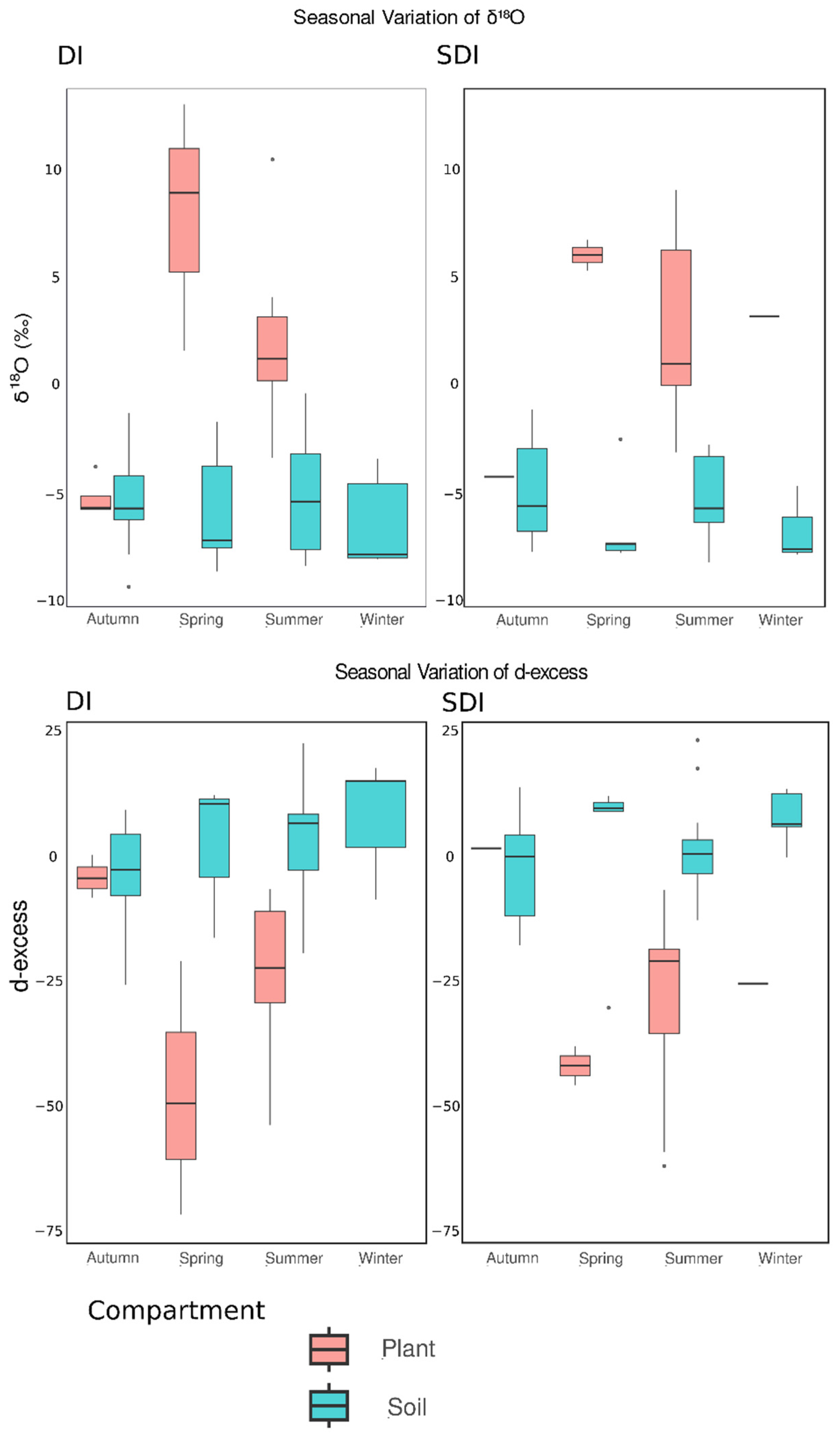
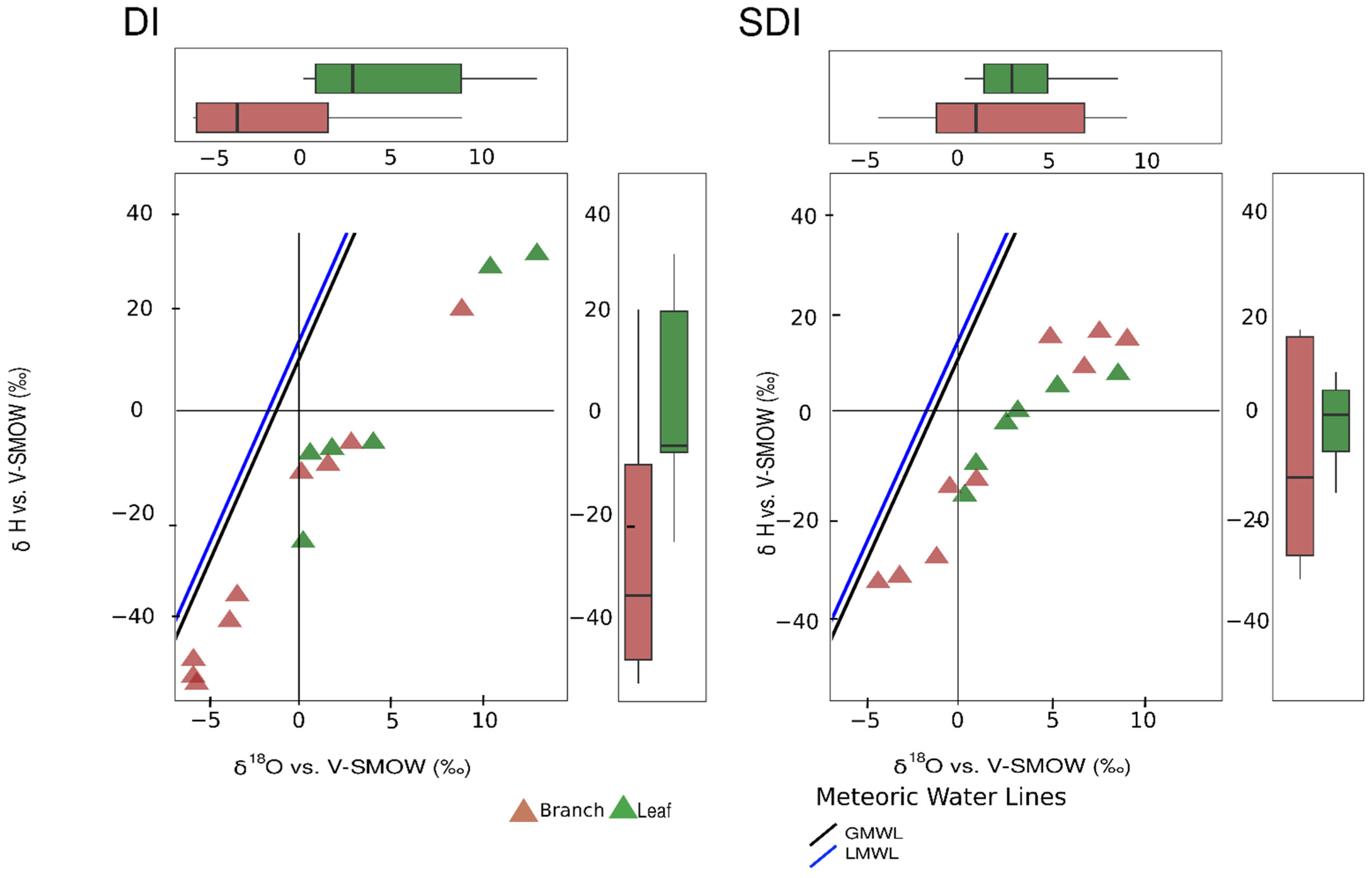
In semi-arid regions of Morocco, where the majority of water withdrawals are devoted to irrigation, optimizing irrigation practices in agriculture is a national priority in the face of recurring droughts and growing pressure on groundwater resources. However, the hydrological impacts of different drip-irrigation systems in the soil–plant–atmosphere continuum remain insufficiently understood. We monitored the stable isotope composition (δ2H, δ18O) across the two agricultural plots in Marrakech (Morocco) with surface drip and subsurface drip irrigation treatments for a complete hydrologic year (June 2022 to June 2023). Weekly to daily samples of rainfall, irrigation water, groundwater, and soil at various depths (5–50 cm) were sampled, and water from branch xylem was extracted using the cryogenic vacuum distillation method. We found that the subsurface irrigation treatment, which delivered water directly to the root zone, maintained narrow isotopic ranges in water of soils beyond 30 cm, as well as in branch xylem and leaf water. By contrast, surface irrigation treatment plots showed pronounced evaporative isotopic enrichment: summer topsoil water δ18O peaked at −1.1‰ (vs. −8.7‰ in subsurface irrigation treatment), and leaf water reached +13‰ (vs. +8‰ in subsurface). Despite this larger isotopic heterogeneity in surface irrigation site, branch xylem water δ18O remained within −6 to 2.5‰ across all soil depth, similar to subsurface irrigation treatment, which ranged between −5 and 0‰. This suggests that olive roots accessed soil water uniformly from the upper 50 cm under both irrigation treatments. Seasonal xylem isotopic enrichment in spring and midsummer mirrored shifts towards shallow, evaporatively altered soil water under surface irrigation, but not under the subsurface. The results suggest that subsurface drip irrigation can significantly improve drought resilience and water-use efficiency in the expanding olive sector of the Maghreb, while continuous isotope monitoring serves as a practical approach to enhance sustainable and adaptive water management in water-limited regions.
Keywords: soil–plant–atmosphere continuum (SPAC); irrigation management; stable isotopes of water; isotope hydrology; cryogenic vacuum distillation soil–plant–atmosphere continuum (SPAC); irrigation management; stable isotopes of water; isotope hydrology; cryogenic vacuum distillation