1. Introduction
Rapid urbanization, population growth, and rising living standards have significantly increased water demand in cities, placing growing pressure on water resources and ecosystem balance [
1,
2]. At the same time, climate change, ineffective land use planning, and urban infrastructure deficits have intensified urban water challenges, including pollution, floods, and droughts [
3]. Managing water resources in urban contexts has become a critical challenge for contemporary cities.
Urban water directly influences public health, equity in access, food security, and quality of life. Flood events can cause substantial economic losses, environmental degradation, and human casualties worldwide [
4]. According to the WMO (2024) [
5], 2023 was the hottest year on record, marked by extreme weather such as heatwaves, droughts, wildfires, and intense rainfall. These extremes, including floods, were identified by the Global Network Against Food Crises and the FSIN (2024) [
6] as key drivers of acute food insecurity affecting over 72 million people across 18 countries.
Urban water management depends on regulatory frameworks and encompasses aspects such as potable water supply, sanitation, ecosystem health, governance, and risk management [
7,
8]. However, challenges persist, particularly in relation to outdated urban planning models and insufficient stormwater drainage infrastructure. Historically, urban development followed sanitary models rooted in hygienist paradigms, which prioritized public health through centralized sewerage systems. This legacy, disconnected from ecosystem dynamics, exacerbates sanitation crises in growing cities [
9]. Planning in this context must be understood as a strategic and integrative process that connects urban design, infrastructure, and environmental capacity.
Alternative approaches, such as compensatory techniques and Nature-Based Solutions (NbSs), are increasingly recognized as viable strategies to improve stormwater management and reduce urban flooding. These approaches allow integration with conventional infrastructure and help mitigate the negative impacts of unplanned urban growth. Therefore, they constitute strategic instruments to enhance urban resilience and promote sustainable urban development in the face of future challenges [
10].
Nature-Based Solutions (NbSs) are increasingly recognized as a paradigm shift in how we address complex socio-environmental challenges, particularly those exacerbated by urbanization and climate change. At their core, NbSs are defined as deliberate interventions that harness natural processes, restored ecosystems, or their engineered equivalents to mitigate risks such as flooding, water pollution, and biodiversity loss, while simultaneously delivering co-benefits for human well-being, climate resilience, and ecological integrity [
11,
12,
13]. Conceptually, NbSs differ from traditional infrastructure by emphasizing multifunctionality, adaptability, and systemic integration with natural and human systems.
In the context of urban drainage, these solutions are operationalized through decentralized systems such as bioretention cells, permeable pavements, infiltration trenches, detention basins, and green roofs, which allow stormwater to infiltrate, be stored temporarily, or evaporate on site. These systems are designed not only to reduce runoff volume and peak flow, but also to enhance water quality and contribute to urban cooling and biodiversity. For instance, urban green corridors can be strategically implemented to absorb stormwater, reduce the urban heat island effect, and enhance connectivity for species and communities [
14]; similarly, bioengineering techniques using living vegetation have been successfully employed to stabilize riverbanks and prevent erosion in urban catchments, offering a viable, low-impact alternative to hard infrastructure [
15]. In China, large-scale NbS initiatives have combined wetland restoration, urban forest expansion, and blue-green networks to simultaneously address flood mitigation, improve water quality, and deliver urban amenity value [
16].
Concepts such as “Sponge City” have gained prominence by advocating integrated systems for sustainable urban water management and climate change adaptation [
17]. Despite the growing availability of tools and models to simulate and support the implementation of sustainable drainage solutions, significant limitations remain regarding their capacity to comprehensively inform planning, typology selection, and optimal spatial integration within complex urban environments. Moreover, economic assessments related to the implementation, operation, and maintenance of these systems often involve intricate variables and methodologies that remain inaccessible to non-specialist stakeholders. A persistent tension in the literature concerns the paradigm contrast between rigid, centralized grey infrastructure and more flexible, adaptive approaches based on green and nature-based solutions.
Despite academic and practical progress in the field, methodological gaps remain, particularly concerning the validation and adaptability of sizing and monitoring techniques for NbSs across diverse urban and climatic contexts. The lack of standardized frameworks and limited integration with existing urban systems restrict large-scale adoption.
This study conducts a systematic literature review to identify and evaluate the principal methods used to design and monitor sustainable urban drainage systems with a focus on NbSs. Key findings reveal a growing use of hybrid models that integrate data-driven technologies and physical simulations. Through this effort, we aim to support decision-making and policy development by especially in heterogeneous lighting effective strategies tailored to local conditions and urban challenges, with a special focus on Curitiba, Brazil, and its alignment with the Sustainable Development Goals (SDGs).
2. Materials and Methods
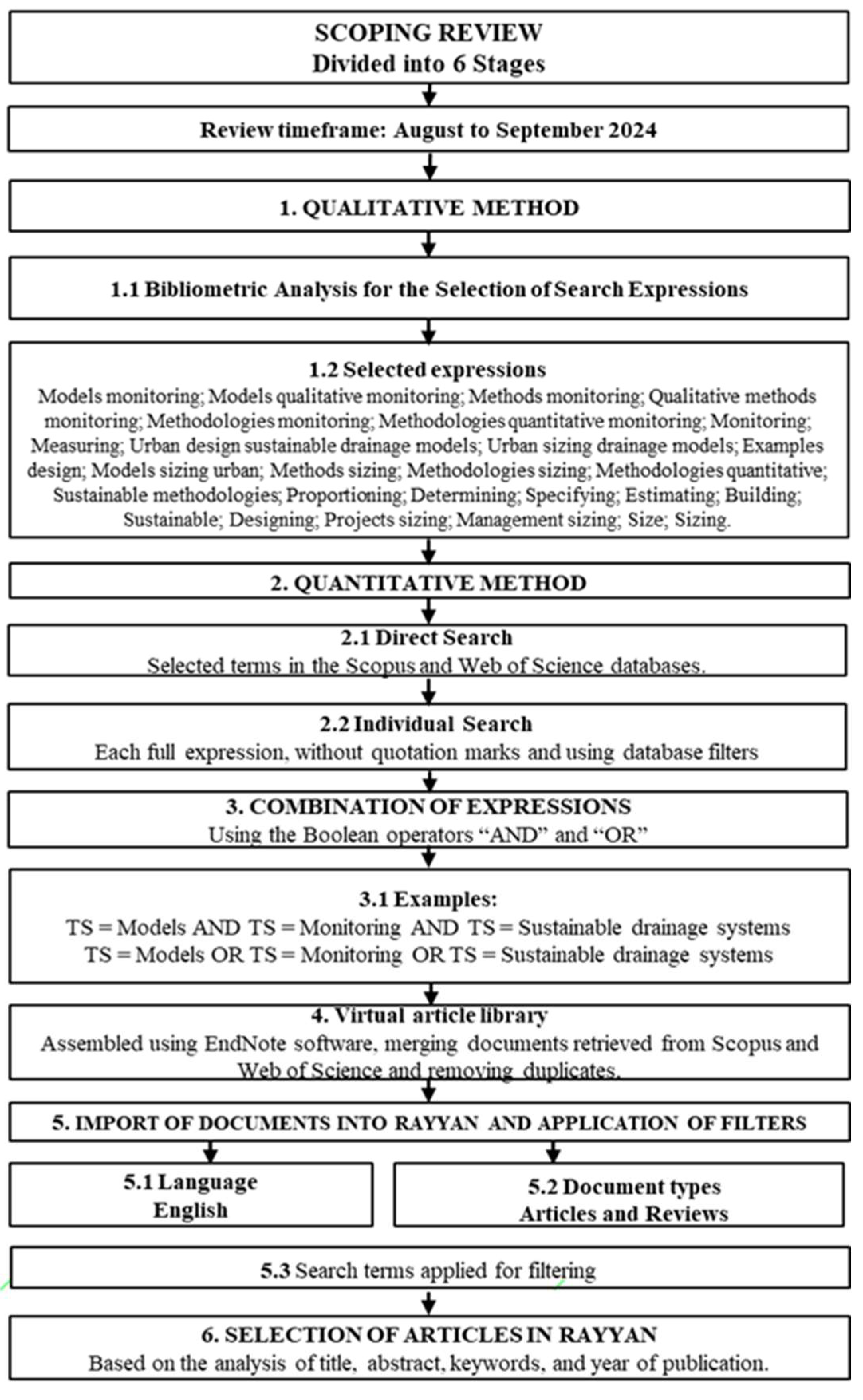
This research employed a dual-method strategy for a systematic literature review, combining bibliometric analysis with the PRISMA (Preferred Reporting Items for Systematic Reviews and Meta-Analyses) protocol. Bibliometric techniques allowed a macro-level mapping of the academic landscape, while PRISMA ensured methodological transparency, reproducibility, and rigor during the selection and synthesis of studies [
18,
19].
The bibliometric analysis was carried out using VOSviewer version 1.6.20, a free and publicly available software developed by the Centre for Science and Technology Studies (CWTS) at Leiden University (
https://www.vosviewer.com). This tool allows the construction and visualization of bibliometric networks based on co-authorship, citation links, and keyword co-occurrence. In this study, VOSviewer was employed to map co-authorship relations and identify clusters of co-occurring terms, enabling the recognition of key research areas and thematic trends within the field of Sustainable Urban Drainage Systems (SUDSs). The full counting method was applied, and the resulting maps were generated using the software’s built-in force-directed layout algorithm, which spatially organizes nodes based on the strength of their connections. These visualizations supported the identification of leading authors, foundational topics, and emerging research gaps.
Simultaneously, the PRISMA framework structured the article selection workflow, which progressed from defining a clear research question to screening, inclusion, and synthesis. The central research question was as follows: What are the methods and techniques used for sizing and monitoring sustainable urban drainage systems? To address this, a set of 30 structured search strings was formulated based on prior exploratory searches.
The exploratory review was conducted across Google Scholar, Scopus (Elsevier, Amsterdam, The Netherlands), and Web of Science (WoS) (Clarivate, Philadelphia, PA, USA) to survey terminology, concepts, and trends. From an initial collection of 50 articles, 8 were selected due to their theoretical and methodological relevance to the topic. These studies informed the refinement of search strings and inclusion criteria (
Table 1).
These references guided the definition of the review’s scope and ensured the inclusion of relevant terminologies and subfields.
Table 2 presents the 30 structured search strings developed from the exploratory review and the established inclusion criteria. After defining the 30 search sentences, they were organized into two categories, monitoring and sizing of Sustainable Urban Drainage Systems (SUDSs) to optimize their application and result classification. These combinations were constructed using Boolean operators (AND, OR) to enhance search precision and focus on methods related to urban drainage planning. The full set of search sentences, including their Boolean logic structure, is available in
Appendix A.
These references were instrumental in shaping the scope of the review and ensuring that key terminologies and subfields were adequately captured.
Based on this foundation, the structured search strings were implemented in Scopus and Web of Science. The time frame was limited from January 2020 to December 2024, aiming to reflect the most recent scientific developments in Nature-based Solutions (NbSs) and climate-resilient drainage systems. This period aligns with the post-Paris Agreement acceleration in sustainability research. Only full-text, peer-reviewed articles published in English were considered. To ensure consistency, abbreviations and quotation marks were avoided, and duplicate entries were managed using EndNote 20 (Clarivate, Philadelphia, PA, USA;
https://endnote.com).
The retrieved records were then screened and triaged using Rayyan (Rayyan Systems Inc., Doha, Qatar,
https://www.rayyan.ai), a collaborative, blind-review platform designed to enhance objectivity and efficiency in systematic reviews [
20]. The workflow was supported by four digital tools: (i) WoS and Scopus, for source quality and coverage [
21,
22]; (ii) EndNote, for reference management; (iii) Rayyan, for article screening and exclusion; and (iv) VOSviewer, for bibliometric mapping.
Inclusion criteria required that the studies focus on sizing or monitoring of SUDSs, provide a clear methodological description, and present either quantitative or qualitative analyses. Studies were excluded if they were not peer-reviewed, unrelated to urban drainage, or lacked methodological clarity. This dual-level filtering ensured both methodological robustness and thematic alignment [
23,
24].
Given the increasing complexity and technological diversification of monitoring strategies in urban drainage systems, the present review defines monitoring as a multidimensional activity. It encompasses the evaluation of hydraulic performance (e.g., flow regulation), water quality (e.g., pollutant reduction), operation and maintenance, and structural integrity. Monitoring may occur in real time or periodically, using remote sensing, field instrumentation, or both. This integrated perspective is essential to assess the effectiveness and adaptability of SUDS and NbS interventions.
While the methodology adhered to rigorous standards, some limitations are acknowledged. Restricting the corpus to English-language publications and to only Scopus and WoS may have excluded relevant studies from other regions or databases [
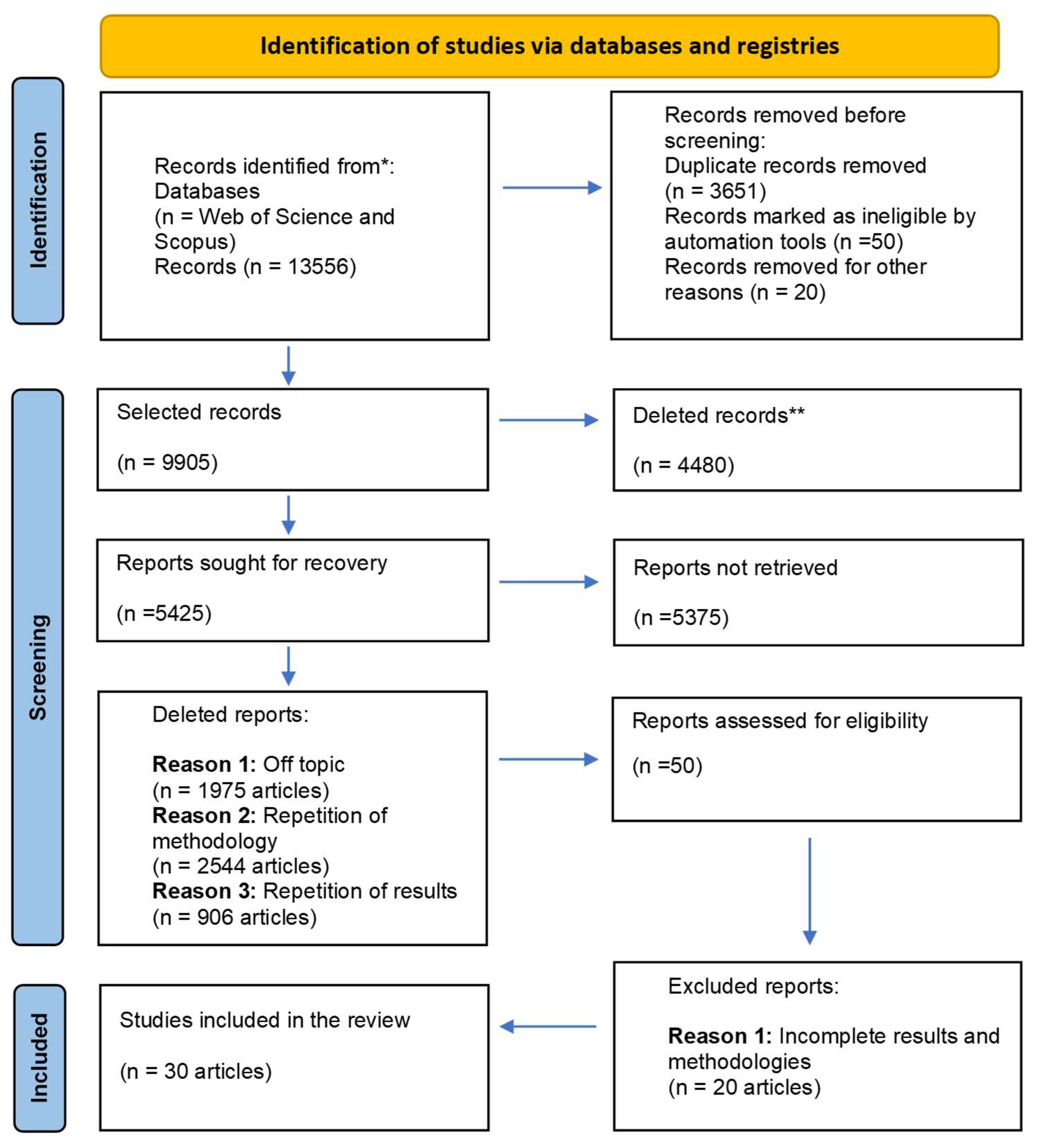
25]. Nevertheless, the combination of Boolean logic, structured search strings, and AI-assisted triage helped mitigate selection bias and maximize literature coverage. Manual screening steps complemented automated processes to further ensure quality control. The overall selection process is summarized in a PRISMA flow diagram (
Figure 1).
3. Results
The results of this research were organized into four phases. In the first phase, the quantitative output of the search strategies was presented. This included an analysis of the selected databases and retrieved articles, following the methodological guidelines proposed by Galvão and Ricarte (2019) [
26]. The results were interpreted based on overlaps between quantitative studies and retrieved documents, offering an initial overview of the volume of publications related to the topic.
In the second phase, data extraction and analysis were performed. This step enabled a detailed categorization of sizing and monitoring methods applied to Sustainable Urban Drainage Systems (SUDS), as highlighted by Higgins et al. (2019) [
27]. The process involved the classification of retrieved data, identification of frequently adopted approaches, and detection of knowledge gaps within the literature.
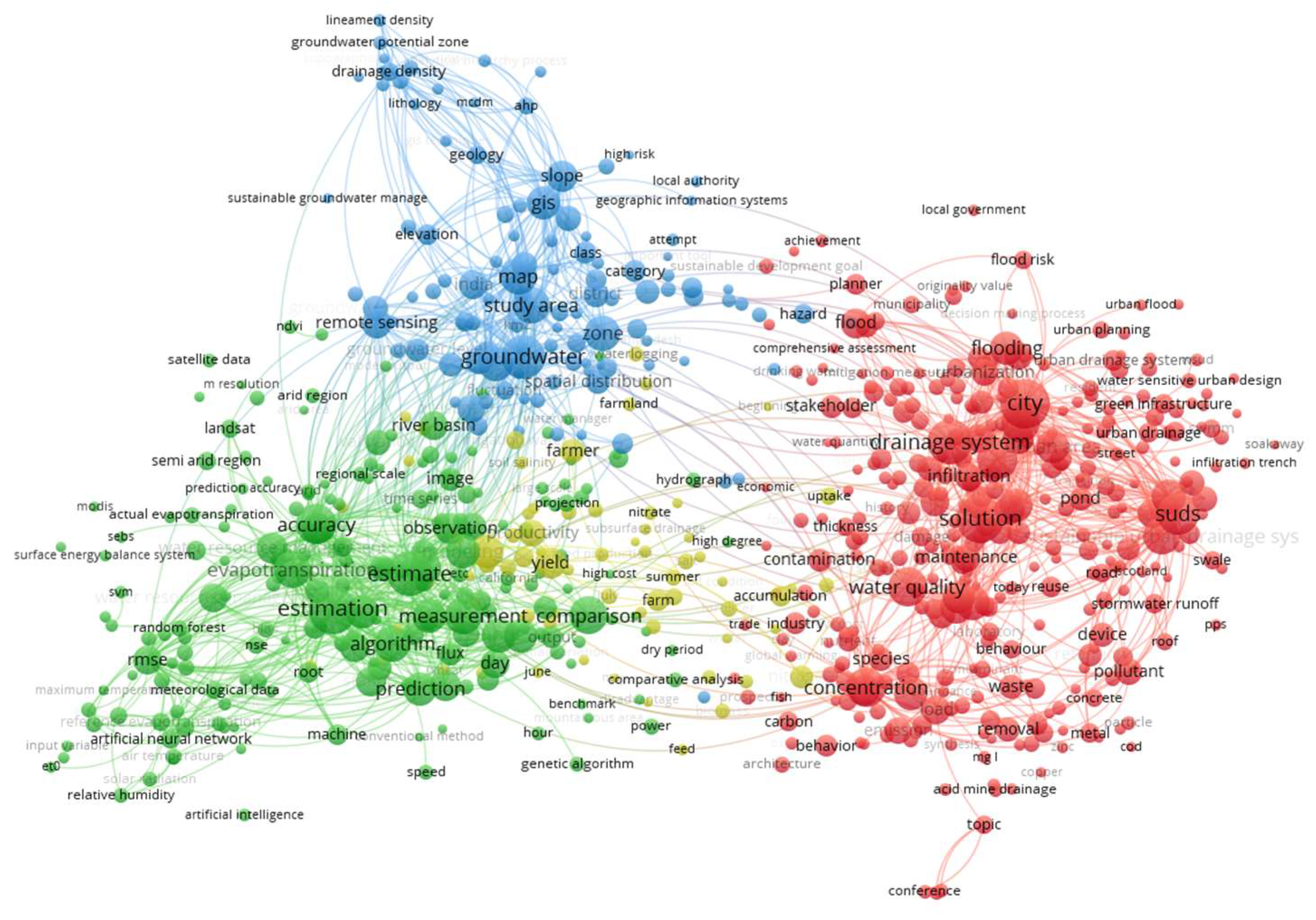
The third phase consisted of a co-occurrence analysis using the VOSviewer software [
28]. This allowed mapping of connections between frequently cited concepts, revealing emerging trends and correlations among key terms. The co-occurrence analysis supported a better understanding of the interrelations between different methodological frameworks and approaches in the context of SUDSs.
In the fourth and final phase, a state-of-the-art review of methods and techniques for sustainable urban drainage was conducted, distinguishing between monitoring and design strategies.
3.1. Search Strategies
After defining 30 search statements, it was necessary to separate queries related to monitoring and design/sizing, to improve result consistency and thematic clarity. Boolean operators “AND” and “OR” were applied to combine key terms, aiming to refine the retrieval process toward practical methods applicable to urban water systems.
3.1.1. Monitoring: Search Strategy and Query Performance
The databases selected for the monitoring-focused search were WoS and Scopus. Advanced queries were formulated with specific monitoring-related terms tied to sustainable urban drainage systems. Searches were conducted both with and without publication year filters (2020–2024) to ensure inclusion of the most recent developments. Articles written in English, Portuguese, and Spanish were considered, including both original research and review papers.
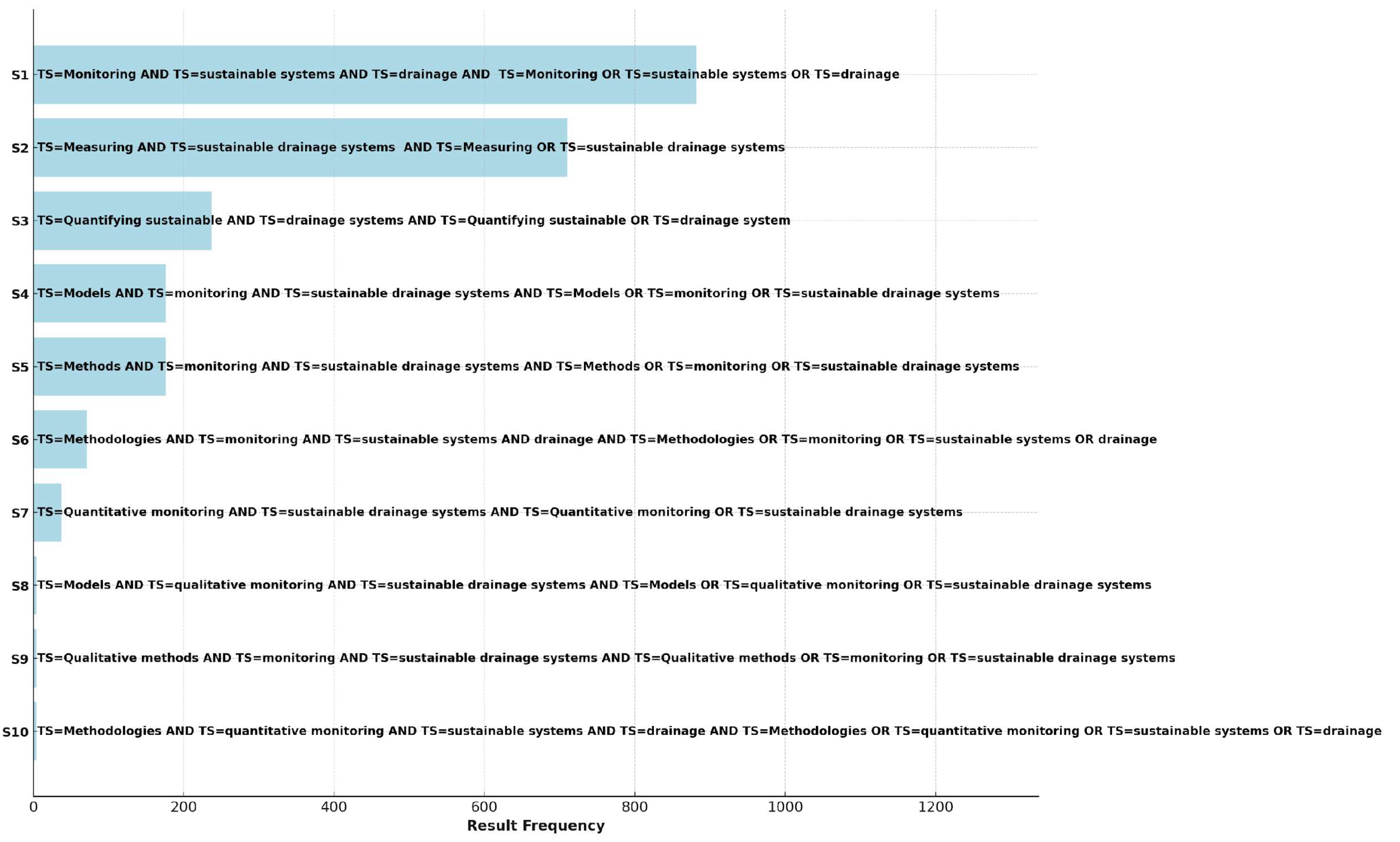
Initially, a total of 1210 articles were retrieved from WoS and 1091 from Scopus. After identifying and removing 397 and 626 duplicate records, respectively, the clean set included 813 unique articles from WoS and 465 from Scopus.
To visualize the performance and thematic relevance of each of the 10 search statements applied,
Figure 2 presents the distribution of article frequencies using a bar chart format. Each code (S1 to S10) corresponds to a specific Boolean query. The full statements are shown aligned to the left of each bar for legibility. This graphical representation not only highlights the most effective queries—such as S1 and S2, which together retrieved more than 1500 documents—but also illustrates the diversity in scope and specificity across the search strategies.
3.1.2. Monitoring: Screening Results and Query Effectiveness
The results presented in
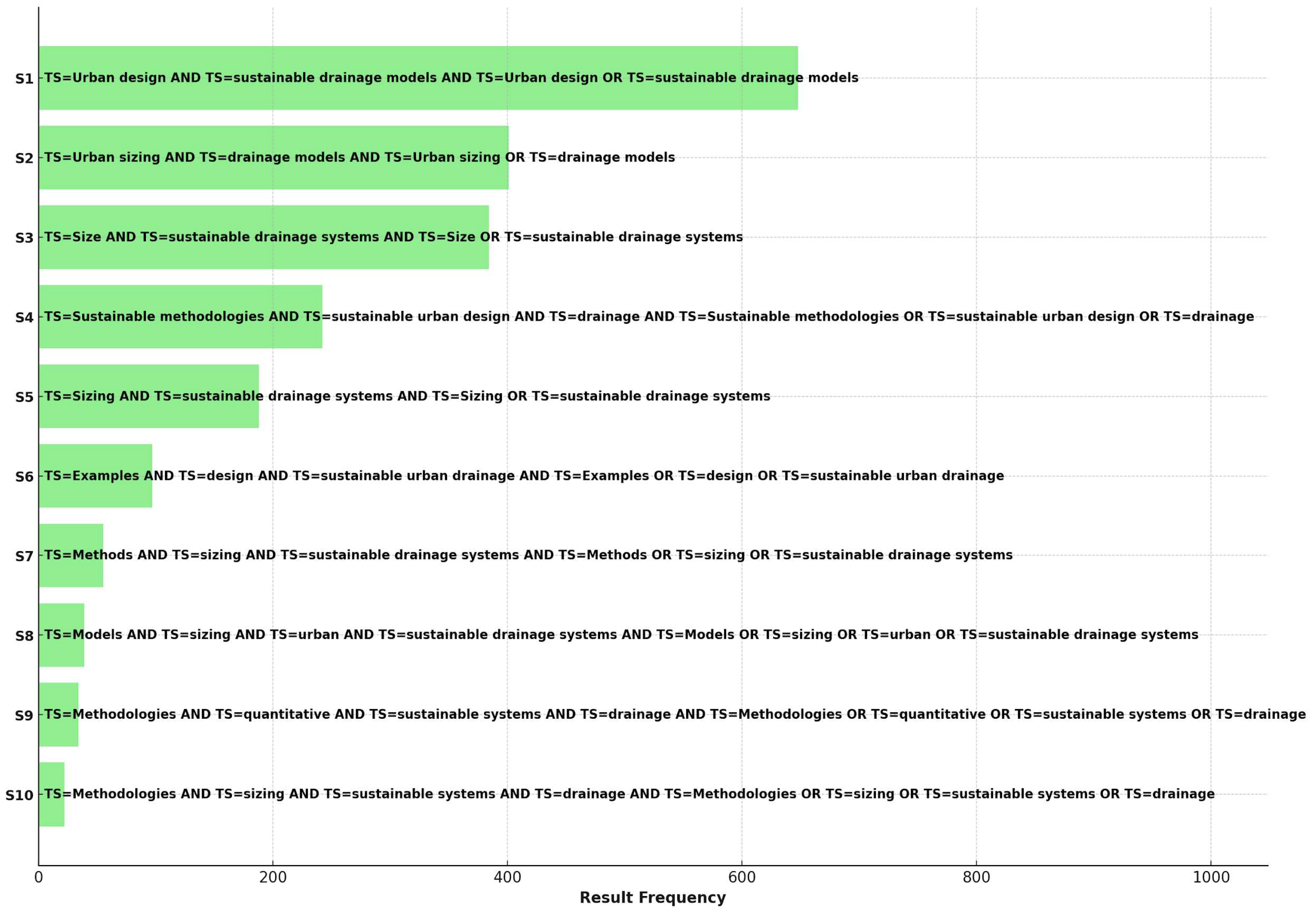
Figure 3 reflect the application of the predefined selection criteria to the monitoring-related corpus. The search in the WoS database, without the use of temporal filters, initially retrieved 1051 articles. When a publication date filter (2020–2024) was applied, the number was reduced to 235.
Similarly, the Scopus search returned 626 articles without filters and 198 with time constraints, resulting in a total of 824 initial records. After removing 544 duplicates from WoS and 307 from Scopus, the final count of eligible articles included 742 from WoS and 517 from Scopus.
Figure 3 displays the frequency distribution of the top 10 Boolean statements used for this theme. Each coded query (S1 to S10) represents a monitoring-related search statement used across both databases. Queries such as S1 and S2 retrieved the highest number of results, confirming their alignment with widely used terminology in the field. Lower-frequency queries captured more specialized areas of study. This visualization supports the identification of the most comprehensive queries for the subsequent review stages.
3.1.3. Additional Search Using Synonyms
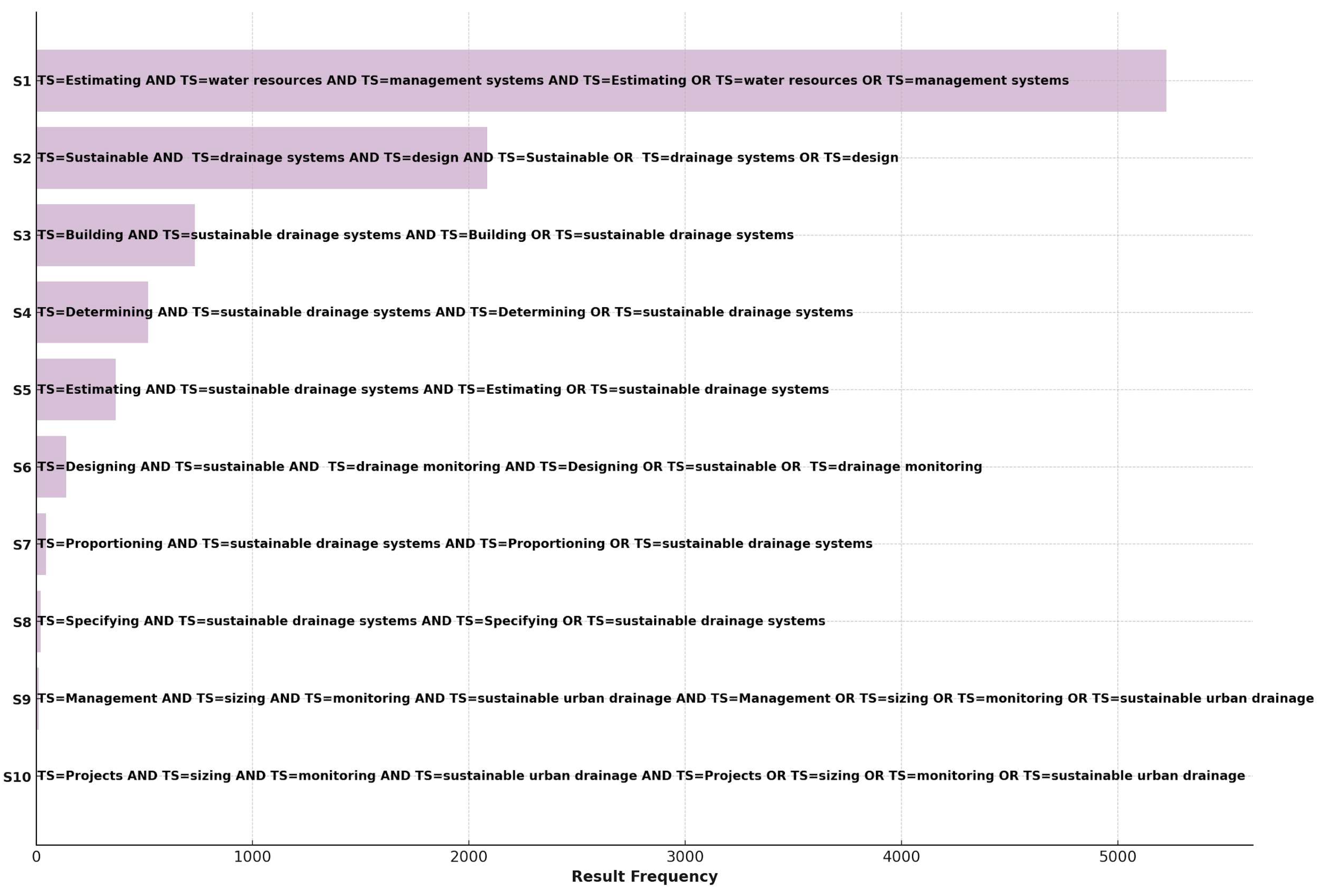
To enhance the scope and completeness of the systematic review, a third search strategy was applied using Boolean queries built with synonyms and broader descriptors related to both monitoring and sizing of Sustainable Urban Drainage Systems (SUDSs). This complementary step aimed to capture studies that may have been missed due to terminological variations in indexing. Following the same methodological criteria used in previous searches, this strategy yielded 5785 records from Web of Science and 3360 from Scopus. After removing 791 and 986 duplicates, respectively, a total of 7368 unique articles were retained—4994 from WoS and 2374 from Scopus—as shown in
Figure 4. This expanded search significantly enriched the review’s thematic coverage by incorporating literature that used less conventional language, thereby reinforcing the robustness and inclusivity of the final dataset.
3.2. Data Extraction and Screening Process
The screening and selection process for the systematic literature review on sizing and monitoring methods in Sustainable Urban Drainage Systems (SUDSs) is illustrated in
Figure 5, following the PRISMA framework. This approach ensures transparency, reproducibility, and reliability by systematically reducing bias and including only studies relevant to the research question.
3.2.1. Identification
In the initial stage of the systematic review, a total of 13,556 records were identified through searches in the Web of Science (WoS) and Scopus databases, encompassing peer-reviewed articles and technical reports focused on design and monitoring methodologies in Sustainable Urban Drainage Systems (SUDSs). After applying automated tools to detect and exclude duplicate entries and ineligible records, the dataset was refined to 9905 unique documents selected for screening. The removal of duplicates was a crucial step to preserve data integrity and prevent the artificial overrepresentation of findings, as emphasized by Gates et al. (2018) [
29], This process aligns with PRISMA guidelines, which advocate for the elimination of repeated entries to ensure that each study contributes uniquely to the final synthesis and avoids bias in the results [
23].
3.2.2. Screening
From the 9905 records selected, 4480 were excluded during the title and abstract screening stage due to divergence from the research scope or the use of unrelated methodologies. The remaining 5425 articles proceeded to the full-text retrieval and content evaluation phase. This screening step was essential to ensure that only studies directly aligned with the research objectives advanced in the process. The exclusion criteria were based on well-defined parameters of relevance and methodological consistency, contributing to a more focused and robust review.
3.2.3. Eligibility
Of the 5425 articles selected for full-text retrieval, 5375 could not be accessed, likely due to database coverage limitations or restricted article availability. Consequently, only 50 full-text studies were assessed for eligibility using rigorous selection criteria. Exclusions at this stage were based on off-topic content, methodological duplication, or redundancy with previously included records. Only those studies that fully satisfied the eligibility conditions were retained for detailed analysis.
3.2.4. Inclusion
In total, 30 studies were included in the systematic review. An additional 20 studies were excluded due to incomplete results or overlapping methodologies, which would have introduced redundancy into the synthesis. These 30 selected articles constitute the final evidence base used to analyze and compare monitoring and sizing approaches within sustainable urban drainage systems.
Conducting a rigorous systematic review is crucial for accurately synthesizing existing evidence and identifying knowledge gaps. As Moher et al. (2009) [
23] emphasize, systematic reviews offer a structured and transparent view of the current state of research. Liberati et al. (2009) [
30] further highlight their role in critically evaluating both methodologies and findings, while Higgins et al. (2019) [
27] underscore their potential to uncover underexplored areas and inform future research agendas.
3.3. Co-Occurrence Analysis
The co-occurrence analysis was performed by correlating the keywords of the documents retrieved with their relevance to sizing and monitoring methods for Sustainable Urban Drainage Systems (SUDSs). The objective was to identify the dominant methodological approaches present in the literature.
Figure 6 presents the resulting keyword co-occurrence network, where clusters of interrelated terms are visually grouped. This graphical representation offers a comprehensive view of recurring themes and conceptual connections in the selected literature. Four main clusters emerged from the analysis, each representing a distinct research focus within the broader topic of urban drainage.
3.3.1. Red Cluster (Nature-Based Solutions)
This group emphasizes Nature-Based Solutions (NBSs) and includes terms such as SUDSs, infiltration, water quality, and maintenance. Keywords like drainage system and flood suggest that studies within this cluster focus on managing runoff and water quality, particularly in flood-prone urban environments. For instance, D’Ambrosio et al. (2022) [
31] highlight the effectiveness of SUDS in reducing urban flood risks and improving stormwater quality.
3.3.2. Blue Cluster (Geospatial Monitoring Techniques)
This cluster is centered on the application of remote sensing and geospatial technologies, with key terms including GIS, remote sensing, groundwater, and spatial distribution. These studies investigate spatial patterns of urban hydrology using geospatial data, which, as noted by Gaur et al. (2022) [
32] and Johnson (2024) [
33], enhances the real-time identification of critical zones and flood monitoring capabilities.
3.3.3. Green Cluster (Quantitative and AI-Based Approaches)
Composed of terms such as estimation, algorithm, prediction, and machine learning, this cluster represents predictive modeling and artificial intelligence applications. Jafri and Rajaee (2021) [
34] demonstrated the use of machine learning for flow prediction and dynamic management of drainage systems, highlighting its potential for real-time flood forecasting and adaptive control.
3.3.4. Yellow Cluster (Hydrological Modeling and Performance Assessment)
This group encompasses terms like measurement, comparison, and accuracy, indicating a focus on the evaluation of model accuracy and comparative performance. Perrini et al. (2024) [
35] emphasize the importance of validating model effectiveness under various urban drainage scenarios, particularly when selecting between competing hydrological solutions.
The keyword co-occurrence analysis reveals growing integration between quantitative and qualitative monitoring methods, as well as increased use of advanced technologies such as artificial intelligence, machine learning, and remote sensing tools. Combining modeling and monitoring strategies enhances system management, reduces flood risk, and ensures water quality in densely populated urban settings.
Moreover, the presence of keywords related to maintenance and water quality in the red cluster suggests that research is not only focused on the design of drainage systems, but also on their long-term performance and resilience. This emphasis is particularly relevant in regions with aging infrastructure, where the continuous application of sustainable and adaptable solutions is critical.
3.4. State of the Art in Sizing and Monitoring Methods for Sustainable Urban Drainage
The literature reviewed reveals a growing diversity of methods and tools used to design and monitor Sustainable Urban Drainage Systems (SUDSs), reflecting advances in simulation, sensing, and data analysis technologies.
3.4.1. Sizing Methods for Sustainable Urban Drainage
A wide range of methods and tools have been employed to support the sizing of Sustainable Urban Drainage Systems (SUDSs), aiming to enhance stormwater management in urban environments. While traditional techniques—such as the Rational Method and Intensity–Duration–Frequency (IDF) curves—are still applied, their limited scalability and adaptability often reduce their effectiveness in complex urban contexts [
36,
37].
In contrast, dynamic simulation tools have become central to contemporary sizing practices. The Storm Water Management Model (SWMM) is the most widely used platform, offering detailed rainfall–runoff simulations. It is frequently applied alone [
38], or combined with optimization algorithms and machine learning models to enhance flood control and system performance [
17,
39]. Complementary tools like MOUSE, HydroWorks, HEC-HMS, and HEC-RAS support specific tasks such as infiltration modeling, flood routing, and hydraulic structure analysis [
40].
Technological advances have expanded these capabilities through the integration of satellite-based remote sensing (e.g., Synthetic Aperture Radar and Digital Elevation Models) for topographic and hydrological input data [
41]. Recent studies also report the implementation of IoT-based sensors for real-time monitoring of rainfall, flow, and water quality [
42], as well as the use of artificial neural networks and decision support systems to address non-linear system behavior [
43].
More comprehensive approaches have emerged through the coupling of hydrological models (e.g., MODFLOW, WetSpa-Python) with sustainability assessment tools, such as Life Cycle Assessment (LCA) and Multi-Criteria Analysis (MCA), often embedded within platforms like MIKE URBAN [
2,
17,
44]. These methods allow performance evaluation across hydraulic, environmental, and economic dimensions. Regional applications—such as bioretention systems adapted to São Paulo’s climate and urbanization patterns—demonstrate growing interest in context-specific solutions and scalability under climate variability scenarios [
45].
3.4.2. Monitoring Methods for Sustainable Urban Drainage
Monitoring water quality in Sustainable Urban Drainage Systems (SUDSs) has evolved into an integrated practice that combines in situ measurements, automated sensors, and hydrological modeling to evaluate performance under varying climatic and land-use conditions. Field methods remain foundational, particularly in systems like bioretention units and permeable pavements, where capacitance sensors (e.g., EC-5 and 5TE), flow meters, and automated samplers are used to quantify parameters such as suspended solids and nutrients [
46,
47].
Simulation tools complement empirical data by modeling pollutant transport and treatment. SWMM remains a core platform for simulating pollutant buildup, wash-off, and conveyance, and is often enhanced with optimization algorithms like MOEAD to evaluate trade-offs between hydraulic and water quality goals [
48]. Beyond SWMM, GIFMod has gained traction for its ability to simulate complex interactions between hydrological flows, soil media, and pollutant transformations—especially within vegetated swales and bioretention structures—supporting design validation and scenario analysis [
49,
50].
Remote sensing tools, including DEMs and SAR imagery, contribute indirectly by informing surface runoff dynamics and pollutant accumulation zones [
51], while IoT-based sensor networks have enabled real-time monitoring of rainfall, flow, and water quality. These systems, often integrated with cloud platforms, allow for dynamic system adjustments based on environmental feedback [
42].
Despite their utility, model-based approaches can overestimate pollutant removal efficiencies due to simplifications in boundary conditions. Thus, combining simulations with field data is essential to produce more reliable evaluations—particularly in heterogeneous urban contexts [
52]. Overall, the convergence of empirical monitoring, advanced sensing technologies, and simulation platforms provides a robust basis for assessing pollutant behavior and guiding adaptive urban drainage strategies.
4. Discussion and Methodological Outlook
The adoption of the PRISMA framework in the systematic review process ensured methodological transparency and consistency at each stage of study selection. By identifying and removing duplicates, irrelevant studies, and those of insufficient quality, the review prioritized data integrity and reinforced the reliability of its findings. This rigorous process contributes not only to the robustness of the conclusions drawn, but also to the advancement of knowledge and practice in the field of Sustainable Urban Drainage Systems (SUDSs).
The use of the PRISMA framework throughout the systematic review process ensured a transparent, reproducible, and robust foundation for analyzing contemporary approaches to the sizing and monitoring of Sustainable Urban Drainage Systems (SUDSs). By applying a strict protocol for duplicate removal, inclusion/exclusion criteria, and metadata management, the review preserved data integrity and improved the reliability of conclusions. This methodological rigor aligns with best practices in environmental engineering and urban infrastructure research [
23,
29].
The findings reveal a clear evolution in both sizing and monitoring techniques over the past decade. Traditional empirical methods such as rational formulas and IDF curves continue to serve as baseline tools, particularly in resource-constrained contexts [
36,
37]. However, simulation-based platforms have emerged as dominant due to their capacity for integrated modeling. SWMM is the most widely used tool for sizing applications, frequently enhanced with machine learning algorithms [
39] or multi-objective optimization frameworks [
17,
38] to balance hydraulic performance and pollutant reduction. Other tools such as HEC-HMS, HEC-RAS, and WetSpa-Python support runoff estimation and infiltration analysis under diverse urban morphologies [
40,
44].
In the monitoring domain, the trend is toward hybrid frameworks combining empirical measurements, remote sensing, and real-time data acquisition. Instruments like capacitance sensors, automated samplers, and flow meters provide essential field data for calibrating simulations and validating performance [
46,
47]. Platforms such as GIFMod offer an advanced approach to simulating water quality processes within bioretention, infiltration, and vegetated systems by modeling the interaction between hydrological flows, soil media, and pollutant transformation [
49,
50].
IoT-based sensor networks and cloud-integrated platforms now enable dynamic monitoring, allowing system managers to adapt operations based on environmental feedback [
42]. Remote sensing tools (e.g., SAR, DEM) further support spatially explicit modeling of pollutant pathways and risk areas [
41,
51]. These technological developments illustrate a shift from static infrastructure toward responsive, data-driven urban water systems.
A strong thematic convergence was observed around Nature-Based Solutions (NBSs), highlighted in the co-occurrence analysis. Frequently paired with keywords like “infiltration”, “water quality”, and “maintenance”, NBSs represent a growing interdisciplinary agenda that combines hydraulic function with ecological and social value [
53].
Despite this progress, the review identified several limitations that constrain the broader applicability and comparability of results. Methodological heterogeneity—ranging from lab-scale experiments to full-scale urban pilots—makes cross-case synthesis difficult. Short-term datasets and limited spatial scales reduce the generalizability of performance metrics, particularly in terms of pollutant removal efficiency and hydraulic resilience. As Higgins et al. (2019) and Liberati et al. (2009) note, systematic reviews must contend with the challenge of aggregating fragmented evidence [
27,
30].
Moreover, long-term performance evaluations, maintenance tracking, and system aging remain underexplored. This gap restricts our understanding of how SUDSs function under real operational conditions across seasons and years. Likewise, language and database restrictions—despite the inclusion of English, Spanish, and Portuguese—may have excluded regionally important studies indexed elsewhere.
From a methodological perspective, the future lies in developing interoperable platforms that can link real-time monitoring systems, hydrological models, and urban planning tools. The integration of cloud computing, artificial intelligence, and life cycle assessment could facilitate more dynamic and adaptive management strategies. Policymakers and engineers alike would benefit from updated regulatory frameworks that include performance-based criteria, promote NBS adoption, and encourage data sharing across institutions.
5. Conclusions and Future Directions
This systematic review highlights the breadth and diversity of methodologies currently applied in the sizing and monitoring of Sustainable Urban Drainage Systems (SUDSs). The findings reveal a fragmented research landscape, with limited methodological standardization and insufficient integration among the available tools. The application of the PRISMA framework enabled a rigorous selection process, consolidating quality evidence and helping address some of these gaps by synthesizing the performance and limitations of existing approaches.
This systematic review consolidates current knowledge on methods for sizing and monitoring SUDSs, identifying critical trends and methodological advancements. Tools such as SWMM, GIFMod, and HEC-HMS dominate the literature, often complemented by machine learning, multi-criteria decision frameworks, and IoT-based monitoring systems. These combinations reflect a move toward adaptive, technology-supported infrastructure, capable of managing both hydraulic capacity and water quality under changing urban conditions.
Four key clusters emerged from keyword co-occurrence analysis: (1) Nature-Based Solutions and water quality; (2) remote sensing and geospatial tools; (3) predictive modeling via AI; and (4) performance evaluation frameworks. These reveal a trend toward multidisciplinary approaches that combine ecological design with smart monitoring technologies.
Nonetheless, limitations persist—particularly the geographic concentration of studies, the short duration of monitoring campaigns, and fragmented methodological standards. There is a need for meta-analytical synthesis, longitudinal datasets, and cross-regional comparisons to bridge these gaps.
Future research should prioritize:
Long-term, multi-scale monitoring of SUDS performance under real operational conditions.
Integrated frameworks combining physical simulation, sensor data, and urban analytics.
Expansion of case studies in underrepresented regions and climates.
Strengthening collaborations among researchers, municipalities, and infrastructure agencies to scale and sustain innovations.
Ultimately, the convergence of technological, ecological, and participatory approaches will be essential for building truly resilient and Sustainable Urban Drainage Systems in the face of climate uncertainty and rapid urbanization.
Author Contributions
A.R.C. led the conceptualization, methodology, software development, data curation, formal analysis, and visualization. D.A.G. and A.R. contributed to conceptualization, validation, resources, supervision, and writing—review and editing. J.d.T.M. participated in the investigation and writing of the original draft. Project administration and funding acquisition were carried out by A.R. All authors have read and agreed to the published version of the manuscript.
Funding
The authors gratefully acknowledge the support of CNPq Project No. 307637/2012-3 (Scientific Productivity) and CNPq/MCTI/FNDCT No. 59/2022—“Benefits of implementing compensatory techniques to mitigate the problems caused by climate change, through the management of qualitative and quantitative aspects of urban drainage in the Municipality of Curitiba—Paraná—Brazil”.
Data Availability Statement
All data supporting this study were obtained from publicly available scientific databases (Scopus and Web of Science). No proprietary or unpublished data were used.
Conflicts of Interest
The authors declare no conflicts of interest. The funders had no role in the design of the study; in the collection, analyses, or interpretation of data; in the writing of the manuscript; or in the decision to publish the results.
Abbreviations
The following abbreviations are used in this manuscript:
| PRISMA | Preferred Reporting Items for Systematic Reviews and Meta-Analyses |
| IoT | Internet of Things |
| WoS | Web of Science |
| SUDS | Sustainable Urban Drainage System |
| VOSviewer | Visualization of Similarities Viewer |
| MCA | Multi-Criteria Analysis |
| SWMM | Storm Water Management Model |
| HEC-HMS | Hydrologic Engineering Center—Hydrologic Modeling System |
| HEC-RAS | Hydrologic Engineering Center—River Analysis System |
| DEM | Digital Elevation Model |
| GIFMod | Generalized Integrated Framework for Modeling |
Appendix A. Detailed Search Sentences Used in the Systematic Review
This appendix presents the complete set of Boolean search sentences used during the systematic review process. These search strings were developed after an exploratory review and the application of predefined inclusion criteria. They were organized into two thematic categories: monitoring and sizing of Sustainable Urban Drainage Systems (SUDSs). Each sentence was constructed using Boolean operators (AND, OR) to refine the scope and ensure the retrieval of relevant literature in the context of sustainable urban water management. The left column lists the expressions focused on monitoring, while the right column presents those related to sizing and design strategies. These structured queries were applied to both the Web of Science and Scopus databases. In Web of Science, the TS = (Topic Search) field tag was used to target content within titles, abstracts, author keywords, and Keywords Plus® fields.
Search Sentences for Monitoring
Sustainable Urban Drainage Systems | Search Sentences for Sizing
Sustainable Urban Drainage Systems |
| 1. TS = Models AND TS = monitoring AND TS = sustainable drainage systems AND TS = Models OR TS = monitoring OR TS = sustainable drainage systems | 1. TS = Urban design AND TS = sustainable drainage models AND TS = Urban design OR TS = sustainable drainage models |
| 2. TS = Models AND TS = qualitative monitoring AND TS = sustainable drainage systems AND TS = Models OR TS = qualitative monitoring OR TS = sustainable drainage systems | 2. TS = Urban sizing AND TS = drainage models AND TS = Urban sizing OR TS = drainage models |
| 3. TS = Methods AND TS = monitoring AND TS = sustainable drainage systems AND TS = Methods OR TS = monitoring OR TS = sustainable drainage systems | 3. TS = Examples AND TS = design AND TS = sustainable urban drainage AND TS = Examples OR TS = design OR TS = sustainable urban drainage |
| 4. TS = Qualitative methods AND TS = monitoring AND TS = sustainable drainage systems AND TS = Qualitative methods OR TS = monitoring OR TS = sustainable drainage systems | 4. TS = Size AND TS = sustainable drainage systems AND TS = Size OR TS = sustainable drainage systems |
| 5. TS = Quantitative monitoring AND TS = sustainable drainage systems AND TS = Quantitative monitoring OR TS = sustainable drainage systems | 5. TS = Sizing AND TS = sustainable drainage systems AND TS = Sizing OR TS = sustainable drainage systems |
| 6. TS = Quantifying sustainable AND TS = drainage systems AND TS = Quantifying sustainable OR TS = drainage system | 6. TS = Models AND TS = sizing AND TS = urban AND TS = sustainable drainage systems AND TS = Models OR TS = sizing OR TS = urban OR TS = sustainable drainage systems |
| 7. TS = Methodologies AND TS = monitoring AND TS = sustainable systems AND TS = drainage AND TS = Methodologies OR TS = monitoring OR TS = sustainable systems OR TS = drainage | 7. TS = Methods AND TS = sizing AND TS = sustainable drainage systems AND TS = Methods OR TS = sizing OR TS = sustainable drainage systems |
| 8. TS = Methodologies AND TS = quantitative monitoring AND TS = sustainable systems AND TS = drainage AND TS = Methodologies OR TS = quantitative monitoring OR TS = sustainable systems OR TS = drainage | 8. TS = Methodologies AND TS = sizing AND TS = sustainable systems AND TS = drainage AND TS = Methodologies OR TS = sizing OR TS = sustainable systems OR TS = drainage |
| 9. TS = Monitoring AND TS = sustainable systems AND TS = drainage AND TS = Monitoring OR TS = sustainable systems OR TS = drainage | 9. TS = Methodologies AND TS = quantitative AND TS = sustainable systems AND TS = drainage AND TS = Methodologies OR TS = quantitative OR TS = sustainable systems OR TS = drainage |
| 10. TS = Measuring AND TS = sustainable drainage systems AND TS = Measuring OR TS = sustainable drainage systems | 10. TS = Sustainable methodologies AND TS = sustainable urban design AND TS = drainage AND TS = Sustainable methodologies OR TS = sustainable urban design OR TS = drainage |
References
- McDonald, R.I.; Weber, K.; Padowski, J.; Flörke, M.; Schneider, C.; Green, P.A.; Gleeson, T.; Eckman, S.; Lehner, B.; Balk, D.; et al. Water on an Urban Planet: Urbanization and the Reach of Urban Water Infrastructure. Glob. Environ. Change 2014, 27, 96–105. [Google Scholar] [CrossRef]
- Liang, F.; Li, S.; Jie, F.; Ge, Y.; Liu, N.; Jia, G. The Development of a Coupled Soil Water Assessment Tool-MODFLOW Model for Studying the Impact of Irrigation on a Regional Water Cycle. Water 2023, 15, 3542. [Google Scholar] [CrossRef]
- Kreibich, H.; Van Loon, A.F.; Schröter, K.; Ward, P.J.; Mazzoleni, M.; Sairam, N.; Abeshu, G.W.; Agafonova, S.; AghaKouchak, A.; Aksoy, H.; et al. The Challenge of Unprecedented Floods and Droughts in Risk Management. Nature 2022, 608, 80–86. [Google Scholar] [CrossRef] [PubMed]
- Jena, B.; Kshitija, S.; Bajish, C.C.; Turner, J.; Holmes, C.; Wilkinson, J.; Mohan, R.; Thamban, M. Evolution of Antarctic Sea Ice Ahead of the Record Low Annual Maximum Extent in September 2023. Geophys. Res. Lett. 2024, 51, e2023GL107561. [Google Scholar] [CrossRef]
- World Meteorological Organization (WMO). State of the Global Climate 2023; World Meteorological Organization: Geneva, Switzerland, 2024. [Google Scholar]
- FSIN. Global Network Against Food Crises Global Report on Food Crises 2024: Joint Analysis for Better Decisions; FSIN: Saskatoon, Canada, 2024. [Google Scholar]
- Aboelnga, H.T.; Ribbe, L.; Frechen, F.-B.; Saghir, J. Urban Water Security: Definition and Assessment Framework. Resources 2021, 8, 178. [Google Scholar] [CrossRef]
- Babel, M.S.; Shinde, V.R.; Sharma, D.; Dang, N.M. Measuring Water Security: A Vital Step for Climate Change Adaptation. Environ. Res. 2020, 185, 109400. [Google Scholar] [CrossRef]
- Farias Filho, J.A.; Alvim, A.T.B. Hygienism and Urban Form: A Biopolicy of the Evolving Territory. Urbe 2022, 14, e20220050. [Google Scholar] [CrossRef]
- Artmann, M.; Bastian, O.; Grunewald, K. Using the Concepts of Green Infrastructure and Ecosystem Services to Specify Leitbilder for Compact and Green Cities-The Example of the Landscape Plan of Dresden (Germany). Sustainability 2017, 9, 198. [Google Scholar] [CrossRef]
- Hansamali, U.; Makumbura, R.K.; Rathnayake, U.; Azamathulla, H.M.; Muttil, N. Leaky Dams as Nature-Based Solutions in Flood Management Part I: Introduction and Comparative Efficacy with Conventional Flood Control Infrastructure. Hydrology 2025, 12, 95. [Google Scholar] [CrossRef]
- Sowińska-Świerkosz, B.; García, J. What Are Nature-Based Solutions (NBS)? Setting Core Ideas for Concept Clarification. Nat.-Based Solut. 2022, 2, 100009. [Google Scholar] [CrossRef]
- Hansamali, U.; Makumbura, R.K.; Rathnayake, U.; Azamathulla, H.M.; Muttil, N. Leaky Dams as Nature-Based Solutions in Flood Management Part II: Mechanisms, Effectiveness, Environmental Impacts, Technical Challenges, and Emerging Trends. Hydrology 2025, 12, 91. [Google Scholar] [CrossRef]
- Dushkova, D.; Haase, D. Not Simply Green: Nature-Based Solutions as a Concept and Practical Approach for Sustainability Studies and Planning Agendas in Cities. Land 2020, 9, 19. [Google Scholar] [CrossRef]
- Moreau, C.; Cottet, M.; Rivière-Honegger, A.; François, A.; Evette, A. Nature-Based Solutions (NbS): A Management Paradigm Shift in Practitioners’ Perspectives on Riverbank Soil Bioengineering. J. Environ. Manag. 2022, 308, 114638. [Google Scholar] [CrossRef]
- Sheng, L.S.; Hao, Y.Y.; Zhou, S.Q.; Tan, B.; Yuan, Q.; Xu, D.F.; Zhao, B. Nature-Based Solutions (NbS) in China: Implementation and Practice Modes. Environ. Res. Commun. 2025, 7, 051002. [Google Scholar] [CrossRef]
- Nguyen, T.T.; Ngo, H.H.; Guo, W.; Wang, X.C. A New Model Framework for Sponge City Implementation: Emerging Challenges and Future Developments. J. Environ. Manag. 2020, 253, 109689. [Google Scholar] [CrossRef] [PubMed]
- Donthu, N.; Kumar, S.; Mukherjee, D.; Pandey, N.; Lim, W.M. How to Conduct a Bibliometric Analysis: An Overview and Guidelines. J. Bus. Res. 2021, 133, 285–296. [Google Scholar] [CrossRef]
- Page, M.J.; McKenzie, J.E.; Bossuyt, P.M.; Boutron, I.; Hoffmann, T.C.; Mulrow, C.D.; Shamseer, L.; Tetzlaff, J.M.; Akl, E.A.; Brennan, S.E.; et al. The PRISMA 2020 Statement: An Updated Guideline for Reporting Systematic Reviews. BMJ 2021, 372, 71. [Google Scholar] [CrossRef] [PubMed]
- Ouzzani, M.; Hammady, H.; Fedorowicz, Z.; Elmagarmid, A. Rayyan-a Web and Mobile App for Systematic Reviews. Syst. Rev. 2016, 5, 210. [Google Scholar] [CrossRef] [PubMed]
- Falagas, M.E.; Pitsouni, E.I.; Malietzis, G.A.; Pappas, G. Comparison of PubMed, Scopus, Web of Science, and Google Scholar: Strengths and Weaknesses. FASEB J. 2008, 22, 338–342. [Google Scholar] [CrossRef] [PubMed]
- Mongeon, P.; Paul-Hus, A. The Journal Coverage of Web of Science and Scopus: A Comparative Analysis. Scientometrics 2016, 106, 213–228. [Google Scholar] [CrossRef]
- Moher, D.; Liberati, A.; Tetzlaff, J.; Altman, D.G.; Antes, G.; Atkins, D.; Barbour, V.; Barrowman, N.; Berlin, J.A.; Clark, J.; et al. Preferred Reporting Items for Systematic Reviews and Meta-Analyses: The PRISMA Statement. PLoS Med. 2009, 6, e1000097-269. [Google Scholar] [CrossRef]
- Gough, D.; Oliver, S.; Thomas, J. An Introduction to Systematic Reviews, 2nd ed.; SAGE: London, UK, 2017; ISBN 9781118280249. [Google Scholar]
- Gusenbauer, M.; Haddaway, N.R. Which Academic Search Systems Are Suitable for Systematic Reviews or Meta-Analyses? Evaluating Retrieval Qualities of Google Scholar, PubMed, and 26 Other Resources. Res. Synth. Methods 2020, 11, 181–217. [Google Scholar] [CrossRef] [PubMed]
- Galvão, M.C.B.; Ricarte, I.L.M. Revisão Sistemática Da Literatura: Conceituação, Produção E Publicação. Logeion Filos. Informação 2019, 6, 57–73. [Google Scholar] [CrossRef]
- Higgins, J.P.T.; Thomas, J.; Chandler, J.; Cumpston, M.; Li, T.; Page, M.J.; Welch, V.A. Cochrane Handbook for Systematic Reviews of Interventions; John Wiley & Sons: Chichester, UK, 2019; pp. 1–694. [Google Scholar] [CrossRef]
- van Eck, N.J.; Waltman, L. Software Survey: VOSviewer, a Computer Program for Bibliometric Mapping. Scientometrics 2010, 84, 523–538. [Google Scholar] [CrossRef] [PubMed]
- Gates, A.; Johnson, C.; Hartling, L. Technology-Assisted Title and Abstract Screening for Systematic Reviews: A Retrospective Evaluation of the Abstrackr Machine Learning Tool. Syst. Rev. 2018, 7, 45. [Google Scholar] [CrossRef] [PubMed]
- Liberati, A.; Altman, D.G.; Tetzlaff, J.; Mulrow, C.; Gøtzsche, P.C.; Ioannidis, J.P.A.; Clarke, M.; Devereaux, P.J.; Kleijnen, J.; Moher, D. The PRISMA Statement for Reporting Systematic Reviews and Meta-Analyses of Studies That Evaluate Health Care Interventions: Explanation and Elaboration. PLoS Med. 2009, 6, e1000100. [Google Scholar] [CrossRef] [PubMed]
- D’Ambrosio, R.; Balbo, A.; Longobardi, A.; Rizzo, A. Re-Think Urban Drainage Following a SuDS Retrofitting Approach against Urban Flooding: A Modelling Investigation for an Italian Case Study. Urban For. Urban Green. 2022, 70, 127518. [Google Scholar] [CrossRef]
- Gaur, S.; Singh, B.; Bandyopadhyay, A.; Stisen, S.; Singh, R. Spatial Pattern-Based Performance Evaluation and Uncertainty Analysis of a Distributed Hydrological Model. Hydrol. Process. 2022, 36, e14586. [Google Scholar] [CrossRef]
- Johnson, B.D. Identification of Sub-Urban Scale Extreme Precipitation Variability Using a Geospatial Algorithm. Urban Clim. 2024, 56, 102043. [Google Scholar] [CrossRef]
- Jafri, H.; Rajaee, T. Quality Detection Sensors Location in Water Distribution Networks for Uncertain Water Demand Conditions. Iran. J. Irrig. Drain. 2021, 15, 757–768. [Google Scholar]
- Perrini, P.; Cea, L.; Chiaravalloti, F.; Gabriele, S.; Manfreda, S.; Fiorentino, M.; Gioia, A.; Iacobellis, V. A Runoff-On-Grid Approach to Embed Hydrological Processes in Shallow Water Models. Water Resour. Res. 2024, 60, e2023WR036421. [Google Scholar] [CrossRef]
- Natarajan, S.; Radhakrishnan, N. An Integrated Hydrologic and Hydraulic Flood Modeling Study for a Medium-Sized Ungauged Urban Catchment Area: A Case Study of Tiruchirappalli City Using HEC-HMS and HEC-RAS. J. Inst. Eng. Ser. A 2020, 101, 381–398. [Google Scholar] [CrossRef]
- Jodra-Lopez, R.; Sordo-Ward, A.; Gabriel-Martin, I.; Garrote, L. Effects of Key Properties of Rainfall Series on Hydrologic Design of Sustainable Urban Drainage Systems (SUDS). Proceedings 2019, 7, 17. [Google Scholar] [CrossRef]
- Haghbin, S.; Mahjouri, N. Quantifying and Improving Flood Resilience of Urban Drainage Systems Based on Socio-Ecological Criteria. J. Environ. Manag. 2023, 339, 117799. [Google Scholar] [CrossRef]
- Li, X.; Fang, X.; Gong, Y.; Li, J.; Wang, J.; Chen, G.; Li, M.H. Evaluating the Road-Bioretention Strip System from a Hydraulic Perspective-Case Studies. Water 2018, 10, 1778. [Google Scholar] [CrossRef]
- Freni, G.; Mannina, G. The Identifiability Analysis for Setting up Measuring Campaigns in Integrated Water Quality Modelling. Phys. Chem. Earth 2012, 42–44, 52–60. [Google Scholar] [CrossRef]
- Cui, L.; Bhattacharya, S. Choice of Aggregates for Permeable Pavements Based on Laboratory Tests and DEM Simulations. Int. J. Pavement Eng. 2017, 18, 162–170. [Google Scholar] [CrossRef]
- Anitha, A.; Sampath, N.; Jerlin, M.A. Smart Irrigation System Using Internet of Things. In Proceedings of the 2020 International Conference on Emerging Trends in Information Technology and Engineering (ic-ETITE), Vellore, India, 24–25 February 2020; pp. 1–7. [Google Scholar] [CrossRef]
- Sidek, L.M.; Mohiyaden, H.A.; Haris, H.; Basri, H.; Muda, Z.C.; Roseli, Z.A.; Norlida, M.D. Decision Support System (DSS) for MSMA Integrated Stormwater Management Ecohydrology for Sustainable Green Infrastructure. IOP Conf. Ser. Earth Environ. Sci. 2016, 32, 012068. [Google Scholar] [CrossRef]
- Helmi, N.R.; Verbeiren, B.; Wirion, C.; van Griensven, A.; Weerasinghe, I.; Bauwens, W. WetSpa-Urban: An Adapted Version of WetSpa-Python, a Suitable Tool for Detailed Runoffcalculation in Urban Areas. Water 2019, 11, 2460. [Google Scholar] [CrossRef]
- Rosa, A.; Prokopiuk, M.; de Macedo, M.B.; do Lago, C.A.F.; Sample, D.; de Souza, V.C.; Mendiondo, M.E. Bioretention as a Control to Urban Drainage System with an Ecohydrological Base: GIS as a Tool on Decision Making. Sustain. Resilient Infrastruct. 2025, 10, 102–117. [Google Scholar] [CrossRef]
- Pugliese, F.; Gerundo, C.; De Paola, F.; Caroppi, G.; Giugni, M. Enhancing the Urban Resilience to Flood Risk Through a Decision Support Tool for the LID-BMPs Optimal Design. Water Resour. Manag. 2022, 36, 5633–5654. [Google Scholar] [CrossRef]
- Fiori, A.; Volpi, E. On the Effectiveness of LID Infrastructures for the Attenuation of Urban Flooding at the Catchment Scale. Water Resour. Res. 2020, 56, e2020WR027121. [Google Scholar] [CrossRef]
- Jiang, C.; Zhang, H.; Wang, C.; Ge, J.; Wu, F. Water Surface Mapping from Sentinel-1 Imagery Based on Attention-UNet3+: A Case Study of Poyang Lake Region. Remote Sens. 2022, 14, 4708. [Google Scholar] [CrossRef]
- Lisenbee, W.A.; Hathaway, J.M.; Burns, M.J.; Fletcher, T.D. Modeling Bioretention Stormwater Systems: Current Models and Future Research Needs. Environ. Model. Softw. 2021, 144, 105146. [Google Scholar] [CrossRef]
- Joshi, P.; Leitão, J.P.; Maurer, M.; Bach, P.M. Not All SuDS Are Created Equal: Impact of Different Approaches on Combined Sewer Overflows. Water Res. 2021, 191, 116780. [Google Scholar] [CrossRef]
- Degiorgis, M.; Gnecco, G.; Gorni, S.; Roth, G.; Sanguineti, M.; Taramasso, A.C. Classifiers for the Detection of Flood-Prone Areas Using Remote Sensed Elevation Data. J. Hydrol. 2012, 470–471, 302–315. [Google Scholar] [CrossRef]
- Yin, J.; Slater, L.; Gu, L.; Liao, Z.; Guo, S.; Gentine, P. Global Increases in Lethal Compound Heat Stress: Hydrological Drought Hazards under Climate Change. Geophys. Res. Lett. 2022, 49, e2022GL100880. [Google Scholar] [CrossRef]
- Hobbie, S.E.; Grimm, N.B. Nature-Based Approaches to Managing Climate Change Impacts in Cities. Philos. Trans. R. Soc. B Biol. Sci. 2020, 375, 20190124. [Google Scholar] [CrossRef] [PubMed]
| Disclaimer/Publisher’s Note: The statements, opinions and data contained in all publications are solely those of the individual author(s) and contributor(s) and not of MDPI and/or the editor(s). MDPI and/or the editor(s) disclaim responsibility for any injury to people or property resulting from any ideas, methods, instructions or products referred to in the content. |
© 2025 by the authors. Licensee MDPI, Basel, Switzerland. This article is an open access article distributed under the terms and conditions of the Creative Commons Attribution (CC BY) license (https://creativecommons.org/licenses/by/4.0/).