Article

Differential Impacts of Road De-icers on Freshwater Bacterial Communities

1
Department of Biology, Queen’s University, Kingston, ON K7L 3N6, Canada
2
School of Environmental Studies, Queen’s University, Kingston, ON K7L 3N6, Canada
*
Authors to whom correspondence should be addressed.
Water 2024, 16(3), 426; https://doi.org/10.3390/w16030426
Submission received: 30 December 2023 / Revised: 23 January 2024 / Accepted: 25 January 2024 / Published: 28 January 2024
(This article belongs to the Special Issue Aquatic Ecotoxicology and Environmental Contamination)

Abstract

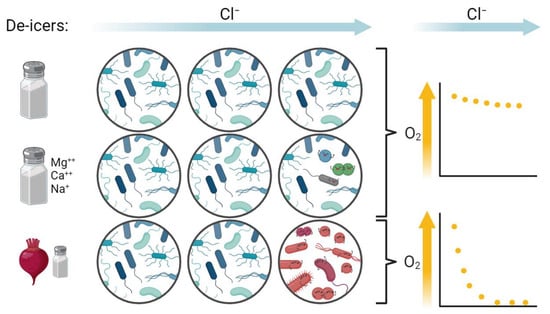
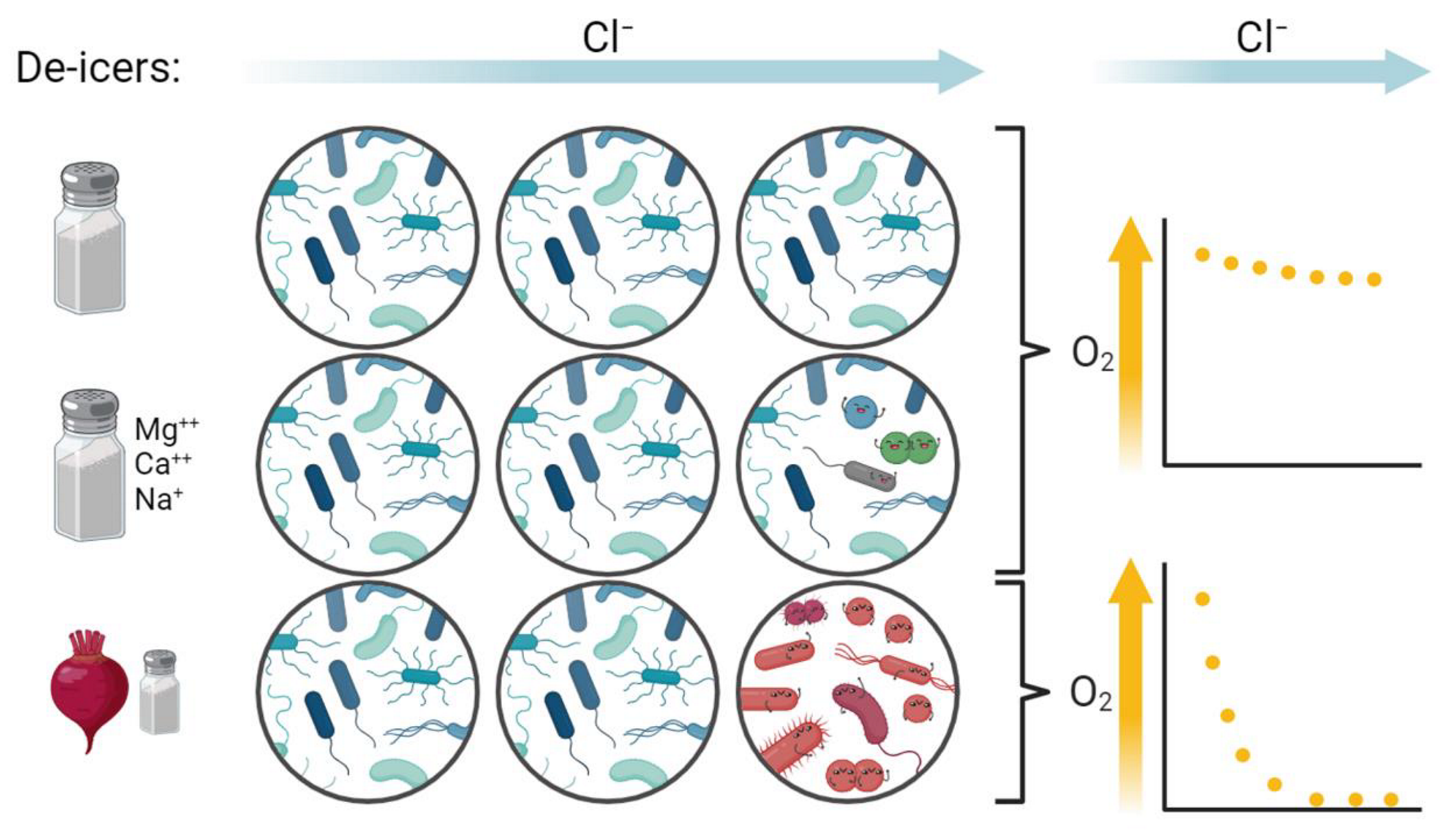
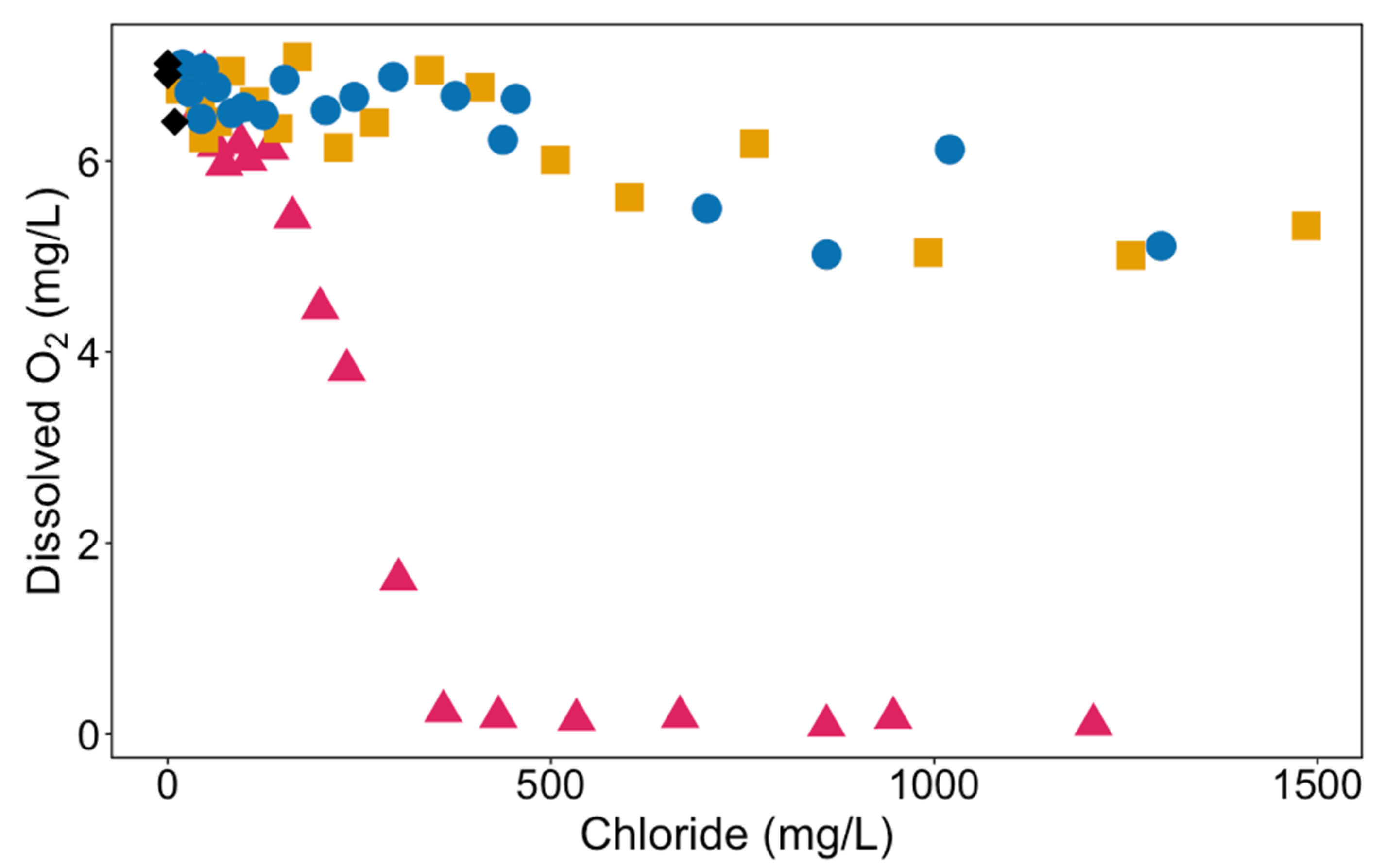
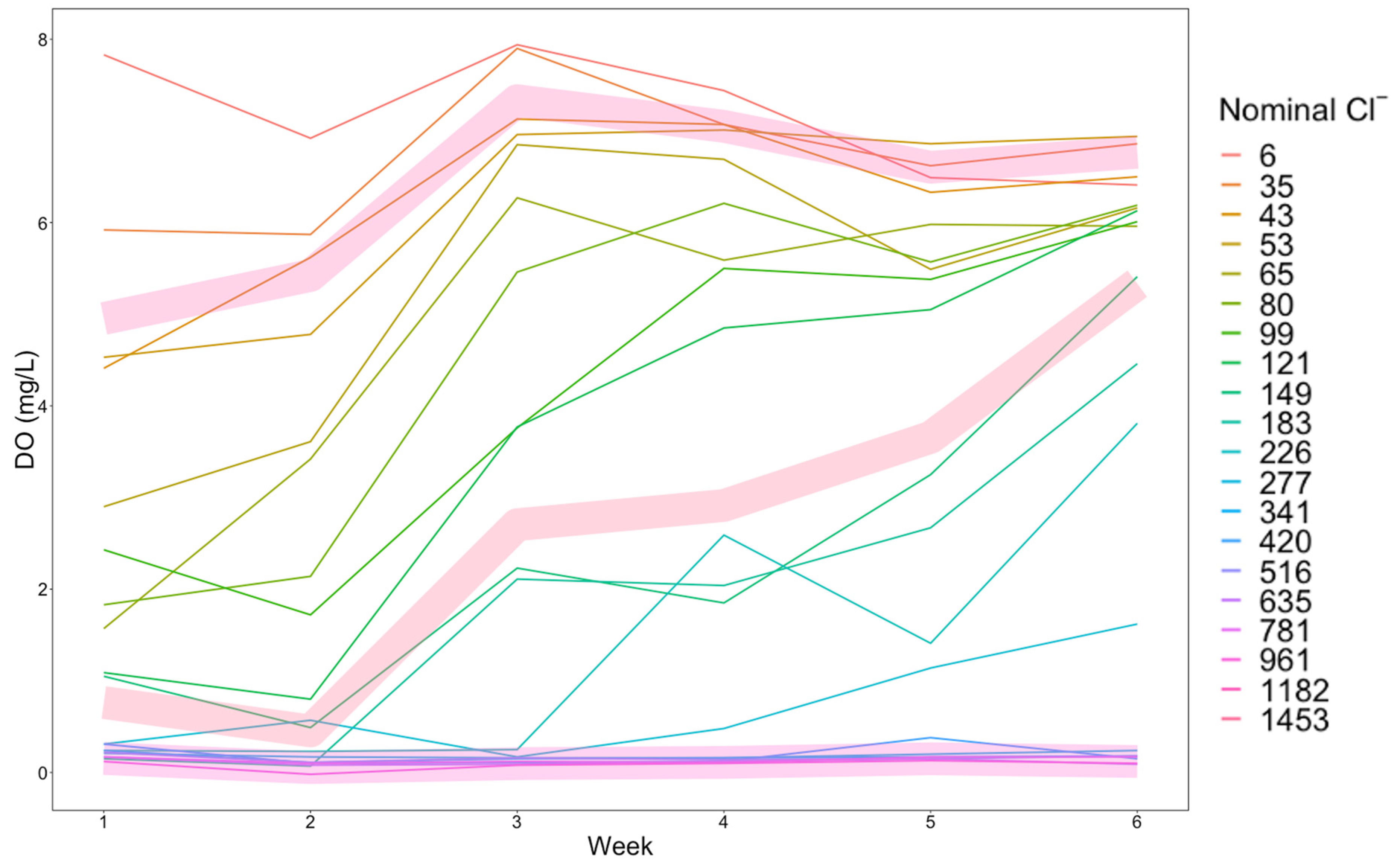
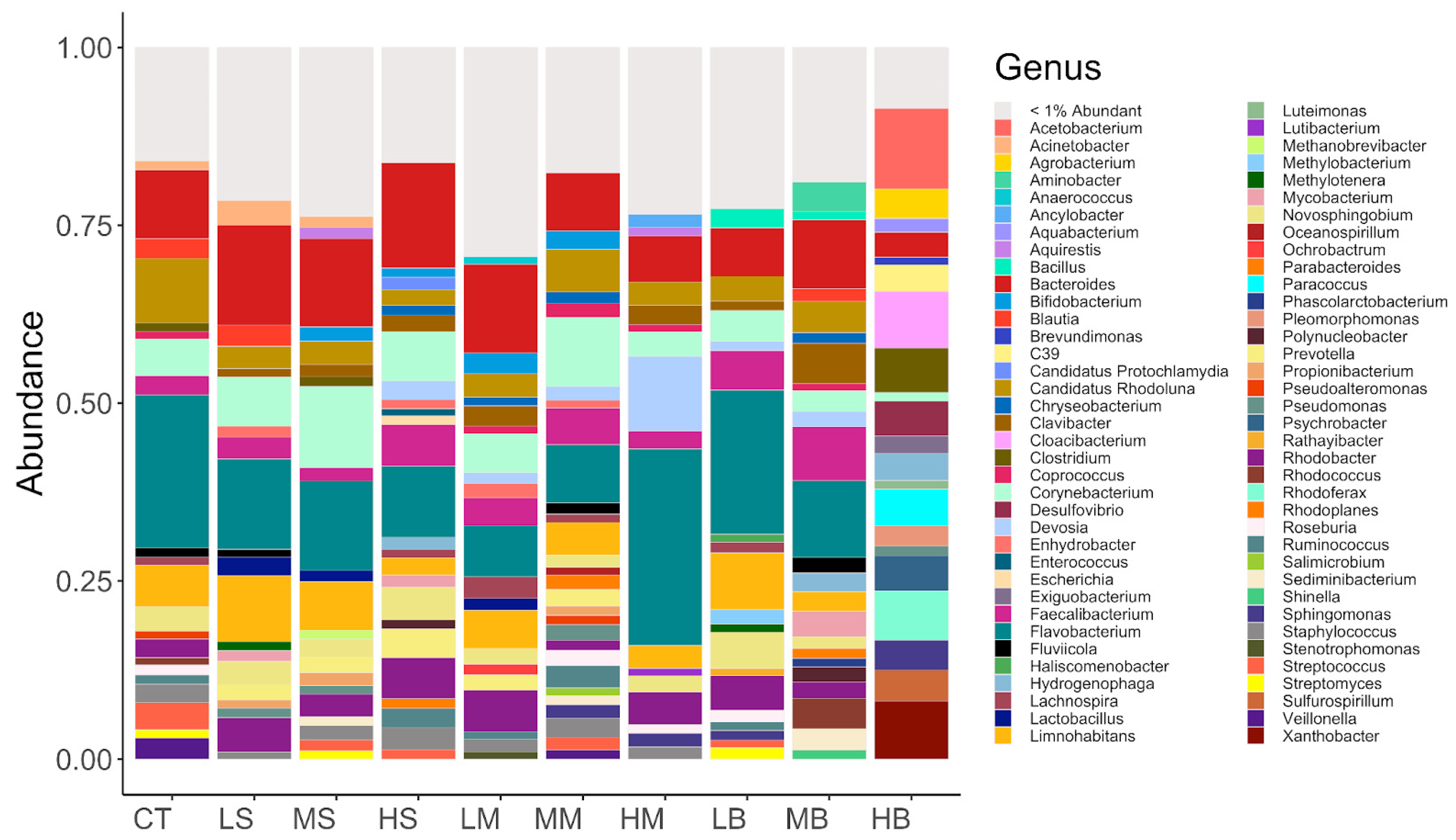
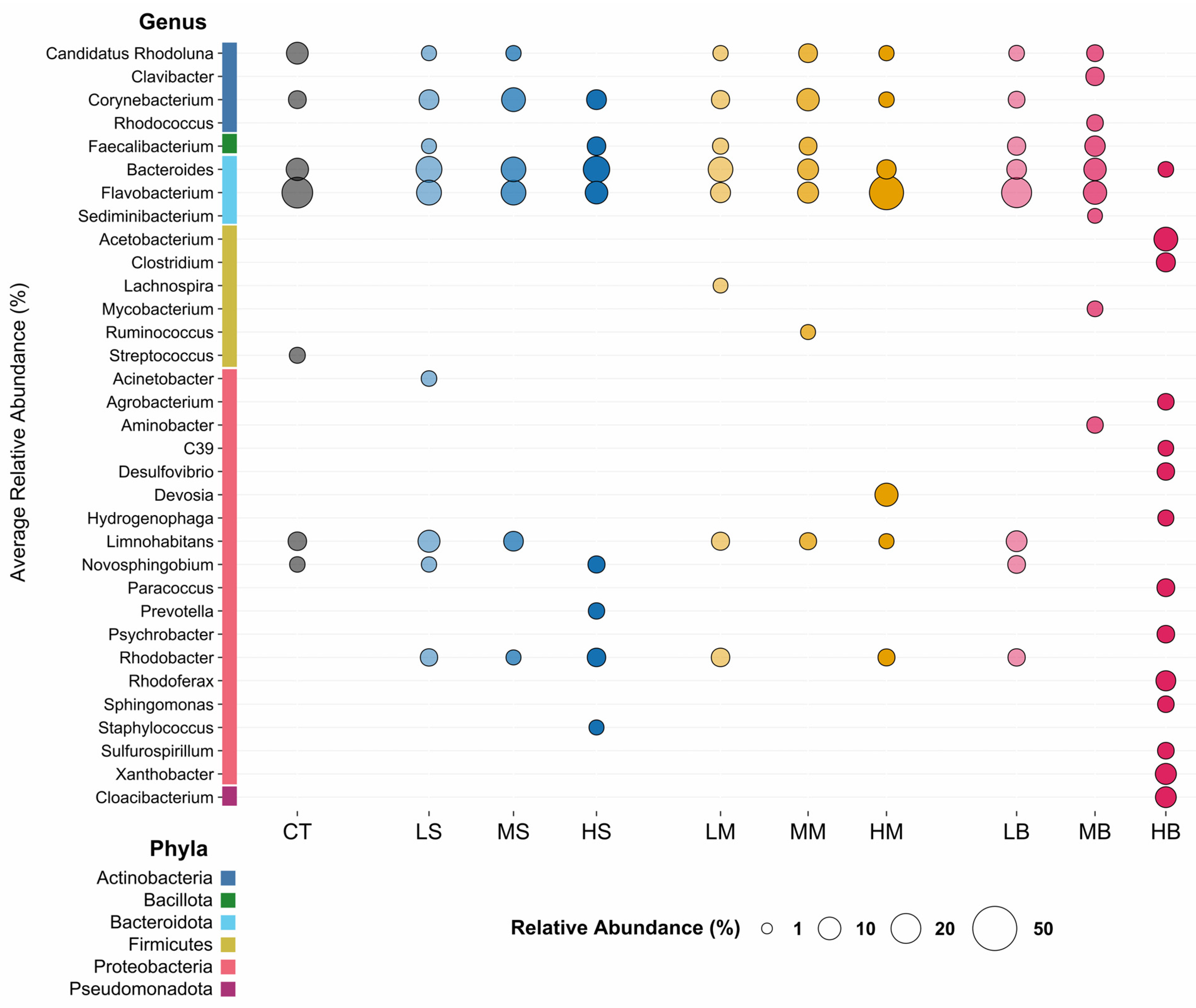
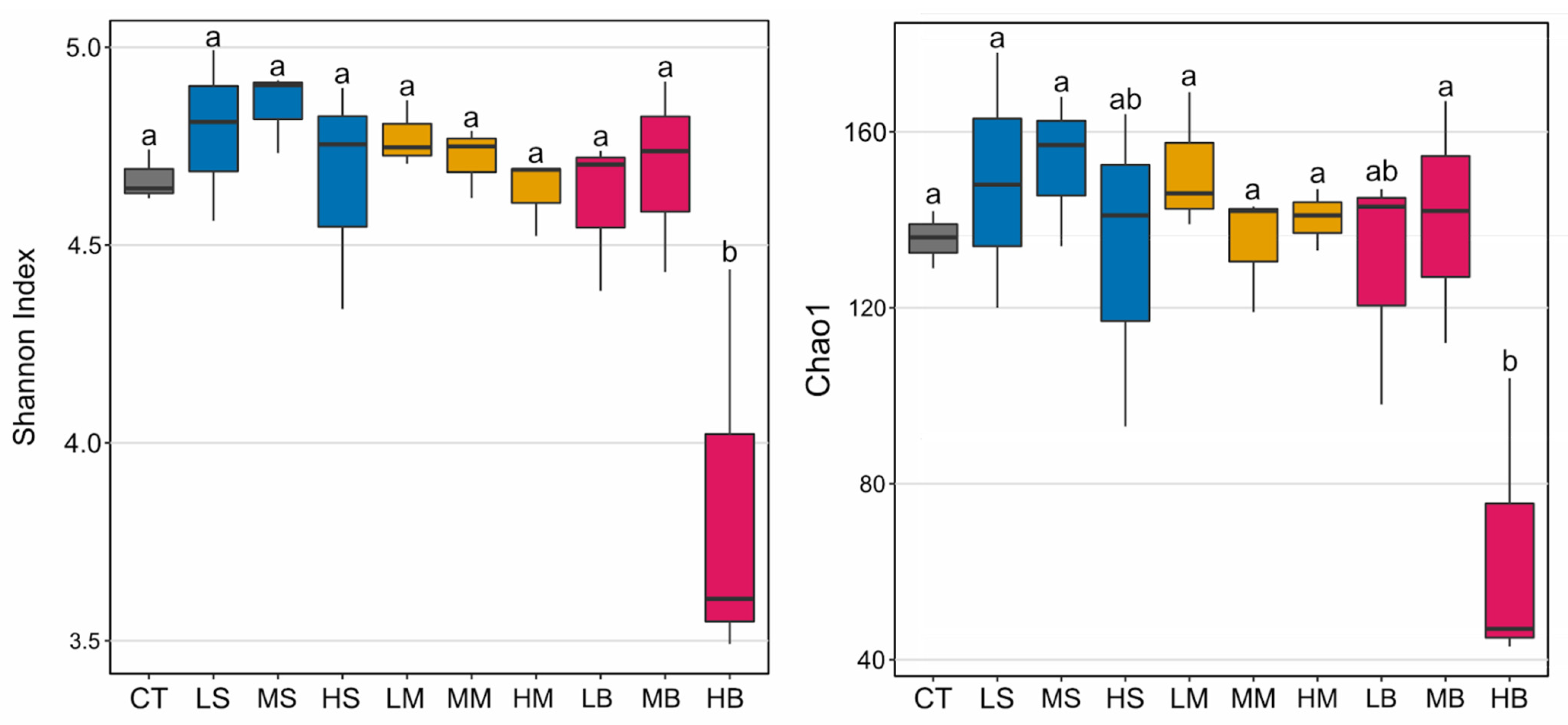
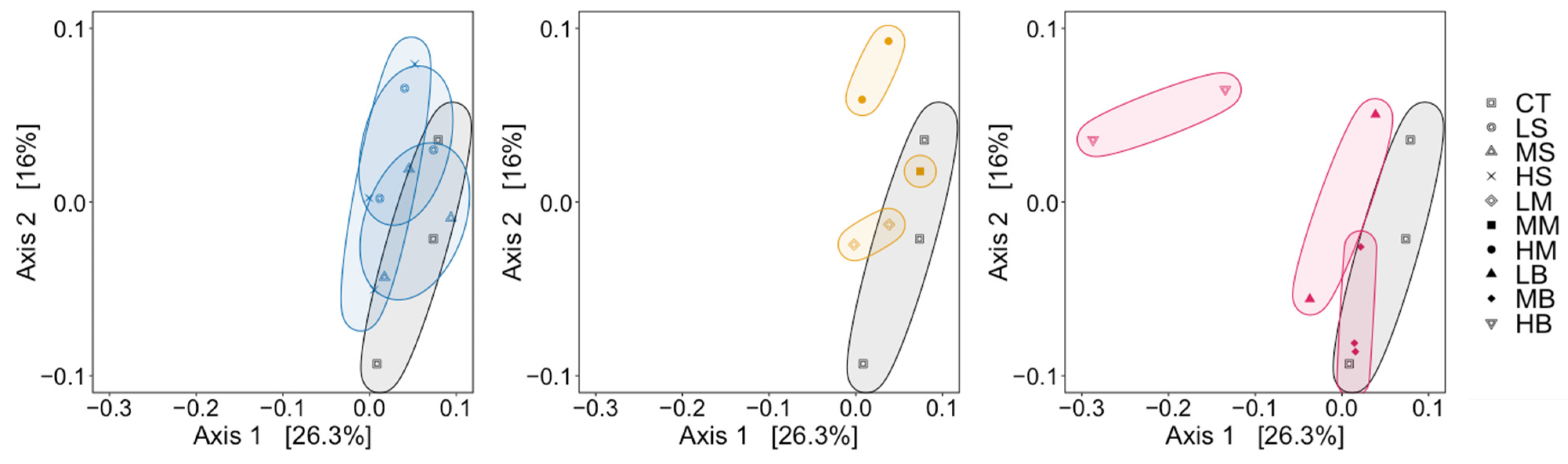
Concern about salt levels in freshwater habitats receiving road de-icer runoff has inspired the development of “eco-friendly” formulations that are intended to be less toxic to aquatic organisms, but few experiments have determined that these products are environmentally benign. Mesocosms containing lake water were established for 6 weeks to compare traditional road salt with two newer de-icers, one an inorganic mixture of chloride salts and the second of beet extract and brine. Amplicon sequencing and algal blocking sequences facilitated the identification of differentially impacted bacterial taxa. Ironically, although there was only a minor effect on bacterial structure at high road-salt concentrations, there was an increased relative abundance of salt-resistant genera in the mixed-salt formulation. After amendment with the beet brine de-icer, there was a turnover of taxa coincident with a 68-fold decrease in dissolved oxygen, with decreased diversity and displacement by anaerobic genera indicating a shift across a threshold to a new, apparently stable state, suggesting mesocosm recovery was unlikely. Overall, although we applaud the sentiment behind the formulation of less-damaging “eco-friendly” de-icers, they appear to have more negative environmental impacts than the traditional road salt that they were made to replace.
Keywords: “eco-friendly” de-icers; freshwater mesocosms; microbiomes; beet brine de-icer; mixed-salt de-icer; anaerobic bacteria “eco-friendly” de-icers; freshwater mesocosms; microbiomes; beet brine de-icer; mixed-salt de-icer; anaerobic bacteria
Graphical Abstract