


Abstract
This review underscores the escalating global research trend in this field since 2000. The primary scientific disciplines contributing to extensive research on smart water meters are engineering, computer science, and energy. In terms of countries, the analysis reveals that the United States, India, and China exhibit the highest scientific production. Concerning affiliations, prominent contributors include Griffith University, Politecnico di Milano, and the Università degli Studi di Salerno. Regarding worldwide research trends, an examination of distinct clusters defined by their principal keywords was conducted. The following clusters were identified in order of significance based on the number of publications: Urban Water Meters, IoT Connection, Communication and Security, Grid Management, Water Networks, Hot Water, Groundwater Monitoring, and Smart Irrigation. Of particular note is the growing use of machine learning applications, especially in the management of distribution networks. This trend opens up a promising avenue for addressing complex problems in real time.
1. Introduction
Concerns about water supply and quality have been a constant focus in human development. Currently, especially in developed countries, there is a significant emphasis on the sanitary and overall quality aspects of water. Various regulations establish the criteria to be followed in water supply [1]. The consumption of water on our planet has tripled in the 20th century, attributed to factors such as continuous population growth, water poverty, poor management, and outdated or inadequate facilities, contributing to a global water crisis. Consequently, water resources are becoming increasingly expensive and scarce, fueling a strong interest in their effective control and efficient use. Across various sectors, from industry to agriculture, extensive efforts are being made to monitor water distribution networks [2].
To address this significant challenge, distribution networks need to become more efficient by reducing losses, and consumers must also play a role in decreasing their water consumption. In the energy sector, studies and actions have already been undertaken to enhance the functioning of related facilities [3]. The substantial user base leads to a continuously rising water consumption, necessitating precise control mechanisms, despite the high costs associated with installing multiple monitoring instruments and their corresponding actuators [4]. Measurement devices often malfunction, leading to interventions based on lower-quality data.
While studies on urban water consumption in broad areas have been conducted [5], research on specific buildings is scarce. For individual buildings, the LEED certification (Leadership in Energy and Environmental Design) is frequently employed, sought after by many businesses in their business plans [6]. Consumption signatures are used to identify the individual consumption of each device [7], enabling the identification of more complex consumption patterns. Such algorithms have successfully been applied in public buildings for energy use rationalization [8]. The role of the Internet of Things (IoT) in water supply chain management is crucial for understanding the future trajectory at the intersection of computer science and resource management [9]. Actuators play a vital role in enabling the automation of various smart city services [10].
The primary goal of this study is to scrutinize the entire body of scientific literature pertaining to smart water meters on a global scale, emphasizing the significance of understanding research trends in this domain.
2. Materials and Methods
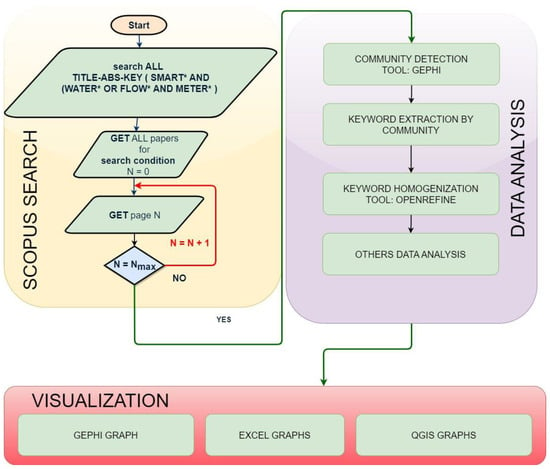
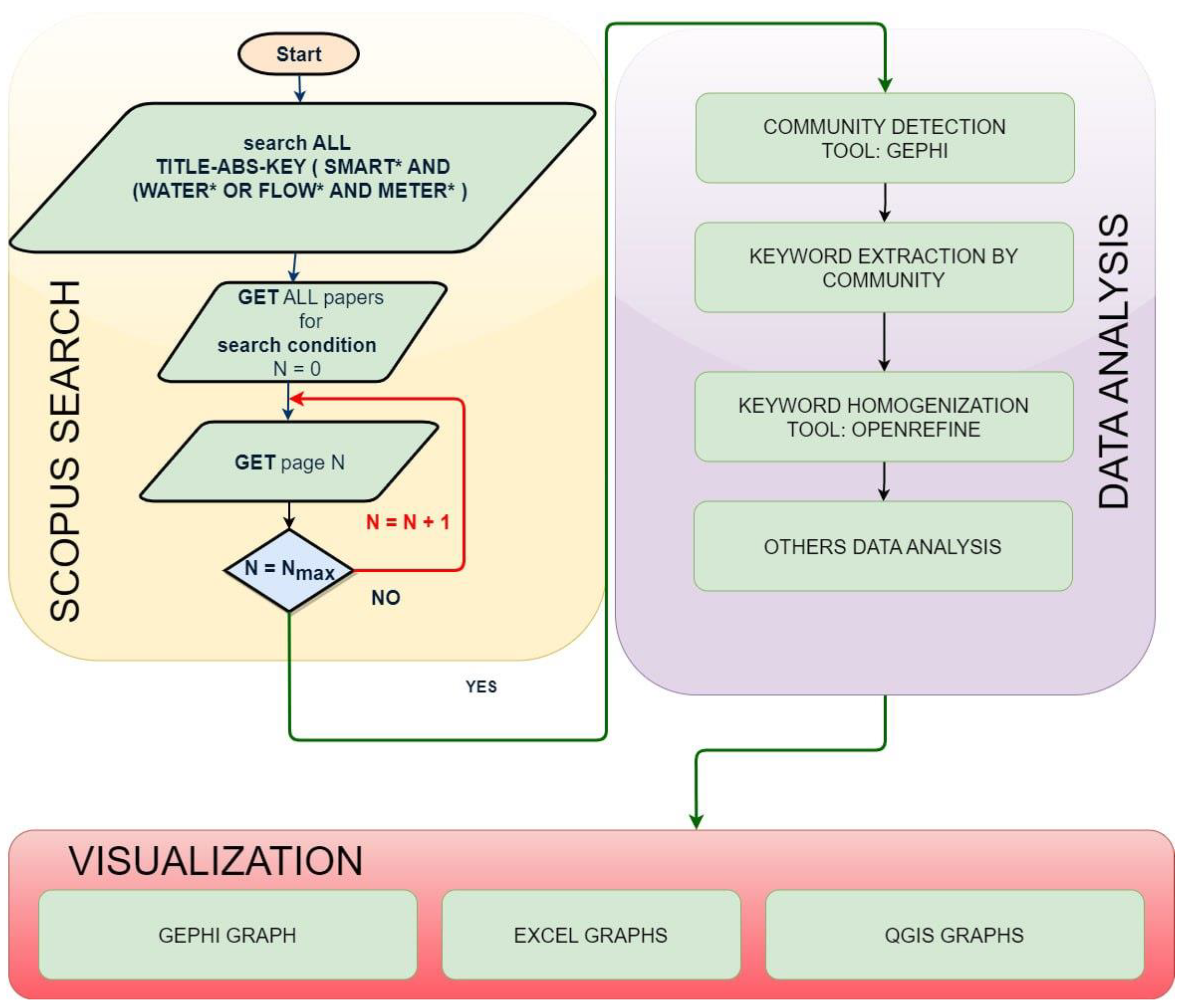
This bibliometric study utilized Scopus databases as the primary source for data retrieval. Despite Scopus containing historical content dating back to 1788, the search was restricted to the period between 2000 and 2022. The research methodology encompasses a comprehensive approach involving data collection, preprocessing, and multifaceted analysis to unveil and comprehend scientific communities and their collaborative patterns, see Figure 1.
Figure 1.
Methodology.
In the initial phase, scholarly publications and their associated metadata were retrieved from the globally recognized Scopus database. The Scopus API was leveraged to conduct a targeted search focused on documents related to smart water meters, aligning with established research methodologies [11]. The search query employed was as follows:
TITLE-ABS-KEY (smart* AND (water* OR flow*) AND meter*). All documents were downloaded from Scopus leading to the annotated search.
Crafted to cover a broad spectrum of literature, the query specifically addressed terms related to “smart water meter” or “smart flow meter” and their practical applications across various communities. However, the methodology introduced in this study effectively manages this potential issue, thanks to the resulting network graph’s structure and which can be visualized with the Gephi (open-source tool).
After acquiring the raw dataset, a preprocessing phase ensued, employing Microsoft Excel and OpenRefine for basic data organization and cleansing. This ensured that the dataset was primed for advanced analysis. For the core analysis, the open-source tool Gephi was employed, capitalizing on its robust capabilities in statistical analysis and data visualization. The data underwent refinement to eliminate documents lacking meaningful connections within the main body of scientific literature. This curation process allowed this research to focus specifically on the most pertinent documents and their relationships.
For the primary screening, the open-source tool Gephi was employed, taking advantage of its robust statistical analysis and data visualization capabilities. The dataset was subjected to a filtering process to eliminate documents that did not establish any connection with the rest of the documents. This filtering allowed us to focus the cluster analysis on the most relevant documents and their associations. For this purpose, we employed a community detection algorithm based on modularity in large networks, as detailed in [12]. Specifically, Gephi’s algorithm used Louvain’s method, a widely accepted approach for community detection. Louvain’s method is optimized for large networks, with the goal of identifying modular structures by maximizing a modularity score within the range of −0.5 to 1. This score evaluates the density of edges within clusters compared to those between clusters. The Louvain method was chosen because of its computational efficiency and its ability to delineate clear structures in intricate datasets. Although alternative algorithms such as Girvan–Newman, Infomap, and Label Propagation were considered, they proved less suitable due to their computational intensity, limited relevance to citation networks, or production of less cohesive structures, respectively.
For the sorting by year, by subject category, and by country, these data are obtained directly from the Scopus search in the results analysis section of the website itself. It is possible to export them in CSV format. Later, year and subject category data were imported and represented using Excel. Country data have been mapped with QGIS software 3.28.
A comprehensive bibliometric analysis will be undertaken to delve into the evolution of publications over the years. This includes a meticulous examination of the countries and affiliations that make the most substantial contributions to this scientific field. Additionally, this study will focus on dissecting the key words employed in the articles, aiming to discern the scientific communities within which these works can be categorized. The overarching aim is to provide a comprehensive and insightful overview of the landscape of smart water meter research.
3. Results
3.1. Evolution Trend
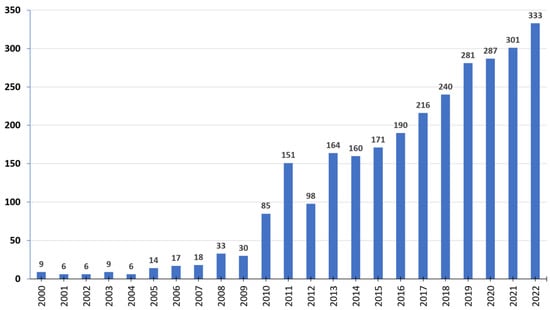
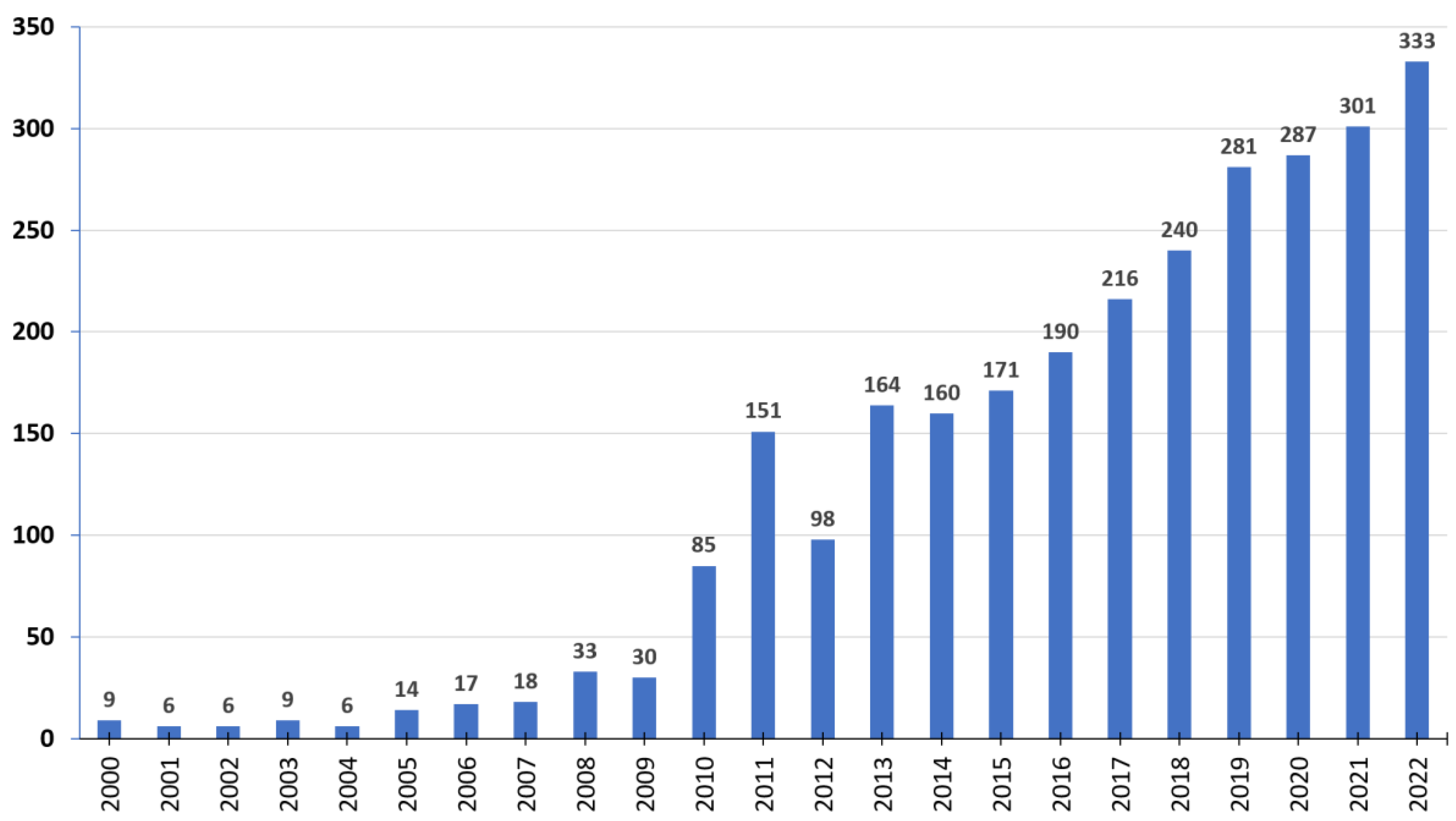
The evolution of published articles in the Scopus database on the topic of smart water meters show a notable upward trend over the years, see Figure 2. During the period analyzed, from the year 2000 to 2022, 2825 documents were obtained. From the year 2000 to 2008, there is a gradual increase in the number of publications, with a significant spike in 2010, where the count jumps to 85. This suggests a growing interest in and focus on the subject during that period. The most substantial growth occurs in the subsequent years, particularly from 2011 to 2019, with a remarkable surge in publications. The year 2019 stands out with 281 articles, reflecting a substantial body of research and interest in smart water meters. The trend continues to rise in the following years, reaching 333 articles in 2022. The evolution of smart water meter-related articles in the Scopus database indicates a sustained and robust interest in the field, with fluctuations in publication numbers likely influenced by various factors within the research landscape.
Figure 2.
Evolution of the worldwide scientific production in smart water meters.
3.2. Subjects from Worldwide Publications
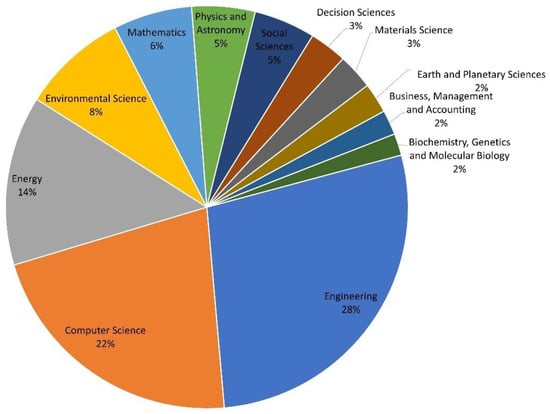
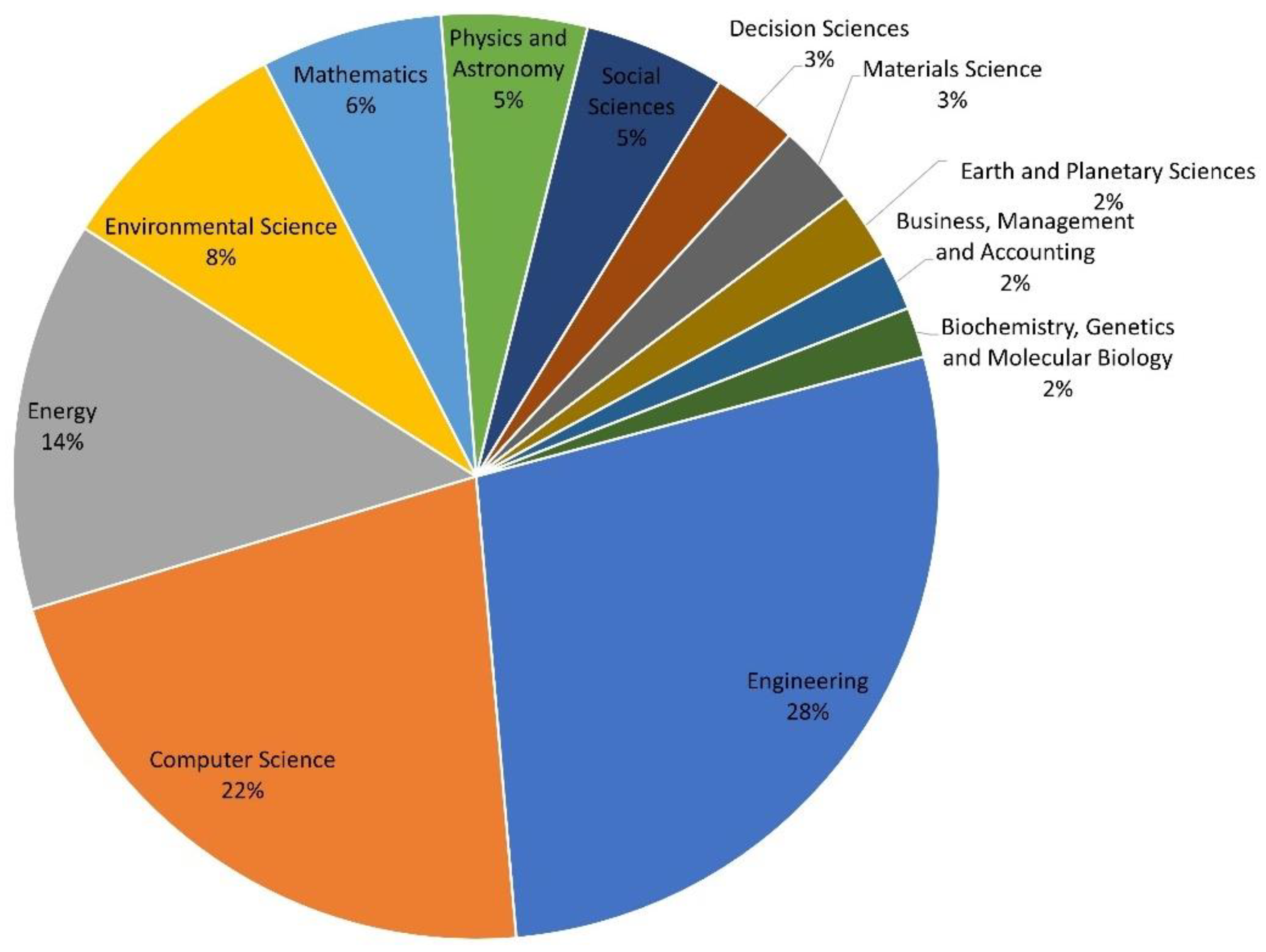
The distribution of published articles in the Scopus database on the topic of smart water meters across different scientific categories provides insights into the interdisciplinary nature of research in this field, see Figure 3.
Figure 3.
Distribution and evolution of Scopus categories on smart water meters.
The Engineering category dominates, indicating the significant technological and engineering aspects associated with smart water meters. Researchers in this domain likely focus on the design, development, and implementation of smart metering technologies. The substantial presence in Computer Science highlights the role of computational methods, data analytics, and information systems in the development and optimization of smart water meter technologies. The inclusion of Energy as a category suggests a focus on the efficiency and sustainability aspects of smart water metering, considering energy consumption and potential energy-saving measures. The Environmental Science category signifies the environmental implications and considerations associated with smart water metering technologies, including water conservation, pollution monitoring, and ecosystem impacts. The involvement of Mathematics suggests a quantitative approach in modeling and analyzing data related to smart water metering, emphasizing the importance of mathematical models in understanding water usage patterns. The Physics and Astronomy category likely includes research on the physical principles underlying smart water meter technologies, such as sensor technologies and signal processing. The presence of Social Sciences indicates a recognition of the societal impact of smart water meter adoption, including user behavior, acceptance, and social implications. The Decision Sciences category suggests a focus on decision-making processes related to the implementation and use of smart water meters, possibly considering economic, policy, and strategic aspects.
The Materials Science category may explore the materials used in the construction of smart water meter devices, emphasizing the importance of material properties for durability and functionality. The Earth and Planetary Sciences category likely addresses broader environmental and geological considerations related to smart water metering technologies. The Business, Management, and Accounting category indicates a recognition of the business and management aspects associated with the deployment of smart water metering systems. Research in the category Biochemistry, Genetics, and Molecular Biology, although seemingly less common, may delve into the biological aspects of water quality monitoring or the biological effects of smart water meter technologies.
3.3. Countries, Affiliations, and Their Main Topics
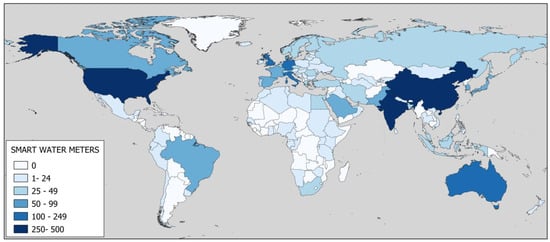
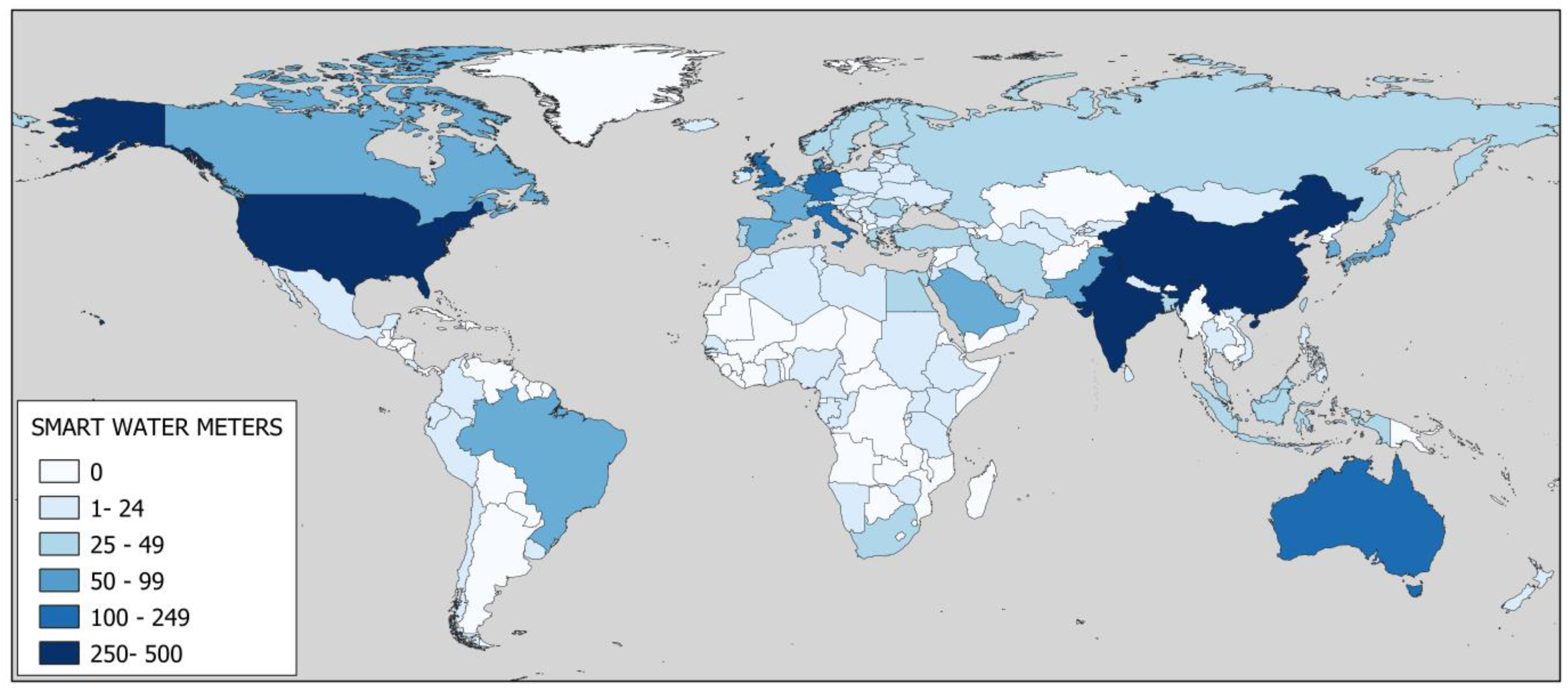
The distribution of published articles on smart water meters in the Scopus database reveals a widespread global interest and commitment to research in water metering technologies, see Figure 4. With the United States leading with 448 publications, closely followed by India (332) and China (267), it highlights a diverse international engagement in addressing water management challenges. The presence of countries such as Italy, the United Kingdom, Australia, and Germany underscores the global significance of technological solutions for efficient water resource utilization. This distribution reflects a collective effort to advance smart water meter technologies worldwide, emphasizing the shared concern for sustainable water management practices. The variety of participating nations indicates a collaborative approach to tackle water-related issues on a global scale, acknowledging the importance of innovative solutions in ensuring water security and conservation.
Figure 4.
Worldwide geographical distribution of the scientific production on smart water meters.
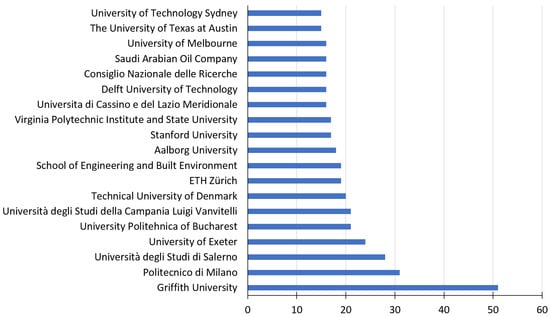
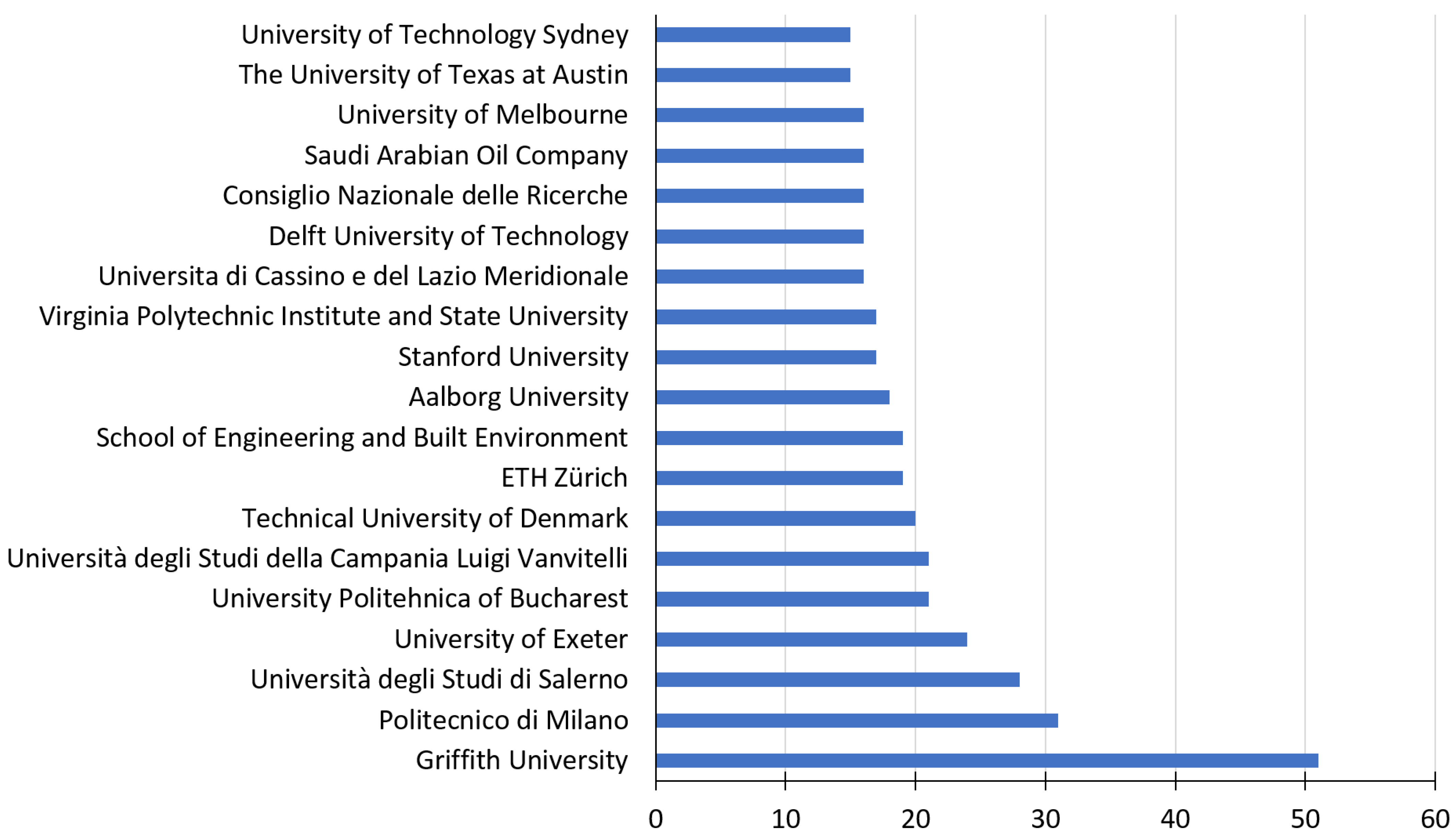
The analysis of major affiliations in the Scopus database for articles on smart water meters underscores the international collaboration among academic and research institutions in advancing this field, see Figure 5. Griffith University leads with 51 publications, indicating a significant contribution to the research landscape, possibly driven by Australia’s focus on water conservation and resource management. Politecnico di Milano, with 31 publications, showcases Italy’s emphasis on technological solutions for water-related challenges. The University of Exeter and the Technical University of Denmark, with 24 and 20 publications, respectively, demonstrate the active involvement of European institutions in smart water meter research. Notably, prestigious institutions such as Stanford University and ETH Zürich also make substantial contributions, with 17 and 19 publications, respectively, highlighting the global recognition and involvement of leading universities in shaping advancements in smart water meter technologies. The diverse affiliations, including Saudi Arabian Oil Company and Consiglio Nazionale delle Ricerche, further emphasize the interdisciplinary nature of this research, involving both academic and industry partners on a global scale.
Figure 5.
Main institutions in the scientific production of smart water meters.
These affiliations reveal a broad spectrum of research interests, reflecting the multidisciplinary nature of smart water meter studies, encompassing technological aspects, network optimization, and water management strategies. Table 1, Table 2, Table 3, Table 4, Table 5 and Table 6 provide information on the frequency (N) of occurrences of a keyword concerning the university that produced the work and its country of origin.
Table 1.
Top 20 affiliations and their main keywords.
Table 2.
Top 20 keywords related to smart water meters.
Table 3.
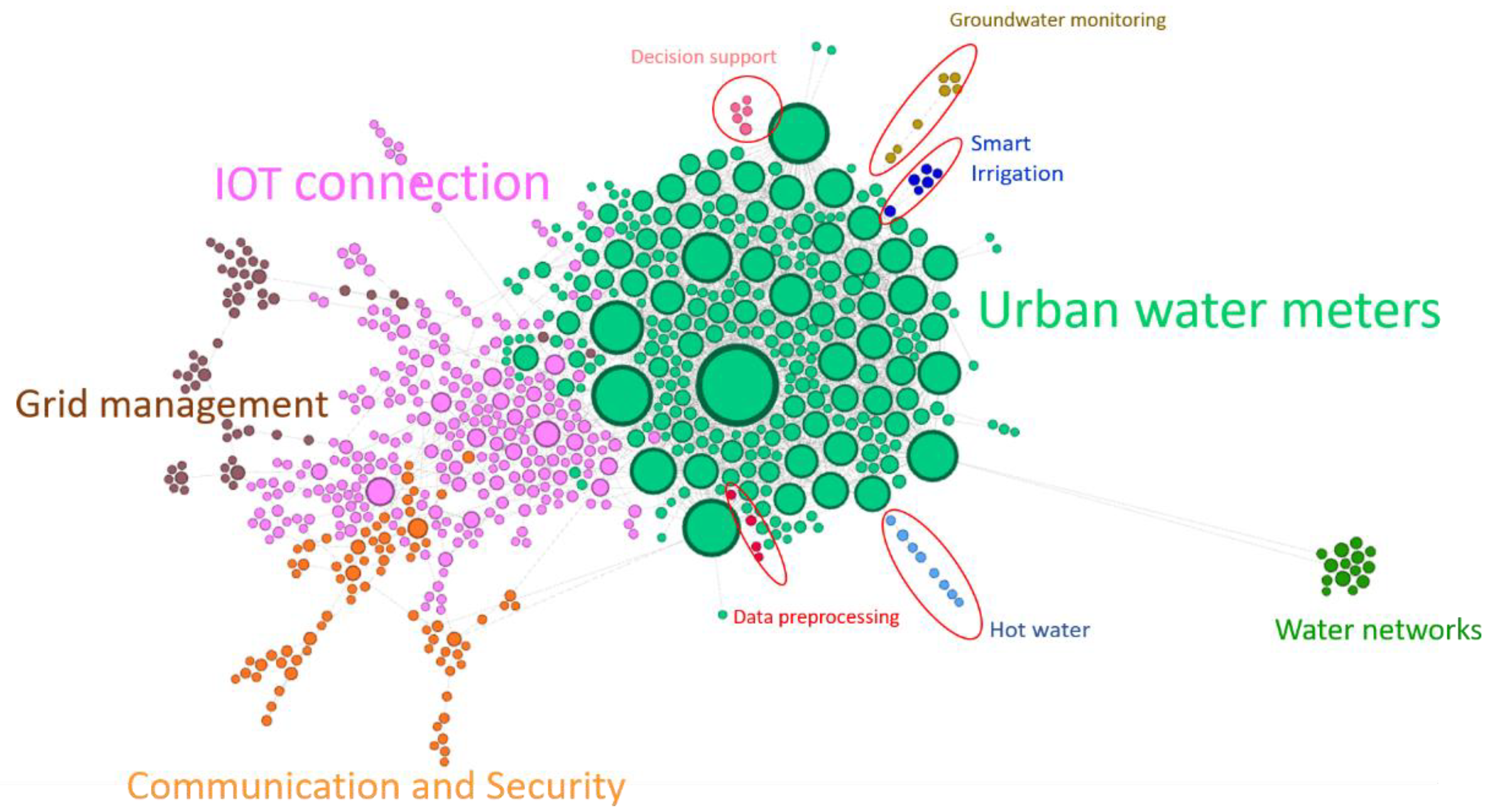
Main clusters (Figure 6), weight and names.
Table 4.
Main keywords of Clusters 1 (Urban Water Meters), 2 (Internet of Things Connection), and 3 (Communication and Security).
Table 5.
Main keywords of Clusters 4 (Grid Management), 5 (Water Network Partitioning) and 6 (Water Heating).
Table 6.
Main keywords of Clusters 7 (Smart Irrigation) and 8 (Groundwater Management).
3.4. Keywords from Worldwide Publications
The frequency of keywords in publications related to the topic of smart water meters indicates the prominence of certain themes in the research landscape. “Smart Metering” emerges as the most prevalent keyword, appearing N = 267 times, highlighting a substantial focus on advanced metering technologies in the context of water management. “Water Demand Management” follows closely with 143 mentions, underlining the significance of strategies to optimize and regulate water consumption. “Smart Grid” and “Internet of Things (IoT)” are also prominently featured, with 113 and 63 occurrences, respectively, reflecting the integration of intelligent technologies and connectivity in water metering systems. “Advanced Metering Infrastructure (AMI)” and “Automatic Meter Reading (AMR)” are mentioned 59 and 39 times, emphasizing the attention given to sophisticated metering infrastructures. Other notable keywords include “Machine Learning” (24), “Water Conservation” (24), “Residential Water” (24), and “Wireless Sensor Networks” (18), showcasing the intersection of data analytics, conservation efforts, and sensor technologies in smart water meter research. “Big Data” (16), “Smart City” (16), and “Water Micro-component” (16) suggest a growing emphasis on large-scale data analytics, urban planning, and micro-level components in the context of water management. Additionally, keywords like “Smart Water Network” (15), “Demand Response” (14), “Energy Management” (13), “Security” (13), “Automated Meter Reading” (13), and “Lpwan” (13) demonstrate a comprehensive exploration of interconnected themes, including network intelligence, energy considerations, security aspects, and low-power wide-area networking in smart water metering research. Overall, the frequency distribution highlights the multifaceted nature of research in this field, encompassing technological advancements, data analytics, conservation strategies, and the integration of smart systems into urban contexts.
4. Worldwide Research Trends: Cluster Analysis
This bibliometric study has identified several clusters in the research landscape related to smart water meters, each characterized by its percentage weight, indicating its relative importance. The most substantial cluster is “Urban Water Meters” with a weight of 39.21%, underscoring a predominant focus on the application and development of smart water metering technologies in urban settings. The “IOT Connection” cluster follows closely with a weight of 36.39%, emphasizing the significant role of Internet of Things (IoT) connectivity in the context of water metering systems. “Communication and Security” constitute a noteworthy cluster, comprising 10.72% of the research focus, highlighting the importance of secure and efficient communication protocols in smart water meter networks. The “Grid Management” cluster, with a weight of 7.48%, suggests a substantial interest in the effective management and optimization of smart grids in water distribution systems. “Water Networks,” “Hot Water,” “Groundwater Monitoring,” and “Smart Irrigation” clusters contribute to the research landscape with weights ranging from 1.97% to 0.85%, indicating more specialized areas of study within the broader context of smart water metering. The distribution of these clusters reflects a diversified research landscape, encompassing urban applications, connectivity, communication protocols, grid management, and specialized topics such as hot water, groundwater monitoring, and smart irrigation. Overall, these clusters provide a comprehensive overview of the multifaceted aspects explored in smart water meter research, highlighting the interdisciplinary nature of the field and the varied priorities within the academic community.
Cluster 1, identified as Urban Water Meters, stands out as the most significant in terms of size. Table 4 outlines the frequency (N) of occurrences of primary keywords associated with this cluster. It is noteworthy that this cluster leads in 18 out of the 20 main keywords, indicating a higher concentration of these terms within this community compared to others. In fact, eight of the 20 main keywords, such as Residential Water and Water Efficiency, are exclusive to this cluster.
Over the past two decades, more or less detailed measurement programs, referred to as smart measures, have been developed [13]. This progress has led to nearly continuous monitoring of water consumption. The abundance of available data has prompted the exploration of strategies for modeling and managing water in residential areas [14]. Periodic resource scarcity drives interest in limiting and controlling losses; leading studies toward water, notably by Rahim et al. [15], demand planning, socio-economic analysis, behavioral analysis, classification of water-related events, and user feedback. The cluster’s connection with information technology is evident, sharing techniques with other supply systems such as electricity or gas [16]. These meters enable the identification of the final use of water, a crucial aspect for making utility predictions [17]. The technology has matured sufficiently to transition from pilot trials to real-world implementation in large supply networks [18] and urban supply planning, closely intertwined with city planning itself [19]. Additionally, the current analyses aim to disaggregate data to reach individual events [20]. Reengineering of existing systems can be undertaken in light of the results already achieved [21].
Cluster 2, denoted as IOT Connection, forms a community centered on Internet of Things (IoT) connection algorithms and network implementation. Ranking as the second-largest community, Table 4 details the frequency (N) of primary keywords associated with this cluster, establishing connections with the Urban Water metering and Communication and Security communities, while maintaining ties with the Energy consumption cluster. Among its 20 main keywords, 12 are intrinsic to this cluster, and it holds significance as the leading community in 8 of them. Its primary associations lie with Clusters 1, 3, and 4, positioning it as a substantial and interconnected family with promising prospects for future development. Current meters are acknowledged for their sluggishness and time-intensive nature, promoting water wastage, thus advocating for the adoption of smart meters to enhance resource conservation and early fault detection [22,23]. Advanced Metering Infrastructure (AMI) architectures are anticipated to facilitate the integration of multiple networks simultaneously [24], aiming for user interaction [25]. The configuration of networks through smart water meters (SWM) and the advantageous use of IoT are highlighted in literature [26]. Case studies explore innovative applications, such as using pumps as generators or direct interaction with users [27], aligning with user interest in these devices [28]. Efficient data transmission mechanisms within the network involve relaying data from each node to the nearest node [29]. Two critical aspects, namely sensor network energy consumption and security issues, are underscored in the literature [30], emphasizing the multifaceted nature of research within the IOT Connection cluster.
Cluster 3 was identified as Communication and Security and stands as the third-largest community. Table 4 delineates the frequency (N) of principal keywords associated with this cluster, which revolves around communication and security aspects in network meters, particularly emphasizing energy meters. Remarkably, it encapsulates the top 10 keywords among the first 20 across all clusters, asserting its significance in this domain. In half of these 20 keywords, this community holds the utmost importance, while in the remaining 10, it shares keywords with other communities, primarily with Clusters 1 and 3. This community is predominantly concerned with communication protocols and applications of automatic meters, with a focus on reducing peak consumption, a growingly attractive topic [31]. Traditional systems, effective thus far in electricity and water distribution, are deemed insecure and lacking user feedback capabilities [32]. Smart energy meters can be leveraged to monitor other types of meters, integrated into networks [33,34]. The computerized control of these networks [35] presents a challenge in terms of vulnerability to intrusions [36], necessitating resolution in future developments [37]. Data aggregation allows for processing while maintaining user privacy [38]. The Communication and Security cluster, thus, contributes significantly to the exploration of secure and effective communication protocols in smart metering systems.
Cluster 4 was identified as Grid Management. Table 5 provides an overview of the primary keywords associated with this cluster. Positioned as a peripheral cluster, it primarily addresses the challenges in managing vast amounts of grid data. Although it shares keywords with other communities, it assumes a leading role in what is termed Big Data, highlighting its auxiliary nature in supporting other fields. This specialized community focuses on the implementation of intelligent algorithms for information acquisition, data processing, and swift action in extensive supply networks, predominantly in energy but extending to other domains such as water or gas [39,40,41]. The characterization of overall consumption holds a prominent place in this cluster, particularly in the context of water, leveraging time series [42] or neural networks [43]. Grid Management emerges as a crucial contributor to the application of intelligent algorithms for efficient data management and consumption characterization in large-scale supply networks.
Cluster 5, labelled as Water Network Partitioning, is outlined in Table 5, featuring the primary keywords associated with this cluster. Characterized as an isolated cluster, it addresses the challenges of metering an extensive network through the analysis of smaller network components. Despite being a smaller cluster, it holds significance, representing 1.97% of the keywords. Within this group, all authors are closely interconnected, collaborating on a specific strategy for distribution network analysis. This strategy involves studying reduced sectors of the network to simplify the analysis [44,45,46]. The methodology employed includes the installation of valves and smart meters on main lines, accompanied by the development of specialized software for these meters, referred to as SWAM [47,48]. This technique has been applied in fault detection and pollution control [49] through recursive sectorization [50]. The Water Network Partitioning cluster, although smaller in size, plays a vital role in the exploration of innovative strategies for network analysis, particularly in the context of simplifying analysis through the study of smaller network components.
Cluster 6 focuses on Water Heating and the associated metering of this valuable resource, as detailed in Table 5 with the primary keywords for this cluster. Comprising 1.13% of the keywords, this well-defined community primarily interacts with Cluster 1. The majority of the keywords within this family are unique to it, although none stands out as particularly abundant. The substantial cost of this resource amplifies the significance of this family, as highlighted by Bacher et al. [51]. The research within this cluster involves the development of prediction models for resource needs, particularly emphasizing scenarios in cold climates [52]. Detection of leaks is of particular importance due to the high energy costs [53]. This family extends its exploration to related networks such as domestic heat and gas, demonstrating a comprehensive approach to resource management [54,55]. The Water Heating and metering cluster, while relatively small, delves into crucial aspects of resource prediction, environmental considerations, and the efficient management of expensive resources.
The remaining clusters are of limited size but represent emerging sectors with promising prospects for future studies. Cluster 7 is a small cluster centered on Groundwater Monitoring, utilizing various approaches. It occupies a peripheral position in the diagram and is related to Cluster 1, accounting for 0.99% of the keywords. Similar to Cluster 8, the majority of the keywords within this group are specific to it, sharing few words with other clusters. Table 6 lists the most representative keywords for this cluster.
Water crisis and the threat of resource shortage are identified as direct consequences of factors such as limited precipitation, traditional irrigation methods, and inefficient monitoring and control systems in agriculture [56]. This cluster serves as a unique case within monitoring, often supported by simulation models [57,58,59]. It places special emphasis on control elements and leverages other components, such as energy meters, to enhance information completeness [60]. Additionally, Cluster 7 connects with the use of unconventional water sources, such as desalinated water for urban use and reclaimed water for agricultural purposes [61].
Cluster 8, also a small cluster, is dedicated to Smart Irrigation control, representing 0.85% of the keywords. This group features highly specific keywords, occasionally shared with Cluster 1 and Cluster 3. Table 6 displays the most representative keywords for this cluster.
Focused on intelligent control of irrigation systems to promote water savings and efficiency [62], this cluster emphasizes user satisfaction as a crucial parameter [63]. Initially applied in residential landscaping [62,63], smart irrigation is currently being implemented in agricultural areas [64,65,66]. This family exhibits significant development potential, with numerous sensors of this type being deployed in agricultural areas [67].
In the analysis, two clusters with minimal representation emerge—one focused on data acquisition, sensors, and pattern recognition of consumption. For instance, Grigoras et al. [68] present an innovative solution in the form of a software platform for sustainable water supply system management. This platform incorporates advanced ICT solutions, including Blockchain and Artificial Intelligence, along with smart concepts such as smart metering and demand response, offering benefits to both the energy and water sectors.
Additionally, there is another cluster specialized in automated decision making, utilizing learning programs, decision support programs, etc. [69,70].
5. Discussion
The analysis of the clusters reveals several challenges and prospects in smart water meter research. One key challenge lies in the need for more extensive exploration and development of clusters related to emerging sectors, such as Groundwater Monitoring and Smart Irrigation Control. These clusters, though relatively small, represent critical areas of study with promising potential for future research. The challenge is to further investigate and expand these clusters to gain a comprehensive understanding of their applications and implications for water resource management.
Another challenge is the integration of various clusters, particularly those related to Communication and Security (Cluster 3) and Grid Management (Cluster 4). As smart water metering systems become more sophisticated, addressing the communication protocols, security vulnerabilities, and efficient management of vast amounts of data in the grid becomes crucial. Integrating findings from these clusters can contribute to the development of comprehensive and secure smart water networks.
On the positive side, the clusters also offer promising prospects. For instance, the increasing focus on Smart Irrigation Control (Cluster 8) indicates a growing interest in water conservation and efficient agricultural practices, as recent studies indicate [71]. This cluster’s emphasis on user satisfaction and its potential application in agricultural areas signal a positive trend toward sustainable water use in farming.
Additionally, the intersection of Water Network Partitioning (Cluster 5) with unconventional water sources like desalinated water and reclaimed water opens up opportunities for diversifying water supply strategies. Exploring innovative approaches to network analysis and water source utilization can contribute to more resilient and sustainable water supply systems.
It is worth noting the increasing use of machine learning applications, especially in the management of distribution networks. This trend opens up a promising avenue for addressing complex problems in real time [72]. So, the challenges lie in further exploring and integrating emerging clusters, while the prospects include advancements in smart irrigation, secure communication protocols, and diversified water supply strategies, ultimately contributing to the development of more efficient and sustainable smart water metering systems.
6. Conclusions
In conclusion, the analysis of smart water metering research based on Scopus data reveals a dynamic landscape with significant growth in publications over the years. The evolution of articles in the “smart water meter” topic indicates a rising interest and emphasis on this field, with a substantial increase in publications from 2000 to 2023. The distribution of articles across scientific categories highlights the multidisciplinary nature of smart water meter research, with a predominant focus on engineering, computer science, and energy.
Examining the geographic distribution of articles underscores global participation, with the United States, India, and China leading in the number of publications. This international collaboration contributes to a diverse and comprehensive understanding of smart water metering technologies and applications. The analysis of affiliations sheds light on key institutions involved in smart water meter research, with Griffith University, Politecnico di Milano, and the University of Salerno among the leading contributors. These institutions play a pivotal role in advancing knowledge and innovation in the field.
Exploring keyword frequencies reveals the prevalent themes in smart water meter research, with a strong emphasis on topics like Smart Metering, Water Demand Management, Smart Grid, and Internet of Things (IoT). Clustering analysis further categorizes research areas, showcasing specialized communities such as Urban Water Meters, IOT Connection, Communication and Security, and others.
Challenges and prospects in the field include the need for further exploration of emerging clusters, integration of diverse research areas, and addressing critical issues like communication protocols, security vulnerabilities, and efficient data management in smart water networks. On a positive note, the increasing focus on smart irrigation control, advancements in network partitioning, and exploration of unconventional water sources present promising avenues for sustainable water management. Overall, the research landscape in smart water metering is vibrant, collaborative, and evolving, with researchers and institutions worldwide contributing to advancements in technology, data analytics, and strategies for efficient water resource management.
Author Contributions
Conceptualization, M.L.Z.-C. and A.J.Z.-S.; methodology, F.M.-A.; software, A.A.; validation, F.M.-A., E.S.-M. and A.J.Z.-S.; formal analysis, F.M.-A.; investigation, M.L.Z.-C.; resources, A.J.Z.-S. and F.M.-A.; data curation, A.A.; writing—original draft preparation, M.L.Z.-C. and A.J.Z.-S.; writing—review and editing, F.M.-A. and E.S.-M.; visualization, M.L.Z.-C.; supervision, F.M.-A. and E.S.-M. All authors have read and agreed to the published version of the manuscript.
Funding
This research received no external funding.
Data Availability Statement
Data have been retrieved from the Scopus database with the query described in the manuscript.
Conflicts of Interest
The authors declare no conflicts of interest.
References
- Gebre, S.L.; Cattrysse, D.; Van Orshoven, J. Multi-criteria decision-making methods to address water allocation problems: A systematic review. Water 2021, 13, 125. [Google Scholar] [CrossRef] [Scilit]
- Adedoja, O.S.; Hamam, Y.; Khalaf, B.; Sadiku, R. Towards development of an optimization model to identify contamination source in a water distribution network. Water 2018, 10, 579. [Google Scholar] [CrossRef] [Scilit]
- Madias, K.; Szymkowiak, A. Residential sustainable water usage and water management: Systematic review and future research. Water 2022, 14, 1027. [Google Scholar] [CrossRef] [Scilit]
- Pastor-Jabaloyes, L.; Arregui, F.J.; Cobacho, R. Water end use disaggregation based on soft computing techniques. Water 2018, 10, 46. [Google Scholar] [CrossRef] [Scilit]
- Morote Seguido, Á.F.; Hernández-Hernández, M.; Rico, A. Patrones de consumo de agua en usos turístico-residenciales en la costa de Alicante (España) (2005–2015). Una tendencia desigual influida por la tipología urbana y grado de ocupación. An. Geogr. Univ. Complut. 2018, 38, 357–383. [Google Scholar] [CrossRef] [Scilit]
- Hangan, A.; Chiru, C.-G.; Arsene, D.; Czako, Z.; Lisman, D.F.; Mocanu, M.; Pahontu, B.; Predescu, A.; Sebestyen, G. Advanced techniques for monitoring and management of urban water infrastructures—An overview. Water 2022, 14, 2174. [Google Scholar] [CrossRef] [Scilit]
- Clifford, E.; Mulligan, S.; Comer, J.; Hannon, L. Flow-signature analysis of water consumption in nonresidential building water networks using high-resolution and medium-resolution smart meter data: Two case studies. Water Resour. Res. 2018, 54, 88–106. [Google Scholar] [CrossRef] [Scilit]
- Chihib, M.; Salmerón-Manzano, E.; Manzano-Agugliaro, F. Benchmarking energy use at University of Almeria (Spain). Sustainability 2020, 12, 1336. [Google Scholar] [CrossRef] [Scilit]
- Velani, A.F.; Narwane, V.S.; Gardas, B.B. Contribution of Internet of things in water supply chain management: A bibliometric and content analysis. J. Model. Manag. 2022, 18, 549–577. [Google Scholar] [CrossRef] [Scilit]
- Rani, S.; Kumar, R. Bibliometric review of actuators: Key automation technology in a smart city framework. Mater. Today Proc. 2022, 60, 1800–1807. [Google Scholar] [CrossRef] [Scilit]
- Montoya, F.G.; Alcayde, A.; Baños, R.; Manzano-Agugliaro, F. A fast method for identifying worldwide scientific collaborations using the Scopus database. Telemat. Inform. 2018, 35, 168–185. [Google Scholar] [CrossRef] [Scilit]
- Guerrero, M.; Montoya, F.G.; Baños, R.; Alcayde, A.; Gil, C. Adaptive community detection in complex networks using genetic algorithms. Neurocomputing 2017, 266, 101–113. [Google Scholar] [CrossRef] [Scilit]
- Cominola, A.; Giuliani, M.; Piga, D.; Castelletti, A.; Rizzoli, A. Benefits and challenges of using smart meters for advancing residential water demand modeling and management: A review. Environ. Model. Softw. 2015, 72, 198–214. [Google Scholar] [CrossRef] [Scilit]
- Britton, T.C.; Stewart, R.A.; O’Halloran, K.R. Smart metering: Enabler for rapid and effective post meter leakage identification and water loss management. J. Clean. Prod. 2013, 54, 166–176. [Google Scholar] [CrossRef] [Scilit]
- Rahim, S.; Nguyen, K.A.; Stewart, R.A.; Giurco, D.; Blumenstein, M. Machine learning and data analytic techniques in digital water metering: A review. Water 2020, 12, 294. [Google Scholar] [CrossRef] [Scilit]
- Stewart, R.A.; Nguyen, K.; Beal, C.; Zhang, H.; Sahin, O.; Bertone, E.; Vieira, A.S.; Castelletti, A.; Cominola, A.; Giuliani, M.; et al. Integrated intelligent water-energy metering systems and informatics: Visioning a digital multi-utility service provider. Environ. Model. Softw. 2018, 105, 94–117. [Google Scholar] [CrossRef] [Scilit]
- Boyle, T.; Giurco, D.; Mukheibir, P.; Liu, A.; Moy, C.; White, S.; Stewart, R. Intelligent metering for urban water: A review. Water 2013, 5, 1052–1081. [Google Scholar] [CrossRef] [Scilit]
- Di Mauro, A.; Cominola, A.; Castelletti, A.; Di Nardo, A. Urban water consumption at multiple spatial and temporal scales. A review of existing datasets. Water 2021, 13, 36. [Google Scholar] [CrossRef] [Scilit]
- Stewart, R.A.; Willis, R.; Giurco, D.; Panuwatwanich, K.; Capati, G. Web-based knowledge management system: Linking smart metering to the future of urban water planning. Aust. Plan. 2010, 47, 66–74. [Google Scholar] [CrossRef] [Scilit]
- Nguyen, K.A.; Zhang, H.; Stewart, R.A. Development of an intelligent model to categorise residential water end use events. J. Hydro-Environ. Res. 2013, 7, 182–201. [Google Scholar] [CrossRef] [Scilit]
- Nguyen, K.A.; Stewart, R.A.; Zhang, H.; Sahin, O.; Siriwardene, N. Re-engineering traditional urban water management practices with smart metering and informatics. Environ. Model. Softw. 2018, 101, 256–267. [Google Scholar] [CrossRef] [Scilit]
- Mudumbe, M.J.; Abu-Mahfouz, A.M. Smart water meter system for user-centric consumption measurement. In Proceedings of the 2015 IEEE 13th International Conference on Industrial Informatics (INDIN), Cambridge, UK, 22–24 July 2015; pp. 993–998. [Google Scholar]
- Abate, F.; Carratù, M.; Liguori, C.; Pietrosanto, A. Smart meters and water leakage detection: A preliminary study. In Proceedings of the 2019 IEEE International Instrumentation and Measurement Technology Conference (I2MTC), Auckland, New Zealand, 20–23 May 2019; pp. 1–6. [Google Scholar]
- Lloret, J.; Tomas, J.; Canovas, A.; Parra, L. An integrated IoT architecture for smart metering. IEEE Commun. Mag. 2016, 54, 50–57. [Google Scholar] [CrossRef] [Scilit]
- Benzi, F.; Anglani, N.; Bassi, E.; Frosini, L. Electricity smart meters interfacing the households. IEEE Trans. Ind. Electron. 2011, 58, 4487–4494. [Google Scholar] [CrossRef] [Scilit]
- Li, X.J.; Chong, P.H.J. Design and implementation of a self-powered smart water meter. Sensors 2019, 19, 4177. [Google Scholar] [CrossRef] [Scilit] [PubMed]
- Fettermann, D.C.; Cavalcante, C.G.S.; Ayala, N.F.; Avalone, M.C. Configuration of a smart meter for Brazilian customers. Energy Policy 2020, 139, 111309. [Google Scholar] [CrossRef] [Scilit]
- Fettermann, D.C.; Borriello, A.; Pellegrini, A.; Cavalcante, C.G.; Rose, J.M.; Burke, P.F. Getting smarter about household energy: The who and what of demand for smart meters. Build. Res. Inf. 2021, 49, 100–112. [Google Scholar] [CrossRef] [Scilit]
- Marais, J.; Malekian, R.; Ye, N.; Wang, R. A review of the topologies used in smart water meter networks: A wireless sensor network application. J. Sens. 2016, 2016, 9857568. [Google Scholar] [CrossRef] [Scilit]
- Lalle, Y.; Fourati, M.; Fourati, L.C.; Barraca, J.P. Communication technologies for smart water grid applications: Overview, opportunities, and research directions. Comput. Netw. 2021, 190, 107940. [Google Scholar] [CrossRef] [Scilit]
- Khalifa, T.; Naik, K.; Nayak, A. A survey of communication protocols for automatic meter reading applications. IEEE Commun. Surv. Tutor. 2010, 13, 168–182. [Google Scholar] [CrossRef] [Scilit]
- Lo, C.-H.; Ansari, N. The progressive smart grid system from both power and communications aspects. IEEE Commun. Surv. Tutorials 2011, 14, 799–821. [Google Scholar] [CrossRef] [Scilit]
- Sun, Q.; Li, H.; Ma, Z.; Wang, C.; Campillo, J.; Zhang, Q.; Wallin, F.; Guo, J. A comprehensive review of smart energy meters in intelligent energy networks. IEEE Internet Things J. 2015, 3, 464–479. [Google Scholar] [CrossRef] [Scilit]
- Dileep, G. A survey on smart grid technologies and applications. Renew. Energy 2020, 146, 2589–2625. [Google Scholar] [CrossRef] [Scilit]
- Rehmani, M.H.; Davy, A.; Jennings, B.; Assi, C. Software defined networks-based smart grid communication: A comprehensive survey. IEEE Commun. Surv. Tutor. 2019, 21, 2637–2670. [Google Scholar] [CrossRef] [Scilit]
- Liu, J.; Xiao, Y.; Li, S.; Liang, W.; Chen, C.L.P. Cyber security and privacy issues in smart grids. IEEE Commun. Surv. Tutor. 2012, 14, 981–997. [Google Scholar] [CrossRef] [Scilit]
- Cleveland, F.M. Cyber security issues for advanced metering infrasttructure (AMI). In Proceedings of the 2008 IEEE Power and Energy Society General Meeting-Conversion and Delivery of Electrical Energy in the 21st Century, Pittsburgh, PA, USA, 20–24 July 2008; pp. 1–5. [Google Scholar]
- Kursawe, K.; Danezis, G.; Kohlweiss, M. Privacy-friendly aggregation for the smart-grid. In International Symposium on Privacy Enhancing Technologies Symposium; Springer: Berlin/Heidelberg, Germany, 2011; pp. 175–191. [Google Scholar]
- Borgnat, P.; Côme, E.; Oukhellou, L. Processing, mining and visualizing massive urban data. In Proceedings of the ESANN 2017, 25th European Symposium on Artificial Neural Networks, Computational Intelligence and Machine Learning, Bruges, Belgium, 26–28 April 2017; p. 10. [Google Scholar]
- Daki, H.; El Hannani, A.; Aqqal, A.; Haidine, A.; Dahbi, A. Big Data management in smart grid: Concepts, requirements and implementation. J. Big Data 2017, 4, 13. [Google Scholar] [CrossRef] [Scilit]
- Stephen, B.; Mutanen, A.J.; Galloway, S.; Burt, G.; Jarventausta, P. Enhanced load profiling for residential network customers. IEEE Trans. Power Deliv. 2013, 29, 88–96. [Google Scholar] [CrossRef] [Scilit]
- Cheifetz, N.; Samé, A.; Sabir, Z.; Sandraz, A.C.; Féliers, C. Extracting urban water usage habits from smart meter data: A functional clustering approach. In Proceedings of the ESANN 2017, 25th European Symposium on Artificial Neural Networks, Computational Intelligence and Machine Learning, Bruges, Belgium, 26–28 April 2017. [Google Scholar]
- Nasser, A.A.; Rashad, M.Z.; Hussein, S.E. A two-layer water demand prediction system in urban areas based on micro-services and LSTM neural networks. IEEE Access 2020, 8, 147647–147661. [Google Scholar] [CrossRef] [Scilit]
- Di Nardo, A.; Di Natale, M.; Santonastaso, G.F.; Venticinque, S. An automated tool for smart water network partitioning. Water Resour. Manag. 2013, 27, 4493–4508. [Google Scholar] [CrossRef] [Scilit]
- Di Nardo, A.; Di Natale, M.; Santonastaso, G.; Tzatchkov, V.; Yamanaka, V.A. Divide and conquer partitioning techniques for smart water networks. Procedia Eng. 2014, 89, 1176–1183. [Google Scholar] [CrossRef] [Scilit]
- Di Nardo, A.; Di Natale, M.; Musmarra, D.; Santonastaso, G.F.; Tuccinardi, F.P.; Zaccone, G. Software for partitioning and protecting a water supply network. Civ. Eng. Environ. Syst. 2016, 33, 55–69. [Google Scholar] [CrossRef] [Scilit]
- Di Nardo, A.; Di Natale, M.; Greco, R.; Santonastaso, G. Ant Algorithm for smart water network partitioning. Procedia Eng. 2014, 70, 525–534. [Google Scholar] [CrossRef] [Scilit]
- Di Nardo, A.; Di Natale, M.; Santonastaso, G.F.; Tuccinardi, F.P.; Zaccone, G. SWANP: Software for automatic Smart WAter Network Partitioning. In Proceedings of the 7th International Congress on Environmental Modelling and Software, San Diego, CA, USA, 15–19 June 2014; Ames, D.P., Quinn, N.W.T., Rizzoli, A.E., Eds.; International Environmental Modelling and Software Society (iEMSs): Toulouse, France, 2014. [Google Scholar]
- Di Nardo, A.; Di Natale, M.; Chianese, S.; Musmarra, D.; Santonastaso, G.F. Combined Recursive Clustering and Partitioning to Define Optimal DMAs of Water Distribution Networks. Toulouse, France, 12 July 2016. Available online: https://scholarsarchive.byu.edu/iemssconference/2016/Stream-D/63/ (accessed on 1 June 2023).
- Di Nardo, A.; Di Natale, M.; Di Mauro, A.; Martínez Díaz, E.; Blázquez Garcia, J.A.; Santonastaso, G.F.; Tuccinardi, F.P. An advanced software to design automatically permanent partitioning of a water distribution network. Urban Water J. 2020, 17, 259–265. [Google Scholar] [CrossRef] [Scilit]
- Bacher, P.; de Saint-Aubain, P.A.; Christiansen, L.E.; Madsen, H. Non-parametric method for separating domestic hot water heating spikes and space heating. Energy Build. 2016, 130, 107–112. [Google Scholar] [CrossRef] [Scilit]
- Hedegaard, R.E.; Kristensen, M.H.; Pedersen, T.H.; Brun, A.; Petersen, S. Bottom-up modelling methodology for urban-scale analysis of residential space heating demand response. Appl. Energy 2019, 242, 181–204. [Google Scholar] [CrossRef] [Scilit]
- Guelpa, E.; Marincioni, L.; Verda, V. Towards 4th generation district heating: Prediction of building thermal load for optimal management. Energy 2019, 171, 510–522. [Google Scholar] [CrossRef] [Scilit]
- Kristensen, M.H.; Petersen, S. District heating energy efficiency of Danish building typologies. Energy Build. 2021, 231, 110602. [Google Scholar] [CrossRef] [Scilit]
- Guelpa, E.; Verda, V. Automatic fouling detection in district heating substations: Methodology and tests. Appl. Energy 2020, 258, 114059. [Google Scholar] [CrossRef] [Scilit]
- Jahromi, H.; Hamedani, M.; Dolatabadi, S.; Abbasi, P. Smart Energy and Water Meter: A Novel Vision to Groundwater Monitoring and Management. Procedia Eng. 2014, 70, 877–881. [Google Scholar] [CrossRef] [Scilit]
- Zekri, S.; Madani, K.; Bazargan-Lari, M.R.; Kotagama, H.; Kalbus, E. Feasibility of adopting smart water meters in aquifer management: An integrated hydro-economic analysis. Agric. Water Manag. 2017, 181, 85–93. [Google Scholar] [CrossRef] [Scilit]
- El-Rawy, M.; Al-Maktoumi, A.; Zekri, S.; Abdalla, O.; Al-Abri, R. Hydrological and economic feasibility of mitigating a stressed coastal aquifer using managed aquifer recharge: A case study of Jamma aquifer, Oman. J. Arid. Land 2019, 11, 148–159. [Google Scholar] [CrossRef] [Scilit]
- Al-Maktoumi, A.; Zekri, S.; El-Rawy, M.; Abdalla, O.; Al-Abri, R.; Triki, C.; Bazargan-Lari, M.R. Aquifer storage and recovery, and managed aquifer recharge of reclaimed water for management of coastal aquifers. Desalination Water Treat. 2020, 176, 67–77. [Google Scholar] [CrossRef] [Scilit]
- Moazedi, A.; Taravat, M.; Jahromi, H.N.; Madani, K.; Rashedi, A.; Rahimian, S. Energy-water meter: A novel solution for groundwater monitoring and management. In Proceedings of the World Environmental and Water Resources Congress 2011: Bearing Knowledge for Sustainability, Palm Springs, CA, USA, 22–26 May 2011; pp. 962–969. [Google Scholar]
- Zekri, S. Oman Water Policy. In Water Policies in MENA Countries; Springer: Cham, Switzerland, 2020; pp. 113–134. [Google Scholar]
- McCready, M.; Dukes; Miller, G. Water conservation potential of smart irrigation controllers on St. Augustinegrass. Agric. Water Manag. 2009, 96, 1623–1632. [Google Scholar] [CrossRef] [Scilit]
- Morera, M.C.; Monaghan, P.F.; Dukes, M.D.; Breder, E. Predicting satisfaction with smart irrigation controllers and their long-term use among homeowners in Central Florida. JAWRA J. Am. Water Resour. Assoc. 2017, 53, 929–943. [Google Scholar] [CrossRef] [Scilit]
- McCready, M.S.; Dukes, M.D. Landscape irrigation scheduling efficiency and adequacy by various control technologies. Agric. Water Manag. 2011, 98, 697–704. [Google Scholar] [CrossRef] [Scilit]
- Nautiyal, M.; Grabow, G.L.; Huffman, R.L.; Miller, G.L.; Bowman, D. Residential irrigation water use in the central piedmont of North Carolina. II: Evaluation of smart irrigation technologies. J. Irrig. Drain. Eng. 2015, 141, 04014062. [Google Scholar] [CrossRef] [Scilit]
- Vick, R.L.; Grabow, G.L.; Miller, G.L.; Huffman, R.L. Water conservation potential of smart irrigation technologies in the Catawba-Wateree river basin. J. Irrig. Drain. Eng. 2017, 143, 04016079. [Google Scholar] [CrossRef] [Scilit]
- Dukes, M.D. Water conservation potential of landscape irrigation smart controllers. Trans. ASABE 2012, 55, 563–569. [Google Scholar] [CrossRef] [Scilit]
- Grigoras, G.; Bizon, N.; Enescu, F.M.; Guede, J.M.L.; Salado, G.F.; Brennan, R.; O’Driscoll, C.; Dinka, M.O.; Alalm, M.G. ICT based smart management solution to realize water and energy savings through energy efficiency measures in water distribution systems. In Proceedings of the 2018 10th International Conference on Electronics, Computers and Artificial Intelligence (ECAI), Iasi, Romania, 28–30 June 2018; pp. 1–4. [Google Scholar]
- Predescu, A.; Negru, C.; Mocanu, M.; Lupu, C.; Candelieri, A. A multiple-layer clustering method for real-time decision support in a water distribution system. In Proceedings of the Business Information Systems Workshops: BIS 2018 International Workshops, Berlin, Germany, 18–20 July 2018; Revised Papers 21. Springer International Publishing: Cham, Switzerland, 2019; pp. 485–497. [Google Scholar]
- Predescu, A.; Truică, C.-O.; Apostol, E.-S.; Mocanu, M.; Lupu, C. An advanced learning-based multiple model control supervisor for pumping stations in a smart water distribution system. Mathematics 2020, 8, 887. [Google Scholar] [CrossRef] [Scilit]
- Lunstad, N.T.; Sowby, R.B. Smart irrigation controllers in residential applications and the potential of integrated water distribution systems. J. Water Resour. Plan. Manag. 2024, 150, 03123002. [Google Scholar] [CrossRef] [Scilit]
- Rapp, A.H.; Capener, A.M.; Sowby, R.B. Adoption of Artificial Intelligence in Drinking Water Operations: A Survey of Progress in the United States. J. Water Resour. Plan. Manag. 2023, 149, 06023002. [Google Scholar] [CrossRef] [Scilit]

Disclaimer/Publisher’s Note: The statements, opinions and data contained in all publications are solely those of the individual author(s) and contributor(s) and not of MDPI and/or the editor(s). MDPI and/or the editor(s) disclaim responsibility for any injury to people or property resulting from any ideas, methods, instructions or products referred to in the content. |
© 2023 by the authors. Licensee MDPI, Basel, Switzerland. This article is an open access article distributed under the terms and conditions of the Creative Commons Attribution (CC BY) license (https://creativecommons.org/licenses/by/4.0/).