Article

Research on the Acoustic Conditioning Taming on Fish and Application in Marine Ranching

1
South China Sea Fisheries Research Institute, Chinese Academy of Fishery Sciences, Guangzhou 510300, China
2
Key Laboratory of Marine Ranching, Ministry of Agriculture and Rural Affairs, Guangzhou 510300, China
3
National Digital Fisheries (Marine Ranching) Innovation Sub-Center, Guangzhou 510300, China
4
Scientific Observing and Experimental Station of South China Sea Fishery Resources and Environments, Ministry of Agriculture and Rural Affairs, Guangzhou 510300, China
*
Author to whom correspondence should be addressed.
Water 2023, 15(1), 71; https://doi.org/10.3390/w15010071
Submission received: 8 November 2022 / Revised: 19 December 2022 / Accepted: 22 December 2022 / Published: 25 December 2022
(This article belongs to the Special Issue Hydroacoustics in Marine, Transitional and Freshwaters)

Abstract

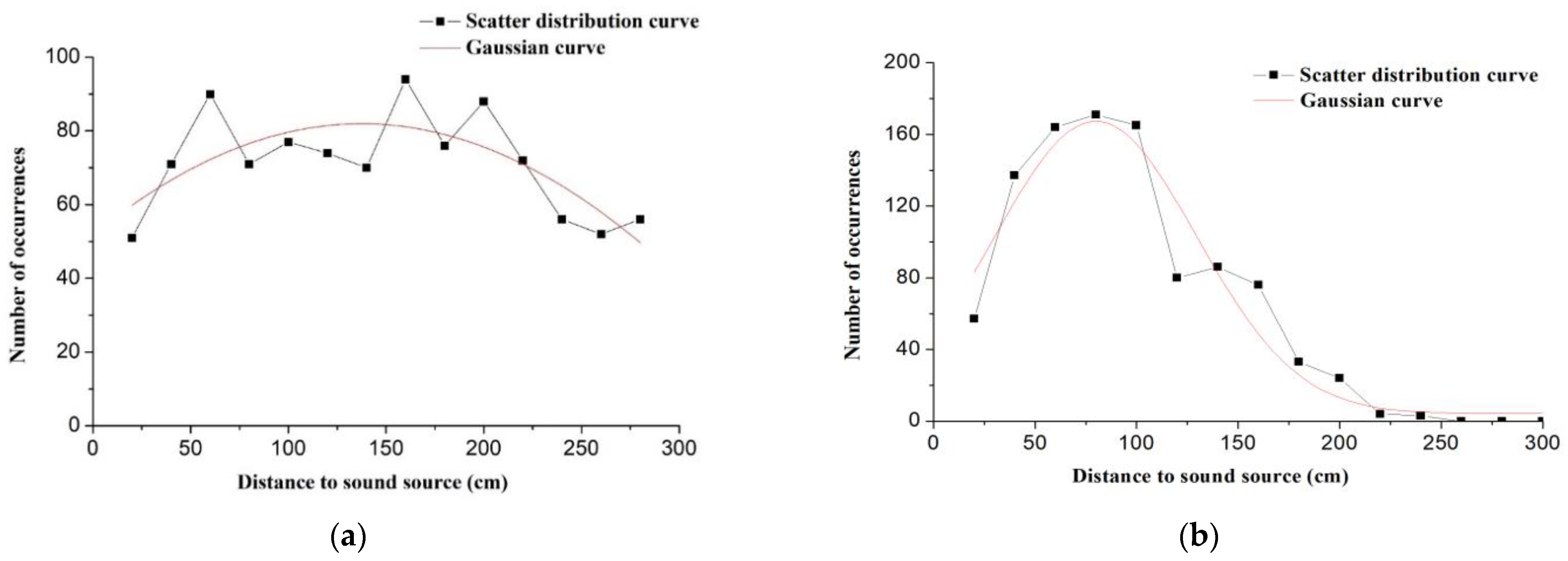
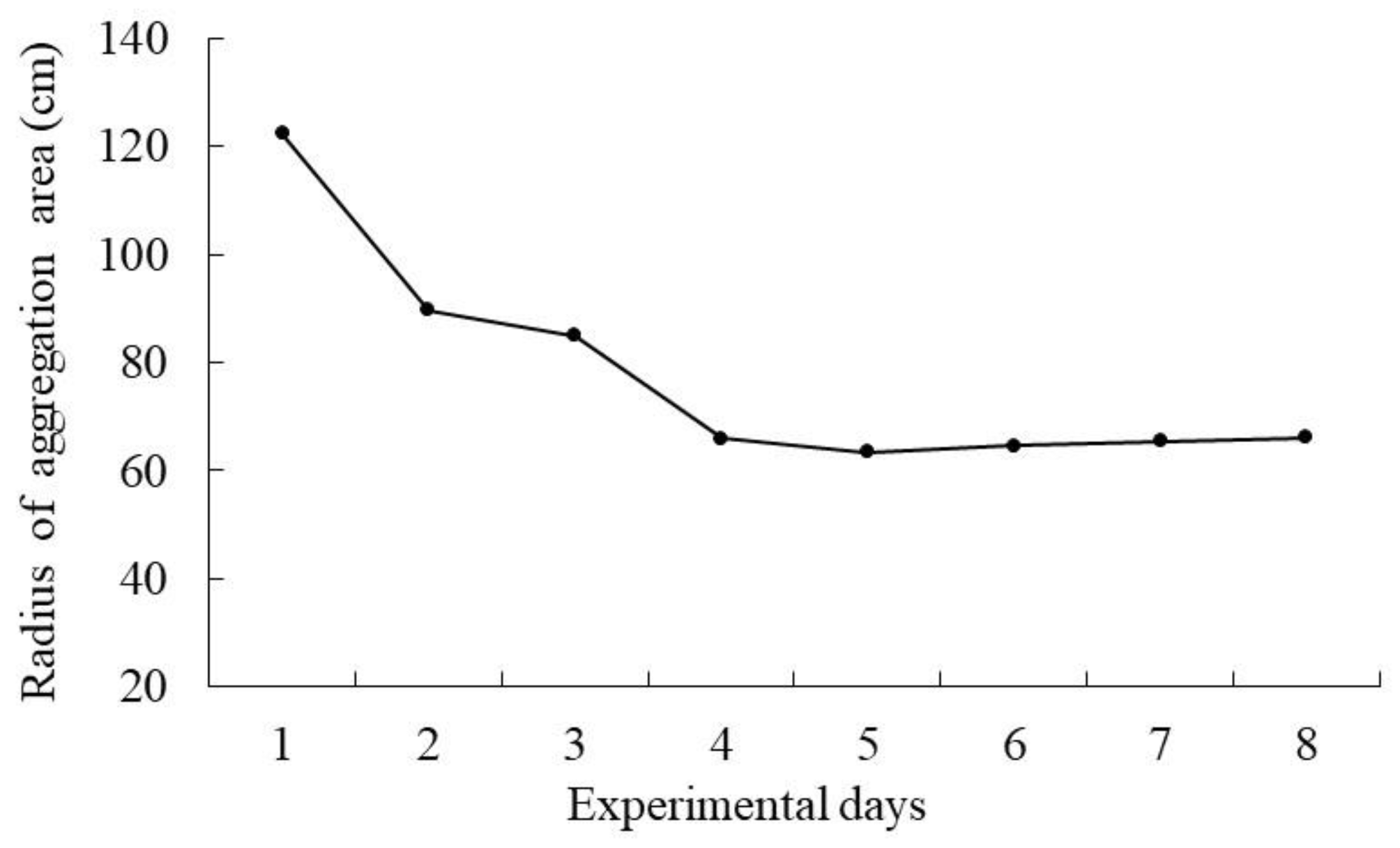
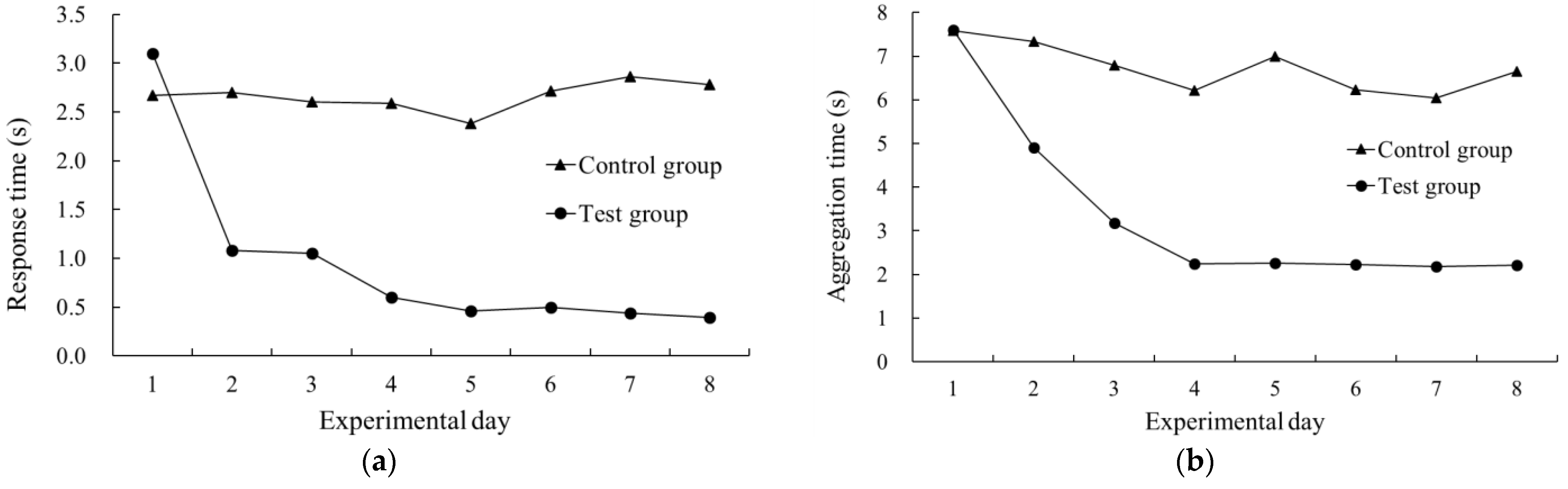
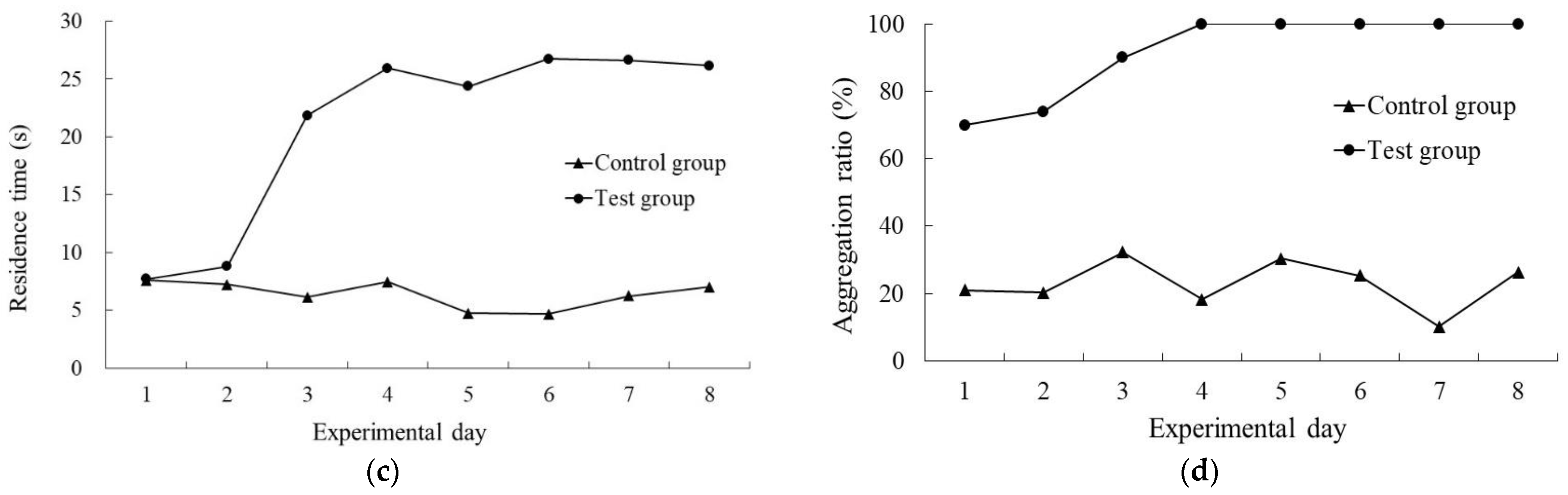
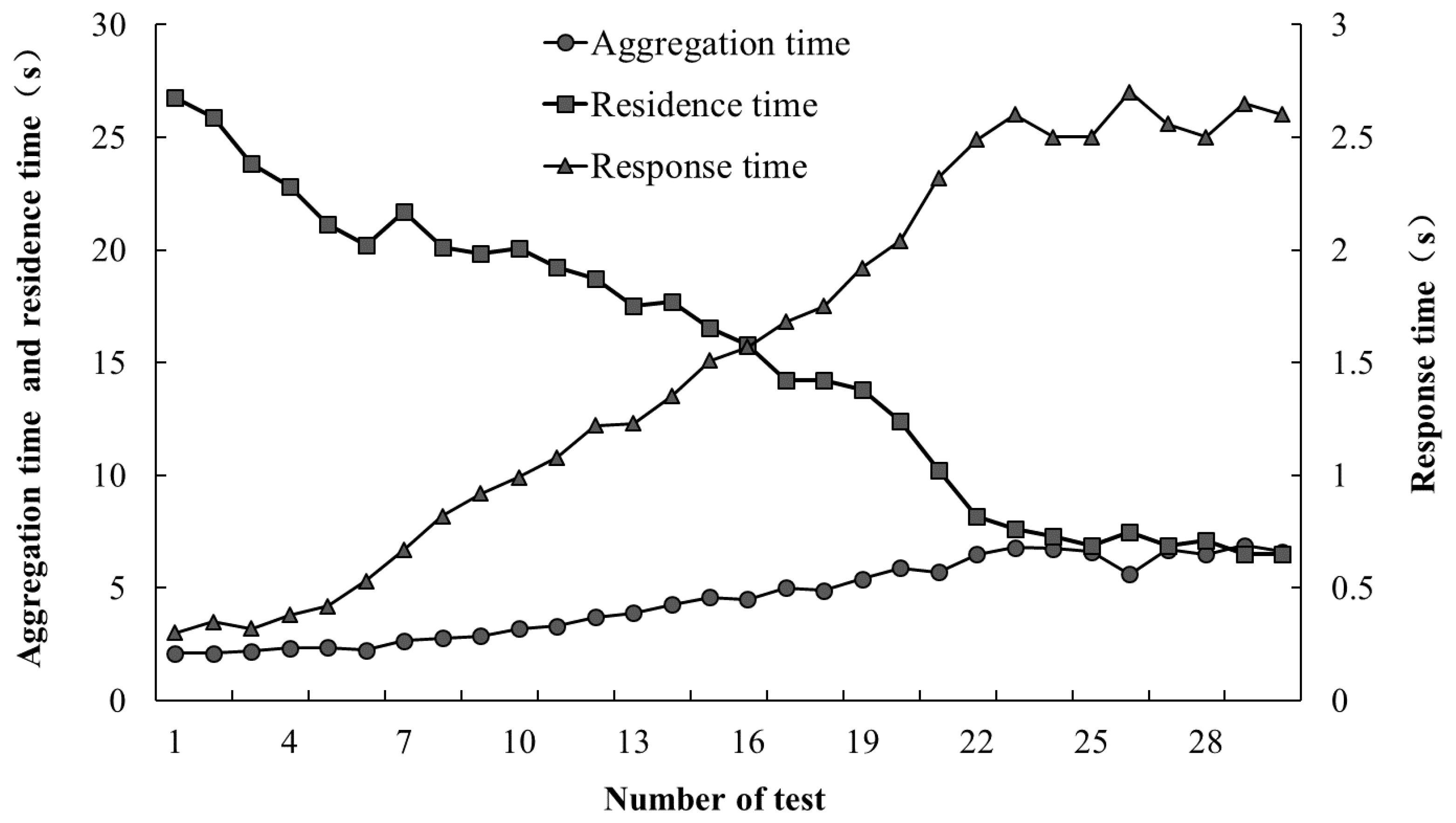
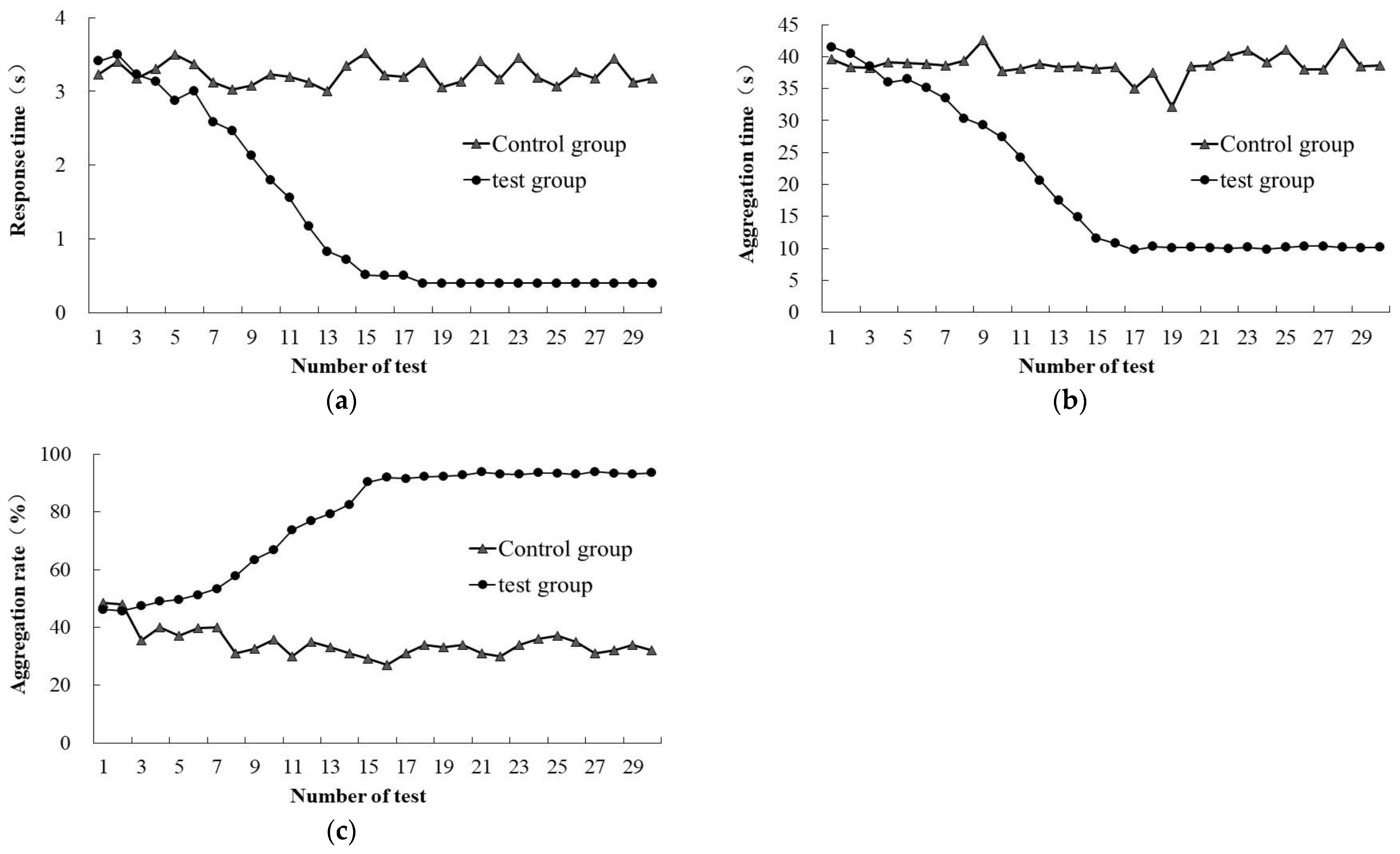
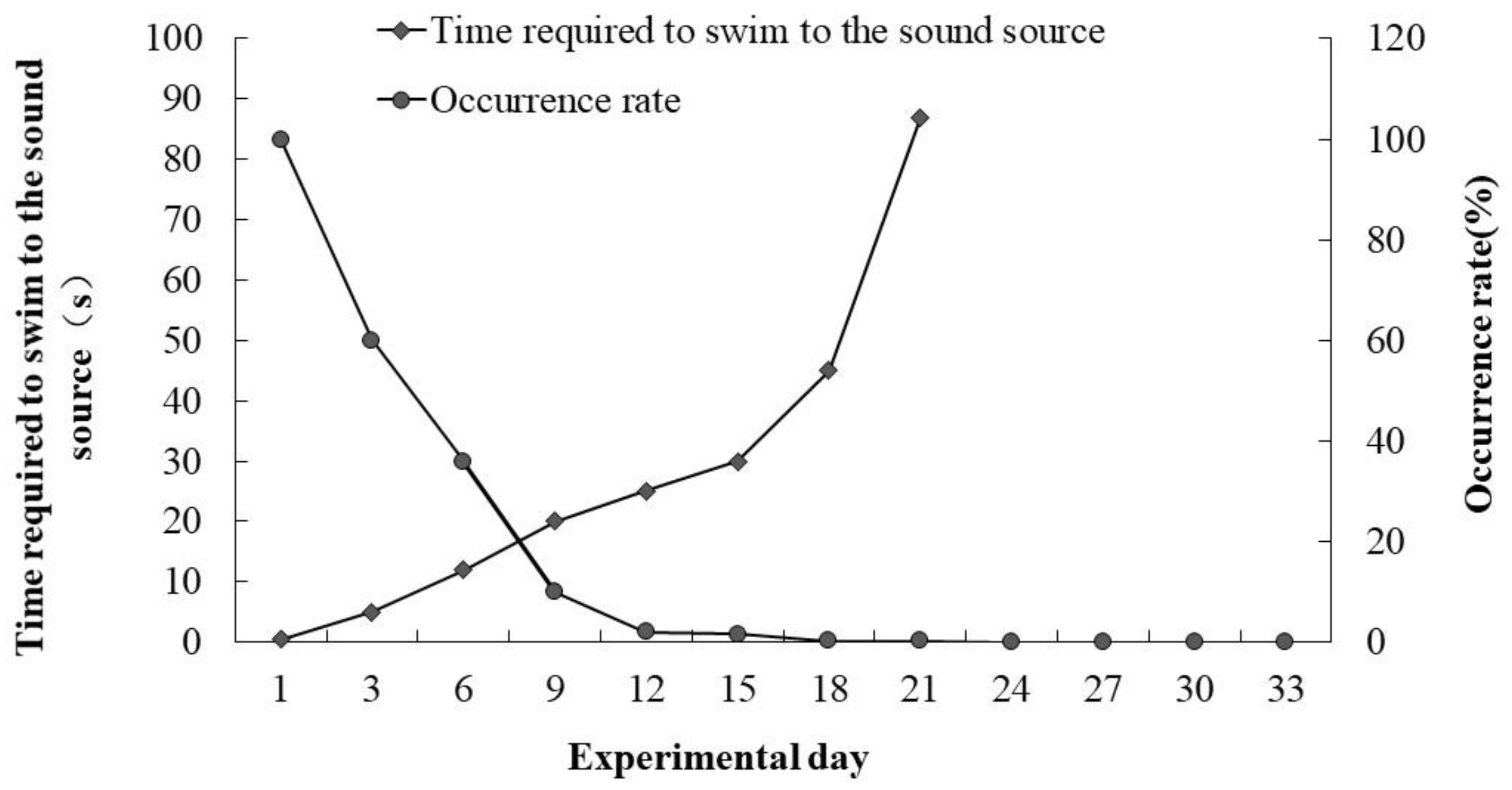
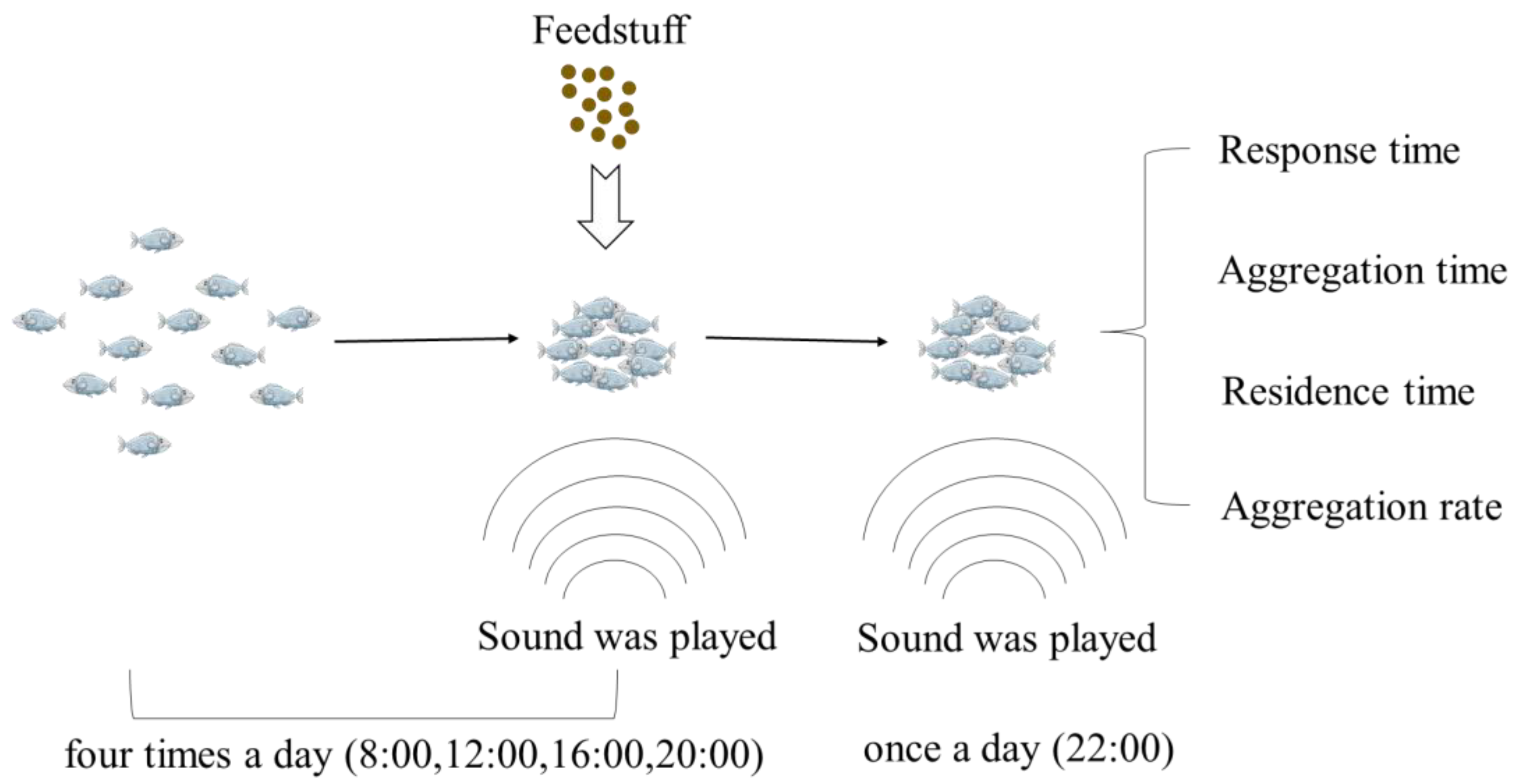
Acoustic conditioning taming technology is one of the key tools for controlling and managing the behavior of target organisms in marine ranching. In this study, juvenile Pagrus major (Red Seabream) were subjected to acoustic conditioning taming with 400 Hz of square–wave continuous tones for 8 days in laboratory and 15 days in an open-sea area. At the same time, the elimination of conditioned reflexes to sounds and applications in marine ranching were tested. The Gaussian model was used to regression-fit the distribution of fish in the tank, and the fitting degree was 91.79%. Good conditioning was established after four days of acoustic conditioning taming, and the efficiency index was 44.49 in the laboratory. The average response time, aggregation time, and residence time of the test group were 0.95 s, 3.35 s, and 21.15 s, respectively. The aggregation rate of the test group showed an upward trend, and it remained at 100% from the 4th day to the 8th day. It took longer to establish the conditioned response to sound in the open-sea area, and good conditioning was established after the 18th acoustic conditioning taming. Juvenile Pagrus major with established acoustic conditioning were tagged before release. On the 18th day, 0.2% of released fish swam to a sound source when the sound was played, and from the 24th day, there was no fish presence in the area near the sound source. The conditioned response of fish to sound was gradually eliminated using the negative feedback mode of playing the sound without feeding bait. After 22 negative feedback tests, the sound was no longer attractive to the fish, meaning that the “sound–food” neural connection established by the acoustic conditioning taming had been eliminated. The results of this study show that acoustic conditioning taming technology was an effective method of fish behavior control, and it is feasible to apply this technology in the construction of marine ranching systems. A number of acoustic conditioning taming devices can be established in marine ranching to continuously tame the released fish and strengthen the impact of the sound. At the same time, the multi-point deployment of automatic taming devices can form an acoustic conditioning taming network to increase the action area and effects.
Keywords: acoustic conditioning taming; response; aggregation; and residence times; efficiency index; elimination of conditioned reflex; application acoustic conditioning taming; response; aggregation; and residence times; efficiency index; elimination of conditioned reflex; application