Review

Research Characteristics on Cyanotoxins in Inland Water: Insights from Bibliometrics
1
Ministry of Education Key Laboratory of Integrated Regulation and Resource Development on Shallow Lakes, College of Environment, Hohai University, Nanjing 210098, China
2
Power China Huadong Engineering Co., Ltd., Hangzhou 311122, China
*
Author to whom correspondence should be addressed.
Water 2022, 14(4), 667; https://doi.org/10.3390/w14040667
Submission received: 6 January 2022 / Revised: 9 February 2022 / Accepted: 18 February 2022 / Published: 21 February 2022
(This article belongs to the Section Water Quality and Contamination)

Abstract

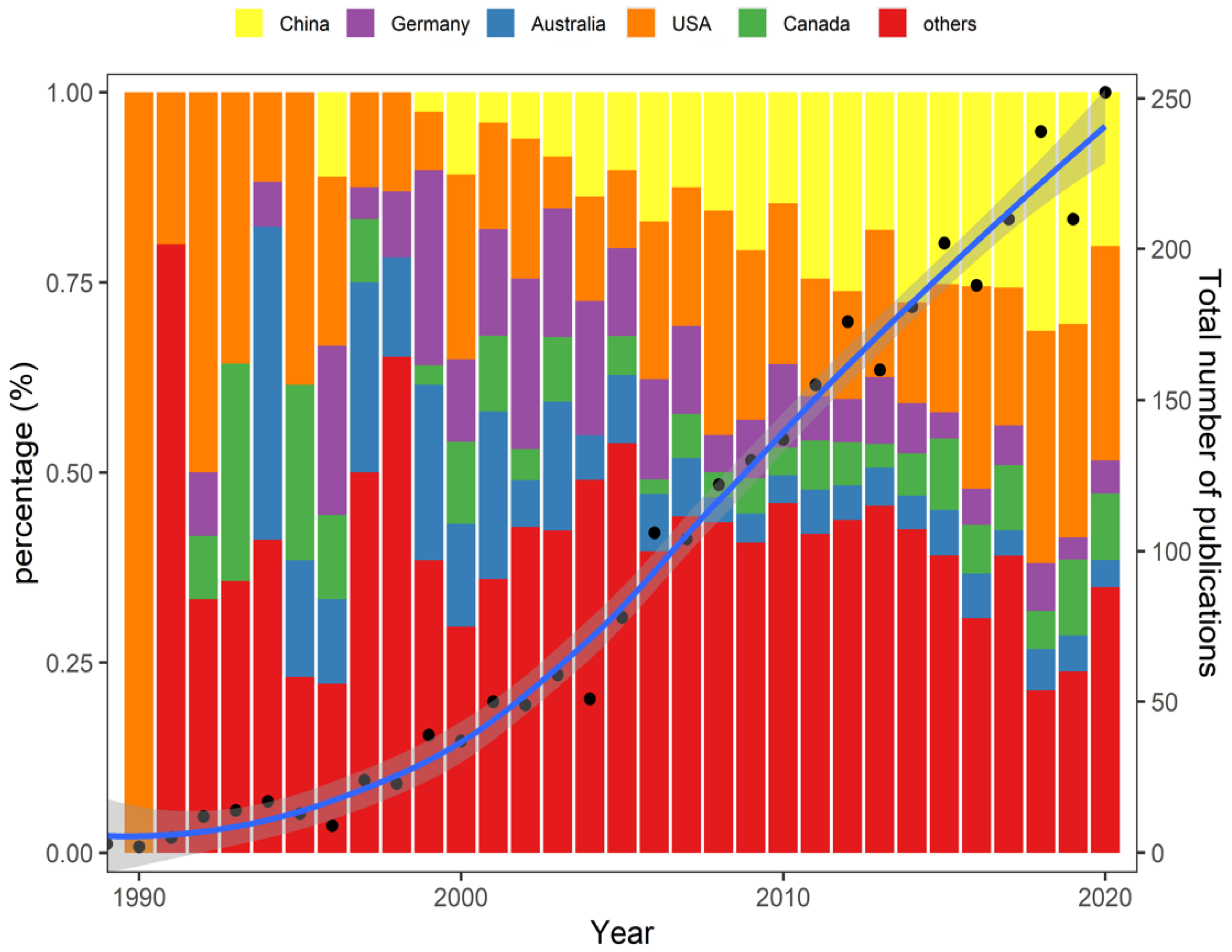
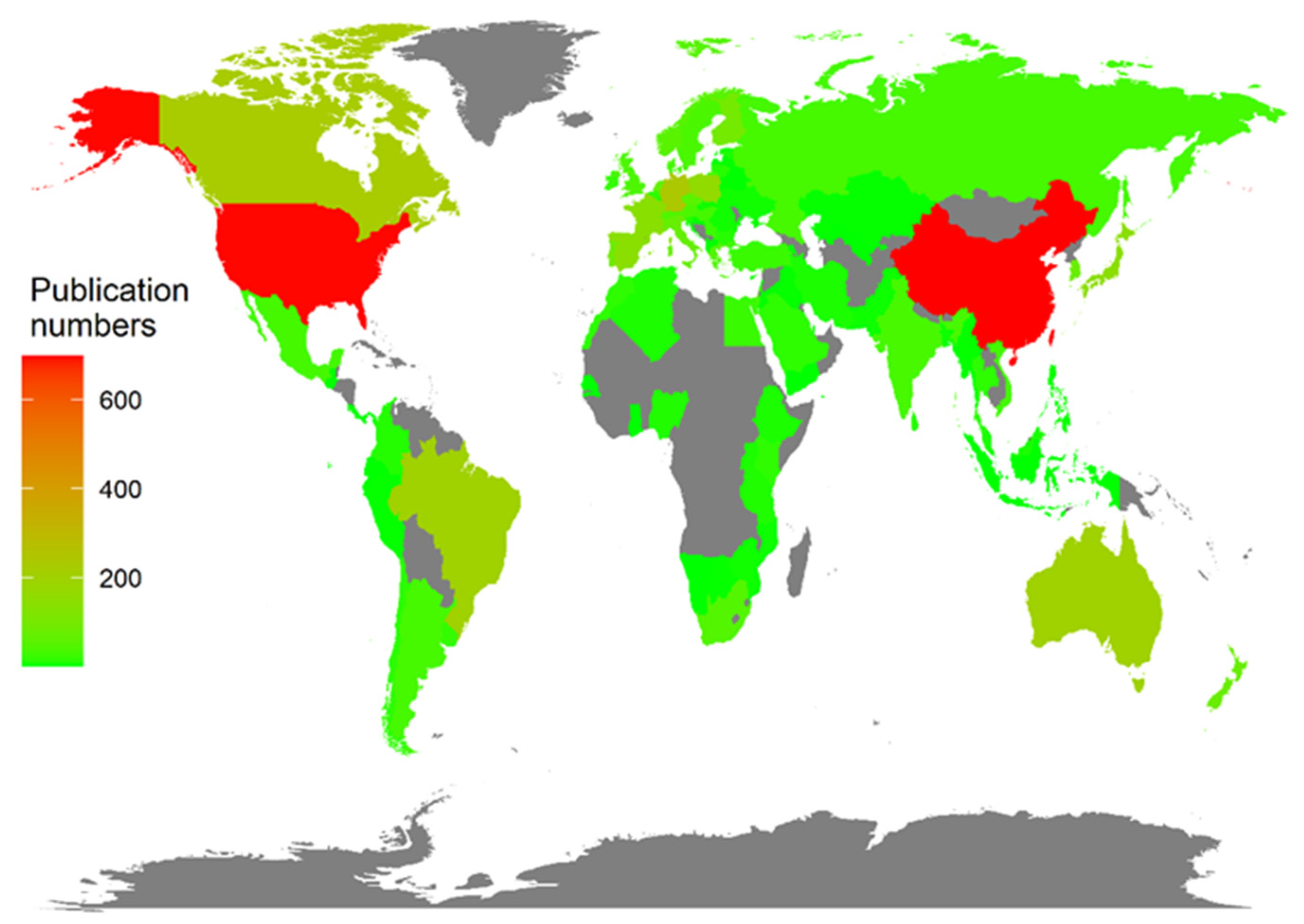
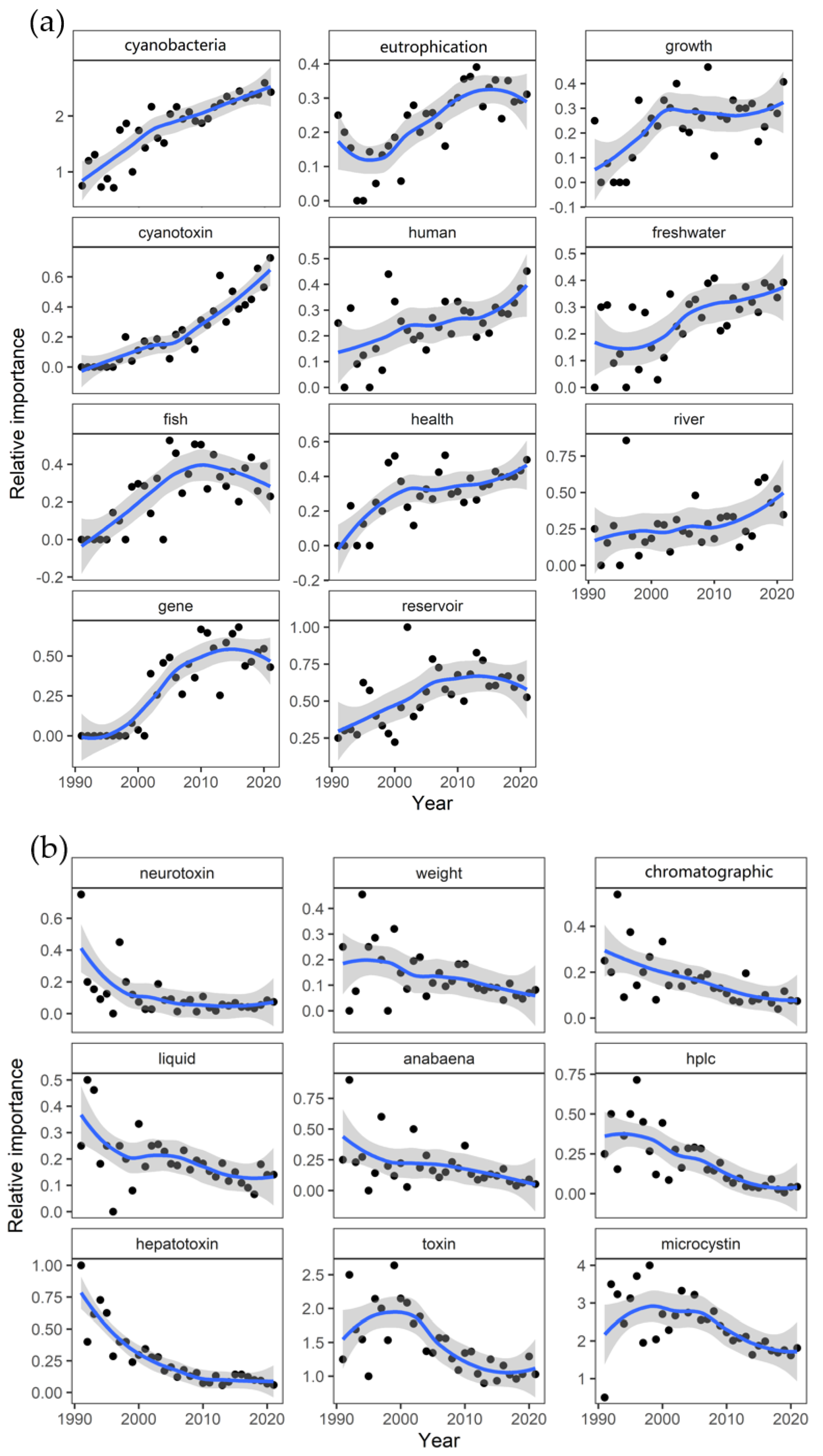
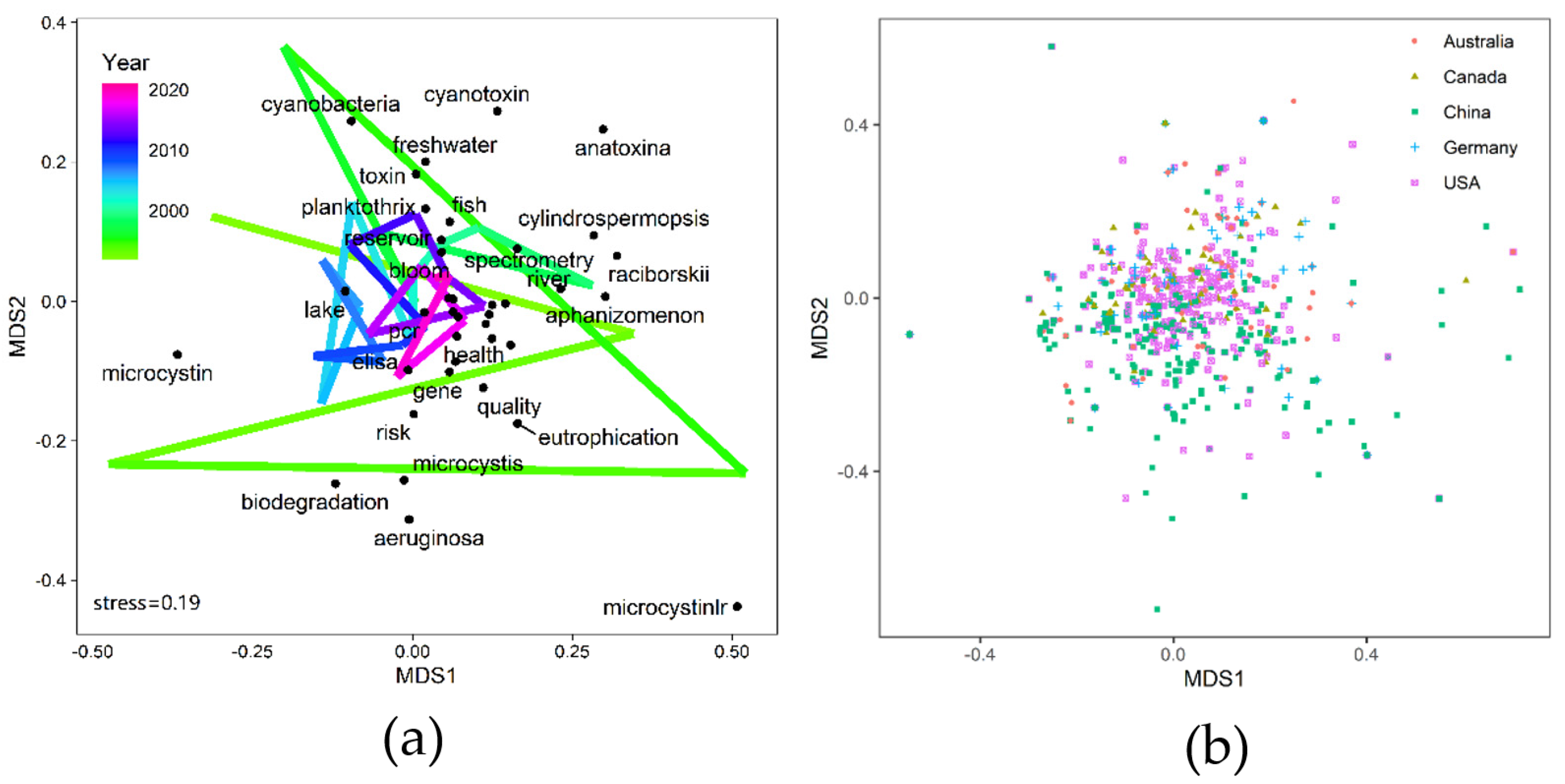
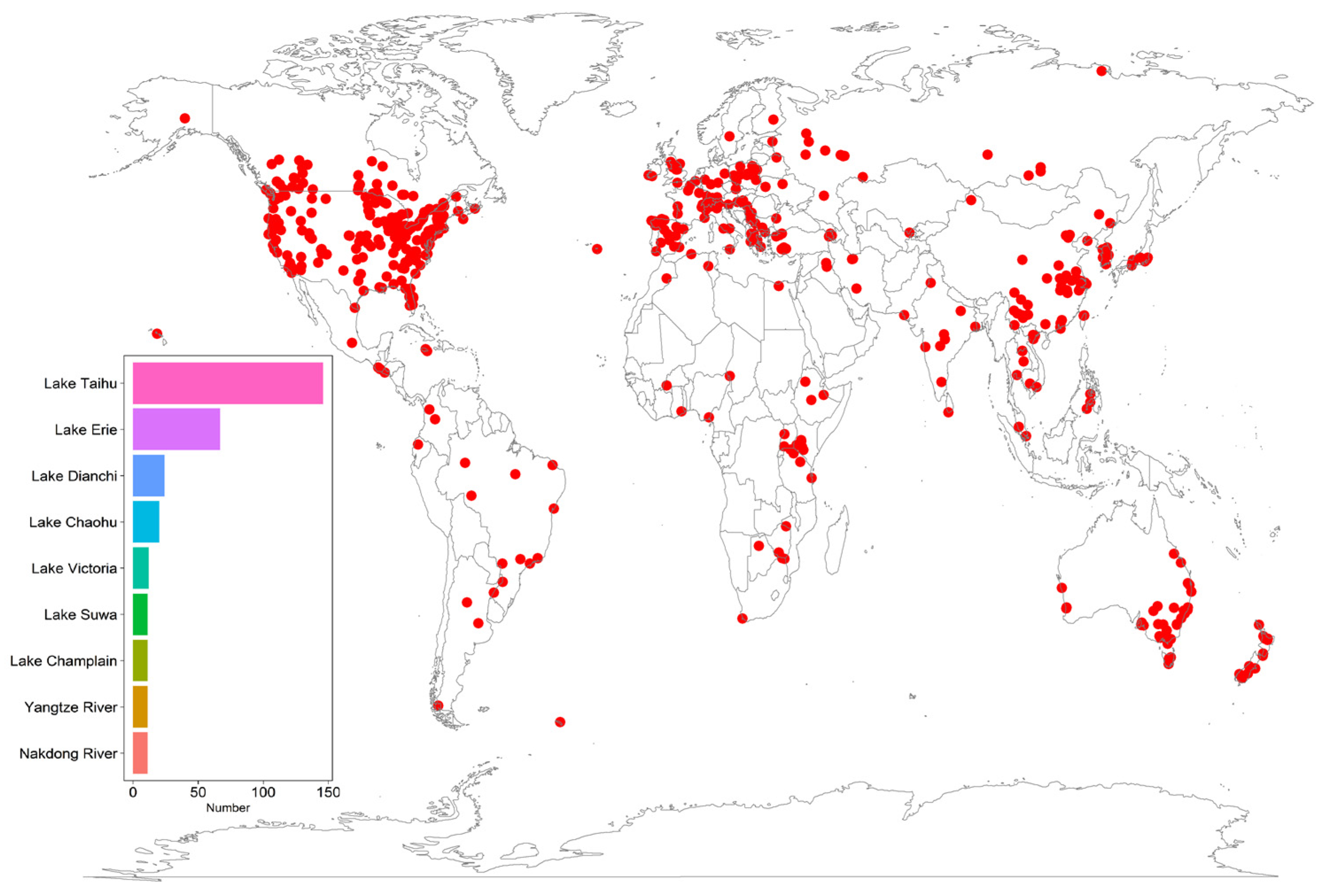
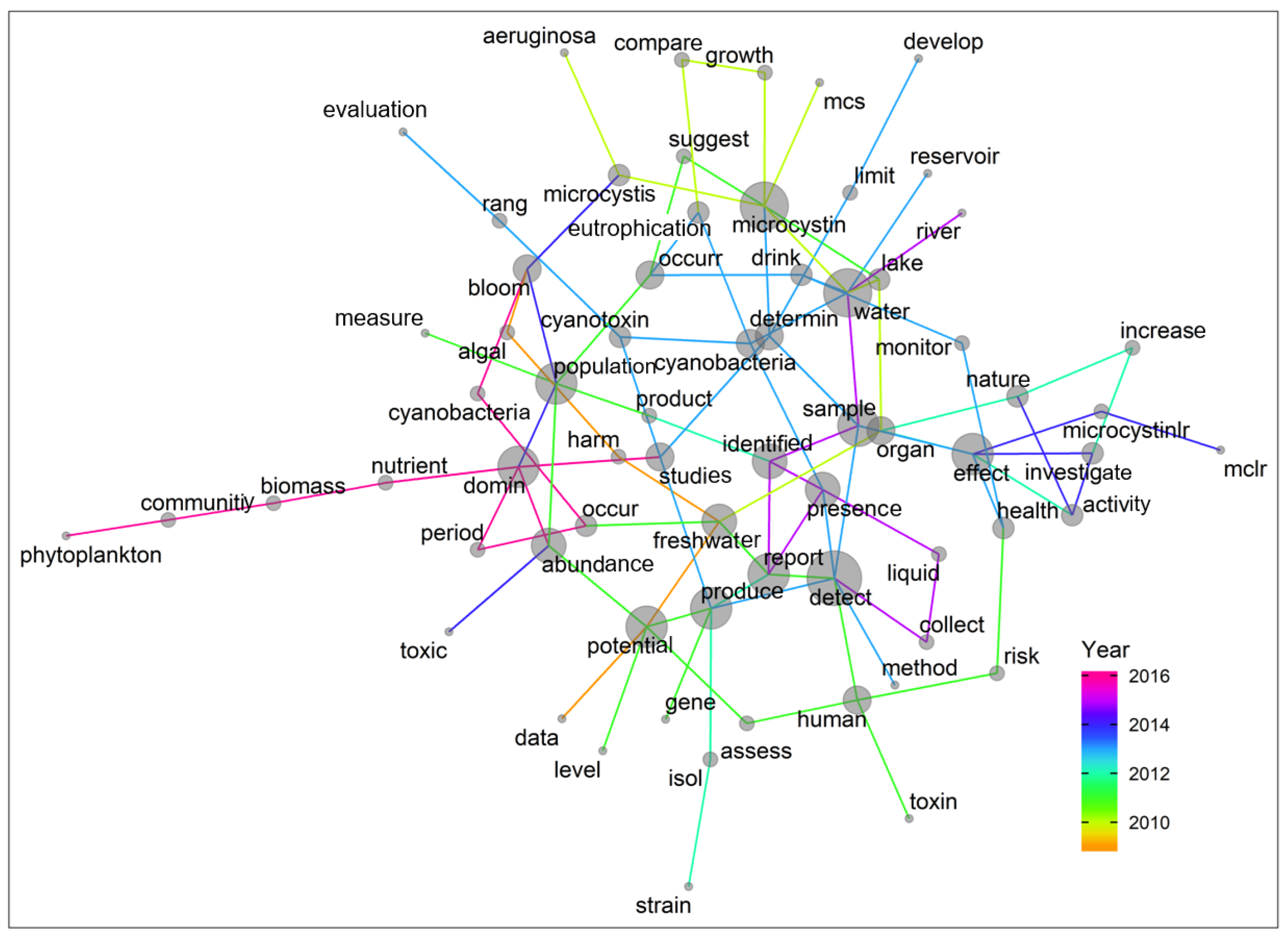
Eutrophication is a long-standing ecological and environmental problem, and the severity of harmful algal blooms continues to increase, causing large economic losses globally. One of the most important hazards created by harmful algal blooms is the production of cyanotoxins. This study aimed to analyze the characteristics and development trends of cyanotoxin research through bibliometric analysis. A total of 3265 publications from 1990 to 2020 on cyanotoxins were retrieved from the Science Citation Index (SCI) Expanded database, Web of Science. Over the past 30 years, most research has been concentrated in China (21.4%) and the USA (21.3%). Throughout the study period, microcystin was the focus of the research, accounting for 86% of the total number of publications. A word frequency analysis revealed that as people became more aware of drinking water safety and the construction of large-scale water conservation facilities, “reservoirs” and “rivers” became hot words for researchers, while “lakes” have always been important research objects. Nonmetric multidimensional scaling (NMDS) analysis of studies from the five countries with the largest numbers of publications showed that Chinese researchers typically associate eutrophication with Microcystis, while research subjects in other countries are more extensive and balanced. The development of cyanotoxin research around the world is not even, and we need to push for more research on major lakes that are outside of North America, Europe and China.
Keywords: bibliometric analysis; current hots; development trends; cyanotoxin bibliometric analysis; current hots; development trends; cyanotoxin