Article

Construction of Ecological Network Based on Multi-Scale Conversion and Nesting
1
School of Architecture and Planning, Anhui Jianzhu University, Hefei 230022, China
2
Anhui Urbanization Development Research Center, Hefei 230022, China
3
School of Public Administration, China University of Geosciences (Wuhan), Wuhan 430074, China
4
State Key Laboratory of Urban and Regional Ecology, Research Center for Eco-Environmental Sciences, Chinese Academy of Sciences, Beijing 100085, China
5
University of Chinese Academy of Sciences, Beijing 100049, China
*
Author to whom correspondence should be addressed.
Water 2021, 13(9), 1278; https://doi.org/10.3390/w13091278
Submission received: 27 March 2021 / Revised: 23 April 2021 / Accepted: 28 April 2021 / Published: 30 April 2021
(This article belongs to the Special Issue Optimal Utilization and Management of Natural Resources)

Abstract

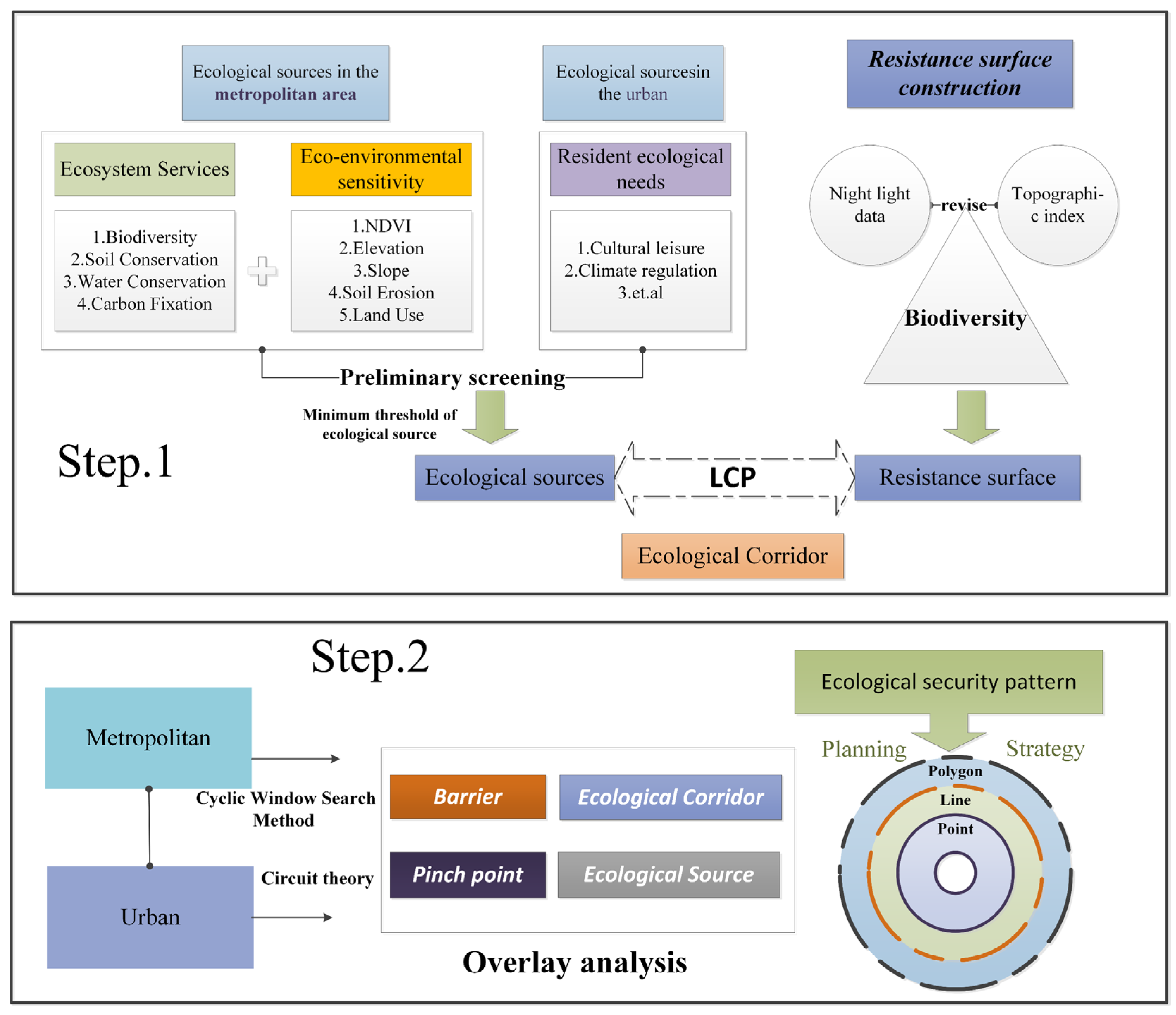
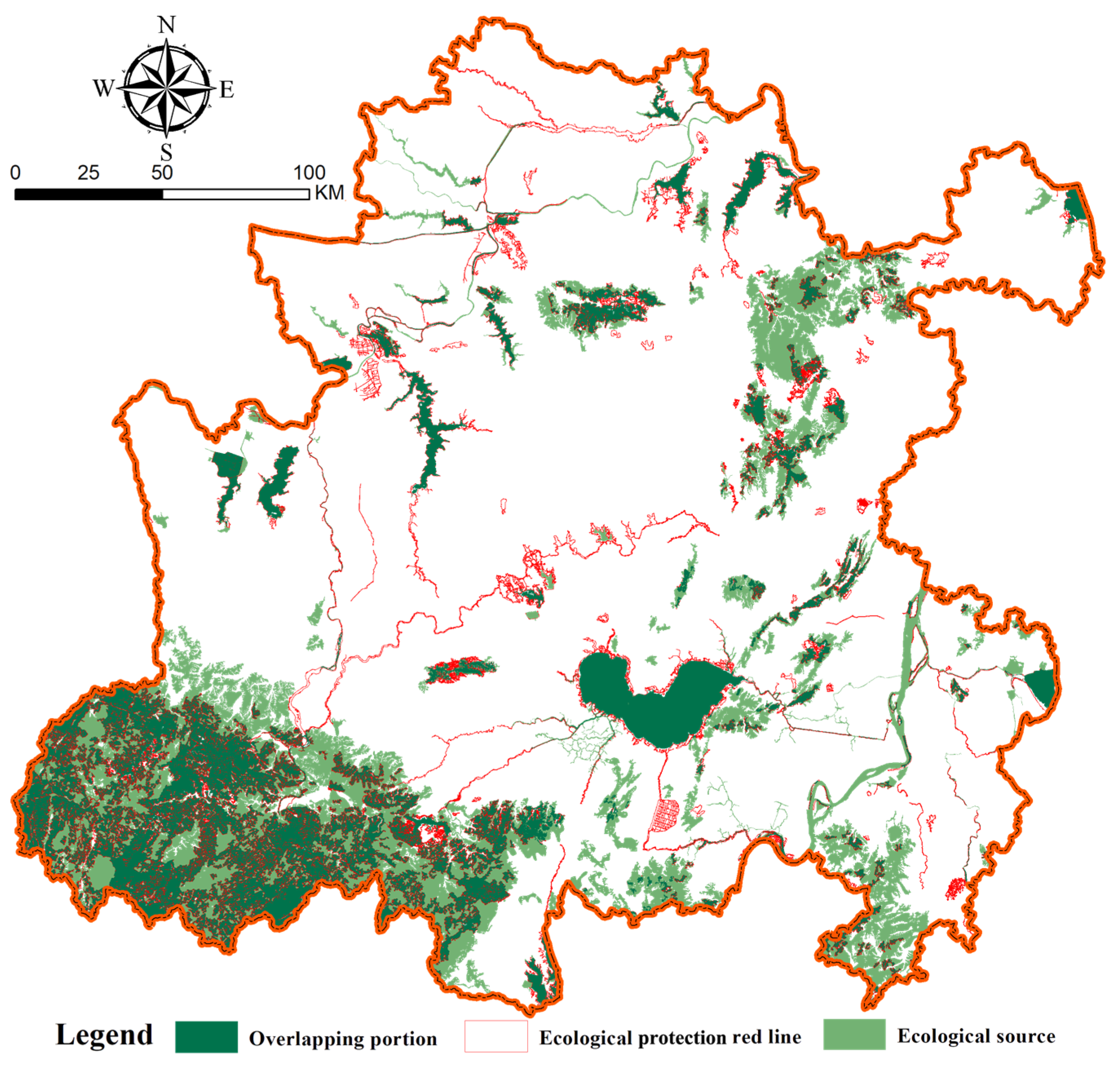
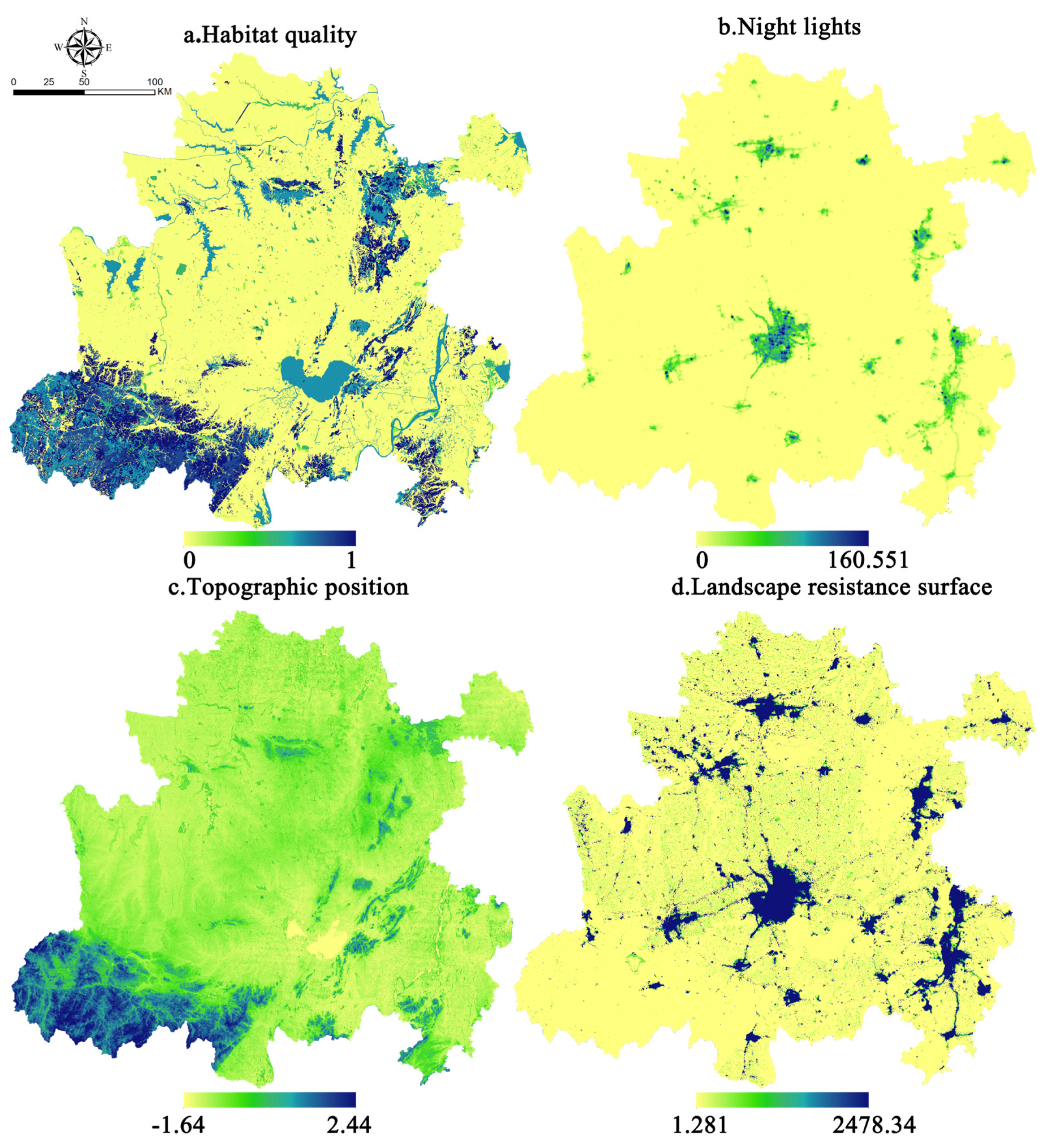
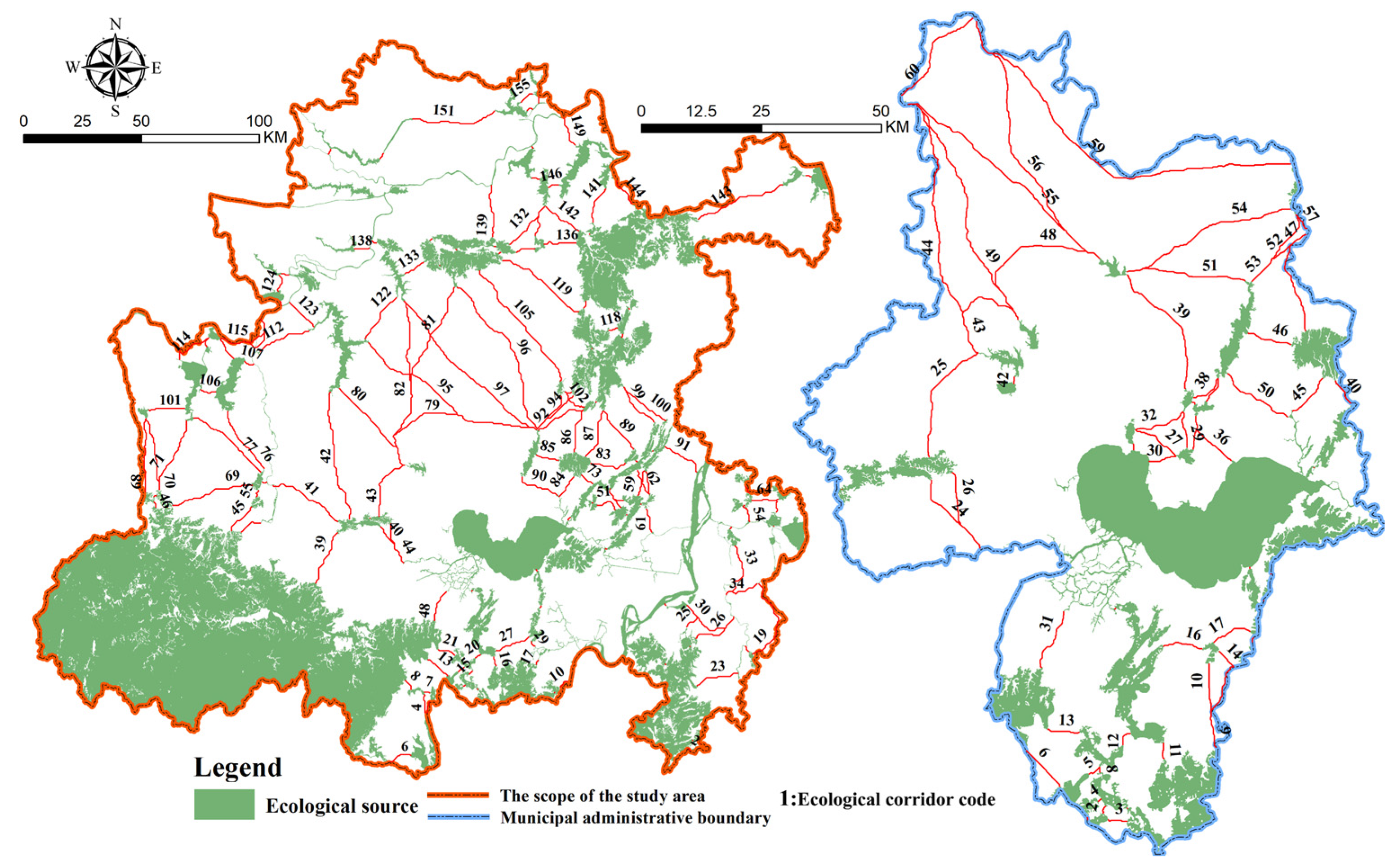
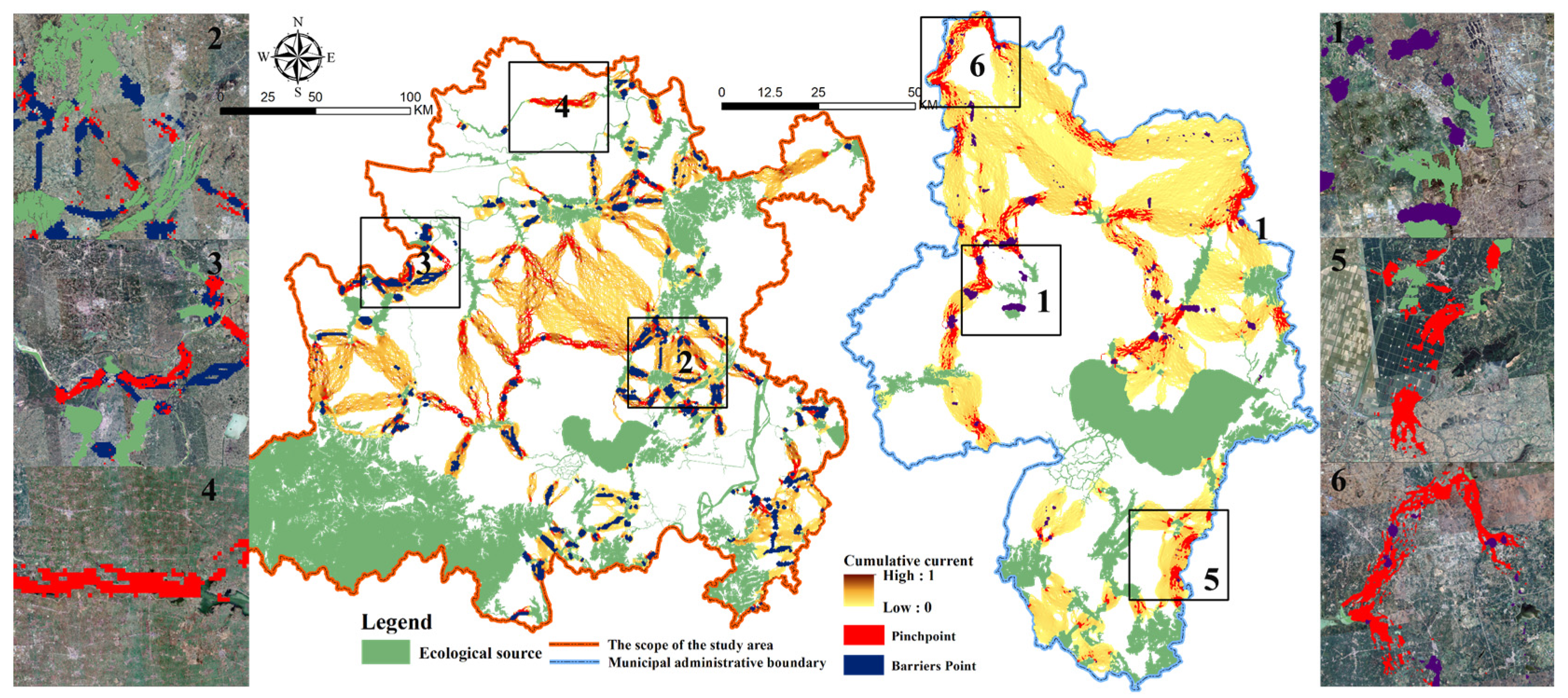
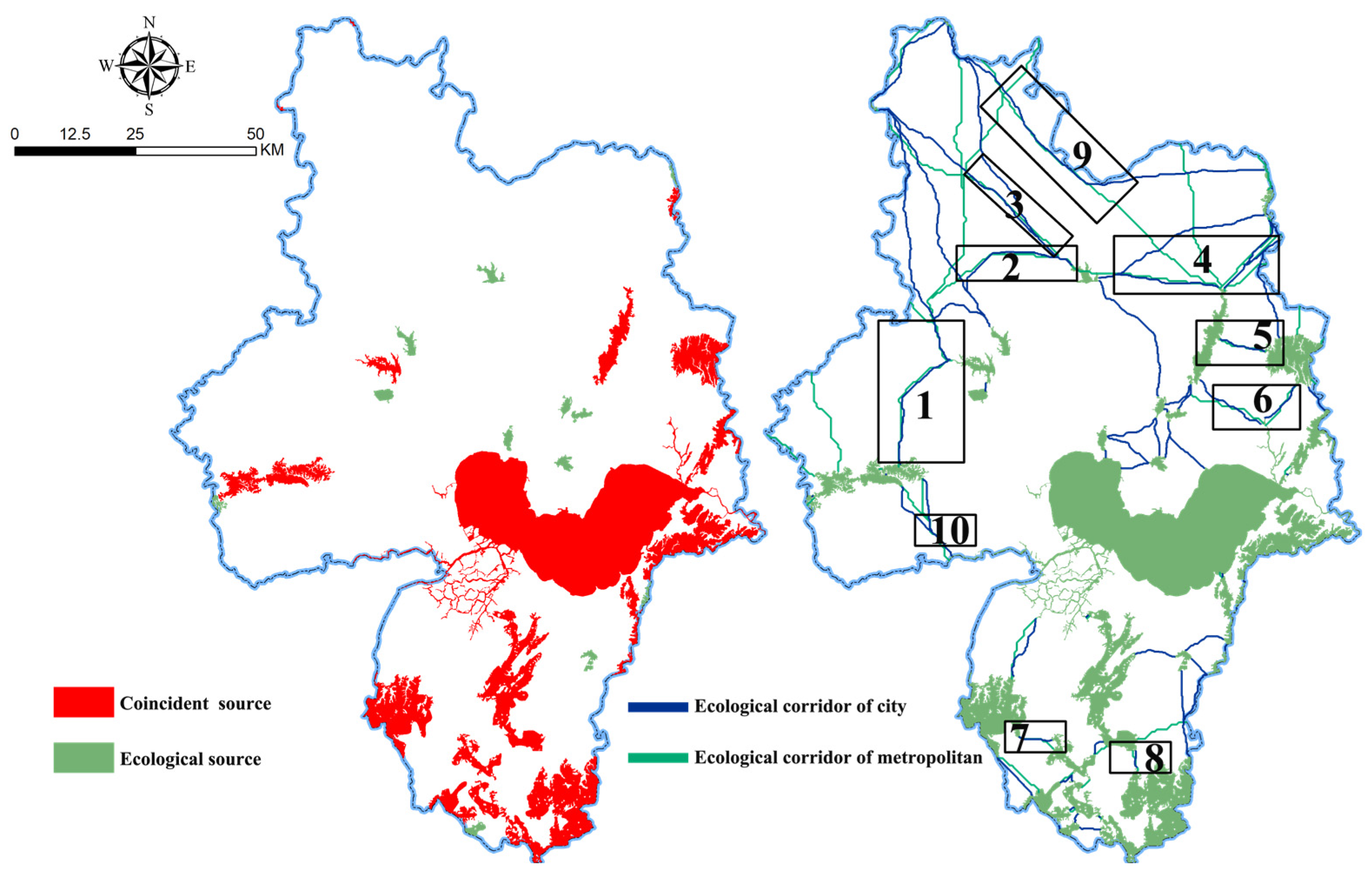
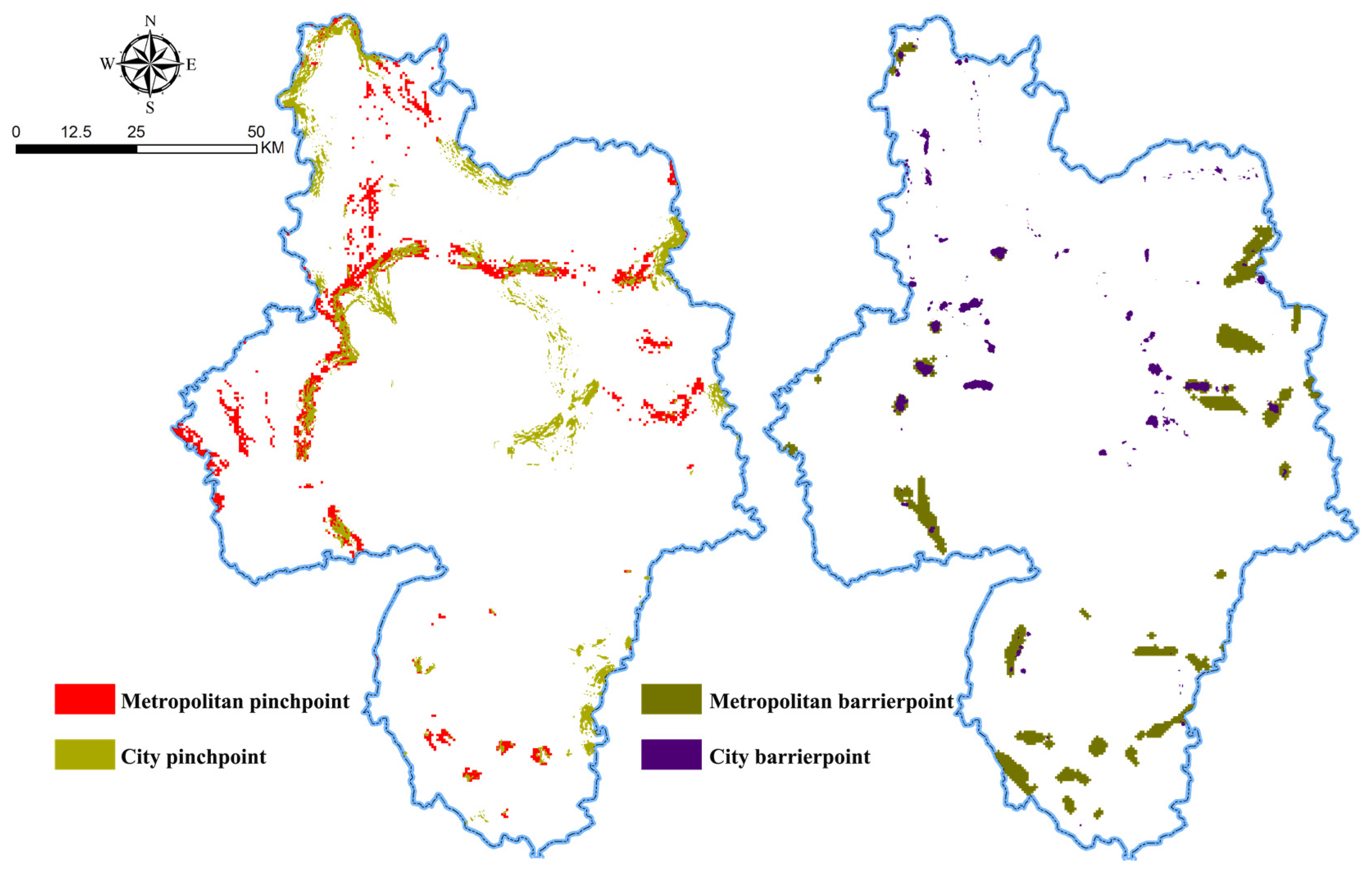
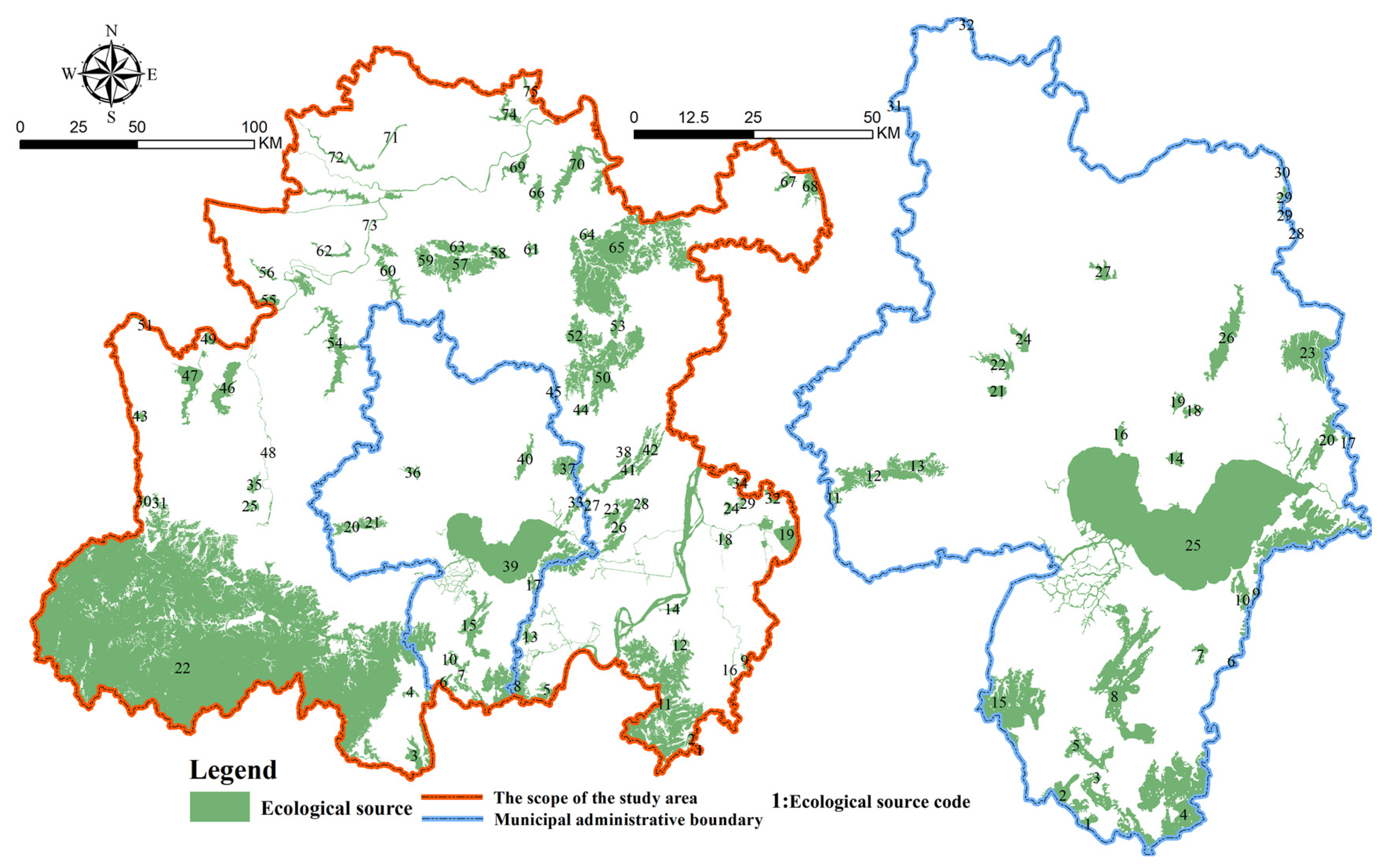
Ecological protection and the restoration of full-array ecosystems is an important part of ecological civilization construction, which is a powerful measure to implement the concept of green development and help bridge the gap between the respective inevitable requirements of the current ecological environment and economic development. To solve this problem, a multi-scale index system was constructed to identify ecological sources comprehensively. The minimum-cost path method, the circuit theory, and the cyclic window search method were adopted to quantitatively identify the important ecological sources and corridors in scale nesting and pinch points and barrier points that affect multi-level connectivity. Furthermore, the specific optimization layout strategy of the ecological network structure of the Hefei metropolitan area was proposed. According to the results, if ecological sources and corridors at two scales are overlaid, the coincident area of ecological sources at two scales is 1719.95 km2. As important ecological sources, Chaohu Lake Basin, Niuwangzhai, and Wuding Mountain, which are important areas to maintain the ecological network, need to be protected. Ten overlapping ecological corridors, which are mainly distributed in Changfeng County, are easily damaged long term. As a result, ecological nodes should be set up as temporary habitats for species transfer. In addition, based on the circuit theory and the cyclic window search method, calculating areas of pinch points at two scales yields 1637.75 km2 and 434.22 km2, respectively, and for areas of barrier points yields 2182.75 km2 and 126.97 km2, respectively. The ecological pinch points at two overlapping scales among them are important areas for future protection. Due to the small and fragmented spatial distribution in the urban area, pinch points with an average size of 0.58 km2 are easy to be restored and will greatly improve the connectivity of the ecological network after restoration. Furthermore, through the quantitative identification of ecological network elements of two scales, the paper puts forward an optimization strategy for an ecological network in the Hefei metropolitan area from three aspects of “point-line-polygon.” The research results can reference decision-making concerning the delineation of urban growth boundary, regional ecological security pattern, land space renovation, and ecosystem restoration.
Keywords: multi-scale; ecological network; the circuit theory; the least-cost path method; space overlay multi-scale; ecological network; the circuit theory; the least-cost path method; space overlay