Article

Analysis of Water Resources and Water Environmental Carrying Capacity of Animal Husbandry in China—Based on Water Footprint Theory

Institute of Agricultural Economics and Development, Chinese Academy of Agricultural Sciences, Beijing 100081, China
*
Author to whom correspondence should be addressed.
Water 2021, 13(23), 3386; https://doi.org/10.3390/w13233386
Submission received: 24 October 2021 / Revised: 22 November 2021 / Accepted: 28 November 2021 / Published: 1 December 2021
(This article belongs to the Section Water Resources Management, Policy and Governance)

Abstract

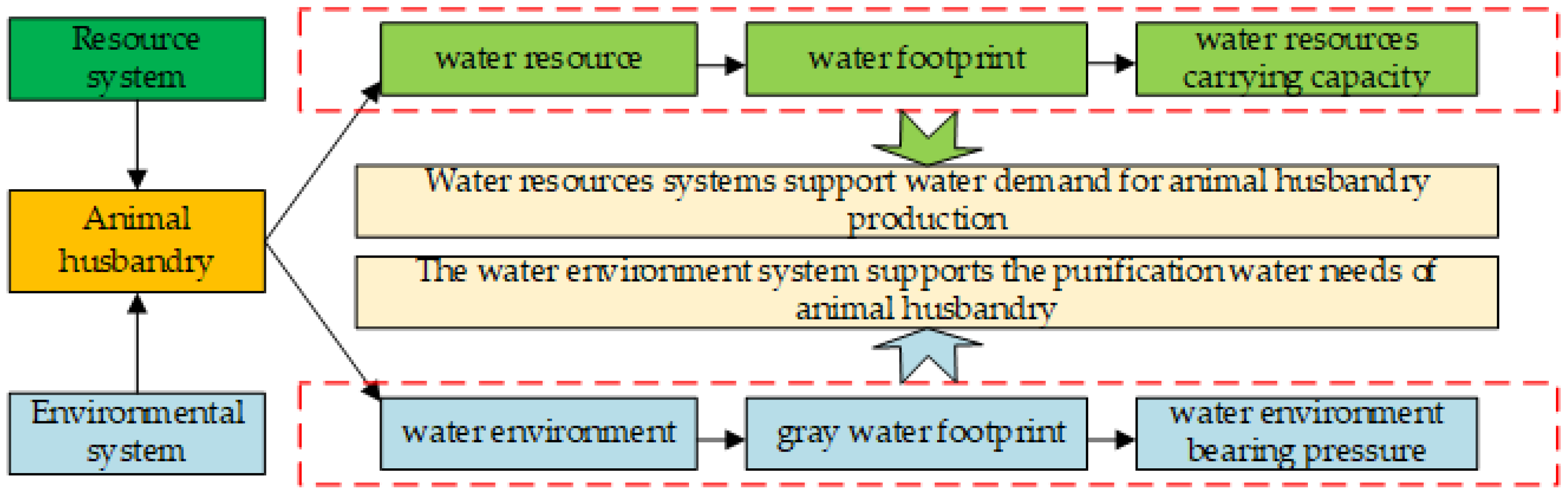
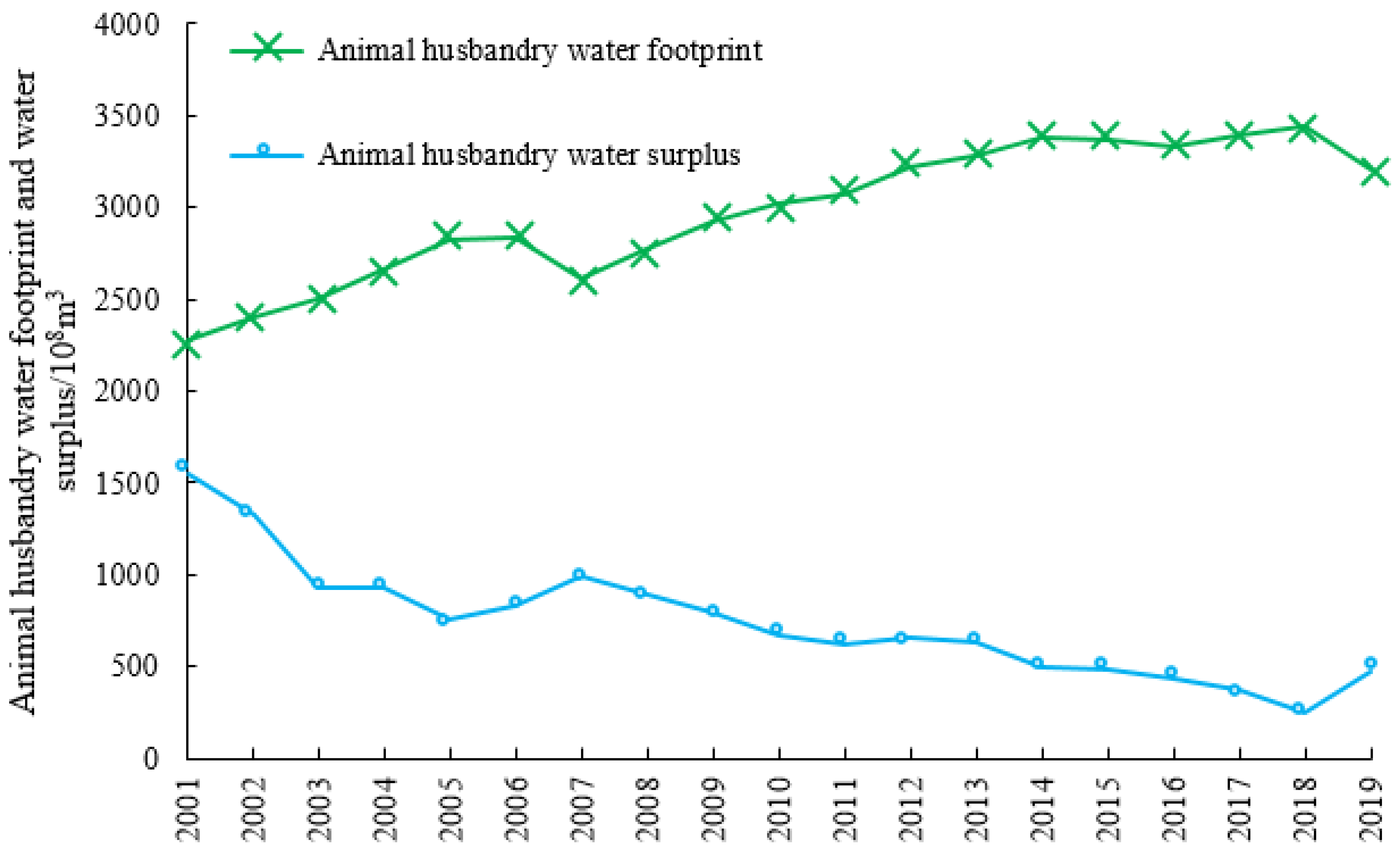
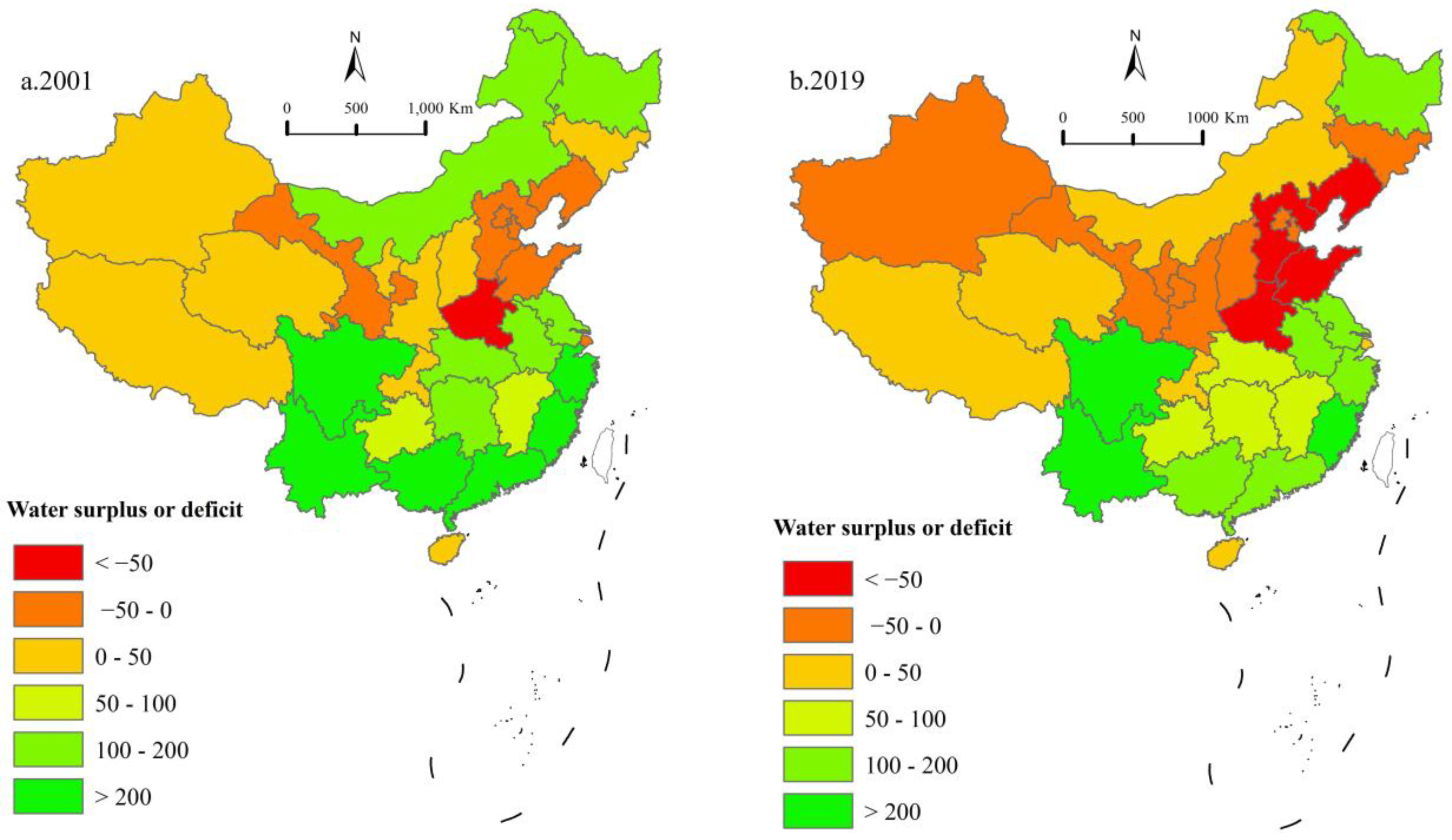
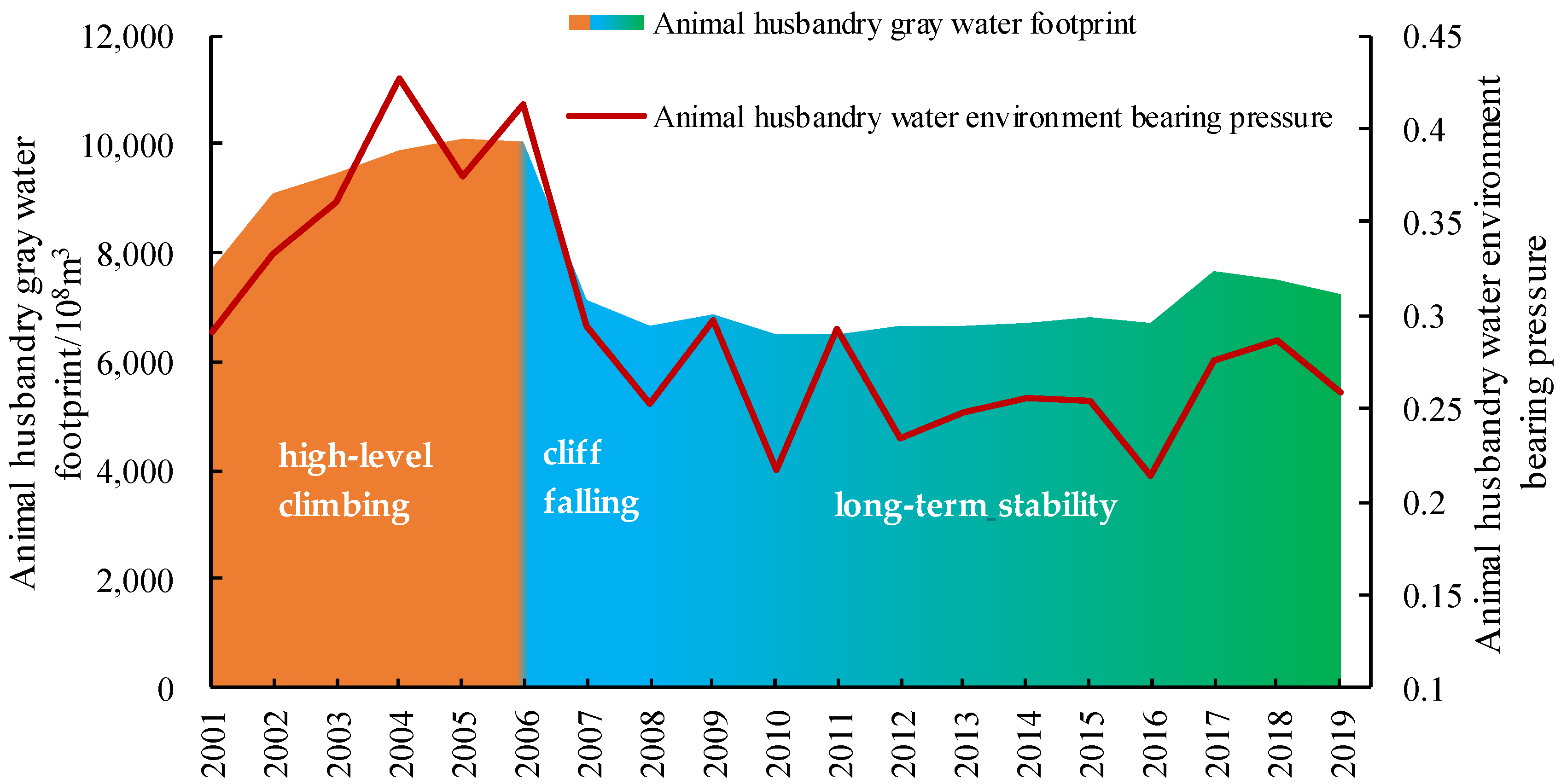
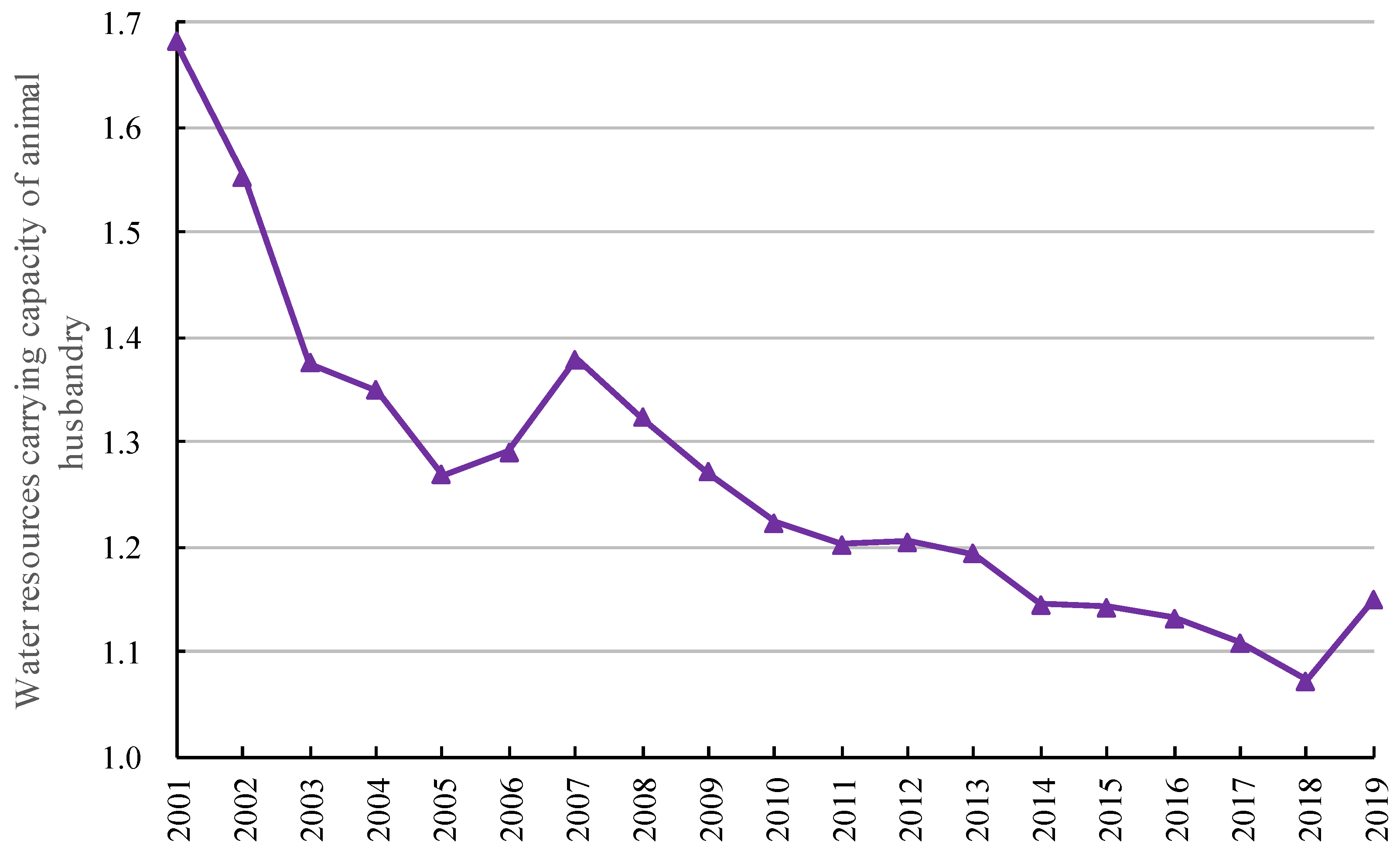
Water shortage and water pollution have become the key factors restricting the sustainable development of animal husbandry in China. In this study, the water footprint model was used to analyze the water resource carrying capacity and water environment bearing pressure of animal husbandry in 31 provinces of China from 2001 to 2019. The findings indicate that: (1) The development of animal husbandry has exacerbated the regional water deficiency problem. Shandong, Henan, Hebei, and Liaoning have become the most serious water deficit areas of animal husbandry in China. The decreasing water resource carrying capacity indicates that water resources are difficult in supporting the growth of animal husbandry; (2) the change of animal feeding structures has led to the decrease of gray water footprint and the alleviation of the water environment bearing pressure; however, the water environment of animal husbandry in northern China and the northwest is still overburdened, which poses a major challenge to the control of agricultural non-point source pollution; (3) furthermore, according to the spatial and temporal characteristics of the water resource carrying capacity and water environment bearing pressure, the main livestock-producing areas in the north are facing a profound “water-livestock” contradiction and showing an increasing trend. The research results will help decision-makers to adjust the development mode of animal husbandry, optimize resource allocation, and promote the sustainable development of resource-saving and environment-friendly animal husbandry.
Keywords: water footprint; animal husbandry; water resource carrying capacity; water environment bearing pressure water footprint; animal husbandry; water resource carrying capacity; water environment bearing pressure