Article

Characterizing Nutrient Composition and Concentration in Tomato-, Basil-, and Lettuce-Based Aquaponic and Hydroponic Systems


Department of Horticulture and Landscape Architecture, Purdue University, West Lafayette, IN 47907-2010, USA
*
Author to whom correspondence should be addressed.
Water 2020, 12(5), 1259; https://doi.org/10.3390/w12051259
Submission received: 8 April 2020 / Revised: 26 April 2020 / Accepted: 27 April 2020 / Published: 29 April 2020
(This article belongs to the Section Water, Agriculture and Aquaculture)

Abstract

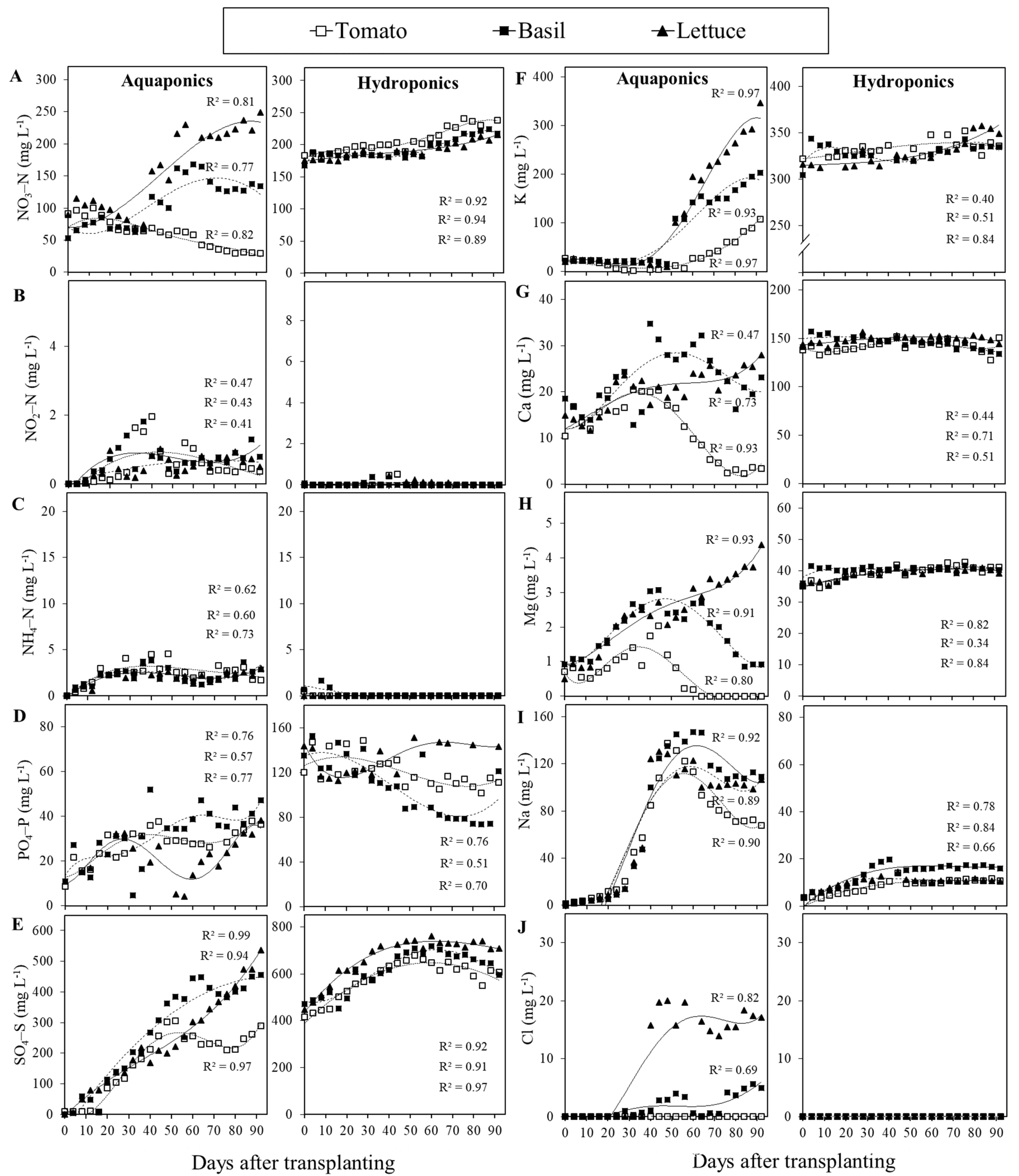
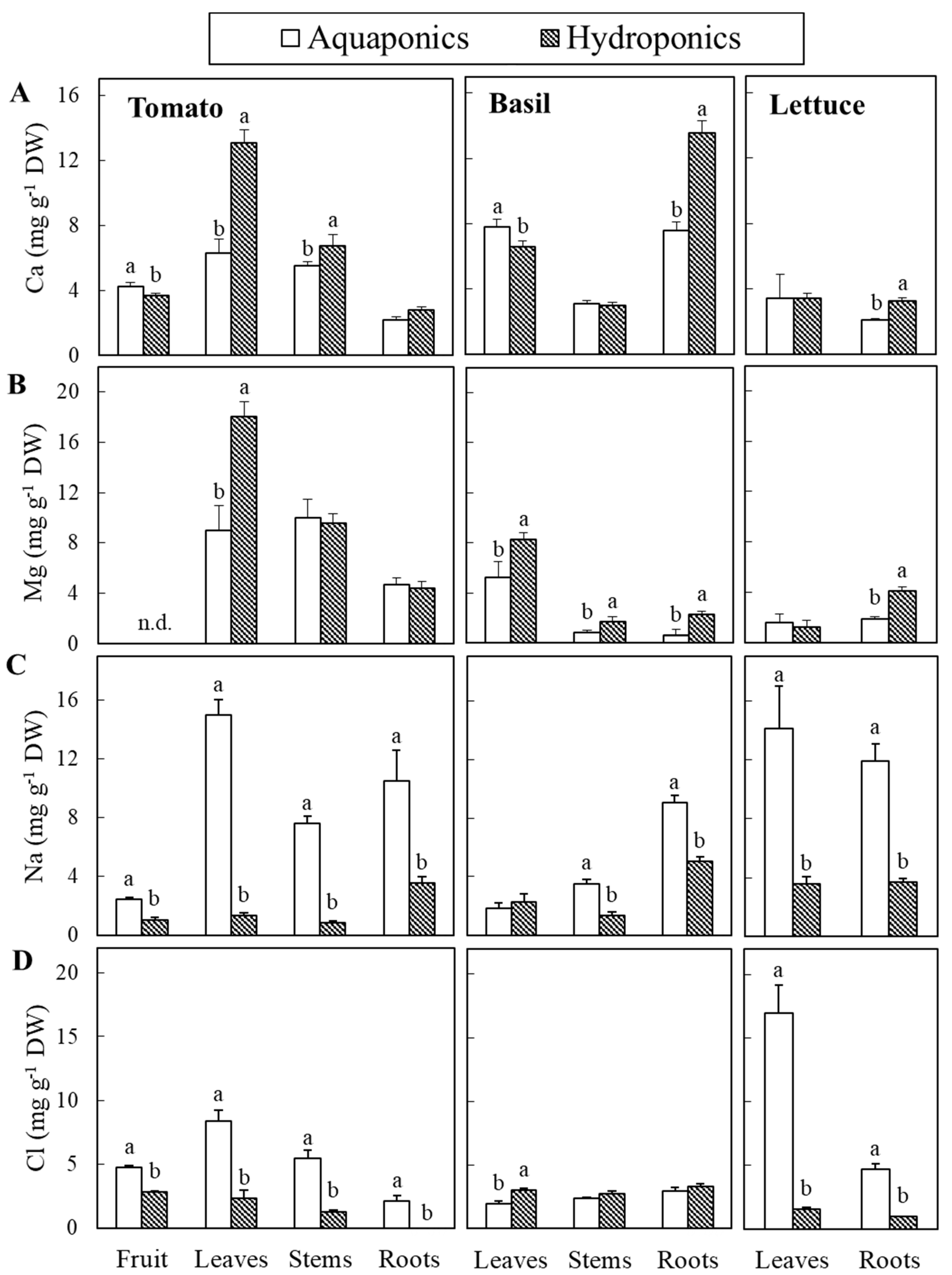
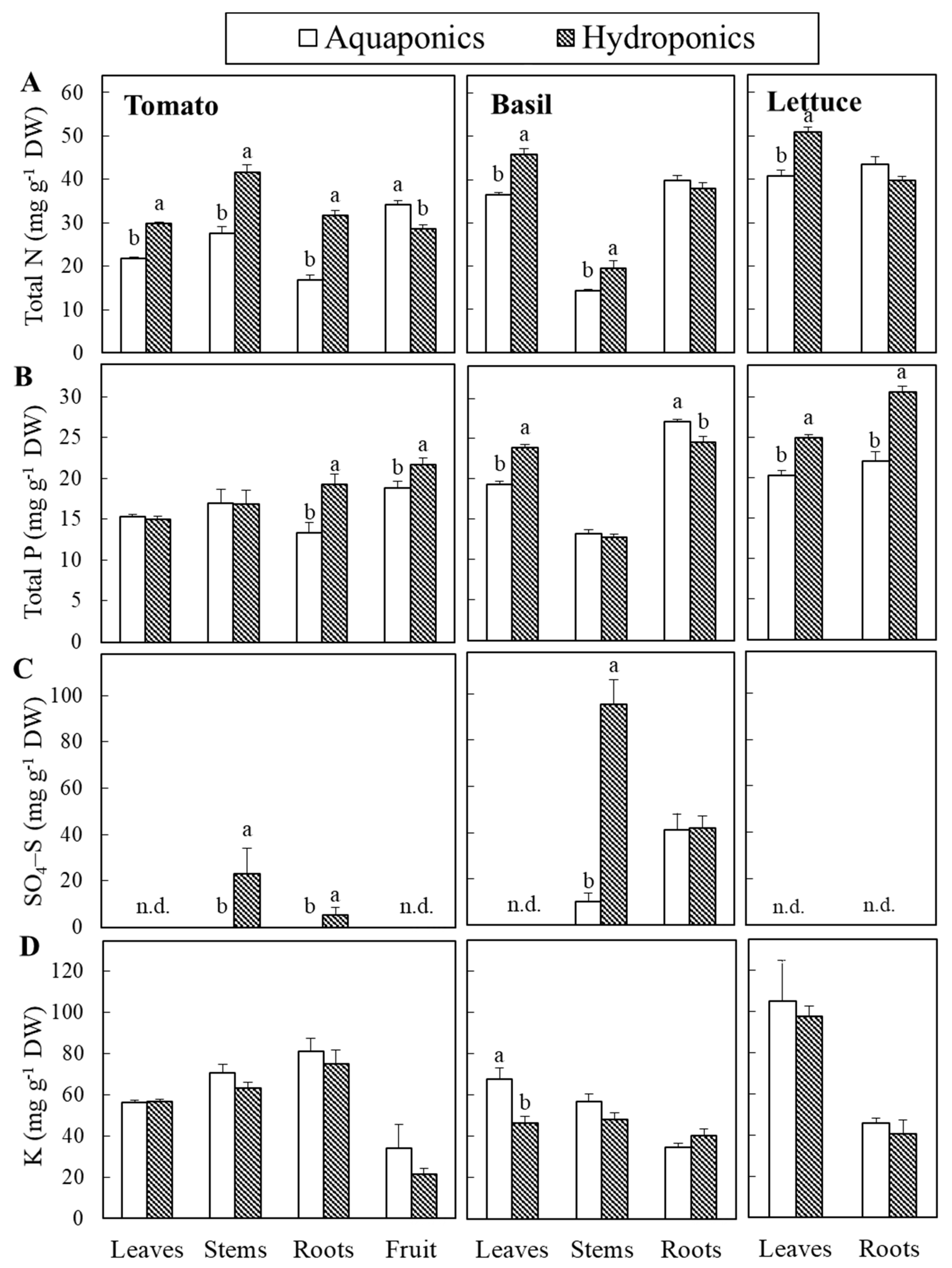
Aquaponic nutrient studies often use various types of water containing high levels of mineral nutrients for water supply, making it difficult to accurately determine deficient nutrients limiting crop yield and quality across the systems. To avoid interference with background nutrients, we used reverse osmosis water in this study. The objectives were to identify critical nutrients that affect the yield and quality of cherry tomato-, basil-, and lettuce by characterizing nutrient composition and concentration in aquaponic systems in comparison to hydroponic systems. Daily release rate (mg L−1) of macronutrients derived from fish feed (41% protein, 1.1% phosphorus, 1% fish weight) was in decreasing order of SO4–S (16) > PO4–P (2.4) > NO3–N (1.0) > K (0.8) > Cl (0.5) > NH4–N (0.4) > Ca (0.2) > NO2–N (0.13) > Na (0.11) > Mg (0.02), in which daily inputs of Mg and Ca in aquaponics were found to be only 1–2% and 4–6%, respectively, of those in hydroponics. Subsequently, the average concentrations of all nutrients were significantly lower in aquaponics than in hydroponics during a 3-month production except for Cl, NH4–N, NO2–N, and Na. The concentration of Mg remained below 5 mg L−1 in all aquaponic systems, while the concentration of Ca rapidly decreased in tomato-based aquaponics, especially during fruiting. SPAD value (chlorophyll content) was associated with concentrations of leaf N, Mg, and/or Ca. Specifically, lower SPAD value was correlated with lower leaf Mg and Ca for tomato and lower leaf Mg for basil but neither Mg nor Ca for lettuce. The aquaponic solution contained nearly six-times higher Na than the hydroponic solution, resulting in three-times higher Na concentration in the edible portion of the crops. Compared to a lettuce-based aquaponic system, tomato- and basil-based systems retained more desirable water quality parameters (i.e., stable pH, lower temperature), had lower electrical conductivity (EC) via greater biomass production and, therefore, more efficient nutrient removal, and had lower feed conversion rate and higher fish biomass increment. Regardless of crop species, vegetative shoot biomass was significantly reduced in aquaponics than in hydroponics. However, the marketable yield of tomatoes was similar between aquaponics and hydroponics, while those of basil and lettuce were reduced in aquaponics by 56% and 67%, respectively, in comparison to hydroponics. Our results highlighted potential solutions to design proper nutrient management practices essential for the development of successful aquaponic production systems. Considering that ingested fish feed does not provide sufficient levels of Mg and/or Ca for crop production, it is suggested to supplement Mg before crop transplanting and Ca before fruiting of fruity crops to improve crop growth and quality in aquaponic systems, especially when high-quality water is used for water supply.
Keywords: agricultural wastewater; nutrient deficiency; magnesium; calcium; nitrogen; phosphorus; leaf chlorosis agricultural wastewater; nutrient deficiency; magnesium; calcium; nitrogen; phosphorus; leaf chlorosis