Article

Treatment of Produced Water in the Permian Basin for Hydraulic Fracturing: Comparison of Different Coagulation Processes and Innovative Filter Media

Civil Engineering Department, New Mexico State University, Las Cruces, NM 88003, USA
*
Author to whom correspondence should be addressed.
Water 2020, 12(3), 770; https://doi.org/10.3390/w12030770
Submission received: 2 January 2020 / Revised: 6 March 2020 / Accepted: 9 March 2020 / Published: 11 March 2020

Abstract

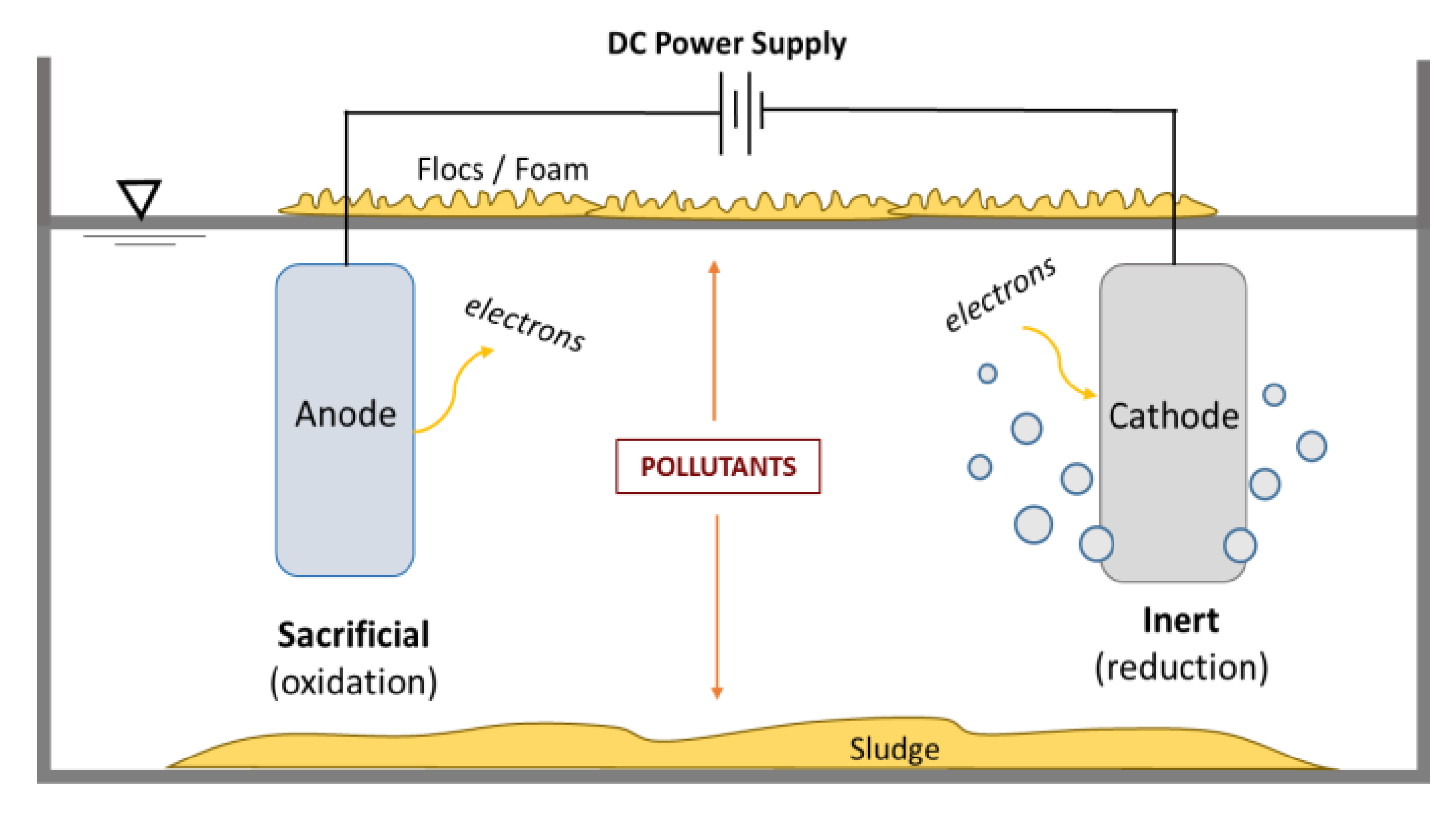
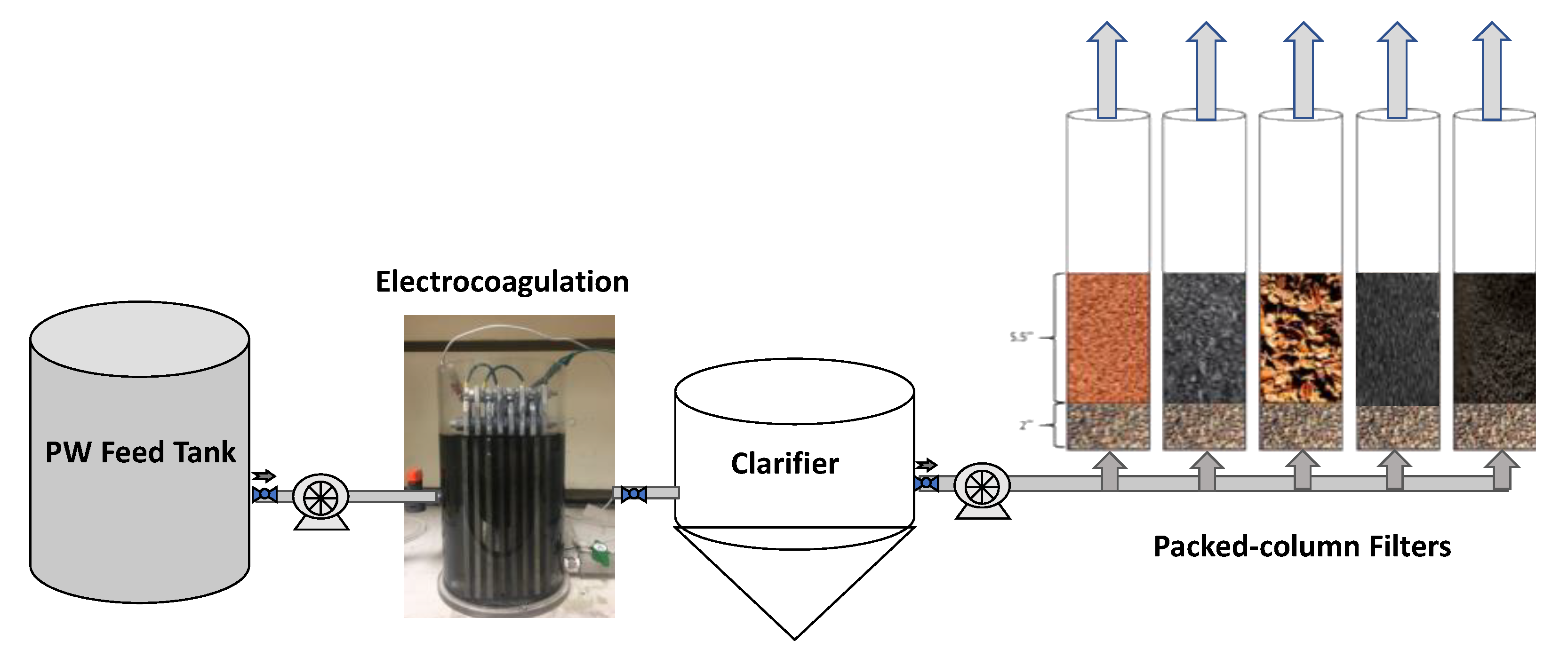
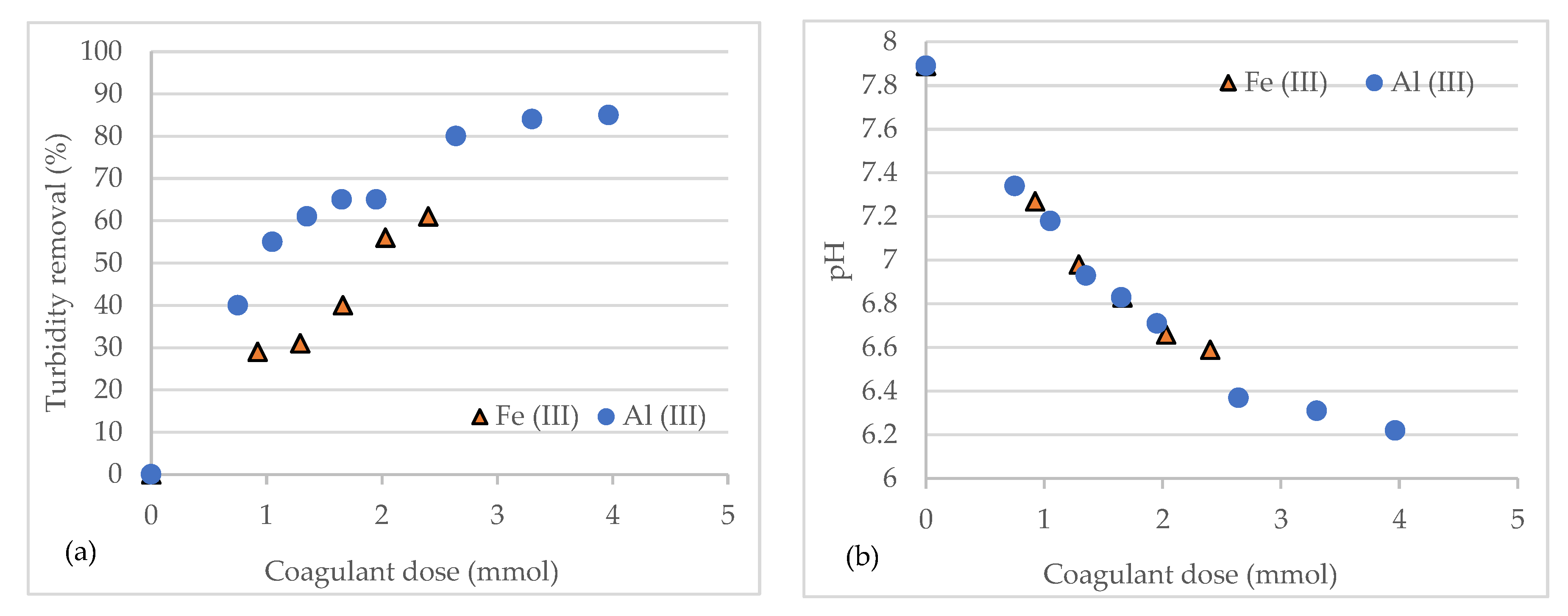
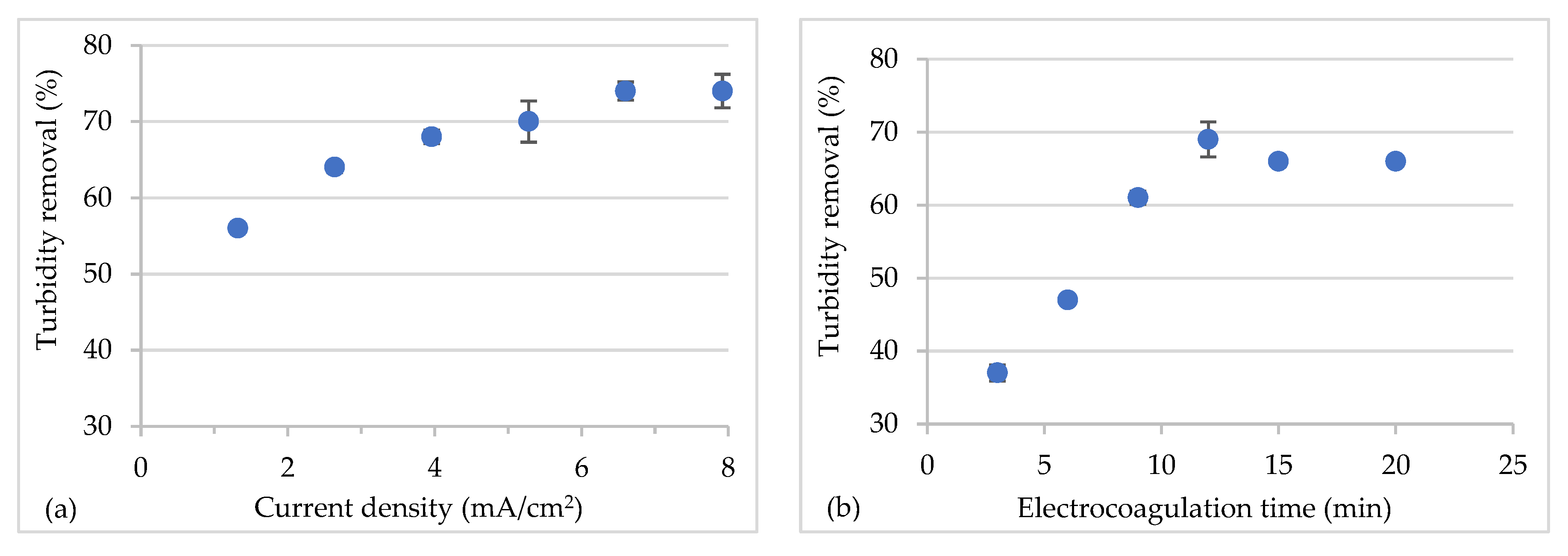
Produced water is the largest volume of waste product generated during oil and natural gas exploration and production. The traditional method to dispose of produced water involves deep well injection, but this option is becoming more challenging due to high operational cost, limited disposal capacity, and more stringent regulations. Meanwhile, large volumes of freshwater are used for hydraulic fracturing. The goal of this study is to develop cost-effective technologies, and optimize system design and operation to treat highly saline produced water (120–140 g/L total dissolved solids) for hydraulic fracturing. Produced water was collected from a salt water disposal facility in the Permian Basin, New Mexico. Chemical coagulation (CC) using ferric chloride and aluminum sulfate as coagulants was compared with electrocoagulation (EC) with aluminum electrodes for removal of suspended contaminants. The effects of coagulant dose, current density, and hydraulic retention time during EC on turbidity removal were investigated. Experimental results showed that aluminum sulfate was more efficient and cost-effective than ferric chloride for removing turbidity from produced water. The optimal aluminum dose was achieved at operating current density of 6.60 mA/cm2 and 12 min contact time during EC treatment, which resulted in 74% removal of suspended solids and 53–78% removal of total organic carbon (TOC). The energy requirement of EC was calculated 0.36 kWh/m3 of water treated. The total operating cost of EC was estimated $0.44/m3 of treated water, which is 1.7 or 1.2 times higher than CC using alum or ferric chloride as the coagulant, respectively. The EC operating cost was primarily associated with the consumption of aluminum electrode materials due to faradaic reactions and electrodes corrosions. EC has the advantage of shorter retention time, in situ production of coagulants, less sludge generation, and high mobility for onsite produced water treatment. The fine particles and other contaminants after coagulation were further treated in continuous-flow columns packed with different filter media, including agricultural waste products (pecan shell, walnut shell, and biochar), and new and spent granular activated carbon (GAC). Turbidity, TOC, metals, and electrical conductivity were monitored to evaluate the performance of the treatment system and the adsorption capacities of different media. Biochar and GAC showed the greatest removal of turbidity and TOC in produced water. These treatment technologies were demonstrated to be effective for the removal of suspended constituents and iron, and to produce a clean brine for onsite reuse, such as hydraulic fracturing.
Keywords: produced water; beneficial reuse; filtration; electrocoagulation; chemical coagulation; hydraulic fracturing produced water; beneficial reuse; filtration; electrocoagulation; chemical coagulation; hydraulic fracturing