Article

Response of Zooplankton Indices to Anthropogenic Pressure in the Catchment of Field Ponds


by
Natalia Kuczyńska-Kippen
Department of Water Protection, Faculty of Biology, Adam Mickiewicz University, Uniwersytetu Poznańskiego 6, 61-614 Poznań, Poland
Water 2020, 12(3), 758; https://doi.org/10.3390/w12030758
Submission received: 31 January 2020 / Revised: 4 March 2020 / Accepted: 6 March 2020 / Published: 10 March 2020
(This article belongs to the Special Issue Water Quality of Freshwater Ecosystems in a Temperate Climate)

Abstract

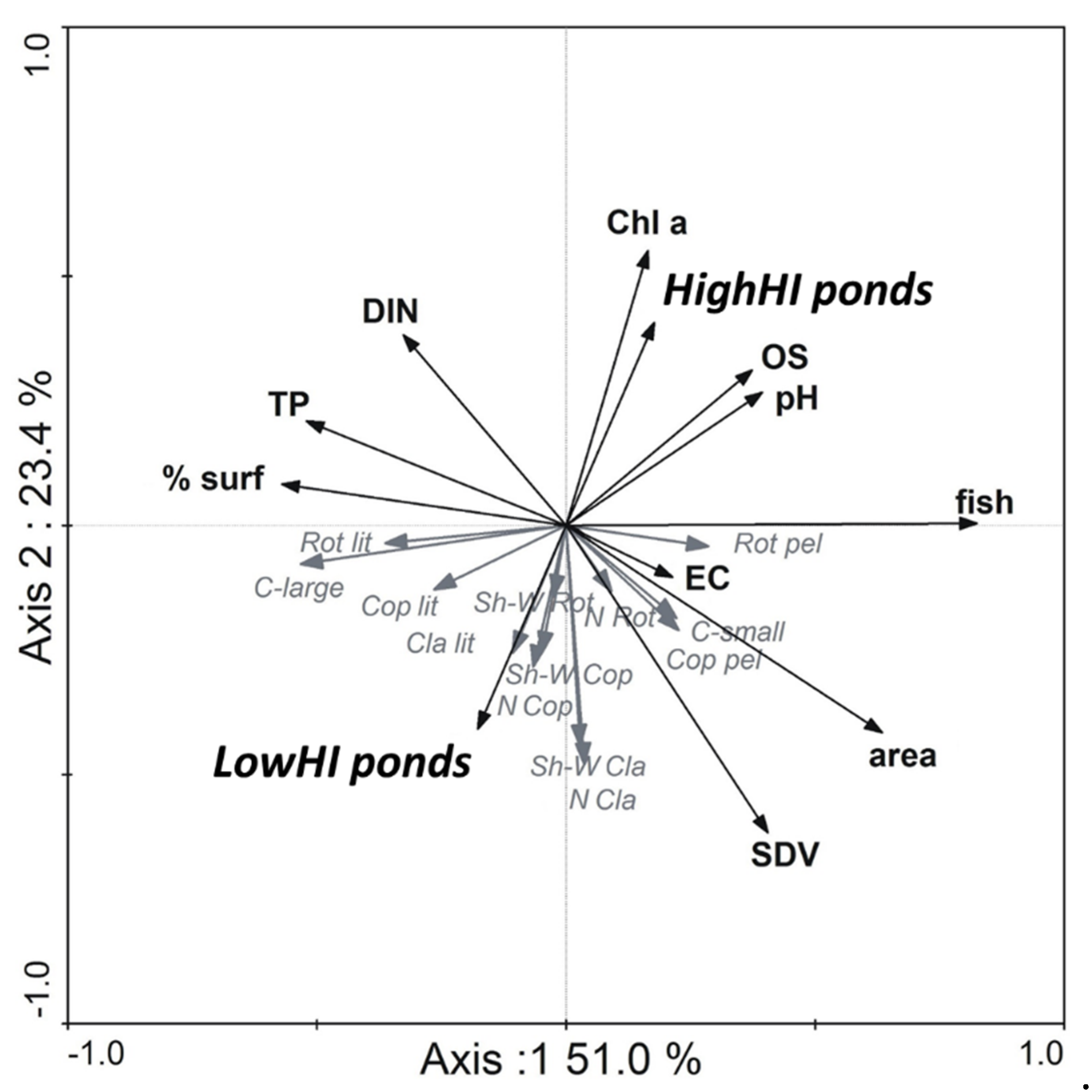
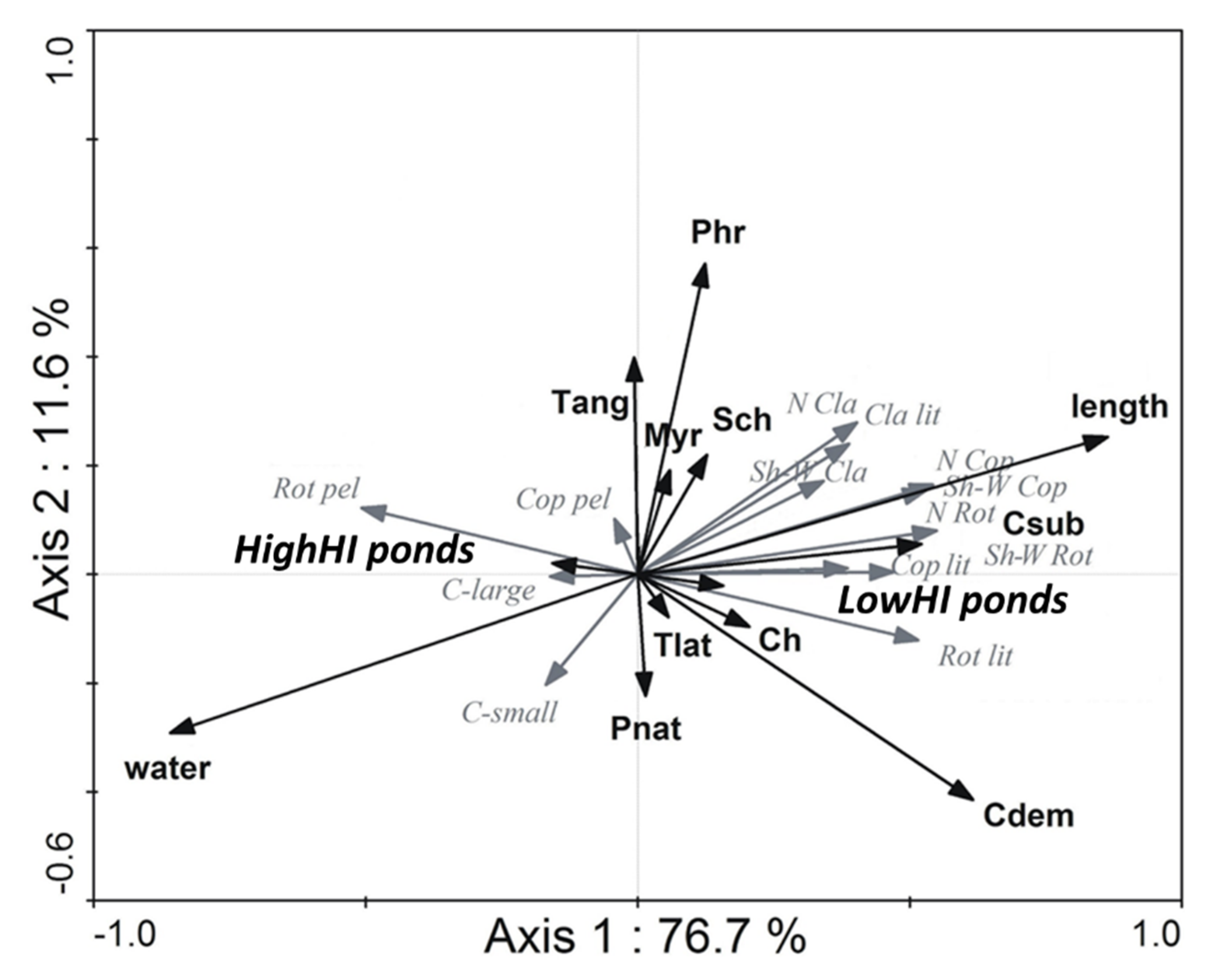
As methods for assessing the environmental conditions in ponds are still not well developed, I studied zooplankton to identify a response of community indices to abiotic, biotic, and habitat type in two types of ponds differing in the level of human stress. Ponds of low human alterations (LowHI) harbored generally richer communities and a higher share littoral zooplankton, whose occurrence was associated with higher water transparency and complex macrophyte habitat, particularly the presence of hornworts and charoids. In high human-impact ponds (HighHI) planktonic communities prevailed. Their distribution was mainly related to the open water area and fish presence. Anthropogenic disturbance was also reflected in the frequency of rare species, which were associated with LowHI ponds. Higher diversity of zooplankton increased the chance for rare species to occur. Despite the fact that the majority of rare species are littoral-associated, they had no prevalence towards a certain ecological type of plants, which suggests that any kind of plant cover, even macrophytes typical for eutrophic waters (e.g., Ceratophyllum demersum) will create a valuable habitat for conservation purposes. Thus, it is postulated that a complex and dense cover of submerged macrophytes ought to be maintained in order to improve the ecological value of small water bodies.
Keywords: rotifers; microcrustaceans; aquatic vegetation; small water bodies; human-induced impact; ecological assessment rotifers; microcrustaceans; aquatic vegetation; small water bodies; human-induced impact; ecological assessment