Article

Functional Groups of Phytoplankton and Their Relationship with Environmental Factors in the Restored Uzarzewskie Lake


by
Anna Kozak
*,
Agnieszka Budzyńska
,
Renata Dondajewska-Pielka
,
Katarzyna Kowalczewska-Madura
and
Ryszard Gołdyn
Adam Mickiewicz University, Faculty of Biology, Department of Water Protection, Uniwersytetu Poznańskiego 6, 61-614 Poznań, Poland
*
Author to whom correspondence should be addressed.
Water 2020, 12(2), 313; https://doi.org/10.3390/w12020313
Submission received: 2 December 2019 / Revised: 7 January 2020 / Accepted: 20 January 2020 / Published: 21 January 2020
(This article belongs to the Special Issue Water Quality of Freshwater Ecosystems in a Temperate Climate)

Abstract

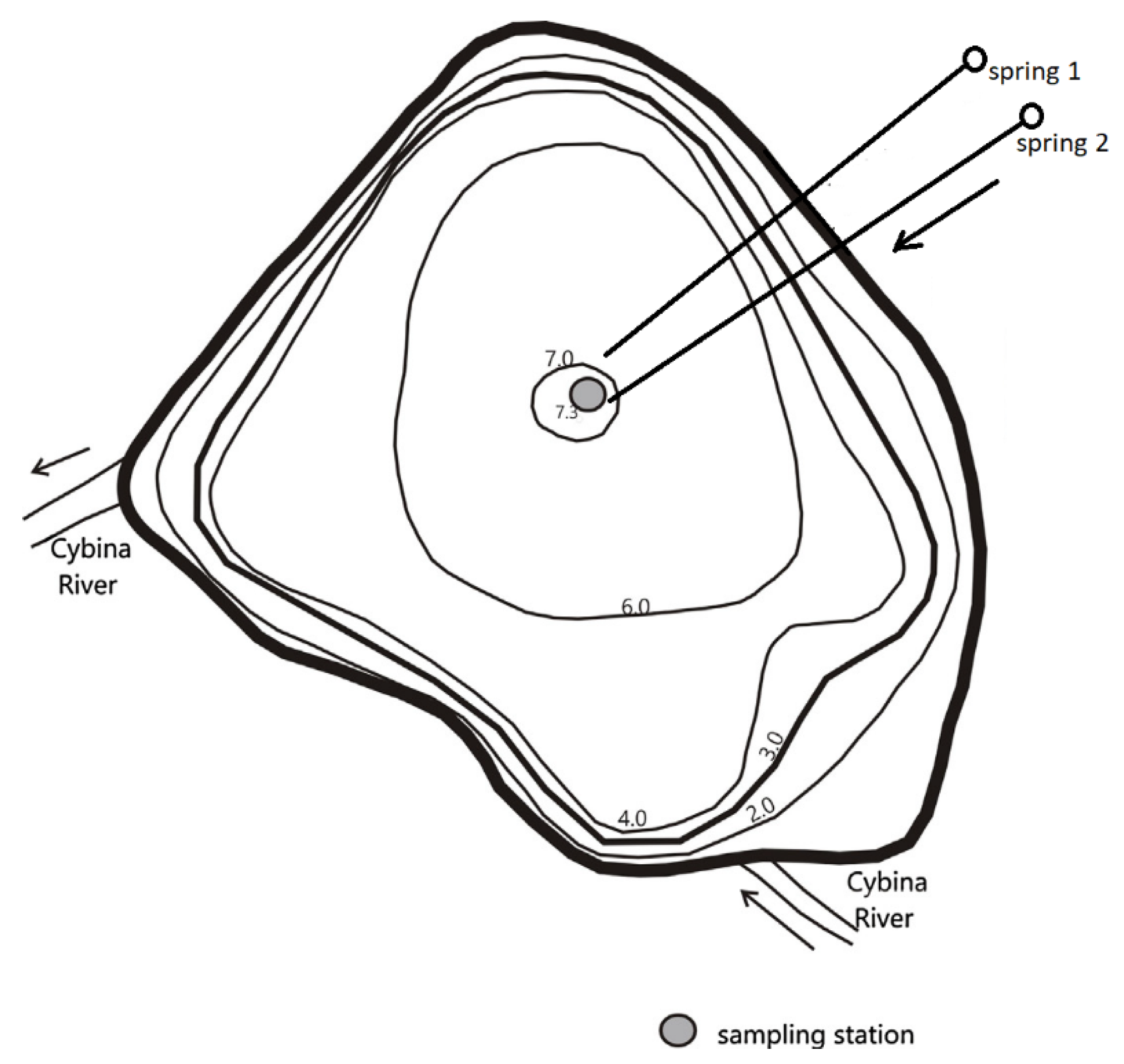
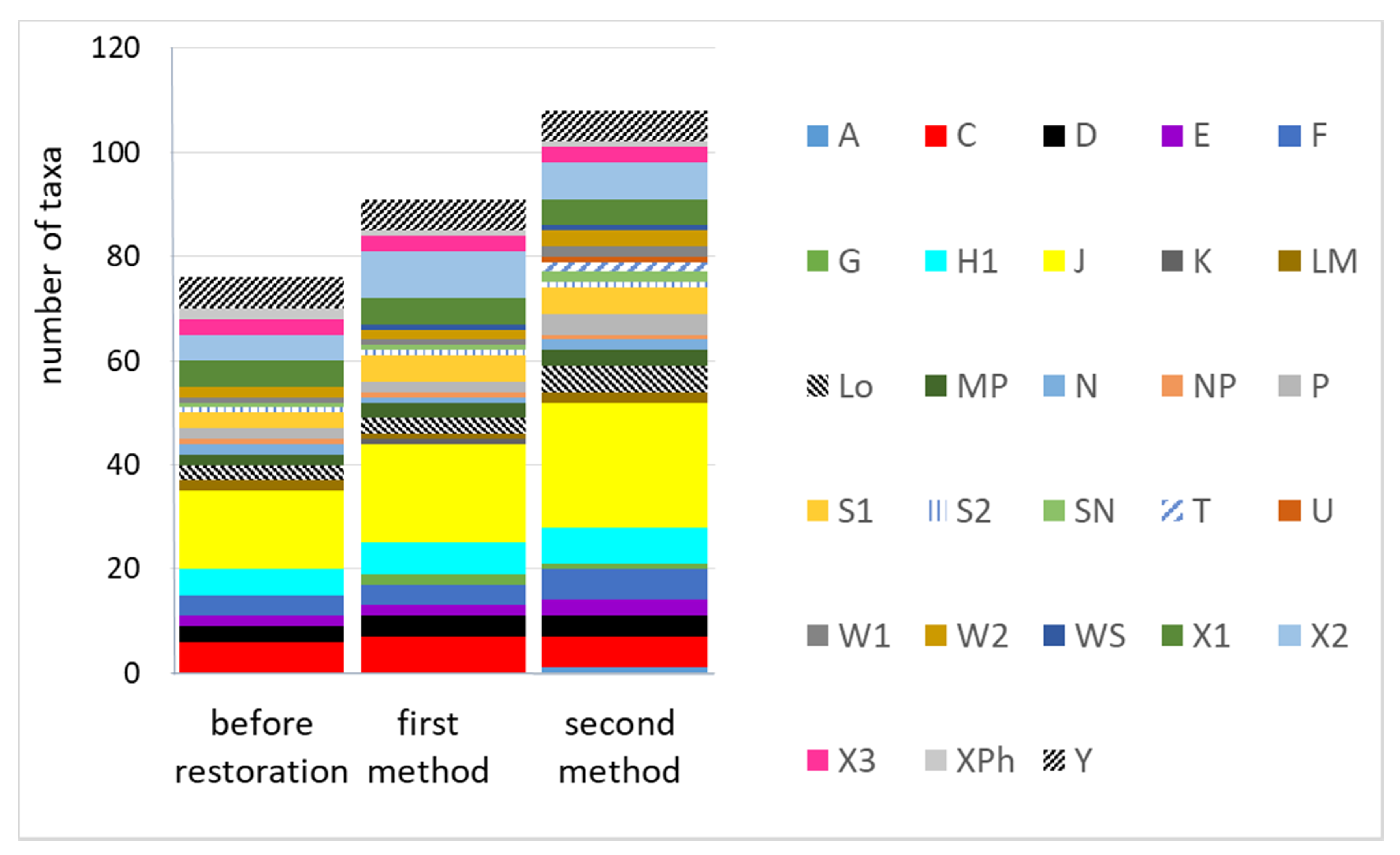
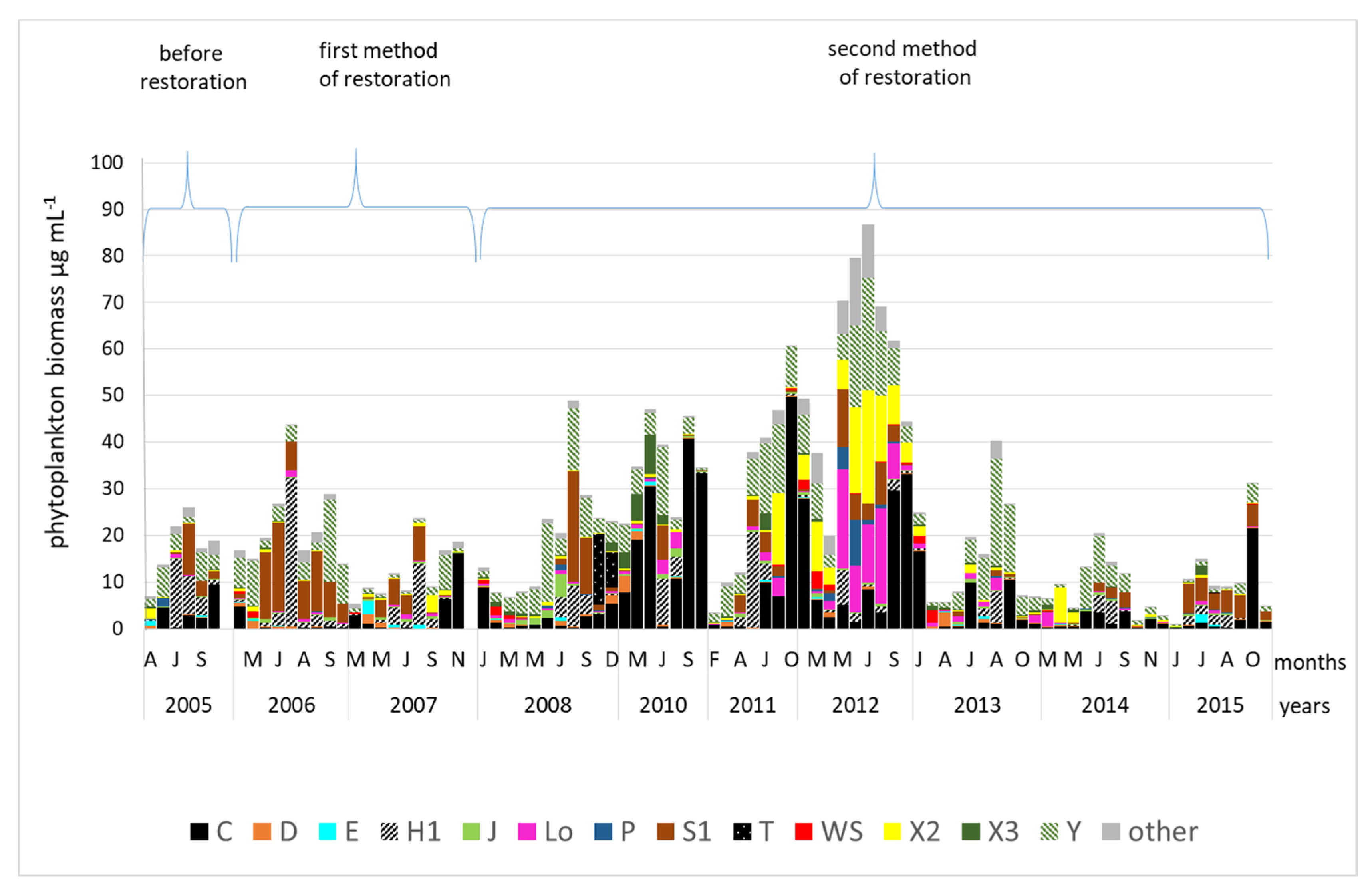
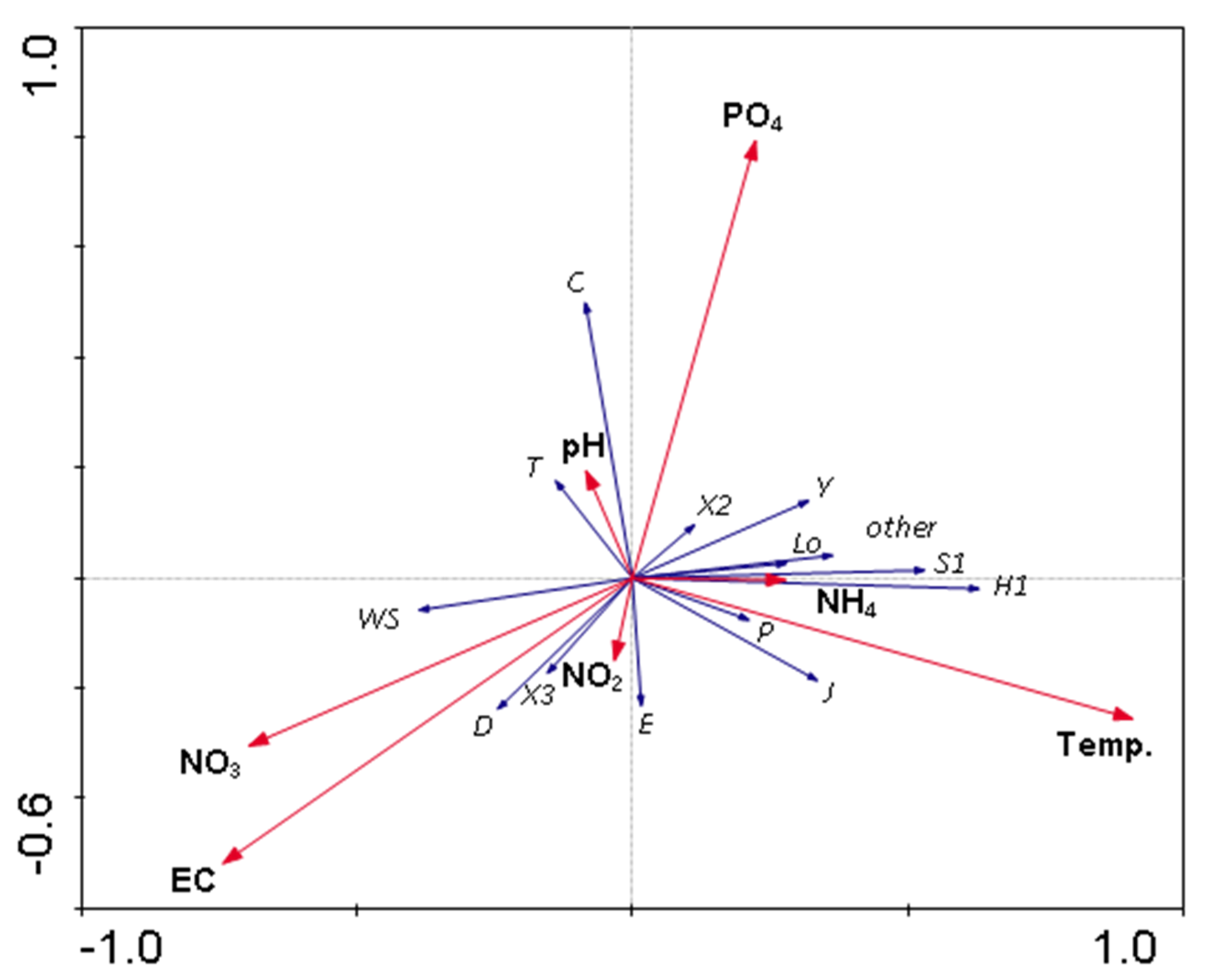
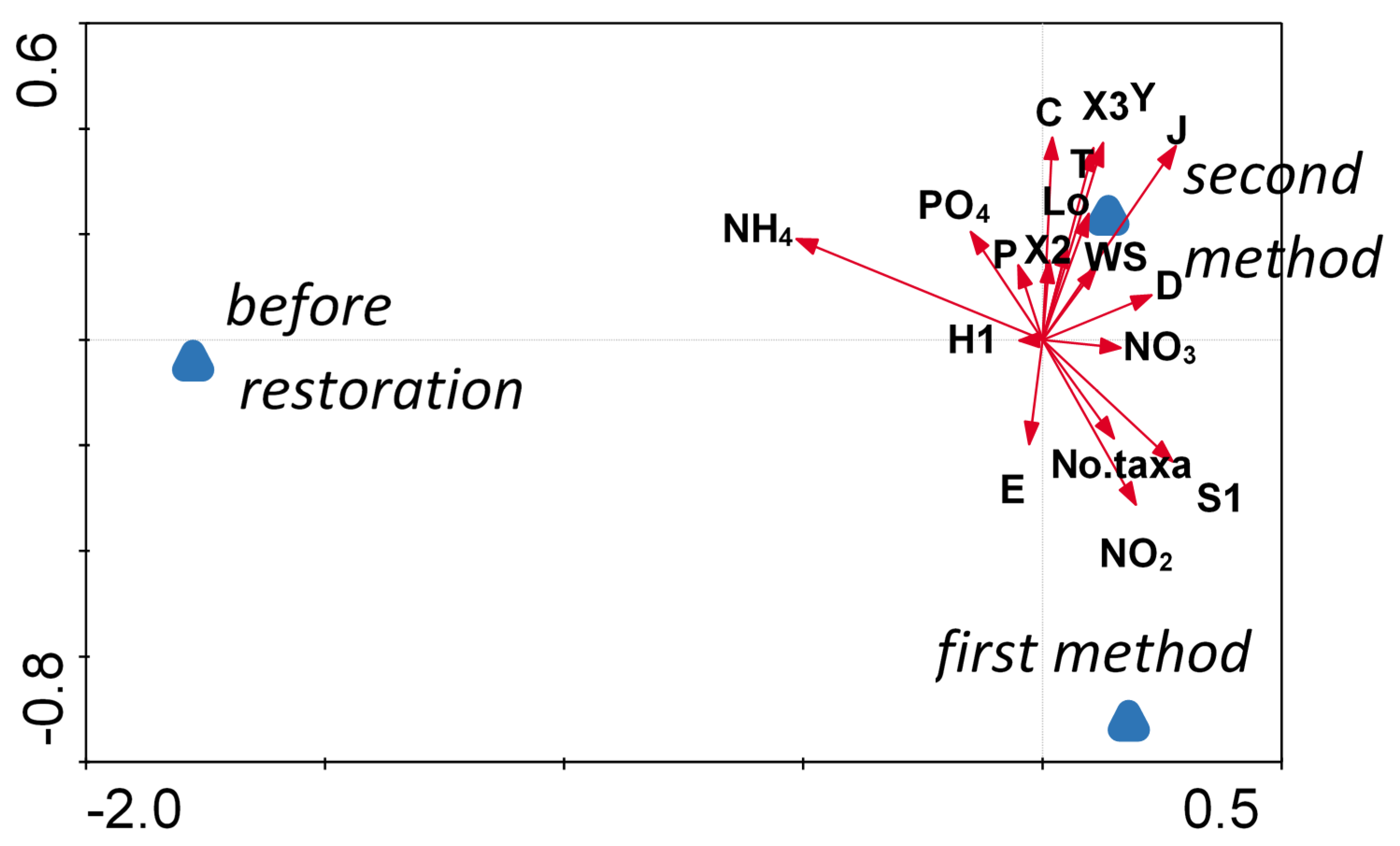
Uzarzewskie Lake is a small, postglacial lake, located in western Poland. The lake is under restoration treatment since 2006. At first, iron treatment was done for 2 years. In the second stage, spring water was directed into the hypolimnion in order to improve water oxygenation near the bottom sediments. The purpose of our research was to determine changes in the contribution of functional groups to the total number of taxa and total biomass of phytoplankton due to changes in the physical and chemical characteristics of the restored lake. Phytoplankton composition was analyzed in three periods: (1) before restoration; (2) during the first method of restoration; and (3) when the second method was implemented in the lake. Epilimnetic phytoplankton was sampled every year monthly from March to November. The relationship between phytoplankton groups and environmental factors (water temperature, ammonium nitrogen, nitrate nitrogen, dissolved phosphorus, conductivity and pH) was examined, using the canonical analyses. The redundancy analysis indicated that the temperature, dissolved phosphates concentration, ammonium nitrogen and pH were the main determining factors of the phytoplankton community dynamics. During the study, 13 coda dominated the phytoplankton biomass. Cyanobacteria of the codon H1 with such species as Aphanizomenon gracile, Dolichospermum planctonicum, D. viguieri dominated the phytoplankton community before restoration. S1 group consisting of Planktolyngbya limnetica, Limnothrix redekei and Planktothrix agardhii mostly dominated during the period in which the first method was used. Improvement of water quality due to restoration efforts in the third period caused dominance of other groups, especially J (Actinastrum hantzschii and other Chlorococcales), C (Asterionella formosa and other diatoms), Y (Cryptomonas marssonii and other cryptophytes), Lo (Peridiniopsis cunningtonii and other dinophytes) and X2 (Rhodomonas lacustris).
Keywords: functional groups of phytoplankton; innovative method of restoration; oxygenation near the bottom sediments; phytoplankton biomass; restoration treatment; small lake; sustainable restoration functional groups of phytoplankton; innovative method of restoration; oxygenation near the bottom sediments; phytoplankton biomass; restoration treatment; small lake; sustainable restoration