Article

Well Salinization Risk and Effects of Baltic Sea Level Rise on the Groundwater-Dependent Island of Öland, Sweden


1
Department of Physical Geography, Stockholm University, SE-106 91 Stockholm, Sweden
2
Natural Sciences, Technology and Environmental Studies, Södertörn University, SE-141 89 Huddinge, Sweden
3
The Bolin Centre for Climate Research, Stockholm University, SE-106 91 Stockholm, Sweden
*
Author to whom correspondence should be addressed.
Water 2018, 10(2), 141; https://doi.org/10.3390/w10020141
Submission received: 16 December 2017 / Revised: 22 January 2018 / Accepted: 25 January 2018 / Published: 1 February 2018
(This article belongs to the Special Issue Seawater Intrusion: Simulation and Control)

Abstract

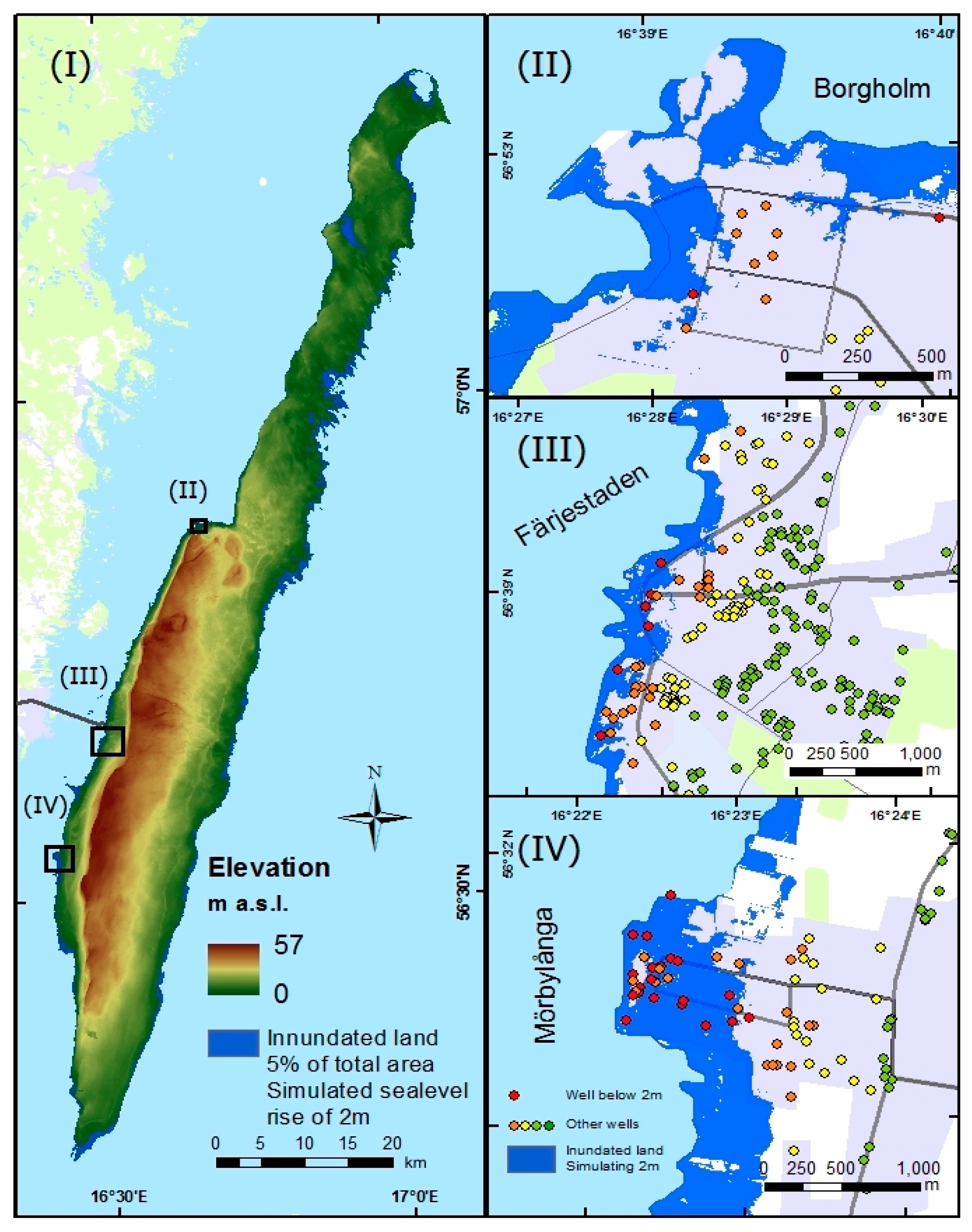
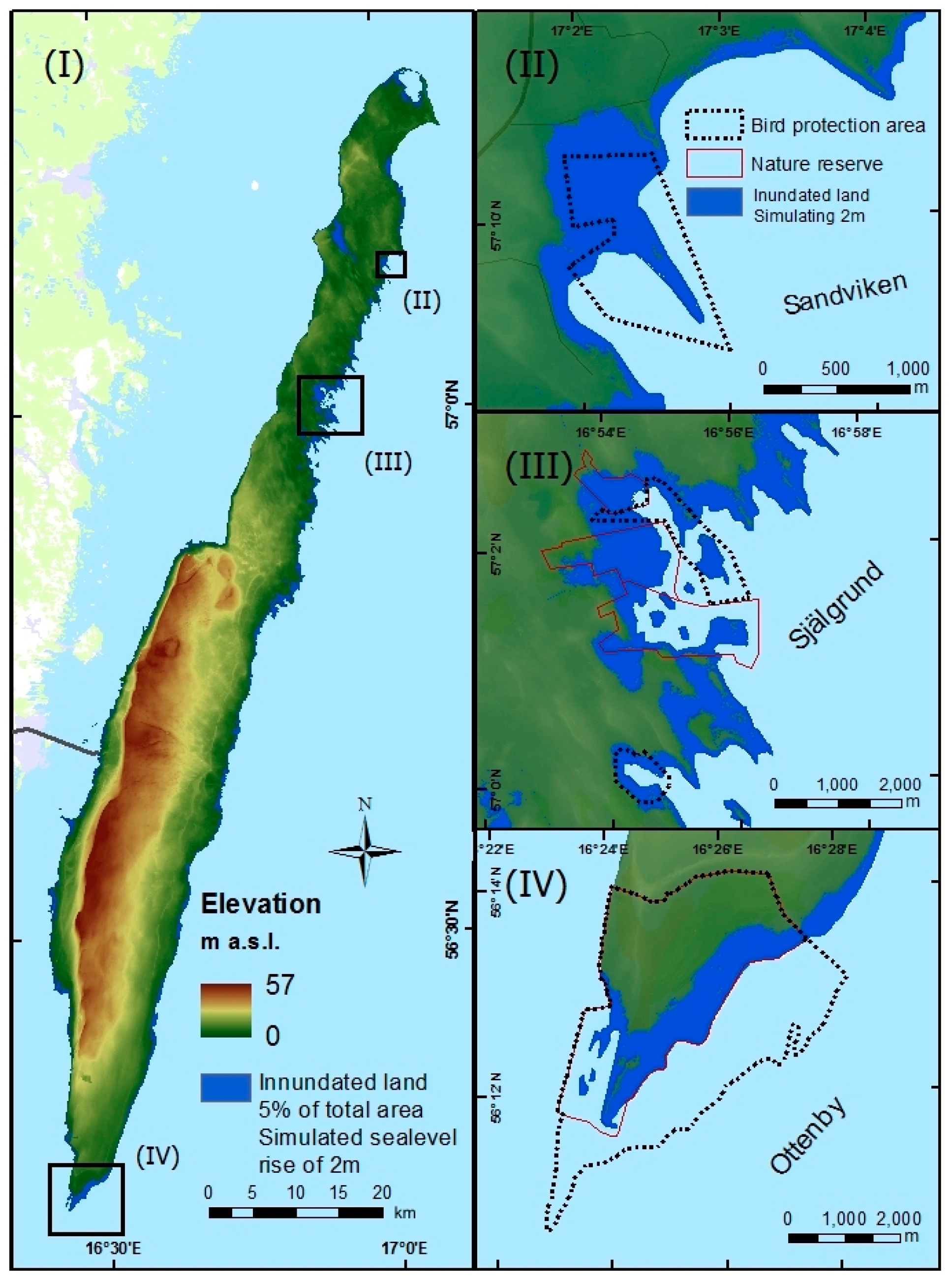
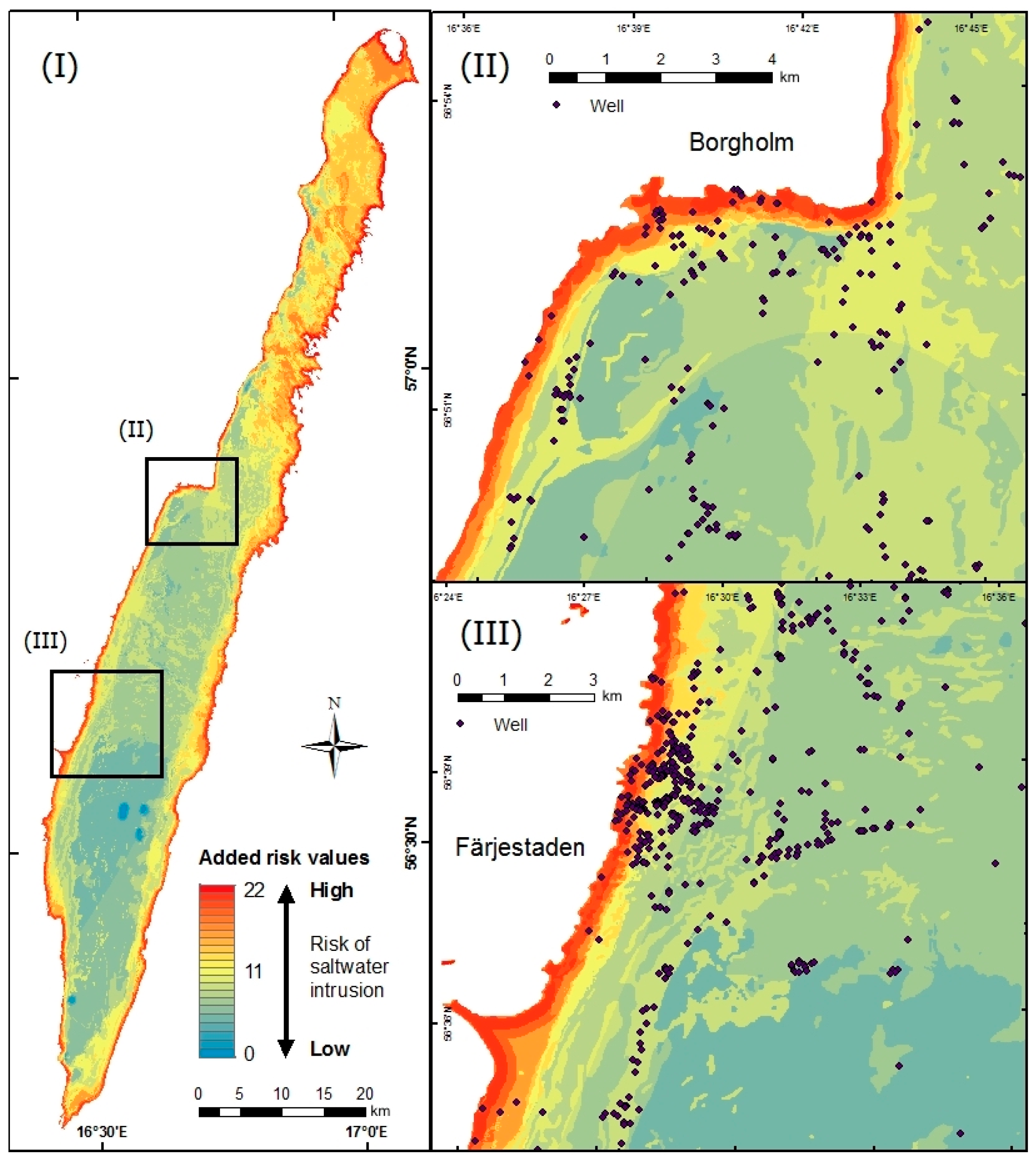
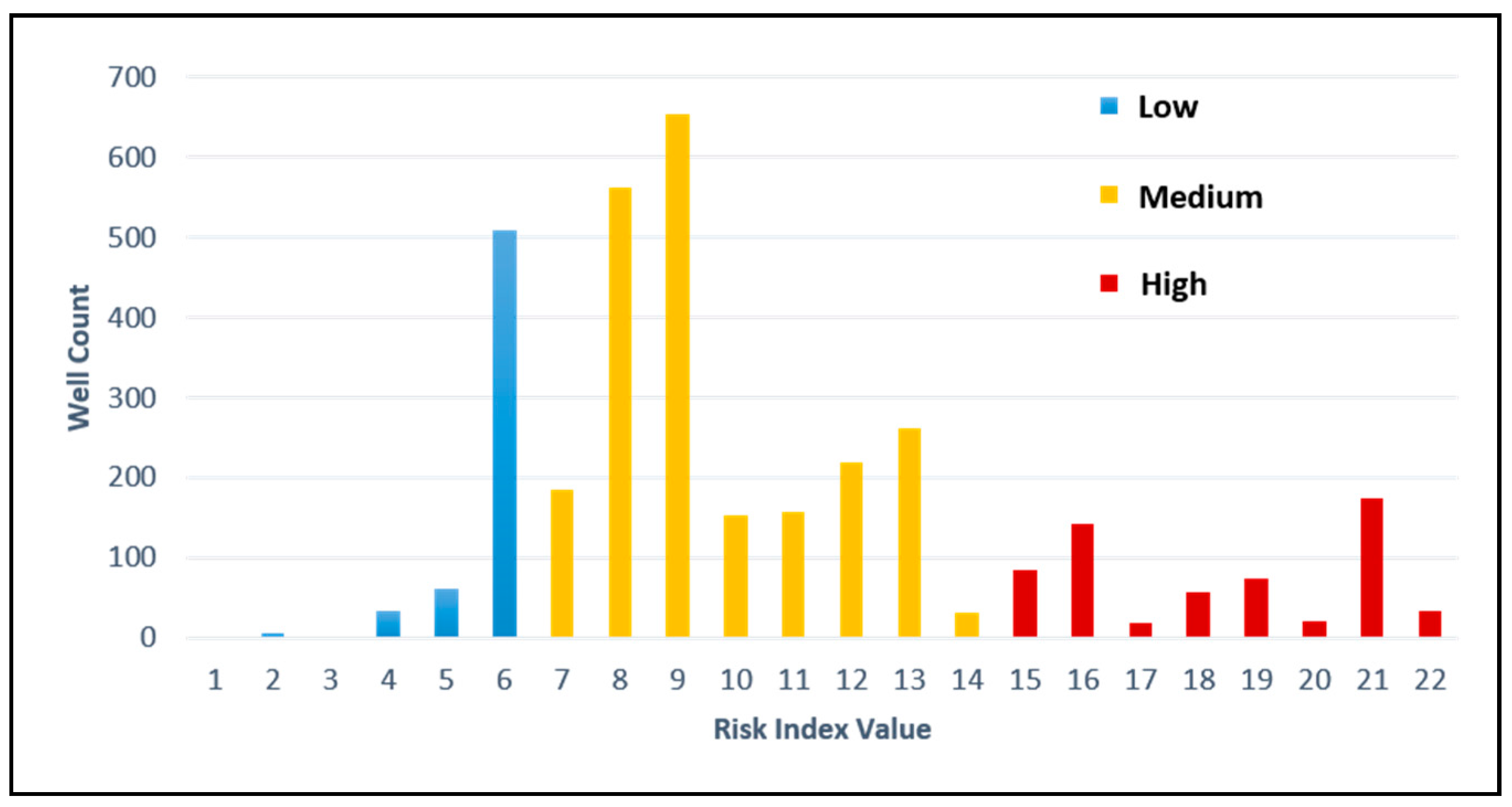
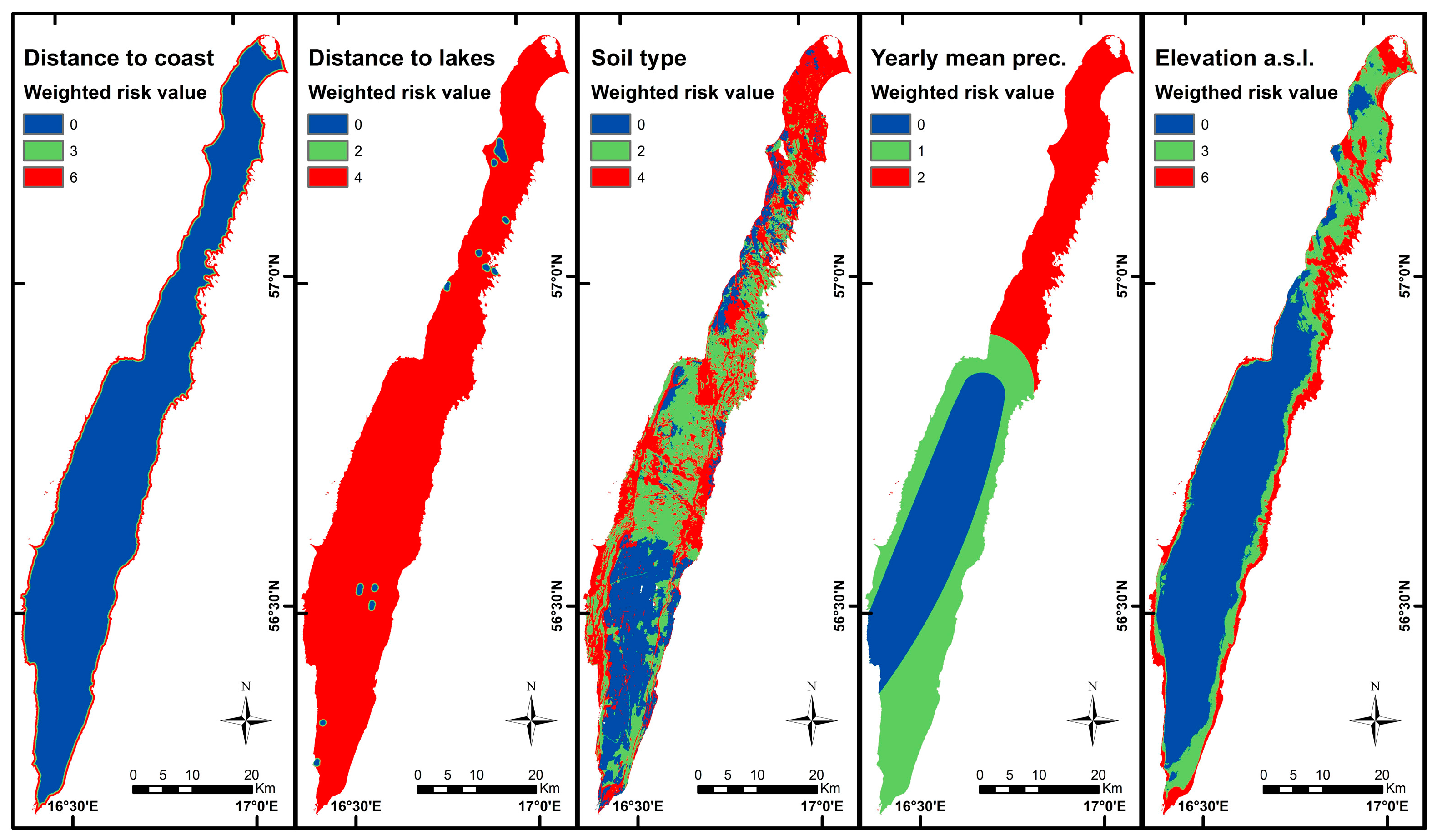
In this study, we estimate baseline conditions in terms of the current risk of well salinization on the Baltic Sea island of Öland, Sweden, and assess the effects of future sea level rise on the land area, infrastructure and cultural values. We use a multicriterion geographical information systems (GIS) approach. Geomorphological and physical parameters affect the risk of saltwater intrusion into freshwater aquifers, including their hydrology, geomorphology, and climatology; the spatial distribution of the current risk of salinization is mapped in this study. In the event of a future 2 m sea level rise, a total land area of 67 km2 will be inundated on Öland, corresponding to approximately 5% of the island’s land surface. Inundation includes urban areas, nature reserves, and animal protection areas, implying the loss of environmental and socioeconomic values. A future 2 m sea level rise will also cause direct inundation of 3% of all wells on the island. Currently, 17.5% of all wells are at a high risk of becoming saltwater contaminated. More generally, the present results add evidence showing a relatively high vulnerability of major Baltic Sea islands and their infrastructure to future sea level rise. The approach used here and related results, including salinization risk maps, may prove useful for decision-makers in the planning of infrastructure. Drilling of new wells could for instance preferably be done in areas with identified lower risk-index values, which would facilitate an overall higher freshwater withdrawal in the interest of the entire island.
Keywords: saltwater intrusion; well salinization; sea level rise; groundwater; risk assessment; GIS-analysis; Öland saltwater intrusion; well salinization; sea level rise; groundwater; risk assessment; GIS-analysis; Öland