
Article

An Inter-Comparison of the Holiday Climate Index (HCI) and the Tourism Climate Index (TCI) in Europe


1
Department of Geography and Environmental Management, University of Waterloo, Waterloo, ON N2L 3G1, Canada
2
Department of Community Sustainability, Michigan State University, East Lansing, MI 48824, USA
3
Environmental Systems Analysis Group, Wageningen University, 6708 Wageningen, The Netherlands
*
Author to whom correspondence should be addressed.
Atmosphere 2016, 7(6), 80; https://doi.org/10.3390/atmos7060080
Submission received: 13 April 2016 / Revised: 18 May 2016 / Accepted: 30 May 2016 / Published: 7 June 2016
(This article belongs to the Special Issue Tourism Climatology)

Abstract

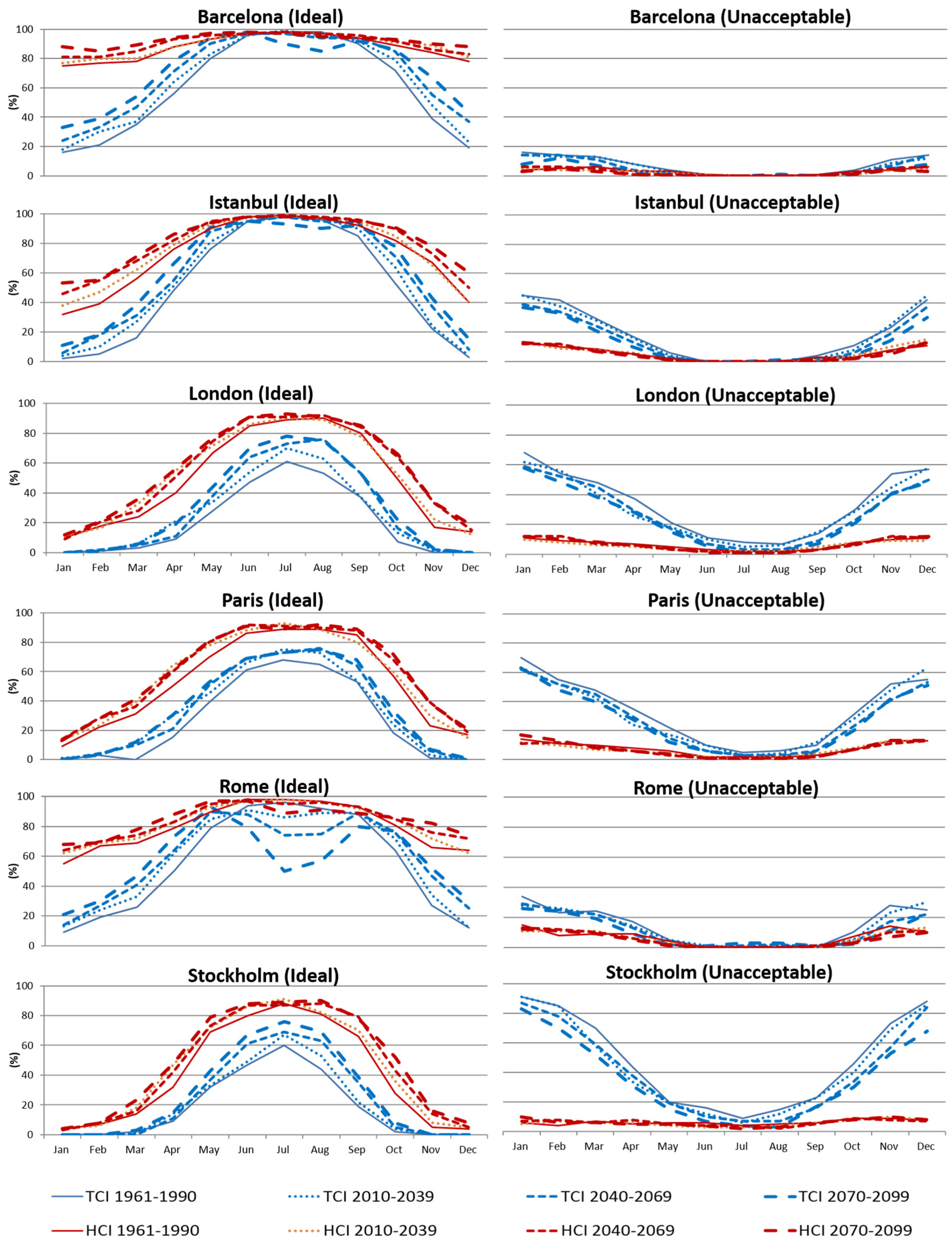
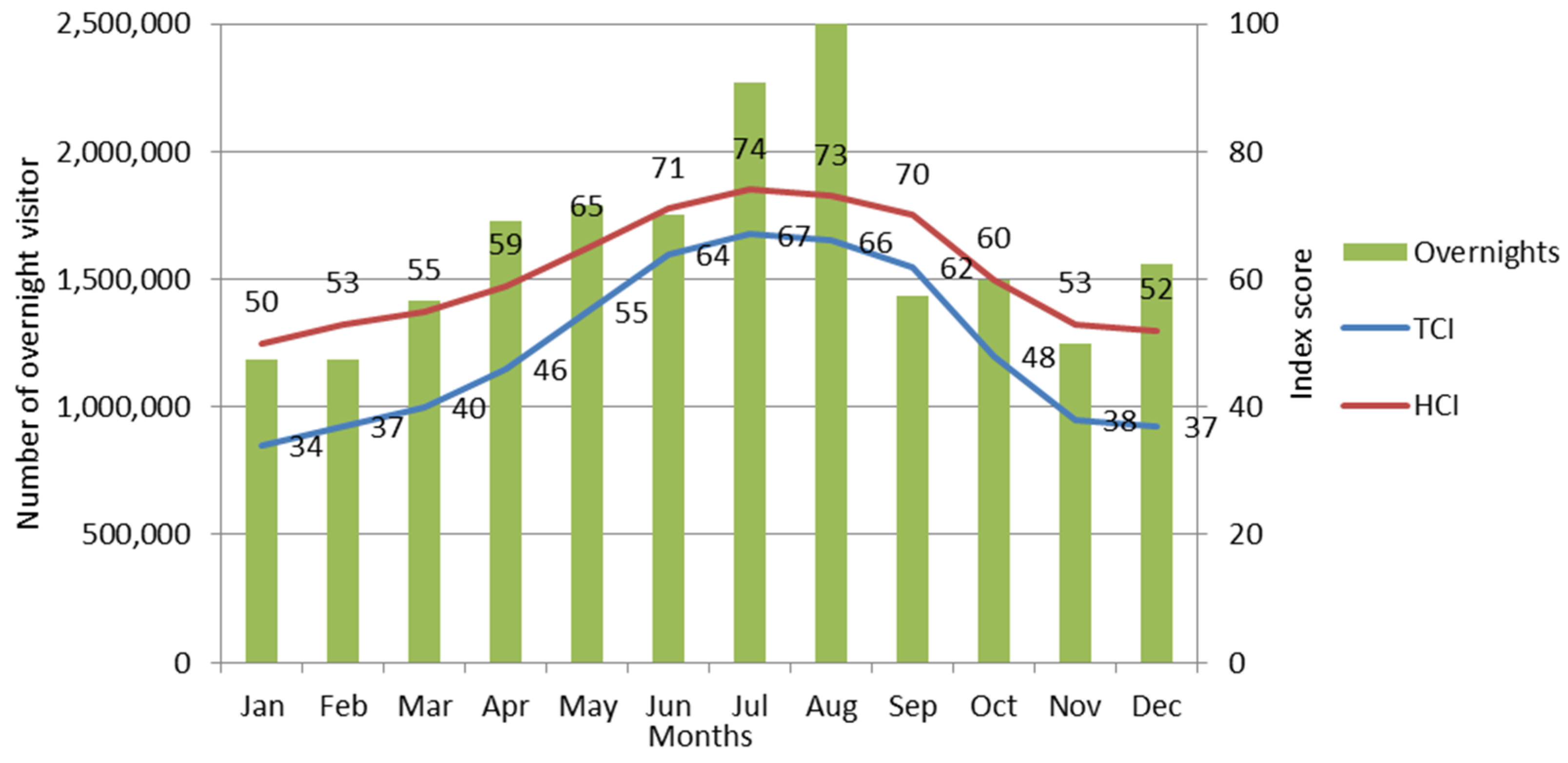
Much research has been devoted to quantifying optimal or unacceptable climate conditions both generally and for specific tourism segments or activities over the last 10 years. This knowledge is not incorporated in the Tourism Climate Index (TCI), which has also been subject to other substantial critiques. To more accurately assess the climatic suitability of destinations for leisure tourism, the Holiday Climate Index (HCI) was developed. A major advancement of the HCI is that its variable rating scales and the component weighting system are based on this aforementioned literature of tourists’ stated climatic preferences. This paper will discuss the design of the HCI and how the limitations of the TCI were overcome. It then presents an inter-comparison of the results from HCI:Urban and TCI for geographically diverse urban destinations across Europe. The results illustrate how the HCI:Urban rates the climate of many cities higher than the TCI, particularly in shoulder seasons and the winter months, which is more consistent with observed visitation patterns. The results empirically demonstrate that use of the TCI should be discontinued.
Keywords: Tourism Climate Index (TCI); Holiday Climate Index (HCI); urban tourism; Europe; climate; climate index; tourism; climate change Tourism Climate Index (TCI); Holiday Climate Index (HCI); urban tourism; Europe; climate; climate index; tourism; climate change