Review

Climate Change Impacts on Human Health in the Northern Hemisphere: A Narrative Review

1
Department of Environmental and Occupational Medicine, Faculty of Public Health, Lithuanian University of Health Sciences, LT-47181 Kaunas, Lithuania
2
Health Research Institute, Faculty of Public Health, Lithuanian University of Health Sciences, LT-47181 Kaunas, Lithuania
3
Kaunas City Municipality Public Health Bureau, Vaidoto g. 115, LT-45390 Kaunas, Lithuania
4
Geosystems Hellas S.A., 11632 Athens, Greece
5
Department of Civil Engineering and Architecture, School of Engineering, Tallinn University of Technology, 19086 Tallinn, Estonia
*
Author to whom correspondence should be addressed.
Atmosphere 2026, 17(8), 736; https://doi.org/10.3390/atmos17080736
Submission received: 8 June 2026 / Revised: 16 July 2026 / Accepted: 25 July 2026 / Published: 29 July 2026

Abstract

Climate change is progressing most rapidly in the high-latitude regions of the Northern Hemisphere, where boreal and Arctic ecosystems are experiencing significant environmental changes and transformations. These ecosystems are being altered by rising temperatures, changing precipitation patterns characterized by more intense rainfall events, decreasing snow and ice cover, and increasing floods, heat waves and fires. These changes pose significant risks to ecosystems, human health, and animal health, especially in the boreal zone. A narrative literature review was conducted across major scientific databases, including Scopus, Web of Science, PubMed, and Google Scholar, covering publications up to 2026. The evidence was combined thematically across key climate hazards and health domains, including infectious and non-communicable diseases, and mental health outcomes. The review shows that accelerating warming in northern regions is changing species distribution, increasing the risk of zoonoses and vector-borne diseases, and increasing cardiovascular, respiratory, and mental health issues. Extreme heat and cold events are important drivers of morbidity and mortality, while floods and wildfires contribute to long-term psychological distress. Vulnerable populations, including elderly adults and socioeconomically disadvantaged groups, are mostly affected. This review identifies key knowledge gaps that could be filled by developing evidence-based public health adaptation plans in high-latitude regions.

1. Introduction

The boreal region, encompassing vast stretches of forested land across the Northern Hemisphere, is experiencing significant climatic shifts due to global warming. These changes profoundly impact both animal and human health, altering disease dynamics, habitat stability, and ecosystem balance [1,2].
The Arctic is warming at a faster rate than the global average. Notably, this accelerated warming is most pronounced in boreal fall and winter, when the sea-ice albedo feedback is not active due to a lack of sunshine, which has led numerous studies to emphasize the role of longwave feedback processes [3]. Studies indicate that from 1900 to 2020, the annual average air temperature in the North rose by ~2 °C, with the permafrost’s upper layer warming by 3 °C [1,2,3,4]. This warming trend leads to permafrost thawing, increased precipitation, and a shift in vegetation zones, collectively transforming the region’s ecological landscape [1].
The ramifications of climate change extend far beyond mere temperature increases, significantly impacting animal health, particularly in the boreal region. As temperatures rise and precipitation patterns shift, wildlife and livestock alike face heightened stressors, including altered disease dynamics and habitat changes. Research indicates that warmer climates contribute to the proliferation of pathogens and parasites, threatening the already vulnerable populations of various species. These biological threats not only exacerbate the health risks for animals but can also disrupt ecosystems, leading to a cascade of negative effects on food chains. Furthermore, agricultural practices in high-latitude areas must adapt to these changes to mitigate risks associated with animal health, as noted in the strategic research reports from the Agricultural and Forestry Experiment Station, which emphasize the necessity of understanding these environmental interactions [5,6].
The effects of climate change on human health are particularly pronounced in the boreal region, where environmental shifts have direct implications for populations [7]. As temperatures rise, the increasing frequency of extreme weather events, such as wildfires and floods, not only poses immediate physical dangers but also has long-term impacts on mental health due to displacement and trauma [7]. Additionally, changes in biodiversity linked to climate disturbances can lead to the emergence of vector-borne diseases, further threatening public health. The boreal forests, which play a critical role in preserving biodiversity and mitigating the impacts of climate change, offer essential resources for local populations, highlighting a complex interplay between environmental degradation and human well-being [6]. Research conducted within the region underscores the importance of understanding these dynamics to formulate effective policies aimed at protecting health in the face of ongoing environmental changes [5].
The aim of this review is to conduct a narrative review of existing scientific literature and a gap analysis on existing surveillance, modelling and forecasting tools, complemented by expert knowledge, to elucidate how climate change affects human and animal health in the Northern Hemisphere. The review will specifically delineate key climate-related stressors in boreal and Arctic regions, examine their interconnected impacts on ecosystems, animal health, and human health, and identify geographic variability in these effects.
The main novelty of this review is its assessment of climate change impacts in boreal and high-latitude regions, considered a distinct geographical and ecological entity. To support the interpretation of interactions between ecosystems, animal health, and human health, the findings were discussed within the conceptual perspective of the One Health framework. While previous reviews have commonly examined individual diseases, specific climate hazards, or global perspectives, relatively few have addressed the boreal and high-latitude regions as a distinct geographical and ecological entity. Furthermore, this review combines a qualitative gap analysis with an assessment of existing climate surveillance, modelling, and forecasting tools, thereby identifying priorities for future research, evidence-based adaptation strategies, and climate-informed public health decision-making.
The findings will highlight critical knowledge gaps and demonstrate the newly developed AURORA (Demonstrating transformative solutions to empower climate resilience towards improved public health status in the EU boreal region) system for forecasting and early warning potential to advance integrated climate–health impact assessment and support evidence-based policy development in high-latitude regions.

2. Materials and Methods

This narrative review was designed to examine the available evidence on climate-related stressors and their impacts on environmental, animal, and human health, with a primary focus on the European boreal region and other high-latitude areas, while also incorporating evidence from additional geographical contexts where relevant. This study was conducted as a narrative review informed by a broad literature search. The interactions between climate systems, ecosystems, animal health, and human health were interpreted using the One Health framework as a conceptual perspective. The objective was not to systematically evaluate or quantitatively synthesize evidence, but rather to provide an interdisciplinary overview of current knowledge regarding climate-related stressors and their impacts on environmental, animal, and human health in the Northern Hemisphere. The review focused on identifying major themes, evidence gaps, and emerging challenges related to climate change impacts on environmental, animal, and human health. This framework enabled an integrated assessment of climate-related risks, including extreme weather events, long-term climatic trends, and environmental degradation, and their implications for infectious diseases, non-communicable diseases (NCDs), mental health outcomes, and health system resilience. Additionally, this paper identifies, categorizes, and evaluates a range of tools relevant to climate analysis and decision-making.
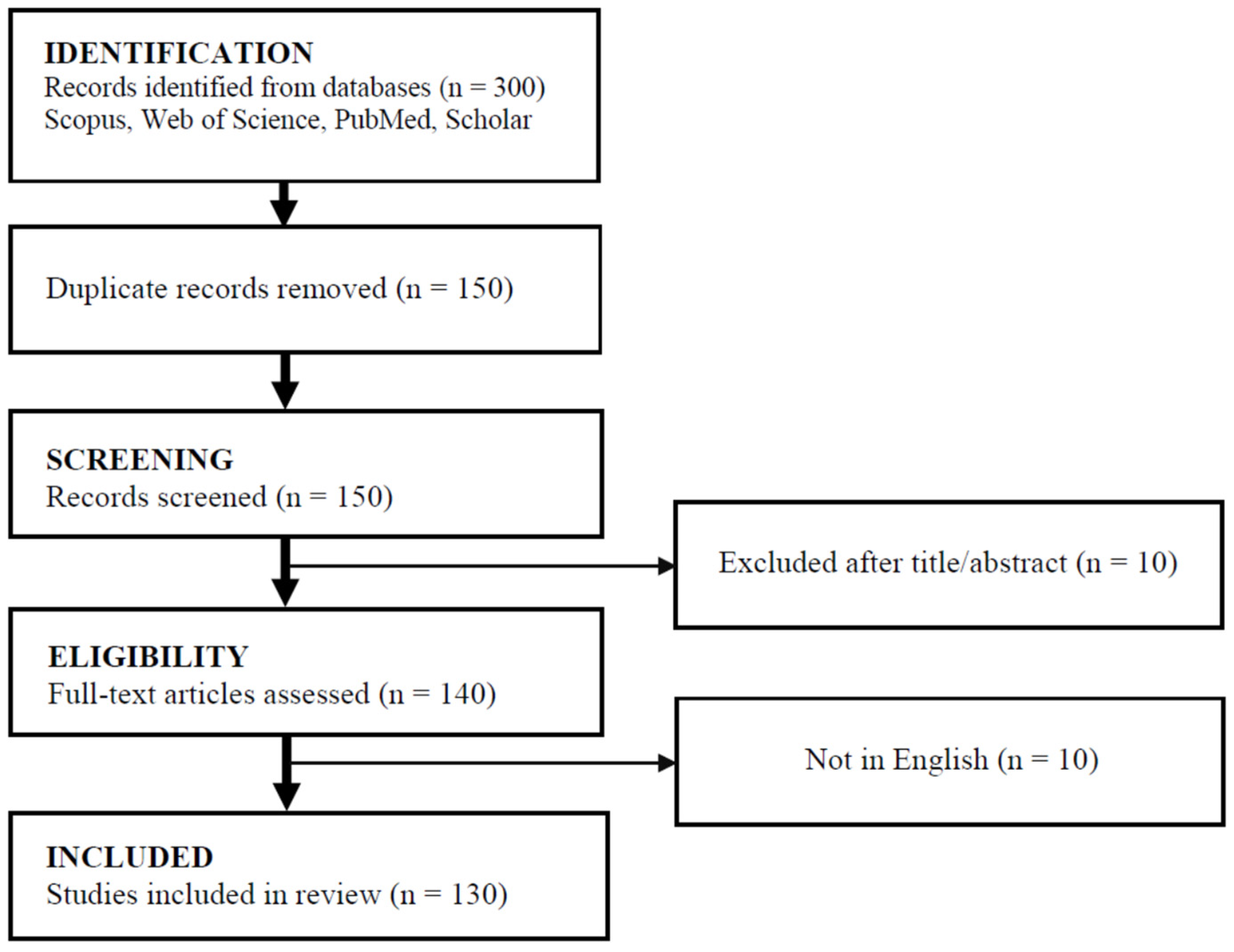
Relevant literature was identified through searches in four major scientific databases: Scopus, Web of Science, PubMed, and Google Scholar. To improve transparency, the literature identification and study selection process is summarized in Figure 1. However, the study was conducted as a narrative review and did not include formal systematic review procedures such as risk-of-bias assessment, evidence grading, quantitative synthesis, or meta-analysis. The screening and selection process is shown in Figure 1. The search covered all available publication years up to 2026 and was restricted to English-language sources. Given the narrative nature of the review, a broad range of evidence sources was considered, including review articles, original research, reports, and policy-relevant “grey literature”. Grey literature was included selectively to complement peer-reviewed scientific publications with up-to-date information from authoritative international organizations and government agencies (e.g., WHO, FAO, WOAH, IPCC, EEA). Such sources were included only when they were directly relevant to the review objectives, publicly accessible, and produced by recognized institutions using transparent scientific or technical methodologies.
Combinations of keywords related to the following topics were used to construct search strings (Table 1):
Climate change and climate-related stressors (e.g., climate change, global warming, extreme weather, heat waves, floods, droughts, wildfires);
Geographical scope, with a primary focus on the boreal region (including Northern and Baltic countries), complemented by studies from other regions to contextualize the findings;
Health outcomes and systems, including human health, animal health, infectious diseases, non-communicable diseases, mental health, public health systems;
Integrated perspectives, such as ecosystem health, biodiversity.
The gap analysis was based on a targeted review of widely recognized and frequently used climate-related platforms at the European level and in cities in the northern region of the EU. The selected tools were grouped into three categories—monitoring, modelling, and forecasting—to examine how these types of tools are currently used and to what extent various climate stressors are reflected in them. The gap analysis was intended to provide a qualitative synthesis of the key challenges and opportunities identified in the reviewed literature rather than a systematic evaluation of all available climate-related tools. Consequently, the identified gaps should be interpreted as indicative rather than exhaustive.
The findings were synthesized narratively with thematic grouping across climate hazards (e.g., temperature extremes, flooding, and wildfires), health domains (e.g., infectious diseases, non-communicable diseases, and mental health), and system-level responses. This approach helped identify knowledge gaps and methodological limitations, which informed the subsequent analysis of existing surveillance, modelling, and forecasting tools.
Following study selection, the included evidence was analyzed using an iterative thematic narrative synthesis approach. First, studies were grouped according to the primary climate-related stressor addressed (e.g., heat waves, flooding, wildfires, changing precipitation patterns, snow and ice cover changes, and biodiversity shifts). Second, findings were organized according to the main health domains affected, including infectious diseases, non-communicable diseases, mental health outcomes, and impacts on animal health and ecosystems. Finally, cross-cutting themes relevant to the One Health framework, such as zoonotic transmission pathways, ecosystem-mediated risks, vulnerable populations, and health system resilience, were identified and integrated across sections of the review. This approach enabled the identification of recurring patterns, knowledge gaps, and emerging research priorities while preserving the interdisciplinary and exploratory nature of the review.
The narrative synthesis approach was considered particularly appropriate because of the substantial heterogeneity of study designs, outcome measures, geographical contexts, and climate stressors identified in the literature, which precluded meaningful quantitative synthesis or formal meta-analysis.
The assessment of existing tools was conducted by examining each tool in relation to the climate stressors identified in the literature review, allowing for a clearer understanding of how current technologies contribute to the monitoring, analysis, and prediction of climate-related impacts. The assessment focused on the extent to which these tools address major climate challenges and identified the sectors in which they provide the greatest results. At the same time, areas where further development and technological maturity are required were highlighted. The characterization of climate stressors as more or less represented was based on qualitative expert assessment of the reviewed tools rather than quantitative scoring. Consequently, the identified gaps should be interpreted as indicative rather than exhaustive. The tools are categorized according to the three main pillars of climate surveillance, climate modelling and climate forecasting, and further classified based on their accessibility, distinguishing between freely available and proprietary tools. Finally, each chapter concludes with a summary that maps the focus of the examined tools against the climate stressors identified in the literature review.
By integrating evidence across disciplines and regions, this literature review identifies important knowledge gaps and limitations in currently available tools, highlights region-specific vulnerabilities in the European boreal and other high-latitude regions, and provides a scientific basis for future research, climate adaptation planning, and evidence-informed public health decision-making.

3. Results

3.1. Climate Change in the Northern Hemisphere and Its Consequences

3.1.1. Temperature Trends and Rates of Warming

Driven by global warming and amplified by Arctic sea ice loss [8], extreme temperatures in boreal and high-latitude regions follow a broader global pattern in which extreme minimum temperatures are projected to increase more rapidly than extreme maximum temperatures [9]. Under a 2.0 °C global warming scenario, northern Europe is expected to experience a three- to fourfold increase in both the average annual number of heat wave days and the heat wave extremity index [10].
Warming trends in boreal regions are non-linear and regionally heterogeneous, although the overall trajectory remains strongly positive [11,12]. Between 1878 and 2020, annual mean temperature anomalies in the Baltic Sea region increased by +0.10 °C per decade, exceeding the global average warming trend [13,14]. At the same time, the duration of warm spells increased, whereas winter cold spells declined substantially across much of Norway and Sweden between 1979 and 2013 [15].
Recent years have also been characterized by unprecedented temperature extremes. Finland, Norway, and Svalbard experienced record-breaking spring temperatures in 2018, followed by exceptional summer heat across large parts of Fennoscandia [15,16].
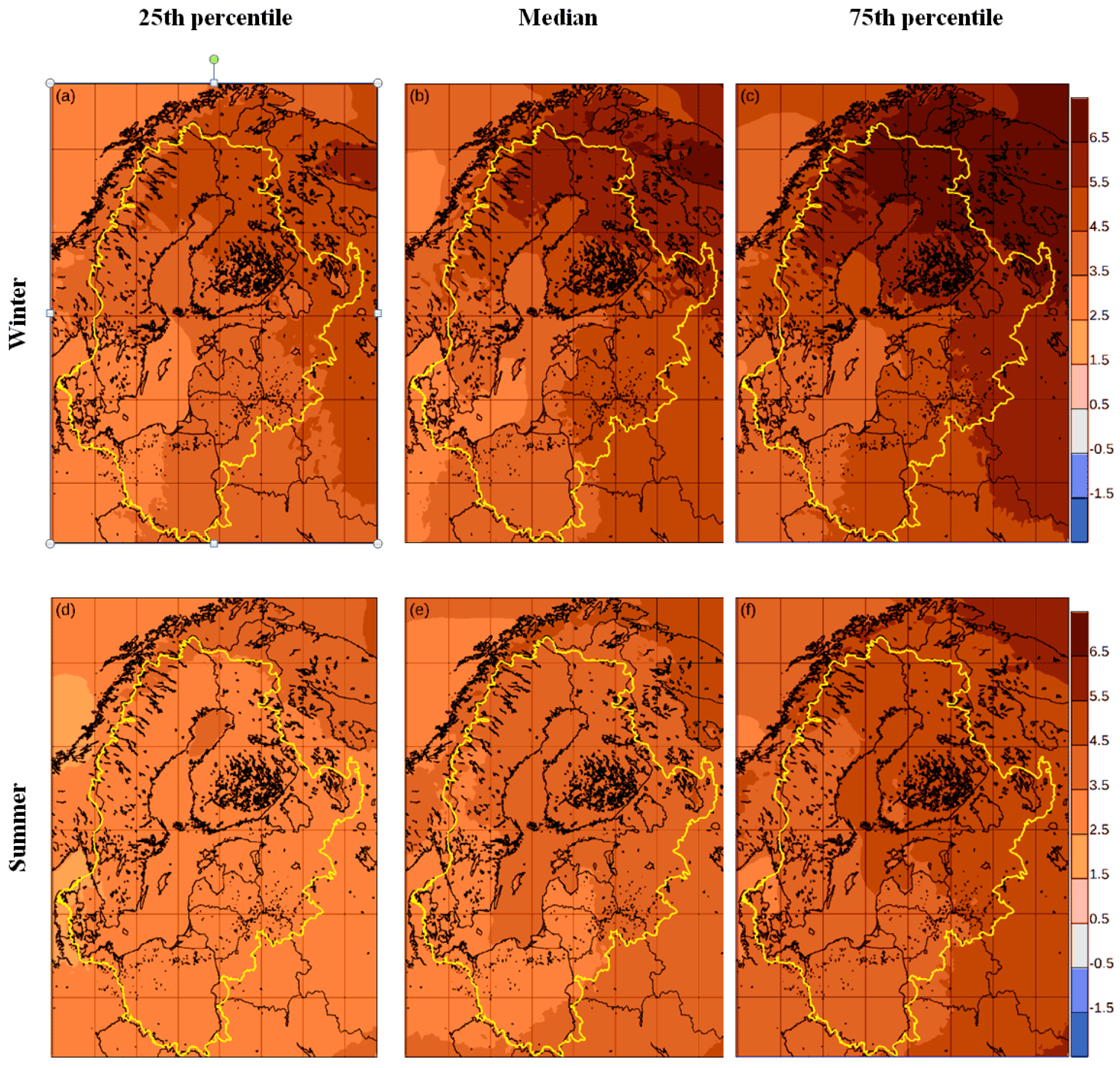
Long-term warming trends have been documented across Estonia [17,18], Latvia [19], Finland [20], Russia [21], and Sweden [22]. Climate projections based on EURO-CORDEX regional climate models indicate continued warming throughout the Baltic Sea region during the 21st century, with the strongest temperature increases projected for northeastern areas (Figure 2) [23].

3.1.2. Changes in the Pattern of Precipitation, and Flooding

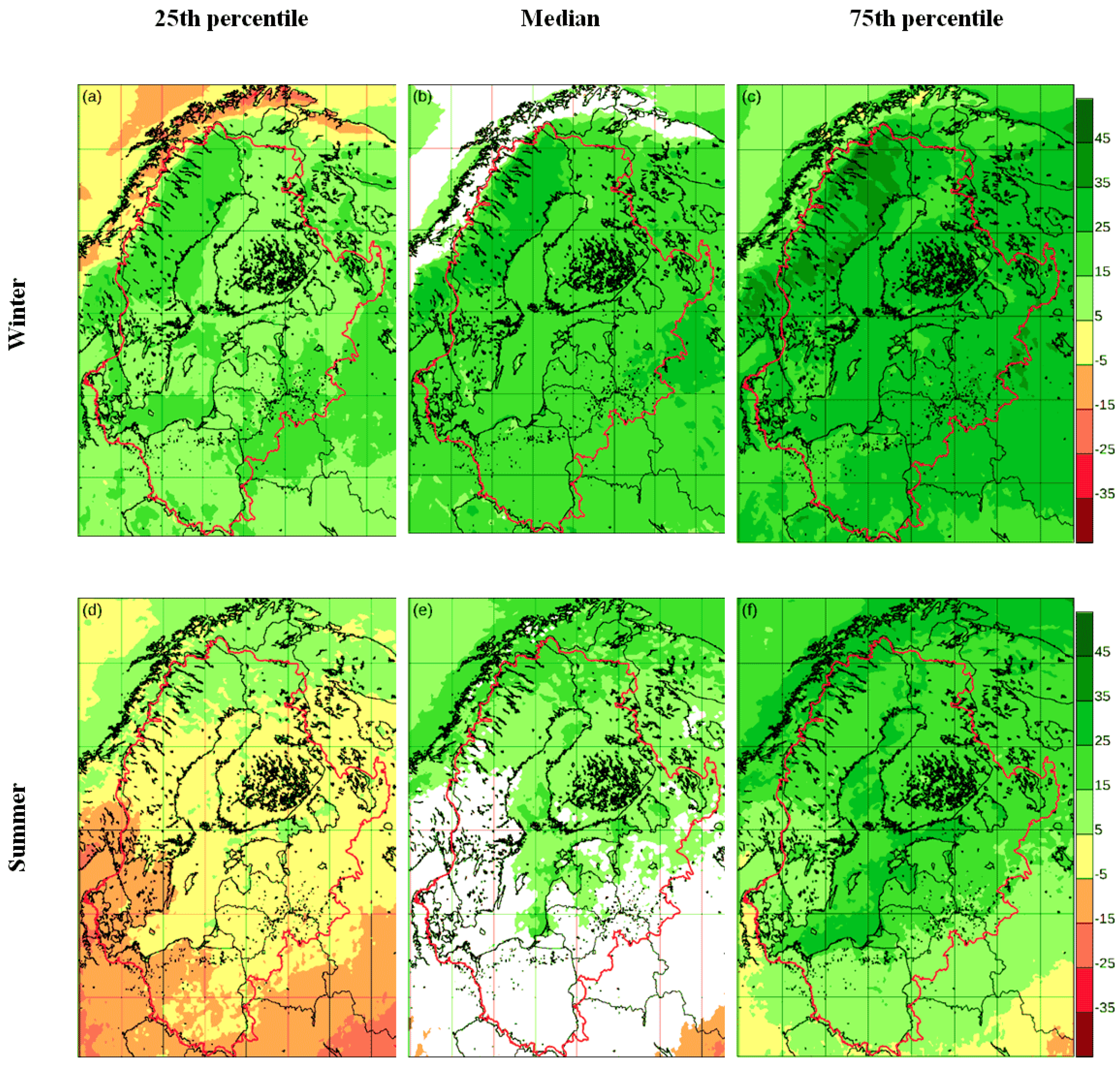
According to future projections, Northern Europe and the Baltic Sea region are expected to experience substantial increases in both precipitation intensity and duration [24,25,26]. Christensen et al. [23] reported that projected winter changes in average precipitation closely resemble changes in extreme precipitation (Figure 3), suggesting relatively limited changes in precipitation intensity distributions, although some EURO-CORDEX studies indicate regional variability in precipitation patterns. In contrast, projected increases in extreme summer precipitation generally exceed changes in average summer precipitation.
Since 1950, annual mean precipitation has increased across the northern Baltic Sea region, accompanied by a rise in the frequency and intensity of heavy precipitation events [13]. Climate projections indicate further increases in annual precipitation throughout the Baltic Sea catchment by the end of the century, with particularly robust projections for winter, while summer projections remain more uncertain in southern areas [13].
In Estonia, annual precipitation increased by 5–15% during the second half of the 20th century and is projected to continue increasing by 10–14% during 2041–2070 and by 16–19% during 2070–2100 [27]. Furthermore, analyses from the Nordic–Baltic region demonstrate an increasing intensity of annual maximum one-day precipitation events across most monitoring stations during the last five decades [28].

3.1.3. Wildfire Frequency and Intensity

There is broad consensus that climate change will create increasingly favourable conditions for wildfires across boreal forests, although the magnitude of these impacts is expected to vary regionally [29]. Longer fire seasons are projected to be accompanied by greater fire severity, including an increase in high-intensity crown fires that may become difficult to control under future climate conditions [29]. While future fire emissions remain uncertain, recent evidence suggests that black carbon and PM2.5 emissions from wildfires north of 50° N and 65° N already exceed emissions from several major anthropogenic sources and increased substantially between 2010 and 2020 [30,31].

3.1.4. Snow and Ice Cover Changes

According to Meier et al. [13], snow cover decline has accelerated in recent decades across most of the Baltic Sea region, except for mountain areas and some northeastern locations. On average, the duration of snow cover has decreased by approximately 3–5 days per decade [13].
Studies from Lithuania, Latvia, and Estonia reported similar reductions in snow cover duration, ranging from 3.3 to 4 days per decade, accompanied by earlier snowmelt dates, while trends in maximum snow depth remained generally weak or absent [32,33].
In Finland and Norway, significant regional variability has been observed. The largest reductions in snow depth occurred in southern and central regions, particularly during late winter and spring, whereas northern areas experienced smaller changes [13,34,35,36,37,38,39,40,41]. Despite increases in winter precipitation in some regions, both mean and maximum snow depth have declined at many southern stations [36,37,38,39].
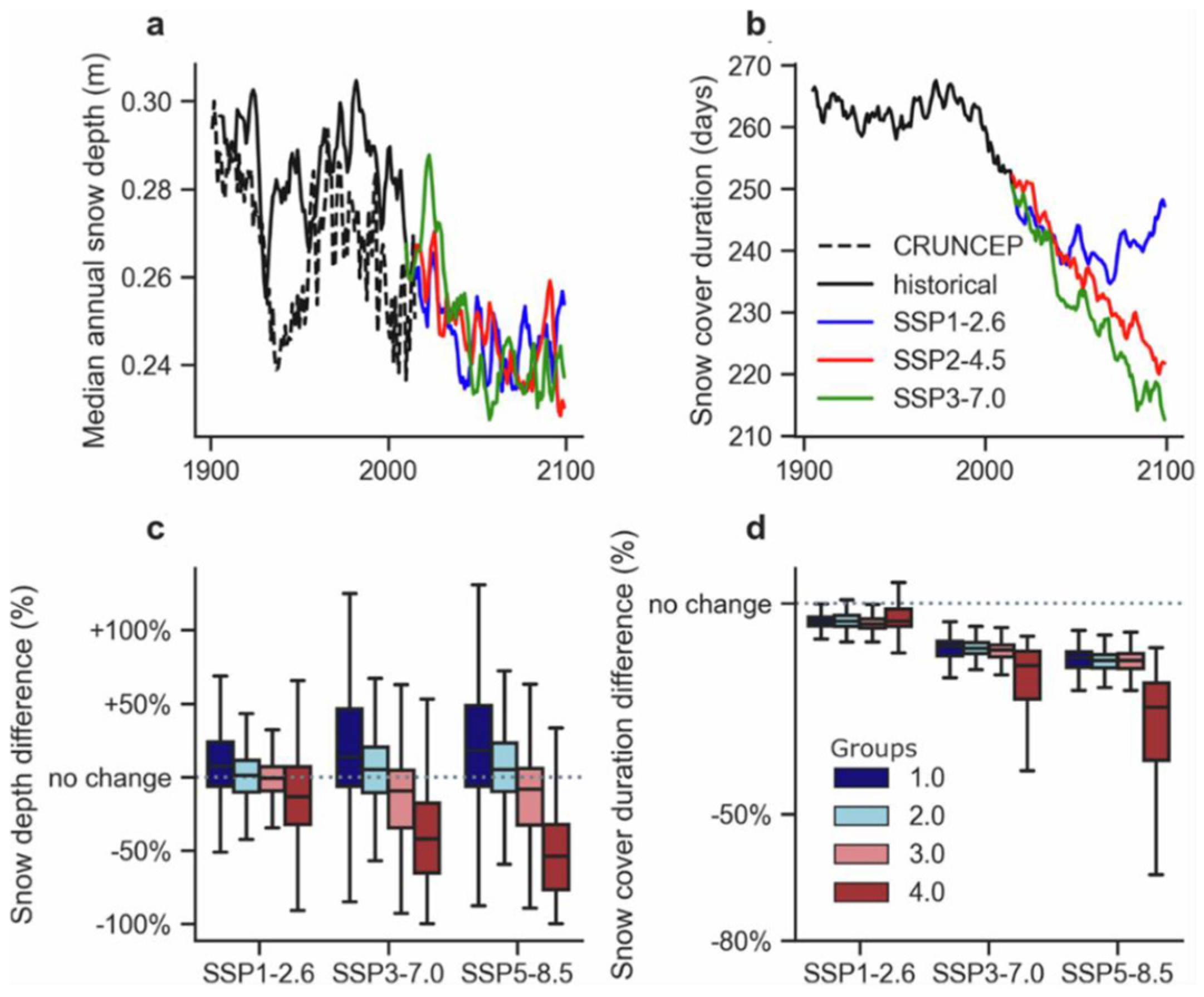
According to the MRI-ESM2-0 model, snow cover duration is projected to decrease across all climate scenarios, while median snow depth may decline by approximately 3–5 cm by 2100 (Figure 4). Although regional differences remain, projections consistently indicate an overall reduction in snow cover across Europe [42].
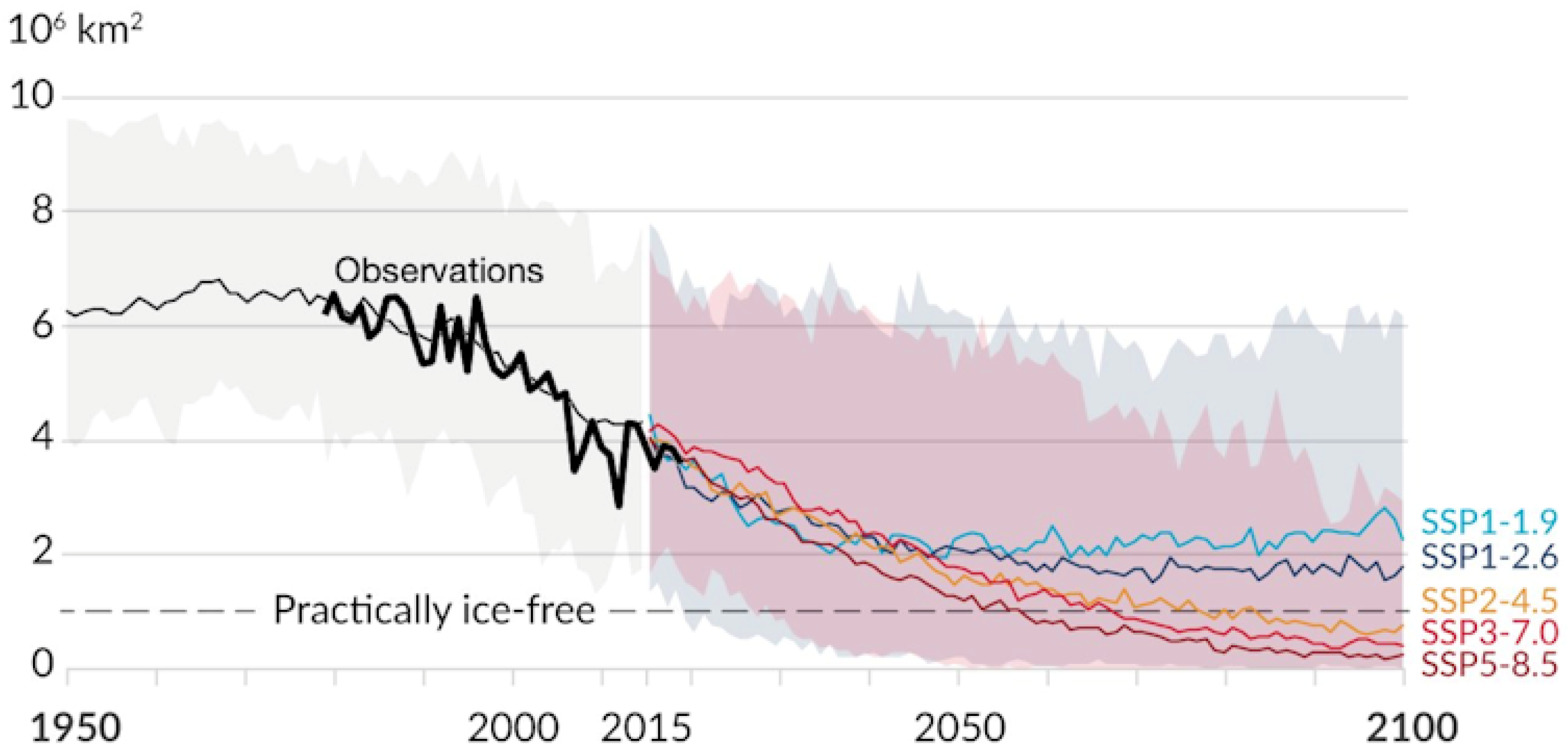
Multiple environmental indicators now suggest that abrupt high-latitude changes are more plausible than 30 years ago, when thick sea ice buffered ocean–atmosphere interactions and suppressed large climate deviations [16]. Figure 5 illustrates the downward trend in Arctic sea ice extent [43].

3.2. Risks of Climate Change Impacts on Animal Health and Biological Diversity

As the boreal region experiences rapid climate shifts, the interconnectedness of animal health and biological diversity becomes increasingly evident. Rising temperatures have profound implications for both ecosystems and wildlife [44]. These changes not only perturb established habitats but also introduce new challenges, such as increased pest outbreaks and altered disease dynamics, which can exacerbate declines in sensitive species like woodland caribou and certain bird populations [45,46].
Rising temperatures and altered precipitation patterns induced by climate change pose significant threats to animal health in the boreal region. As species struggle to adapt to new environmental conditions, the health of animals is increasingly compromised due to factors such as increased exposure to pathogens and parasites [47]. For instance, changes in climate are driving vectors northward, expanding the range of diseases like West Nile virus and Brucella spp., which have direct implications for both wildlife and human health [47]. Moreover, the physiological stress placed on animals by extreme weather events and habitat loss exacerbates vulnerability to disease outbreaks, leading to declines in populations of sensitive species such as salmonids [48]. Understanding these dynamics is crucial for mitigating risks to wildlife health and guiding conservation efforts and policy development in the boreal region.
The present state of terrestrial and aquatic species highlights the dire consequences of habitat loss, which is intricately linked to climate change. For instance, the decline of the European eel (Anguilla anguilla) illustrates how human activities, such as river regulation and habitat destruction, have severely impacted this migratory species. Over the past few decades, eel populations have plummeted, primarily due to the degradation of their spawning grounds and an increase in pollution, both exacerbated by climate influences [49]. Similarly, the red-cockaded woodpecker (Picoides borealis) serves as a case study; its dependence on mature pine forests has rendered it vulnerable amid extensive logging and land development. This bird’s population has faced dramatic reductions owing to habitat fragmentation, which climate-induced changes in temperature and precipitation patterns continue to threaten [50].

Effects of Thermal Stress on Animal Physiology

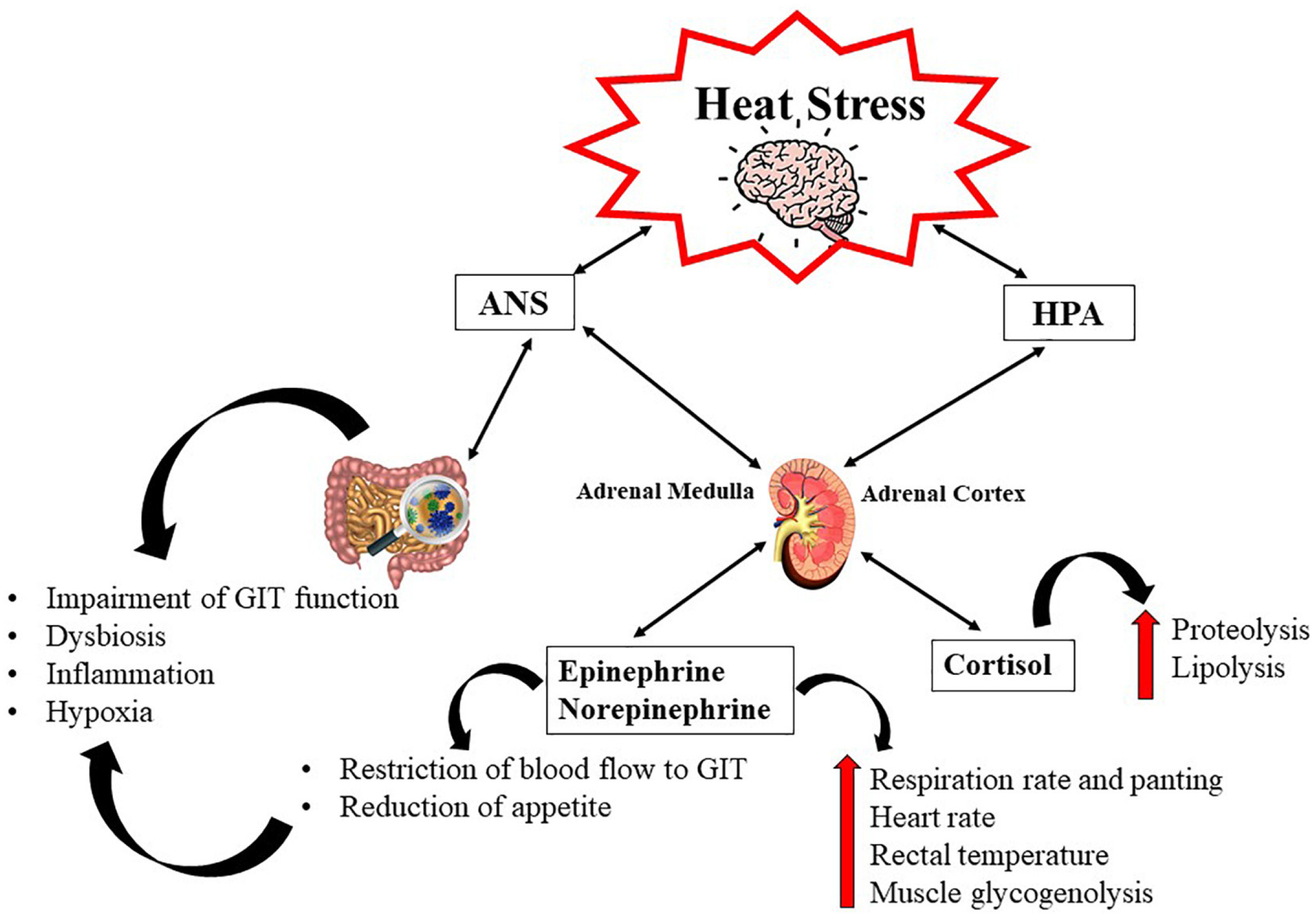
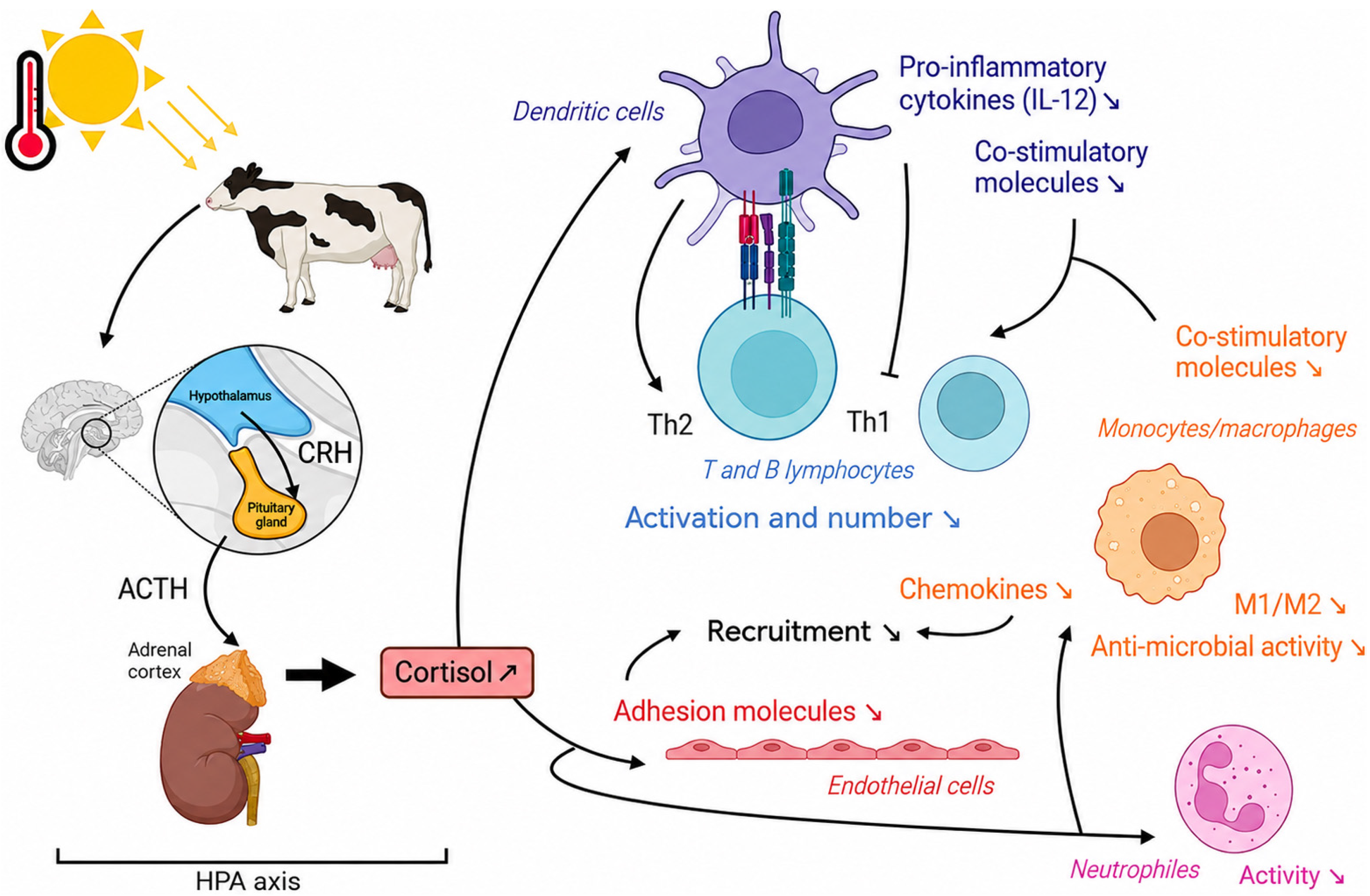
The effects of thermal stress on animal physiology are profound, influencing various biological systems and overall health. As environmental temperatures rise, animals face challenges such as thermoregulation failure, altered metabolic rates, and increased susceptibility to diseases. High temperatures specifically can result in impaired reproductive functions and reduced growth rates, causing cascading effects on population dynamics and ecosystem stability. For instance, exposure to heat stress can lead to elevated cortisol levels, which have been linked to decreased immune function, thereby exacerbating disease susceptibility. Figure 6 shows the relationship between heat stress and the autonomic nervous system (ANS), and the hypothalamic–pituitary–adrenal (HPA) axis [51].
Elevated temperatures significantly disrupt hormonal balances, leading to reduced fertility in both males and females, which in turn affects overall reproductive output. Research has shown that temperature extremes can significantly impact animal reproductive health.
Moreover, heat stress can impair sperm quality and ovulation rates, contributing to a decline in embryo viability. As livestock are increasingly subjected to thermal extremes, physiological responses—such as altered blood flow and decreased feed intake—further exacerbate reproductive inefficiencies [52].
The influence of thermal stress on immune system function is also a critical aspect of animal health, particularly as climate change brings about temperature extremes. Elevated temperatures can compromise the immune responses, leading to enhanced susceptibility to infectious diseases in livestock. As indicated in a review, “Stress, a state triggered by external factors and mediated through the endocrine system, can induce adaptive physiological or behavioural changes” [53].
Prolonged exposure to high temperatures disrupts homeostasis, resulting in metabolic imbalances that diminish the effectiveness of innate and adaptive immunity. Furthermore, the prevalence of vector-borne diseases, exacerbated by climate-induced habitat shifts, increases the risk of pathogen transmission. Also, altered temperature and humidity levels can be linked to increased susceptibility to infectious diseases in amphibians, which are experiencing notable declines due to a combination of climate stressors and pathogens. Similarly, in fish populations, rising ocean temperatures disrupt immune functions and lead to greater vulnerability to parasites, highlighting a critical challenge in marine ecosystems. As Napel et al. (2006) suggest, managing these populations requires a shift from the ‘Control Model’ of agricultural practices to an ‘Adaptation Model’, which emphasizes resilience against disturbances [54]. Figure 7 shows the possible mechanisms linking heat stress, cortisol secretion, and immunosuppression [55].
Collectively, these climate-related changes are not isolated environmental phenomena but important determinants of human and animal health. Rising temperatures, changing precipitation patterns, biodiversity shifts, and increasing frequency of extreme events influence infectious disease transmission, exacerbate chronic disease burden, affect mental health, and challenge the resilience of health systems in northern regions.

3.3. Risks of Climate Change Impacts on Human Health

Climate Change Impact on Infectious and Viral Diseases

Overall, the impacts of climate change on pathogens may be best considered on both the micro and macro levels. On the micro level, climate change may affect the basic reproductive rate of pathogens or their vectors, whose development cycles depend on temperature and precipitation, thus determining pathogen survival and spread in a population. Moreover, it may similarly affect the suitable habitat range of its competent host(s). On the macro level, emerging infectious diseases (EID) are dependent on a wide range of factors, and climate cannot be viewed in isolation when assessing risks [56,57,58].
Temporal and spatial trends indicate an increase in the reporting of certain diseases, including some vector-borne and water-borne diseases. The evidence suggests that changing temperature, humidity, and rainfall patterns have already altered the distribution of some illnesses and disease vectors [59,60]. The habitat suitable for Lyme disease is projected to expand by over 200% in a boreal country as Canada by the 2080s under changing climate scenarios. The emergence of Lyme disease is thought to be associated with reforestation, which supports increased populations of the tick vector [61].
Uusitalo et al. 2020 estimated habitat suitability for the occurrence of current and future human tick-borne encephalitis (TBE) cases in Finland [62]. The high-risk areas for TBE transmission were located in the coastal regions in Southern and Western Finland, several municipalities in Central and Eastern Finland, and coastal municipalities in Southern Lapland [62]. According to the study, future projections indicate a slightly wider geographical extent of TBE risk in the Åland Islands and Southern, Western, and Northern Finland, even though the risk itself was not increased [62].
Emerging infectious disease outbreaks are defined by a cluster of cases caused by emerging pathogens previously unknown to cause disease or re-emerging pathogens, which have previously caused disease but now reveal increased infectivity or extended transmission ranges that improve their ability to cause disease in human populations [63].
These human health risks cannot be considered independently of environmental and animal health, as climate-driven ecosystem changes modify vector ecology, wildlife reservoirs, and pathogen transmission pathways. Alterations in wildlife distribution and pathogen circulation create new opportunities for zoonotic spillover and reshape the epidemiology of climate-sensitive infectious diseases. Together, these processes illustrate the interconnected nature of environmental, animal, and human health systems under changing climatic conditions.
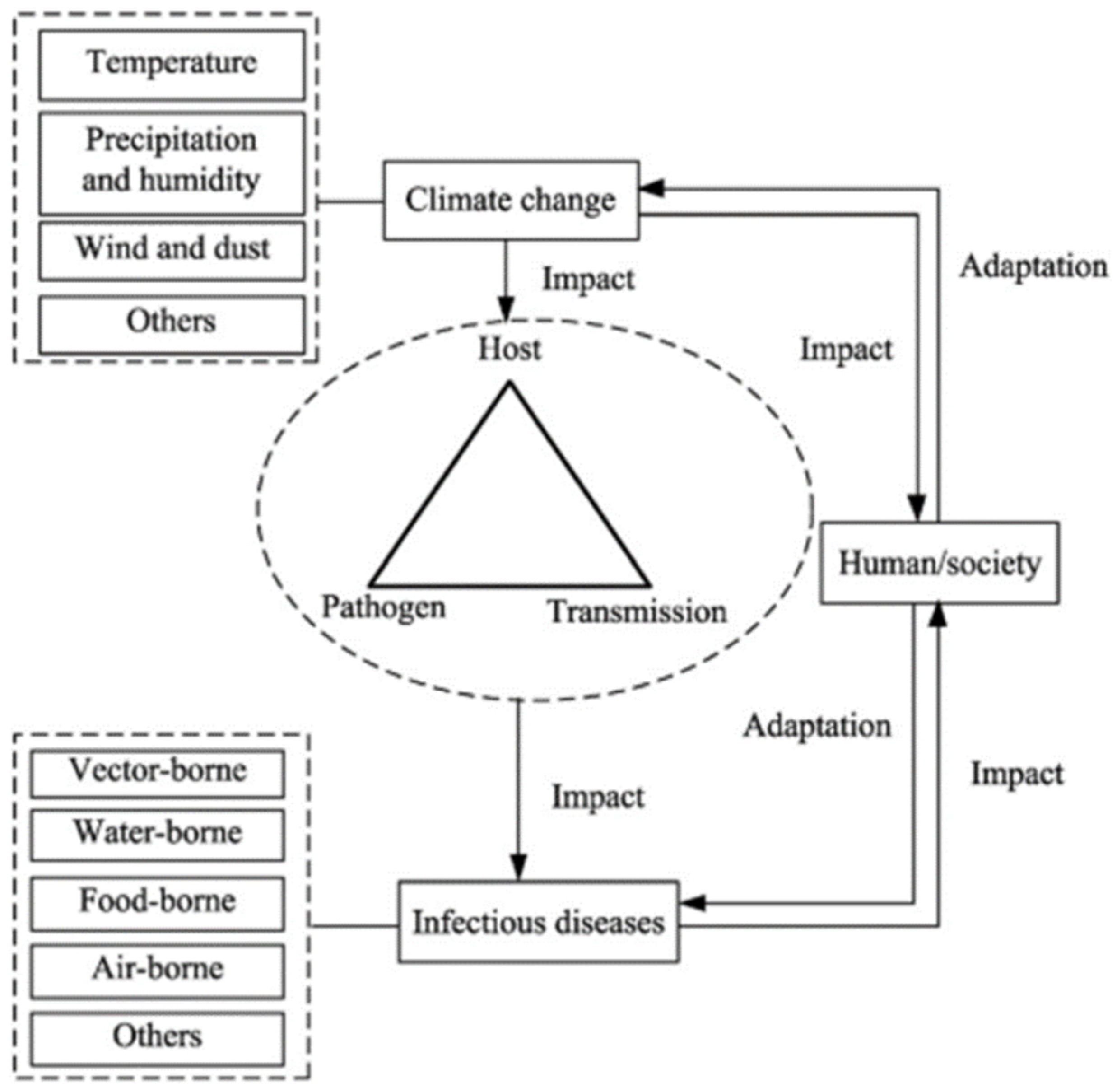
Climate change is unequivocally acknowledged as an urgent global public health threat by the World Health Organization (WHO), as profound and enduring shifts in temperature, precipitation, humidity, and air and water quality are already exacting a devastating toll on human health, amplifying morbidity and mortality rates worldwide [64]. Climate change can enhance transmission of food-, water- and vector-borne diseases (FBDs, WBDs, and VBDs) by increasing the area in which or the length of time when conditions remain favourable for outbreaks and transmission of emerging or re-emerging infectious diseases through effects on pathogen or host health, replication, and dissemination or migration [65]. One recent modelling study of approximately 3000 mammalian species projected that climate-driven range shifts could result in more than 4000 novel cross-species viral transmission events over the next 50 years under a 2 °C warming scenario [66]. However, these projections are based on assumptions regarding species dispersal, host adaptation, viral sharing probabilities, and future climate scenarios. Therefore, they should be interpreted as plausible estimates rather than definitive predictions. [66]. Climate change-induced mortality and morbidity associated with infectious diseases are expected to rise globally [67]. The impact of climate change on fungal infections has been reviewed elsewhere [68], which also emphasizes the association of climatic factors and fungi-associated outbreaks. Here, we review the mechanisms through which climate change alters the landscape of EIDs (Figure 8).
Environmental modifications associated with climate change can expand the size of a pathogen reservoir or its host population(s), alter or increase their geographic range through ecosystem damage, increase the likelihood of EID spillover events, and decrease the health of host populations to enhance the risk of successful spillover events and outbreaks. Climate change can increase pathogen abundance by enhancing the survival and reproduction of pathogens or their hosts in existing environmental niches or expanding the number, size, or reproductive potential of these niches in an existing or expanded geographic range. Changes in temperature, precipitation, and humidity can alter the size and distribution of pathogen and host populations to influence pathogen and host development, replication, and survival [70].
Climate change can have multiple effects that increase pathogen burden and disease transmission within animal reservoirs, leading to disease spillover into human populations. For instance, variable seasonal extremes in temperature and rainfall associated with climate change can lead to rapid increases in the food supply of a disease reservoir, leading to a population explosion that cannot be controlled by its predators. Such changes may promote the risk of spillover events if they increase the geographic range or population density of a disease reservoir to promote de novo or existing direct or indirect interactions with susceptible human populations. The 1990s Hantavirus epidemic in the southwestern United States represents one such example, as it was linked to indirect human contact with a deer-mouse reservoir that experienced a 10-fold population density increase due to a short-term climate-induced fluctuation that increased its food supply and suppressed its predator populations [71]. Similar long-term effects should also be possible if long-term climate change continues to favour increased interaction between a disease reservoir and a human population in a manner that is not adequately suppressed by a predator population.
Although infectious diseases often receive considerable attention in climate–health discussions, non-communicable diseases are expected to account for a substantially larger proportion of climate-related morbidity and mortality in boreal populations due to ageing demographics and increasing exposure to heat extremes and air pollution.

3.4. Climate Change Impact on Non-Communicable Diseases

3.4.1. Extreme Heat Events

Most articles have examined the health effects of extreme heat (extreme temperatures, heat waves, hot days, hot spells, droughts) using various definitions of weather effects. The effects of extreme heat have been assessed in the largest number of studies, with most reporting adverse effects on total, cardiovascular, and respiratory mortality, regardless of climate region. In most studies, the greatest impact on mortality was observed immediately within the first three days after the onset of the heat wave. Although the magnitude of the effect estimates remains uncertain, this finding is supported by several similar studies conducted outside Europe [72,73,74].
One large study which included deaths from any cardiovascular cause (32,154,935), ischemic heart disease (11,745,880), stroke (9,351,312), heart failure (3,673,723), and arrhythmia (670,859) from 567 cities in 27 countries across five continents found that extreme temperature percentiles were associated with a higher risk of dying from any cardiovascular cause, ischemic heart disease, stroke, and heart failure as compared to the minimum mortality temperature, which is the temperature associated with lower mortality levels. Across a range of extreme temperatures, hot days (above 97.5th percentile) and cold days (below 2.5th percentile) accounted for 2.2 (95% empirical CI, 2.1–2.3) and 9.1 (95% CI, 8.9–9.2) excess deaths per 1000 total deaths, respectively. Heart failure was associated with the highest excess deaths proportion from extremely hot and cold days, with 2.6 (95% CI, 2.4–2.8) and 12.8 (95% CI, 12.2–13.1) for every 1000 heart failure deaths, respectively [75].
An assessment of mortality changes during heat waves in the subpolar region in Stockholm found an RR of 1.02 (95% CI, 1.01–1.04) [76]. Urban heat island (UHI) may play a substantial role in enhancing the heat stress. The mortality in Helsinki during heat waves was found to be 2.5 times the mortality in the surrounding, more rural type of area [77]. A study in Russia (Moscow) showed a higher RR of 1.90 (95% CI, 1.84–1.97) [78]. For each degree increase in summer, an increase in mortality with the RR of 1.40 (95% CI, 0.8–2.0) was observed [79]. Among the population aged 50 years and older, an 8% (95% CI, 3–12%) increase in mortality during a heat event in Sweden (Stockholm) was reported [80]. Similarly, an RR of 1.02 (95% CI, 1.00–1.04) for cardiovascular mortality was reported during heat waves in Stockholm [76]. Other authors found an increased RR of 2.29 (95% CI, 2.18–2.40) for ischemic heart disease mortality in Moscow. The RR of respiratory mortality during heat waves in Moscow and Stockholm was 2.05 (95% CI, 1.80–2.39) and 1.04 (95% CI, 0.99–1.09) respectively [76,78]. Also, a statistically significant increase in the RR of respiratory disease mortality of 4.3% (95% CI, 2.2–6.5%) for each a 1 °C increase in air temperature in summer in Sweden (Stockholm) was observed [78].
Heat exposure rarely acts in isolation and may interact synergistically with other environmental stressors, particularly air pollution and wildfire smoke, resulting in amplified cardiovascular and respiratory risks among susceptible populations. This interaction may be especially relevant in boreal regions, where increasing wildfire activity contributes to elevated concentrations of PM2.5 and other pollutants, potentially exacerbating the adverse health effects of extreme heat. Older adults and individuals with pre-existing cardiovascular and respiratory diseases appear to be particularly vulnerable to these combined exposures, which may contribute to increased mortality and healthcare burden during heat wave periods [30,31,76,78].
In summary, many studies reported statistically significant increases in deaths from extreme heat, despite differences in study locations, study designs, characteristics, and exposure definitions. Increased risk of cardiovascular and respiratory disease mortality was also found to be associated with heat waves, but most of the associations were not statistically significant. Conflicting results were found for heat-related morbidity and the interaction between heat and air pollution.

3.4.2. Extreme Cold Events

One study, conducted with participants from two cohorts, found a statistically significant association between cold episodes and cardiovascular events in one cohort of British men aged 60–79 years (RR 1.86, 95% CI: 1.30–2.65). In another cohort of men and women aged 70–82 years from the United Kingdom, Ireland, and the Netherlands, no association was found [81]. Another study, examining emergency room calls in Bochum, Germany, during and after a cold, found an increase in calls for lung disease up to three days after a cold (RR = 1.17). Calls based on cardiovascular disease increased on the same day (RR = 1.14) and up to three days after the cold (RR = 1.12) [82]. A systematic review and meta-analysis in different countries confirmed that exposure to cold was positively associated with all-cause mortality (RR = 1.10, 95% CI: 1.04–1.17), cardiovascular mortality (RR = 1.11, 95% CI: 1.03–1.19), and respiratory mortality (RR = 1.21, 95% CI: 0.97–1.51) [83].
Other studies have investigated the effects of cold events in the subpolar region. The relative risk of mortality associated with extreme cold in Stockholm was 1.007 (95% CI, 0.990–1.025). The relative risk of cardiovascular and respiratory mortality in Stockholm during extreme cold was 0.994 (95% CI, 0.970–1.019) and 1.022 (95% CI, 0.970–1.077) [75]. Rocklöv et al. (2008) reported in another study that for every increase in air temperature in Stockholm during winter, mortality decreased by an average of 0.7% (95% CI, 0.5–0.9%) [79]. In the Baltic Sea region, such as Lithuania, when evaluating changes in acute myocardial infarction (AMI) events on cold days, it was found that each additional cold spell day during the week preceding AMI increased the risk of AMI by 5% (95% CI 1–9%). For nonfatal and fatal cases, the risk increase per each additional cold spell day was 5% (95% CI 1–9%) and 6% (95% CI—2–13%), respectively. The effect estimate was greater for men (OR 1.07, 95% CI 1.02–1.12) than for women (OR 1.02, 95% CI 0.97–1.08), but there was no evidence of effect modification by age [84]. According to data from Lithuania, each additional cold day during the week preceding a stroke was associated with 3% higher odds of stroke occurrence (OR 1.03; 95% CI 1.00–1.07). Similarly, during summer, each additional cold day was associated with 8% higher odds of stroke occurrence (OR 1.08; 95% CI 1.00–1.16) [85].
Cold-related health impacts also rarely occur in isolation and frequently involve interactions between cardiovascular and respiratory conditions, demographic vulnerability, and environmental exposures. Older adults and individuals with pre-existing chronic diseases appear to be particularly susceptible to cold-related health effects because of reduced physiological resilience and thermoregulatory capacity. In addition, socioeconomic conditions and access to healthcare services may influence the severity of cold-related morbidity and mortality, especially in northern populations experiencing prolonged periods of low temperatures [81,82,83,84,85].
Most studies have shown that extreme cold increases the risk of death from all causes, as well as the risk of death from cardiovascular and respiratory diseases, suggesting a possible positive association between periods of extreme cold and these outcomes. The impact of cold spells on cardiovascular and respiratory disease morbidity is currently being investigated due to the limited number of studies. It should also be noted that all studies of extreme cold events lacked adjustment for air pollution factors, which may introduce some bias. Thus, further studies are needed to determine the role of air pollution in extreme temperatures.
The epidemiological findings summarized in this section should be interpreted as associations reported in observational studies rather than evidence of direct causal relationships. Furthermore, differences in study design and adjustment for potential confounding factors, including air pollution, socioeconomic conditions, healthcare access, and demographic characteristics, may have influenced the reported effect estimates.

3.5. Climate Change Impact on Mental Health

The mental health consequences of climate change are increasingly recognized as multidimensional phenomena extending beyond the direct psychological effects of extreme weather events. Exposure to heat waves, floods, wildfires, and other climate-related hazards may simultaneously increase psychological distress while exacerbating existing chronic diseases and reducing overall well-being. Furthermore, climate-related anxiety, ecological grief, and uncertainty regarding future environmental conditions may disproportionately affect younger populations, Indigenous peoples, and communities whose livelihoods and cultural identity are closely linked to local ecosystems. These interconnected impacts highlight the need for integrated public health responses that address both psychological and physical dimensions of climate vulnerability [86,87,88,89,90,91,92].
The links between high temperatures, heat waves, and adverse health outcomes have been better studied for both communicable and non-communicable diseases [86,87], but mental health is widely recognized as a public health issue and has so far often been associated only with social and economic consequences [88].
The 2017 Global Burden of Disease (GBD) study found that more than one in ten people worldwide (792 million or 10.7% of the world’s population) were living with a mental health disorder, accounting for around 5% of the global burden of disease [88].
As the global climate changes, there is growing evidence of the impact of extreme weather events (e.g., heat) on mental health [89,90,91,92]. However, compared with other heat-related health outcomes (e.g., cardiovascular, cerebrovascular, and respiratory diseases), mental health disorders have received relatively little attention [89,93].
Beyond the direct psychological consequences of extreme weather events, climate change may also affect mental health through climate-related anxiety (eco-anxiety) and ecological grief. Increasing awareness of environmental degradation, biodiversity loss, and uncertainty regarding future climate conditions has been associated with feelings of worry, helplessness, sadness, and chronic stress, particularly among younger generations and communities closely connected to the natural environment. These psychological responses may occur even in the absence of direct exposure to climate-related disasters and are increasingly recognized as an important component of the overall health burden associated with climate change [92,94].
In addition, climate change may undermine mental well-being through disruptions to livelihoods, social networks, and cultural identity. This is particularly relevant for Indigenous peoples and rural communities whose daily lives, traditions, and economic activities are closely linked to local ecosystems. Environmental changes such as declining biodiversity, altered landscapes, and reduced access to traditional natural resources may contribute to a sense of loss and reduced place attachment, thereby affecting psychological well-being. Similar effects have been documented in communities experiencing rapid environmental change, particularly in northern and Arctic regions, where environmental transformations can challenge cultural continuity and social resilience [94,95].

3.5.1. Extreme Heat Waves and Droughts

The stress caused by heat waves has been linked to mood disorders, anxiety, and related consequences [96]. People with mental health conditions are three times more likely to die from heat than those without mental health conditions [97]. Studies have shown that gender differences in vulnerability are present. Women have a higher mortality rate than men during heat waves. The negative consequences of heat waves are also linked to social factors. Disaster-related anxiety and mood disorders are more common in women, young people, and people with low socioeconomic status [98]. It can also be observed that people spend more time outdoors in summer, which can increase the likelihood of various conflicts. High temperatures increase discomfort, which increases feelings of hostility and aggressive thoughts and possibly actions. Hotter cities were more aggressive than cooler cities. Heat-related violence is higher on hot summer days and has increased in hotter years [99]. High temperatures can cause physical and psychological distress [96]. A significant association has been found between increasing temperatures and increased suicide rates, especially in the early summer months [100]. Changes in outdoor air temperature may have a variety of effects on the risk of developing or persisting mental disorders. For example, increases in air temperature may affect psychophysiological functions by directly affecting biochemical levels (e.g., altering serotonin and dopamine production) [101] or by disrupting thermoregulatory homeostasis [102]. In addition, direct heat exposure can lead to sleep disturbance, exhaustion, and heat stress, which has been linked to suicide [103]. Furthermore, the association between mental illness and temperature increases depends on latitude and non-geographic factors, such as cultural, political, and social behavioural factors. In the tropics, fluctuations in air temperature show a clear association with adverse economic and political situations. This is seen in poor countries, which are more vulnerable to weather and climate fluctuations than wealthier countries [104]. The sensitivity of mental disorders to air temperature should not be underestimated compared with other heat-related physical health changes. Studies have shown that there is an increased risk of mental disorders associated with higher air temperatures, especially in certain populations, such as the elderly. Positive associations have been found with short-term mental disorders and episodic mood disorders, and increased hospitalizations for mental illnesses in the days following higher air temperatures. There is also an association between increased mortality and morbidity in people with mental and behavioural disorders [101]. There is also an increase in emergency department visits for a range of mental illnesses, such as mood disorders [105], substance abuse, behavioural disorders, neurotic disorders, schizophrenia, and schizotypal disorders. People are more affected by high temperatures, particularly if they have schizophrenia, schizotypal disorders, and mood disorders [106].
It is important to quantify the impact of heat on mental health-related mortality and morbidity and to assess the heterogeneity of associations, taking into account individual and contextual population characteristics, to fill knowledge gaps. Therefore, there is a need to review the current findings, generalize the results, and assess the risk of bias, quality, and strength of evidence [107]. Some studies have found no significant associations with low temperatures [108].
Droughts increase psychological distress, anxiety, depression, and suicide, as well as prolonged emotional stress, inevitably provoking high levels of job insecurity and other psychological problems [109]. Drought poses a significant risk of migration due to crop failure [110]. Prolonged and frequent droughts and unpredictable rainy seasons also increase the risk of water and food insecurity. Droughts and other extreme weather events increase the risk of famine, which in turn increases the risk of migration both within and outside the country.
The combination of high temperatures and low precipitation increases the frequency of droughts worldwide [110]. Air temperature fluctuations are associated with agricultural losses by affecting crop productivity and yields. This loss is associated with reduced economic growth, leading to long-term economic disadvantage [104].
The mental health consequences of heat waves and droughts extend beyond direct psychological responses and often emerge through complex interactions with physical health, socioeconomic conditions, and environmental change. Heat exposure may simultaneously exacerbate existing mental and chronic physical illnesses, while drought-related impacts on food security, livelihoods, and economic stability can contribute to long-term psychological distress and social disruption. These effects may disproportionately affect older adults, individuals with pre-existing mental health disorders, socioeconomically disadvantaged populations, and communities highly dependent on climate-sensitive economic activities such as agriculture. Together, these findings highlight the need for integrated adaptation strategies that address the psychological, social, and physical dimensions of climate vulnerability [96,97,98,99,100,101,102,103,104,105,106,107,108,109,110].

3.5.2. Floods

The main impact of floods is on mental health, particularly post-traumatic stress disorder (PTSD). A direct relationship has been observed between the magnitude of the disaster and the severity of mental health outcomes [111]. Following an acute extreme weather event, many populations affected by flooding experience some level of psychological distress and develop mental health problems [112]. According to studies in Europe, the Americas and Asia (e.g., Italy [113], India [112], USA [114]) floods cause grief, displacement, and psychosocial stress due to loss of life and property as a direct result of the disaster or its aftermath, which manifests as PTSD, depression and anxiety [115]. Specifically, among flood survivors, 20% were diagnosed with depression, 28.3% with anxiety, and 36% with PTSD [116]. The effects of floods persist after the flood has passed, resulting in bereavement, economic hardship, and behavioural problems in children [117].
Some cases show an increase in substance abuse and domestic violence after floods, as the disaster exacerbates pre-existing mental health problems [118,119].
Studies have found conflicting evidence on suicide after floods. Addiction involves vulnerability factors such as poverty, living in temporary housing, and temporary lack of access to healthcare [120,121].
Population groups that are most vulnerable to developing mental illness related to floods include women, the young and old, people with disabilities or belonging to ethnic or linguistic minorities, those living in female-headed households, and those with lower levels of education [122].
A study in England comparing flood victims with non-affected individuals found that, after adjusting for sociodemographic factors, there was a higher likelihood of depression (OR: 7.77, 95% CI: 1.51–40.13), anxiety (OR 4.16, 95% CI: 1.18–14.70) and PTSD (OR 14.41, 95% CI: 3.91–53.13) among flood-affected groups [123]. Similarly, another study reported higher odds of depression (OR 8.48, 95% CI 1.04–68.97) and PTSD (OR: 7.74, 95% CI 2.24–26.79) but no significant increase in anxiety in the flood group. Participants who were disturbed by flooding had an increased odds of PTSD with an OR = 4.33 (95% CI, 1.26–14.92) compared to the unaffected group [124]. Graham et al. (2019) found an increased odds of common psychiatric disorders due to flood exposure, OR = 1.5 (95% CI, 1.08–2.07), but no significant association between flood exposure and PTSD [125]. One cross-sectional study examined the long-term impact of the 2007 floods across England on mental health at the household level [126]. The authors found that 6 years after the flood, respondents reported anxiety (>60%), increased stress levels (<40%), frequent flashbacks (23%), insomnia (18%), depression (18%), and nightmares (<10%), either always or very often, with psychological symptoms all correlated with each other [126]. Another study found that mental illness related to depression, (first year = 20.8%; three years = 7.8%), anxiety (first year = 27.6%; three years = 11.8%), and PTSD (first year = 33.2%, three years = 17.1%) decreased after the flood, but mental illness was still more common compared to pre-flood prevalence [124].
The evidence reviewed suggests that flood-related mental health outcomes are often driven by the cumulative interaction of multiple stressors rather than by disaster exposure alone. The coexistence of displacement, economic losses, disruption of social support networks, and pre-existing vulnerabilities may contribute to the persistence and amplification of depression, anxiety, and post-traumatic stress symptoms long after floodwaters have receded. These findings emphasize the importance of considering flood impacts within a broader public health context that incorporates social vulnerability, health inequalities, and long-term community resilience [111,112,113,114,115,116,117,118,119,120,121,122,123,124,125,126].

3.6. Gap Analysis

3.6.1. Climate Surveillance Tools

To better understand and address these health risks, climate surveillance tools and monitoring systems have been increasingly developed. Such tools integrate meteorological, environmental, and health data to detect emerging climate-related threats, assess population vulnerability, and support early warning systems. The results generated by these surveillance systems provide valuable evidence for public health planning, enabling more effective mitigation and adaptation strategies aimed at reducing the health impacts of climate change.
Climate surveillance tools play a key role in monitoring environmental changes and supporting climate-related decision-making. A major strength of these tools is their ability to monitor important climate stressors such as hydrological alterations, temperature extremes, thermal stress, and changes in precipitation patterns. They support a wide range of stakeholders, including policymakers, researchers, and emergency services, and often rely on reliable data sources such as satellite observations and scientific models [127,128].
Examples of widely used climate surveillance and decision-support tools include the Copernicus Climate Data Store (CDS), which provides access to climate observations, reanalysis products, and climate projections [129], and Climate-ADAPT, a European platform supporting climate adaptation planning and knowledge sharing [130]. While these tools provide valuable information for climate risk assessment and adaptation planning, their application in boreal regions may be constrained by the need for higher spatial resolution and improved representation of local environmental processes. In addition, the European Flood Awareness System (EFAS) supports early warning and risk management for flood-related hazards across Europe [131].
Platforms developed within initiatives like the Copernicus Programme and by organizations such as ESA and ECMWF provide scientifically validated data and global-scale monitoring [128]. However, several limitations remain. Some climate system components, particularly ocean and sea ice changes, are still underrepresented. Many tools also function as standalone platforms with limited interoperability, making data integration more difficult [129]. In addition, technical complexity and high computational requirements may limit accessibility, especially for users in developing regions where monitoring infrastructure and data availability are more limited [130]. At the same time, opportunities exist to improve these tools through better integration across platforms, expansion into underrepresented monitoring areas, and the use of emerging technologies such as artificial intelligence and cloud computing. Nevertheless, challenges such as funding uncertainties, data security concerns, technological limitations in some regions, and the rapidly evolving nature of climate change highlight the need for continuous development. Overall, enhancing interoperability, accessibility, and coverage will be essential to maximize the effectiveness of climate surveillance tools in supporting climate resilience [129,131].
Despite their increasing sophistication, existing climate surveillance tools remain more effective at monitoring physical climate hazards than capturing downstream health impacts and interactions across sectors. Most currently available platforms primarily focus on environmental indicators such as temperature, precipitation, and hydrological changes, whereas the integration of veterinary, biodiversity, and public health data remains limited [127,128,129,130,131]. Furthermore, relatively few tools are specifically designed or validated for boreal and high-latitude regions, where rapid environmental changes, unique ecological processes, and sparse monitoring networks may reduce predictive accuracy and operational applicability. These limitations highlight the need for more regionally adapted, interoperable, and health-oriented surveillance systems capable of supporting climate-informed public health decision-making [127,128,129,130,131,132].
Ocean and sea ice changes appear to have significant gaps in research and tool coverage, as only a limited number of tools address this category. Similarly, few tools focus on the food availability and nutritional stress stressor [132]. In contrast, hydrological alterations and temperature extremes and thermal stress are widely covered, indicating greater research attention and tool development in these areas [127].

3.6.2. Climate Modelling Tools

Ocean and sea ice changes and food availability and nutritional stress appear to be addressed by the fewest modelling tools, whereas temperature extremes and thermal stress and changes in precipitation patterns receive the greatest attention, suggesting a stronger focus on these impacts in current modelling efforts. This broader emphasis is consistent with the scientific literature, where climate model assessment and projection studies frequently concentrate on temperature and precipitation extremes [133]. Climate modelling tools demonstrate several important strengths. Many provide broad coverage of major climate stressors and are developed or supported by scientifically credible institutions, which increases the reliability and policy relevance of their outputs [127]. They also support diverse applications, including climate risk assessment, emergency preparedness, adaptation planning, and long-term policy development. Some tools place strong emphasis on usability and open access, while others offer global or regional coverage that enables analysis across multiple scales. However, several limitations remain. Coverage of ocean and sea ice dynamics is still relatively limited in many climate service and tool ecosystems, despite the central importance of ocean heat, sea ice, and cryosphere–ocean interactions in the global climate system. In addition, some tools rely on datasets or model outputs that may not always provide sufficient spatial detail, temporal frequency, or local relevance for all applications [134]. Interoperability also remains a challenge, since many climate tools and services still operate in relatively fragmented ways and do not integrate easily across platforms or heterogeneous data environments [130]. Technical complexity and high computational requirements may further reduce accessibility, particularly for smaller organizations, operational users, or non-specialists. At the same time, there are clear opportunities to strengthen these tools by expanding coverage in underrepresented areas, improving integration between datasets and platforms, and leveraging emerging technologies such as artificial intelligence and machine learning [135]. Nevertheless, persistent observational gaps in some regions, unequal technological access, funding uncertainties, and the rapidly evolving nature of climate change continue to highlight the need for ongoing development and innovation in climate modelling tools [131].
Significant progress has been made in climate modelling; however, important limitations remain in representing complex interactions between multiple climate stressors and their downstream impacts on ecosystems, animal health, and human health outcomes. Current modelling efforts continue to focus predominantly on temperature and precipitation extremes, whereas substantially less attention has been given to ocean and sea ice dynamics, food security, and other emerging climate-sensitive risks that are particularly relevant in boreal and high-latitude regions [127,133,134]. In addition, the translation of climate projections into operational public health applications remains limited, highlighting the need for closer integration between climate modelling, health surveillance systems, and adaptation planning processes [130,131,135].

3.6.3. Climate Forecasting Tools

Availability and nutritional stress and wildfires are the stressors with the least representation among forecasting tools, with only one tool addressing these categories. In contrast, changes in precipitation patterns, temperature extremes and thermal stress, and hydrological alterations are the most frequently covered stressors, indicating a stronger focus on these climate-related risks. This pattern is consistent with the broader climate literature, where forecasting and projection efforts strongly emphasize precipitation change, water-cycle impacts, and temperature extremes [134]. Forecasting tools demonstrate several strengths. Many provide coverage of key climate issues and are developed by highly credible organizations, which enhances the reliability of their forecasts [127]. In addition, some tools offer regional climate projections that support localized adaptation strategies, while others are specifically designed to assist policymakers and planners in climate-resilient decision-making, particularly in urban contexts [136]. However, several limitations remain. Forecasting tools generally provide limited coverage of ocean and sea ice changes, despite their importance for global climate systems [131]. Some tools also have a restricted application scope, functioning effectively only in specific regions or contexts, which is a common issue in climate adaptation and forecasting services [136]. Furthermore, the technical complexity of certain platforms may limit accessibility for non-expert users, while their dependence on large and regularly updated datasets can pose additional challenges. Opportunities exist to improve forecasting tools by expanding their coverage of ocean-related processes, simplifying interfaces to increase accessibility, and integrating emerging technologies such as artificial intelligence and big data analytics to enhance predictive capabilities [135]. Nevertheless, several external challenges remain, including data availability and quality issues, funding constraints, and technological accessibility in some regions [131]. Moreover, the increasing pace and intensity of climate change may challenge the capacity of existing forecasting models, highlighting the need for continuous development and innovation [128,134].
Although substantial progress has been achieved in climate forecasting, current tools remain considerably more effective at predicting physical climate hazards than forecasting their downstream consequences for ecosystems, animal health, and human health outcomes. In particular, forecasting capabilities for wildfire impacts, food security, and nutrition-related risks remain limited, despite their growing relevance under future climate scenarios [131,134,136]. Furthermore, relatively few forecasting tools have been specifically developed or validated for boreal and high-latitude environments, where rapid warming, changing snow and ice dynamics, and unique ecosystem responses may influence prediction accuracy and operational performance [127,131,135]. These limitations highlight the need for more integrated and regionally adapted forecasting systems capable of supporting evidence-based climate adaptation and public health preparedness [128,134,136].

4. Discussion

This narrative review emphasizes that climate change in the Northern Hemisphere, particularly in the boreal and subarctic regions, poses multifaceted and interconnected risks to ecosystems, animal health, and human health. The available evidence highlights that rapid environmental changes do not act in isolation but rather amplify existing vulnerabilities through complex interactions and feedback mechanisms across environmental, biological, and social systems. One of the most consistent findings across disciplines is that high-latitude regions are warming faster than the global average, with strong seasonal and regional variability. Rising temperatures, declining snow and ice cover, increased precipitation, and growing wildfire activity are reshaping ecological conditions [13,16,42]. These environmental shifts undermine ecosystem stability, alter species distributions, and increase the likelihood of abrupt system changes. This supports the growing concern that northern regions may approach critical climatic thresholds sooner than previously anticipated [137,138].
The review further demonstrates that animal health impacts serve as an early warning system for broader climate-related risks. Thermal stress, altered habitats, and expanding vector ranges increase susceptibility to infectious diseases and reduce reproductive success and population size in wildlife and livestock [47,51]. These changes threaten biodiversity and elevate the risk of zoonotic spillover events, underscoring the need for integrated surveillance across human, animal, and environmental domains [59,65].
The link between human health and climate change encompasses infectious and non-communicable (NCD) diseases, as well as mental health disorders. There is mounting evidence that northern populations are increasingly affected. Climate-sensitive infectious diseases, particularly vector- and water-borne diseases, are expected to spread as temperature and precipitation patterns change [60,66]. Studies from boreal regions, such as Finland and the Baltic countries, demonstrate that even slight climate changes can substantially alter disease-suitable landscapes without necessarily increasing individual-level risk. This emphasizes the importance of conducting risk assessments at the local level [61].
Regarding non-communicable diseases (NCDs), extreme temperatures—both heat and cold—are consistently associated with increased cardiovascular and respiratory morbidity and mortality. While cold-related mortality remains high in northern regions, heat waves are becoming more frequent and intense, raising concerns, especially in urban areas, where the urban heat island effect increases exposure [75,77]. Evidence suggests that adaptive capacity, infrastructure quality, and population ageing significantly impact these risks, revealing disparities within and between regions.
Mental health impacts are among the most persistent yet under-recognized consequences of climate change. This review confirms the strong link between extreme weather events, especially heat waves and floods, and an increased risk of depression, anxiety, post-traumatic stress disorder (PTSD), and suicide [89,100,139]. These effects are often long-lasting and disproportionately affect vulnerable populations, including older adults, individuals with pre-existing mental illnesses, and socioeconomically disadvantaged groups. The findings emphasize that mental health outcomes should be considered a core component of the disease burden related to climate change rather than a secondary or indirect effect.
Several knowledge gaps emerge from this synthesis. First, despite growing epidemiological evidence, the causal pathways linking specific climate stressors to health outcomes, particularly mental health and multimorbidity, remain insufficiently quantified in boreal settings. Second, the interactions between climate extremes and air pollution are not consistently addressed, which limits the ability to discern their combined effects on cardiovascular and respiratory health. Third, a lack of harmonized, high-resolution data linking environmental indicators with health outcomes across sectors constrains forecasting and early-warning capabilities.
In this context, further progress in integrated climate–health research will depend on strengthening cross-sectoral data integration, improving predictive modelling capabilities, and supporting evidence-based adaptation strategies tailored to high-latitude regions. The findings emphasize that climate change is a systemic public health threat rather than solely an environmental challenge and therefore requires coordinated responses across multiple sectors. The gap analysis highlights various shortcomings in the coverage of climate-related tools across the three categories. Regarding monitoring tools, “Changes in the oceans and sea ice” and “Food availability and dietary stress” are underrepresented, as only a few tools address these stress factors. In contrast, “Hydrological changes” and “Extreme temperature events and heat stress” are adequately covered. A similar pattern is observed in modelling tools, where limited attention is given to changes in the oceans and sea ice, as well as to food availability and dietary stress, while there is stronger coverage of extreme temperatures, heat stress, and changes in precipitation patterns. Regarding forecasting tools, food availability and dietary stress, as well as wildfires, remain underrepresented. On the other hand, changes in precipitation patterns, extreme temperatures and heat stress, as well as hydrological changes, are strongly supported by the tools. Overall, these findings indicate the need for further development of tools that address underrepresented stressors in order to achieve a more balanced framework for climate monitoring and forecasting.
The findings of this review illustrate the interconnected nature of climate change impacts across environmental, animal, and human health systems. Rising temperatures, changing precipitation patterns, and ecosystem alterations in boreal regions may affect wildlife distribution, vector ecology, and pathogen survival [47,56,57,58,59,60]. These environmental changes can influence animal reservoirs and vector populations, potentially increasing human exposure to zoonotic and vector-borne diseases such as Lyme disease and tick-borne encephalitis [61,62]. Consequently, climate-related health risks cannot be fully understood by considering human health outcomes in isolation but require integrated surveillance and assessment across environmental, animal, and public health sectors. This highlights the importance of integrated monitoring and early warning systems capable of capturing interactions between climate stressors, ecosystem changes, animal health, and human health outcomes. Among the climate-related stressors identified in this review, wildfire activity, food system disruptions, and sea ice decline appear to be insufficiently represented in current monitoring, modelling, and forecasting tools despite their potential relevance for public health. Wildfires are increasingly recognized as an important source of fine particulate matter (PM2.5) and other air pollutants, which have been associated with adverse respiratory and cardiovascular outcomes as well as increased mortality [31,72,73,74]. Likewise, climate-driven changes in food availability and ecosystem productivity may affect nutritional status, food security, and community resilience, particularly in remote northern and Arctic populations that rely on local natural resources [5,6]. Changes in sea ice conditions may also have indirect health implications through their effects on livelihoods, mobility, traditional food systems, and psychosocial well-being in high-latitude communities [13,16]. The limited incorporation of these stressors into existing climate–health assessment tools may therefore constrain the ability of public health systems to anticipate and respond to emerging climate-related health risks in boreal regions.
Beyond identifying climate-related health risks, the reviewed evidence also highlights several adaptation strategies that may strengthen the resilience of health systems in boreal and high-latitude regions. Although the available evidence remains heterogeneous, several common priorities consistently emerge across the literature.
Health system adaptation represents a fundamental component of climate resilience in boreal and high-latitude regions, where the increasing frequency and intensity of heat waves, floods, wildfires, and emerging infectious diseases are expected to place growing pressure on healthcare services [95]. Hospitals and healthcare facilities should strengthen preparedness by developing climate-specific emergency response plans, ensuring reliable backup infrastructure, and expanding surge capacity to accommodate increased patient demand during extreme weather events. In parallel, healthcare professionals require continuous training to improve the recognition, prevention, and management of climate-sensitive health conditions, including heat-related illnesses, vector-borne diseases, respiratory complications associated with wildfire smoke, and the mental health consequences of climate-related disasters [140]. At the population level, climate risks should be systematically integrated into public health preparedness and emergency response plans through interdisciplinary collaboration among health authorities, environmental agencies, meteorological services, and civil protection organizations [130,131]. Such integration would facilitate timely risk communication, coordinated emergency responses, and evidence-based resource allocation while strengthening the overall resilience of health systems to the growing impacts of climate change.
Strengthening integrated surveillance systems is another essential adaptation strategy for improving climate resilience in boreal and high-latitude regions. Because climate change simultaneously affects ecosystems, wildlife, domestic animals, and human populations, effective adaptation requires integrated surveillance systems that combine environmental, veterinary, and public health data. Linking information on climatic conditions, biodiversity changes, vector distribution, animal health, and human disease occurrence would facilitate earlier detection of emerging climate-sensitive threats, including zoonotic and vector-borne diseases, and improve risk assessment across sectors [59,65]. Such integrated surveillance supports timely public health interventions, strengthens early warning systems, and enables more effective forecasting of climate-related health risks. Furthermore, closer collaboration among public health authorities, veterinary services, environmental agencies, and meteorological institutions is fundamental for developing coordinated adaptation strategies that enhance the resilience of both ecosystems and human populations in the face of accelerating climate change [127,128,129,130,131]. The study has several limitations. Only English-language publications were included, which may have introduced language bias. As a narrative review, study selection and interpretation inevitably involved a degree of subjective judgement. Furthermore, no formal assessment of study quality, risk of bias, or quantitative synthesis was performed. Therefore, the findings should be interpreted as a thematic synthesis of the available evidence rather than a systematic evaluation of effect sizes or causal relationships.
In addition, the studies included in this review were heterogeneous with respect to study design, geographical coverage, climate exposure definitions, health outcomes, and analytical approaches. Variations in the measurement and classification of climate-related stressors, as well as differences in outcome definitions and statistical methodologies, may limit the direct comparability of findings across studies. Consequently, the reported evidence should be interpreted in the context of these methodological differences.
Another limitation is that, although this review focuses on the boreal region, a considerable proportion of the available epidemiological evidence on non-communicable diseases originates from studies conducted in larger urban areas. Consequently, the findings may not fully represent rural and remote boreal populations, highlighting the need for further research in these underrepresented settings.
An additional limitation is that the current evidence base on climate-related mental health outcomes in Arctic and boreal regions remains limited, particularly regarding population-based epidemiological studies. Consequently, part of the evidence synthesized in this review was derived from studies conducted in other geographical settings, which may limit the direct generalizability of these findings to northern populations.
Despite these limitations, the broad scope of the included literature enabled the identification of common patterns, emerging challenges, and knowledge gaps relevant to climate-related health risks in boreal and northern regions.

5. Conclusions

This narrative review highlights climate change as an increasing threat to human, animal, and ecosystem health in the Northern Hemisphere, particularly in boreal and Arctic regions where warming is occurring faster than the global average. The available evidence indicates that climate-related environmental changes contribute to the growing burden of zoonotic and vector-borne diseases, non-communicable diseases, and mental health disorders through complex interactions across environmental, animal, and human health systems.
Important knowledge gaps remain, particularly regarding causal pathways, cross-sectoral data integration, and the combined effects of climate drivers and air pollution. The gap analysis also suggests that current surveillance, modelling, and forecasting tools provide comparatively limited coverage of ocean and sea ice changes, food availability and nutritional stress, and wildfires, while temperature extremes, hydrological changes, and precipitation patterns are generally better represented. These findings highlight the need for further development of climate–health tools addressing underrepresented stressors.
The findings also emphasize several priorities for strengthening climate resilience in boreal regions, including climate-sensitive surveillance systems, integrated environmental, veterinary, and public health data, climate-informed early warning systems, and greater attention to vulnerable populations.
Overall, climate change should be addressed as a systemic public health challenge requiring integrated, data-driven, and cross-sectoral strategies that strengthen preparedness, adaptation, and evidence-based public health policy. Given the narrative nature of this review, the heterogeneity of the included studies, and the absence of a formal quality assessment, these conclusions should be interpreted as an evidence-informed synthesis rather than definitive estimates of climate-related health impacts.

6. Recommendation

Future research should prioritize the development and validation of integrated climate–health surveillance and early warning systems. Such systems should combine environmental, climatic, animal, and human health data to improve risk assessment, forecasting capabilities, and evidence-based adaptation planning in boreal and high-latitude regions.

Supplementary Materials

The following supporting information can be downloaded at: https://www.mdpi.com/article/10.3390/atmos17080736/s1, Table S1. PRISMA 2020 Checklist [141].

Author Contributions

V.V., G.D. and G.K. initiated, planned, and designed the review, and drafted the manuscript; A.P. contributed to the concept of the work and the analysis and interpretation of sources, and also drafted the manuscript. R.R. critically reviewed the work for important intellectual content, participated in drafting the manuscript, and reviewed and edited the text. K.K., I.A. conducted the literature search, analysis, and interpretation for the work and provided important comments on the analysis of the sources. All authors have read and agreed to the published version of the manuscript.

Funding

Funded by the European Union (AURORA under the Grant Agreement No. 101157643). Views and opinions expressed are however those of the author(s) only and do not necessarily reflect those of the European Union or the granting of authority. Neither the European Union nor the granting authority can be held responsible for them.

Institutional Review Board Statement

Not applicable.

Informed Consent Statement

Not applicable.

Data Availability Statement

No new data were created or analyzed in this study. Data sharing is not applicable to this article.

Conflicts of Interest

Author Anna Papadima is employed by the company Geosystems Hellas S.A. The remaining authors declare that the research was conducted in the absence of any commercial or financial relationships that could be construed as a potential conflict of interest.

Abbreviations

The following abbreviations are used in this manuscript:
AMIAcute Myocardial Infarction
ANSAutonomic Nervous System
AURORA Demonstrating transformative solutions to empower climate Resilience towards improved public health status in the EU Boreal Region.
BACCBaltic Assessment of Climate Change
GBDGlobal Burden Disease
CINEAThe European Climate, Infrastructure and Environment Executive Agency
ECMWFEuropean Centre for Medium-Range Weather Forecasts
EIDEmerging Infectious Diseases
ESA Earth Observation Programmes
EUEuropean Union
EURO CORDEXCoordinated Regional Climate Downscaling Experiment—European domain
FBDsFood Borne Diseases
HPAHypothalamic–Pituitary–Adrenal
MRI-ESM2-0Meteorological Research Institute Earth System Model version 2.0.
NCDsNon-Communicable Diseases
PTSDPost-Traumatic Stress Disorder
TBETick-Borne Encephalitis
VBDsVector-Borne Diseases
WHOWorld Health Organization
WBDsWater-Borne Diseases

References

  1. Zhang, Y.; Wang, J.A.; Berner, L.T.; Goetz, S.J.; Zhao, K.; Liu, Y. Warming and disturbances affect Arctic-boreal vegetation resilience across northwestern North America. Nat. Ecol. Evol. 2024, 8, 2265–2276. [Google Scholar] [CrossRef] [Scilit] [PubMed]
  2. Commission of the European Communities. White Book; Commission of the European Communities: Brussels, Belgium, 2009. Available online: https://ec.europa.eu/health/ph_threats/climate/docs/com_2009-147_lt.pdf?utm_source=chatgpt.com (accessed on 2 March 2026).
  3. Chung, E.S.; Ha, K.J.; Timmermann, A.; Stuecker, M.F.; Bodai, T.; Lee, S.K. Cold-season Arctic amplification driven by Arctic ocean-mediated seasonal energy transfer. Earth’s Future 2020, 9, e2020EF001898. [Google Scholar] [CrossRef] [Scilit]
  4. Li, Z.-C.; Sun, W.-B.; Liang, C.-X.; Xing, X.-H.; Li, Q.-X. Arctic warming trends and their uncertainties based on surface temperature reconstruction under different sea ice extent scenarios. Adv. Clim. Change Res. 2023, 14, 335–346. [Google Scholar] [CrossRef] [Scilit]
  5. Wells, J.; Roberts, D.; Lee, P.; Cheng, R.; Darveau, M. A Forest of Blue—Canada’s Boreal Forest: The World’s Waterkeeper; International Boreal Conservation Campaign: Seattle, WA, USA, 2010; Available online: https://www.academia.edu/17817045/Canadas_Boreal_Forest_the_Worlds_Waterkeeper (accessed on 3 March 2026).
  6. UAF School of Natural Resources & Agricultural Sciences. Agricultural & Forestry Experiment Station Annual Report; UAF School of Natural Resources & Agricultural Sciences: Juneau, AK, USA, 2014. [Google Scholar]
  7. Grigorieva, E.A. Climate Change and Human Health in the Arctic: A Review. Climate 2024, 12, 89. [Google Scholar] [CrossRef] [Scilit]
  8. Barnes, E.A.; Screen, J.A. The impact of Arctic warming on the midlatitude jet-stream: Can it? Has it? Will it? WIREs Clim. Change 2015, 6, 277–286. [Google Scholar] [CrossRef] [Scilit]
  9. Sillmann, J.; Kharin, V.V.; Zwiers, F.W.; Zhang, X.; Bronaugh, D. Climate extremes indices in the CMIP5 multimodel ensemble: Part 2. Future climate projections. JGR Atmos. 2013, 118, 2473–2493. [Google Scholar] [CrossRef] [Scilit]
  10. Ruosteenoja, K.; Jylhä, K. Average and extreme heatwaves in Europe at 0.5–2.0 °C global warming levels in CMIP6 model simulations. Clim. Dyn. 2023, 61, 4259–4281. [Google Scholar] [CrossRef] [Scilit]
  11. King, M.; Altdorff, D.; Li, P.; Galagedara, L.; Holdenz, J.; Adrian, U. Northward Shift of the Agricultural Climate Zone under 21st-Century Global Climate Change. Sci. Rep. 2018, 8, 7904. [Google Scholar] [CrossRef] [Scilit] [PubMed]
  12. Vallotton, J.D.; Unc, A. Soil Carbon in the Boreal Region under Climate and Land Use Change. Soil Use Manag. 2024, 40, e13108. [Google Scholar] [CrossRef] [Scilit]
  13. Meier, H.E.M.; Kniebusch, M.; Dieterich, C.; Gröger, M.; Zorita, E.; Elmgren, R.; Myrberg, K.; Ahola, M.P.; Bartosova, A.; Bonsdorff, E.; et al. Climate Change in the Baltic Sea Region: A Summary. ESD 2022, 13, 457–593. [Google Scholar] [CrossRef] [Scilit]
  14. Von Storch, H.; Omstedt, A.; Pawlak, J.; Reckermann, M. Second Assessment of Climate Change for the Baltic Sea Basin; Regional Climate Studies; Springer: Cham, Switzerland, 2015; pp. 1–22. [Google Scholar] [CrossRef] [Scilit]
  15. Overland, J.E.; Wang, M.; Ballinger, T.J. Recent Increased Warming of the Alaskan Marine Arctic Due to Midlatitude Linkages. Adv. Atmos. Sci. 2018, 35, 75–84. [Google Scholar] [CrossRef] [Scilit]
  16. Walsh, J.E.; Thomas, J.B.; Eugénie, S.E.; Hanna, E.; Mård, J.; James, E. Extreme Weather and Climate Events in Northern Areas: A Review. Earth-Sci. Rev. 2020, 209, 103324. [Google Scholar] [CrossRef] [Scilit]
  17. Jaagus, J. Climatic Changes in Estonia during the Second Half of the 20th Century in Relationship with Changes in Large-Scale Atmospheric Circulation. Theor. Appl. Climatol. 2006, 83, 77–88. [Google Scholar] [CrossRef] [Scilit]
  18. Kont, A.; Endjärv, E.; Jaagus, J.; Lode, E.; Orviku, K.; Ratas, U.; Rivis, R.; Suursaar, U.; Tonisson, H.B. Impact of Climate Change on Estonian Coastal and Inland Wetlands—A Summary with New Results. Boreal Environ. Res. 2007, 12, 653–671. [Google Scholar]
  19. Klavins, M.; Briede, A.; Rodinov, V.; Kokorite, I.; Frisk, T. Long-Term Changes of the River Runoff in Latvia. Boreal Environ. Res. 2002, 7, 447–456. [Google Scholar]
  20. Tietäväinen, H.; Tuomenvirta, H.; Venäläinen, A. Annual and Seasonal Mean Temperatures in Finland during the Last 160 Years Based on Gridded Temperature Data. Int. J. Climatol. 2010, 30, 2247–2256. [Google Scholar] [CrossRef] [Scilit]
  21. Anisimov, O.A.; Lobanov, V.A.; Reneva, S.A. Analysis of Changes in Air Temperature in Russia and Empirical Forecast for the First Quarter of the 21st Century. Russ. Meteorol. Hydrol. 2007, 32, 620–626. [Google Scholar] [CrossRef] [Scilit]
  22. Lind, P.; Kjellström, E. Temperature and Precipitation Changes in Sweden; A Wide Range of Model-Based Projections for the 21st Century; RMK No. 113; Swedish Meteorological and Hydrological Institute: Norrköping, Sweden, 2008. Available online: https://www.researchgate.net/publication/277775149_Temperature_and_precipitation_changes_in_Sweden_a_wide_range_of_model-based_projections_for_the_21st_century (accessed on 7 March 2026).
  23. Christensen, O.B.; Kjellström, E.; Dieterich, C.; Gröger, M.; Meier, H.E.M. Atmospheric Regional Climate Projections for the Baltic Sea Region until 2100. Earth Syst. Dynam. 2022, 13, 133–157. [Google Scholar] [CrossRef] [Scilit]
  24. Tapia, C.; Abajo, B.; Feliu, E.; Mendizabal, M.; Martinez, J.A.; Fernández, J.G.; Laburu, T.; Lejarazu, A. Profiling Urban Vulnerabilities to Climate Change: An Indicator-Based Vulnerability Assessment for European Cities. Ecol. Indic. 2017, 78, 142–155. [Google Scholar] [CrossRef] [Scilit]
  25. European Environment Agency. Climate Change, Impacts and Vulnerability in Europe 2016; An Indicator-Based Report; Publication EEA Report; European Environment Agency: Copenhagen, Denmark, 2017. Available online: https://data.europa.eu/doi/10.2800/534806 (accessed on 3 March 2026).
  26. Guerreiro, S.B.; Richard, J.D.; Chris, K.; Lewis, E.; Ford, A. Future Heat-Waves, Droughts and Floods in 571 European Cities. Environ. Res. Lett. 2018, 13, 034009. [Google Scholar] [CrossRef] [Scilit]
  27. Luhamaa, A.; Männik, A.; Kallis, A.; Mändla, K.; Pedusaar, T.; Rosin, K. Eesti Tuleviku Kliimastsenaariumid Aastani 2100; Environmental Agency of Estonia: Tallinn, Estonia, 2015. Available online: https://kliimaministeerium.ee/sites/default/files/documents/2021-06/Milline%20on%20meie%20kliima%20tulevikus_%20%28Eesti%20tuleviku%20kliimastsenaariumid%20aastani%202100%29.pdf (accessed on 3 March 2026).
  28. Dyrrdal, A.V.; Olsson, J.; Médus, E.; Arnbjerg-Nielsen, K.; Post, P.; Aņiskeviča, S.; Thorndahl, S.; Førland, E.; Wern, L.; Mačiulytė, V.; et al. Observed Changes in Heavy Daily Precipitation over the Nordic-Baltic Region. J. Hydrol. Reg. Stud. 2021, 38, 100965. [Google Scholar] [CrossRef] [Scilit]
  29. Wotton, B.M.; Flannigan, M.D.; Marshall, G.A. Potential Climate Change Impacts on Fire Intensity and Key Wildfire Suppression Thresholds in Canada. Environ. Res. Lett. 2017, 12, 095003. [Google Scholar] [CrossRef] [Scilit]
  30. Xu, W.; Hong, S.H.; Todd, J.H.; Zhu, Z.; Henne, P.D. Estimating Burn Severity and Carbon Emissions from a Historic Megafire in Boreal Forests of China. Sci. Total Environ. 2020, 716, 136534. [Google Scholar] [CrossRef] [Scilit] [PubMed]
  31. McCarty, J.L.; Aalto, J.; Paunu, V.V.; Steve, R.A.; Eckhardt, S.; Klimont, Z.; Fain, J.J.; Evangeliou, N.; Venäläinen, A.; Tchebakova, N.M.; et al. Reviews and Syntheses: Arctic Fire Regimes and Emissions in the 21st Century. Biogeosciences 2021, 18, 5053–5083. [Google Scholar] [CrossRef] [Scilit]
  32. Rimkus, E.; Kažys, J.; Valiukas, D.; Stankūnavičius, G. The Atmospheric Circulation Patterns during Dry Periods in Lithuania. Oceanologia 2014, 56, 223–239. [Google Scholar] [CrossRef] [Scilit]
  33. Viru, B.; Jaagus, J. Spatio-Temporal Variability and Seasonal Dynamics of Snow Cover Regime in Estonia. Theor. Appl. Climatol. 2020, 139, 759–771. [Google Scholar] [CrossRef] [Scilit]
  34. Aalto, J.; Pentti, P.; Kirsti, J. New Gridded Daily Climatology of Finland: Permutation-Based Uncertainty Estimates and Temporal Trends in Climate. JGR Atmos. 2016, 121, 3807–3823. [Google Scholar] [CrossRef] [Scilit]
  35. Luomaranta, A.; Aalto, J.; Jylhä, K. Snow cover trends in Finland over 1961–2014 based on gridded snow depth observations. Int. J. Clim. 2019, 39, 3147–3159. [Google Scholar] [CrossRef] [Scilit]
  36. Jylhä, K.; Laapas, M.; Ruosteenoja, K.; Arvola, L.; Drebs, A.; Kersalo, J.; Saku, S.; Gregow, H.; Hannula, H.-R.; Pirinen, P. Climate Variability and Trends in the Valkea-Kotinen Region, Southern Finland: Comparisons between the Past, Current and Projected Climates. Boreal Environ. Res. 2014, 19, 4–30. [Google Scholar]
  37. Lehtonen, I. Four Consecutive Snow-Rich Winters in Southern Finland: 2009/2010–2012/2013. Weather 2015, 70, 3–8. [Google Scholar] [CrossRef] [Scilit]
  38. Lépy, É.; Pasanen, L. Observed Regional Climate Variability during the Last 50 Years in Reindeer Herding Cooperatives of Finnish Fell Lapland. Climate 2017, 5, 81. [Google Scholar] [CrossRef] [Scilit]
  39. Merkouriadi, I.; Leppäranta, M.; Järvinen, O. Interannual Variability and Trends in Winter Weather and Snow Conditions in Finnish Lapland. Est. J. Earth Sci. 2017, 66, 47–57. [Google Scholar] [CrossRef] [Scilit]
  40. Dyrrdal, A.V.; Saloranta, T.; Skaugen, T.; Stranden, H.B. Changes in Snow Depth in Norway during the Period 1961–2010. Hydrol. Res. 2013, 44, 169–179. [Google Scholar] [CrossRef] [Scilit]
  41. Rizzi, J.; Nilsen, I.B.; Stagge, J.H.; Gisnås, K.; Tallaksen, L.M. Five Decades of Warming: Impacts on Snow Cover in Norway. Hydrol. Res. 2017, 49, 670–688. [Google Scholar] [CrossRef] [Scilit]
  42. Pongracz, A.; Wårlind, D.; Miller, P.A.; Gustafson, A.; Rabin, S.S.; Parmentier, F.J.W. Warming-Induced Contrasts in Snow Depth Drive the Future Trajectory of Soil Carbon Loss across the Arctic-Boreal Region. Commun. Earth Environ. 2024, 5, 684. [Google Scholar] [CrossRef] [Scilit]
  43. NERC EDS Centre for Environmental Data Analysis. Summary for Policymakers of the Working Group I Contribution to the IPCC Sixth Assessment Report. Available online: https://www.ipcc.ch/report/ar6/wg1/chapter/summary-for-policymakers/?utm (accessed on 10 March 2026).
  44. Hari, P.; Kulmala, L. MicroForest. In Boreal Forest and Climate Change; Hari, P., Kulmala, L., Eds.; Springer: Dordrecht, The Netherlands, 2008; pp. 433–478. [Google Scholar] [CrossRef] [Scilit]
  45. Venier, L.A.; Thompson, I.D.; Fleming, R.; Malcolm, J.; Aubin, I.; Trofymow, J.; Langor, D.; Sturrock, R.; Patry, C.; Outerbridge, R.; et al. Effects of natural resource development on the terrestrial biodiversity of Canadian boreal forests. NRC Res. Press 2014, 22, 457–490. [Google Scholar] [CrossRef] [Scilit]
  46. Gauthier, S.; Bernier, P.; Burton, P.J.; Edwards, J.; Isaac, K.; Isabel, N.; Jayen, K.; Le Goff, H.; Nelson, E.A. Climate change vulnerability and adaptation in the managed Canadian boreal forest. Nat. Resour. Can. 2014, 22, 256–285. [Google Scholar] [CrossRef] [Scilit]
  47. Parkinson, A.J.; Evengard, B.; Semenza, J.C.; Ogden, N.; Børresen, M.L.; Berner, J.; Brubaker, M.; Sjöstedt, A.; Evander, M.; Hondula, D.M.; et al. Climate change and infectious diseases in the Arctic: Establishment of a circumpolar working group. Int. J. Circumpolar Health 2014, 30, 25163. [Google Scholar] [CrossRef] [Scilit] [PubMed]
  48. Murdoch, A.; Mantyka-Pringle, C.; Sharma, S. The interactive effects of climate change and land use on boreal stream fish communities. Sci. Total Environ. 2020, 700, 134518. [Google Scholar] [CrossRef] [Scilit] [PubMed]
  49. Costa-Dias, S.; Sousa, R.; Lobón-Cerviá, J.; Laffaille, P. The Decline of Diadromous Fish in Western Europe Inland Waters: Mains Causes and Consequence; Nova Science Publishers: New York, NY, USA, 2009; pp. 67–92. Available online: https://core.ac.uk/download/12043566.pdf (accessed on 10 March 2026).
  50. US Fish and Wildlife Service. Species Status Assessment Report for the Red-Cockaded Woodpecker (Picoides borealis); U.S. Fish and Wildlife Service: Atlanta, GA, USA, 2020. Available online: https://iris.fws.gov/APPS/ServCat/Reference/Profile/124636 (accessed on 12 March 2026).
  51. Gonzalez-Rivas, P.A.; Chauhan, S.S.; Ha, M.; Fegan, N.; Dunshea, F.R.; Warner, R.D. Effects of heat stress on animal physiology, metabolism, and meat quality: A review. Meat Sci. 2020, 162, 108025. [Google Scholar] [CrossRef] [Scilit] [PubMed]
  52. Abdela, N.A. Impact of Stress on Health and Productivity of Animal: A Review. J. Biol. Agric. Healthc. 2016, 6, 9. Available online: https://api.semanticscholar.org/CorpusID:56257572 (accessed on 24 July 2026).
  53. Lin, T.; Meegaskumbura, M. Fish MicroRNA Responses to Thermal Stress: Insights and Implications for Aquaculture and Conservation Amid Global Warming. Animals 2025, 15, 624. [Google Scholar] [CrossRef] [Scilit] [PubMed]
  54. Napel, J.; Bianchi, L.F.; Bestman, M. Utilising intrinsic robustness in agricultural production systems. In Inventions for a Sustainable Development of Agriculture; Trans Forum Agro & Groen: Zoetermeer, The Netherlands, 2006; Available online: https://core.ac.uk/download/10929438.pdf (accessed on 12 March 2026).
  55. Lemal, P.; May, K.; König, S.; Schroyen, M.; Gengler, N. Invited review: From heat stress to disease—Immune response and candidate genes involved in cattle thermotolerance. J. Dairy Sci. 2023, 106, 4471–4488. [Google Scholar] [CrossRef] [Scilit] [PubMed]
  56. Farré, G.; Gómez-Galera, S.; Naqvi, S.; Bai, C.; Sanahuja, G.; Yuan, D.; Zorrilla-López, U.; Tutusaus-Codony, L.; Rojas, E.; Fibla, M.; et al. Nutritional Improvement of Crops Using Biotechnology. In Encyclopedia of Sustainability Science and Technology; Meyers, R.A., Ed.; Springer: New York, NY, USA, 2012. [Google Scholar] [CrossRef] [Scilit]
  57. Ogden, N.; Lindsay, L. Effects of Climate and Climate Change on Vectors and Vector-Borne Diseases: Ticks Are Different. Trends Parasitol. 2016, 32, 646–656. [Google Scholar] [CrossRef] [Scilit] [PubMed]
  58. Kenneth, B.; Parekh, F.K.; Mombo, I.; Leimer, J.; Hewson, R.; Olinger, G.; Fair, J.M.; Sun, Y.; Hay, J. Climate change and infectious disease: A prologue on multidisciplinary cooperation and predictive analytics. Front. Public Health 2023, 11, 1018293. [Google Scholar] [CrossRef] [Scilit] [PubMed]
  59. Machalaba, C.C.; Daszak, P.; Karesh, W.B.; Shrivastava, P. Future Earth and EcoHealth: A New Paradigm Toward Global Sustainability and Health. EcoHealth 2015, 12, 553–554. [Google Scholar] [CrossRef] [Scilit] [PubMed]
  60. Watts, N.; Adger, W.; Agnolucci, P.; Blackstock, J.; Byass, P.; Cai, W.; Chaytor, S.; Colbourn, T.; Collins, M.; Cooper, A.; et al. Health and climate change: Policy responses to protect public health. Lancet 2015, 386, 1861–1914. [Google Scholar] [CrossRef] [Scilit] [PubMed]
  61. Brownstein, J.S.; Holford, T.R.; Fish, D. Effect of Climate Change on Lyme Disease Risk in North America. EcoHealth 2005, 2, 38–46. [Google Scholar] [CrossRef] [Scilit] [PubMed]
  62. Uusitalo, R.; Siljander, M.; Dub, T.; Sane, J.; Sormunen, J.J.; Pellikka, P.; Vapalahti, O. Modelling habitat suitability for occurrence of human tick-borne encephalitis (TBE) cases in Finland. Ticks Tick-Borne Dis. 2020, 11, 101457. [Google Scholar] [CrossRef] [Scilit] [PubMed]
  63. Jones, K.E.; Patel, N.G.; Levy, M.A.; Storeygard, A.; Balk, D.; Gittleman, J.L.; Daszak, P. Global trends in emerging infectious diseases. Nature 2008, 451, 990–993. [Google Scholar] [CrossRef] [Scilit] [PubMed]
  64. Patz, J.A.; Campbell-Lendrum, D.; Holloway, T.; Foley, J.A. Impact of regional climate change on human health. Nature 2005, 438, 310–317. [Google Scholar] [CrossRef] [Scilit] [PubMed]
  65. Semenza, J.C.; Paz, S. Climate change and infectious disease in Europe: Impact, projection and adaptation. Lancet Reg. Health Eur. 2021, 9, 100230. [Google Scholar] [CrossRef] [Scilit] [PubMed]
  66. Carlson, C.J.; Albery, G.F.; Merow, C.; Trisos, C.H.; Zipfel, C.M.; Eskew, E.A.; Olival, K.J.; Ross, N.; Bansal, S. Climate change increases cross-species viral transmission risk. Nature 2022, 607, 555–562. [Google Scholar] [CrossRef] [Scilit] [PubMed]
  67. Grobusch, L.C.; Grobusch, M.P. A hot topic at the environment-health nexus: Investigating the impact of climate change on infectious diseases. Int. J. Infect. Dis. 2022, 116, 7–9. [Google Scholar] [CrossRef] [Scilit] [PubMed]
  68. Seidel, D.; Wurster, S.; Jenks, J.D.; Sati, H.; Gangneux, J.P.; Egger, M.; Alastruey-Izquierdo, A.; Ford, N.P.; Chowdhary, A.; Sprute, R.; et al. Impact of climate change and natural disasters on fungal infections. Lancet Microbe 2024, 5, 594–605. [Google Scholar] [CrossRef] [Scilit] [PubMed]
  69. Wu, X.; Lu, Y.; Zhou, S.; Chen, L.; Xu, B. Impact of climate change on human infectious diseases: Empirical evidence and human adaptation. Environ. Int. 2016, 86, 14–23. [Google Scholar] [CrossRef] [Scilit] [PubMed]
  70. Tidman, R.; Abela-Ridder, B.; de Castañeda, R.R. The impact of climate change on neglected tropical diseases: A systematic review. Trans. R. Soc. Trop. Med. Hyg. 2021, 115, 147–168. [Google Scholar] [CrossRef] [Scilit] [PubMed]
  71. Wenzel, R.P. A new hantavirus infection in North America. N. Engl. J. Med. 1994, 330, 1004–1005. [Google Scholar] [CrossRef] [Scilit] [PubMed]
  72. Ghumman, U.; Horney, J. Characterizing the impact of extreme heat on mortality, Karachi, Pakistan, June 2015. Prehospital Disaster Med. 2016, 31, 263–266. [Google Scholar] [CrossRef] [Scilit] [PubMed]
  73. Lee, W.K.; Lee, H.A.; Lim, Y.H.; Park, H. Added effect of heat wave on mortality in Seoul, Korea. Int. J. Biometeorol. 2016, 60, 719–726. [Google Scholar] [CrossRef] [Scilit] [PubMed]
  74. Ragettli, M.S.; Vicedo-Cabrera, A.M.; Schindler, C.; Roosli, M. Exploring the association between heat and mortality in Switzerland between 1995 and 2013. Environ. Res. 2017, 158, 703–709. [Google Scholar] [CrossRef] [Scilit] [PubMed]
  75. Alahmad, B.; Khraishah, H.; Royé, D.; Vicedo-Cabrera, A.M.; Guo, Y.; Papatheodorou, S.I.; Achilleos, S.; Acquaotta, F.; Armstrong, B.; Bell, M.L.; et al. Associations Between Extreme Temperatures and Cardiovascular Cause-Specific Mortality: Results From 27 Countries. Circulation 2023, 147, 35–46. [Google Scholar] [CrossRef] [Scilit] [PubMed]
  76. Rocklöv, J.; Ebi, K.; Forsberg, B. Mortality related to temperature and persistent extreme temperatures: A study of cause-specific and age-stratified mortality. Occup. Environ. Med. 2011, 68, 531–536. [Google Scholar] [CrossRef] [Scilit] [PubMed]
  77. Ruuhela, R.; Votsis, A.; Kukkonen, J.; Jylhä, K.; Kankaanpää, S.; Perrels, A. Temperature-Related Mortality in Helsinki Compared to Its Surrounding Region Over Two Decades, with Special Emphasis on Intensive Heatwaves. Atmosphere 2021, 12, 46. [Google Scholar] [CrossRef] [Scilit]
  78. Shaposhnikov, D.; Revich, B.; Bellander, T.; Bedada, G.B.; Bottai, M.; Kharkova, T.; Kvasha, E.; Lezina, E.; Lind, T.; Semutnikova, E.; et al. Mortality related to air pollution with the moscow heat wave and wildfire of 2010. Epidemiology 2014, 25, 359–364. [Google Scholar] [CrossRef] [Scilit] [PubMed]
  79. Rocklöv, J.; Forsberg, B. The effect of temperature on mortality in Stockholm 1998–2003: A study of lag structures and heatwave effects. Scand. J. Public Health 2008, 36, 516–523. [Google Scholar] [CrossRef] [Scilit] [PubMed]
  80. Oudin Åstrom, D.; Schifano, P.; Asta, F.; Lallo, A.; Michelozzi, P.; Rocklov, J.; Forsberg, B. The effect of heat waves on mortality in susceptible groups: A cohort study of a Mediterranean and a northern European City. Environ. Health 2015, 29, 14–30. [Google Scholar] [CrossRef] [Scilit] [PubMed]
  81. Sartini, C.; Barry, S.J.E.; Wannamethee, S.G.; Whincup, P.H.; Lennon, L.; Ford, I.; Morris, R.W. Effect of cold spells and their modifiers on cardiovascular disease events: Evidence from two prospective studies. Int. J. Cardiol. 2016, 218, 275–283. [Google Scholar] [CrossRef] [Scilit] [PubMed]
  82. Hanefeld, C.; Klaassen-Mielke, R.; Miebach, J.; Muthers, S.; Haschemi, A.; Trampisch, H.; Kloppe, C.; Matzarakis, A.; Krogias, C.; Schroeder, C. Influence of extreme weather conditions on the deployment volume of emergency medical services. Med. Klin. Intensivmed. Notfallmed. 2019, 116, 154–160. [Google Scholar] [CrossRef] [Scilit] [PubMed]
  83. Ryti, N.R.; Guo, Y.; Jaakkola, J.J. Global association of cold spells and adverse health effects: A systematic review and meta-analysis. Environ. Health Perspect. 2016, 124, 12–22. [Google Scholar] [CrossRef] [Scilit] [PubMed]
  84. Vaičiulis, V.; Venclovienė, J.; Tamošiūnas, A.; Kiznys, D.; Lukšienė, D.; Krančiukaitė-Butylkinienė, D.; Radišauskas, R. Associations between Space Weather Events and the Incidence of Acute Myocardial Infarction and Deaths from Ischemic Heart Disease. Atmosphere 2021, 12, 306. [Google Scholar] [CrossRef] [Scilit]
  85. Vaičiulis, V.; Venclovienė, J.; Miškinytė, A.; Ustinavičienė, R.; Dėdelė, A.; Kalinienė, G.; Lukšienė, D.; Tamošiūnas, A.; Seiduanova, L.; Radišauskas, R. Association between Outdoor Air Pollution and Fatal Acute Myocardial Infarction in Lithuania between 2006 and 2015: A Time Series Design. Int. J. Env. Res. Public Health 2023, 20, 4549. [Google Scholar] [CrossRef] [Scilit] [PubMed]
  86. Martiello, M.A.; Giacchi, M.V. High temperatures and health outcomes: A review of the literature. Sage J. 2010, 38, 8. [Google Scholar] [CrossRef] [Scilit] [PubMed]
  87. Åström, D.O.; Forsberg, B.; Rocklöv, J. Heat wave impact on morbidity and mortality in the elderly population: A review of recent studies. Maturitas 2011, 69, 99–105. [Google Scholar] [CrossRef] [Scilit] [PubMed]
  88. GBD 2017 Disease and Injury Incidence and Prevalence Collaborator. Global, regional, and national incidence, prevalence, and years lived with disability for 354 diseases and injuries for 195 countries and territories, 1990–2017: A systematic analysis for the Global Burden of Disease Study 2017. Lancet 2018, 392, 1789–1858. [CrossRef] [Scilit] [PubMed]
  89. Berry, H.; Guillén, M.; Zhou, N. An institutional approach to cross-national distance. J. Int. Bus. Stud. 2010, 41, 1460–1480. [Google Scholar] [CrossRef] [Scilit]
  90. Page, A.; Cooper, A.; Griew, P.; Jago, R. Children’s Screen Viewing is Related to Psychological Difficulties Irrespective of Physical Activity. Pediatrics 2010, 126, e1011–e1017. [Google Scholar] [CrossRef] [Scilit] [PubMed]
  91. HM Government. A Green Future: Our 25 Year Plan to Improve the Environment; HM Government: London, UK, 2018. Available online: https://www.gov.uk/government/publications/25-year-environment-plan (accessed on 25 March 2026).
  92. Cianconi, P.; Betrò, S.; Janiri, L. The Impact of Climate Change on Mental Health: A Systematic Descriptive Review. Front. Psychiatry 2020, 11, 74. [Google Scholar] [CrossRef] [Scilit] [PubMed]
  93. Ye, X.; Wolff, R.; Yu, W.; Vaneckova, P.; Pan, X.; Tong, S. Ambient Temperature and Morbidity: A Review of Epidemiological Evidence. Environ. Health Perspect. 2012, 120, 19–28. [Google Scholar] [CrossRef] [Scilit] [PubMed]
  94. Cunsolo, A.; Ellis, N.R. Ecological grief as a mental health response to climate change-related loss. Nat. Clim. Change 2018, 8, 275–281. [Google Scholar] [CrossRef] [Scilit]
  95. Intergovernmental Panel on Climate Change (IPCC). Climate Change 2022: Impacts, Adaptation and Vulnerability. Contribution of Working Group II to the Sixth Assessment Report of the Intergovernmental Panel on Climate Change; Cambridge University Press: Cambridge, UK; New York, NY, USA, 2022; Available online: https://www.ipcc.ch/report/ar6/wg2/ (accessed on 4 June 2026).
  96. Padhy, S.; Sarkar, S.; Panigrahi, M.; Paul, S. Mental health effects of climate change. Indian J. Occup. Environ. Med. 2015, 19, 3–7. [Google Scholar] [CrossRef] [Scilit] [PubMed]
  97. American Psychological Association. Mental Health and Our Changing Climate: Impacts, Implications, and Guidance; American Psychological Association: Washington, DC, USA, 2017; Available online: https://www.apa.org/news/press/releases/2017/03/mental-health-climate.pdf (accessed on 25 March 2026).
  98. World Health Organization. Protecting Health from Climate Change: Vulnerability and Adaptation Assessment; World Health Organization: Geneva, Switzerland, 2014; Available online: https://www.who.int/publications/i/item/protecting-health-from-climate-change-vulnerability-and-adaptation-assessment (accessed on 25 March 2026).
  99. Anderson, C.A.; Anderson, K.B. Temperature and Aggression: Paradox, Controversy, and a (Fairly) Clear Picture. In Human Aggression; Geen, R.G., Donnerstein, E., Eds.; Academic Press: San Diego, CA, USA, 1998; pp. 247–298. [Google Scholar] [CrossRef] [Scilit]
  100. Burke, M.; González, G.F.; Baylis, P.; Heft-Neal, S.; Baysan, C.; Basu, S.; Hsiang, S. Higher temperatures increase suicide rates in the United States and Mexico. Nat. Clim. Change 2018, 8, 723–729. [Google Scholar] [CrossRef] [Scilit]
  101. Chan, E.Y.Y.; Lam, H.C.Y.; So, W.H.; Goggins, W.B.; Ho, J.Y.; Liu, S.; Chung, P.P.W. Association between Ambient Temperatures and Mental Disorder Hospitalizations in a Subtropical City: A Time-Series Study of Hong Kong Special Administrative Region. Int. J. Environ. Res. Public Health 2018, 15, 754. [Google Scholar] [CrossRef] [Scilit] [PubMed]
  102. Basu, R.; Gavin, L.; Pearson, D.; Ebisu, K.; Malig, B. Examining the Association Between Apparent Temperature and Mental Health-Related Emergency Room Visits in California. Am. J. Epidemiol. 2018, 187, 726–735. [Google Scholar] [CrossRef] [Scilit] [PubMed]
  103. Noelke, C.; McGovern, M.; Corsi, D.J.; Jimenez, M.P.; Stern, A.; Wing, I.S.; Berkman, L. Increasing ambient temperature reduces emotional well-being. Environ. Res. 2016, 151, 124–129. [Google Scholar] [CrossRef] [Scilit]
  104. Bathiany, S.; Dakos, V.; Scheffer, M.; Lenton, T.M. Climate models predict increasing temperature variability in poor countries. Sci. Adv. 2018, 4, 5. [Google Scholar] [CrossRef] [Scilit] [PubMed]
  105. Zhang, H.; Li, X.; Wang, S.; Wu, T.; Yang, X.; Wang, N.; Huang, L.; Feng, Z.; He, Z.; Wang, Q.; et al. Association Between Extreme Heat and Outpatient Visits for Mental Disorders: A Time-Series Analysis in Guangzhou, China. GeoHealth 2024, 8, e2024GH001165. [Google Scholar] [CrossRef] [Scilit] [PubMed]
  106. Wang, C.; Wang, X.; Liu, D.; Wu, H.; Lü, X.; Fang, Y.; Cheng, W.; Luo, W.; Jiang, P.; Shi, J.; et al. Aridity threshold in controlling ecosystem nitrogencycling in arid and semi-arid grasslands. Nat. Commun. 2014, 5, 4799. [Google Scholar] [CrossRef] [Scilit] [PubMed]
  107. Thompson, R.; Hornigold, R.; Page, L.; Waite, T. Associations between high ambient temperatures and heat waves with mental health outcomes: A systematic review. Public Health 2018, 161, 171–191. [Google Scholar] [CrossRef] [Scilit] [PubMed]
  108. Acharibasam, J.W.; Anuga, S.W. Psychological distance of climate change and mental health risks assessment of smallholder farmers in Northern Ghana: Is habituation a threat to climate change? Clim. Risk Manag. 2018, 21, 16–25. [Google Scholar] [CrossRef] [Scilit]
  109. Carleton, T.A. Crop-damaging temperatures increase suicide rates in India. Proc. Natl. Acad. Sci. USA 2017, 114, 8746–8751. [Google Scholar] [CrossRef] [Scilit] [PubMed]
  110. Demetillo, A.T.; Japitana, M.V.; Taboada, E.B. A system for monitoring water quality in a large aquatic area using wireless sensor network technology. Sustain. Environ. Res. 2019, 29, 12. [Google Scholar] [CrossRef] [Scilit]
  111. Bei, B.; Bryant, C.; Gilson, K.M.; Koh, J.; Gibson, P.; Komiti, A.; Jackson, H.; Judd, F. A prospective study of the impact of floods on the mental and physical health of older adults. Aging Ment. Health 2013, 17, 992–1002. [Google Scholar] [CrossRef] [Scilit] [PubMed]
  112. Nahar, N.; Blomstedt, Y.; Wu, B.; Kandarina, I.; Trisnantoro, L.; Kinsman, J. Increasing the provision of mental health care for vulnerable, disaster-affected people in Bangladesh. BMC Public Health 2014, 14, 708. [Google Scholar] [CrossRef] [Scilit] [PubMed]
  113. Michelozzi, P.; de’ Donato, F. Climate changes, floods, and health consequences. Recent Prog. Med. 2014, 105, 48–50. [Google Scholar] [CrossRef] [Scilit] [PubMed]
  114. Shultz, J.M.; McLean, A.; Herberman Mash, H.B.; Rosen, A.; Kelly, F.; Solo-Gabriele, H.M.; Youngs, G.A., Jr.; Jensen, J.; Bernal, O.; Neria, Y. Mitigating flood exposure: Reducing disaster risk and trauma signature. Disaster Health 2013, 1, 30–44. [Google Scholar] [CrossRef] [Scilit] [PubMed]
  115. Bandla, S.; Nappinnai, N.; Gopalasamy, S. Psychiatric morbidity in December 2015 flood-affected population in Tamil Nadu, India. Int. J. Soc. Psychiatry 2019, 65, 338–344. [Google Scholar] [CrossRef] [Scilit] [PubMed]
  116. Senthilingam, M. Depression, Anxiety, PTSD: The Mental Impact of Climate Change; CNN: Atlanta, GA, USA, 2017; Available online: https://edition.cnn.com/2017/03/14/health/climate-change-mental-health-eprise/index.html (accessed on 1 April 2026).
  117. Peng, M.; Zhang, L. Breaching of Changkai levee in june 2010 in Jiangxi province, China. In Proceedings of the Geo-Risk 2011: Risk Assessment and Management, Atlanta, GA, USA, 26–28 June 2011; pp. 476–483. [Google Scholar] [CrossRef] [Scilit]
  118. Fernandez, A.; Black, J.; Jones, M.; Wilson, L.; Salvador-Carulla, L.; Astell-Burt, T.; Black, D. Flooding and Mental Health: A Systematic Mapping Review. PLoS ONE 2015, 10, e0119929. [Google Scholar] [CrossRef] [Scilit] [PubMed]
  119. Lieberman-Cribbin, W.; Liu, B.; Schneider, S.; Schwartz, R.; Taioli, E. Self-Reported and FEMA Flood Exposure Assessment after Hurricane Sandy: Association with Mental Health Outcomes. PLoS ONE 2017, 12, e0170965. [Google Scholar] [CrossRef] [Scilit] [PubMed]
  120. Hetherington, E.; McDonald, S.; Wu, M.; Tough, S. Risk and Protective Factors for Mental Health and Community Cohesion After the 2013 Calgary Flood. Disaster Med. Public Health Prep. 2018, 12, 470–477. [Google Scholar] [CrossRef] [Scilit] [PubMed]
  121. Fahy, B.; Brenneman, E.; Chang, H.; Shandas, V. Spatial analysis of urban flooding and extreme heat hazard potential in Portland. Int. J. Disaster Risk Reduct. 2019, 39, 101117. [Google Scholar] [CrossRef] [Scilit]
  122. Veenema, T.G.; Thornton, C.P.; Lavin, R.P.; Bender, A.K.; Seal, S.; Corley, A. Climate Change–Related Water Disasters’ Impact on Population Health. J. Nurs. Scholarsh. 2017, 49, 625–634. [Google Scholar] [CrossRef] [Scilit] [PubMed]
  123. French, C.E.; Waite, T.D.; Armstrong, B.; Rubin, G.J.; Beck, C.R.; Oliver, I. Impact of repeat flooding on mental health and health-related quality of life: A cross-sectional analysis of the English National Study of Flooding and Health. BMJ Open 2019, 9, e031562. [Google Scholar] [CrossRef] [Scilit] [PubMed]
  124. Mulchandani, R.; Armstrong, B.; Beck, C.R.; Waite, T.D.; Amlôt, R.; Kovats, S.; Leonardi, G.; Rubin, G.J.; Oliver, I. The English National Cohort Study of Flooding & Health: Psychological morbidity at three years of follow up. BMC Public Health 2020, 20, 321. [Google Scholar] [CrossRef] [Scilit] [PubMed]
  125. Graham, H.; White, P.; Cotton, J.; McManus, S. Flood- and Weather-Damaged Homes and Mental Health: An Analysis Using England’s Mental Health Survey. Int. J. Environ. Res. Public Health 2019, 16, 3256. [Google Scholar] [CrossRef] [Scilit] [PubMed]
  126. Lamond, J.E.; Joseph, R.D.; Proverbs, D.G. An exploration of factors affecting the long term psychological impact and deterioration of mental health in flooded households. Environ. Res. 2015, 140, 325–334. [Google Scholar] [CrossRef] [Scilit] [PubMed]
  127. Soci, C.; Hersbach, H.; Simmons, A.; Poli, P.; Bell, B.; Berrisford, P.; Horányi, A.; Muñoz-Sabater, J.; Nicolas, J.; Radu, R.; et al. The ERA5 global reanalysis from 1940 to 2022. Q. J. R. Meteorol. Soc. 2024, 150, 4014–4048. [Google Scholar] [CrossRef] [Scilit]
  128. The Copernicus Climate Change Service; World Meteorological Organization. The 2024 European State of the Climate (ESOTC) Report. Available online: https://climate.copernicus.eu/esotc/2024 (accessed on 1 April 2026).
  129. The Global Climate Observing System. The State of Global Climate Observations and Releases Reports. 2021. Available online: https://wmo.int/media/news/state-of-global-climate-observing-system-2021 (accessed on 1 April 2026).
  130. Giuliani, G.; Nativi, S.; Obregon, A.; Beniston, M.; Lehmann, A. Spatially enabling the Global Framework for Climate Services: Reviewing geospatial solutions to efficiently share and integrate climate data & information. Clim. Serv. 2017, 8, k44–k58. [Google Scholar] [CrossRef] [Scilit]
  131. WMO Performance Assessment Report 2020–2022. Available online: https://wmo.int/sites/default/files/2023-09/2020-2022_Performance-Report-LTG2.pdf (accessed on 1 April 2026).
  132. FAO; IFAD; UNICEF; WFP; WHO. The State of Food Security and Nutrition in the World 2025—Addressing High Food Price Inflation for Food Security and Nutrition, Rome. 2025. Available online: https://openknowledge.fao.org/items/4b1f7d26-267d-4a81-aed4-4f9de4d93f85 (accessed on 1 April 2026).
  133. Intergovernmental Panel on Climate Change (IPCC). Weather and Climate Extreme Events in a Changing Climate. In Climate Change 2021—The Physical Science Basis: Working Group I Contribution to the Sixth Assessment Report of the Intergovernmental Panel on Climate Change; Cambridge University Press: Cambridge, UK, 2023; pp. 1513–1766. Available online: https://www.ipcc.ch/report/ar6/wg1/chapter/chapter-11/ (accessed on 1 April 2026).
  134. Intergovernmental Panel on Climate Change (IPCC). IPCC Climate Change 2021: The Physical Science Basis; Contribution of Working Group I to the Sixth Assessment Report of the Intergovernmental Panel on Climate Change; Cambridge University Press: Cambridge, UK; New York, NY, USA, 2021; Available online: https://www.ipcc.ch/report/ar6/wg1/ (accessed on 1 April 2026).
  135. Copernicus Marine Service Scientific and Technical Advisory Committee (STAC); Mercator Ocean International. Copernicus Marine Service Evolution Strategy: R&D Priorities; STAC: Toulouse, France, 2025; Available online: https://marine.copernicus.eu/sites/default/files/media/pdf/2026-01/cmems-service_evolution_strategy_rd_priorities-v10-december-2025.pdf (accessed on 1 April 2026).
  136. European Court of Auditors. Climate Adaptation in the EU Action Not Keeping up with Ambition; European Court of Auditors: Luxembourg, 2024. Available online: https://www.eca.europa.eu/ECAPublications/SR-2024-15/SR-2024-15_EN.pdf (accessed on 1 April 2026).
  137. Landrum, L.; Holland, M.M. Extremes Become Routine in an Emerging New Arctic. Nat. Clim. Change 2020, 10, 1108–1115. [Google Scholar] [CrossRef] [Scilit]
  138. Iles, C.E.; Samset, B.H.; Sandstad, M.; Schuhen, N.; Wilcox, L.J.; Lund, M.T. Strong regional trends in extreme weather over the next two decades under high- and low-emissions pathways. Nat. Geosci. 2024, 17, 845–850. [Google Scholar] [CrossRef] [Scilit]
  139. Liu, J.C.; Pereira, G.; Uhl, S.A.; Bravo, M.A.; Bell, M.L. A systematic review of the physical health impacts from non-occupational exposure to wildfire smoke. Environ. Res. 2015, 136, 120–132. [Google Scholar] [CrossRef] [Scilit] [PubMed]
  140. World Health Organization. Operational Framework for Building Climate Resilient Health Systems; World Health Organization: Geneva, Switzerland, 2015; Available online: https://iris.who.int/handle/10665/189951 (accessed on 5 July 2026).
  141. Page, M.J.; McKenzie, J.E.; Bossuyt, P.M.; Boutron, I.; Hoffmann, T.C.; Mulrow, C.D.; Shamseer, L.; Tetzlaff, J.M.; Akl, E.A.; Brennan, S.E. The PRISMA 2020 statement: An updated guideline for reporting systematic reviews. BMJ 2021, 372, n71. [Google Scholar] [CrossRef] [Scilit] [PubMed]
Figure 1. Overview of the literature identification and thematic selection process used in this narrative review (Supplementary Materials).
Atmosphere 17 00736 g001
Figure 2. Temperature changes between 1981 and 2010 and 2071–2100 for 72 simulations from EURO-COEDEX according to the RCP8.5 scenario. (ac) Winter. (df) Summer. (a,d) Lowest quartile; (b,e) median value; (c,f) higher quartile. Yellow line indicates the Baltic Catchment [23].
Atmosphere 17 00736 g002
Figure 3. Precipitation relative change (%) between 1981 and 2010 and 2071–2100 for 72 simulations from EURO-CORDEX according to the RCP8.5 scenatio. (ac) Winter. (df) Summer. (a,d) Lowest quartile; (b,e) median value; (c,f) higher quartile. Panels (b,e) depicting pointwise median values are only coloured when 75% of simulations agree on the sign of the change. The Baltic Sea catchment is indicated in red [23].
Atmosphere 17 00736 g003
Figure 4. Median annual snow depth (a) and snow cover duration (b) with a 10-year running average across the Arctic–boreal region; black dashed lines show CRU-NCEP-simulated values. Relative change (%) in median snow depth (c) and duration (d) is calculated as future (2080–2100) minus historical (1995–2015). Colours indicate four climatic regions; the dotted line marks no change. Boxes show interquartile range with median, and error bars show the full range [42].
Atmosphere 17 00736 g004
Figure 5. Decline in Arctic sea ice (black line) and future projections under five different scenarios [43].
Atmosphere 17 00736 g005
Figure 6. Relationship between heat stress and the autonomic nervous system (ANS), and the hypothalamic–pituitary–adrenal (HPA) axis. GIT—gastrointestinal tract [51].
Atmosphere 17 00736 g006
Figure 7. Possible mechanisms linking heat stress, cortisol secretion, and immunosuppression. CRH—corticotropin-releasing hormone; ACTH—adrenocorticotropic hormone; IL-12—interleukin 12; Th1, Th2 = helper T-cells of type 1 and type 2; M1, M2 = macrophage phenotypes M1 and M2 [55].
Atmosphere 17 00736 g007
Figure 8. Climate change, human infectious diseases, and human society [69].
Atmosphere 17 00736 g008
Table 1. Literature search strategies used in the review.
DatabaseSearch String
Scopus“climate change” OR “global warming” OR “climate variability” OR “climate-related stressors” OR “heatwave” OR “flood” OR “drought” OR “wildfire” OR “precipitation” OR “temperature” AND “ecosystem health” OR “biodiversity” OR “environmental health” AND “human health” OR “public health” OR “morbidity” OR “mortality” OR “infectious disease” OR “zoonosis” OR “vector-borne disease” OR “non-communicable disease” OR “cardiovascular” OR “respiratory” OR “mental health” OR “anxiety” OR “depression” OR “animal health” AND “boreal region” OR “Arctic” OR “Northern Hemisphere” OR “Baltic sea countries” OR “Scandinavia” OR “Finland” OR “Sweden” OR “Norway” OR “Estonia” OR “Latvia OR “Lithuania”
Web of ScienceSearch strategy adapted from the Scopus query using the Web of Science Topic Search (TS) field syntax while retaining the same concepts and Boolean operators.
PubMedSearch strategy adapted to PubMed syntax using a combination of MeSH terms and Title/Abstract keywords where appropriate while preserving the same conceptual search domains.
Google ScholarSimplified keyword combinations based on the same conceptual domains were used because of Google Scholar search interface limitations.
Disclaimer/Publisher’s Note: The statements, opinions and data contained in all publications are solely those of the individual author(s) and contributor(s) and not of MDPI and/or the editor(s). MDPI and/or the editor(s) disclaim responsibility for any injury to people or property resulting from any ideas, methods, instructions or products referred to in the content.