Article

Climatology Low-Latitude Sporadic Sodium Layers over Hainan Based on Long-Term Observations and Their Relationship with Es Layers

1
College of Photonic and Electronic Engineering, Fujian Normal University, Fuzhou 350117, China
2
College of Advanced Interdisciplinary Studies, National University of Defense Technology, Changsha 410073, China
*
Authors to whom correspondence should be addressed.
Atmosphere 2026, 17(6), 571; https://doi.org/10.3390/atmos17060571
Submission received: 29 April 2026 / Revised: 18 May 2026 / Accepted: 19 May 2026 / Published: 1 June 2026
(This article belongs to the Section Climatology)

Abstract

Based on sodium lidar observations obtained at the Haikou station (20° N, 110.2° E) of the Chinese Meridian Project during 2012–2024, this study systematically investigates the climatology of sporadic sodium layers (SSLs) at low latitudes and their relationship with ionospheric sporadic E (Es) layers, and it further analyzes their morphological features and evolution through a case study. The results show that the occurrence rate of SSLs over Hainan exhibits significant interannual variability. In terms of the monthly occurrence rate for individual years, while there is no fixed intra-annual pattern, February and October repeatedly appear as months with high occurrence rates, with February appearing in 4 of the 12 analyzed years and October in 5 of the 12 analyzed years, indicating that SSLs have a certain seasonal preference for late winter and autumn. This feature seems to be related to meteoric injection. The monthly occurrence rate of SSLs averaged over 2012–2024 further shows pronounced maxima in February, June, and October. Comparison with the climatology of Es layers over the same period reveals that the Es occurrence rate reaches its annual maximum in June, while the SSL occurrence rate also shows a local peak in June, indicating that Es layers may play an important role in SSL formation. Nevertheless, the high SSL occurrence rates in February and October indicate that other physical and chemical processes also play important modulating roles. Statistical analysis of SSL over local time indicates that SSLs mostly occur between 21:00 and 01:00 LT, with both onset and peak times concentrated in this interval, durations mostly of the order of tens of minutes, and peak heights at 94–96 km. Overall, SSLs over Hainan exhibit significant interannual variability and a weak seasonal preference, and their formation is jointly influenced by direct meteoric injection, Es-related ionospheric processes, and neutral Na chemistry.

1. Introduction

When extraterrestrial meteoroids enter the Earth’s atmosphere, their metallic constituents are heated and vaporized. These vapors then react with other chemical species in the atmosphere and eventually form a layer of neutral metal atoms or ions within the mesosphere and lower thermosphere (MLT) at altitudes of approximately 80–110 km. These metal atom layers are important for atmospheric dynamics, space weather, and the ionosphere. The sodium layer is an important constituent of the mesospheric metal layer. At the same time, the unique atomic structure of sodium makes it an ideal target for resonance fluorescence lidar. Observations of the sodium layer by lidar have therefore become an important tool to study the dynamics of MLT [1].
Sporadic sodium layers (SSLs, or NaS layers) are transient phenomena formed by the rapid enhancement in neutral sodium density within a localized altitude range in the mesopause region (approximately 90–100 km), usually characterized by narrow-layer structures and significant density increases over short timescales. Since this phenomenon was first observed by lidar [2], SSLs have attracted extensive attention because of their unique morphological characteristics and their potential tracer role in coupling processes in the mesopause region [3,4].
Previous studies have shown that SSLs usually exhibit pronounced intermittency, small vertical thicknesses (generally 1–3 km), and significant enhancement factors, with peak densities often exceeding twice the background value [5]. These characteristics indicate that SSLs cannot be simply regarded as ordinary background fluctuations of the normal sodium layer; rather, they are associated with rapid and localized physical and chemical processes. In addition, observations at different latitudes have shown that SSLs exhibit significant seasonal variations and zonal differences, indicating that their occurrence is jointly modulated by background atmospheric dynamical processes and ionospheric conditions [6,7,8,9].
The relationship between SSLs and ionospheric sporadic E (Es) layers is one of the key scientific issues in studies of mesospheric metal layers. Es layers are mainly formed by the convergence of metallic ions produced by meteoric ablation under the action of wind shear [10]. Under suitable conditions, these metallic ions can be converted into neutral atoms through neutralization reactions, thereby leading to localized enhancements in sodium density. Therefore, SSLs are generally considered to be closely related to Es layers [11,12,13]. However, a number of statistical and case studies have shown that the relationship between SSLs and Es is not a simple one-to-one correspondence. For example, coordinated observations at middle and low latitudes in China have shown that although SSLs and Es are correlated to some extent in occurrence altitude and occurrence probability, their temporal evolutions are not completely consistent, suggesting that factors such as direct meteoric injection, chemical processes, and background atmospheric conditions also play important roles in the formation of SSLs [2,14,15,16].
In recent years, studies of SSLs at low latitudes have gradually attracted increasing attention. Compared with mid-latitude regions, atmospheric dynamical processes at low latitudes differ significantly, and accordingly, the seasonal variation and evolution characteristics of SSLs may also be different. However, long-term statistical studies and typical case analyses of SSLs at low latitudes remain relatively limited at present.
This study uses sodium lidar observations over Hainan from 2012 to 2024 to systematically analyze the climatology of SSLs. Meanwhile, combined with ionospheric observation data, the relationship between SSLs and Es layers is investigated. On this basis, a typical SSL event on 21 June 2019 is selected for detailed analysis to reveal its morphological characteristics and dynamical evolution process. This study will help advance our understanding of the formation mechanism of SSLs at low latitudes and provide new observational evidence for understanding atmosphere–ionosphere coupling processes in the mesopause region.

2. Instrument and Methods

2.1. Source of Na Density Data

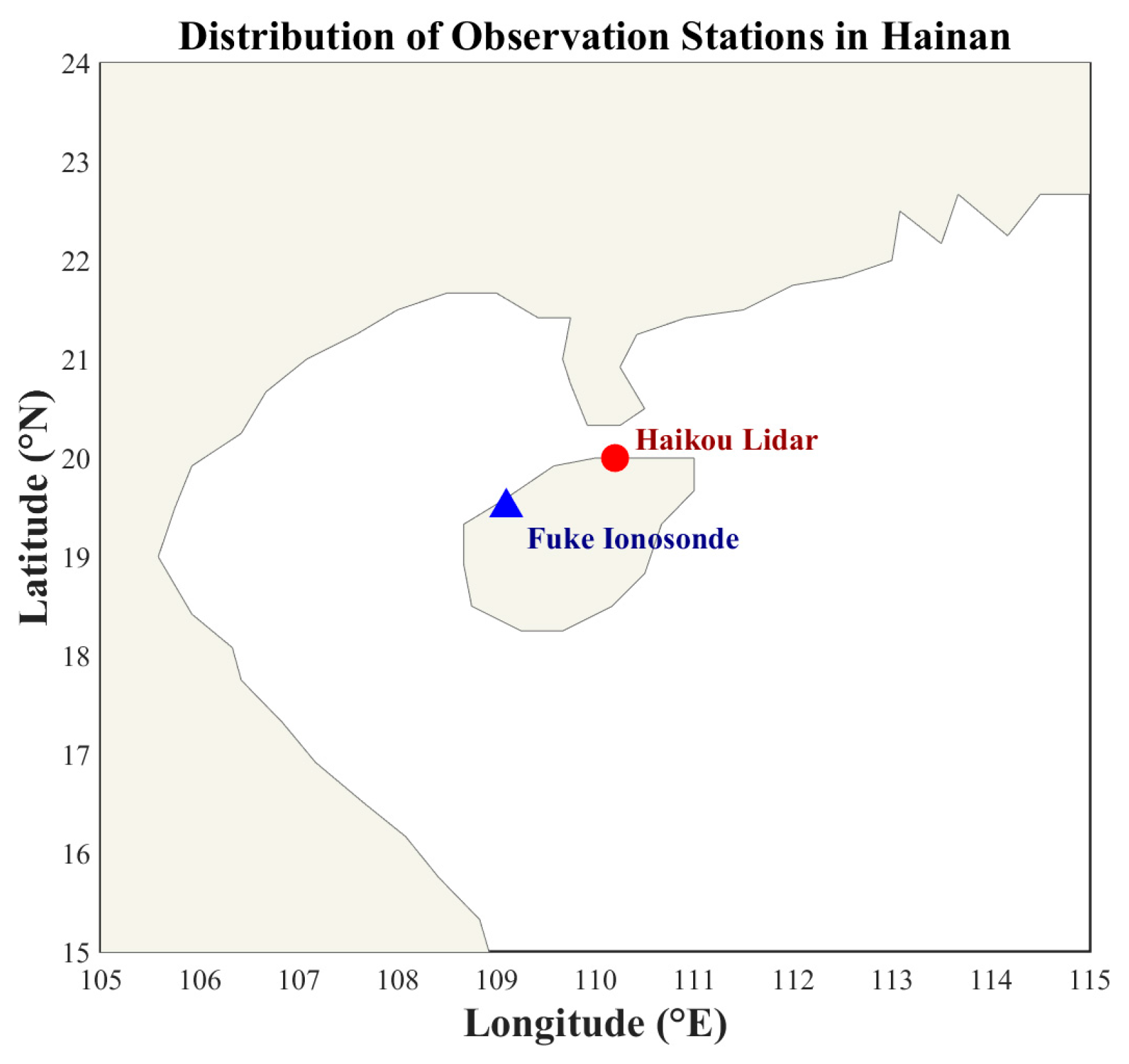
The Na density data used in this study span approximately 13 years (2012–2024). They were obtained from sodium lidar observations at the Haikou station (20° N, 110.2° E) of the Chinese Meridian Project. Figure 1 shows the geographic locations of the lidar and the ionosonde, and Table 1 lists the main characteristics of the lidar at the Haikou station.
In this study, the effective observation duration refers to the accumulated duration of valid Na density data after data processing and quality control. The data were interpolated onto regular height grids of 80–110 km with a 0.5 km resolution and regular time grids with a 10 min resolution. Missing values, nonphysical values, and extreme outliers were removed, and only the remaining valid intervals were used for SSL identification and statistical analysis.
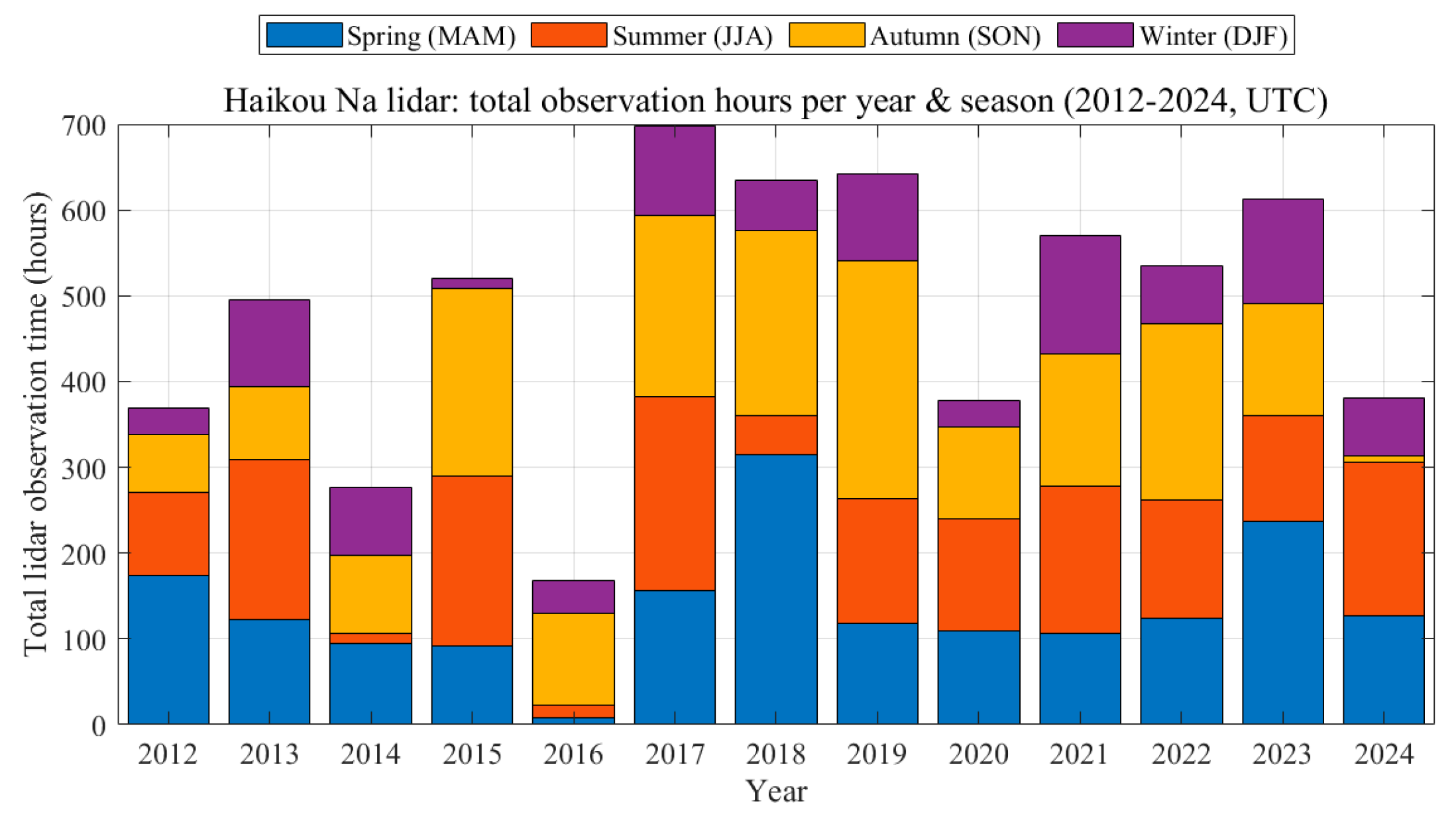
Figure 2 shows the annual total observation time and its seasonal distribution for the Haikou sodium lidar over 2012–2024. In this study, spring, summer, autumn, and winter are defined as March–May, June–August, September–November, and December–February, respectively. The observation time in 2017–2019 and 2023 is relatively high, all exceeding approximately 600 h, whereas the observation time in years such as 2014 and 2016 is relatively limited. In terms of seasonal distribution, there was a certain degree of imbalance in observation time among the four seasons. On average over 2012–2024, the seasonal observation durations are approximately 137 h in spring, 128 h in summer, 145 h in autumn, and 73 h in winter. However, most years covered all four seasons, ensuring the representativeness of the data on the seasonal scale.
Overall, this dataset covers a period of 13 years and has good temporal continuity and seasonal coverage, providing a reliable data basis for analyzing the climatological characteristics of the sodium layer and transient structures such as SSLs. Although the 2021 data had relatively good observation-time coverage, they showed anomalous altitude distributions from March to October, probably due to instrumental issues, as shown in Appendix A. Therefore, these data were excluded from the following analysis.
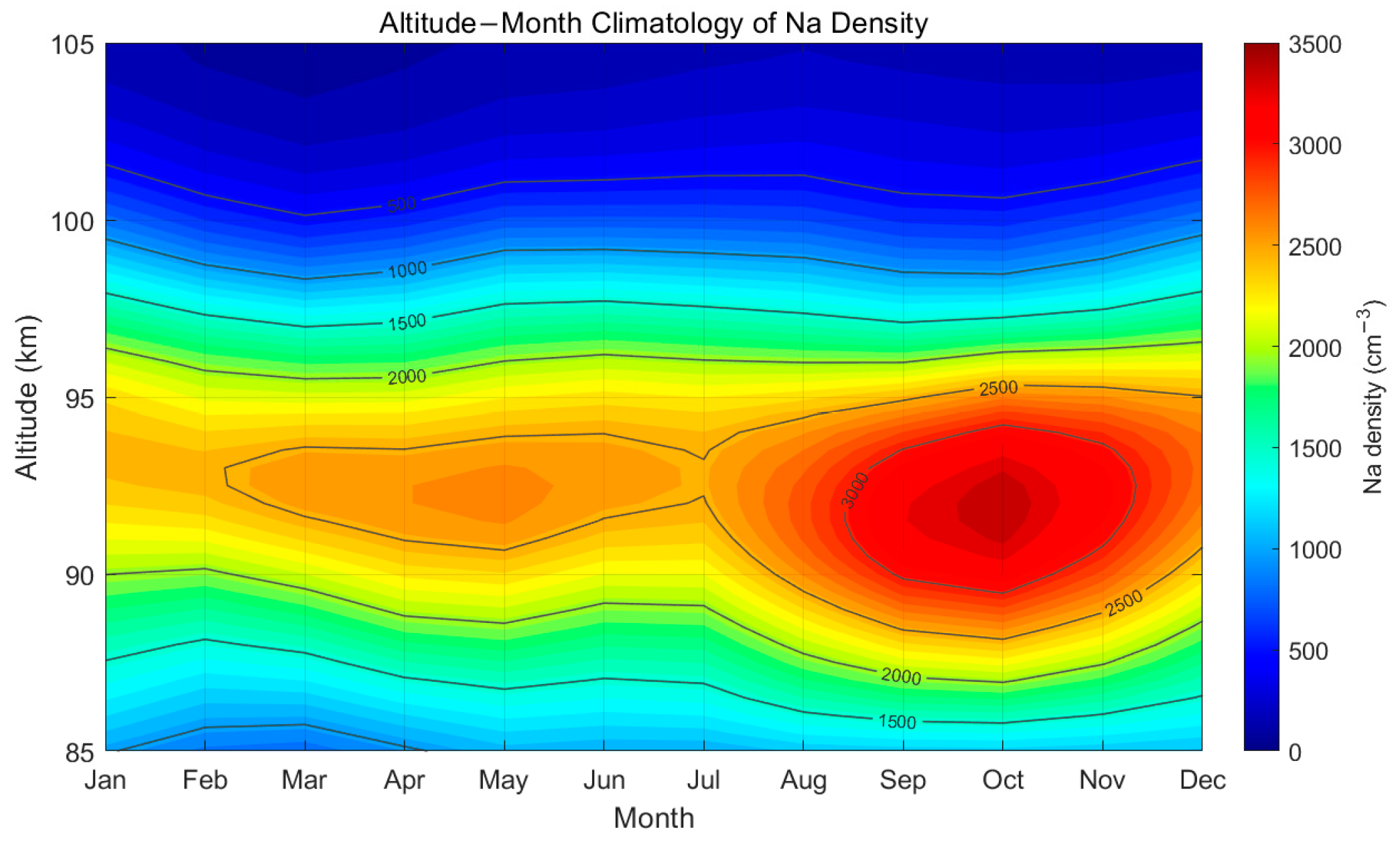
Figure 3 shows the climatological height–month distribution of Na density over Haikou during 2012–2024. The vertical distribution of the Na layer exhibits a typical single-peak, bell-shaped structure, consistent with previous long-term Na lidar observations showing a Na density profile peaking near 91 km [17]. The peak altitude remains stable throughout the year at approximately 90–93 km, while the Na density near the layer peak shows a moderate seasonal variation with an amplitude of approximately 25%. This moderate variation is broadly consistent with the low-latitude behavior reported by Plane et al. [18], who showed that within the 30° S–30° N range, the Na column abundance exhibits a winter enhancement of only a factor of about 1.3, corresponding to an increase of approximately 30%. The observed enhancement of Na density in autumn (approximately September–November) may be attributed to the following factors: 1. Meteoric input: the meteoric ablation rate exhibits a clear seasonal cycle, and more metals, including sodium, are injected during autumn in the Northern Hemisphere; 2. Coupling of neutral Na chemistry: the conversion between Na and its reservoir species (such as NaHCO3) is strongly dependent on temperature and composition, and under autumn and winter conditions, this conversion is more favorable for the regeneration of atomic Na [17,18].

2.2. Identification and Analysis of SSL Events

In this study, the following criteria are used to identify SSL events. First, the peak density of the sporadic layer must exceed twice the background value at the same altitude. When the event occurs above 100 km, given the low background sodium density, an additional requirement is imposed that the peak density of the sporadic layer must exceed 1000 cm−3. In this study, the background sodium density is defined as the mean sodium density averaged over 2012–2024 (with 2021 excluded) for the corresponding month. Second, the full width at half maximum of the sporadic layer must be less than 4 km, reflecting its strong vertical localization and thin-layer nature. Finally, the event must persist continuously for at least 20 min, so as to exclude false anomalies caused by short-term noise, transient signal fluctuations, or retrieval errors.
These constraints on intensity, structure, and duration can effectively guarantee a reasonable identification of the SSLs.

2.3. Source of Es Layer Data

This study uses ionospheric observation data from the digital ionosonde at the Fuke station (19.5° N, 109.1° E) in Hainan, China, of the Chinese Meridian Project (National Space Science Center, Chinese Academy of Sciences, 2020). The station code is FKT, and its geographic location is marked in Figure 1. This instrument transmits radio waves over a swept frequency range and simultaneously receives echoes reflected by the ionosphere to obtain ionograms, from which ionospheric characteristic parameters such as foEs (frequency of the sporadic E layer) and hEs (virtual height) are further derived. The criterion adopted in this study for identifying Es is foEs ≥ 4 MHz, and the data used in the analysis cover the period from January 2014 to December 2024.

3. Climatological Characteristics of SSLs

Based on the 736 effective observation days and a total of 5779 h of observations obtained by the Hainan sodium lidar during 2012–2024, a total of 249 sporadic sodium layer (SSL) events were identified. To further reveal the spatiotemporal variation in SSL, a statistical analysis of its occurrence rate is conducted. In this study, the SSL occurrence rate is defined as the ratio of the SSL duration to the effective observation interval of the night. This definition allows a uniform quantification of SSL activity levels under conditions where the effective observation duration differs among months, seasons, and years, thereby improving the comparability of statistical results across different timescales.
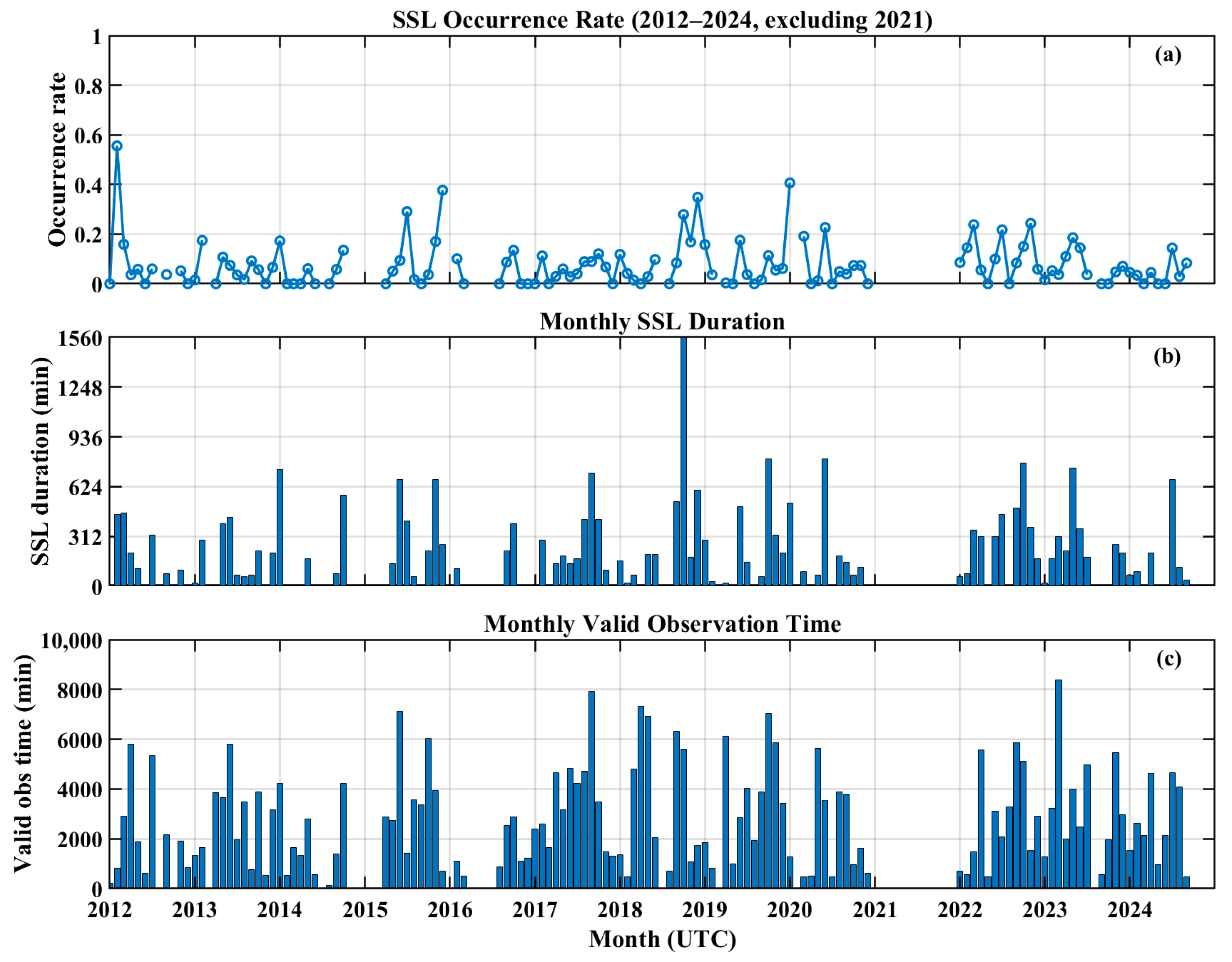
Figure 4 shows the variations in SSL occurrence rate, cumulative duration, and total observation time of the Hainan sodium lidar over 2012–2024, and Table 2 further lists the months with high occurrence rates for each year. In Table 2, high SSL months are defined as the months with the highest occurrence rates among all months with valid observations in that year. When several months showed comparable occurrence rates, all of these months were included. Results show that the months with high SSL occurrence rates exhibit significant interannual variability. For example, in some years, high occurrence mainly appeared in winter or autumn, whereas in other years it occurred in spring or summer. These findings indicate that SSL occurrence may be influenced by interannual variations in background dynamical processes and ionospheric conditions.
Despite the interannual differences, February and October appear as months with high occurrence rates in multiple years, indicating that SSLs over Hainan may have a certain seasonal preference in late winter and autumn. October was a high-occurrence month in 2014, 2016, 2017, 2018, and 2022, while February repeatedly appeared in 2012, 2013, 2016, and 2017. These results suggest that these two months may correspond to background conditions more favorable for SSL formation. Note that the data coverage is uneven among different years and months (Figure 4c and Table 2). There are months with little to no observation. For these months, the SSL occurrence rates do not necessarily represent the strength of SSL activity.
Overall, the months with high SSL occurrence rates over Hainan exhibit significant interannual variability, but the repeated appearance of February and October in multiple years also reveals a certain seasonal preference in late winter and autumn.
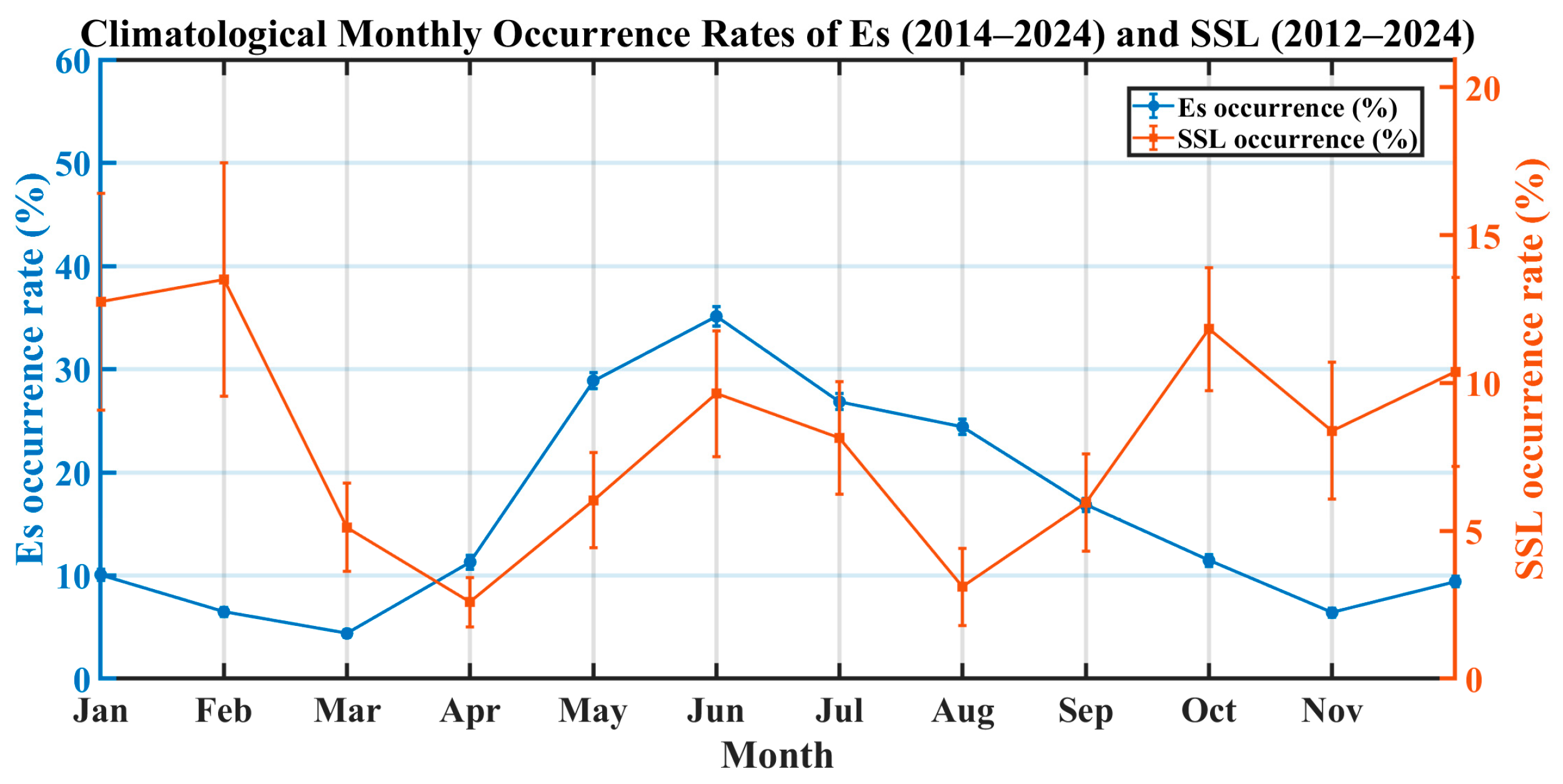
The red line in Figure 5 shows the climatological distribution of the monthly mean occurrence rate of SSLs over Hainan during 2012–2024. Three major peaks in February, June, and October are present, with February having the highest occurrence rate of approximately 0.14. April and August have the lowest occurrence rate of approximately 0.02–0.03. This result is consistent with that of Dou et al. [19], who found high occurrence rates in February and June and low occurrence rates in April and August with lidar data at the same location over 2011–2012.
And the blue line in Figure 5 depicts the monthly mean occurrence rate of Es over Hainan from 2014 to 2024 (defined here as the proportion of all observation time points that are in the Es state). It can be seen that the main peak occurs in June, which is consistent with the characteristic that the Es occurrence rate in the Northern Hemisphere reaches its maximum in summer [20]. At the same time, Figure 5 also shows that the monthly mean occurrence rate of SSLs exhibits a secondary peak near June.
This analysis of the monthly occurrence rate of SSLs and Es indicates a possible coupling background between the two types of events over Hainan. In particular, the Es occurrence rate reaches its maximum in June, while the SSL occurrence rate also exhibits a local peak in June, suggesting that enhanced Es activity may provide favorable ionospheric conditions for SSL formation. That is, Es provides conditions for the rapid neutralization of Na+ by converging and transporting metallic ions downward, thereby significantly increasing the probability of SSL occurrence. Many previous studies have demonstrated this viewpoint [21,22,23]. However, their month-to-month variations are not identical, including the different months of minimum occurrence. Together with the high SSL occurrence rates in February and October and the low values in August, this indicates that, in addition to Es activity itself, other physical or chemical phenomena also play important roles in modulating the climatological distribution of SSLs.
The high occurrence of SSLs in October (autumn) over Hainan may be related to enhanced meteoric input, which is considered a direct source of SSLs. For instance, a case study by Pimenta et al. [24] showed that meteoric disintegration can directly inject additional sodium atoms into the mesopause region and form significant sodium enhancement structures above the background sodium layer. Plane et al. [18] pointed out that metal injection exhibits clear seasonal variation characteristics and that during autumn in the Northern Hemisphere, the injection rates of metals are relatively high.
Therefore, our findings indicate that while Es is an important factor, SSL formation may also be affected by direct meteoric metal input.
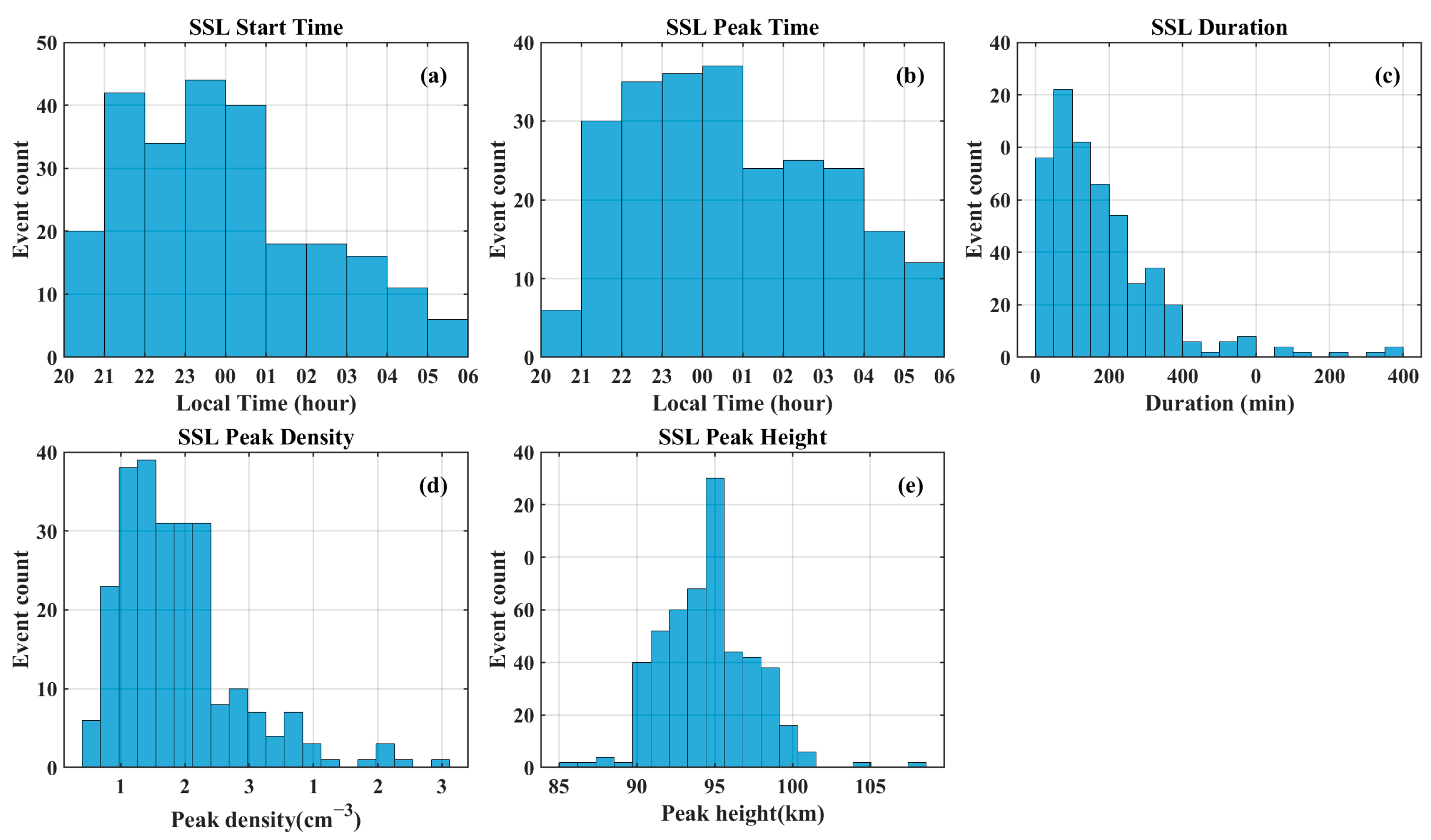
Figure 6 presents the main statistical results of SSL events over Hainan. The onset and peak times of SSL events (Figure 6a,b) show that both distributions are mainly concentrated during 21:00–01:00 LT. This indicates that SSL events over Hainan occur preferentially from the first half of the night to around midnight, with many events intensifying shortly after onset.
The duration time and peak densities (Figure 6c,d) indicate that SSLs over Hainan are dominated by events with short duration and moderate intensity, with most events lasting from tens of minutes to about 100 min and having peak densities mainly in the range of 5000–12,000 cm−3. Only a few events persist for several hours or exhibit markedly higher peak densities, suggesting that these exceptional events may correspond to unusual mesospheric conditions and warrant further investigation. Figure 6e further shows that the peak heights of SSLs are mainly concentrated at 94–96 km, and that the vast majority of events are located within the range of 90–99 km, indicating a relatively clear preferred formation altitude. In summary, SSLs over Hainan are mainly characterized as transient enhanced layer structures that occur from the first half of the night to around midnight, have relatively short durations, and have peak heights concentrated near 95 km.
These characteristics of SSLs are consistent with findings from previous studies. For instance, Dou et al. [5,19] pointed out that SSLs usually exhibit typical characteristics such as narrow layers, short lifetimes, and high occurrence frequency near midnight, and are mainly distributed around 95 km.
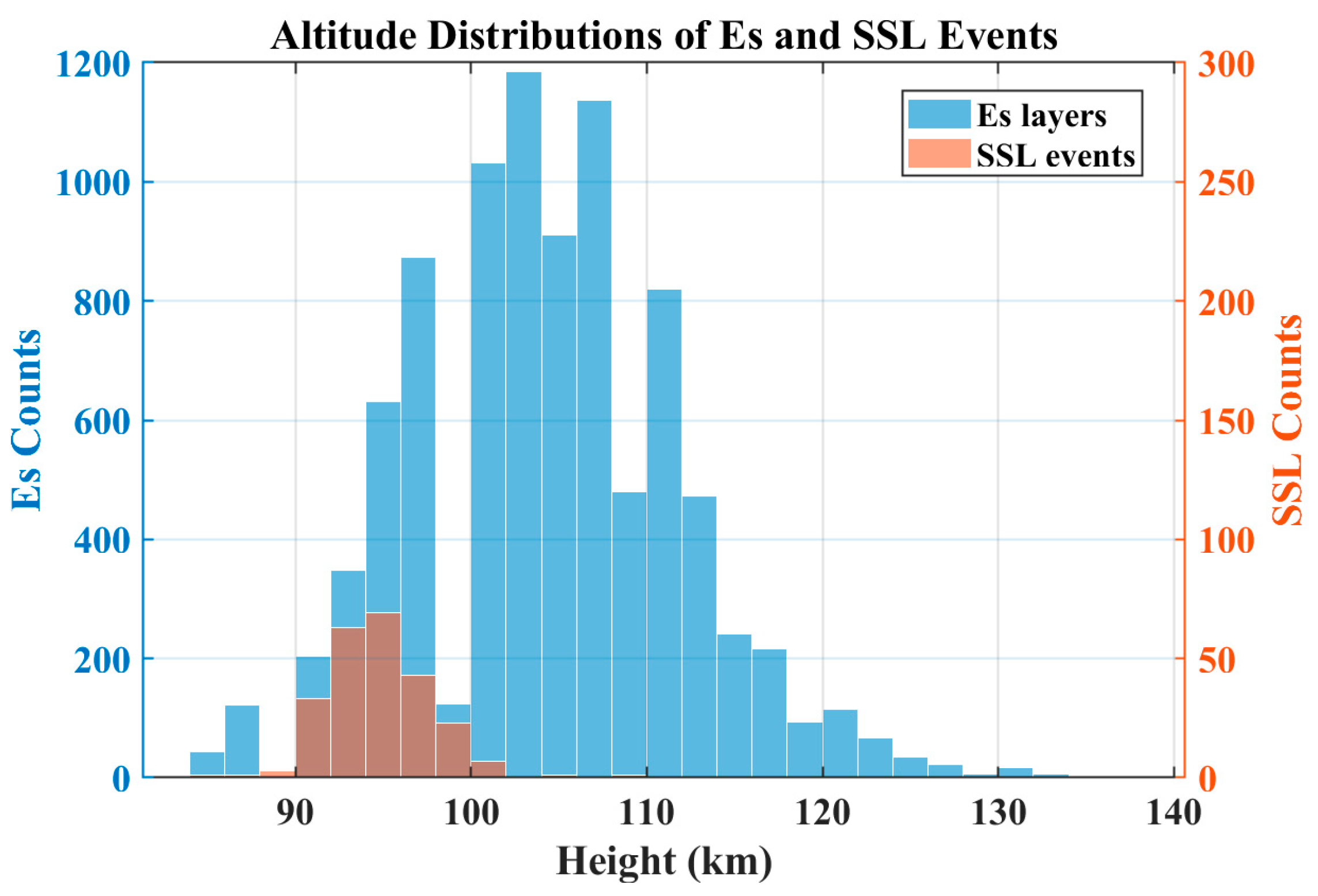
The statistical distribution of Es and SSL events shown in Figure 7—specifically the peak heights at 95–98 km and the midnight concentration—align well with the “meteor–Es–SSL” framework proposed by Dou et al. [12]. In this mechanism, meteoric ablation serves as the source of metallic ions, while Es layers provide the necessary conditions for ion convergence and subsequent neutralization. The strong preference for peak heights around 95 km in our results corresponds closely with the nighttime distribution of hEs, providing observational evidence for this coupling.
Our results, based on long-term observations, indicate a close altitude correspondence between SSLs and Es layers over the low-latitude Haikou station.

4. Case Study of a Typical SSL Event on 21 June 2019

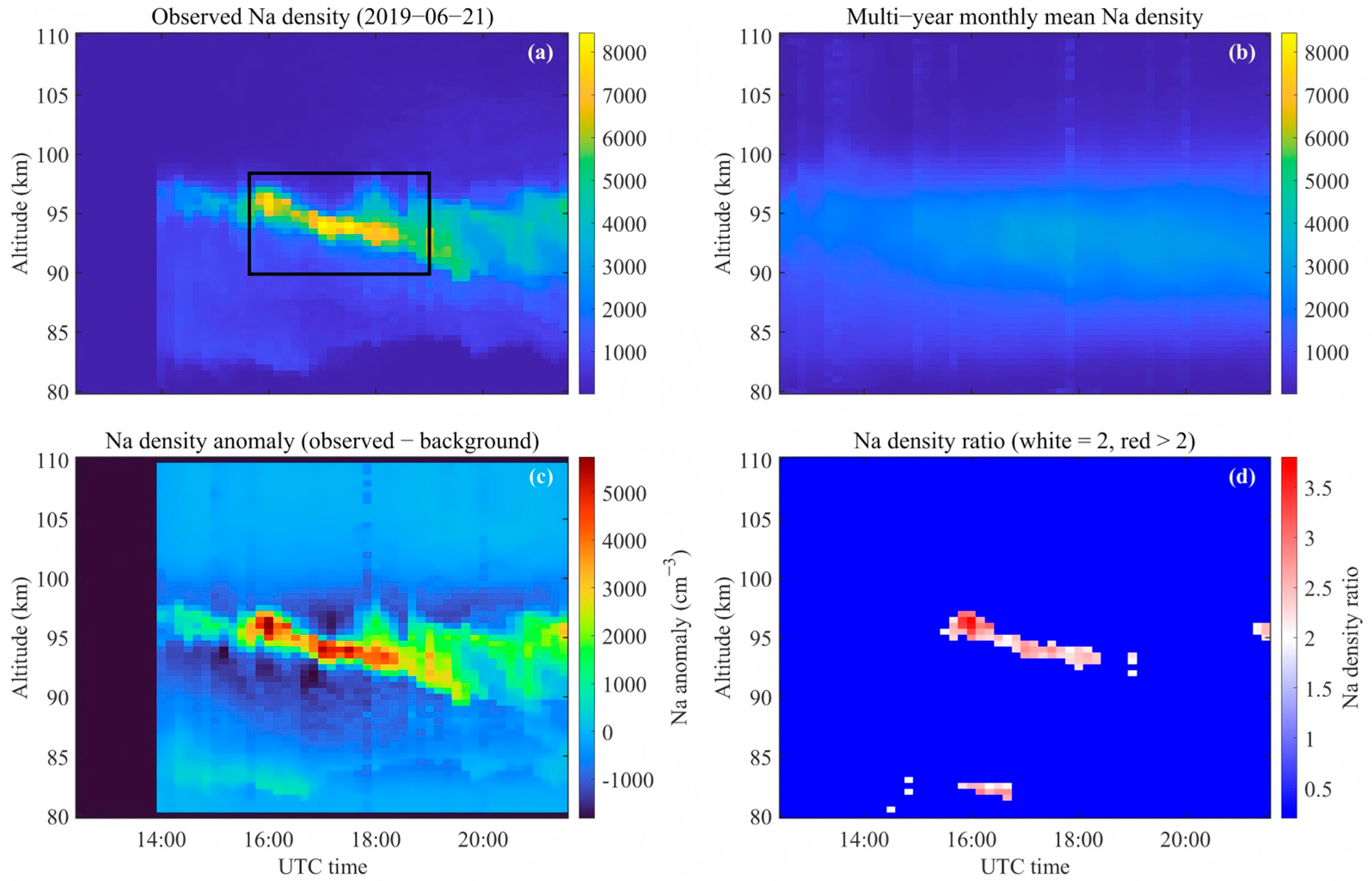
To further reveal the morphological characteristics and evolution of SSLs over Hainan, a typical SSL event on 21 June 2019 was selected for case analysis in this study. Figure 8a shows the time–height distribution of the observed Na density on that day. It can be seen that a distinct enhanced narrow-layer structure appeared within the altitude range of 93–97 km during approximately 15:30–18:30 UTC. This enhanced layer was superimposed on the background of the normal Na layer and exhibited a clear local peak and a limited vertical scale. This typical narrow-layer enhancement feature is consistent with previous lidar observations [6,25].
To determine whether this enhancement significantly deviated from the background state, the background Na density shown in Figure 8b was calculated as the climatological monthly mean Na density for June. Specifically, all valid Na density profiles observed in June during 2012–2024, excluding the anomalous data in 2021, were averaged at each altitude bin to obtain the June background profile. This monthly mean profile was then used as the reference background for the event interval on 21 June 2019. Figure 8c presents the anomaly distribution obtained by subtracting the background value from the observed Na density. The results show that during the event period, there was a clear positive anomaly region near 94–96 km, and the anomaly center gradually moved downward with time. Figure 8d further shows the distribution of the ratio between the observed and background Na densities. It can be seen that the ratio in the main region of the enhanced layer reached or exceeded 2, indicating that this event exhibited a significant enhancement relative to the climatological mean background and was consistent with the typical morphology of SSLs reported in previous lidar observations, namely a rapid sodium density enhancement within a narrow altitude range in the main sodium layer [5,6,19].
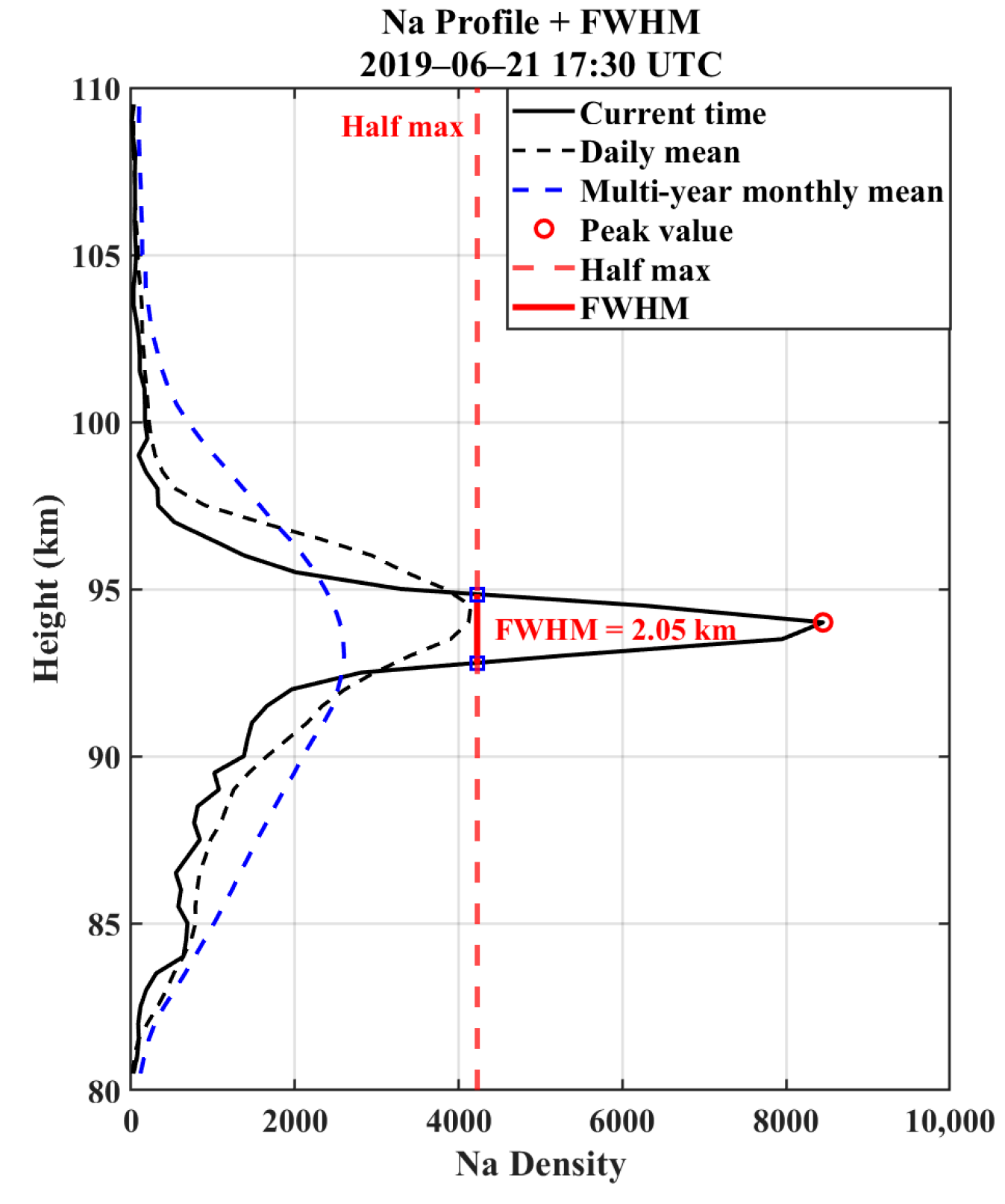
Figure 9 shows the vertical profile characteristics of this SSL event at the peak time (17:30 UTC). It can be seen that near an altitude of approximately 94 km, the observed Na density exhibited a pronounced sharp peak reaching about 8450 cm−3, which was significantly higher than both the multi-year mean background and the daily mean background for the same period. This indicates that the event did not simply reflect an overall uplift of the background Na layer, but instead formed a prominent enhanced layer within a localized altitude range. The full width at half maximum (FWHM) of this enhanced layer was approximately 2.05 km, which is less than the 4 km threshold used for SSL identification in Section 2.2.
These results indicate that SSLs over Hainan are characterized by pronounced localization, thin-layer structures, and transient enhancement, suggesting that their formation process differs from the smooth variation in the background sodium layer and is more likely associated with short-term rapid disturbance processes in the mesopause region. Its formation mechanism has been discussed in the third section.

5. Conclusions

Based on sodium lidar observations at the Haikou station, Hainan, during 2012–2024, this study investigated the climatology of sporadic sodium layers (SSLs) at low latitudes and their relationship with sporadic E (Es) layers. The main conclusions are as follows:
(1)
The occurrence rate of SSLs over Hainan exhibits significant interannual variability. The months with high occurrence rates differ considerably from year to year and do not show a stable recurring intra-annual pattern, indicating that SSL occurrence is jointly modulated by changes in ionospheric conditions, direct meteoric injection, and other factors.
(2)
Although no fixed seasonal distribution is observed, February and October repeatedly appear as months with high occurrence rates in multiple years, with February appearing in 4 years and October in 5 years among the 12 analyzed years. This indicates that SSLs have a certain seasonal preference in late winter and autumn. The monthly mean occurrence rate further shows pronounced maxima in February and October.
(3)
The monthly mean occurrence rate of Es reaches its annual maximum around June, while the SSL occurrence rate also exhibits a local peak in June, indicating that Es layers play an important role in SSL formation. However, the high occurrence rates of SSLs in February and October, as well as the minima in April and August, indicate that Es is not the only controlling factor, and that other physical and chemical processes, together with the background atmospheric environment, also play important modulating roles.
(4)
Statistical results show that SSLs mostly occur between 21:00 and 01:00 LT, with both onset and peak times concentrated in this interval, durations mainly of the order of tens of minutes, and peak heights concentrated at 94–96 km, exhibiting the typical narrow-layer characteristics of the mesopause region.
(5)
Analysis of a typical case shows that SSLs appear as localized enhanced narrow-layer structures, with significant positive anomalies and a tendency to evolve downward with time, further confirming that they are transient phenomena associated with rapid enhancement of the neutral metal layer.
Overall, SSLs over Hainan exhibit significant interannual variability and a weak seasonal preference, and their formation is jointly influenced by direct meteoric injection, Es-related ionospheric processes, and neutral Na chemistry. Future work combining multi-source observations and numerical simulations will help to further quantify the relative contributions of tidal winds, metallic ion transport, and chemical processes to SSL formation.

Author Contributions

Conceptualization, J.L.; Methodology, J.L.; Formal analysis, Y.H.; Investigation, Y.H.; Resources, H.F.; Data curation, Y.H.; Writing—original draft, Y.H.; Writing—review & editing, H.W., J.L. and H.F.; Visualization, Y.H.; Supervision, H.W., J.L. and H.F. All authors have read and agreed to the published version of the manuscript.

Funding

This research was funded by the Innovation Research Foundation of National University of Defense Technology (NUDT). The APC was funded by the authors.

Institutional Review Board Statement

Not applicable.

Informed Consent Statement

Not applicable.

Data Availability Statement

The Na lidar density data (DOI: 10.12176/01.05.047) and the SAO ionosonde data (DOI: 10.12176/01.06.020) from Hainan stations are available upon request from the National Space Science Data Center (NSSDC, https://www.nssdc.ac.cn).

Acknowledgments

The authors acknowledge the National Space Science Data Center (https://www.nssdc.ac.cn) for providing the ionosonde and lidar data. This work uses scientific data from the Meridian Project (National Major Science and Technology Infrastructure of China). We thank the data center and the staff of the Fuke and Haikou stations.

Conflicts of Interest

The authors declare no conflict of interest.

Appendix A

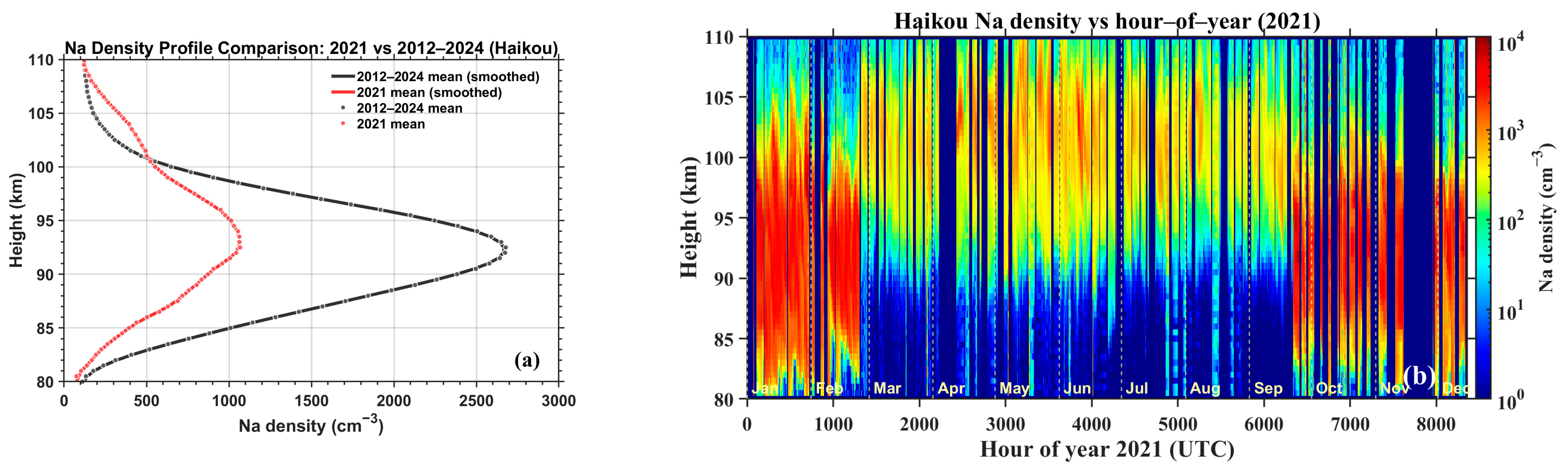
Analysis of the anomalous Hainan data in 2021: Figure A1a shows that the mean Na density profile in 2021 was significantly lower than the multi-year mean for 2012–2024, with the difference being particularly pronounced near the peak height of the main sodium layer. Figure A1b further shows that the Na density from March to October was much lower than normal values, and that the observed sodium layer was mainly located above approximately 95–110 km, which deviates markedly from the main sodium layer altitude range of 85–100 km. This feature is also reflected in Figure A1a. These anomalies may have been caused by abnormal photon count data received by the instrument. Therefore, the 2021 Na density data were severely affected by instrumental anomalies and therefore cannot reliably represent the actual atmospheric state for that year. Accordingly, to avoid introducing bias into the analysis, the 2021 data were excluded from all subsequent climatological and statistical analyses in this study.
Figure A1. Hainan Haikou: (a) the black solid line denotes the mean Na density at each altitude during 2012–2024, while the red solid line denotes that in 2021; (b) hourly mean Na density at each altitude for the whole year of 2021.
Atmosphere 17 00571 g0a1

References

  1. Bowman, M.R.; Gibson, A.J.; Sandford, M.C.W. Atmospheric Sodium measured by a Tuned Laser Radar. Nature 1969, 221, 456–457. [Google Scholar] [CrossRef]
  2. Clemesha, B.R.; Kirchhoff, V.W.J.H.; Simonich, D.M.; Takahashi, H. Evidence of an extra-terrestrial source for the mesospheric sodium layer. Geophys. Res. Lett. 1978, 5, 873–876. [Google Scholar] [CrossRef]
  3. Clemesha, B.R. Sporadic neutral metal layers in the mesosphere and lower thermosphere. J. Atmos. Terr. Phys. 1995, 57, 725–736. [Google Scholar] [CrossRef]
  4. Höffner, J.; Friedman, J. The mesospheric metal layer topside: A possible connection to meteoroids. Atmos. Chem. Phys. 2004, 4, 801–808. [Google Scholar] [CrossRef]
  5. Dou, X.K.; Xue, X.H.; Chen, T.D.; Wan, W.X.; Cheng, X.W.; Li, T.; Chen, C.; Qiu, S.; Chen, Z.Y. A statistical study of sporadic sodium layer observed by Sodium lidar at Hefei (31.8° N, 117.3° E). Ann. Geophys. 2009, 27, 2247–2257. [Google Scholar] [CrossRef]
  6. Qiu, S.; Tang, Y.; Jia, M.; Xue, X.; Dou, X.; Li, T.; Wang, Y. A review of latitudinal characteristics of sporadic sodium layers, including new results from the Chinese Meridian Project. Earth-Sci. Rev. 2016, 162, 83–106. [Google Scholar] [CrossRef]
  7. Gong, S.S.; Yang, G.T.; Wang, J.M.; Liu, B.M.; Cheng, X.W.; Xu, J.Y.; Wan, W.X. Occurrence and characteristics of sporadic sodium layer observed by lidar at a mid-latitude location. J. Atmos. Sol.-Terr. Phys. 2002, 64, 1957–1966. [Google Scholar] [CrossRef]
  8. Ma, J.; Xue, X.; Dou, X.; Chen, T.; Tang, Y.; Jia, M.; Zou, Z.; Li, T.; Fang, X.; Cheng, X.; et al. Large-Scale Horizontally Enhanced Sodium Layers Coobserved in the Midlatitude Region of China. J. Geophys. Res. Space Phys. 2019, 124, 7614–7628. [Google Scholar] [CrossRef]
  9. Fan, Z.Y.; Plane, J.M.C.; Gumbel, J. On the global distribution of sporadic sodium layers. Geophys. Res. Lett. 2007, 34, L15808. [Google Scholar] [CrossRef]
  10. Haldoupis, C. Midlatitude Sporadic E. A Typical Paradigm of Atmosphere-Ionosphere Coupling. Space Sci. Rev. 2012, 168, 441–461. [Google Scholar] [CrossRef]
  11. Takahashi, T.; Nozawa, S.; Tsuda, T.T.; Ogawa, Y.; Saito, N.; Hidemori, T.; Kawahara, T.D.; Hall, C.; Fujiwara, H.; Matuura, N.; et al. A case study on generation mechanisms of a sporadic sodium layer above Tromsø (69.6° N) during a night of high auroral activity. Ann. Geophys. 2015, 33, 941–953. [Google Scholar] [CrossRef]
  12. Dou, X.-K.; Xue, X.-H.; Li, T.; Chen, T.-D.; Chen, C.; Qiu, S.-C. Possible relations between meteors, enhanced electron density layers, and sporadic sodium layers. J. Geophys. Res. Space Phys. 2010, 115, A06311. [Google Scholar] [CrossRef]
  13. Kane, T.J.; Hostetler, C.A.; Gardner, C.S. Horizontal and vertical structure of the major sporadic sodium layer events observed during ALOHA-90. Geophys. Res. Lett. 1991, 18, 1365–1368. [Google Scholar] [CrossRef]
  14. Clemesha, B.R.; Batista, P.P.; Simonich, D.M. Concerning the origin of enhanced sodium layers. Geophys. Res. Lett. 1988, 15, 1267–1270. [Google Scholar] [CrossRef]
  15. Jiao, J.; Yang, G.; Zou, X.; Gong, S.; Wang, J.; Tian, D.; Zhang, W.; Zhang, T.; Yang, X.; Fu, J.; et al. Joint observations of sporadic sodium and sporadic E layers at middle and low latitudes in China. Chin. Sci. Bull. 2014, 59, 3868–3876. [Google Scholar] [CrossRef]
  16. Xie, H.Y.; Ning, B.Q.; Zhao, X.K.; Hu, L.H. Case study of simultaneous observations of sporadic sodium layer, E-region field-aligned irregularities and sporadic E layer at low latitude of China. Adv. Space Res. 2017, 59, 1559–1567. [Google Scholar] [CrossRef]
  17. She, C.-Y.; Krueger, D.A.; Yan, Z.-A.; Yuan, T.; Smith, A.K. Climatology, Long-Term Trend and Solar Response of Na Density Based on 28 Years (1990–2017) of Midlatitude Mesopause Na Lidar Observation. J. Geophys. Res. Space Phys. 2023, 128, e2023JA031652. [Google Scholar] [CrossRef]
  18. Plane, J.M.C.; Feng, W.; Dawkins, E.C.M. The Mesosphere and Metals: Chemistry and Changes. Chem. Rev. 2015, 115, 4497–4541. [Google Scholar] [CrossRef]
  19. Dou, X.K.; Qiu, S.C.; Xue, X.H.; Chen, T.D.; Ning, B.Q. Sporadic and thermospheric enhanced sodium layers observed by a lidar chain over China. J. Geophys. Res. Space Phys. 2013, 118, 6627–6643. [Google Scholar] [CrossRef]
  20. Haldoupis, C.; Pancheva, D.; Singer, W.; Meek, C.; MacDougall, J. An explanation for the seasonal dependence of midlatitude sporadic E layers. J. Geophys. Res. Space Phys. 2007, 112, A06315. [Google Scholar] [CrossRef]
  21. Yu, B.; Xue, X.; Kuo, C.; Lu, G.; Scott, C.J.; Wu, J.; Ma, J.; Dou, X.; Gao, Q.; Ning, B.; et al. The intensification of metallic layered phenomena above thunderstorms through the modulation of atmospheric tides. Sci. Rep. 2019, 9, 17907. [Google Scholar] [CrossRef]
  22. Qiu, S.; Wang, N.; Soon, W.; Lu, G.; Jia, M.; Wang, X.; Xue, X.; Li, T.; Dou, X. The sporadic sodium layer: A possible tracer for the conjunction between the upper and lower atmospheres. Atmos. Chem. Phys. 2021, 21, 11927–11940. [Google Scholar] [CrossRef]
  23. Xia, Y.; Nozawa, S.; Jiao, J.; Wang, J.; Li, F.; Cheng, X.; Yang, Y.; Du, L.; Yang, G. Statistical study on sporadic sodium layers (SSLs) based on diurnal sodium lidar observations at Beijing, China (40.5° N, 116° E). J. Atmos. Sol.-Terr. Phys. 2021, 212, 105512. [Google Scholar] [CrossRef]
  24. Pimenta, A.A.; Batista, P.P.; Andrioli, V.F.; Fagundes, P.R.; Batista, I.S. Possible relationship of meteor disintegration in the mesosphere and enhancement of sodium atoms: A case study on july 05, 2013. Adv. Space Res. 2022, 69, 1344–1350. [Google Scholar] [CrossRef]
  25. Chen, X.; Huang, W.; Ban, C.; Kosch, M.J.; Murphy, D.J.; Hu, Z.; Liu, J.; He, F.; Wang, R.; Yang, H.; et al. Dynamic Properties of a Sporadic Sodium Layer Revealed by Observations Over Zhongshan, Antarctica: A Case Study. J. Geophys. Res. Space Phys. 2021, 126, e2021JA029787. [Google Scholar] [CrossRef]
Figure 1. Geographic locations of the Haikou sodium lidar and the Fuke ionosonde in Hainan, China. The red circle and blue triangle denote the lidar and ionosonde stations, respectively.
Atmosphere 17 00571 g001
Figure 2. Annual effective observation duration at Haikou, Hainan.
Atmosphere 17 00571 g002
Figure 3. Smoothed height–month contour plot of monthly mean Na density over Haikou during 2012–2024, with 2021 excluded.
Atmosphere 17 00571 g003
Figure 4. SSL characteristics over Haikou, Hainan, averaged over each month between 2012 and 2024: (a) SSL occurrence rate; (b) SSL duration; (c) total effective observation time.
Atmosphere 17 00571 g004
Figure 5. Monthly mean occurrence rates of SSLs and Es over Haikou, Hainan. The Es occurrence rates were calculated from 2014 to 2024, while the SSL occurrence rates were calculated from 2012 to 2024, excluding 2021. Error bars represent the standard error of the mean, calculated as the standard deviation of daily occurrence rates divided by the square root of the number of valid observation days.
Atmosphere 17 00571 g005
Figure 6. Statistical results of SSL event data over Haikou, Hainan, during different years. (a) Histogram of SSL onset time. (b) Histogram of SSL peak time. (c) Histogram of SSL duration. (d) Histogram of SSL peak density. (e) Histogram of SSL peak height.
Atmosphere 17 00571 g006
Figure 7. Altitude distribution histogram of Es and SSL events. The blue bars represent Es recorded by the Fuke ionosonde during the same observation window as the lidar, and the orange bars represent SSL heights identified from sodium lidar observations.
Atmosphere 17 00571 g007
Figure 8. Contour plots of the SSL event over Hainan on 21 June 2019: (a) observed Na density, where the black box indicates the time–height region of the SSL, (b) background Na density, (c) observed Na density minus background Na density, and (d) ratio of observed to background Na density.
Atmosphere 17 00571 g008
Figure 9. Vertical profile of the SSL event over Hainan on 21 June 2019 at the peak time (17:30). The black solid line denotes the Na density profile at the peak time, the blue dashed line denotes the multi-year mean Na density profile for that month, the black dashed line denotes the daily mean Na density profile for that day, the red dashed line denotes half of the peak intensity, and the red solid line denotes the FWHM.
Atmosphere 17 00571 g009
Table 1. Basic configuration of the sodium lidar at Haikou station, Hainan.
StationHaikou (20° N, 110.2° E)
Transmitter
Wavelength (nm)589
Pulse energy (mJ)30–45
Pulse width (ns)7–10
Linewidth (GHz)~1.5
Telescope
Diameter (mm)1000
FOV (mrad)0.2–2
Time resolution (s)180
Spatial resolution (m)96
Table 2. Months with high SSL occurrence rate for each year.
Year Months with High SSL Occurrence RatesMonths with No Observational Data
201228, 10
201323
20141, 107, 11, 12
20157, 121, 2, 3
20162, 101, 4, 5, 6, 7
20172, 10Observations were available for all months
201810, 127
20191, 63
20203, 62
20223, 7, 10Observations were available for all months.
202358
2024710, 11, 12
Disclaimer/Publisher’s Note: The statements, opinions and data contained in all publications are solely those of the individual author(s) and contributor(s) and not of MDPI and/or the editor(s). MDPI and/or the editor(s) disclaim responsibility for any injury to people or property resulting from any ideas, methods, instructions or products referred to in the content.