Article

Analysis of the Characteristics of Severe Convective Weather in Xi’an Terminal Area

1
College of Aviation Meteorology, Civil Aviation Flight University of China, Guanghan 618307, China
2
China Meteorological Administration Key Laboratory for Aviation Meteorology, Guanghan 618307, China
3
Chengdu Meteorological Bureau, Chengdu 611134, China
*
Author to whom correspondence should be addressed.
Atmosphere 2026, 17(6), 530; https://doi.org/10.3390/atmos17060530
Submission received: 16 April 2026 / Revised: 15 May 2026 / Accepted: 18 May 2026 / Published: 22 May 2026

Abstract

Using surface observations, ADTD lightning data, and radar reflectivity from April-September 2022–2024 in the Xi’an terminal area, this study classified severe convective events into four categories: ordinary thunderstorms, short-duration heavy precipitation, convective wind gust, and hail events. Their temporal variability, spatial distribution, life cycle characteristics, and propagation pathways were systematically analyzed. The results reveal significant differences among convective event types across multiple temporal and spatial scales. Convective wind gust events exhibited the strongest interannual variability, with a decrease of 44% from 2023 to 2024. Hail events occurred relatively infrequently, totaling only 16 cases from 2022 to 2024. Seasonally, convective wind gusts were concentrated in April-May, while ordinary thunderstorms and short-duration heavy precipitation events mainly occurred in July–August. Most events initiated during the afternoon and intensified toward evening, with short-duration heavy precipitation events showing a bimodal diurnal variation. Ordinary thunderstorms were dominated by short-lived events lasting 30–60 min, whereas heavy precipitation, convective wind gust, and hail events were primarily associated with long-lived convective systems exceeding 180 min. Spatially, severe convective weather generally initiated in the western part of the terminal area and propagated eastward. Lightning activity was more concentrated in the southeastern sector, indicating greater impacts on the SHX waypoint. Propagation paths were predominantly oriented toward the east-northeast.

1. Introduction

Severe convective weather occurs within the troposphere and is a mesoscale or microscale atmospheric phenomenon driven by intense vertical motion. It is typically characterized by strong updrafts and downdrafts and rapid atmospheric changes and is often accompanied by hazardous weather such as thunderstorms, strong winds, hail, heavy precipitation, and tornadoes [1,2]. Severe convective weather is one of the major disaster-causing weather systems in China. Statistics indicate that during 2004–2013, severe convective weather ranked as the second leading weather-related cause of fatalities in China, following only heavy rainfall and flooding [3].
The terminal area represents the transitional airspace between the en-route phase and the approach and landing phase at the destination airport and serves as a critical node in air transportation operations. Within this airspace, aircraft are required to perform complex procedures, including arrivals, departures, approach, and go-around maneuvers. The occurrence of severe convective weather in the terminal area can significantly disrupt flight operations, leading to delays, cancelations, and even safety incidents, thereby posing a serious threat to aviation safety. A notable example is the Air France Flight 358 accident, in which the aircraft encountered intense thunderstorms and heavy rainfall during landing. The aircraft failed to decelerate effectively after touchdown, overran the runway, and subsequently caught fire [4]. Therefore, severe convective weather has long been a major focus of aviation meteorology and remains a key research topic for both domestic and international scholars.
In recent years, substantial progress has been made in the study of the climatological characteristics and environmental conditions of severe convective weather in China. Nationwide studies have demonstrated that severe convective weather exhibits pronounced regional and seasonal variability across China, with significant differences in the occurrence characteristics of various severe convective events among North China, East China, and South China, while the warm season represents the primary active period for severe convection [5]. Focusing on severe convective wind events, Yang et al. [6] established the climatological characteristics of severe convective winds in China based on multi-year observational datasets, indicating that such events occur most frequently over North and Northeast China and are closely associated with mesoscale weather systems. For North China, Ma et al. [7] further investigated the environmental characteristics of warm-season severe thunderstorms and found that high convective available potential energy (CAPE), strong vertical wind shear, and abundant moisture conditions constitute important environmental backgrounds for severe convection. Subsequently, Ma et al. [8] developed a warm-season climatology of severe thunderstorm environments over North China using multi-year samples, revealing distinct thermodynamic and dynamic conditions associated with different types of severe convective weather.
Existing studies have extensively investigated the classification and environmental conditions of severe convective weather. From the perspective of atmospheric instability and triggering conditions, various classification schemes of convective synoptic patterns have been proposed [9]. Based on hazardous weather types or convective structural characteristics, severe convective weather is commonly categorized into short-duration heavy precipitation, convective wind, hail, and ordinary thunderstorms, with their formation mechanisms analyzed in terms of thermodynamic and dynamic conditions [1,10,11,12,13,14]. In terms of environmental characterization, diagnostic indicators for different types of severe convection have been progressively established through statistical analyses of thermodynamic, moisture, and dynamic parameters [8,15]. Previous studies have shown that distinct convective types exhibit significant differences in key environmental variables, such as convective available potential energy (CAPE), convective inhibition (CIN), and vertical wind shear, reflecting the diversity in their initiation and development processes [10,16].
In terms of spatiotemporal distribution, previous studies have mainly conducted statistical analyses of severe convective weather at interannual, seasonal, and diurnal scales, demonstrating pronounced seasonal concentration and diurnal variability. Such events occur most frequently during the warm season and typically peak from afternoon to early evening [17]. At the same time, influenced by the combined effects of topography, underlying surface characteristics, and large-scale circulation patterns, the spatial distribution of severe convection exhibits significant regional differences [17]. In China, regions such as South China, Yunnan, and the Tibetan Plateau are identified as high-frequency thunderstorm areas, while hail events occur most frequently over mountainous regions, including the Tibetan Plateau and the Yunnan–Guizhou Plateau. Severe convective phenomena such as thunderstorm winds and tornadoes are mainly concentrated in the plains of eastern and central China [18]. Severe convective weather typically develops under favorable environmental conditions. Therefore, by analyzing atmospheric environments, the potential occurrence regions of severe convection can be effectively identified [19].
With the widespread application of weather radar observations and the advancement of convective identification and tracking techniques, the propagation pathways and evolutionary characteristics of severe convective weather have become an important research focus. Based on storm cell identification and trajectory tracking methods [20,21,22,23], previous studies have analyzed the movement direction, propagation speed, and structural evolution of convective systems, indicating that their motion is jointly influenced by environmental steering flow and the intrinsic dynamical structure of the systems. In addition, differences in propagation characteristics have been identified among various types of severe convective systems [24]. Previous studies have provided important insights into the propagation characteristics of severe convective systems in different regions. However, the spatiotemporal characteristics and propagation behaviors of multiple severe convective weather types in the Xi’an terminal area remain insufficiently understood, particularly under the combined influences of complex topography and dense terminal air routes.
Based on the above understanding, this study focuses on severe convective weather in the Xi’an terminal area. Using surface meteorological observations, radar data, and lightning detection data from April to September during 2022–2024, we systematically investigate four types of severe convective events, including ordinary thunderstorms, short-duration heavy precipitation, convective wind gusts, and hail. Although the study period is relatively short, it captures recent high-resolution observational records and provides meaningful insight into the most recent convective characteristics in the study region.
The analysis specifically addresses the following key aspects: (i) the interannual, monthly, ten-day, and diurnal variability characteristics of the different severe convective event types, along with the temporal distribution of their respective life cycles; (ii) the spatial distribution patterns of each event category and the associated lightning activity characteristics; and (iii) the propagation trajectory features of severe convective events, derived through trajectory clustering methods, and a comparative assessment of their dominant movement modes. Through these analyses, this study aims to reveal the typical climatological behavior and key differences in severe convective weather in the Xi’an terminal area, thereby providing scientific support for high-resolution forecasting of severe convection and operational weather support for terminal air traffic management.

2. Data and Methods

2.1. Overview of the Study Domain

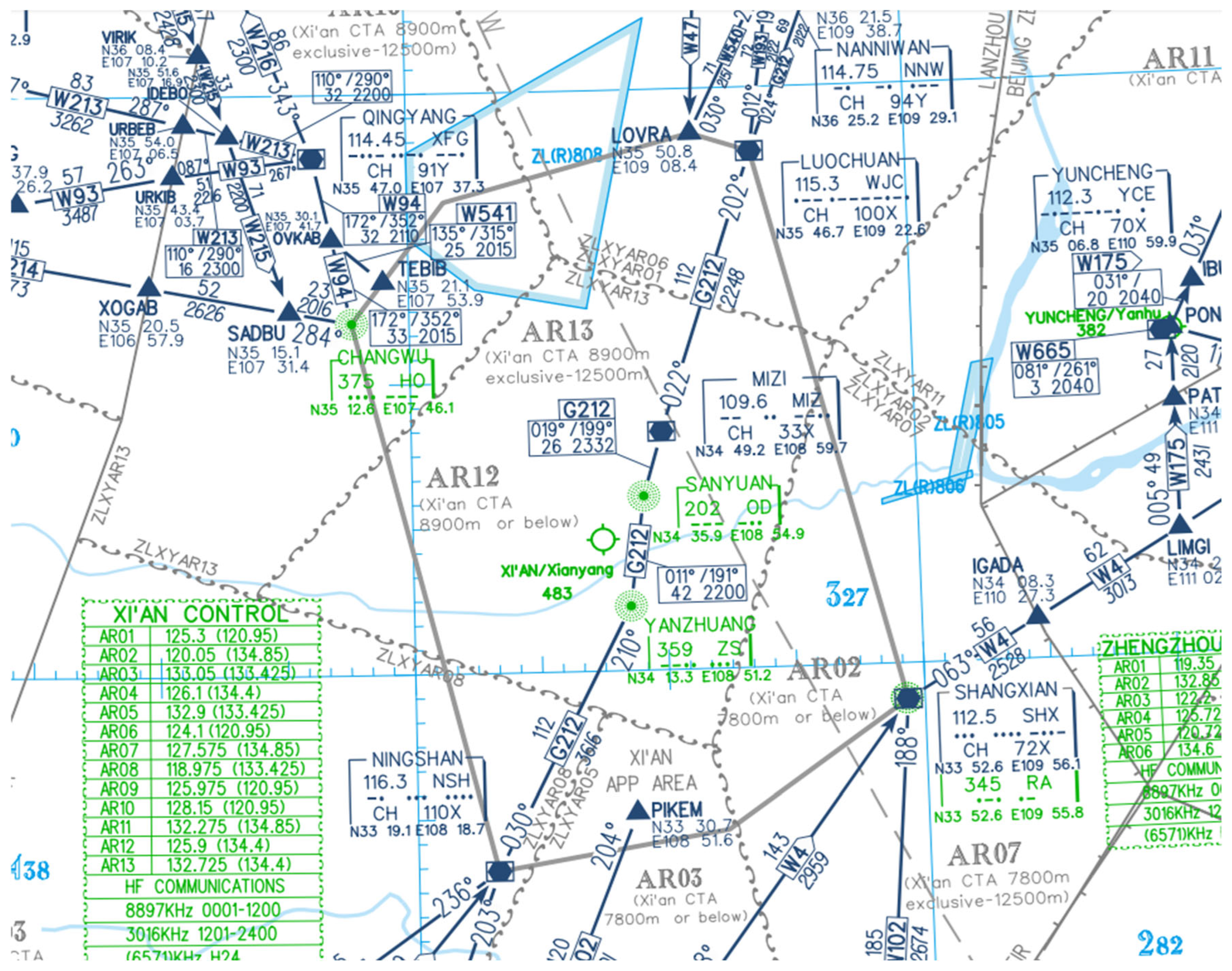
The Xi’an Terminal Area belongs to the Lanzhou Flight Information Region (FIR) and ranks among the busiest air traffic areas in China’s civil aviation system. Arrival and departure flights of the Xi’an Terminal Area are transferred at five primary waypoints (Figure 1): Changwu (HO) to the northwest; LOVRA and Luochuan (WJC) to the northeast; Ningshan (NSH) to the southwest; and Shangxian (SHX) to the southeast. Traffic volume distribution among these five waypoints is asymmetric, with the highest flow concentrations observed along the southeast and southwest directions, followed by the northeast and northwest directions. Notably, during peak hours, the traffic volume at the two waypoints of NSH and SHX accounts for 60–70% of the total flow within the terminal area.
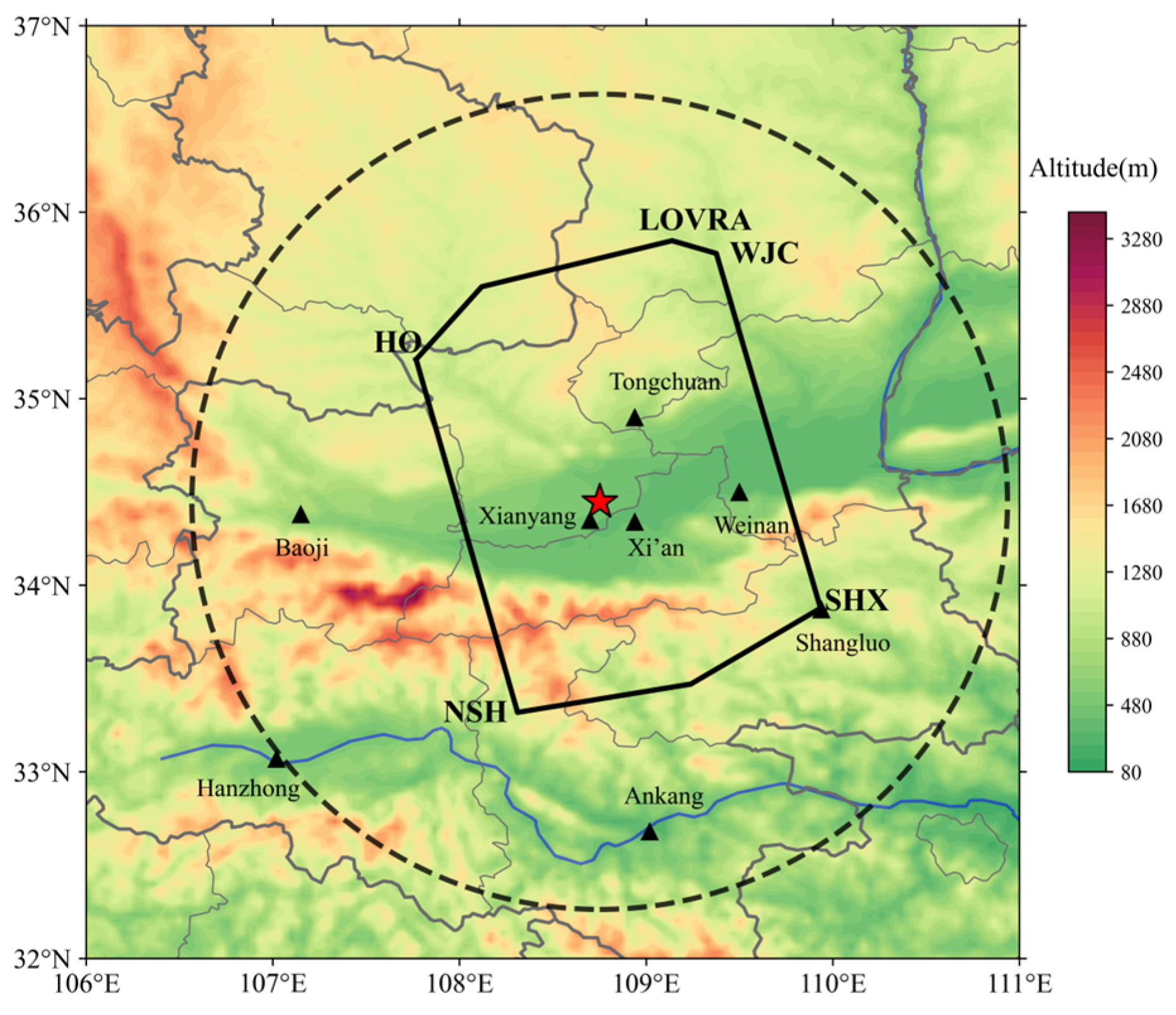
This study investigated severe convective weather affecting the Xi’an terminal area. Considering both the air traffic control boundary of the terminal area and the spatial scale of convective systems, the study domain was defined as a circular region with a radius of approximately 200 km centered on Xi’an Xianyang International Airport (Figure 2). This domain encompassed the major arrival and departure routes of the Xi’an terminal area and thus provided a representative spatial coverage of the life cycle of severe convective systems impacting the terminal airspace. Severe convective events occurring within this region during April–September of 2022–2024 were selected for statistical analysis.

2.2. Data

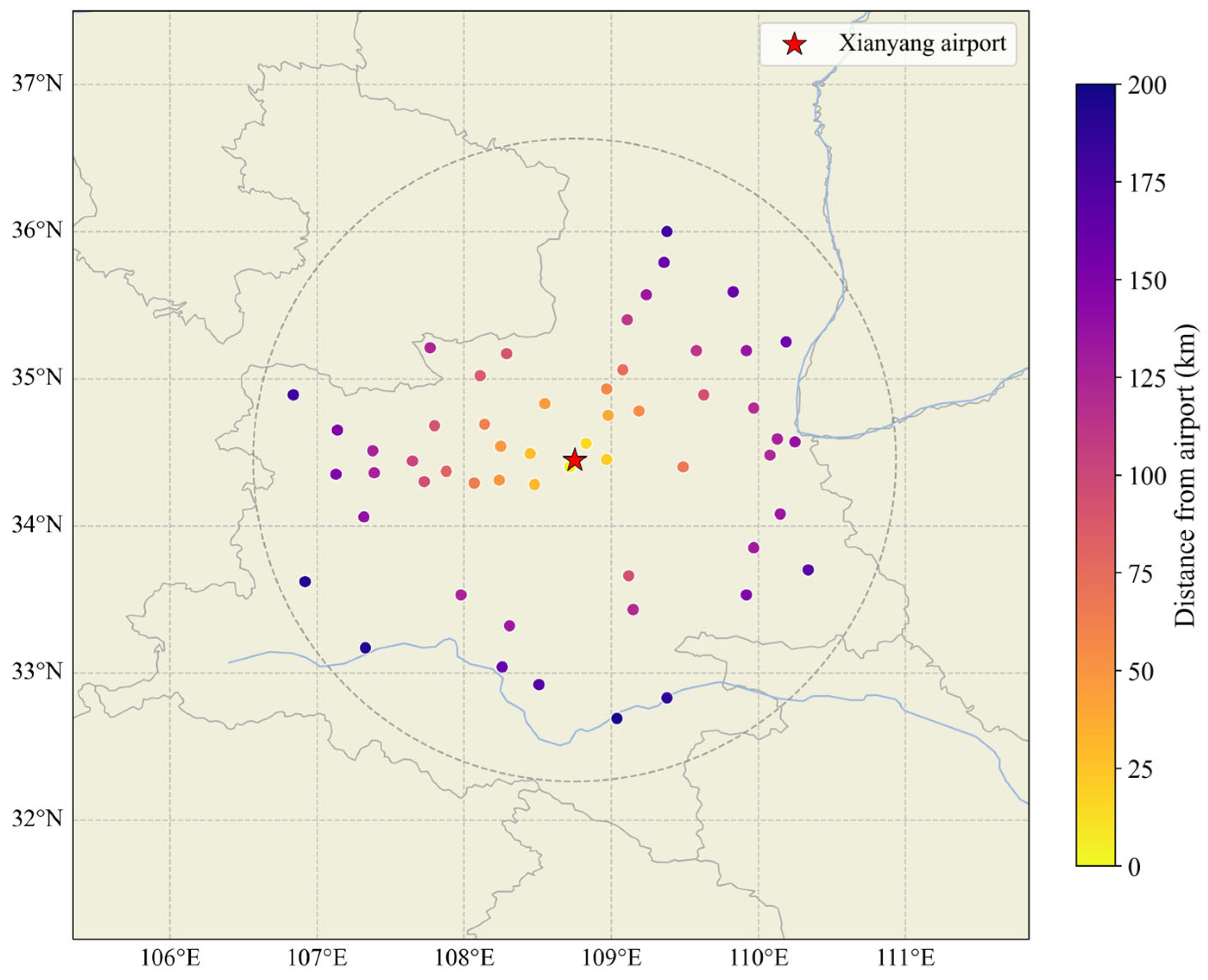
The data employed in this study include (1) hourly observational data from 55 national meteorological stations within the research scope (Figure 3), with meteorological elements including air pressure, temperature, humidity, 10 min mean wind speed, 10 min mean wind direction, maximum wind speed, precipitation in the previous hour, and hail observation records; (2) lightning data recorded by the ADTD Lightning Location System [25] of Shaanxi Province, where the system detects and locates cloud-to-ground lightning, and the dataset contains information such as the precise occurrence time of each lightning flash, geographic location (longitude and latitude), peak current amplitude, lightning type, and location error [26,27]; and (3) radar data derived from composite reflectivity observations of the new-generation C-band Doppler weather radar at the Xi’an station (Z9290), with a temporal resolution of 6 min, a spatial resolution of 600 m, and an effective detection range of 460 km (fully covering the study domain). Due to large data volume and confidentiality constraints, the original composite reflectivity values (dBZ) were reclassified into several intensity levels (Table 1), and the reconstructed dataset contains information on radial distance, azimuth angle, and composite reflectivity intensity categories, which was used for identifying severe convective weather processes and tracking convective system movement paths.

2.3. Methods

2.3.1. Identification of Severe Convective Events

This study selected four types of severe convective events occurring within a 200 km radius centered on Xi’an Xianyang International Airport during April–September from 2022 to 2024, including short-duration heavy precipitation, convective wind gust, hail, and ordinary thunderstorm events.
Lightning location data from the ADTD network were first used to identify candidate thunderstorm periods within the study domain. Lightning occurrences with time intervals shorter than 15 min were grouped into the same convective process to ensure the temporal continuity of convective evolution while reducing the possibility of merging independent convective systems. Similar temporal thresholds have been widely used in lightning clustering and thunderstorm identification studies [28]. Radar composite reflectivity data were then used to identify convective echoes during these candidate periods. For each radar scan, the distance between radar grid points and Xi’an Xianyang International Airport was calculated, and only echoes within a radius of 200 km were retained. Near-range ground clutter within 2 km and anomalous radial echoes caused by abnormal radar propagation were removed through quality-control procedures. Convective regions were defined as connected areas with reclassified reflectivity ≥ 7 (corresponding to 35 dBZ) and a minimum area of 6 km × 6 km [29]. An eight-neighborhood connectivity algorithm was applied to identify the boundaries of convective echoes.
A temporal sliding-window method was then used to determine the life cycle of convective events. When convective echoes appeared in two consecutive radar scans within the study domain, the first valid scan was defined as the initiation time of the event. When two consecutive scans without convective echoes occurred, the previous valid scan was defined as the termination time. To ensure statistical reliability, only events with a duration longer than 12 min and containing at least three valid radar scans were retained. A total of 575 convective events were finally identified. Hourly observations from 55 automatic weather stations were used to identify severe convective weather phenomena. Following the operational forecasting criteria in China, hourly precipitation ≥ 20 mm was classified as a short-duration heavy precipitation event, maximum wind speed ≥ 17.2 m/s as a convective wind gust event, and the observation of hail as a hail event [30,31]. Wind records from Huashan Station (57,046), located at an elevation of 2064.9 m and frequently influenced by non-convective strong winds, were excluded from the analysis.
Surface weather phenomena were matched with the nearest radar scan time, and the corresponding radar reflectivity fields surrounding the station location were examined to determine whether convective echoes associated with the reported event were present. Convective events satisfying the above criteria were classified as short-duration heavy precipitation events, convective wind gust events, or hail events. The remaining events without recorded hazardous weather phenomena at surface stations were classified as ordinary thunderstorm events. Consequently, four primary types of severe convective events, together with mixed-type events (Table 2).
In this study, the frequency of severe convective weather was defined based on station observations. Specifically, if a station recorded hourly precipitation ≥ 20 mm, maximum wind speed ≥ 17.2 m s−1, or the occurrence of hail at a given time (00:00–24:00 BJT), it was counted as one occurrence of the corresponding type of severe convective weather at that station. These three types of convective phenomena were counted independently and could be recorded multiple times. For ordinary thunderstorm-type events, the event set was obtained from radar data using the identification method established in the previous section. The frequency of ordinary thunderstorms was defined on an event basis, with each identified thunderstorm process counted as one occurrence. A convective day was defined when at least one of the four types of severe convective weather occurred on a given day.

2.3.2. Tracking Method for Severe Convective Trajectories

A simplified Storm Cell Identification and Tracking (SCIT) algorithm was applied to identify and track the movement paths of severe convective events. The original SCIT algorithm identifies storm cells from radar reflectivity data through storm segmentation, centroid calculation, storm tracking, and storm position prediction and has been widely used for convective cell identification and tracking [32,33,34]. Because the radar dataset used in this study consisted of reconstructed two-dimensional composite reflectivity fields without vertical volume scan information, a simplified SCIT procedure was implemented. In the storm identification stage, a reclassified reflectivity threshold of 7 (corresponding to 35 dBZ) was applied to retain echoes associated with severe convection. One-dimensional storm segments exceeding the threshold were first detected along the radar radial direction. Adjacent segments were merged when the azimuthal separation was ≤1.5° and the radial overlap exceeded 2 km. The merged segments were then processed using an eight-neighborhood connectivity algorithm to identify two-dimensional storm cells. Storm cells with an area smaller than 36 km2 were discarded, and the centroid of each remaining cell was calculated. Storm tracking was performed by matching storm cells between consecutive radar scans based on nearest-neighbor distance and similarity in storm attributes, including storm volume and reflectivity intensity. A horizontal centroid distance threshold of 10 km was applied to associate storm cells between successive scans. Using this procedure, storm trajectories were constructed at 6 min intervals, enabling continuous monitoring of storm cell movement within the study domain.

2.3.3. Clustering Method for Severe Convective Trajectories

During a single severe convective event, multiple storm cells may form, evolve, and dissipate at different times, each possessing an independent life cycle trajectory. To characterize the primary movement feature of a convective event, after completing storm cell identification and tracking, the storm cell with the longest lifetime and the highest reflectivity intensity was selected for each event. The movement trajectory of this storm cell was then used as the representative path of the convective event.
The K-means clustering algorithm was applied to classify the movement paths of different types of severe convective events. To reduce the influence of differences in initial path locations on the clustering results, the longitude and latitude of path points were first normalized and transformed into a relative coordinate system. Based on this transformation, four parameters describing the geometric characteristics of the paths were extracted as clustering inputs.
(1) The overall movement direction angle describes the macroscopic direction of the path and is defined as the azimuth angle between the starting point and the ending point of the trajectory:
θ = arctan 2 x n x 0 , y n y 0 ,
(2) Path curvature characterizes the degree of bending during propagation and is calculated from the mean change in direction angles between adjacent path segments:
θ i = arctan 2 x i + 1 x i , y i + 1 y i ,
Δ θ i = | arctan ( sin ( θ i + 1 θ i ) , cos ( θ i + 1 θ i ) ) | ,
C = 1 N 2 i = 1 N 2 Δ θ i ,
(3) Path straightness is defined as the ratio between the actual path length and the straight-line distance:
S = L a L s ,
where
L a = i = 0 n 1 ( x i 1 x i ) 2 + ( y i 1 y i ) 2 ,
L s = ( x n x 0 ) 2 + ( y n y 0 ) 2 ,
(4) To describe potential turning behavior during storm propagation, a directional difference between the first and second halves of the path was introduced. This parameter is calculated as the absolute difference between the overall direction angles of the first half and the second half of the path.
θ 1 = arctan 2 x m i d x 0 , y m i d y 0 ,
θ 2 = arctan 2 x n x m i d , y n y m i d ,
D i r e c t i o n   D i f f e r e n c e = | arctan 2 ( sin ( θ 2 θ 1 ) , cos ( θ 2 θ 1 ) ) | ,
Since the K-means algorithm requires the number of clusters k to be specified in advance, the Silhouette Coefficient [35] was used to evaluate clustering performance. The optimal number of clusters was determined by comparing the mean silhouette coefficients corresponding to different values of k. The silhouette coefficient is defined as
S i = b i a i max ( a i , b i ) ,
where a(i) represents the average distance between sample i and other samples within the same cluster, and b(i) represents the minimum average distance between sample i and samples in other clusters. The value of S(i) ranges from −1 to 1, with larger values indicating better clustering performance.

3. Results

Based on the above criteria, the frequencies and number of occurrence days for the four types of severe convective weather during 2022–2024 were obtained (Table 3).

3.1. Temporal Distribution Characteristics of Severe Convective Weather in the Xi’an Terminal Area

3.1.1. Monthly Variability

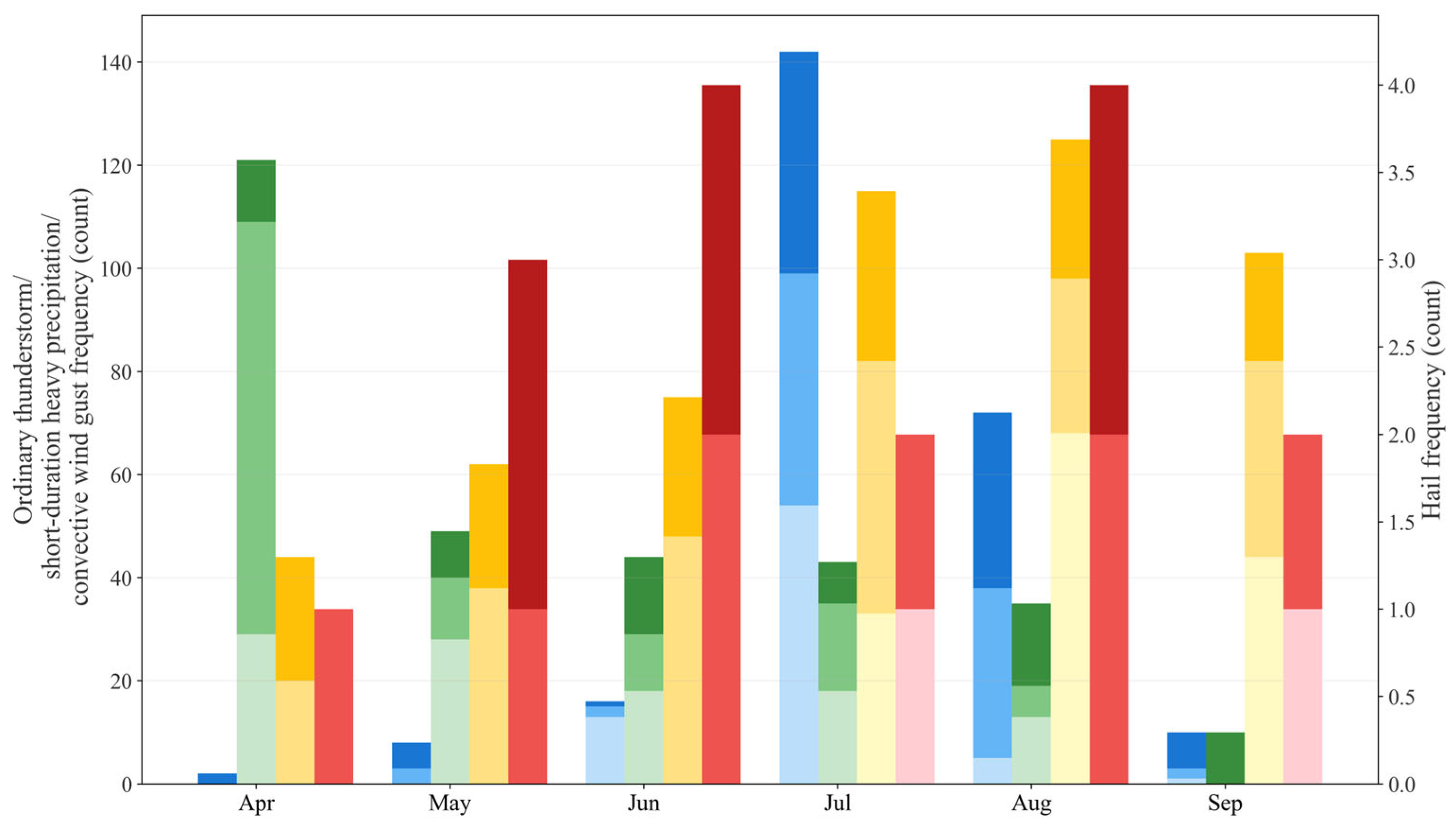
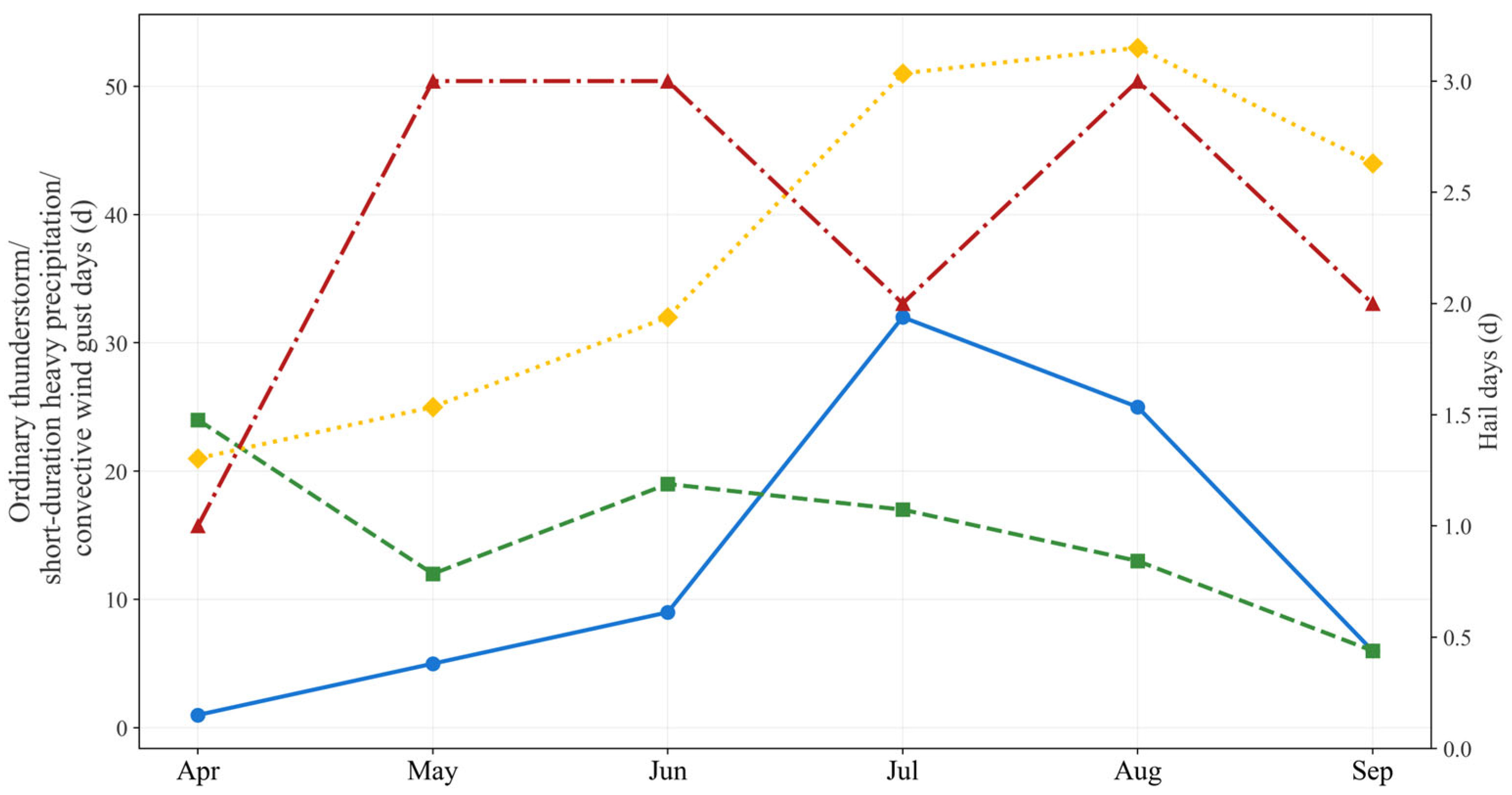
The temporal variations in severe convective weather in the Xi’an terminal area during 2022–2024 exhibit pronounced seasonal and interannual differences (Figure 4 and Figure 5). Overall, ordinary thunderstorms and short-duration heavy precipitation are the dominant convective weather types, while hail events occur much less frequently.
Short-duration heavy precipitation shows evident seasonal concentration, with most events occurring during midsummer. The frequency increases gradually from April and reaches a maximum in July, followed by a decrease in August and September. In terms of interannual variability, the total frequency in 2024 is noticeably higher than that in 2022 and 2023, particularly during August and September, indicating more active convective precipitation during that year. Convective wind gust events exhibit the strongest interannual variability among the four severe convective weather types. These events occur most frequently in spring, especially in April, and then gradually decrease toward autumn. The annual frequency reaches a maximum in 2023, mainly due to the high occurrence frequency in April. Ordinary thunderstorms display a clear warm-season unimodal distribution, with the highest frequencies occurring during July and August. Thunderstorm activity remains relatively frequent in September, indicating persistent convective activity throughout the warm season. Although the peak month varies slightly among different years, the overall tendency for enhanced thunderstorm occurrence during midsummer remains consistent. Hail events are relatively infrequent and exhibit strong interannual and monthly variability, reflecting their localized and sporadic characteristics. The highest annual frequency occurs in 2023, while monthly frequencies show relatively active periods in June and August.
Overall, severe convective weather in the Xi’an terminal area exhibits clear seasonal modulation. Convective wind gust events are most active during spring, whereas short-duration heavy precipitation and ordinary thunderstorms dominate during midsummer. In contrast, hail events remain relatively scattered in both time and frequency. These differences may reflect the varying sensitivities of different convective weather types to environmental and synoptic conditions.

3.1.2. Ten-Day Variability Characteristics

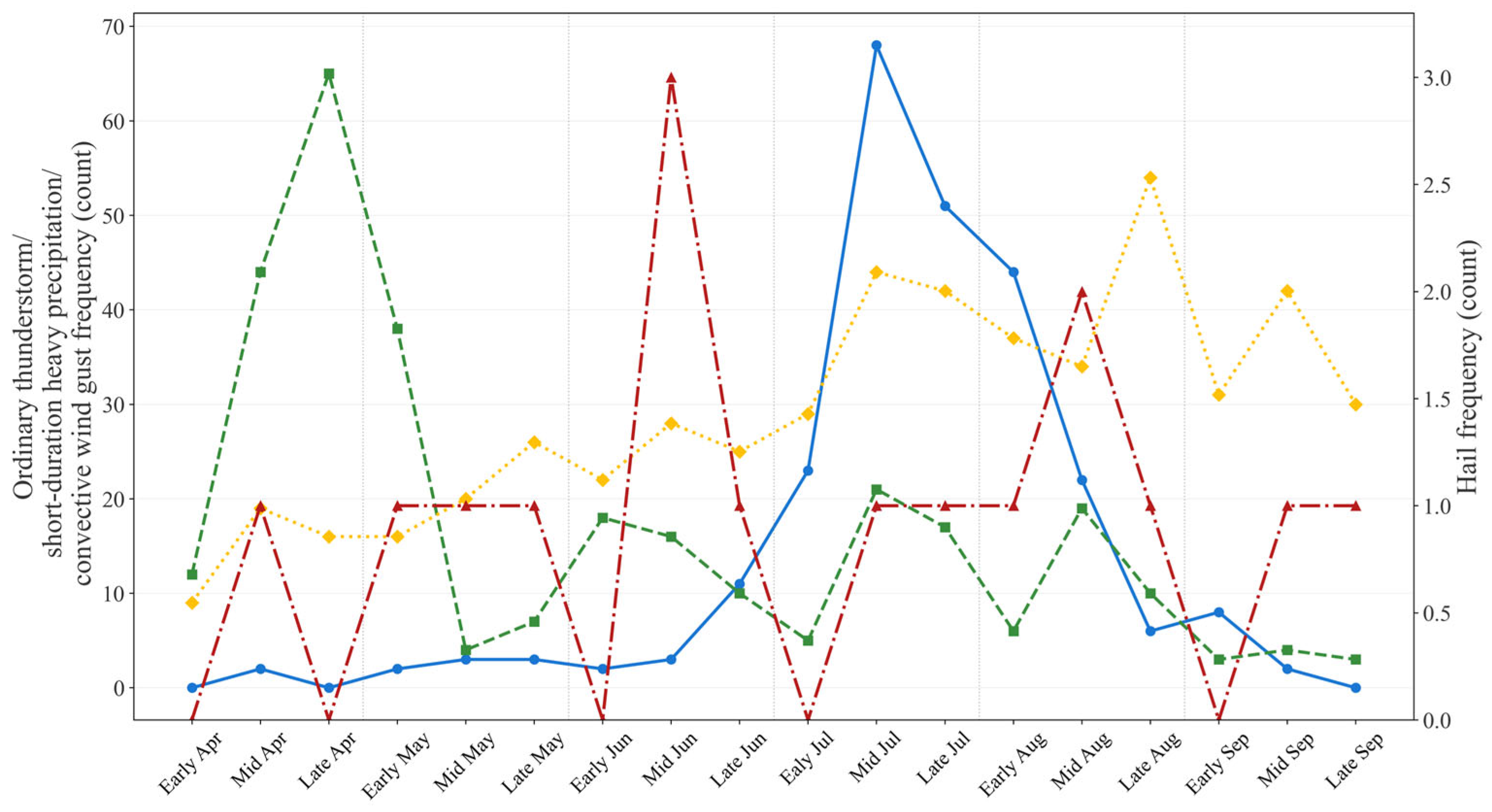
At a finer temporal resolution based on ten-day intervals (Figure 6), severe convective weather exhibits pronounced intra-monthly variability. Short-duration heavy precipitation reaches its annual maximum in mid-July and remains frequent from early July to early August before decreasing rapidly. This pattern indicates a distinct clustering of heavy precipitation events within a relatively short period. Convective wind gust events peak in late April and subsequently weaken rapidly. After June, their occurrence remains generally low, with only minor fluctuations during specific periods such as mid-July and mid-August. Ordinary thunderstorms gradually increase from May and reach their maximum frequency in late August, maintaining relatively active conditions during the late midsummer period. Hail events show relatively higher frequencies in mid-June and mid-August, while occurrences during other periods are scattered, highlighting the intermittent and localized nature of hail events.
Overall, the ten-day analysis reveals clearer stage-dependent characteristics of severe convective weather: convective wind gusts are most active in late April, hail events are relatively concentrated in mid-June, short-duration heavy precipitation peaks in mid-July, and thunderstorms remain frequent in late August.

3.1.3. Diurnal Variation Characteristics

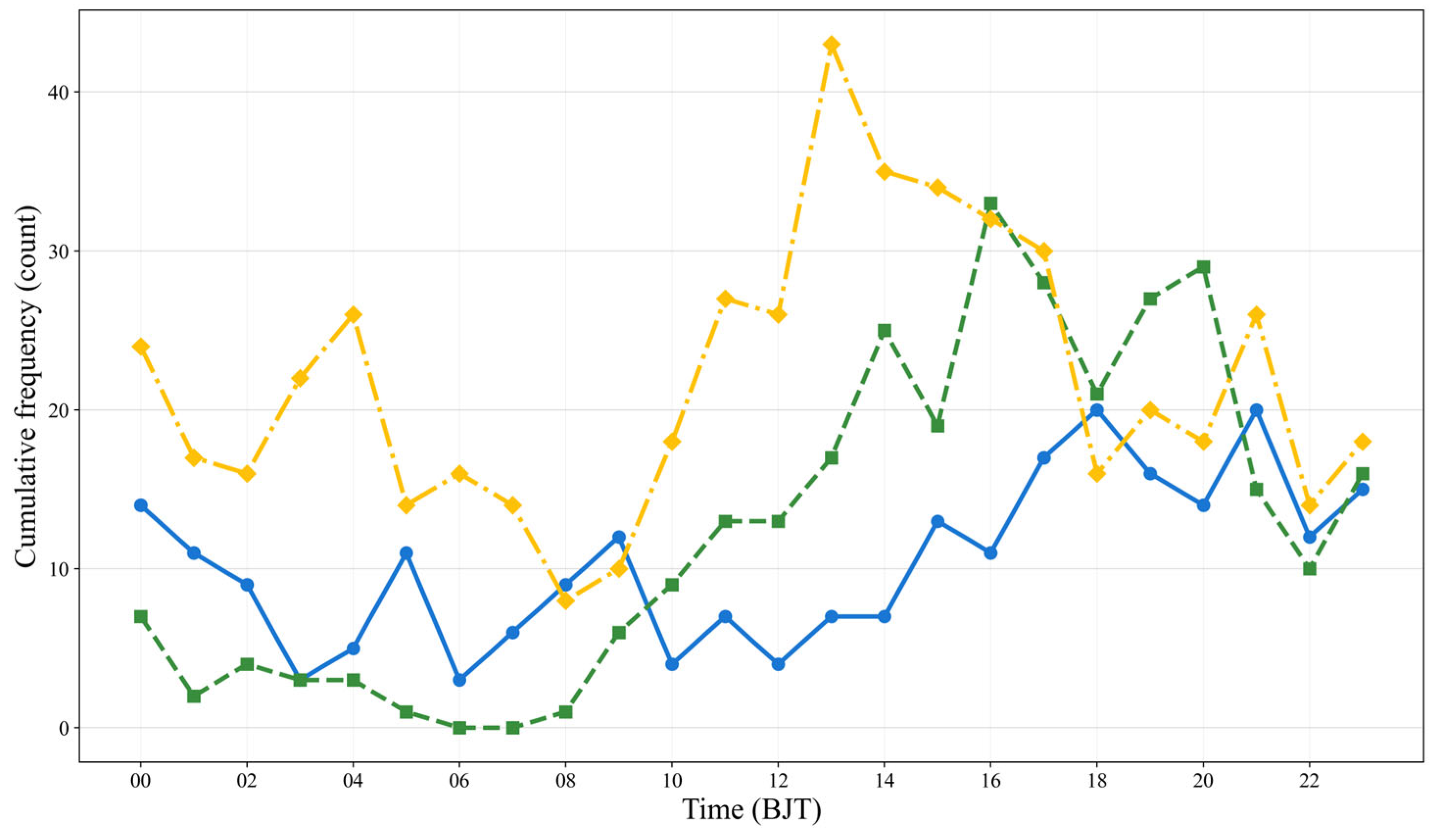
The diurnal variation in severe convective weather (Figure 7) reveals pronounced day–night differences in occurrence frequency. Short-duration heavy precipitation events exhibit a bimodal distribution. The primary peak occurs during the evening to nighttime period (17:00–21:00), with notable maxima at 18:00 and 21:00, while a secondary peak appears around midnight. This pattern suggests that such events are influenced not only by daytime convective initiation but also by the nighttime maintenance of mesoscale convective systems. Convective wind gust events show a clear unimodal distribution, with the highest frequency occurring from afternoon to early evening (14:00–20:00), followed by a rapid decline and relatively few occurrences during nighttime. This period corresponds to the time of strongest boundary layer development and most active turbulent mixing, indicating that convective wind events are likely driven by combined thermodynamic instability and dynamical mixing processes. Ordinary thunderstorms reach their peak frequency during the early afternoon (approximately 13:00–15:00), representing a typical daytime convective development pattern. This behavior highlights the strong dependence of ordinary thunderstorms on daytime surface heating. Overall, severe convective activity in the Xi’an terminal area is most active in terms of convective initiation during the afternoon. Short-duration heavy precipitation becomes more frequent from evening to nighttime, while some convective systems persist into the late night and early morning, producing a secondary precipitation peak. This diurnal pattern reflects the typical life cycle evolution of convective systems from initiation to development and maintenance, although the underlying dynamical and thermodynamical mechanisms require further investigation through environmental field analysis.

3.1.4. Temporal Characteristics of Severe Convective Event Life Cycles

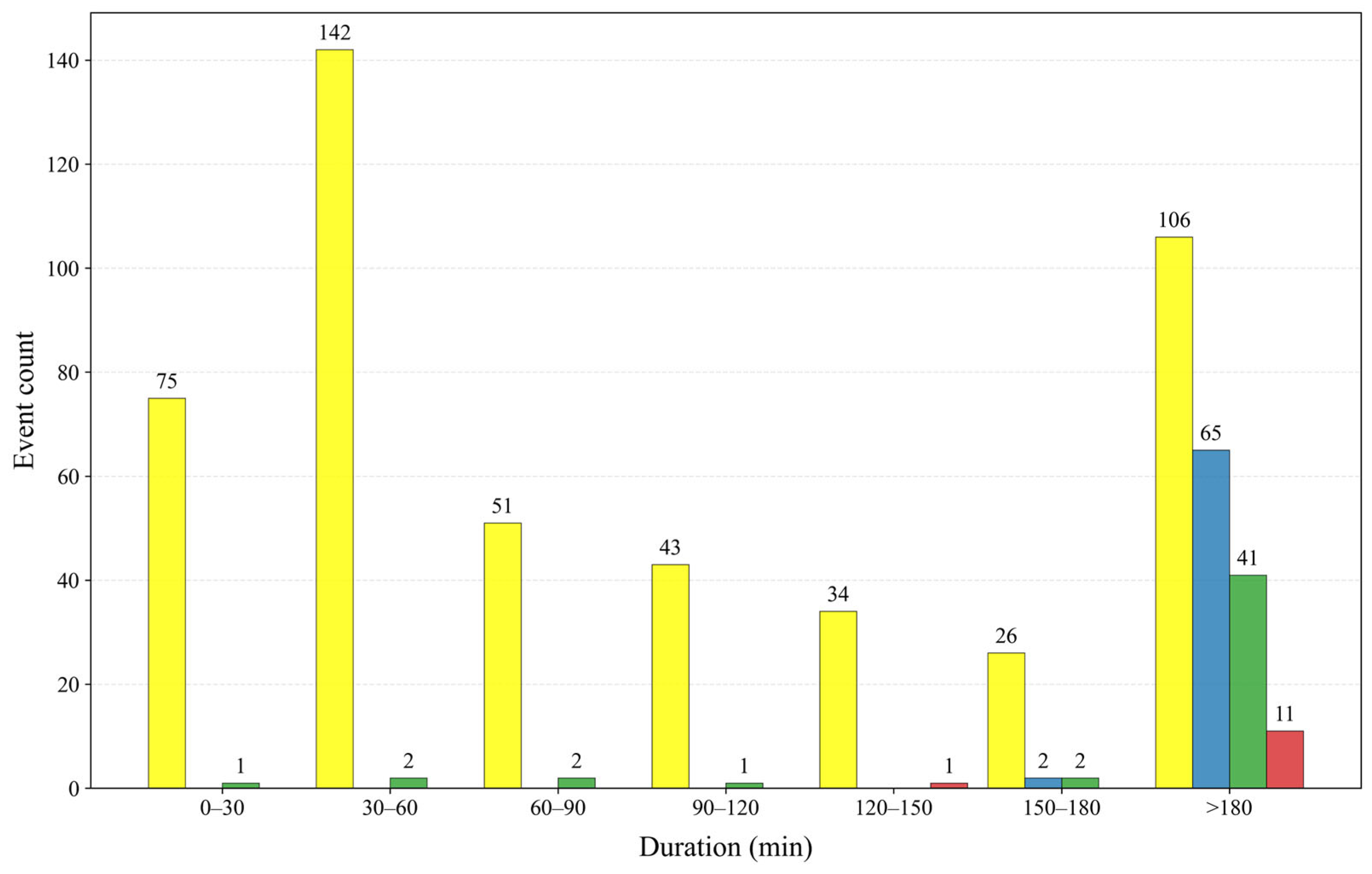
To examine the life cycle characteristics of different types of severe convective events, the duration distributions of all events during the study period are analyzed (Figure 8). Overall, ordinary thunderstorms dominate all duration categories due to their larger sample size. Their life cycle distribution shows a clear concentration in short-duration intervals. Within the 0–90 min range, 268 ordinary thunderstorm events are recorded, with the 30–60 min interval representing the peak (142 events), accounting for 29.8% of the total. This interval therefore represents the most typical life span of ordinary thunderstorm systems in the Xi’an terminal area. Nevertheless, long-lived ordinary thunderstorms also constitute a substantial proportion, with 106 events lasting longer than 180 min. In contrast, short-duration heavy precipitation, convective wind gust, and hail events exhibit markedly different life cycle distributions, characterized by a clear clustering in long-duration intervals. Short-duration heavy precipitation events display the most pronounced long-life cycle characteristics, occurring only within the 150–180 min and >180 min intervals, with 65 events lasting longer than 180 min. Convective wind gust events rarely occur in duration intervals shorter than 120 min, with only one or two events recorded. By contrast, 41 wind events fall within the >180 min interval, accounting for 83.67% of all wind events. Hail events occur only in the 120–150 min interval (1 event) and the >180 min interval (11 events). Events lasting longer than 180 min account for 91.67% of all hail events, indicating that hail occurrences are almost exclusively associated with long-lived convective systems.

3.2. Spatial Distribution Characteristics of Severe Convective Weather in the Xi’an Terminal Area

3.2.1. Spatial Distribution Characteristics of Ordinary Thunderstorm Initiation and Dissipation

The spatial distribution of severe convective events provides an important basis for identifying key impact areas of severe convection and improving weather support strategies in the Xi’an terminal area.
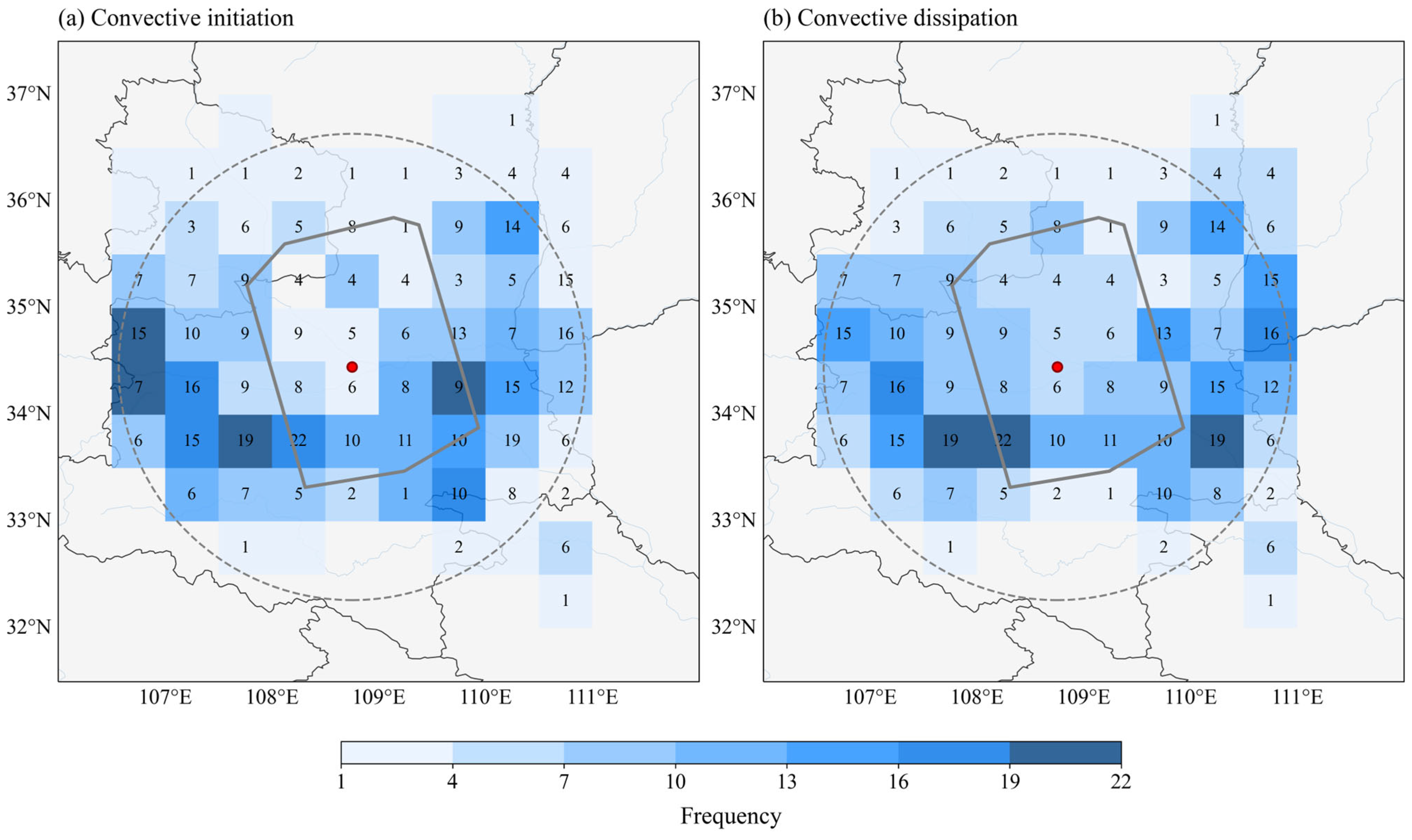
Based on the life cycle tracking of ordinary thunderstorm events, Figure 9 illustrates the spatial distributions of initiation and dissipation frequencies. Clear spatial differences are observed between these two stages. High-frequency initiation regions are mainly located along the western boundary (106.5–107° E, 34–35° N) and the southwestern sector (107.5–108° E, 33.5–34° N), as well as in the southeastern part of the terminal area (109.5–110° E, 34–34.5° N), where the grid frequency reaches 19–21 events. Secondary high-frequency regions are found in the western sector outside the terminal area, the southeastern sector, and the northwestern sector, with grid frequencies ranging from 15 to 18 events. Overall, initiation frequencies are higher in the western and southern parts of the study region, while relatively lower values occur in the central and northern areas. Within the terminal area itself, initiation frequencies are generally lower than those in the surrounding regions. The most concentrated dissipation regions are located in the southwestern sector (107.5–108.5° E, 33.5–34° N) and the eastern sector (110–110.5° E, 33.5–34° N), where frequencies exceed 18 events and reach a maximum of 22 events at some grid points. Additional high-frequency dissipation areas occur along the eastern boundary and in parts of the southeastern and western sectors, with frequencies ranging from 15 to 16 events.
A clear west–east contrast is evident within the study region: initiation frequencies are generally higher in the western region, whereas dissipation frequencies are higher in the eastern region. This pattern indicates that ordinary thunderstorm systems tend to weaken and dissipate as they propagate eastward across the study area.

3.2.2. Spatial Distribution Characteristics of Annual Mean Frequency of Short-Duration Heavy Precipitation Events

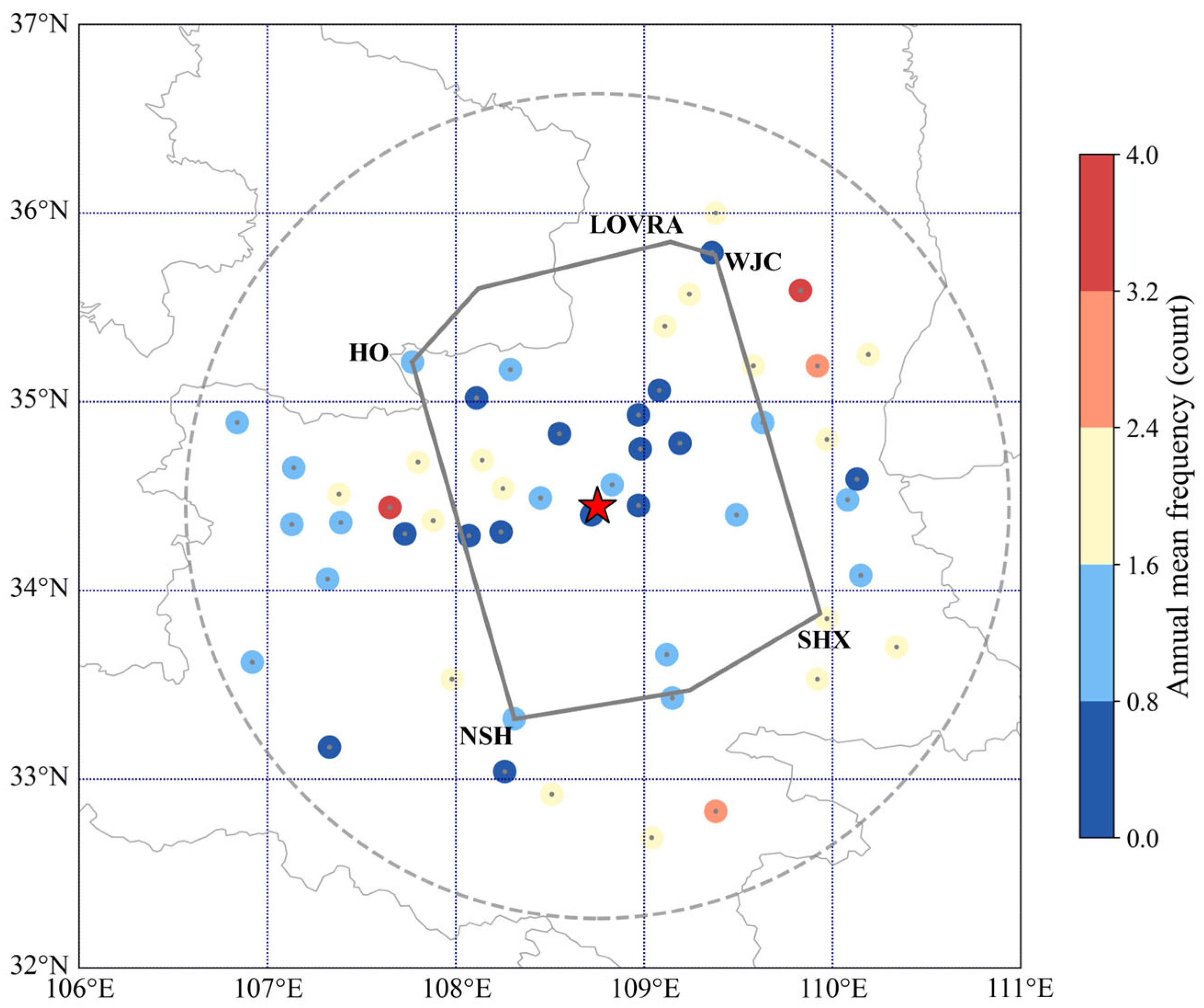
Figure 10 illustrates the spatial distribution of the annual mean frequency of short-duration heavy precipitation events affecting the Xi’an terminal area during April–September of 2022–2024. The distribution generally shows lower frequencies within the terminal area and higher frequencies in the surrounding regions, with the western and northeastern sectors representing the primary impact regions. A major high-frequency belt extends southwest–northeast south of Xi’an Xianyang International Airport and traverses the terminal area. Within this belt, the central to northern parts of the terminal area exhibit relatively higher frequencies, whereas the southern sector shows comparatively lower values. Within the broader study region, localized high-frequency centers appear near approximately 110° E in the eastern sector and west of about 108° E in the southwestern sector, where the annual mean frequency exceeds 3.2 events. In contrast, most other areas record frequencies between 0 and 2 events, indicating pronounced spatial heterogeneity. From an aviation operational perspective, short-duration heavy precipitation events most frequently affect the northeastern and southeastern arrival/departure routes, particularly near the LOVRA, WJC, and SHX waypoints. The NSH waypoint in the southwestern sector is also moderately affected, whereas the HO waypoint in the northwestern sector experiences relatively fewer impacts.

3.2.3. Spatial Distribution Characteristics of Annual Mean Frequency of Convective Wind Gust Events

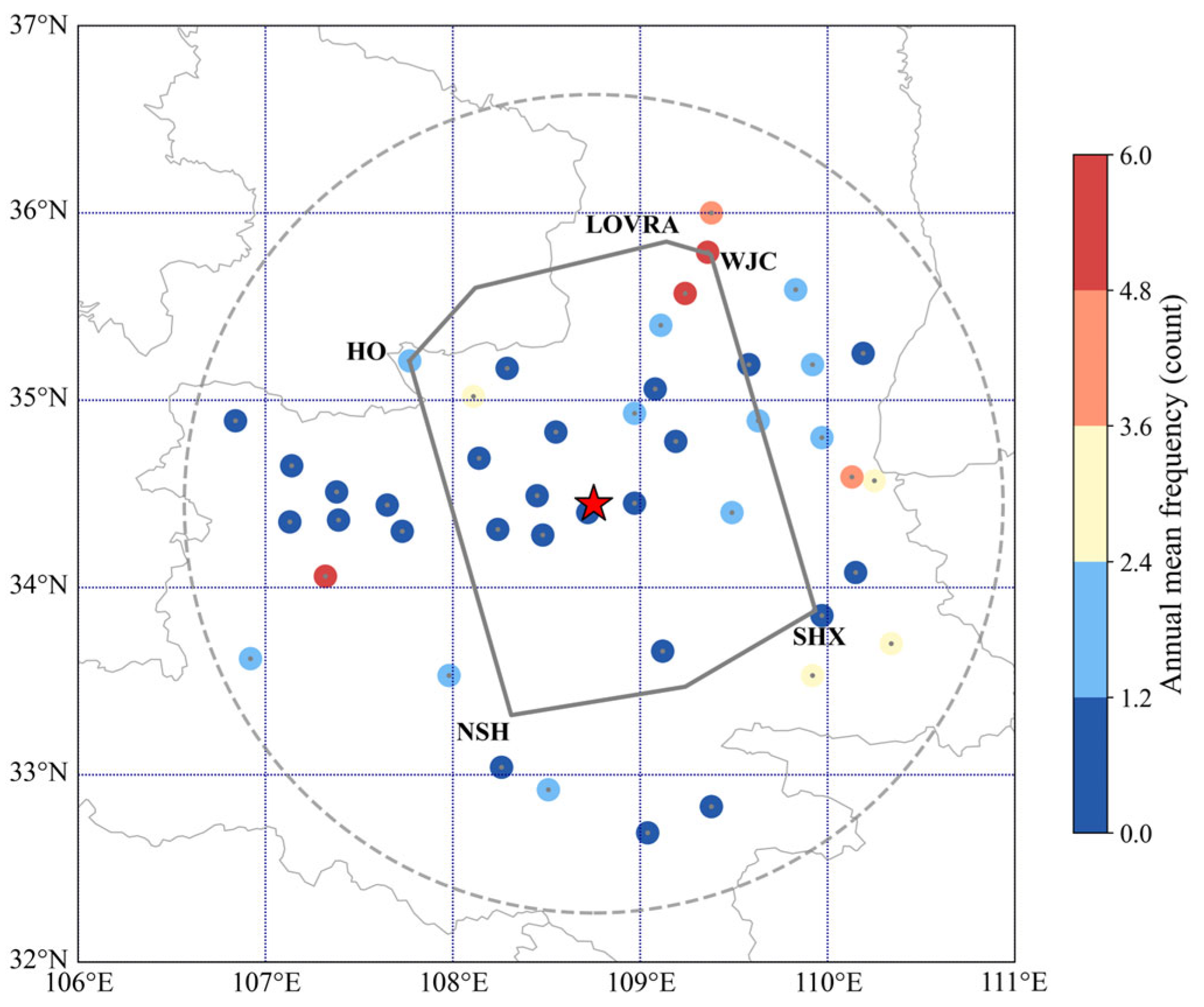
The spatial distribution of the annual mean frequency of convective wind gust events (Figure 11) reveals several distinct but spatially scattered high-frequency centers. The most prominent high-frequency region is located in the northeastern part of the study area (approximately 109–110° E, 35–36° N), where the annual mean frequency exceeds 4.8 events. This area directly affects the northeastern arrival and departure routes of the terminal area, particularly near the WJC and LOVRA waypoints. Another notable high-frequency center is located in the western part of the study region near approximately 107.3° E. Secondary high-frequency regions are sporadically distributed in the southeastern sector of the terminal area, with annual mean frequencies ranging between 2.4 and 3.6 events. In contrast to short-duration heavy precipitation events, convective wind gust events occur relatively infrequently within the Xi’an terminal area itself. Most locations record annual mean frequencies below 1.2 events, and convective wind gust events are almost absent in the southern part of the terminal area. Overall, convective wind gust events primarily affect the northeastern air routes of the terminal area. The eastern part of the study region exhibits higher frequencies than the western part, while the high-frequency centers are widely separated and show weak spatial continuity. These characteristics highlight the highly localized nature of convective wind gust events.

3.2.4. Spatial Distribution Characteristics of Annual Mean Frequency of Hail Events

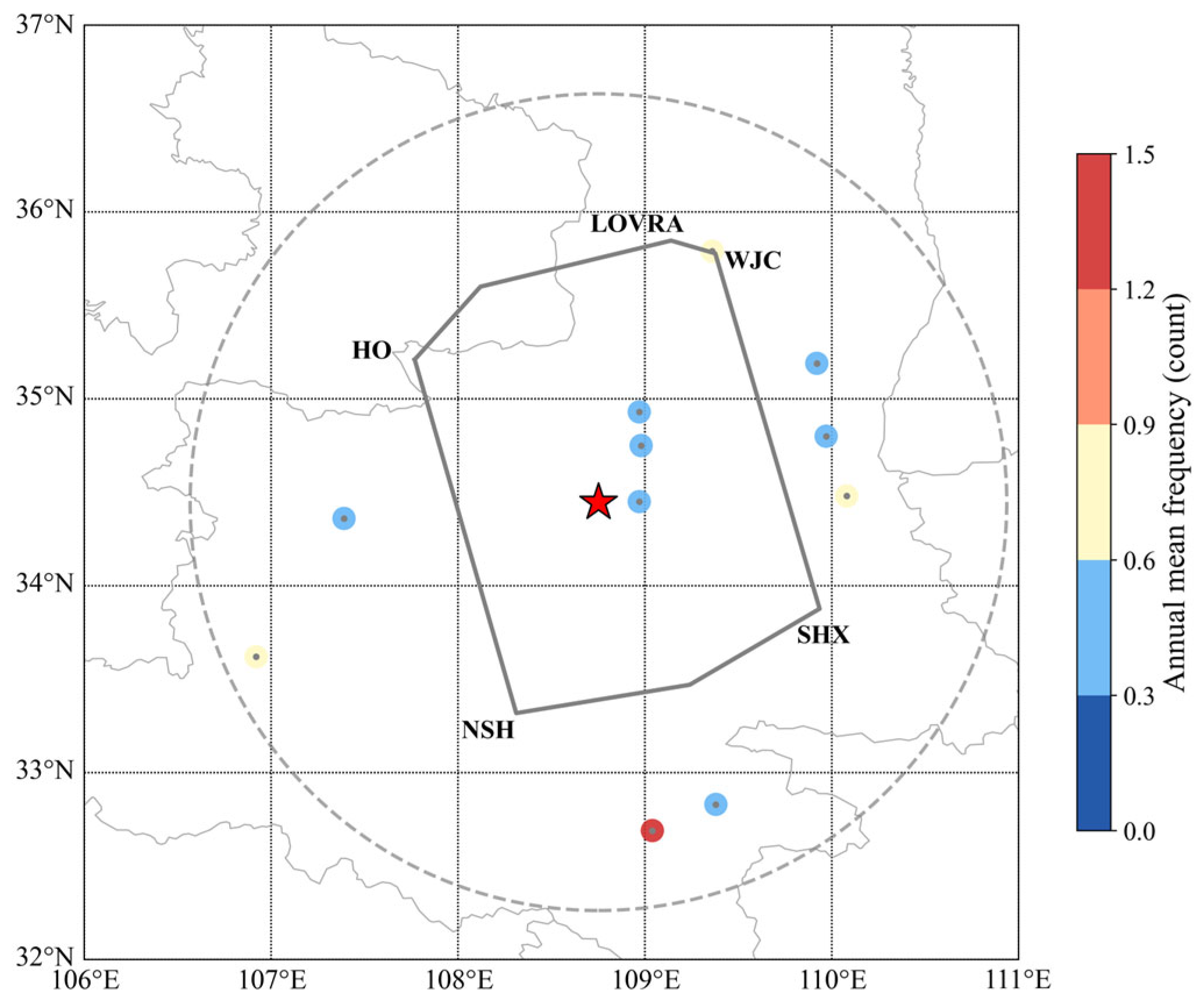
Hail events occur far less frequently than the other three types of severe convection, and their spatial distribution of annual mean frequency (Figure 12) is the most scattered among all event types. Among the 55 observation stations within the study region, only 11 stations have recorded hail events, indicating that the overall probability of hail occurrence is relatively low. A distinct maximum-frequency center appears in the southern part of the study region, where the annual mean frequency reaches 1.33 events, markedly higher than that in other areas. Outside this region, hail occurrences are mainly isolated and do not form a continuous spatial pattern. Within the Xi’an terminal area, hail events are relatively rare. Only a few stations located in the central sector near 109° E record hail occurrences, with an annual mean frequency of approximately 0.33 events. From an aviation operational perspective, hail events mainly affect the northeastern arrival and departure routes of the terminal area, particularly near the WJC waypoint.

3.2.5. Spatial Distribution of Lightning Density Associated with Severe Convective Events

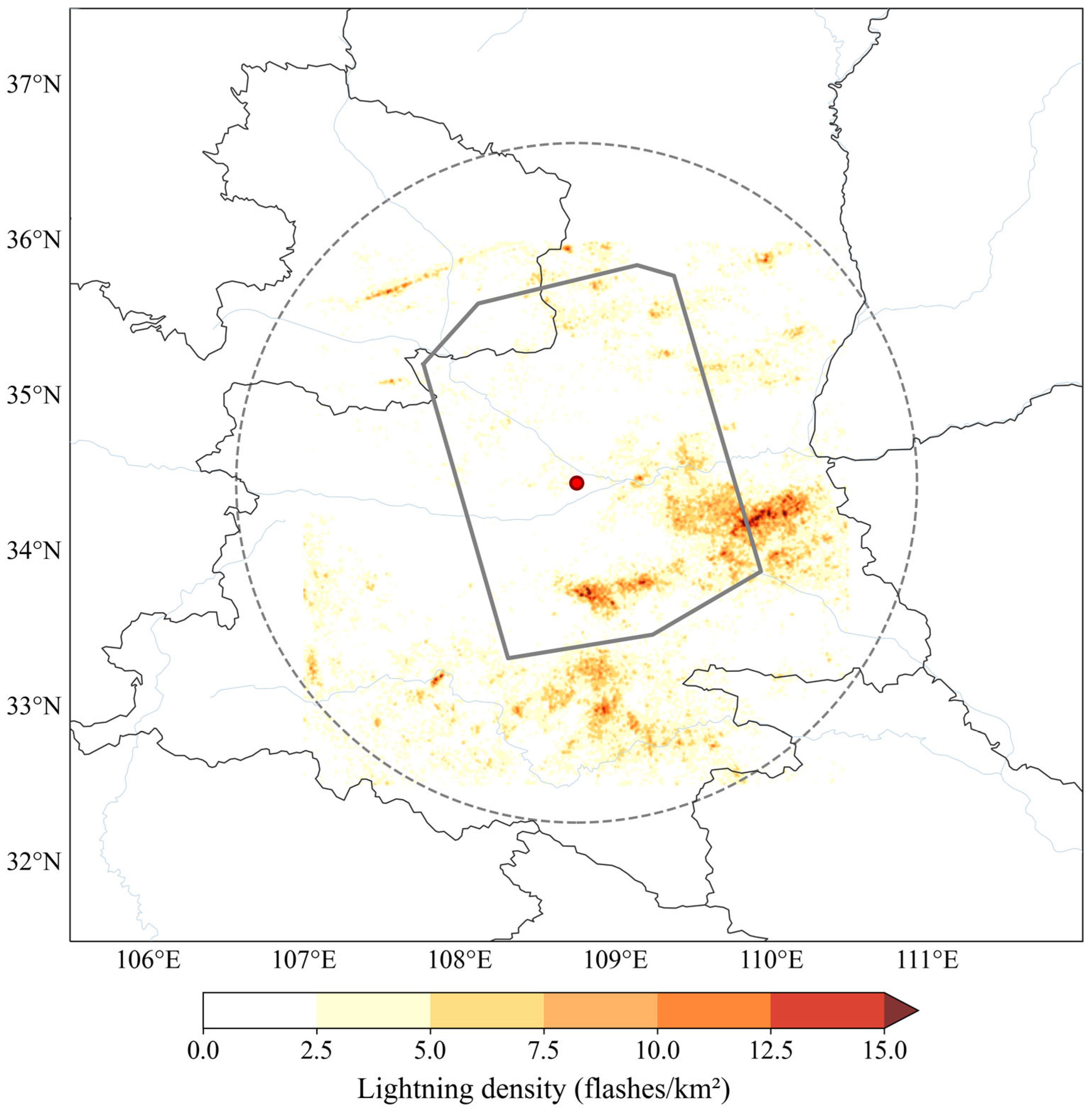
Figure 13 illustrates the spatial distribution of lightning density associated with severe convective events in the Xi’an terminal area during April–September 2022. The lightning density shows a pronounced spatial heterogeneity, with a generally higher intensity in the eastern and southern parts of the region and lower values in the western and northern sectors. The eastern and southern terminal areas thus represent the primary regions of concern for lightning-related operational safety. Extensive high-density areas exceeding 7.5 events/km2 are observed in the eastern and southern sectors, with a maximum center exceeding 15.0 events/km2. This pattern is broadly consistent with the spatial distribution of severe convective event frequency presented earlier, suggesting that these regions are characterized by the most intense lightning activity and the highest convective hazard risk within the terminal area. In contrast, the western and northern sectors are dominated by relatively low lightning density, indicating markedly weaker electrical activity and forming a clear east–west gradient across the study region. From an aviation operational perspective, lightning activity has the strongest influence on the southeastern waypoint SHX, followed by NSH, WJC, and LOVRA, while the northwestern waypoint HO is least affected.

3.3. Characteristics of Severe Convective Event Propagation Trajectories

3.3.1. Cluster Characteristics of Ordinary Thunderstorm Events Propagation Trajectories

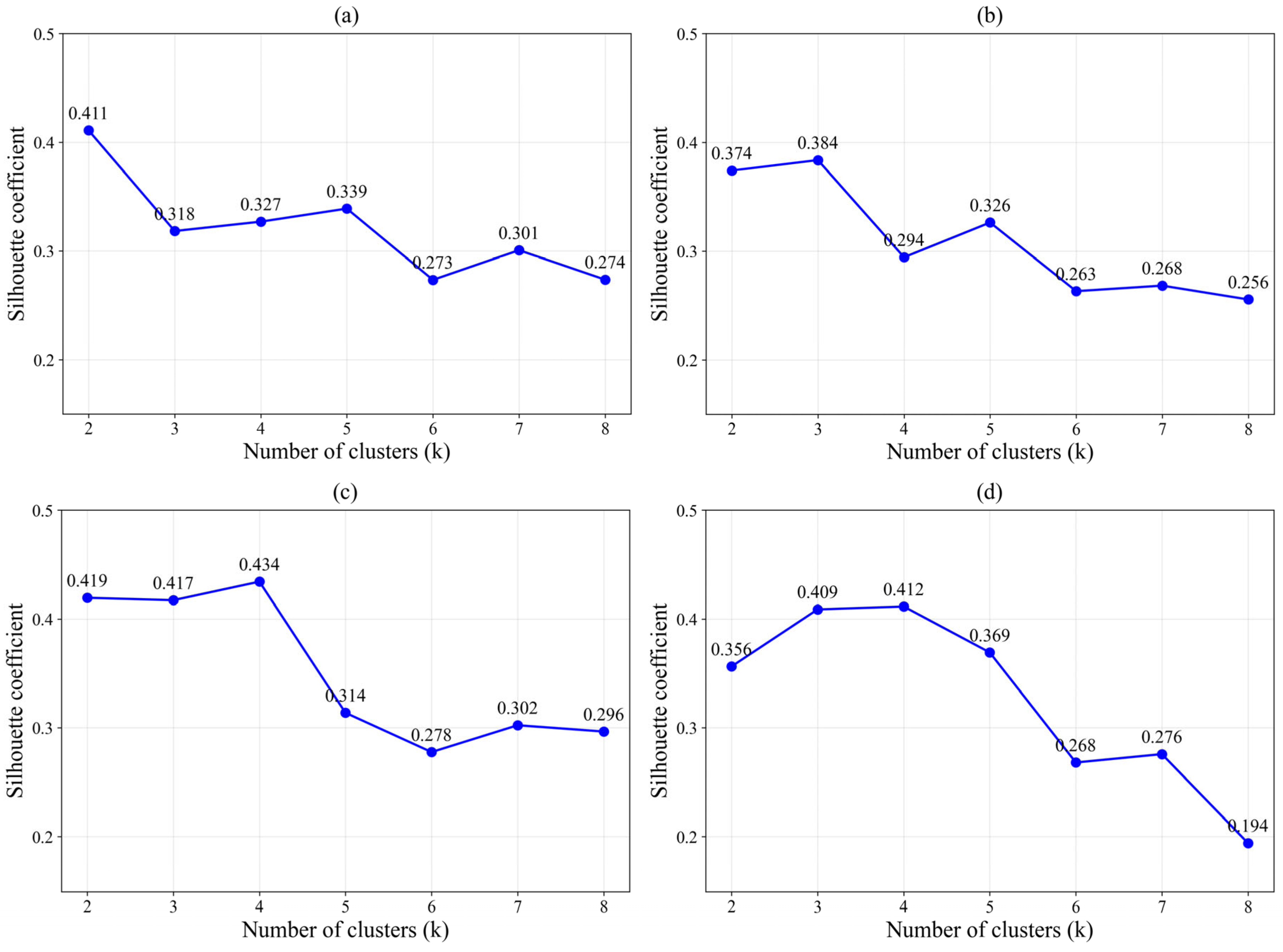
As shown in Figure 14, the optimal number of clusters for the movement paths of the four types of severe convective events was determined based on the silhouette coefficient.
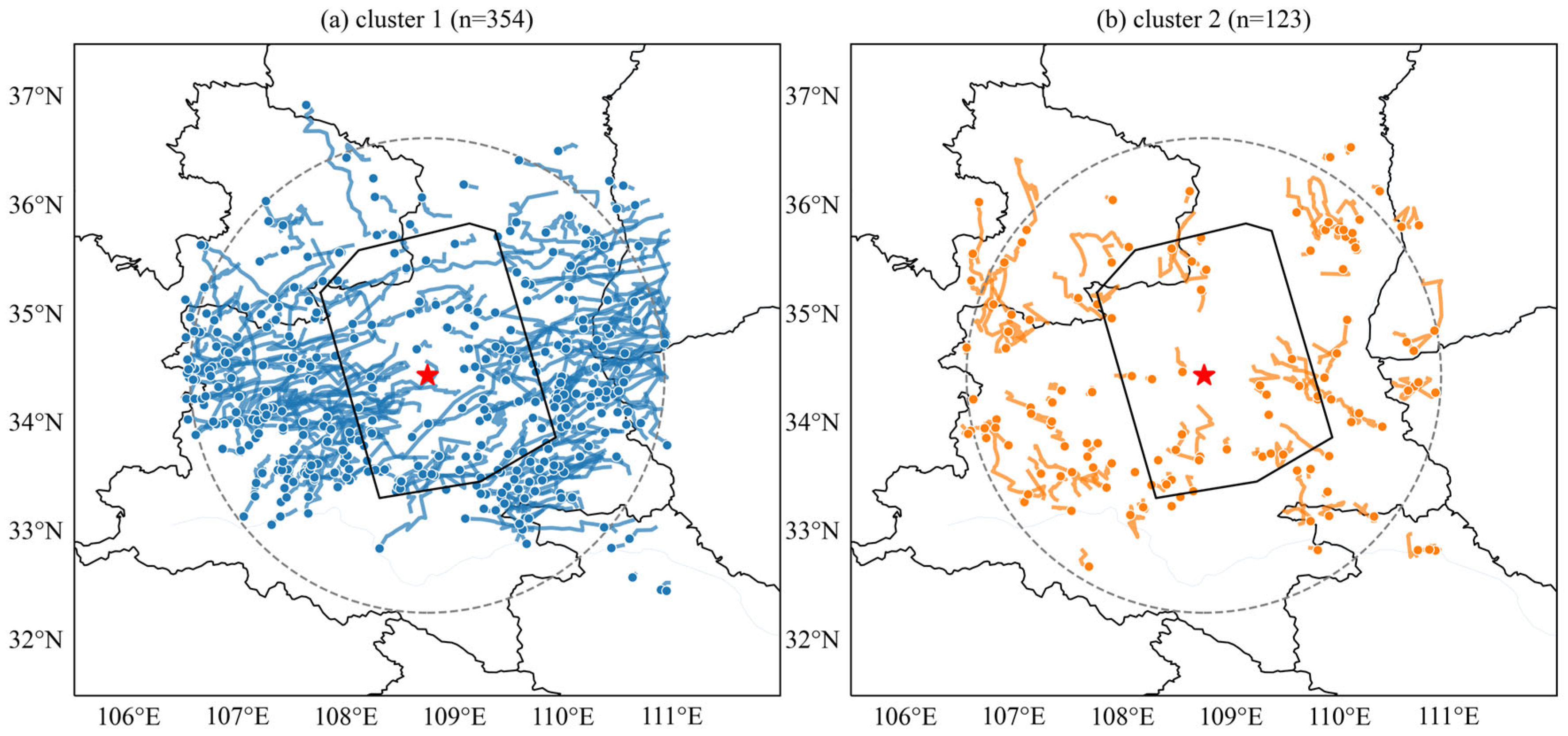
The propagation paths of ordinary thunderstorm events can be classified into two distinct categories (Figure 15). The first category represents the dominant path, accounting for 74.2% of the total samples, while the second category corresponds to a secondary pathway. Clear differences are observed between the two path types in terms of their structural characteristics. Notably, no anomalous or outlier paths are identified, suggesting that ordinary thunderstorm events exhibit relatively high statistical stability in their propagation patterns.
The first category represents the dominant propagation pathway, comprising 354 ordinary thunderstorm samples. The mean propagation direction is 74.00°, with a standard deviation of 37.44°, representing the smallest directional variability among the dominant paths of all four types of severe convection, and thus indicating the highest degree of directional consistency. The mean curvature (1.048) and straightness (1.474) are the lowest not only among the two thunderstorm path categories but also among all dominant convective paths. The mean directional difference between the initial and later segments of the path is 27.06° (standard deviation: 32.70°). These characteristics indicate a predominantly east-northeastward, quasi-linear propagation pattern, with highly stable movement and regular trajectories. This pathway represents the core propagation mode of ordinary thunderstorms in the Xi’an terminal area and is consistent with the dominant directions of hail, convective wind, and short-duration heavy precipitation events, suggesting a common steering flow during the warm season.
The second category includes 123 samples and represents a secondary propagation pathway. The mean direction is 310.32°, with a much larger standard deviation (81.43°), indicating greater dispersion within the cluster. The mean curvature (1.881) and straightness (3.619) are both higher than those of the dominant pathway. The mean directional difference between the two segments of the path reaches 111.23° (standard deviation: 98.04°), further reflecting strong variability. This pathway is characterized by north-northwestward propagation with pronounced curvature and lower stability, suggesting that some ordinary thunderstorm systems undergo significant directional changes, possibly associated with processes such as cell merging, splitting, or interactions with mesoscale systems.
Overall, the propagation of ordinary thunderstorm events in the Xi’an terminal area is characterized by a dominant east-northeastward, stable and quasi-linear pathway, supplemented by a secondary north-northwestward, curved and less stable pathway.

3.3.2. Cluster Characteristics of Short-Duration Heavy Precipitation Events Propagation Trajectories

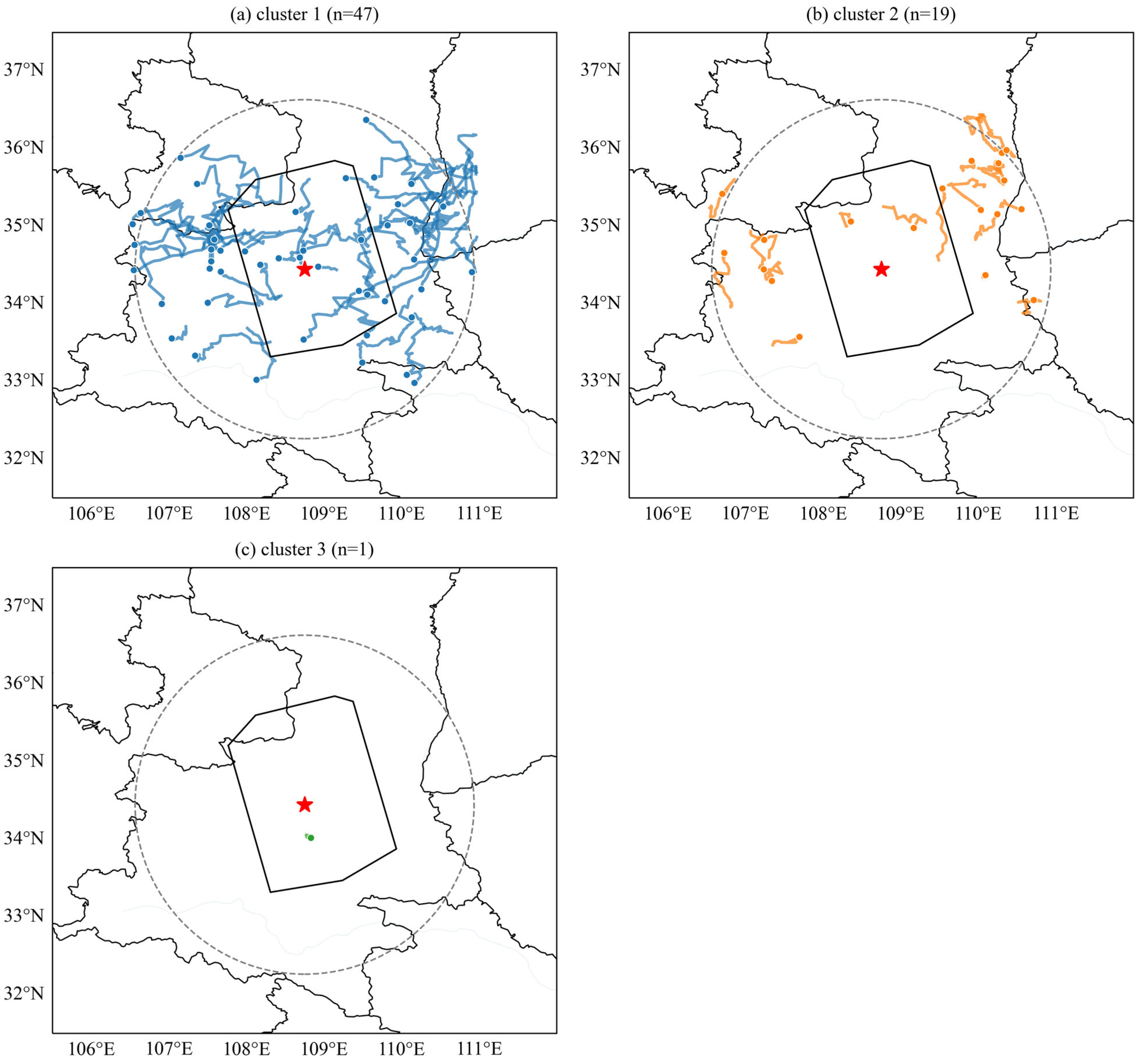
Based on the silhouette coefficient, the propagation paths of short-duration heavy precipitation events are classified into three distinct categories (Figure 16). The first category represents the dominant pathway, accounting for 70.1% of the total samples. The second category corresponds to a secondary pathway, comprising 19 samples. The third category includes a single anomalous path.
The first category comprises the largest number of samples (47 cases) and represents the dominant propagation pathway. The mean propagation direction is 59.85°, with a standard deviation of 43.49°, indicating a predominantly northeastward movement with relatively low directional dispersion. The mean curvature (1.261) and straightness (2.031) are the lowest among the three categories, while the mean directional difference between the initial and later segments is 28.60° (standard deviation: 22.26°). These characteristics indicate a relatively straight and stable northeastward propagation pattern.
The second category includes 19 events and represents the secondary pathway. The mean propagation direction is 284.19°, with the largest standard deviation (82.26°) among the three categories, indicating substantial directional variability. The mean curvature (1.879) and straightness (4.311) are also the highest, and the mean directional difference reaches 88.87° (standard deviation: 90.08°), further highlighting strong variability. This pathway is characterized by west-northwestward motion with pronounced curvature and instability, suggesting significant directional changes and complex evolution processes.
The third category consists of a single sample, with a mean propagation direction of 104.29°, corresponding to an east-southeastward path. This category represents an isolated outlier pathway with atypical propagation characteristics.
On the whole, short-duration heavy precipitation events in the Xi’an terminal area are primarily characterized by northeastward, quasi-linear and stable propagation pathways, while a smaller proportion of events exhibit west-northwestward, more curved trajectories.

3.3.3. Cluster Characteristics of Convective Wind Gust Event Propagation Trajectories

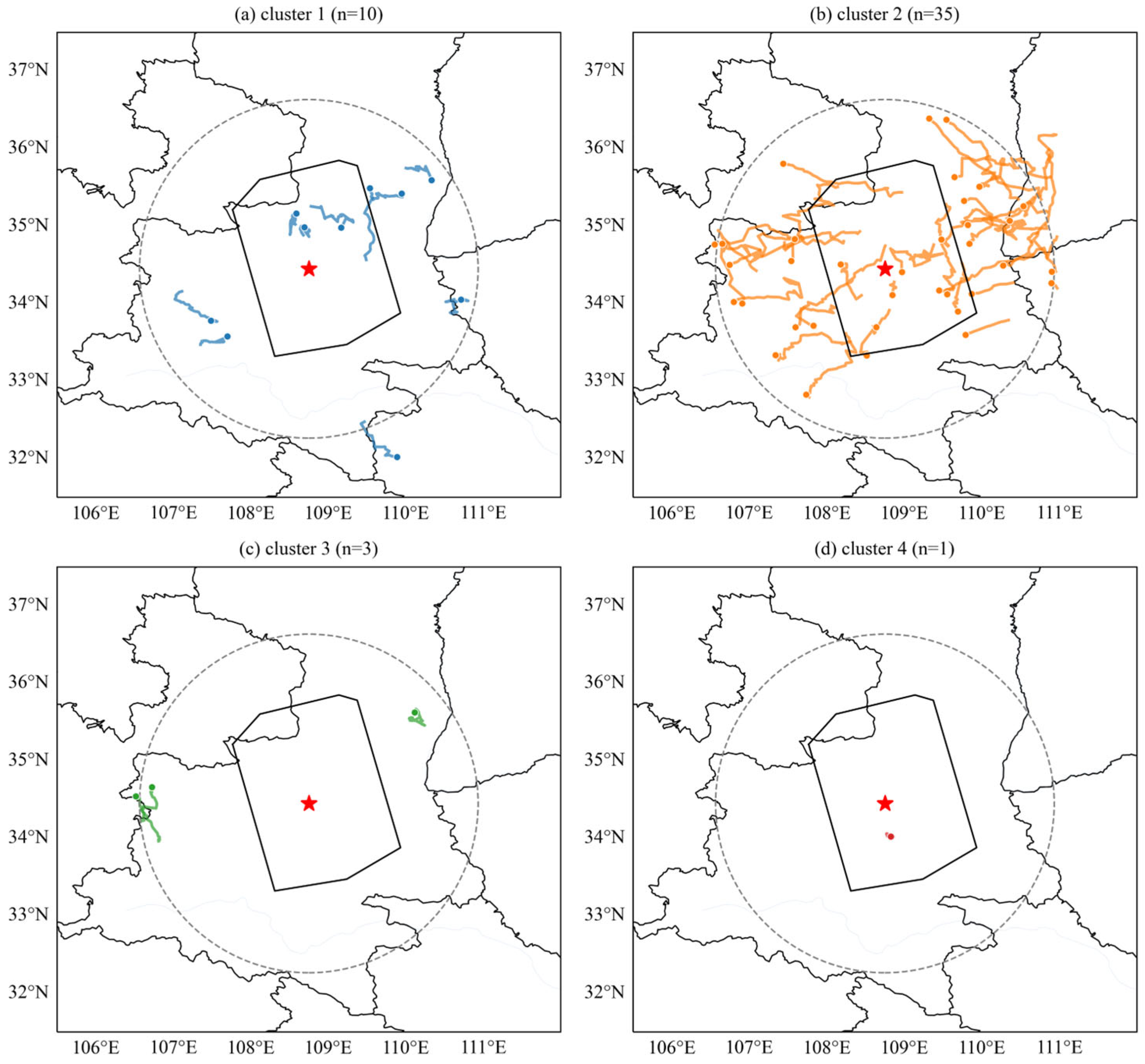
The propagation paths of convective wind gust events are optimally classified into four categories based on the clustering analysis (Figure 17). The second category represents the dominant pathway, accounting for 71.4% of the total samples, followed by the first category, while the third and fourth categories correspond to a limited number of atypical cases.
The first category includes 10 events and represents a secondary pathway. The mean propagation direction is 250.85°, with a relatively large standard deviation (55.99°), indicating substantial directional dispersion. The mean curvature (1.952) and straightness (2.823) are relatively high, and the mean directional difference between the initial and later segments reaches 71.41° (standard deviation: 98.92°), reflecting strong variability in movement. This pathway is characterized by west-southwestward propagation with pronounced curvature and instability, suggesting considerable diversity in trajectory patterns among events.
The second category comprises 35 events and represents the dominant propagation pathway. The mean direction is 66.05°, with a smaller standard deviation (40.87°), indicating a relatively consistent east-northeastward motion. The mean curvature (1.048) is the lowest among all categories, and the straightness (1.816) is also relatively low. The mean directional difference (23.68°, standard deviation: 21.89°) is the smallest among the four categories, indicating minimal directional variation. These features collectively indicate a quasi-linear and highly stable east-northeastward propagation pattern.
The third and fourth categories include only 3 and 1 samples, respectively, and thus represent rare and atypical pathways. Their mean propagation directions (163.13° and 104.29°) indicate southeastward motion. These paths exhibit the largest curvature, straightness, and directional differences among all categories, suggesting highly irregular trajectories with pronounced directional shifts during propagation.
The results show that convective wind gust events in the Xi’an terminal area are predominantly characterized by a well-defined east-northeastward, quasi-linear and stable propagation pathway, representing the primary trajectory type. Secondary pathways include west-northwestward curved trajectories, while only a few events exhibit southeastward, highly curved and irregular motion.

3.3.4. Cluster Characteristics of Hail Events Propagation Trajectories

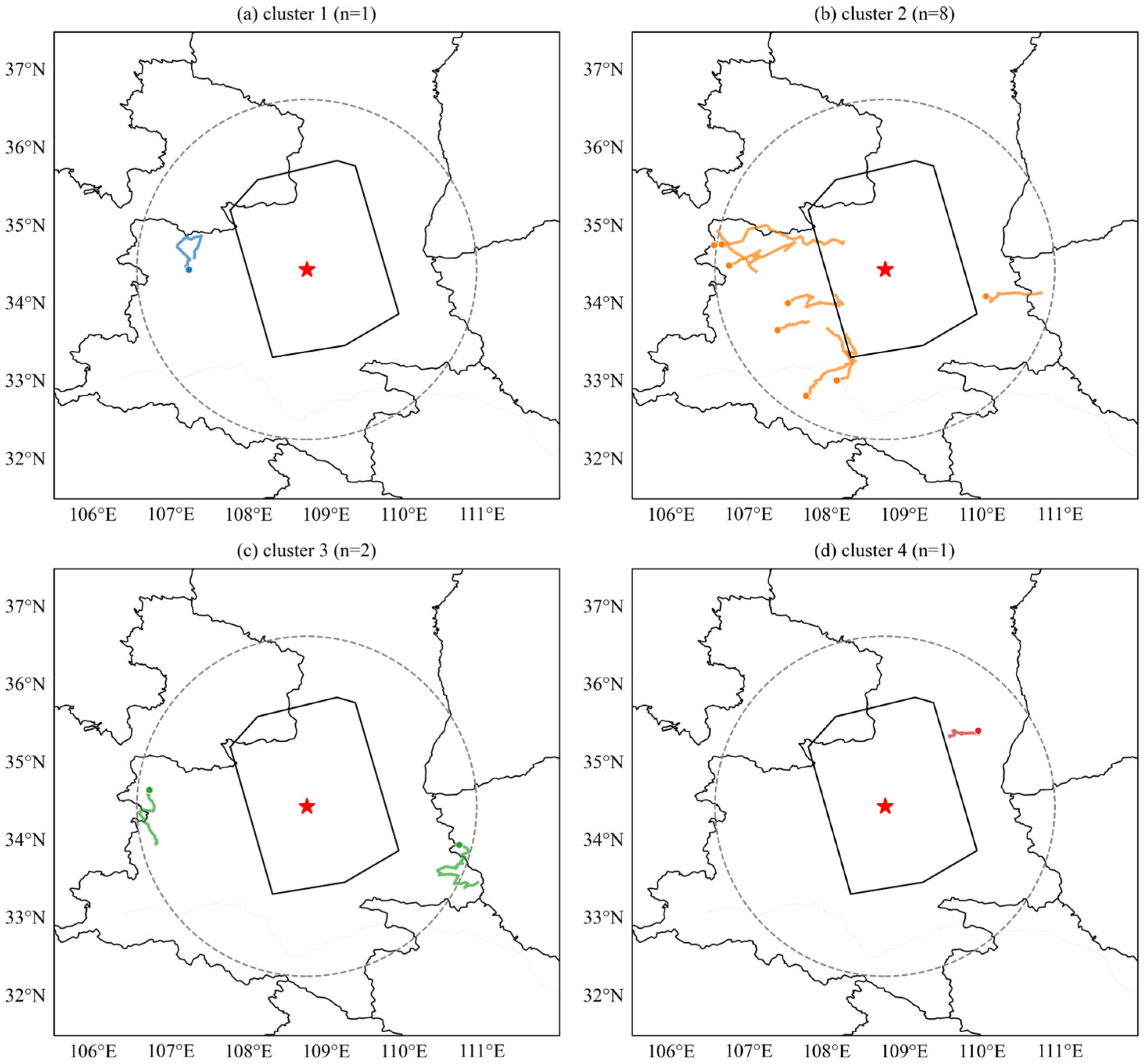
Based on the silhouette coefficient, the propagation paths of hail convective events are optimally classified into four categories (Figure 18). Pronounced differences exist among the categories in terms of sample size, directional characteristics, and trajectory morphology. The second category accounts for 66.7% of the total samples and represents the dominant propagation pathway, whereas the remaining categories consist of only a few cases and correspond to rare and atypical trajectories.
The first category includes a single sample, with a propagation direction of 23.57°. It exhibits a curvature of 1.528, a high straightness value of 7.332, and a large directional difference of 160.34°. This pathway represents a north-northeastward, highly curved trajectory with substantial directional adjustment during propagation, likely influenced by local mesoscale disturbances, and can be regarded as an extreme outlier.
The second category, comprising 8 samples, represents the dominant pathway. The mean propagation direction is 69.63°, with a standard deviation of 41.35°, indicating moderate variability but a clear east-northeastward tendency. The mean curvature (1.104) and straightness (1.662) are the lowest among all categories, while the directional difference (22.39°, standard deviation: 26.87°) is also minimal. These characteristics indicate a quasi-linear and stable east-northeastward propagation pattern, suggesting a relatively organized convective structure and representing the primary trajectory type of hail events in the Xi’an terminal area.
The third category includes 2 samples and exhibits a mean direction of 163.30°, with a small standard deviation (13.83°), indicating high directional consistency. However, its curvature (1.952), straightness (2.478), and especially the directional difference (282.85°) are significantly larger than those of the dominant pathway, indicating a south-southeastward trajectory with strong curvature and pronounced directional changes during propagation.
The fourth category contains a single sample with a propagation direction of 257.98°. Although the trajectory appears relatively straight (directional difference: 3.82°), it exhibits the largest curvature (2.393) among all categories and lacks statistical representativeness.
Taken together, hail convective events in the Xi’an terminal area are primarily characterized by a stable and quasi-linear east-northeastward propagation pathway, while other directions (north-northeastward, south-southeastward, and west-southwestward) occur only sporadically and are associated with highly irregular and localized trajectory patterns.

3.3.5. Comparative Characteristics of Dominant Propagation Trajectories for the Four Severe Convective Event Categories

A comparative analysis of the dominant propagation pathways for the four types of severe convective events is summarized in Table 4.
The dominant pathways of all four convective types exhibit a consistent east-northeastward propagation, with mean directions ranging from 59.85° to 74.00°. This consistency reflects a high degree of directional consistency in the ambient steering flow within the Xi’an terminal area during the warm season (April–September), indicating that the prevailing northeastward flow plays a primary role in controlling the movement of convective systems. This finding is also consistent with the previously identified spatial pattern of convective initiation in the western region and dissipation in the eastern region, further confirming the existence of a stable and dominant propagation direction.
In terms of trajectory morphology, the dominant pathways for all four event types correspond to the most linear and stable patterns within their respective clusters. The degree of path linearity appears to be closely related to the strength of environmental steering. Convective wind gust and ordinary thunderstorm events exhibit the lowest curvature values (both 1.048) and smaller directional standard deviations, indicating more concentrated propagation directions and stronger control by the environmental flow. In contrast, hail and short-duration heavy precipitation events show relatively higher variability, suggesting a stronger influence from local factors.
Differences among the four convective types are more evident in the secondary and atypical pathways. The secondary pathway of convective wind gust events is oriented west-southwestward, while those of short-duration heavy precipitation and ordinary thunderstorms are west-northwestward and north-northwestward, respectively. Hail events exhibit multiple atypical pathways, including north-northeastward, south-southeastward, and west-southwestward directions. These secondary and atypical pathways are generally characterized by higher curvature, larger directional dispersion, and greater directional differences between trajectory segments, without a consistent directional pattern. These features suggest that, unlike the dominant pathways, secondary and atypical trajectories are more strongly influenced by local topography, mesoscale systems, and variations in convective triggering mechanisms. Such factors contribute to the diversity in propagation characteristics among different types of severe convective events.

4. Discussion

In summary, based on a comprehensive analysis of severe convective weather in the Xi’an terminal area, this study reveals pronounced differences among four convective types in terms of spatiotemporal distribution and propagation characteristics. Ordinary thunderstorm events occur most frequently during midsummer (July–August) and are predominantly short-lived (30–60 min), indicating that they are mainly driven by local thermally induced convection. In contrast, short-duration heavy precipitation, convective wind gust, and hail events are generally associated with long lifetimes exceeding 180 min and exhibit relatively linear and stable northeastward propagation, suggesting that these events are more likely linked to well-organized mesoscale convective systems and are strongly controlled by the consistent environmental steering flow during the warm season. High-frequency convective activity is concentrated in the northeastern and southern parts of the terminal area, while lightning density exhibits a clear “east-high/west-low and south-high/north-low” pattern. This spatial configuration further indicates that eastern and southern air routes (e.g., SHX and NSH waypoints) are subject to higher convective hazard risk. Notably, all convective types exhibit secondary or atypical pathways characterized by large curvature and strong directional dispersion, implying that local topography, mesoscale disturbances, and storm-scale interactions such as cell merging and splitting can significantly modulate actual storm motion.
Due to data availability, this study only covers three warm seasons (2022–2024). Although the dataset is sufficient for identifying the main characteristics of severe convective weather in the Xi’an terminal area, the limited sample size, particularly for relatively rare hail events, may affect the statistical robustness of some results. Longer-term observations will be incorporated in future studies to further improve the climatological representativeness of the analysis. Future work should also incorporate high-resolution reanalysis datasets to quantitatively diagnose the thermodynamic, dynamic, and moisture conditions preceding different types of convective events in order to better understand and analyze their triggering and maintenance mechanisms. In addition, by integrating long-term radar and lightning observations, objective probabilistic forecasting models for convective propagation pathways in the Xi’an terminal area can be developed. Such efforts would further support the establishment of refined, type-specific early warning algorithms under different seasonal and synoptic conditions, ultimately improving weather support for air traffic flow management, route optimization, and flight delay mitigation in terminal operations.

5. Conclusions

This study systematically analyzes the temporal variability, spatial distribution, and propagation characteristics of four types of severe convective weather: ordinary thunderstorms, short-duration heavy precipitation, convective wind gusts and hail over the Xi’an terminal area, based on surface observations and radar data. The main conclusions are as follows:
(1) All four convective types exhibit pronounced multi-scale temporal variability. Interannually, convective wind gust events show the largest variability, while short-duration heavy precipitation and ordinary thunderstorms remain relatively stable, and hail events are infrequent and highly sporadic. Seasonally, convective wind gusts dominate in April–May, whereas short-duration heavy precipitation and ordinary thunderstorms prevail in July–August, with overall convective activity weakening in September. Diurnally, severe convection is primarily initiated in the afternoon and intensifies toward evening and nighttime. Short-duration heavy precipitation exhibits a bimodal pattern, with peaks at 18:00 and 21:00 BJT and a secondary peak around midnight, while convective wind gusts and ordinary thunderstorms display a single afternoon peak. In terms of life cycle, ordinary thunderstorms are predominantly short-lived (30–60 min), whereas short-duration heavy precipitation, convective wind gust, and hail events are mainly associated with long-lived systems exceeding 180 min, suggesting association with organized MCSs, though direct classification was not performed.
(2) Ordinary thunderstorms are primarily initiated in the western and southern regions and dissipate in the eastern region, exhibiting a west-to-east propagation tendency. Short-duration heavy precipitation shows lower frequency within the terminal area and higher frequency in surrounding regions, with high-occurrence zones in the western and northeastern sectors. Convective wind gust events are mainly concentrated in the northeastern part of the terminal area and exhibit strong locality, while hail events are the least frequent and spatially scattered. Lightning density displays a clear “east-high/west-low and south-high/north-low” pattern, with the southeastern sector representing the highest convective hazard risk, particularly affecting the SHX waypoint.
(3) The dominant propagation pathways of all four convective types are consistently oriented toward east-northeast, characterized by relatively linear and stable trajectories and accounting for more than two-thirds of the total samples. This highlights the controlling role of environmental steering flow in convective evolution. Meanwhile, secondary and atypical pathways with higher curvature and larger directional dispersion are also observed across all convective types, indicating the influence of local topography, mesoscale systems, and storm-scale evolution processes. Among the four types, convective wind gust and ordinary thunderstorm events exhibit relatively higher path stability, whereas short-duration heavy precipitation and hail events show more irregular propagation characteristics comparatively. The potential influence of local environmental factors on these differences requires further investigation.

Author Contributions

Conceptualization, C.W.; methodology, C.W. and R.W.; software, C.W. and X.X.; validation; formal analysis, X.X.; investigation, R.W. and X.X.; resources; data curation, R.W.; writing—original draft preparation, C.W. and R.W.; writing—review and editing, C.W., R.W. and X.X.; visualization, X.X.; supervision; project administration; funding acquisition, C.W. and X.X. All authors have read and agreed to the published version of the manuscript.

Funding

This research was jointly funded by Sichuan Science and Technology Program, grant number 2025ZNSFSC1137 and 2022NSFSC1149, and the Fundamental Research Funds for the Central Universities (TD2025CZ08), and the Open Foundation of China Meteorological Administration Key Laboratory for Aviation Meteorology (No.HKQXM-2024022), and the Short-Term, High-Efficiency Research Project of Chengdu Meteorological Bureau (No. 2024-1(11)).

Data Availability Statement

Restrictions apply to the availability of these data. Data were obtained from the China Meteorological Data Service Center and are available at https://data.cma.cn/data/cdcindex/cid/227aa07a9079550a.html (accessed on 10 December 2025) with the permission of the National Meteorological Information Center. The data presented in this study are available on request from the corresponding author. The data were obtained from the Shaanxi Provincial Meteorological Bureau and are available from the corresponding author with the permission of the Shaanxi Provincial Meteorological Bureau.

Acknowledgments

Special thanks to the reviewers for their valuable comments.

Conflicts of Interest

The authors declare no conflicts of interest. The funders had no role in the design of the study; in the collection, analyses, or interpretation of data; in the writing of the manuscript; or in the decision to publish the results.

References

  1. Markowski, P.; Richardson, Y. Mesoscale Meteorology in Midlatitudes, 1st ed.; Wiley-Blackwell: Chichester, UK, 2010. [Google Scholar]
  2. Doswell, C.A. Severe convective storms—An overview. Meteorol. Monogr. 2001, 28, 1–26. [Google Scholar] [CrossRef]
  3. Zhao, S.S.; Gao, G.; Huang, D.P.; He, W. Characteristics of meteorological disaster losses in China during 2004–2013. J. Meteorol. Environ. 2017, 33, 101–107. [Google Scholar]
  4. Transportation Safety Board of Canada. Aviation Investigation Report A05H0002: Runway Overrun and Fire, Air France Airbus A340-313 (F-GLZQ), Toronto/Lester B. Pearson International Airport; Transportation Safety Board of Canada: Gatineau, QC, Canada, 2007. [Google Scholar]
  5. Yu, X.; Zheng, Y. Advances in severe convection research and operation in China. J. Meteorol. Res. 2020, 34, 189–217. [Google Scholar] [CrossRef]
  6. Yang, X.; Sun, J.; Zheng, Y. A 5-yr climatology of severe convective wind events over China. Weather Forecast. 2017, 32, 1289–1299. [Google Scholar]
  7. Ma, R.; Feng, S.; Jin, S.; Sun, J.; Fu, S.; Sun, S.; Han, H. Statistical characteristics and environmental conditions of the warm-season severe convective events over North China. Atmosphere 2021, 12, 52. [Google Scholar] [CrossRef]
  8. Ma, R.; Sun, J.; Yang, X. An eight-year climatology of the warm-season severe thunderstorm environments over North China. Atmos. Res. 2021, 254, 105519. [Google Scholar] [CrossRef]
  9. Xu, A.H.; Sun, J.S.; Xu, D.B.; Wan, X.L.; Guo, Y. Synoptic pattern classification and environmental parameter characteristics of severe convective weather in central and eastern China. Meteorol. Mon. 2014, 40, 400–411. [Google Scholar]
  10. Brooks, H.E. Severe thunderstorms and climate change. Atmos. Res. 2013, 123, 129–138. [Google Scholar] [CrossRef]
  11. Tian, F.; Zheng, Y.; Zhang, T.; Zhang, X.; Mao, D.; Sun, J.; Zhao, S. Statistical characteristics of environmental parameters for warm season short-duration heavy rainfall over central and eastern China. J. Meteorol. Res. 2015, 29, 370–384. [Google Scholar] [CrossRef]
  12. Brown, A.; Dowdy, A. Severe convection-related winds in Australia and their associated environments. J. South. Hemisph. Earth Syst. Sci. 2021, 71, 30–52. [Google Scholar]
  13. Zhang, C.; Zhang, Q.; Wang, Y. Climatology of hail in China: 1961–2005. J. Appl. Meteorol. Climatol. 2008, 47, 795–804. [Google Scholar]
  14. Ma, S.P.; Wang, X.M.; Yu, X.D. Environmental parameter characteristics of extreme thunderstorm wind gusts. J. Appl. Meteorol. Sci. 2019, 30, 292–301. [Google Scholar]
  15. Fan, L.M.; Yu, X.D. Analysis of environmental parameter characteristics of short-duration severe convective weather in China. Plateau Meteorol. 2013, 32, 156–165. [Google Scholar]
  16. Rasmussen, E.N.; Blanchard, D.O. A baseline climatology of sounding-derived supercell and tornado forecast parameters. Weather Forecast. 1998, 13, 1148–1164. [Google Scholar]
  17. Tao, S.Y. Heavy Rainfall in China; Science Press: Beijing, China, 1980. [Google Scholar]
  18. Zheng, Y.G.; Zhang, X.L.; Zhou, Q.L.; Duan, Y.H.; Chen, Y.; He, L.F. Advances and challenges in nowcasting techniques for severe convective weather. Meteorol. Mon. 2010, 36, 33–42. [Google Scholar]
  19. Doswell, C.A., III; Bosart, L.F. Extratropical synoptic-scale processes and severe convection. In Severe Convective Storms; Doswell, C.A., III, Ed.; American Meteorological Society: Boston, MA, USA, 2001; pp. 27–69. [Google Scholar]
  20. Johnson, J.T.; MacKeen, P.L.; Witt, A.; Mitchell, E.D.W.; Stumpf, G.J.; Eilts, M.D.; Thomas, K.W. The storm cell identification and tracking algorithm: An enhanced WSR-88D algorithm. Weather Forecast. 1998, 13, 263–276. [Google Scholar] [CrossRef]
  21. Yu, X.D.; Yao, X.P.; Xiong, T.N.; Zhou, X.G.; Wu, H. Principles and Operational Applications of Doppler Weather Radar; China Meteorological Press: Beijing, China, 2005; pp. 187–197. [Google Scholar]
  22. U.S. Department of Commerce; National Oceanic and Atmospheric Administration. Federal Meteorological Handbook No. 11: Doppler Radar Meteorological Observations; U.S. Department of Commerce: Washington, DC, USA; National Oceanic and Atmospheric Administration: Washington, DC, USA, 1991.
  23. Matthews, J.; Trostel, J. An improved storm cell identification and tracking (SCIT) algorithm based on DBSCAN clustering and JPDA tracking methods. In Proceedings of the 21st International Lightning Detection Conference, Orlando, FL, USA, 19–22 April 2010. [Google Scholar]
  24. Dixon, M.; Wiener, G. TITAN: Thunderstorm identification, tracking, analysis, and nowcasting. J. Atmos. Ocean. Technol. 1993, 10, 785–797. [Google Scholar] [CrossRef]
  25. Zhang, J.; Zhou, J.; Li, J.; Gu, J.; Zhang, Q.; Dai, B.; Wang, Y.; Wang, J.; Zhong, Y.; Li, Q. Location accuracy improvement of long-range lightning detection network in China by compensating ground wave propagation delay. Remote Sens. 2022, 14, 3397. [Google Scholar] [CrossRef]
  26. Zhu, H.; Pang, W.; Chen, F.; Zhang, M.; Wang, J.; Wang, Z. Detection performance analysis of advanced direction time lightning detection system in China. Front. Earth Sci. 2024, 12, 1322908. [Google Scholar] [CrossRef]
  27. Zhang, Y.; Zhang, Y.; Zou, M.; Wang, J.; Li, Y.; Tan, Y.; Feng, Y.; Zhang, H.; Zhu, S. Advances in Lightning Monitoring and Location Technology Research in China. Remote Sens. 2022, 14, 1293. [Google Scholar] [CrossRef]
  28. Shi, M.; Zhang, W.; Fan, P.; Chen, Q.; Liu, Z.; Li, Q.; Liu, X. Modelling deep convective activity using lightning clusters and machine learning. Int. J. Climatol. 2022, 42, 952–973. [Google Scholar]
  29. Ma, R.; Sun, J.; Yang, X. A 7-yr climatology of the initiation, decay, and morphology of severe convective storms during the warm season over North China. Mon. Weather Rev. 2021, 149, 2599–2612. [Google Scholar]
  30. Tian, F.Y.; Zhang, X.L.; Cao, Y.C.; Sun, J.H.; Zheng, Y.G.; Yang, X.L.; Han, X.Q.; Mai, Z. Climatological characteristics of environmental conditions for three types of severe convective weather in low- and mid-elevation regions of China. Plateau Meteorol. 2022, 41, 1446–1459. [Google Scholar]
  31. Sun, J.S.; Dai, J.H.; He, L.F.; Zheng, Y.Y.; Yu, X.D.; Xu, A.H. Basic Principles and Technical Methods of Severe Convective Weather Forecasting: Handbook of Severe Convective Weather Forecasting in China; China Meteorological Press: Beijing, China, 2014; p. 297. [Google Scholar]
  32. Hobson, A.G.K.; Lakshmanan, V.; Smith, T.M.; Richman, M. An automated technique to categorize storm type from radar and near-storm environment data. Atmos. Res. 2012, 111, 104–113. [Google Scholar]
  33. Cho, Y.J.; Lee, H.C.; Lim, B.; Kim, S.B. Classification of weather patterns in the East Asia region using the K-means clustering analysis. Atmosphere 2019, 29, 451–461. [Google Scholar]
  34. Arroyo, Á.; Herrero, Á.; Tricio, V.; Corchado, E. Analysis of meteorological conditions in Spain by means of clustering techniques. J. Appl. Log. 2017, 24, 76–89. [Google Scholar] [CrossRef]
  35. Rousseeuw, P.J. Silhouettes: A graphical aid to the interpretation and validation of cluster analysis. J. Comput. Appl. Math. 1987, 20, 53–65. [Google Scholar] [CrossRef]
Figure 1. Distribution of air routes and flight paths in Xi’an terminal area. (Source: Civil Aviation Administration of China).
Atmosphere 17 00530 g001
Figure 2. Study domain and terrain elevation. The solid black line denotes the boundary of the Xi’an terminal area. The dashed black circle denotes the study domain, the blue line denotes rivers, the red pentagram marks the location of Xi’an Xianyang International Airport, and the black triangles mark location of major cities.
Atmosphere 17 00530 g002
Figure 3. Distribution of 55 surface meteorological stations within the study area. The dashed black circle denotes the study domain.
Atmosphere 17 00530 g003
Figure 4. Annual cumulative frequency of different types of severe convective weather in the Xi’an terminal area. Yellow for ordinary thunderstorms, blue for short-duration heavy precipitation, green for convective wind gusts, and red for hail; color intensity from light to dark indicates the years 2022, 2023, and 2024, respectively.
Atmosphere 17 00530 g004
Figure 5. Monthly variability of severe convective weather days in the Xi’an terminal area during April–September of 2022–2024. Yellow for ordinary thunderstorms, blue for short-duration heavy precipitation, green for convective wind gusts, and red for hail.
Atmosphere 17 00530 g005
Figure 6. Ten-day variability of severe convective weather frequency in the Xi’an terminal area during April–September of 2022–2024. The color legend follows that of Figure 5.
Atmosphere 17 00530 g006
Figure 7. Diurnal variability of severe convective weather frequency in the Xi’an terminal area during April–September of 2022–2024. The color legend follows that of Figure 5.
Atmosphere 17 00530 g007
Figure 8. Statistical summary of severe convective event life cycle duration in the Xi’an terminal area during April–September of 2022–2024. The color legend follows that of Figure 5.
Atmosphere 17 00530 g008
Figure 9. Spatial distribution of (a) initiation frequency and (b) dissipation frequency of ordinary thunderstorm events (shadings; unit: count per 0.5° × 0.5° grid cell) overlaid with the Xi’an terminal area boundary (gray polygon) and the 200 km radius study domain (gray dashed circle) centered on Xi’an Xianyang International Airport (red dot) during April–September of 2022–2024.
Atmosphere 17 00530 g009
Figure 10. Spatial distribution of occurrence frequency of short-duration heavy precipitation events in the Xi’an terminal area during April–September of 2022–2024, based on a 1° × 1° spatial grid, overlaid with the 200 km radius study domain (gray dashed circle) centered on Xi’an Xianyang International Airport (red star) and the Xi’an terminal area boundary (gray polygon).
Atmosphere 17 00530 g010
Figure 11. Spatial distribution of occurrence frequency of convective wind gust events in the Xi’an terminal area during April–September of 2022–2024, based on a 1° × 1° spatial grid. Labels follow those of Figure 10.
Atmosphere 17 00530 g011
Figure 12. Spatial distribution of occurrence frequency of hail events in the Xi’an terminal area during April–September of 2022–2024, based on a 1° × 1° spatial grid. Labels follow those of Figure 10.
Atmosphere 17 00530 g012
Figure 13. Spatial distribution of total lightning density associated with severe convective weather (shadings; unit: flashes/km2) in the Xi’an terminal area during April–September of 2022–2024. Labels follow those of Figure 10.
Atmosphere 17 00530 g013
Figure 14. Silhouette coefficients corresponding to different numbers: (a) ordinary thunderstorm; (b) short-duration heavy precipitation; (c) convective wind gusts (d); hail.
Atmosphere 17 00530 g014
Figure 15. K-means clustering results of ordinary thunderstorm event trajectories in the Xi’an terminal area: (a) Cluster 1 and (b) Cluster 2. Overlaid are the 200 km-radius study domain (gray dashed circle) centered on Xi’an Xianyang International Airport (red star) and the Xi’an terminal area boundary (gray polygon).
Atmosphere 17 00530 g015
Figure 16. K-means clustering results of short-duration heavy precipitation event trajectories in the Xi’an terminal area: (a) Cluster 1, (b) Cluster 2 and (c) Cluster 3. Labels follow those of Figure 15.
Atmosphere 17 00530 g016
Figure 17. K-means clustering results of convective wind gust event trajectories in the Xi’an terminal area: (a) Cluster 1, (b) Cluster 2, (c) Cluster 3, and (d) Cluster 4. Labels follow those of Figure 15.
Atmosphere 17 00530 g017
Figure 18. K-means clustering results of hail event trajectories in the Xi’an terminal area: (a) Cluster 1, (b) Cluster 2, (c) Cluster 3, and (d) Cluster 4. Labels follow those of Figure 15.
Atmosphere 17 00530 g018
Table 1. Correspondence table of dBZ and reclassified values.
Composite Reflectivity/dBZColorIntensity Levels
[0, 5)colorless0
[5, 10)light blue1
[10, 15)blue2
[15, 20)dark blue3
[20, 25)light green4
[25, 30)green5
[30, 35)dark green6
[35, 40)yellow7
[40, 45)dark yellow8
[45, 50)orange9
[50, 55)red10
[55, 60)brick red11
[60, 65)dark red12
≥65purple13
Table 2. List of severe convective events.
Event TypeNumber of Events
Ordinary thunderstorm477
Short-duration heavy precipitation67
Convective wind gust49
Hail12
Short-duration heavy precipitation–convective wind gust mixed19
Short-duration heavy precipitation–hail mixed3
Convective wind gust–hail mixed 4
Short-duration heavy precipitation–convective wind gust–hail mixed2
Table 3. Frequencies and number of occurrence days of four types of severe convective weather.
Event TypeFrequency (Count)Occurrence Days (d)
Ordinary thunderstorm524226
Short-duration heavy precipitation25078
Convective wind gust30291
Hail1614
Table 4. Cluster characteristics of dominant propagation trajectories for the four severe convective event categories.
Event TypeDominant Propagation DirectionStandard
Deviation of Direction
Dominant Trajectory Count (n, %)Trajectory CurvatureTrajectory StraightnessDirection Difference
Ordinary thunderstorm74.00°37.444354
(74.2%)
1.0481.47427.06°
Short-duration heavy precipitation59.85°43.48947
(70.1%)
1.2612.03128.6°
Convective wind gust66.05°40.86935
(71.4%)
1.0481.81623.68°
Hail69.63°41.3508
(66.7%)
1.1041.66222.39°
Disclaimer/Publisher’s Note: The statements, opinions and data contained in all publications are solely those of the individual author(s) and contributor(s) and not of MDPI and/or the editor(s). MDPI and/or the editor(s) disclaim responsibility for any injury to people or property resulting from any ideas, methods, instructions or products referred to in the content.