Article

Global Research Trends and Knowledge Map of Atmospheric Microplastics: History, Evolution and Atmospheric Science Perspectives


School of Economics and Management, Zhejiang Ocean University, Zhoushan 316000, China
*
Author to whom correspondence should be addressed.
Atmosphere 2026, 17(5), 517; https://doi.org/10.3390/atmos17050517
Submission received: 8 April 2026 / Revised: 5 May 2026 / Accepted: 12 May 2026 / Published: 19 May 2026
(This article belongs to the Section Air Quality)

Abstract

Atmospheric microplastics (AMPs), as a globally prevalent environmental pollutant, have attracted increasing attention from the academic community in the past decade. This study aims to systematically explore the historical background, development trajectory, and evolutionary trends of global atmospheric microplastic research through bibliometric analysis. Based on 1385 relevant studies retrieved from the Web of Science core collection, knowledge graph analysis was conducted using the CiteSpace and VOSviewer tools. The results indicate that research on AMPs has gone through three distinct stages: the budding exploration period (2014–2016), the steady growth period (2016–2019), and the explosive expansion period (2020–2025). In the initial stage, people lacked understanding of AMPs, with a low publication volume and research focused on “occurrence and source”. During the steady growth stage, the number of publications increased, and researchers’ research areas focused on source analysis. During the explosive growth stage, the number of publications reached its peak, and research on AMPs gradually developed from the initial description of phenomena and method development to a comprehensive research direction involving multiple regions, media, and methods. It is worth noting that China has the highest research output on AMPs globally and occupies a dominant position in atmospheric microplastics research. Therefore, this study establishes a knowledge framework for global atmospheric microplastics research, identifies current research gaps, and provides comprehensive references for subsequent academic exploration and environmental governance practices.

1. Introduction

AMPs refer to plastic particles suspended in the air or settled through dry or wet processes with a particle size of less than 5 mm, which is a global multi-media environmental pollutant. They can penetrate the biological respiratory system and even enter the circulatory system, posing a potential threat to ecological security and human health [1]. Since the concept of “microplastics” was officially proposed by Thompson et al. in 2004, plastic particle pollution has evolved from a marine-specific problem to a cross-disciplinary environmental challenge [2]. With the discovery of microplastics in remote areas such as the Qinghai–Tibet Plateau and polar snowfall, the atmosphere has been further recognized as a key carrier for long-distance transmission of microplastics, contradicting the traditional understanding of regional pollution boundaries and highlighting its urgency as a global environmental problem [3].
However, current research on AMPs still faces three prominent limitations, which seriously restrict the construction of a systematic knowledge system and the effective promotion of environmental governance practices. Firstly, as noted by Zhang et al. (2024), the fragmentation of AMP research is significant, with data comparability limited by diverse sampling methods and a lack of unified analytical standards [4]. Crucially, the standardization of microplastic analysis methods and extraction techniques—specifically for those within mineral matrices—has emerged as a core technical bottleneck currently impeding research progress. Without achieving efficient and unified extraction from complex environmental matrices, it remains difficult to accurately characterize pollution patterns on a global scale. Furthermore, the degradation mechanisms of microplastic particles in the atmospheric environment—a critical process that alters particle toxicity, morphology, and transport behavior—remain insufficiently explored in the existing literature [5,6]. Secondly, there is insufficient interdisciplinary integration. Wang, Y et al. (2021) reported that existing work mostly focuses on “pollution characterization” in the field of environmental science [7]. There is no key method that can effectively integrate atmospheric circulation models and sediment flux estimation, making it difficult to clarify the “source sink” relationship. Crucially, the current bibliometric landscape often overlooks the integration of fundamental atmospheric processes—such as dry/wet deposition, vertical mixing, and long-range transport dynamics—into the analysis of AMP fate. This disciplinary gap hinders our ability to predict the global redistribution of microplastics via atmospheric circulation. Thirdly, there is a disconnect between risk assessment and governance practices. Ali et al. found that health risk research is often limited to a single exposure pathway, lacking a comprehensive assessment of the entire chain from “environmental occurrence” to “bioaccumulation” and then to “toxic effects”. Moreover, the translation of scientific research results into policy standards and management measures is clearly insufficient, making it difficult to effectively support governance decisions [8]. These scientific and technological shortcomings finally highlight the urgency of systematically sorting out and performing trend analysis on the global atmospheric microplastics research landscape.
However, relevant bibliometric analyses specifically targeting AMPs remain relatively scarce, and a systematic and comprehensive overview of the global research landscape is still lacking. Xie, Y et al. used bibliometric analysis to examine global trends and prospects in microplastics [9]. Bibliometrics is a core method for the quantitative analysis of distribution patterns, development trends, and knowledge structures of academic outputs. By systematically mining massive amounts of data from the literature, it effectively avoids the subjective limitations of traditional reviews. It also provides an objective and systematic analytical framework for research on AMPs [10]. Its core values are mainly reflected in the following three aspects: Firstly, it reveals the trajectory of research evolution. Through time series analysis, the phased characteristics of atmospheric microplastics research from “existence confirmation” to “mechanism exploration” and then to “risk management” can be identified, and the key driving factors in different periods can be clarified. The second is to analyze interdisciplinary modes. Quantifying the contribution and correlation strength of disciplines such as environmental science, atmospheric science, analytical chemistry, and public health can help identify weak links and integration potential in interdisciplinary cooperation. The third is to capture research hotspots and cutting-edge directions. By using methods such as keyword explosion detection and co-citation network clustering, it is possible to accurately locate the core issues and unresolved key scientific problems in the current field.
In recent years, bibliometrics has been widely applied in the study of various environmental pollutants, but its application in the field of AMPs is still insufficient [11,12]. On the one hand, existing econometric research mostly focuses on the “global research overview” and lacks in-depth exploration of key subdirections such as “core processes of atmospheric science” and “cross medium migration”, which makes it difficult to support the demand for deep interdisciplinary and technological breakthroughs. On the other hand, as the field enters a period of explosive expansion (with a surge in the annual literature output to 311 articles from 2019 to 2025), research topics are becoming increasingly diverse, participants are becoming increasingly globalized, and technical methods are becoming increasingly complex. Therefore, it is necessary to use bibliometrics to construct a systematic knowledge graph to clarify the research network structure and identify high-impact achievements and core research clusters. Therefore, conducting systematic bibliometric research on AMPs is not only a scientific requirement to sort out the current knowledge system and grasp development trends, but also a practical need to promote the effective transformation of scientific research achievements into environmental governance practices.
Based on the above research background and the advantages of bibliometric methods, this article aims to study the history and development of AMPs, with a focus on the following six objectives:
  • Historical stages of AMPs.
  • Which countries are involved in the research of AMPs?
  • Which journals have higher numbers of published papers in this research area?
  • What is the integration of disciplines in the study of AMPs?
  • Which topics and keywords in the research have received more attention in the literature?
  • Analyze the future development trend of AMPs.
The innovative value of this study is reflected in three dimensions: method integration, disciplinary focus, and practical orientation. At the methodological level, the collaborative use of CiteSpace and VOSviewer tools balances macro trend recognition and micro knowledge association mining, enhancing the depth and robustness of analysis results. From a disciplinary perspective, we highlight the core position of atmospheric science, incorporate key processes such as meteorological driving mechanisms and deposition flux estimation into econometric analysis frameworks, and fill the gap in current research regarding insufficient attention to atmospheric transport dynamics. At the application level, not only is there a systematic review of academic progress, but there is also a focus on aligning knowledge discovery with the practical needs of environmental governance, providing two-way support for scientific research planning and policy design. Therefore, by constructing a knowledge graph of AMPs that covers the entire chain, we will promote the evolution of this field towards a more systematic, collaborative, and practical governance direction.

2. Materials and Methods

2.1. Software

Bibliometrics serves as a core method for quantitatively analyzing the distribution patterns and development trends of academic achievements. It has been widely applied in hot fields such as environmental pollutant research [13]. This article uses two mainstream bibliometric analysis tools in the scientific research field to construct an integrated analysis framework, including CiteSpace (6.4.R1) and VOSviewer (1.6.20).
CiteSpace is developed by Professor Chaomei Chen. It has dynamic citation analysis and visualization functions. In this study, the time slice was set to 1 year because a 1-year slice can accurately capture annual hot spot changes. The g-index (k = 25) was selected as the network extraction criterion based on iterative validation. Pre-experimental results indicated that at k = 25, the co-citation network achieved an optimal balance between coverage and clarity, yielding a modularity Q of 0.8925 (>0.3) and a weighted mean silhouette S of 0.7536 (>0.7). These metrics confirm that the resulting clusters are highly significant and internally consistent, validating the reliability of the knowledge map. The Pathfinder and Pruning sliced network algorithms were used to optimize the network pruning, and the log-likelihood ratio (LLR) clustering algorithm and timeline graph were used to accurately identify the research hotspots and cutting-edge trends in the field of AMPs [14].
VOSviewer is a useful knowledge graph tool developed by Leiden University in the Netherlands. It has significant advantages in analyzing study similarity and correlational relationships. This study used the Leiden clustering algorithm (which improved accuracy by 20% compared to the Louvain algorithm in small sample clustering), with a similarity threshold set at 0.12 (pre-experimental validation showed that the clustering overlap rate was >15% when the threshold was <0.12, and some core keywords were excluded when the threshold was >0.12). Its co-occurrence network visualization function can clearly present the strength of cooperation between countries or institutions and the density of keyword associations, and node and connection features can intuitively reflect the research network structure [15].
The two types of tools complement each other in terms of functionality and, through collaborative application, achieve comprehensive literature analysis of macro trends and micro correlations, enhancing the depth and reliability of the analytical results [16].

2.2. Data Source

This study selected Web of Science Core Collection (WoSCC) as the data source, covering core databases with high academic authority such as Science Citation Index Expanded (SCI-E) and Conference Proceedings Citation Index-Science (CPCI-S) [17,18]. The results of bibliometric analysis of AMPs need to be accepted by top journals in the field, and the WoS core database is the “authoritative data benchmark” in the fields of environmental science and ecology [19,20]. Core journals in this field, such as Environmental Pollution and Journal of Hazardous Materials, explicitly prioritize the recognition of WoS-based analysis results when publishing quantitative research. This is because their journal selection criteria are strict (only high-impact journals are included), which can mitigate the interference of low-quality studies on the quantitative results (for example, WoS was 32% composed of high-value journal studies) [21,22]. Because its strict inclusion criteria filter out low-quality predatory journals, it prevents the “concentration of hotspots biased towards low-quality research”. This study strictly defined the inclusion/exclusion criteria: only original research papers were included to ensure data quality, while editorial materials and news items were excluded to maintain the rigor of the quantitative results [23,24].

2.3. Research Process

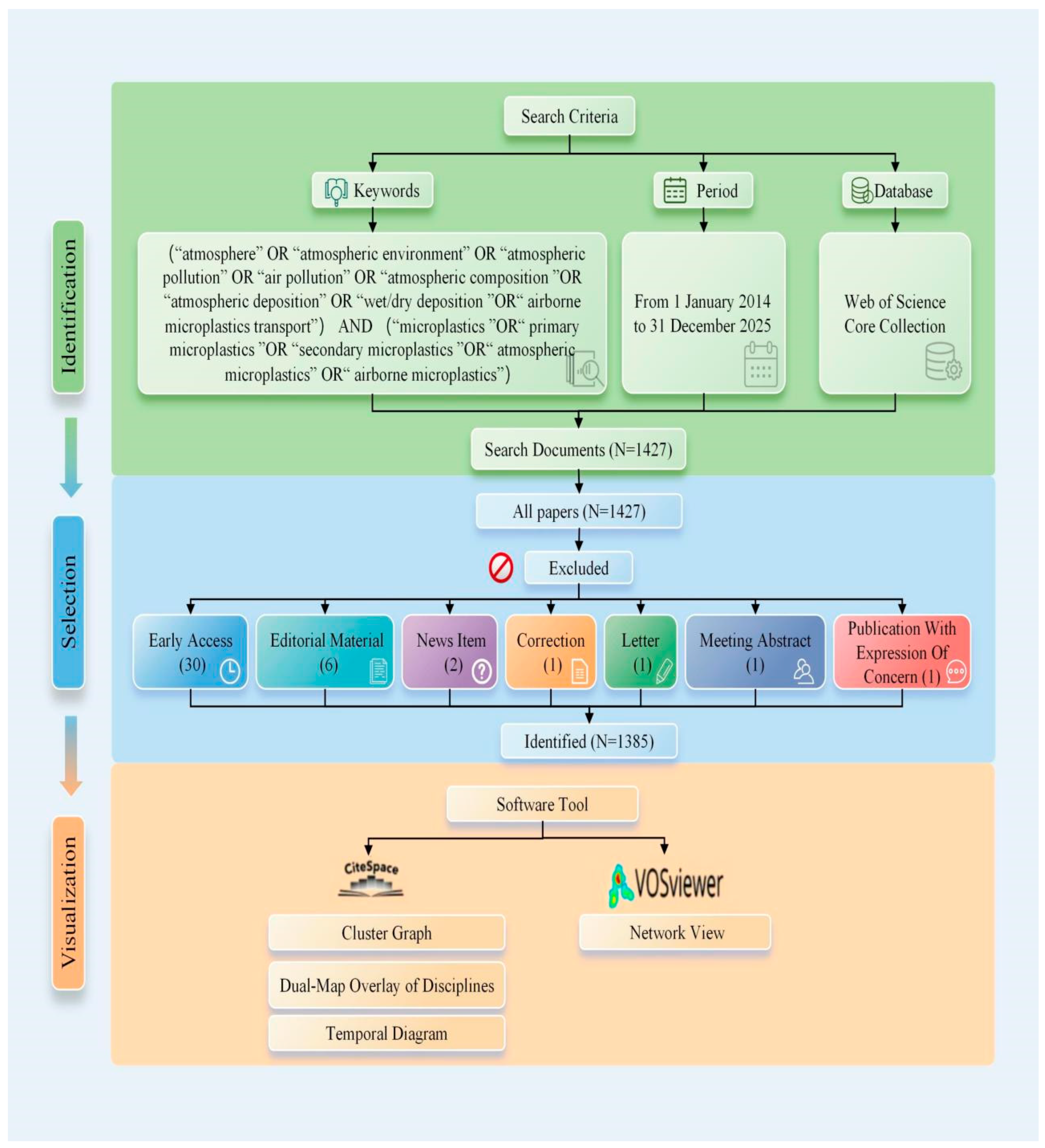
The flowchart in Figure 1 illustrates the specific research process of this article. All literature sources are from the WOS core collection, and the search strategy is as follows: the search keywords are TS = ((“atmosphere” OR “atmosphere environment” OR “atmosphere pollution” OR “air pollution” OR “atmosphere composition” OR “atmosphere deposition” OR “wet deposition” OR “dry deposition” OR “airborne microplastics transport”) AND (“microplastics” OR “primary microplastics” OR “secondary microplastics” OR “atmospheric microplastics” OR “airborne microplastics”)), and the time span is set from 2014 to 31 December 2025.
By employing the above search strategy in the Web of Science database, a total of 1427 records from the literature were obtained. To ensure the rigor of the analysis, non-article forms of records, including reviews, proceedings abstracts, and letters, were excluded during the subsequent screening process. These types of papers are mostly opinion statements or preliminary results, lacking a complete research design to avoid interference with the quantitative results. Furthermore, excluding these articles can prevent “repeated calculation” of research influences. This is because reviews mainly present the current situation by summarizing and analyzing existing research. Including such papers might lead to specific research results being overly magnified in the citation analysis. We removed conference papers to ensure the authority and academic quality of the analytical sample and to ensure that the study is based only on original research results that have been officially published and undergone strict peer review, thereby maintaining the consistency and reliability of the data. Finally, 1385 complete records that met the requirements were obtained, saved and analyzed in the form of complete records, including author names, article types, Web of Science classifications, keywords, publication years, publishers, affiliated institutions, countries, and index information. The data was finally imported into Citespace (6.4.R1) and VOSviewer (1.6.20) for multidimensional analysis, and the final visualization presentation was completed.

3. Results

3.1. Historical Stages of Atmospheric Microplastics

3.1.1. Sprout Exploration Period (2014–2016)

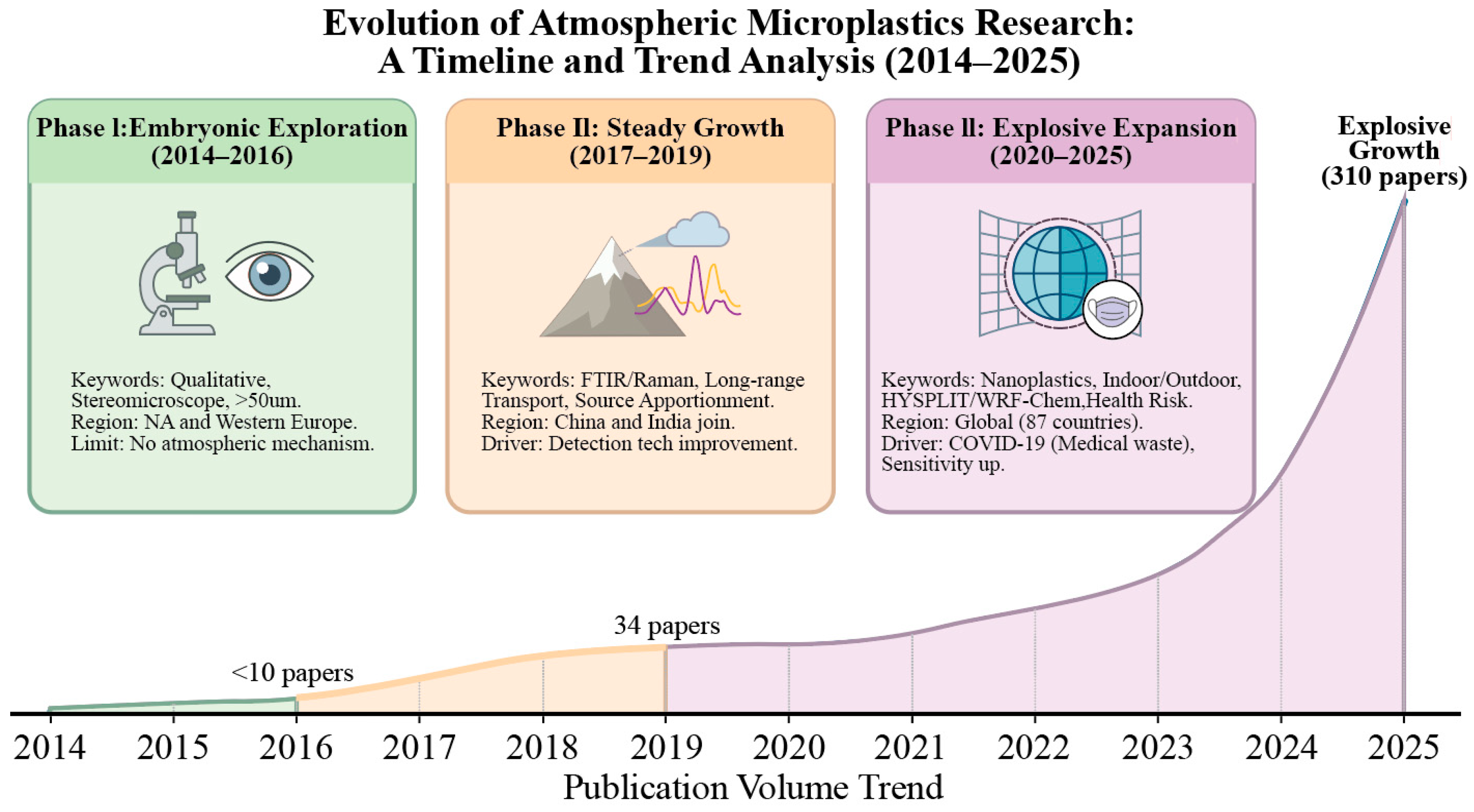
As shown in Figure 2, at this stage, the research is scattered and the annual literature output is less than 10 articles. Due to limitations in detection technology, early research mainly relied on stereomicroscopes, which had low recognition accuracy for small particle sizes (<50 microns) [25,26]. The research area is limited to North America and Western Europe, with a focus on qualitative confirmation of the presence of AMPs rather than quantitative analysis [27,28]. And there is no correlation between meteorological conditions and the suspension and deposition of microplastics, and the perspective of atmospheric science has not yet been integrated [29,30,31].

3.1.2. Steady Growth Period (2017–2019)

The annual literature output in this stage increased from 11 articles in 2017 to 34 articles in 2019. This breakthrough is due to two factors: at first, the development of spectroscopic techniques (Fourier transform infrared spectroscopy, FTIR, Raman spectroscopy) has improved the accuracy of identifying polymer types; the second, the discovery of AMPs in remote mountainous areas confirms their long-distance transmission capability, which has attracted global attention and some studies have begun to link the driving role of atmospheric circulation on transmission. At this stage, the research focus shifted towards “spatial distribution” and “source analysis”, with China and India becoming the main contributing countries [32].

3.1.3. Explosion and Expansion Period (2020–2025)

In this stage, driven by the increase in medical plastic waste in the COVID-19 epidemic and the improvement of analytical sensitivity, the annual literature output surged to 310 in 2025. At this stage, the research topics are diversified, including indoor atmospheric microplastic pollution, characterization of nanoplastics, and cross medium migration [33,34], and the application of atmospheric science methods is increasing, such as using HYSPLIT air mass trajectory model to analyze sources and WRF Chem model to simulate transmission processes [35,36]. The number of countries participating in the research has expanded to 87, intercontinental cooperation has become mainstream, and standardization of methods and health risk assessment have become cutting-edge issues [37,38].

3.2. National or Regional Network Analysis

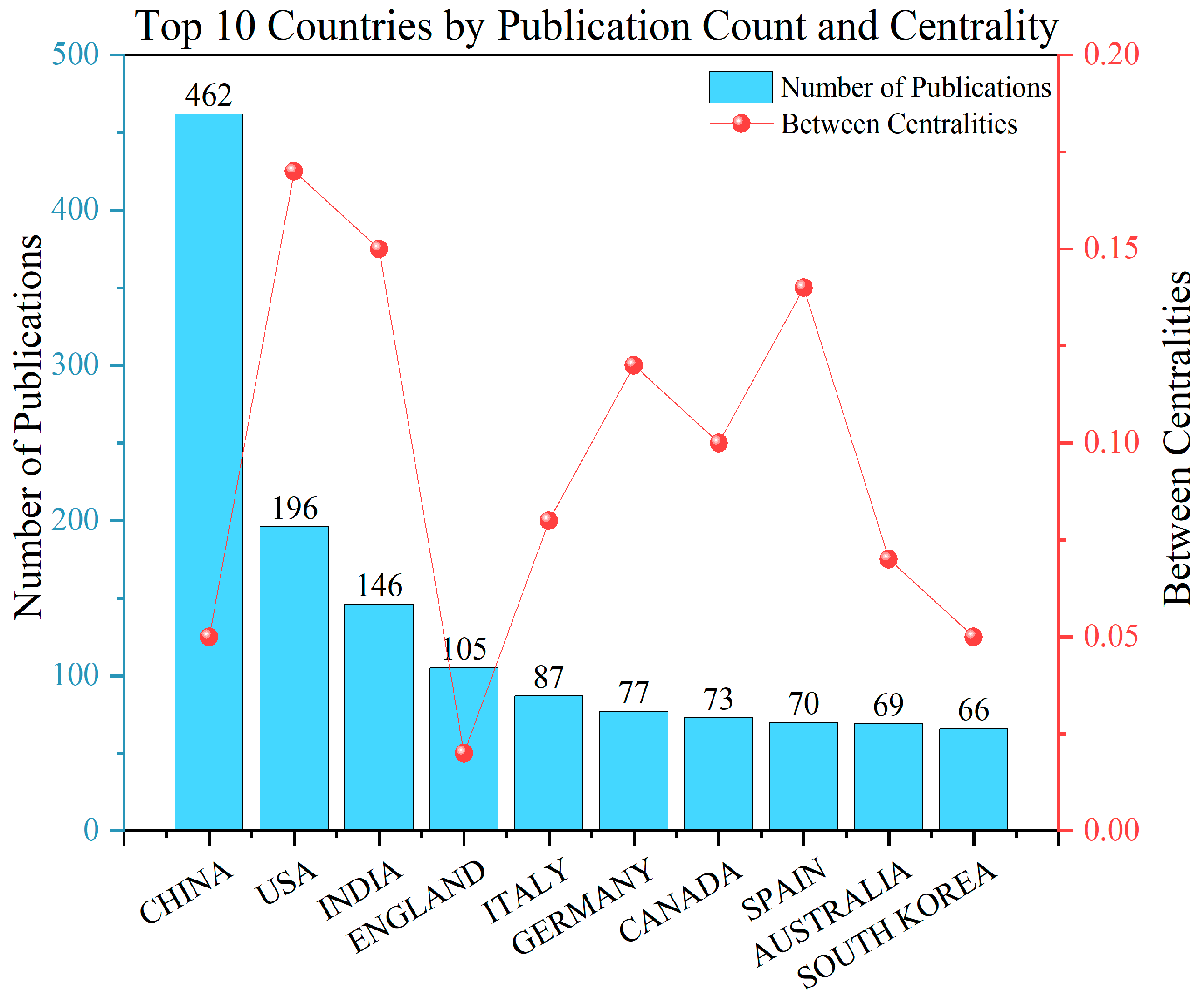
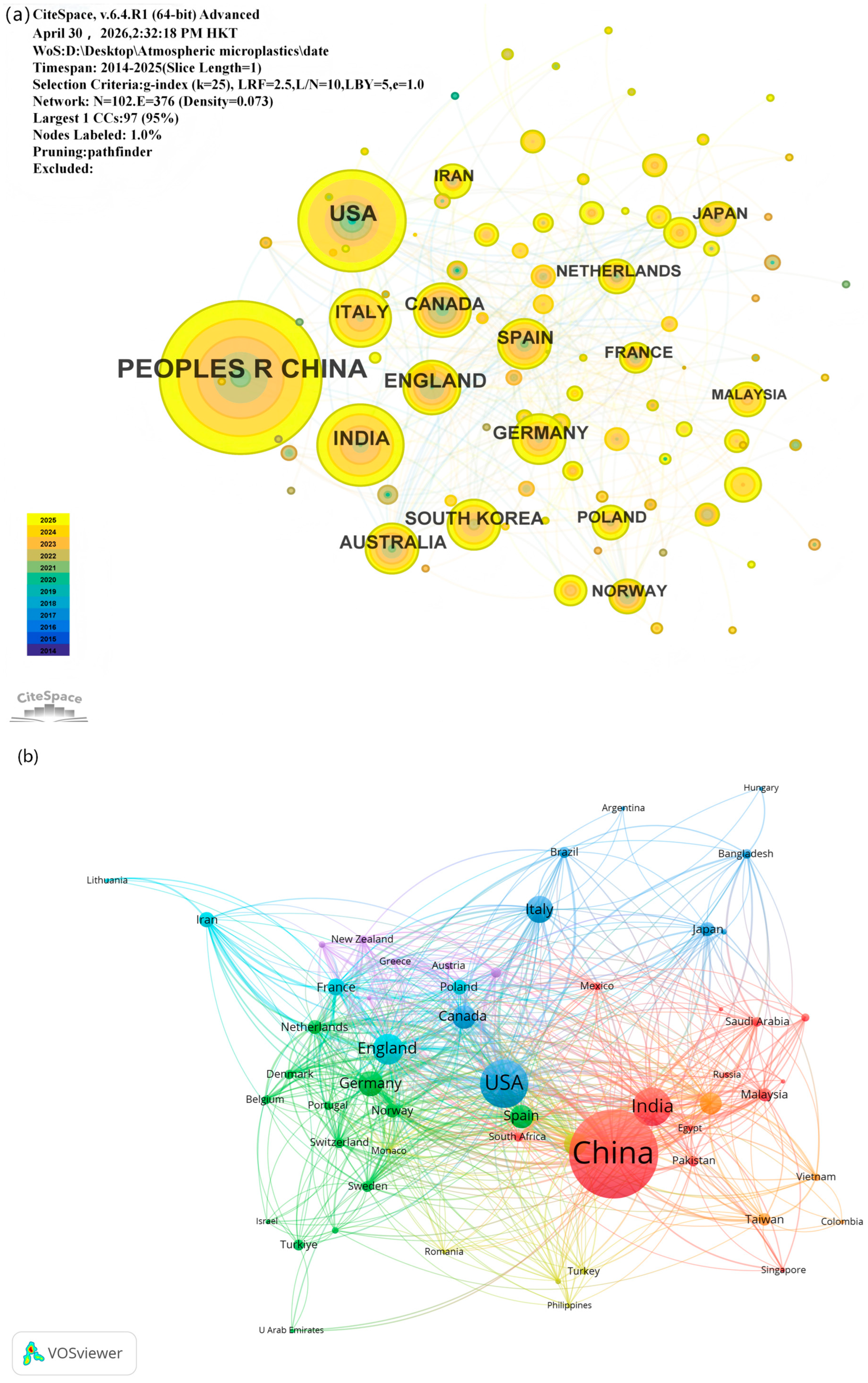
As shown in Figure 3a, the collaborative network between 2014 and 2025 consists of 102 nodes and 148 lines connected. In the VOSviewer analysis of Figure 3b, we analyzed each country one by one and set a keyword appearance threshold of five. The results show that out of 57 countries, 10 countries have published more than 50 articles. Figure 4 shows the top 10 countries and regions that contribute the most to the overall output. In terms of the number of published papers, China, the United States, India, the United Kingdom, Italy, Germany, Canada, Spain, Australia, and South Korea have become the main contributors. It is worth noting that China is far ahead with a significant number of 462 papers, ranking first. The second-ranked country, the United States, shows a slightly inferior output, with only 196 published articles.
According to Figure 4, among the top 10 countries with the highest publication volumes, the United States ranks first in terms of centrality value, indicating its dominant position in the atmospheric microplastics research network. Other major participants in this field, including India (0.15), Spain (0.14), Germany (0.12), Canada (0.10), and Italy (0.08), also hold important positions in international cooperation. Analysis shows that although the United States and China lead in the number of published papers, multiple European countries also play a key role in shaping research trends through strong international cooperation. Looking ahead, strengthening global cooperation will further promote knowledge exchange and accelerate scientific progress in the field of urban air pollution control.
Another interesting phenomenon is that although China has the highest number of published papers in the field of AMPs in the world, its centrality in the network is only 0.05, significantly lower than countries such as the United States. This phenomenon of “high output, low centrality” indicates that China’s scientific research influence is mainly reflected in scale, while its structural position and connectivity in the global cooperation network are still insufficient.
Through in-depth analysis, it can be seen that the current research landscape in China has obvious characteristics of “domestic circulation”: a large number of scientific research collaborations are concentrated among local institutions, including universities, research institutes, and enterprises, forming a high-density but relatively closed internal collaboration system. For example, most high-yield papers are jointly completed by domestic “Double First Class” universities, with a low proportion of international cooperation, and cooperation partners are mostly limited to developing countries with geographical or cultural proximity, with less in-depth participation in global scientific research projects or platforms led by developed countries.
In contrast, high-centrality countries such as the United States not only produce stable outputs, but also play a leading role in international scientific research governance and standard setting. Taking the United States as an example, it has long led multinational research programs such as the Global Marine Microplastics Monitoring Initiative and the OECD Environmental Technology Cooperation Project, and actively participated in or even led the development of relevant technical specifications, assessment methods, and data standards. This institutional embedding makes it so that its research results can easily be adopted by the global research community, thereby occupying a pivotal position in the collaborative network and significantly enhancing its centrality.
From this, it can be seen that the number of publications reflects the “volume” of scientific research output, while their centrality reflects a country’s “connectivity breadth” and “leadership ability” in the global knowledge network [39,40]. In the future, if China wants to achieve the transformation from “leading in quantity” to “leading in influence” in this field, it needs to consolidate its local innovation advantages, and more actively integrate into the global scientific research collaboration system—especially in the development of key technical standards, open data sharing mechanisms, and the construction of multilateral cooperation platforms to enhance international participation and voice.

3.3. Journal Analysis

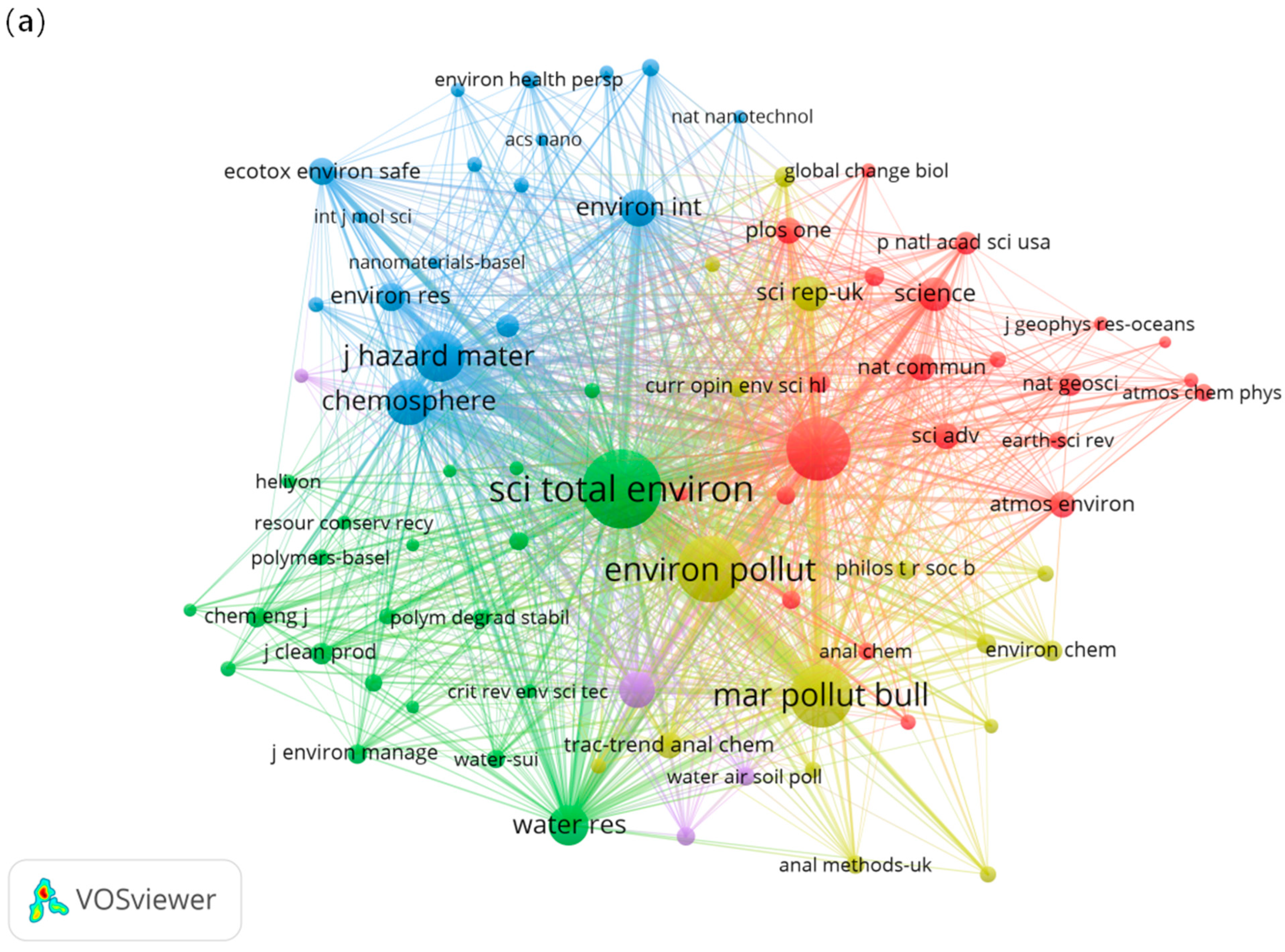
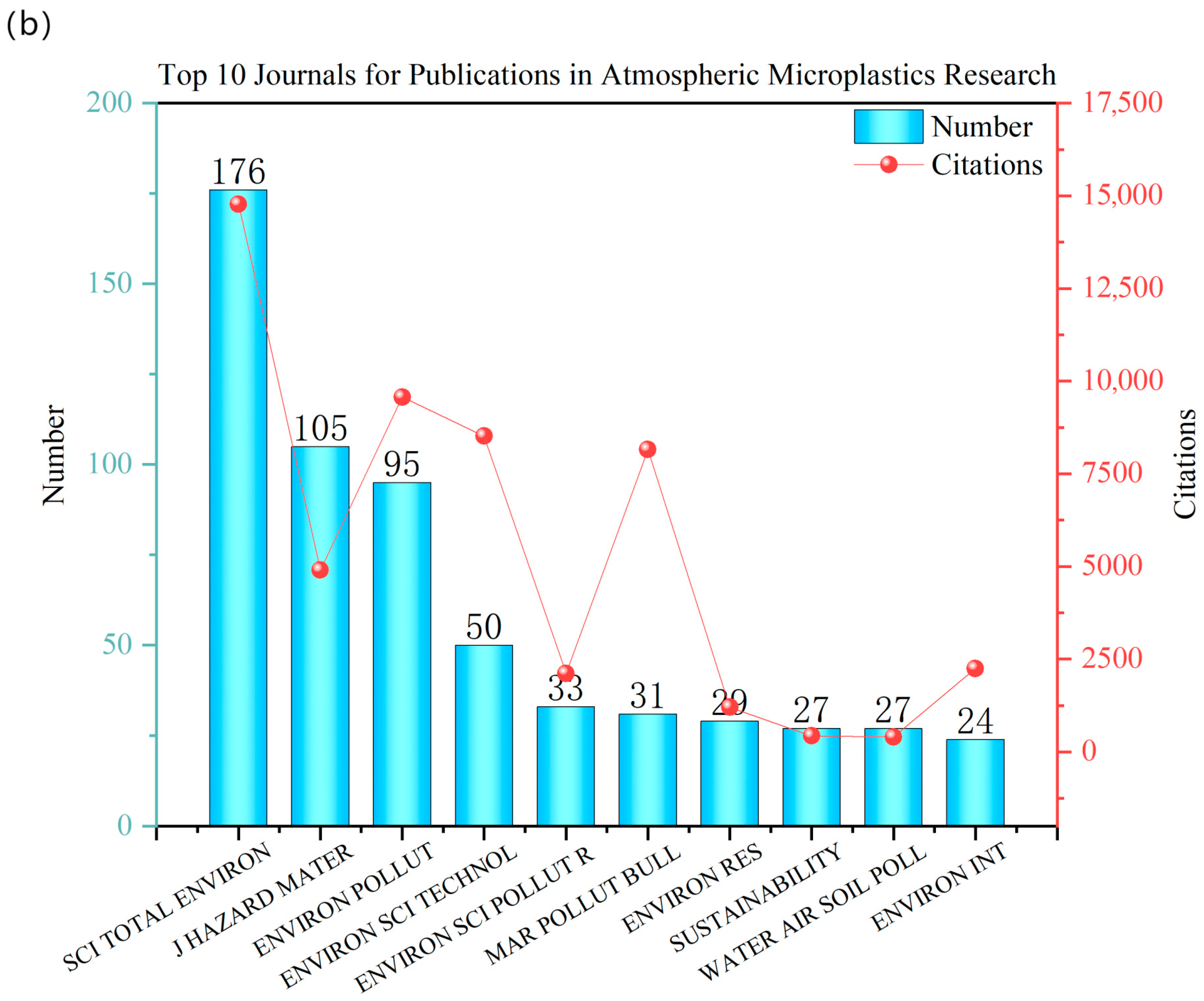
Through VOSviewer analysis, the research field exhibits a distinct “core-periphery” structure where Science of the Total Environment acts as the primary hub with a total link strength (TLS) of 1,495,017, forming a highly connected academic backbone alongside other core journals like Environmental Pollution and Environmental Science & Technology, which maintain the maximum of 527 links each. Among the eight identified clusters, Cluster 1 (Engineering and Materials) is the largest in scale, led by Chemical Engineering Journal, while Cluster 2 (Health and Toxicology) and Cluster 6 (Water Research)—centered around Environment International and Water Research respectively—tightly integrate material development and monitoring technology with biological health assessment through high-intensity academic correlations. Furthermore, citations are highly positively correlated with link strength, and while multidisciplinary journals like Nature and Science are not environmental specialists, their extreme cross-domain link strengths position them as critical intermediaries connecting diverse research directions within a highly integrated and multidisciplinary environmental science network. The top 10 journals in this field were identified (Figure 5b), with Sci. Total Environ. having 176 publications, J. Hazard. Mater. having 105 publications, and Environ. Pollut. having 95 publications. The top 10 journals in terms of publication quantity and their citation counts are shown in Figure 5b. Hot journals that have attracted attention to AMPs are beneficial for tracking or submitting new studies. The higher the number of citations a journal receives, the greater its influence. The top three cited journals are: Sci. Total Environ., Environ. Pollut., and Environ. Sci. Technol.
From the perspective of interdisciplinary analysis, these journals involve multiple disciplines such as environmental science, atmospheric science, analytical chemistry, and marine science, reflecting the trend of interdisciplinary integration in this research field. The relationship between high volume of articles and high frequency of co-occurrence in journals reflects their academic influence and activity in their respective research directions, and also provides a reference for tracking research hotspots and selecting journals in this field.

3.4. Category and Disciplines

Dual map coverage of disciplines and journals is an advanced analytical method in scientometrics and bibliometrics that reveals the structure and flow of scientific knowledge macroscopically through visual graphs [41]. The core lies in overlaying two types of knowledge networks. The one is the citation network, which represents existing research (i.e., cited literature) as the knowledge foundation. The second is the co-citation network, which represents current research as a frontier of knowledge (i.e., citation of the literature). This dual graph overlay intuitively illustrates the dynamic relationship between “where knowledge comes from” and “where knowledge goes” [42].
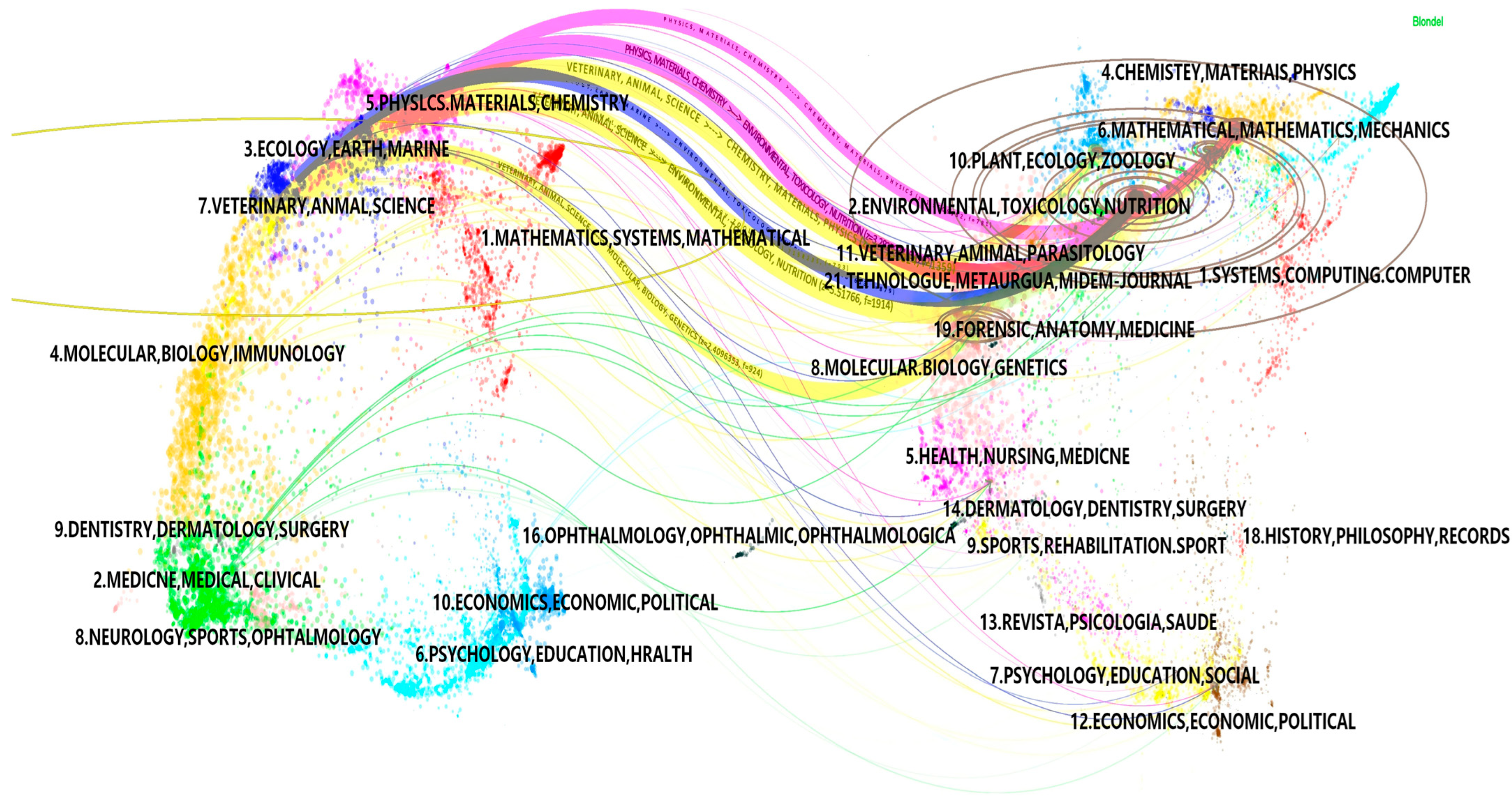
Figure 6 mainly shows six main citation lines (two purple lines, one blue line, and three yellow lines). The cited journals are mainly focused on theme 3 (ecology, earth science, marine science), while the cited journals are mainly focused on theme 2 (environmental science, toxicology, nutrition), theme 4 (chemistry, materials science, physics), and theme 6 (mathematics, digital mechanics). This reveals a complex interdisciplinary knowledge flow, moving from the basic ‘citation’ clusters to the specialized ‘cited’ clusters. The main citation trajectories originated from the ‘Veterinary/Animal/Science’ and ‘Molecular/Biological/Genetics’ fields, and mainly flowed to the ‘Environment/Toxicology/Nutrition’ center. This trajectory quantifies how the study of AMPs utilizes basic chemical and biological principles to solve complex environmental fate problems. The high concentration of the path indicates that this field has evolved into a mature interdisciplinary interface, and atmospheric dynamics is increasingly being combined with ecological risk assessment.

3.5. Author Collaboration Network Analysis

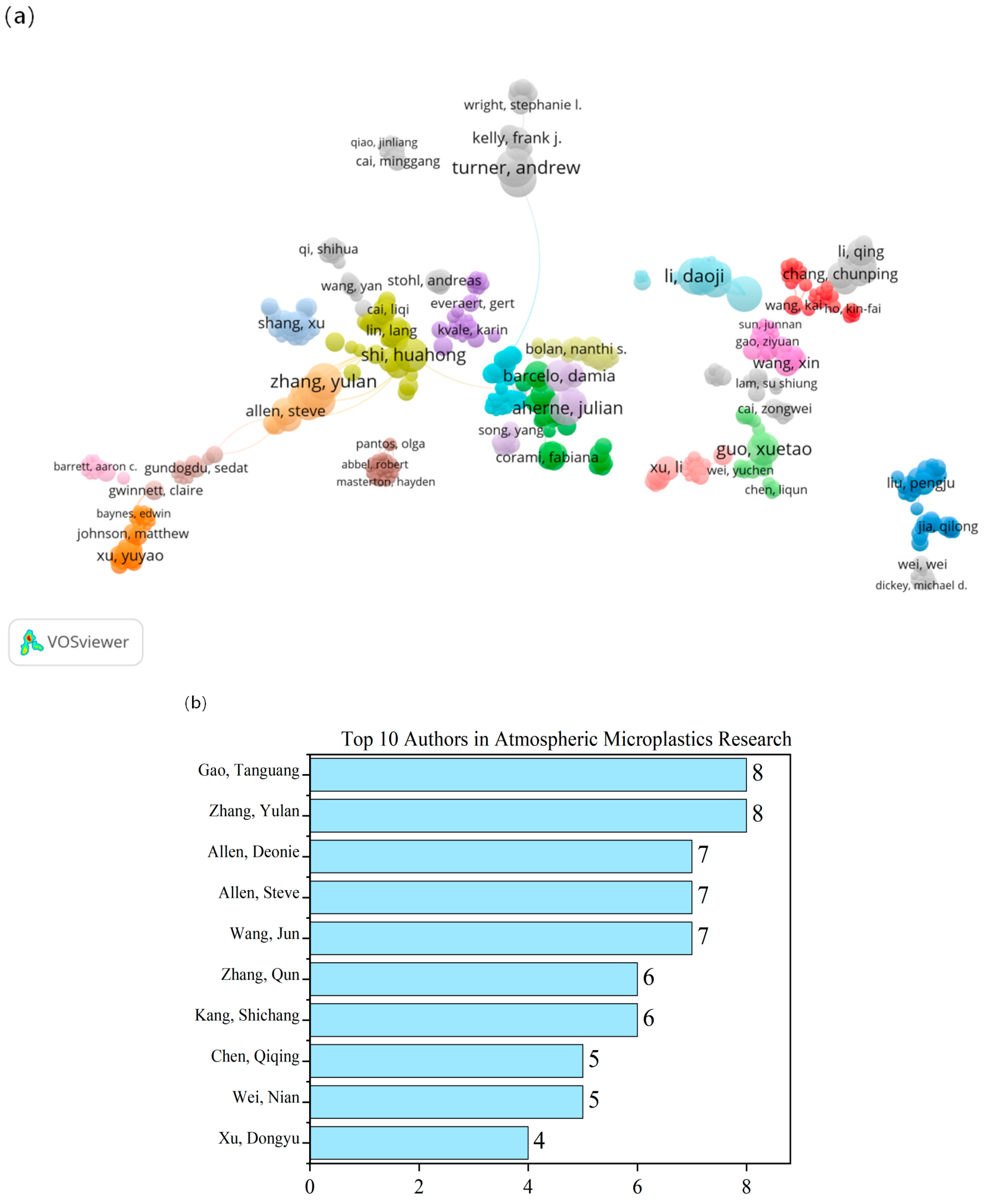
As the main body of scientific research activities, co-occurrence analysis can identify the main researchers and their collaborative relationships in this field [43,44]. Using VOSviewer to visualize co-authorship relationships, node size in Figure 7a reflects the number of articles published by an author, and color represents the year of publication [45]. The results in Figure 7b show that, in terms of the number of publications, the authors with the most publications are Zhang, Y. L. and Gao, T. G. (both with eight articles), as well as Wang, J., Allen, S., and Allen, D. (all with seven articles). The high output of these authors typically indicates that their research in the field is more in-depth, and their methods, perspectives, and results have high reference values. From the perspective of national distribution, Chinese authors occupy a significant proportion of the list, such as Zhang, Y.L., Gao, T.G., Wang, J., Kang, S.C., etc., demonstrating China’s active participation and important contributions in atmospheric microplastics research.

3.6. Reference Citation Network Analysis

Reference co-citation analysis refers to the phenomenon where two articles are simultaneously cited in one or more subsequent papers, forming a co-citation relationship between them. By analyzing this relationship, the intrinsic correlation and development of research topics can be revealed [46,47]. The keyword clustering map extracts high-frequency terms based on co-cited data from the literature, and the clustering labels objectively reflect the research hotspots and knowledge structure in the field of AMPs [48,49].
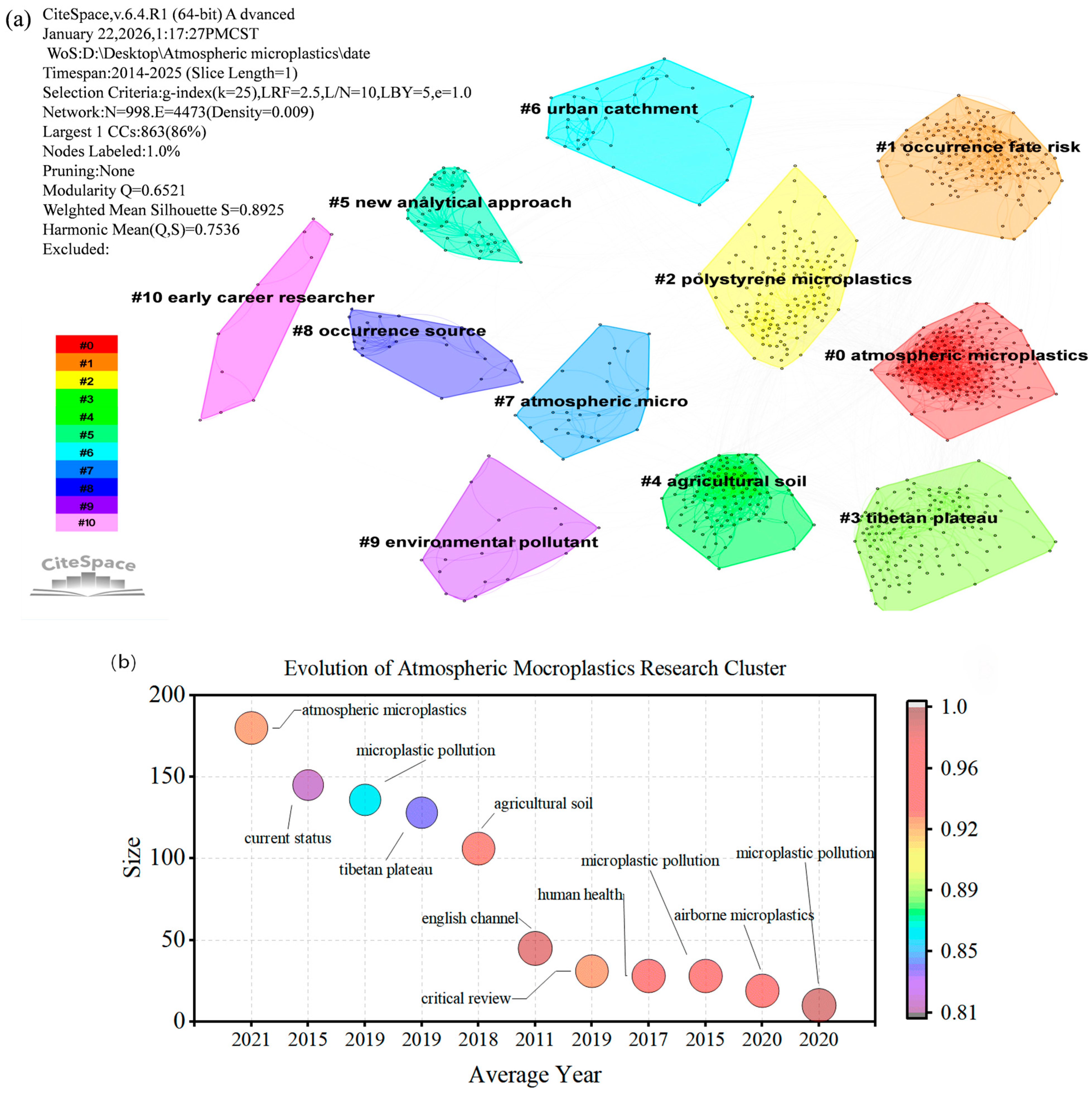
This study used CiteSpace for the literature co-citation network analysis, with “Reference” as the node type and a time slice of 1 year. The g-index (k = 25) was selected as the network extraction criterion, and Pathfinder and Pruning sliced network algorithms were used for pruning optimization of the network. The clustering method adopts the LLR log-likelihood ratio algorithm, and the results are shown in Figure 8a. The automatic clustering results show that the modular Q-value of the network is 0.8925, which is much higher than the threshold of 0.3. The average contour value S is 0.7536, which is greater than 0.7, indicating that the clustering structure is significant and the internal consistency is high, and the analytical results are reliable.
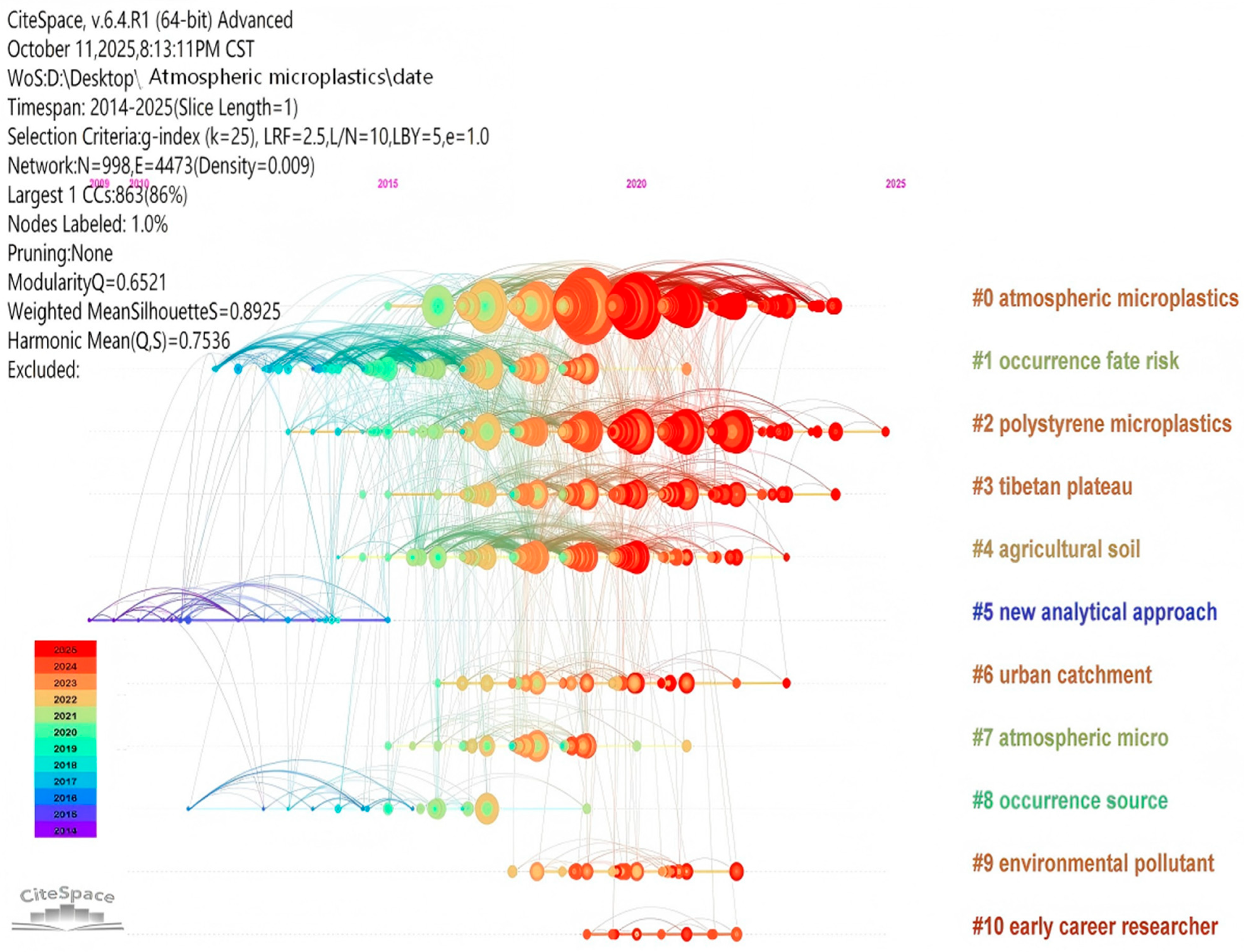
Figure 9 shows the main cluster composition in the field of AMP research. The top 11 key clusters include: #0 atmospheric microplastics, #1 occurrence destination risk, #2 polystyrene microplastics, #3 Qinghai–Tibet Plateau, #4 agricultural soils, #5 new analysis methods, #6 urban watersheds, #7 atmospheric microplastics, #8 atmospheric microplastic occurrence and sources, #9 environmental pollutants, and #10 early career researchers.
The timeline view (Figure 9) integrates clustering evolution and temporal distribution characteristics, which can clearly display the development trajectory and changes in research focus for each research topic in different periods [50,51]. The timeline generated by CiteSpace shows that research on AMPs has gradually formed a scale since around 2015. Early research focused on basic issues such as #1 “occurrence destination risk” and #8 “occurrence and source”, focusing on the identification, transport, and fate of microplastics in the environment. At this time, the perspective of atmospheric science had not yet been fully integrated. Between 2019 and 2020, research on #0 “atmospheric microplastics” and #2 “polystyrene microplastics” rapidly expanded, with a focus on atmospheric behavior and regional characteristics of specific types of microplastics. The clustering of 5 “new analysis methods” reflects the innovative demand for analysis techniques in this stage and promotes the standardization and accuracy of detection methods, and atmospheric circulation models began to be used for source analysis.
In recent years, research has further expanded to include the sedimentation effects of microplastics in #4 “agricultural soil”, the comprehensive ecological risks of #9 “environmental pollutants”, and the emerging academic forces represented by #10 “early career researchers”. These trends indicate that research on AMPs has gradually evolved from initial descriptions of phenomena and method development to a comprehensive research direction involving multiple regions, media, and methods, showing obvious interdisciplinary and technological integration characteristics.

3.7. Keyword Analysis and Research Hotspot Analysis

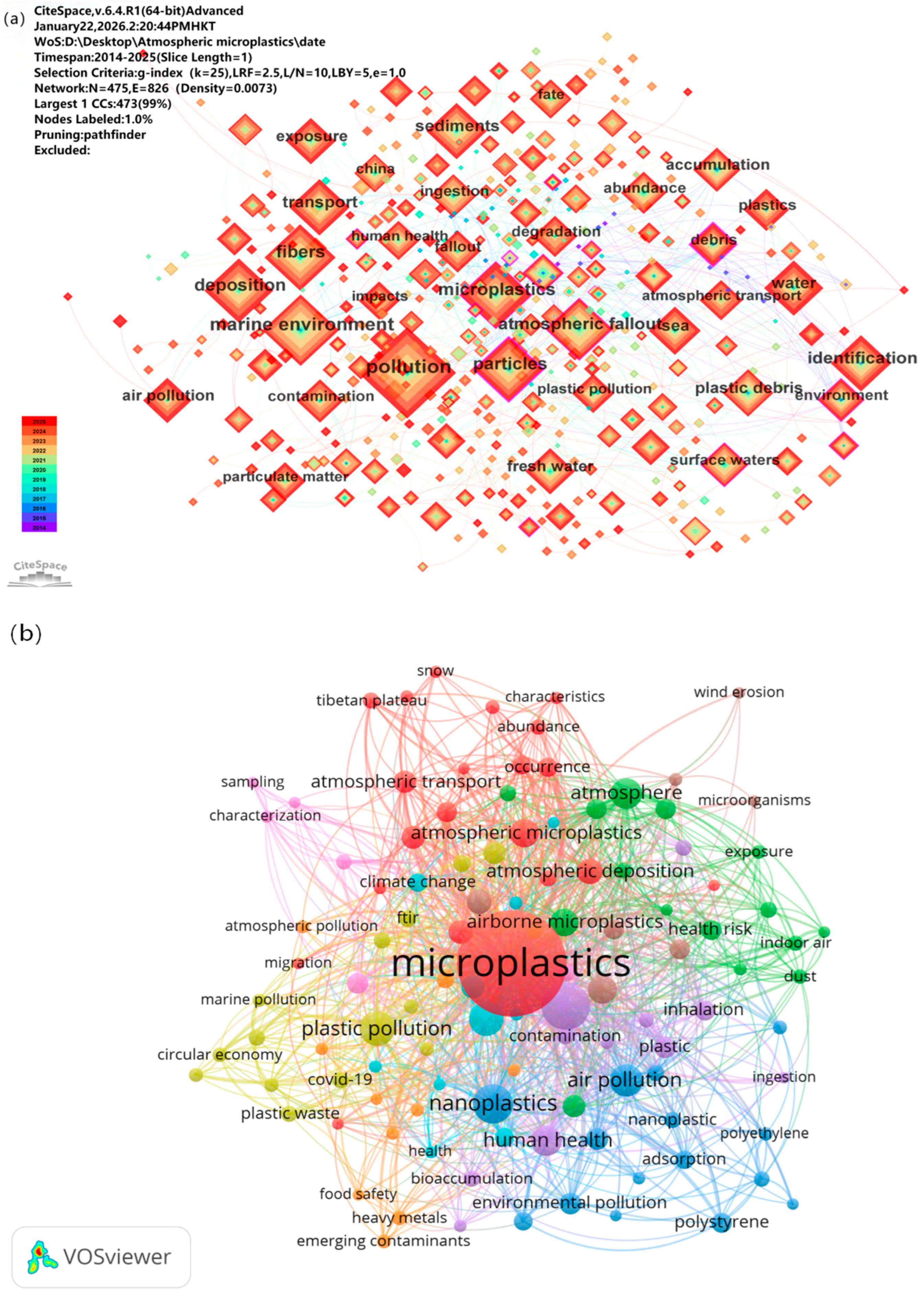
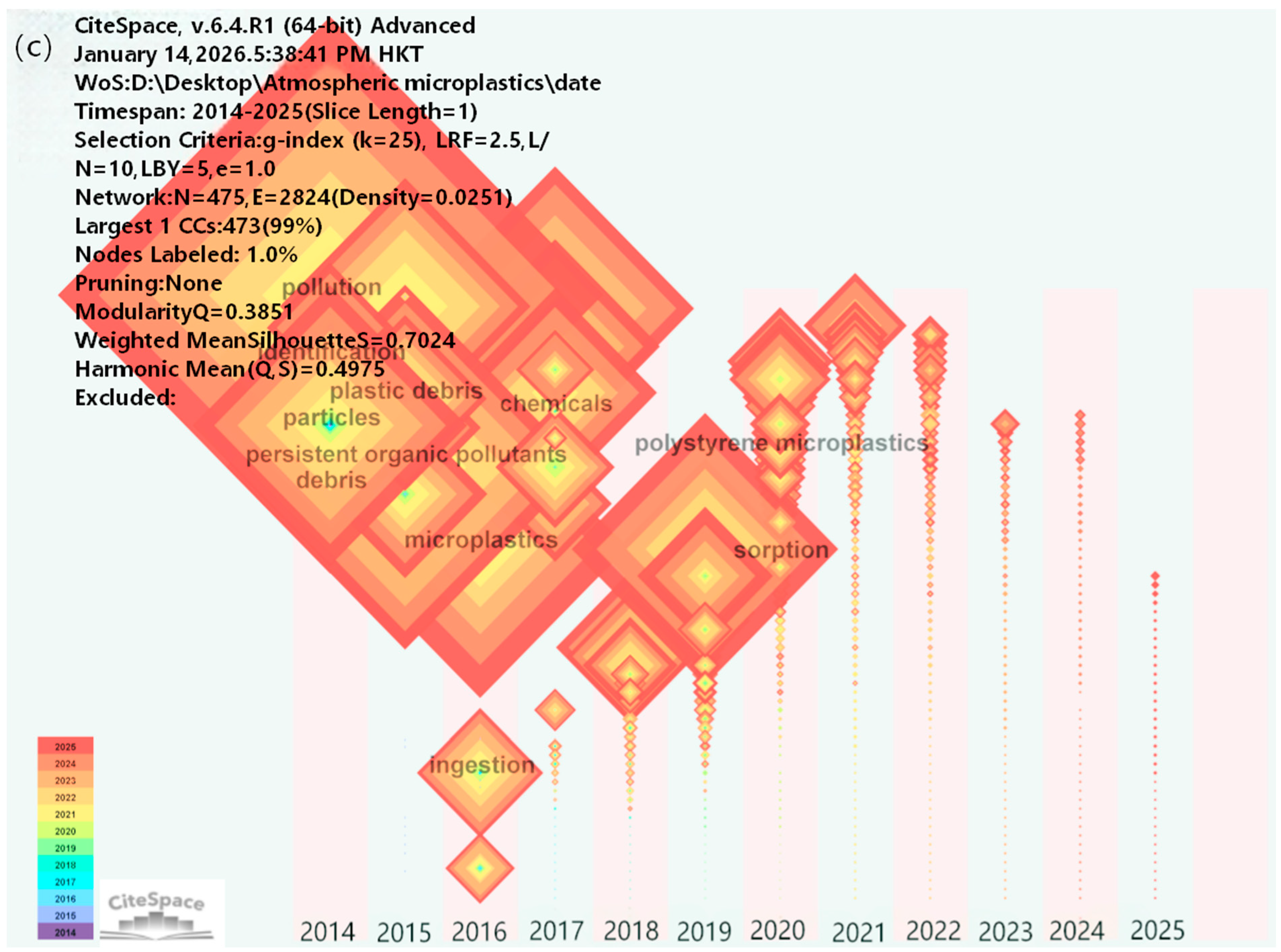
Figure 10a,b respectively show the co-occurrence visualization results of keywords generated by CiteSpace and VOSviewer, reflecting the interrelationships between research topics. This method measures the strength of correlation by counting the frequency of co-occurrence of keywords in the literature: if two keywords frequently co-appear in multiple articles, it indicates that they are highly correlated and often point to the same research direction or hot topic area. Therefore, keyword co-occurrence analysis provides an effective way to quickly identify the forefront and core issues of disciplines [52,53].
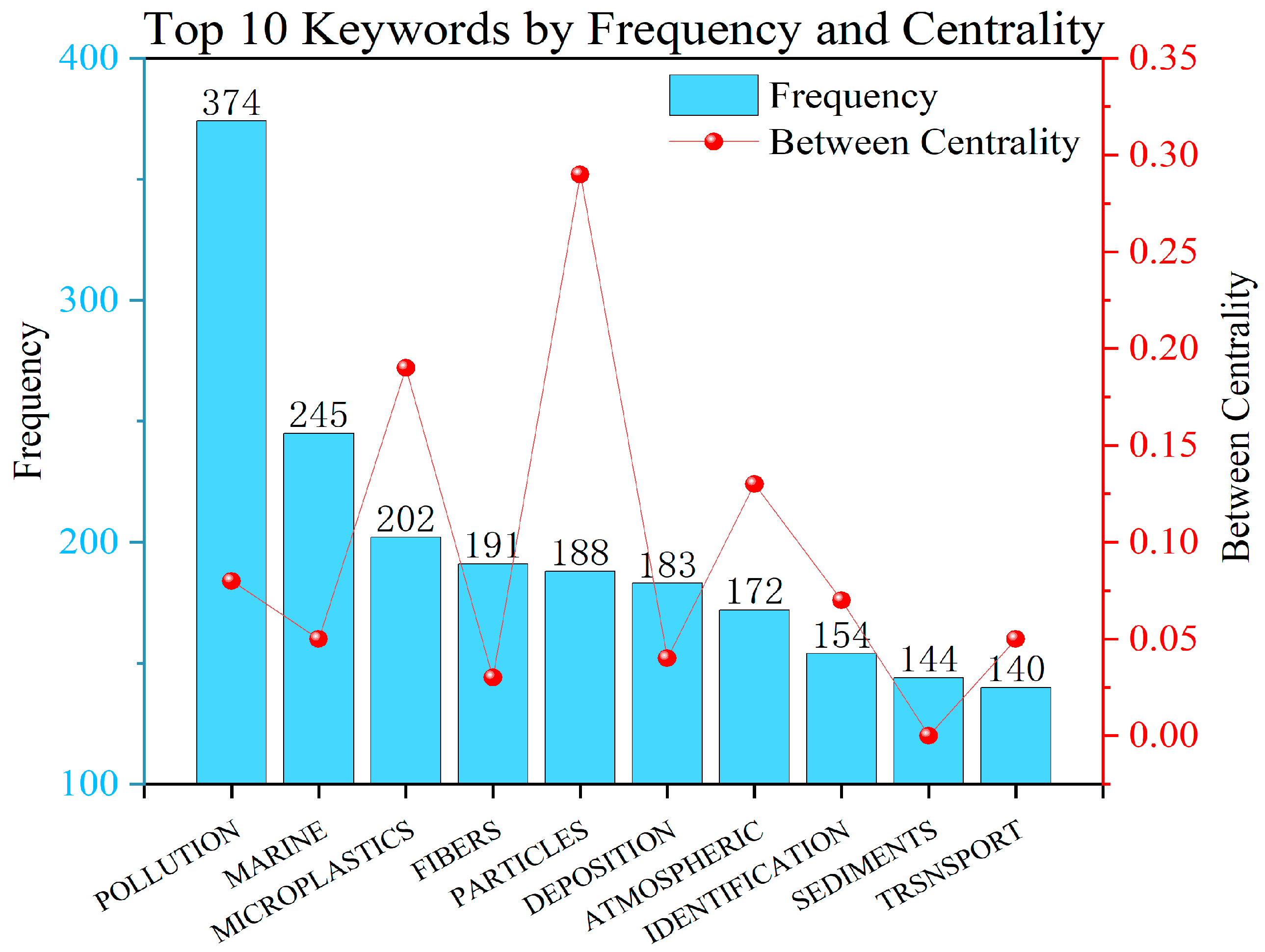
In CiteSpace, we selected “keywords” as the node type and described the nodes as having keywords representing symbiotic relationships [54,55]. The size of the annual cycle node is directly proportional to the frequency of keyword occurrence. The color gradient from the center to the edge of the node represents changes in research keywords over time, with each time slice equal to one year. The g-index (k = 25) is selected as the network extraction standard. On the contrary, in VOSviewer, we chose “co-occurrence” analysis to represent “author keywords”. We set the minimum frequency threshold to seven. Out of the 3313 keywords analyzed, only 110 met this criterion (see Figure 11 for detailed information on the top 10 high-frequency keywords). The most frequently used keywords in the network are “pollution” (374 times), “marine environment” (245 times), and “microplastics” (202 times), indicating that the core of research in this field revolves around microplastic pollution and its environmental fate. It is worth noting that the centrality of “particles” and “microplastics” is as high as 0.29 and 0.19, respectively, indicating that they play a pivotal role in the network and are key bridges connecting different research topics. From the perspective of keyword themes, keywords can be roughly divided into several core research directions: first, source and representation, such as high-frequency words “fibers” (191 times) and “identification” (154 times), reflecting attention to the physical form and methods of detection of AMPs [56,57]. The second is the process of migration and deposition, such as “transport” (140 times), “deposition” (183 times), and “atmospheric collapse” (172 times), which reveal a focus on the transport and deposition mechanisms of microplastics. The high centrality of keywords like “deposition” (183 times) and “transport” (140 times) reflects the disciplinary shift toward understanding AMPs as active atmospheric constituents. Specifically, the integration of HYSPLIT air mass trajectory models and deposition flux estimations indicates that the field is moving beyond simple “occurrence description” to process-based “atmospheric transport modeling” [58,59]. In recent years, research has begun to combine the HYSPLIT model to analyze the sources of air masses and quantify dry/wet deposition fluxes, reflecting a multi-media perspective from the ocean to land and from water bodies to sediments [60,61,62,63].
Based on the comprehensive time series and network characteristics, it can be seen that research on AMPs began around 2014 with a focus on general pollution issues such as “pollution” and “particles”. Subsequently, there was a gradual shift towards specialized research on “microplastics”, and from 2017 to 2019,exploration of environmental behavior processes such as “deposition” and “transport” deepened. After 2020, the rise in keywords such as “meteorological factors”, “model”, and “dust” marked the deep integration of atmospheric science methods. These clustering themes clearly outline the complete chain of atmospheric microplastics research from “source migration deposition effect”, indicating that a relatively systematic research framework has been formed in this field. Future research is expected to further deepen in health exposure assessment, standardized monitoring methods, and multi-media migration simulation [64,65].
Keyword explosion analysis helps to grasp the forefront dynamics of disciplines, identify research hotspots, and predict future development trends by identifying keywords with a significant increase in frequency during a specific time period [66,67,68]. This article is based on CiteSpace software to detect the phenomenon of keyword explosion in the field of AMPs research, with a time span from 2014 to 2025. Table 1 lists the top ten keywords in terms of explosive intensity, namely “environment”, “athletic fibers”, “plastic debris”, “rehabilitation”, “dropouts”, “marine environment”, “coastal waters”, “marine debris”, “water treatment plants”, and “organizations”. Keywords are sorted by their outbreak start year, and the “intensity” indicator is used to measure the significant degree of frequency growth of keywords during a specific period.
The explosion interval chart on the right side of Table 1 intuitively shows the evolution process of keyword popularity: the red line segment indicates that the frequency of keyword occurrence sharply increased during this period, becoming a phased research focus. From the perspective of the overall evolution path, research on AMPs shows a deepening trend from macro environmental cognition to specific source identification and ecological effect assessment, and the perspective of atmospheric science gradually becomes prominent in the later stage.
The early (2014–2017) outbreak keywords such as “environment” and “plastic debris” reflect that research at this stage mainly focused on an overall understanding and basic definition of plastic pollution in the environment. Subsequently, keywords such as “marine environment” and “coastal waters” erupted in a concentrated manner between 2018 and 2021, indicating an expansion of research perspectives towards the ocean and coastal systems. It is worth noting that “water treatment plants” became an emerging outbreak point between 2020 and 2022, reflecting the academic community’s emphasis on the nodes and governance pathways of anthropogenic microplastic emissions. The recent increase in the term ‘organisms’ marks a further deepening of research into the impact of biological uptake and ecological health. The evolution of this research hotspot not only reflects the continuous refinement of atmospheric microplastics research topics and the gradual establishment of scientific consensus, but also reflects the upgrading of global policies and public attention to plastic pollution from awareness to control. In the future, this field is expected to continue to deepen in areas such as human health exposure, source control technology, and simulation of multi-media interface processes [69,70]. Moving beyond keyword identification, this analysis reveals a conceptual transition from ‘passive monitoring’ to ‘dynamic process simulation’. The clustering of ‘long-range transport’ and ‘deposition flux’ indicates that the field is no longer just reporting the presence of microplastics but is actively developing predictive frameworks for their global atmospheric life cycle. This represents a significant conceptual advance, positioning AMPs as a new category of global climate forcers.

4. Conclusions

This study is based on the Web of Science core collection database, and comprehensively uses bibliometric and visualization analysis tools such as CiteSpace and VOSviewer to construct and analyze a systematic knowledge graph of 1385 high-quality academic articles in the field of global atmospheric microplastics research from 2014 to 2025. The results indicate that the field has entered a rapid development stage since 2019, with research scale rapidly expanding and forming a research pattern of interdisciplinary integration, diverse collaborative methods, and extensive regional participation. By integrating multidimensional visualization results, the following main conclusions are drawn:
(1)
The global scientific research force presents a dual track pattern of “China leading quantity and Europe and America leading cooperation”. China ranks first in the world with 462 publications, significantly ahead of the United States (196) and India (146), reflecting its high-intensity research investment in this field. And countries such as the United States, Spain, and Germany have shown outstanding performance in network centrality, demonstrating a stronger role as international cooperation hubs. This indicates that although China has an advantage in output scale, there is still room for improvement in its structural influence in the global knowledge network.
(2)
Research on AMPs has developed into a highly interdisciplinary and comprehensive scientific field, mainly integrating six major directions: environmental science, atmospheric science, analytical chemistry, materials science, toxicology, and public health. The overlay analysis of disciplinary double graphs further reveals that the knowledge foundation of this field mainly comes from ecology and marine science, while cutting-edge research has been widely extended to fields such as chemistry, materials, physics, and environmental engineering, reflecting a trend of evolution from “pollution identification” to the entire chain of “mechanism analysis risk assessment governance response”.
(3)
The core journal group focuses on high-impact publications in the field of the environment and materials. The journals with the highest publication volume and co-citation frequency include Sci. Total Environ., J. Hazard. Mater., Environ. Pollut., Environ. Sci. Technology, and Environ. Sci. Pollut. R. These journals not only carry the main research achievements of the field, but also confirm their interdisciplinary nature, providing clear guidance for subsequent scholars to submit and track the forefront of this field.
(4)
The co-citation clustering and keyword evolution analysis reveal four core research clusters: the occurrence and sources of AMPs; migration, transmission, and settlement mechanisms; analytical methods and material characterization; and ecological and health risks. Among them, the clustering of place names such as “Qinghai Tibet Plateau”, “urban watershed”, and “agricultural soil” highlights the expansion of the field’s research scale from urban areas to remote and sensitive ecological areas.
(5)
Keyword co-occurrence and time-series analysis reflect the continuous deepening of research hotspots. The high-frequency core words “pollution” (374 times), “microplastics” (202 times), “deposition” (183 times), “fibers” (191 times), and “transport” (140 times) indicate that research focus is shifting from general pollution awareness to specific morphologies, migration pathways, and deposition processes. The research system is transitioning from “phenomenon description” to “precise resolution”. This study identifies that while “identification” and “methods” have become core clusters, there is an intensifying call within the academic community for the standardization of analytical and extraction methods, particularly for complex mineral matrices. Additionally, the degradation process of microplastics in the environment is gradually becoming a vital variable for assessing long-term ecological risks. Burst word analysis shows that research in recent years has shifted toward “organisms” and “meteorological factors,” suggesting a deeper move toward human-source control and biological health effect assessments.
In conclusion, our bibliometric synthesis demonstrates that atmospheric microplastics research has evolved into a multidisciplinary frontier. The most significant conceptual advance identified is the integration of meteorological dynamics into plastic pollution assessments, which has fundamentally redefined the ‘global source-sink’ model of microplastics by highlighting the role of the atmosphere as a high-speed transport corridor.

5. Outlook

Although research on AMPs has made significant progress over the past decade, to deeply understand their cycling mechanisms in the atmosphere and their climate effects, future research needs to achieve a profound transformation from “phenomenon description” to “scientific mechanism revelation”. Based on the quantitative analysis in this paper, future research should focus on the following five aspects (Figure 12):
(1)
Strengthening global cooperation mechanisms and the construction of scientific research governance discourse power. AMPs have significant characteristics of long-distance transboundary transmission and are a typical global environmental issue. In the future, through international large-scale scientific projects, efforts should be made to enhance the sharing of monitoring data on a global scale, especially in establishing a global “source-sink” balance table for AMPs. By taking the lead in conducting large-scale comparative studies on atmospheric deposition fluxes, China’s scientific discourse power in international air pollution control and climate change negotiations should be enhanced, providing key evidence from the field of atmospheric science for the formulation of a global plastic pollution convention.
(2)
Deepening interdisciplinary collaborative research. Efforts should be made to promote in-depth cross-disciplinary integration between atmospheric physics, atmospheric chemistry and materials science. Key research should focus on the parameterization and coupling of atmospheric transport models, integrating the non-spherical physical properties of microplastics (such as length-to-diameter ratio and surface roughness) into high-resolution atmospheric chemical transport models (such as WRF-Chem and GEOS-Chem). Through interdisciplinary collaboration, the interaction mechanisms between microplastics and conventional aerosols (such as black carbon and mineral dust) should be revealed, as well as their influence as ice nuclei or cloud condensation nuclei on cloud physical processes and regional precipitation.
(3)
Accelerating the establishment of unified research methods and technical standards. Given the current lack of comparability in global monitoring data, there is an urgent need to establish a unified standard system for AMP monitoring. This includes not only standardizing sampling heights, flow rates, and size definitions but also prioritizing the standardization of analysis methods and extraction technologies. Especially for complex background samples such as mineral matrices, standardized extraction protocols should be developed and promoted to eliminate matrix interference and improve data compatibility across different studies. Furthermore, priority should be given to developing online monitoring technologies for sub-micron plastic particles to ensure that observational data truly reflects actual atmospheric abundance.
(4)
In-depth exploration of degradation mechanisms and environmental behavior. Future research should increase focus on the degradation processes of AMPs, such as photodegradation, mechanical abrasion, and chemical aging. Through a combination of laboratory simulations and field monitoring, research should reveal how degradation alters the physicochemical properties of particles (e.g., surface functional groups, specific surface area, and adsorption capacity) and assess the secondary pollution risks of degradation products like nanoplastics. Additionally, degradation kinetic parameters should be integrated into atmospheric transport models to more accurately simulate the lifespan and ultimate fate of microplastics in the atmosphere.
(5)
Boosting the effective transformation of scientific research achievements into governance practices. The transformation of scientific research results should be based on a profound understanding of the laws of atmospheric science. In the future, emphasis should be placed on the estimation of refined atmospheric deposition fluxes, identifying key emission source areas and highly vulnerable sink areas on a global and regional scale. By constructing a complete chain assessment system for AMPs’ “emission to transmission to deposition”, the transmission mechanisms discovered in scientific research can be transformed into scientific pollution trajectory tracing and risk warning capabilities. It provides data support for the precise implementation of atmospheric particulate matter emission reduction policies and ecological restoration strategies.
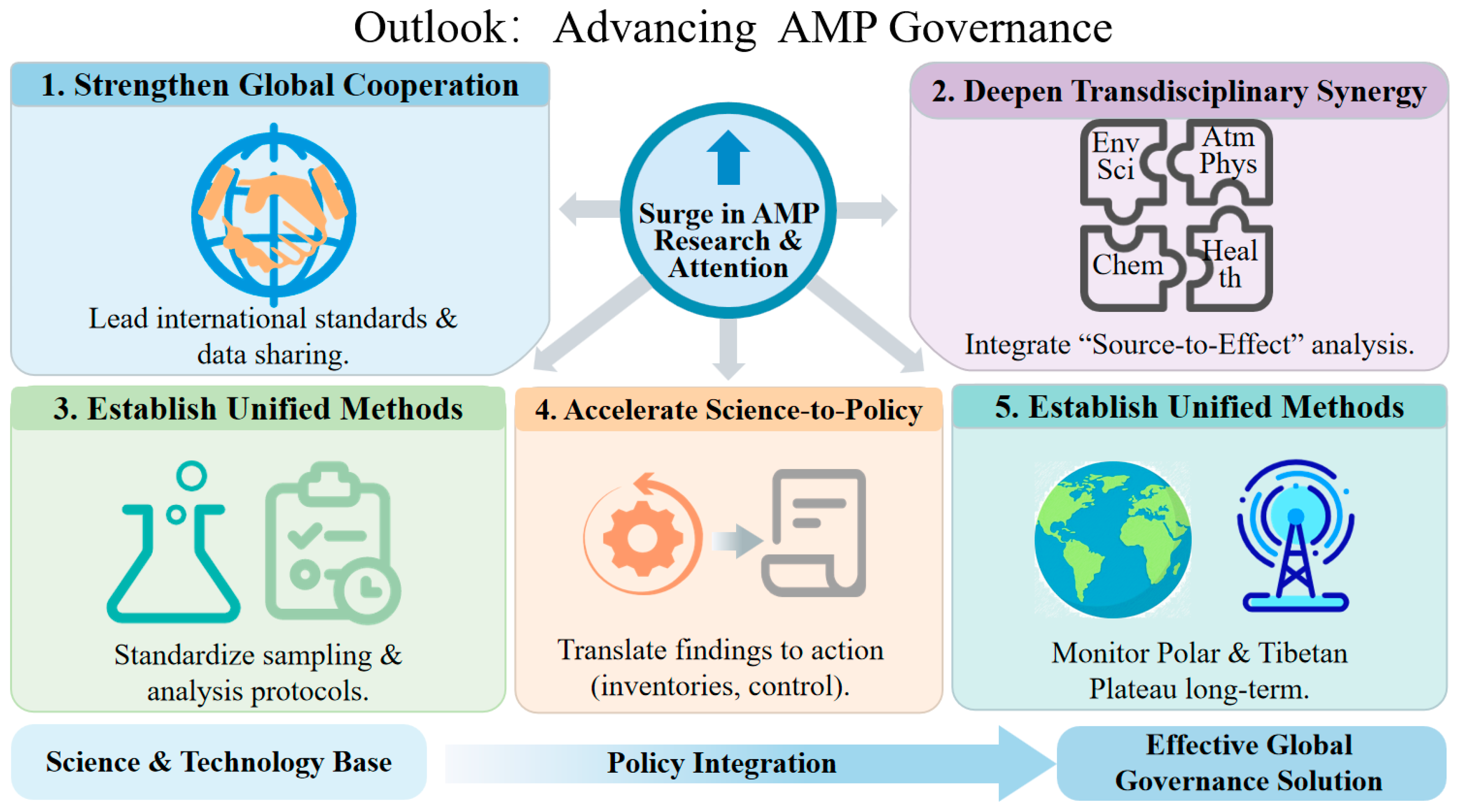
Figure 12. Outlook for AMPs.
Atmosphere 17 00517 g012
In summary, the evolution of this field hinges on the deep integration of atmospheric science with plastic pollution research. Future studies must move beyond simple occurrence monitoring to embrace the core principles of atmospheric physics and chemistry, such as aerosol dynamics and boundary layer meteorology. By coupling the physical properties of microplastics with high-resolution atmospheric transport models, the scientific community can establish a comprehensive ‘global atmospheric microplastic cycle’ framework, providing the rigorous evidence needed for international environmental governance.

6. Highlights

  • Bibliometric analysis of global atmospheric microplastics (2014–2025) using WOSCC, CiteSpace, and VOSviewer to reveal historical evolution and emerging thematic research trends.
  • Shifting focus from qualitative identification toward integrated studies involving multi-media migration, atmospheric modeling, and comprehensive human health risk assessments.
  • The four core research clusters of occurrence, migration, methods and risks were identified, and the evolution process of atmospheric microplastics research system was emphasized.
  • Mapping global cooperation while identifying future needs for unified standards, interdisciplinary integration, and expanded long-term observations in remote areas.

Author Contributions

Z.W. and H.X.: Conceived and designed the project; analyzed and interpreted the data. Q.L., X.L. and F.L.: Wrote the paper. J.C.: Project administration. J.C.: Funding acquisition. All authors have read and agreed to the published version of the manuscript.

Funding

This research received funding via Horizontal Ties between Enterprises Project (Zhoushan Yingtai Screw Co., Ltd. Digital Transformation Upgrade Service and Strategy, Grant No. 21088003923).

Institutional Review Board Statement

Not applicable.

Informed Consent Statement

Not applicable.

Data Availability Statement

The data will be offered upon email request to the corresponding author.

Conflicts of Interest

The authors declare that this study received funding from Zhoushan Yingtai Screw Co., Ltd. The funder was not involved in the study design, collection, analysis, interpretation of data, the writing of this article or the decision to submit it for publication.

References

  1. Akanyange, S.N.; Lyu, X.; Zhao, X.; Li, X.; Zhang, Y.; Crittenden, J.C.; Anning, C.; Chen, T.; Jiang, T.; Zhao, H. Does Microplastic Really Represent a Threat? A Review of the Atmospheric Contamination Sources and Potential Impacts. Sci. Total Environ. 2021, 777, 146020. [Google Scholar] [CrossRef] [PubMed]
  2. Thompson, R.C.; Olsen, Y.; Mitchell, R.P.; Davis, A.; Rowland, S.J.; John, A.W.G.; McGonigle, D.; Russell, A.E. Lost at Sea: Where is All the Plastic? Science 2004, 304, 838. [Google Scholar] [CrossRef] [PubMed]
  3. Chen, J.; Hu, L.; Chen, Q.; Yang, T.; Yi, C. Hotspots and Trends in Solar-Driven Interfacial Evaporation Technology Based on Bibliometric Management and Analysis. Surf. Interfaces 2024, 46, 104184. [Google Scholar] [CrossRef]
  4. Zhang, N.; Zhang, C.; Qin, Y.; Wang, J.; Ge, X.; Li, H.; Dai, Y.; Aruffo, E. A Review of Atmospheric Microplastics: Sources, Characteristics, and Detection Method. Curr. Pollut. Rep. 2024, 10, 412–429. [Google Scholar] [CrossRef]
  5. Alfonso, M.B.; Arias, A.H.; Ronda, A.C.; Piccolo, M.C. Continental Microplastics: Presence, Features, and Environmental Transport Pathways. Sci. Total Environ. 2021, 799, 149447. [Google Scholar] [CrossRef]
  6. Ortega, D.E.; Cortés-Arriagada, D. Atmospheric Microplastics and Nanoplastics as Vectors of Primary Air Pollutants—A Theoretical Study on the Polyethylene Terephthalate (PET) Case. Environ. Pollut. 2023, 318, 120860. [Google Scholar] [CrossRef]
  7. Wang, Y.; Huang, J.; Zhu, F.; Zhou, S. Airborne Microplastics: A Review on the Occurrence, Migration and Risks to Humans. Bull. Environ. Contam. Toxicol. 2021, 107, 657–664. [Google Scholar] [CrossRef]
  8. Ali, N.; Khan, M.H.; Ali, M.; Sidra; Ahmad, S.; Khan, A.; Nabi, G.; Ali, F.; Bououdina, M.; Kyzas, G.Z. Insight into Microplastics in the Aquatic Ecosystem: Properties, Sources, Threats and Mitigation Strategies. Sci. Total Environ. 2024, 913, 169489. [Google Scholar] [CrossRef] [PubMed]
  9. Xie, Y.; Li, Y.; Feng, Y.; Cheng, W.; Wang, Y. Inhalable Microplastics Prevails in Air: Exploring the Size Detection Limit. Environ. Int. 2022, 162, 107151. [Google Scholar] [CrossRef]
  10. Chen, J.; Chen, Q.; Hu, L.; Yang, T.; Yi, C.; Zhou, Y. Unveiling Trends and Hotspots in Air Pollution Control: A Bibliometric Analysis. Atmosphere 2024, 15, 630. [Google Scholar] [CrossRef]
  11. Cai, L.; Wang, J.; Peng, J.; Tan, Z.; Zhan, Z.; Tan, X.; Chen, Q. Characteristic of Microplastics in the Atmospheric Fallout from Dongguan City, China: Preliminary Research and First Evidence. Environ. Sci. Pollut. Res. 2017, 24, 24928–24935. [Google Scholar] [CrossRef]
  12. Chandrakanthan, K.; Fraser, M.P.; Herckes, P. Airborne Microplastics in a Suburban Location in the Desert Southwest: Occurrence and Identification Challenges. Atmos. Environ. 2023, 298, 119617. [Google Scholar] [CrossRef]
  13. Chen, J.; Gui, P.; Ding, T.; Na, S.; Zhou, Y. Optimization of Transportation Routing Problem for Fresh Food by Improved Ant Colony Algorithm Based on Tabu Search. Sustainability 2019, 11, 6584. [Google Scholar] [CrossRef]
  14. Wu, W.; Geng, X.; Han, R.; Zhao, H.; Wang, J. Characterization of Airborne Microplastics and Health Risks in High-Temperature Urban Streets: A Case Study of Nanjing City. J. Hazard. Mater. 2025, 496, 139431. [Google Scholar] [CrossRef]
  15. Chen, G.; Feng, Q.; Wang, J. Mini-Review of Microplastics in the Atmosphere and Their Risks to Humans. Sci. Total Environ. 2020, 703, 135504. [Google Scholar] [CrossRef] [PubMed]
  16. Wright, S.L.; Ulke, J.; Font, A.; Chan, K.L.A.; Kelly, F.J. Atmospheric Microplastic Deposition in an Urban Environment and an Evaluation of Transport. Environ. Int. 2020, 136, 105411. [Google Scholar] [CrossRef]
  17. Chen, G.; Fu, Z.; Yang, H.; Wang, J. An Overview of Analytical Methods for Detecting Microplastics in the Atmosphere. TrAC Trends Anal. Chem. 2020, 130, 115981. [Google Scholar] [CrossRef]
  18. Chen, G.; Li, Y.; Wang, J. Occurrence and Ecological Impact of Microplastics in Aquaculture Ecosystems. Chemosphere 2021, 274, 129989. [Google Scholar] [CrossRef]
  19. Chen, Q.; Shi, G.; Revell, L.E.; Zhang, J.; Zuo, C.; Wang, D.; Le Ru, E.C.; Wu, G.; Mitrano, D.M. Long-Range Atmospheric Transport of Microplastics across the Southern Hemisphere. Nat. Commun. 2023, 14, 7898. [Google Scholar] [CrossRef]
  20. Du, A.; Zhao, Y.; Hu, C.; Wang, X.; Cheng, H.; Xia, W.; Wang, L.; Xing, J. Distribution Characteristics of Atmospheric Microplastics in Typical Desert Agricultural Regions. Environ. Toxicol. Chem. 2024, 43, 1982–1995. [Google Scholar] [CrossRef] [PubMed]
  21. Sharaf Din, K.; Khokhar, M.F.; Parvez, S.; Niazi, M.B.K. Emerging Environmental Challenge: A Critical Review of Airborne Microplastics. Environ. Res. Commun. 2024, 6, 92003. [Google Scholar] [CrossRef]
  22. Chenappan, N.K.; Ibrahim, Y.S.; Anuar, S.T.; Yusof, K.M.K.K.; Jaafar, M.; Ahamad, F.; Sulaiman, W.Z.W.; Mohamad, N. Quantification and Characterization of Airborne Microplastics in the Coastal Area of Terengganu, Malaysia. Environ. Monit. Assess. 2024, 196, 242. [Google Scholar] [CrossRef]
  23. Choudhury, A.; Simnani, F.Z.; Singh, D.; Patel, P.; Sinha, A.; Nandi, A.; Ghosh, A.; Saha, U.; Kumari, K.; Jaganathan, S.K.; et al. Atmospheric Microplastic and Nanoplastic: The Toxicological Paradigm on the Cellular System. Ecotoxicol. Environ. Saf. 2023, 259, 115018. [Google Scholar] [CrossRef]
  24. Enyoh, C.E.; Verla, A.W.; Verla, E.N.; Ibe, F.C.; Amaobi, C.E. Airborne Microplastics: A Review Study on Method for Analysis, Occurrence, Movement and Risks. Environ. Monit. Assess. 2019, 191, 668. [Google Scholar] [CrossRef]
  25. Ferrero, L.; Scibetta, L.; Markuszewski, P.; Mazurkiewicz, M.; Drozdowska, V.; Makuch, P.; Jutrzenka-Trzebiatowska, P.; Zaleska-Medynska, A.; Andò, S.; Saliu, F.; et al. Airborne and Marine Microplastics from an Oceanographic Survey at the Baltic Sea: An Emerging Role of Air-Sea Interaction? Sci. Total Environ. 2022, 824, 153709. [Google Scholar] [CrossRef]
  26. Dos Santos Galvão, L.; Fernandes, E.M.S.; Ferreira, R.R.; Dos Santos Rosa, D.; Wiebeck, H. Critical Steps for Microplastics Characterization from the Atmosphere. J. Hazard. Mater. 2022, 424, 127668. [Google Scholar] [CrossRef]
  27. Guo, X.; Zhang, H.; Su, Y.; Zhou, Y. Recent Trends in CO2 Reduction through Various Catalytic Methods to Achieve Carbon-Neutral Goals: A Comprehensive Bibliometric Analysis. Front. Energy 2025, 19, 501–520. [Google Scholar] [CrossRef]
  28. Guo, X.; Lei, Q.; Li, X.; Chen, J.; Yi, C. A Visualized Analysis of Research Hotspots and Trends on the Ecological Impact of Volatile Organic Compounds. Atmosphere 2025, 16, 900. [Google Scholar] [CrossRef]
  29. Gan, Y.; Yang, X.; Zhong, L.; Chen, X.; Lin, M.; Qing, X.; Chen, L.; Wang, J.; Huang, Y. Airborne Microplastic Pollution in a Highly Urbanized City: Occurrence, Characteristics, Human Exposure and Potential Risks. Water Air Soil Pollut. 2025, 236, 451. [Google Scholar] [CrossRef]
  30. Gong, J.; Xie, P. Research Progress in Sources, Analytical Methods, Eco-Environmental Effects, and Control Measures of Microplastics. Chemosphere 2020, 254, 126790. [Google Scholar] [CrossRef] [PubMed]
  31. González-Pleiter, M.; Edo, C.; Aguilera, Á.; Viúdez-Moreiras, D.; Pulido-Reyes, G.; González-Toril, E.; Osuna, S.; De Diego-Castilla, G.; Leganés, F.; Fernández-Piñas, F.; et al. Occurrence and Transport of Microplastics Sampled within and above the Planetary Boundary Layer. Sci. Total Environ. 2021, 761, 143213. [Google Scholar] [CrossRef] [PubMed]
  32. Huang, Y.; He, T.; Yan, M.; Yang, L.; Gong, H.; Wang, W.; Qing, X.; Wang, J. Atmospheric Transport and Deposition of Microplastics in a Subtropical Urban Environment. J. Hazard. Mater. 2021, 416, 126168. [Google Scholar] [CrossRef] [PubMed]
  33. Guo, Z.; Chen, J.; Yu, H.; Zhang, Q.; Duo, B.; Cui, X. Characteristics, Sources and Potential Ecological Risk of Atmospheric Microplastics in Lhasa City. Environ. Geochem. Health 2024, 46, 347. [Google Scholar] [CrossRef]
  34. Gupta, S.; Kumar, R.; Rajput, A.; Gorka, R.; Gupta, A.; Bhasin, N.; Yadav, S.; Verma, A.; Ram, K.; Bhagat, M. Atmospheric Microplastics: Perspectives on Origin, Abundances, Ecological and Health Risks. Environ. Sci. Pollut. Res. 2023, 30, 107435–107464. [Google Scholar] [CrossRef]
  35. Kacprzak, S.; Tijing, L.D. Microplastics in Indoor Environment: Sources, Mitigation and Fate. J. Environ. Chem. Eng. 2022, 10, 107359. [Google Scholar] [CrossRef]
  36. Li, W.; Zu, B.; Yang, Q.; Guo, J.; Li, J. Sources, Distribution, and Environmental Effects of Microplastics: A Systematic Review. RSC Adv. 2023, 13, 15566–15574. [Google Scholar] [CrossRef]
  37. Kernchen, S.; Löder, M.G.J.; Fischer, F.; Fischer, D.; Moses, S.R.; Georgi, C.; Nölscher, A.C.; Held, A.; Laforsch, C. Airborne Microplastic Concentrations and Deposition across the Weser River Catchment. Sci. Total Environ. 2022, 818, 151812. [Google Scholar] [CrossRef]
  38. Kiran, B.R.; Kopperi, H.; Venkata Mohan, S. Micro/Nano-Plastics Occurrence, Identification, Risk Analysis and Mitigation: Challenges and Perspectives. Rev. Environ. Sci. Bio/Technol. 2022, 21, 169–203. [Google Scholar] [CrossRef]
  39. Abad López, A.P.; Trilleras, J.; Arana, V.A.; Garcia-Alzate, L.S.; Grande-Tovar, C.D. Atmospheric Microplastics: Exposure, Toxicity, and Detrimental Health Effects. RSC Adv. 2023, 13, 7468–7489. [Google Scholar] [CrossRef] [PubMed]
  40. Liu, Y.; Meng, F.; Zhou, Y.; Mugo, S.M.; Zhang, Q. Graphene Oxide Films Prepared Using Gelatin Nanofibers as Wearable Sensors for Monitoring Cardiovascular Health. Adv. Mater. Technol. 2019, 4, 1900540. [Google Scholar] [CrossRef]
  41. Lei, Q.; Li, X.; Guo, X.; Chen, J.; Yi, C. Neuropsychological Effects of Air Pollution on Children and Adolescents (0–18 Years): A Global Bibliometric Analysis. Atmosphere 2025, 16, 1164. [Google Scholar] [CrossRef]
  42. Luo, D.; Wang, Z.; Liao, Z.; Chen, G.; Ji, X.; Sang, Y.; Qu, L.; Chen, Z.; Wang, Z.; Dahlgren, R.A.; et al. Airborne Microplastics in Urban, Rural and Wildland Environments on the Tibetan Plateau. J. Hazard. Mater. 2024, 465, 133177. [Google Scholar] [CrossRef]
  43. Martynova, A.; Genchi, L.; Laptenok, S.P.; Cusack, M.; Stenchikov, G.L.; Liberale, C.; Duarte, C.M. Atmospheric Microfibrous Deposition over the Eastern Red Sea Coast. Sci. Total Environ. 2024, 907, 167902. [Google Scholar] [CrossRef]
  44. Nafea, T.H.; Chan, F.K.S.; Xu, Y.; Wang, C.; Wang, X.; Zhao, W.; Ji, D.; Xiao, H.; He, J. Microplastics Aloft: A Comprehensive Exploration of Sources, Transport, Variations, Interactions and Their Implications on Human Health in the Atmospheric Realm. Earth Sci. Rev. 2024, 255, 104864. [Google Scholar] [CrossRef]
  45. Mbachu, O.; Jenkins, G.; Pratt, C.; Kaparaju, P. A New Contaminant Superhighway? A Review of Sources, Measurement Techniques and Fate of Atmospheric Microplastics. Water Air Soil Pollut. 2020, 231, 85. [Google Scholar] [CrossRef]
  46. Myat, Y.N.; Kongpran, J.; Vattanasit, U.; Tanaka, S. Suspended Airborne Microplastics Studies in Asia. Environ. Chem. Lett. 2024, 22, 2887–2911. [Google Scholar] [CrossRef]
  47. Napper, I.E.; Baroth, A.; Barrett, A.C.; Bhola, S.; Chowdhury, G.W.; Davies, B.F.R.; Duncan, E.M.; Kumar, S.; Nelms, S.E.; Niloy, M.N.H.; et al. The Distribution and Characterisation of Microplastics in Air, Surface Water and Sediment within a Major River System. Sci. Total Environ. 2023, 901, 166640. [Google Scholar] [CrossRef]
  48. Ouyang, Z.; Mao, R.; Hu, E.; Xiao, C.; Yang, C.; Guo, X. The Indoor Exposure of Microplastics in Different Environments. Gondwana Res. 2022, 108, 193–199. [Google Scholar] [CrossRef]
  49. Peries, S.D.; Sewwandi, M.; Sandanayake, S.; Kwon, H.-H.; Vithanage, M. Airborne Transboundary Microplastics–A Swirl around the Globe. Environ. Pollut. 2024, 353, 124080. [Google Scholar] [CrossRef]
  50. Perumpully, S.J.; Kumar, R.P.; Gautam, S.; Ambade, B.; Gautam, A.S. An Inclusive Trend Study of Evaluation and Scientometric Analysis of Microplastics. Phys. Chem. Earth Parts A/B/C 2023, 132, 103455. [Google Scholar] [CrossRef]
  51. Rednikin, A.R.; Frank, Y.A.; Rozhin, A.O.; Vorobiev, D.S.; Fakhrullin, R.F. Airborne Microplastics: Challenges, Prospects, and Experimental Approaches. Atmosphere 2024, 15, 1380. [Google Scholar] [CrossRef]
  52. Singh, B.P. Understanding the Dynamics and Implications of Airborne Microplastics in Atmosphere. Air Qual. Atmos. Health 2024, 17, 2661–2674. [Google Scholar] [CrossRef]
  53. Sridharan, S.; Kumar, M.; Singh, L.; Bolan, N.S.; Saha, M. Microplastics as an Emerging Source of Particulate Air Pollution: A Critical Review. J. Hazard. Mater. 2021, 418, 126245. [Google Scholar] [CrossRef] [PubMed]
  54. Vaid, M.; Mehra, K.; Gupta, A. Microplastics as Contaminants in Indian Environment: A Review. Environ. Sci. Pollut. Res. 2021, 28, 68025–68052. [Google Scholar] [CrossRef] [PubMed]
  55. Ertürk Arı, P.; Erdoğan, Ş.; Arı, A.; Ürker, O.; Başaran Kankılıç, G.; Çırak, T.; Gaga, E.O.; Tavşanoğlu, Ü.N. Atmospheric Microplastic Dispersion in Diverse Land-Use Context: Insight from the Black Sea Coastal Region in Türkiye. Air Qual. Atmos. Health 2025, 18, 1729–1743. [Google Scholar] [CrossRef]
  56. Chen, Y.; Niu, J.; Xu, D.; Zhang, M.; Sun, K.; Gao, B. Wet Deposition of Globally Transportable Microplastics (<25 Μm) Hovering over the Megacity of Beijing. Environ. Sci. Technol. 2023, 57, 11152–11162. [Google Scholar] [CrossRef]
  57. Costa, M.B.D.; Schuab, J.M.; Sad, C.M.D.S.; Ocaris, E.R.Y.; Otegui, M.B.P.; Motta, D.G.; Menezes, K.M.; Caniçali, F.B.; Marins, A.A.L.; Dalbó, G.Z.; et al. Microplastic Atmospheric Pollution in an Urban Southern Brazil Region: What Can Spider Webs Tell Us? J. Hazard. Mater. 2024, 477, 135190. [Google Scholar] [CrossRef]
  58. Dewika, M.; Markandan, K.; Ruwaida, J.N.; Sara, Y.Y.; Deb, A.; Irfan, N.A.; Khalid, M. Integrating the Quintuple Helix Approach into Atmospheric Microplastics Management Policies for Planetary Health Preservation. Sci. Total Environ. 2024, 954, 176063. [Google Scholar] [CrossRef]
  59. Finnegan, A.M.D.; Süsserott, R.; Gabbott, S.E.; Gouramanis, C. Man-Made Natural and Regenerated Cellulosic Fibres Greatly Outnumber Microplastic Fibres in the Atmosphere. Environ. Pollut. 2022, 310, 119808. [Google Scholar] [CrossRef]
  60. Hamilton, B.M.; Jantunen, L.; Bergmann, M.; Vorkamp, K.; Aherne, J.; Magnusson, K.; Herzke, D.; Granberg, M.; Hallanger, I.G.; Gomiero, A.; et al. Monitoring Microplastics in the Atmosphere and Cryosphere in the Circumpolar North: A Case for Multi-Compartment Monitoring. Arct. Sci. 2022, 8, 1116–1126. [Google Scholar] [CrossRef]
  61. Kim, T.T.; Bao, T.T.; Trinh, N.N.; Thoa, L.T.K.; Phung, N.K.; Bay, N.T. The Impact of Plastic on the Ecological Environment: The Pathway of Microplastics and the Control of Microplastic Pollution. Water Air Soil Pollut. 2025, 236, 684. [Google Scholar] [CrossRef]
  62. Liu, Y.; Nie, Z.; Meng, Y.; Liu, G.; Chen, Y.; Chai, G. Influence of Meteorological Conditions on Atmospheric Microplastic Transport and Deposition. Environ. Res. 2025, 265, 120460. [Google Scholar] [CrossRef]
  63. Martinmäki, T.; Saarikoski, S.; Timonen, H.; Niemi, J.V.; Sillanpää, M. Plastic and Rubber Polymers in Urban PM10 by Pyrolysis–Gas Chromatography–Mass Spectrometry. Anal. Bioanal. Chem. 2025, 417, 3835–3844. [Google Scholar] [CrossRef]
  64. Patil, S.; Bafana, A.; Naoghare, P.K.; Krishnamurthi, K.; Sivanesan, S. Environmental Prevalence, Fate, Impacts, and Mitigation of Microplastics—A Critical Review on Present Understanding and Future Research Scope. Environ. Sci. Pollut. Res. 2021, 28, 4951–4974. [Google Scholar] [CrossRef]
  65. Raju, M.; Gandhimathi, R.; Nidheesh, P.V. The Cause, Fate and Effect of Microplastics in Freshwater Ecosystem: Ways to Overcome the Challenge. J. Water Process Eng. 2023, 55, 104199. [Google Scholar] [CrossRef]
  66. Saeedi, M. How Microplastics Interact with Food Chain: A Short Overview of Fate and Impacts. J. Food Sci. Technol. 2024, 61, 403–413. [Google Scholar] [CrossRef]
  67. Yuan, Z.; Li, H.-X.; Lin, L.; Pan, Y.-F.; Liu, S.; Hou, R.; Xu, X.-R. Occurrence and Human Exposure Risks of Atmospheric Microplastics: A Review. Gondwana Res. 2022, 108, 201–212. [Google Scholar] [CrossRef]
  68. Xiang, Y.; Jiang, L.; Zhou, Y.; Luo, Z.; Zhi, D.; Yang, J.; Lam, S.S. Microplastics and Environmental Pollutants: Key Interaction and Toxicology in Aquatic and Soil Environments. J. Hazard. Mater. 2022, 422, 126843. [Google Scholar] [CrossRef]
  69. Cao, L.; Ji, Y.; Chen, Q.; Gao, Y.; Huo, Z.; Ding, Z.; Xiong, Y.; Fang, Q.; Zhou, Y. Identification and Velocity Measurement of Microplastics Based on Machine Learning. Water Res. 2026, 289, 124846. [Google Scholar] [CrossRef]
  70. Xu, H.; Wang, Z.; Li, X.; Lei, Q.; Chen, J. Global Research Trends in Air Pollution Control and Environmental Governance: A Knowledge Graph Analysis Based on CiteSpace. Atmosphere 2026, 17, 191. [Google Scholar] [CrossRef]
Figure 1. Research flow chart.
Atmosphere 17 00517 g001
Figure 2. Number of publications on AMPs from 2014 to 2025.
Atmosphere 17 00517 g002
Figure 3. (a) Visualization display of national and regional cooperation network analysis. (b) Network analysis of co-occurrence of key control keywords by country and region.
Atmosphere 17 00517 g003
Figure 4. The top 10 countries by publication count and centrality.
Atmosphere 17 00517 g004
Figure 5. (a) Co-linear graph of journal keywords. (b) The top 10 journals for publications in AMP research.
Atmosphere 17 00517 g005aAtmosphere 17 00517 g005b
Figure 6. Dual map overlay of AMP discipline and journals. Notes: The differently colored ellipses/nodes on the left and right sides in legend in the Figure 6, represent disciplinary origins and cited disciplines, respectively: (1) The ellipses on the left side represent the source disciplines of the research; (2) The ellipses on the right side represent the cited (referenced) disciplines; (3) Different colors are used to distinguish broad disciplinary categories; The colors of the connecting curves serve only to differentiate distinct citation pathways.
Atmosphere 17 00517 g006
Figure 7. (a) Co-line diagram of author collaboration relationships for AMPs. (b) The top 10 authors with the highest number of articles related to AMPs.
Atmosphere 17 00517 g007
Figure 8. (a) Cluster view of AMPs in co-citation network analysis. (b) AMP co-citation network cluster.
Atmosphere 17 00517 g008
Figure 9. Co-citation clustering timeline (2009–2025).
Atmosphere 17 00517 g009
Figure 10. (a) Analysis of co-occurrence keywords related to AMPs. (b) Distribution map of co-occurrence research hotspots. (c) Time zone map of keyword co-occurrence.
Atmosphere 17 00517 g010aAtmosphere 17 00517 g010b
Figure 11. Top 10 keywords for co-occurrence ranking.
Atmosphere 17 00517 g011
Table 1. Top 10 keywords with the strongest citation explosion in atmospheric microplastics research.
KeywordsYearStrengthBeginEnd2014–2025
environment20143.3120142019▃▃▃▃▃▃▂▂▂▂▂▂
synthetic fibers20157.820152020▃▃▃▃▃▃▂▂▂▂▂
plastic debris20154.2120152020▃▃▃▃▃▃▂▂▂▂▂
accumulation20153.7520152020▃▃▃▃▃▃▂▂▂▂▂
pollutants20172.7720172021▂▂▂▃▃▃▃▃▂▂▂▂
marine environment20156.9220182020▂▂▂▃▃▃▂▂▂▂▂
coastal waters20183.4120182021▂▂▂▂▃▃▃▃▂▂▂▂
marine debris20192.8720192021▂▂▂▂▂▃▃▃▂▂▂▂
water treatment plants20203.9820202022▂▂▂▂▂▂▃▃▃▂▂▂
organisms20224.5420222023▂▂▂▂▂▂▂▂▃▃▂▂
Notes: Light blue segment: This keyword had not yet gained significant attention during these years, and its citation frequency remained at a normal baseline level. Red segment: This represents the burst period of the keyword, during which it experienced a sudden and substantial increase in citations, indicating that it became a major research hotspot. Blue segment: After the burst period, the keyword continued to be cited, but the explosive growth subsided and its prominence gradually declined.
Disclaimer/Publisher’s Note: The statements, opinions and data contained in all publications are solely those of the individual author(s) and contributor(s) and not of MDPI and/or the editor(s). MDPI and/or the editor(s) disclaim responsibility for any injury to people or property resulting from any ideas, methods, instructions or products referred to in the content.