1. Introduction
Indoor air quality has emerged as a critical determinant of human health, as individuals in industrialized societies spend much of their time indoors, often in environments influenced by combustion-related activities. Among these activities, the use of candles remains widespread for aesthetic, cultural, and emotional purposes. However, candle burning is a recognized source of indoor air pollutants, including particulate matter (PM) [
1] and volatile organic compounds [
2] (VOCs), which have been associated with adverse respiratory and cardiovascular outcomes [
3,
4,
5]. Experimental chamber [
6] and residential studies [
7] have demonstrated that candle burning can elevate indoor fine PM concentrations above background levels, particularly during steady and smoldering combustion phases [
6,
8]. Despite growing consumer interest in “cleaner” or “natural” alternatives, the extent to which different candle types influence indoor particle and gas-phase exposures remains insufficiently characterized.
Candles emit particles across a wide size spectrum, ranging from ultrafine (<100 nm) to larger particles exceeding 1.0 µm in diameter [
9]. Measurements of candle emissions have shown that fine and ultrafine particles dominate particle number concentrations and contribute to indoor airborne particle load [
10]. Detailed chemical characterization of candle smoke particles demonstrates that PM varies in composition depending on burning mode, with organic material-rich particles produced during smoldering and soot-dominated particles rich in elemental carbon under soot conditions, highlighting the chemical diversity of emissions associated with different combustion behaviors [
11,
12]. Of particular concern are ultrafine particles, which contribute disproportionately to particle surface area in the lungs, a metric increasingly recognized as more biologically relevant than particle mass alone [
13].
Current research indicates candle burning significantly influences indoor air quality, increasing particulate concentrations and altering the composition of airborne microbial communities [
14]. Combustion of candles produces nanoparticles in the 1–6 nm size range that can persist in indoor environments, contributing to prolonged exposure even after active burning has ceased [
15]. Ultrafine particles are increasingly recognized as a critical exposure metric, with epidemiological evidence linking them to adverse respiratory and cardiovascular health outcomes due to their ability to penetrate deeply into the lungs and enter systemic circulation [
16].
Lung-deposited surface area (LDSA) reflects the total surface area of particles deposited in the respiratory tract and has been linked to oxidative stress, inflammation, and other health-relevant biological responses. While candle-related particulate emissions have been examined in terms of mass concentration and number concentration, to our knowledge, no previous study has evaluated LDSA or ultrafine particle dynamics during synthetic and natural candle combustion, leaving a significant gap in exposure-relevant understanding.
In parallel, candle burning is also a source of VOCs, including aromatic hydrocarbons, aldehydes, and other compounds formed through incomplete combustion and wax or fragrance degradation. Chamber studies have reported measurable emission factors for VOCs and polycyclic aromatic hydrocarbons (PAHs) from scented candle combustion, with emissions varying by candle formulation and burning conditions [
17,
18]. VOC exposure has been associated with sensory irritation, respiratory symptoms, and long-term health risks depending on compound composition and concentration [
5]. Importantly, both particle emissions and VOC profiles may vary depending on candle composition, including wax type, additives, and manufacturing processes.
The distinction between synthetic and natural candles is particularly relevant given public perceptions that natural candles are inherently safer or cleaner alternatives. Studies that modeled exposure to PM and VOC emissions from scented candles demonstrated that comparing measured emissions to guideline values is necessary to interpret potential risks under varying indoor conditions, underscoring the need for detailed exposure characterization [
2,
19]. While some prior studies suggest differences in emissions by wax type, existing research has focused on limited metrics, such as PM mass or selected VOCs, without direct, side-by-side comparisons of synthetic versus natural candles that simultaneously assess ultrafine particle emissions, LDSA, larger particle fractions, and VOCs.
The present study addresses these gaps by systematically comparing synthetic and natural candles with respect to particle emissions across multiple size ranges, including ultrafine particles and particles larger than 1.0 µm, alongside measurements of LDSA and VOC concentrations. By examining these parameters concurrently under partially controlled residential experimental conditions, this work aims to provide a more comprehensive characterization of candle-related indoor air pollution. Specifically, this study seeks to examine how concentrations of ultrafine particles, particles of 0.3–1.0 µm size range, and relatively larger-sized particles of 2.5 to 10 µm differ between natural and synthetic candles, and how VOC and LDSA profiles compare across candle types. We hypothesize that synthetic candles will produce significant differences in concentrations of ultrafine particles, particles of 0.3–10 µm size ranges, LDSA, and VOCs compared to natural candles.
By focusing on LDSA and ultrafine emissions—metrics that remain underrepresented in the candle literature—this research provides novel insights into the potential health relevance of candle use and challenges assumptions about natural alternatives. The findings of this study have implications for indoor air quality assessment, consumer awareness, and future research aimed at understanding combustion-related exposures in residential environments.
Although experimental measurements provide valuable insight into pollutant emissions from candle combustion, they provide limited information about the underlying physical and chemical mechanisms responsible for particle and volatile organic compound (VOC) formation. Computational fluid dynamics (CFD) modeling offers a powerful framework for investigating these processes at spatial and temporal scales that are difficult to capture experimentally. By solving the governing equations for fluid flow, heat transfer, species transport, and chemical kinetics, CFD enables simulation of the coupled physical and chemical phenomena occurring within a candle flame [
20,
21,
22].
These simulations allow detailed examination of flame temperature distributions, velocity fields, and species concentrations that influence soot formation and particle emissions. Previous combustion studies have demonstrated that soot formation in diffusion flames is governed by complex chemical pathways involving polycyclic aromatic hydrocarbon formation and subsequent particle growth processes [
23,
24].
Several studies have applied computational modeling and numerical simulations to investigate the structure and behavior of candle flames. For example, numerical simulations have been used to model heat flux distribution, flame temperature, and burning characteristics of candle flames, demonstrating the capability of CFD to reproduce experimentally observed flame structures and heat transfer characteristics [
22]. Similarly, numerical modeling approaches such as the Fire Dynamics Simulator have been employed to simulate burning rates, flame height, and heat flux profiles of candle flames, providing insight into the combustion behavior of paraffin-based candles and validating model predictions against experimental measurements [
25,
26,
27].
In addition to resolving flame structure, CFD enables systematic investigation of environmental factors that are difficult to isolate experimentally, such as ambient airflow, oxygen availability, and surrounding temperature gradients. These parameters can significantly influence combustion stability, flame structure, and pollutant formation. Furthermore, CFD has been widely applied to analyze pollutant transport and dispersion in indoor environments, providing insight into how emissions from combustion sources affect indoor air quality [
28,
29].
Therefore, CFD modeling complements experimental measurements by providing a mechanistic understanding of the combustion processes responsible for candle emissions. Integrating CFD analysis with experimental observations enables a more comprehensive assessment of how candle composition, combustion behavior, and environmental conditions influence indoor pollutant formation. Such understanding is essential for improving emission characterization, refining exposure assessments, and supporting strategies aimed at reducing indoor air pollution associated with candle use.
3. Results
3.1. VOC Emissions
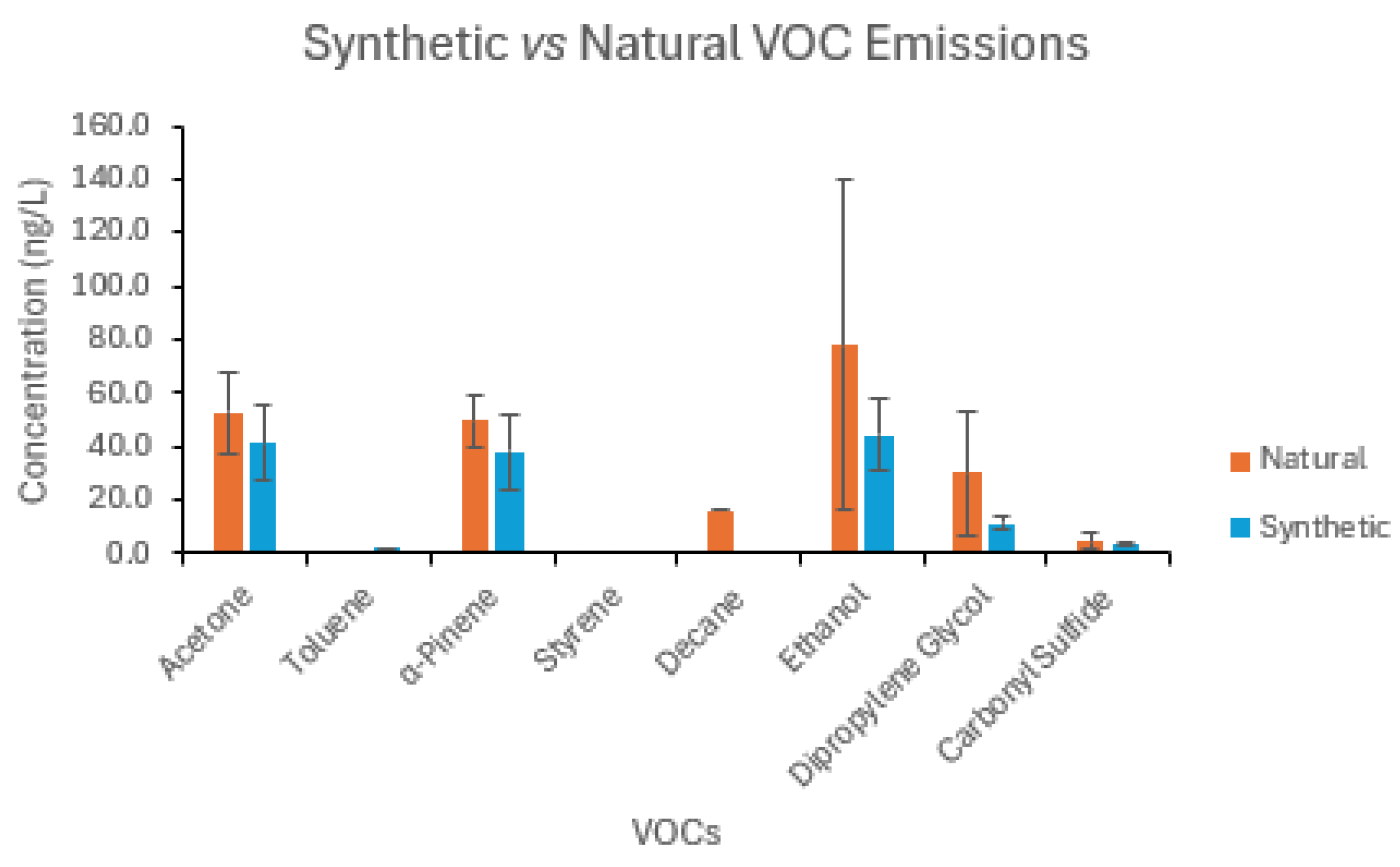
Individual volatile organic compound (VOC) concentrations emitted from natural and synthetic candles are presented in
Figure 5.
Both candle types emitted measurable quantities of multiple VOC species, including acetone, α-pinene, ethanol, dipropylene glycol, and carbonyl sulfide. Natural candles exhibited higher mean concentrations for most detected compounds, particularly acetone (52.6 ± 15.4 ng/L), α-pinene (49.7 ± 9.9 ng/L), ethanol (77.6 ± 61.7 ng/L), and dipropylene glycol (29.9 ± 23.1 ng/L), compared with synthetic candles (α-pinene: 37.8 ± 13.8 ng/L; acetone: 41.0 ± 14.2 ng/L; ethanol: 44.5 ± 12.9 ng/L; dipropylene glycol: 11.5 ± 2.1 ng/L). However, these differences between natural and synthetic candles were found to be insignificant (p > 0.05). An independent sample t-test showed no significant difference between natural candles and synthetic candles for acetone (p > 0.05; 95% confidence interval (CI): Lower: −0.437, Upper: 1.95; with a medium effect size, Cohen’s d = 0.776). On the other hand, there was no statistical difference between candle types for ethanol (p > 0.05; 95% CI: Lower: −0.631, Upper: 1.896; with a medium effect size, Cohen’s d = 0.649). Finally, there was no statistical significance found between natural and synthetic candles for α-pinene (p > 0.05; 95% CI: Lower: −0.785, Upper: 1.709; with a small effect size, Cohen’s d = 0.475). The other VOCs did not yield enough data to calculate CI and Cohen’s d values. Thus, given these medium-to-large effect sizes, the lack of significance is due to low statistical power rather than true equivalence.
Ethanol was the dominant compound for both candle types and exhibited substantial variability, especially among natural candles, likely reflecting differences in fragrance formulations and combustion efficiency. Toluene and styrene were detected at low concentrations in both groups, indicating limited aromatic hydrocarbon formation under the experimental conditions. Decane was primarily associated with natural candles (mean: 16.0 ± 0.0 ng/L), suggesting differences in wax composition and additive profiles.
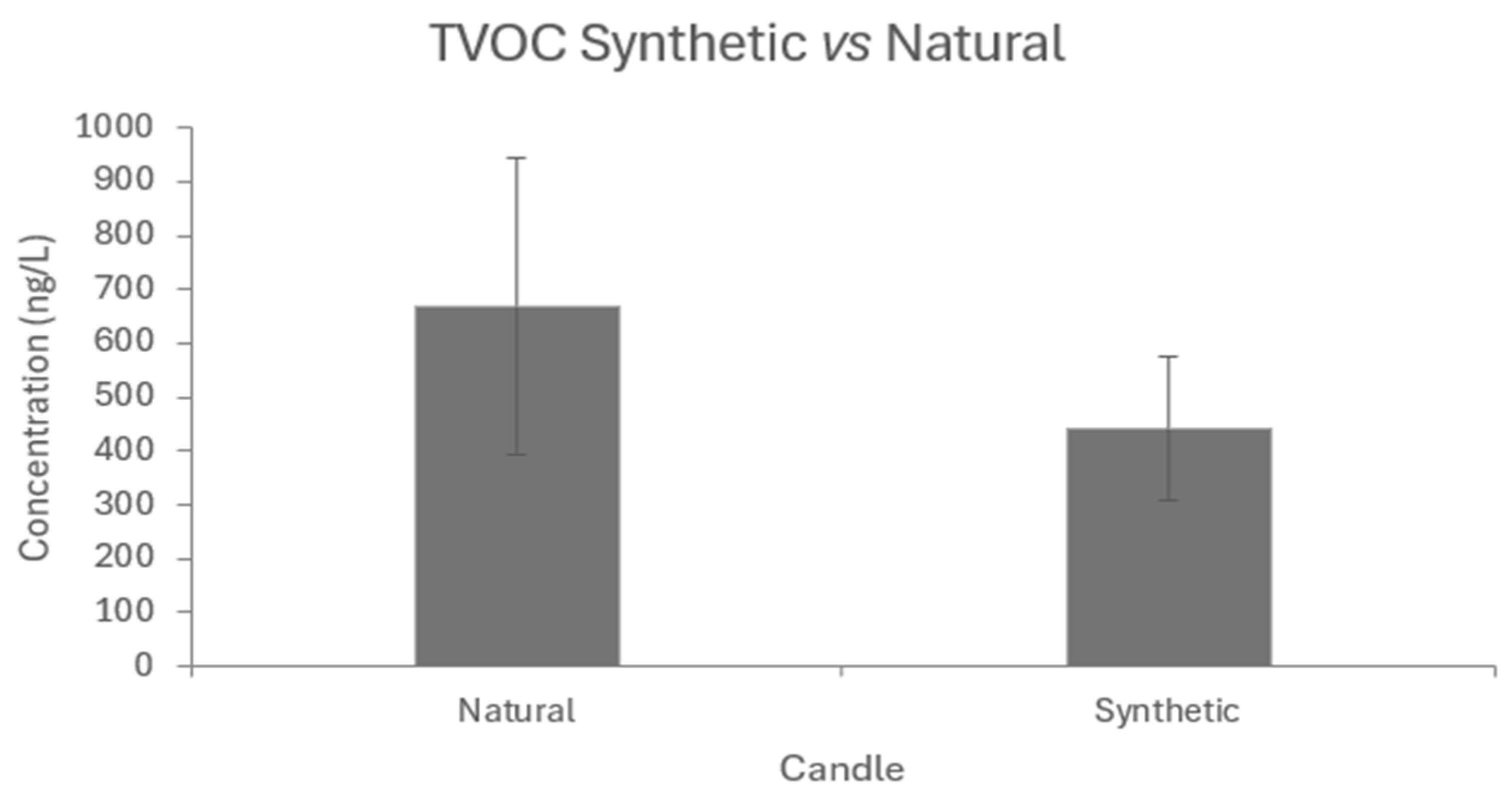
Total volatile organic compound (TVOC) concentrations are summarized in
Figure 6.
Natural candles exhibited higher mean TVOC concentrations (669 ± 276 ng/L) than synthetic candles (442 ± 134 ng/L); however, statistical analysis indicated that this difference was not significant (p = 1.23; 95% CI, Lower: −0.260, Upper: 2.189; with a large effect size, Cohen’s d = 0.986). The lack of statistical significance with a large effect size reflects considerable within-group variability and suggests that VOC emissions are strongly influenced by individual candle formulation and burn behavior rather than wax type alone. The lack of statistical significance is due to low statistical power rather than true equivalence.
These findings demonstrate that candles marketed as natural do not necessarily produce lower VOC emissions and emphasize the importance of compound-specific and product-specific evaluation.
3.2. Ultrafine Particulate Matter
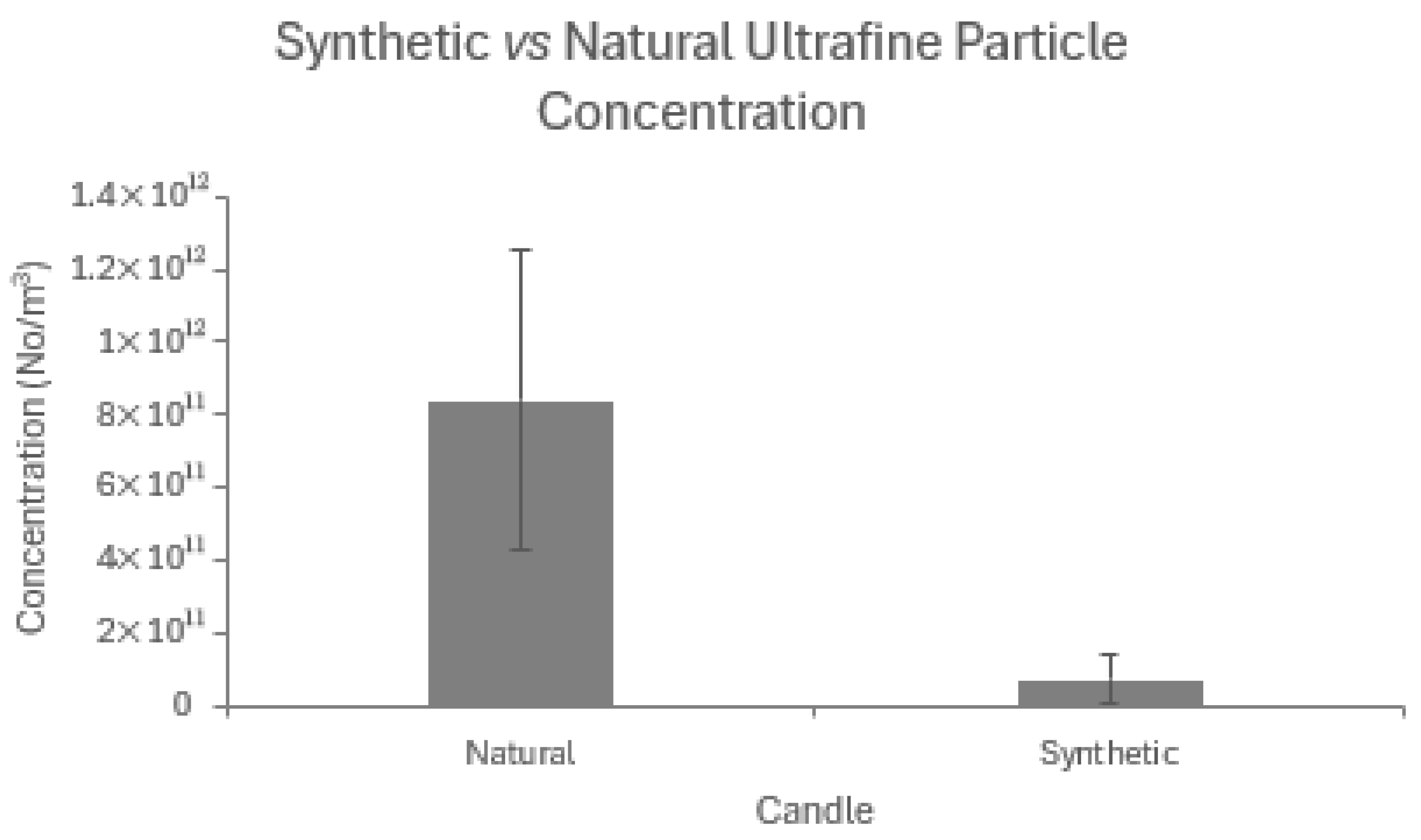
Mean ultrafine particle number concentrations (10–300 nm) for synthetic and natural candles are shown in
Figure 7.
Natural candles produced substantially higher ultrafine particle concentrations than synthetic candles, with mean values more than an order of magnitude greater, as the mean natural candle emission was 8.4 × 10
11 ± 4.1 × 10
11 No/m
3 compared to synthetic candles averaging 7.0 × 10
10 ± 6.6 × 10
10 No/m
3 (
Figure 7).
Mann–Whitney U test analysis revealed a strong and statistically significant difference between candle types (p < 0.001), indicating that natural candles emitted significantly greater quantities of ultrafine particles under the tested conditions. Background ultrafine concentrations averaged 4.6 × 10⁹ No/m3, confirming that candle burning resulted in pronounced elevations above baseline levels.
Additionally, a Kruskal–Wallis H test showed there was a statistically significant difference (p < 0.001) in ultrafine concentrations between the three different candle wax types: paraffin, beeswax, and soy. Pair-wise comparisons between synthetic versus beeswax and soy wax showed statistical significance (p < 0.001), whereas when beeswax and soy wax groups were compared, there was no statistical significance (p = 0.36).
The enhanced ultrafine particle formation observed for natural candles may reflect differences in fuel volatility, wick configuration, and flame stability. Plant-based waxes and multi-wick designs may promote less complete combustion, favoring nucleation and growth of ultrafine particles.
Given the ability of ultrafine particles to penetrate deeply into the pulmonary region, these results have important implications for respiratory health effects.
3.3. LDSA (Lung-Deposited Surface Area) Analysis
Lung-deposited surface area concentrations measured during candle burning are presented in
Figure 8.
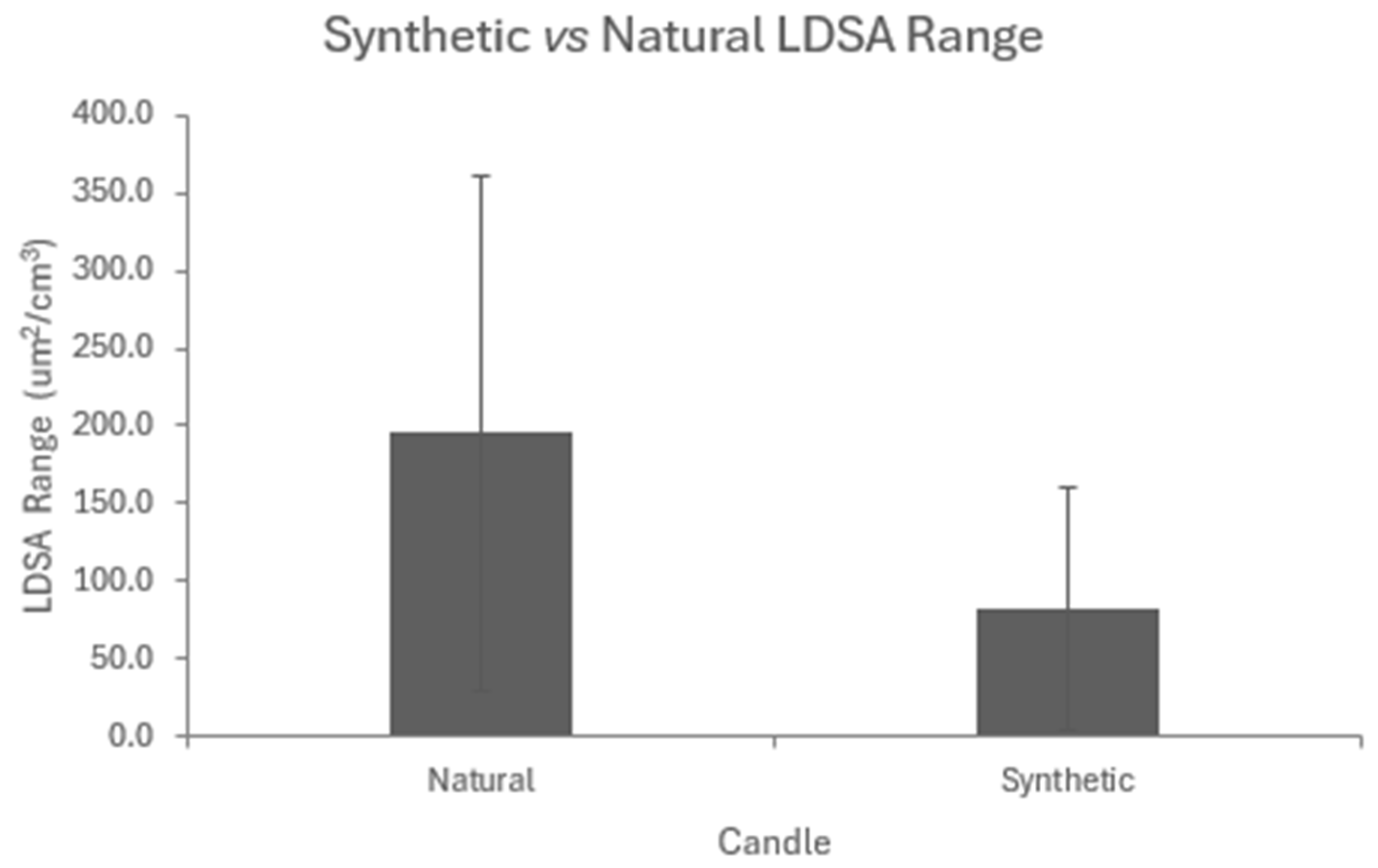
Natural candles exhibited higher LDSA values and greater variability compared with synthetic candles. Natural candles averaged 195.2 ± 167.0 µm
2/cm
3 compared to synthetic candles averaging 82.1 ± 77.9 µm
2/cm
3 (
Figure 8).
Nonparametric analysis using the Mann–Whitney U test indicated that LDSA concentrations differed significantly between candle types (p = 0.002), with natural candles producing significantly higher lung-deposited surface area. This demonstrates that candle type and material composition may heavily influence LDSA. This result is consistent with the substantially elevated ultrafine concentrations observed for natural candles.
Additionally, a Kruskal–Wallis H test showed there was a statistically significant difference (p < 0.001) in LDSA concentrations between the three different candle wax types of paraffin, beeswax, and soy. Pair-wise comparisons between synthetic versus beeswax and soy wax showed statistical significance (p < 0.001), whereas when beeswax and soy wax groups were compared, there was a statistical significance (p = 0.014). This testing shows that within the natural candle group, beeswax candles are contributing more to LDSA compared to the soy wax candles.
Because LDSA is strongly influenced by particle number and size, these findings indicate that combustion of plant-based waxes and multi-wick designs may promote the formation of ultrafine particles with greater respiratory deposition potential. LDSA is increasingly recognized as a biologically relevant exposure metric due to its association with oxidative stress and inflammatory responses. Therefore, the observed differences in LDSA ranges between candle types further underscore the importance of characterizing ultrafine particle emissions from consumer products.
3.4. Particulate Matter of 0.3–10 µm Size Ranges
Particle number concentrations across size fractions from 0.3 to 10 µm are summarized in
Figure 9 and
Table 3.
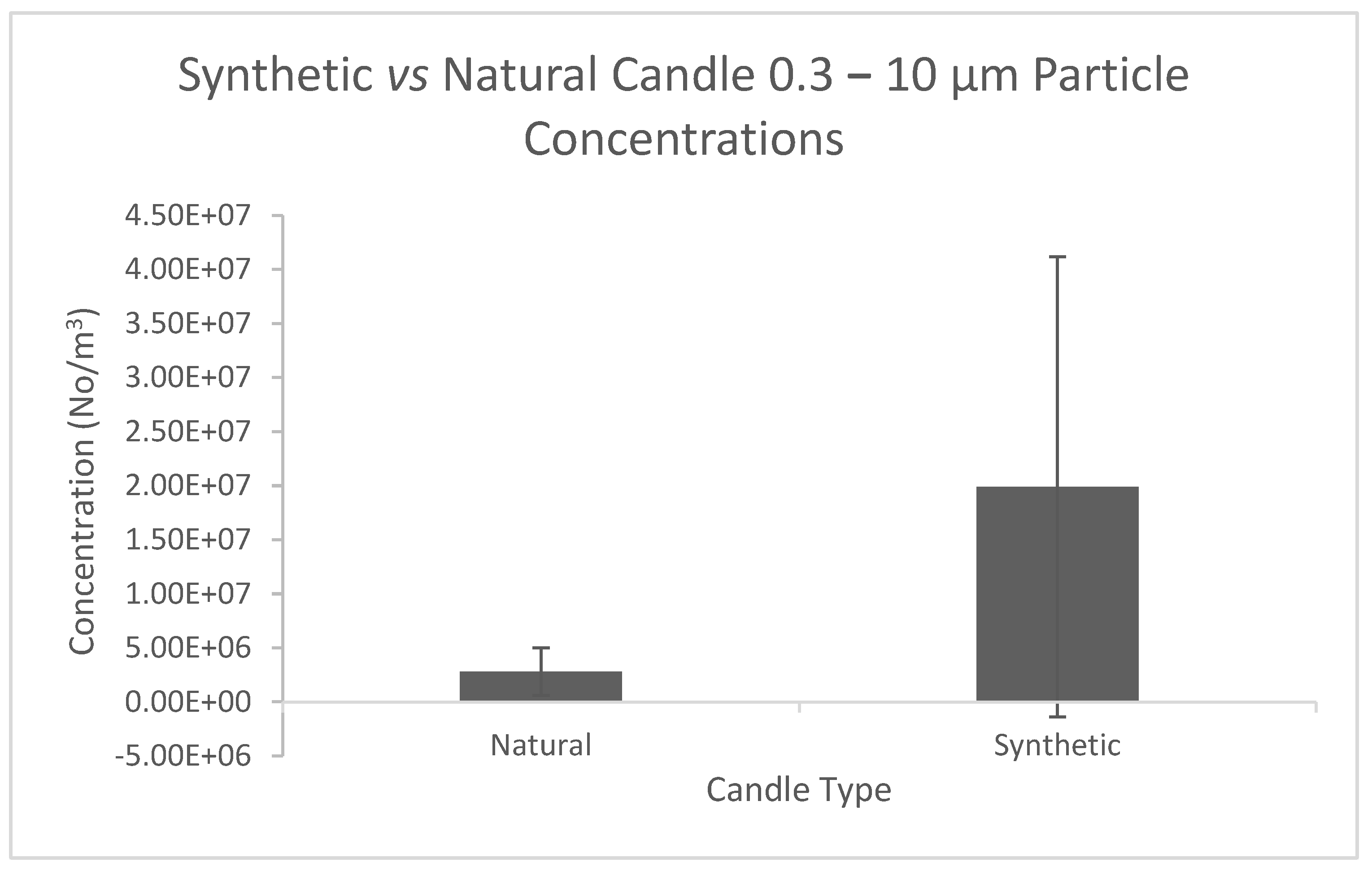
Synthetic candles averaged 2.0 × 10
7 No/m
3 compared to natural candles averaging 2.8 × 10
6 No/m
3 (
Figure 9).
Synthetic candles consistently exhibited higher mean concentrations across all measured size categories compared with natural candles, as synthetic candle concentrations were nearly double the natural candle concentrations in every size category (
Table 2).
The largest differences were observed in the 0.3 µm and 0.5 µm size fractions, which dominate particle mass and contribute substantially to inhalable PM. When size fractions were aggregated to represent all PM of 0.3–10 µm sizes (
Figure 9), synthetic candles produced significantly higher particle concentrations than natural candles, producing almost, if not twice as much, PM of all size bins.
Statistical analysis confirmed that these differences were highly significant (p < 0.001). This indicates that paraffin-based candles are stronger sources of 0.3–10 µm particles under the tested conditions.
These particles are commonly associated with soot formation and incomplete combustion, suggesting that paraffin wax may promote greater carbonaceous particle production compared with plant-based waxes.
3.5. CFD Analysis of Flame Structure and Combustion Products
As already mentioned, a parametric study of the impact of airflow speed on flame characteristics and combustion products was conducted using the CFD approach, and the results are presented below. The ambient airflow in the range was investigated.
3.5.1. Airflow Effects on Candle Flame Dynamics
The combustion behavior of the paraffin candle exhibits the classical laminar, diffusion-controlled flame structure. Candle flames are typically laminar buoyant diffusion flames, meaning that fuel–oxidizer mixing, flow structure, and flame stabilization are governed primarily by molecular diffusion and natural convection rather than turbulent mixing or premixed combustion.
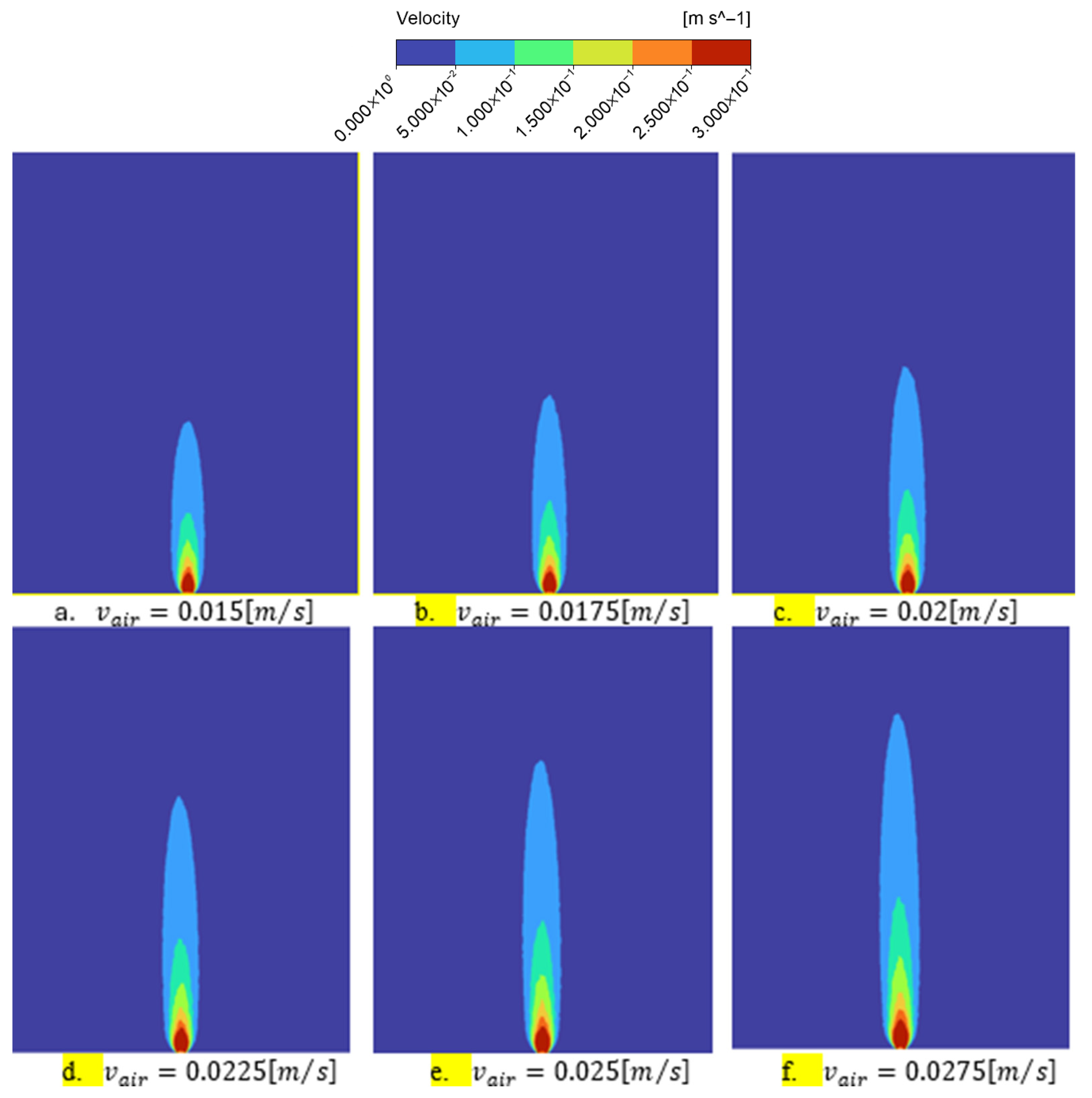
Figure 10 below presents the velocity field distribution of the flame at varying air inlet velocities ranging from 0.015 m/s to 0.0275 m/s. The results indicate that as the air flow velocity increases, there is a noticeable change in the flame structure and the extent of the high-velocity core region near the flame tip. At the lowest velocity of 0.015 m/s (
Figure 10a), the flame exhibits a relatively short and narrow high-velocity region confined near the base. The maximum velocity magnitude is concentrated along the central axis, while the surrounding flow remains relatively low, indicating limited convective transport. As the inlet velocity increases to 0.0175 m/s and 0.02 m/s (
Figure 10b,c), the high-velocity zone elongates vertically, suggesting an enhanced upward momentum of the flame due to the increased air flow. For intermediate velocities of 0.0225 m/s and 0.025 m/s (
Figure 10d,e), the high-velocity region further extends upward, with the velocity contours broadening slightly in the radial direction. This behavior indicates a stronger coupling between the flame buoyancy and the forced inlet flow, resulting in a more elongated flame structure. At the highest velocity of 0.0275 m/s (
Figure 10f), the flame maintains its central high-velocity core while exhibiting the largest vertical extent across all cases, confirming that increasing inlet velocity directly enhances the upward transport and elongation of the flame. Overall, the results demonstrate a clear trend: higher inlet velocities produce taller and slightly broader flame structures, with increased axial velocity along the central axis. These observations suggest that the flame dynamics are strongly influenced by the magnitude of the incoming flow, which affects both the convective transport and the overall shape of the velocity field.
A comparison between the experimentally measured flame height and the CFD prediction shows generally good agreement, although a small deviation is observed. Flame height was determined using two complementary experimental methods to improve measurement reliability. In the primary approach, a ruler was used to directly measure the vertical distance from the base of the flame to its visible apex under steady burning conditions. To validate this measurement and reduce observational uncertainty, a secondary image-based method was also applied. The total candle height was first measured, after which photographs of the burning candle were taken under controlled conditions. Flame height was then estimated by scaling the flame-to-candle height ratio observed in the images relative to the physically measured candle height. This dual-method approach provided a consistency check between direct and image-based measurements, supporting the reported experimental flame height values.
The experimental flame height was approximately 4 mm, whereas the CFD simulation predicted a flame height of 3.8 mm, corresponding to a relative difference of about 5%. Such discrepancies are commonly reported in laminar diffusion flame simulations and can arise from modeling simplifications and experimental uncertainties [
26,
38]. In the CFD model, the combustion of paraffin vapor is typically represented using a simplified global reaction mechanism, while the actual candle flame involves complex pyrolysis processes within the wick and the formation of intermediate hydrocarbon species prior to oxidation. These processes influence the location and thickness of the reaction zone and therefore affect the resulting flame height. In addition, soot formation and radiative heat transfer play an important role in candle flames, as soot particles contribute significantly to flame luminosity and radiative heat losses. If these processes are simplified in the numerical model, the predicted temperature field and buoyancy-driven flow may differ from the experimental flame structure [
38]. Experimental factors such as wick geometry, fuel evaporation rate, and small ambient air disturbances may also influence the measured flame height and are difficult to reproduce exactly in numerical simulations. Despite these limitations, the CFD model successfully reproduces the overall flame structure and the order of magnitude of the flame height observed experimentally, indicating that the numerical approach captures the dominant physical processes governing laminar candle flame combustion. Similar levels of agreement between experimental and numerical flame characteristics have been reported in previous studies of candle flames [
26].
3.5.2. Temperature Distribution Within the Candle Flame
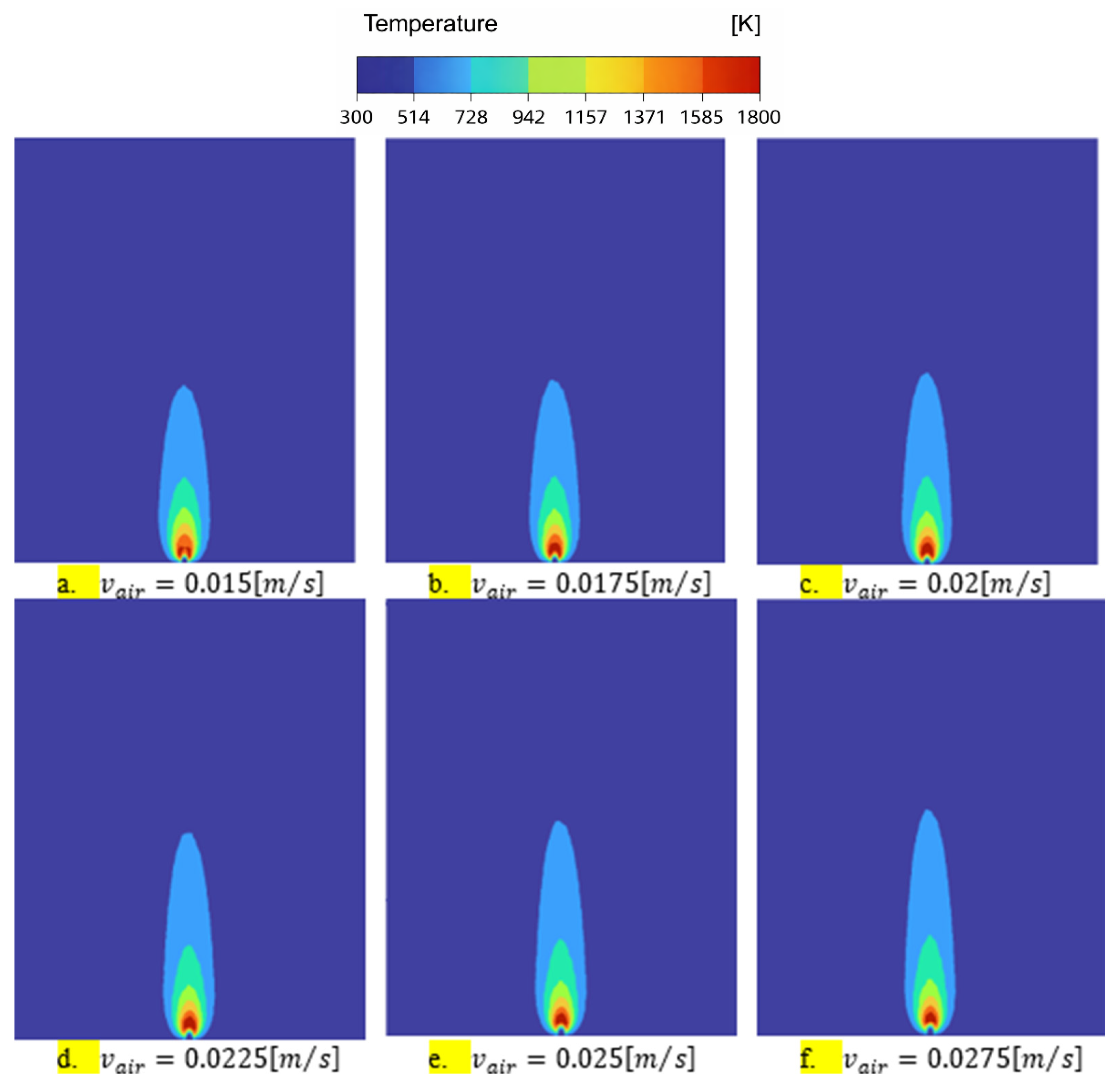
Figure 11 presents the temperature contours of the candle flame for inlet air velocities ranging from 0.015 to 0.0275 m/s. The results indicate that the external airflow significantly influences the flame height, shape, and temperature distribution. At the lowest velocity (0.015 m/s), the flame exhibits a relatively broad and vertically elongated structure with a well-defined high-temperature core that is symmetric about the centerline. This structure is characteristic of a buoyancy-dominated laminar diffusion flame, where the temperature gradient is relatively gradual, and the reaction zone extends upward from the wick region, consistent with classical descriptions of laminar diffusion flames [
39,
40]. The region of maximum temperature corresponds closely with the main reaction zone where oxidation of fuel vapor occurs, which is also associated with elevated concentrations of combustion products such as carbon dioxide and water vapor.
As the inlet velocity increases to 0.0175 and 0.02 m/s, the flame becomes narrower and slightly elongated, while the high-temperature region shifts closer to the base of the flame. This behavior indicates enhanced convective transport, which increases the supply of oxidizer to the reaction zone while simultaneously promoting heat removal from the flame. Correspondingly, the regions of higher CO2 and H2O mass fractions become more concentrated along the central reaction zone, reflecting more localized combustion and improved mixing between the fuel vapor and surrounding air.
At intermediate velocities of 0.0225 and 0.025 m/s, a further reduction in flame width is observed, accompanied by contraction of the surrounding lower-temperature region. The peak temperature zone becomes more confined near the lower portion of the flame, suggesting that convective effects begin to compete with buoyancy forces. Similar interactions between momentum-driven flow and buoyancy have been reported in laminar diffusion flames subjected to external flow [
39,
40]. The contraction of the high-temperature region is accompanied by a corresponding localization of CO
2 formation, while the H
2O distribution remains aligned with the main reaction region, indicating that combustion products are increasingly concentrated within a narrower flame structure.
At the highest inlet velocity considered (0.0275 m/s), the flame becomes noticeably slender with steeper temperature gradients and a highly concentrated reaction zone near the wick. The narrowing of the high-temperature region reflects intensified mixing between the fuel vapor and surrounding air as well as enhanced convective heat transfer. As a result, the CO2 contours become more confined along the flame axis, while the H2O field extends slightly further downstream due to product transport and diffusion within the surrounding airflow. Despite these structural changes, the flame remains stable and no evidence of blow-off or instability is observed within the velocity range investigated.
Overall, the results demonstrate that increasing inlet velocity progressively narrows the flame structure and confines the peak temperature region closer to the base of the flame. This behavior indicates a transition from a predominantly buoyancy-controlled regime at lower velocities to a mixed buoyancy–convection regime at higher velocities, while the spatial distributions of CO
2 and H
2O confirm the localization of the reaction zone within the central high-temperature region. Such behavior is consistent with theoretical and experimental studies of laminar diffusion flame structure [
39,
40].
3.5.3. Carbon Dioxide (CO2) Distribution Within the Candle Flame
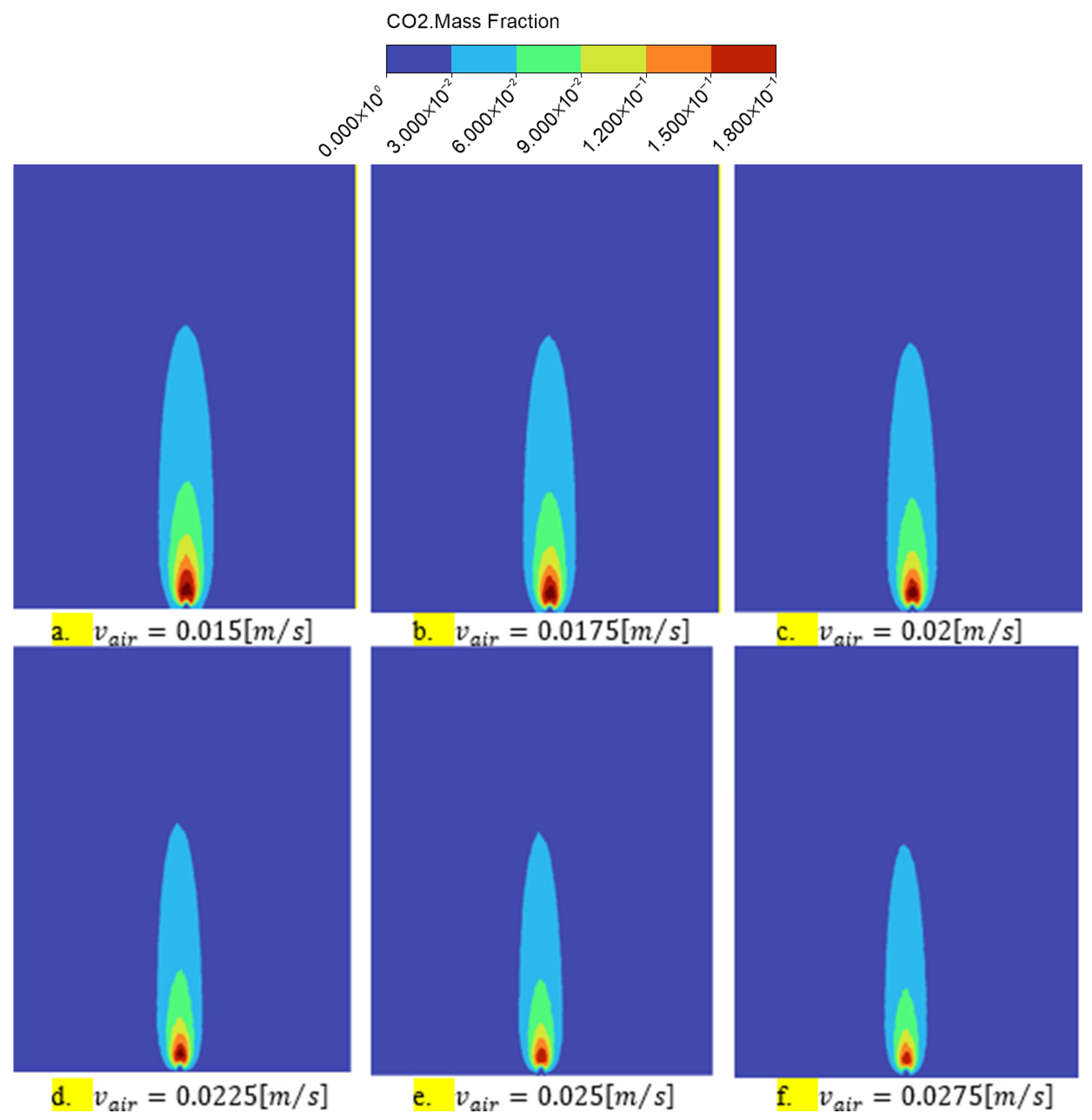
The spatial distribution of carbon dioxide (CO
2) mass fraction within the candle flame for different inlet air velocities is presented in
Figure 12. Carbon dioxide represents one of the primary products of paraffin combustion and therefore provides insight into the effectiveness of oxidation processes within the diffusion flame.
At the lowest inlet velocity (0.015 m/s), the CO
2 contours reveal a relatively large reaction zone with elevated CO
2 concentrations concentrated near the flame base and extending upward along the flame axis. Under these conditions, the airflow is relatively weak, allowing longer residence times within the high-temperature reaction region. This extended residence time promotes the oxidation of intermediate species such as CO and hydrocarbon fragments, leading to enhanced formation of CO
2. Similar behavior has been observed in laminar candle diffusion flames where longer residence times promote more complete oxidation of combustion intermediates [
26,
37].
As the inlet air velocity increases to 0.0175 m/s and 0.020 m/s, the contours indicate a slight contraction of the high-CO
2 region, accompanied by a more localized reaction zone. The increased airflow enhances convective transport and mixing between the fuel vapor and surrounding oxidizer, which modifies the spatial distribution of combustion products. Enhanced convective mixing is known to alter diffusion flame structure and reaction zone thickness in laminar hydrocarbon flames [
41].
Further increases in inlet velocity to 0.0225 m/s, 0.025 m/s, and 0.0275 m/s result in a progressive reduction in the peak and spatial extent of the CO
2 mass fraction within the computational domain. This trend is primarily attributed to the dilution effect associated with excess air entrainment. As the inlet velocity increases, a larger amount of nitrogen and unreacted oxygen is introduced into the domain, increasing the total mixture mass and consequently lowering the local CO
2 mass fraction even when the overall rate of carbon oxidation remains comparable. Similar dilution effects have been reported in computational and experimental studies of candle flames and diffusion flame systems [
26].
In addition to dilution effects, higher airflow velocities lead to shorter residence times within the high-temperature reaction zones, which slightly reduces the accumulation of combustion products. The resulting flame structure becomes shorter and more compact, with the high-CO
2 region confined closer to the flame base. This behavior is consistent with the expected characteristics of laminar diffusion flames subjected to increased convective airflow [
41,
42].
Overall, the simulation results indicate that the CO2 mass fraction decreases gradually with increasing inlet air velocity, primarily due to aerodynamic dilution and reduced residence time effects. The observed trend highlights the strong coupling between flow dynamics and combustion product distribution in buoyancy-driven paraffin candle flames.
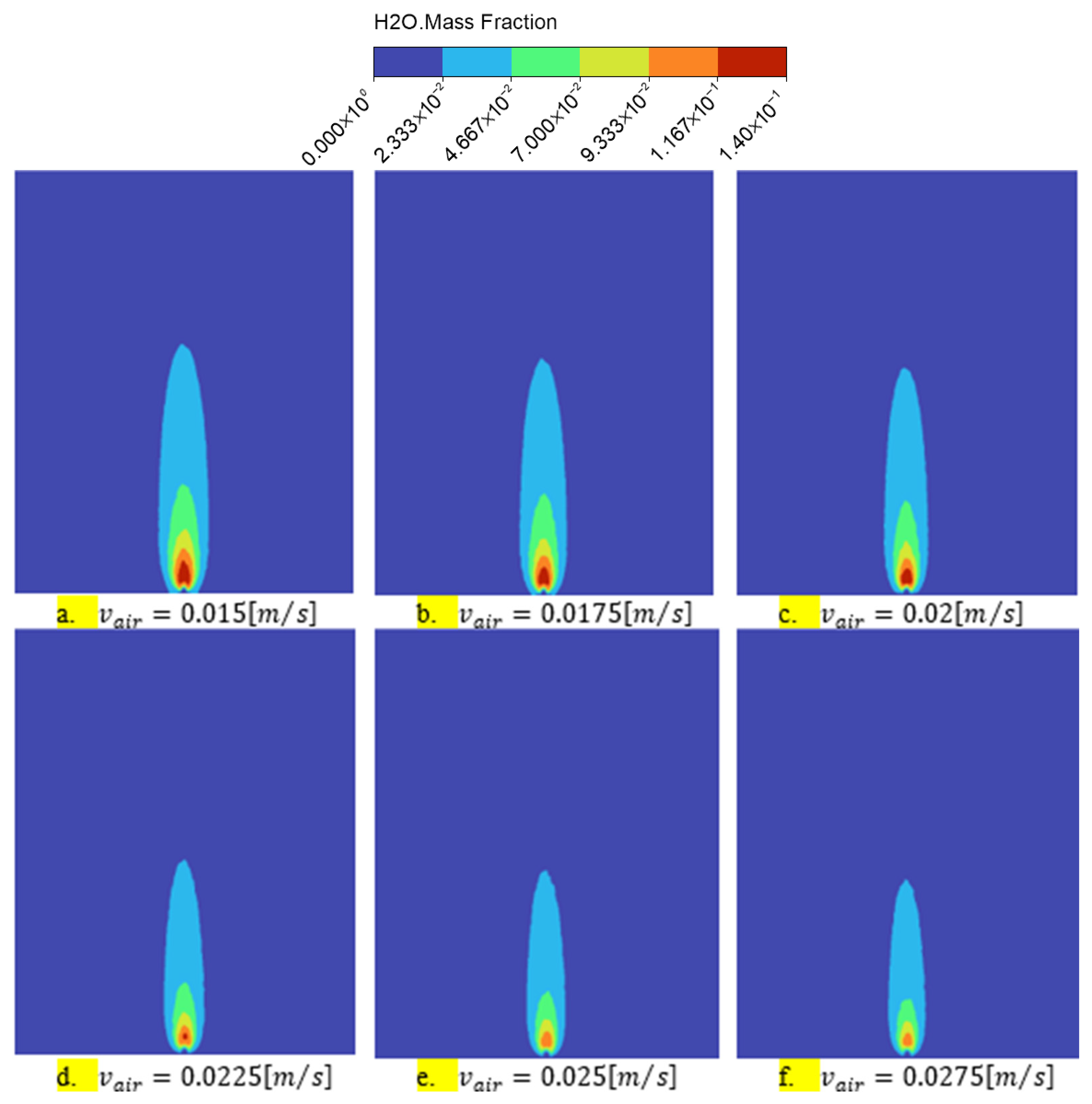
3.5.4. Water Vapor (H2O) Distribution Within the Candle Flame
Figure 13 illustrates the spatial distribution of the water vapor (H
2O) mass fraction within the paraffin candle flame for inlet air velocities ranging from 0.015 to 0.0275 m/s. Water vapor is one of the primary products of hydrocarbon combustion and therefore serves as an important indicator of the reaction zone and combustion completeness.
At the lowest airflow velocity (0.015 m/s), the contours show a relatively large region of elevated H2O mass fraction concentrated near the base of the flame. This region corresponds to the primary reaction zone where hydrogen atoms present in the paraffin vapor are oxidized to form water vapor. The relatively broad high-H2O region indicates strong combustion activity and sufficient residence time for oxidation reactions to proceed.
As the inlet air velocity increases to 0.0175 and 0.020 m/s, the overall flame structure becomes slightly narrower, while the region of elevated H2O mass fraction becomes more localized along the central reaction zone. This behavior is associated with enhanced convective transport and improved mixing between the fuel vapor and incoming oxidizer, which modifies the spatial distribution of the reaction zone.
Further increases in inlet velocity to 0.0225, 0.025, and 0.0275 m/s result in a progressive reduction in the spatial extent of the high-H2O region. The peak water vapor concentration becomes increasingly confined to a smaller region near the base of the flame. This trend can be attributed to two coupled mechanisms. First, higher airflow velocities introduce additional oxidizer and inert nitrogen into the domain, increasing the total mixture mass and diluting the combustion products, thereby reducing the local H2O mass fraction. Second, increased airflow reduces the residence time of reactants within the high-temperature reaction zone, limiting the accumulation of combustion products within the flame.
In addition, the flame height decreases slightly as the airflow velocity increases, indicating stronger convective transport and improved mixing between the fuel and oxidizer streams. The resulting flame structure becomes shorter and more compact, which is consistent with the behavior of laminar buoyant diffusion flames subjected to increased external flow velocities [
39,
40].
Overall, the simulation results demonstrate that increasing inlet air velocity leads to a gradual reduction in both the peak magnitude and spatial extent of the H2O mass fraction within the flame. Although the chemical formation of water remains governed by the stoichiometric oxidation of paraffin vapor, the observed decrease in H2O mass fraction is primarily a consequence of aerodynamic dilution and reduced residence time within the reaction zone.
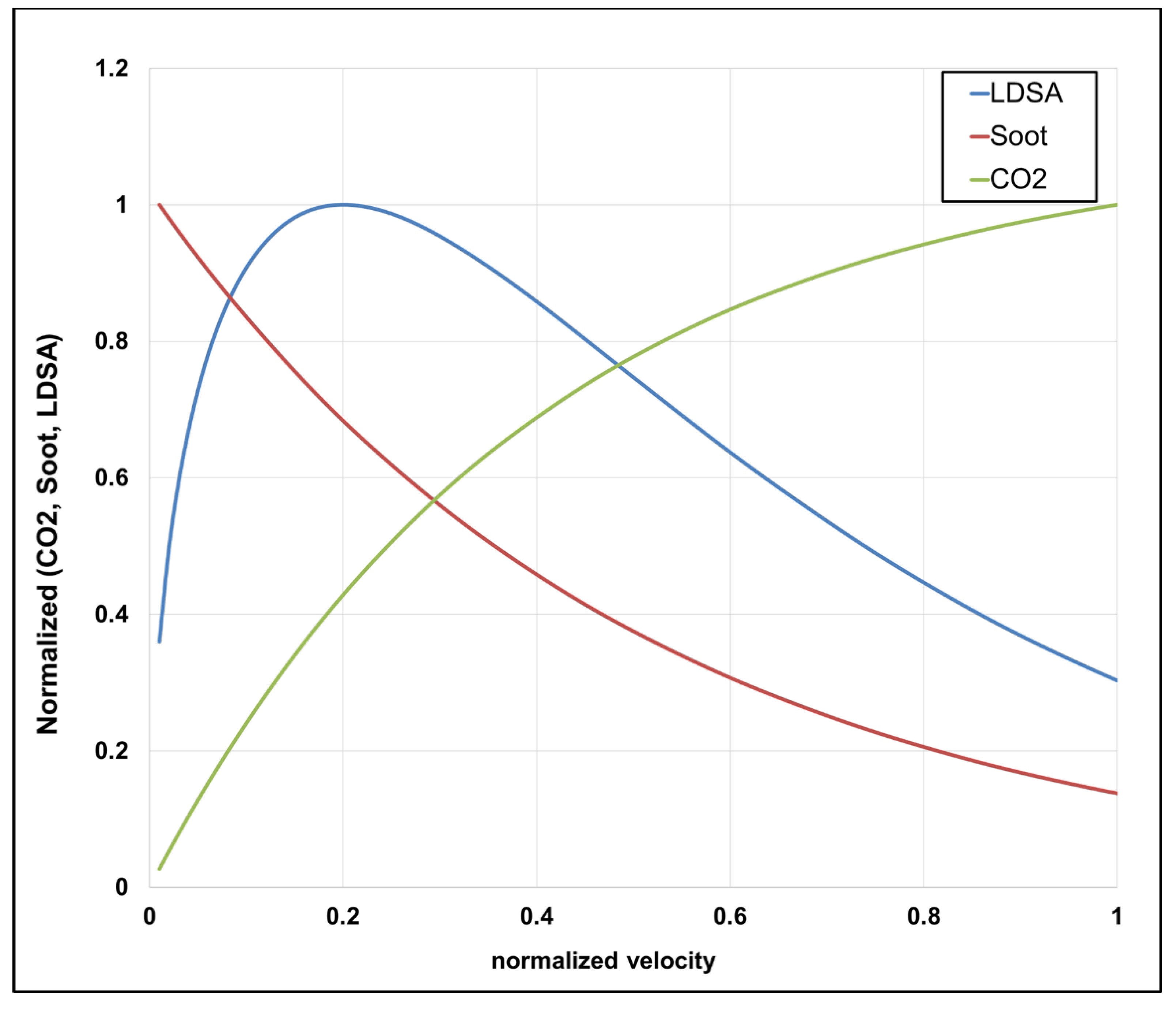
The variation in soot concentration, CO
2 mass fraction, and LDSA with airflow velocity reveals clear trends that characterize the transition from fuel-rich to well-ventilated combustion in a paraffin candle flame (
Figure 14).
Figure 14 shows the variation in normalized soot concentration and CO
2 mass fraction with airflow velocity from CFD simulations. The LDSA trend is included for comparison as a conceptual representation based on experimental observations and established aerosol behavior, since ultrafine particle dynamics are not resolved in the model.
At low airflow velocities, the flame operates under oxygen-limited conditions, resulting in incomplete combustion. Soot concentrations are high due to dominant pyrolysis and limited oxidation, while CO
2 levels remain low. This behavior is consistent with classical diffusion flame theory, where fuel-rich regions promote soot precursor formation and particle growth [
42,
43]. In this regime, LDSA values are moderate. This is not due to high particle number concentrations, but rather to the dominance of larger soot agglomerates formed over long residence times. The relatively low abundance of ultrafine particles limits the total surface area available for lung deposition despite the high soot mass [
17,
44,
45,
46].
As airflow velocity increases to intermediate levels, a transition in combustion behavior is observed. Improved oxygen entrainment enhances oxidation, leading to a significant reduction in soot concentration and a corresponding increase in CO
2 formation [
47,
48]. In contrast to these monotonic trends, LDSA reaches a maximum in this regime. This peak is attributed to conditions that favor the formation of a high number concentration of ultrafine particles. Enhanced mixing promotes nucleation while limiting excessive particle growth, resulting in particles with high surface-to-volume ratios. Consequently, the total surface area available for lung deposition increases, particularly in the alveolar region [
48,
49,
50,
51].
At higher airflow velocities, combustion approaches a well-ventilated regime characterized by strong mixing and rapid oxidation. Soot concentrations decrease to minimal levels, and CO
2 mass fraction reaches its maximum, indicating near-complete combustion. Despite these cleaner combustion conditions, LDSA decreases. This reduction is attributed to diminished formation of particle precursors and shorter residence times, which suppress both nucleation and particle growth, leading to lower ultrafine particle number concentrations. Because LDSA depends primarily on particle size distribution rather than total mass, this reduction in ultrafine particles results in decreased surface area for lung deposition [
14].
Overall, soot and CO
2 exhibit opposing monotonic trends with increasing airflow velocity, reflecting the transition from incomplete to efficient combustion. In contrast, LDSA displays non-monotonic dependence, peaking at intermediate airflow conditions. This decoupling highlight that particle surface area exposure is not directly proportional to soot mass but is instead governed by ultrafine particle dynamics. While the combustion-driven trends in soot and CO
2 are consistent with the flame behavior predicted by CFD for paraffin, the LDSA behavior arises from aerosol processes not explicitly captured in the current model. These findings indicate that moderate airflow conditions may present the highest inhalation risk due to enhanced ultrafine particle formation and deposition in the deep lung [
52].
The CFD model resolves the flow and thermal fields while treating combustion products as CO2 and H2O, without including soot or particulate formation mechanisms. Therefore, the numerical results are restricted to thermos-fluid variables, including flow structure, temperature distribution, and associated transport behavior within the flame. The CFD results are used only to support a physics-based interpretation of combustion completeness through resolved thermos-fluid behavior.
Regions of elevated velocity and steep temperature gradients are shown to illustrate the internal flame structure and mixing behavior. Interpretation of potential soot formation tendencies is based on established combustion physics and qualitative correlations reported in previous studies [
25,
26,
37], linking high-temperature and recirculation zones to conditions favorable for incomplete combustion, rather than on direct prediction of soot concentration or particulate emissions.
Soot is not directly resolved in the CFD simulation; instead, a reduced-order surrogate model is employed where soot formation is inferred from local combustion completeness (CCI). This approach allows reconstruction of particulate emissions using resolved gas-phase species. In the absence of a soot transport model, PM was reconstructed using a combustion-completeness-based surrogate model, enabling spatial estimation of PM
2.5 emissions from resolved CFD species fields, as detailed in
Section 2.5.2.
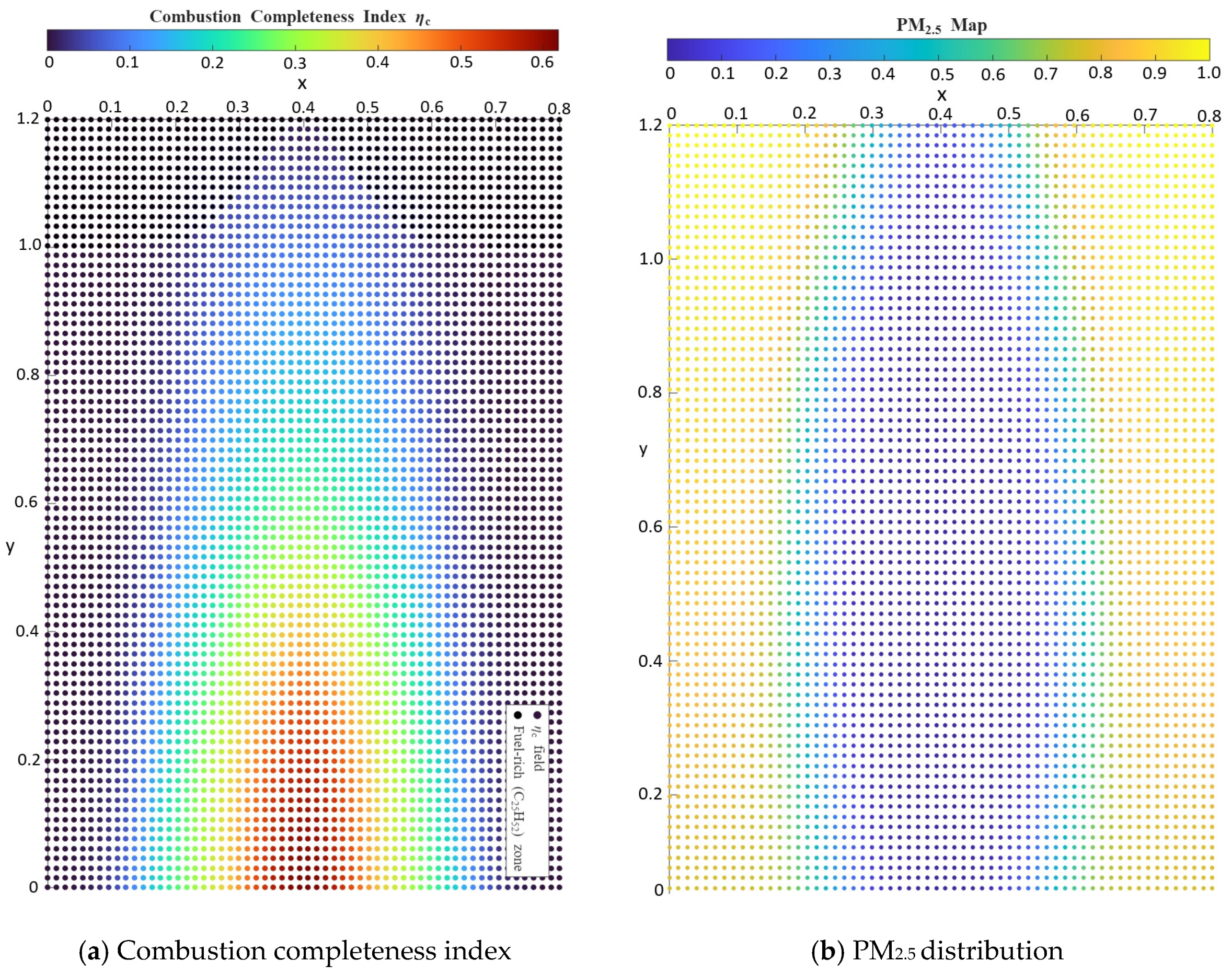
The spatial distribution of the combustion completeness index
reveals a uniform reaction structure within the computational domain, as shown in
Figure 15a. The combustion completeness index exhibits a maximum along the central reaction zone near the wick base, indicating efficient fuel–oxidizer mixing and high reaction rates. As the flow progresses vertically, a gradual decay in
is observed due to fuel depletion and reduced reaction intensity. Radial gradients further highlight the transition from the reactive core to surrounding fuel-lean regions, consistent with diffusion-controlled flame behavior [
25,
26,
37]. The smooth gradients in
indicate a continuous transition between regions of efficient and incomplete combustion.
The computed PM
2.5 distribution, shown in
Figure 15b, exhibits a pronounced banded structure across the vertical direction of the domain. Higher PM
2.5 concentrations are observed near the upper and lower regions, while a relatively low concentration zone extends across the central portion. This pattern indicates that particulate formation is reduced in regions associated with higher combustion completeness and enhanced in zones where combustion is incomplete. Peak PM
2.5 values occur near the domain boundaries, whereas the mid-domain region shows significantly lower concentrations.
A comparison between the and PM2.5 fields reveals a partial inverse relationship. The central region of elevated corresponds to a reduction in PM2.5 levels, consistent with the suppression of soot formation under efficient combustion conditions studies.
Future work will extend this framework by incorporating simplified soot formation models (e.g., two-equation semi-empirical approaches for paraffin combustion) to enable direct comparison between simulated soot indicators and experimental particle measurements.
4. Discussion
These results indicate that candle composition strongly influences emission behavior. Natural candles, particularly those containing soy and beeswax and multiple or wooden wicks, may promote unstable combustion and enhanced ultrafine particle formation. While natural candles are made to be efficient at reducing 0.3–10 µm PM, they still produce a substantial quantity of ultrafine particles. On the other hand, synthetic paraffin candles appear more prone to producing larger soot-related particles.
Substantial variability within both candle categories highlights the importance of individual product design and formulation, suggesting that labeling alone is insufficient for predicting emission characteristics.
The significantly elevated ultrafine particle concentrations and LDSA values associated with natural candles are of particular concern, given established links between ultrafine particles and adverse respiratory and cardiovascular outcomes. Similarly, elevated VOC emissions may contribute to sensory irritation and longer-term health risks depending on chemical composition.
Although synthetic candles produce higher concentrations of larger particles, these particles tend to deposit preferentially in the upper respiratory tract and may be cleared more efficiently than ultrafine particles. Consequently, different candle types may pose distinct exposure risks depending on the metric considered.
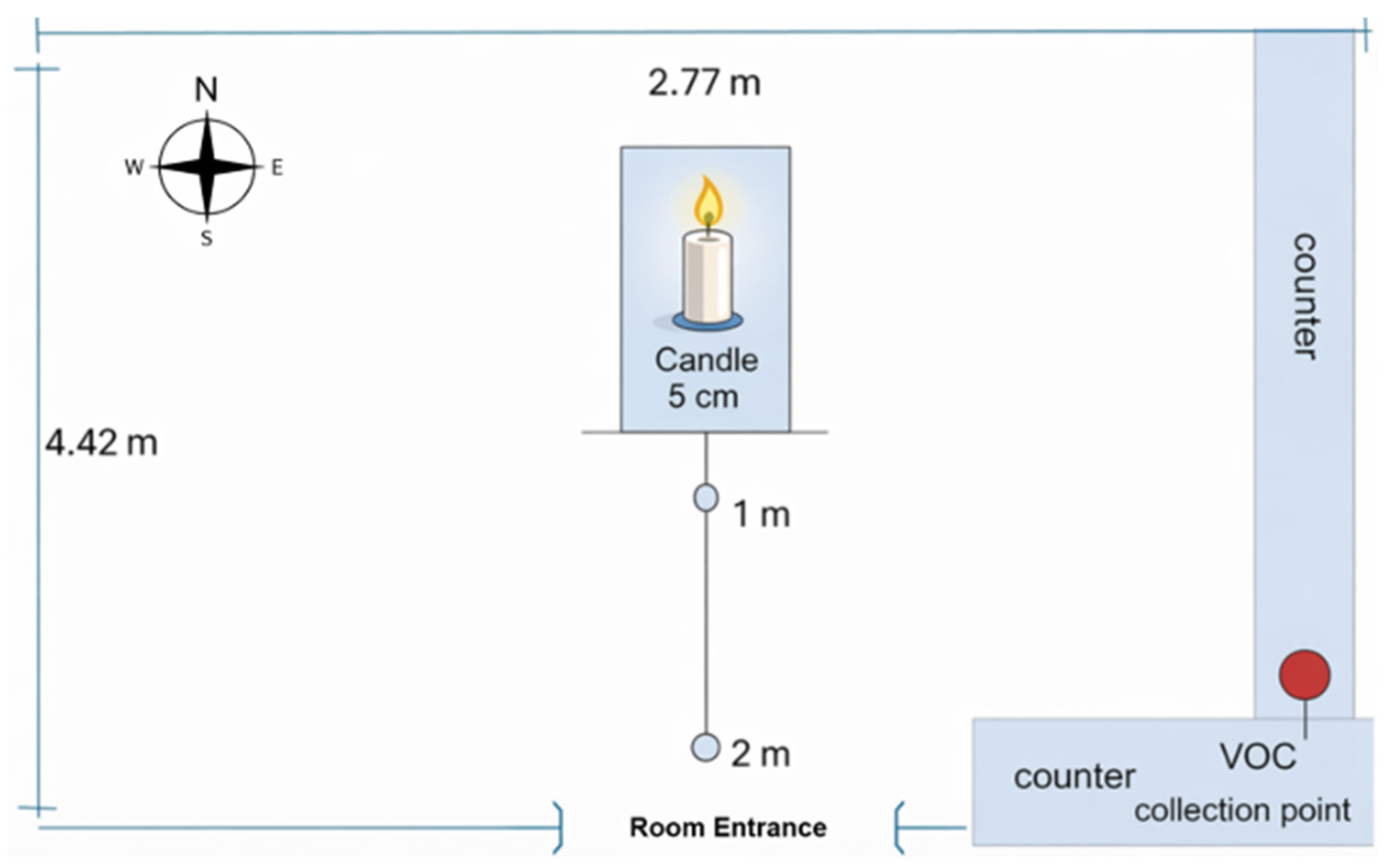
The unventilated experimental setting represents a worst-case exposure scenario; however, real-world use often involves multiple candles and extended burn times, suggesting that comparable exposures may occur in residential environments under certain conditions.
This study was limited by a relatively small sample size, which may restrict statistical power for detecting differences in VOC emissions. All tested candles were scented, preventing evaluation of unscented products. The study is subject to several limitations related to environmental and experimental conditions that may influence the interpretation of results. Intermittent door opening and minor air disturbances during data collection may have introduced variability in airflow dynamics, potentially affecting PM dispersion concentration measurements. The presence of individuals in the room during certain trials may have contributed to background VOC and particulate levels through routine activities and biological emissions, potentially introducing uncontrolled confounding. The unventilated experimental design provides a controlled worst-case exposure scenario; it may limit the generalizability of findings to typical residential environments where ventilation rates and occupant behaviors vary. Additionally, averaging measurements across time and distance may have masked short-term peak exposures. Future studies incorporating continuous personal exposure monitoring and larger sample sizes are warranted.
Collectively, the results demonstrate distinct emission characteristics for natural and synthetic candles. Natural candles were associated with significantly higher ultrafine concentrations (p < 0.001), elevated LDSA values, and higher mean TVOC concentrations, although VOC differences were not statistically significant. In contrast, synthetic candles produced significantly higher concentrations of 0.3–10 µm PM (p < 0.001).
The CFD results highlight the significant influence of inlet air velocity on the thermal and chemical structure of the paraffin candle flame, as evidenced by variations in temperature, CO
2, and H
2O mass fractions. At low airflow velocities (0.015–0.0175 m/s), the flame exhibits a tall and elongated structure with extended high-temperature regions. Under these conditions, the residence time of fuel vapor in the high-temperature reaction zones is long, allowing near-complete oxidation of hydrocarbon fragments. This results in elevated CO
2 and H
2O mass fractions concentrated along the central reaction zone and extending upward along the flame axis. The contours indicate that the peak temperature correlates spatially with the maximum CO
2 and H
2O regions, reflecting efficient conversion of chemical energy to thermal energy. Based on these temperature and product distributions, potential soot formation is expected in the intermediate high-temperature, fuel-rich zones located between the inner fuel vapor core and the outer oxidation region, while areas of high CO
2 and H
2O correspond to regions where soot would likely oxidize if present [
39,
40,
41,
42].
As the inlet air velocity increases to 0.020–0.0225 m/s, enhanced convective transport accelerates mixing between the paraffin vapor and the incoming oxidizer. The flame becomes slightly narrower and more compact, and the high-temperature and high-product zones shift closer to the flame base. This results in a modest reduction in peak temperature and a slight decrease in flame height, as increased airflow introduces additional ambient air, diluting the reaction zone and reducing the residence time of fuel fragments in high-temperature regions. The spatial extent of the CO2 and H2O distributions becomes more localized, reflecting more concentrated combustion and product formation. Correspondingly, the potential soot formation zones are expected to become narrower and confined closer to the flame base, following the regions of intermediate temperature and moderate CO2 and H2O.
At higher velocities (0.025–0.0275 m/s), the flame becomes shorter and more compact, with high-temperature zones concentrated near the base. The combined effects of aerodynamic stretching and dilution by inert nitrogen reduce the local mass fractions of CO2 and H2O throughout the flame, particularly in the plume region. The residence time within the high-temperature reaction zone is further shortened, limiting the accumulation of combustion products and slightly reducing peak temperatures. The potential soot formation regions in these cases are confined to small, fuel-rich zones near the flame base, while most of the flame is dominated by convective transport and rapid oxidation of combustion products.
The results highlight the strong influence of airflow velocity on combustion behavior and emission characteristics in a laminar paraffin candle flame. At low velocities, limited oxygen supply creates fuel-rich conditions that favor soot formation and suppress oxidation, resulting in high soot concentrations and low CO2 levels. Despite the high soot mass, LDSA remains moderate due to the dominance of larger agglomerates with relatively low surface area.
As airflow increases, improved mixing enhances oxidation, reducing soot while increasing CO2, indicating more complete combustion. In this intermediate regime, LDSA reaches its maximum due to the formation of numerous ultrafine particles with high surface-to-volume ratios. This demonstrates that particle surface area is more sensitive to size distribution and number concentration than to total soot mass.
At high airflow velocities, strong oxidation minimizes soot and maximizes CO2, reflecting near-complete combustion. However, LDSA decreases because particle formation is suppressed and residence times are shortened, limiting ultrafine particle production.
Overall, the results demonstrate that increasing inlet air velocity governs both the thermal and chemical structure of the candle flame. Higher velocities produce shorter flames, lower peak temperatures, and more localized CO
2 and H
2O distributions, primarily due to aerodynamic dilution and reduced residence time in the reaction zones. The interplay between buoyancy and forced convection shapes the flame structure and determines the spatial distribution of combustion products, while qualitative analysis of temperature and species fields provides insight into potential soot formation regions. These findings are consistent with the expected behavior of laminar buoyant diffusion flames, highlighting the strong coupling between flow dynamics, temperature, and chemical composition [
39,
40,
42]. Soot and CO
2 show opposing monotonic trends with airflow, while LDSA exhibits a non-monotonic peak at intermediate velocities. This indicates that moderate airflow conditions may present the highest inhalation risk, emphasizing the importance of considering particle surface area, not just mass, in combustion emission assessments.
The results using the reduced-order model highlight the critical role of combustion completeness in determining particulate formation within the flame. Regions of high
correspond to efficient oxidation, limiting the availability of soot precursors and resulting in lower PM
2.5 concentrations. Conversely, incomplete combustion promotes the persistence of intermediate hydrocarbon species, leading to enhanced soot formation and increased particulate emissions. This inverse relationship is consistent with established combustion theory and supports the use of
as an indicator of local emission behavior [
25,
26,
37].
The spatial structure of reflects the characteristic features of a diffusion flame. The localized high-efficiency region represents the primary reaction zone, where mixing and thermal conditions favor complete combustion. Surrounding this zone are regions where mixing is less effective, leading to reduced oxidation efficiency.
The results demonstrate that combustion completeness provides a meaningful link between flame behavior and particulate emissions. The identification of low- regions as dominant sources of PM2.5 highlights the importance of local combustion conditions in determining emission intensity. This insight is particularly relevant for paraffin candle combustion, where small variations in mixing and oxygen availability can significantly influence particulate output.
Overall, the findings demonstrate that combustion completeness is a practical and physically interpretable parameter for assessing particulate formation in combustion systems, consistent with prior studies [
25,
26,
37]. Further refinement of the coupling between combustion and particulate processes would enhance the predictive capability of the model and improve its applicability to more complex combustion scenarios.
The differences in experimentally measured emission profiles between paraffin and natural wax candles (including soot, ultrafine particles, and LDSA) are attributed to a combination of fuel-dependent properties and combustion conditions, as shown in previous studies [
25,
26,
37]. No direct causal relationship is inferred from the CFD results regarding differences in emission magnitudes between the two fuel types. In this study, the CFD is used solely to qualitatively describe how variations in flame temperature, velocity, and residence time may influence the local combustion environment and the general tendency toward more or less complete combustion.
CFD simulations for the paraffin flame capture the coupled effects of airflow velocity on flame structure, temperature field, and gas-phase species evolution, providing a mechanistic basis for interpreting soot formation and oxidation. However, the model is limited to gas-phase combustion and soot precursor chemistry and does not resolve aerosol nucleation, particle size distribution, or LDSA. Therefore, it is used to interpret combustion regime transitions rather than to predict aerosol exposure metrics.
The present modeling approach highlights an important trade-off between chemical realism and computational tractability in simulating candle combustion processes. While paraffin wax provides a practical and well-characterized surrogate for CFD analysis, the inability to directly represent natural waxes introduces inherent limitations in the generalizability of the results. The chemical complexity of natural waxes, particularly their oxygenated constituents, can significantly influence key processes such as pyrolysis pathways, soot precursor formation, and oxidation kinetics, as discussed in previous modeling studies [
25,
26,
37]. These effects are not explicitly captured when substituting paraffin-based mechanisms, which are primarily derived from simpler hydrocarbon systems [
37]. Consequently, although the simulated flow field, temperature distribution, and general combustion behavior remain physically meaningful, caution must be exercised when extending quantitative predictions, especially those related to soot formation and emissions, to natural wax systems.
Nevertheless, the use of paraffin as a surrogate is supported by prior studies [
25,
26,
37] and enables a controlled framework for isolating the effects of airflow, mixing, and thermal structure on flame behavior. This provides valuable mechanistic insight into the dominant transport and combustion processes governing candle flames. The results therefore retain qualitative relevance, particularly in identifying trends and relative changes in flame structure and potential soot formation tendencies under varying conditions, consistent with observations reported in the literature [
25,
26,
37].
Future work should focus on developing reduced-order surrogate mechanisms for oxygenated wax components or incorporating multi-component evaporation and decomposition models to better capture the chemical diversity of natural waxes [
37]. Such advancements would improve the predictive capability of CFD models and enable more accurate assessment of emissions and health-relevant metrics associated with different candle materials.
5. Conclusions
This study demonstrates that candle composition significantly influences indoor air quality, with distinct differences observed between synthetic and natural products across multiple exposure metrics. Natural candles produced significantly higher ultrafine particle number concentrations and lung-deposited surface area range compared to synthetic candles, which generated significantly greater concentrations of 0.3–10 µm particles. In contrast, even though natural candles exhibited more elevated VOC emissions compared to synthetic wax types, there was no statistical significant difference found, indicating that wax classification alone does not predict VOC exposure potential. These findings challenge common perceptions that natural candles represent inherently cleaner alternatives and highlight the importance of considering particle size distribution and biologically relevant exposure metrics, such as LDSA, rather than relying solely on bulk particulate or marketing labels. Although experiments were conducted under controlled worst-case conditions, the substantial elevations in particle concentrations above background levels suggest that candle use may meaningfully contribute to indoor air pollution in residential environments. Overall, this work provides novel insight, linking candle composition to ultrafine particle exposure and respiratory deposition potential (LDSA), underscoring the need for improved consumer awareness and further research examining ventilation effects, wax formulation differences, and long-term health implications associated with candle combustion.
While natural candles produced significantly higher ultrafine particle concentrations and LDSA, synthetic candles emitted higher levels of larger PM. Both size fractions are associated with adverse health effects, and neither candle type should be considered entirely safe under unventilated conditions.
This study employed CFD to investigate the influence of inlet air velocity on flame structure, temperature, and major species in a paraffin candle diffusion flame, supported by experimental observations of particulate emissions. Increasing airflow produced shorter flames and slightly reduced peak temperatures due to enhanced convective transport and decreased residence time. Moderate airflow improved oxidation, while higher velocities reduced CO2 and H2O concentrations as a result of dilution and limited reaction time.
Although limited to gas-phase chemistry, the model provides qualitative insight into the role of airflow in governing combustion completeness and soot formation. A strong inverse relationship between combustion completeness and PM2.5 was observed, with high corresponding to lower particulate emissions. Differences between paraffin and natural wax candles are attributed to fuel composition and are not captured by the simplified model.
Overall, combustion completeness is identified as a practical indicator of particulate emissions, although incorporation of detailed chemistry and particle dynamics is required for improved predictive capability.