
Article

Interactive Effects of Elevated CO2, Temperature and Drought on Wheat–Aphid Dynamics

1
Department of Agricultural Chemistry & Biochemistry, University of Agriculture, Peshawar 25130, Khyber Pakhtunkhwa, Pakistan
2
Department of Agronomy, University of Agriculture, Peshawar 25130, Khyber Pakhtunkhwa, Pakistan
3
Environmental Sensing and Modelling Unit, Luxembourg Institute of Science and Technology, L-4422 Sanem, Luxembourg
*
Author to whom correspondence should be addressed.
Atmosphere 2026, 17(5), 498; https://doi.org/10.3390/atmos17050498
Submission received: 10 March 2026 / Revised: 6 May 2026 / Accepted: 11 May 2026 / Published: 14 May 2026

Abstract

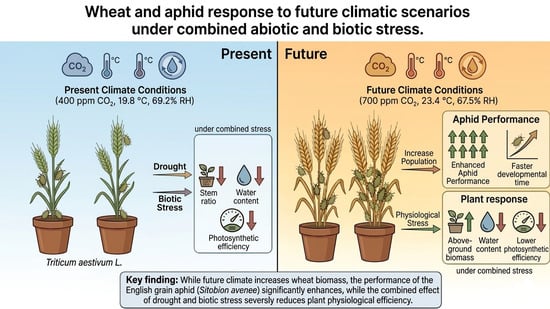
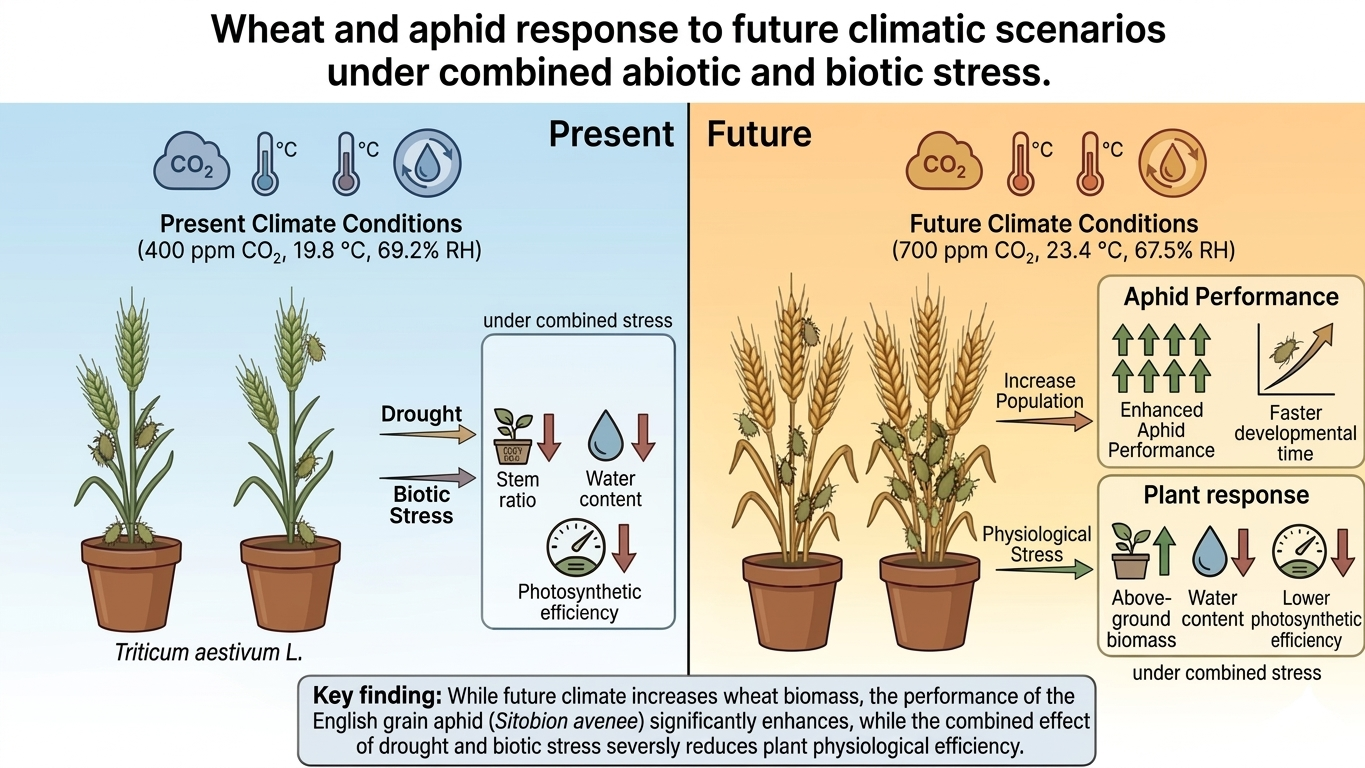
The study assessed the impact of climate change, aphid infestation and drought stress on winter wheat (Triticum aestivum L.) and the performance of English grain aphid (Sitobion avenae) under abiotic stress in controlled environmental conditions. To understand wheat and aphid interactions under different climatic condition, wheat plants were grown in controlled climatic chambers simulating present (400 ppm CO2, 19.8 °C, RH 69.2%) and future (700 ppm CO2, 23.4 °C, RH 67.5%) scenarios, combined with biotic stress (aphid) and abiotic stress (drought). Climate change effects combined with other stress factors are expected to alter crop physiology and insect biology. The results showed that aphid performance was significantly enhanced under future climatic conditions, with higher fecundity (56%), and a shortened or faster developmental time. As for wheat structural growth, above-ground biomass improved by up to 80% under future climate. However, its physiological efficiency, water content and photosynthetic efficiency were significantly reduced under the combined biotic and abiotic stresses. The study demonstrates that climate change may increase wheat plant growth under controlled conditions, yet it simultaneously boosts the shift in pest attacks and intensifies stress impacts, which eventually threaten wheat productivity. The findings emphasize the improvement of wheat varieties and pest-resistant strains capable of withstanding future climatic conditions.

Graphical Abstract

1. Introduction

Climate change has emerged as one of the most critical challenges to agriculture and food security. According to IPCC (2021) [1] the global average air temperature has already increased by approximately 1.1 °C with the projections indicating an increase of 1.5 °C to 2 °C in the coming future, if the current anthropogenic activities remain unchanged. This rise in temperature has led to an increase in frequency, intensity and unpredictability of extreme temperature events and short-term heat waves, posing significant threats to human health and ecosystems [1,2]. The rapid increase in anthropogenic activities correspondingly increases temperature, placing mounting pressure on agriculture, reducing overall production and disrupting food supply chains to feed growing human population [3,4].
Wheat (Triticum aestivum L.) is among the most extensively grown cereal crops globally; it is cultivated on more than 217 million hectares worldwide and provides approximately one-fifth of all calories and protein consumed by the human population, playing a crucial role in global nutrition and food security [5]. The wheat crop adaptability allows it to grow in diverse environments, including major areas of wheat production like temperate regions of Europe. Changes in climatic conditions affect the production of wheat, as elevated temperatures, when surpassing physiological thresholds, can reduce grain filling and yield and affect critical growth phases [6]. Furthermore, climate variability affects wheat not just physiologically in terms of yield, but also by altering its interactions with pests and pathogens.
The English Grain Aphid, Sitobion avenae F. (Hemiptera: Aphididae), is one of the most harmful cosmopolitan pests that feeds on cereals such as wheat and barley that reduces yield by sucking sap from the plants by excreting honeydew that supports fungal growth and vectors many plant viruses, e.g., barley yellow dwarf virus (BYDV) [7,8]. Aphids are poikilothermic, increasing environmental temperature significantly alter interaction between insects and their host plants [9]. The impact of global warming on multi-trophic interactions among host plants, the insect pest as well as the antagonists (parasitoids, predators, etc.) has been recently described for many arthropod–plant interactions, e.g., [10,11]. Recent results presented by [10,12] demonstrate that regional climate change affects whiteflies (Bemisia tabaci) and their dedicated antagonists on tomato plants. Similar climate change-induced effects can be expected for other multi-trophic interactions involving sap-sucking pests, like aphids [13,14].
The concentration of carbon dioxide (CO2) has increased by approximately 130 ppm since the industrial revolution and currently exceeds 400 ppm with the projections suggesting a further rise to around 700 ppm by the end of the century [12]. Elevated CO2 (eCO2) is widely recognized for increasing plant biomass and yield, although it may reduce stomatal conductance and transpiration, affecting water-use efficiency and photosynthesis rates [15,16,17]. Although the effects of elevated CO2 on insects are obscure and complex, aphids are the only sap-sucking insect that shows a positive response to elevated CO2 [18]. In addition to direct climatic effects, elevated CO2 and rising temperatures strongly influence insect–plant interaction. Studies have reported that aphid developmental rates, fecundity, and population growth are highly temperature-dependent, with peak performance typically between 20 and 25 °C [9,11]. Furthermore, abiotic stress drought can modify host plant physiology and defense mechanism, thereby strongly influencing insect–herbivore performance. Drought-stressed plants often exhibit altered nutritional profiles (e.g., increased amino acids in phloem), which may enhance or reduce aphid performance [19]. Therefore, climate change factors, in combination with drought stress, are known to interact synergistically to affect host–pest interactions [14].
Although the individual effects of elevated CO2 and temperature are well understood, their interactions with drought and aphid infestation, and their combined effects under realistic controlled climatic scenarios are rarely studied. Limited studies integrating both biotic and abiotic stresses while simultaneously assessing plant physiology and aphid biology are still poorly understood. To address this knowledge gap, the current study aims to investigate the impact of climate change, aphid infestation and drought stress on winter wheat (Triticum aestivum L.) and the performance of English grain aphid (Sitobion avenae) under abiotic stress in controlled environmental condition. We hypothesized that environmental change, specifically increased temperature and CO2 concentration, would generally favor aphid performance, including fecundity, developmental time and survival. To test this hypothesis, we investigated the effects of climate change on the performance of S. avenae on winter wheat based on climate chamber experiments simulating current and future climate conditions based on hourly data of relevant atmospheric variables derived from regional climate projections. Additionally, we identified the effects of biotic stress (S. avenae) and abiotic stress (drought) on winter wheat plants under simulated climatic conditions.

2. Materials and Methods

2.1. Experimental Design

The experiment was conducted using a factorial design with two factors: climate (two levels: present and future) and stress treatments (four levels: control (C), aphid (A) infestation only [biotic stress], drought (D) only [abiotic stress], and combined aphid infestation plus drought (A + D) [combined biotic and abiotic stress]). Time served as a repeated factor for chlorophyll fluorescence measurements. Each treatment combination was replicated 7–14 times, depending on the specific parameter measured. Plants were grown in a climatic chamber, randomly arranged, and shuffled daily to minimize positional effects and ensure uniform environmental exposure across replicates.
The experimental replicates were carried out for a period of 37 days each. This time frame was enough for seedling development, aphid growth and reproduction performance, and stress application (drought). The experiment was conducted in a climatic chamber (Bronson Climate b.v., Zaltbommel, The Netherlands) equipped with Valoya NS12 luminaries, calibrated to supply 480 µmol/m2 s of photosynthetic photon flux density (PPFD) at 20 cm. The CO2 concentration was maintained at current (410 ppm) and elevated (700 ppm) set for present and future conditions, as outlined by [10]. The diurnal courses of temperature and relative humidity for present conditions were acquired from an automatic weather station (AWS) of the official agrometeorological network of Luxembourg. The station is in Obercorn (49°51′ N, 5°90′ E, 378 m above mean sea level). The average daily temperature for the experimental period in late spring under the present climate (2006–2015) was 19.8 °C, and the average daily temperature for the future climate (2061–2070) was maintained at 23.4 °C. The daily relative humidity for the present climate was 69.2%, while the one for the future climate was set at 67.5%, based on methodology and projections reported by [10].
Soil was sieved with a mesh size 2 × 2 mm and dried for 2 days at 40 °C. Processed soil was rehydrated to maintain uniform water content. Seeds of winter wheat (Triticum aestivum cv. Chivagnon) were vernalised at 4 °C for 72 h and sown in 1 L plastic pot filled with soil:water ratio (80:20 w/w). Each pot was planted with three seeds, kept in climatic chambers and irrigated twice per week with tap water, to maintain soil moisture content. Plants were allowed to grow in their respective climatic chamber for over 37 days. At day twelve, when the plant reached the second- to third-leaf stage, the strongest seedling per pot was selected for infestation, removing the other two seedlings to ensure uniformity across the experimental units. Fertilization was performed at day 27 of experiment by applying a nutrient solution in tap water. Prior to application, each pot was weighed and the final pot weight was adjusted to 1000 g, ensuring uniform nutrient and water supply across all pots.
The grain aphid population was based on a lab rearing maintained for more than two years and was grown for rearing in the climatic chamber. Each wheat plant was infested with two adult aphids (parental generation) to produce progeny F1, and to achieve homogeneity for longevity and fecundity. The pots were covered with customized transparent cylindrical tubes (30 cm height × 10 cm diameter, made of acrylic glass) with two holes (upper and lower side) covered with gauze (300 µm mesh aperture) to stop aphids from escaping outside the pots. The gauze maintained humidity, facilitated ventilation and helped to avoid condensation. To obtain synchronized cohort, the adults of the parental generation (F0) were allowed 24 h to produce nymphs (F1), the adults were removed, while two nymphs of F1 similar age were retained on each plant for development and reproductive observation. The F1 aphid activity was observed daily from day 12 to 37 for longevity (F1 development and reproduction period), fecundity (F2 progeny per F1 female), and developmental time (F1) of the treatments with and without drought stress. The fecundity of Sitobion avenae was assessed based on the total number of F2 nymphs produced by F1 generation during the experimental period. Each pot (1 L) was initially filled with 800 g of dry soil and 200 mL of tap water, equivalent to 20% volumetric water content (VWC) to maintain an optimum moisture level. Soil moisture content was maintained using gravimetric pot weight method and was reduced from 20% Vol by evapotranspiration for the drought treatment plants, while the treatments without drought stress were irrigated at regular intervals, and water was added to restore the total pot weight to 1 kg. Drought stress was applied in the final week of the experiment from day 30 onwards. The pot weight declined below 1000 g threshold, indicating reduced soil moisture and the imposition of drought stress.

2.2. Data Collection

Plant growth and physiological parameters including plant height, number of leaves per plant and above-ground biomass (leaves and stem) were assessed at the harvest (day 37) for each treatment under both climatic conditions. Plant height (cm) was measured prior to harvest from the base of stem at the soil surface to the tip of fully expended tallest leaf of the plant. Above-ground biomass was measured by separating leaves and stem: fresh weight was recorded immediately using a digital analytical balance (accuracy ±0.01 g) and dry weight was recorded after drying for 2 days at 70 °C. The leaf water content (%) was calculated as: F r e s h   w e i g h t d r y   w e i g h t F r e s h   w e i g h t × 100 .
Leaf area was measured using a scanning image by placing fully expanded wheat leaves on meter sheet and scanned using a high resolution scanner Fiji Is Just ImageJ software Version 2.17.0 (plugin by Strock) [20]. Plant functional parameter leaf area ratio (LAR) was measured to assess leaf thickness and stress adaptation. LAR was measured using following formula by (Radford 1967) [21]:
L e a f   a r e a   r a t i o   ( L A R ) = t o t a l   l e a f   a r e a   ( c m 2 ) t o t a l   d r y   b i o m a s s   ( g )
Chlorophyll fluorescence was analyzed by using the Hansatech Plant efficiency analyser (PEA) version 3.02 machine. Measurements were recorded on a weekly basis for three weeks consecutively by placing plastic clips on a leaf covered area of 4 mm diameter with closed shutter for dark adaptation for 30 min. Then, the sensor was attached to the clipper, the shutter was opened, and the light pulse was applied.
The measurement was calculated as:
F v F m = M a x i m u m   q u a n t u m   p h o t o s y s t e m   I I   e f f i c i e n c y   r a t e .
Data was analyzed using statistical software Statistix 8.1 for plant physiological data and R software version (4.5.3) for aphid data. A two-factorial two-way analysis of variance (ANOVA) was used to test the main and interaction effects of climate and treatment, with time as a repeated factor for chlorophyll fluorescence (weekly). When significant effects were observed, mean comparisons were performed using Tukey’s HSD test at p ≤ 0.05. Fecundity data were analyzed using generalized linear model (GLM). As over dispersion was detected, the data was subsequently analyzed using negative binomial GLM using the MASS package to obtain more reliable estimates. The continuous variables pre-reproductive and reproductive periods were analyzed using a linear model (LM). Normality of residuals was evaluated using Shapiro–Wilk test and homogeneity was tested using Levene’s test. All data were expressed as the mean and ± standard error (SE).

3. Results

3.1. Aphid Performance

The fecundity of Sitobion avenae was significantly influenced by both climatic conditions (z = −4.20, p < 0.001), with aphids reared under 700 ppm of CO2 and 23.4 °C, both with and without drought stress, producing a higher number of nymphs (mean of 31 F2 nymphs per plant), compared to aphid in present climatic conditions (mean of 20 nymphs per plant) that significantly increased the total aphid population by 56% (Figure 1). However, drought stress treatment did not significantly affect fecundity (p = 0.123), indicating that the effect of climate on fecundity was independent of drought stress. Pairwise comparison further confirmed that fecundity was significantly higher in future climatic conditions compared to present climatic conditions for both drought stress and unstressed treatments, whereas differences between drought and unstressed treatment were non-significant within same climate.
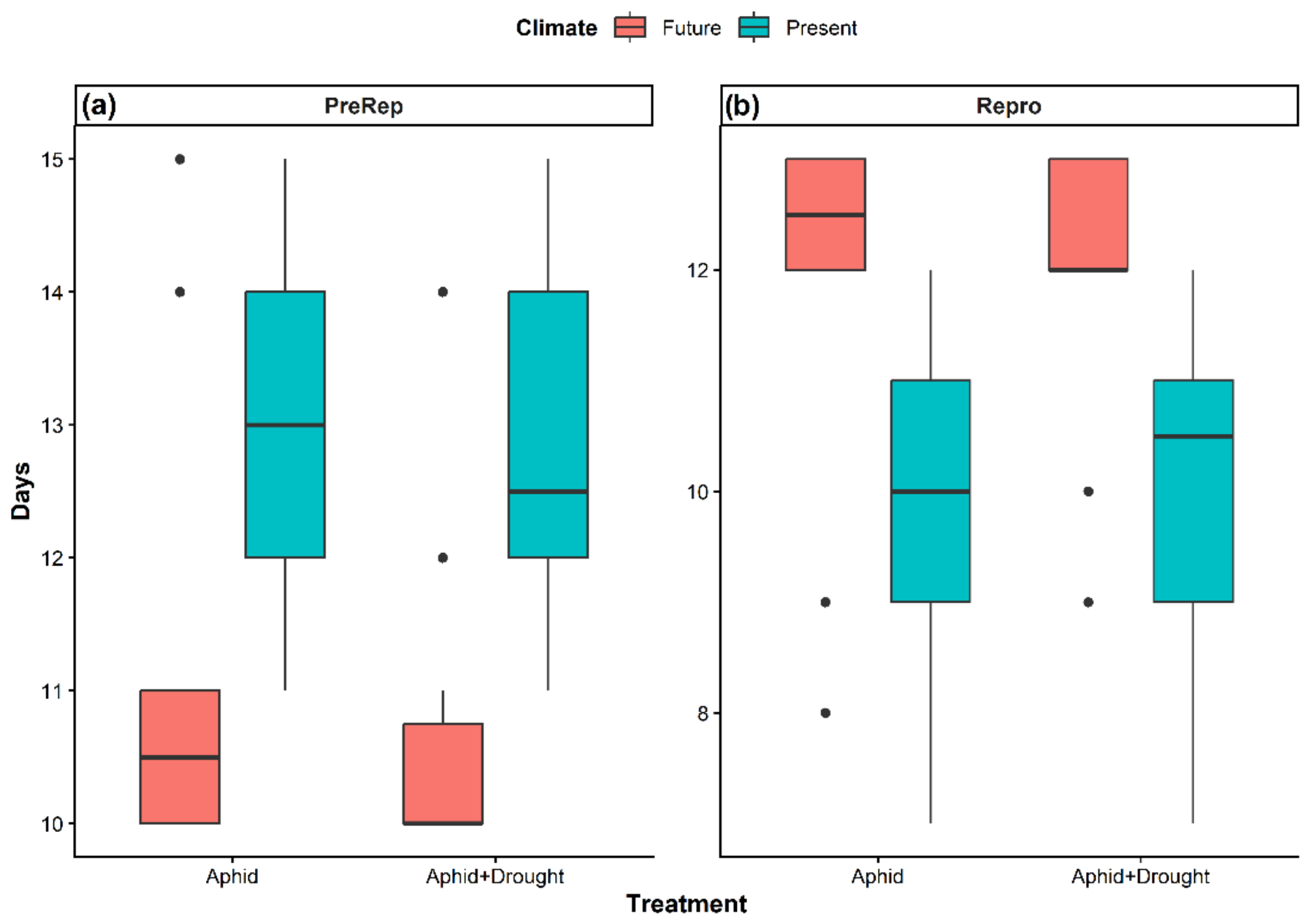
The pre-reproductive period of the F1 generation was recorded in days, from emergence to the production of the first nymph, whereas the reproductive period was recorded as the number of days from the first nymph production until the end of the experimental duration. Pre-reproductive period was significantly influenced by climatic conditions (F1,52 = 28.60, p ≤ 0.001), as aphid reared under future climatic conditions reached the reproductive stage earlier, as compared to aphid reared in present climate which had a longer duration. The reproductive period was significantly influenced by climatic conditions (F1,52 = 19.56, p ≤ 0.001). The collected results showed that aphids reared under future climate conditions exhibit longer reproductive duration (mean = 12 days) to grow and reproduce than those reared under present climate conditions (average of 10 days), as shown in Figure 2, suggesting that elevated temperature and CO2 level shorten the life cycle but extend the reproductive window. Furthermore, the pre-reproductive and reproductive periods were not significantly influenced by drought (Table 1) and the interaction between climate and drought treatment with p values ≥ 0.05 as shown in Table A1 and Table A2.

3.2. Plant Physiological Response

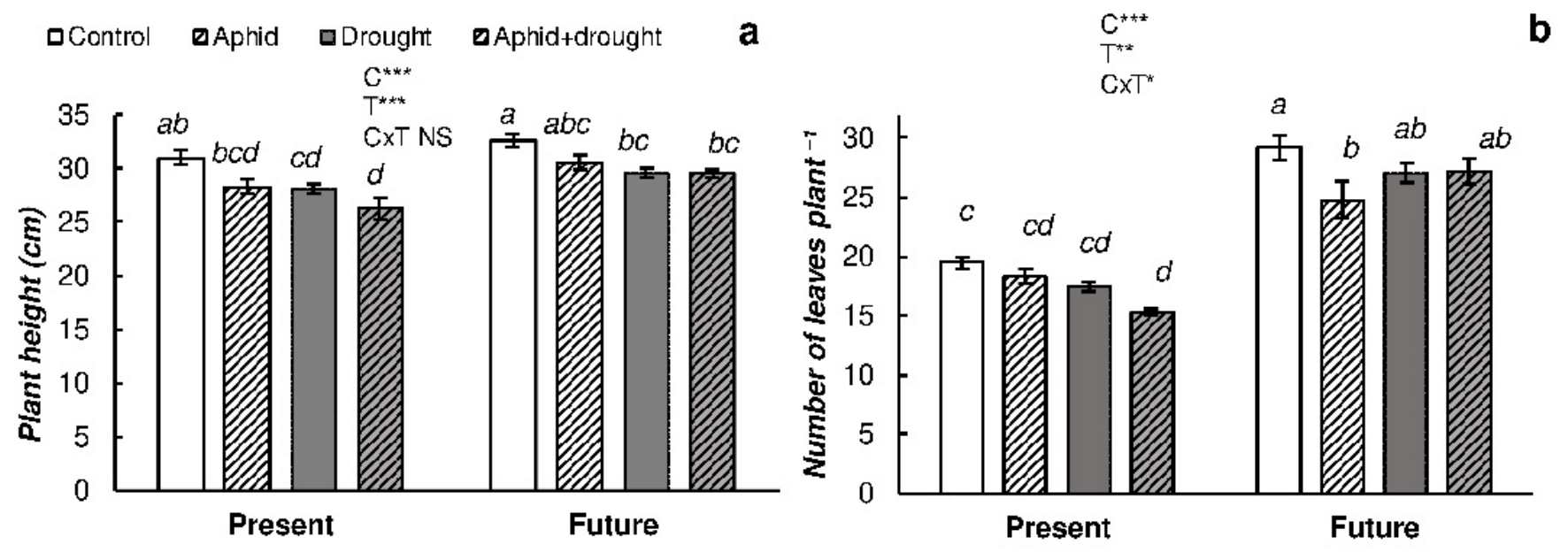
Plant height was recorded for each climatic condition one day before harvest. In Figure 3, the influence of climatic conditions on plant height was significant (F1,91 = 13.72, p < 0.0001). Plants grown under future climate showed longer leaves (average of 30.6 cm) compared to plants grown under present climate (average of 28.4 cm) as shown in Figure 3. The effect of treatment (aphids or aphids + drought) was also significant (F3,91 = 23.56, p < 0.0001): control plants without stress exhibited significantly longer leaves (average of 31.8 cm), whereas plants exposed to biotic (aphid) and abiotic stress (drought) were shorter in height (average of 27.9 cm and 29.4 cm), as shown in Figure 3. However, the interaction of treatment and climate was not significant (F3,91 = 0.87, p ≥ 0.05), suggesting that the effect of aphid and drought stress on plant height remained unchanged under both climatic conditions.
The number of leaves per plant was significantly influenced by climatic conditions (F1,91 = 235.56, p < 0.0001). Plants grown under future climate produced considerably more leaves (average of 27 leaves plant−1) than those grown under present climate (average of 18 leaves plant−1), as shown in Figure 3. Treatment effect was also notable (F3,91 = 5.30, p < 0.01), with higher number of leaves in control plants (average of 24 leaves plant−1), whereas plants with stress showed reduced number of leaves (average of 21.6 and 21.2 leaves plant−1), respectively. The interaction of treatment and climate also had a significant influence on the number of leaves (F3,91 = 3.34, p ≤ 0.02), indicating that the response of stress varied across climatic conditions. The maximum leaf count was recorded in plants grown under future climate (average of 29 leaves plant−1), while the minimum number of leaves was recorded in plants grown in present climate with combined aphid + drought stress (average of 15 leaves plant−1), as shown in Figure 3.
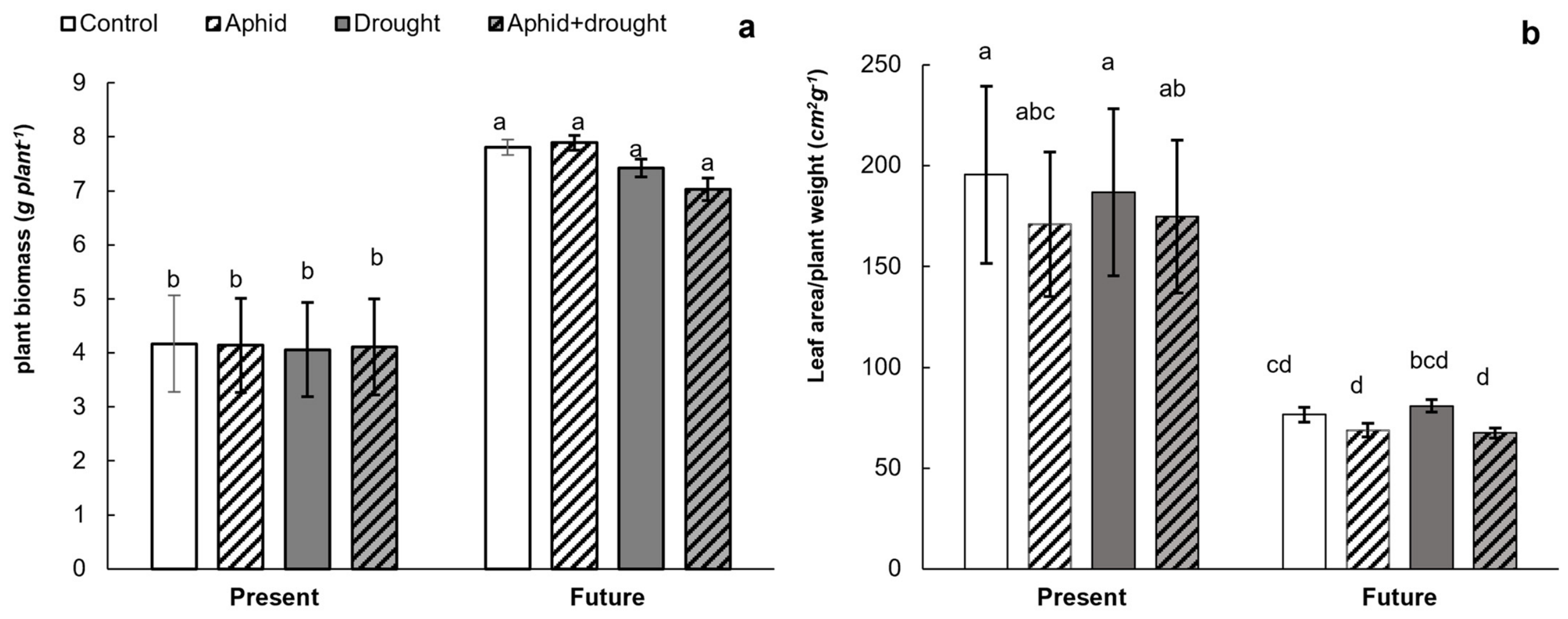
Above-ground dry plant biomass was significantly influenced by climatic conditions (F1,91 = 85.17, p < 0.0001). The plants grown under future climatic conditions exhibited higher biomass (average of 7.54 g plant−1), representing an approximately 83% increase in plant dry weight, compared to the plants grown under present climatic condition (average of 4.12 g plant−1). However, neither the effect of treatment nor the interaction between treatment and climate was significant, indicating that aphid infestation (biotic stress), drought stress and their combination did not alter biomass accumulation under both climatic conditions, as shown in Figure 4.
The effect of climate was statistically significant on mean LAR (F1,91 = 48.61, p < 0.0001), with the plants grown in present climatic conditions showing higher LAR (average of 182.04 cm2 g−1) compared to those under future climatic conditions (average of 73.44 cm2 g−1), showing a LAR reduction of approximately 60%. However, neither the treatment nor the interaction between treatment and climate scenario was statistically significant (p values ≥ 0.05). Higher LAR was recorded in unstressed plants grown in present climatic conditions (average of 195.46 cm2 g−1), while the lowest was recorded in plants grown in elevated CO2 concentration and temperature with the combined stress (average of 67.45 cm2 g−1), as shown in Figure 4.
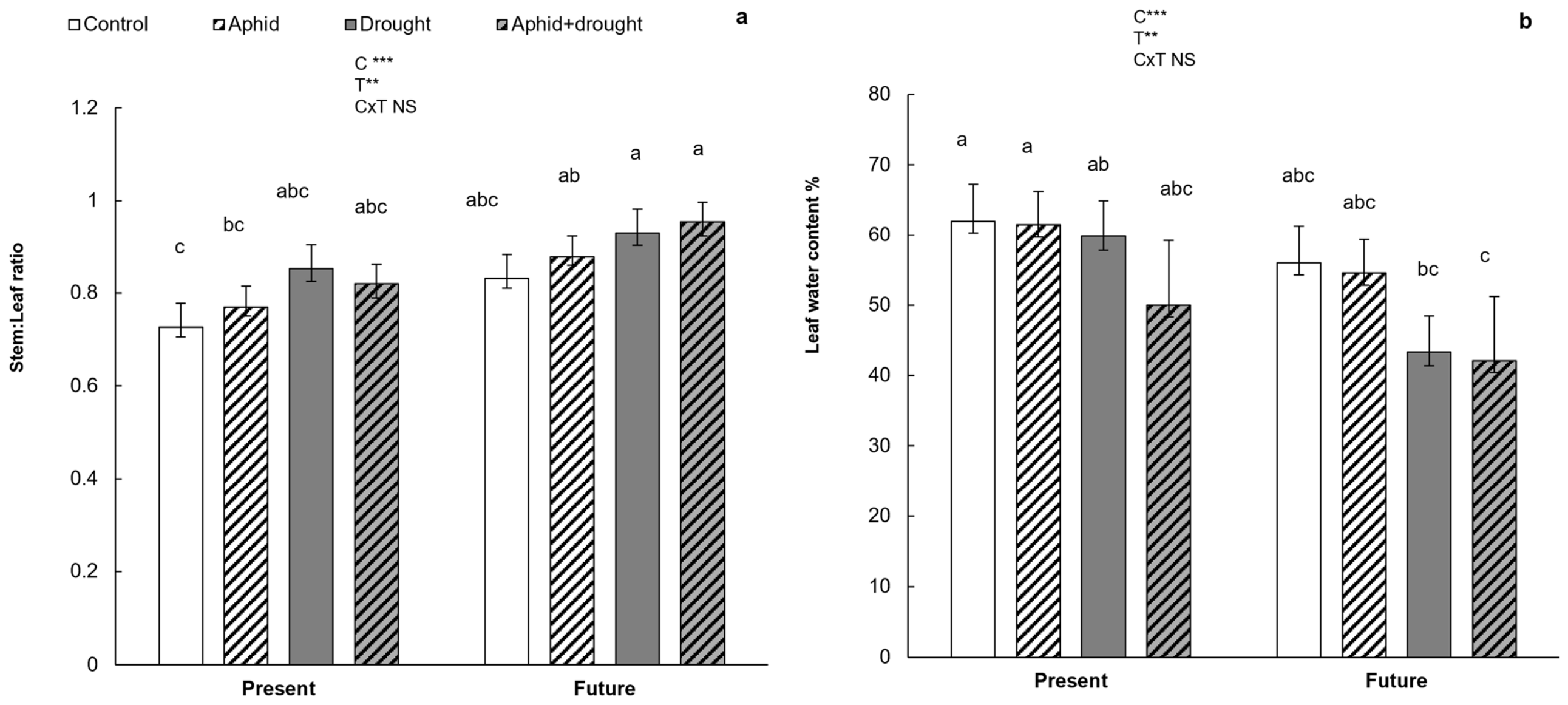
The influence of climate was highly significant on stem:leaf ratio (F1,91 = 22.30, p < 0.0001); the plants grown under future climatic conditions showed higher stem:leaf ratio (mean = 0.89) as compared to plants grown under present climatic conditions (mean = 0.79). The treatment effect was also significant for stem: leaf ratio (F3,91 = 5.78, p ≤ 0.001); the plants with drought stress and combined aphid–drought stress showed higher values compared to control plants. However, the interaction between treatment and climate was not significant (p ≥ 0.05). Similarly, the relative leaf water content was significantly influenced by climate (F1,91 = 12.30, p < 0.001); plants grown under present climatic conditions exhibited higher leaf water content (mean = 58.32%) as compared to plant grown under future climatic condition (mean = 49.01%). The treatment effect was also significant (F3,91 = 5.20, p ≤ 0.001), the plants under combined aphid–drought stress showed the lowest leaf water content among treatments. However, the interaction between treatment and climate was not significant at p value ≥ 0.05 (Figure 5).

3.3. Chlorophyll Florescence

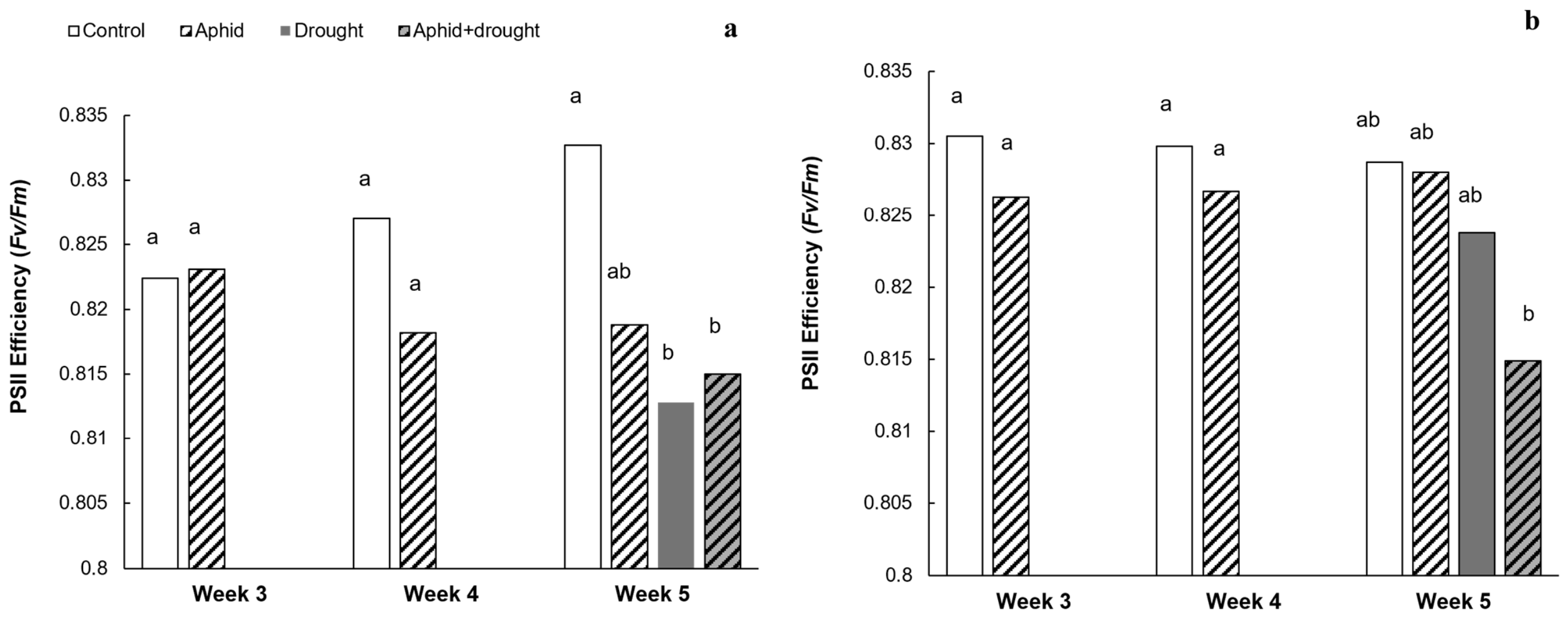
The influence of climate (present and future) on chlorophyll florescence (Fv/Fm) was not statistically significant across all weeks at p value ≥ 0.05; however, future climate showed slightly higher values as compared to present climate (Figure 5), but the difference was biologically negligible. The influence of stress treatment was not significant at week 3 (p ≥ 0.57) and was slightly near to significance at week 4 with p = 0.07. The slight increase in chlorophyll florescence values was observed following fertilizer application between measurement intervals. By week 5, treatment effects were significant under both climatic conditions (F3,77 = 6.42, p = 0.0006), with control plants exhibiting the highest PSII quantum efficiency (Fv/Fm = 0.83), whereas plants subjected to aphid stress alone and combined aphid–drought stress showed a slight reduction in Fv/Fm (Figure 6).

4. Discussion

The increase in fecundity under future climatic conditions is consistent with warming-induced acceleration of metabolic mechanisms and improved phloem sap quality reported by [22] for insect and mites pests. Comparable increase in fecundity of cereal aphids was reported by [23] under elevated temperature and CO2. Even though in this study drought stress slightly decreased fecundity under both climatic conditions, the magnitude of this decrease was limited, indicating limited biological impact within duration of experiment, consistent with the study reported by [19], showing that moderate drought may not substantially restrict aphid reproduction. The non-significant interaction between drought stress and climatic conditions demonstrates that these factors affect aphid fecundity independently. Severe droughts typically produce strong negative effects on aphid fecundity, whereas mild to moderate drought can increase amino acid concentrations, partially offsetting declines in aphid reproduction [24].
The results demonstrated that elevated temperature and CO2 level in future climate scenarios considerably increase aphid fecundity. This result is in line with the findings by [25], who demonstrated that a temperature set at 26–30°C increases the enzymatic activity of the aphids, the efficiency of nutrient assimilation and the metabolic rate, which leads to the increase in per capita reproduction. Although drought has a negative effect on the rate of aphid reproduction, similar declines due to the drought stress were reported by [26], who demonstrated that aphid reproduction rate declines under reduced plant water availability, due to drought stress-induced changes in host plant quality that alter aphid reproductive performance. Despite the fact that in this study the drought stress resulted in a minor decline in fecundity, aphid performance under stress may improve due to changes in host-plant physiology (e.g., water or nutrient shifts), influencing their nutrition and survival. However, he impact was lower compared to the reproductive stimulation under high CO2 and temperature [11,27], since the level of stress might not have been highly intense to reduce phloem turgor to amounts that can withstand aphid feeding and reproduction. The pre-reproductive period was reduced dramatically in the conditions of high temperature and CO2; this is suggestive of the higher metabolism and increased physiological replacement of body systems under warmer conditions [28]. The increased reproductive activity under high CO2 was found to trigger carbohydrate accumulation and nutritional quality of phloem in wheat [29].
The plants grown under elevated CO2 and temperature showed higher vegetative growth without stress effects; equivalent vegetative growth has been reported by [30] under high levels of CO2 in cereals because of increased carbon uptake and water-use efficiency. Drought limits the expansion of the cells and growth through turgor, leading to shorter plants [31]. The elevated CO2 failed to counteract the physiological interference that aphid feeding induced, which was in line with recent evidence that different combinations of stresses still suppress growth even when the elevated CO2 levels are present [32]. The stimulatory properties of elevated CO2 on photosynthesis, carbon assimilation, and leaf initiation cumulatively enhance vegetative growth [33], explaining the increased biomass accumulation observed under future climatic conditions. In our study, the aphid stress combined with drought stress resulted in the largest reduction under present climate conditions, which suggests an additive effect of biotic and abiotic stress as already reported in the literature [34].
Altogether, the findings emphasize the idea that although an elevated level of CO2 and temperature increases biomass production, the stressors still have a strong adverse impact on plant productivity, which corresponds to the recent results on the multi-stress interactions in cereal plants [35,36]. The significant increase in stem:leaf ratio in future climatic conditions and the decrease in leaf water content indicate increased allocation of structural biomass and decreased leaf tissue hydration. High CO2 increases photosynthesis, carbon fixation, and water-use efficiency, which leads to an increase in tissue hydration and structural biomass [37]. The combined stress significantly reduced the leaf biomass by approximately 36%; these results are consistent with the recent findings indicating a high biomass enhancement in cereals, which are cultivated in the enriched CO2 atmosphere [38]. The adverse impacts of biotic and abiotic stress were synergistic—especially under future climate scenario [39]. An increase in CO2 increases carbon assimilation and carbohydrate levels, resulting in increased stem lengthening and structural biomass, which is in line with recent data in cereal crops that were tested under elevated CO2 levels [40]. The stem fresh and dry biomass were found to be independent of stress treatment effects. This implies that the stem tissues are less vulnerable to stress than that of the leaves, which is probably because they are more stable in structure and less demanding of metabolism [41].
The influence of climate was not significant for chlorophyll florescence likely reflects the hydration status, as reduced leaf water content in future climatic conditions can impair photosystem II efficiency. In plants with drought and combined aphid–drought stress, there is an indication of electron transport and PSII photochemistry impairment in the presence of water deficit [42]. When only biotic stress was applied, no significant changes were observed in Fv/Fm values, indicating early response of wheat PSII functioning was stable across aphid stress [43]. The interaction between treatment and climate was also not significant across all weeks. The changes in Fv/Fm caused by drought well-known effects are generally caused by a decrease in chloroplast hydration, stomatal closure, and an increase in excitation pressure on PSII [44]. The stress together worsened Fv/Fm, which demonstrated stress additivity on the efficiency of photochemical [45].
High CO2 and temperature contributed to a decline in the leaf area in comparison to the total plant biomass, which is widely related to the increased carbon uptake and more intensive investment in thicker or more highly structured tissue over the extensive leaf surface. This change is a more conservative physiological response, in which plants minimize leaf surface to minimize water loss and enhance structural stability [46]. The climate scenario showed significant impact on LAR; however, stress did not affect physiology of wheat. In general, these findings highlight the fact that LAR in wheat is determined mainly by the climatic conditions, and the stress treatments play a negligible role within the range of measurements, including leaf area, SAR (specific leaf ratio) and LAR [47].
It is crucial to recognize that future climate treatment in this study combined several environmental factors, including elevated temperature, CO2 and shifts in relative humidity. As these variables were not altered independently, it is impossible to separate their individual effects on the plant physiology and aphid biology. Consequently, the findings should be viewed as the aggregate influence of projected climatic conditions rather than the impact of a single environmental driver. Additional studies that manipulate these variables separately is required to elucidate the underlying mechanisms.

5. Conclusions

Aphid performance increased by 56% significantly under elevated CO2 concentrations and higher temperatures, indicating that climate change may accelerate aphid life cycles and intensify biotic pest pressure on wheat. Consequently, agricultural systems may experience more severe aphid infestations in the future. Elevated temperature and CO2 also significantly enhanced wheat physiological parameters, including biomass by approximately 80% compared to present climatic conditions. However, the presence of combined biotic and abiotic stresses markedly reduced photosynthetic efficiency, particularly chlorophyll fluorescence (Fv/Fm) from 0.83 to 0.81; additionally, wheat plant functional trait such as leaf area ratio significantly reduced by 25% under these combined stresses. The combined stress of aphid and drought caused greater declines in plant performance than individual stress alone, showing a synergistic interaction.
However, the study was performed in controlled climatic chamber with multiple environmental factors combined, so caution must be exercised when applying its results to real field conditions to confirm these responses. Based on these findings, it is recommended to develop drought- and pest-tolerant wheat varieties capable of withstanding future climatic conditions. In addition, integrated pest management (IPM) strategies should be strengthened with a particular focus on aphid control under elevated temperature and CO2 scenarios. Furthermore, the implementation of soil water conservation techniques is essential to mitigate drought-induced physiological stress in wheat.

Author Contributions

Conceptualization (A.J., M.E., M.N.A.); Methodology (P.S., J.J., M.E., M.R.); Formal Analysis (A.J., M.N.A.); Investigation (A.J., M.R., P.S.); Resources (J.J., M.N.A.); Data Curation (A.J., P.S., M.R.); Writing—Original Draft Preparation (A.J., M.N.A., S.S.); Writing—Review and Editing (P.S., M.R., J.J., S.S.); Visualization (A.J., M.N.A.); Supervision (M.E., M.N.A., S.S.); Project Administration (J.J., M.E., M.N.A.); Funding Acquisition (J.J., M.N.A.). All authors have read and agreed to the published version of the manuscript.

Funding

This research was supported by the Luxembourg National Research Fund (FNR) as part of the Land-Atmosphere Feedback Initiative (LAFI), Grant-no. INTER/DFG/23/18277532.

Institutional Review Board Statement

Not applicable.

Informed Consent Statement

Not applicable.

Data Availability Statement

The raw data supporting the conclusions of this article will be made available by the authors on request.

Conflicts of Interest

The authors declare no conflict of interest.

Abbreviations

The following abbreviations are used in this manuscript:
ADAphid drought
AWSAutomatic weather station
GLMGeneralized linear model
HSPHeat shock protein
IPCCIntergovernmental panel on climate change
LARLeaf area ratio
LISTLuxembourg Institute of Science and Technology
PEAPlant efficiency analyser
PPFDPhotosynthetic photon flux density
PSIIPhotosystem II
RHRelative humidity
VWCVolumetric water content

Appendix A

Table A1. The effect of climate, drought stress and their interaction on pre-reproductive period (adult longevity) of aphid.
SOVDFSSMSF-ValueProbability
Treatment (T)12.1612.1611.070.3069
Climate (C)158.01858.01828.600.0000
T × C10.8750.8750.430.514
Error52105.502.029
Total55166.554
CV (%) = 11.25.
Table A2. The effect of climate, drought stress and their interaction on reproductive period of aphid.
SOVDFSSMSF-ValueProbability
Treatment (T)10.4460.4460.220.6782
Climate (C)150.16150.16124.310.0000
T × C10.1610.1610.060.801
Error52133.3572.56
Total55184.125
CV (%) = 14.32.

References

  1. IPCC. Climate Change 2021: The Physical Science Basis; Cambridge University Press: Cambridge, UK, 2021. [Google Scholar]
  2. Perkins-Kirkpatrick, S.E.; Lewis, S.C. Increasing Trends in Regional Heatwaves. Nat. Commun. 2020, 11, 3357. [Google Scholar] [CrossRef]
  3. Bibi, F.; Rahman, A. An Overview of Climate Change Impacts on Agriculture and Their Mitigation Strategies. Agriculture 2023, 13, 1508. [Google Scholar] [CrossRef]
  4. Malhi, G.; Kaur, M.; Kaushik, P. Impact of Climate Change on Agriculture and Its Mitigation Strategies: A Review. Sustainability 2021, 13, 1318. [Google Scholar] [CrossRef]
  5. Erenstein, O.; Jaleta, M.; Mottaleb, K.A.; Sonder, K.; Donovan, J.; Braun, H.-J. Global Trends in Wheat Production, Consumption and Trade. In Wheat Improvement; Reynolds, M.P., Braun, H.-J., Eds.; Springer International Publishing: Cham, Switzerland, 2022; pp. 47–66. ISBN 978-3-030-90672-6. [Google Scholar]
  6. Zhao, C.; Liu, B.; Piao, S.; Wang, X.; Lobell, D.B.; Huang, Y.; Huang, M.; Yao, Y.; Bassu, S.; Ciais, P.; et al. Temperature Increase Reduces Global Yields of Major Crops in Four Independent Estimates. Proc. Natl. Acad. Sci. USA 2017, 114, 9326–9331. [Google Scholar] [CrossRef]
  7. Zhang, K.-X.; Li, H.-Y.; Quandahor, P.; Gou, Y.-P.; Li, C.-C.; Zhang, Q.-Y.; Haq, I.U.; Ma, Y.; Liu, C.-Z. Responses of Six Wheat Cultivars (Triticum aestivum) to Wheat Aphid (Sitobion avenae) Infestation. Insects 2022, 13, 508. [Google Scholar] [CrossRef]
  8. Larsson, H. A Crop Loss Model and Economic Thresholds for the Grain Aphid, Sitobion avenae (F.), in Winter Wheat in Southern Sweden. Crop Prot. 2005, 24, 397–405. [Google Scholar] [CrossRef]
  9. Dampc, J.; Mołoń, M.; Durak, T.; Durak, R. Changes in Aphid—Plant Interactions under Increased Temperature. Biology 2021, 10, 480. [Google Scholar] [CrossRef]
  10. Milenovic, M.; Eickermann, M.; Junk, J.; Rapisarda, C. Life History Parameters of Bemisia Tabaci MED (Hemiptera: Aleyrodidae) in the Present and Future Climate of Central Europe, Predicted by Physically Realistic Climatic Chamber Simulation. Environ. Entomol. 2023, 52, 502–509. [Google Scholar] [CrossRef] [PubMed]
  11. Beetge, L.; Krüger, K. Drought and Heat Waves Associated with Climate Change Affect Performance of the Potato Aphid Macrosiphum Euphorbiae. Sci. Rep. 2019, 9, 3645. [Google Scholar] [CrossRef] [PubMed]
  12. Milenovic, M.; Ripamonti, M.; Eickermann, M.; Rapisarda, C.; Junk, J. Longevity of the Whitefly Parasitoid Eretmocerus Eremicus under Two Different Climate Scenarios. Phytoparasitica 2023, 51, 1041–1046. [Google Scholar] [CrossRef]
  13. Rao, M.S.; Ranga Rao, G.V.; Venkateswarlu, B. Impact of Climate Change on Insect Pests. In Proceedings of the National Symposium on Climate Change and Rainfed Agriculture, CRIDA, Hyderabad, India, 18–20 February 2010. [Google Scholar]
  14. Skendžić, S.; Zovko, M.; Živković, I.P.; Lešić, V.; Lemić, D. The Impact of Climate Change on Agricultural Insect Pests. Insects 2021, 12, 440. [Google Scholar] [CrossRef]
  15. Ainsworth, E.A.; Rogers, A. The Response of Photosynthesis and Stomatal Conductance to Rising [CO2]: Mechanisms and Environmental Interactions. Plant Cell Environ. 2007, 30, 258–270. [Google Scholar] [CrossRef]
  16. Ainsworth, E.A.; Long, S.P. What Have We Learned from 15 Years of Free-air CO2 Enrichment (FACE)? A Meta-analytic Review of the Responses of Photosynthesis, Canopy Properties and Plant Production to Rising CO2. New Phytol. 2005, 165, 351–372. [Google Scholar] [CrossRef]
  17. Fitzgerald, G.J.; Tausz, M.; O’Leary, G.; Mollah, M.R.; Tausz-Posch, S.; Seneweera, S.; Mock, I.; Löw, M.; Partington, D.L.; McNeil, D.; et al. Elevated Atmospheric [CO2] Can Dramatically Increase Wheat Yields in Semi-arid Environments and Buffer against Heat Waves. Glob. Change Biol. 2016, 22, 2269–2284. [Google Scholar] [CrossRef]
  18. Sun, Y.; Guo, H.; Ge, F. Plant–Aphid Interactions Under Elevated CO2: Some Cues from Aphid Feeding Behavior. Front. Plant Sci. 2016, 7, 502. [Google Scholar] [CrossRef] [PubMed]
  19. Huberty, A.F.; Denno, R.F. Plant water stress and its consequences for herbivorous insects: A new synthesis. Ecology 2004, 85, 1383–1398. [Google Scholar] [CrossRef]
  20. Strock, C. Protocol for Extracting Basic Color Metrics from Images in ImageJ/Fiji 2021. Available online: https://zenodo.org/records/5595203 (accessed on 10 May 2026).
  21. Radford, P.J. Growth Analysis Formulae: Their Use and Abuse. Crop Sci. 1967, 7, 171–175. [Google Scholar] [CrossRef]
  22. Reddy, P.P. Impacts on Insect and Mite Pests. In Climate Resilient Agriculture for Ensuring Food Security; Springer: New Delhi, India, 2015; pp. 115–150. ISBN 978-81-322-2198-2. [Google Scholar]
  23. Moreno-Delafuente, A.; Viñuela, E.; Fereres, A.; Medina, P.; Trębicki, P. Simultaneous Increase in CO2 and Temperature Alters Wheat Growth and Aphid Performance Differently Depending on Virus Infection. Insects 2020, 11, 459. [Google Scholar] [CrossRef]
  24. Leybourne, D.J.; Preedy, K.F.; Valentine, T.A.; Bos, J.I.B.; Karley, A.J. Drought Has Negative Consequences on Aphid Fitness and Plant Vigor: Insights from a Meta-analysis. Ecol. Evol. 2021, 11, 11915–11929. [Google Scholar] [CrossRef]
  25. Tabao, N.S.C.; Mendoza, B.C.; Pedro, M.S.; Monsalud, R.G. Mycobiome in Soils from Irrigated, Rice-Based Farming Systems in Apalit, Pampanga and Banaue, Ifugao, Philippines: Diversity and Potential Agro-Biotechnological Applications Determined Using Targeted Metagenomics. Int. J. Agric. Technol. 2023, 19, 781–804. [Google Scholar]
  26. Xie, H.; Shi, J.; Shi, F.; Xu, H.; He, K.; Wang, Z. Aphid Fecundity and Defenses in Wheat Exposed to a Combination of Heat and Drought Stress. J. Exp. Bot. 2020, 71, 2713–2722. [Google Scholar] [CrossRef] [PubMed]
  27. Martén-Rodríguez, S.; Cristobal-Pérez, E.J.; De Santiago-Hernández, M.H.; Huerta-Ramos, G.; Clemente-Martínez, L.; Krupnick, G.; Taylor, O.; Lopezaraiza-Mikel, M.; Balvino-Olvera, F.J.; Sentíes-Aguilar, E.M.; et al. Untangling the Complexity of Climate Change Effects on Plant Reproductive Traits and Pollinators: A Systematic Global Synthesis. Glob. Change Biol. 2025, 31, e70081. [Google Scholar] [CrossRef] [PubMed]
  28. Bierwirth, P.N. Long-term Carbon Dioxide Toxicity and Climate Change: A Critical Unapprehended Risk for Human Health. ResearchGate 2026. [Google Scholar] [CrossRef]
  29. Wang, J.; Han, Y.; Li, H.; Bai, H.; Liang, H.; Zong, Y.; Zhang, D.; Shi, X.; Li, P.; Hao, X. Elevated CO2 Concentration Extends Reproductive Growth Period and Enhances Carbon Metabolism in Wheat Exposed to Increased Temperature. Plant Cell Environ. 2025, 48, 1452–1467. [Google Scholar] [CrossRef]
  30. Zhang, D.; Li, A.; Lam, S.K.; Li, P.; Zong, Y.; Gao, Z.; Hao, X. Increased Carbon Uptake under Elevated CO2 Concentration Enhances Water-Use Efficiency of C4 Broomcorn Millet under Drought. Agric. Water Manag. 2021, 245, 106631. [Google Scholar] [CrossRef]
  31. Anjum, S.A.; Ashraf, U.; Zohaib, A.; Tanveer, M.; Naeem, M.; Ali, I.; Tabassum, T.; Nazir, U. Growth and Developmental Responses of Crop Plants under Drought Stress: A Review. Zemdirbyste-Agriculture 2017, 104, 267–276. [Google Scholar] [CrossRef]
  32. Li, C.; Sun, Q.; Gou, Y.; Zhang, K.; Zhang, Q.; Zhou, J.-J.; Liu, C. Long-Term Effect of Elevated CO2 on the Development and Nutrition Contents of the Pea Aphid (Acyrthosiphon pisum). Front. Physiol. 2021, 12, 688220. [Google Scholar] [CrossRef]
  33. Saha, S.; Das, B.; Chatterjee, D.; Sehgal, V.K.; Chakraborty, D.; Pal, M. Crop Growth Responses Towards Elevated Atmospheric CO2. In Plant Ecophysiology and Adaptation Under Climate Change: Mechanisms and Perspectives I; Hasanuzzaman, M., Ed.; Springer: Singapore, 2020; pp. 147–198. ISBN 978-981-15-2155-3. [Google Scholar]
  34. Hao, L.K.; Batyrshina, Z.; Goldstein, Y.; Mishra, A.; Köllner, T.G.; Yaakov, B.; Tzin, V. Dual Role of Benzoxazinoids in Plant Response to Combined Drought Stress and Aphid Feeding. Plant Biol. 2026, 28, 45–57. [Google Scholar] [CrossRef]
  35. Van Der Kooi, C.J.; Reich, M.; Löw, M.; De Kok, L.J.; Tausz, M. Growth and Yield Stimulation under Elevated CO2 and Drought: A Meta-Analysis on Crops. Environ. Exp. Bot. 2016, 122, 150–157. [Google Scholar] [CrossRef]
  36. Shanker, A.K.; Gunnapaneni, D.; Bhanu, D.; Vanaja, M.; Lakshmi, N.J.; Yadav, S.K.; Prabhakar, M.; Singh, V.K. Elevated CO2 and Water Stress in Combination in Plants: Brothers in Arms or Partners in Crime? Biology 2022, 11, 1330. [Google Scholar] [CrossRef]
  37. Yang, L.; Duan, J.; Liu, Y.; Hu, W.; Liu, X.; Wang, Y.; Zhou, Z.; Zhao, W. Changes in Carbohydrate Distribution in Cotton Photosynthetic Organs and Increase in Boll Weight Reduce Yield Loss under High Temperature. J. Exp. Bot. 2024, 75, 3483–3499. [Google Scholar] [CrossRef]
  38. Ben Mariem, S.; Soba, D.; Zhou, B.; Loladze, I.; Morales, F.; Aranjuelo, I. Climate Change, Crop Yields, and Grain Quality of C3 Cereals: A Meta-Analysis of [CO2], Temperature, and Drought Effects. Plants 2021, 10, 1052. [Google Scholar] [CrossRef] [PubMed]
  39. Rahman, S.; Rostás, M.; Vosteen, I. Drought Aggravates Plant Stress by Favouring Aphids and Weakening Indirect Defense in a Sugar Beet Tritrophic System. J. Pest Sci. 2025, 98, 549–564. [Google Scholar] [CrossRef]
  40. Wang, X.; Liu, F. Effects of Elevated CO2 and Heat on Wheat Grain Quality. Plants 2021, 10, 1027. [Google Scholar] [CrossRef]
  41. Brito, C.; Dinis, L.-T.; Moutinho-Pereira, J.; Correia, C.M. Drought Stress Effects and Olive Tree Acclimation under a Changing Climate. Plants 2019, 8, 232. [Google Scholar] [CrossRef]
  42. Du, J.-L.; Wu, D.-G.; Li, J.-Q.; Zhan, Q.-W.; Huang, S.-C.; Huang, B.-H.; Wang, X. Effects of Aphid Disoperation on Photosynthetic Performance and Agronomic Traits of Different Sorghum Varieties. Pak. J. Bot. 2021, 53, 2275–2285. [Google Scholar] [CrossRef] [PubMed]
  43. Sonbol, H.; Korany, S.M.; Nhs, M.; Abdi, I.; Maridueña-Zavala, M.G.; Alsherif, E.A.; Aldailami, D.A.; Elsheikh, S.Y.S. Exploring the Benefits of AMF Colonization for Improving Wheat Growth, Physiology and Metabolism, and Antimicrobial Activity under Biotic Stress from Aphid Infection. BMC Plant Biol. 2025, 25, 198. [Google Scholar] [CrossRef] [PubMed]
  44. Sommer, S.G.; Han, E.; Li, X.; Rosenqvist, E.; Liu, F. The Chlorophyll Fluorescence Parameter Fv/Fm Correlates with Loss of Grain Yield after Severe Drought in Three Wheat Genotypes Grown at Two CO2 Concentrations. Plants 2023, 12, 436. [Google Scholar] [CrossRef]
  45. Cao, Y.; Yang, K.; Liu, W.; Feng, G.; Peng, Y.; Li, Z. Adaptive Responses of Common and Hybrid Bermudagrasses to Shade Stress Associated with Changes in Morphology, Photosynthesis, and Secondary Metabolites. Front. Plant Sci. 2022, 13, 817105. [Google Scholar] [CrossRef]
  46. Chachar, S.; Ahmed, N.; Hu, X. Drought-induced Aesthetic Decline and Ecological Impacts on Ornamentals: Mechanisms of Damage and Innovative Strategies for Mitigation. Plant Biol. 2025, 28, 578–600. [Google Scholar] [CrossRef]
  47. Hossain, A.; Skalicky, M.; Brestic, M.; Maitra, S.; Ashraful Alam, M.; Syed, M.A.; Hossain, J.; Sarkar, S.; Saha, S.; Bhadra, P.; et al. Consequences and Mitigation Strategies of Abiotic Stresses in Wheat (Triticum aestivum L.) under the Changing Climate. Agronomy 2021, 11, 241. [Google Scholar] [CrossRef]
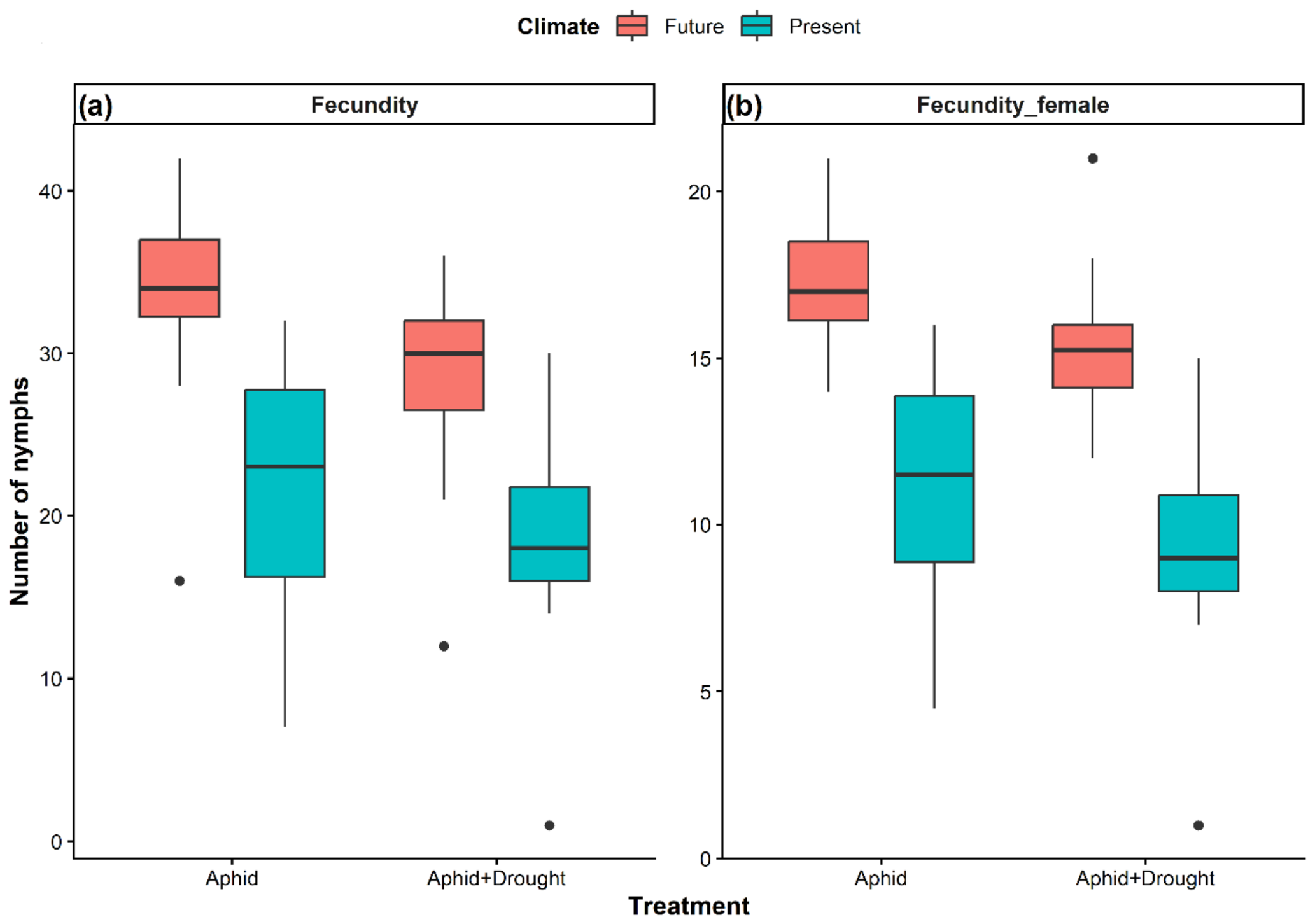
Figure 1. Influence of present mean climatic conditions (19.8 °C, RH 69.2%, CO2 410 ppm) and future mean climatic conditions (23.4 °C, RH 67.5%, CO2 700 ppm), with or without drought stress, on (a) fecundity (total nymphs) and (b) fecundity per female−1 of Sitobion avenae on winter wheat.
Atmosphere 17 00498 g001
Figure 2. Influence of present mean climatic conditions (19.8 °C, RH 69.2%, CO2 410 ppm) and future mean climatic conditions (23.4 °C, CO2 700 ppm, RH 67.5%) on (a) pre-reproductive and (b) reproductive stage of Sitobion avenae on winter wheat.
Atmosphere 17 00498 g002
Figure 3. Responses of wheat plants to mean climatic conditions. Present (19.8 °C, RH 69.2%, CO2 410 ppm), future climatic conditions (23.4 °C, RH 67.5%, CO2 700 ppm) and abiotic stress (drought) and biotic stress (aphid) (a) plant height and (b) number of leaves per plant. Bars represent data as mean ± SE (n = 14 for number of leaves and n = 7 for plant height). Letters a–d indicate significance among treatments and climate based on Tukey’s HSD (p ≤ 0.05). In statistical annotation C represents climate, T represent treatment, and CxT represent interaction between climate and treatment. The three asterisks (*) indicate highly significant effect at p ≤ 0.001, ** indicate significance at p ≤ 0.01 and * indicates p ≤ 0.05.
Atmosphere 17 00498 g003
Figure 4. Responses of wheat plants to mean climatic conditions. Present (19.8 °C, RH 69.2%, CO2 410 ppm), future (23.4 °C, RH 67.5%, CO2 700 ppm) under biotic stress (aphid) and abiotic stress (drought), and their combination on (a) plant biomass (g plant−1) and (b) leaf area ratio (cm g−1). Bars represent data as mean ± SE (n = 14). Letters a–d indicate significance among treatments and climate based on Tukey’s HSD (p ≤ 0.05).
Atmosphere 17 00498 g004
Figure 5. Responses of wheat plants to mean climatic conditions. Present (19.8 °C, RH 69.2%, CO2 410 ppm), future (23.4 °C, RH 67.5%, CO2 700 ppm) and abiotic stress (drought) and biotic stress (aphid) (a) stem: leaf and (b) leaf water content. Bars represent data as mean ± SE (n = 14 for number of leaves and n = 7 for plant height). Letters a–c indicate significance among treatments and climate based on Tukey’s HSD (p ≤ 0.05). In statistical annotation C represents climate, T represent treatment, and CxT represent interaction between climate and treatment. The three asterisks (*) indicate a highly significant effect at p ≤ 0.001, ** indicate significance at p ≤ 0.01.
Atmosphere 17 00498 g005
Figure 6. Chlorophyll florescence (Fv/Fm) of wheat plants as influenced by post biotic stress (aphid) and abiotic stress (drought) at different growth stage on weekly basis (weeks 3, 4, and 5) at (a) present mean climatic conditions (19.8 °C, 69% RH, 410 ppm CO2) and (b) future mean climatic conditions (23.4 °C, 67.5% RH, 700 ppm CO2). Two-way factorial design with climate and treatment as fixed factors, while week as repeated factor. Letters a, b indicate significance among treatments and climate based on Tukey’s HSD (p ≤ 0.05).
Atmosphere 17 00498 g006
Table 1. Descriptive statistics of (a) pre-reproductive period and (b) reproductive period of Sitobion avenae reared on winter wheat grown under present mean climatic conditions (19.8 °CRH 69.2%, CO2 410 ppm,) and future mean climatic conditions (23.4 °C, RH 67.5%, CO2 700 ppm), with or without drought stress. Values are represented in days as mean, median (Q2), first quartile (Q1), third quartile (Q3), and interquartile range (IQR) based on n = 14 replicates per treatment.
TraitTreatmentClimate MeanMedianQ1Q3IQR
Pre-reproductive period (days)AphidPresent131312142
Aphid + Drought1312.512142
AphidFuture1110.510111
Aphid + Drought101010111
Reproductive period (days)AphidPresent10109112
Aphid + Drought1010.59112
AphidFuture1212.512131
Aphid + Drought121212131
Disclaimer/Publisher’s Note: The statements, opinions and data contained in all publications are solely those of the individual author(s) and contributor(s) and not of MDPI and/or the editor(s). MDPI and/or the editor(s) disclaim responsibility for any injury to people or property resulting from any ideas, methods, instructions or products referred to in the content.