
Article

Shadow and Micrometeorological Conditions That Influence the Air Quality in Houses near High Rise Buildings—Field Results

1
Faculty of Architecture and Built Environment, Universidad de Santiago de Chile, Santiago 9170022, Chile
2
Physics Department, Universidad de Santiago de Chile, Santiago 9170124, Chile
3
Department of Mining Engineering, Faculty of Engineering, Universidad de Santiago de Chile, Santiago 9170022, Chile
*
Author to whom correspondence should be addressed.
Atmosphere 2026, 17(5), 474; https://doi.org/10.3390/atmos17050474 (registering DOI)
Submission received: 18 March 2026 / Revised: 29 April 2026 / Accepted: 29 April 2026 / Published: 6 May 2026
(This article belongs to the Topic Air Quality and the Built Environment, 2nd Edition)

Abstract

In urban environments, large buildings influence air quality in their surroundings by altering natural wind patterns, obstructing airflow or creating high-velocity wind tunnels, often resulting in stagnant zones that trap pollutants. Furthermore, the extensive shadows cast by these structures reduce ground-level temperatures. For urban planners, accounting for these aerodynamic, thermal and air quality effects is important to fostering healthier, more livable cities. In this work, measurements assessing how shadow and micrometeorological conditions—driven by the proximity of large buildings—influence PM2.5 levels were conducted in an urban commune of Santiago, Chile, during the winter and spring seasons. This commune is characterized by a mixture of one-story houses and high-rise buildings. PM2.5 and meteorological parameters were measured outside three pairs of houses in winter of 2021, one of which received shadow from a nearby building and the other was under the sun. In one pair of houses, PM2.5 concentrations were elevated in the shaded site exclusively during the winter months. This was attributed to shadow-induced temperature reductions, which likely increased local atmospheric stability and inhibited pollutant dispersion. However, this effect was limited to periods of low wind speed; during the spring, the transition to a higher wind speed regime facilitated sufficient mechanical mixing to neutralize the thermal influence of the shadow, resulting in no detectable difference between the sites. In another pair of houses, the result was attributed to the difference in wind speed in one of the houses, because the building acts as a windbreak, no shading effect were observed. Regarding the third pair of houses, no significant impact on PM2.5 concentrations was observed in the whole period. This lack of variation is likely attributable to the absence of substantial micrometeorological differences between the two sites.

1. Introduction

Since 1950, the world has undergone rapid urbanization. According to the United Nations Department of Economic and Social Affairs, the global urban population rose from approximately 30% to 55% by 2018 [1]. As this trend is expected to persist in the coming decades, more robust policies are required to manage urban expansion, ensure equitable access to infrastructure and social services, and enhance air quality within the built environment. Nevertheless, the urgent demand for affordable housing and cost-effective services—coupled with rapid population growth—often drives urban densification. This is typically addressed by increasing both the volume and height of residential buildings. The proliferation of high-rise buildings in close proximity degrades the internal environmental quality of the urban fabric. This density results in poor acoustic insulation, diminished privacy, restricted airflow, and reduced sunlight [2,3].
Located just west of downtown Santiago, the commune of Estación Central has undergone a significant transformation. Until two decades ago, it was characterized by low-density, single-story residential development. However, its proximity to the city center drove a steady increase in property values, subsequently incentivizing rapid densification and vertical expansion. Between January 2013 and July 2018, the Estación Central building department granted permits for 81 high-rise projects, totaling 38,956 apartments. According to the 2019 Official Cadastre of High-rise Buildings, these structures range from 20 to 41 stories (52 to 106 m), with 30 exceeding 30 stories. By May 2019, 60 of these “towers” were completed, concentrated within a 23.6-hectare area on the western side of Santiago—a density of 3.4 towers per hectare.
An important factor affecting inhabitant well-being in buildings or around them is the “shadow cone” cast by these structures, the length of which is a function of building height and latitude. This shading causes a localized drop in ambient temperature and increase in relative humidity as solar radiation is blocked and shaded surfaces cool. For the 81 permitted buildings in this area, the combined shadow length reaches 2937 m. This condition peaks between the March and September equinoxes, reaching a critical maximum during the winter solstice (21–22 June). At this time, a solar angle of 33°46′ at solar noon causes each building to project a shadow to the south equivalent to twice its own height.
There is a well-established inverse relationship between ambient temperature and air pollutant concentrations: higher temperatures typically correspond to lower concentrations, while colder conditions favor the accumulation of pollutants [4]. High-rise structures further complicate this dynamic by altering wind patterns. When airflow strikes a building’s facade, it is redirected; while some air escapes upward, a significant portion is forced downward—a phenomenon known as the “downwash effect”—creating turbulence and gusts at street level [5,6]. As building height increases, the magnitude of this downward airflow intensifies [7,8]. Given that wind speed is the primary meteorological driver of PM2.5 dispersion, the localized increase in velocity caused by tall buildings can lead to a reduction in particulate concentrations at the base. However, several studies suggest that wind velocity increases are non-homogeneous in the vicinity of high-rise structures [9,10]. Consequently, these aerodynamic fluctuations can create localized pockets of improved air quality in some sectors, while simultaneously exacerbating pollutant concentrations in others. A computational fluid dynamics simulation of the effect of tall buildings on pollution [11] showed several hotspots distributed around the structures. The study also found that building height alone cannot determine pollution levels in an area, showing that there is a complex relationship between the different parameters that affect pollution. An indoor air quality study at a museum found that there are many physical parameters that affect air quality [12]. Although some of these variables present deviations from international standards, these are generally minor and manageable, though certain critical variables require more rigorous control to maintain air quality.
Additionally, building shadows may further diminish air quality; the reduced temperatures within shaded areas can suppress vertical thermal turbulence, thereby limiting the atmospheric dispersion of pollutants. Shadows also contribute to higher relative humidity which enhances moisture absorption by particles, causing them to increase in size and concentration often leading to poorer air quality [13,14]. Therefore, at lower temperature and higher humidity, there is usually a higher concentration of pollutants at ground level, to the south of these buildings, where the shadow increases. While extensive research has documented how tall buildings change pollutant dispersion through wind modification [2,3,10,15,16], the relationship between building-induced shading and air quality remains insufficiently explored in contemporary urban studies. Shading has been found to alter formation of NO2 in street canyons because of reduced sunlight [17] and growing air time residence. Shadow has been found to lead to higher temperatures far from the building, while having significant cooling effects within 10–20 m range [18]. However, these environmental factors are often highly correlated; for instance, shaded areas typically exhibit both higher relative humidity and lower temperatures. Consequently, it is difficult to isolate whether elevated pollutant concentrations stem specifically from shadow-induced humidity or from humidity driven by other factors. A similar complexity arises with airflow; the intricate geometry of high-rise developments generates a heterogeneous wind field characterized by alternating stagnation zones and high-velocity channels. Consequently, it is difficult to discern whether elevated pollution in a shaded area is a result of reduced wind speed or the thermal effects of the shadow itself. These overlapping variables create a significant challenge in isolating the primary driver of localized pollution hotspots.
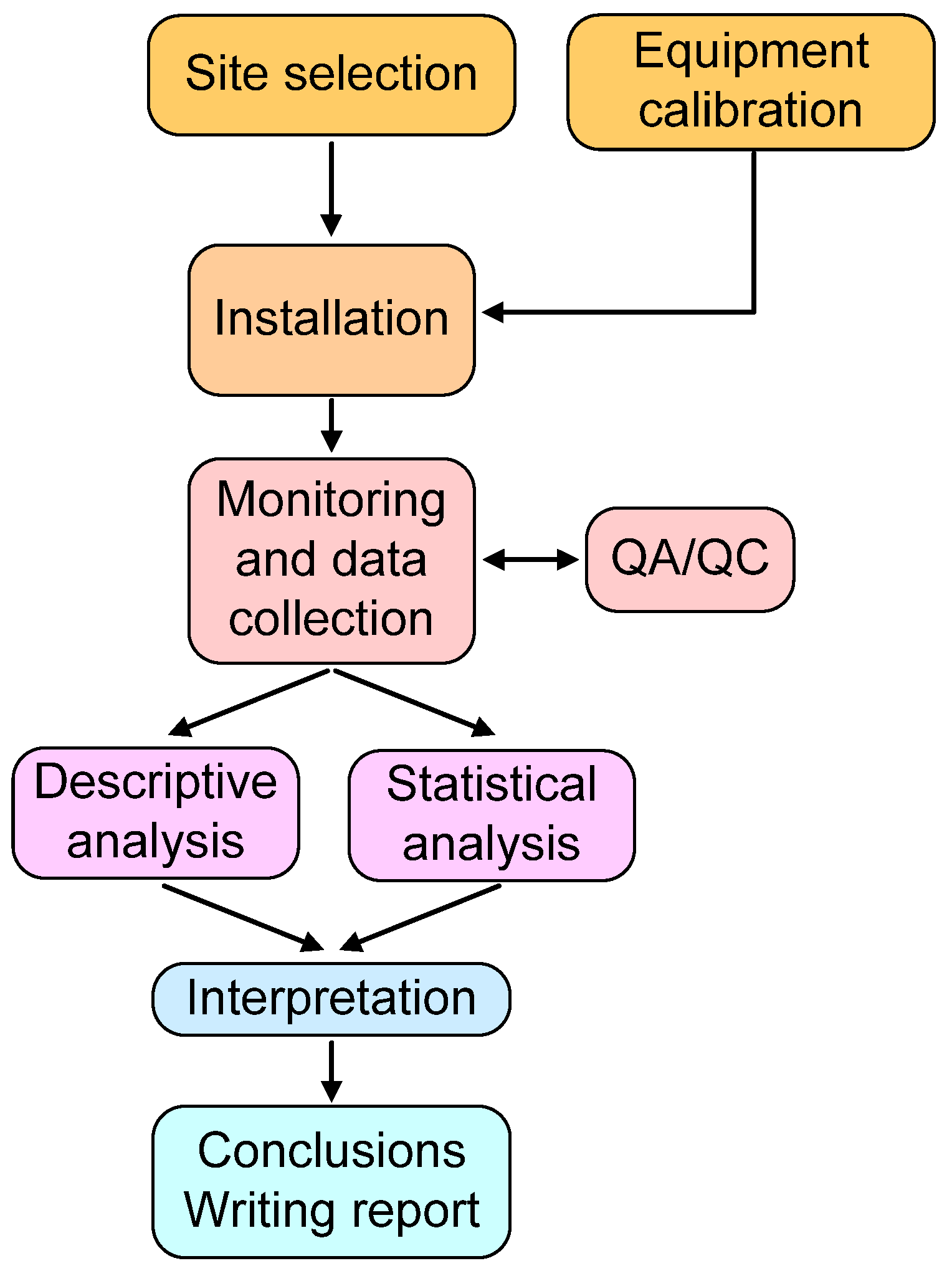
To isolate the impact of shading from other confounding variables, this study employed pairs of low-cost monitors (LCMs) to measure localized air quality. In each pair, one monitor was positioned in an area shadowed by a building, while the other was placed in a nearby sunlit location. These LCMs were equipped to measure PM2.5, temperature, humidity, and wind parameters (speed and direction). While the results confirm that building proximity significantly influences local temperature and humidity, PM2.5 concentrations proved to be sensitive to a more complex interplay of factors, including wind speed, spatial orientation relative to the structure, diurnal cycles, and solar irradiance. A flowchart outlining the methodology used in this work is shown in Figure 1.

2. Materials and Methods

2.1. Instrumentation and Measurement Period

Seven custom low-cost monitoring stations were developed to measure PM2.5, PM10, temperature, humidity, wind velocity and direction. Each unit features a PMS7003 laser particulate sensor (λ = 680 ± 10 nm), Plantower, Nanchang, China [19,20]. While the manufacturer specifies capabilities for both PM10 and PM2.5, research indicates that laser particle counters often exhibit a nonlinear response to larger particles; therefore, only the PM2.5 fraction was treated as highly accurate [21,22,23]. Environmental parameters were captured using a SHT30 sensor (typical accuracy: ±3% RH; ±0.3 °C), Sensirion AG, Stäfa, Switzerland. Wind data were gathered with a wind vane and anemometer assembly, Argent Data Systems, Santa Maria, CA, USA (resolution: 22.5° direction; 0.5 m/s speed). These components were integrated with an ESP32 microcontroller, ESP-IDF Release v3.3.1, Espressif Systems, Shanghai, China, onto a custom interface plate and housed in a compact 12 × 10 × 8 cm3 enclosure. Data were logged locally to an SD card and, where connectivity permitted, transmitted to a university web server via WiFi.
PM2.5 concentration was measured continuously with a 1 min. interval in all sites. Deployment of the instruments and measurements started in May and ended in October 2021. The measurement period corresponds to winter and spring, a time of the year with the lowest temperatures, highest humidity, lowest wind velocity and highest PM2.5 concentrations.

2.2. Study Area

This study was conducted in the Estación Central commune of western Santiago, Chile. This region typically experiences elevated PM2.5 levels during winter due to poor dispersion conditions and significant emissions from residential wood heating [24,25,26]. Characterized by a mix of high-volume commercial activity and residential zones, the study area lacks direct influence from major industrial sources; thus, the monitoring sites are classified as urban background. Over the past decade, this commune has undergone rapid verticalization, marked by a substantial increase in high-rise developments. Following a spatial survey to identify tall buildings adjacent to low-rise housing, residents were recruited for sensor installation. Simultaneously, an inter-calibration of all monitors was performed at the university to establish correction factors for the data.
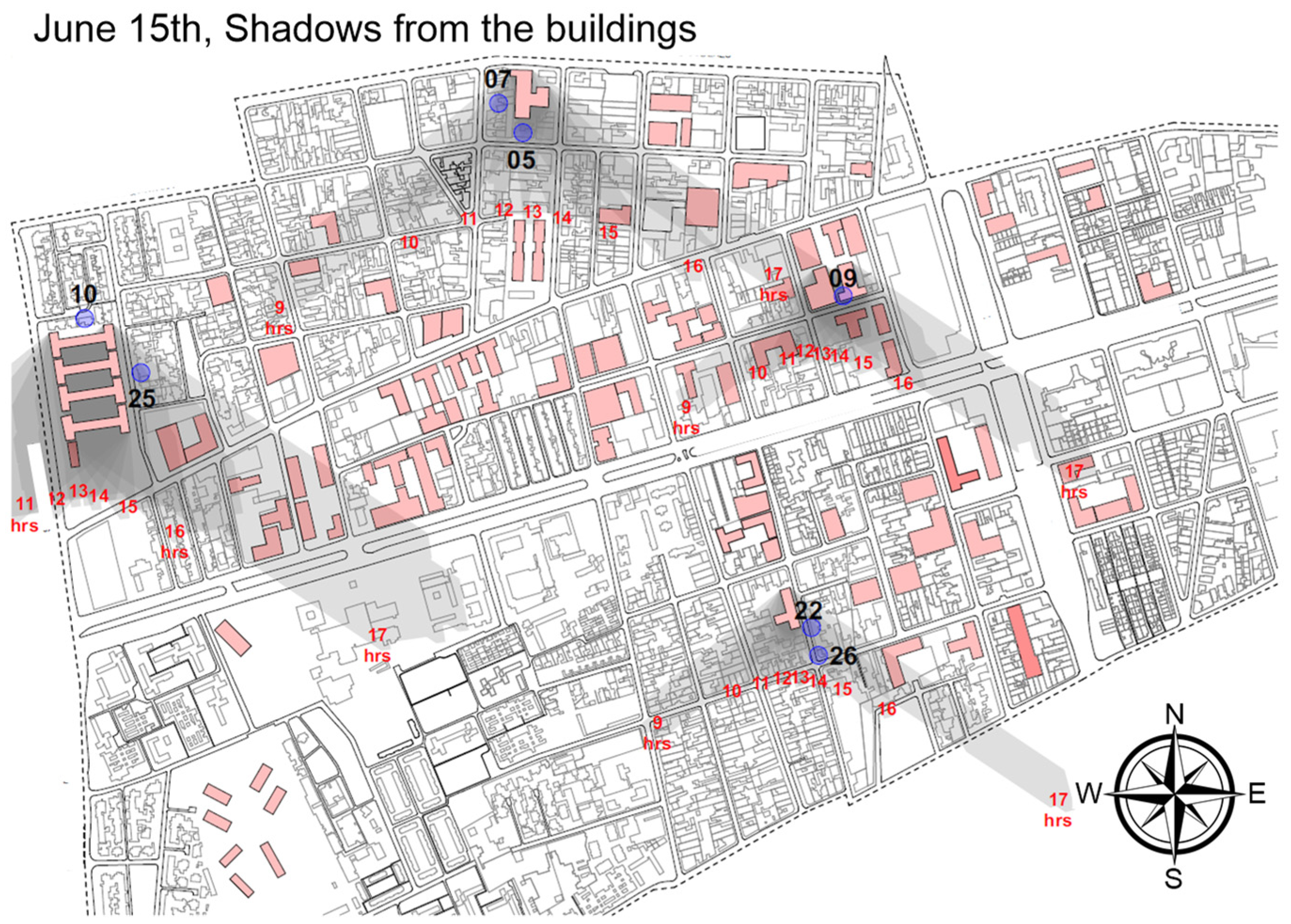
Figure 2 presents a map of the commune, with pink polygons representing buildings exceeding 50 m in height. Three high-rise structures were selected to investigate the influence of persistent building shadows on local environmental conditions. Monitoring stations were deployed in pairs: one “shadow” site located within the building’s projected shade and one “control” site in a nearby sun-exposed area. These locations are identified by the blue dots in Figure 2. Each station was equipped to measure PM2.5, temperature, relative humidity, and wind speed and direction. Building and residential heights were characterized using Google Earth Pro, ver: 7.3.7.1155 (64-bit).

2.3. Shadow Determination

The program used to calculate the shape and length of the shadows from the buildings was Archicad, Ver 22, Graphisoft, Budapest, Hungary, which is a BIM (Building Information Modeling) drawing and modeling software. The program allows creation of parametric designs of the elements, with a data bank that contains the complete life cycle of the construction, from concept to creation. The software has a georeferencing function (spatial positioning technique of an entity in a unique and well-defined geographic location in a specific coordinate and datum system) which locates the project in the respective city (in this case Estación Central, Santiago) and simulates the position and path of the sun.

2.4. Precalibration

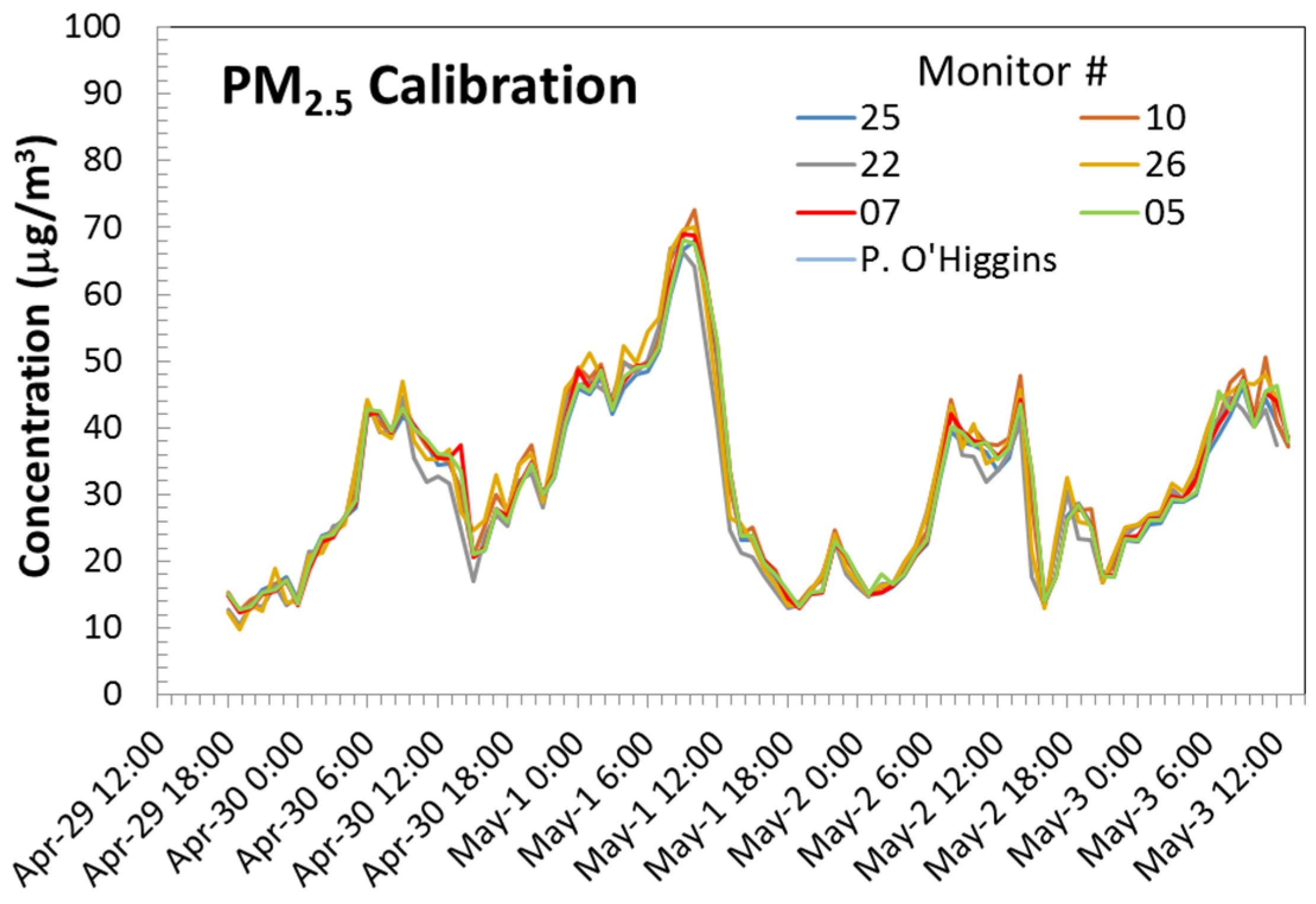
An inter-comparison of the instruments was performed before the start of the campaign, from 29 April until 3 May 2021 at the university site (USACH) to determine the variability among them. Six instruments were placed side by side during 3 days to measure temperature, humidity, PM2.5, wind speed and direction. One-minute instrument readings were averaged to produce hourly data points. A linear calibration factor was applied to some of the instruments in order to maximize the Pearson correlation coefficient and minimize root mean square error, RMSE [27]. Several previous studies have found that the Plantower data must be multiplied by a number close to 0.5 to match the data from reference instruments. Holder et al., [28] found a correction factor of 0.51 for the PMS 5003, Plantower, Nanchang, China, in a study of multiple wildfires. Barkjohn et al. [29] also found a correction factor of 0.51 across multiple locations in the US. A study of domestic woodburning in Armindale, New South Wales, Australia [30] found correction factor of 0.55. The data in this study was compared with a reference monitor model 1020, Met One Instruments, Grants Pass, OR, located in Parque O’Higgins Station that belongs to the Ministry of the Environment [31] for the same dates. The station is located 4 km south-east of the monitoring site; consequently, PM2.5 data is not necessarily the same, but a comparison can still be performed. The five-day PM2.5 1 h data measured at Parque O’Higgins was compared to the average measured at the university with the Plantower monitors. The correction factor found was 0.5, which is very close to the previous studies [28,29,30]. A plot of PM2.5 for all sensors after the correction is shown in Figure 3 along with the reference monitor at Parque O’Higgins. A spatial error in the calibration factor arises from the distance between the low-cost sensors and the reference monitor. We estimated this error by interpolating PM2.5 data between the Parque O’Higgins and Cerro Navia stations (the latter being 4.7 km northwest of the University). With average concentrations of 32.9 μg/m3 and 43.7 μg/m3 respectively, the potential error was estimated at ±5.4 μg/m3. However, because this bias is consistent across all Plantower units, it cancels out when evaluating the relative differences between paired houses. The highest correlation obtained for PM2.5 was 0.9977 and the lowest was 0.9655 between Plantower monitors. The lowest RMSE between the monitors was 0.909 and the highest was 3.29. These values are consistent with previous studies that found good correlation between similar sensors [19,23,32].
It is well known that optical low-cost monitors (LCM) to measure PM2.5 are very sensitive to environmental conditions; in particular, relative humidity can affect measurements in several ways. Sensors that operate on the principle of light scattering are affected, as the particle refractive indices are dependent on relative humidity [33,34]. High relative humidity (RH) can trigger condensation and hygroscopic growth, potentially leading to the overestimation of PM2.5 [27,35]. Specifically, at RH levels exceeding 90%, mist or fog droplets may be incorrectly detected as particulate matter [36,37,38]. Given that this study was conducted during winter—a period characterized by high nocturnal humidity—these effects may have influenced raw measurements. However, as our analysis is based on the comparison of sensor pairs in close proximity, any humidity-induced bias would affect both devices equally, maintaining the validity of the relative comparison. Furthermore, the primary descriptive and statistical analyses focused on afternoon data, during which relative humidity is at its diurnal minimum. In light of these arguments, it was deemed unnecessary to apply humidity correction factors.

2.5. Wind Characteristics of the Area

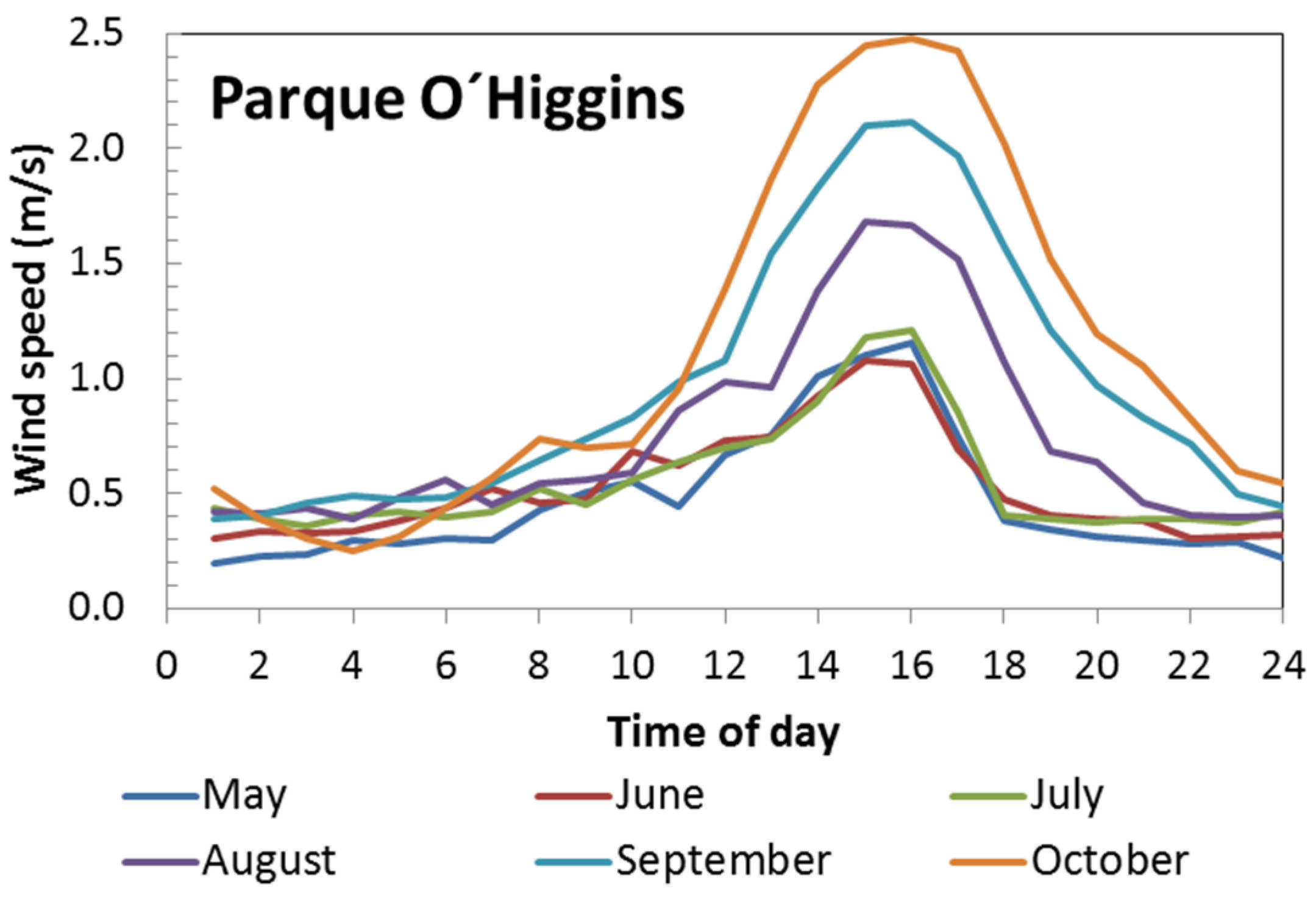
Wind speed and direction are very relevant to PM2.5 concentrations because they determine how pollution is dispersed. In a city, the wind pattern changes drastically depending on the location and orientation of buildings, streets, low-rise constructions, etc. There is a vast literature on the relationship between buildings and wind flow in architectural and engineering literature [2,5,39,40]. For this reason, it is necessary to obtain wind speed and direction measurements from a site that is representative of the study area, yet free from localized structural obstructions. The Parque O’Higgins station serves as a regional reference for wind speed and direction, as its location within a large park—distanced from buildings and vegetation—minimizes localized interference. In contrast, the monitors installed at the residential sites are situated in close proximity to structures and trees; therefore, they are representative only of the immediate meteorological microenvironment. The average wind speed in Parque O’Higgins is presented in Figure 4 for several months. A pattern that is very common in central Chile [41] can be seen, in which the speed increases during the afternoon and decreases at night and early morning. The figure shows that the wind speed is very low from May to July, with speeds higher than ~0.5 m/s only between 12 and 6 p.m. For these three months, the wind speed is also very similar. In the months of August through October, the wind speed increases and there are speeds larger than ~0.5 m/s between 12 and 8 p.m. Because of this pattern, buildings cannot effectively generate traditional wind corridors during the night and early morning hours, because the speed is too low [42]. At this speed, the energy from the wind is often insufficient to overcome the high surface roughness and friction of urban environments, leading to stagnant conditions.
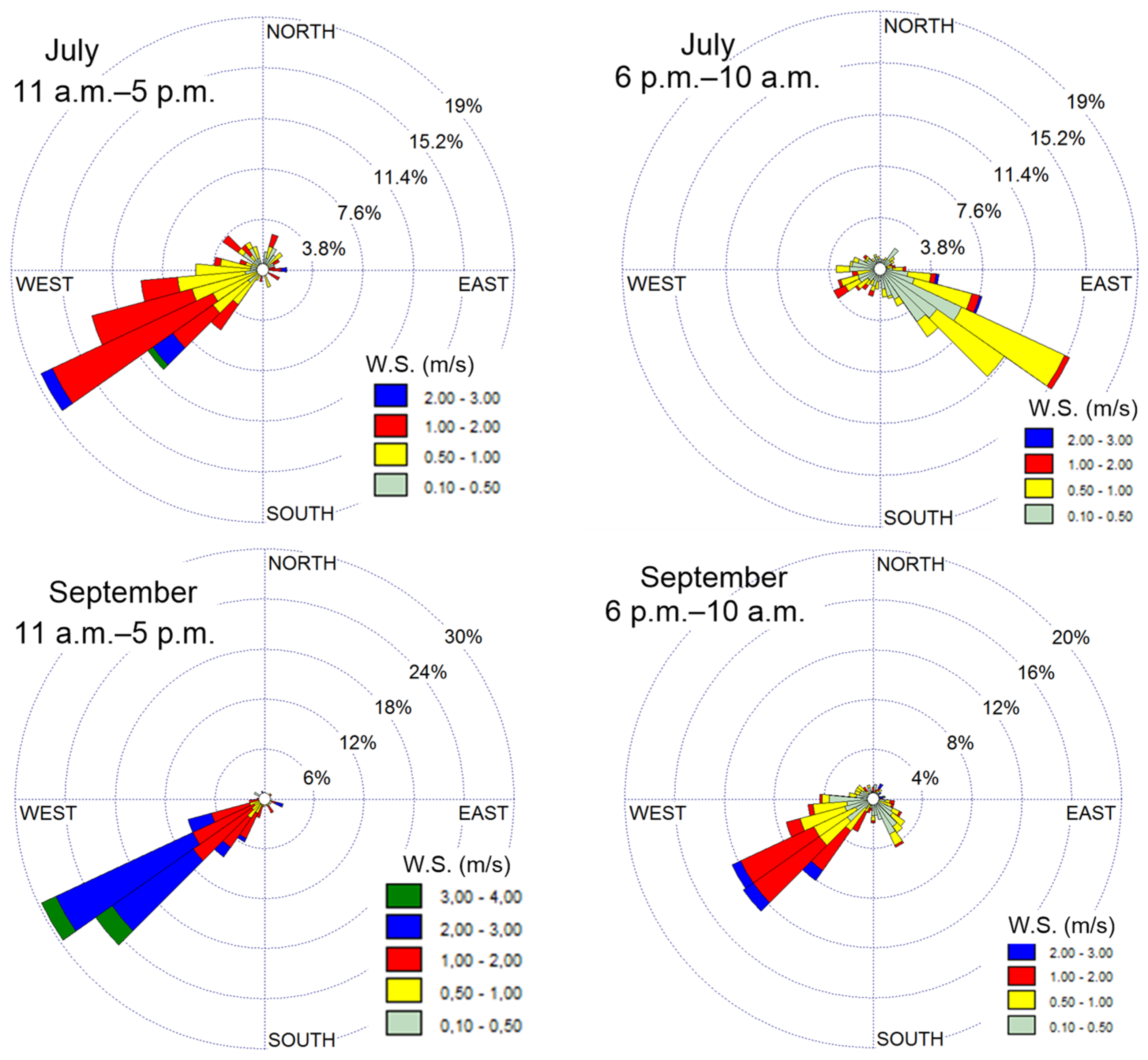
Wind direction also exhibits a highly characteristic pattern. As illustrated in Figure 5, southwesterly winds prevail during the afternoon with minimal angular variation. This pattern remains consistent across July and September, despite the differences in wind speeds observed in Figure 4. The wind roses for the other months during these hours are very similar. Nighttime and early morning patterns (6:00 p.m.–10:00 a.m.) diverge between the two months; while July is characterized primarily by southeasterly flow, September introduces a notable southwesterly component. The wind roses at these times for May and June are very similar to July. The wind roses between 6:00 p.m. and 10:00 a.m. for August and October are similar to September.

3. Results

3.1. Houses 010 and 025

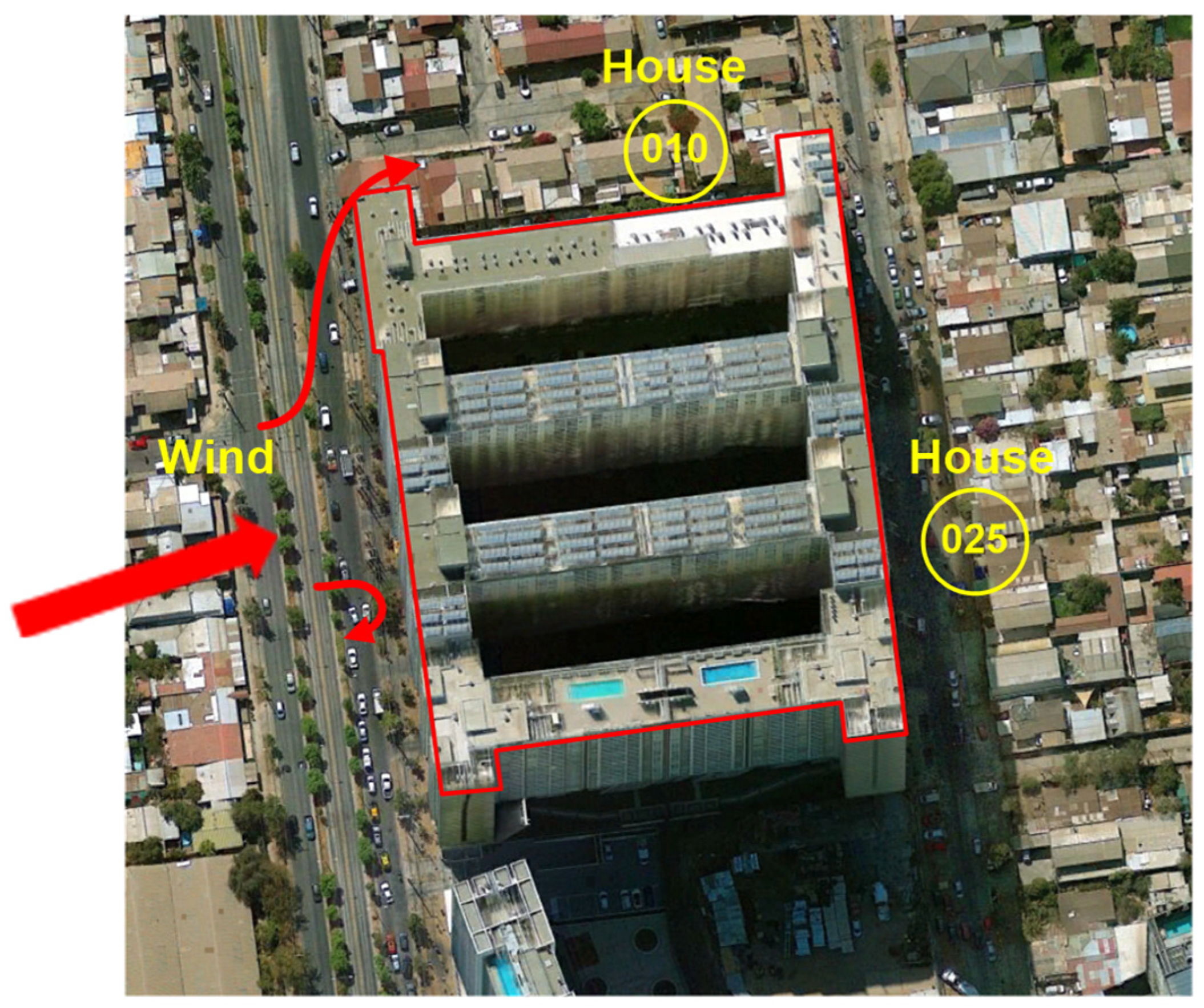
Figure 2 illustrates the locations of monitors 010 and 025, with further details provided in Figure 6. Monitor 010 is situated within a gated community, approximately 80 m east of a primary thoroughfare (Gral. Velásquez) and 40 m west of a secondary street (Sta. Petronila). The site is located less than 10 m north of a high-rise building (76 m tall, with a footprint of 130 × 150 m2). Due to the solar geometry of the Southern Hemisphere, the building’s shadow is projected southward, leaving house 010 unobstructed and exposed to direct sunlight throughout the year. The surrounding residential area is low-profile (3–6 m), ensuring minimal obstruction to air circulation. Consequently, the incoming wind flow at this location is assumed to be relatively undisturbed, closely resembling regional data from the Parque O’Higgins station (Figure 4 and Figure 5), which serves as a visual reference in Figure 6.
In contrast, Monitor 025 is located 80 m south-east of Monitor 010, adjacent to Sta. Petronila St. This site is characterized by higher local activity, including several minimarkets, a liquor store, and a preschool within a 15–30 m radius. Notably, a cluster of four minimarkets is situated at the southwest base of the building. Positioned on the eastern flank of the high-rise, Monitor 025 receives direct sunlight during the morning but remains in the building’s shadow throughout the afternoon.
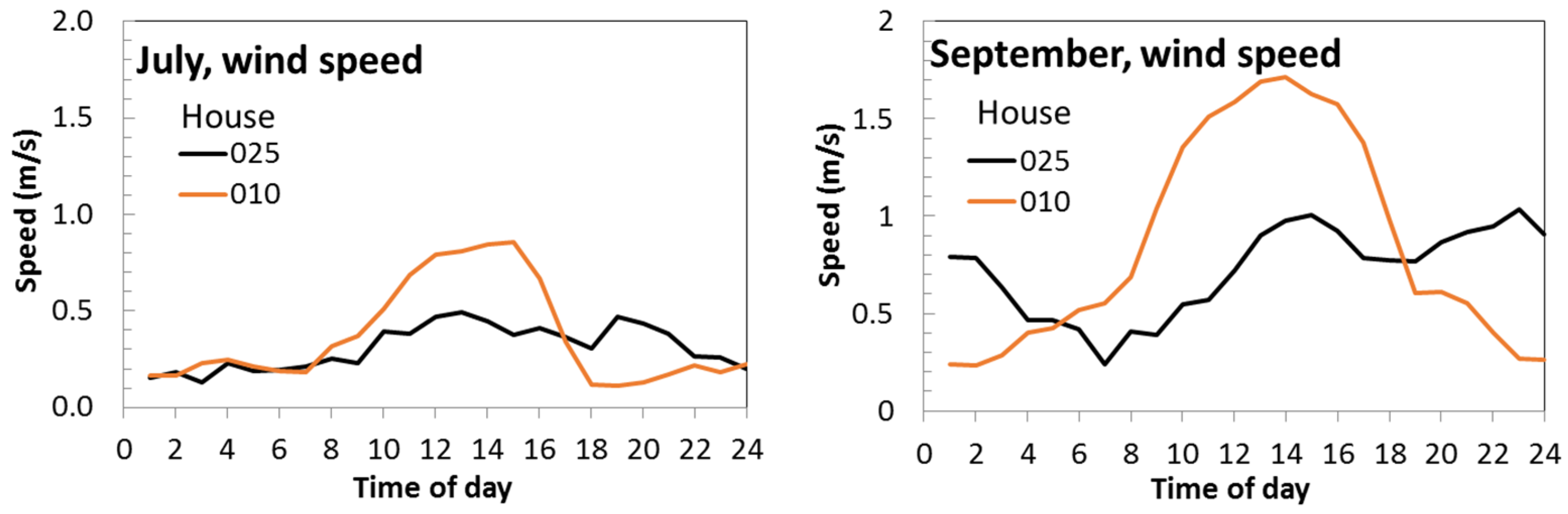
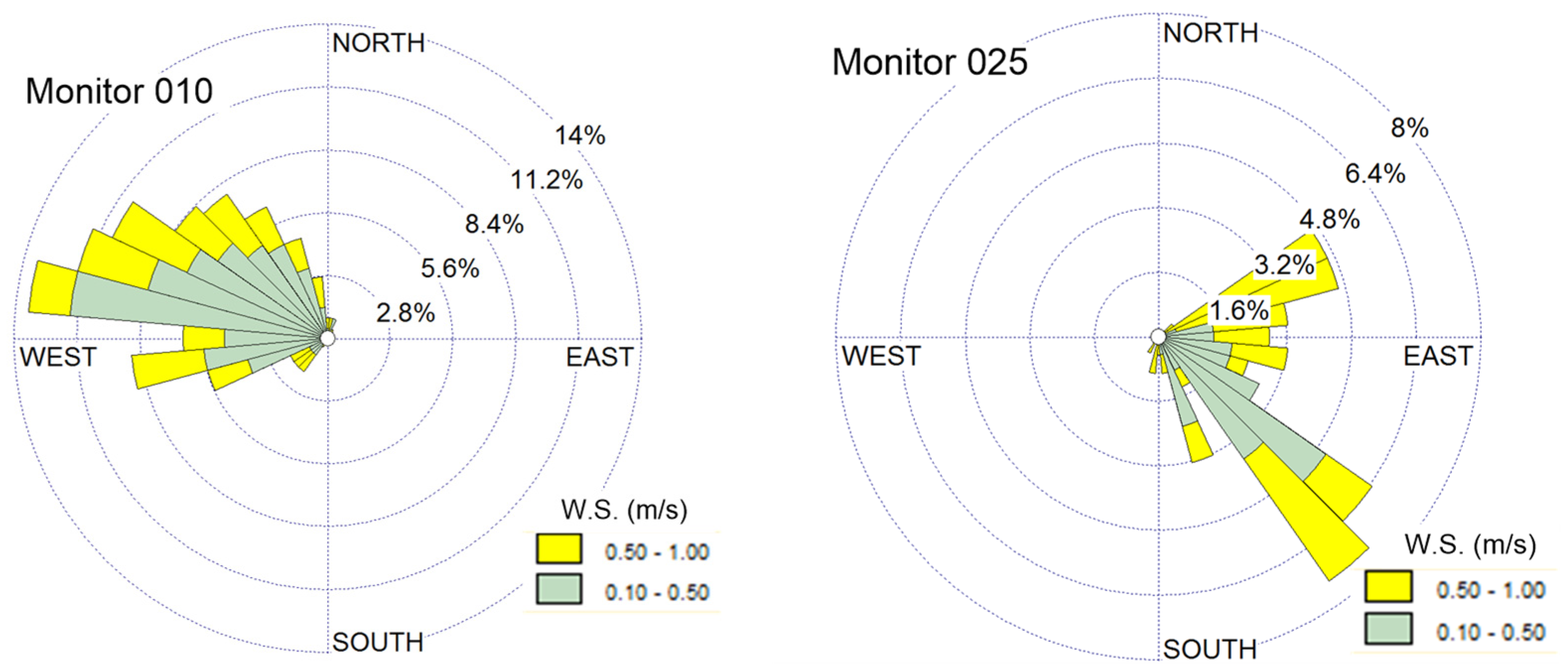
Figure 7 illustrates the diurnal wind speed profiles for houses 010 and 025 for a winter (July) and spring (September) month. Consistently, wind speeds at house 010 exceed those at house 025 during the afternoon hours. This acceleration at house 010 is likely attributable to the building’s aerodynamic influence, where incoming flow is deflected northward and accelerated around the structure’s corners. This phenomenon, known as corner acceleration or flow separation, is a well-documented effect in urban micrometeorology [7,15]. In contrast, house 025 is located behind the building with respect to the incoming wind; therefore, it probably causes the wind speed to decrease in the vicinity of monitor 025. The wind direction shown in Figure 8 also confirms the observation above, the wind direction in monitor 010 goes along the side of the building, and the wind direction in monitor 025 goes in the opposite direction, that is, after passing the building, the wind is redirected towards the ground, causing a flow moving downwards, generating recirculation at the ground level. The arrows in Figure 5 represent estimated afternoon wind patterns, when wind speeds are at their highest. However, computational fluid dynamics (CFD) analysis could be used to confirm the above observations.
The relative position of the houses with respect to the high-rise building directly dictates their exposure to shadows. house 010 remains in direct sunlight throughout the measurement period, while House 025 receives sunlight from the morning until approximately 3:00–4:00 p.m., after which it falls under the building’s shadow. Calculated shadow projections for 15 June (illustrated in Figure 2) remain consistent across other months in the study.
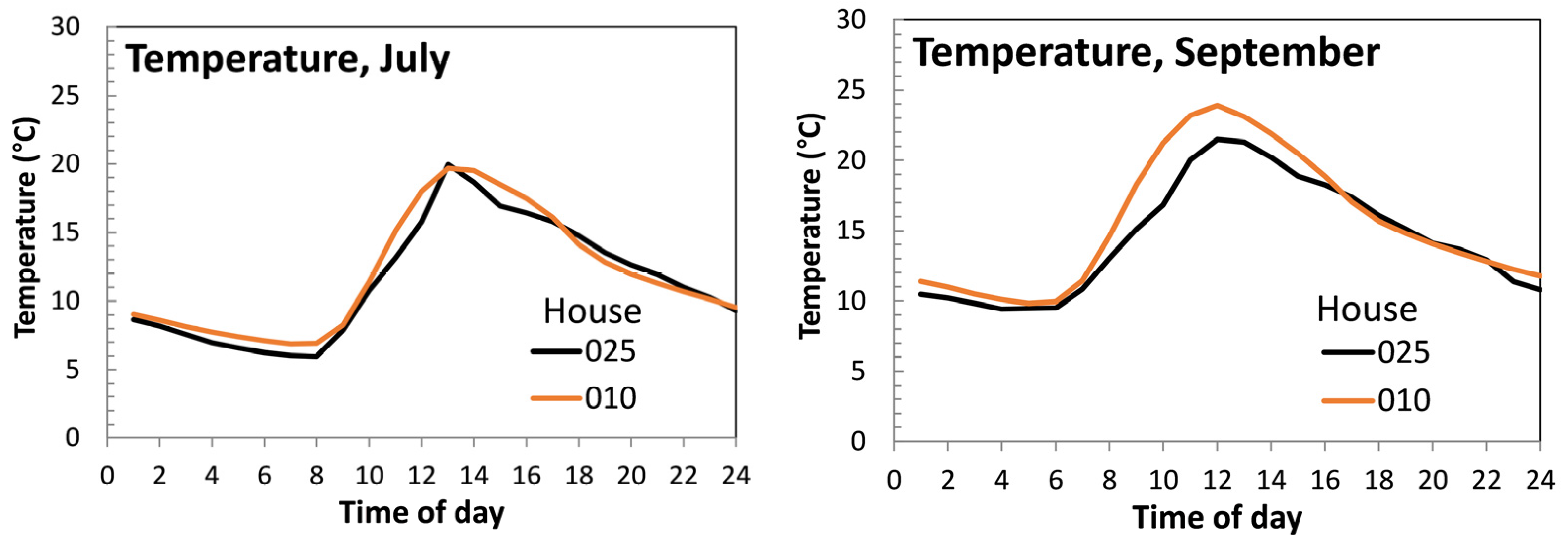
Despite these differing shadow profiles, the temperature variance between houses 010 and 025 is negligible. Mean temperature data in Figure 9 confirms this lack of divergence, a trend that persists across the remaining months). Notably, although house 025 is shaded after 4:00 p.m., its temperature does not drop below that of house 010. This suggests that solar heating significantly influences house 010 only during peak midday radiation in the spring; by late afternoon, solar intensity is insufficient to generate a measurable thermal gradient between the two sites.
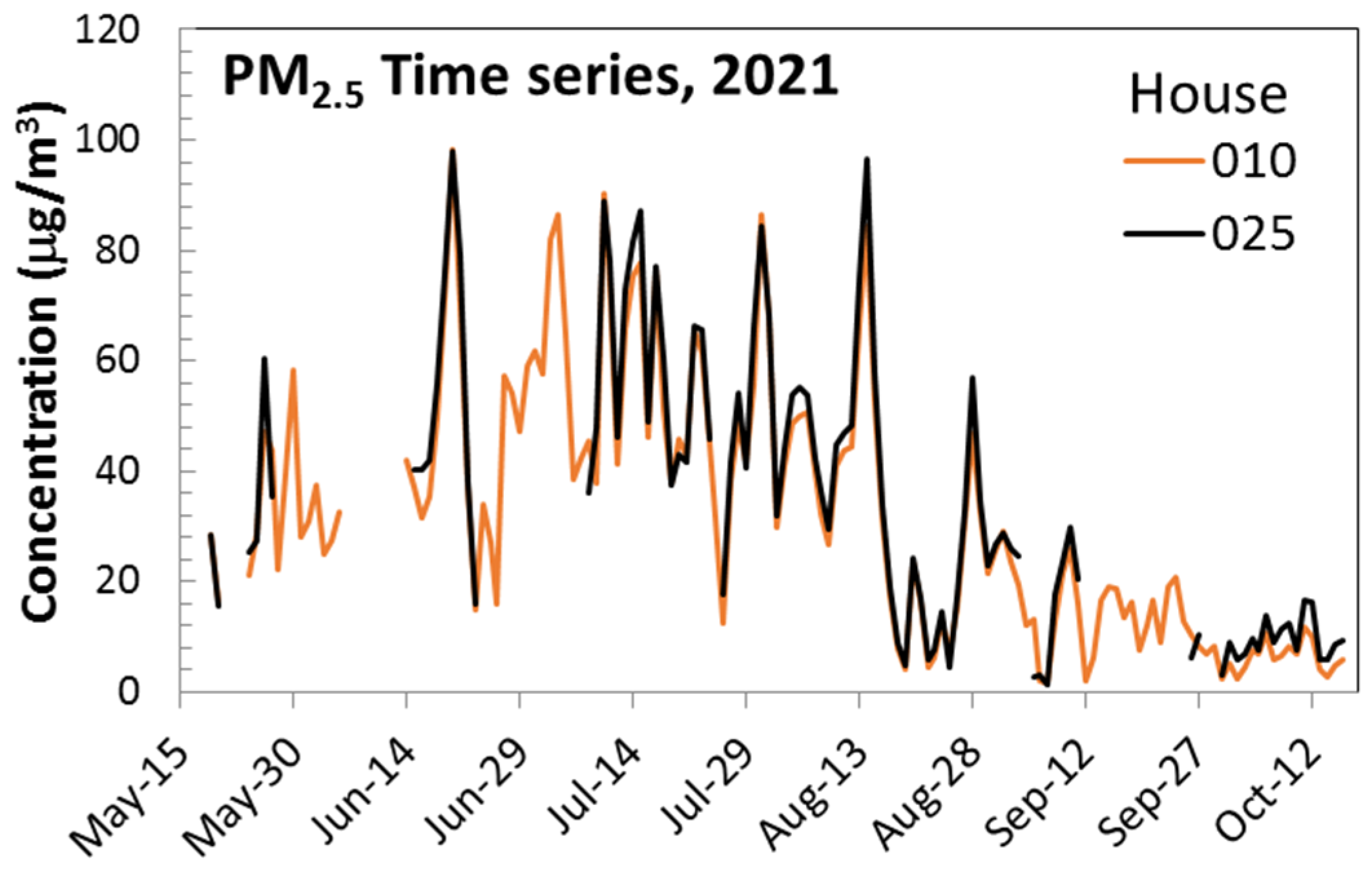
The time series of the daily PM2.5 average for the houses 010 and 025 is shown in Figure 10. Both curves are very similar because the sensors are only separated by 90 m, and most of the PM2.5 is determined by the overall pollution in that sector of the city. A notable decrease in PM2.5 concentrations is observed during September and October, which is attributable to both enhanced ventilation and the seasonal reduction in biomass burning for residential heating. The onset of spring is characterized by higher temperatures and increased wind speeds, which facilitate superior vertical and horizontal dispersion.
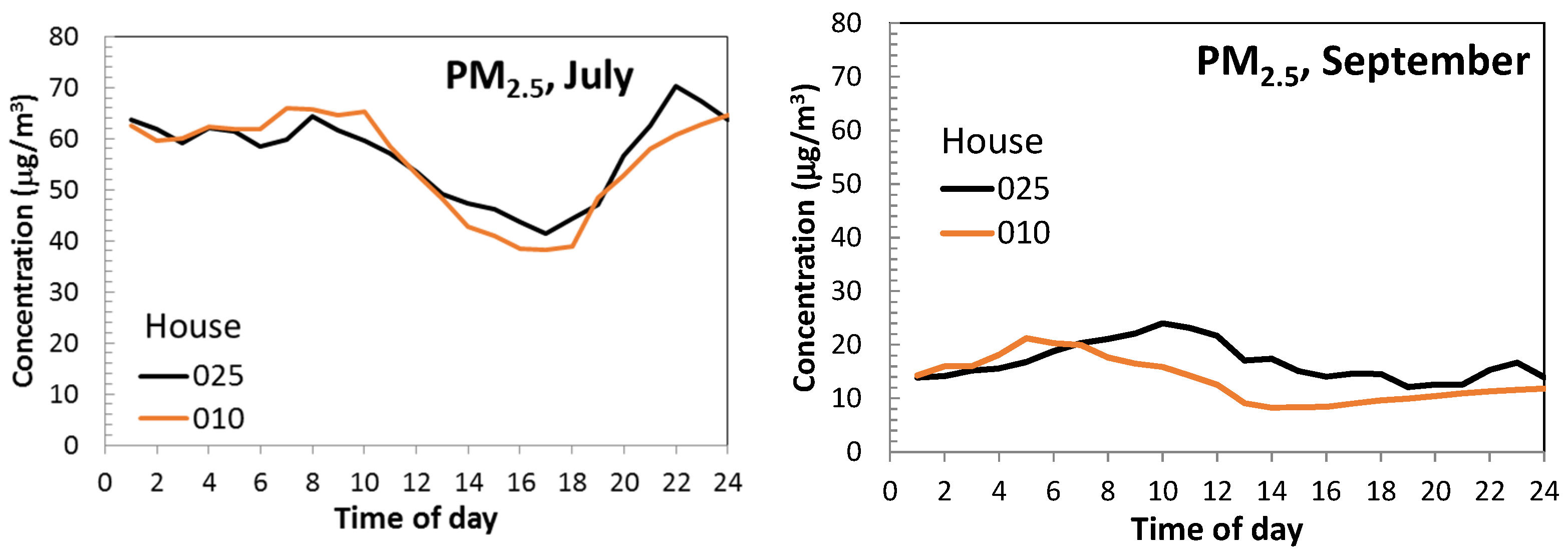
Figure 11 displays the diurnal variation in PM2.5 at houses 010 and 025 during July (winter) and September (spring). The diurnal profiles exhibit features consistent across all monitored locations. Specifically, a marked increase in PM2.5 concentration is observed between 08:00 and 11:00, attributed to the combination of low wind speeds and vehicular emissions during the morning rush hour. This trend aligns with observations documented in previous studies [41,43,44]. In the afternoon (12:00 p.m.–6:00 p.m.) there is a decrease in PM2.5 because there is an increase in the wind speed that brings clean air coming from the west and disperses pollutants [41]. A secondary increase in PM2.5 occurs during the evening (8:00–10:00 p.m.), as decreasing wind speeds facilitate the accumulation of pollutants. This nocturnal peak is characteristic of a stabilizing atmosphere and reduced dispersion. In the colder months (May, June, July) the maximum in the evening is larger than in warmer months and shows the influence of the evening emissions and the reduction in atmospheric turbulence [45] that reduces dispersion of pollutants. As shown in previous studies [41,43] the wind speed at night decreases to 0.5–1 m/s. All these factors lead to a well-known accumulation of pollution in this area of Santiago [41,46].
The figure shows no difference in PM2.5 for the month of July, which could be explained because the wind speed during this month is very low, with house 010 having slightly larger velocity during the afternoon, but not enough to make a difference in PM2.5. In addition there is little difference in the shadow between both houses. However, Figure 11 also shows that in September, house 010 has lower PM2.5 during most of the day, which is probably related to the location of the houses with respect to the building. In this month, the wind speed in both houses is almost twice that of July, but the wind in house 025 is still very low and the wind speed in house 010 is large enough to generate more dispersion of pollution than in house 025. Consequently, the observed variations in PM2.5 during this month are likely attributable to localized differences in wind speed between the houses, rather than the shadowing effects of the building.

3.2. Houses 005 and 007

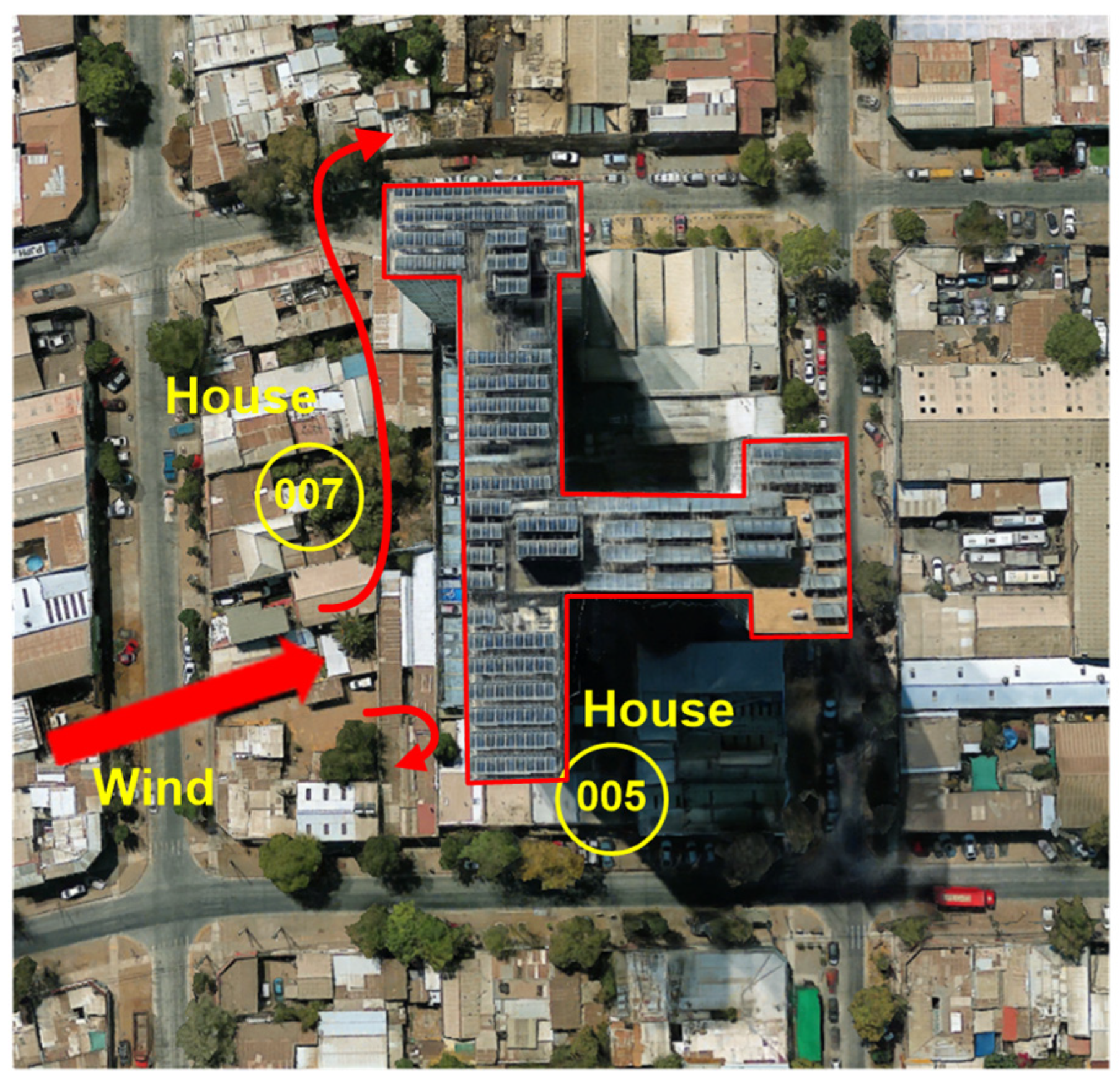
The yellow circle in Figure 12 identifies the locations of monitors 007 and 005. Monitor 007 is situated on Benedicto XV Street—a low-traffic area—approximately 30 m west of a 94 m tall high-rise (footprint of 77 × 25 m2). The site is bordered by a minimarket to the north and mechanical warehouses across the street. As illustrated in Figure 2, monitor 007 is shaded by the building during the morning hours but receives direct sunlight from 12:00 p.m. onward. Due to its position at the base of a significant vertical obstruction, the building may induce a “downwash” effect, deflecting wind flow downward [7,15]. Consequently, localized wind speeds at the site may increase during the afternoon relative to the surrounding urban environment.
Monitor 005 is located on Embajador Quintana, which is also a secondary street with little traffic. The house where monitor is located is adjacent to a bakery, fifteen meters to the east; there is a metal mold manufacturer, and 15 m to the west, a fast-food outlet. Additionally, 30 m across the street, there is a grocery store. The equipment is located about 10 m south of the building, and is it always under its shadow. The red arrow in Figure 12 represents the estimated incoming wind direction, based on the reference data from Parque O’Higgins. Due to the specific angle of incidence between the airflow and the building’s facade, the airstream is likely deflected northward, but not towards house 005. Consequently, the wind velocity at this site remains largely unaffected by the structure’s wake. Furthermore, given that the building is positioned lateral to the residence relative to the prevailing wind, it does not act as a direct aerodynamic obstruction for house 005. A CFD analysis could confirm this assumption.
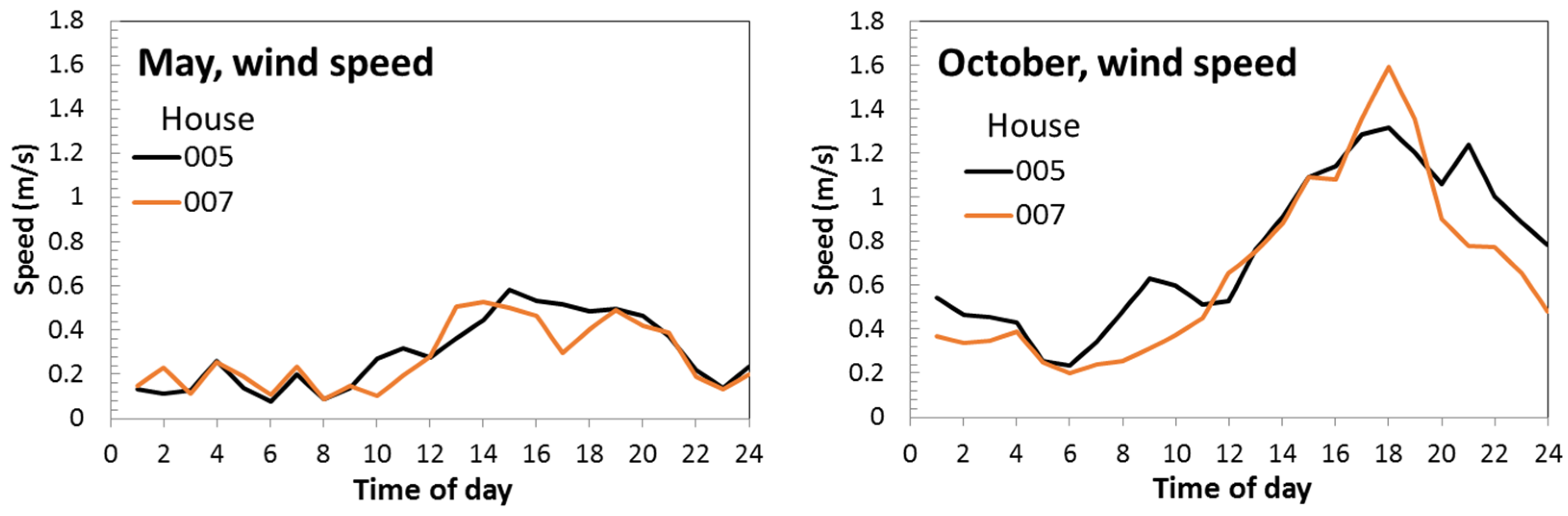
The wind speed has been plotted for two months for monitors 005 and 007 in Figure 13. It can be seen that for these houses there is no difference in wind speed, indicating that the building has no effect on the speed in this case, because one house is located before the wind reaches the building and the other is located at the side of the building. For the other months, the profiles are similar.
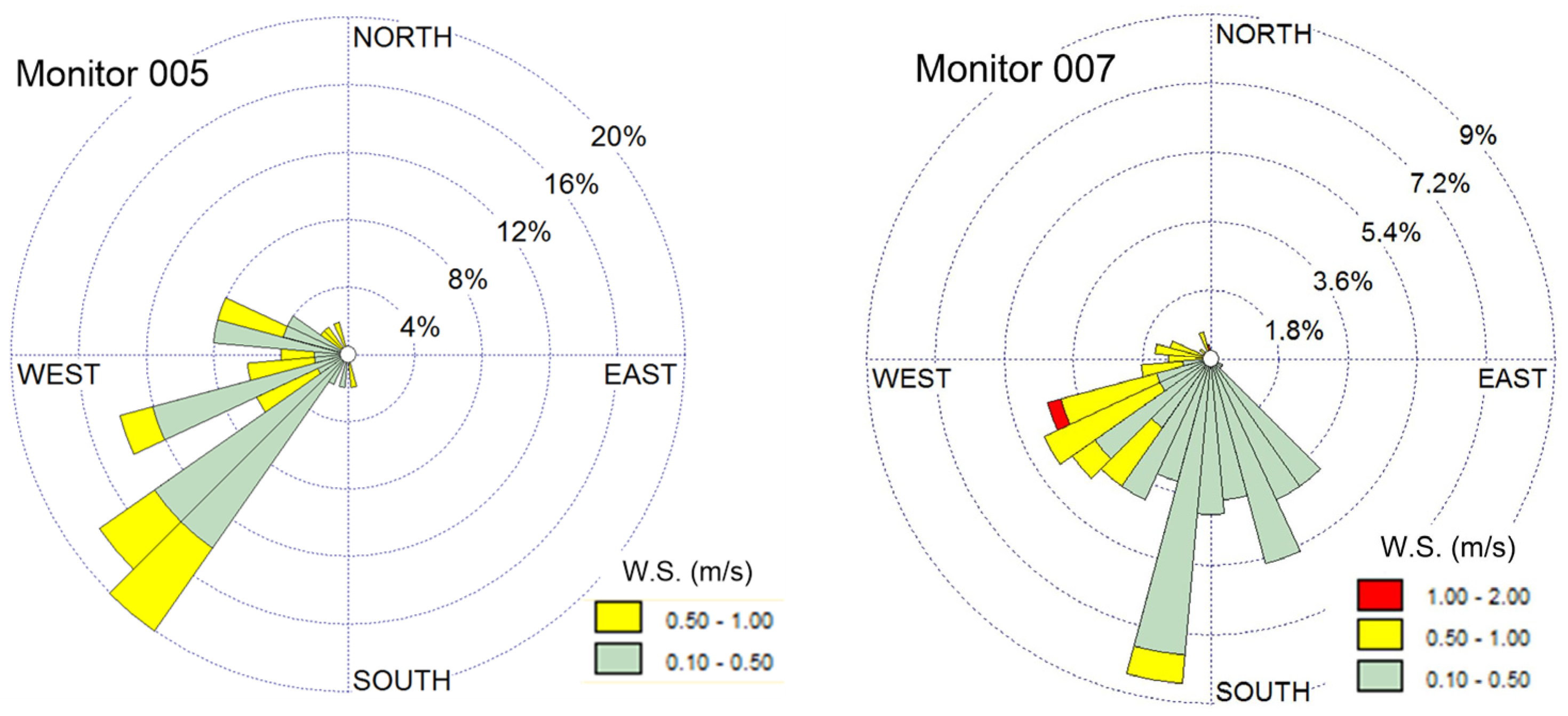
The wind rose for the monitor in house 005 shown in Figure 14 confirms that the building has little influence on the direction of the wind, because the rose is similar to the rose in Parque O’Higgins (Figure 5), which is a site that has no obstacles around.
For house 007 the wind rose is slightly different from Parque O’Higgins, because it also has wind going towards the north. In this case, the building seems to have an effect on the direction because it deflects the wind towards the north. The thin arrows in Figure 12 show an estimated diagram of the wind pattern.
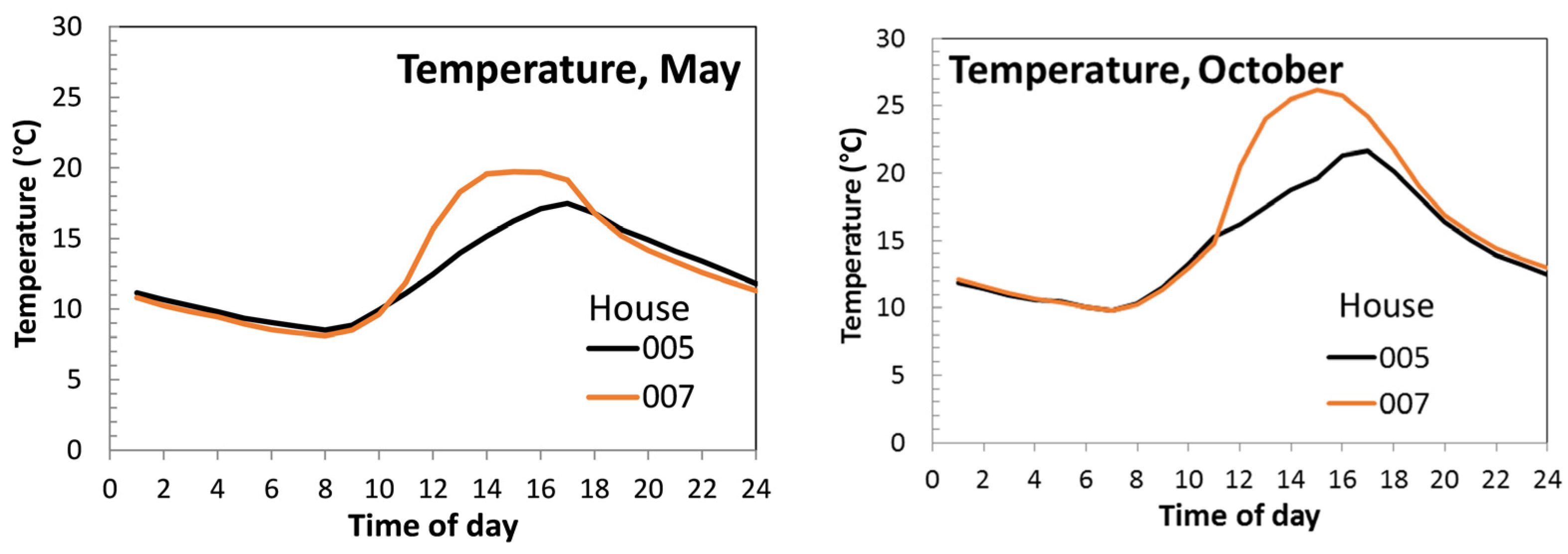
For these two houses, the location of the building does have a clear effect on the shadow, because as shown in Figure 2, house 005 is always in the shadow, and house 007 receives direct sunlight from about 11:00 a.m. until the end of the day. The shadow has a direct effect on temperature, as shown in Figure 15.
Figure 15 demonstrates that the house in direct sunlight experiences higher temperatures exclusively during the afternoon, coinciding with peak solar radiation. No significant temperature deviation is observed during other hours. This likely explains the lack of variance between houses 010 and 025; during peak radiation, both were exposed to the sun, whereas the “shadow effect” occurred only when solar intensity was too low to drive a thermal difference. This suggests that high solar radiation is a prerequisite for temperature divergence between the sites. Conversely, the mean diurnal variation for relative humidity (RH) exhibits an inverse pattern, with significantly lower RH in the sun-exposed house.
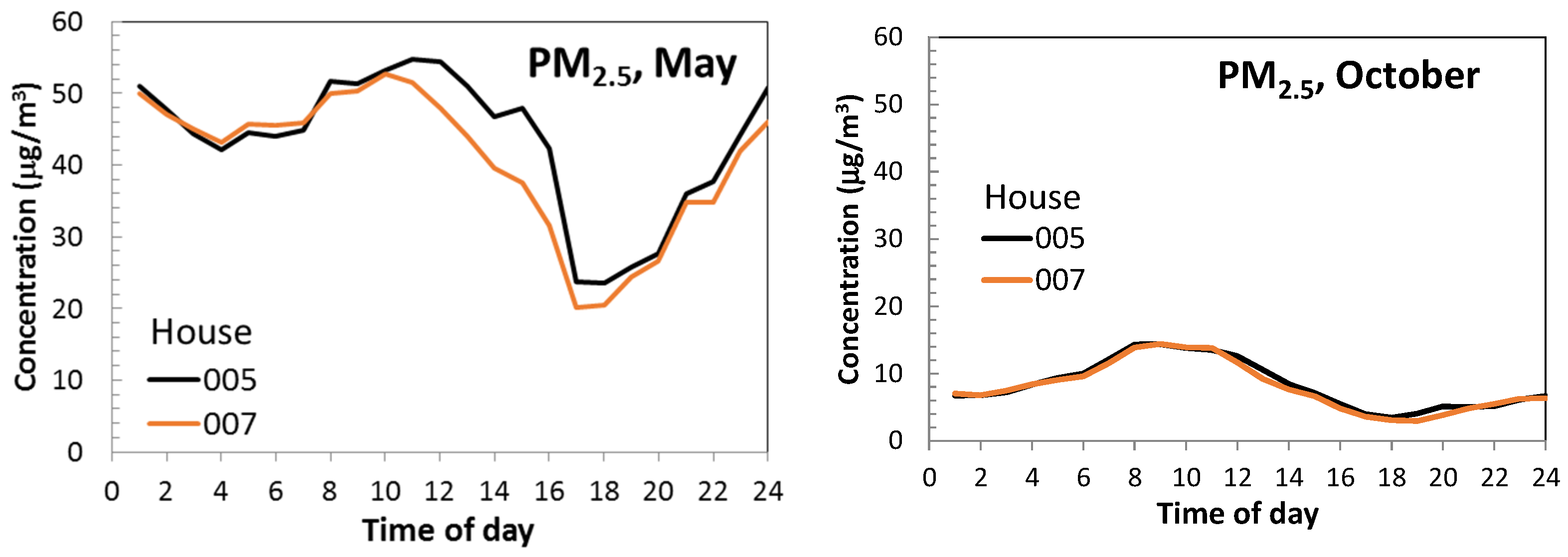
Figure 16 illustrates the diurnal variation in PM2.5 for monitors 005 and 007 during July (winter) and September (spring). In July, house 005—which remains in the building’s shadow—exhibits slightly higher PM2.5 concentrations than the sun-exposed house 007. During the early morning, evening, and nighttime hours, no significant PM2.5 divergence is observed. Given that wind speeds are nearly identical between the two sites (Figure 13), advection likely does not account for this disparity. Instead, the higher temperatures recorded at house 007 between 11:00 a.m. and 6:00 p.m., driven by increased solar radiation, suggest enhanced vertical dispersion. This localized convective mixing likely facilitates the removal of pollutants at the sun-exposed site. Consequently, the “shadow effect” appears responsible for the elevated PM2.5 levels at house 005 by suppressing vertical ventilation. This mechanism could be further verified through vertical atmospheric profiling and CFD simulations.
During October, no significant divergence in PM2.5 levels was observed between the two houses. Although the mean temperature remained lower at house 005 than house 007, absolute temperatures for both sites were significantly higher than in preceding months. Additionally, both locations experienced increased wind speeds. These enhanced thermal and anemometric conditions likely facilitated greater atmospheric dispersion, effectively neutralizing any localized shadow effects. This suggests that for building-induced temperature differentials to significantly impact PM2.5 concentrations, a regime of low wind speeds must be present.

3.3. Houses 022 and 026

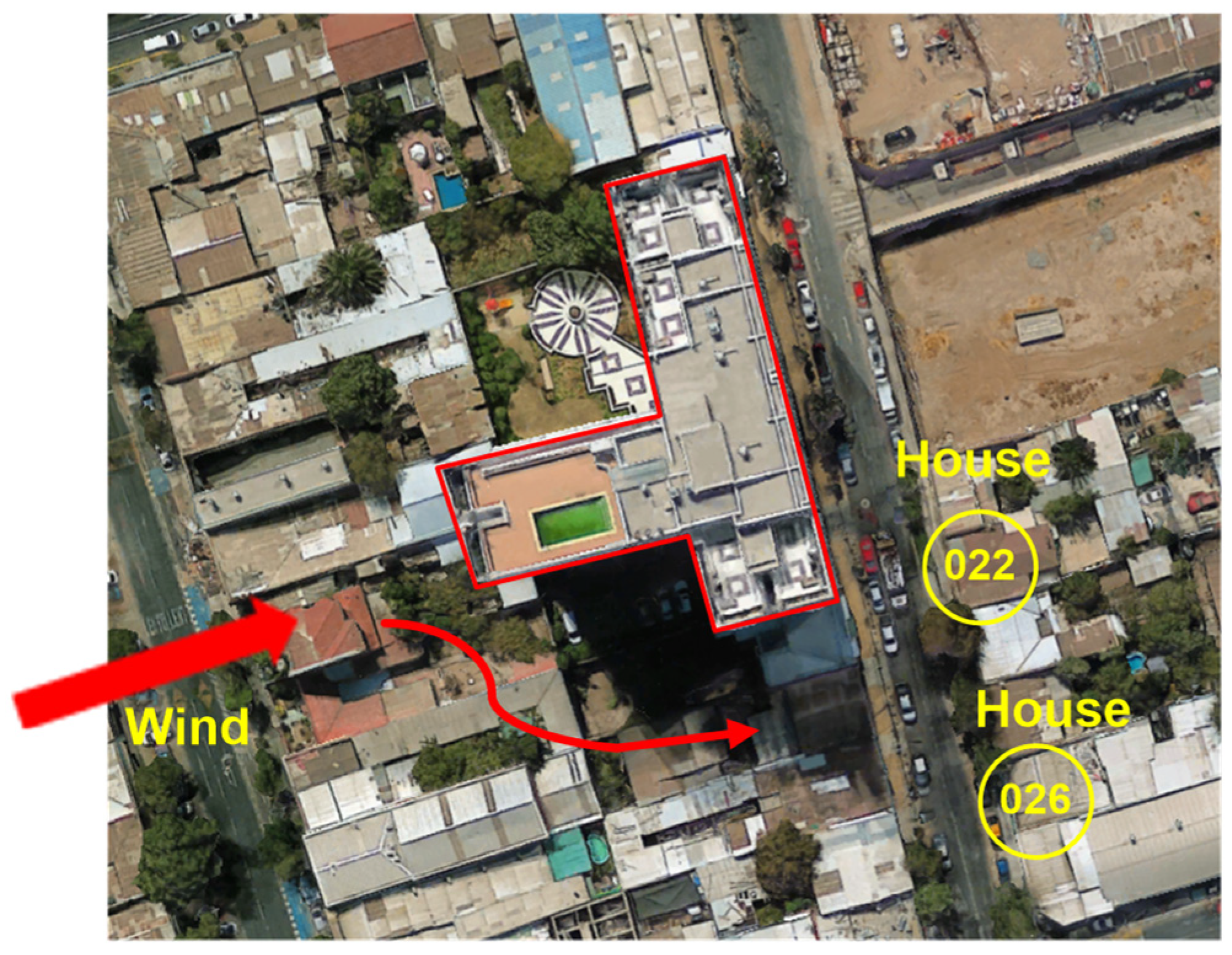
As shown in Figure 17, houses 022 and 026 are located on the same side of a street with low traffic (Placilla St.) in the south-east side of a building with a height of 47 m and an area of approximately 51 × 22 m2. North of monitor 022, there is a vacant lot designated for future construction. Thirty meters to the south, close to the location of monitor 026, there is a car repair company. In its surroundings, there are mostly residential houses. As shown in Figure 2, the house where monitor 022 is located receives shadow from the building during the afternoon, but sun during the morning. Monitor 026 also receives sun during the morning and shadow during the afternoon, but a little later than monitor 022 because it is located further south, away from the shadow. As shown in Figure 16, both monitors are located in houses with similar micrometeorology and shadow characteristics. Considering the predominant wind direction, the building probably slightly blocks the wind from reaching monitor 022, but not monitor 026. In this pair of houses, wind speed or direction were not measured.
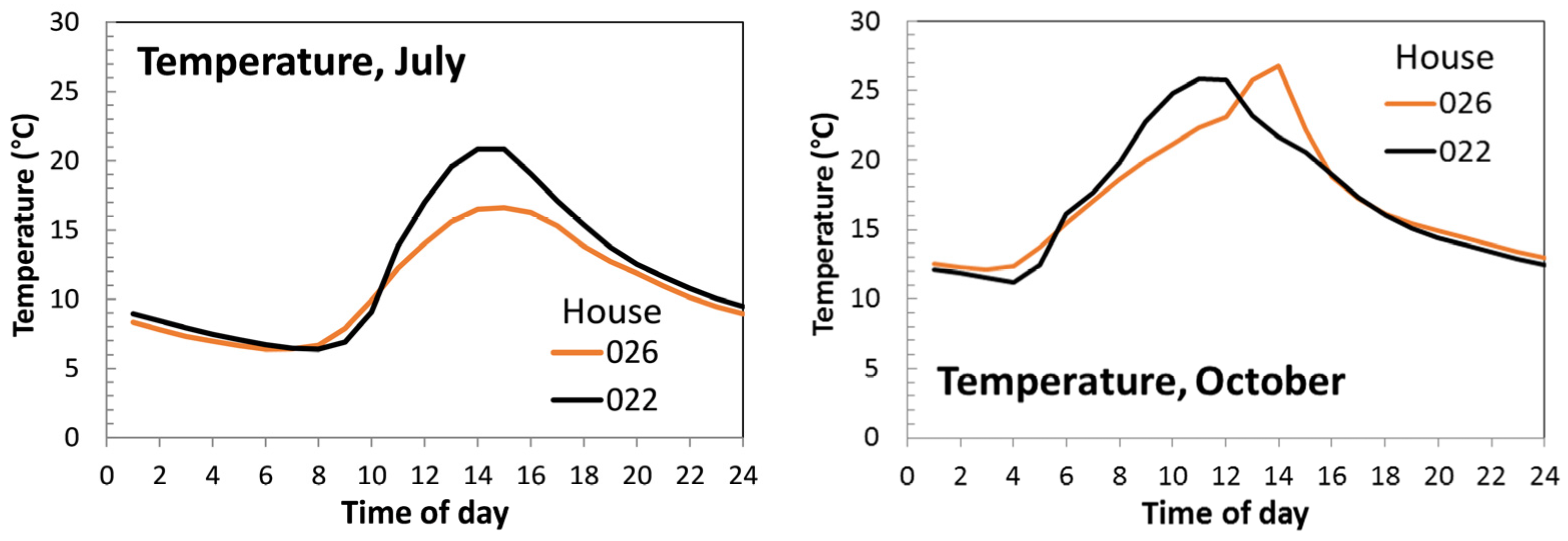
For houses 022 and 026, a clear influence of the shadow on the temperature is not easily observed. For the months of July and October, house 022, which is located on the side of the building, only receives the shadow after 2–3 p.m. House 026 is located further south from the building and also receives shadow after 2–3 p.m on July, but in October, this house does not receive the shadow because it is too short. The temperature data shown in Figure 18 indicates that, in October, it increases in house 022 after ~10 a.m. and decreases rapidly after 2 p.m. when it starts to receive shadow. Also, in October, at 2 p.m., house 026, which was in the shadow, starts receiving sunlight and its temperature increases above that of the house 022, indicating that when the solar radiation is high the temperature rises very quickly.
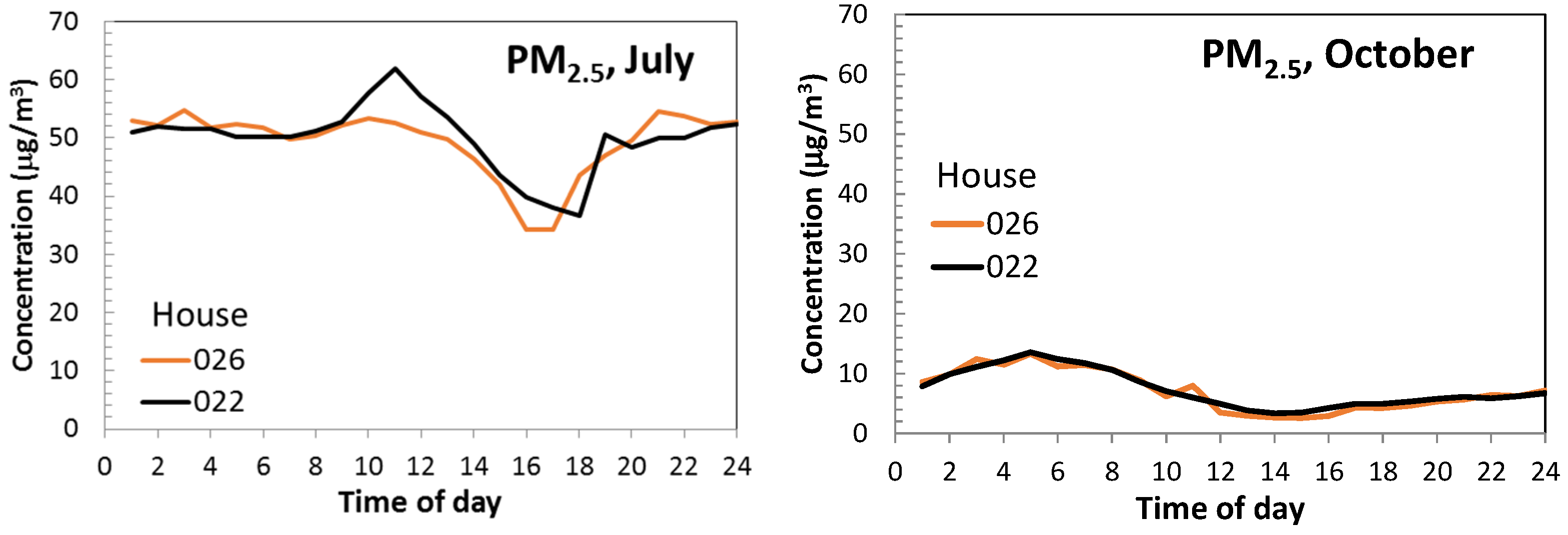
As illustrated in Figure 19, no significant differences in mean PM2.5 concentrations were observed between houses 026 and 022 across the study period. The solar orientation of these residences limits the duration of differential shading; in June and July, both houses are sunlit until 2:00 p.m. and simultaneously shadowed by 3:00 p.m., with a divergence occurring only after 4:00. By October, house 022 enters the shadow after 14:00 while house 026 remains sunlit. Furthermore, assuming the incoming wind follows the southwesterly patterns recorded at Parque O’Higgins between 12:00 p.m. and 6:00 p.m. (Figure 5), the building only slightly obstructs the airflow to these sites during the afternoon. Consequently, the similarity in both micrometeorological conditions and shading profiles results in nearly identical PM2.5 levels for this pair of houses.

4. Discussion

In order to assess the statistical significance of the difference in PM2.5 between the houses, a t-Student analysis was performed for each pair of houses. Because the influence of the shadow, temperature and wind speed could only be seen during daytime hours, the t-Student test was applied to the average PM2.5 between the hours of 11:00 a.m. to 5:00 p.m. for each month. While PM2.5 concentrations remained comparable during other periods of the day for most of the study, sporadic variations were observed in specific months. However, the limited number of data points during these intervals precluded a definitive attribution of these differences. Consequently, these periods were excluded from the detailed analysis to avoid statistically insignificant conclusions. The results of the t-Student test are shown in Table 1. In the second line of the table, the number on the left indicates the house in the shadow and the number on the right the house in the sun. The calculation was done with ProUCL statistical analysis software, ver. 5.0 which is provided by the EPA for use with ambient data (EPA2024). The confidence level used was 90%, because environmental data is inherently characterized by high variability; in this study, this was further compounded by the operational constraints of monitoring within private residences. The lack of dedicated infrastructure led to intermittent power failures at some sites. Furthermore, since the sensors were situated in active living environments, they were intermittently exposed to localized, transient emission sources such as residential cooking, street cleaning, and nearby heavy-vehicle traffic. To account for this increased signal noise and to ensure that only robust variations were identified, we applied a less stringent confidence level than the standard 95% threshold during t-Student testing. For each month, from 11:00 a.m. to 5:00 p.m. were used to perform the analysis. The p-Value of the t-Student calculation is shown in Table 1 for each pair of houses. “=” means that there is no statistical difference in the means with a 90% confidence, “>” indicates that the PM2.5 mean for the house in the shadow is larger than the mean for the house in the sun. Table 2 shows the mean temperature and wind speed for the pair of houses and the calculation using the t-Student analysis.
As shown in Table 1, the average PM2.5 concentrations between 11:00 a.m. to 5:00 p.m. for the shaded site (house 005) were consistently higher than those of the sun-exposed site (house 007) from May through August. During this period, afternoon temperatures were notably lower at house 005 (Table 2), while mean wind speeds remained comparable between the two locations. These data suggest that the elevated PM2.5 levels in house 005 are primarily driven by lower afternoon temperatures, which likely inhibit vertical dispersion and lead to localized pollutant accumulation.
The duration of the building’s shadow varied seasonally: from 10:00 a.m. to 3:00 p.m. in May and June, 11:00 a.m. to 3:00 p.m. in July, and 11:00 a.m. to 2:00 p.m. in August. By September and October, the shadow window shortened to approximately 12:00 p.m. to 2:00 p.m. While house 005 maintained lower mean temperatures than house 007 during these spring months, absolute temperatures at both sites were significantly higher than in winter (Table 2). Consequently, PM2.5 levels converged across both sites, as the higher thermal energy likely promoted sufficient vertical mixing to equalize pollutant dispersion despite the persistent shadow.
For the 025/010 site pair, Table 1 indicates that PM2.5 concentrations are higher at house 025 between 11:00 a.m. and 5:00 p.m. during July, September, and October. Unlike the previous case, the primary driver for this disparity appears to be wind speed rather than solar shading. As shown in Table 2, house 010 experiences higher wind speeds, while the high-rise structure acts as a windbreak for house 025. This localized “sheltering effect” reduces ventilation, preventing the effective advection of pollutants and resulting in higher PM2.5 concentrations. Additionally, house 025 consistently recorded lower temperatures across all months; this likely suppresses vertical mixing, further exacerbating the accumulation of pollutants at this site.
The previous results show that PM2.5 is very sensitive to the location and influence of micrometeorological parameters, such as wind speed, temperature and shadow. In the pair of houses 005 and 007, PM2.5 was higher in house 005 the shadow resulted in lower temperature which prevented vertical dispersion of pollutants. In the pair of houses 010 and 025, PM2.5 was higher in house 025 because the wind speed was lower, preventing horizontal dispersion of pollutants. In houses 022 and 026, there was no difference in PM2.5, probably because the micrometeorological parameters were not different enough to make a difference.

5. Conclusions

A large variability was observed in the PM2.5 measured in the pairs of houses adjacent to large buildings, depending on their specific location and micrometeorological conditions. Clear differences in PM2.5 were found primarily between 11:00 and 17:00, the period when solar radiation and wind speeds are at their diurnal peak. These differences were attributed to two main drivers: shadow-induced thermal stability and wind-speed attenuation. However, to better understand the influence of shadow on PM2.5 and rule out other variables, it would be desirable to perform CFD simulations along with vertical measurements. Our findings suggest that building permits for high-rise structures should include “Solar Access” simulations. Because a building’s shadow can suppress local temperatures and inhibit pollutant dispersion, planners could assess the duration of shadows cast on existing low-rise residential areas, particularly during winter months. Planners could prioritize the maintenance of wind corridors. Since higher wind speeds were shown to neutralize the negative effects of shading on air quality, urban design should avoid “wall-like” building configurations that block prevailing southwesterly winds. Since the highest dispersion occurs in the afternoon when solar radiation is high and wind has a southwest direction, house and building orientation and design should consider this factor to optimize building ventilation to reduce indoor pollutant accumulation. Future studies incorporating CFD simulations and vertical meteorological measurements are desirable to decouple the effects of building-induced shadows from other environmental factors. Such methodologies would allow for a more rigorous validation of the localized thermal impacts on pollutant dispersion.

Author Contributions

Conceptualization, R.V.-R. and E.G.; methodology, E.G.; software, A.A.; validation, R.V.-R. and J.E.; investigation, F.A.R. and M.J.; fieldwork, J.E.; data curation, F.A.R.; writing—original draft preparation, E.G.; visualization, M.J.; funding acquisition, R.V.-R. All authors have read and agreed to the published version of the manuscript.

Funding

This work was supported by the Directorate of Scientific and Technological Research (DICYT) 2021 of the Universidad de Santiago de Chile, through Project No. 092190VR.

Institutional Review Board Statement

Not applicable.

Informed Consent Statement

Not applicable.

Data Availability Statement

The data presented in this study are available on request from the corresponding author.

Acknowledgments

The authors have reviewed and edited the output and take full responsibility for the content of this publication.

Conflicts of Interest

The authors declare no conflicts of interest.

References

  1. United Nations, Department of Economic and Social Affairs, Population Division. World Urbanization Prospects 2018: Highlights; ST/ESA/SER.A/421; United Nations: New York, NY, USA, 2018. [Google Scholar]
  2. Liu, X.; Wu, X.; Wu, M.; Shi, C. The impact of building surface temperature rise on airflow and cross-contamination around high-rise building. Environ. Sci. Pollut. Res. 2020, 27, 11855–11869. [Google Scholar] [CrossRef] [PubMed]
  3. Keshavarzian, E.; Jin, R.; Dong, K.; Kwok, K.C.; Zhang, Y.; Zhao, M. Effect of pollutant source location on air pollutant dispersion around a high-rise building. Appl. Math. Model. 2020, 81, 64–78. [Google Scholar] [CrossRef]
  4. Vidal, R. Configuración Urbana Favorable a la Contaminación a Nivel de Suelo; Revista de Urbanismo: Santiago, Chile, 2021; Volume 45, pp. 25–45. [Google Scholar]
  5. Saroglou, T.; Itzhak-Ben-Shalom, H.; Meir, I.A. Pedestrian thermal perception: Studies around two high-rise buildings in the Mediterranean climate. Build. Res. Inf. 2022, 50, 171–191. [Google Scholar] [CrossRef]
  6. Reiter, S. Assessing wind comfort in urban planning. Environ. Plan. B Plan. Des. 2010, 37, 857–873. [Google Scholar] [CrossRef]
  7. Saroglou, S.; Itzhak-Ben-Shalom, H.; Meir, I.A. Climatic Variability in Altitude: Architecture, Thermal Comfort, and Safety along the Facade of a Residential Tower in the Mediterranean Climate. Buildings 2023, 13, 1979. [Google Scholar] [CrossRef]
  8. Irwin, P.; Kilpatrick, J.; Robinson, J.; Frisque, A. Wind and tall buildings: Negatives and positives. Struct. Des. Tall Spéc. Build. 2008, 17, 915–928. [Google Scholar] [CrossRef]
  9. Zhu, L.; Ranasinghe, D.; Chamecki, M.; Brown, M.J.; Paulson, S.E. Clean air in cities: Impact of the layout of buildings in urban areas on pedestrian exposure to ultrafine particles from traffic. Atmos. Environ. 2021, 252, 118267. [Google Scholar] [CrossRef]
  10. Kim, J.-W.; Baik, J.-J.; Han, B.-S.; Lee, J.; Jin, H.-G.; Park, K.; Yang, H.; Park, S.-B. Tall-building effects on pedestrian-level flow and pollutant dispersion: Large-eddy simulations. Atmos. Pollut. Res. 2022, 13, 101500. [Google Scholar] [CrossRef]
  11. Karimimoshaver, M.; Nouri, S. Effects of Tall Buildings on Urban Airflow and Pollution. J. Adv. Environ. Health Res. 2025, 13, 191–198. [Google Scholar] [CrossRef]
  12. Ilieș, A.; Caciora, T.; Marcu, F.; Berdenov, Z.; Ilieș, G.; Safarov, B.; Hodor, N.; Grama, V.; Al Shomali, M.A.; Ilies, D.C.; et al. Analysis of the Interior Microclimate in Art Nouveau Heritage Buildings for the Protection of Exhibits and Human Health. Int. J. Environ. Res. Public Health 2022, 19, 16599. [Google Scholar] [CrossRef] [PubMed]
  13. Zender-Świercz, E.; Galiszewska, B.; Telejko, M.; Starzomska, M. The effect of temperature and humidity of air on the concentration of particulate matter—PM2.5 and PM10. Atmos. Res. 2024, 312, 107733. [Google Scholar] [CrossRef]
  14. Jung, C.H.; Park, J.H.; Kim, Y.P. Change of the size-resolved aerosol concentration due to relative humidity. J. Korean Assoc. Part. Aerosol. Res. 2013, 9, 69–78. [Google Scholar] [CrossRef]
  15. Carmeliet, J.; Allegrini, J. Coupled CFD and building energy simulations for studying the impacts of building height topology and buoyancy on local urban microclimates. Urban Clim. 2017, 21, 278–305. [Google Scholar] [CrossRef]
  16. Pan, J.; Ji, J. Influence of Building Height Variation on Air Pollution. Appl. Sci. 2024, 14, 979. [Google Scholar] [CrossRef]
  17. Dai, Y.; Cai, X.; Zhong, J.; Mazzeo, A.; MacKenzie, A.R. Chemistry, transport, emission, and shading effects on NO2 and Ox. Environ. Pollut. 2022, 315, 12347. [Google Scholar] [CrossRef] [PubMed]
  18. Lin, L.; Deng, Y.; Peng, M.; Zhen, L.; Qin, S. Multi-Scale Influence Analysis of Urban Shadow and Spatial Form Features on Urban Thermal Environment. Remote. Sens. 2023, 15, 4902. [Google Scholar] [CrossRef]
  19. He, M.; Kuerbanjiang, N.; Dhaniyala, S. Performance characteristics of the low-cost Plantower PMS optical sensor. Aerosol Sci. Technol. 2019, 54, 1–11. [Google Scholar] [CrossRef]
  20. Hagan, D.H.; Kroll, J.H. Assessing the accuracy of low-cost optical particle sensors using a physics-based approach. Atmos. Meas. Tech. 2020, 13, 6343–6355. [Google Scholar] [CrossRef] [PubMed]
  21. Gramsch, E.; Oyola, P.; Reyes, F.; Vásquez, Y.; Rubio, M.A.; Soto, C.; Pérez, P.; Moreno, F.; Gutiérrez, N. Influence of particle composition and size on the accuracy of low cost pm sensors: Findings from field campaigns. Front. Environ. Sci. 2021, 9, 751267. [Google Scholar] [CrossRef]
  22. Kuula, J.; Otros, Y. Laboratory evaluation of particle-size selectivity of optical low-cost particulate matter sensors. Atmos. Meas. Tech. 2020, 13, 2413–2423. [Google Scholar] [CrossRef]
  23. Feenstra, B.; Papapostolou, V.; Hasheminassab, S.; Zhang, H.; Der Boghossian, B.; Cocker, D.; Polidori, A. Performance evaluation of twelve low-cost PM2.5 sensors at an ambient air monitoring site. Atmos. Environ. 2019, 216, 116946. [Google Scholar] [CrossRef]
  24. Gramsch, E.; Oyola, P.; Reyes, F.; Rojas, F.; Henríquez, A.; Kang, C.-M. Trends in particle matter and its elemental composition in Santiago de Chile, 2011–2018. J. Air Waste Manag. Assoc. 2021, 71, 721–736. [Google Scholar] [CrossRef] [PubMed]
  25. Gramsch, E.; Reyes, F.; Vásquez, Y.; Oyola, P.; Rubio, M.A. Prevalence of Freshly Generated Particles during Pollution Episodes in Santiago de Chile. Aerosol Air Qual. Res. 2016, 16, 2172–2185. [Google Scholar] [CrossRef]
  26. Rojas, C.M.; Artaxo, P.; Van Grieken, R. Aerosols in Santiago de Chile: A study using receptor modeling with X-ray fluorescence and single particle analysis. Atmos. Environ. 1990, 24, 227–241. [Google Scholar] [CrossRef]
  27. Manikonda, A.; Zíková, N.; Hopke, P.K.; Ferro, A.R. Laboratory assessment of low-cost PM monitors. J. Aerosol Sci. 2016, 102, 29–40. [Google Scholar] [CrossRef]
  28. Holder, A.L.; Mebust, A.K.; Maghran, L.A.; McGown, M.R.; Stewart, K.E.; Vallano, D.M.; Elleman, R.A.; Baker, K.R. Field evaluation of low-cost particulate matter sensors for measuring wildfire smoke. Sensors 2020, 20, 4796. [Google Scholar] [CrossRef]
  29. Barkjohn, K.K.; Bergin, M.H.; Norris, C.; Schauer, J.J.; Zhang, Y.; Black, M.; Hu, M.; Zhang, J. Using low-cost sensors to quantify the effects of air filtration on indoor and personal exposure relevant PM2.5 concentrations in Beijing, China. Aerosol Air Qual. Res. 2020, 20, 297–313. [Google Scholar] [CrossRef]
  30. Robinson, D.L. Accurate, low cost PM2.5 measurements demonstrate the large spatial variation in wood smoke pollution in regional Australia and improve modeling and estimates of health costs. Atmosphere 2020, 11, 856. [Google Scholar] [CrossRef]
  31. Sinca. Sistema de Información Nacional de Calidad del Aire. Available online: http://sinca.mma.gob.cl (accessed on 10 March 2026).
  32. Northcross, A.L.; Edwards, R.J.; Johnson, M.A.; Wang, Z.-M.; Zhu, K.; Allen, T.; Smith, K.R. A low-cost particle counter as a realtime fine-particle mass monitor. Environ. Sci. Process. Impacts 2013, 15, 433–439. [Google Scholar] [CrossRef]
  33. Hegg, D.; Larson, T.; Yuen, P.-F. A theoretical study of the effect of relative humidity on light scattering by tropospheric aerosols. J. Geophys. Res. Atmos. 1993, 98, 18435–18439. [Google Scholar] [CrossRef]
  34. Hänel., G. Computation of the extinction of visible radiation by atmospheric aerosol particles as a function of the relative humidity, based upon measured properties. J. Aerosol Sci. 1972, 3, 377–386. [Google Scholar] [CrossRef]
  35. Jamriska, M.; Morawska, L.; Mergersen, K. The effect of temperature and humidity on size segregated traffic exhaust particle emissions. Atmos. Environ. 2008, 42, 2369–2382. [Google Scholar] [CrossRef]
  36. Kumpika, T.; Sroila, W.; Intra, P.; Kawichai, S.; Prapamontol, T.; Thongsuwan, W.; Singjai, P. Correction of humidity and sensor aging effects in low-cost PM2.5 light scattering sensors for improved measurement accuracy. Environ. Pollut. Bioavailab. 2026, 38, 2616098. [Google Scholar] [CrossRef]
  37. Wang, P.; Xu, F.; Gui, H.; Wang, H.; Chen, D.-R. Effect of relative humidity on the performance of five cost-effective PM sensors. Aerosol Sci. Technol. 2021, 55, 957–974. [Google Scholar] [CrossRef]
  38. Gramsch, E.; Morales, L.; Baeza, M.; Ayala, C.; Soto, C.; Neira, J.; Pérez, P.; Moreno, F. Citizens’ Surveillance Micro-network for the Mapping of PM2.5 in the City of Concón, Chile. Aerosol Air Qual. Res. 2020, 20, 358–368. [Google Scholar] [CrossRef]
  39. Nordstrom, K.F.; Jackson, N.L. Effects of a high rise building on wind flow and beach characteristics at Atlantic City, NJ, USA. Ocean. Coast. Manag. 1998, 39, 245–263. [Google Scholar] [CrossRef]
  40. Kim, J.; Kwon, Y.; Kang, B.; Choi, J.; Kwon, S. Analysis of the Skyscraper Wind around High-Rise Buildings in Coastal Region, South Korea, during Typhoon ‘Hinnamnor’. Wind 2023, 3, 64–78. [Google Scholar] [CrossRef]
  41. Gramsch, E.; Cereceda-Balic, F.; Oyola, P.; von Baer, D. Examination of pollution trends in Santiago de Chile with cluster analysis of PM10 and Ozone data. Atmos. Environ. 2006, 40, 5464–5475. [Google Scholar] [CrossRef]
  42. Chen, Y.-L.; Wang, L.-C.; Lin, T.-P. Establishment of wind corridor systems: Identification and validation of urban wind corridors with wind speed estimation. Build. Environ. 2026, 287, 113804. [Google Scholar] [CrossRef]
  43. Toro A, R.; Kvakić, M.; Klaić, Z.B.; Koračin, D.; Morales S, R.G.E.; Leiva G, M.A. Exploring atmospheric stagnation during a severe particulate matter air pollution episode over complex terrain in Santiago. Environ. Pollut. 2019, 244, 705–714. [Google Scholar] [CrossRef] [PubMed]
  44. Menares, C.; Gallardo, L.; Kanakidou, M.; Seguel, R.; Huneeus, N. Increasing trends (2001–2018) in photochemical activity and secondary aerosols in Santiago, Chile. Tellus B Chem. Phys. Meteorol. 2020, 72, 245–263. [Google Scholar] [CrossRef]
  45. Gramsch, E.; Cáceres, D.; Oyola, P.; Reyes, F.; Vásquez, Y.; Rubio, M.A.; Sánchez, G. Influence of surface and subsidence thermal inversion on PM2.5 and black carbon concentration. Atmos. Environ. 2014, 98, 290–298. [Google Scholar] [CrossRef]
  46. Rutland, J.; Garreaud, R. Meteorological air pollution potential for Santiago, Chile: Towards an objective episode forecasting. Environ. Monit. Assess. 1995, 34, 223–244. [Google Scholar] [CrossRef] [PubMed]
Figure 1. Flowchart of the research methodology steps used in this work.
Atmosphere 17 00474 g001
Figure 2. Map of the commune of Estación Central indicating the buildings and measurement sites. Blue dots are house numbers, the shadows of the buildings are indicated for several hours with red numbers during the day for 15 June. Source: Building Information Modeling, Archicad, Ver. 22.
Atmosphere 17 00474 g002
Figure 3. PM2.5 calibration data for the 6 monitors at USACH, along with the reference instrument (1020, Met One Instruments, Grants Pass, OR, USA) at Parque O’Higgins station.
Atmosphere 17 00474 g003
Figure 4. Wind speed in Parque O’Higgins station for four months of the year 2021.
Atmosphere 17 00474 g004
Figure 5. Wind direction and speed in Parque O’Higgins station during the afternoon (11:00 a.m. and 5:00 p.m.) and at night and early morning (6:00 p.m. to 10:00 a.m.) in a winter and a spring month.
Atmosphere 17 00474 g005
Figure 6. Locations of houses 010 and 025 relative to the building. Red arrows denote predominant wind direction; thin arrows show estimated trajectories. The yellow circle’s center marks the monitor location.
Atmosphere 17 00474 g006
Figure 7. Wind speed profile for July and September for monitors 025 and 010.
Atmosphere 17 00474 g007
Figure 8. Wind rose for monitor 010 (left) and monitor 025 (right) for the month of July and hours 11:00 a.m. to 5:00 p.m.
Atmosphere 17 00474 g008
Figure 9. Mean diurnal variation in temperature for houses 025 (shadow) and 010 (sun) for the months of July and September.
Atmosphere 17 00474 g009
Figure 10. Time series of the PM2.5 daily average for the pairs of houses. The PM2.5 for the house located in the shadow of the building is plotted with a black line and the house in the sun with an orange line.
Atmosphere 17 00474 g010
Figure 11. PM2.5 mean diurnal variation for the house in the shadow (025) and sun (010) for July and September.
Atmosphere 17 00474 g011
Figure 12. Location of houses 005 and 007 with respect to the building. The red arrow shows the predominant wind direction, the thin arrows are estimated trajectories. The center of the yellow circle indicates the location of the monitor.
Atmosphere 17 00474 g012
Figure 13. Mean wind speed for houses 005 and 007, for two months.
Atmosphere 17 00474 g013
Figure 14. Wind rose for monitor 005 (left) and monitor 007 (right) for the month of May and hours 11:00 a.m. to 5:00 p.m.
Atmosphere 17 00474 g014
Figure 15. Mean diurnal variation in temperature in houses 005 (shadow) and 007 (sun). The other months have similar shapes.
Atmosphere 17 00474 g015
Figure 16. Mean diurnal variation in PM2.5 for houses 005 (shadow) and 007 (sun) for the month of July (winter) and October (spring).
Atmosphere 17 00474 g016
Figure 17. Location of houses 022 and 026 with respect to the building. The red arrow shows the predominant wind direction, the thin arrow is an estimated trajectory. The center of the yellow circle indicates the location of the monitor.
Atmosphere 17 00474 g017
Figure 18. Mean diurnal variation in temperature for houses 026 (sun) and 022 (shadow) for the months of September and October.
Atmosphere 17 00474 g018
Figure 19. Mean diurnal variation in PM2.5 for houses 022 and 026 for the month of July (winter) and October (spring).
Atmosphere 17 00474 g019
Table 1. t-Student assessment of PM2.5 mean from the house in the sun versus the house in the shadow, between the hours of 12:00 p.m. to 6:00 p.m. The number on the left indicates the house in the shadow and the number on the right the house in the sun. “>” indicates the average for the house in the shadow is greater than the house in the sun. “=” means the averages are equal.
PM2.5p-Value for the Houses Indicated Below
Houses005/007022/026025/010
May0.044 (>)
June0.002 (>) 0.963 (=)
July0.007 (>)0.817 (=)0.049 (>)
August0.032 (>)0.105 (=)0.102 (=)
September0.627 (=)0.998 (=)0.001 (>)
October0.19 (=)0.990 (=)0.001(>)
Table 2. Mean temperatures and mean wind speed from the house in the sun versus the house in the shadow only between 11:00 a.m. to 5:00 p.m. Using t-Student calculation, “>” (<) indicates that the average for the house in the shadow is greater (lower) that the house in the sun. “=” means that the averages are equal.
Mean Temperatures for the Pair of Houses (°C)
Houses005/007022/026025/010
May14.7 (<) 17.7
June12.6 (<) 16.1 14.4 (=) 15.0
July13.6 (<) 17.118.3 (>) 15.216.7 (<) 17.7
August13.2 (<) 17.917.7 (>) 15.817.1 (=) 17.7
September17.5 (<) 21.320.8 (=) 20.319.6 (<) 21.2
October18.6 (<) 23.021.9 (=) 22.323.8 (=) 24.3
Mean wind speed (m/s)
Houses005/007 025/010
May0.434 (=) 0.396
June0.428 (=) 0.443 0.473 (=) 0.670
July0.500 (=) 0.518 0.421 (<) 0.713
August0.610 (=) 0.708 0.705 (<) 0.923
September0.835 (=) 0.805 0.840 (<) 1.582
October0.890 (=) 0.895 0.882 (<) 1.318
Disclaimer/Publisher’s Note: The statements, opinions and data contained in all publications are solely those of the individual author(s) and contributor(s) and not of MDPI and/or the editor(s). MDPI and/or the editor(s) disclaim responsibility for any injury to people or property resulting from any ideas, methods, instructions or products referred to in the content.