Multi-Stage Statistical Approach for PM2.5 Source Identification in Baghdad


Abstract
1. Introduction
2. Materials and Methods
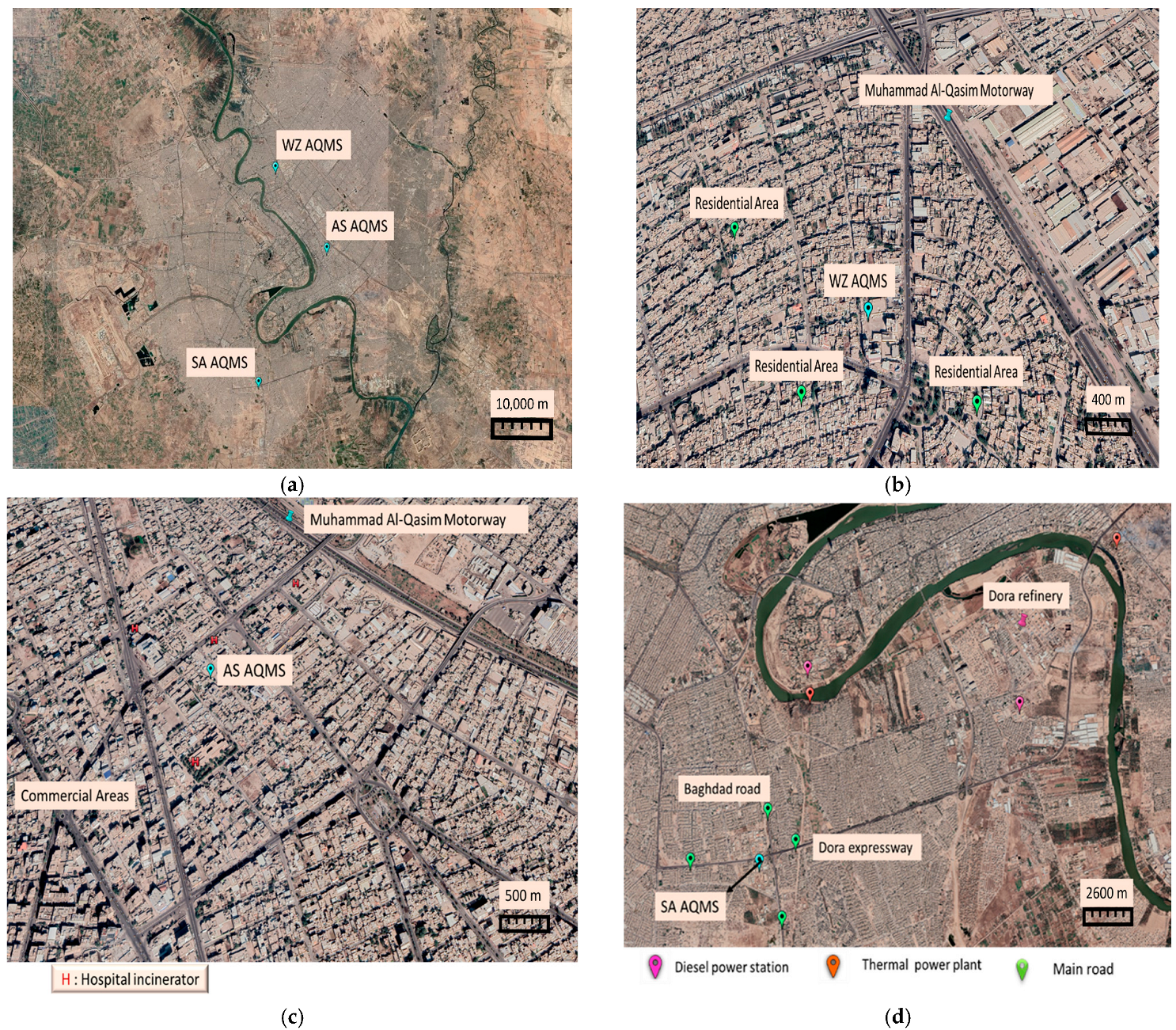
2.1. Area of Study and Data Sources
2.2. Statistical Techniques for Source Apportionment
2.2.1. Bivariate Polar Plots (BPPs) and Concentration Ratios (CRs)
2.2.2. Conditional Bivariate Probability Function (CBPF)
2.2.3. Backward Trajectory Calculations
2.2.4. Potential Source Contribution Function (PSCF)
2.2.5. Concentration Weighted Trajectory (CWT) Analysis
3. Results and Discussion
3.1. Baghdad’s Local Sources of Fine Particulates
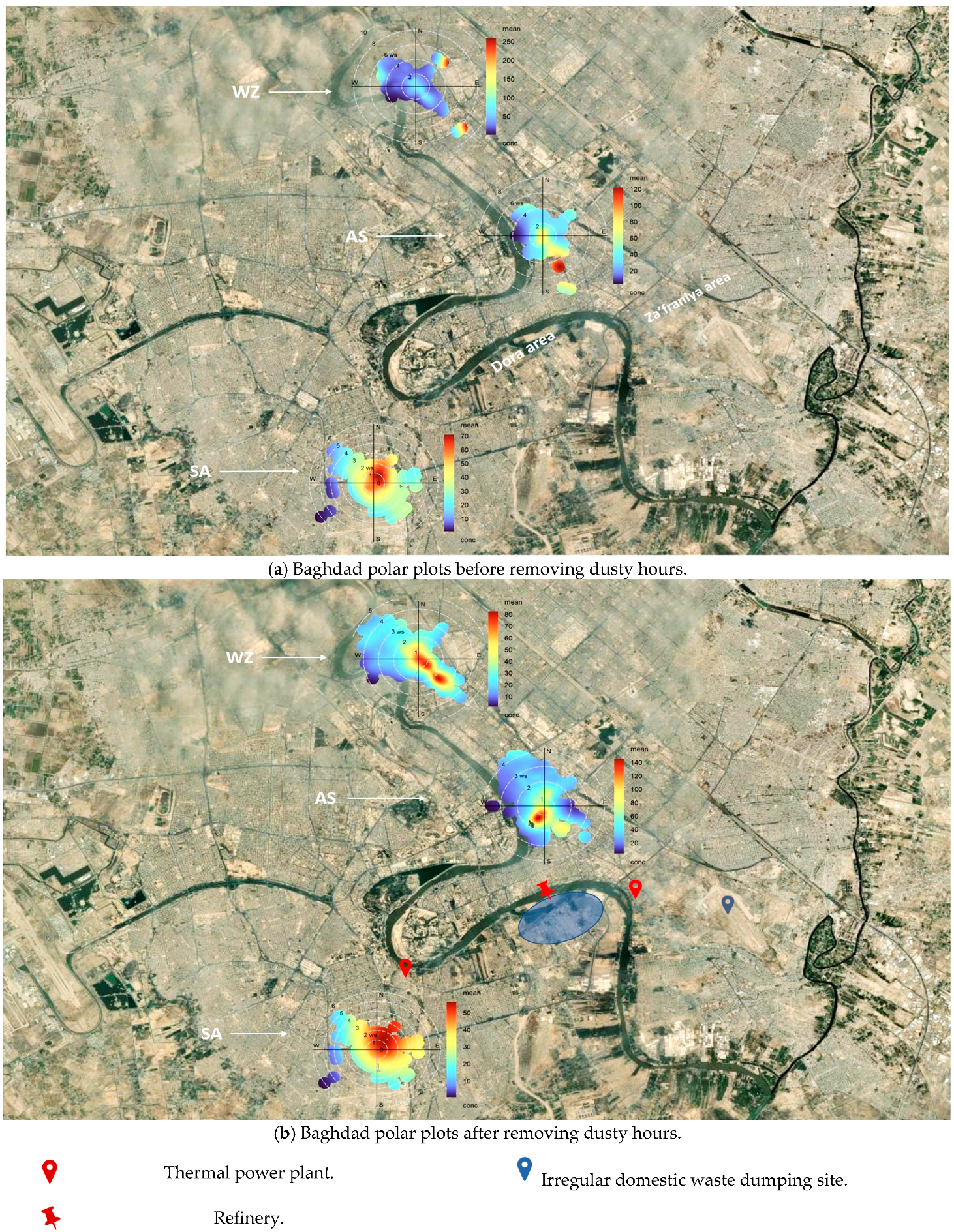
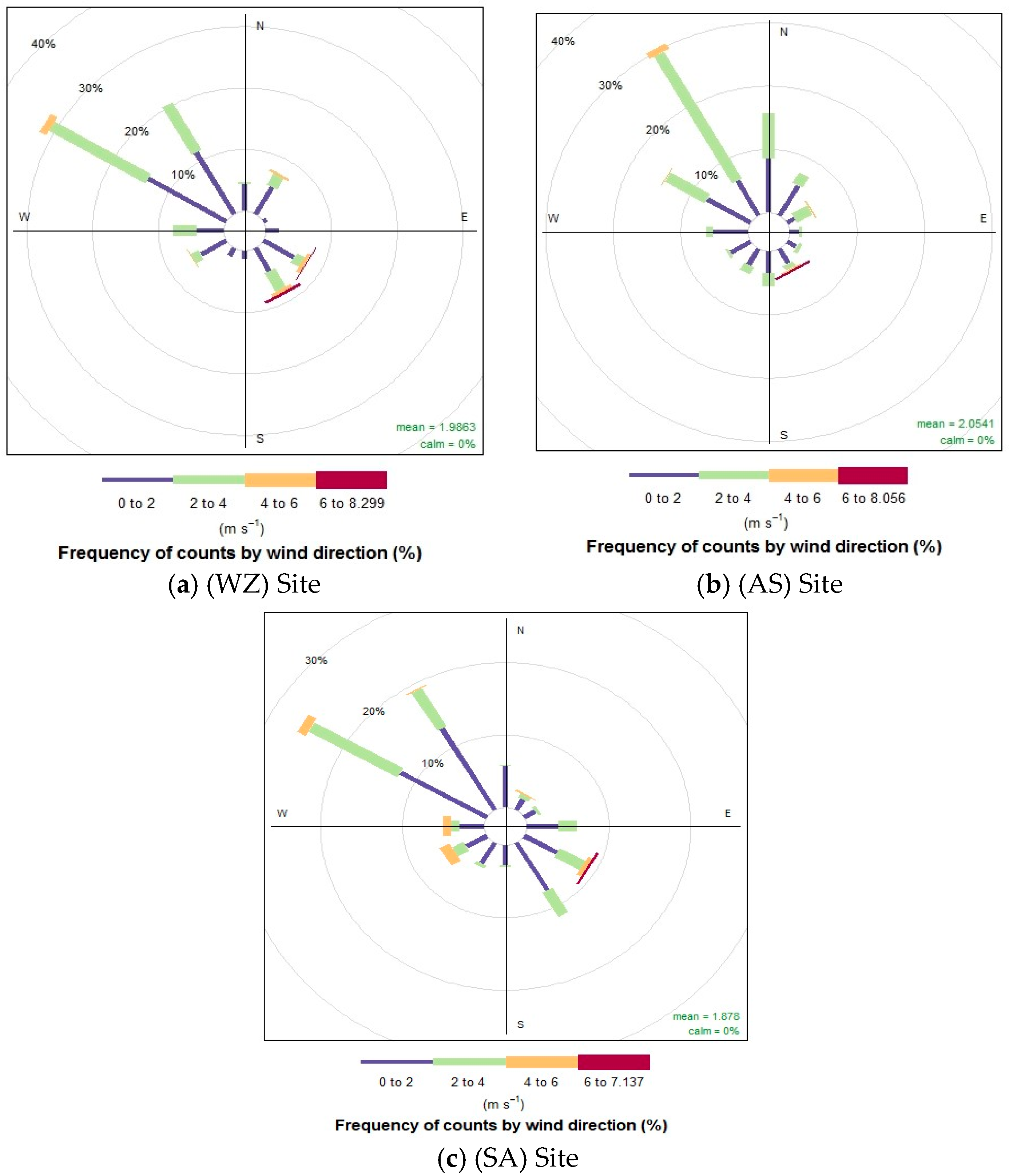
3.1.1. Stage One: Dust and Urban Particulates Assessment Using BPPs
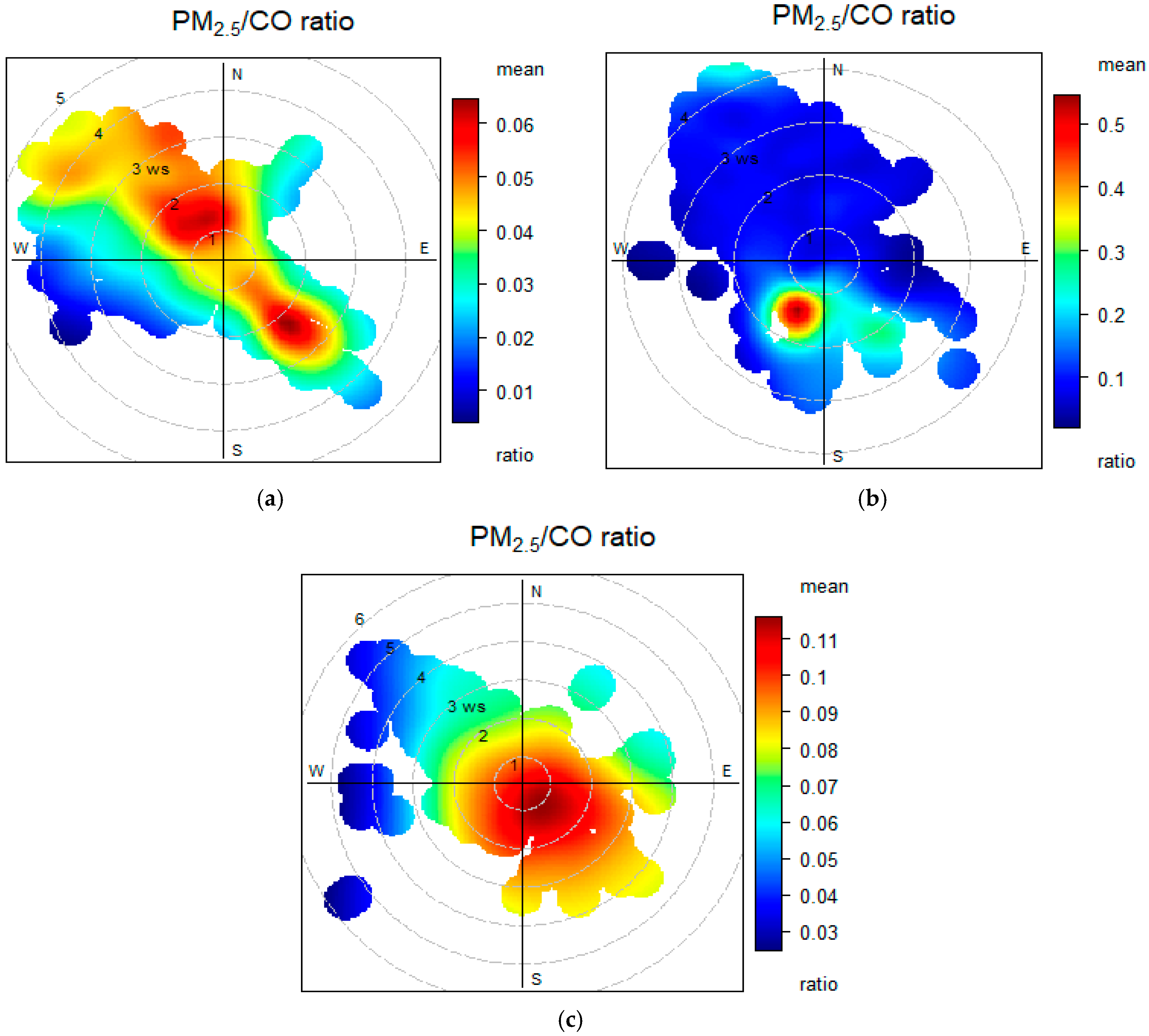
3.1.2. Stage Two: Fire Burning Assessment Using CR of PM2.5/CO
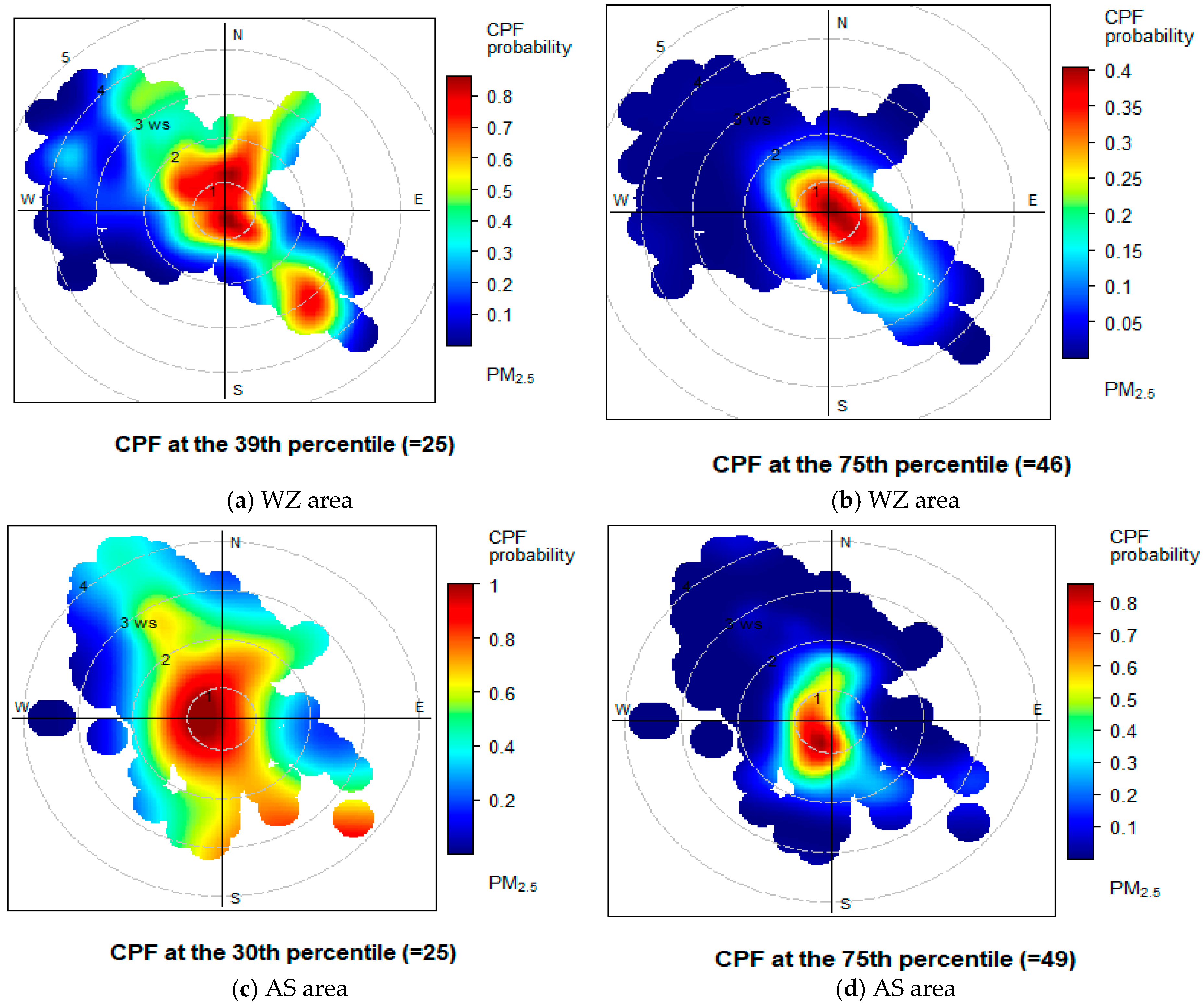
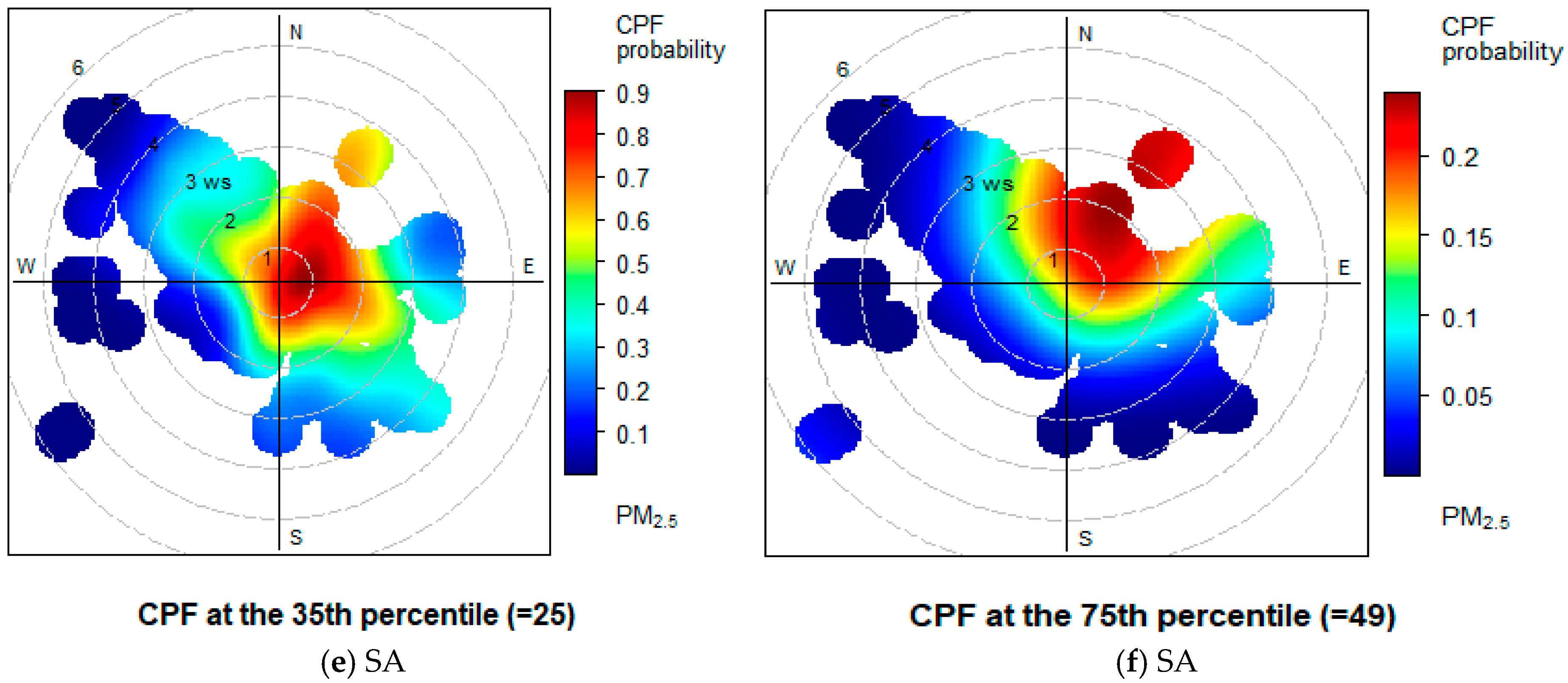
3.1.3. Stage Three: Fine Particulate Urban Assessment Using a Conditional Bivariate Probability Function
3.2. Baghdad Countryside and Regional Sources of Fine Particulates
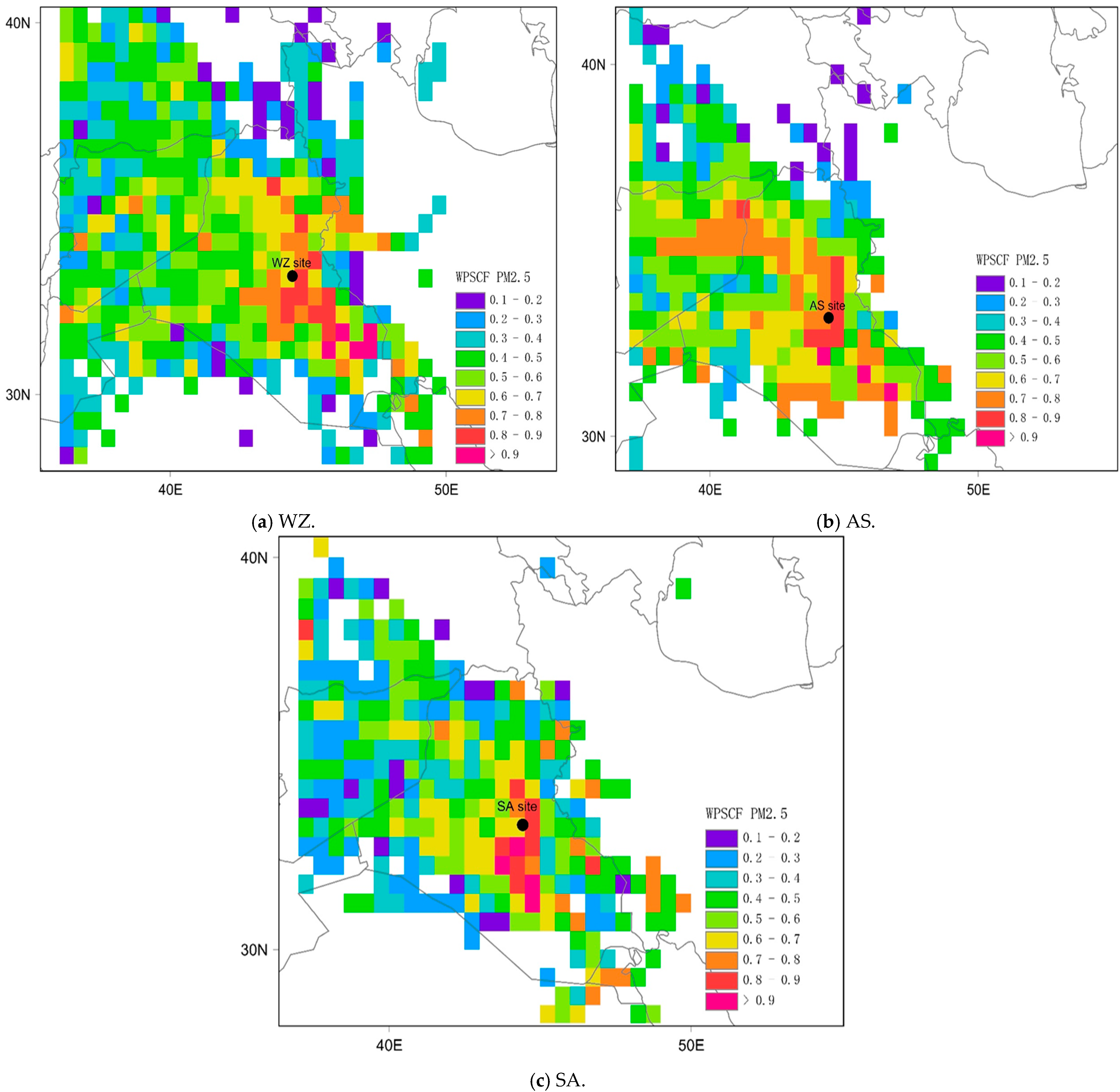
3.2.1. Identification of Rural and Regional Sources from WPSCF Analysis
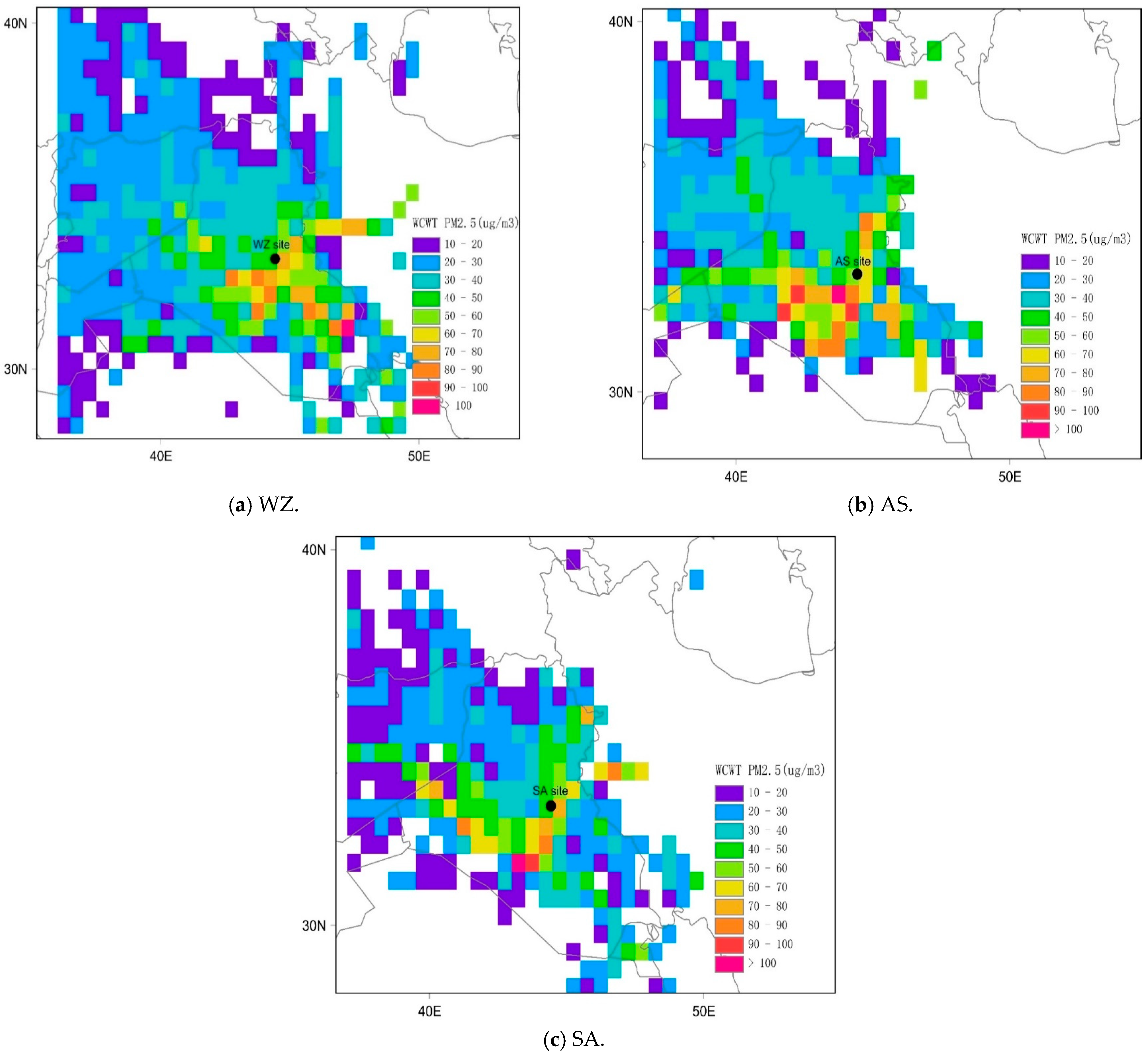
3.2.2. The Concentration Weighted Trajectory Analysis (CWT)
3.3. Conclusions
- The immediate east-to-southeast and south-to-southwest of Baghdad, which revealed the nearest distant sources around Baghdad. The possible sources are brick factories in Nahrawan, the southeastern Baghdad oil fields, the thermal power plant in Al-Musayyab, and other metropolitan cities like Al-Najaf, Karbala, and Hilla, where gasoline and diesel engines contribute to PM2.5 formation.
- The southeast of Iraq. The potential sources are oil and gas production in the Alhdab oil field in Wasit, Halfaya oil fields in Misan governorate, and the West Qurna oil field in Basra governorate. Another possible source is dust particulates from marshlands.
- The northeast of Baghdad extending to the Kermanshah Province in the western region of Iran, where gasoline and diesel engines, oil and gas production, and coal/biomass combustion are possible sources.
3.4. Limitations of the Study
- Data Quality and Completeness
- 2.
- Variations in Sampling Dates
- 3.
- Lack of Emission Inventory Data
- 4.
- Limited Use of Pollutants
- 5.
- Methodological Redundancy
- 6.
- Novelty and Implications
Supplementary Materials
Author Contributions
Funding
Institutional Review Board Statement
Informed Consent Statement
Data Availability Statement
Acknowledgments
Conflicts of Interest
Abbreviations
| PM2.5 | Fine Particulate Matter |
| WZ | Al-Wazeriya |
| AS | Al-Andalus Square |
| SA | Al-Saiydiya |
| CBPF | Conditional Bivariate Probability Function |
| PSCF | Potential Source Contribution Function |
| CWT | Concentration Trajectory Function |
| WHO | World Health Organisation |
| BPPs | Bivariate Polar Plots |
| CRs | Concentration ratios |
References
- World Health Organization (WHO). Ambient Air Pollution: A Global Assessment of Exposure and Burden of Disease; WHO: Geneva, Switzerland, 2016. [Google Scholar]
- Boogaard, H.; Patton, A.; Atkinson, R.; Brook, J.; Chang, H.; Crouse, D.; Fussell, J.; Hoek, G.; Hoffmann, B.; Kappeler, R.; et al. Long-term exposure to traffic-related air pollution and selected health outcomes: A systematic review and meta-analysis. Environ. Int. 2022, 164, 107262. [Google Scholar] [CrossRef]
- Hamanaka, R.B.; Mutlu, G.M. Particulate Matter Air Pollution: Effects on the Cardiovascular System. Front. Endocrinol. 2018, 9, 680. [Google Scholar] [CrossRef]
- Almetwally, A.A.; Bin-Jumah, M.; Allam, A.A. Ambient air pollution and its influence on human health and welfare: An overview. Environ. Sci. Pollut. Res. 2020, 27, 24815–24830. [Google Scholar] [CrossRef]
- Xue, Y.; Wang, L.; Zhang, Y.; Zhao, Y.; Liu, Y. Air pollution: A culprit of lung cancer. J. Hazard. Mater. 2022, 434, 128937. [Google Scholar] [CrossRef]
- Hamad, S.H.; Shafer, M.M.; Kadhim, A.K.; Al-Omran, S.M.; Schauer, J.J. Seasonal trends in the composition and ROS activity of fine particulate matter in Baghdad, Iraq. Atmos. Environ. 2015, 100, 102–110. [Google Scholar] [CrossRef]
- Ali-Taleshi, M.S.; Moeinaddini, M.; Bakhtiari, A.R.; Feiznia, S.; Squizzato, S.; Bourliva, A. A one-year monitoring of spatiotemporal variations of PM2.5-bound PAHs in Tehran, Iran: Source apportionment, local and regional sources origins and source-specific cancer risk assessment. Environ. Pollut. 2021, 274, 115883. [Google Scholar] [CrossRef] [PubMed]
- Klingmüller, K.; Pozzer, A.; Metzger, S.; Stenchikov, G.L.; Lelieveld, J. Aerosol optical depth trend over the Middle East. Atmos. Meas. Tech. 2016, 16, 5063–5073. [Google Scholar] [CrossRef]
- Rabee, A.M. Estimating the health risks associated with air pollution in Baghdad City, Iraq. Environ. Monit. Assess. 2015, 187, 4203. [Google Scholar] [CrossRef]
- Yassein, B.R.; Chaichan, M.T.; Yaseen, B.R.; Al Asaady, K.A.; Kazem, A.A.; Chaichan, M.T. Environmental Impacts of Salt Tide in Shatt Al-Arab-Basra/Iraq. IOSR J. Environ. Sci. Toxicol. Food Technol. 2016, 10, 35–43. [Google Scholar] [CrossRef]
- International Energy Agency. Iraq Energy Outlook; International Energy Agency: Paris, France, 2012; pp. 1–142. [Google Scholar]
- Kazem, H.A.; Chaichan, M.T. Status and future prospects of renewable energy in Iraq. Renew. Sustain. Energy Rev. 2012, 16, 6007–6012. [Google Scholar] [CrossRef]
- Saleh, S.A.H.; Mohamed, G.H.; Mohamed, Z.B. Air Quality Index (AQI) for Kirkuk City. Kirkuk Univ. J.—Sci. Stud. 2016, 11, 185–201. [Google Scholar] [CrossRef]
- Rasheed, K.A.; Azeez, Z.A.; Al-salhy, A.A. Effects of Air Pollutants from Al-Dura Power plant in the Surrounding Area South Baghdad. J. Int. Environ. Appl. Sci. 2016, 11, 170–175. [Google Scholar]
- Al-Azzawi, M.N.A.; Al-Dulaimi, S.H.H. Measuring the concentration of Suspended Particulate Matter and some heavy metals in air of two areas of Rusafa in Baghdad. Iraqi J. Sci. 2015, 56, 361–366. [Google Scholar]
- Mohammed, Z.B.; Kamal, A.A.K.; Resheq, A.S.; Alabdraba, W.M.S. Assessment of Air Pollution over Baghdad City Using Fixed Annual Stations and GIS Techniques. J. Southwest Jiaotong Univ. 2019, 54, 1–12. [Google Scholar] [CrossRef]
- SCO Iraq. Iraq Population Estimates 2020. 2020. Available online: https://cosit.gov.iq/documents/population/projection/%D8%AA%D9%82%D8%AF%D9%8A%D8%B1%D8%A7%D8%AA%20%D8%B3%D9%83%D8%A7%D9%86%20%D8%A7%D9%84%D8%B9%D8%B1%D8%A7%D9%82%202020.pdf (accessed on 6 January 2024).
- Ministry of Iraqi Environment. Environmental Status for Ambient Air Quality 2019. 2020. Available online: https://moen.gov.iq (accessed on 5 December 2023).
- Althuwaynee, O.F.; Pokharel, B.; Aydda, A.; Balogun, A.-L.; Kim, S.-W.; Park, H.-J. Spatial identification and temporal prediction of air pollution sources using conditional bivariate probability function and time series signature. J. Expo. Sci. Environ. Epidemiol. 2021, 31, 709–726. [Google Scholar] [CrossRef] [PubMed]
- Feng, X.; Wang, S. Influence of different weather events on concentrations of particulate matter with different sizes in Lanzhou, China. J. Environ. Sci. 2012, 24, 665–674. [Google Scholar] [CrossRef]
- Uria-Tellaetxe, I.; Carslaw, D.C. Conditional bivariate probability function for source identification. Environ. Model. Softw. 2014, 59, 1–9. [Google Scholar] [CrossRef]
- Al-Salihi, A.M. Characterization of aerosol type based on aerosol optical properties over Baghdad, Iraq. Arab. J. Geosci. 2018, 11, 633. [Google Scholar] [CrossRef]
- Ministry of Iraqi Environment; UNEP. Environmental Status Outlook in Iraq (2013). 2013. Available online: https://iq.chm-cbd.net/outlook-report-environment-status-iraq-2013-only-available-arabic (accessed on 14 November 2022).
- Carslaw, D.C. Package ‘Openair’. Tools for the Analysis of Air Pollution Data. Available online: https://cran.r-project.org/web/packages/openair/openair.pdf (accessed on 10 October 2022).
- Salmon, O.E.; Shepson, P.B.; Ren, X.; He, H.; Hall, D.L.; Dickerson, R.R.; Stirm, B.H.; Brown, S.S.; Fibiger, D.L.; McDuffie, E.E.; et al. Top-Down Estimates of NOx and CO Emissions from Washington, D.C.-Baltimore During the WINTER Campaign. J. Geophys. Res. Atmos. 2018, 123, 7705–7724. [Google Scholar] [CrossRef]
- Jaffe, D.A.; Schnieder, B.; Inouye, D. Technical note: Use of PM2.5 to CO ratio as an indicator of wildfire smoke in urban areas. Atmos. Meas. Tech. 2022, 22, 12695–12704. [Google Scholar] [CrossRef]
- Laing, J.R.; Jaffe, D.A.; Slavens, A.P.; Li, W.; Wang, W. Can ΔPM2.5/ΔCO and ΔNOy/ΔCO Enhancement Ratios Be Used to Characterize the Influence of Wildfire Smoke in Urban Areas? Aerosol Air Qual. Res. 2017, 17, 2413–2423. [Google Scholar] [CrossRef]
- Jaffe, D.A.; O’Neill, S.M.; Larkin, N.K.; Holder, A.L.; Peterson, D.L.; Halofsky, J.E.; Rappold, A.G. Wildfire and prescribed burning impacts on air quality in the United States. J. Air Waste Manag. Assoc. 2021, 70, 583–615. [Google Scholar] [CrossRef]
- Ashbaugh, L.L.; Malm, W.C.; Sadeh, W.Z. A residence time probability analysis of sulfur concentrations at Grand Canyon National Park. Atmos. Environ. 1985, 19, 1263–1270. [Google Scholar] [CrossRef]
- Malby, A.R.; Whyatt, J.D.; Timmis, R.J. Conditional extraction of air-pollutant source signals from air-quality monitoring. Atmos. Environ. 2013, 74, 112–122. [Google Scholar] [CrossRef]
- Bae, M.-S.; Schwab, J.J.; Chen, W.-N.; Lin, C.-Y.; Rattigan, O.V.; Demerjian, K.L. Identifying pollutant source directions using multiple analysis methods at a rural location in New York. Atmos. Environ. 2011, 45, 2531–2540. [Google Scholar] [CrossRef]
- Al-Ansari, N.A. Management of Water Resources in Iraq: Perspectives and Prognoses. Engineering 2013, 5, 667–684. [Google Scholar] [CrossRef]
- Hashim, B.M.; Sultan, M.A. Using remote sensing data and GIS to evaluate air pollution and their relationship with land cover and land use in Baghdad City. Limaye Iran. J. Earth Sci. 2010, 2, 20–24. [Google Scholar]
- The Climate Center. Iraq Sees More Than One Heavy Sandstorm a Week—Red Cross Red Crescent Climate Centre. Available online: https://www.climatecentre.org/8535/iraq-sees-more-than-one-heavy-sandstorm-a-week/ (accessed on 7 October 2023).
- United Nations. Sand and Dust Storms—Fact Sheet. 2013, p. 7. Available online: https://reliefweb.int/sites/reliefweb.int/files/resources/SDS%20Fact%20Sheet.pdf (accessed on 5 October 2023).
- Al-Shammari, S. Air Pollution in the City of Baghdad (Al-Rusafa) after 2003 AD: Causes and Solutions. J. Tikrit Univ. Humanit. 2022, 26, 281–300. (In Arabic) [Google Scholar] [CrossRef]
- Hassan, A.W.A.A.; Al-Waeli, A.A.K. The spatial and temporal variation of the concentration of gaseous pollutants in the air of Al-Waziriya region. Res. Mil. 2022, 12, 4471–4481. [Google Scholar]
- Al-Sudani, I.M.; Altmimi, A.; Al-Khayat, A.S.I.; Al-Waeli, A.J. Air pollution increase susceptibility of Baghdad (Iraq) population to COVID-19: Al-Zafarania distract case study. Int. J. Pharm. Res. 2020, 12, 1775–1782. [Google Scholar] [CrossRef]
- Jrew, B.; Hadi, A. Improvement of Multi-Lane Airport Highway in Baghdad-Iraq. IOP Conf. Ser. Mater. Sci. Eng. 2019, 584, 012012. [Google Scholar] [CrossRef]
- Chaichan, M.T.; Kazem, H.A.; Abed, T.A. Traffic and outdoor air pollution levels near highways in Baghdad, Iraq. Environ. Dev. Sustain. 2018, 20, 589–603. [Google Scholar] [CrossRef]
- Central Statistical Organization (CSO). Private Sector Cars Registered in the General Traffic Directorate Until December 31, 2020; CSO: Baghdad, Iraq, 2021. [Google Scholar]
- Carslaw, D.C.; Ropkins, K. openair—An R package for air quality data analysis. Environ. Model. Softw. 2012, 27–28, 52–61. [Google Scholar] [CrossRef]
- Habeebullah, T.M. An analysis of air pollution in Makkah—A view point of source identification. Environ. Asia 2013, 7, 104–111. [Google Scholar] [CrossRef]
- Wright, S.; Ulke, J.; Font, A.; Chan, K.; Kelly, F. Atmospheric microplastic deposition in an urban environment and an evaluation of transport. Environ. Int. 2020, 136, 105411. [Google Scholar] [CrossRef]
- Carslaw, D.C.; Beevers, S.D. Characterising and understanding emission sources using bivariate polar plots and k-means clustering. Environ. Model. Softw. 2013, 40, 325–329. [Google Scholar] [CrossRef]
- Khan, B.; Masiol, M.; Formenton, G.; Di Gilio, A.; de Gennaro, G.; Agostinelli, C.; Pavoni, B. Carbonaceous PM2.5 and secondary organic aerosol across the Veneto region (NE Italy). Sci. Total. Environ. 2016, 542, 172–181. [Google Scholar] [CrossRef]
- Ravindra, K.; Sokhi, R.; Vangrieken, R. Atmospheric polycyclic aromatic hydrocarbons: Source attribution, emission factors and regulation. Atmos. Environ. 2008, 42, 2895–2921. [Google Scholar] [CrossRef]
- Sahu, L.K.; Yadav, R.; Pal, D. Source identification of VOCs at an urban site of western India: Effect of marathon events and anthropogenic emissions. J. Geophys. Res. 2016, 175, 18. [Google Scholar] [CrossRef]
- Molozhnikova, Y.; Shikhovtsev, M.; Khodzher, T. Results of a Comprehensive Study on Atmospheric Pollution at the Tankhoi Observation Point (Southeastern Coast of Lake Baikal, Russia): Temporal Variability and Identification of Sources. Environments 2025, 12, 462. [Google Scholar] [CrossRef]
- Jain, S.S.; Sharma, S.; Vijayan, N.; Mandal, T. Seasonal characteristics of aerosols (PM2.5 and PM10) and their source apportionment using PMF: A four year study over Delhi, India. Environ. Pollut. 2020, 262, 114337. [Google Scholar] [CrossRef]
- Stein, A.F.; Draxler, R.R.; Rolph, G.D.; Stunder, B.J.B.; Cohen, M.D.; Ngan, F. Noaa’s hysplit atmospheric transport and dispersion modeling system. Bull. Am. Meteorol. Soc. 2015, 96, 2059–2077. [Google Scholar] [CrossRef]
- Rolph, G.; Stein, A.; Stunder, B. Real-time Environmental Applications and Display sYstem: READY. Environ. Model. Softw. 2017, 95, 210–228. [Google Scholar] [CrossRef]
- Polissar, A.V.; Hopke, P.K.; Paatero, P.; Kaufmann, Y.J.; Hall, D.K.; Bodhaine, B.A.; Dutton, E.G.; Harris, J.M. The aerosol at Barrow, Alaska: Long-term trends and source locations. Atmos. Environ. 1999, 33, 2441–2458. [Google Scholar] [CrossRef]
- Polissar, A.V.; Hopke, P.K.; Harris, J.M. Source Regions for Atmospheric Aerosol Measured at Barrow, Alaska. Environ. Sci. Technol. 2001, 35, 4214–4226. [Google Scholar] [CrossRef]
- Begum, B.A.; Kim, E.; Jeong, C.-H.; Lee, D.-W.; Hopke, P.K. Evaluation of the potential source contribution function using the 2002 Quebec forest fire episode. Atmos. Environ. 2005, 39, 3719–3724. [Google Scholar] [CrossRef]
- Khuzestani, R.B.; Taheri, A.; Yeganeh, B. Long-range transport of sulfur dioxide emissions from external sources to Tehran. Urban Clim. 2023, 49, 101445. [Google Scholar] [CrossRef]
- Tepe, A.M.; Doğan, G. Chemical characterization of PM2.5 and PM2.5–10 samples collected in urban site in Mediterranean coast of Turkey. Atmos. Pollut. Res. 2021, 12, 46–59. [Google Scholar] [CrossRef]
- Karaca, F.; Anil, I.; Alagha, O. Long-range potential source contributions of episodic aerosol events to PM10 profile of a megacity. Atmos. Environ. 2009, 43, 5713–5722. [Google Scholar] [CrossRef]
- Bari, A.; Kindzierski, W.B. Characteristics of air quality and sources affecting fine particulate matter (PM2.5) levels in the City of Red Deer, Canada. Environ. Pollut. 2017, 221, 367–376. [Google Scholar] [CrossRef]
- Polissar, A.V.; Hopke, P.K.; Poirot, R.L. Atmospheric Aerosol over Vermont: Chemical Composition and Sources. Environ. Sci. Technol. 2001, 35, 4604–4621. [Google Scholar] [CrossRef]
- Wang, Y.Q.; Zhang, X.Y.; Draxler, R.R. TrajStat: GIS-based software that uses various trajectory statistical analysis methods to identify potential sources from long-term air pollution measurement data. Environ. Model. Softw. 2009, 24, 938–939. [Google Scholar] [CrossRef]
- Liu, B.; Liang, D.; Yang, J.; Dai, Q.; Bi, X.; Feng, Y.; Yuan, J.; Xiao, Z.; Zhang, Y.; Xu, H. Characterization and source apportionment of volatile organic compounds based on 1-year of observational data in Tianjin, China. Environ. Pollut. 2016, 218, 757–769. [Google Scholar] [CrossRef] [PubMed]
- Hsu, Y.-K.; Holsen, T.M.; Hopke, P.K. Comparison of hybrid receptor models to locate PCB sources in Chicago. Atmos. Environ. 2003, 37, 545–562. [Google Scholar] [CrossRef]
- Hamad, S.H.; Schauer, J.J.; Heo, J.; Kadhim, A.K. Source apportionment of PM2.5 carbonaceous aerosol in Baghdad, Iraq. Atmos. Res. 2015, 156, 80–90. [Google Scholar] [CrossRef]
- Price, R. Environmental Risks in Iraq; Reuters AP: London, UK, 2018. [Google Scholar]
- Roomi, T.O.; Abed, A.S. Estimating gaseous pollutants in the air near Daura Refinery, Daura Power Plant and South of Baghdad Power Plant by calculating the fuel discharge. Sci. Rev. Eng. Environ. Sci. (SREES) 2021, 30, 195–207. [Google Scholar] [CrossRef]
- Abass, K.I. Iraqi Experiment in the Use of Alternative Fuel: A Review. Saudi J. Eng. Technol. 2017, 2, 171–184. [Google Scholar] [CrossRef]
- Muslim, A.S.; Ammar, H. Burning Garbage and Smoke from Factories Suffocate Iraqis; Reuters AP: London, UK, 2019. (In Arabic) [Google Scholar]
- Al Slik, G.; Hameed, A. The Urban and Environmental Impact of Electrical Power Generators on the Residential Districts in IRAQ (Baghdad City Case Study). 2018. Available online: https://www.researchgate.net/publication/346060193_The_Urban_and_Environmental_Impact_of_Electrical_Power_Generators_on_the_Residential_Districts_in_IRAQ_Baghdad_City_Case_Study (accessed on 3 March 2024). (In Arabic)
- Al-Wakeel, A. Local Energy Systems in Iraq. Energy 2021, 1, 26. [Google Scholar]
- Carslaw, D.C.; Beevers, S.D.; Ropkins, K.; Bell, M.C. Detecting and quantifying aircraft and other on-airport contributions to ambient nitrogen oxides in the vicinity of a large international airport. Atmos. Environ. 2006, 40, 5424–5434. [Google Scholar] [CrossRef]
- Seinfeld, J.H.; Pandis, S.N. Atmospheric Chemistry and Physics: From Air Pollution to Climate Change; John Wiley & Sons: New York, NY, USA, 2016. [Google Scholar]
- Mishra, M.; Gulia, S.; Shukla, N.; Goyal, S.K.; Kulshrestha, U.C. Review of Secondary Aerosol Formation and Its Contribution in Air Pollution Load of Delhi NCR. Water Air Soil Pollut. 2023, 234, 47. [Google Scholar] [CrossRef]
- Mangia, C.; Cervino, M.; Gianicolo, E.A.L. Secondary Particulate Matter Originating from an Industrial Source and Its Impact on Population Health. Int. J. Environ. Res. Public Health 2015, 12, 7667–7681. [Google Scholar] [CrossRef]
- NASA. Dust Storm in Iraq. 2022. Available online: https://science.nasa.gov/earth/earth-observatory/dust-storm-in-iraq-149695 (accessed on 30 January 2024).
- Trew, B. The Poisoned Clouds Suffocating the People of Iraq. The Independent. 16 April 2021. Available online: https://www.independent.co.uk/climate-change/news/iraq-oil-air-pollution-health-environment-b1828465.html (accessed on 4 March 2025).
- Hashim, B.M.; Abdulwahed, E.A.; Sultan, M.A. Evaluation of Chemistry and Concentration of Air Pollutants from Brick Factories in Nahrawan Area, Northeast Baghdad, Using GIS Methods. Al-Nahrain J. Sci. 2018, 21, 16–22. [Google Scholar] [CrossRef]
- Al-Nuzal, S.M.; Al-Bakri, S.A.; Zankana, S.D. Environmental Impact Assessment for Modern Brick Factory in Baghdad, Iraq. Eng. Technol. J. 2019, 37, 377–384. [Google Scholar] [CrossRef]
- U.S. Energy Information Administration (EIA). Background Reference: Iraq. 2019; pp. 1–9. Available online: https://www.eia.gov/international/content/analysis/countries_long/Iraq/background.htm (accessed on 6 April 2025).
- Reda, A.; Al-Shammari, A.K.H. Spatial analysis of air pollution in suspended particles and heavy elements in urban centers in Wasit Governorate. Al-Qadisiyah J. Humanit. Sci. 2020, 2020, 29–69. [Google Scholar]
- Ajmi, R.N.; Zeki, H.F.; Ati, E.M.; Al-Newani, H.R. Monitoring of some heavy metals transboundary air pollution. J. Eng. Appl. Sci. 2018, 13, 9862–9867. [Google Scholar] [CrossRef]
- Mahdi, A.; Alasedi, K. Determination of concentrations of pollutant gases and trace elements in air of holy city of Karbala. Alqadisiyah J. Pure Sci. 2014, 19, 55–66. [Google Scholar]
- Salmabadi, H.; Khalidy, R.; Saeedi, M. Transport routes and potential source regions of the Middle Eastern dust over Ahvaz during 2005–2017. Atmos. Res. 2020, 241, 104947. [Google Scholar] [CrossRef]
- Ginoux, P.; Prospero, J.M.; Gill, T.E.; Hsu, N.C.; Zhao, M. Global-scale attribution of anthropogenic and natural dust sources and their emission rates based on MODIS Deep Blue aerosol products. Rev. Geophys. 2012, 50, RG3005. [Google Scholar] [CrossRef]
- Gaafar, R. The Environmental Impact of Syria’s Conflict: A Preliminary Survey of Issues → Roba Gaafar; Arab Reform Initiative: Paris, France, 2021. [Google Scholar]
- Javed, W.; Iakovides, M.; Garaga, R.; Stephanou, E.G.; Kota, S.H.; Ying, Q.; Wolfson, J.M.; Koutrakis, P.; Guo, B. Source apportionment of organic pollutants in fine and coarse atmospheric particles in Doha, Qatar. J. Air Waste Manag. Assoc. 2019, 69, 1277–1292. [Google Scholar] [CrossRef] [PubMed]
- Alolayan, M.A.; Brown, K.W.; Evans, J.S.; Bouhamra, W.S.; Koutrakis, P. Source apportionment of fine particles in Kuwait City. Sci. Total. Environ. 2013, 448, 14–25. [Google Scholar] [CrossRef]
- Khamutian, R.; Sharafi, K.; Najafi, F.; Shahhoseini, M. Association of air pollution and hospital admission for cardiovascular disease: A case study in Kermanshah, Iran. Zahedan J. Res. Med. Sci. 2014, 16, 43–46. [Google Scholar]
- Doabi, S.A.; Karami, M.; Afyuni, M.; Yeganeh, M. Pollution and health risk assessment of heavy metals in agricultural soil, atmospheric dust and major food crops in Kermanshah province, Iran. Ecotoxicol. Environ. Saf. 2018, 163, 153–164. [Google Scholar] [CrossRef]



Disclaimer/Publisher’s Note: The statements, opinions and data contained in all publications are solely those of the individual author(s) and contributor(s) and not of MDPI and/or the editor(s). MDPI and/or the editor(s) disclaim responsibility for any injury to people or property resulting from any ideas, methods, instructions or products referred to in the content. |
© 2026 by the authors. Licensee MDPI, Basel, Switzerland. This article is an open access article distributed under the terms and conditions of the Creative Commons Attribution (CC BY) license.
Share and Cite
Noaman, O.S.; Tomlin, A.S.; Li, H. Multi-Stage Statistical Approach for PM2.5 Source Identification in Baghdad. Atmosphere 2026, 17, 455. https://doi.org/10.3390/atmos17050455
Noaman OS, Tomlin AS, Li H. Multi-Stage Statistical Approach for PM2.5 Source Identification in Baghdad. Atmosphere. 2026; 17(5):455. https://doi.org/10.3390/atmos17050455
Chicago/Turabian StyleNoaman, Omar S., Alison S. Tomlin, and Hu Li. 2026. "Multi-Stage Statistical Approach for PM2.5 Source Identification in Baghdad" Atmosphere 17, no. 5: 455. https://doi.org/10.3390/atmos17050455
APA StyleNoaman, O. S., Tomlin, A. S., & Li, H. (2026). Multi-Stage Statistical Approach for PM2.5 Source Identification in Baghdad. Atmosphere, 17(5), 455. https://doi.org/10.3390/atmos17050455