Article

Characterizing Urban Road CO2 Emissions: A Study Based on GPS Data from Heavy-Duty Diesel Trucks

1
School of Mechanical and Transportation Engineering, Southwest Forestry University, Kunming 650224, China
2
Key Laboratory of Motor Vehicle Environmental Protection and Safety in Plateau Mountainous Areas of Yunnan Province, Kunming 650224, China
3
China Automotive Research Institute Vehicle Inspection Center (Kunming) Co., Ltd., Kunming 651770, China
*
Authors to whom correspondence should be addressed.
Atmosphere 2026, 17(4), 387; https://doi.org/10.3390/atmos17040387
Submission received: 7 February 2026 / Revised: 20 March 2026 / Accepted: 21 March 2026 / Published: 10 April 2026
(This article belongs to the Special Issue Traffic Related Emission (3rd Edition))

Abstract

Accurately quantifying carbon dioxide (CO2) emissions from heavy-duty diesel trucks (HDTs) is crucial for developing effective transportation emission reduction strategies. In this study, we adopted a bottom–up approach and, in conjunction with the “International Vehicle Emissions” (IVE) model, constructed a high-resolution 1 × 1 km CO2 emission inventory for the urban area of Kunming, China. Using data from 1.24 million track points collected from 5996 heavy-duty diesel trucks, we implemented a map matching algorithm based on a simplified hidden Markov model (HMM) to efficiently process large-scale GPS data. Furthermore, we improved upon traditional spatial allocation methods by dynamically integrating track point density with static road network density. The results indicate that although higher driving speeds correspond to lower CO2 emission rates, heavy-duty diesel trucks typically operate within an observed speed range of 40–60 km/h, with an average emission factor of approximately 500 g/km. Vehicles compliant with the “National III” emission standards remain the primary source of CO2 emissions in this region. Correlation analysis reveals a significant positive relationship (p < 0.01) between emissions from heavy-duty diesel trucks and both traffic volume and mileage. Notably, daytime vehicle restriction policies led to a temporal redistribution of emissions rather than a net reduction in emissions; this resulted in increased activity levels of heavy-duty diesel trucks at night, leading to a surge in nighttime emissions. In terms of spatial distribution, the “dual-density” allocation method proposed in this study more accurately captured emission hotspots, revealing that CO2 emissions are primarily concentrated in the southeastern part of the city—a distribution pattern largely influenced by the city’s industrial layout.

1. Introduction

Carbon dioxide (CO2) emissions are widely recognized as the primary driver of anthropogenic climate change and pose an existential threat to human society by exacerbating extreme weather events [1]. As the world’s largest emitter, China is currently in a critical transition phase toward achieving its “dual carbon” goals—namely, peaking carbon emissions by 2030 and achieving carbon neutrality by 2060 [2]. Despite rapid urbanization and economic growth, the transportation sector continues to face significant challenges during this transition. Specifically, China’s heavy-duty truck (HDT) fleet has continued to grow, nearly doubling over the past decade. Although heavy-duty trucks account for a relatively small proportion of the total vehicle fleet, their emissions of carbon dioxide and nitrogen oxides (NOx) constitute the majority of total emissions from the road transport sector, with their emissions responsibility being grossly disproportionate to their share of the fleet [3]. Therefore, reducing emissions from heavy-duty trucks has become an urgent priority for both mitigating climate change and improving air quality [4].
Globally, regulatory frameworks are continuously evolving to address the issue of high emission intensity in heavy-duty vehicles (HDVs). The European Union recently strengthened its emission performance standards, setting a target to reduce CO2 emissions from newly registered heavy-duty vehicles by 45% by 2030 compared to 2019 levels [5]. Similarly, the U.S. Environmental Protection Agency (EPA) finalized the “Phase 3” greenhouse gas emission standards in 2024, mandating stricter emission limits starting with the 2027 model year [6]. In China, although the implementation of the “National VI” emission standards has successfully curbed emissions of non-greenhouse gas pollutants, controlling CO2 emissions remains a significant challenge; This is primarily because CO2 emissions are directly linked to fuel consumption, an issue that is difficult to address effectively through end-of-pipe control technologies [7]. Therefore, establishing a high-precision carbon emissions inventory is a prerequisite for formulating effective regional decarbonization policies.
Existing research on motor vehicle emissions in China exhibits two significant biases. In terms of geographic distribution, the majority of studies focus on economically developed metropolitan areas, such as the Beijing–Tianjin–Hebei region [8] and the Yangtze River Delta region [9]. In contrast, research on the emission characteristics of China’s western regions or less developed areas remains scarce. As a central hub in Southwest China, Kunming faces a series of unique challenges due to its distinctive plateau topography and rapid urbanization; however, there are very few dedicated studies conducting quantitative analyses of heavy-duty vehicle emissions in this complex geographical context.
Methodologically, vehicle emission inventories are typically categorized into two approaches: top–down and bottom–up. Although the top–down approach is suitable for macro-scale assessments, it relies on aggregated statistical data and cannot capture the spatial heterogeneity required for urban-scale management [10]. In contrast, the bottom–up approach utilizes models such as IVE, MOVES, or COPERT to provide higher data granularity. However, many “high-resolution” emission inventories suffer from a key limitation: they often rely on static proxy indicators, such as road network length or population density, for spatial allocation. Recent studies have pointed out that allocating emissions based solely on road length leads to significant biases, as the physical presence of roads does not equate to actual heavy-duty diesel (HDT) traffic volume [11,12].
To overcome these limitations, the integration of multi-source big data—particularly vehicle trajectory data—has emerged as a leading research direction. Trajectory data provide precise, real-time information on vehicle speed, acceleration, and location, thereby driving a shift in emission accounting methods from traditional “segment-based” to “trajectory-based” approaches, which more accurately reflect actual conditions [13]. This method enables researchers to identify emission hotspots that static models often struggle to capture.
In this study, we adopted a “bottom–up” approach combined with an IVE model to construct a high-resolution CO2 emissions inventory for heavy-duty diesel trucks (HDTs) in downtown Kunming. The analysis is based on a large dataset comprising 1.24 million track points from 5996 heavy-duty diesel trucks. This study proposes two major innovations to improve the accuracy of the inventory. First, to efficiently process large-scale, noisy GPS data, we introduced a novel map matching algorithm. Unlike traditional Hidden Markov Models (HMMs) [14], which rely on computationally intensive transition probabilities and strict topological constraints, our simplified method prioritizes distance-based transition probabilities within local search buffers. This innovation significantly improves computational efficiency while maintaining high matching accuracy for dense urban trajectory points. Second, we improved the spatial allocation method by dynamically integrating trajectory point density with static road network density for allocation, rather than relying solely on road length. This study aims to provide a solid scientific basis for Kunming’s low-carbon transportation policies and serve as a reference for other developing cities with similar topographical characteristics.

2. Materials and Methods

2.1. Study Area

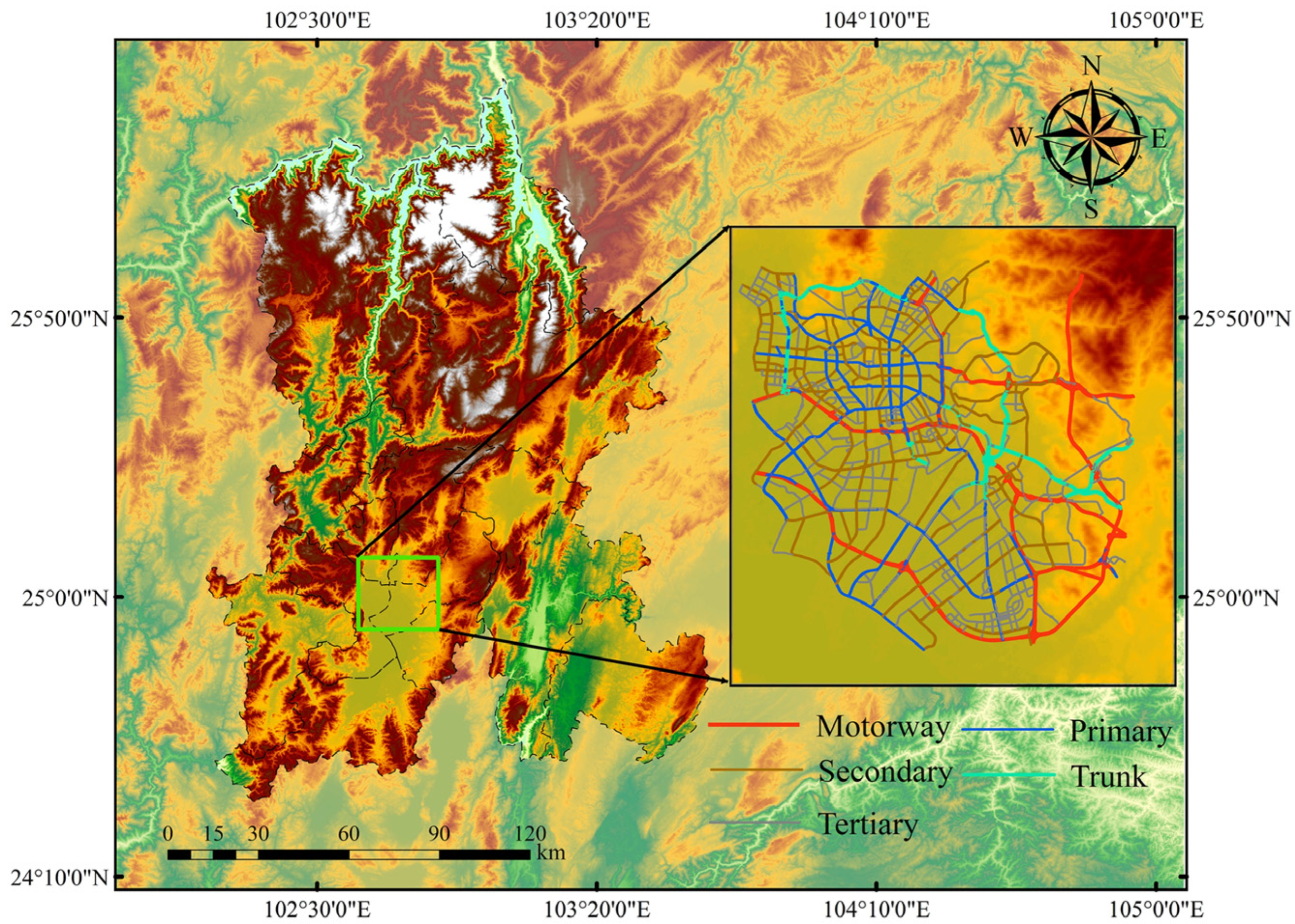
In recent years, research on motor vehicle emission inventories at the urban or regional level has primarily focused on economically developed regions in eastern China, while attention to medium-sized cities or regions in the southwest has been relatively limited. Therefore, this study focuses on the central urban area of Kunming, the capital of Yunnan Province in southwestern China. Figure 1 shows the geographical location of the study area (latitude: 24°23′–26°22′ N; longitude: 102°10′–103°40′ E), which has an average elevation of 1891 m. Kunming comprises 14 districts and counties, with a total urban area of 21,437 square kilometers and a permanent resident population of 8.463 million [15]. In 2024, the city’s annual average temperature was 16.5 °C, and the average relative humidity was 68.6% [16]. Road network data for Kunming City was sourced from the OpenStreetMap platform, with road types classified into five categories: expressways (M), arterial roads (T), primary roads (P), secondary roads (S), and tertiary roads (Te). By focusing on Kunming, a medium-sized city, this study fills a critical gap in the relevant research field, as previous studies on motor vehicle emission inventories for this city have been relatively limited.

2.2. GPS Data Processing and Map Matching

The data used in this study were obtained from the Kunming Municipal Vehicle Management Department. The dataset contains GPS data for heavy-duty diesel trucks (HDTs, with a payload capacity of 12 tons) recorded on 3 January 2025. This specific date—a typical winter workday (Friday)—was carefully selected to ensure it represents standard urban logistics, industrial transport, and commuting traffic patterns, thereby avoiding abnormal traffic fluctuations caused by public holidays.
However, it must be acknowledged that relying solely on single-day cross-sectional data has certain limitations in terms of generalizability. Specifically, the dataset may not fully capture the seasonal variations in urban freight demand, nor does it reflect operational adjustments influenced by weather conditions. Furthermore, the dataset does not reflect the significant differences in heavy-duty diesel truck travel patterns between weekdays and weekends, as industrial and construction activities typically decrease on weekends. Therefore, while the spatiotemporal distribution patterns revealed in this study are highly representative of typical weekday operations, these temporal limitations must be fully considered when interpreting absolute emission data.
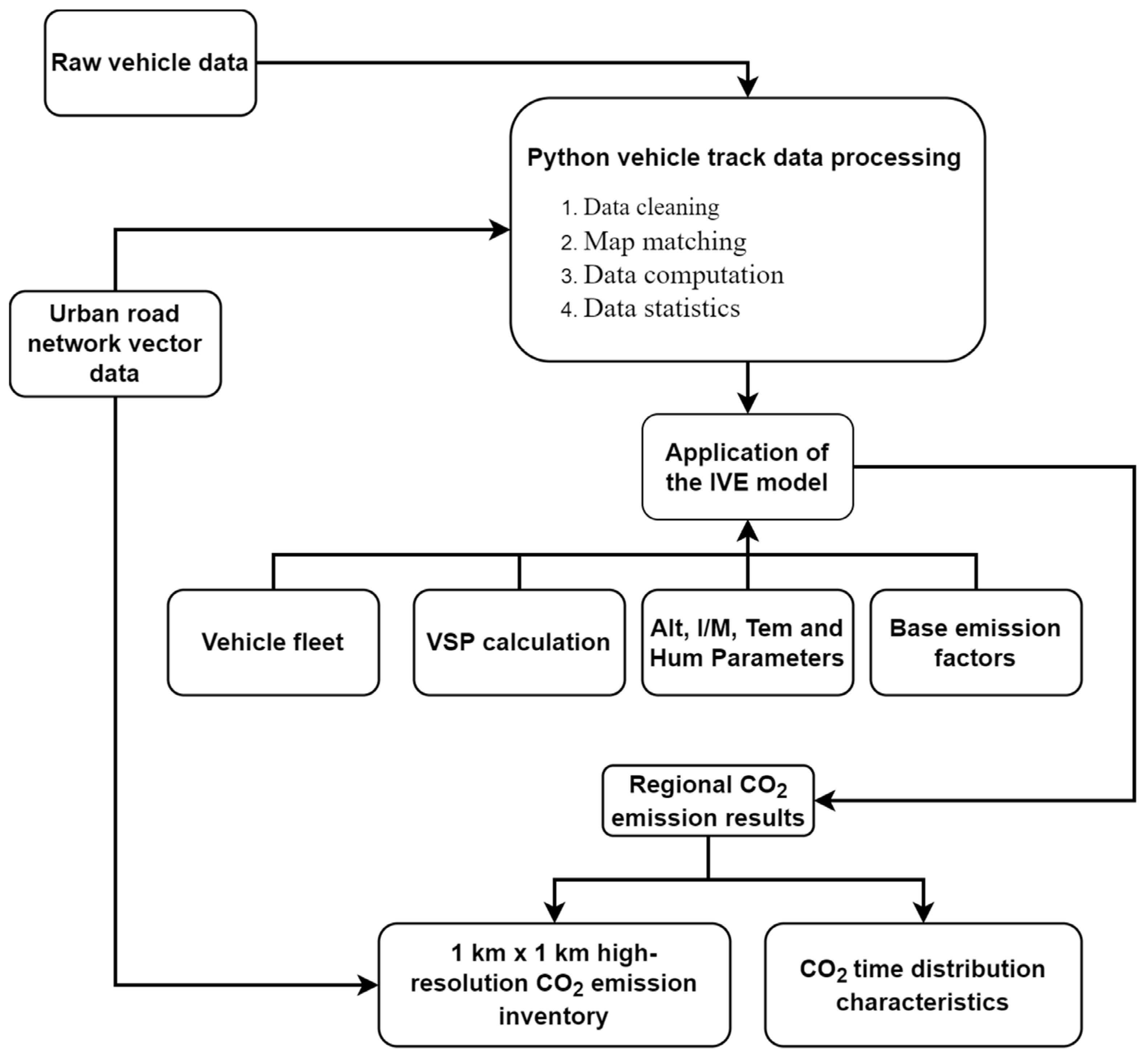
Due to the extensive volume of data, we employed MySQL (Version 8.0, Oracle Corporation, Austin, TX, USA) as a data management tool. Python (Version 3.9, Python Software Foundation, Wilmington, DE, USA) scripts were utilized to execute tasks such as data cleansing, map matching, trajectory reconstruction, and calculations. The specific workflow of this study is illustrated in Figure 2.
To enhance the computational efficiency of map matching for a massive dataset of 1.24 million noisy GPS trajectory points, we introduce a novel map matching method that fundamentally simplifies the standard Hidden Markov Model (HMM). Standard HMM-based algorithms rely on determining the globally optimal path sequence using the Viterbi algorithm. This requires calculating both emission probabilities (based on the distance from the GPS point to the road) and transition probabilities. The latter involves computationally intensive shortest-path routing, such as Dijkstra’s algorithm, to maintain strict road network topology.
Our proposed method adapts the HMM by retaining the core logic of its emission probability. Assuming that GPS errors follow a normal distribution, the likelihood of a point belonging to a specific road segment decays exponentially with distance. We adopted this probabilistic logic, which is mathematically represented by the exponential function in Equation (1). However, we significantly simplified the model by entirely decoupling the emission probability from the complex topological transition matrix. Given that the objective of this study is to allocate emissions into macroscopic 1 × 1 km grids rather than to provide turn-by-turn navigation, strict temporal sequence decoding (i.e., the Viterbi algorithm) is computationally redundant. The specific novelty of this approach, compared to standard HMMs, lies in prioritizing localized spatial proximity over global route topology. By accumulating distance-decay probabilities within a localized 30 m search buffer, our method transforms a highly complex sequence optimization problem into a highly scalable spatial aggregation task. The proposed approach calculates the aggregated transition probability from points to roads using Equation (1):
P ( d ) = i n exp d i
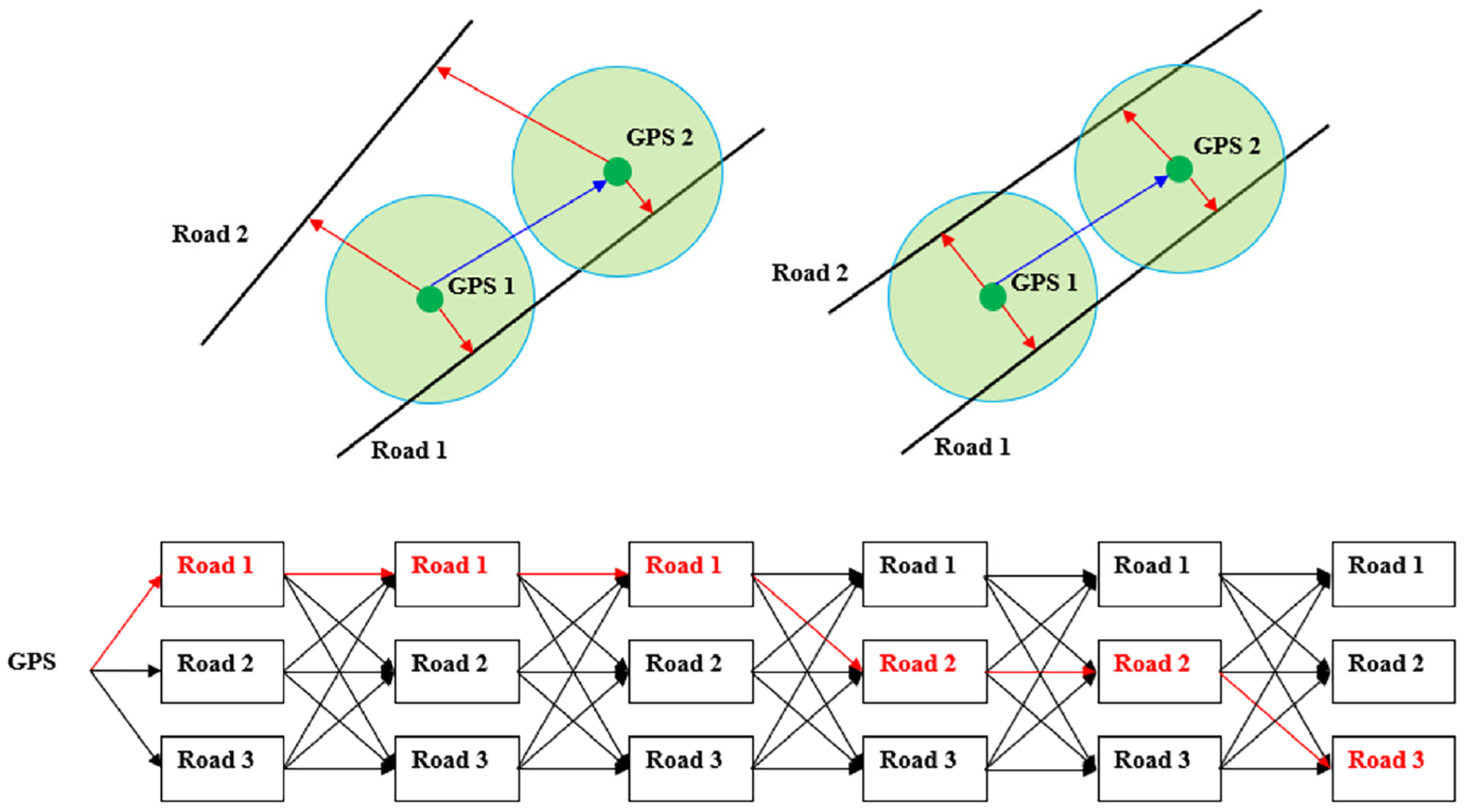
where P d represents the transition probability from a GPS point to a potential road, and d i is the shortest perpendicular distance from the GPS point to road segment i . The specific procedure was conducted as follows: First, a circular buffer with a 30 m radius was generated around each GPS point. Road segments intersecting this buffer were identified as candidate routes for the HDT. Subsequently, the transition probability from the GPS point to each candidate road was calculated individually. Finally, these transition probabilities were aggregated, and the route with the highest accumulated probability was identified as the vehicle’s actual travel path. This matching principle is illustrated in Figure 3.

2.3. Cation of IVE Model

This study employed the IVE model, originally supported by the United States Environmental Protection Agency (US EPA), to calculate regional CO2 emissions from HDTs [17]. The model is widely recognized as a robust tool for estimating vehicle exhaust emissions, particularly in developing countries [18]. However, previous studies have demonstrated [19,20,21] that the default emission factors embedded within the IVE model are not directly applicable to the Chinese context due to significant differences in vehicle categorization and driving patterns. Consequently, this study adopted locally adjusted base emission factors derived from domestic empirical research. The application of the IVE model requires configuring three key components: driving patterns, fleet composition, and adjustment coefficients for the base emission factors. The fundamental equations for calculating emissions via the IVE model are presented in Equations (2) and (3).
Q r u n n i n g = f t · d E F t · U F T P · f d t · K d t / U L
E F t = B t · K T m p t · K H m p t · K A l t t · K I M t · K C n t r y t · K F u e l t · K e l s e t
where t is the vehicle technology type; d is the vehicle driving mode; Q r u n n i n g represents the vehicle driving emissions (unit: g); f t is the percentage of vehicles of a certain technology type; E F t is the corrected aggregate emission factor for vehicles of each technology type (unit: g/km); U F T P is the average speed of the Federal Test Procedure (FTP) test (unit: km/h); f d t is the percentage of different driving modes; K d t is the driving mode correction factor (e.g., air conditioning usage or road gradient); B t is the default base emission factor (g/km) for different technology types; and K ( T e m p ) [ t ] , K H m p t , K A l t t , K I M t , K C n t r y t , K F u e l t , and K e l s e t represent correction factors for temperature, humidity, altitude, maintenance, region, fuel, and other relevant factors, respectively.
The IVE model places strict requirements on data due to its consideration of the impact of vehicle driving conditions on emissions, as evident in Equations (4) to (6):
V S P = v 1.1 a + 9.81 a tan sin θ + 0.132 + 0.000302 v 3
E S = R P M I n d e x + 0.08 t o n / k w · Pr e a v e r a g e P o w e r
R P M I n d e x = v / S p e e d D i v i d e r
where v denotes the instantaneous speed of the vehicle (unit: m/s); a is the instantaneous acceleration (unit: m/s2); θ is the road gradient (the influence of road gradient was not considered in this study, therefore θ = 0); ES is the engine operating strength parameter, reflecting the influence of historical operating conditions on current emissions; PreaveragePower is the average value of the vehicle-specific power (VSP) from the first 5 to 25 s (unit: kW/t); RPMIndex is the dimensionless engine rotational speed index (minimum value of 0.9); and SpeedDivider is the speed dividing factor (unit: m/s). Both v and VSP were determined according to IVE model guidelines. In the IVE model, VSP and ES divide the vehicle driving conditions into 60 intervals.
To configure the fleet composition, it is essential to specify both vehicle types and their respective emission standards. Since the available dataset lacked exact manufacturing dates for individual vehicles, the Weibull survival curve was employed in conjunction with the implementation timeline of China’s HDT emission standards to estimate the age distribution of the HDT fleet from 2006 to 2020. This estimation approach follows the methodology successfully applied by Sun et al. [22]. The calculation formula is presented in Equation (7):
S t = exp t a b
where S(t) is a function that changes with the age of the vehicle; t represents the probability of the vehicle’s survival; and a and b are characteristic parameters that vary among different vehicle types. In this study, the parameters for HDTs were derived from Hao et al. [23], with a = 12.8 and b = 5.58.
It is crucial to critically evaluate the applicability of these historical survival parameters within the current context of China’s heavy-duty vehicle fleet. In recent years, China has implemented aggressive national policies—such as the mandatory early retirement of highly polluting commercial vehicles—which have drastically accelerated the turnover rate of HDTs, particularly those complying with China III emission standards and below. Consequently, the actual national scrappage rate is undoubtedly more rapid than these historical parameters suggest.
Nevertheless, these parameters were retained in this study due to significant regional economic disparities. In southwestern China, including Kunming, economic constraints and the specific operational demands of plateau logistics dictate a comparatively slower fleet replacement cycle than in eastern developed megalopolises, allowing older HDTs to persist longer in the active fleet. While the lack of recent, localized deregistration data necessitates reliance on these historical parameters—which inherently introduces some uncertainty by potentially overestimating the proportion of older vehicles (e.g., China II and III)—they currently constitute the most reliable and scientifically sound baseline available for modeling HDT survival probabilities in underdeveloped southwestern regions. Table 1 presents the configured fleet composition used in this study based on these parameters.
For the adjustment factors to the basic emission factors, we adopted correction coefficients from Huan et al. [24]. For HDTs, the correction coefficient for the CO2 basic emission factor was set at 1.17.

2.4. The Characteristics of the CO2 Spatial and Temporal Distribution

We captured the CO2 emission characteristics of HDTs in urban areas in both temporal and spatial dimensions. The temporal distribution was described by examining variations in total emissions per hour (from 0 to 23 h). This analysis was combined with regional road network data to evaluate changes in CO2 emissions on different roads throughout the day. Simultaneously, a Pearson correlation analysis (Equation (8)) was conducted to determine the correlations between traffic volume, travel distance, average speed, emission factors, and CO2 emissions on different roads.
R = i = 1 n X i X ¯ Y i Y ¯ i = 1 n X i X ¯ 2 i = 1 n Y i Y ¯ 2
Determining emissions within a continuous space is challenging; however, partitioning regions into grids enables the comparability of emission intensities across different locations. The grid-based spatial allocation steps were as follows:
(1)
Using ArcGIS software (Version 10.8), we established vector maps of Kunming’s urban area and road network within the WGS1984_UTM_Zone_48N projection coordinate system.
(2)
A grid layer with dimensions of 1 × 1 km was generated, resulting in a total of 506 grids.
(3)
The road density within each grid and the distribution of vehicle trajectory points across the study area were statistically quantified.
(4)
Based on Deng et al. [25], to improve the traditional spatial allocation of CO2 emission intensities, we integrated the vehicle trajectory point density and road network density using Equation (9):
E I i . g = E i × r g g = 1 n r g × t p g g = 1 n t p g g = 1 n r g g = 1 n r g × t p g g = 1 n t p g
where i denotes the type of pollutant emitted (in this study, CO2); g denotes the grid number (from 1 to 506); E I i , g denotes the grid emission intensity (unit: kg); E i denotes the total CO2 emitted by HDTs in the study region (unit: kg); r g denotes road network density (unit: km/km2); and t p g denotes the trajectory point density within grid g (unit: point/km2).
The fundamental logic of this dual-density weighting methodology is to dynamically couple static infrastructure capacity with actual dynamic traffic activity. In traditional spatial allocation models, emissions are distributed based solely on the normalized proportion of road length within a grid r g r g . However, the mere physical existence of a road does not equate to the presence of HDT traffic, especially in dense urban cores subject to strict daytime truck restriction policies. Allocating emissions based solely on road networks inevitably leads to severe overestimation in city centers.
To overcome this limitation, Equation (9) introduces a multiplicative weighting approach. The numerator computes a joint probability-like weight by multiplying the grid’s share of the total road network by its share of the total GPS trajectory points r g r g . The denominator then sums these joint weights across all n grids to yield a new normalization factor. This mathematical formulation strictly ensures mass conservation (the sum of emissions across all grids equals E i ) while demanding that both physical roads and actual HDT activity be present to register high emissions. Consequently, grids with dense road networks but negligible HDT trajectory points are appropriately suppressed, providing a much higher fidelity representation of real-world emission hotspots.

3. Results and Discussion

3.1. The Characteristics of the CO2 Spatial and Temporal Distribution

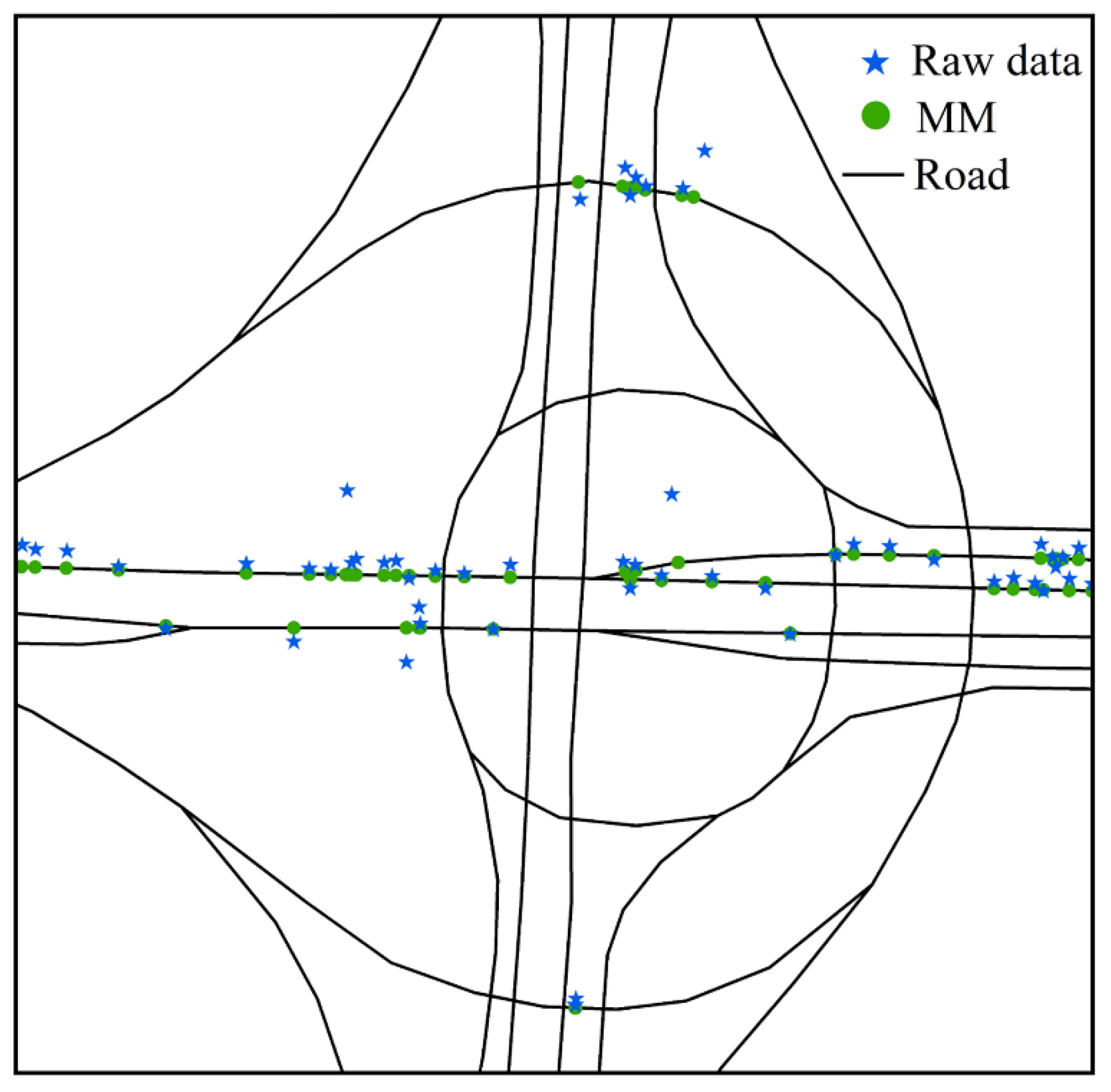
Accurately matching GPS trajectories to the road network was a critical step in the data processing phase of this study. To evaluate the proposed map matching algorithm, we selected a representative area within the study region characterized by a complex road network topology, with the visual results illustrated in Figure 4. Furthermore, to quantitatively validate the reliability of our simplified HMM-based algorithm, a ground-truth dataset was established. Specifically, a subset of 1000 continuous trajectory points was randomly sampled from the original dataset. A rigorous manual visual inspection was then conducted by superimposing the raw GPS points, the algorithm’s matched outputs, and the high-resolution OpenStreetMap road network. The validation results demonstrated that the proposed algorithm achieved an overall map matching accuracy of 94.5%.
Regarding the residual error rate of 5.5%, misclassifications were primarily observed in areas with highly complex urban topographies. These matching errors typically occurred near multi-level overpasses, closely parallel minor roads, or within dense “urban canyons,” where severe GPS multipath effects (i.e., signal reflections from tall buildings) caused significant spatial drift that occasionally exceeded the algorithm’s 30 m localized search buffer. Nevertheless, considering that the primary objective of this study is to allocate emissions into macroscopic 1 × 1 km grid cells rather than to provide micro-level navigation, a 94.5% link-level matching accuracy provides a highly robust foundation for reliably calculating vehicle travel distances and subsequent regional CO2 emissions.

3.2. Vehicle Activity Characteristics

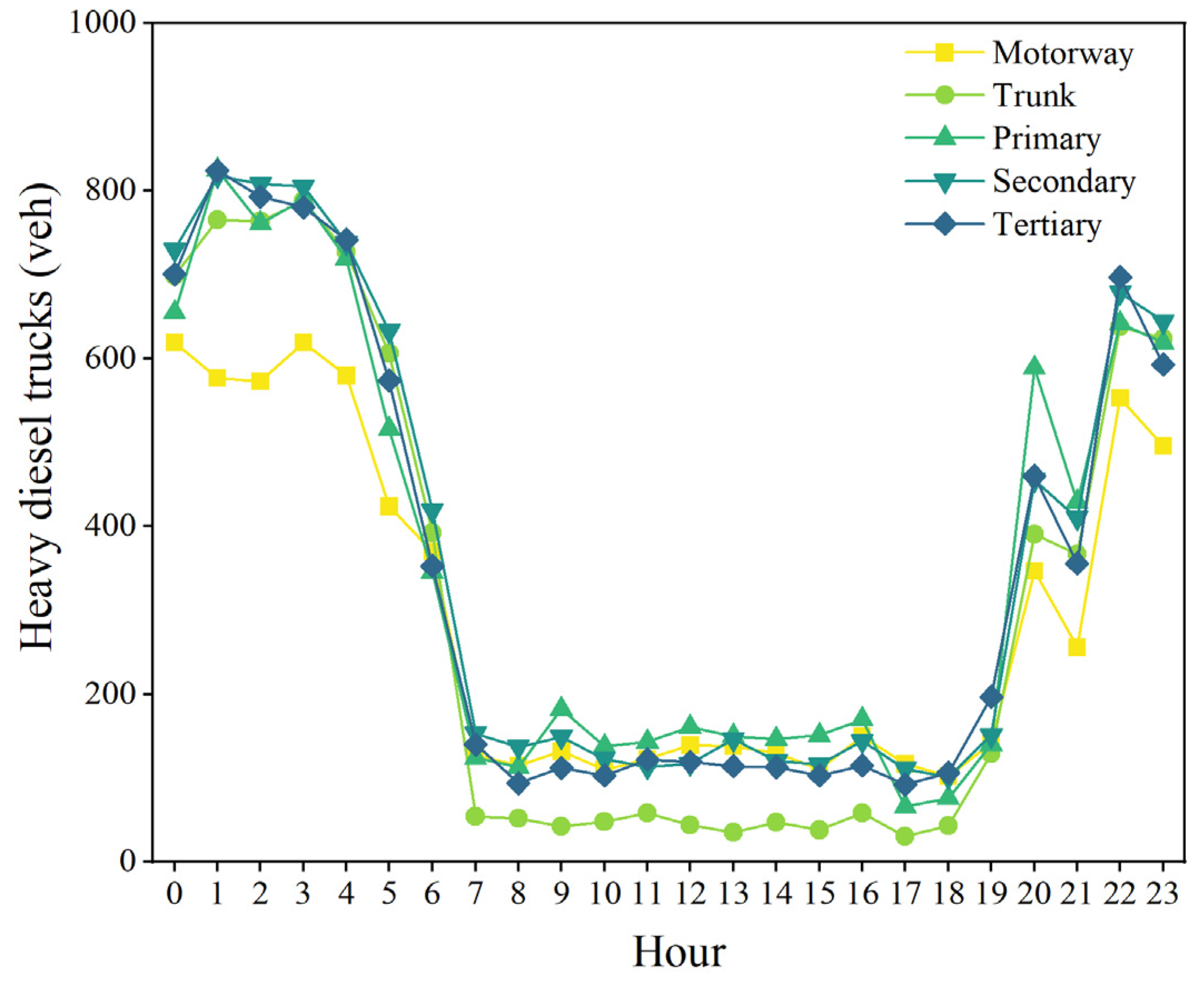
The activity levels of HDTs across different road types within the study region were characterized by traffic volume, average travel distance, and average travel speed. As illustrated in Figure 5, the diurnal traffic volume of HDTs exhibited a highly consistent pattern across all road categories. Specifically, higher activity levels were observed from 20:00 to 06:00 (designated as the peak period), while lower activity levels occurred between 07:00 and 19:00 (designated as the off-peak period). This distinct temporal distribution of HDT traffic strongly aligns with the region’s daytime vehicle restriction policies.
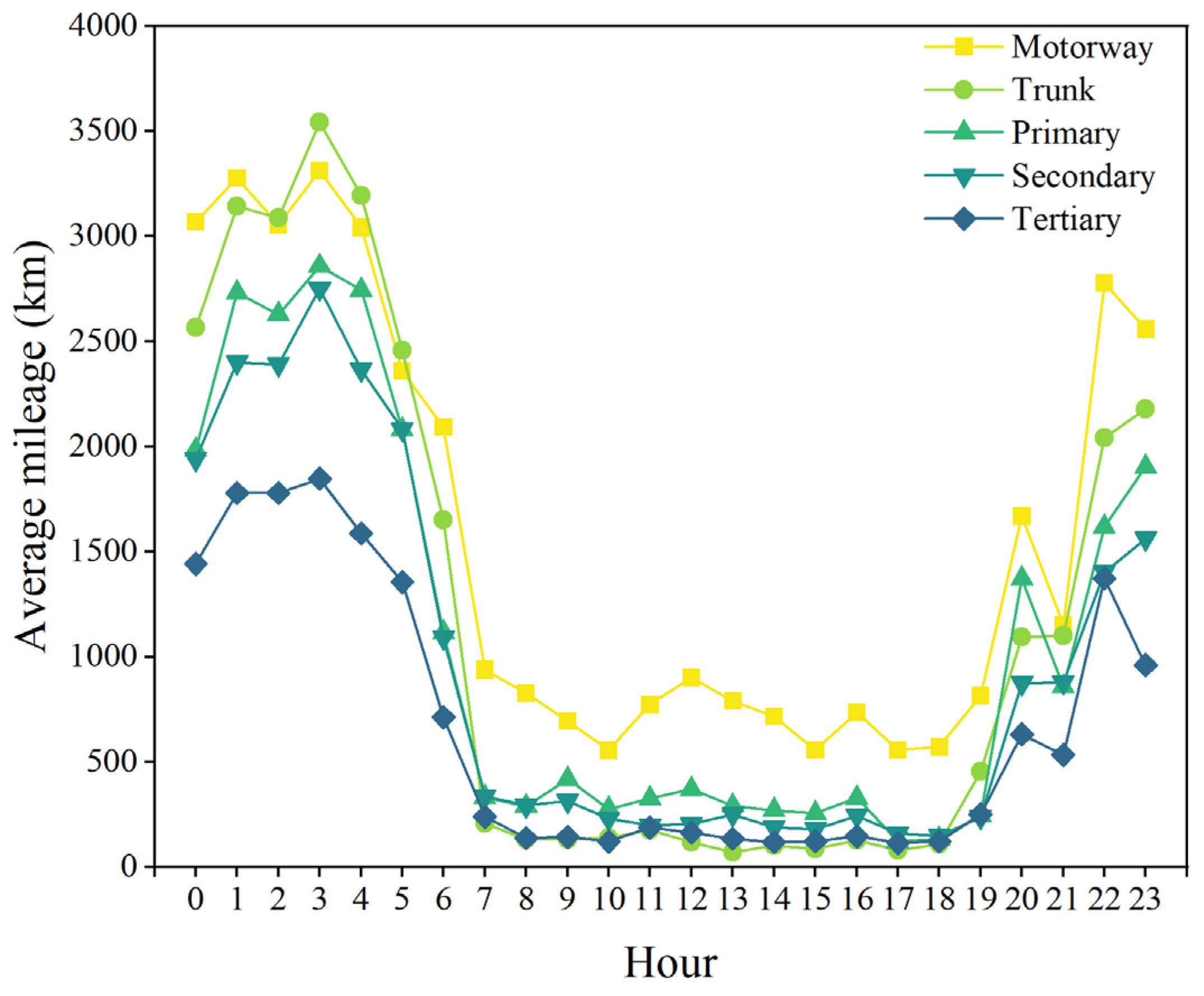
Figure 6 demonstrates that the diurnal distribution of average travel distances closely mirrors the hourly traffic flow trends shown in Figure 5. This strong correlation indicates that variations in regional traffic volume directly influence the overall magnitude of HDT travel distances.
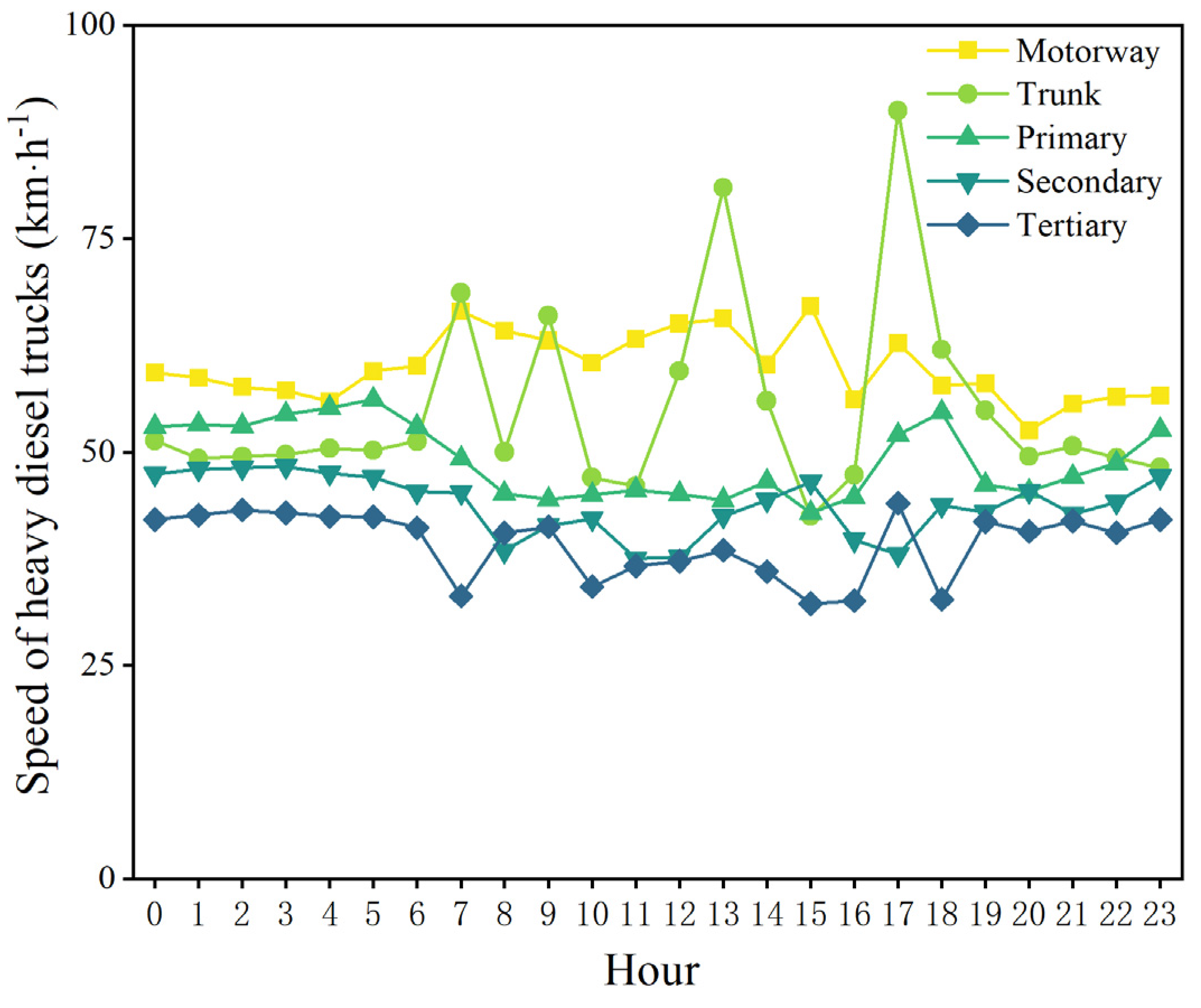
Figure 7 illustrates the hourly distribution of average HDT speeds across different road types. While speeds predominantly ranged between 25 and 75 km/h, distinct variations were observed among road categories, with average speeds decreasing sequentially from road type M down to Te. Notably, speed fluctuations for all road types were significantly more pronounced during the daytime off-peak period compared to the nighttime peak period, particularly for road type T.

3.3. Emission Factors

Previous research by Wang et al. [26] found no significant correlation between altitude variations and CO2 emissions from heavy-duty vehicles, suggesting that CO2 emission factors derived from non-high-altitude regions are valid for comparative analysis. Table 2 compares the average CO2 emission factors calculated in this study with those reported in the existing literature. Our calculated average emission factor is highly consistent with the findings of Patiño-Aroca et al. [27] though slightly lower than the values reported in several other studies. Overall, the emission factors derived in this study fall well within a reasonable and expected range, as corroborated by the data from Lv et al. [28].
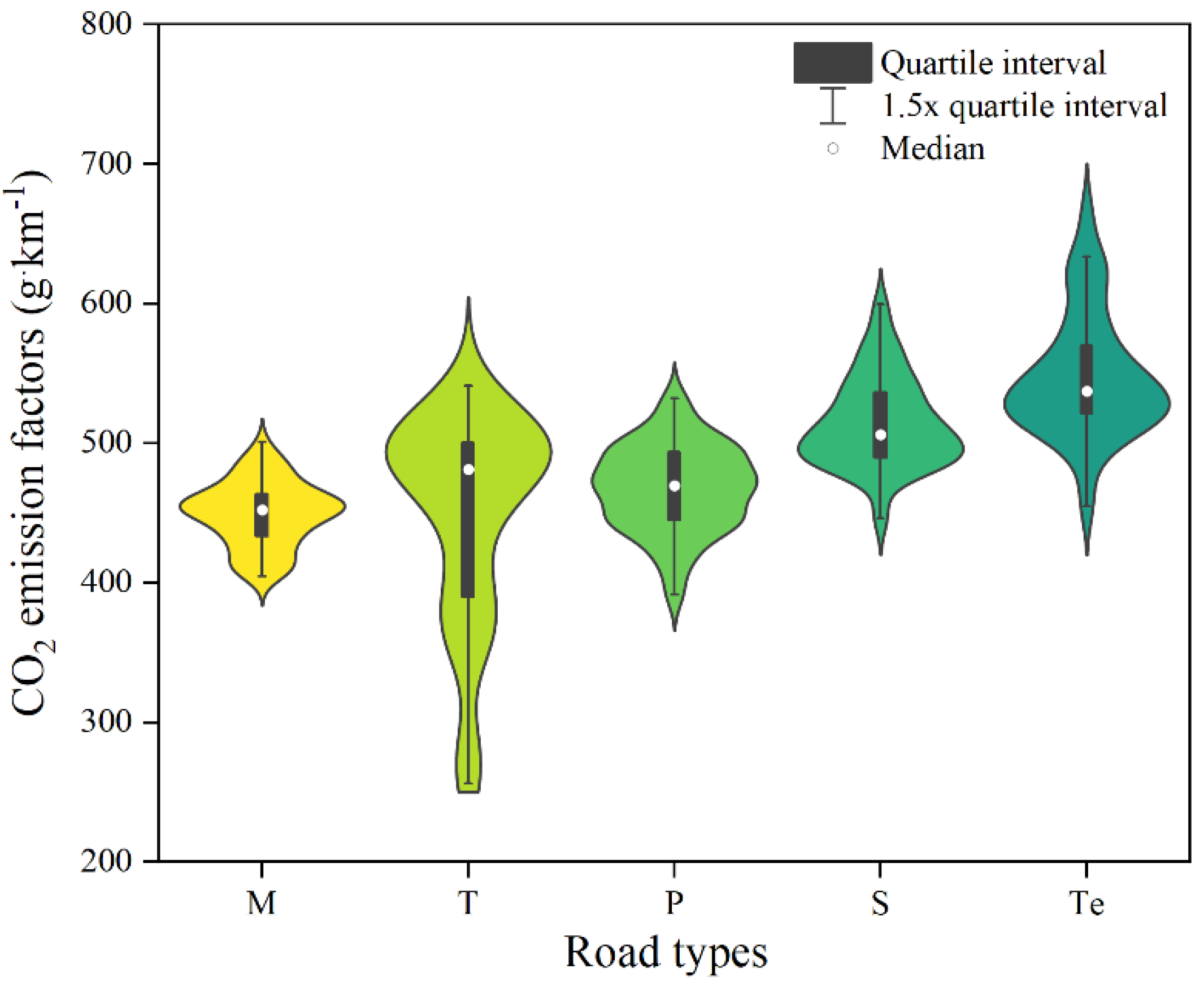
Figure 8 illustrates the distribution of CO2 emission factors across different road types. As the road category descended along the hierarchy (from motorways to tertiary roads), the distribution of emission factors displayed an increasing trend. The emission factors for each road type were primarily concentrated around their median values, except for trunk roads, which exhibited a notable level of variability. Calculations revealed that trunk roads had a maximum speed variance of 128, indicating substantial speed fluctuations that consequently broadened the distribution of emission factors.
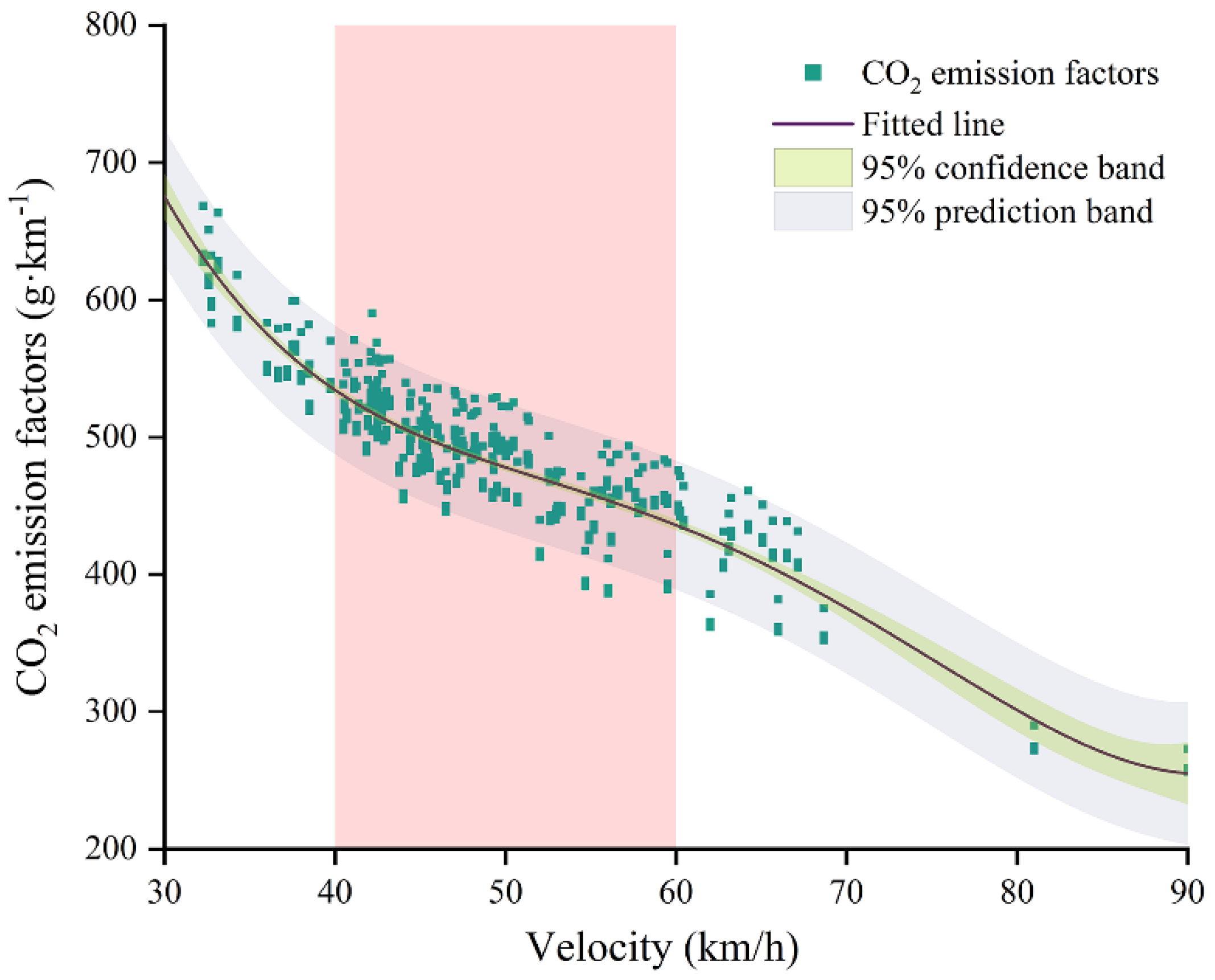
The variation in emission factors across different road types fundamentally arises from disparities in speed distribution. Figure 9 further clarifies the relationship between driving speed and CO2 emission factors. As the observed driving speed increased, HDTs tended to exhibit lower CO2 emission factors, a conclusion that strongly aligns with the findings of numerous previous studies [29]. Furthermore, it was noted that HDTs rarely attained emission factors below 400 g/km. Instead, the emission factors were predominantly concentrated within the 400–600 g/km range. This phenomenon can be attributed to the complexity of urban driving conditions, the relatively small proportion of high-speed roads, and the impact of traffic restriction policies, all of which hinder HDTs from achieving higher, more fuel-efficient travel speeds within urban boundaries.

3.4. Characteristics of Temporal Distribution of CO2 Emissions

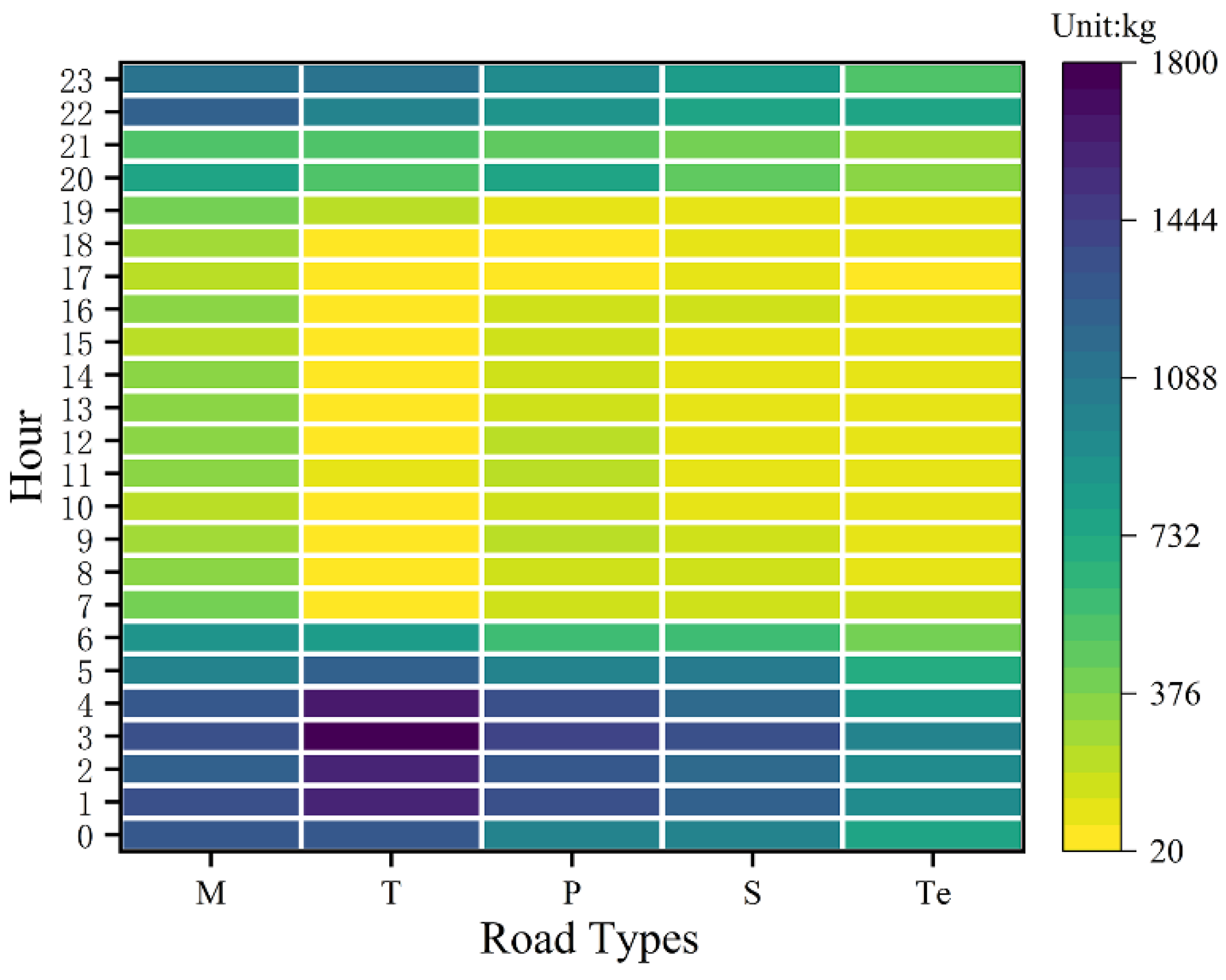
Figure 10 presents the diurnal variation in regional CO2 emissions from HDTs across different road types. Evidently, peak emission periods occurred from 00:00 to 06:00 and from 20:00 to 23:00, whereas lower emissions were observed between 07:00 and 19:00. This observation perfectly aligns with the previously defined peak and off-peak periods, demonstrating that traffic restriction policies directly shape the temporal profile of HDT CO2 emissions. Moreover, distinct disparities in emission levels were evident across different road types. Notably, trunk roads exhibited significantly higher emissions during the 00:00 to 06:00 window compared to other road categories, while tertiary roads consistently maintained the lowest emission levels.
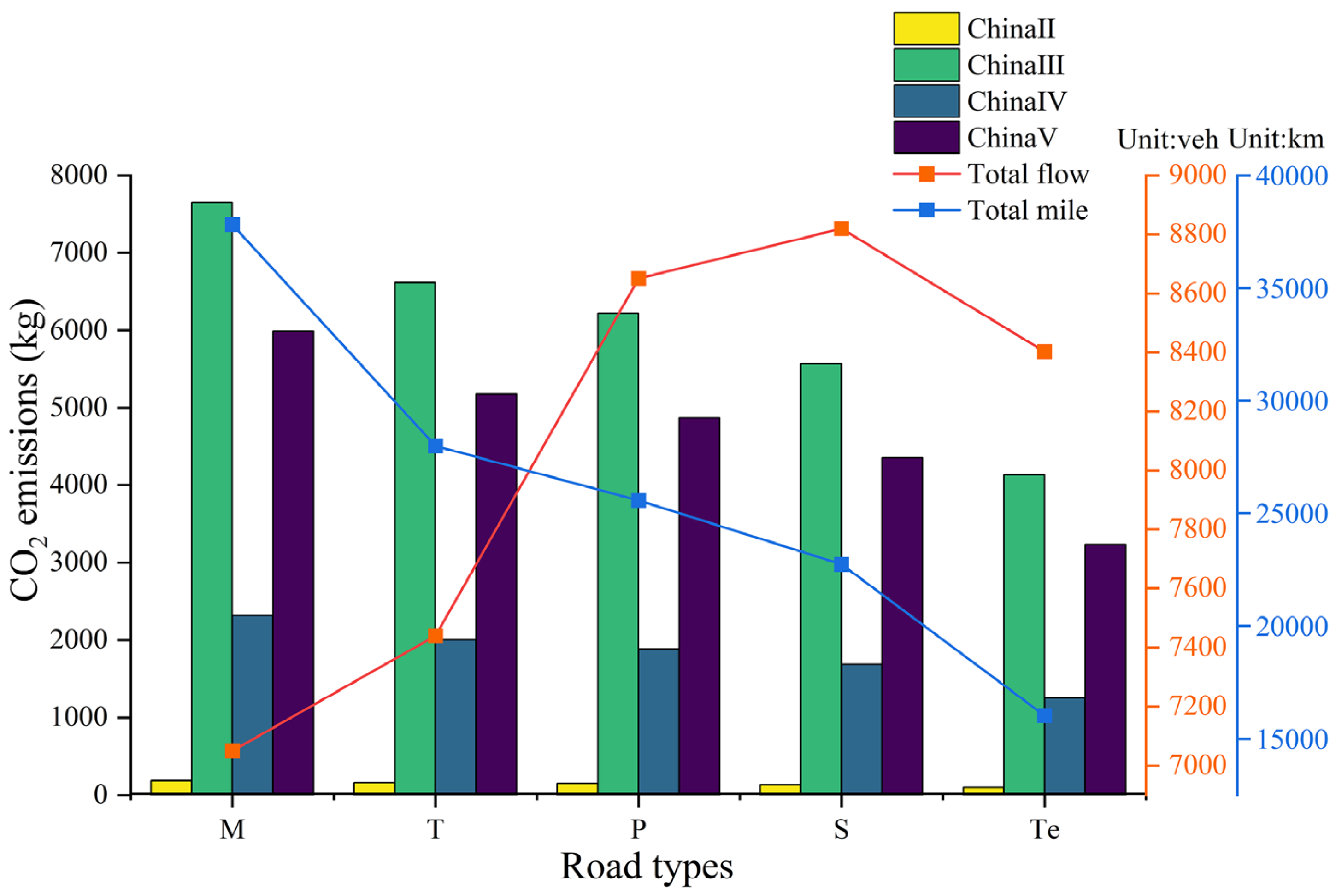
Figure 11 shows that total CO2 emissions decreased successively from road types M down to Te. Additionally, HDTs compliant with China III and China V emission standards were the dominant contributors to regional CO2 emissions. Interestingly, the data suggest that traffic volume alone is not the primary determinant of emission disparities among road types; rather, the total travel distance on specific road types plays a more critical role. While total travel distances and their corresponding CO2 emissions decreased sequentially from motorways to tertiary roads, the actual traffic flows exhibited an upward trend across these same categories.
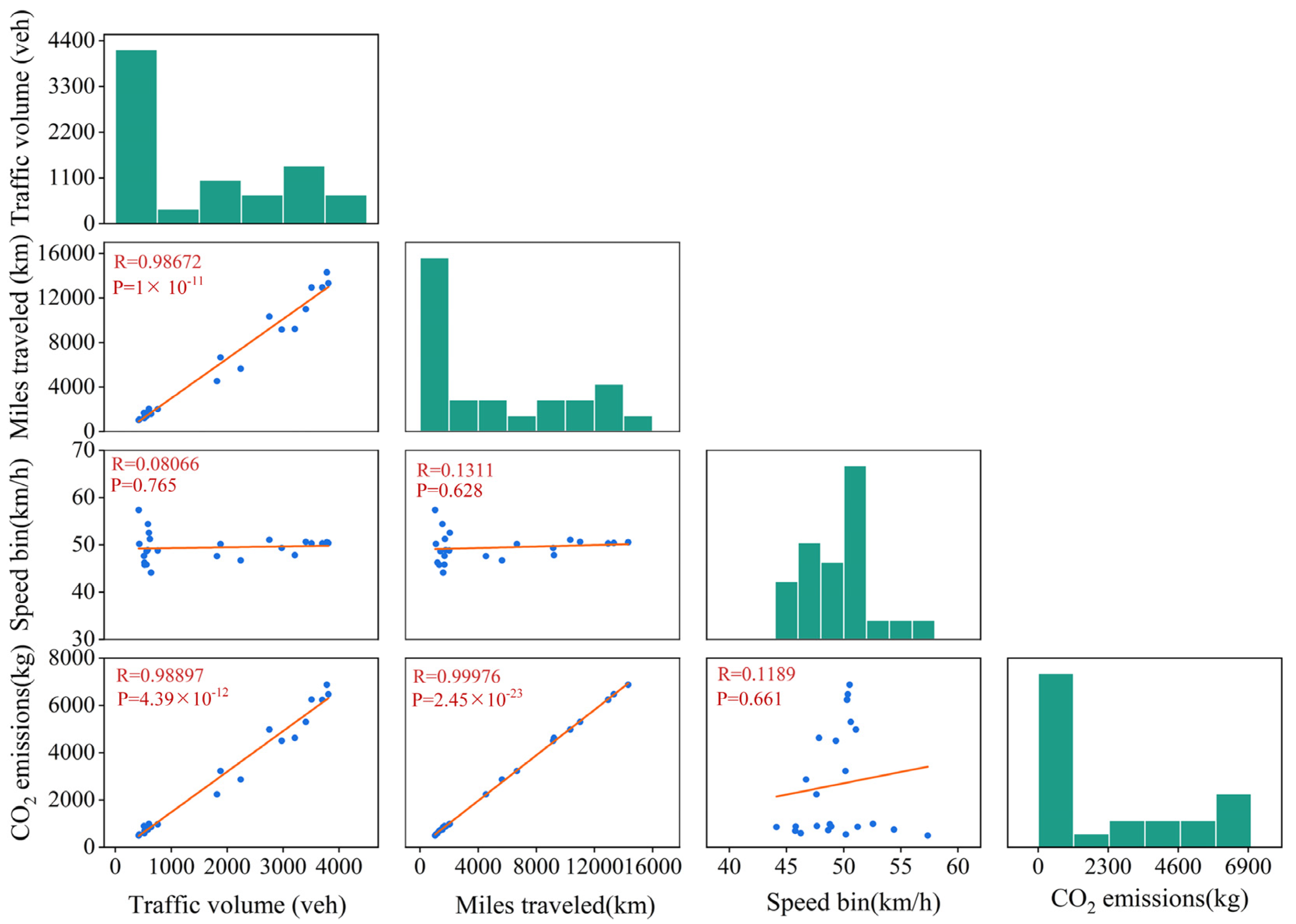
To further explore the relationships among CO2 emissions, traffic flow, travel distance, and vehicle speed within the study area, a Pearson correlation analysis was conducted, with the results detailed in Figure 12.
As shown in Figure 12, calculations revealed that traffic flow (R = 0.9889, p < 0.01) and travel distance (R = 0.9976, p < 0.01) were significantly and positively correlated with CO2 emissions. In contrast, vehicle speed (R = 0.1189, p > 0.05) did not exhibit a statistically significant linear correlation with total CO2 emissions. Therefore, within urban road networks, the total mass of CO2 emitted by HDTs is primarily driven by regional traffic flows and cumulative travel distances.
Moreover, local traffic restriction policies directly limit HDT activities during specific daytime hours, effectively reducing daytime traffic flow and associated emissions. However, it is crucial to highlight that this phenomenon represents a temporal redistribution of emissions rather than a net reduction in daily total emissions. Because the fundamental urban freight demand is inelastic, restricting daytime access merely forces the same volume of HDTs to operate within the permitted nighttime window.
Consequently, this sudden and highly concentrated surge in nighttime HDT activity poses severe public health and environmental justice concerns. While daytime restrictions alleviate traffic congestion, they drastically increase nocturnal air pollution exposure (including co-emitted criteria pollutants such as NOx and PM) and ambient noise levels for populations residing near urban trunk roads. Because these peak emission hours (00:00 to 06:00) coincide with residents’ sleeping hours, the health risks associated with this temporal emission shift may offset the intended environmental benefits. Therefore, future research and control strategies for urban HDT emissions must comprehensively evaluate the hidden side effects and human exposure risks triggered by such blunt traffic restriction policies.

3.5. Characteristics of Spatial Distribution of CO2 Emissions

In this study, improvements were made to traditional CO2 emission spatial allocation methods. Specifically, vehicle trajectory density and road network density were dynamically integrated to allocate CO2 emissions into grid cells. To evaluate this approach, the results were comparatively analyzed against the traditional methodology proposed by Ibarra-Espinosa et al. [30].
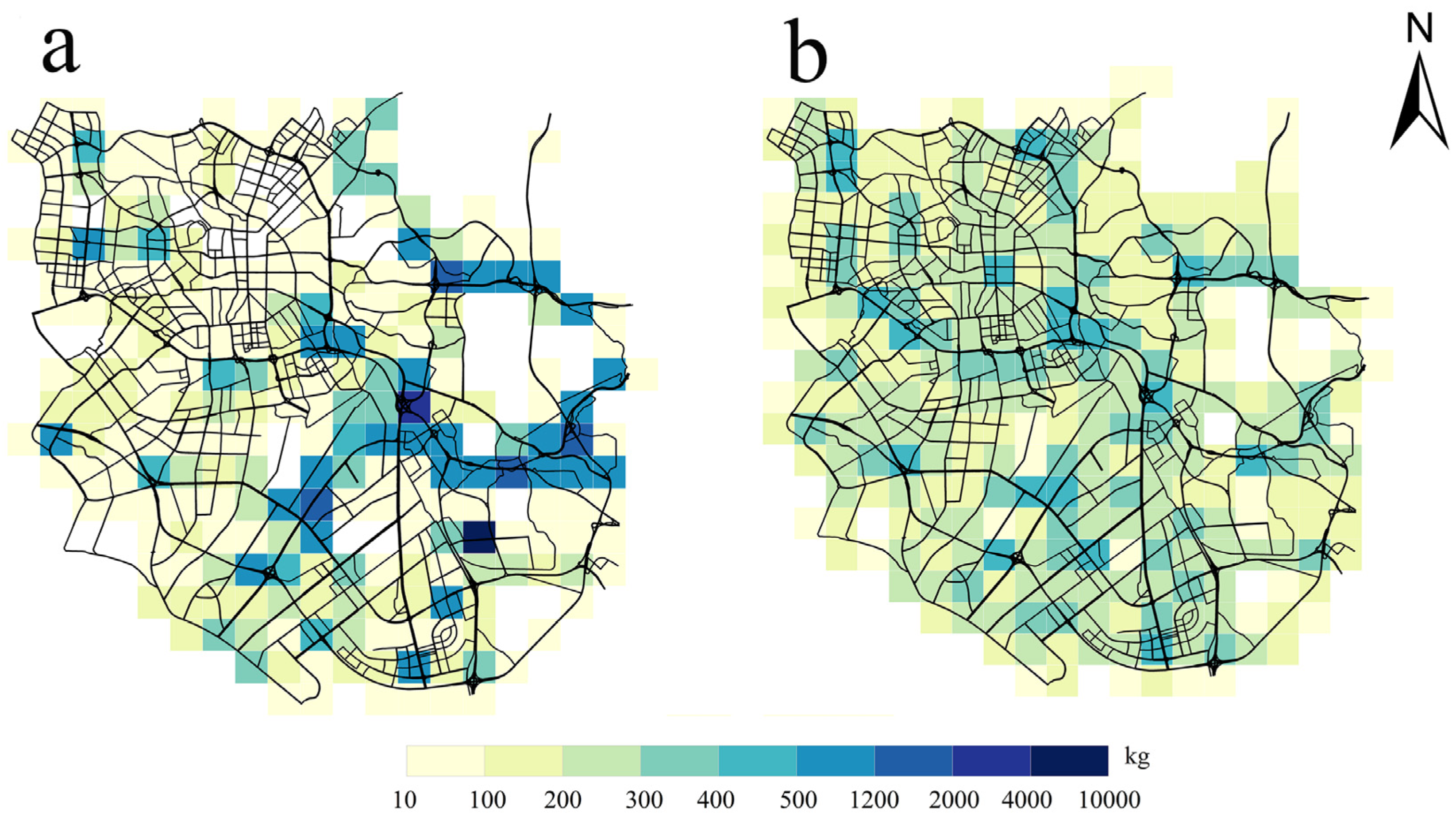
Figure 13 presents the spatial outcomes of the two different emission allocation methods. Figure 13a corresponds to our proposed approach, while Figure 13b shows the results using the benchmark methodology. Distinct differences between the two outcomes can be summarized as follows:
(1)
Range of grid emission quantities. In Figure 13a, the emission range per grid cell is 10–10,000 kg, whereas in Figure 13b, it is narrowly confined to 10–574 kg. This massive divergence arises because the Ibarra-Espinosa method calculates total grid emissions based merely on static grid-road intersections, leading to an overly smoothed and homogenized allocation of CO2 emissions.
(2)
Spatial heterogeneity of emissions. The spatial distribution of CO2 emissions in Figure 13b appears artificially uniform. This occurs because the benchmark approach disregards actual high-frequency vehicle travel patterns. In contrast, the dual-density method (Figure 13a) provides a much more accurate and granular depiction of the spatial heterogeneity of CO2 emissions from HDTs within the region.
From Figure 13a, it is apparent that the regions with high CO2 emissions were predominantly concentrated in the southeastern part of the city. Grid cells with emissions > 4000 kg are marked on the figures, and these high-emission grid cells were found to be situated along Hongchang West Road, Kunmo Expressway, G78 Shankun Expressway, Kunshi Highway, and Hangrui Expressway. These roads are interlinked with major industrial and logistics bases in the city. Notably, the grid cells with emissions > 4000 kg were located near significant industrial establishments such as the Kunming Processing and Trading Base, Kunming Iron & Steel Group, and Kunming Steel Materials Logistics Port.
Because HDTs are the essential backbone of urban industrial logistics and bulk goods transportation, the concentration of heavy industries in southeastern Kunming dictates the intense HDT activity in this region. Coupled with a well-developed road network, this industrial layout fundamentally shapes the severe CO2 emission zones, highlighting the pivotal role of urban industrial zoning in dictating the spatial footprint of vehicular emissions.
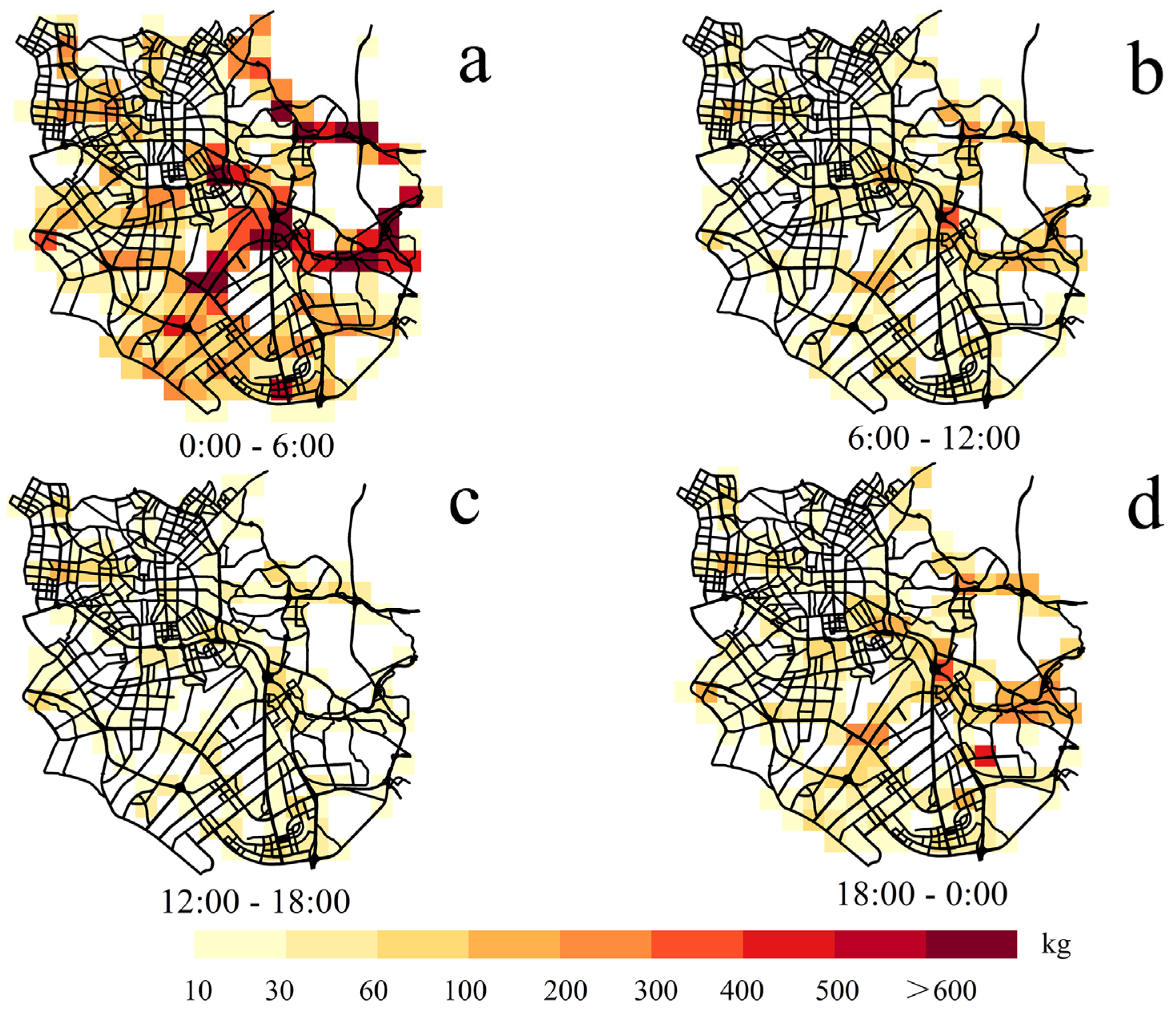
Figure 14 depicts the spatiotemporal evolution of HDT CO2 emissions across four- time intervals (00:00–06:00, 06:00–12:00, 12:00–18:00, and 18:00–00:00). Temporally, emissions were significantly driven by traffic flow variations [31]. Spatially, the distribution was heavily anchored by vehicle trajectory point density. The highest CO2 emissions occurred during the deep-night interval of 00:00–06:00 (Figure 14a), accounting for a staggering 56.7% of total daily emissions. Conversely, emissions bottomed out during the 12:00–18:00 interval, contributing just 6.8%. The 06:00–12:00 and 18:00–00:00 intervals accounted for 11.8% and 24.7%, respectively.
It was determined that HDT CO2 emissions exhibited the exact opposite trend to people’s working hours, i.e., higher emissions during the night and lower emissions during the day. This contradicted the conclusions reached by Ghaffarpasand et al. [32] and Sun et al. [33]. However, this discrepancy likely arose because those studies primarily involved private or passenger vehicles operating during daytime working hours. In contrast, HDTs transport bulk goods under strict daytime restriction policies, resulting in contrasting findings due to their distinctly different patterns of operation.
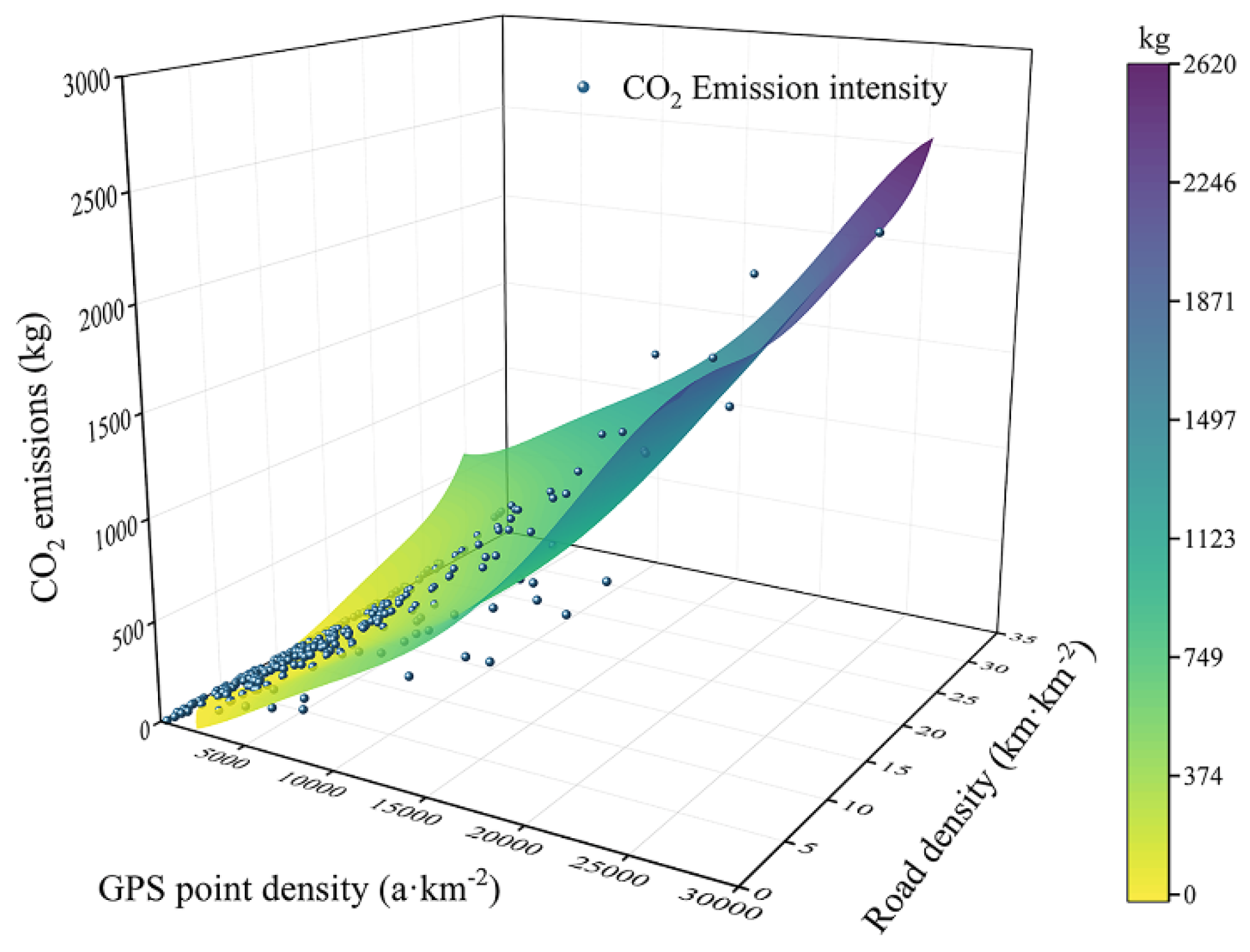
Figure 15 illustrates the 3D relationships among regional GPS point density, road network density, and CO2 emission intensity (<4000 kg). The highest emission intensities strictly spatially correspond to grid cells that possess both high GPS point density and high road network density. Therefore, when establishing high-resolution vehicular emission inventories or conducting future environmental exposure research, it is highly recommended to dynamically incorporate vehicle trajectory point density rather than relying solely on static road networks. This integration provides a substantially more accurate and realistic representation of the spatial footprint of actual vehicle emissions.

4. Conclusions

In this study, a bottom–up approach was integrated with the International Vehicle Emissions (IVE) model to characterize the carbon dioxide (CO2) emissions of heavy-duty diesel trucks (HDTs) in the Kunming region, utilizing a massive dataset of 1.24 million trajectory points from 5996 HDTs. The primary conclusions are as follows:
(1)
Although higher driving speeds inherently result in lower CO2 emission rates, HDTs in the study area typically operate within an observed speed range of 40–60 km/h, yielding an average emission factor of approximately 500 g/km.
(2)
Vehicles compliant with China III emission standards remained the dominant contributors to the regional CO2 emissions from the HDT fleet.
(3)
Traffic flow volume and cumulative driving distances were identified as the primary factors that significantly and positively drive regional HDT CO2 emissions.
(4)
Daytime vehicle restriction policies effectively suppress daytime CO2 emissions by limiting the activity range, traffic volume, and mileage of HDTs. However, rather than achieving a net reduction in overall daily emissions, these policies primarily trigger a temporal redistribution. Because fundamental urban freight demand is inelastic, this redistribution results in significantly higher CO2 emissions and intensified HDT activities at night (especially from 00:00 to 06:00). This drastic nocturnal shift consequently raises critical environmental justice concerns regarding increased air pollution exposure and noise disturbances for urban populations residing near major transport corridors.
(5)
Methodologically, the proposed spatial allocation approach—which dynamically integrates vehicle trajectory point density with static road network density—more accurately delineates the spatial heterogeneity of regional CO2 emissions compared to traditional road-length-based allocation methods.
(6)
Spatially, emission hotspots generated by HDTs in urban Kunming are predominantly concentrated in the southeastern part of the city. This spatial footprint is heavily dictated by the local urban industrial and logistics layout.
This study has several limitations that must be transparently addressed. First, the scope is limited specifically to HDTs, which does not capture the holistic CO2 emissions from the highly diverse urban motor vehicle fleet. Second, and crucially, reliance on the bottom–up IVE model introduces inherent uncertainties that propagate through the calculations (Equations (2) and (3)). The primary emission correction factors utilized (e.g., adjustments for temperature, altitude, maintenance, and fuel quality) rely heavily on historical domestic research. These static parameters may not accurately reflect the rapid technological advancements in modern Chinese HDTs, particularly the widespread adoption of advanced after-treatment systems (e.g., SCR and DPF) and mandatory improvements in fuel quality under the China V and VI standards. The propagation of this uncertainty implies a potential deviation between the calculated inventory and real-world instantaneous tailpipe emissions.
Finally, the dispersion behavior and complex microenvironmental accumulation of CO2 and co-emitted pollutants within urban canyons were not considered in this spatial allocation. To address these profound gaps, our research team is currently acquiring broader operational data across various vehicle fleets and establishing a smog chamber to simulate real-world pollutant dispersion and physicochemical reactions. In future research, we aim to incorporate a wider array of vehicle categories, establish dynamic and localized emission correction factors that align with cutting-edge vehicle technologies, and comprehensively investigate pollutant dispersion behaviors within complex urban microenvironments.

Author Contributions

Conceptualization, Y.W., J.W. and H.Z.; methodology, Y.W. and J.L.; software, J.X. and Y.C.; validation, L.W., J.L. and J.X.; formal analysis, Y.W. and Y.C.; investigation, L.W. and J.X.; resources, J.W. and H.Z.; data curation, L.W. and Y.C.; writing—original draft preparation, Y.W.; writing—review and editing, J.W. and H.Z.; visualization, Y.W. and J.X.; supervision, J.W. and H.Z.; project administration, H.Z.; funding acquisition, J.W. and H.Z. All authors have read and agreed to the published version of the manuscript.

Funding

This work is financially supported by the National Natural Science Foundation of China (NSFC) (No. 51968065). The author also expresses his deep gratitude to the teachers and students for their help in learning.

Institutional Review Board Statement

Not applicable.

Informed Consent Statement

Not applicable.

Data Availability Statement

The datasets used and/or analyzed during the current study are available from the corresponding author upon reasonable request.

Conflicts of Interest

Authors Li Wang and Jiguang Wang were employed by the company China Automotive Research Institute Vehicle Inspection Center (Kunming) Co., Ltd., The remaining authors declare that the research was conducted in the absence of any commercial or financial relationships that could be construed as a potential conflict of interest.

References

  1. IPCC. Climate Change 2023: Synthesis Report; Lee, H., Romero, J., Eds.; IPCC: Geneva, Switzerland, 2023.
  2. Zhao, X.; Ma, X.; Chen, B.; Shang, Y.; Song, M. Challenges toward carbon neutrality in China: Strategies and countermeasures. Resour. Conserv. Recycl. 2022, 176, 105959. [Google Scholar] [CrossRef]
  3. Cheng, S.; Zhang, B.; Peng, P.; Lu, F. Health and economic benefits of heavy-duty diesel truck emission control policies in Beijing. Environ. Int. 2023, 179, 108152. [Google Scholar] [CrossRef] [PubMed]
  4. Machado, P.G.; Teixeira, A.C.; Collaço, F.M.; Mouette, D. Review of life cycle greenhouse gases, air pollutant emissions and costs of road medium and heavy-duty trucks. Wiley Interdiscip. Rev. Energy Environ. 2021, 10, e395. [Google Scholar] [CrossRef]
  5. Giechaskiel, B.; Grigoratos, T.; Dilara, P.; Franco, V. Environmental and Health Benefits of Reducing Tyre Wear Emissions in Preparation for the New Euro 7 Standard. Sustainability 2024, 16, 10919. [Google Scholar] [CrossRef]
  6. Ragon, P.-L.; Buysse, C.; Sen, A.; Meyer, M.; Benoit, J.; Miller, J.; Rodríguez, F. Potential Benefits of the US Phase 3 Greenhouse Gas Emissions Regulation for Heavy-Duty Vehicles; ICCT: Washington, DC, USA, 2023. [Google Scholar]
  7. Zhang, R.; Hanaoka, T. Opportunities and challenges of post-pandemic’s new normal: Rethinking the contribution of the transport sector to China’s carbon neutrality by 2060. Sci. Total Environ. 2023, 894, 164976. [Google Scholar] [CrossRef]
  8. Yang, W.; Yu, C.; Yuan, W.; Wu, X.; Zhang, W.; Wang, X. High-resolution vehicle emission inventory and emission control policy scenario analysis, a case in the Beijing-Tianjin-Hebei (BTH) region, China. J. Clean. Prod. 2018, 203, 530–539. [Google Scholar] [CrossRef]
  9. Yu, Q.; Wang, L.; Pan, S.; Chen, M.; Qiu, K.; Huang, X. Spatiotemporal Characterization of Atmospheric Emissions from Heavy-Duty Diesel Trucks on Port-Connected Expressways in Shanghai. Atmosphere 2025, 16, 1183. [Google Scholar] [CrossRef]
  10. Cifuentes, F.; González, C.M.; Trejos, E.M.; López, L.D.; Sandoval, F.J.; Cuellar, O.A.; Mangones, S.C.; Rojas, N.Y.; Aristizábal, B.H. Comparison of top-down and bottom-up road transport emissions through high-resolution air quality modeling in a city of complex orography. Atmosphere 2021, 12, 1372. [Google Scholar] [CrossRef]
  11. Saberiyansani, M.; Rashidi, Y.; Hashemi, S.H. Comparative analysis of COPERT and IVE models in road transport emission assessment. Sustain. Earth Trends 2025, 5, 25. [Google Scholar] [CrossRef]
  12. Lei, J.; Yang, C.; Fu, Q.; Chao, Y.; Dai, J.; Yuan, Q. An approach of localizing MOVES to estimate emission factors of trucks. Int. J. Transp. Sci. Technol. 2024, 13, 229–242. [Google Scholar] [CrossRef]
  13. Luo, Z.; He, T.; Lv, Z.; Zhao, J.; Zhang, Z.; Wang, Y.; Yi, W.; Lu, S.; He, K.; Liu, H. Insights into transportation CO2 emissions with big data and artificial intelligence. Patterns 2025, 6, 101186. [Google Scholar] [CrossRef] [PubMed]
  14. Newson, P.; Krumm, J. Hidden Markov map matching through noise and sparseness. In Proceedings of the 17th ACM SIGSPATIAL International Conference on Advances in Geographic Information Systems, Seattle, WA, USA, 4–6 November 2009; pp. 336–343. [Google Scholar]
  15. National Bureau of Statistics of China. China Statistical Yearbook. Available online: http://www.stats.gov.cn/ (accessed on 20 December 2025).
  16. China Meteorological Administration. Available online: https://www.cma.gov.cn/ (accessed on 20 December 2025).
  17. Davis, N.; Lents, J.; Osses, M.; Nikkila, N.; Barth, M. Development andApplication of an International Vehicle Emissions Model. Transp. Res. Rec. 2005, 1939, 156–165. [Google Scholar] [CrossRef]
  18. Pouresmaeili, M.A.; Aghayan, I.; Taghizadeh, S.A. Development of Mashhad driving cycle for passenger car to model vehicle exhaust emissions calibrated using on-board measurements. Sustain. Cities Soc. 2018, 36, 12–20. [Google Scholar] [CrossRef]
  19. Gao, C.; Na, H.; Song, K.; Xu, Q. Assessment of different methods in analyzing motor vehicle emission factors. Environ. Sci. Pollut. Res. 2022, 29, 75441–75454. [Google Scholar] [CrossRef]
  20. Hui, G.; Zhang, Q.-Y.; Yao, S. Evaluation of the International Vehicle Emission (IVE) model with on-road remote sensing measurements. J. Environ. Sci. 2007, 19, 818–826. [Google Scholar] [CrossRef]
  21. He, W.; Duan, L.; Zhang, Z.; Zhao, X.; Cheng, Y. Analysis of the characteristics of real-world emission factors and VSP distributions—A case study in Beijing. Sustainability 2022, 14, 11512. [Google Scholar] [CrossRef]
  22. Sun, S.; Jiang, W.; Gao, W. Vehicle emission trends and spatial distribution in Shandong province, China, from 2000 to 2014. Atmos. Environ. 2016, 147, 190–199. [Google Scholar] [CrossRef]
  23. Hao, H.; Wang, H.; Ouyang, M.; Cheng, F. Vehicle survival patterns in China. Sci. China Technol. Sci. 2011, 54, 625–629. [Google Scholar] [CrossRef]
  24. Huan, L.; Chunyu, H.; Lents, J.; Davis, N.; Osses, M.; Nikkila, N. Beijing vehicle activity study. In Final Report; International Sustainable Systems Research: La Habra, CA, USA, 2005. [Google Scholar]
  25. Deng, F.; Lv, Z.; Qi, L.; Wang, X.; Shi, M.; Liu, H. A big data approach to improving the vehicle emission inventory in China. Nat. Commun. 2020, 11, 2801. [Google Scholar] [CrossRef]
  26. Wang, Y.; Feng, X.; Zhao, H.; Hao, C.; Hao, L.; Tan, J.; Wang, X.; Yin, H.; Wang, J.; Ge, Y. Experimental study of CO2 and pollutant emission at various altitudes: Inconsistent results and reason analysis. Fuel 2022, 307, 121801. [Google Scholar] [CrossRef]
  27. Patiño-Aroca, M.; Parra, A.; Borge, R. On-road vehicle emission inventory and its spatial and temporal distribution in the city of Guayaquil, Ecuador. Sci. Total Environ. 2022, 848, 157664. [Google Scholar] [CrossRef] [PubMed]
  28. Lv, L.; Ge, Y.; Ji, Z.; Tan, J.; Wang, X.; Hao, L.; Wang, Z.; Zhang, M.; Wang, C.; Liu, H. Regulated emission characteristics of in-use LNG and diesel semi-trailer towing vehicles under real driving conditions using PEMS. J. Environ. Sci. 2020, 88, 155–164. [Google Scholar] [CrossRef]
  29. Shen, X.; Yao, Z.; Zhang, Q.; Wagner, D.V.; Huo, H.; Zhang, Y.; Zheng, B.; He, K. Development of database of real-world diesel vehicle emission factors for China. J. Environ. Sci. 2015, 31, 209–220. [Google Scholar] [CrossRef] [PubMed]
  30. Ibarra-Espinosa, S.; Zhang, X.; Xiu, A.; Gao, C.; Wang, S.; Ba, Q.; Gao, C.; Chen, W. A comprehensive spatial and temporal vehicular emissions for northeast China. Atmos. Environ. 2021, 244, 117952. [Google Scholar] [CrossRef]
  31. Liu, Y.-H.; Ma, J.-L.; Li, L.; Lin, X.-F.; Xu, W.-J.; Ding, H. A high temporal-spatial vehicle emission inventory based on detailed hourly traffic data in a medium-sized city of China. Environ. Pollut. 2018, 236, 324–333. [Google Scholar] [CrossRef]
  32. Ghaffarpasand, O.; Talaie, M.R.; Ahmadikia, H.; Khozani, A.T.; Shalamzari, M.D. A high-resolution spatial and temporal on-road vehicle emission inventory in an Iranian metropolitan area, Isfahan, based on detailed hourly traffic data. Atmos. Pollut. Res. 2020, 11, 1598–1609. [Google Scholar] [CrossRef]
  33. Sun, S.; Sun, L.; Liu, G.; Zou, C.; Wang, Y.; Wu, L.; Mao, H. Developing a vehicle emission inventory with high temporal-spatial resolution in Tianjin, China. Sci. Total Environ. 2021, 776, 145873. [Google Scholar] [CrossRef]
Figure 1. Geographic location of Kunming.
Atmosphere 17 00387 g001
Figure 2. The technical workflow of this study.
Atmosphere 17 00387 g002
Figure 3. The principle of the map matching process.
Atmosphere 17 00387 g003
Figure 4. Map matching (MM) results for selected complex road network.
Atmosphere 17 00387 g004
Figure 5. Hourly traffic flow of HDTs on different road types (sample size: N = 5996 HDTs).
Atmosphere 17 00387 g005
Figure 6. Change in average mileage of HDTs throughout day on different road types.
Atmosphere 17 00387 g006
Figure 7. Regional average speed of HDTs for different road types (unit: km/h; sample size: N = 5996 HDTs).
Atmosphere 17 00387 g007
Figure 8. Distribution of CO2 emission factors for different road types (motorway (M), trunk (T), primary (P), secondary (S), and tertiary (Te)).
Atmosphere 17 00387 g008
Figure 9. Distribution of CO2 emission factors across different observed speed zones.
Atmosphere 17 00387 g009
Figure 10. Changes in hourly CO2 emissions for different road types: motorway (M), trunk (T), primary (P), secondary (S), and tertiary (Te).
Atmosphere 17 00387 g010
Figure 11. The CO2 emissions from HDTs under different emission standards and for different road types: motorway (M), trunk (T), primary (P), secondary (S), and tertiary (Te).
Atmosphere 17 00387 g011
Figure 12. Correlation analysis of the factors influencing CO2 emissions from HDTs (note: statistical significance is indicated by p-values, with p < 0.01 for traffic volume and miles traveled).
Atmosphere 17 00387 g012
Figure 13. Regional high-resolution CO2 emission inventory for HDTs from (a) this study and (b) Ibarra-Espinosa et al. (2021) [30].
Atmosphere 17 00387 g013
Figure 14. Changes in the CO2 emission intensity of regional HDTs at different time periods. (a) 0:00–6:00; (b) 6:00–12:00; (c) 12:00–18:00; (d) 18:00–0:00.
Atmosphere 17 00387 g014
Figure 15. Distribution of CO2 emissions based on trajectory point density and road network density.
Atmosphere 17 00387 g015
Table 1. Fleet composition in IVE model.
VehicleFuelStandardTotal Mileage (km)Percentage (%)
Tk/Bus: Hv *DieselChina II>161,0001.2
China III>161,00046.0
China IV>161,00014.8
China V80,000–161,00038.0
* Tk/Bus for truck or bus; Hv denotes heavy duty.
Table 2. Comparison of CO2 emission factors among various studies.
VehicleWeight (t)Emission StandardCO2 (g/km)Source
HDVs12 t ≤ GVWChina II476.0This study
China III507.5
China IV477.6
China V481.5
UndifferentiatedEuro II479.4[3]
China II936[4]
China III884
China IV791
12 t ≤ GVW ≤ 15 tUndifferentiated500–700[5]
16 t ≤ GVW600–800[6]
Disclaimer/Publisher’s Note: The statements, opinions and data contained in all publications are solely those of the individual author(s) and contributor(s) and not of MDPI and/or the editor(s). MDPI and/or the editor(s) disclaim responsibility for any injury to people or property resulting from any ideas, methods, instructions or products referred to in the content.