Article

Hybrid Electric Vehicle Emission Characteristics at Various Ambient Temperatures

1
State Key Laboratory of Engines, Tianjing University, Tianjin 300350, China
2
Weichai Power Co., Ltd., Weifang 261061, China
3
Jinan Automobile Testing Co., Ltd., Jinan 250102, China
*
Author to whom correspondence should be addressed.
Atmosphere 2026, 17(3), 253; https://doi.org/10.3390/atmos17030253
Submission received: 25 December 2025 / Revised: 28 January 2026 / Accepted: 16 February 2026 / Published: 28 February 2026
(This article belongs to the Special Issue Traffic Related Emission (3rd Edition))

Abstract

To quantify how ambient temperature affects hybrid electric vehicle emissions, a diesel hybrid electric vehicle was tested under three different temperatures by a chassis dynamometer in this work. The results show that the total NOx emission factors follow the sequence of −10 °C > 25 °C > 40 °C and the particle number (PN) emission factors follow the sequence of 40 °C > 25 °C > −10 °C. Both NOx and PN instantaneous emission peaks corresponding to engine-starts can be found in each entire test cycle. The drastic temperature change of upstream SCR and DPF as a result of more frequent engine stop-and-goes may induce NOx and PN peaks. More attention should be paid to exhaust temperature management for hybrid electric vehicles to tackle this emission issue, especially for low-temperature condition.

1. Introduction

With the increase in global environmental pollution and climate change, many countries have adopted strategies to achieve net zero targets by 2050 which have been proposed at the COP 26 summit of UNFCC [1,2]. In China, carbon peak by 2030 and carbon neutrality by 2060 have been pledged [3]. According to the data from the Chinese Ministry of Ecology and Environment, vehicular emissions have become one of the major air pollution sources in many large cities [4]. Previous investigations forecast that the vehicle inventory will continue to increase to 360–540 million by 2030 [5,6,7]. In recent years, due to multiple power sources, hybrid electric vehicles (HEVs) are regarded as one of the effective and promising ways of mitigating the issues of the energy crisis and environmental pollution.
Hitherto, there are numerous publications that focus on hybrid electric vehicles from different aspects, including energy management strategies [8,9,10], battery and engine size optimization [1,11,12], and hybrid drivetrain design [13,14,15]. Meanwhile, hybrid electric vehicles still have an internal combustion engine and their emission issues have attracted extensive attention. Wang et al. [16] assessed the characteristics of instantaneous particle number (PN) emissions from four hybrid electric vehicles under real-world driving conditions. The results showed that high PN emissions were affected by the energy output strategy and state of charge condition. Yang et al. [17] investigated real driving PN emissions from two China-6 compliant hybrid electric vehicles. The results suggested that the power management strategy should be amended to deal with the PN issue. Jeong et al. [18] studied fuel consumption and emission according to HEVs urban driving in Korea. Minimizing the engine preheating time during cold starts and utilizing the stored energy in the motor would enhance the fuel efficiency and emission reduction rate. Suarez-Bertoa et al. [19] analyzed the unregulated emissions from light-duty hybrid electric vehicles and found that NH3, ethanol and acetaldehyde emissions were in the same range as gasoline vehicles were.
Ambient temperature is a key parameter that affects hybrid electric vehicle emissions. Li et al. [20] addressed real-world particle and NOx emissions from HEVs under cold- weather conditions and found that winter significantly increased pollutant emissions. Ehrenberger et al. [21] also observed higher PN and NOx emissions at low temperature. These studies obtained some quantitative results, but the correlations between ambient temperature and hybrid electric vehicle emissions are still unclear, especially for diesel hybrid electric vehicles.
To quantify how ambient temperature affects hybrid electric vehicle emissions, a diesel HEV was tested under three different temperatures. The results in this work are helpful in optimizing the hybrid electric vehicle emission strategy and improving the future policies.

2. Materials and Methods

2.1. Test Vehicle and Laboratory

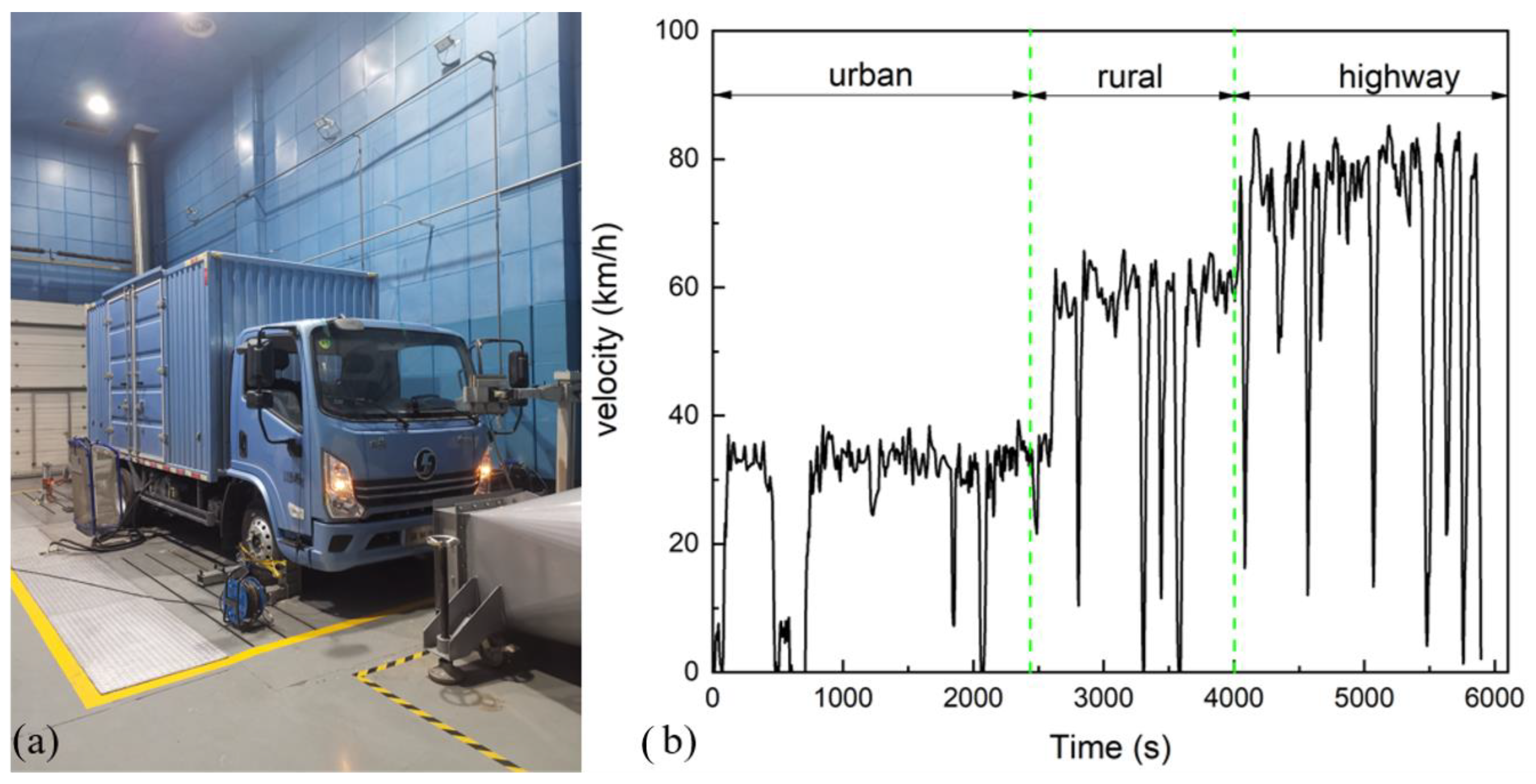
A well-maintained China-6 diesel hybrid electric vehicle was tested in a laboratory, as shown in Figure 1. Standard China-6 reference fuel was fed to the tested vehicle. Detailed vehicle information is illustrated in Table 1. An ECDM-4L-4WD chassis dynamometer (MAHA, Haldenwang, Germany) was used to simulate the road load. A climate chamber (IMTECH SFTP, Leipzig, Germany) was used to control the ambient temperature, which could simulate temperatures from −35 °C to 60 °C. The CVS (constant-volume sampling) system (HORIBA, Kyoto, Japan) was adapted to dilute the exhaust gas. NOx emission was detected by a multicomponent emission analyzer (HORIBA, Kyoto, Japan). Particle number concentration was measured with an AVL 489 (AVL, Graz, Austria) based on the condensation particle counter (CPC) method. Detailed properties of the measurement devices can be found in our previous work [3,7].

2.2. Test Procedure and Data Processing

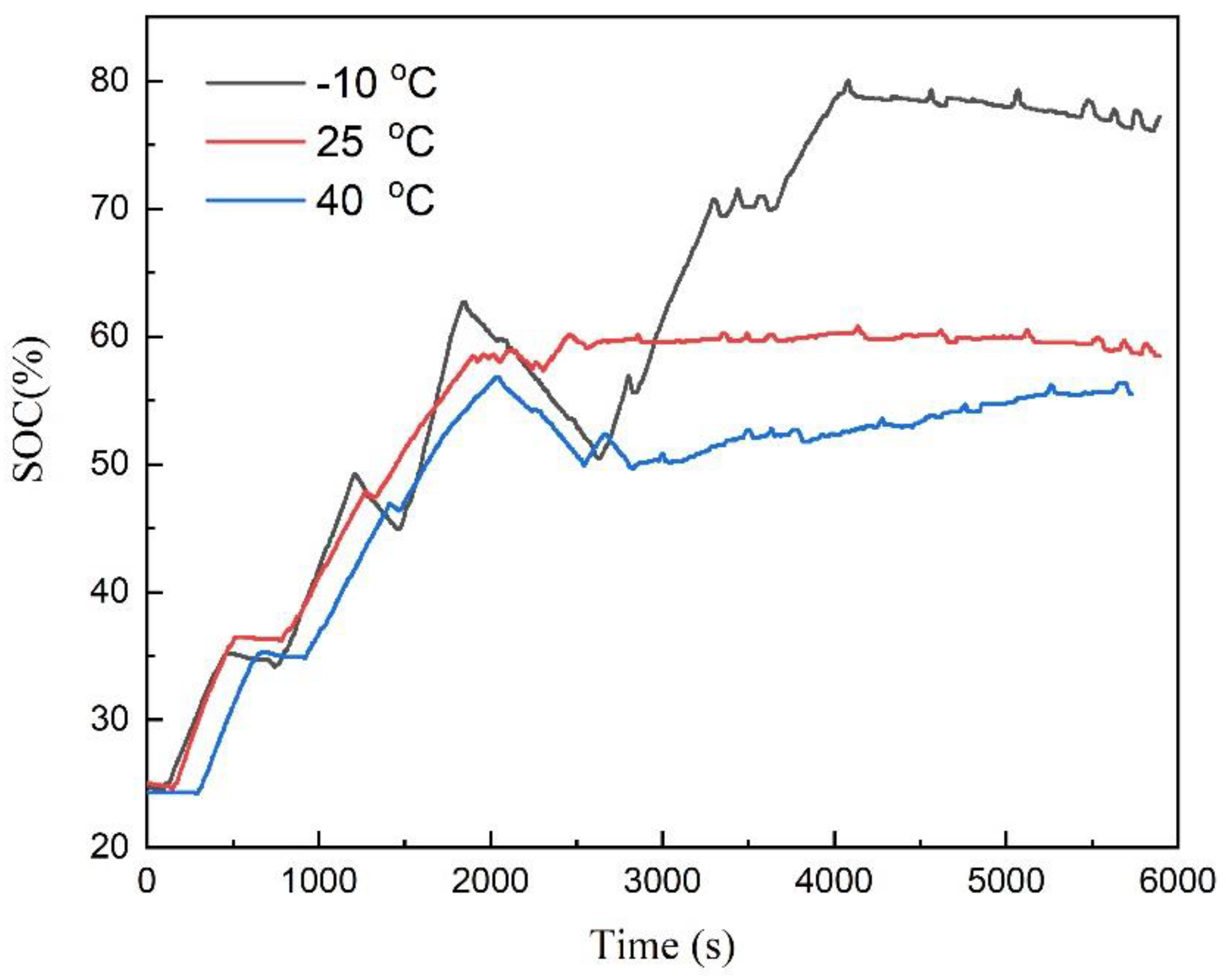
Tests were conducted at three different ambient temperatures: −10 °C, 25 °C and 40 °C. The tested vehicle was soaked in an ambient chamber for about 8 h before each test. A real driving test work condition was chosen and applied to chassis dynamometer procedure, as shown in Figure 1b. The chassis dynamometer resistance was in accordance with the ambient temperature in each test. It should be noted that the vehicle’s initial state of charge (SOC) was kept at around 25% in each test, as illustrated in Figure 2. In addition, the test vehicle underwent DPF regenerative pretreatment in order to ensure consistent initial conditions of the diesel particle filter (DPF) before the each test.
According to the China 6 regulation, the NOx and PN emission factors were calculated by the moving average window (MAW) method. Detailed specification can be found in previous work [22]. The NOx and PN emission factors of different driving conditions and the entire real driving emission test trip can be calculated using Equation (1). The window duration was determined using Equation (2).
e p = t 1 t 2 m ˙ p W ( t 2 , i ) W ( t 1 , i )
W ( t 2 , i Δ t ) W ( t ) < W r e f W ( t 2 , i ) W ( t 1 , i )
where ep is the pollutant emission factor, g/kWh; m ˙ p is the instantaneous pollutant emission rate, ppm for NOx and #/cm3 for PN; W(t) is the accumulative engine work at the tth second, kWh; Wref is the world harmonized transient cycle (WHTC) reference work, kWh; Δt is the data sampling period, equal to 1 s or less; and t1,i and t2,i are the start and end times of the ith window, s.
The instantaneous NOx concentration (ppm) and particle number concentration (#/cm3) were obtained from measurement apparatus.

3. Results and Discussion

3.1. NOx Emission and Characteristic

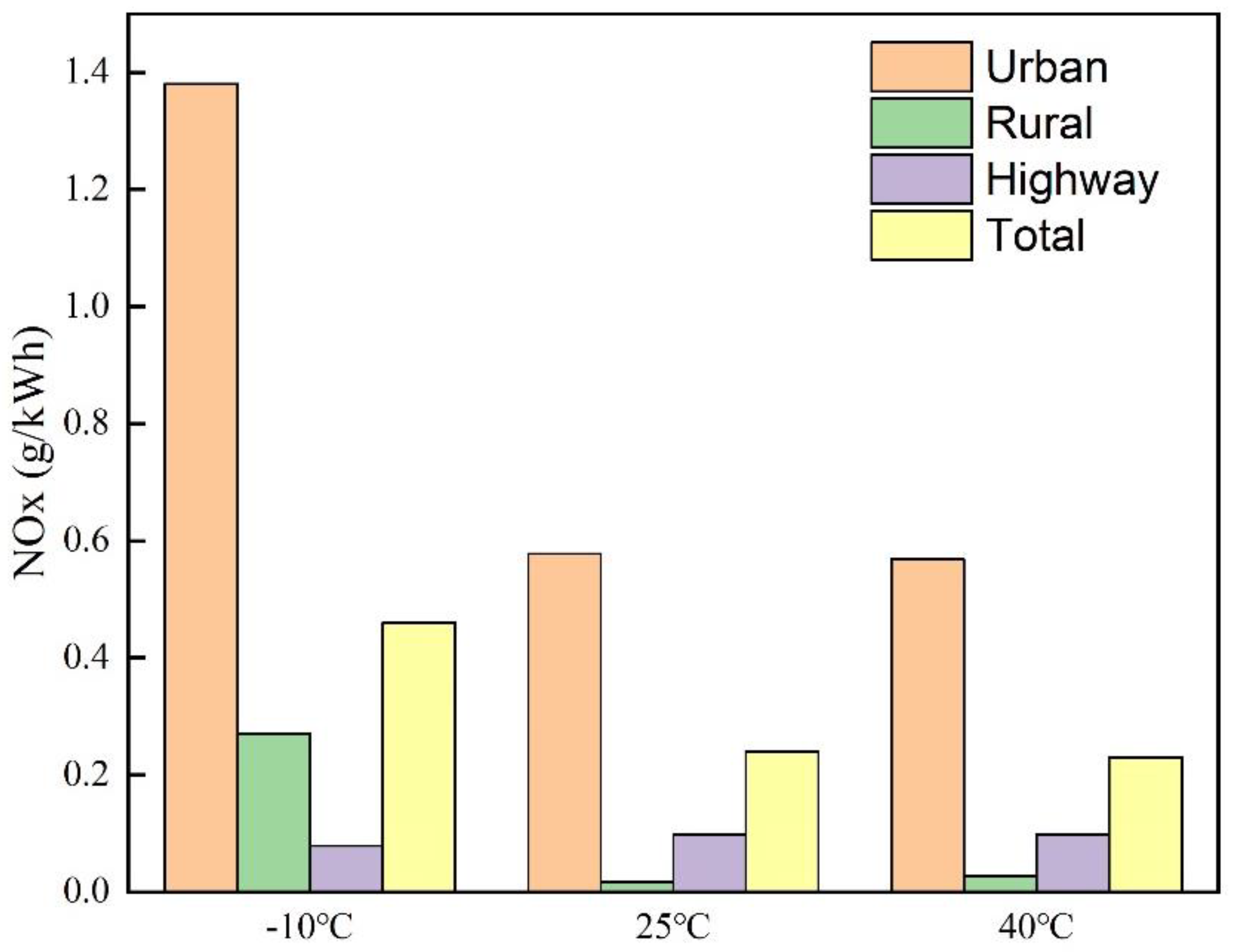
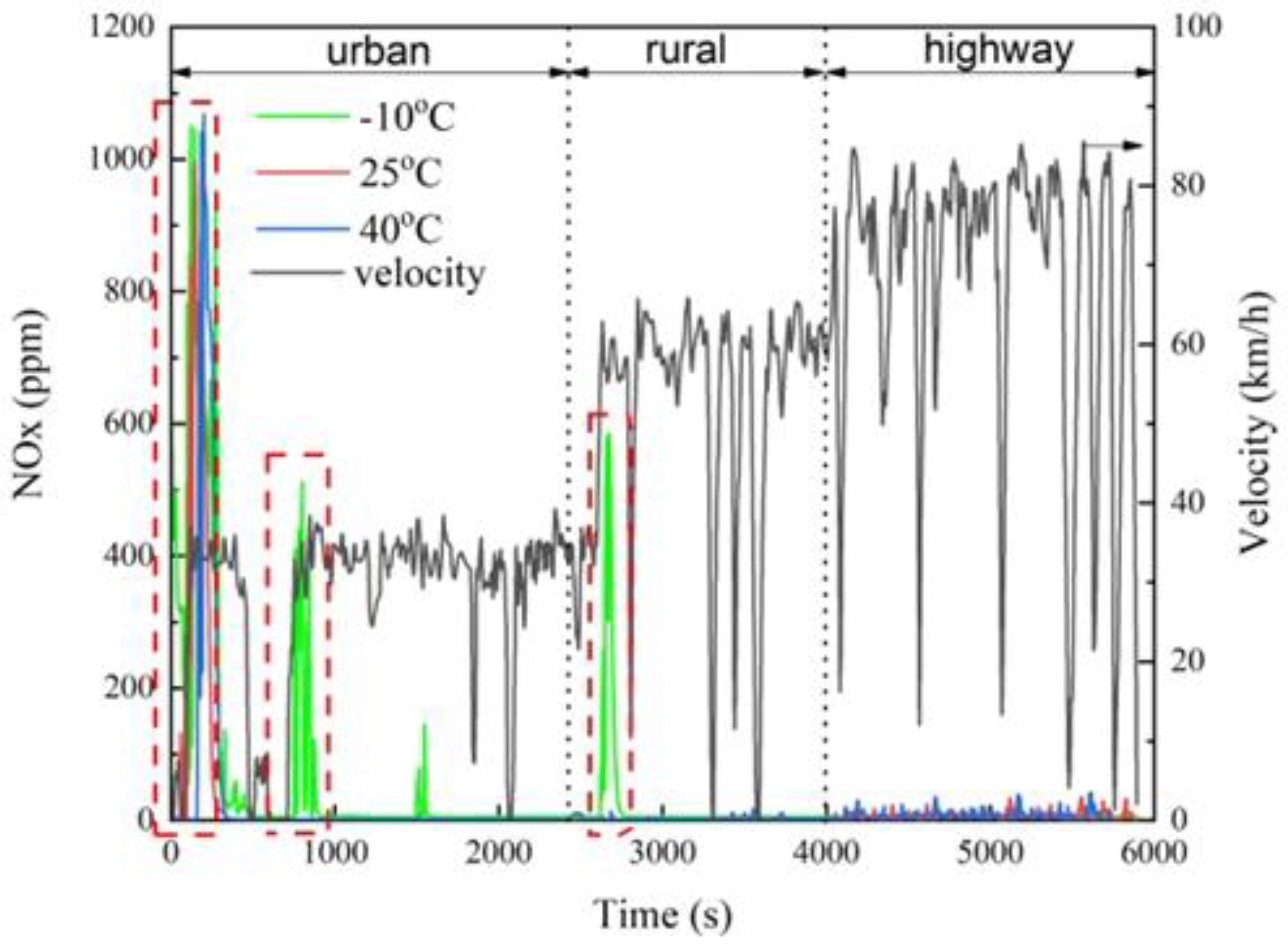
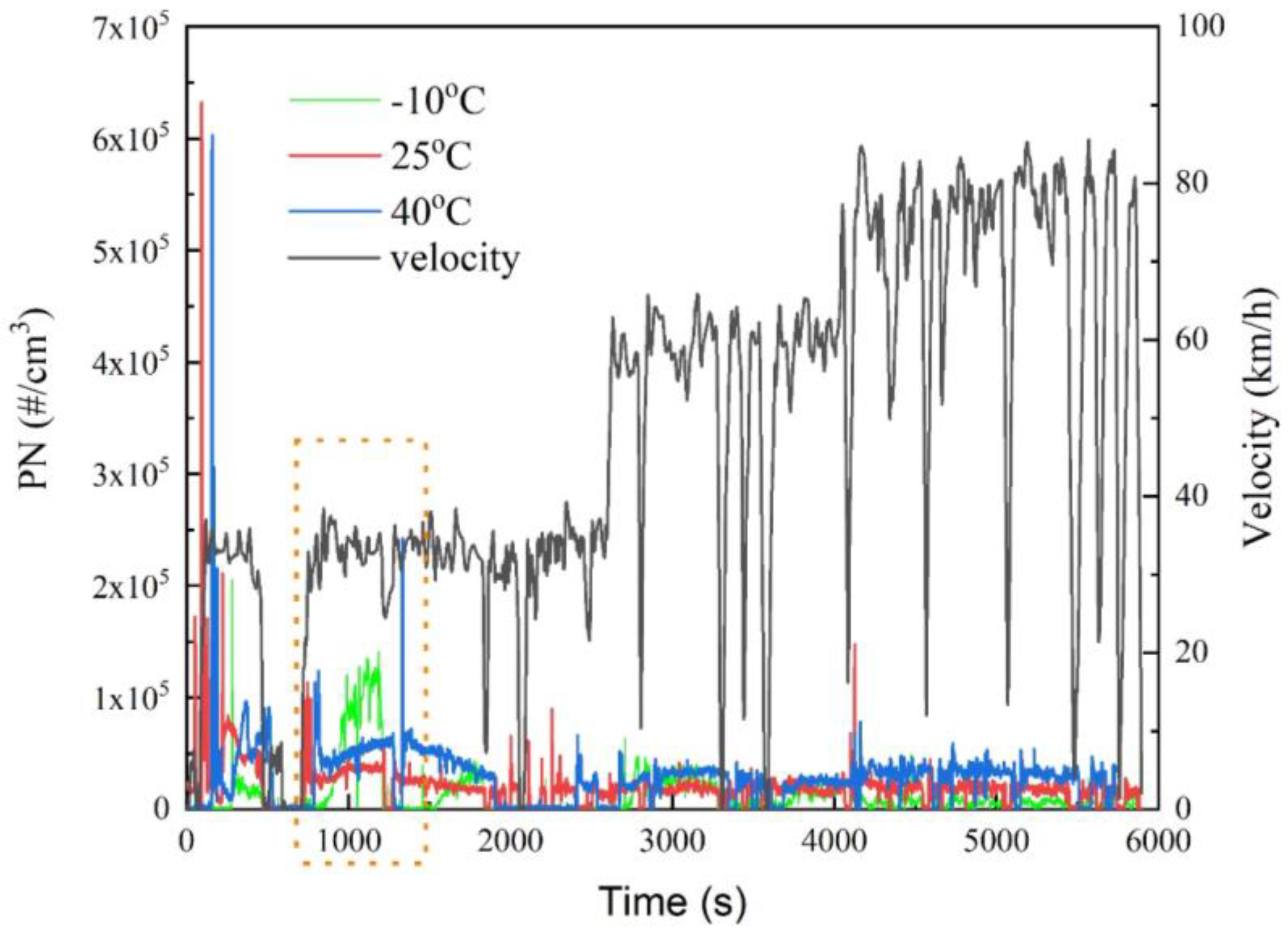
Figure 3 illustrates NOx emission factors under different ambient temperatures and driving phases. Generally, the total NOx emission factors present a tendency of decreasing with ambient temperatures. And the total NOx emission factors follow the sequence of −10 °C> 25 °C > 40 °C. The decreasing oxygen concentration at high ambient temperature will hinder the chemical reaction of NOx formation [23]. In addition, the intake air humidity is higher at 40 °C than that of −10 °C, which is detrimental to the formation of NOx. In each test, urban NOx emission is much higher than that of the other specific phase, which is due to the presence of NOx of instantaneous NOx emission peaks during the engine cold-start period, as shown in Figure 4. In comparison with the instantaneous NOx emission at 25 °C and 40 °C, the higher instantaneous NOx emission peaks at −10 °C occur under urban and rural phases, which leads to higher NOx emission factor in these specific phases.
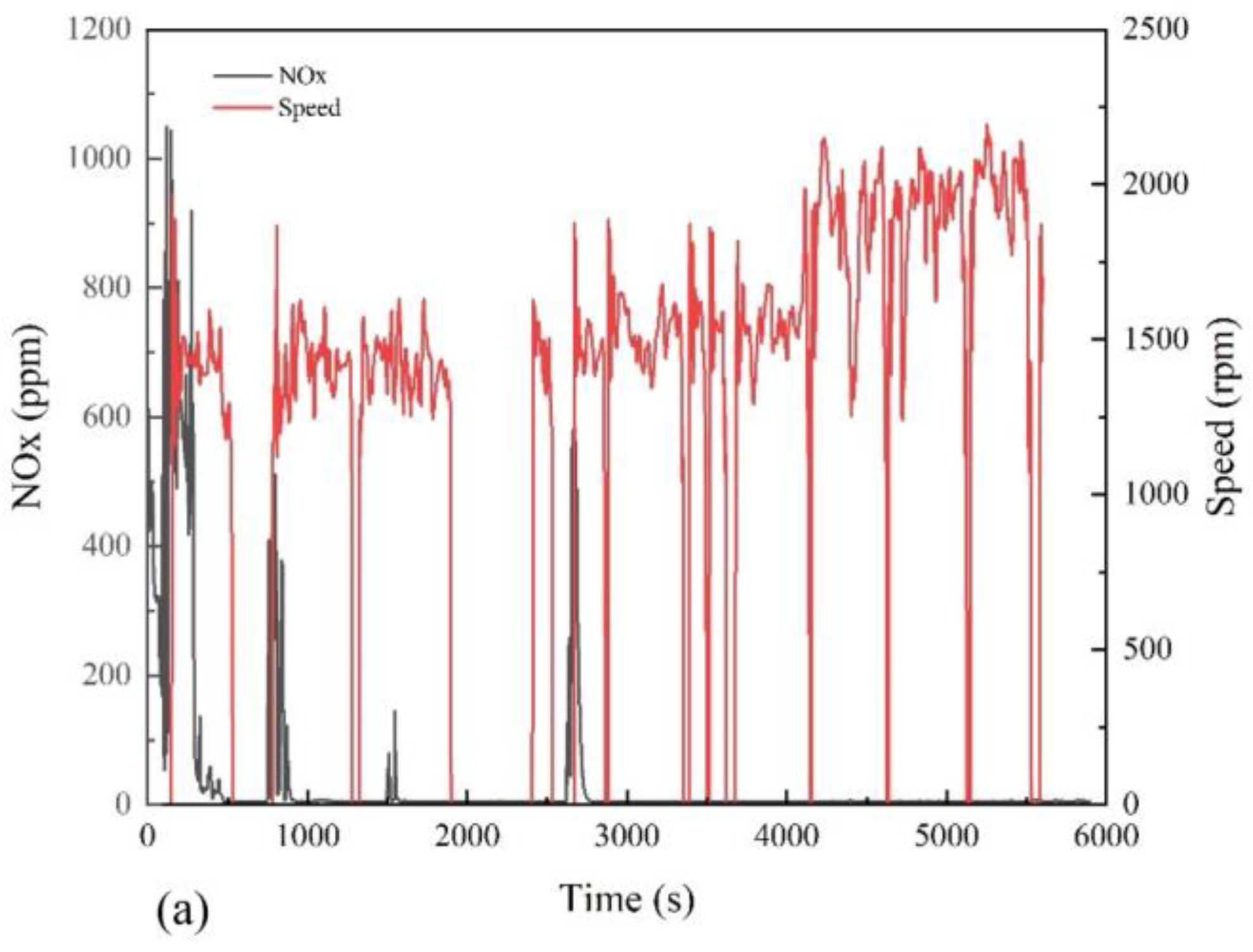
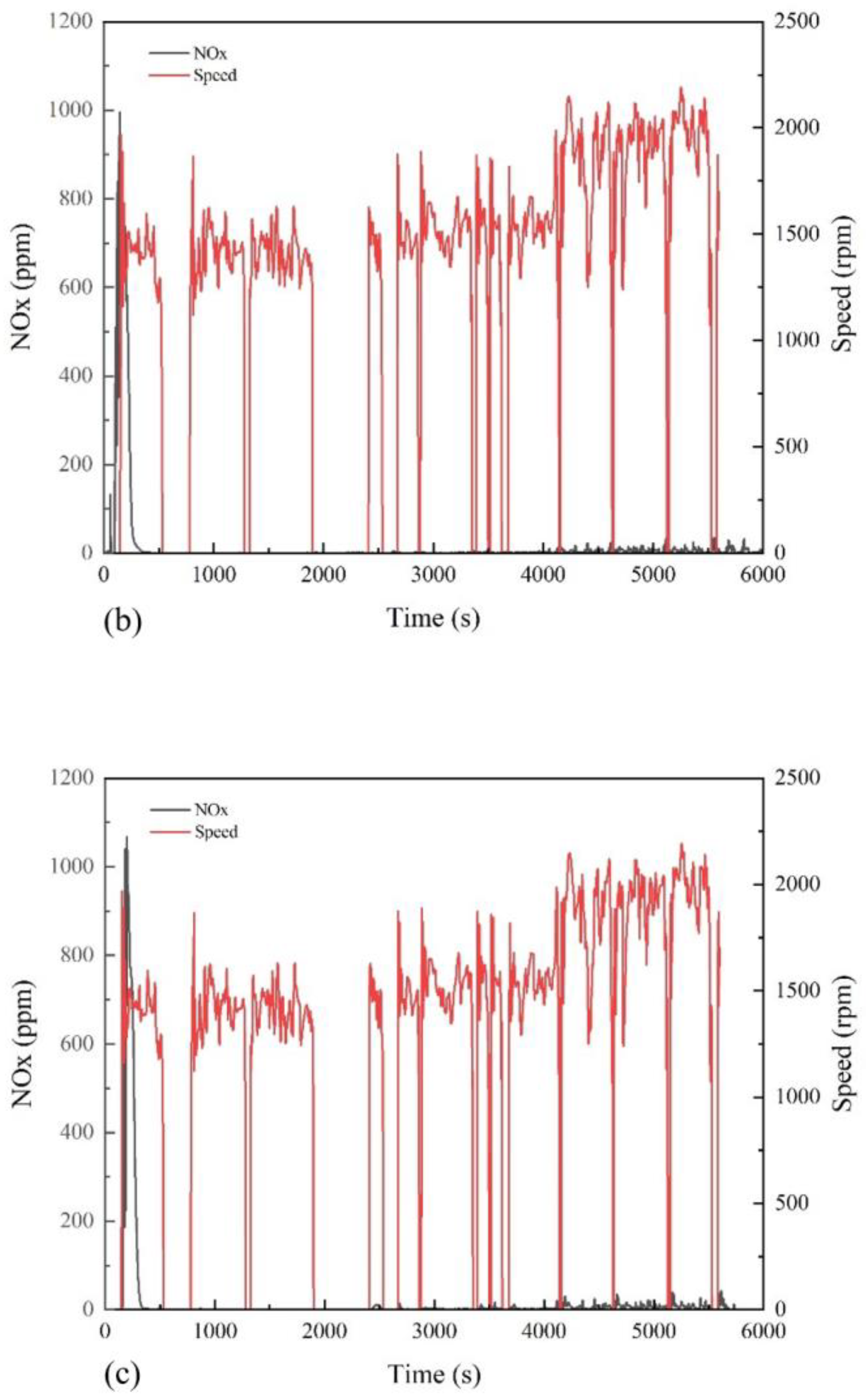
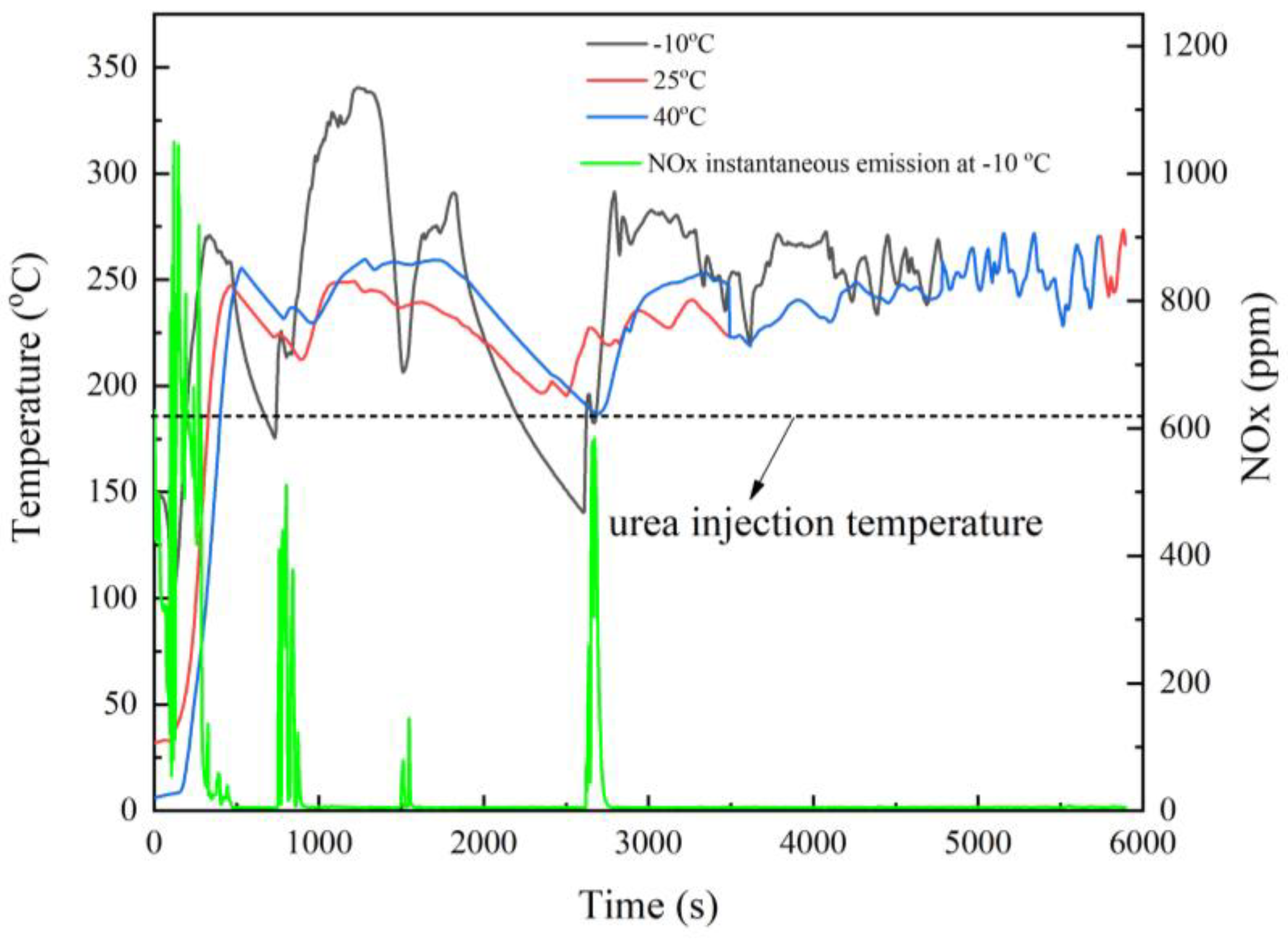
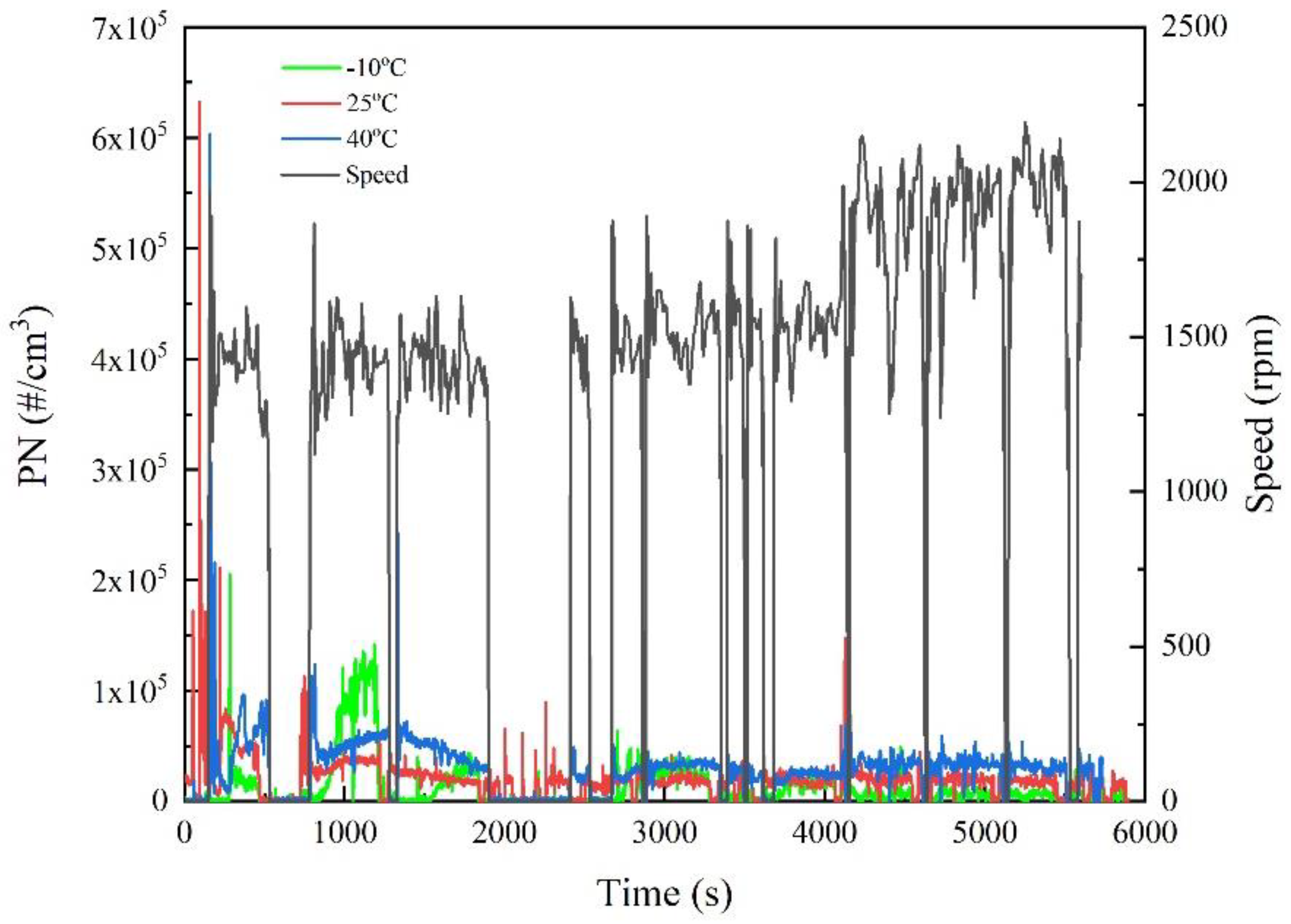
In order to further analyze why instantaneous NOx emission peaks are found, the relationship between instantaneous NOx emission and engine speed is investigated, as shown in Figure 5. It is clearly noticed from Figure 5 that the instantaneous NOx emission exhibits a peak value corresponding to engine re-start. Figure 6 presents the upstream selective catalytic reduction (SCR) temperature at different ambient temperatures. In the cold start period, the upstream SCR temperature is below the urea injection temperature which lead to SCR without activation. In the other period, the instantaneous NOx emission corresponds to the upstream SCR temperature valley which means the engine is off. If the upstream SCR temperature is below the lower limit of urea injection temperature due to a period of engine off, the deNOx efficiency is low for a lack of SCR reductant when the engine is restarted, and instantaneous NOx emission peaks occur. On the contrary, the instantaneous NOx emission peaks will not appear. Thus, it is deducted that the occurrence of the instantaneous NOx emission peaks is associated with the upstream SCR temperature fluctuation when the engine is off.

3.2. PN Emission Characteristic

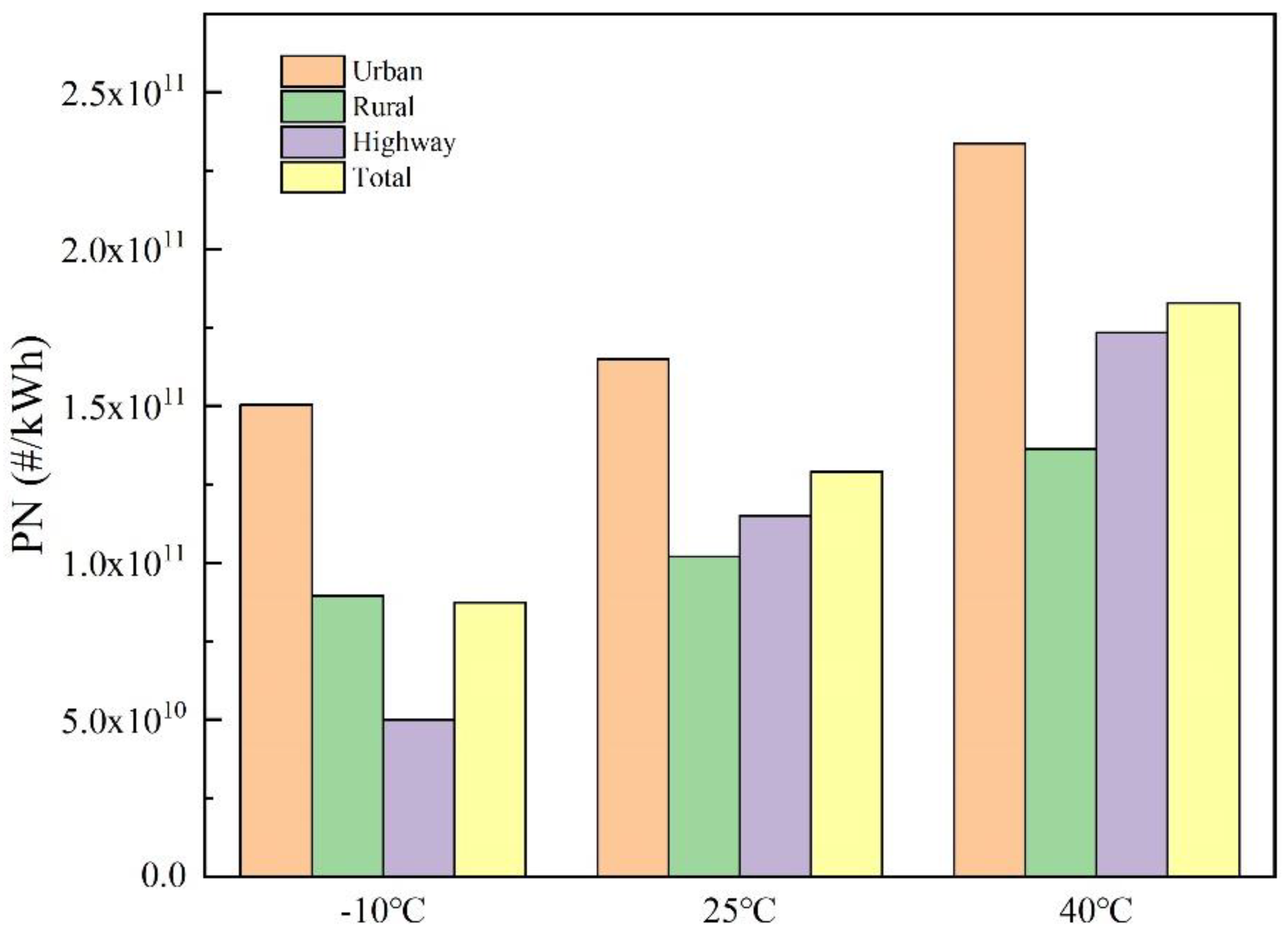
The PN emission factors and instantaneous emissions are presented in Figure 7 and Figure 8, respectively. In general, the PN emission factors increase with rising ambient temperature and follow the sequence of 40 °C > 25 °C > −10 °C. With the rise in intake air temperature, a shortage of oxygen in the cylinder will promote the generation of particulates. For the specific phase emission, the PN emission factor at −10 °C exhibits slightly different trends compared to that at the other two temperatures. In particular, the PN emission factor at −10 °C follows the sequence of urban > rural > highway and the others follow the sequence of urban > highway > rural. It is clearly noticed from Figure 8 that the instantaneous PN emission is higher in the cold-start phase in each test, which leads to higher PN emission in the urban phase. Especially, the instantaneous PN emissions at −10 °C sharply increase at around 1000 s.
Figure 9 shows the instantaneous PN emission versus speed under different ambient temperatures. In the entire test cycle, the PN peaks corresponding to engine-starts can still be found at the ambient temperature. Yang et al. [17] showed that more frequent engine stop-and-goes could be the underlying reasons for the PN emissions.
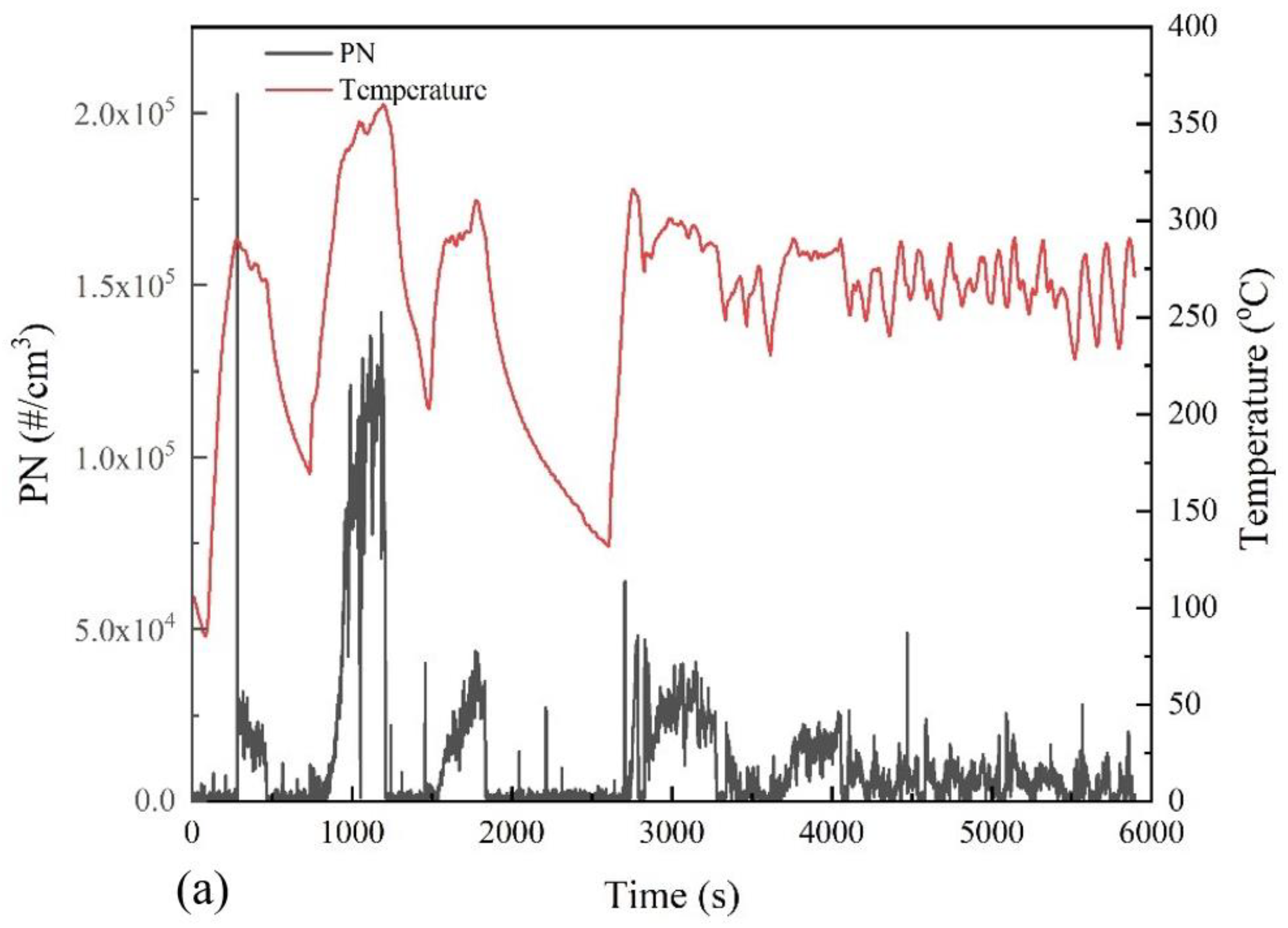
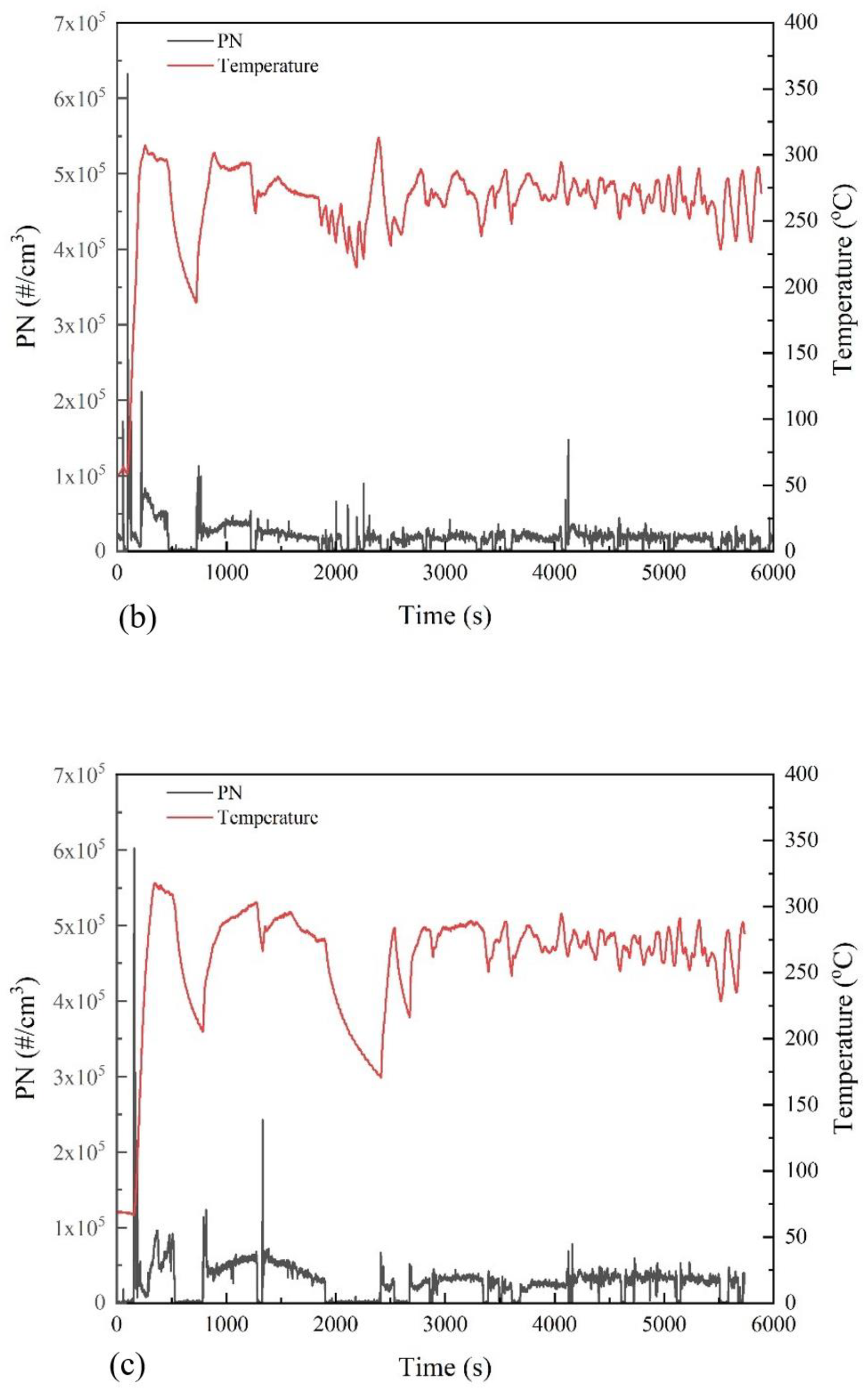
In addition, the relationship between instantaneous PN emission and upstream DPF temperature is determined, as shown in Figure 10. Beyond the engine cold-start period, the occurrence time of the PN peak corresponds to the upstream DPF temperature steep rise, which is caused by the engine-starts. Especially for the instantaneous PN emissions at around 1000 s under −10 °C, DPF regeneration could be induced in a drastic temperature change. In this process, DPF regeneration can eliminate the inner soot, which was captured in the DPF pores and channels previously, thus leading to higher pore diameter and lower filtration efficiency. That’s why a slightly higher emission in the urban phase under −10 °C is observed.
It is worth noting that the immense change in upstream SCR and DPF temperature is related to the more frequent engine stop-and-goes. Thus, exhaust temperature management plays a key role in tackling the emission issue of HEV, especially for low-temperature conditions.

4. Conclusions

This work mainly investigated the impact of various ambient temperatures on hybrid electric vehicle emission. The conclusions from the experimental measurement are summarized as follows:
(1)
The total NOx emission factors follow the sequence of −10 °C> 25 °C > 40 °C and the PN emission factors follow the sequence of 40 °C> 25 °C > −10 °C. The shortage of oxygen in the cylinder at high ambient temperature will promote the generation of PN and hinder the chemical reaction of NOx formation.
(2)
Both NOx and PN instantaneous emission peaks corresponding to engine-starts can be found in each entire test cycle. The drastic temperature change of upstream SCR and DPF as a result of more frequent engine stop-and-goes may induce the NOx and PN peak occurrence.
(3)
Especially for the low-temperature condition, more attention should be paid to exhaust temperature management for HEVs to tackle the emission issue.
Our works shows a strong influence of various ambient temperatures on hybrid electric vehicle emission. The results presented in this research could be used for hybrid electric vehicle emission strategy optimization and to formulate future policies. Meanwhile, we acknowledge several limitations to this work. CO2 emissions were not considered and only three temperatures were analyzed. But the main findings could be generalized to these conditions. Future work could test more vehicles from different manufacturers to verify these conclusions.

Author Contributions

Writing—original draft preparation, Y.W.; writing—review and editing, S.L.; validation and formal analysis, Z.L.; data curation, Z.D. (Zhancheng Dou); investigation, Z.D. (Ziwen Ding); supervision and funding acquisition, X.L. All authors have read and agreed to the published version of the manuscript.

Funding

This research was funded by State Key Laboratory of Engine and Powertrain System, grant number skleps-sq-2023-227.

Institutional Review Board Statement

Not applicable.

Informed Consent Statement

Not applicable.

Data Availability Statement

The original contributions presented in this study are included in the article. Further inquiries can be directed to the corresponding author.

Acknowledgments

Valuable guidance and support from Qin Li and Zhao Li at Weichai Power Co., Ltd. are gratefully acknowledged.

Conflicts of Interest

Shuai Liu, Zhijie Li and Zhancheng Dou were employed by the Weichai Power Co., Ltd., and Ziwen Ding was employed by the Jinan Automobile Testing Co., Ltd. The authors declare that this study received funding from State Key Laboratory of Engine and Powertrain System. The funder was not involved in the study design, collection, analysis, interpretation of data, the writing of this article, or the decision to submit it for publication.

References

  1. Vikram, S.; Vashisht, S.; Rakshit, D.; Wan, M.P. Recent advancements and performance implications of hybrid battery thermal management systems for Electric Vehicles. J. Energy Storage 2024, 90, 111814. [Google Scholar] [CrossRef]
  2. Murarka, M.; Purohit, P.R.; Rakshit, D.; Verma, A. Progression of battery storage technology considering safe and sustainable stationary application. J. Clean. Prod. 2022, 377, 134279. [Google Scholar] [CrossRef]
  3. Tan, D.; Wang, Y.C.; Tan, J.W.; Li, J.; Wang, C.; Ge, Y.S. Influence of ambient temperature on the CO2 emitted of light-duty vehicle. J. Environ. Sci. 2024, 140, 59–68. [Google Scholar] [CrossRef] [PubMed]
  4. MEE (Ministry of Ecology and Environment of the People’s Republic of China). China Mobile Source Environmental Management Annual Report; Ministry of Ecology and Environment of the People’s Republic of China: Beijing, China, 2022.
  5. Huo, H.; Wang, M. Modeling future vehicle sales and stock in China. Energy Policy 2012, 43, 17–29. [Google Scholar] [CrossRef]
  6. Wang, Y.C.; Feng, X.; Zhao, H.; Hao, C.; Hao, L.J.; Tan, J.W.; Wang, X.; Yin, H.; Wang, J.F.; Ge, Y.S.; et al. Experimental study of CO2 and pollutant emission at various altitudes: Inconsistent results and reason analysis. Fuel 2022, 307, 121801. [Google Scholar] [CrossRef]
  7. Wang, Y.C.; Zhao, H.; Hou, P.; Lyu, T.; Lai, Y.T.; Xu, C.; Zhang, W.; Yin, H.; Yang, Z.; Su, S.; et al. Particle number emissions from fully warmed gasoline vehicles at various ambient temperatures. Chemosphere 2022, 306, 135522. [Google Scholar] [CrossRef] [PubMed]
  8. Bai, S.; Liu, C. Overview of energy harvesting and emission reduction technologies in hybrid electric vehicles. Renew. Sust. Energy Rev. 2021, 147, 111188. [Google Scholar] [CrossRef]
  9. Li, M.; He, H.; Feng, L.; Chen, Y.; Yan, M. Hierarchical predictive energy management of hybrid electric buses based on driver information. J Clean. Prod. 2020, 269, 122374. [Google Scholar] [CrossRef]
  10. Yin, C.; Zeng, X.; Yin, Z. An improved data-driven predictive optimal control approach for designing hybrid electric vehicle energy management strategies. Appl. Energy 2024, 375, 123984. [Google Scholar] [CrossRef]
  11. Hossain Lipu, M.S.; Abd Rahman, M.S.; Mansor, M.; Ansari, S.; Meraj, S.T.; Hannan, M.A. Hybrid and combined states estimation approaches for lithium-ion battery management system: Advancement, challenges and future directions. J. Energy Storage 2024, 92, 112107. [Google Scholar] [CrossRef]
  12. Wang, C.; Li, R.; Cao, Y.; Li, M. A hybrid model for state of charge estimation of lithium-ion batteries utilizing improved adaptive extended Kalman filter and long short-term memory neural network. J. Power Sources 2024, 620, 235272. [Google Scholar] [CrossRef]
  13. Brown, T.L.; Atluri, V.P.; Schmiedeler, J.P. A low-cost hybrid drivetrain concept based on compressed air energy storage. Appl. Energy 2014, 134, 477–489. [Google Scholar] [CrossRef]
  14. Gavgani, A.M.; Sorniotti, A.; Doherty, J.; Cavallino, C. Optimal gearshift control for a novel hybrid electric drivetrain. Mech. Mach. Theory 2016, 105, 352–368. [Google Scholar] [CrossRef]
  15. Widmer, F.; Ritter, A.; Duhr, P.; Onder, C.H. Battery lifetime extension through optimal design and control of traction and heating systems in hybrid drivetrains. eTransportation 2022, 14, 100196. [Google Scholar] [CrossRef]
  16. Wang, Y.C.; Wang, J.; Hao, C.X.; Wang, X.; Li, Q.; Zhai, J.; Ge, Y.S.; Hao, L.J.; Tan, J.W. Characteristics of instantaneous particle number (PN) emissions from hybrid electric vehicles under the real-world driving conditions. Fuel 2021, 286, 119466. [Google Scholar] [CrossRef]
  17. Yang, Z.J.; Ge, Y.S.; Thomas, D.; Wang, X.; Su, S.; Li, H.; He, H. Real driving particle number (PN) emissions from China-6 compliant PFI and GDI hybrid electrical vehicles. Atmos. Environ. 2019, 199, 70–79. [Google Scholar] [CrossRef]
  18. Jeong, J.W.; In Lee, D.; Woo, S.; Lim, Y.; Lee, K. Analysis of energy consumption efficiency and emissions according to urban driving of hybrid electric vehicles in Korea. Appl. Energy 2024, 371, 123686. [Google Scholar] [CrossRef]
  19. Suarez-Bertoa, R.; Astorga, C. Unregulated emissions from light-duty hybrid electric vehicles. Atmos. Environ. 2016, 136, 134–143. [Google Scholar] [CrossRef]
  20. Li, C.; Swanson, J.; Pham, L.; Hu, S.; Hu, S.; Mikailian, G.; Jung, H.S. Real-world particle and NOx emissions from hybrid electric vehicles under cold weather conditions. Environ. Pollut. 2021, 286, 117320. [Google Scholar] [CrossRef] [PubMed]
  21. Ehrenberger, S.I.; Konrad, M.; Philipps, F. Pollutant emissions analysis of three plug-in hybrid electric vehicles using different modes of operation and driving conditions. Atmos. Environ. 2020, 234, 117612. [Google Scholar] [CrossRef]
  22. Lyu, L.Q.; Ji, Z.; Yin, H.; Wang, J.; Yang, W.; Tan, J.W.; Hao, L.J.; Wang, X.; Wang, H.; Ge, Y.S.; et al. NOx emission deterioration in modern heavy-duty diesel vehicles based on long-term real driving measurements. Environ. Res. 2023, 232, 116396. [Google Scholar] [CrossRef] [PubMed]
  23. Wang, Y.C.; Hao, C.X.; Ge, Y.S.; Hao, L.J.; Tan, J.W.; Wang, X.; Zhang, P.; Wang, Y.; Tian, W.; Lin, Z.; et al. Fuel consumption and emission performance from light-duty conventional/hybrid-electric vehicles over different cycles and real driving tests. Fuel 2020, 278, 118340. [Google Scholar] [CrossRef]
Figure 1. Experimental test: (a) vehicle in the climate chamber; (b) test cycle.
Atmosphere 17 00253 g001
Figure 2. The tendency of state of charge in the test.
Atmosphere 17 00253 g002
Figure 3. NOx emission factors under different ambient temperatures and driving phases.
Atmosphere 17 00253 g003
Figure 4. Instantaneous NOx emission under different ambient temperatures.
Atmosphere 17 00253 g004
Figure 5. The relationship between instantaneous NOx emission and engine speed: (a) −10 °C; (b) 25 °C; (c) 40 °C.
Atmosphere 17 00253 g005aAtmosphere 17 00253 g005b
Figure 6. The upstream SCR temperature at different ambient temperatures.
Atmosphere 17 00253 g006
Figure 7. PN emission factors under different ambient temperatures and driving phases.
Atmosphere 17 00253 g007
Figure 8. Instantaneous PN emission under different ambient temperatures.
Atmosphere 17 00253 g008
Figure 9. The instantaneous PN emission versus speed under different ambient temperatures.
Atmosphere 17 00253 g009
Figure 10. The relationship between instantaneous PN emission and upstream DPF temperature: (a) −10 °C; (b) 25 °C; (c) 40 °C.
Atmosphere 17 00253 g010aAtmosphere 17 00253 g010b
Table 1. Vehicle information.
ParameterValue
Fueldiesel
Curb weight (kg)3400
TransmissionAutomatic
Engine4-cylinder, turbocharged, intercooled
Displacement (L)2.29
Engine rated power (kW)103
Engine rated speed (r/min)3200
AftertreatmentDOC + DPF + SCR
Motor rated power (kW)35
Motor rated speed (r/min)2090
Battery nominal voltage (V)386.4
Battery capacity (Ah)40
Vehicle manufactureShaanxi heavy duty automobile Co., Ltd., Xi’an, China
Disclaimer/Publisher’s Note: The statements, opinions and data contained in all publications are solely those of the individual author(s) and contributor(s) and not of MDPI and/or the editor(s). MDPI and/or the editor(s) disclaim responsibility for any injury to people or property resulting from any ideas, methods, instructions or products referred to in the content.