1. Introduction
The sustainable management of water resources has become increasingly critical under ongoing climate change and growing population pressure, particularly in semi-arid and arid regions [
1,
2]. Strategic decision-making in water supply, flood mitigation, agricultural irrigation, and hydropower generation depends on a comprehensive understanding of natural variability in river streamflow and the occurrence of extreme hydrological events [
3,
4,
5]. However, water resource planning still relies predominantly on instrumental hydrological observations, which are often limited in duration and continuity. Records spanning only the last 50–100 years are insufficient to fully characterize the frequency, magnitude, and persistence of rare but high-impact events such as multi-year droughts or severe floods, thereby constraining effective long-term risk management [
6,
7].
To overcome these limitations, proxy data derived from natural archives have been widely employed to extend hydroclimatic records back centuries or even millennia [
2]. Among these proxies, tree rings are particularly valuable due to their annual resolution, precise dating, and sensitivity to moisture availability, especially in water-limited environments [
8,
9]. Dendrohydrology, the science of reconstructing past streamflow using tree rings, has been successfully applied to major river basins globally, including the Missouri and Colorado Rivers in the United States [
6,
10], the Yellow River in China [
11] and the Nile River in Africa [
2]. These studies have frequently demonstrated that modern instrumental records often fail to capture the full severity and duration of past hydroclimatic extremes, such as “megadroughts,” thereby providing a crucial baseline for placing recent climate anomalies into a long-term historical context [
7,
12].
Since the major rivers of Turkey supply water to downstream countries in the Middle East, fluctuations in precipitation and streamflow can have far-reaching geopolitical implications [
13]. However, instrumental streamflow records in Turkey generally extend back only to the 1950s, and most consist of short, fragmented, and discontinuous series with numerous gaps [
14]. Therefore, there is an urgent need to develop long-term proxy records to better understand hydrological variability in Turkish river basins.
Although dendroclimatological research in Turkey has increased significantly in recent years, the majority of studies have primarily focused on reconstructing precipitation variability [
15,
16]. In contrast, dendrohydrological reconstructions of river streamflow have remained relatively limited. One of the foundational and pioneering examples in this field is the multi-century streamflow reconstruction of the Filyos River conducted by [
13]. This was followed by studies in the Sakarya and Kızılırmak river basins [
14,
17], which revealed pronounced hydroclimatic fluctuations across Anatolia.
This study focuses on the Yenice Stream, a major tributary of the Filyos River located in northwestern Türkiye. The basin, characterized by deeply incised valleys, exhibits high susceptibility to flood hazards. Previous studies in the region have demonstrated the sensitivity of moisture-limited
Pinus nigra and
Abies bornmuelleriana stands to hydroclimatic variability, thereby providing a strong scientific basis for dendroclimatological reconstructions. In this context, the present study represents an updated and extended sub-basin scale continuation of the reconstruction conducted for the main Filyos River by Akkemik et al. [
13]. Nevertheless, despite the significant contributions of earlier studies, critical gaps remain in our understanding of long-term hydroclimatic variability within the basin. Existing proxy records generally terminate in the late twentieth century and therefore fail to capture the climatic shifts and extreme events that have intensified in the Mediterranean Basin over the past two decades [
1]. Furthermore, although regional precipitation variability has been documented [
16], an updated streamflow reconstruction specifically for the Yenice Stream at the sub-basin scale is still lacking. Unlike previous studies, this reconstruction provides a higher-resolution sub-basin scale perspective and extends the streamflow record to 2020, thereby capturing recent hydroclimatic variability that is not represented in earlier reconstructions. Extending these records through 2020 is essential for determining whether recent hydrological extremes fall within the range of natural variability or represent a significant departure from historical norms [
6,
7].
Therefore, the objectives of this study were the following: (1) to develop climate-sensitive tree-ring chronologies for the Yenice Stream basin; (2) to quantify the statistical relationship between principal components derived from standardized chronologies and hydrological-year streamflow; and (3) to reconstruct annual streamflow variability for the period 1809–2020, thereby substantially extending the short instrumental record (1979–2020). Based on tree-ring data from moisture-sensitive Pinus nigra stands, this study provides a robust multi-century extension of annual streamflow and establishes a long-term perspective for evaluating hydroclimatic variability in northwestern Türkiye.
2. Materials and Methods
2.1. Study Area and Hydroclimatic Data
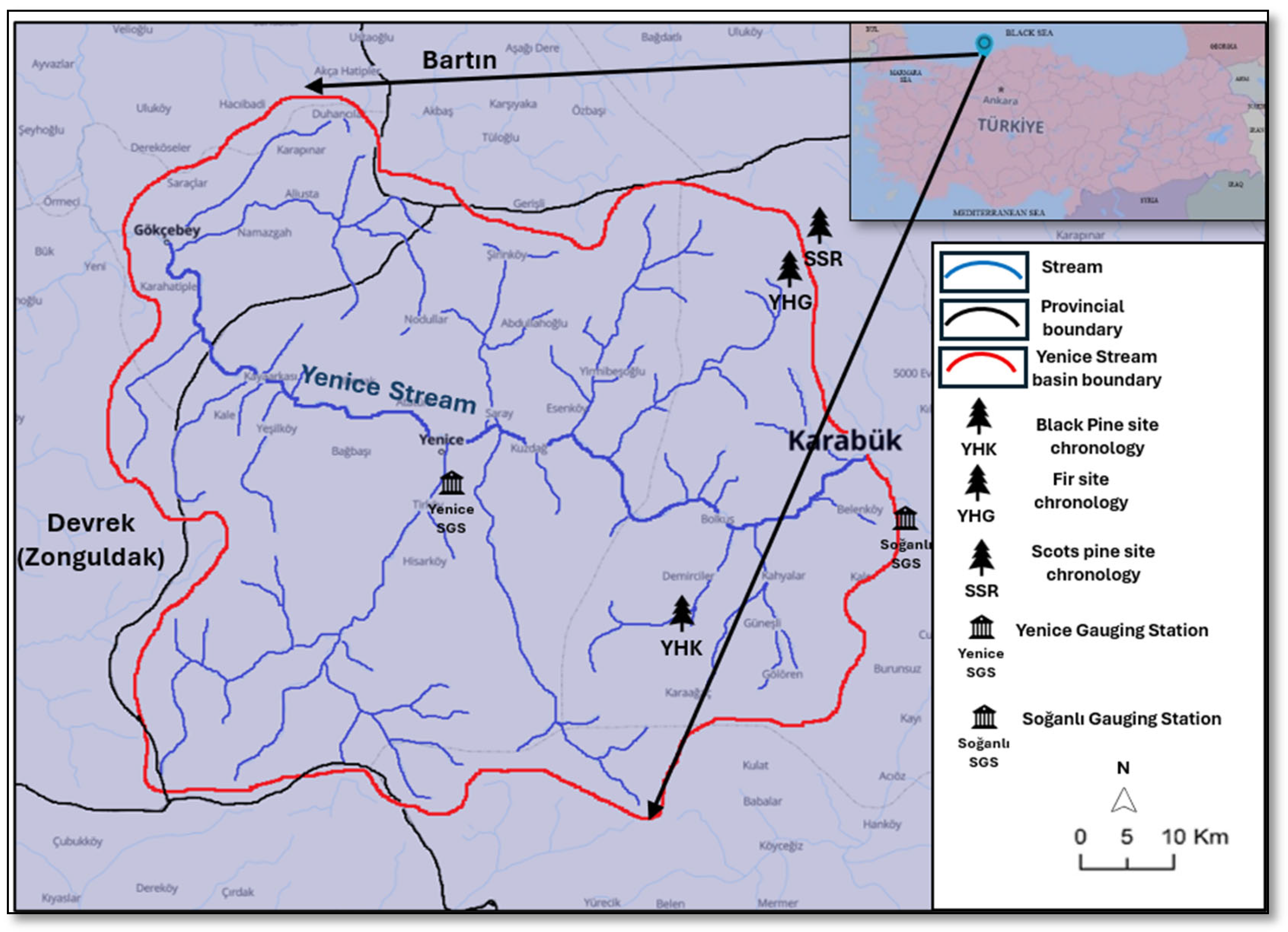
The study area encompasses the Yenice Stream, one of the principal tributaries of the Filyos River in northwestern Türkiye (
Figure 1). The Yenice Stream originates from the confluence of the Araç and Soğanlı rivers and flows through narrow and deeply incised valleys before joining the Devrek Stream and ultimately draining into the Black Sea as part of the Filyos River system [
18]. Owing to its geomorphological setting and increasing anthropogenic modifications, the basin is particularly vulnerable to flood hazards. Extending streamflow records is essential for improving flood and drought risk assessments, as short instrumental records are insufficient to capture the full range of natural variability and extreme hydrological events. The Yenice settlement represents one of the most flood-prone areas within the basin, where channel narrowing and human interventions have exacerbated flood risk. During the 1992 flood event, substantial material damage occurred and numerous buildings were inundated [
19], underscoring the basin’s sensitivity to both natural hydroclimatic variability and human-induced alterations. In addition, Türkeş [
20] reported that severe and persistent rainfall during May 1998 triggered major flood events in this basin, resulting in substantial socio-economic losses across the western Black Sea region, further highlighting its high flood sensitivity under extreme precipitation conditions.
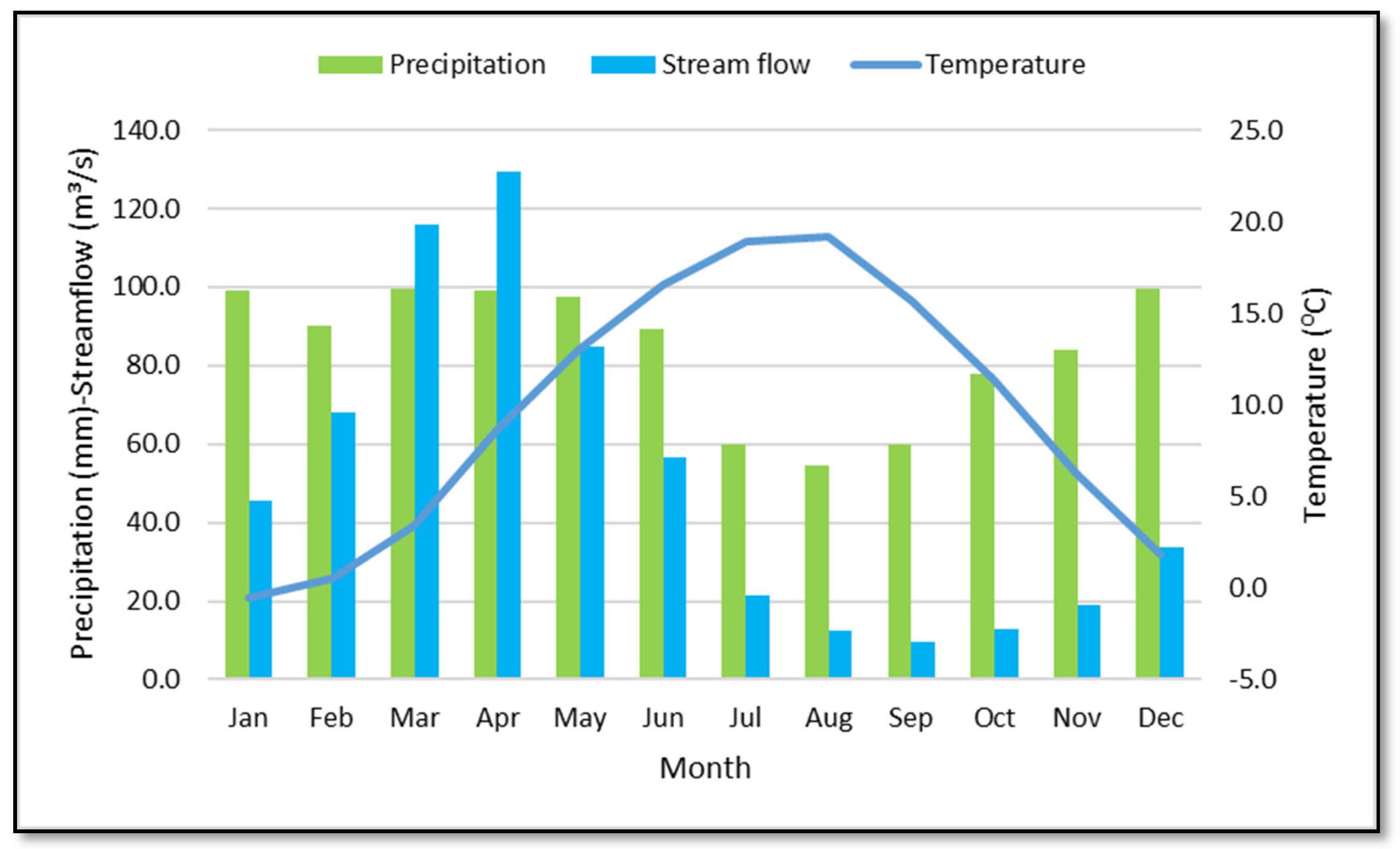
The mean monthly climatological and hydrological regime of the basin is illustrated in
Figure 2. According to ERA5 data (1950–2024), precipitation peaks during late winter and spring and decreases markedly in summer, while mean temperatures reach maximum values in July–August and minimum values in January. The basin lies within a transitional climatic zone influenced by both the Black Sea maritime regime and continental interior conditions, resulting in pronounced seasonal contrasts and enhanced hydroclimatic variability. Streamflow generally follows the seasonal distribution of precipitation; however, relatively low discharge during winter despite elevated precipitation totals suggests delayed runoff processes. This apparent decoupling may be attributed to low-temperature conditions that promote temporary snow accumulation at higher elevations, increased soil moisture storage, and subsurface retention that delays runoff generation. With rising temperatures in spring, the combined effects of rainfall and potential snowmelt lead to peak discharge during March–May, whereas reduced precipitation and intensified evapotranspiration during summer result in substantially lower streamflow. In addition to this marked seasonality, the hydrological regime exhibits pronounced interannual variability driven by precipitation fluctuations and strong topographic control.
Mean streamflow data from gauging stations operated by the General Directorate of Electrical Power Resources Survey and Development Administration (EIEI) and the General Directorate of State Hydraulic Works (DSİ) were utilized in this study. Instrumental streamflow observations from the Yenice gauging station cover the period 1979–2020. The gauging station used in this study provides the longest and most reliable instrumental streamflow record available for the basin. No major upstream regulation that would fundamentally alter the annual flow regime was identified for the calibration period. Therefore, the observed streamflow series was considered suitable for dendrohydrological analysis. In six years with missing observations (2001, 2003, 2010–2013), gaps were infilled using a regression-based approach with the hydrologically comparable Soğanlı gauging station. The regression model exhibited a strong linear relationship between the two stations (R
2 = 0.82), supporting the reliability of the infilled data. Monthly inter-station correlation coefficients calculated for the overlapping period (1979–2000) ranged between 0.84 and 0.96, with an annual (October–September) correlation of 0.91 (R
2 = 0.82), indicating strong hydrological coherence between the Yenice and Soğanlı stations (
Table 1). The resulting continuous annual streamflow series was used in all subsequent analyses. Despite its reliability, the relatively short instrumental record limits the assessment of long-term natural variability and the full range of extreme high- and low-flow events, thereby underscoring the need for dendrohydrological reconstruction to extend streamflow variability beyond the observational period.
High-resolution gridded climate data were derived from the ERA5-Land reanalysis dataset at a spatial resolution of 0.1° × 0.1° [
21]. Monthly mean air temperature and total precipitation variables were extracted for the domain bounded by 41.00–41.40° N latitude and 32.00–32.60° E longitude, fully covering the Yenice Stream basin, and obtained from the Copernicus Climate Data Store [
22].
2.2. Tree-Ring Chronologies
Three standardized tree-ring site chronologies were developed for
Pinus nigra (YHK),
Abies nordmanniana subsp.
equi-trojani (YHG), and
Pinus sylvestris (SSR). The
Pinus sylvestris site chronology was adopted from İrdem [
23], in which the chronology was developed following standard dendrochronological procedures (
Table 2). The sampling sites were selected from the Yenice Forests, which are recognized as one of the nine biodiversity hotspots in Türkiye and are characterized by well-preserved forest ecosystems with minimal human disturbance. These conditions provide a suitable natural setting for dendroclimatological investigations.
Tree selection followed standard dendrochronological criteria. Dominant and co-dominant, healthy, and mature trees were preferentially sampled to minimize the effects of competition and local disturbances. Species-specific diameter at breast height (DBH) and age ranges were as follows: for YHK, diameters ranged between 42–67 cm and ages between 162–264 years; for SSR, diameters ranged between 33–79 cm and ages between 102–217 years; and for YHG, diameters ranged between 51–87 cm and ages between 130–220 years. These characteristics indicate that the sampled trees possess sufficient age and growth stability for reliable dendroclimatological analysis. Trees exhibiting visible damage, suppression, or irregular growth patterns were excluded.
Sampling sites were located on slopes with relatively homogeneous topographic conditions (elevation, aspect, and slope) in order to reduce micro-site variability. Although all sites are situated within the same catchment, they were not restricted to immediate river proximity. Instead, the sampling locations were positioned approximately 6–12 km away from the main river channel to better capture the regional climatic signal influencing both tree growth and streamflow variability, rather than localized hydrological effects.
The selected species are widely distributed in the study area and are known for their high sensitivity to climatic variability. Moreover, they are commonly used in dendrochronological and dendroclimatological studies in the region, making them suitable proxies for hydroclimatic reconstruction.
Increment cores were extracted at breast height (1.3 m) using increment borers, following standard dendrochronological procedures.
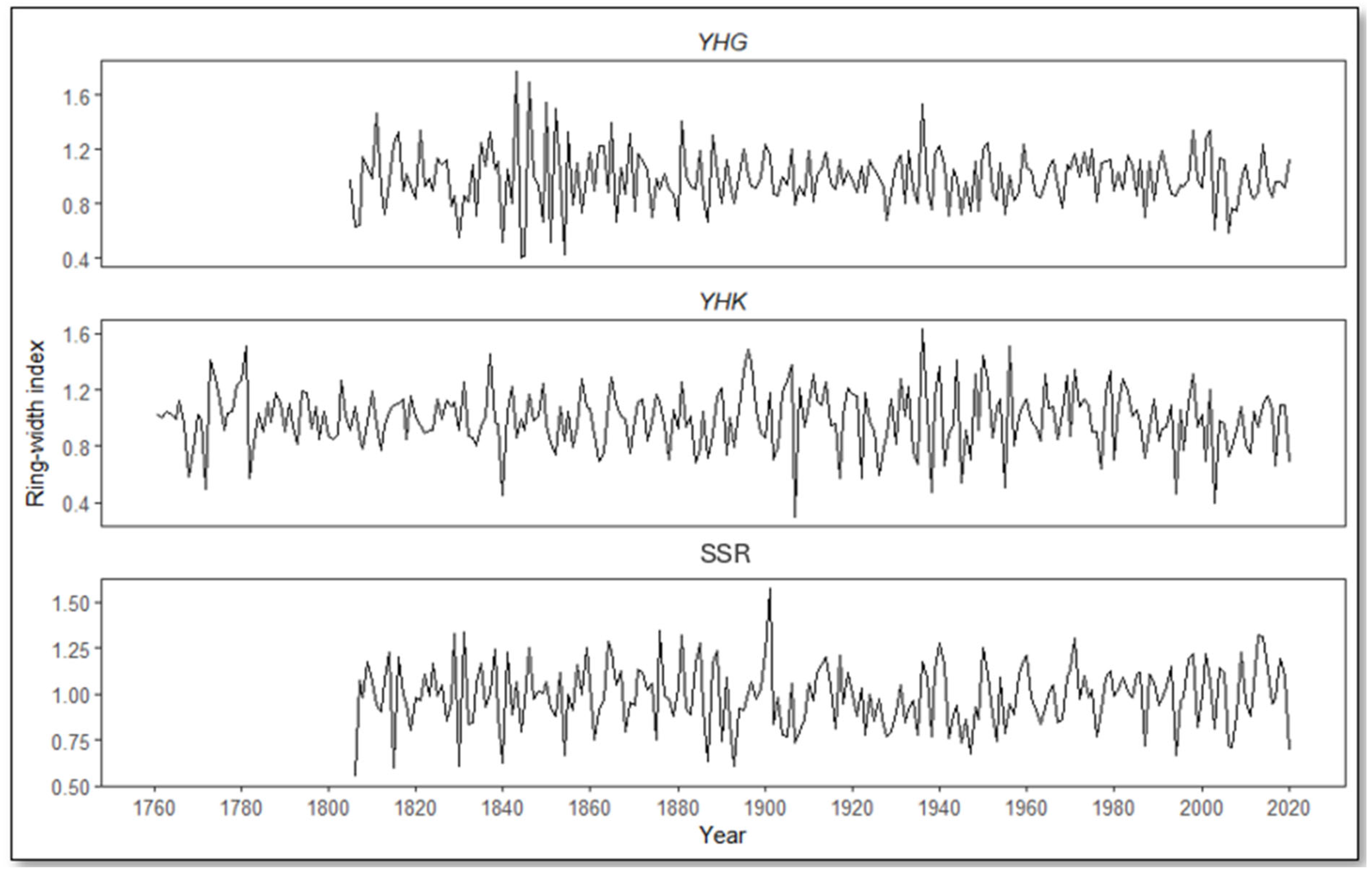
Tree-ring widths of the increment cores were measured to the nearest 0.01 mm using the LINTAB–TSAP/TSAPWin measuring system (Rinntech, Germany), and the data were recorded in *.rwl format. Measurement accuracy and cross-dating quality were statistically verified using the COFECHA program [
24,
25], which identifies problematic samples or ring segments. To remove non-climatic growth trends, individual ring-width series were first detrended by fitting a negative exponential curve, which effectively removes age-related growth trends while preserving low-frequency climatic signals. This approach is widely used in dendroclimatological studies and was considered appropriate based on the biological growth pattern of trees and inspection of residual series. The series was then standardized using the ARSTAN program [
26] by applying a 67% cubic smoothing spline with a 50% frequency cutoff, allowing the retention of interannual to multi-decadal variability while minimizing non-climatic growth influences. This parameterization represents a balance between removing long-term growth trends and preserving climatically meaningful variability. Residual site chronologies were subsequently developed using the Biweight robust mean (
Figure 3). Chronology quality and signal strength were evaluated using commonly applied dendrochronological statistics, including mean sensitivity (MS), mean interseries correlation (
), signal-to-noise ratio (SNR), and expressed population signal (EPS). All statistics were calculated using the dplR package in R [
27,
28]. An EPS threshold of 0.85 was adopted to identify periods with adequate replication and a reliable common signal, which subsequently defined the earliest year considered suitable for streamflow reconstruction [
29,
30].
2.3. Statistical Relationships Between Tree-Ring Width and Hydroclimatic Variables
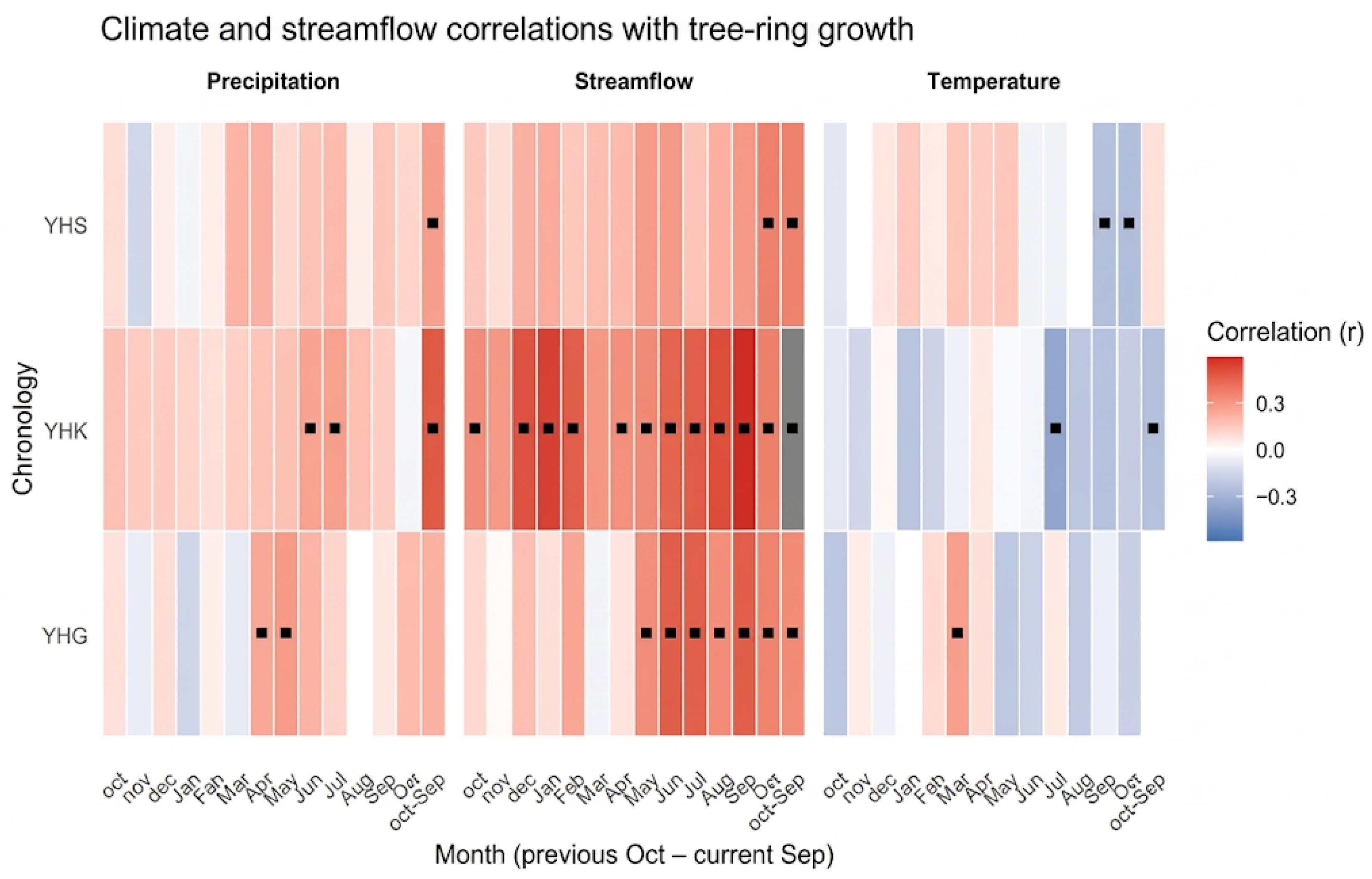
Statistical relationships between tree-ring growth and hydroclimatic variability were examined to identify the climatic controls on radial growth and to define suitable predictors for streamflow reconstruction. In this context, Pearson correlation analysis was applied to quantify the linear relationships between annual ring-width indices and hydroclimatic variables. Correlations were calculated in accordance with the biological year concept widely used in dendroclimatological studies, covering monthly values from the previous October to the current September [
31]. This approach is based on the assumption that tree growth responses may be influenced not only by climatic conditions during the current growing season but also by hydroclimatic conditions in the preceding autumn and winter. The statistical significance of the correlation coefficients was tested at the
p < 0.05 level, and only statistically significant relationships were considered in the interpretation. This procedure ensured that the identified relationships between tree-ring growth and hydroclimatic variability were not random but rather climatically consistent and physically meaningful.
To determine the most appropriate hydroclimatic variable for reconstruction, correlations were computed using both monthly mean streamflow values and aggregated hydrological-year totals. While several individual months—particularly during the main growing season—exhibited statistically significant correlations with radial growth, the hydrological-year (water-year) streamflow series yielded higher and more temporally stable correlation coefficients. The water year was defined as the period from the previous October to the current September, and this interval was used in the calculation of annual hydroclimatic variables. This definition is particularly suitable for streamflow analyses, as it integrates cumulative catchment-scale processes including precipitation inputs, snowmelt contributions, soil moisture storage, and delayed runoff responses. Given that annual radial growth reflects the integrated effects of water availability rather than isolated monthly anomalies, the hydrological-year streamflow totals were selected as the target variable for reconstruction.
To reduce multicollinearity among the individual site chronologies and to extract their dominant common growth signals, principal component analysis (PCA) was applied to the correlation matrix of the three standardized chronologies (Pinus nigra, Abies sp., and Pinus sylvestris). PCA was performed over the common period 1979–2020, corresponding to the availability of instrumental streamflow records. The first two principal components (PC1 and PC2) were retained based on their explained variance and were subsequently used as predictors in regression analyses. Together, PC1 and PC2 explain a substantial proportion of the total variance among the site chronologies, indicating the presence of a strong shared regional growth signal.
Although multiple species were included to characterize regional growth variability, the resulting statistical relationships were found to be primarily driven by the Pinus nigra chronology. This species exhibits the strongest and most consistent coherence with interannual hydroclimatic variability, and its signal dominates the retained principal components. Consequently, the PCA-based predictors largely reflect the hydroclimatic sensitivity expressed by Pinus nigra while still incorporating the shared variance among all included chronologies.
2.4. Streamflow Reconstruction Method
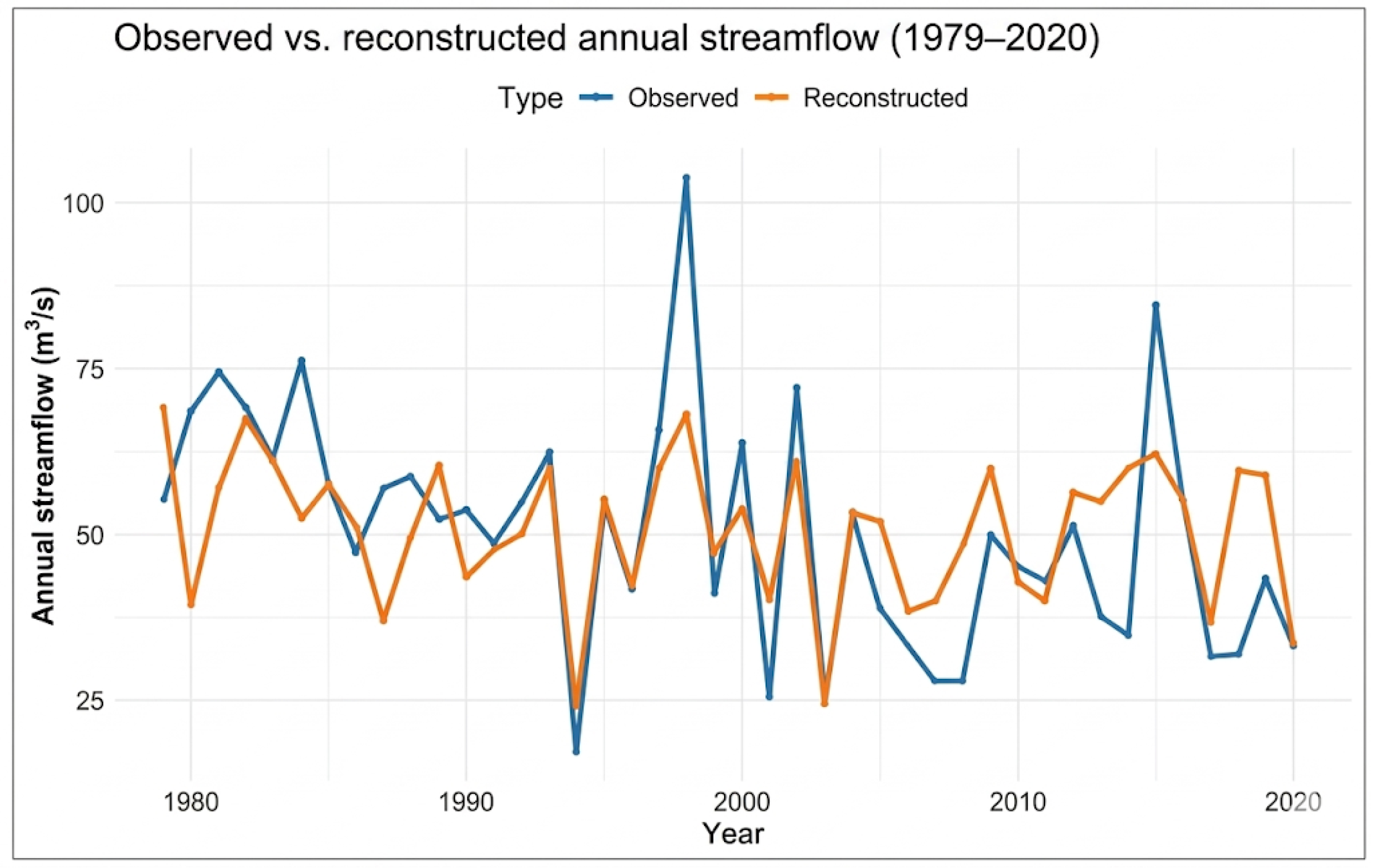
The relationship between tree-ring variability and annual streamflow was quantified using multiple linear regression, with principal component scores derived from the tree-ring chronologies serving as predictors. Due to the relatively short length of the instrumental streamflow record, a split-sample calibration–verification approach could not be reliably applied. Accordingly, the reconstruction model was calibrated using the full instrumental period (1979–2020).
The first two principal components (PC1 and PC2), together explaining approximately 82% of the total variance in the tree-ring data, were retained as predictors. The resulting streamflow reconstruction model is expressed as:
where PC1 and PC2 represent the first two principal components derived from the standardized tree-ring chronologies. Regression coefficients were estimated using ordinary least squares (OLS). Because the regression model was based on principal component scores (PC1 and PC2), which are orthogonal by definition, multicollinearity among predictors was minimized. In addition, the use of a limited number of leading principal components reduces the risk of overfitting by retaining only the dominant common signal in the tree-ring predictor network.
Model performance was evaluated using the coefficient of determination (R2), adjusted R2, and the F-statistic derived from analysis of variance (ANOVA). Statistical significance was assessed based on the p-value associated with the F-test.
To further evaluate the ability of the reconstruction to reproduce the direction of interannual streamflow variability, a sign test was applied. The sign test compares year-to-year changes in observed and reconstructed streamflow and assesses whether both series exhibit the same direction of change (increase or decrease). For each pair of consecutive years, the direction of change was classified as positive or negative for both series. The first year of the instrumental record was excluded, resulting in a total of 41 year-to-year comparisons. The number of agreements was compared against the expected value under random conditions, assuming a probability of agreement of 0.5. This approach allows the reconstruction skill to be evaluated in terms of directional consistency, which is particularly useful when the instrumental record is relatively short and the focus is on interannual variability rather than absolute magnitudes.
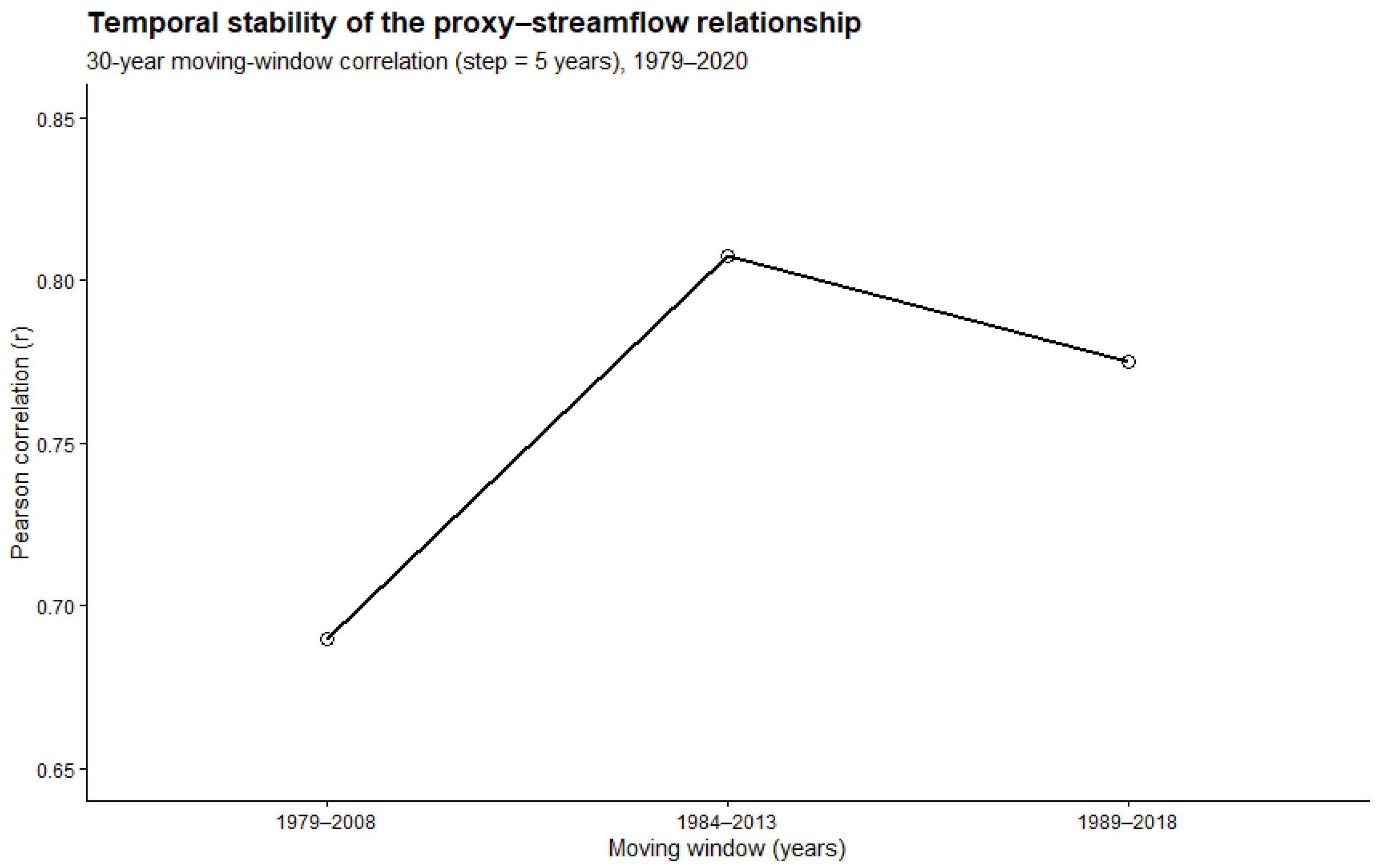
To assess the temporal stability of the calibration model, a moving-window correlation analysis was conducted between observed annual streamflow and model-fitted values derived from principal component regression over the instrumental period (1979–2020). Pearson correlation coefficients were calculated using a 30-year moving window with 5-year increments, allowing potential non-stationarity in the regression relationship to be evaluated through time.
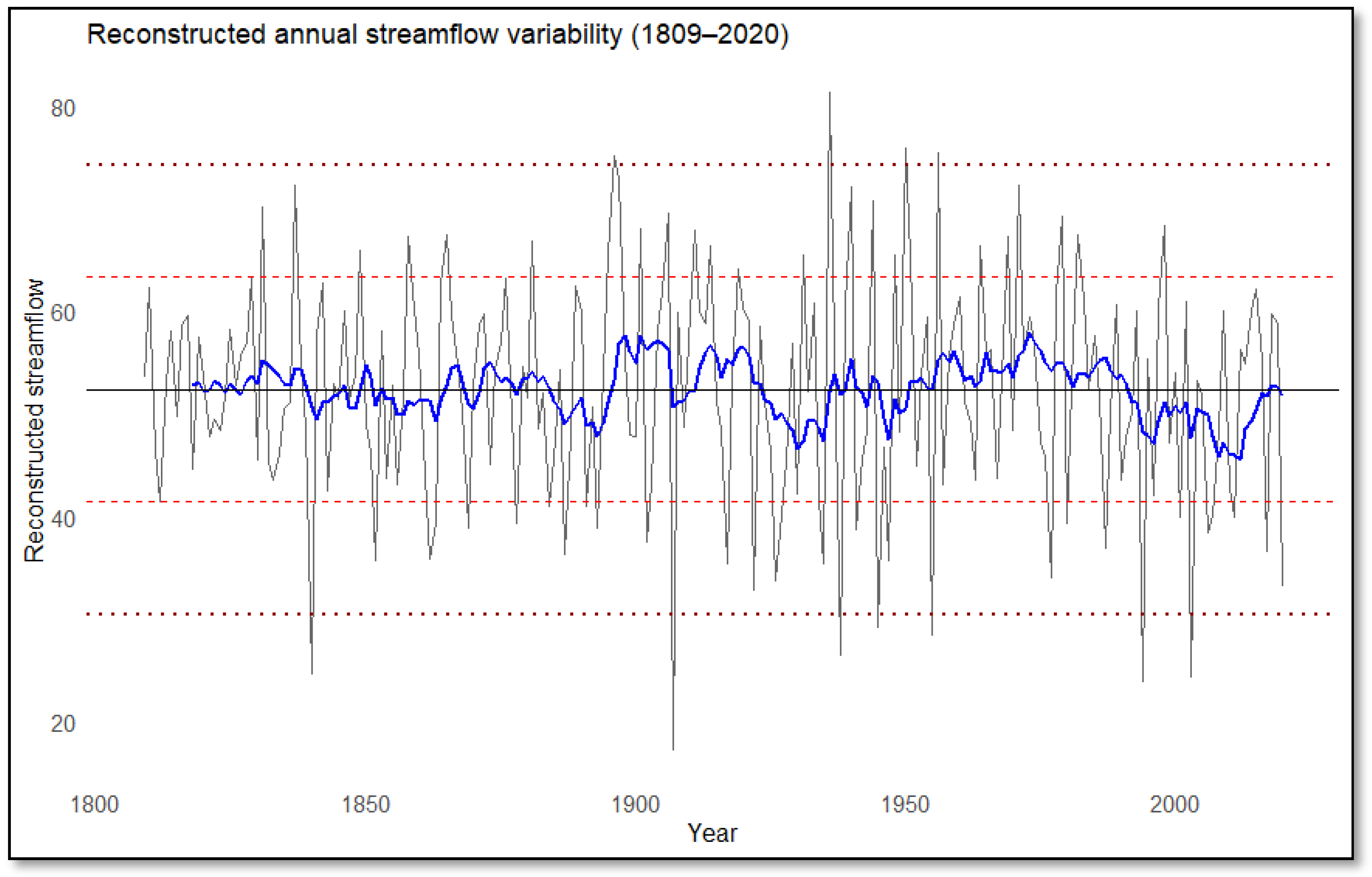
Following calibration, the regression model was applied to the full length of the tree-ring-based predictor series to reconstruct annual streamflow variability beyond the instrumental period. The calibrated regression model was applied to the full length of the tree-ring-based predictor series to reconstruct annual streamflow variability for the period 1809–2020, corresponding to the interval during which chronology quality criteria, particularly EPS ≥ 0.85, indicate reliable climatic signal representation.
4. Discussion
In this study, annual streamflow reconstruction for the Yenice Stream basin was developed using
Pinus nigra tree-ring chronologies calibrated against instrumental data for the period 1979–2020. The resulting model explains 39% of the observed variance in streamflow, a level comparable to other dendrohydrological reconstructions in Türkiye. Although the explained variance of the model is moderate (R
2 = 0.39), this level of performance is consistent with many dendrohydrological reconstructions, where tree growth responds indirectly to streamflow through climate-related factors such as precipitation, soil moisture, and snowmelt processes. In addition, streamflow is influenced by multiple interacting factors, including basin characteristics and potential human impacts, which are not fully captured by tree-ring width alone. Therefore, the model primarily reflects interannual variability and relative changes in streamflow rather than the absolute magnitude of discharge. Comparable levels of explained variance have been reported in previous dendrohydrological studies in Türkiye. For example, Akkemik et al. [
13] explained 36–53% of the variance for the Filyos River, Güner et al. [
17] reported 47% for the Kocasu River in the Sakarya Basin, and Genç and Güner [
14] explained 35% for the Gökırmak stream in the Lower Kızılırmak Basin. The statistical robustness and temporal stability of our model indicate that
Pinus nigra tree rings in the Yenice basin reliably record hydrological variability and constitute a strong proxy for past water availability. Spring discharge, particularly during late winter to early summer, represents a major component of the annual flow regime in the basin. However, the present study focuses on annual streamflow variability, which integrates the combined effects of seasonal precipitation, snowmelt, and antecedent moisture conditions. Therefore, annual streamflow provides a more comprehensive representation of basin-scale hydroclimatic variability than individual seasonal components. Nevertheless, seasonal reconstructions targeting peak flow periods may provide additional insights and could be explored in future studies.
Our reconstruction (1809–2020) extends beyond the instrumental period and places recent hydrological extremes into a longer historical context. The severe drought years identified in our record show strong agreement with previous dendroclimatological studies and documentary evidence from Anatolia and the western Black Sea region. In particular, 1887 emerges as one of the most extreme drought years. This finding aligns with reports of widespread drought and famine across western and northern Anatolia during that year [
16,
17,
32,
33,
34]. Similarly, the droughts of 1893–1894 and the low-flow episode of 1927–1928 are consistent with regional hydroclimatic reconstructions and historical accounts.
The coherence between reconstructed drought years and regional records suggests that these hydrological extremes were not purely local anomalies but were likely associated with large-scale atmospheric circulation patterns influencing the eastern Mediterranean. Previous studies have linked severe drought episodes in Türkiye and the broader Mediterranean to persistent positive phases of the North Atlantic Oscillation (NAO) and shifts in Mediterranean storm-track activity [
35,
36,
37]. The synchronization of low-flow years across western and northern Anatolia supports the interpretation that the Yenice Stream basin responds to regional-scale hydroclimatic forcing rather than isolated local variability. Although these interpretations are supported by previous studies, a quantitative assessment of the relationship between reconstructed streamflow and large-scale climate indices such as the North Atlantic Oscillation (NAO) was beyond the scope of this study. Incorporating seasonal NAO indices in future analyses could provide further insight into the influence of large-scale atmospheric circulation on hydroclimatic variability in the Yenice Stream basin.
Extreme high-flow years, such as 1901 and 1936, also exhibit strong regional coherence. These years have been documented as exceptionally wet across western and northern Türkiye [
33,
38,
39,
40]. Such high-flow episodes are consistent with periods of enhanced Mediterranean cyclonic activity and intensified westerly circulation over the eastern Mediterranean, as documented in previous climatological studies [
36,
37]. The clear correspondence between regional precipitation anomalies and reconstructed streamflow further confirms the sensitivity of the Yenice basin to synoptic-scale atmospheric dynamics.
Compared to the main-stem Filyos reconstruction [
13], the Yenice sub-basin record may reflect heightened sensitivity to localized hydroclimatic variability due to its confined topography and steep valley morphology. Sub-basin scale reconstructions are therefore essential for capturing spatial heterogeneity within larger river systems. The Yenice Stream, characterized by deeply incised valleys and strong topographic control, may amplify hydrological responses to regional precipitation anomalies, highlighting the importance of resolving hydroclimatic variability at finer spatial scales.
Finally, our findings underscore the limitations of relying exclusively on short instrumental records for water resource management. While recent decades (e.g., the early 1990s and early 2000s) exhibit pronounced low-flow conditions consistent with increasing drought risk, comparable or even more severe drought episodes occurred in the nineteenth and early twentieth centuries, particularly in 1887 and the 1927–1928 period. This demonstrates that modern instrumental observations alone underestimate the full range of natural hydroclimatic variability. As noted in previous studies across Anatolia, relying solely on recent observation data may lead to an underestimation of future drought risks [
13,
17]. Consequently, extending the hydrological records back in time through dendrochronological methods provides a critical baseline for sustainable water management and the development of worst-case scenario strategies in the face of climate change [
14,
41]. Additional approaches, such as bias-correction techniques (e.g., [
42]), may further improve the scaling of reconstructed values and could be considered in future studies.
Although the reconstruction is robust, several limitations should be noted. The reliance on tree-ring width alone may not fully represent all aspects of hydroclimatic variability. In addition, the relatively short instrumental period (1979–2020) constrains model calibration and validation. Potential human influences and basin-scale hydrological alterations are also not explicitly considered. These factors may introduce uncertainties, and addressing them in future studies could further enhance the reliability of dendrohydrological reconstructions.
5. Conclusions
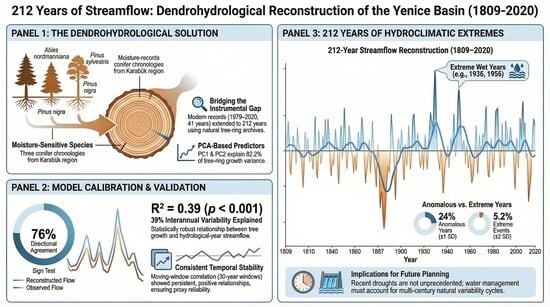
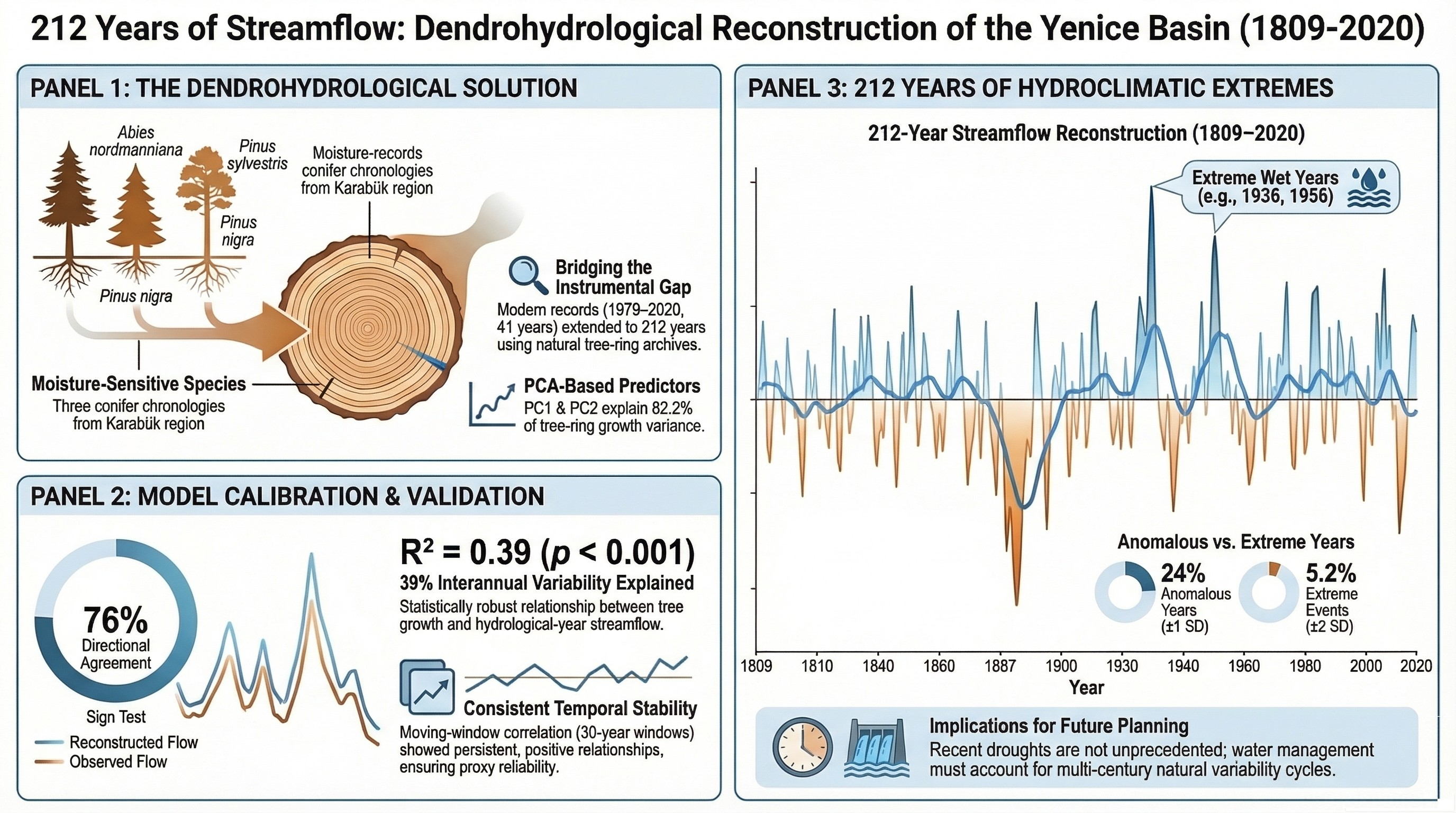
This study presents a multi-century (1809–2020) reconstruction of annual streamflow variability for the Yenice Stream in northwestern Türkiye based on moisture-sensitive Pinus nigra tree-ring chronologies. The model explains 39% of the observed variance during the calibration period (1979–2020), confirming that tree rings in the basin reliably record hydroclimatic variability. Importantly, the reconstruction extends up to 2020, allowing direct comparison between past and recent hydroclimatic conditions.
The reconstruction demonstrates that recent instrumental-period droughts are not unprecedented in the long-term context. Severe low-flow episodes in 1887 and 1927–1928 were comparable to or more intense than modern events, and reconstructed extremes show strong agreement with regional dendroclimatological studies and historical records. Both drought and high-flow years (e.g., 1901 and 1936) reflect the influence of large-scale atmospheric circulation affecting Anatolia and the eastern Mediterranean.
By extending streamflow variability beyond the short instrumental record, this study highlights the importance of incorporating multi-century proxy data into water resource management. In particular, the sub-basin scale reconstruction provides a refined representation of localized hydroclimatic variability that may be obscured in larger basin-scale analyses. Sub-basin scale reconstructions such as this provide a more comprehensive understanding of natural hydroclimatic variability and improve long-term drought and flood risk assessment in climatically sensitive regions.