
Assessing COVID-19 Pandemic-Induced Air Quality Improvements: Insights from Marienplatz in Stuttgart, Germany


Abstract
1. Introduction
2. Materials and Methods
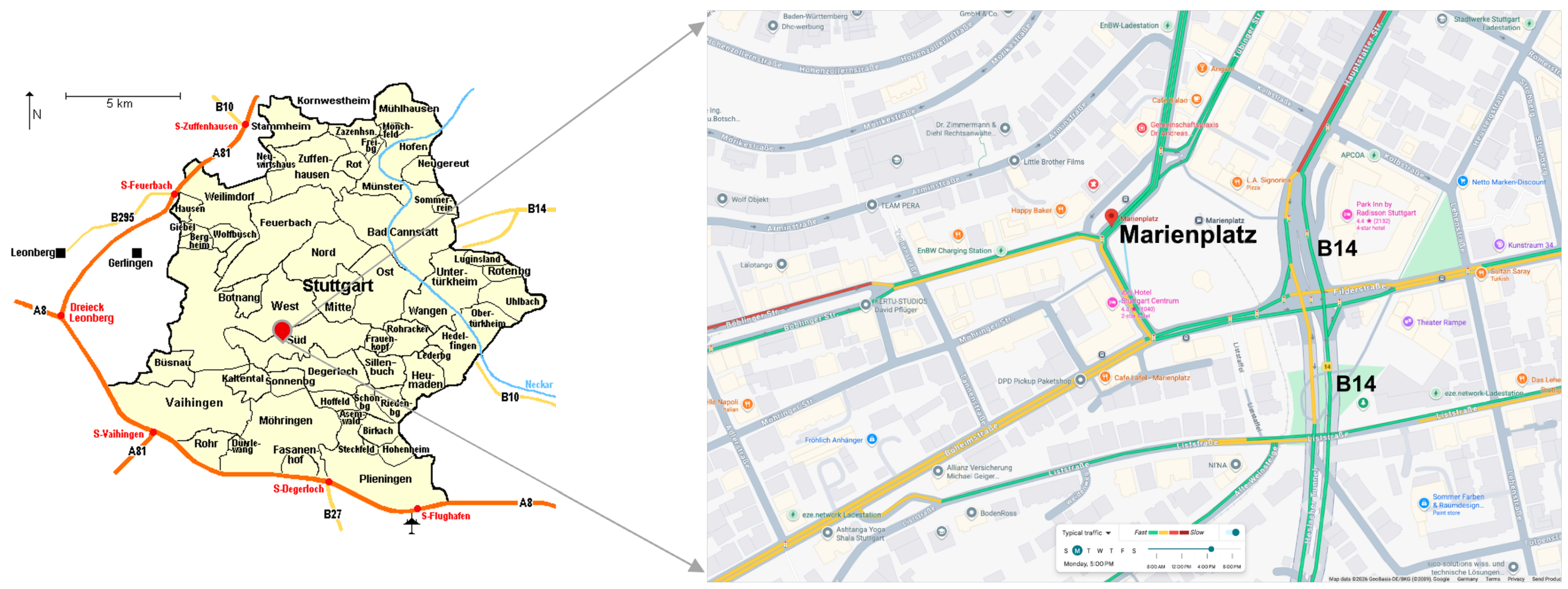
2.1. Study Area and Pollutant Monitoring Stations
2.2. Data Collection Period
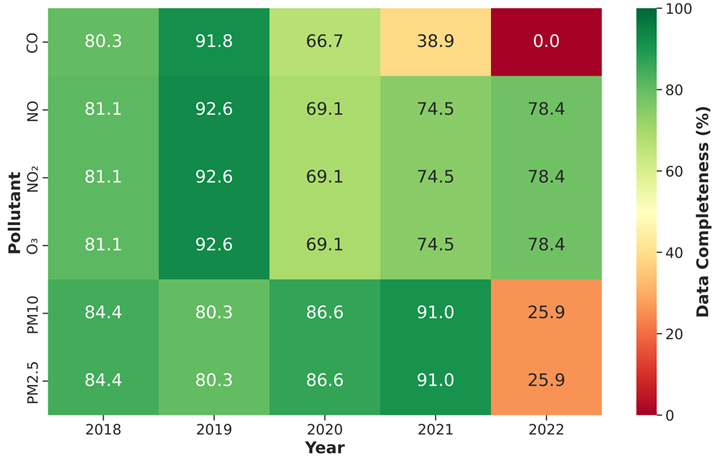
2.3. Measurement Devices, Data Sources, Availability, and SHAP Analysis
3. Results and Discussion
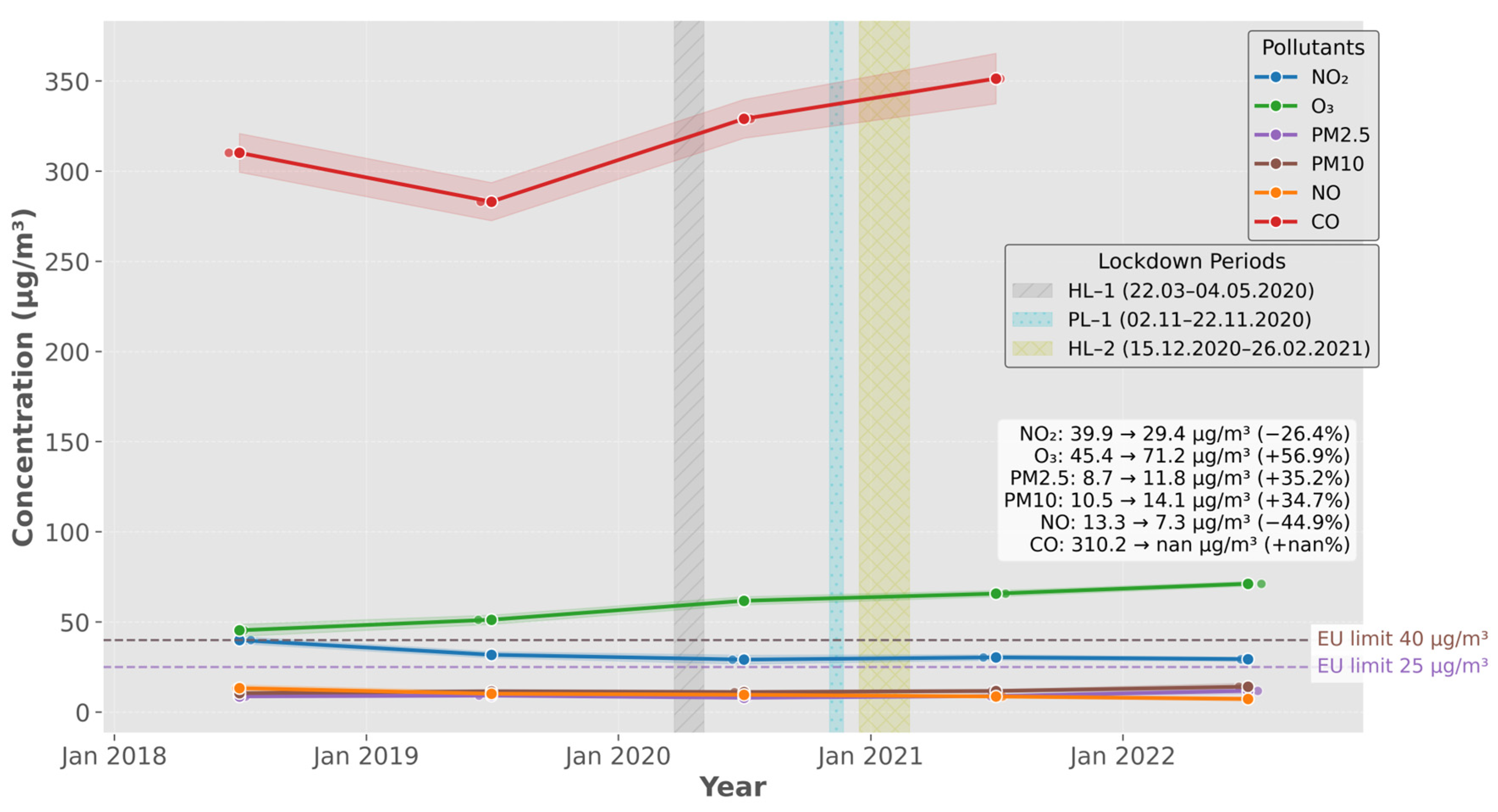
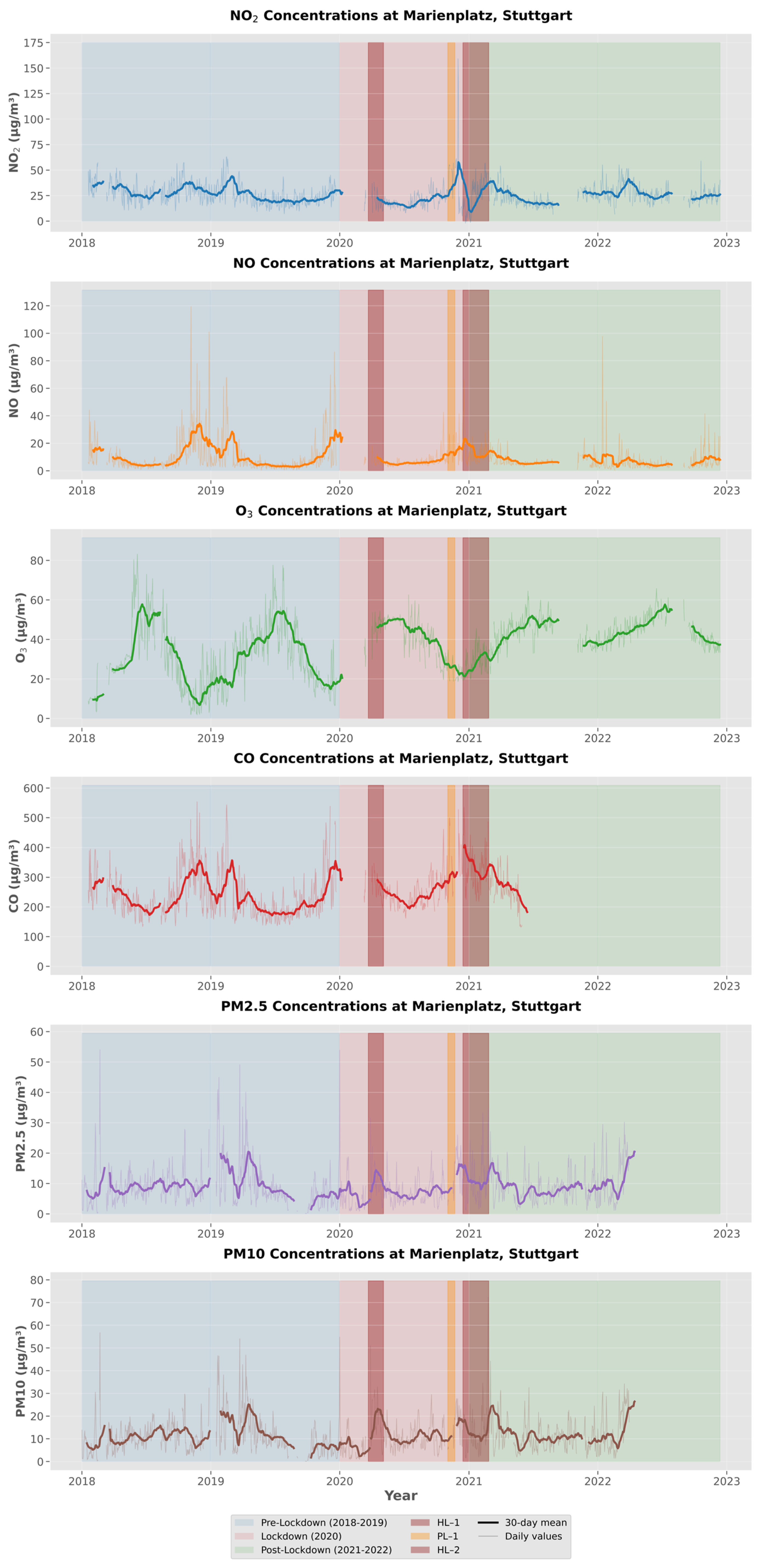
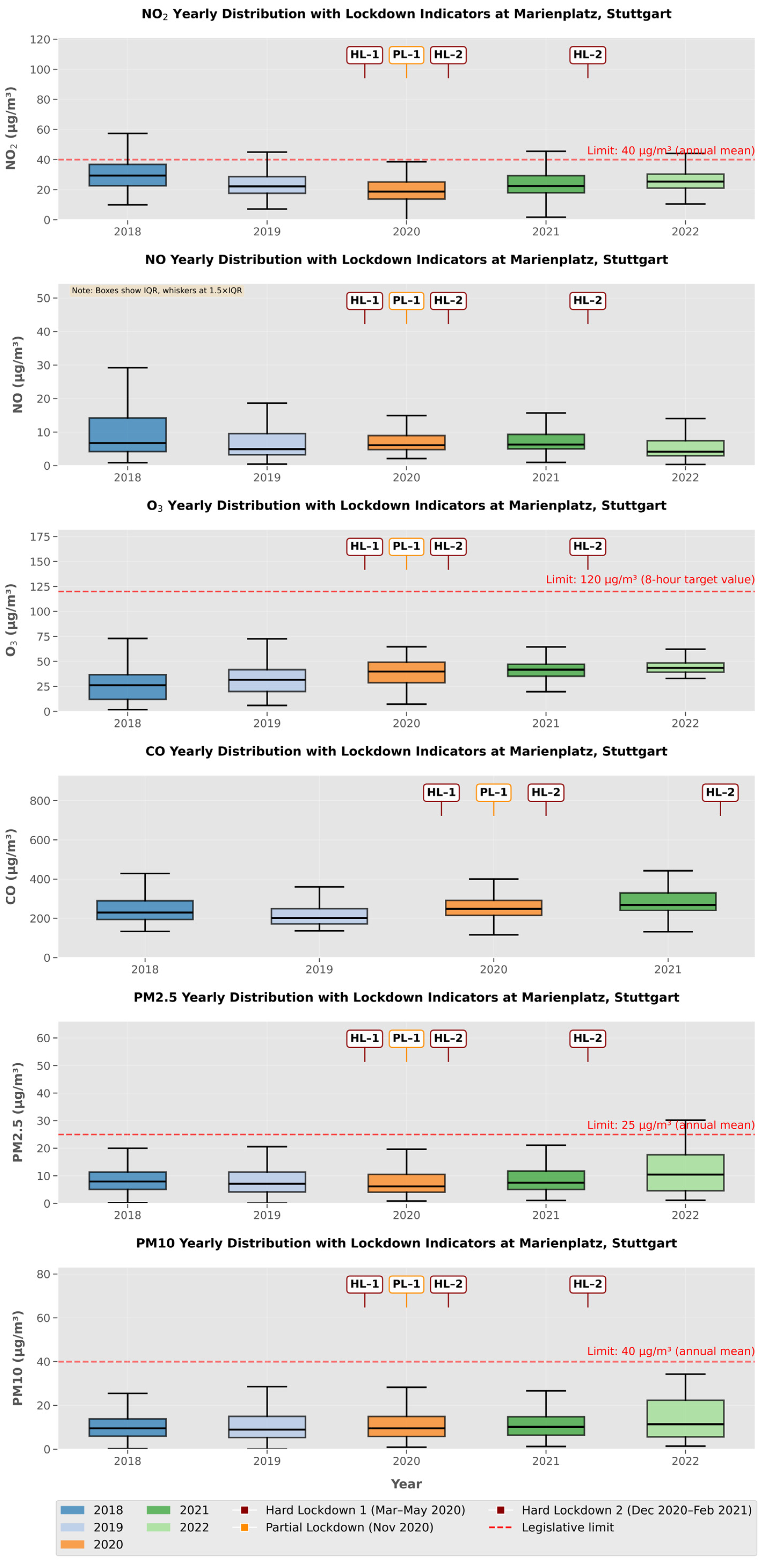
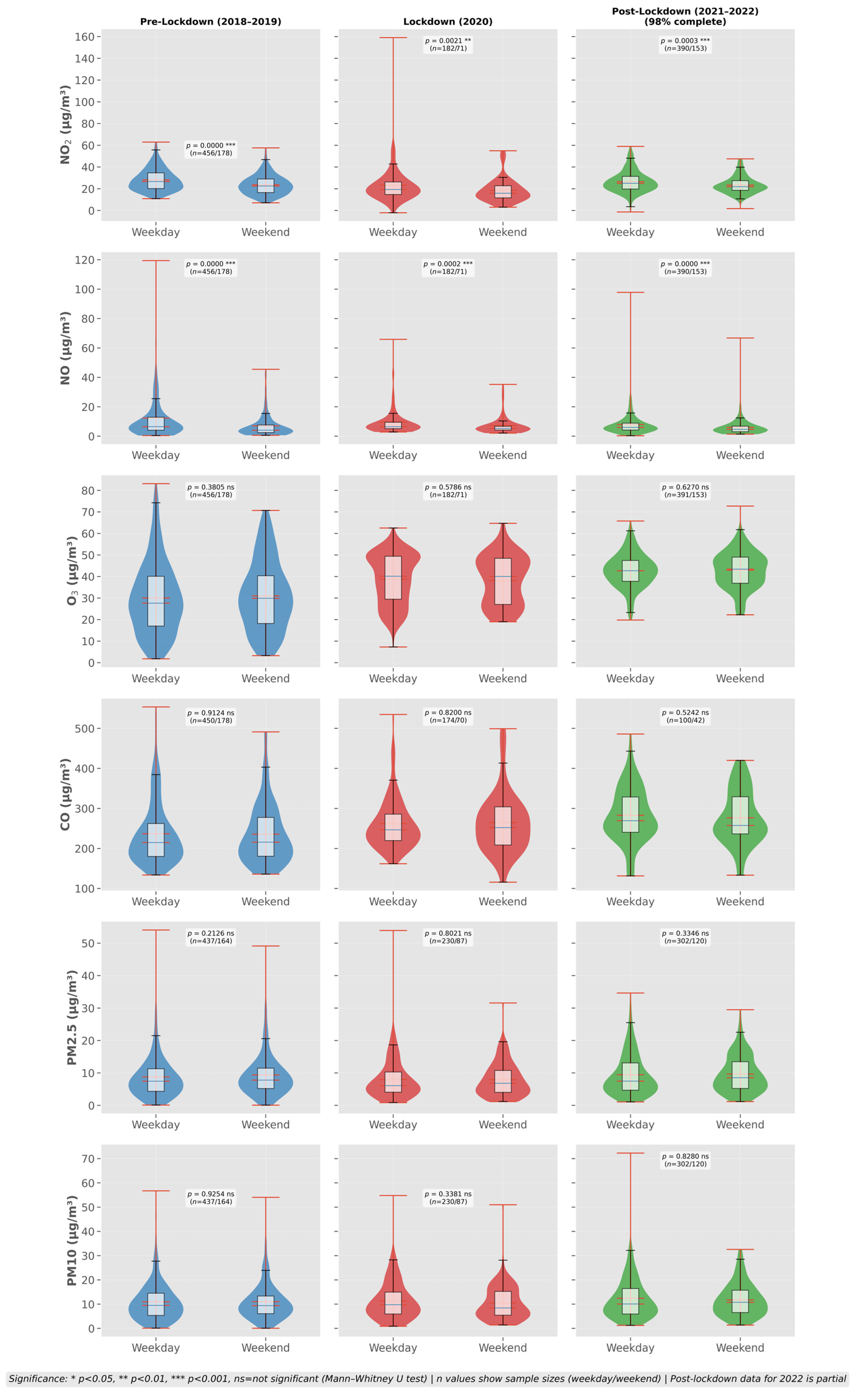
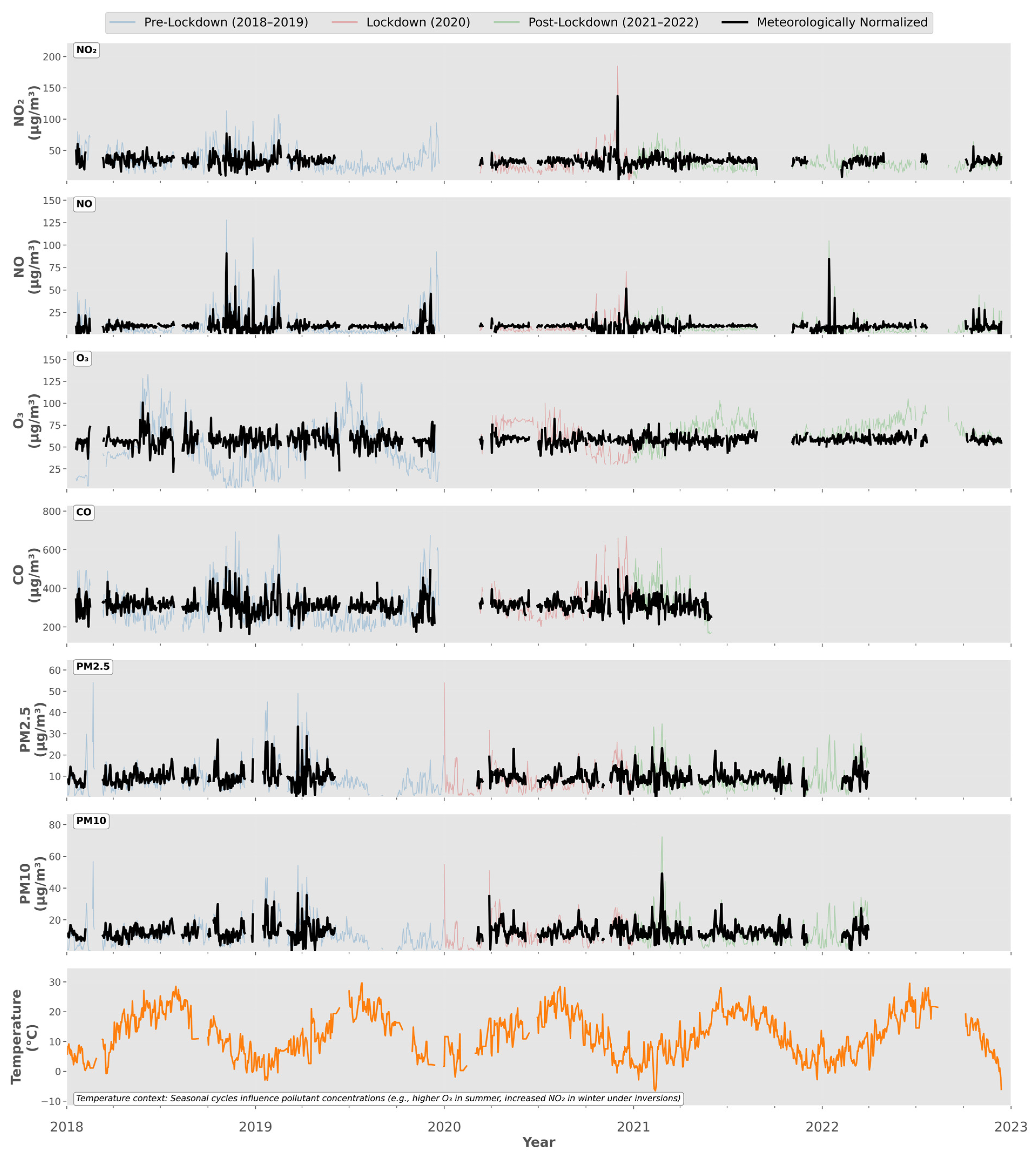
3.1. Temporal Trends of Air Pollutants (2018–2022) at Marienplatz, Stuttgart
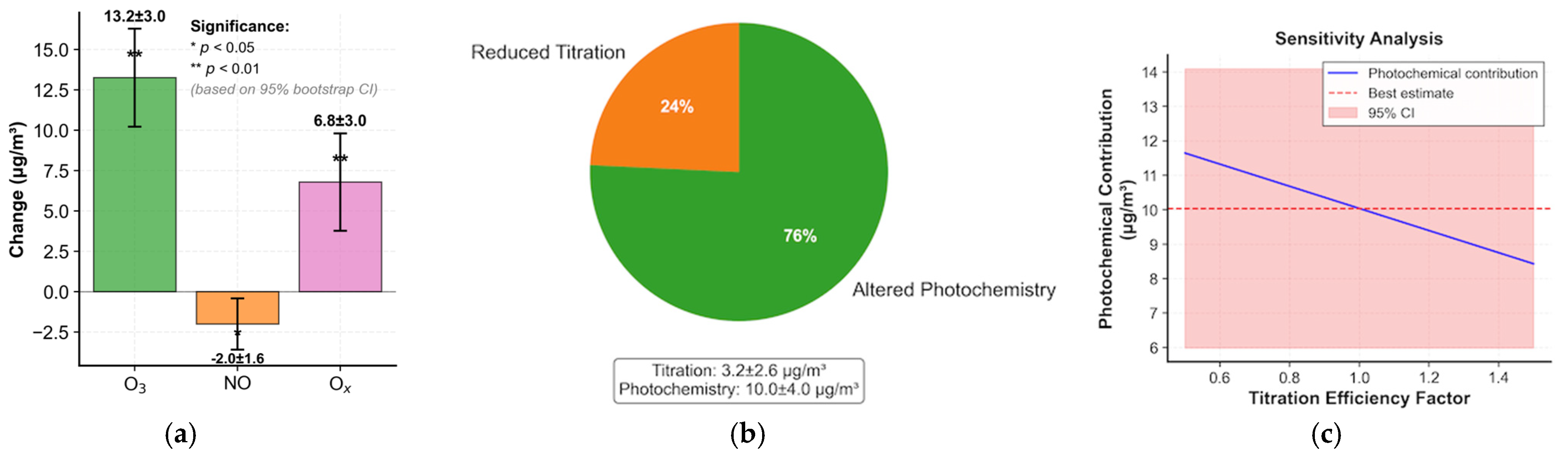
3.2. Quantification of Ozone Enhancement: Contribution of Reduced NO Titration and Photochemical Production
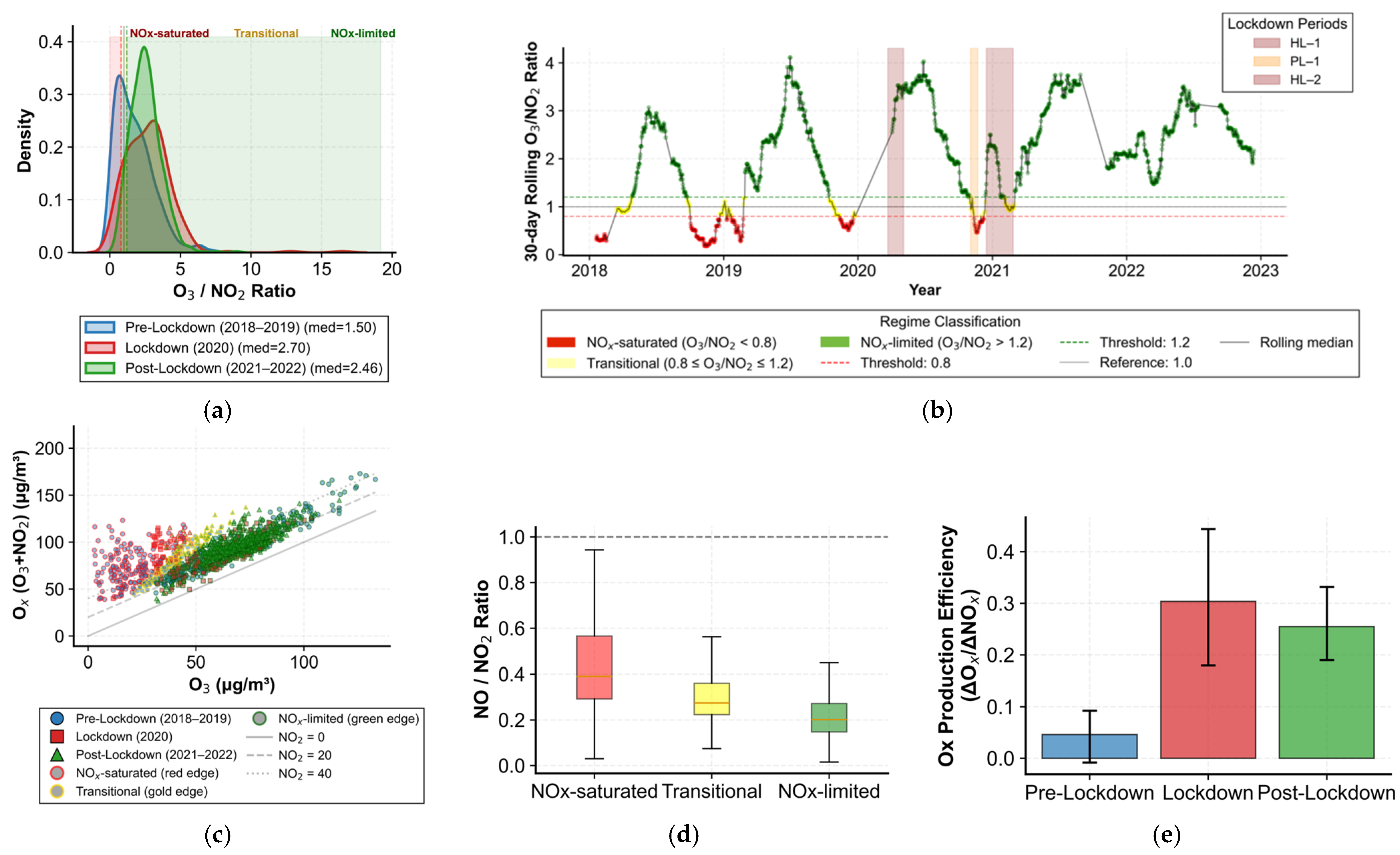
3.3. Photochemical Regime Analysis and Transition During the Lockdown Period
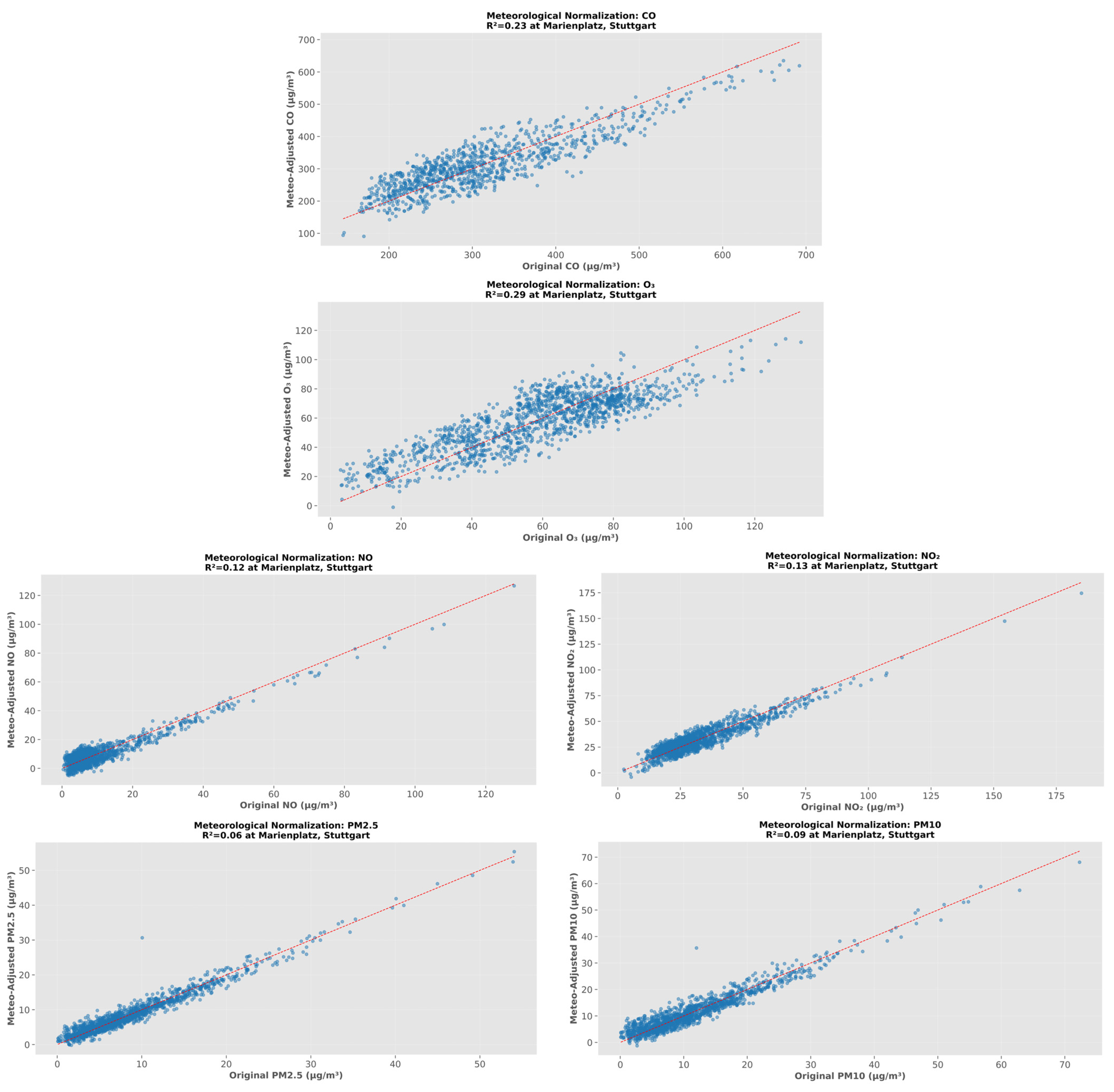
3.4. Meteorologically Normalized Air Quality Trends in the Context of COVID-19 Lockdown Measures
3.4.1. Influence of Meteorology on Gaseous Pollutants
3.4.2. Implications for Urban Air Quality Management
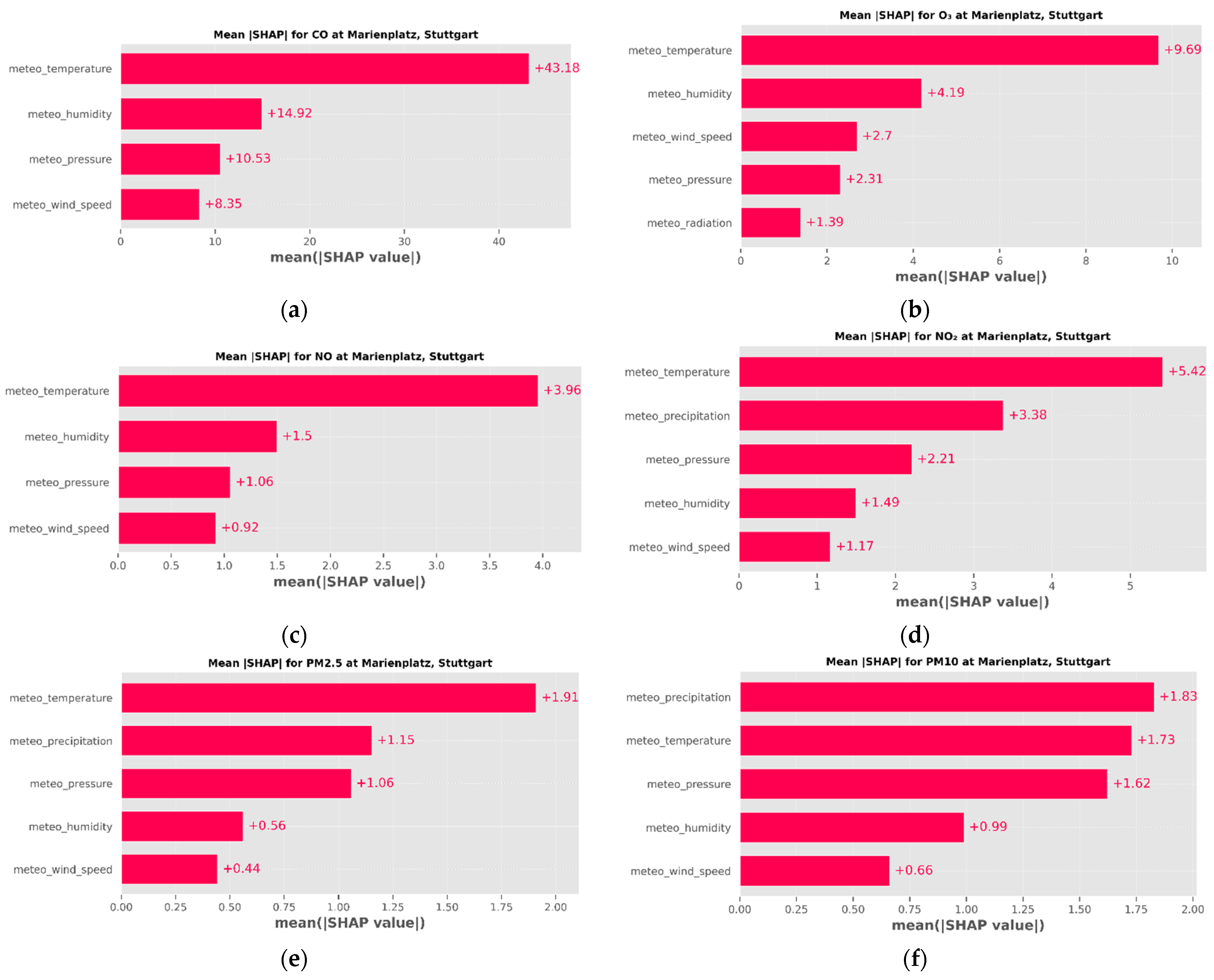
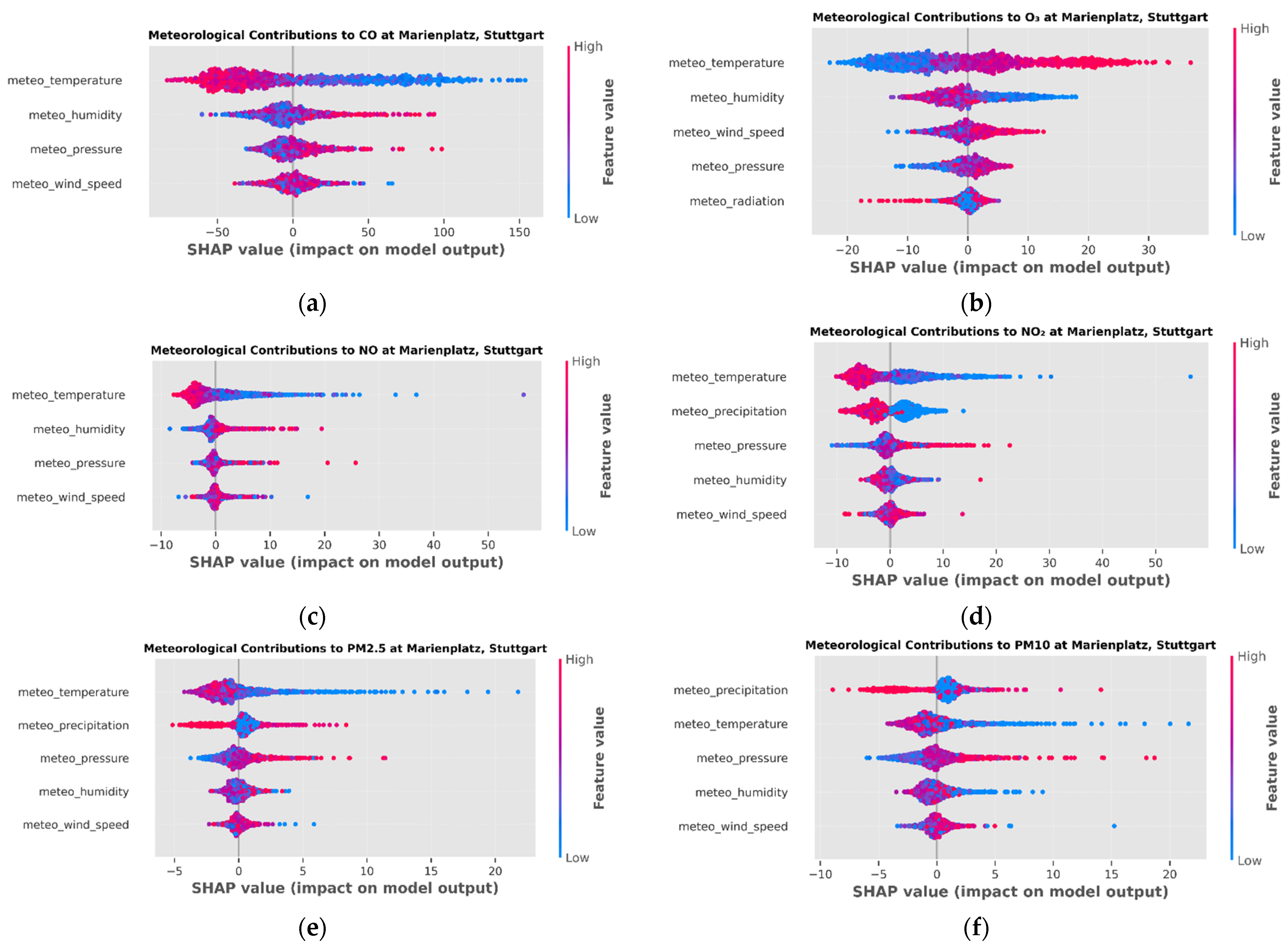
3.4.3. Quantifying Meteorological Contributions to Pollutant Levels Using SHAP (Shapley Additive Explanations)
3.4.4. SHAP Value Distributions for the Pollutants at Marienplatz, Stuttgart
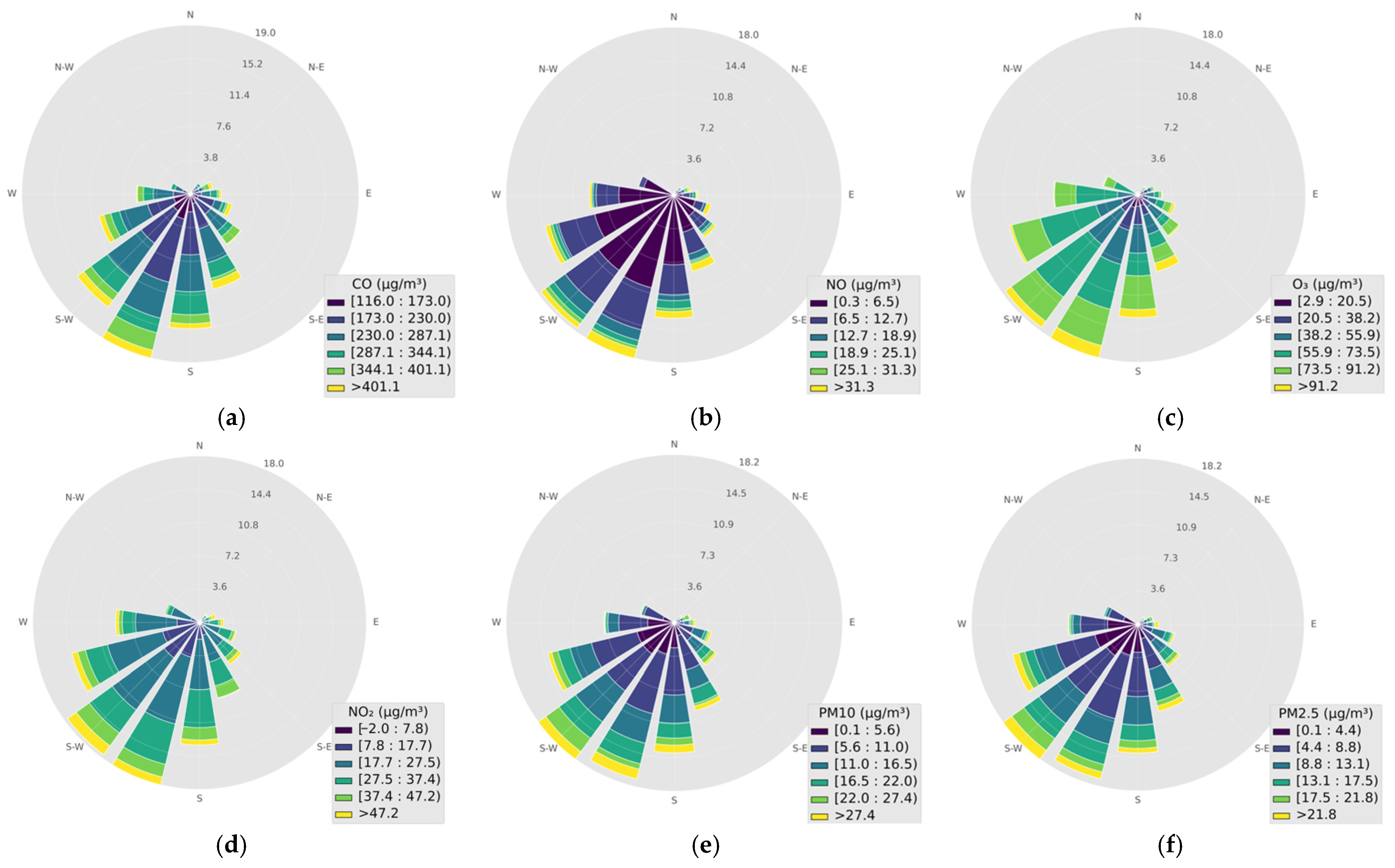
3.5. Directional Distribution Patterns of Primary Pollutants
Carbon Monoxide and Nitrogen Oxide Source Signatures
3.6. Implications for Air Quality Management
4. Conclusions and Policy Implications
- (a)
- Multi-Pollutant, Multi-Sectoral Strategies: Effective air quality improvement requires integrated approaches targeting both primary and secondary pollutants. Policies should not only focus on traffic emissions but also address residential heating, industrial sources, and regional pollutant transport.
- (b)
- Dynamic Emission Controls: The transient nature of air quality improvements during the lockdown highlights the need for sustained and adaptive emission reduction measures, including the expansion of low-emission zones, electrification of transport fleets, and promotion of clean heating technologies.
- (c)
- Photochemical Regime Sensitivity: The observed enhancement of ozone formation efficiency during periods of reduced NOx emissions underscores the necessity of coordinated NOx and VOC control strategies, particularly under warming climate scenarios that favour higher ozone production.
- (d)
- Meteorologically Informed Management: The observed association between higher temperatures and elevated ozone concentrations suggests that air quality forecasting and public health advisories should be dynamically linked to meteorological and climate projections, enabling timely interventions during high-risk periods.
- (e)
- Regional and Cross-Jurisdictional Coordination: The influence of regional transport on NO2 and O3 concentrations necessitates collaborative policy frameworks that transcend municipal boundaries, particularly for managing transboundary ozone and precursor emissions.
- (f)
- Continuous Monitoring and Research: Ongoing high-resolution monitoring, advanced source apportionment, and atmospheric modelling are essential for tracking evolving emission patterns, detecting changes in photochemical regimes, and evaluating the real-time effectiveness of policy interventions.
Outlook on Future Regulations
Author Contributions
Funding
Data Availability Statement
Acknowledgments
Conflicts of Interest
Appendix A

| Instrument | Measuring Principle | Measured Parameters | Accuracy | Resolution |
|---|---|---|---|---|
| Environmental Dust Monitor, EDM180 (Aerosol spectrometer) | Light scattering | Particulate Matter (PM) with a size range of 0.25–32 µm | 5% | 0.1 µg/m3 |
| NO2/NO/NOX monitor, MLU200a | Chemiluminescence | NO2, NO, NOX | 0.5% | 0.1 ppb |
| Ozone Monitor, HORIBA APOA 360 | UV absorption | O3 | 2% | 0.1 ppb |
| CO monitor, HORIBA APMA 360 | NDIR absorption | CO | 1% | 0.1 ppm |
| Instrument | Measuring Principle | Measured Parameter | Accuracy | Resolution |
|---|---|---|---|---|
| Weather station | Negative Temperature Coefficient (NTC) resistor | Air temperature | 0.5 °C | 0.1 °C |
| Capacitive humidity sensor Micro Electro-Mechanical Sensor (MEMS) | Relative humidity | 5% | 0.1% | |
| Atmospheric pressure | 1.5 hPa | 0.1 hPa | ||
| Pyranometer | Global radiation | 2% | 1 W/m2 | |
| Wind sensor | Ultrasonic time of flight | Wind speed | 0.2 m/s | 0.2 m/s |
| Ultrasonic time of flight | Wind direction | 10 ° | 0.5 ° | |
| Precipitation sensor | Tipping bucket system | Precipitation intensity | 2% | 2 cm3 |
| Pollutant | Pre-Lockdown and Post-Lockdown Raw Trend (2018–2022) | Adjusted Trend (2018–2022) | Meteorological Influence | Main Drivers of Change | Policy Implications |
|---|---|---|---|---|---|
| CO | Could not be determined due to insufficient dataset | ||||
| NO | Decrease (11.6 → 8.0 µg/m3) −31.0% | Decrease (10.1 → 9.6 µg/m3) −4.8% | Moderate negative correlation with temperature (r = −0.32, R2 = 0.10) and wind speed (r = −0.25, R2 = 0.06) | Clear traffic reduction signal: Lockdown −4.8%, sustained post-lockdown −5.4% (90% traffic sensitivity). | Strong evidence for traffic policy: Most traffic-sensitive pollutant. Continue/reinforce traffic reduction measures. |
| NO2 | Decrease (35.6 → 30.0 µg/m3) −15.7% | Minimal decrease (33.9 → 33.1 µg/m3) −2.2% | Moderate negative correlation with temperature (r = −0.29, R2 = 0.09) and wind speed (r = −0.23, R2 = 0.05) | Meteorology explains most raw trend: Only −2.2% true reduction despite 80% traffic sensitivity. | Traffic benefits limited: Raw data overstates improvements. Need complementary NOx reduction strategies beyond traffic. |
| O3 | Increase (48.5 → 68.4 µg/m3) +41.0% | Stable (58.1 → 58.7 µg/m3) +1.1% | Extremely strong positive correlation with temperature (r = 0.56, R2 = 0.32) and radiation (r = 0.36, R2 = 0.13) | Purely meteorological: Negative traffic sensitivity (−30%) means reduced traffic should increase O3, but normalized data shows no lockdown effect. | Climate-driven policy: O3 control = climate adaptation. Focus on VOC controls alongside NOx to avoid titration loss. |
| PM2.5 | Fluctuating (9.0 → 9.5 µg/m3) +5.6% | Decrease (9.6 → 9.3 µg/m3) −3.1% | Very weak influence: pressure strongest (r = 0.22, R2 = 0.05), all R2 < 0.05 | Mixed sources: 50% traffic sensitivity but lockdown reduction small (−2.5%). Post-lockdown continued improvement (−3.1%) | Broad approach needed: Traffic contributes but not dominant. Target other sources: residential combustion, industry, secondary formation |
| PM10 | Increase (11.0 → 12.2 µg/m3) +10.9% | Stable (12.4 → 12.3 µg/m3) −0.8% | Very weak influence: pressure strongest (r = 0.25, R2 = 0.06), all R2 < 0.06 | Meteorology masks stability: 60% traffic sensitivity but lockdown shows +1.0% normalized increase. Post-lockdown −1.0%. | Non-traffic focus: Resuspension, construction dust, long-range transport. Limited traffic control effectiveness. |
| Pollutant | Primary Direction | Key Process | Mitigation Strategy |
|---|---|---|---|
| CO/NO | South/Southeast | Vehicular combustion | Traffic electrification |
| NO2 | South + West | Local oxidation + regional transport | VOC controls in industrial zones |
| O3 | West/Southwest | Regional photochemistry | Cross-state emission caps |
| PM10/PM2.5 | South | Resuspension + primary emissions | Road surface cleaning |


References
- World Health Organization. WHO Global Air Quality Guidelines. 2021. Available online: https://www.who.int/publications/i/item/9789240034228 (accessed on 23 April 2025).
- Landrigan, P.J.; Fuller, R.; Acosta, N.J.; Adeyi, O.; Arnold, R.; Basu, N.N.; Baldé, A.B.; Bertollini, R.; Bose-O’Reilly, S.; Boufford, J.I.; et al. The lancet commission on pollution and health. Lancet 2018, 391, 462–512. [Google Scholar] [CrossRef]
- Gurjar, B.R.; Ravindra, K.; Nagpure, A.S. Air pollution trends over Indian megacities and their local-to-global implications. Atmos. Environ. 2016, 142, 475–495. [Google Scholar] [CrossRef]
- Balakrishnan, K.; Dey, S.; Gupta, T.; Dhaliwal, R.S.; Brauer, M.; Cohen, A.J.; Stanaway, J.D.; Beig, G.; Joshi, T.K.; Dandona, L.; et al. The impact of air pollution on deaths, disease burden, and life expectancy across the states of India: The Global Burden of Disease Study 2017. Lancet Planet. Health 2019, 3, e26–e39. [Google Scholar] [CrossRef]
- European Environment Agency. Air Quality in Europe, 2020 Report (Report No. 09/2020). Publications Office of the European Union. 2020. Available online: https://op.europa.eu/en/publication-detail/-/publication/447035cd-344e-11eb-b27b-01aa75ed71a1/language-en (accessed on 21 August 2025).
- Anenberg, S.C.; Mohegh, A.; Goldberg, D.L.; Kerr, G.H.; Brauer, M.; Burkart, K.; Hystad, P.; Larkin, A.; Wozniak, S.; Lamsal, L. Long-term trends in urban NO2 concentrations and associated paediatric asthma incidence: Estimates from global datasets. Lancet Planet. Health 2022, 6, e49–e58. [Google Scholar] [CrossRef]
- Kumar, P.; Morawska, L.; Martani, C.; Biskos, G.; Neophytou, M.; Di Sabatino, S.; Bell, M.; Norford, L.; Britter, R. The rise of low-cost sensing for managing air pollution in cities. Environ. Int. 2015, 75, 199–205. [Google Scholar] [CrossRef] [PubMed]
- Snyder, E.G.; Watkins, T.H.; Solomon, P.A.; Thoma, E.D.; Williams, R.W.; Hagler, G.S.W.; Shelow, D.; Hindin, D.A.; Kilaru, V.J.; Preuss, P.W. The changing paradigm of air pollution monitoring. Environ. Sci. Technol. 2013, 47, 11369–11377. [Google Scholar] [CrossRef]
- Creutzig, F.; Jochem, P.; Edelenbosch, O.Y.; Mattauch, L.; van Vuuren, D.P.; McCollum, D.; Minx, J. Transport: A roadblock to climate change mitigation? Science 2015, 350, 911–912. [Google Scholar] [CrossRef]
- Brand, C. Beyond ‘Dieselgate’: Implications of unaccounted and future air pollutant emissions and energy use for cars in the United Kingdom. Energy Policy 2016, 97, 1–12. [Google Scholar] [CrossRef]
- Janssen, N.A.H.; Hoek, G.; Simic-Lawson, M.; Fischer, P.; van Bree, L.; ten Brink, H.; Keuken, M.; Atkinson, R.W.; Anderson, H.R.; Brunekreef, B.; et al. Black carbon as an additional indicator of the adverse health effects of airborne particles compared with PM10 and PM2.5. Environ. Health Perspect. 2012, 120, 708–714. [Google Scholar] [CrossRef]
- Jacob, D.J.; Winner, D.A. Effect of climate change on air quality. Atmos. Environ. 2009, 43, 51–63. [Google Scholar] [CrossRef]
- European Union. Directive 2008/50/EC of the European Parliament and of the Council of 21 May 2008 on ambient air quality and cleaner air for Europe. Off. J. Eur. Union L 2008, 152, 1–44. Available online: https://eur-lex.europa.eu/eli/dir/2008/50/oj (accessed on 21 August 2025).
- European Environment Agency. Air Quality in Europe, 2021 Report (Report No. 15/2021). Publications Office of the European Union. 2021. Available online: https://www.eea.europa.eu/publications/air-quality-in-europe-2021 (accessed on 30 September 2025).
- European Union. Directive (EU) 2024/1203 of the European Parliament and of the Council of 24 April 2024 on Ambient Air Quality and Cleaner Air for Europe and Repealing Directive 2008/50/EC and Directive 2004/107/EC*. Official Journal of the European Union, L 2024/1203. 2024. Available online: https://eur-lex.europa.eu/eli/dir/2024/1203/oj (accessed on 30 September 2025).
- German Environment Agency. Air Quality 2020: Only a Few Cities Still Exceed Nitrogen Dioxide Limit [Press Release]. Available online: https://www.umweltbundesamt.de/en/press/pressinformation/air-quality-2020-only-a-few-cities-still-exceed (accessed on 16 February 2025).
- Bundesministerium für Umwelt; Naturschutz und Nukleare Sicherheit. Umweltpolitik für eine Nachhaltige Gesellschaft: Nachhaltigkeitsbericht des Bundesumweltministeriums zur Umsetzung der 2030-Agenda der Vereinten Nationen. 2020. Available online: https://www.bundesregierung.de/resource/blob/2196306/1804738/ad27f57b2d79d245c53ad1af3a19f8b3/2020-bmu-bericht-nachhaltigkeit-10-2020-data.pdf?download=1 (accessed on 3 November 2025).
- Umweltbundesamt. Jahresbericht Luftqualität 2021 [Annual Air Quality Report 2021]. 2022. Available online: https://www.umweltbundesamt.de/publikationen/luftqualitaet-2021 (accessed on 12 December 2025).
- Lenschow, P.; Abraham, H.J.; Kutzner, K.; Lutz, M.; Preuß, J.D.; Reichenbächer, W. Some ideas about the sources of PM10. Atmos. Environ. 2001, 35, S23–S33. [Google Scholar] [CrossRef]
- Regierungspräsidium Stuttgart. Luftreinhalteplan für den Regierungsbezirk Stuttgart: Teilplan Landeshauptstadt Stuttgart—5. Fortschreibung des Luftreinhalteplans zur Minderung der NO2-Belastung (März 2020). 2020. Available online: https://www.stuttgart.de/medien/ibs/Luftreinhalteplan-fuer-den-Regierungsbezirk-Stuttgart-Teilplan-Landeshauptstadt-Stuttgart.pdf (accessed on 3 November 2025).
- Bauwens, M.; Compernolle, S.; Stavrakou, T.; Müller, J.-F.; van Gent, J.; Eskes, H.; Levelt, P.F.; van der Veefkind, J.P.A.R.; Vlietinck, J.; Yu, H.; et al. Impact of coronavirus outbreak on NO2 pollution assessed using TROPOMI and OMI observations. Geophys. Res. Lett. 2020, 47, e2020GL087978. [Google Scholar] [CrossRef]
- Petetin, H.; Bowdalo, D.; Soret, A.; Guevara, M.; Jorba, O.; Serradell, K.; Pérez García-Pando, C. Meteorology-normalized impact of the COVID-19 lockdown upon NO2 pollution in Spain. Atmos. Chem. Phys. 2020, 20, 11119–11141. [Google Scholar] [CrossRef]
- Sicard, P.; De Marco, A.; Agathokleous, E.; Feng, Z.; Xu, X.; Paoletti, E.; Rodriguez, J.J.D.; Calatayud, V. Amplified ozone pollution in cities during the COVID-19 lockdown. Sci. Total Environ. 2020, 735, 139542. [Google Scholar] [CrossRef]
- Schäfer, K.; Wagner, P.; Emeis, S.; Kramar, J. Post-lockdown changes in air quality trends in Stuttgart, Germany. Atmos. Environ. 2021, 256, 118460. [Google Scholar] [CrossRef]
- Kühlwein, J.; Friedrich, R.; Wickert, B. Luftqualität Während der COVID-19-Pandemie in Baden-Württemberg [Air Quality During the COVID-19 Pandemic in Baden-Württemberg]. Landesanstalt für Umwelt Baden-Württemberg. 2020. Available online: https://www.lubw.baden-wuerttemberg.de (accessed on 12 December 2025).
- Baden-Württemberg State Statistical Office. Statistisches Jahrbuch Baden-Württemberg 2023 [Statistical Yearbook of Baden-Württemberg 2023]. 2023. Available online: https://www.statistik-bw.de (accessed on 9 May 2025).
- Stuttgart City. About Stuttgart. Available online: https://stuttgart.city/about/ (accessed on 28 May 2025).
- Verband Region Stuttgart. Einwohner und Fläche. 2023. Available online: https://www.region-stuttgart.org/de/verband/region-in-zahlen/einwohner-und-flaeche/ (accessed on 25 May 2025).
- Samad, A.; Vogt, U. Assessing the effect of traffic density and cold airflows on the urban air quality of a city with complex topography using continuous measurements. Mod. Environ. Sci. Eng. 2020, 6, 529–541. [Google Scholar] [CrossRef]
- European Environment Agency. Stuttgart: Combating the Heat Island Effect and Poor Air Quality with Green Ventilation Corridors (Climate ADAPT Case Study). Climate ADAPT. 2020. Available online: https://climate-adapt.eea.europa.eu/en/metadata/case-studies/stuttgart-combating-the-heat-island-effect-and-poor-air-quality-with-green-ventilation-corridors (accessed on 9 February 2026).
- Landeshauptstadt Stuttgart. Air Quality in Stuttgart: Monitoring and Long-Term Measurements. City of Stuttgart. 2024. Available online: https://www.stuttgart.de/leben/umwelt/luft (accessed on 15 July 2025).
- Stadtklima Stuttgart. The Air in Stuttgart [Dataset]. 2021. Available online: https://www.stadtklima-stuttgart.de/index.php?luft_messdaten_stationen_in_stuttgart (accessed on 17 April 2025).
- German Federal Ministry of Education and Research; BMBF. Urban Climate Under Change [UC]2 Research Initiative. 2017. Available online: https://www.bmbf.de (accessed on 15 December 2025).
- Collivignarelli, M.C.; Abbà, A.; Bertanza, G.; Pedrazzani, R.; Ricciardi, P.; Carnevale Miino, M. Lockdown for COVID-19 in Milan: What are the effects on air quality? Sci. Total Environ. 2020, 732, 139280. [Google Scholar] [CrossRef]
- Dantas, G.; Siciliano, B.; França, B.B.; da Silva, C.M.; Arbilla, G. The impact of COVID-19 partial lockdown on the air quality of the city of Rio de Janeiro, Brazil. Sci. Total Environ. 2020, 729, 139085. [Google Scholar] [CrossRef]
- Venter, Z.S.; Aunan, K.; Chowdhury, S.; Lelieveld, J. COVID-19 lockdowns cause global air pollution declines with implications for public health risk. medRxiv 2020. [Google Scholar] [CrossRef]
- Grange, S.K.; Lee, J.D.; Drysdale, W.S.; Lewis, A.C.; Hueglin, C.; Emmenegger, L.; Carslaw, D.C. COVID-19 lockdowns highlight a risk of increasing ozone pollution in European urban areas. Atmos. Chem. Phys. 2021, 21, 4169–4185. [Google Scholar] [CrossRef]
- Menut, L.; Bessagnet, B.; Siour, G.; Mailler, S.; Pennel, R.; Cholakian, A. Impact of lockdown measures to combat COVID-19 on air quality over western Europe. Sci. Total Environ. 2020, 741, 140426. [Google Scholar] [CrossRef]
- Baldasano, J.M. COVID-19 lockdown effects on air quality by NO2 in the cities of Barcelona and Madrid (Spain). Sci. Total Environ. 2020, 741, 140353. [Google Scholar] [CrossRef]
- Shi, X.; Brasseur, G.P. The response in air quality to the reduction of Chinese economic activities during the COVID-19 outbreak. Geophys. Res. Lett. 2020, 47, e2020GL088070. [Google Scholar] [CrossRef]
- Sillman, S. The relation between ozone, NOx, and hydrocarbons in urban and polluted rural environments. Atmos. Environ. 1999, 33, 1821–1845. [Google Scholar] [CrossRef]
- Seinfeld, J.H.; Pandis, S.N. Atmospheric Chemistry and Physics: From Air Pollution to Climate Change, 3rd ed.; Wiley: Hoboken, NJ, USA, 2016. [Google Scholar]
- Monks, P.S.; Archibald, A.T.; Colette, A.; Cooper, O.; Coyle, M.; Derwent, R.; Fowler, D.; Granier, C.; Law, K.S.; Mills, G.; et al. Tropospheric ozone and its precursors from the urban to the global scale. Atmos. Chem. Phys. 2015, 15, 8889–8973. [Google Scholar] [CrossRef]
- Grange, S.K.; Lewis, A.C.; Moller, S.J.; Carslaw, D.C. Lower vehicular emissions during COVID-19 lockdowns: A review of published evidence and implications for future urban air quality policy. Environ. Sci. Process. Impacts 2018, 22, 1805–1816. [Google Scholar]
- Petetin, H.; Bowdalo, D.; Soret, A.; Guevara, M.; Jorba, O.; Serradell, K.; Pérez García-Pando, C. Meteorology-driven variability of air pollution (PM1) revealed with explainable machine learning. Atmos. Chem. Phys. 2021, 21, 3919–3948. [Google Scholar] [CrossRef]
- Lundberg, S.M.; Lee, S.I. A unified approach to interpreting model predictions. Adv. Neural Inf. Process. Syst. 2017, 30, 4765–4774. [Google Scholar]
- Sicard, P.; Agathokleous, E.; De Marco, A.; Paoletti, E.; Calatayud, V. Urban air pollution trends and climate interactions: A European perspective. Sci. Total Environ. 2022, 827, 154275. [Google Scholar] [CrossRef]


| Date | Rank | Severity of COVID-19 Spread | Measures |
|---|---|---|---|
| 22 March 2020 to 4 May 2020 | Hard Lockdown (HL-1) | Multiple cases detected and deaths reported | Curfews were imposed in six German states (including Baden-Württemberg) while other states prohibited physical contact with more than one person from outside one’s household. |
| 2 November 2020 to 22 November 2020 | Partial Lockdown (PL-1) | Second wave of the pandemic. The total number of reported infections since the start of the pandemic crossed one million on 27 November. | Physical distancing rules were tightened while schools and kindergartens remained open, but only temporarily halted the rise in case numbers. |
| 15 December 2020 to 26 February 2021 | Hard Lockdown (HL-2) | The appearance of the Alpha variant and other mutations. Death rates in nursing homes remained high until late January 19, but dropped strongly in February, which was considered to be likely the result of residents and workers at these facilities having been prioritized in the vaccination campaign. | Made FFP2 masks or other clinical masks mandatory on public transport and in shops. Closing of some metro stations and an increase in public bus frequency service operating at <50% of capacity. Suspension of local and federal government services. Ceasing of operations at all non-essential industries |
| Pollutant | Pre-Lockdown 2018–2019 Median (μg/m3) | Lockdown 2020 Median (μg/m3) | Post-Lockdown 2021–2022 Median (μg/m3) | Lockdown Reduction (%) | Long-Term Trend (%) |
|---|---|---|---|---|---|
| NO2 | 31.5 | 24.4 | 27.0 | −22.5 | −14.2 |
| NO | 6.2 | 6.5 | 6.0 | +5.5 | −2.3 |
| O3 | 44.7 | 64.0 | 68.4 | +43.1 | +52.9 |
| CO | 268.9 | 311.0 | Insufficient dataset | +15.7 | - |
| PM2.5 | 7.5 | 6.2 | 7.7 | −17.8 | +1.8 |
| PM10 | 9.5 | 9.6 | 10.3 | +0.9 | +9.1 |
| Period | O3/NO2 | Regime | NO/NO2 | Ox Eff | n |
|---|---|---|---|---|---|
| Pre-Lockdown | 1.50 | NOx-limited | 0.20 | 0.046 | 634 |
| Lockdown | 2.70 | NOx-limited | 0.28 | 0.304 | 253 |
| Post-Lockdown | 2.46 | NOx-limited | 0.23 | 0.255 | 543 |
| Pollutant | Most Influential Meteorological Factors | Direction of Influence (High Value) |
|---|---|---|
| NO | Temperature, Humidity, Pressure, Wind Speed | ↑ Temperature, ↑ Humidity, ↑ Pressure, ↓ Wind Speed |
| NO2 | Temperature, Precipitation, Pressure, Humidity, Wind Speed | ↑ Temperature, ↓ Precipitation, ↑ Pressure, ↑ Humidity, ↓ Wind Speed |
| O3 | Temperature, Humidity, Radiation, Pressure, Wind Speed | ↑ Temperature, ↓ Humidity, ↑ Radiation, ↑ Pressure, (Mixed) Wind Speed |
| PM2.5 | Temperature, Precipitation, Pressure, Humidity, Wind Speed | ↑ Temperature, ↓ Precipitation, ↑ Pressure, ↑ Humidity, ↓ Wind Speed |
| CO | Temperature, Humidity, Pressure, Wind Speed | ↑ Temperature, ↑ Humidity, ↑ Pressure, ↓ Wind Speed |
| PM10 | Temperature, Precipitation, Pressure, Humidity, Wind Speed | ↑ Temperature, ↓ Precipitation, ↑ Pressure, ↑ Humidity, ↓ Wind Speed |
Disclaimer/Publisher’s Note: The statements, opinions and data contained in all publications are solely those of the individual author(s) and contributor(s) and not of MDPI and/or the editor(s). MDPI and/or the editor(s) disclaim responsibility for any injury to people or property resulting from any ideas, methods, instructions or products referred to in the content. |
© 2026 by the authors. Licensee MDPI, Basel, Switzerland. This article is an open access article distributed under the terms and conditions of the Creative Commons Attribution (CC BY) license.
Share and Cite
Samad, A.; Nwamuo, M.; Omulo, G.; Nwanganga, F.; Vogt, U. Assessing COVID-19 Pandemic-Induced Air Quality Improvements: Insights from Marienplatz in Stuttgart, Germany. Atmosphere 2026, 17, 294. https://doi.org/10.3390/atmos17030294
Samad A, Nwamuo M, Omulo G, Nwanganga F, Vogt U. Assessing COVID-19 Pandemic-Induced Air Quality Improvements: Insights from Marienplatz in Stuttgart, Germany. Atmosphere. 2026; 17(3):294. https://doi.org/10.3390/atmos17030294
Chicago/Turabian StyleSamad, Abdul, Macdonald Nwamuo, Godfrey Omulo, Frederick Nwanganga, and Ulrich Vogt. 2026. "Assessing COVID-19 Pandemic-Induced Air Quality Improvements: Insights from Marienplatz in Stuttgart, Germany" Atmosphere 17, no. 3: 294. https://doi.org/10.3390/atmos17030294
APA StyleSamad, A., Nwamuo, M., Omulo, G., Nwanganga, F., & Vogt, U. (2026). Assessing COVID-19 Pandemic-Induced Air Quality Improvements: Insights from Marienplatz in Stuttgart, Germany. Atmosphere, 17(3), 294. https://doi.org/10.3390/atmos17030294