1. Introduction
Subway systems are characterized by complex airflow patterns and confined environments in which particulate matter (PM) is mainly generated from wheel–rail wear, braking friction, and pantograph–catenary contact. These particles, often enriched with transition metals such as Fe, Mn, and Cu [
1], can be transported by airflow into public station areas and pose potential health risks, including oxidative stress and cardiopulmonary impairment through respiratory exposure [
2,
3]. Recent studies have highlighted substantial variability in PM concentrations across subway systems and operating conditions, as well as the importance of identifying dominant PM
2.5 sources in systems with limited mechanical ventilation [
4,
5].
Platform screen doors (PSDs) are widely installed in modern subway stations and can significantly reduce the migration of tunnel particles to the platform. For example, Kim [
6] reported that after the installation of PSDs, the average concentrations of PM
10 and PM
2.5 at platforms decreased by 16% and 12%, respectively. Han [
7] found that between 08:00 and 24:00, the average PM
10 concentration in tunnels, at platforms, and concourses decreased from 170, 157, and 88 μg m
−3 to 157, 93, and 58 μg m
−3 after PSD installation, demonstrating a clear improvement in platform air quality. He et al. [
8] also reported that passenger exposure to PM is strongly influenced by waiting locations and that PSD installation reduces the transport pathway of particles from tunnels to platforms. A review by Minguillón et al. [
9] emphasized that PSD systems act as effective barriers that substantially reduce the contribution of tunnel-derived particles to platform air. Similarly, field measurements in the Tianjin subway showed that although PSD opening and closing affect platform particle levels, overall concentrations remain significantly lower than those in tunnels [
10]. Recent comparative studies considering different station environmental control systems and platform door configurations have further confirmed that platform separation strategies can significantly influence PM characteristics and passenger exposure [
11,
12].
Despite these improvements, particle migration from tunnels to platforms still occurs during train-stopping events. When PSDs open, the pressure difference generated by train-induced airflow can drive particles from the tunnel toward the platform [
13,
14,
15]. Field measurements by Kwon et al. [
16] showed that the concentration of particles increased by approximately 1.5 times immediately after PSD opening, and the migration intensity was positively correlated with train speed. Park et al. [
17] further reported that when the operating speed of Seoul Metro Line 7 was reduced from 75 km h
−1 to 45 km h
−1, PM
10 concentrations in tunnels, concourses, and platforms decreased by 43%, 40%, and 48%, respectively. Other studies have shown that PM
2.5 concentrations in subway stations exhibit periodic fluctuations associated with train operation and passenger flow patterns [
18], while source apportionment results indicate that particle concentrations generally follow the order of tunnel > carriage > platform because PSDs and train doors limit particle transport [
19]. More recently, a case study focusing on PSD operation reported location- and time-dependent PM responses, further highlighting the importance of transient door-opening processes [
20].
Previous research has mainly examined spatial distributions of PM in subway environments or the influence of external environmental factors. However, the transient dynamics of particle migration during PSD opening and closing—typically within about 40 s—remain insufficiently quantified. Existing mitigation strategies, including tunnel cleaning [
21], optimization of platform and tunnel ventilation systems [
22,
23], and onboard dust removal technologies such as inertial dust collectors [
24,
25], electrostatic precipitators [
26], and magnetic filtration systems [
27,
28,
29], mainly target background particle concentrations rather than the transient migration pathway. Recent reviews also indicate that computational fluid dynamic (CFD) methods are increasingly applied to subway environmental studies, but transient processes related to PSD operation remain underrepresented in existing modeling research [
30]. Furthermore, studies on piston effects under different operating conditions show that train-induced unsteady airflow can vary considerably and may significantly influence interzonal particle transport during PSD operation [
31]. Air curtain systems have also been proposed for particle control in subway environments; however, their effectiveness strongly depends on airflow configuration and background flow conditions, and inappropriate designs may even increase interzonal particle exchange [
32].
To address these gaps, this study combines field measurements and numerical simulations to investigate the transient migration behavior of particles during PSD operation. Field measurements were conducted in a typical subway station to characterize particle concentration distributions and tunnel piston wind conditions, providing boundary conditions and validation data for numerical modeling. A three-dimensional numerical model based on the Discrete Phase Model (DPM) was then developed to simulate particle transport under different PSD operating sequences. The spatial distribution, migration pathways, and migration intensity of particles during PSD opening were analyzed, and a migration index was proposed to quantitatively evaluate migration risk. The results show that appropriate adjustment of PSD operating timing can significantly reduce tunnel-to-platform particle migration, providing insights for improving air quality management in underground rail transit systems.
2. Materials and Methods
2.1. Field Measurements
Field measurements were conducted at three non-interchange underground subway stations equipped with platform screen doors in Changsha, Hunan Province, China. Changsha has a humid subtropical monsoon climate characterized by hot, humid summers and cold, damp winters. The metro system operates with relatively high train frequency. These environmental and operational conditions provide representative background conditions for investigating particulate matter distribution and piston wind characteristics in subway environments. The basic information of the stations is shown in
Table 1, and the monitoring instruments are listed in
Table 2. The locations of the measurement points are illustrated in
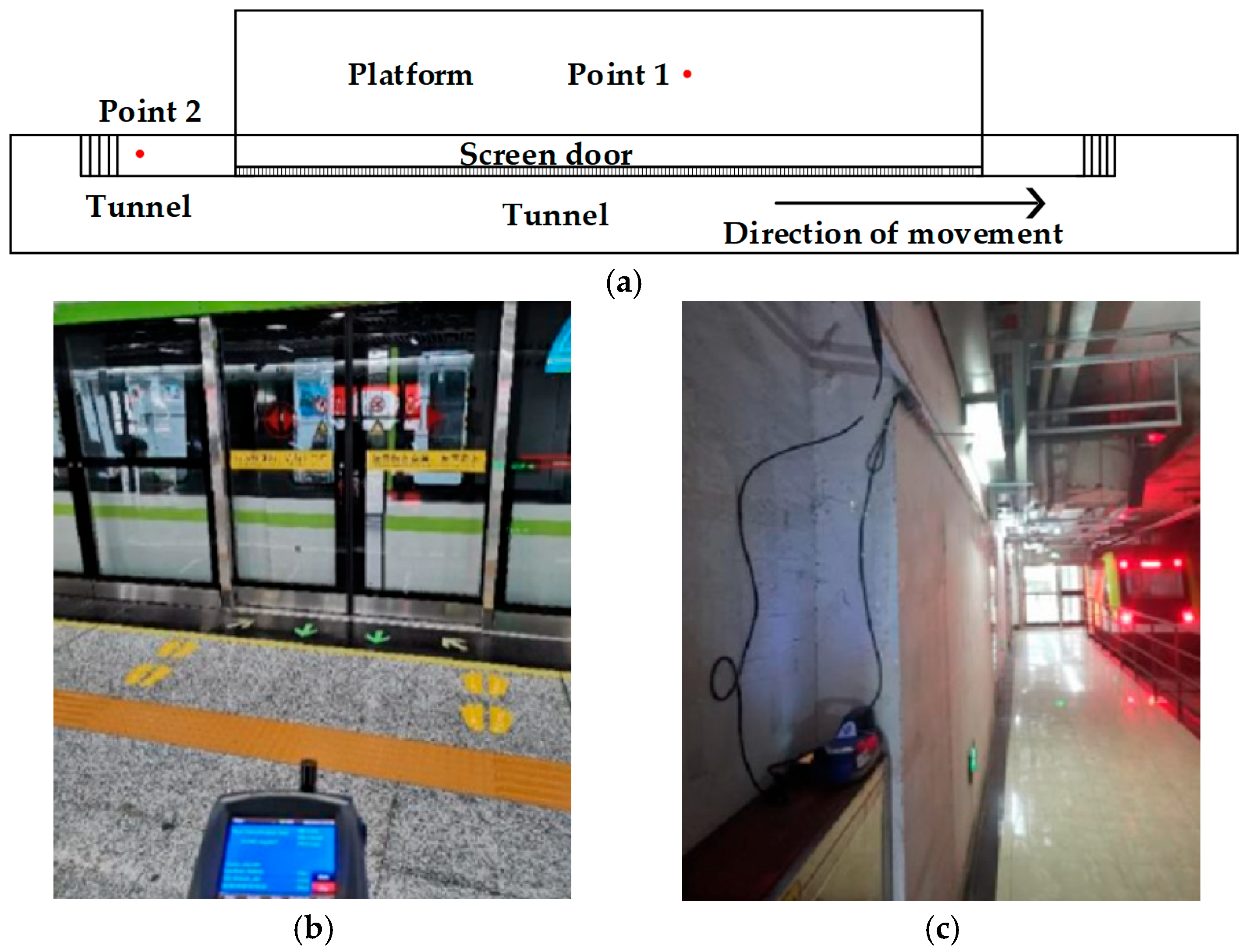
Figure 1a. Measurement point 1 was located at the center of the platform, with the instrument positioned 1.5 m above the floor to monitor particulate matter concentration at the platform side. Measurement point 2 was located at the tunnel wall near the train entry side to monitor tunnel particulate matter concentration and piston wind velocity. The on-site layouts of measurement points 1 and 2 are shown in
Figure 1b,c. All instruments were calibrated before use.
To characterize particulate matter and airflow conditions in subway environments, field measurements were conducted at three non-interchange underground stations equipped with platform screen doors (PSDs). A TSI 8534 aerosol monitor (TSI Incorporated, Shoreview, MN, USA) capable of simultaneously measuring PM1, PM2.5, and PM10 mass concentrations was used to obtain particle size distribution data. Because only one TSI 8534 instrument was available, it was sequentially deployed at each measurement point for 30 min.
For continuous monitoring of PM2.5 mass concentrations, TSI 8532 (TSI Incorporated, Shoreview, MN, USA) and TSI 8530 (TSI Incorporated, Shoreview, MN, USA) instruments equipped with PM2.5 size-selective cyclones were installed at the respective monitoring locations and operated for 3 h at each point. At the tunnel monitoring location, a Testo 480 anemometer (Testo SE, Lenzkirch, Germany) with a velocity probe was placed adjacent to the particulate monitor to record piston wind velocity during the same period.
Measurements were performed over three consecutive days (12–14 June) during off-peak periods to minimize the influence of passenger flow. All particulate monitoring instruments were calibrated before the measurements. The collected data were used to characterize background particulate distribution and airflow conditions, providing boundary conditions and validation data for subsequent numerical simulations. The detailed monitoring schedule is summarized in
Table 3.
After data collection, abnormal values caused by transient instrument drift or external disturbances were identified and removed to ensure data reliability. Measurements obtained from different instruments at the same location and during the same period were synchronized to establish a consistent dataset. For different particle size fractions, statistical indicators including arithmetic mean concentration and concentration variability were calculated for each monitoring period to characterize concentration levels and fluctuation patterns. In addition, piston wind velocity data were correlated with particulate matter concentrations to examine the influence of airflow variations on the spatiotemporal distribution of particles near platform screen doors.
2.2. Numerical Model
Field measurements alone cannot fully resolve the dynamic airflow and particle migration at the platform screen door (PSD) interface. Therefore, a full-scale numerical model of the subway platform–PSD–tunnel system was developed to simulate particle transport during PSD opening and to investigate potential mitigation strategies.
All simulations were performed using ANSYS Fluent 2020 R2. The Discrete Phase Model (DPM) implemented in Fluent was employed to simulate particle transport under transient airflow conditions during PSD operation.
2.2.1. Physical Model and Solution Method
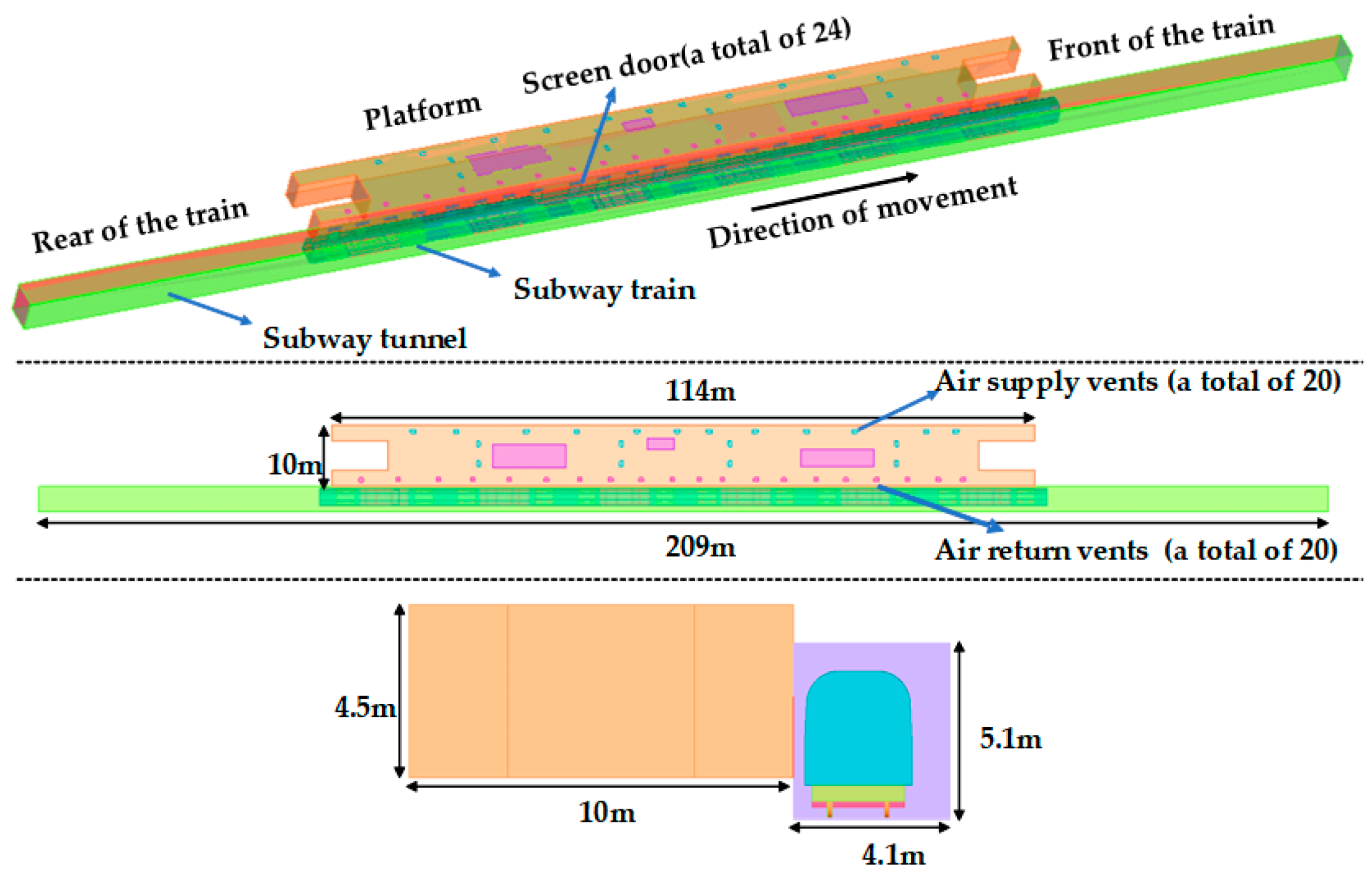
A full-scale numerical model of a side-platform subway station equipped with PSDs was developed, as shown in
Figure 2. The core structure of the model includes the tunnel body, train, platform area, and PSD system. The platform and tunnel regions are separated by the PSDs, while the train is positioned on the track within the tunnel and aligned with the platform side. The computational domain is divided into two primary regions: the platform domain and the tunnel domain.
To ensure fully developed flow and reduce potential recirculation effects, the tunnel section was extended along the train travel direction according to the characteristic scale of the tunnel. The geometric dimensions of the computational domain are as follows: platform domain—length 114 m, width 10 m, and height 4.5 m; tunnel domain (including the extended section)—length 209 m, width 4.1 m, and height 5.1 m.
Since this study focuses on unsteady flow within a relatively complex geometric model, the PISO algorithm is employed for pressure–velocity coupling. The RNG turbulence model is adopted for turbulence simulation. Particle dispersion is modeled using the Discrete Phase Model (DPM), with the tunnel entrance defined as the particle release surface. The particle release rate is set to 1 × 10⁻²⁰ kg/s, and the initial particle velocity is equal to the piston wind speed at the tunnel entrance. Particles are injected at each particle time step, which is set to 1 s, while the transient flow field calculation uses a time step of 0.01 s.
To evaluate the influence of particle injection rate on the simulation results, a sensitivity consideration was conducted under dilute-phase, one-way coupling conditions. In this framework, the dispersed phase does not affect the continuous phase flow field, and particle transport is primarily governed by the airflow structure. Changes in the injection magnitude mainly scale the absolute concentration level, while the relative migration patterns and normalized spatial distributions remain unchanged. Therefore, the selected injection rate is sufficient to represent transient migration behavior without influencing the qualitative conclusions of the study.
The simulation procedure consists of three stages:
- (1)
Steady-state simulation of the initial flow field;
- (2)
Transient simulation before PSD opening (0–3 s);
- (3)
Transient simulation after PSD opening (3–40 s).
Because the study employs the DPM to analyze particle transport in the airflow field, model validation was performed. A three-dimensional full-scale two-room model reported by Lu et al. [
34] was adopted as the validation case. The temporal variation in particle concentration in the two rooms was simulated and compared with the experimental measurements reported in the reference to verify the reliability of the DPM framework.
To ensure numerical stability, three mesh resolutions were generated by controlling the minimum cell size, resulting in 2.9 million, 4.3 million, and 6.5 million cells, respectively. The tunnel outlet velocity under steady-state converged conditions was used as the comparison criterion for grid independence. Based on this analysis, the mesh containing 4.3 million cells was selected for subsequent simulations.
2.2.2. Model Validation
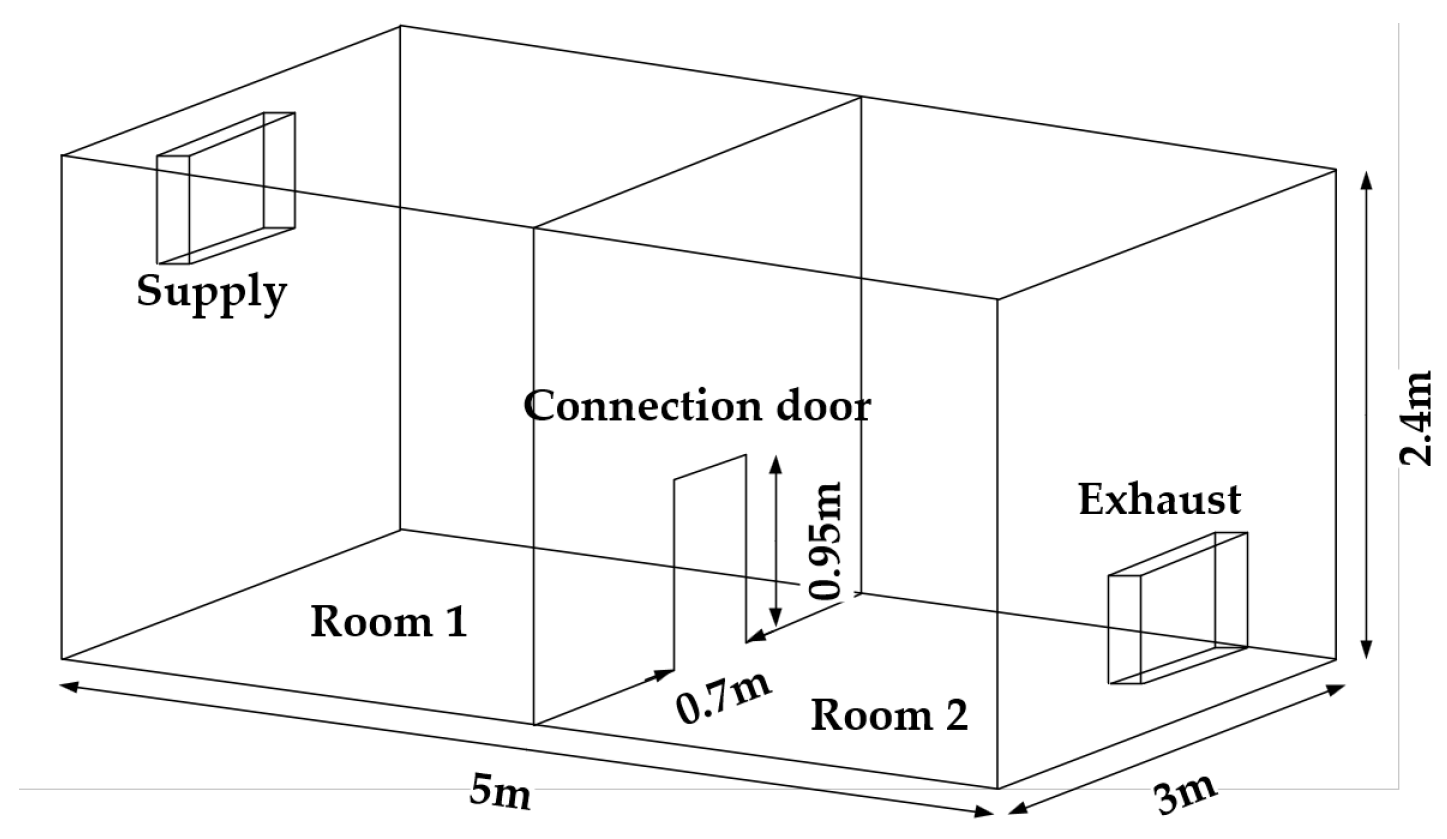
The validation model, shown in
Figure 3, consists of two rooms of identical size, an air supply and exhaust outlet, and an interconnecting door. The overall dimensions of the model are 5 m × 2.4 m × 3 m. The air supply outlet is located in Room 1 and the exhaust outlet in Room 2, each measuring 0.15 m × 0.5 m × 1 m. The interconnecting door has dimensions of 0.95 m × 0.7 m. At the initial moment, Room 1 contains a uniform distribution of particles at a specified concentration with zero initial velocity, and the particle density is set to 865 kg/m
3. Room 2 initially contains no particles, and the interconnecting door is closed. At a certain point, the door is opened, and the air supply in Room 1 is activated. Two ventilation scenarios are considered: Scenario 1 with an air exchange rate of 9.216, and Scenario 2 with an air exchange rate of 10.26. The simulation analyzes the temporal variation in particle concentration in both rooms under the two ventilation conditions.
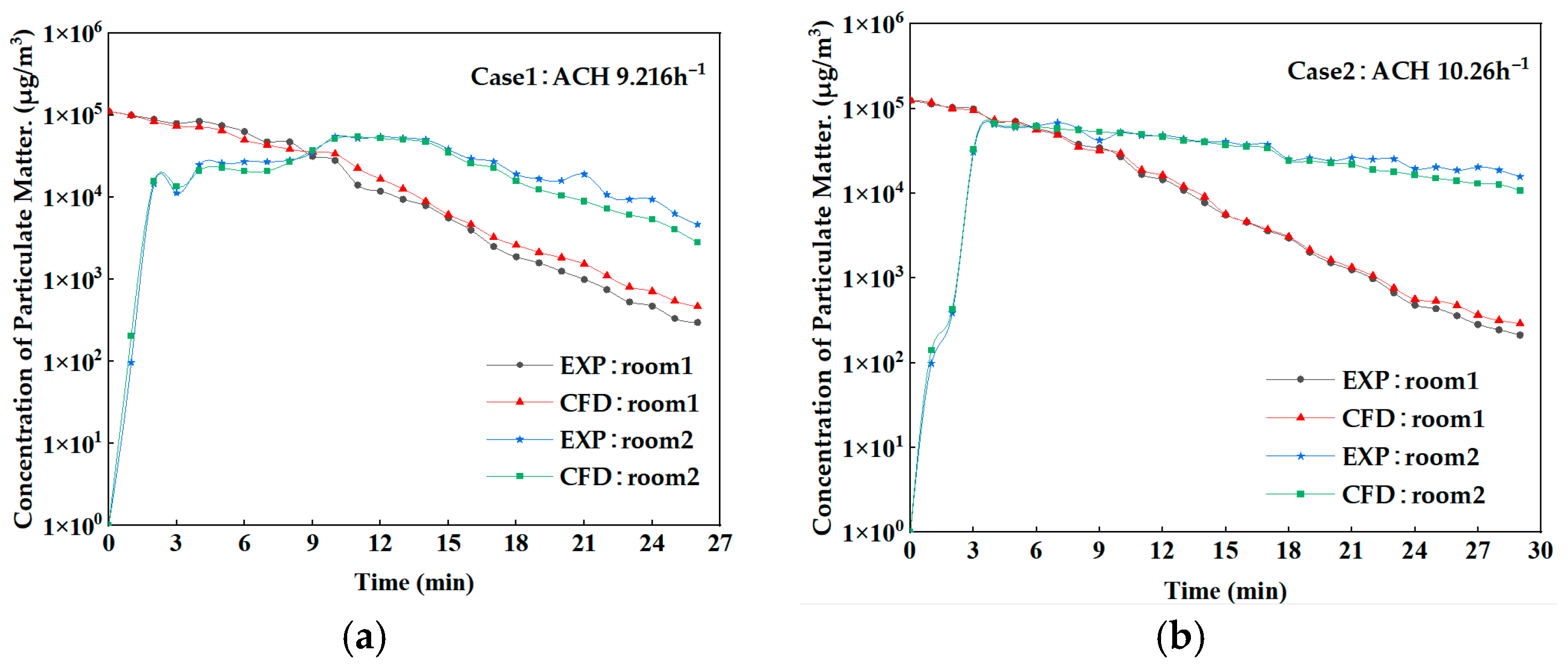
Figure 4 shows the temporal variations in particulate matter concentrations in the two rooms under both experimental and simulated conditions. It can be seen that under both operating conditions, the simulation results agree well with the experimental data. Therefore, the DPM can be applied in the numerical simulation of this study.
The agreement between the simulated and experimental results indicates that the DPM framework can reproduce both particle decay in the source room and cross-room migration after door opening. Combined with the grid independence verification presented in
Section 2.2.3, these results demonstrate the numerical stability and reliability of the model for transient particle migration analysis. Therefore, the DPM-based framework can be applied to simulate particulate migration through platform screen doors in the present study.
2.2.3. Boundary Conditions and Grid Independence Verification
The boundary conditions used in the numerical simulations are summarized in
Table 4. These conditions define the airflow organization in the platform area, the operational states of the platform screen doors (PSDs), and the inlet and outlet settings of the tunnel domain. The configurations were determined according to the measured ventilation conditions and typical operational characteristics of subway stations.
3. Results and Discussion
3.1. Field Measurement Results and Discussion
As shown in
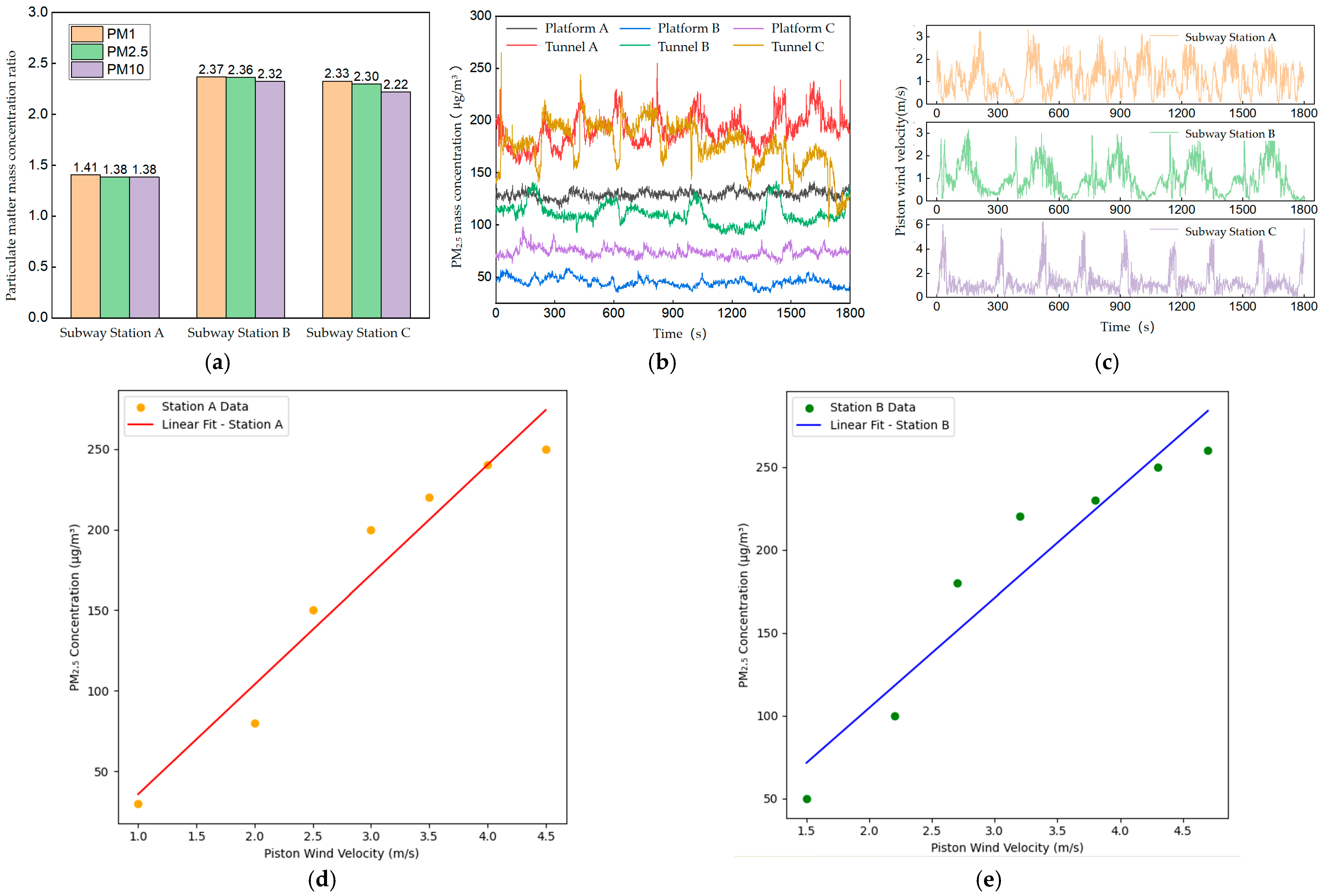
Figure 5a, the mass concentrations of particulate matter in the tunnel are consistently higher than those at the platform at all surveyed subway stations. The tunnel-to-platform concentration ratios range from 1.38 to 2.37, indicating a substantially higher particle level in the tunnel environment. The coefficients of variation in the ratios for PM
10, PM
2.5, and PM
1 are all below 5%, suggesting that particles of different size fractions originate from a similar source, primarily associated with wheel–rail system wear.
The temporal variations in PM
2.5 concentrations in tunnels and platforms during the 1800 s monitoring period are presented in
Figure 5b. Both locations exhibit clear periodic fluctuations, with tunnel concentrations showing larger amplitudes than those at the platform. The fluctuation periods at Stations A and C are approximately 210–230 s, while Station B shows a longer period of 400–460 s, corresponding well to the train operation intervals of the respective lines.
The temporal variation in airflow velocity at measurement point 2 in the tunnel is shown in
Figure 5c. The piston wind velocity exhibits a pronounced periodic pattern, with characteristic periods of 150–180 s at Stations A and C and 360–420 s at Station B. The maximum piston wind velocity reaches approximately 3 m/s at Stations A and B and up to 6 m/s at Station C.
To further examine the relationship between airflow and particle concentration, linear regression analyses between piston wind velocity and PM
2.5 concentration were conducted for Stations A and B, as shown in
Figure 5d,e. The regression results indicate a positive correlation between wind velocity and particle concentration, suggesting that stronger piston wind tends to be associated with higher PM
2.5 levels in the tunnel.
Notably, the tunnel-to-platform PM
2.5 concentration ratios derived from the time series data in
Figure 5b are consistent with the average ratios summarized in
Figure 5a, providing an additional cross-check of measurement consistency.
The variations in tunnel airflow velocity, tunnel PM2.5 concentration, and platform PM2.5 concentration exhibit strong periodic consistency with train intervals. Platform concentrations lag behind tunnel values by approximately 60–120 s, reflecting the particle transport process driven by piston wind. When piston wind intensifies during train arrival, particles migrate from the tunnel toward the platform, resulting in increased platform concentrations; when it weakens, the migration intensity decreases and platform concentrations gradually decline.
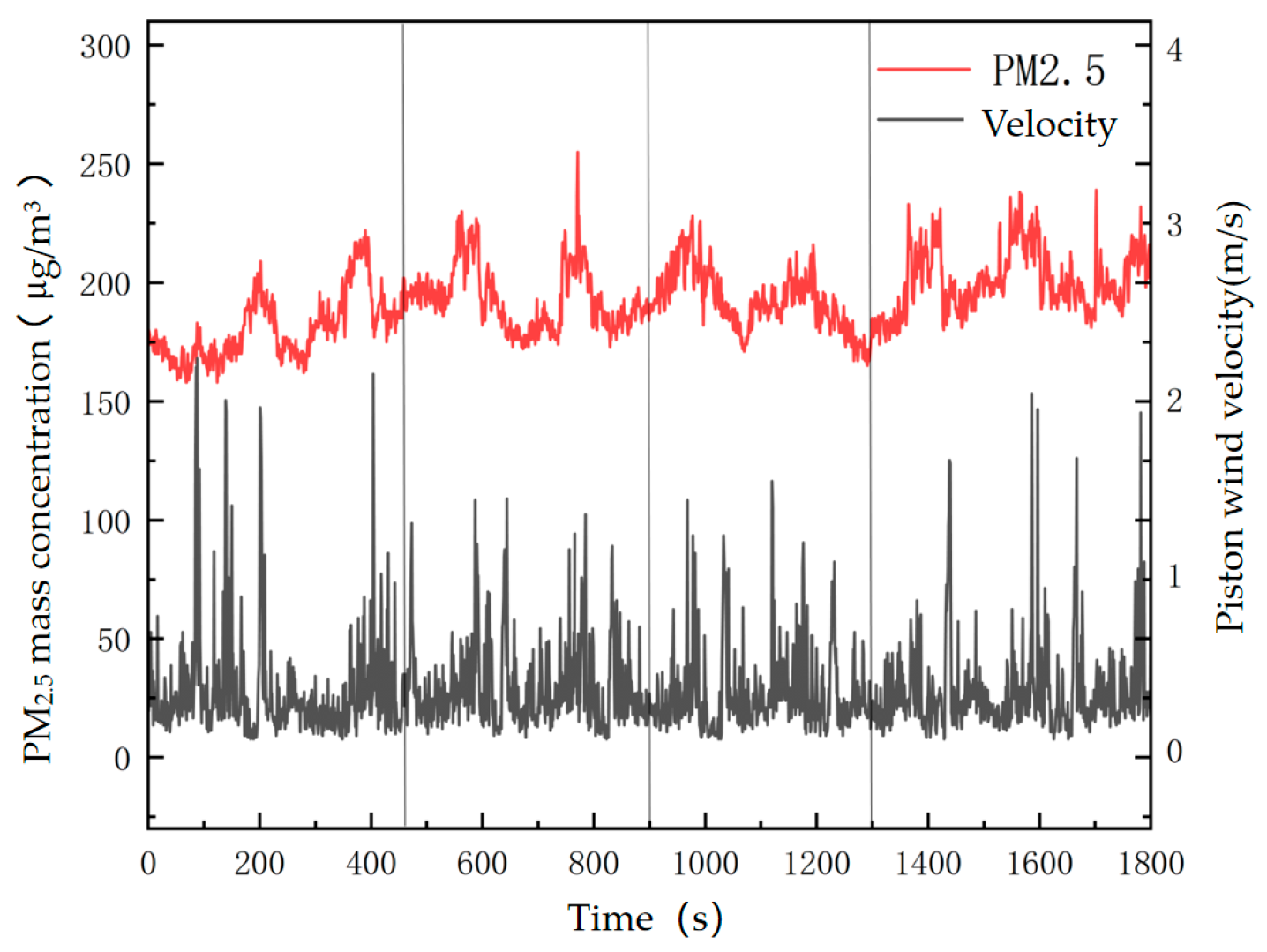
At Station B, where the train interval is relatively long (400–460 s), the influence of adjacent trains is minimal. Therefore, this station was selected for further analysis. As shown in
Figure 6, approximately four train arrivals occurred within the 30 min observation period, and the peak positions of airflow velocity and tunnel PM
2.5 concentration show strong temporal agreement. During piston wind events induced by train movement, tunnel PM
2.5 concentration increased by approximately 20%, indicating that piston wind plays a dominant role in concentration fluctuations.
Based on these observations, particles in the numerical model were assumed to enter from the tunnel entrance with an initial velocity equal to the piston wind velocity. As the piston wind weakens during train stopping, the particle release velocity correspondingly decreases. This assumption enables the simulated concentration trend at measurement point 2 to reproduce the observed temporal variation.
3.2. Dynamic Distribution of Particulates
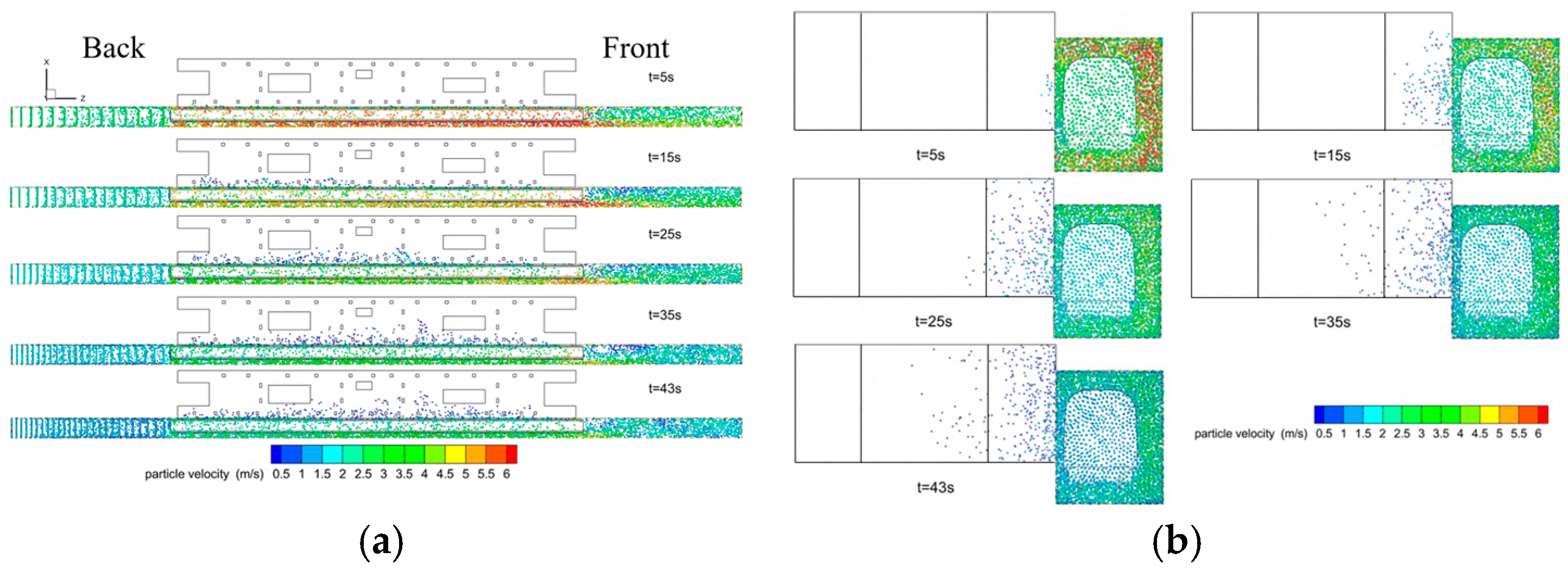
Figure 7a shows the horizontal distribution of particles around the platform screen doors (PSDs) at several representative times. In the tunnel region between the entrance and the rear of the train, particles initially form a distinct stratified structure, with layer spacing gradually decreasing over time. Near the rear of the train, this structure weakens and particles disperse across the tunnel cross-section. In the annular gap surrounding the train, the stratification disappears completely and particle velocities increase due to locally accelerated airflow. From the train head toward the tunnel exit, the distribution remains comparatively uniform.
On the platform side, only a small number of particles penetrate the PSD openings at t = 5 s, remaining concentrated near the doors. By t = 15 s, more particles enter the platform, with higher concentrations near the rear of the train and lower values near the front. Diffusion toward the central platform area also begins. At t = 25 s, particle concentrations near the middle PSDs become significantly higher than those at the train ends, while diffusion at both ends slows. The spatial structure at t = 35 s and t = 43 s remains similar, but the particle cloud gradually shifts in the positive z-direction, indicating continued migration normal to the PSD plane. By t = 43 s, particles have reached x = 5.98 m, close to the platform centerline (x = 5.00 m). Throughout this period, the longitudinal distribution at the platform exhibits a consistent pattern of higher concentrations in the middle and lower values at both ends, with the highest levels near PSDs 15#–16#, while concentrations near PSDs 23#–24# remain close to zero.
The vertical distribution at different times is shown in
Figure 7b. After entering the platform space, some particles move upward and reach the ceiling region by t = 25 s. Because air supply and exhaust vents are located near the ceiling, this pathway may contribute to particle removal. However, analysis of particle velocity and concentration fields indicates that the amount removed through this route is much smaller than the mass remaining at the platform. For subsequent mass balance analysis, the particle mass at the platform can, therefore, be approximated as equal to the amount migrating from the tunnel.
Overall, the results reveal a clear coupling between tunnel stratification and platform diffusion. In the tunnel, particle layers evolve from spacing reduction to gradual blurring and eventual disruption, driven by periodic particle release at 0.1 m s−1 and velocity differences caused by airflow decay. On the platform side, particle diffusion exhibits a pronounced time-lag effect, as particles require time to travel through the PSD openings and accumulate within the platform space. Consequently, the tunnel particle structure determines the initial quantity, velocity, and spatial distribution of particles entering the platform, while airflow exchange during PSD opening determines the migration efficiency across the interface.
3.3. Particulate Migration Around Platform Screen Doors and Migration Index Analysis
3.3.1. Particulate Migration Characteristics
In the Fluent simulation, particulates were released in the form of parcels, each containing a specific mass of particulates, with the total number determined by the release rate and the number of parcels released per unit time.
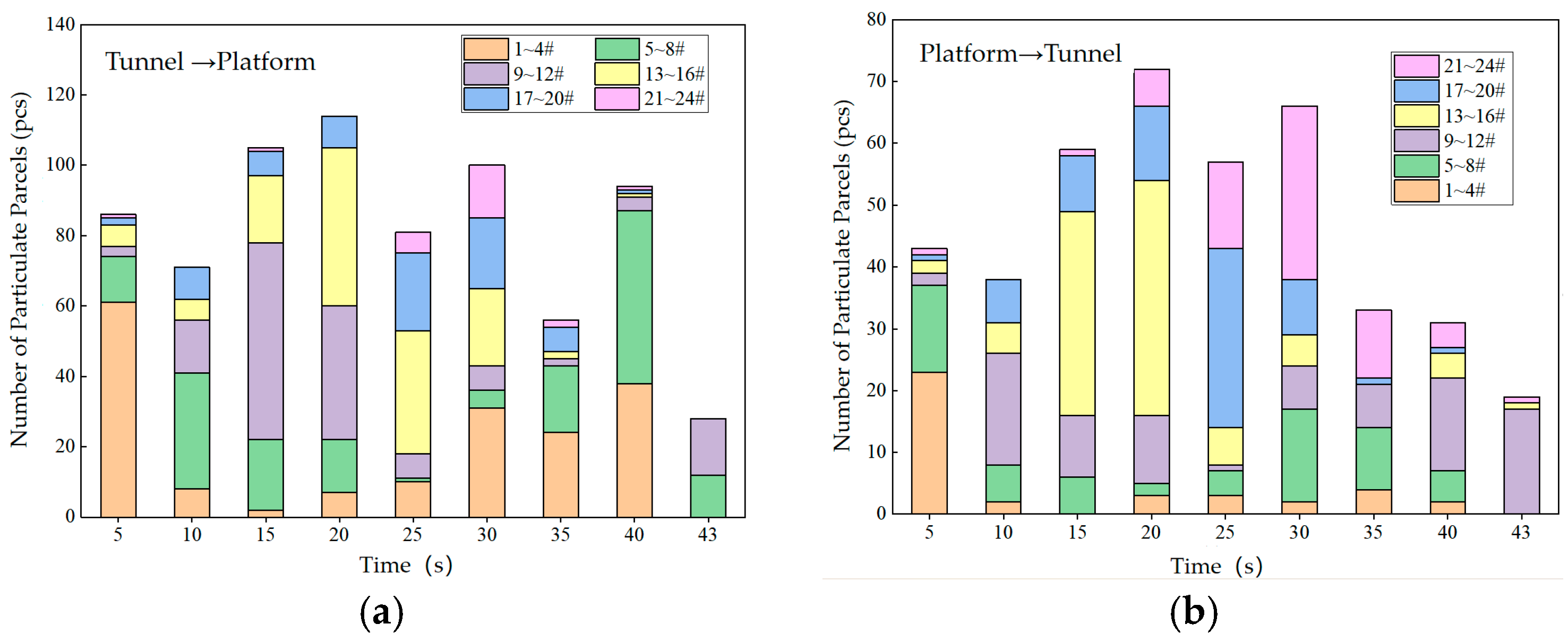
Figure 8a presents the spatial distribution of particulate parcels migrating from the tunnel to the platform at different time points. At t = 5 s, particulate migration speed was low and duration short, resulting in limited migration distance. Only a small amount entered the platform through the screen doors, mainly concentrated near the doors. By t = 15 s, particulate concentrations increased near the rear of the train, while the head area remained sparse, with diffusion toward the central platform. At t = 25 s, the central doors showed a significantly higher particulate count than the head and tail areas, with further migration toward the platform center, while diffusion at both ends nearly ceased. At t = 35 s and t = 43 s, the spatial pattern remained similar to that at t = 25 s, but the particulate cluster shifted further along the positive z-axis, expanding its migration range. At t = 43 s, particulates reached a maximum x-distance of 5.98 m (near the platform centerline at x = 5 m).
Figure 8b shows particulate parcels migrating from the platform back into the tunnel. At t = 5 s, some particulates returned through door 18#. Between 10 and 20 s, most returned through doors 9#–20#. During 25–30 s, doors 17#–24# dominated in return flow. At t = 35 s, doors near the head (21#–24#) and door 58# contributed more. From t = 40–43 s, returns mainly occurred through doors 9#–12#, with no return via doors 1#–8# and 17#–20# by t = 43 s.
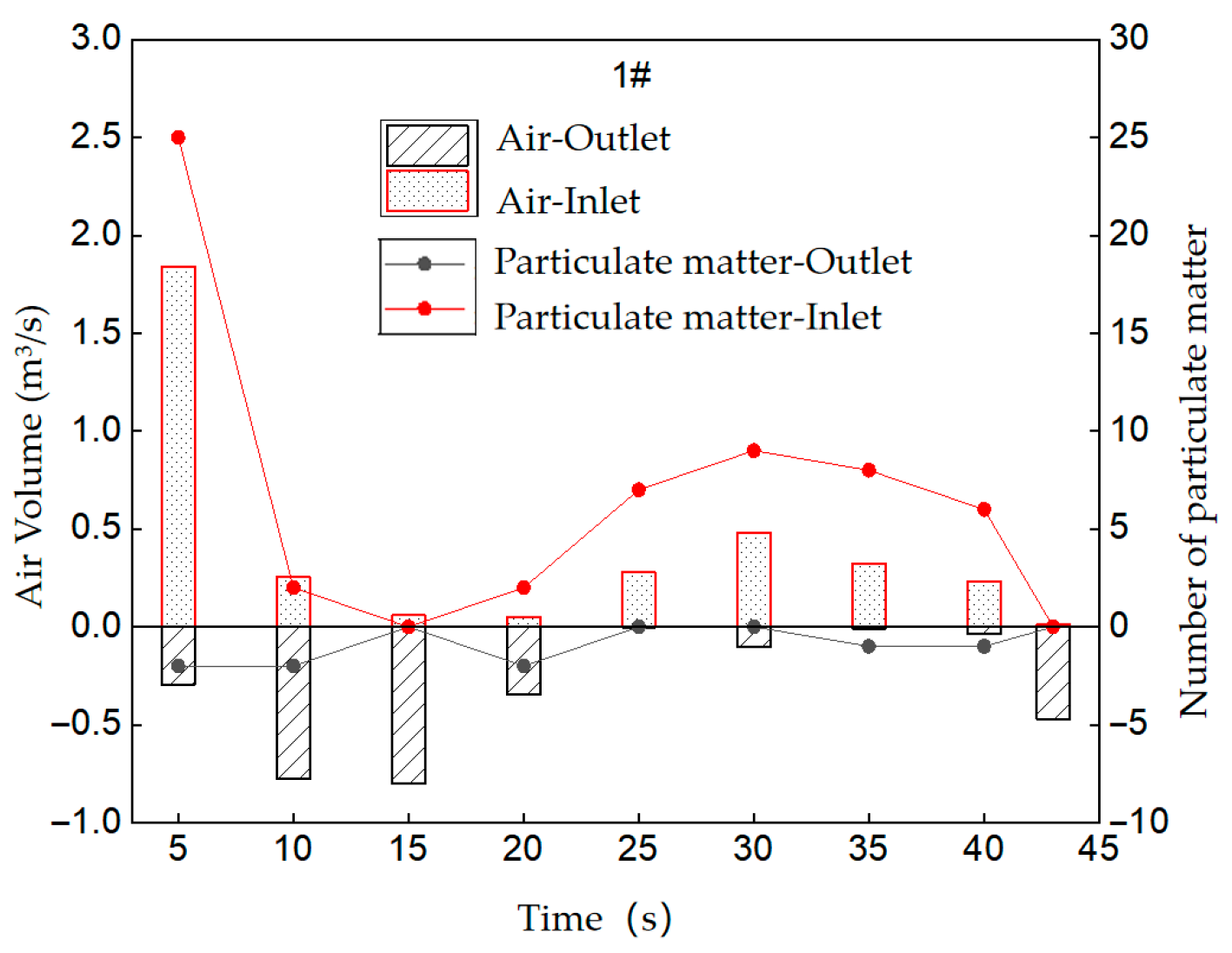
Based on airflow and particulate flux analysis,
Figure 9 shows that the inflow and particulate ingress at door 1# exhibit strong correlation, while outflow and particulate egress show weaker consistency. This is because outflow includes both clean platform air and tunnel inflow air. Along the train’s longitudinal axis, particulates around the doors follow a “more in the middle, less at both ends” pattern, with the highest concentration near doors 15# and 16#, and almost none near 23# and 24#. Except at t = 40 s, the trends of ingress and egress remained consistent, but ingress was typically 1.4–3.0 times higher than egress. Since tunnel particulate concentration generally exceeds that of the platform, even when net exhaust occurs toward the tunnel, the platform particulate mass still shows an increasing trend. This indicates that particulate migration is driven not only by airflow direction and velocity but also by the concentration gradient between tunnel and platform. Their coupled effect determines the bidirectional migration behavior at PSDs and its impact on platform air quality.
3.3.2. Migration Index Analysis
The cumulative dimensionless particulate migration rate (
) is defined as the ratio of the total particulate mass entering the platform from the tunnel to the particulate mass (
) in the annular gap around the train:
where
Vr is the volume of the annular gap space around the train when it has stopped, and
cr is its particulate mass concentration. Since concentration differences between the gap and adjacent tunnel sections are minimal, the latter can be used for computation.
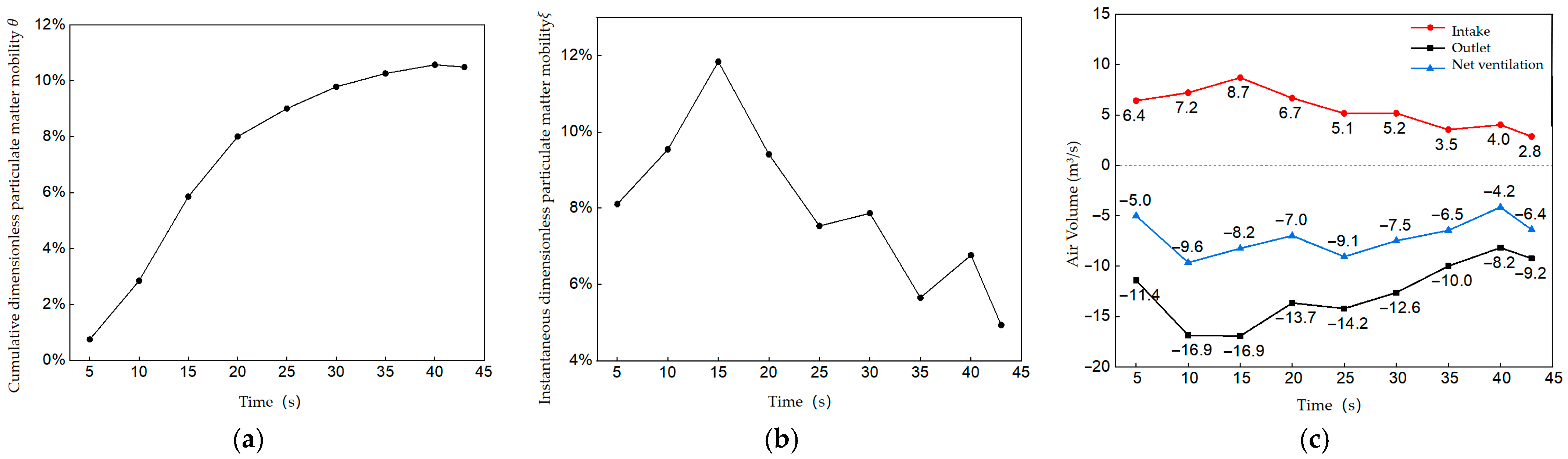
Figure 10a shows the cumulative dimensionless migration rate increasing with PSD opening time before stabilizing between 8% and 10.5% during 20–40 s. This means that about 8–10.5% of particulates from the annular gap enter the platform when the train has stopped.
Figure 10b shows the instantaneous migration rate first rising then decreasing: 8.1% at t = 5 s, peaking at 11.8% at t = 15 s, then dropping to 4.9% at t = 43 s. Since this rate depends on tunnel concentration and PSD inflow, its variation mainly reflects inflow fluctuation.
As shown in
Figure 10c, the trend of instantaneous migration rate closely follows inflow variation, indicating inflow as the dominant factor. During PSD opening, cumulative migration steadily rises, reflecting net particulate ingress, while instantaneous changes reveal the critical role of airflow control in regulating migration intensity. Therefore, adjusting airflow during PSD opening, especially inflow timing and volume, can effectively control particulate ingress.
3.4. Strategies to Reduce Particulate Migration from Tunnel to Platform
3.4.1. Effect of PSD Opening Duration
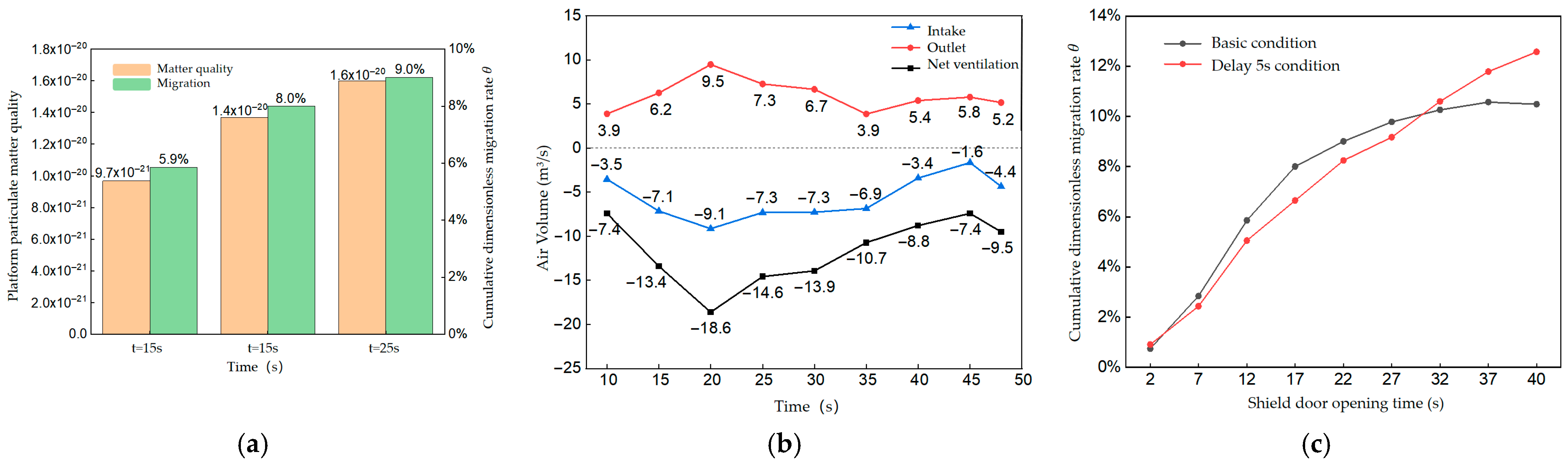
Figure 11a shows the effect of PSD opening time on particulate migration. Using t = 20 s as baseline, closing PSDs 5 s earlier reduces particulate migration by 29.3%, while a 5 s delay increases it by 16.9%. The cumulative dimensionless migration rate drops from 8.0% (baseline, 17 s opening) to 5.9% (−26.8%) with early closing and rises to 9.0% (+12.5%) with delayed closing. Thus, shortening PSD opening significantly reduces migration.
Since piston wind decays while the train stops, PSD opening timing affects airflow and migration. Under baseline, doors open 3 s after stopping. In the delayed scenario (8 s delay), airflow stabilizes before opening.
Figure 11b,c show that delayed opening increases inflow, reduces outflow, and decreases net ventilation compared to baseline. However, determining its net impact on particulate migration requires a combined assessment of concentration and flow characteristics.
3.4.2. Effect of Air Curtain Installation
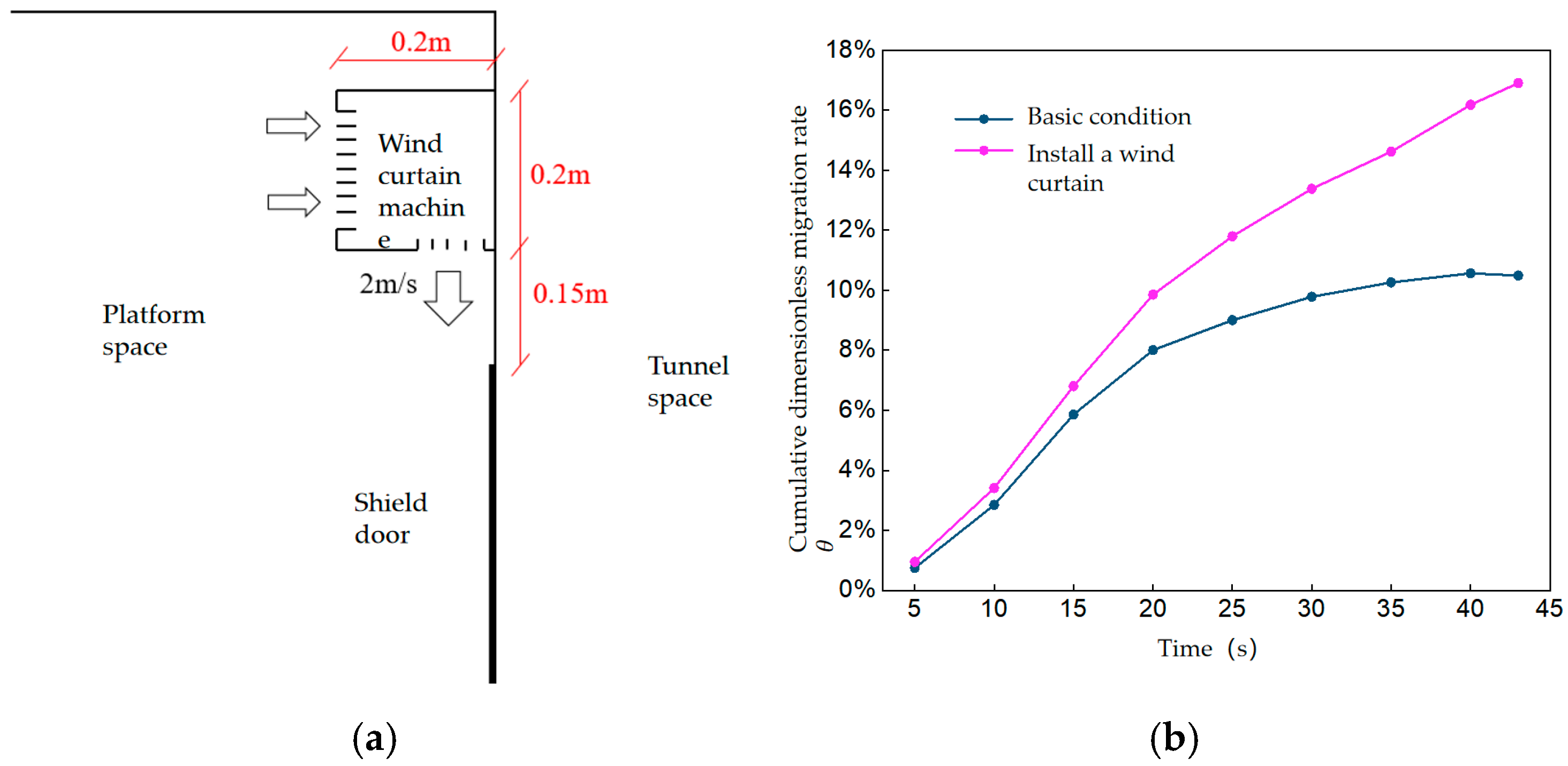
Modifying airflow near PSDs after opening may affect particulate migration. A common measure is an air curtain. Here, an air curtain was placed above the PSDs, blowing at 2 m/s, width 2 m (slightly larger than one door), length and height 0.2 m, installed 0.15 m above the door, blowing vertically downward. The curtain operates only during PSD opening as shown in
Figure 12a.
Figure 12b shows that air curtains increase, rather than decrease, cumulative migration rate. At 17 s opening (t = 20 s), the rate rises by 23.1%, and at 22 s (t = 25 s), by 31.0%. In the confined, forced-flow subway environment, the curtain fails to block airflow and instead enhances tunnel–platform exchange by disturbing platform pressure distribution, accelerating particulate migration.
PSD operation strategies (opening/closing time) offer effective control over particulate migration, whereas air curtains fail under forced-flow conditions, even worsening migration. This indicates that local flow-blocking measures alone cannot significantly reduce migration in tunnel–platform coupled systems. Integrated optimization of global airflow and PSD operation is essential.
4. Conclusions
Field measurements characterized particulate matter (PM) in subway environments and its relationship with piston-wind-driven airflow. Based on these observations, CFD simulations resolved transient PM migration through platform screen doors (PSDs). A cumulative dimensionless migration rate quantified particle exchange intensity, evaluating both PSD operation timing and an air curtain configuration.
In PSD-equipped stations, inhalable particles consisted predominantly of PM1. Tunnel PM concentrations consistently exceeded platform levels, with tunnel-to-platform ratios of 1.38–2.37, and temporal variations at both sides exhibited strong coupling. Tunnel PM2.5 showed larger fluctuation amplitudes than at the platform—a pattern consistent with cyclic piston-wind forcing from train movements.
Numerical results reveal that PM migration during PSD opening is intrinsically transient and spatially non-uniform along the door array. Bidirectional exchange was observed, with some particles returning to the tunnel after entering the platform. Instantaneous dimensionless migration rates ranged from 4.8% to 11.8%. At t = 40 s, cumulative migration reached 5.5% when normalized to newly introduced tunnel particles, and 10.5% when referenced against annular-gap particle mass—the latter offering a more representative engineering baseline.
PSD timing meaningfully affected migration. Closing doors 5 s earlier (at t = 20 s) reduced cumulative migration by 26.8%, while delayed closure increased it by 12.5%. Delayed-opening effects were duration-dependent: migration decreased for openings of 7–27 s but increased beyond 32 s.
Reduced piston wind intensity weakened tunnel–platform exchange. Conversely, the investigated air curtain arrangement increased particle transfer, suggesting that under coupled forced-flow conditions typical of subway stations, a conventional air curtain may enhance interzonal exchange rather than provide an effective barrier.
While numerical results indicate potential for mitigating transient particle migration through PSD timing adjustment or air curtain optimization, practical implementation must consider operational safety, passenger efficiency, signaling coordination, and ventilation compatibility. The proposed strategies, therefore, represent quantitatively assessed optimization concepts under controlled conditions—not directly deployable protocols.
The migration index is defined based on normalized concentration variation under piston-wind-dominated transient conditions in PSD-equipped stations. Its applicability is most relevant to settings with comparable airflow regimes; extension to other layouts would require case-specific recalibration. Future work will integrate this framework with operational and ventilation constraints to further assess practical feasibility.