
Article

Tropical Storm Senyar—The First Observed Tropical Cyclone Forming over the Strait of Malacca and Moving Eastwards into the South China Sea

Hong Kong Observatory, Hong Kong, China
*
Author to whom correspondence should be addressed.
Atmosphere 2026, 17(3), 275; https://doi.org/10.3390/atmos17030275
Submission received: 2 February 2026 / Revised: 28 February 2026 / Accepted: 4 March 2026 / Published: 6 March 2026
(This article belongs to the Section Meteorology)

Abstract

This paper presents a re-analysis of the track and the intensity of tropical cyclone Senyar, an unprecedented tropical cyclone that formed over the Strait of Malacca south of 5 degrees North, moving eastwards towards the South China Sea. This cyclone brought about heavy rainfall, severe flooding and landslides to southern Thailand, Malaysia and Indonesia, and this re-analysis helps document such a special and disastrous storm. Some key meteorological observations are presented to support the re-analysis, including weather radar imageries and surface weather observations. Forecasting aspects of Senyar by medium-range models and a sub-seasonal model are also presented. It turns out that both the numerical weather prediction model and the artificial intelligence model manages to resolve the warm core structure of the cyclone, but the sub-seasonal forecast fails to capture the occurrence of this very rare storm even with a forecast time of one week ahead. The formation of Senyar is found to be related to the terrain of Malay Peninsula and Sumatra, as revealed by a number of numerical simulations using a mesoscale meteorological model with different modifications of the terrain. This may be related to the lee low downstream of the terrain of Malay Peninsula under the prevailing northeasterly flow.

1. Introduction

In late November 2025, a tropical cyclone (TC) formed over the Strait of Malacca and later intensified into Cyclonic Storm Senyar, with sustained wind speed of 34–47 knots, an intensity equivalent to a tropical storm (TS) in the western North Pacific basin. Senyar has broken a number of records. This is the first ever that a TC was observed to develop over the Strait of Malacca. This is also the first time to have a TC forming over the Strait of Malacca/Indian Ocean and then moving eastwards into the South China Sea—normally TCs in that region form over the South China Sea and move westwards into the Indian Ocean basin in the autumn of the Northern Hemisphere. This TC also formed at a latitude south of 5 degrees North which is uncommon because of the much weaker Coriolis force. The last time a TC formed near the region at such a low latitude was TC Vamei in 2001. This paper documents the analyzed track and intensity of this unprecedented TC, with the support of the available meteorological observations.
Apart from scientific interest, TC Senyar also has operational significance. It was in fact part of an intertropical convergence zone with one low pressure area and two TCs embedded—the low pressure area later developed into Cyclonic Storm Ditwah near Sri Lanka, while the tropical depression (TD) near the Philippines later intensified into Typhoon Koto over the South China Sea. The three systems are shown in the satellite picture of Figure 1a. According to the news reports, the former two storms, Ditwah and Senyar, brought about more than 1200 deaths across Sri Lanka, southern Thailand and Indonesia as a result of flooding and landslides brought by record-breaking rainfall, with about one million people evacuated [1]. It would be important to study the performance of sub-seasonal forecasts in predicting such extreme weather events and in identifying the favourable circulation environments that precede them. This would be one novel point of study for the present paper.
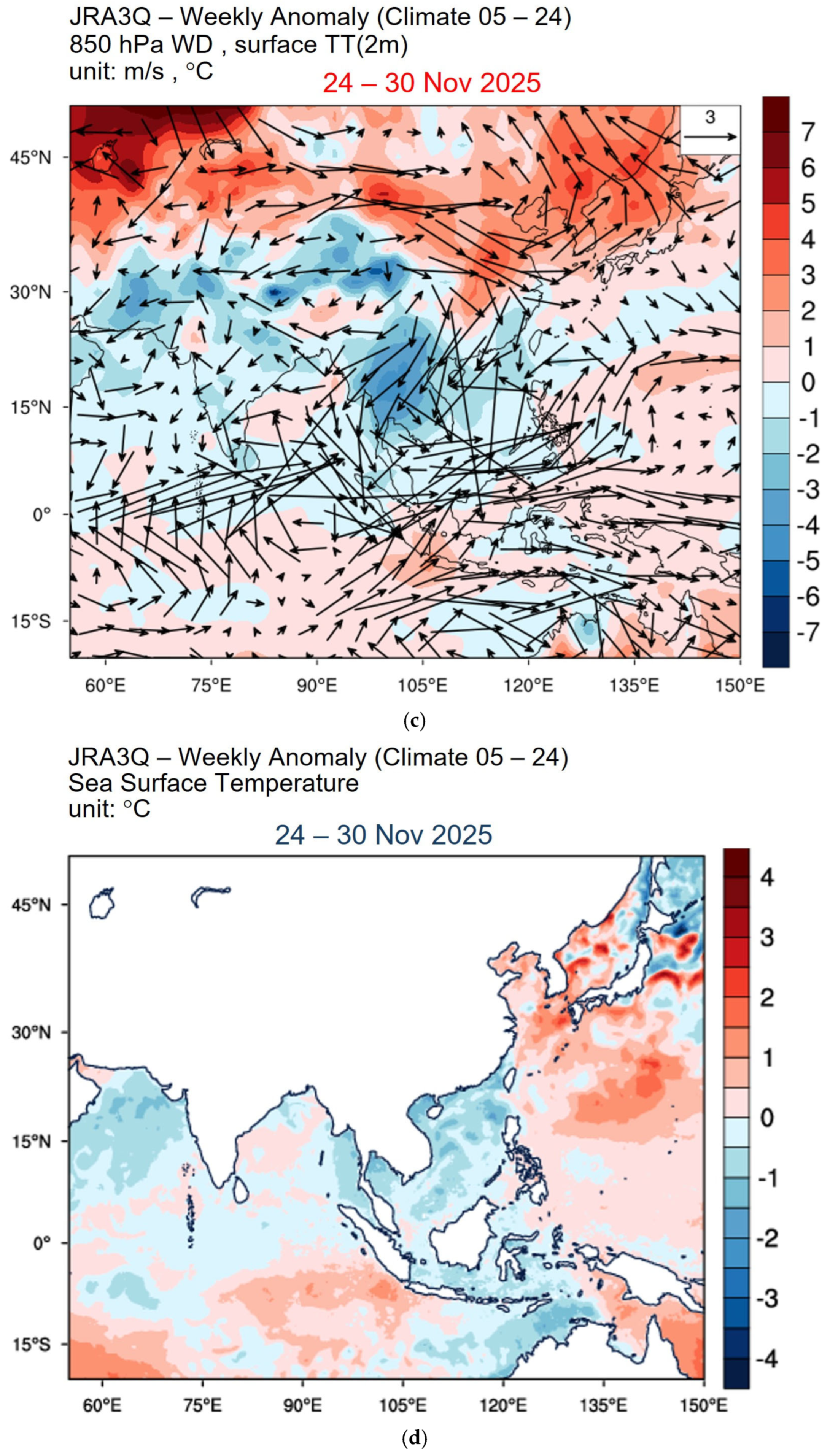
From the weekly anomaly fields, the three TCs exist in areas of unseasonally low geopotential heights in the middle troposphere (Figure 1b). They appear to result from the horizontal convergence of (a) strong northeast monsoon over southern China and the northern part of Indochina peninsula, and (b) flow from the south to southwest crossing the Equator, as shown in the wind anomaly field at 850 hPa (Figure 1c). However, the formation of a tropical cyclone in the topographically rather narrow Strait of Malacca is rather intriguing, and it is conjectured that the terrain of southern Thailand/Malaysia and Sumatra, Indonesia, may play a role. Numerical experiments are also conducted and discussed in this paper on the potential role of terrain on the formation of TC Senyar.

2. Re-Analyzed Track and Intensity of Senyar

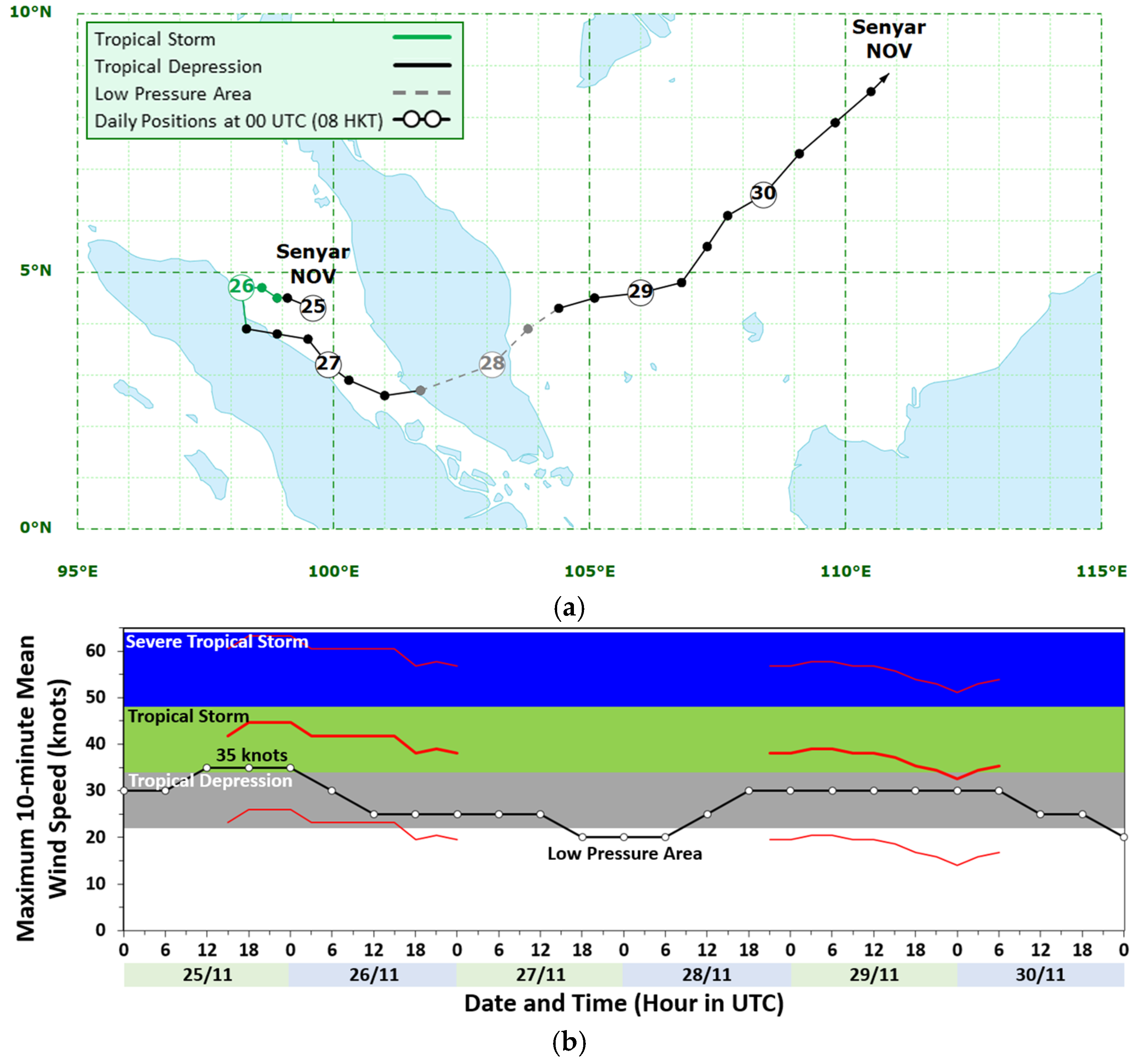
The re-analysis of the track and intensity of Senyar was performed by combining surface observations (including synoptic weather stations and ships), meteorological satellite imageries and available weather radar imageries. The provisional track throughout the lifetime of Senyar is shown in Figure 2a, while the time series of its intensity is shown in Figure 2b.
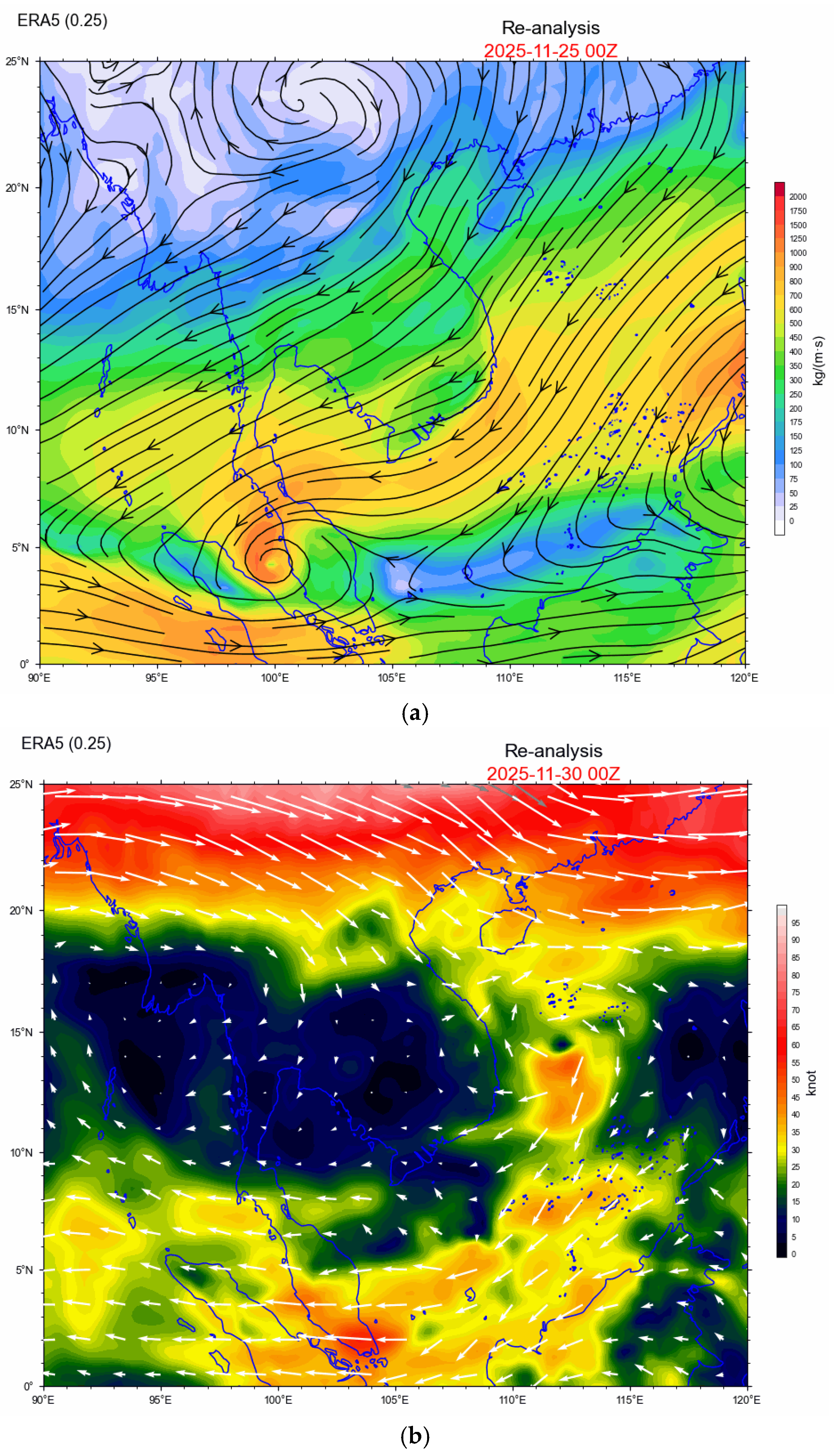
Based on all the available information, Senyar is estimated to have become a TD as early as 18 UTC on 24 November to 00 UTC on 25 November 2025 over the eastern part of the Strait of Malacca. With high sea surface temperatures (29 to 30 degrees Celsius) and adequate moisture supply (Figure 3a), Senyar intensified and peaked at TS intensity with an estimated maximum sustained wind of about 35 knots near its centre at 12 UTC on 25 November. It maintained that intensity before making landfall over the eastern coast of Sumatra, Indonesia, at 00 UTC on 26 November.
Over Sumatra and later moving back to the Strait of Malacca, Senyar gradually weakened into a TD. It then made landfall for the second time over southern Thailand/Malay Peninsula and weakened into an area of low pressure with an intensity of around 20 knots.
When entering the southern part of the South China Sea, the remnants of Senyar re-intensified into a TD again at about 12 UTC on 28 November. It continued to strengthen slightly and reached an intensity of around 30 knots between 18 UTC on 28 November and 06 UTC on 30 November. Afterwards, because of the vertical shearing conditions over the southern part of the South China Sea (Figure 3b), it weakened and dissipated over the water.
Figure 2b compares the above re-analyzed intensity of Senyar with the analysis of SATellite intensity CONsensus (SATCON [3], available at https://tropic.ssec.wisc.edu/real-time/satcon/202504B.html, accessed on 4 December 2025), which incorporates the automatic Dvorak analysis based on geostationary meteorological satellite images and other satellites such as AMSU, SSMIS, SMAP, and SAR. The re-analyzed intensity of Senyar is generally consistent with the independent and automatic analysis by SATCON.

3. Some Meteorological Observations of Senyar

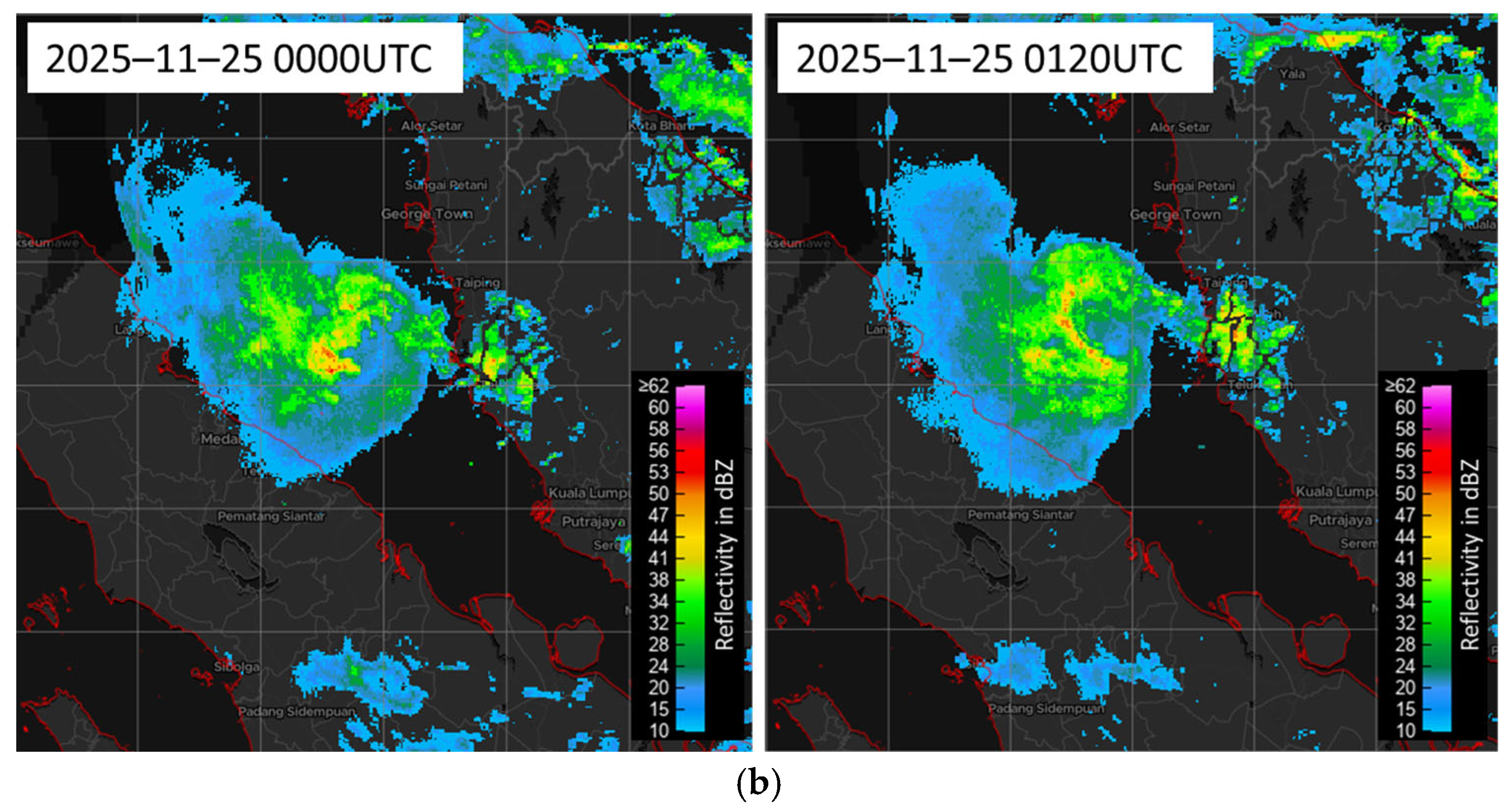
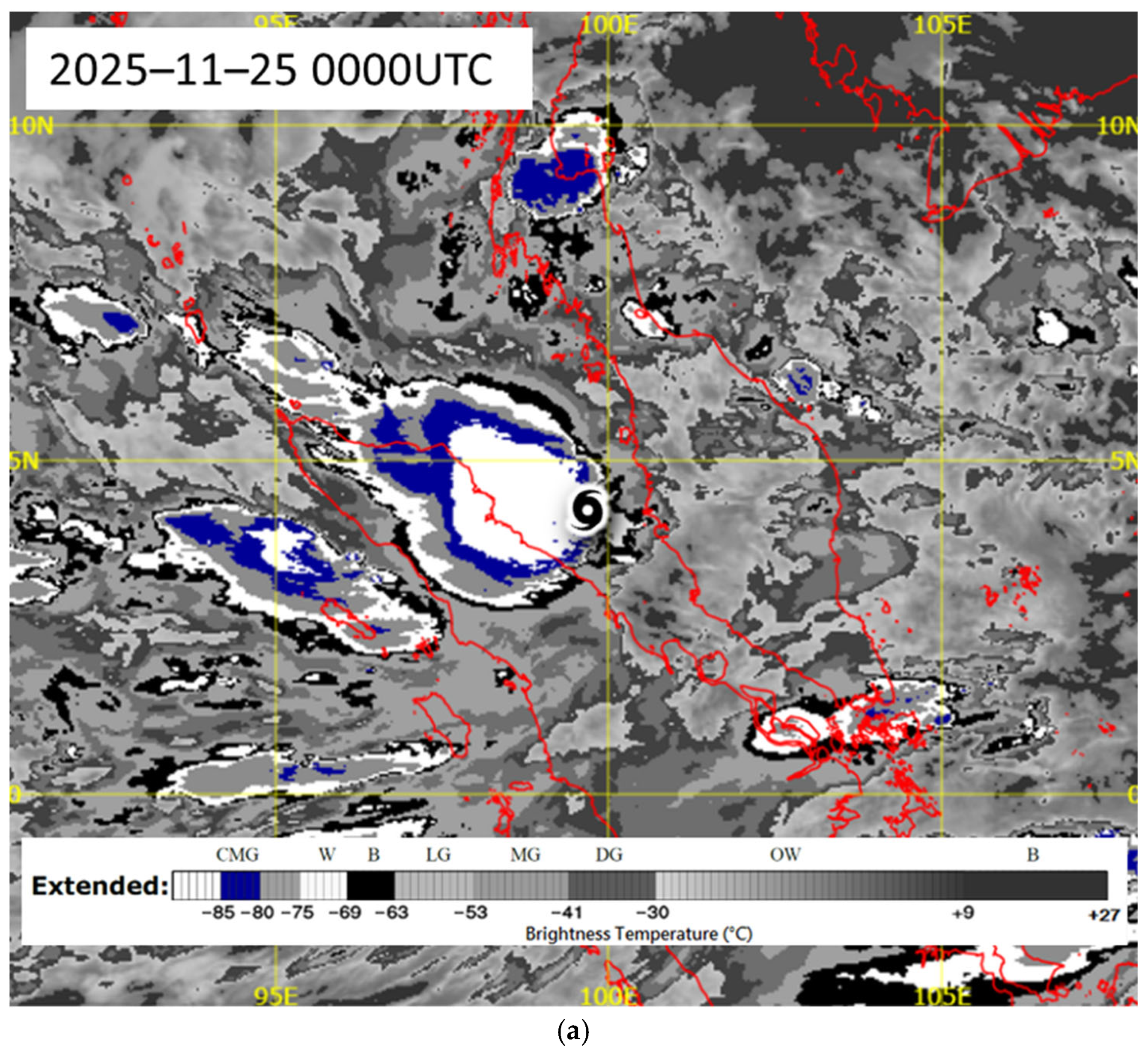
The intensity of TC Senyar was analyzed to be around 30 knots at 00 UTC on 25 November 2025, based on Dvorak analysis using the Himawari-8 satellite image (Figure 4a). At the time, fresh convection developed near the centre of Senyar. Radar imageries at around that time (Figure 4b) also showed that there were curved rainbands wrapping into the centre of Senyar, though there were no surface observations near the centre to support this satellite-based estimated intensity.
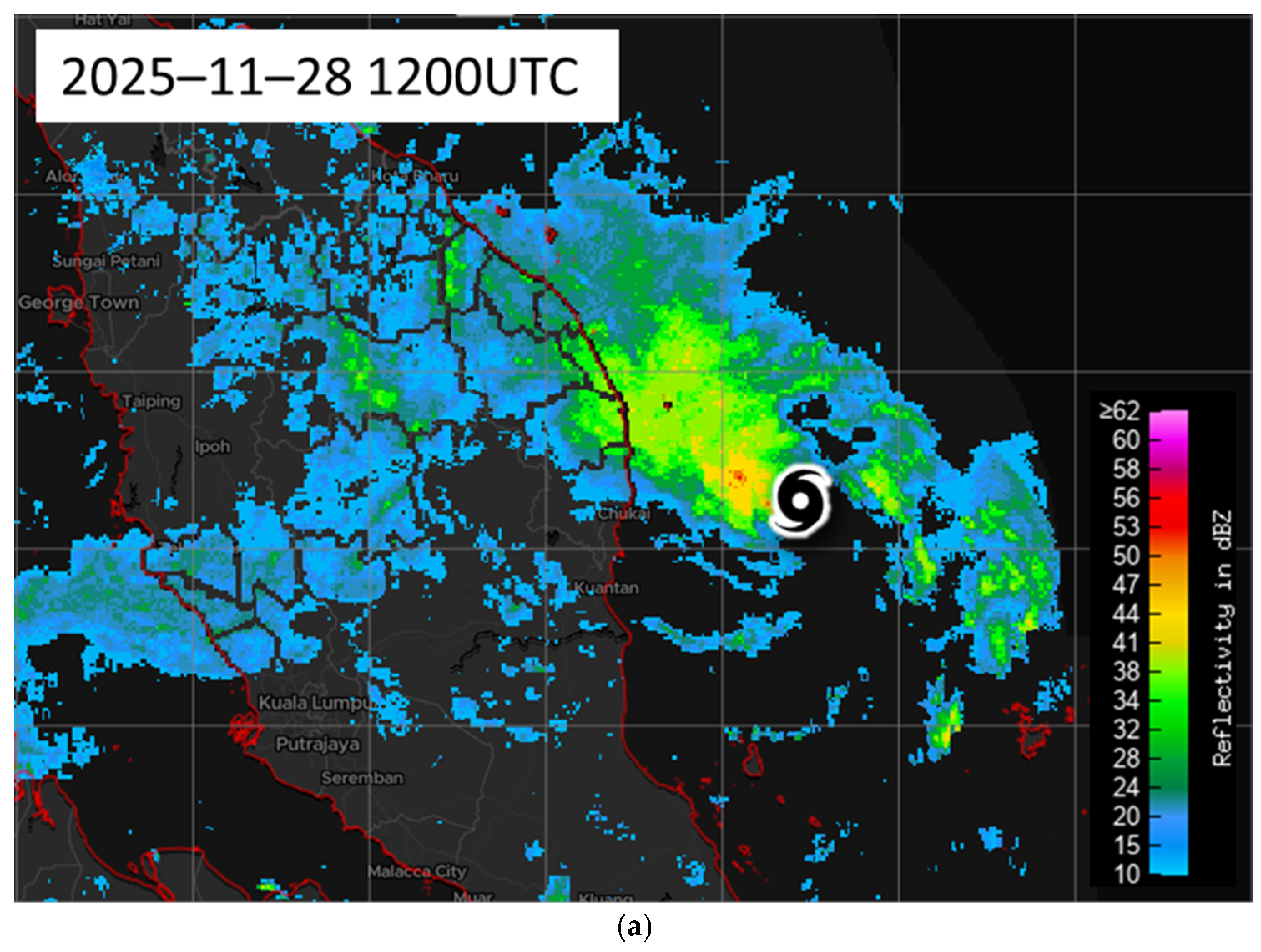
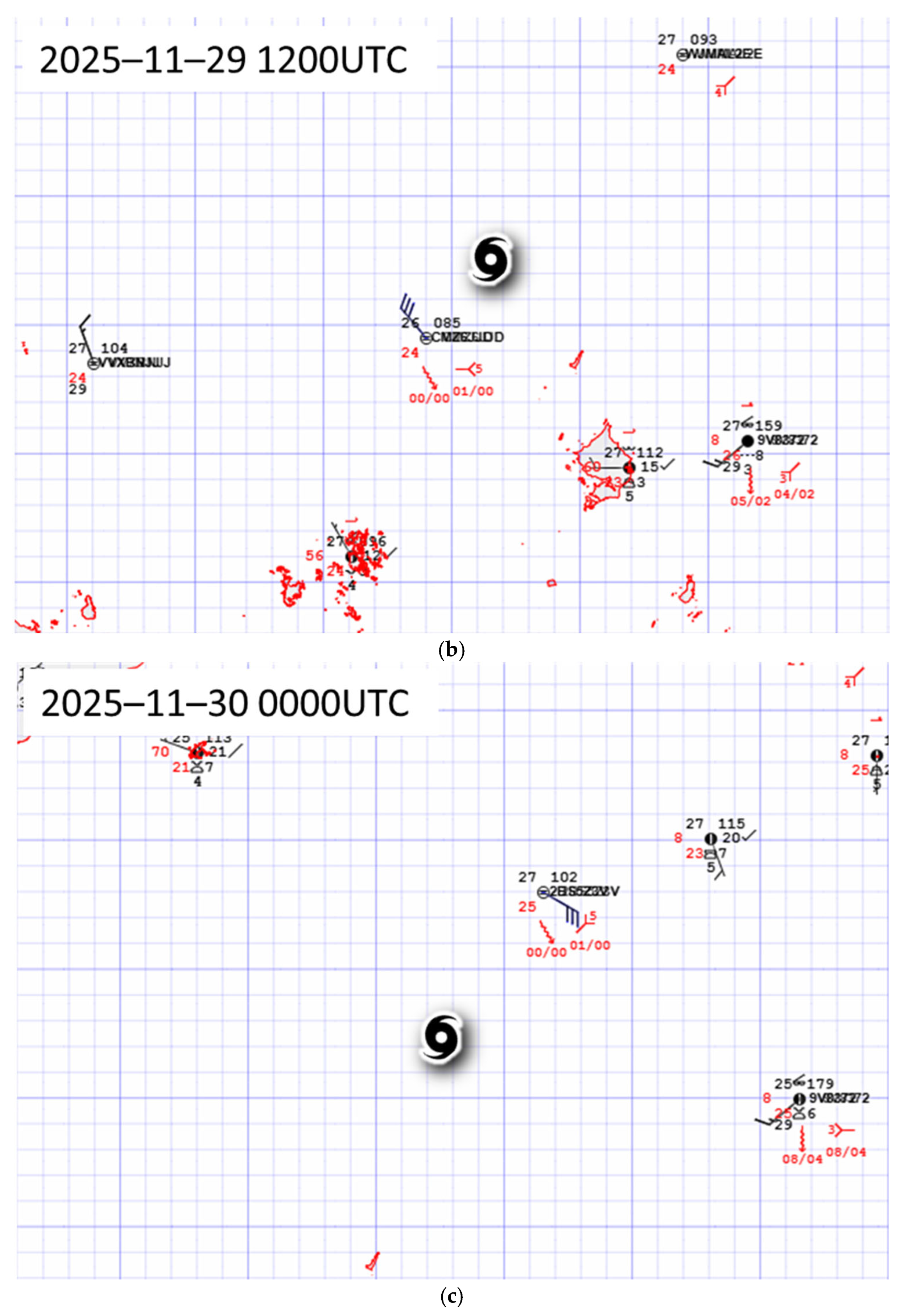
After moving eastwards across southern Thailand/Malaysia, the remnants of Senyar re-intensified into a TD at about 12 UTC on 28 November 2025. Radar imagery at that time (Figure 5a) showed that Senyar appeared as an elongated system, with some wrapping of convection into its centre, though the wrapping is not as tight as those shown in Figure 4b. Later on, at 12 UTC on 29 November and 00 UTC on 30 November 2025, there were ship observations near the sea surface showing surface winds of around 30 knots near the centre (Figure 5b,c). However, Senyar never intensified back into TS strength before it dissipated over the southern part of the South China Sea.
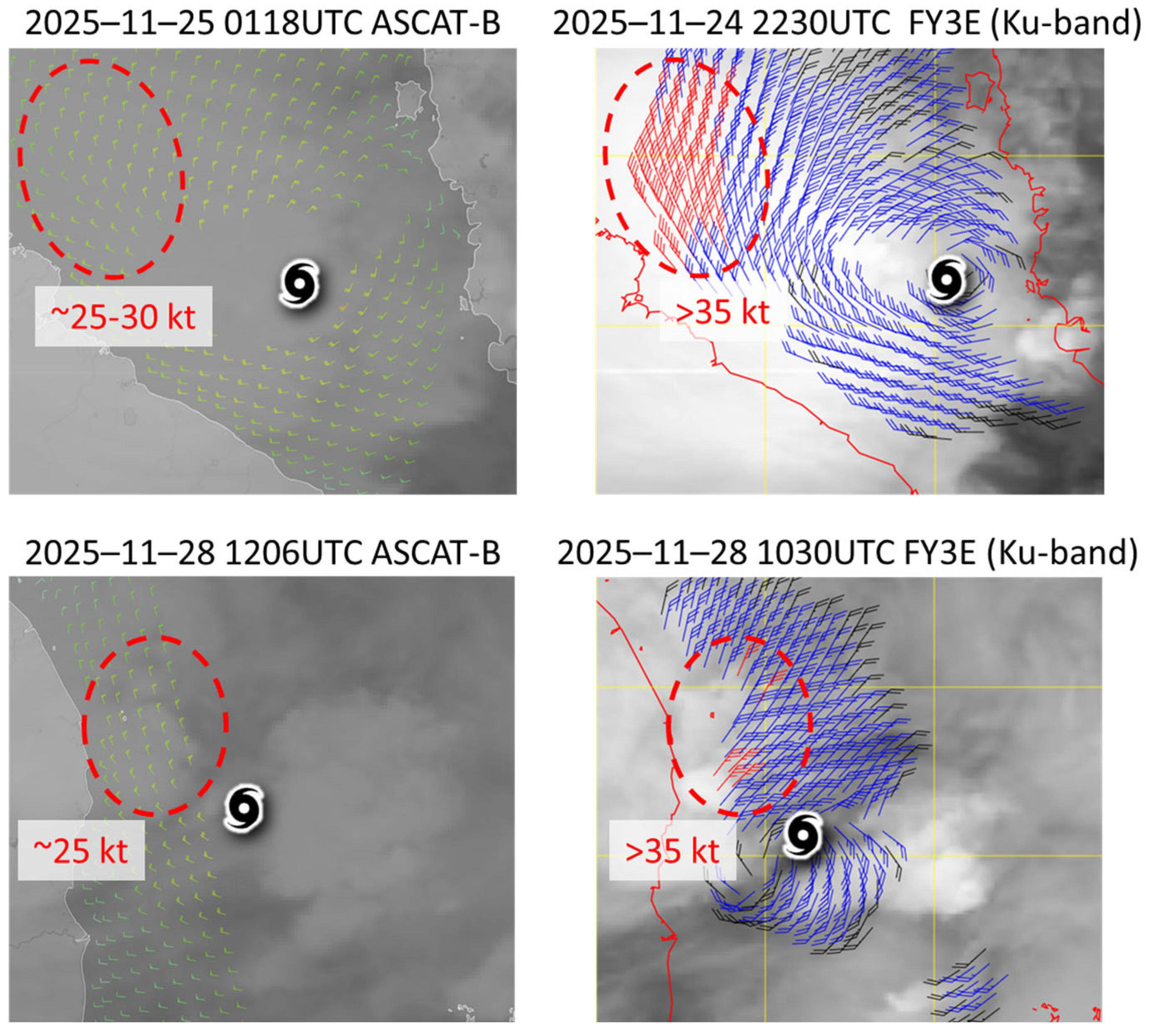
Surface wind data are also available from the FengYun-3E (FY-3E) polar orbiting satellite based on the Ku-band onboard radar [4]. Some samples are shown at the lower right in Figure 6 when Senyar has moved into the southern part of the South China Sea. FY-3E captured gale-force winds (coloured red in Figure 6) on the western side of this system. However, FY-3E appeared to over-estimate the surface winds as the surface gales were not found in the other available meteorological observations, such as synoptic weather reports and ASCAT-B data (left panels of Figure 6). In general, ASCAT-B only depicted winds of 25 to 30 knots over in those regions. As such, Senyar was not upgraded into a TS again over the South China Sea in the intensity re-analysis (Figure 2b). The overestimation of wind speed of FY-3E compared to that of ASCAT-B is probably due to their difference in resolution. Data retrieved from FY-3E Ku-band has finer resolution at around 10 km, in contrast to the 25 km resolution of the ASCAT-B data. This smaller sampling area might generally lead to a tendency of retrieving higher values.

4. Performance of Weather Models Predicting Its Occurrence

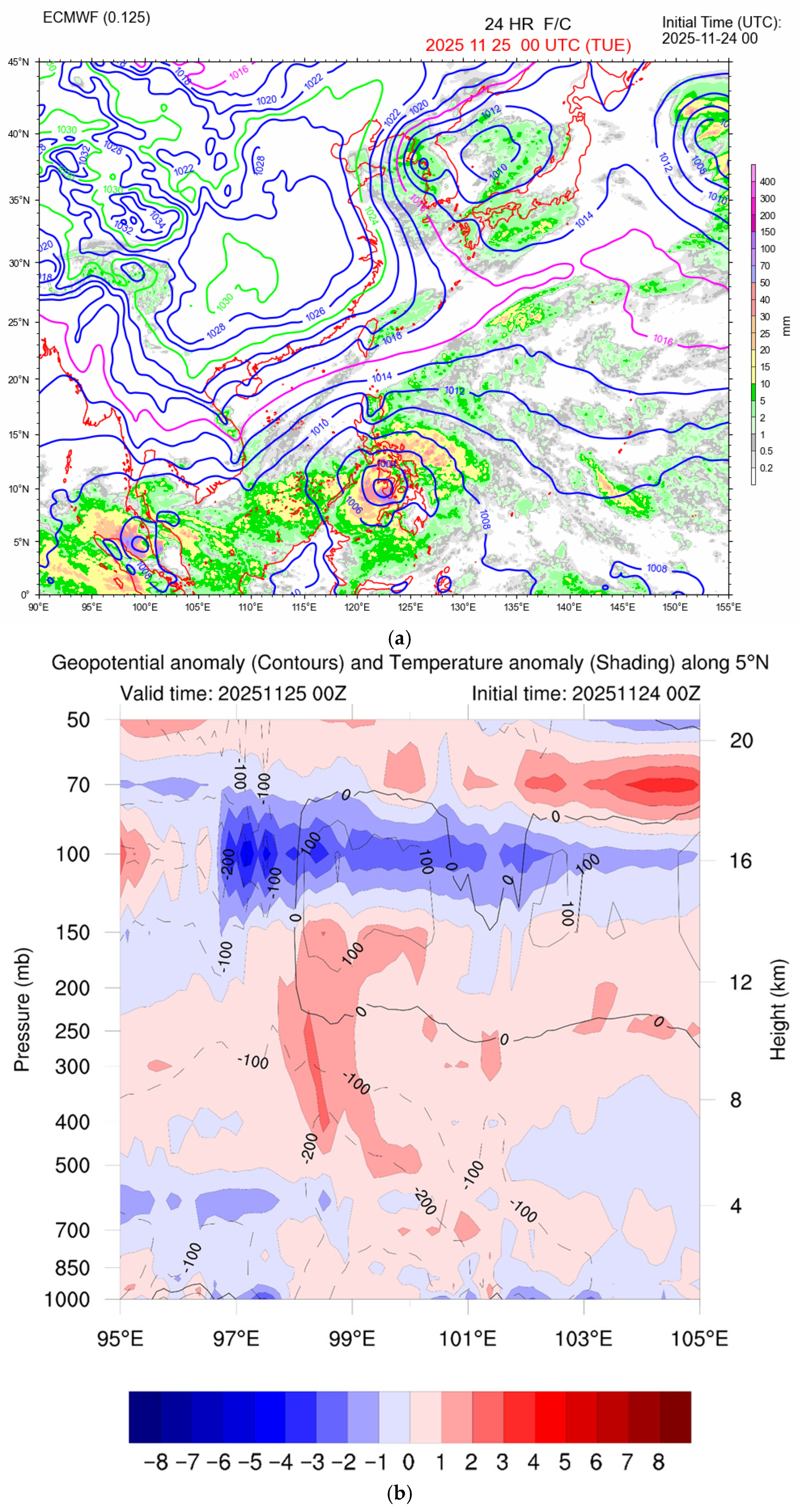
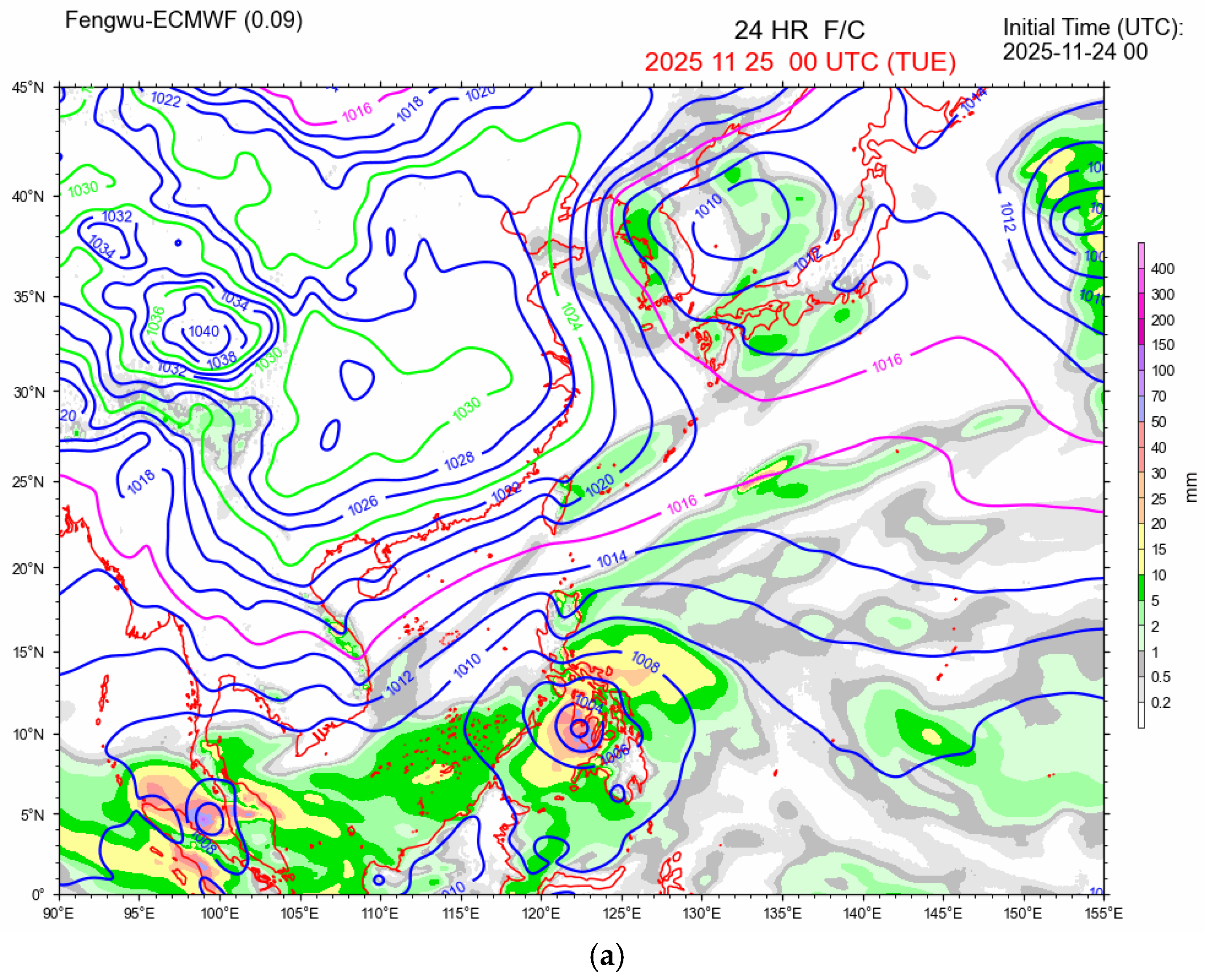
Global numerical weather prediction (NWP) and artificial intelligence (AI) models managed to predict the occurrence of TC Senyar at about 24 to 48 h ahead. For example, 24 h forecasts by the European Centre of Medium Range Weather Forecast (ECMWF) Integrated Forecast System (IFS) and the Fengwu global AI model [5] based on an initial time of 00 UTC on 24 November 2025 (Figure 7a and Figure 8a, respectively) captured the surface circulation of Senyar.
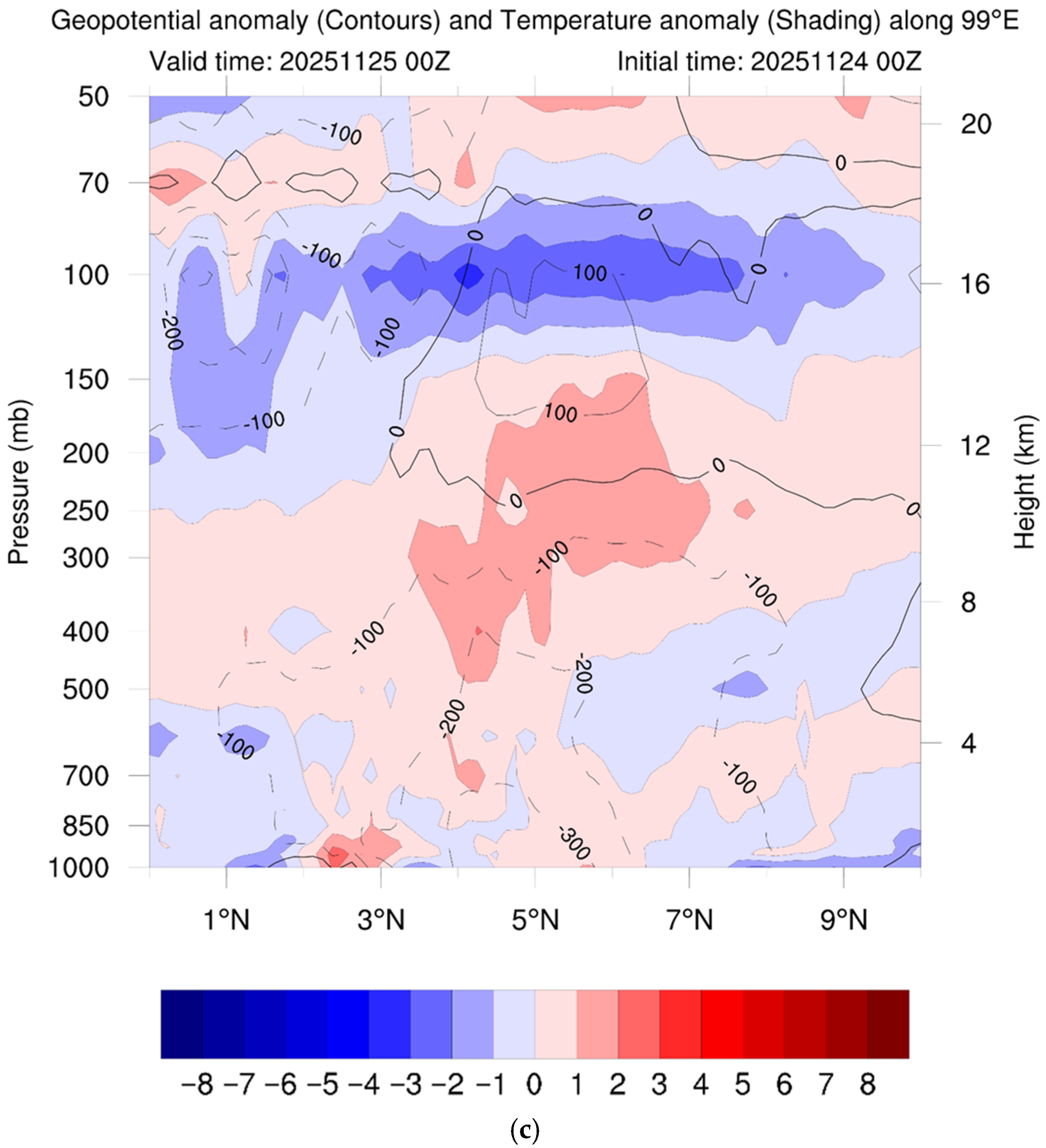
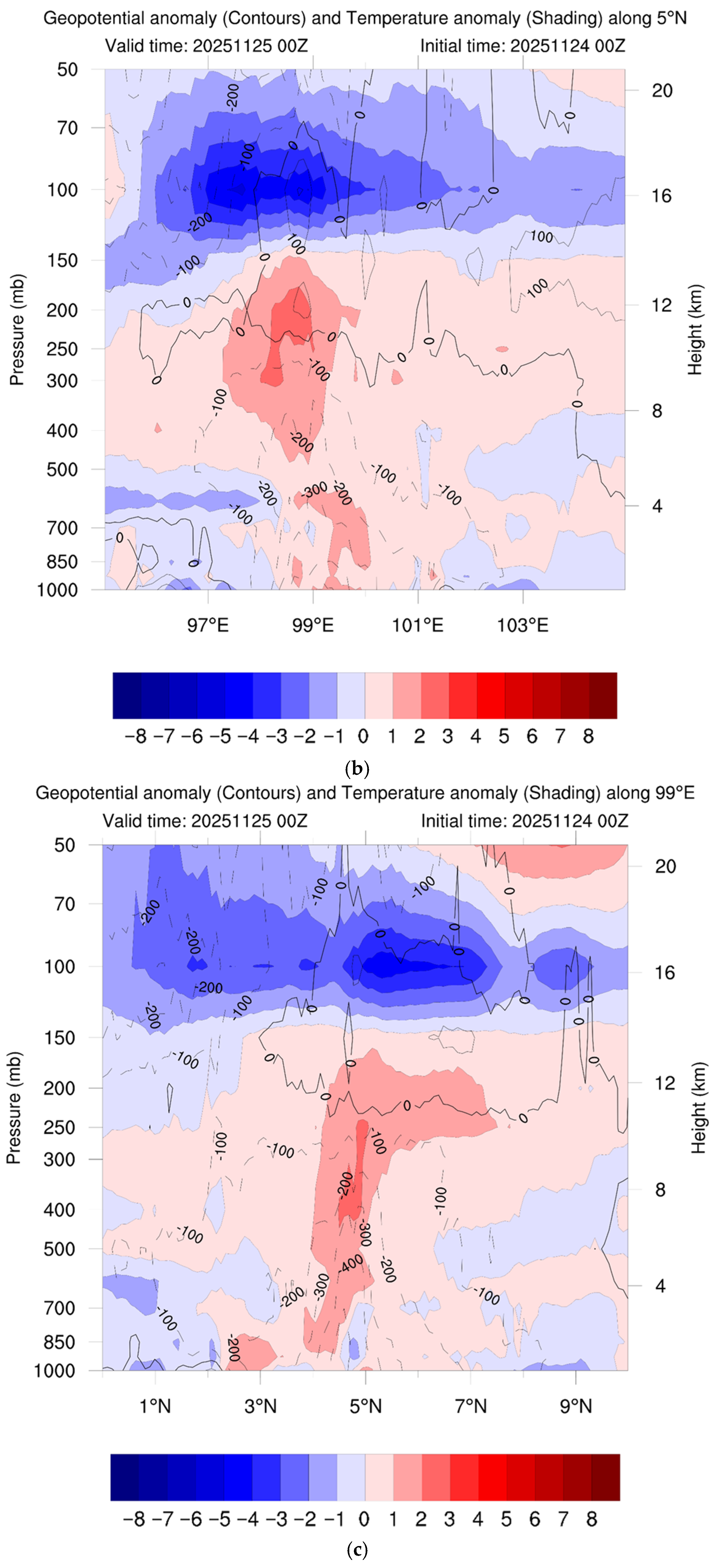
To further examine the structure of Senyar as depicted by the models, the vertical cross-sections of temperature and geopotential height anomalies across the centre of Senyar for the forecasts by the two models at the same forecast time are studied, namely, the cross-section along 5 degrees North (Figure 7b and Figure 8b) and along 99 degrees East (Figure 7c and Figure 8c). The anomaly is calculated by removing the mean over the area 5 S–15 N, 90–110 E. Based on physical equations, ECMWF IFS manages to capture the warm core of Senyar and the negative anomaly geopotential height near the centre. It is interesting to note that the same features have also been well captured by Fengwu, with even higher anomaly values, even though AI models have not been physically constrained and a TC at such a location has never occurred before (at least in the re-analysis fields based on which Fengwu was trained).
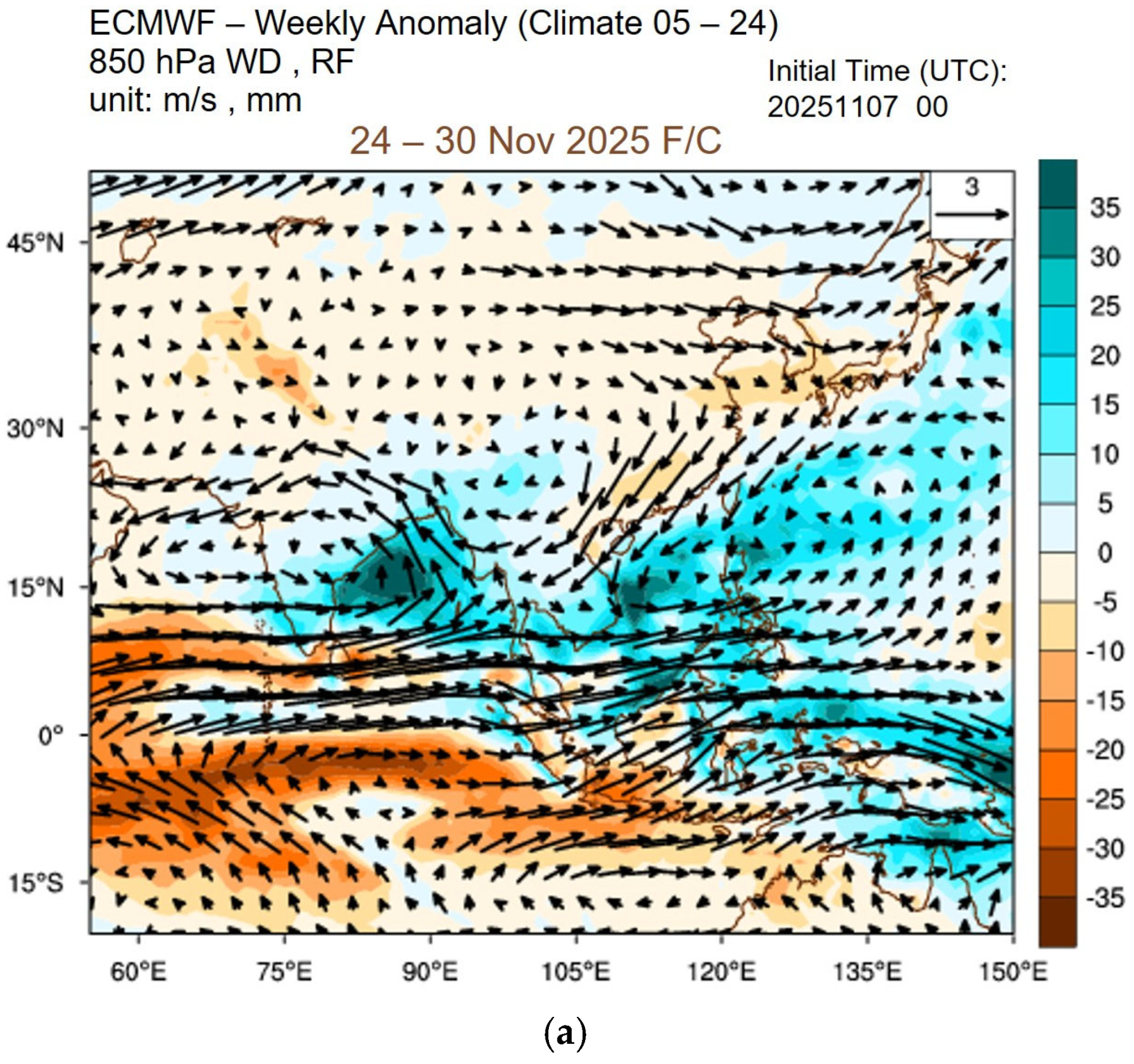
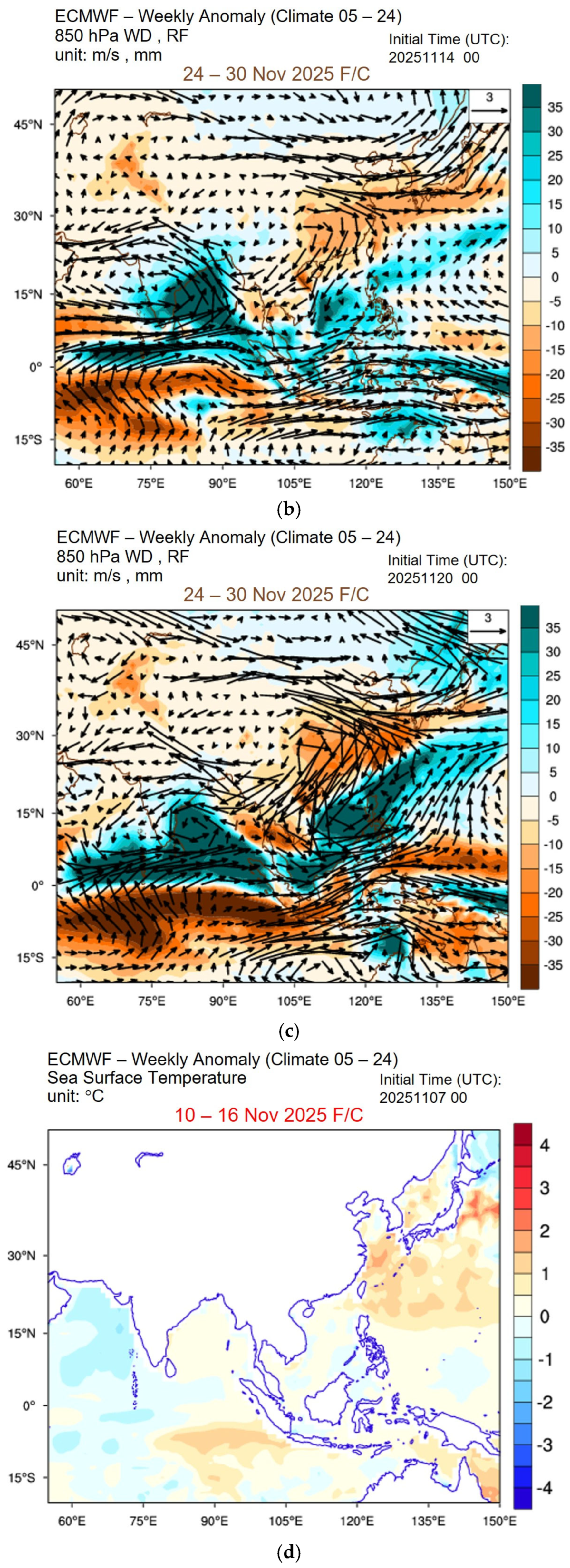
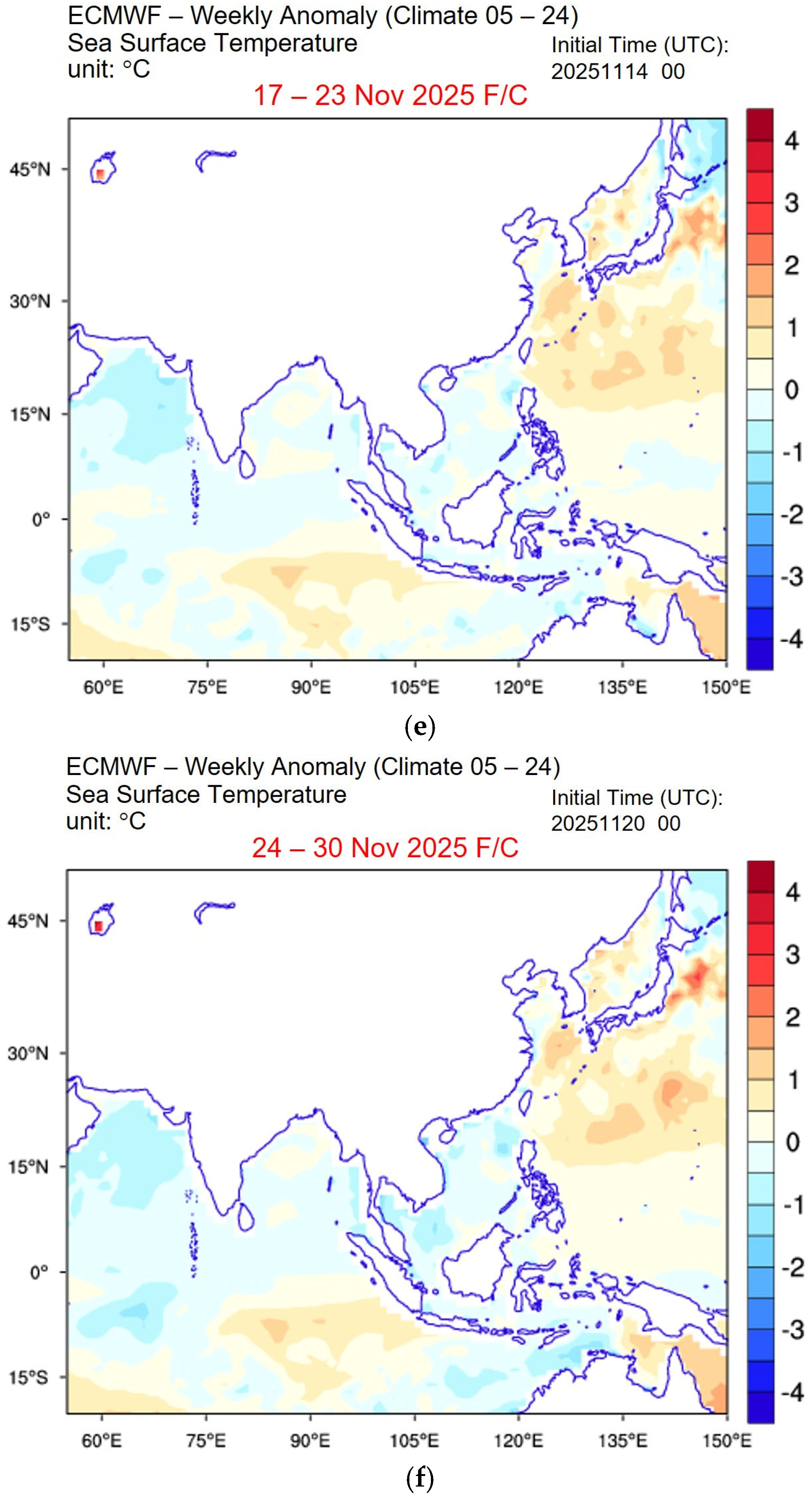
Successful prediction of the occurrence of Senyar in sub-seasonal forecasts would be important in providing early information on the potential anomalous precipitation in the southern Thailand–Malaysia–Indonesia region. An example based on the sub-seasonal (46-day) forecasts of ECMWF IFS is shown in Figure 9, namely, forecasts of three weeks ahead (Figure 9a,d), two weeks ahead (Figure 9b,e) and one week ahead (Figure 9c,f). It can be seen that, for three weeks ahead, the model reasonably captures the overall sea surface temperature distribution across the Indian Ocean, South China Sea and Western Pacific Ocean. However, the Koto–Senyar–Ditwah convergence line at 850 hPa is further north compared to the observation (Figure 1c), with the absence of Senyar, and dry anomaly (below-normal rainfall) over Sumatra and Sri Lanka. The forecast appears to be better two weeks ahead, with the convergence line further south, and higher-than-normal rainfall expected over northern Sumatra and Sri Lanka, but there is still no signature of Senyar. For the forecast one week ahead, the locations of the convergence line and the wet anomaly (higher-than-normal rainfall) are captured well. However, Senyar may be too small and too un-seasonal to show up in the forecasts. It turns out to be rather challenging for sub-seasonal models to capture Senyar.

5. Potential Role of Terrain on the Formation of Senyar

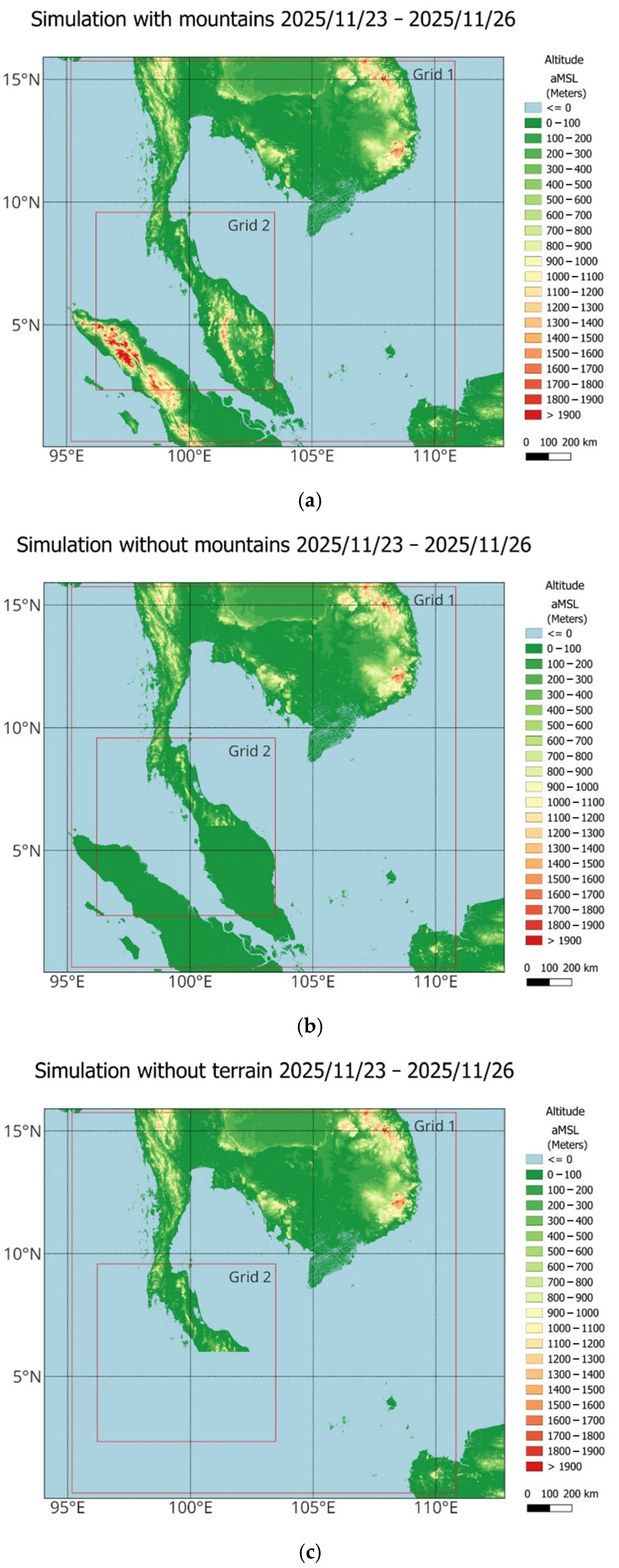
To study any potential role played by the terrain of southern Thailand/Malaysia and Sumatra, Indonesia, on the formation of Senyar, a number of mesoscale modelling experiments have been performed. The global NWP model of the National Centers for Environmental Prediction (NCEP) with a spatial resolution of 25 km is used as the outer model, with an initial time of 00 UTC on 23 November 2025. It is then nested with Regional Atmospheric Modelling System (RAMS) version 6.3. There are two nests in RAMS, namely, with spatial resolutions of 25 km and 5 km, the domains of which are shown in Figure 10. The physical parameterization schemes that have been adopted in RAMS are listed in Table 1.
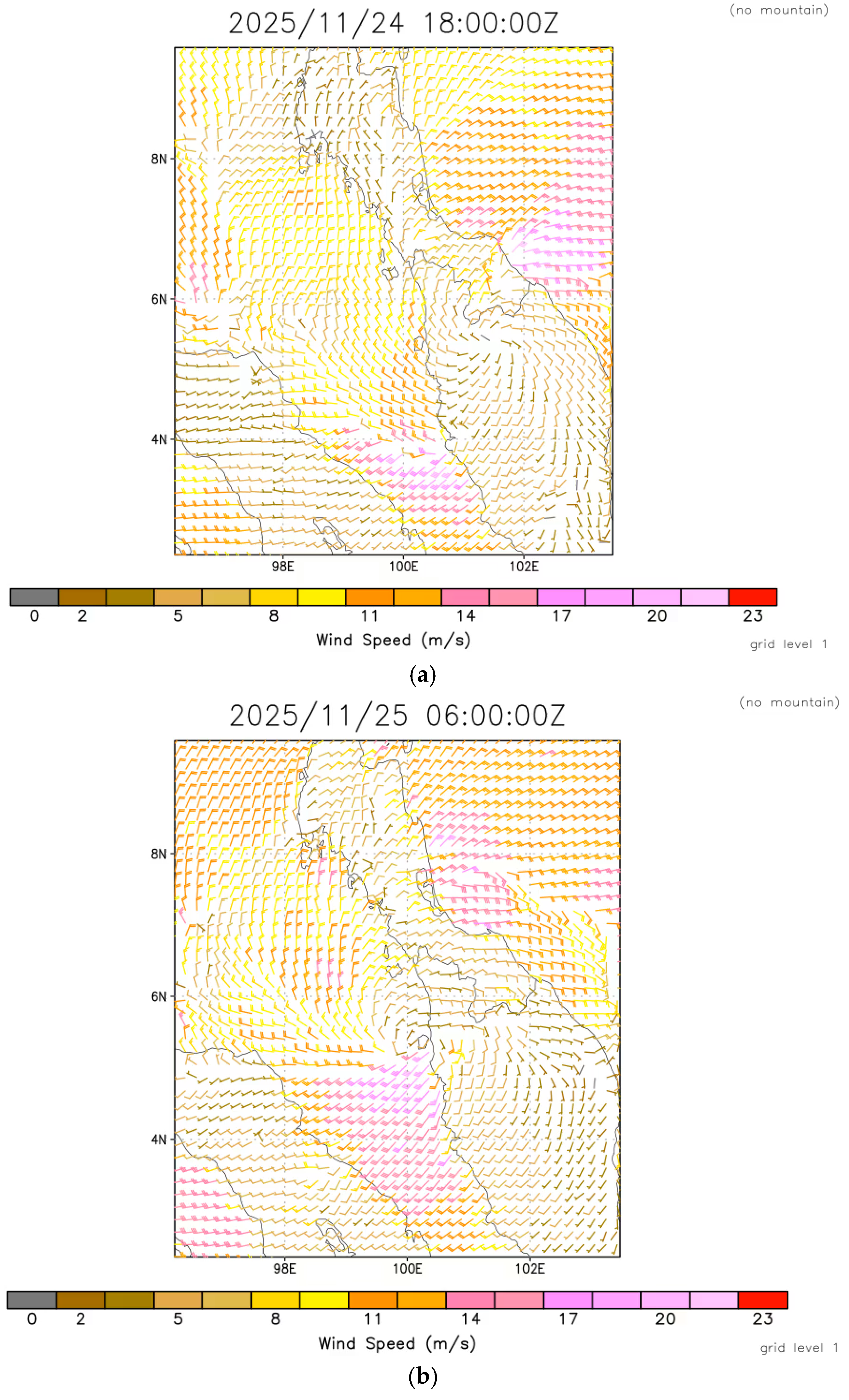
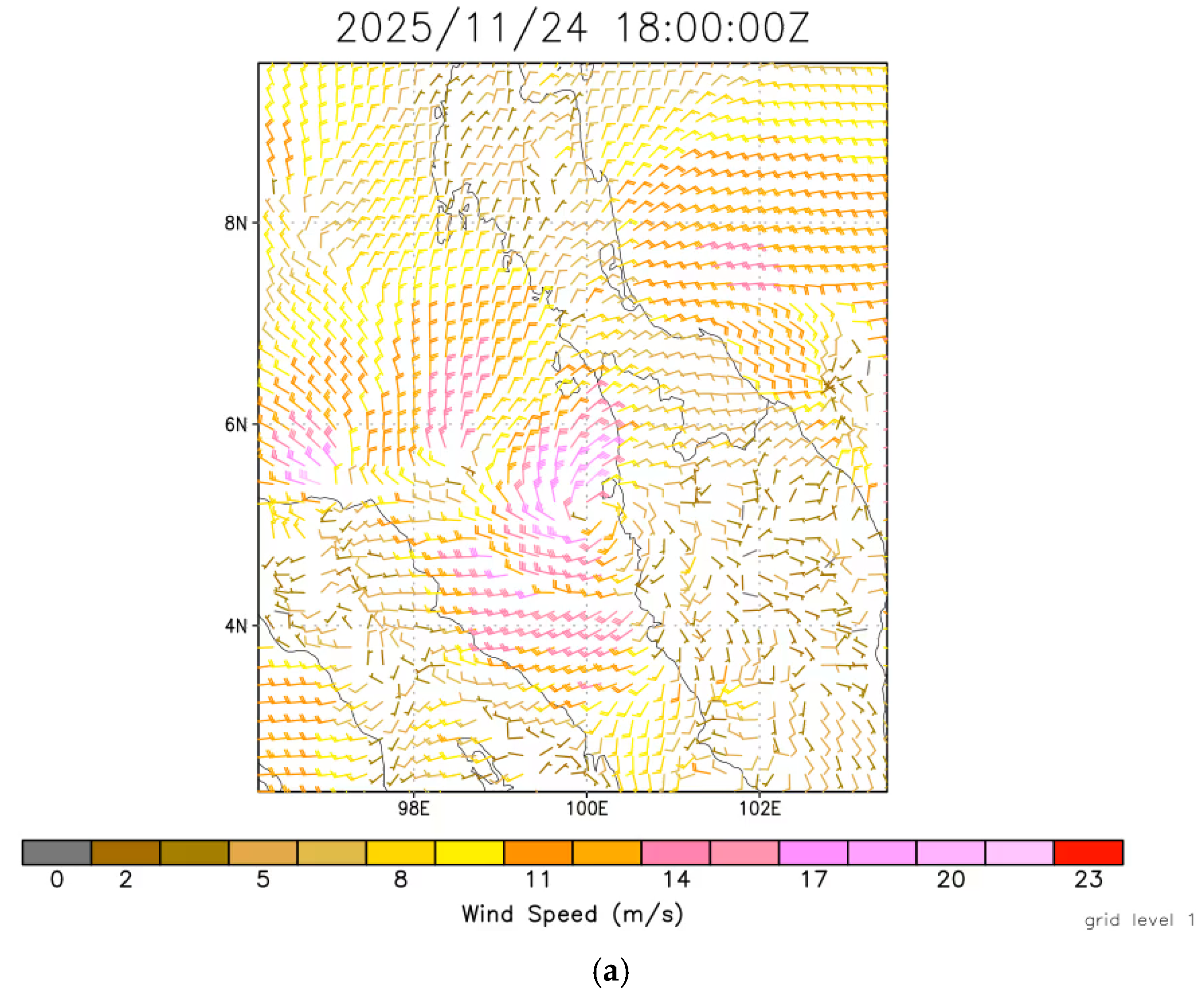
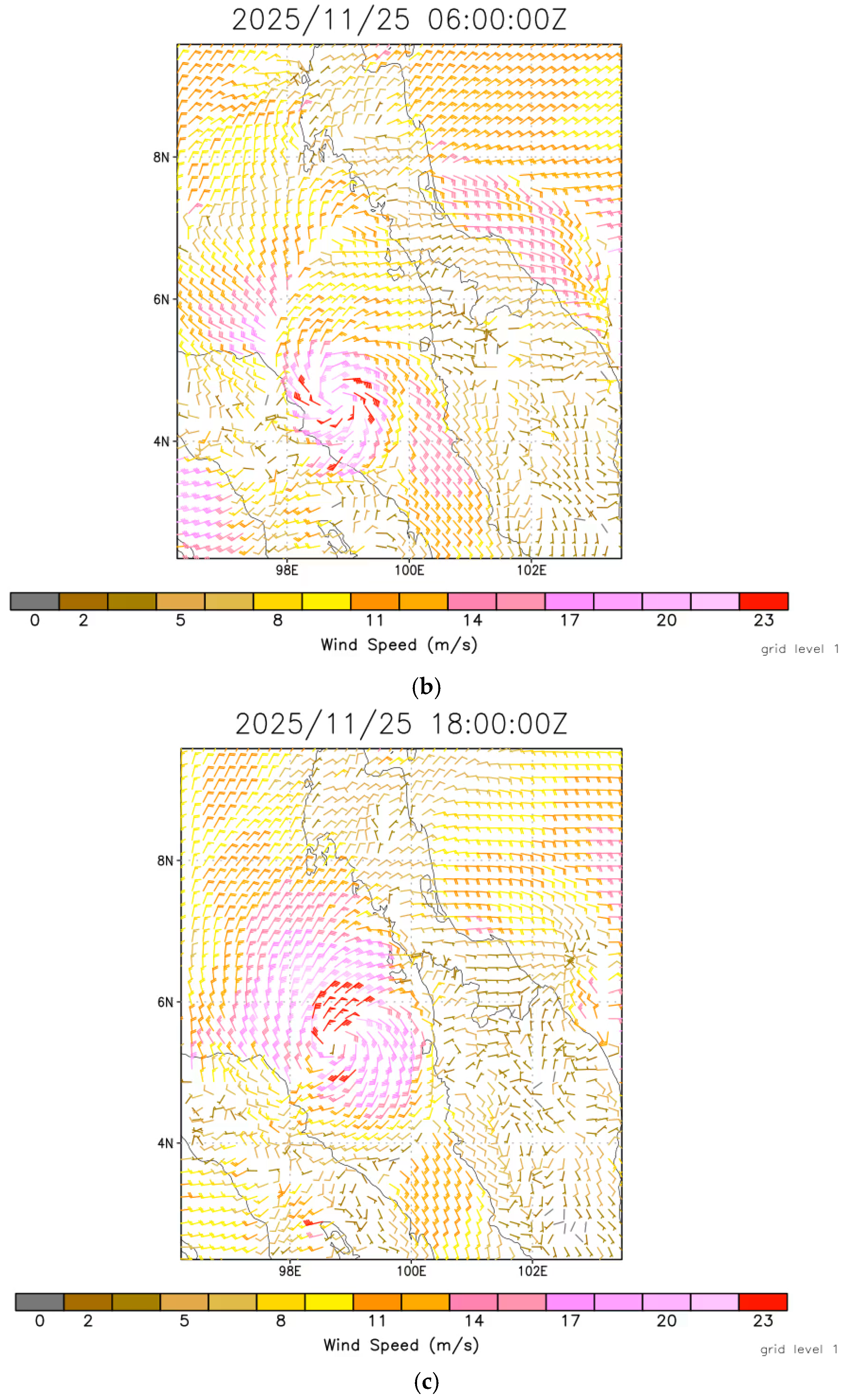
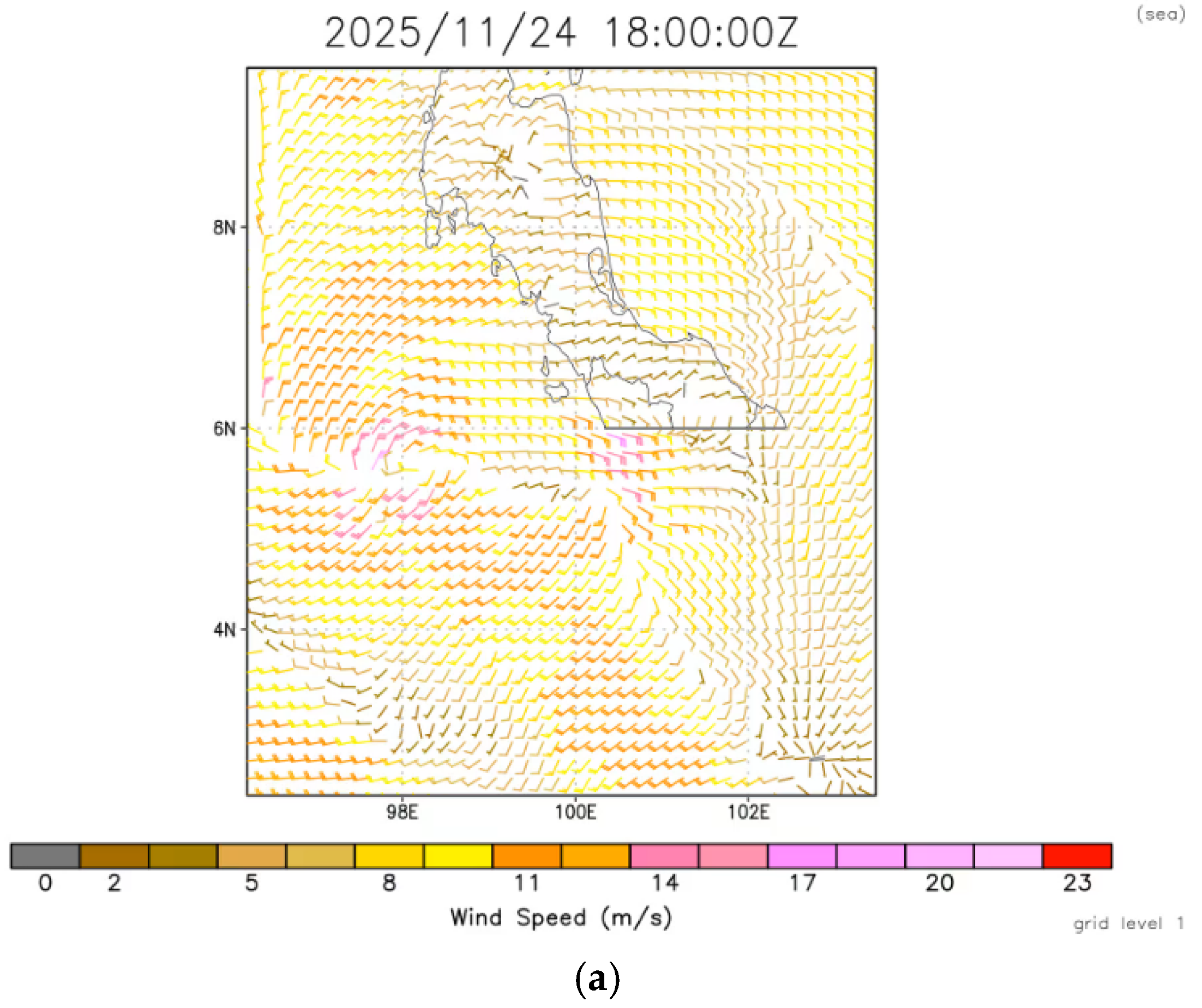
The model is run up to 00 UTC on 26 November 2025. Examples of model outputs with the actual terrain (domains in Figure 10a) are shown in Figure 11. As early as 18 UTC on 24 November 2025, cyclonic flow appears at the western coast of southern Thailand/Malaysia (Figure 11a), consistent with the actual observations. The cyclonic system continues to intensity in the next 24 h or so and drift slightly to the north in the simulation (Figure 11b,c). Winds of around 23 m/s (coloured red) are forecast to appear near the centre of the system. The intensification trend is consistent with the re-analysis (Figure 2b), though the forecast maximum winds appear to be slightly over-estimated.
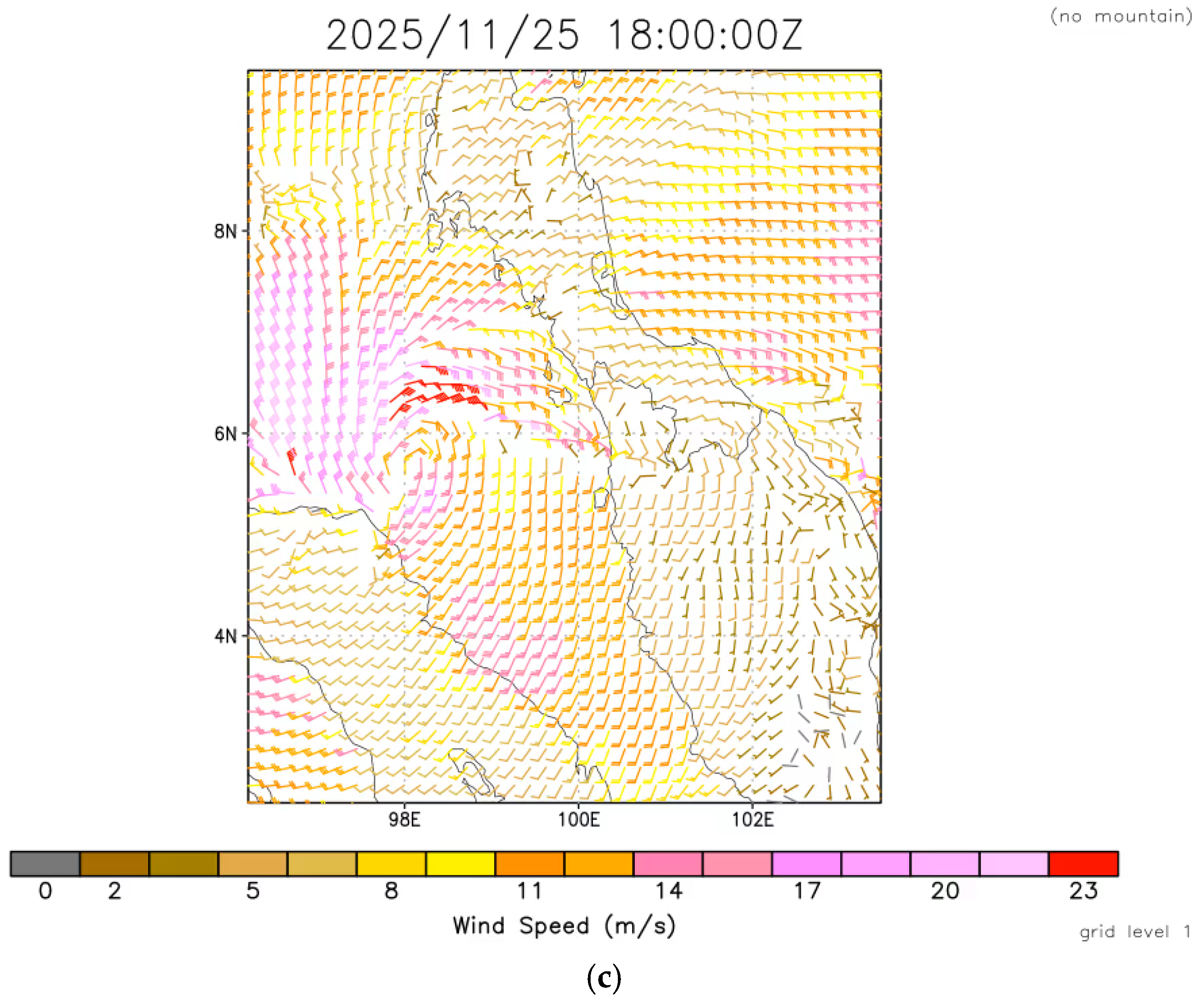
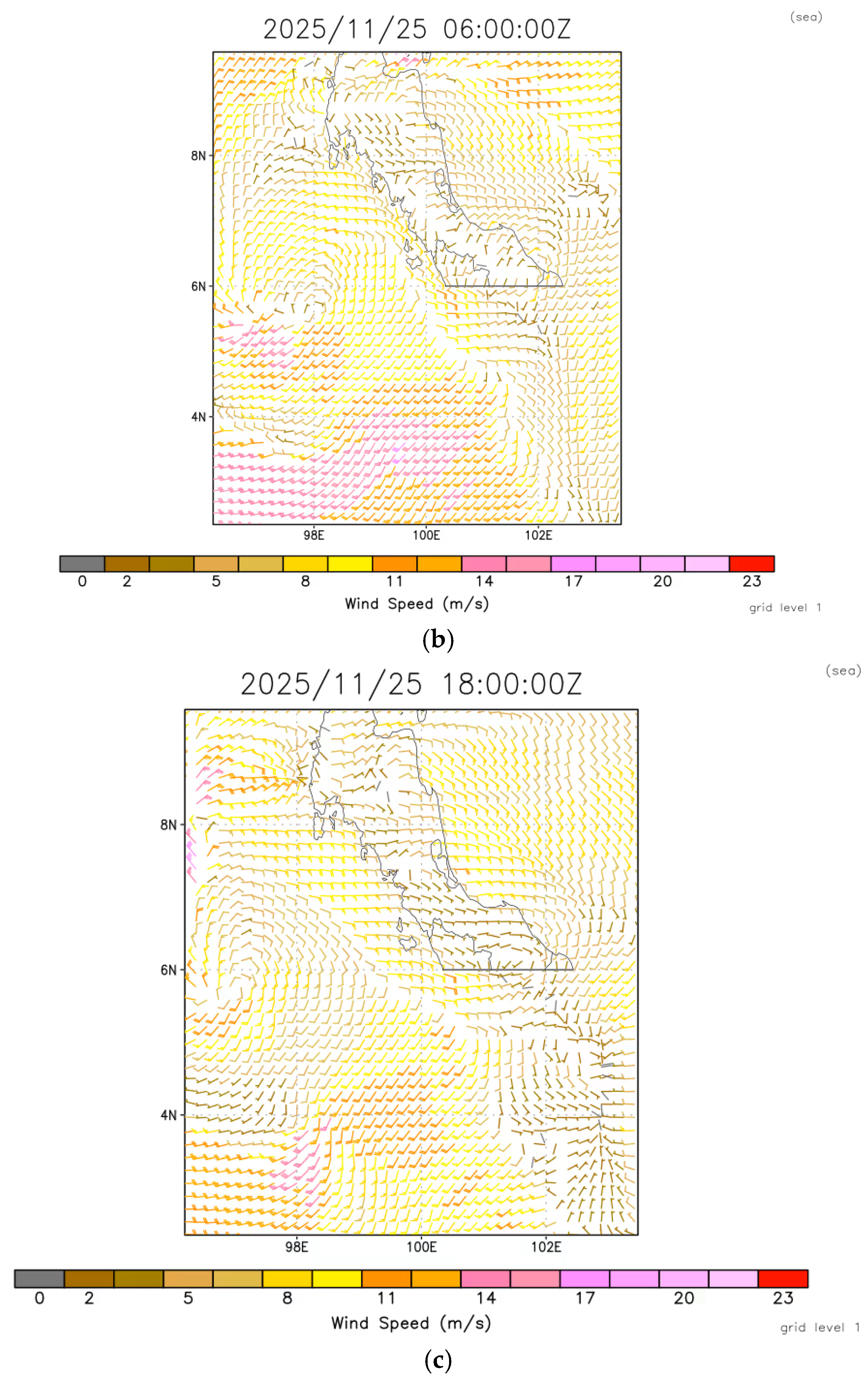
The second simulation is performed with the removal of terrain on southern Thailand/Malay Peninsula and Sumatra, Indonesia (Figure 10b), and the results are shown in Figure 12. At the simulation time of 18 UTC on 24 November 2025 (Figure 12a), the cyclonic centre appears over the landmass of the Malay Peninsula itself, but not over the sea. Later on, because the driving model (NCEP) has a cyclonic centre, the cyclonic system still appears over the Strait of Malacca (Figure 12b,c), but either the winds are weaker than the previous simulation (Figure 12b) or the system is elongated, more like an area of troughing flow (Figure 12c).
The third simulation is performed with the Malay Peninsula filled up by sea (terrain in Figure 10c). The simulation results are shown in Figure 13. With the removal of the land mass, the area around the cyclonic system remains an elongated trough (Figure 13a) and moves gradually westwards (Figure 13b,c). However, it does not take the form of a tropical cyclone. The development of the cyclonic system may be related to the rather high sea surface temperature in the vicinity of the Strait of Malacca.
Based on the results of the numerical experiments, the terrain of the Malay Peninsula and Sumatra seems to play a role in the formation of Senyar. In particular, the mountains at the former location may favour the presence of a lee low downstream of the northeasterly flow. The terrain of Sumatra may be of lesser importance, but the channel-like terrain of the Strait of Malacca with mountains on both sides may help the development of cyclonic vorticity in the lower troposphere, a precursor for the occurrence of a cyclone.

6. Conclusions

This paper documents the re-analysis of the track and the intensity of TC Senyar throughout its entire life cycle based on the available meteorological observations, including surface weather stations, meteorological satellite imageries and weather radar imageries. Senyar developed over the Strait of Malacca, the first storm ever observed to form at this location, and made two landfalls over Sumatra and then the Malay Peninsula, before entering into the southern part of the South China Sea. The NWP and AI global models managed to capture its occurrence about 2 days ahead, with a well resolved warm core structure and negative anomaly of geopotential height within the centre. However, it is difficult for a sub-seasonal model to capture its formation, even for a forecast of one week ahead, though this model manages to forecast the extensive troughing flow associated with the cyclones Ditwah, Senyar and Koto, which brought about heavy rainfall, flooding and landslide to the region.
The formation of TC Senyar is found to be related to the convergence of the strong northeast monsoon over southern China and the northern part of the Indochina Peninsula, and strong flow from the south or southwest crossing the equator. Relatively high sea surface temperature (above 29 degrees Celsius) is also believed to play a role. As for the potential role of terrain, a number of mesoscale meteorological modelling experiments were performed. It was found that, with the inclusion of the actual terrain, TC Senyar appears earlier in the simulation over the Strait of Malacca and develops better into a tropical storm. With the absence of the terrain over the Malay Peninsula and Sumatra, the formation of Senyar is delayed, while the cyclonic flow over the sea, once developed, becomes a rather elongated troughing flow, not quite like a cyclone. The lee low of the Malay Peninsula is believed to have assisted in the formation of Senyar in the cross-mountain northeasterly flow. The two parallel areas of mountains may also assist in the occurrence of cyclonic vorticity over the Strait of Malacca. Based on the numerical simulation experiments, the terrain of the Malay Peninsula, and to a lesser extent the terrain of Sumatra, may have assisted in the formation of Senyar over the strait. It is hoped that the present paper helps document the case for future reference by weather forecasters in the region and stimulates further research on this unprecedented cyclone.

Author Contributions

Conceptualization, P.W.C.; methodology, Y.S.L., M.L.C., C.K.H., H.Y.Y., W.P.T., and P.W.C.; software, C.K.H., W.P.T., and K.K.L.; validation, Y.S.L., W.H.T., W.P.T., and K.K.L.; formal analysis, Y.S.L., W.H.T., W.P.T., and K.K.L.; investigation, Y.S.L., M.L.C., C.K.H., W.H.T., W.P.T., K.K.L., and P.W.C.; data curation, Y.S.L., C.K.H., W.H.T., and W.P.T.; writing—original draft preparation, Y.S.L. and P.W.C.; writing—review and editing, Y.S.L., C.K.H., W.H.T., and W.P.T.; visualization, Y.S.L., C.K.H., W.P.T., and K.K.L. All authors have read and agreed to the published version of the manuscript.

Funding

This research received no external funding.

Institutional Review Board Statement

Not applicable.

Informed Consent Statement

Not applicable.

Data Availability Statement

Data will be made available on request.

Conflicts of Interest

The authors declare no conflicts of interest.

References

  1. NBC News. Satellite Imagery Shows Devastating Impact of Record Rainfall in Asia. Available online: https://www.nbcnews.com/world/asia/climate-change-floods-kill-1200-thailand-indonesia-srilanka-rcna246909 (accessed on 4 December 2025).
  2. Harper, B.A.; Kepert, J.D.; Ginger, J.D. Guidelines for Converting Between Various Wind Averaging Periods in Tropical Cyclone Conditions. World Meteorological Organization, TCP Sub-Project Report. 2010. WMO/TD-No. 1555. Available online: https://www.systemsengineeringaustralia.com.au/download/WMO_TC_Wind_Averaging_27_Aug_2010.pdf (accessed on 26 February 2026).
  3. Velden, C.S.; Herndon, D. A Consensus Approach for Estimating Tropical Cyclone Intensity from Meteorological Satellites: SATCON. Weather Forecast. 2020, 35, 1645–1662. [Google Scholar] [CrossRef]
  4. Fang, H.; Perrie, W.; Zhang, G.; Zhang, P.; Chen, L.; Xu, C. Tropical cyclone center estimates purely from FY-3E WindRAD measurements in the dawn-dusk orbit. Geophys. Res. Lett. 2025, 52, e2025GL115872. [Google Scholar] [CrossRef]
  5. Chen, K.; Han, T.; Ling, F.; Gong, J.; Bai, L.; Wang, X.; Luo, J.-J.; Fei, B.; Zhang, W.; Chen, X.; et al. The operational medium-range deterministic weather forecasting can be extended beyond a 10-day lead time. Commun. Earth Environ. 2025, 6, 518. [Google Scholar] [CrossRef]
  6. Mesinger, F.; Arakawa, A. Numerical Methods Used in Atmospheric Models; GARP Publication Series, No. 14; WMO/ICSU Joint Organizing Committee: Geneva, Switzerland, 1976; Volume 64. [Google Scholar]
  7. Tripoli, G.J.; Cotton, W.R. The Colorado State University three-dimensional cloud/mesoscale model-1982. Part I: General theoretical framework and sensitivity experiments. J. Rech. Atmos. 1982, 16, 185–220. [Google Scholar]
  8. Tremback, C.J.; Powell, J.; Cotton, W.R.; Pielke, R.A. The forward in time upstream advection scheme: Extension to higher orders. Mon. Weather Rev. 1987, 115, 540–555. [Google Scholar] [CrossRef]
  9. Smagorinsky, J. General circulation experiments with the primitive equations. Part I, The basic experiment. Mon. Weather Rev. 1963, 91, 99–164. [Google Scholar] [CrossRef]
  10. Louis, J.F. A parametric model of vertical eddy fluxes in the atmosphere. Boundary-Layer Meteorol. 1979, 17, 187–202. [Google Scholar] [CrossRef]
  11. Tremback, C.J.; Kessler, R. A surface temperature and moisture parameterization for use in mesoscale numerical models. In Proceedings of the 7th Conference on Numerical Weather Prediction, Montreal, QC, Canada, 17–20 June 1985. [Google Scholar]
  12. Clapp, R.; Hornberger, G. Empirical equations for some soil hydraulic properties. Water Resour. Res. 1978, 14, 601–604. [Google Scholar] [CrossRef]
  13. Tremback, C.J. Numerical Simulation of a Mesoscale Convective Complex: Model Development and Numerical Results. Ph.D. Dissertation, Colorado State University, Department of Atmospheric Science, Fort Collins, CO, USA, 1990. [Google Scholar]
  14. Mahrer, Y.; Pielke, R.A. A numerical study of the airflow over irregular terrain. Beitr. Phys. Atmosphare 1977, 50, 98–113. [Google Scholar]
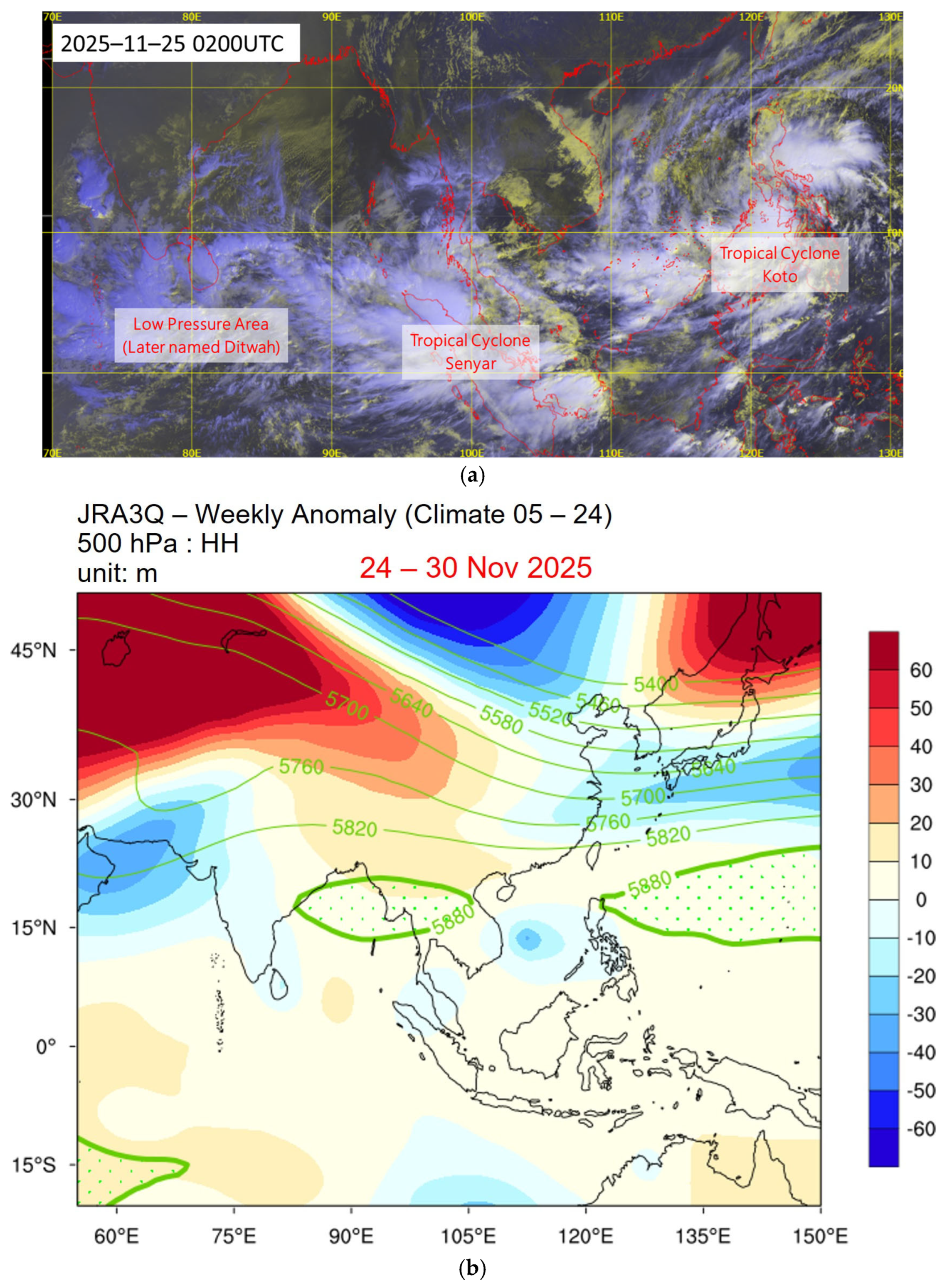
Figure 1. (a) False-colour satellite imagery showing an area of low pressure (which later developed into a Cyclonic Storm and was named Ditwah) and two tropical cyclones, Senyar and Koto, at 02 UTC on 25 November 2025. (b) Anomaly of 500 hPa geopotential height, (c) anomaly of 850 hPa temperature (contour) and wind (vector), and (d) anomaly of sea surface temperature based on the JRA3Q re-analysis dataset for the week of 24–30 November 2025.
Atmosphere 17 00275 g001aAtmosphere 17 00275 g001b
Figure 2. (a) The provisional track of Senyar and (b) time series of its intensity from 25 to 30 November 2025. In (a), positions are shown at 6 h intervals (circles and black dots), with the circles with numbers labelling the 00 UTC positions on the day indicated in November 2025. (b) shows the time series of the estimated maximum 10 min sustained wind speed near the centre of Senyar (black line). The SATCON intensity estimates are shown by the thick solid red line, while the SATCON 2-sigma error limits are shown by thin solid red lines. The SATCON estimates have been converted from 1 min to 10 min using a reduction factor of 0.93 [2].
Atmosphere 17 00275 g002
Figure 3. Environment conditions related to the development of Senyar based on ECMWF ERA5 re-analysis. (a) Vertically integrated water vapour flux at 00 UTC on 25 November and (b) 200–850 hPa vertical wind shear at 00 UTC on 30 November 2025, with magnitude and direction indicated by colour shadings and streamlines/arrows, respectively.
Atmosphere 17 00275 g003
Figure 4. (a) Dvorak satellite imagery of Senyar at 00 UTC on 25 November 2025 using the extended BD enhancement curve, and (b) the corresponding radar pictures at 0000 UTC and 0120 UTC on 25 November 2025. The position of Senyar is marked by a tropical cyclone symbol in (a). Panel (b) shows an intense rainband wrapping into a low-level circulation centre beginning at 00-01 UTC, which supports the initial classification by the 00 UTC Dvorak analysis.
Atmosphere 17 00275 g004aAtmosphere 17 00275 g004b
Figure 5. (a) Radar imagery of Senyar when it was over the South China Sea, and surface observations at (b) 1200 UTC on 29 November and (c) 0000 UTC on 30 November 2025. The position of Senyar is marked by a tropical cyclone symbol.
Atmosphere 17 00275 g005aAtmosphere 17 00275 g005b
Figure 6. Comparison of ASCAT-B and FY-3E wind fields near the centre of tropical cyclone Senyar (marked by a tropical cyclone symbol). ASCAT-B data (left) are from 0118 UTC on 25 November and 1206 UTC on 28 November 2025, whereas FY-3E data (right) are from 2230 UTC on 24 November and 1030 UTC on 28 November 2025. The resolution is approximately 25 km for ASCAT and 10 km for FY-3E.
Atmosphere 17 00275 g006
Figure 7. (a) Twenty-four-hour forecast of ECMWF IFS for surface pressure (contours) and 6 h rainfall (coloured shading) based on an initial time of 00 UTC on 24 November 2025, and two cross-sections of anomalies of geopotential height (contours) and temperature (coloured shading) across the centre of Senyar (b) along 5° N and (c) along 99° E.
Atmosphere 17 00275 g007aAtmosphere 17 00275 g007b
Figure 8. (a) Twenty-four-hour forecast of Fengwu model for surface pressure (contours) and 6 h rainfall (coloured shading) based on an initial time of 00 UTC on 24 November 2025, and two cross-sections of anomalies of geopotential height (contours) and temperature (coloured shading) across the centre of Senyar (b) along 5° N and (c) along 99° E.
Atmosphere 17 00275 g008aAtmosphere 17 00275 g008b
Figure 9. ECMWF IFS sub-seasonal weekly anomaly forecast for East Asia for 850 hPa wind anomaly (vector) and precipitation anomaly (contour) for the period 24–30 November 2025. Panels (ac) present 850 hPa wind anomalies (vectors) and precipitation anomalies (contours) initialized at (a) 00 UTC on 7 November 2025 (3-week lead), (b) 00 UTC on 14 November 2025 (2-week lead), and (c) 00 UTC on 20 November 2025 (1-week lead). Panels (df) show corresponding sea surface temperature anomalies (contours) for the same period.
Atmosphere 17 00275 g009aAtmosphere 17 00275 g009bAtmosphere 17 00275 g009c
Figure 10. Domains of model grid 1 (horizontal resolution of 25 km) and grid 2 (horizontal resolution of 5 km) for (a) original terrain, (b) removal of mountains, and (c) removal of landmass.
Atmosphere 17 00275 g010
Figure 11. RAMS model forecasts valid at (a) T + 42, (b) T + 54, and (c) T + 66 h, initialized at 00 UTC on 23 November 2025 using actual topography.
Atmosphere 17 00275 g011aAtmosphere 17 00275 g011b
Figure 12. RAMS model forecasts valid at (a) T + 42, (b) T + 54, and (c) T + 66 h, initialized at 00 UTC on 23 November 2025, with mountains removed over Malay Peninsula and Sumatra, Indonesia.
Atmosphere 17 00275 g012aAtmosphere 17 00275 g012b
Figure 13. RAMS model forecasts valid at (a) T + 42, (b) T + 54, and (c) T + 66 h, initialized at 00 UTC on 23 November 2025, with Malay Peninsula and Sumatra filled with sea.
Atmosphere 17 00275 g013aAtmosphere 17 00275 g013b
Table 1. The setup and physical parameterization schemes adopted in the RAMS simulation.
ParametersScheme
Grid structureStandard C grid [6]
Time differencing schemeLeapfrog scheme [7]
AdvectionForward advection [8]
Turbulent mixing parameterizationAnisotropic deformation [9]
Surface layer parameterization[10]
Soil and vegetation parameterizations[11,12]
Convective parameterizationSimplified Kuo Scheme [13]
Radiation scheme[14]
Cloud microphysicsBulk microphysics parameterization
Disclaimer/Publisher’s Note: The statements, opinions and data contained in all publications are solely those of the individual author(s) and contributor(s) and not of MDPI and/or the editor(s). MDPI and/or the editor(s) disclaim responsibility for any injury to people or property resulting from any ideas, methods, instructions or products referred to in the content.