4.1. Observational Analyses
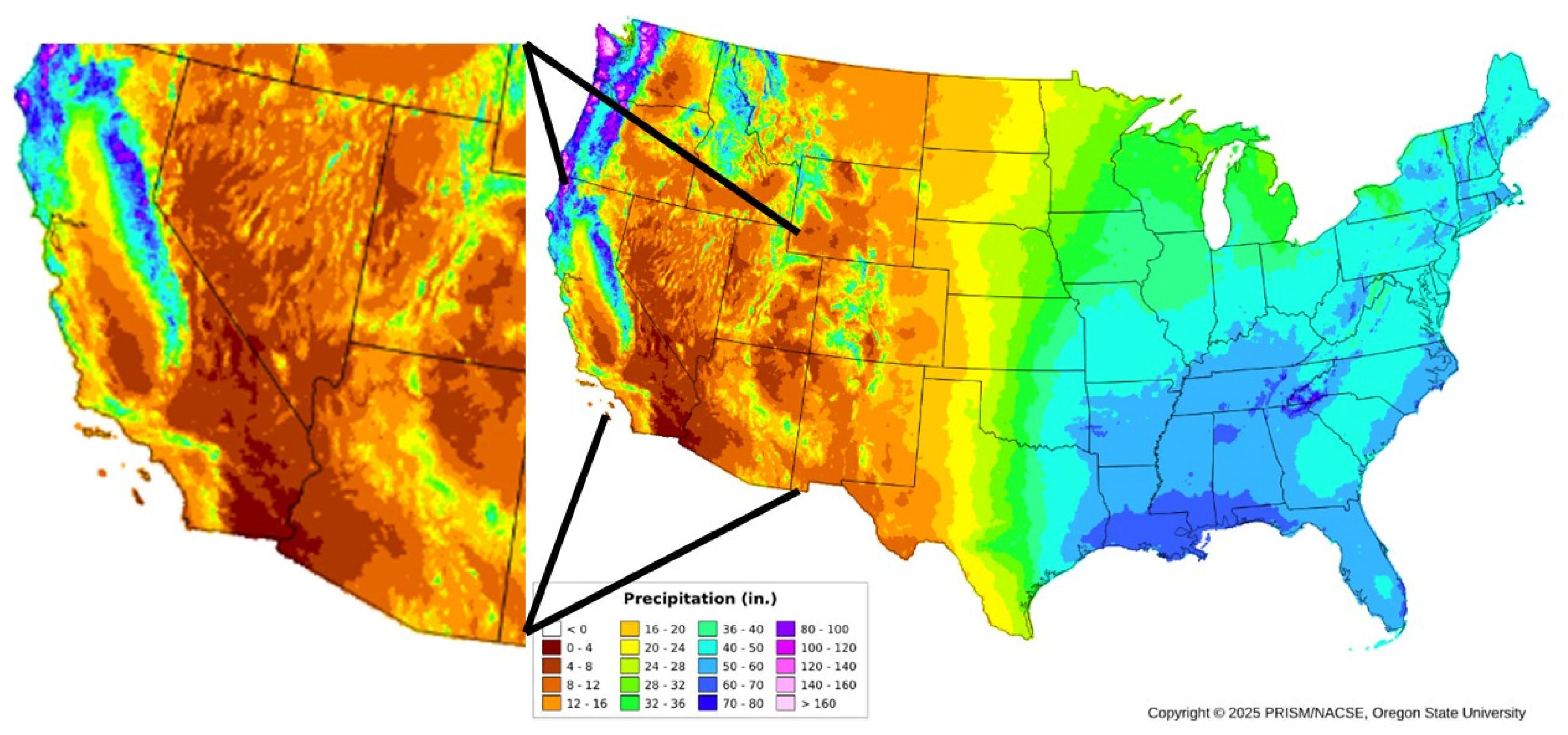
The average annual precipitation varies extensively over the western U.S. due in large part to complex terrain (
Figure 3). Little moisture is typically found over the inland arid regions of the Great Basin, resulting in minimal rainfall yearly except for an active but rare summer monsoon season. The focal point of this study is shown in the zoomed-in region of
Figure 3. The majority of southern CA and south-central NV receive less than eight inches (in. or ~200 mm) of precipitation annually, while most of the Great Basin region, spanning NV through the western half of UT, receives 8 to 12 in. (~200–300 mm) of precipitation, with greater amounts over the higher mountains. In rare cases where landfalling TCs are present, tropical moisture can be transported into arid regions and can be coupled with other circulations to generate substantial rainfall, as was the case for TC Hilary.
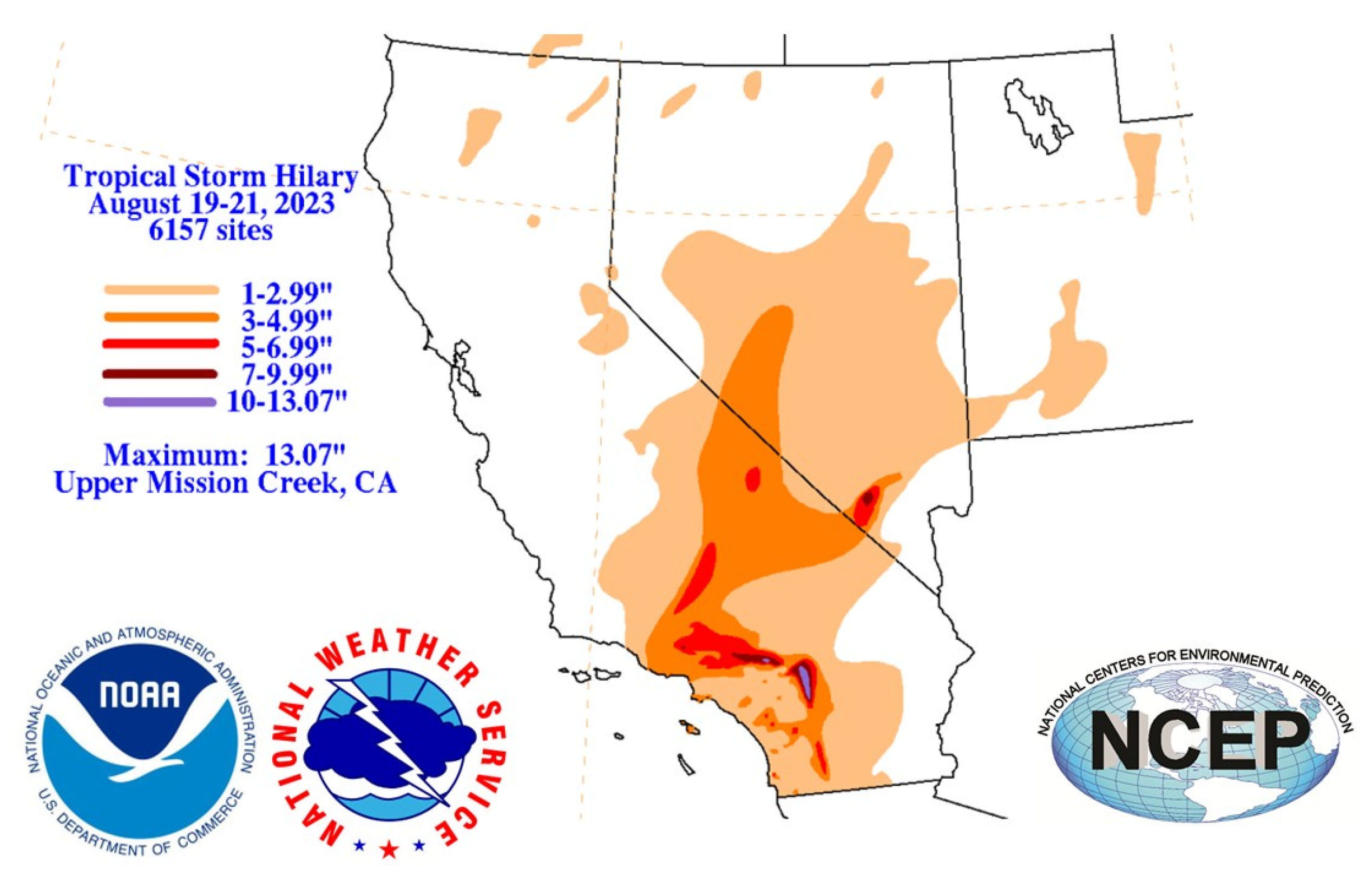
Figure 4 depicts accumulated precipitation from 19–21 August 2023, stemming from TC Hilary. The San Gabriel, San Bernardino, and San Jacinto Mountains in southern CA received approximately 10–13 in. (254–330 mm) of rain, roughly 30% of their annual total, while one to five in. (~25–127 mm) fell poleward through NV. Additional pockets of one to three in. (~25–76 mm) fell near Reno, NV, and in south-central UT. Comparing the average annual precipitation totals to
Figure 4 shows that most of the region received between 25–50% of their annual rainfall in <1% of the year.
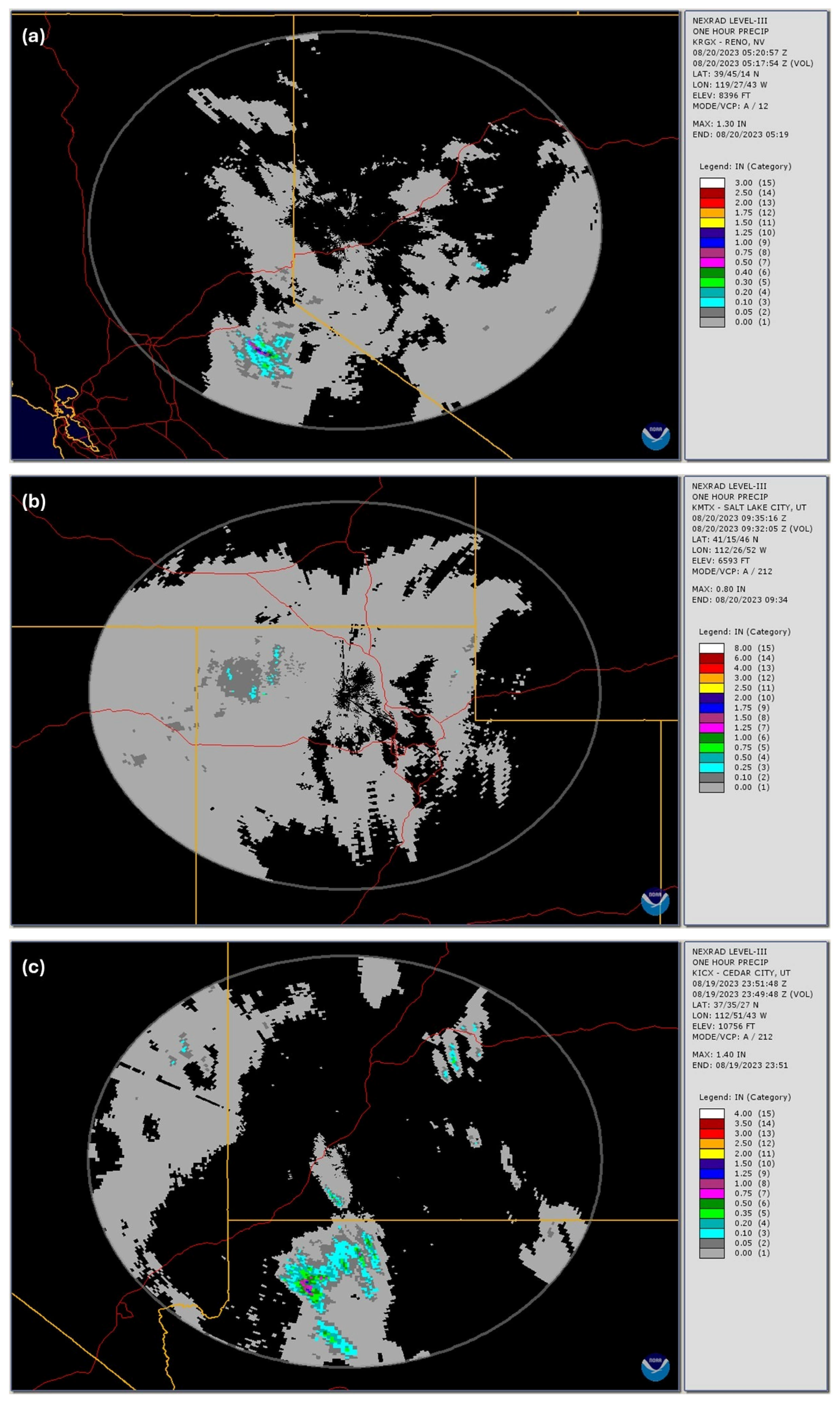
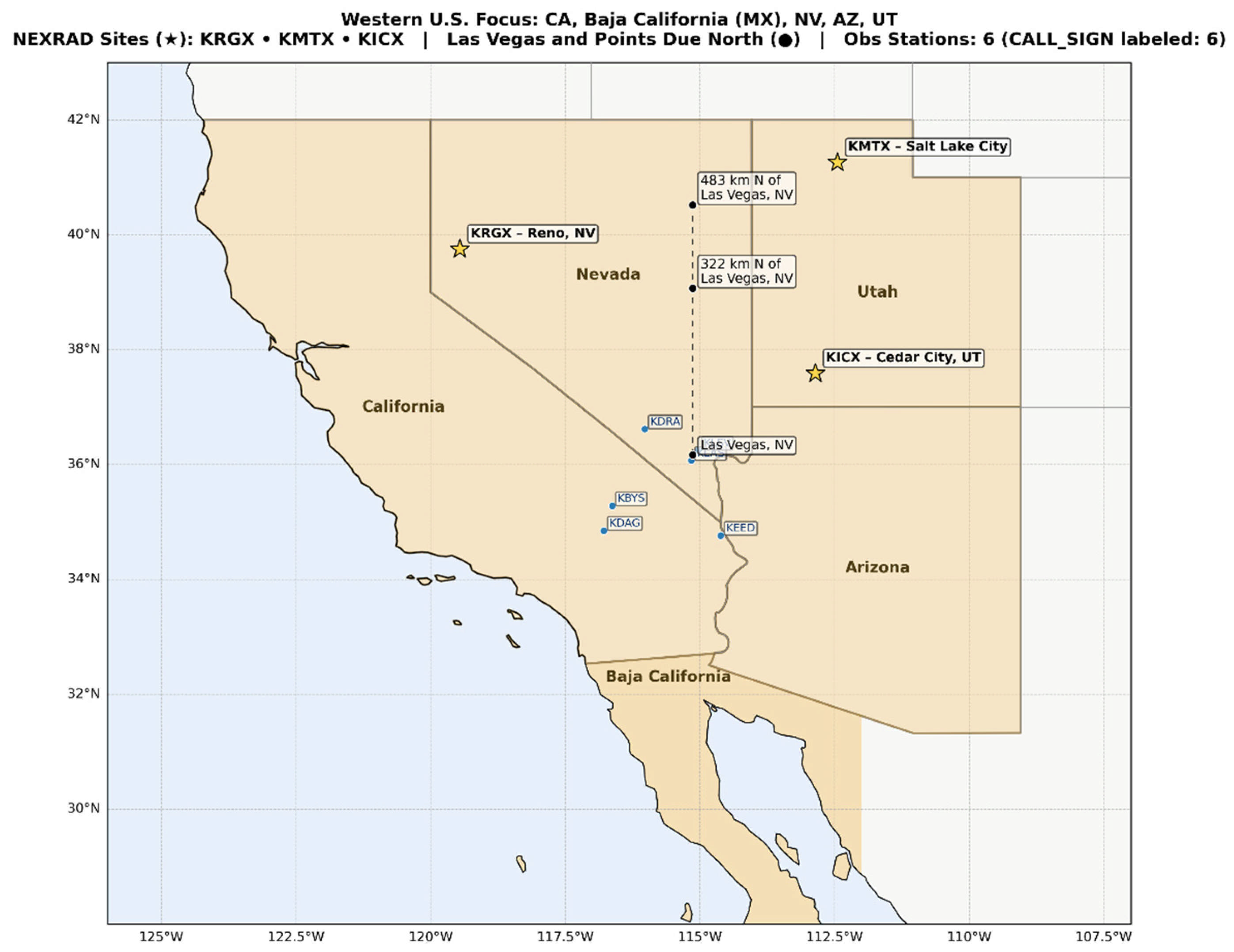
Figure 5 depicts the hourly precipitation maximum of 1.30 in. (~33 mm), 0.80 in. (~20 mm), and 1.40 in. (~36 mm) for (a) Reno, NV (KGRX), (b) Salt Lake City, UT (KMTX), and (c) Cedar City, UT (KICX), respectively. To further distinguish between the landfalling TC and these precipitation rate maxima, notice the timing of precipitation maxima compared to the coastal locations. These radar-derived precipitation rates occur approximately 8–17 h prior to the landfall of Hilary in Baja CA, which is, at that time, ~1500–2400 km poleward of the center of circulation. This indicates the presence of MCSs in the region due to the tropical moisture transport preceding Hilary. For geographical and station locations, please refer to
Appendix A,
Figure A2.
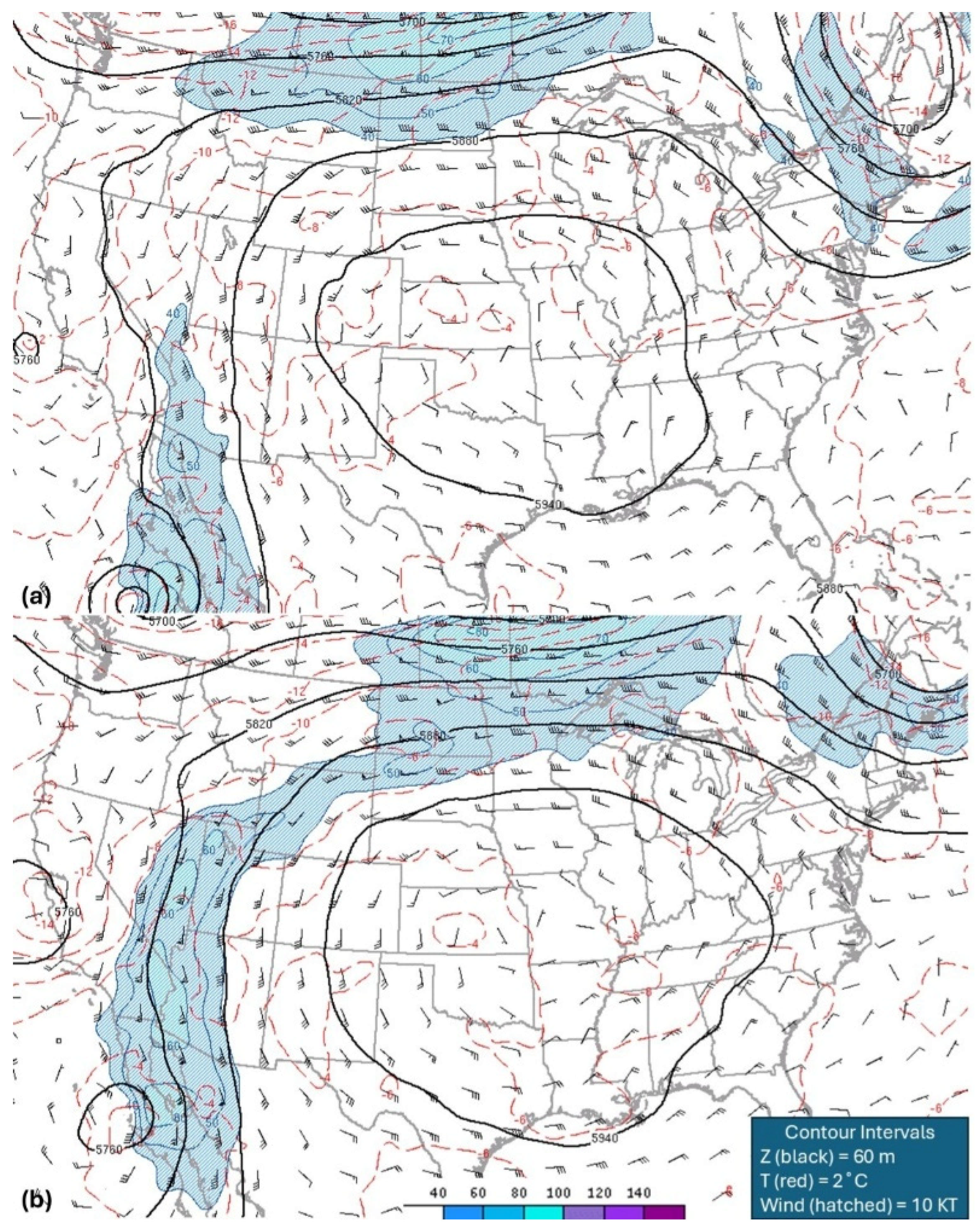
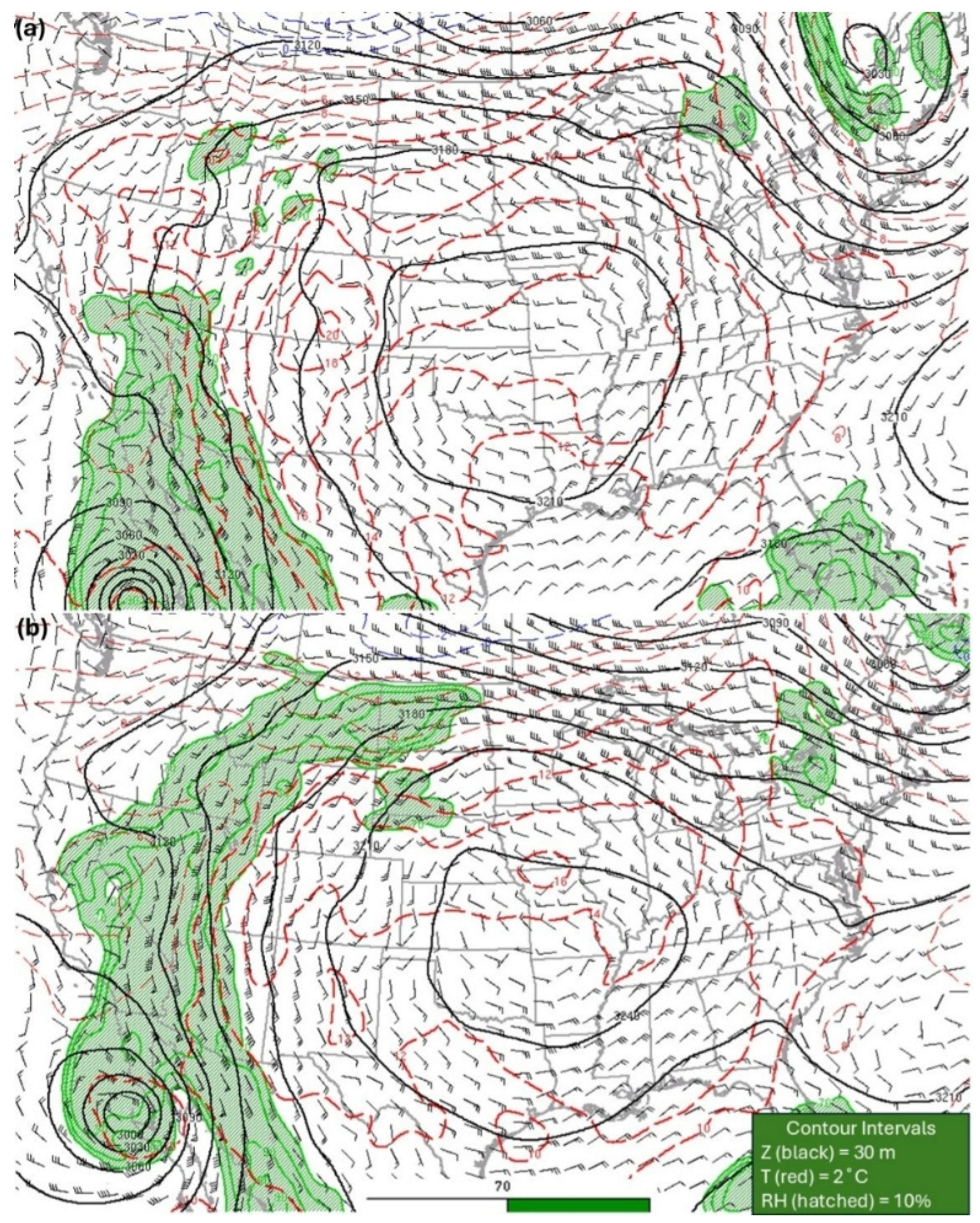
The 500 hPa heights in
Figure 6a,b indicate a massive westward-extending mid-level ridge of high pressure over the central U.S. directing anticyclonic flow poleward over the southwestern U.S. The mid-level jet is embedded within the western periphery of this ridge, representing a sub-synoptic wind maximum. Over western AZ, the mid-level jet begins forming on 0000 UTC 20 August and rapidly expands poleward within 12 h. The hatched region of ≥40 knots (KT or ~21 ms
−1), in
Figure 6a,b, rapidly intensifies to 60 KT (~31 ms
−1) over portions of southern CA, western AZ, and eastern NV along with a wind shift from southeast to south. In addition, a plume of warm air flanks the jet, represented by the red isotherms, in the lower troposphere primarily above the elevated Great Basin Plateau extending poleward from western Arizona–western Utah and eastern Nevada (
Figure 7b).
Figure 7a,b show the 0000–1200 UTC 20 August 700 hPa heights, wind, mean 700–500 hPa relative humidity (RH) and temperature fields. Most notably, the mean RH correlates well with the mid-level jet location. In addition, the low-level temperature gradient between Arizona, Nevada and Utah is more pronounced than at earlier times and is even more significant downward through the near-surface layer at ~850 hPa. This is influenced by the differential shortwave radiative forcing resulting from the surface heating of the eastern Great Basin in clear air and the developing cloud shield of TC Hilary extending into southern California and western Nevada. Therefore, with clear skies over the desert region, the incoming shortwave radiation will heat the surface more effectively with negligible reflection from cloud cover. Further exploration of the cloud shield effect and surface heating will be discussed in the simulation result section.
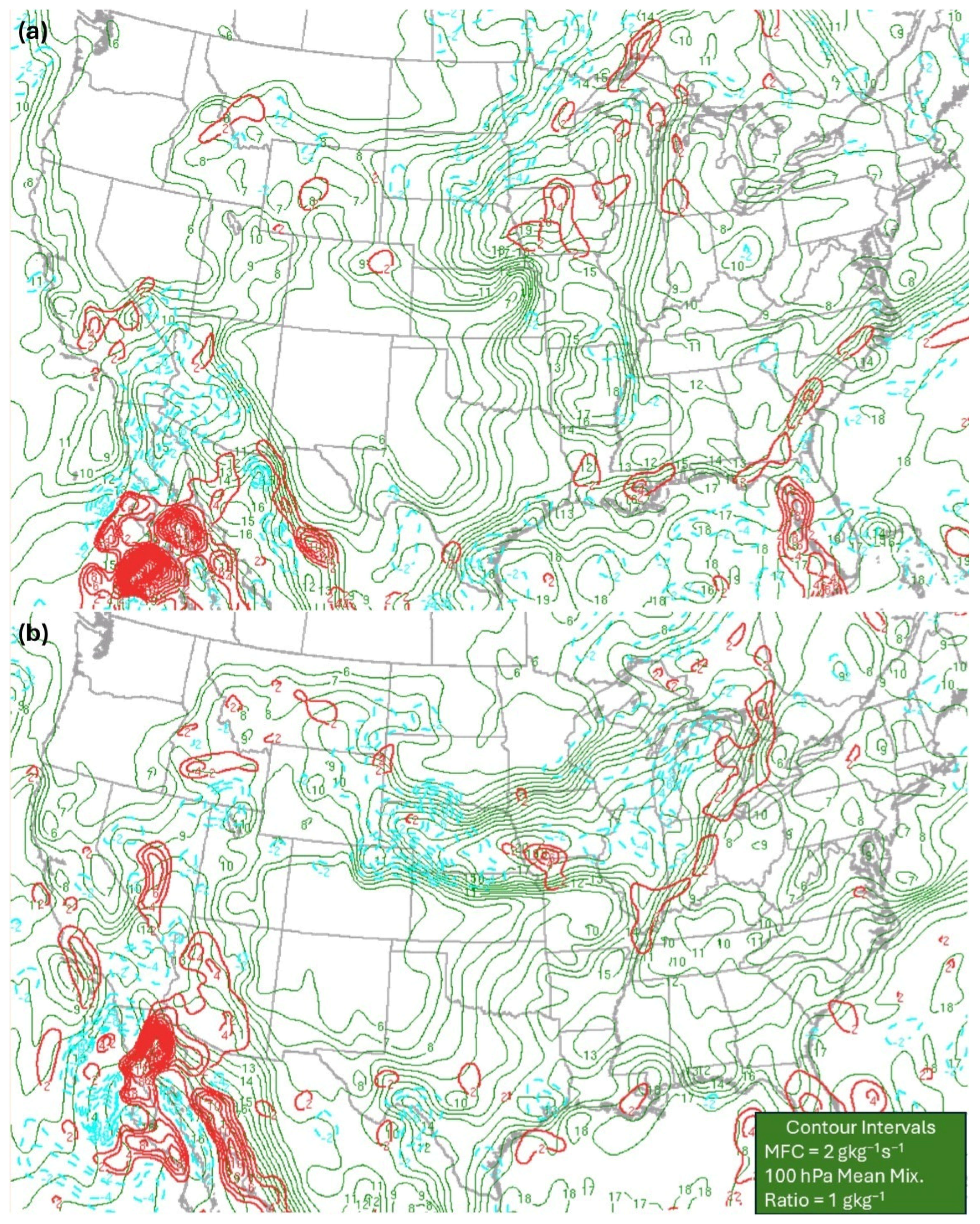
Figure 8 represents moisture flux convergence (MFC) and the 100 hPa mean mixing ratio. Valid on 0000 UTC 20 August,
Figure 8a shows that the mean mixing ratio is negligible for central and northern NV while a line of demarcation can be seen in southern NV, indicating the extent of tropical moisture. Negative MFC is found over southern NV, indicating that the mid-level jet has not formed or extended into the region because there exists little moisture advection. By 1200 UTC 20 August (
Figure 8b), higher values of the mean mixing ratio have extended poleward through NV and a clear area of MFC can be seen in central NV. This area of positive MFC collocates well with the mid-level jet and demonstrates that the newly formed mid-level jet is transporting tropical moisture poleward, allowing convection in the form of MCSs.
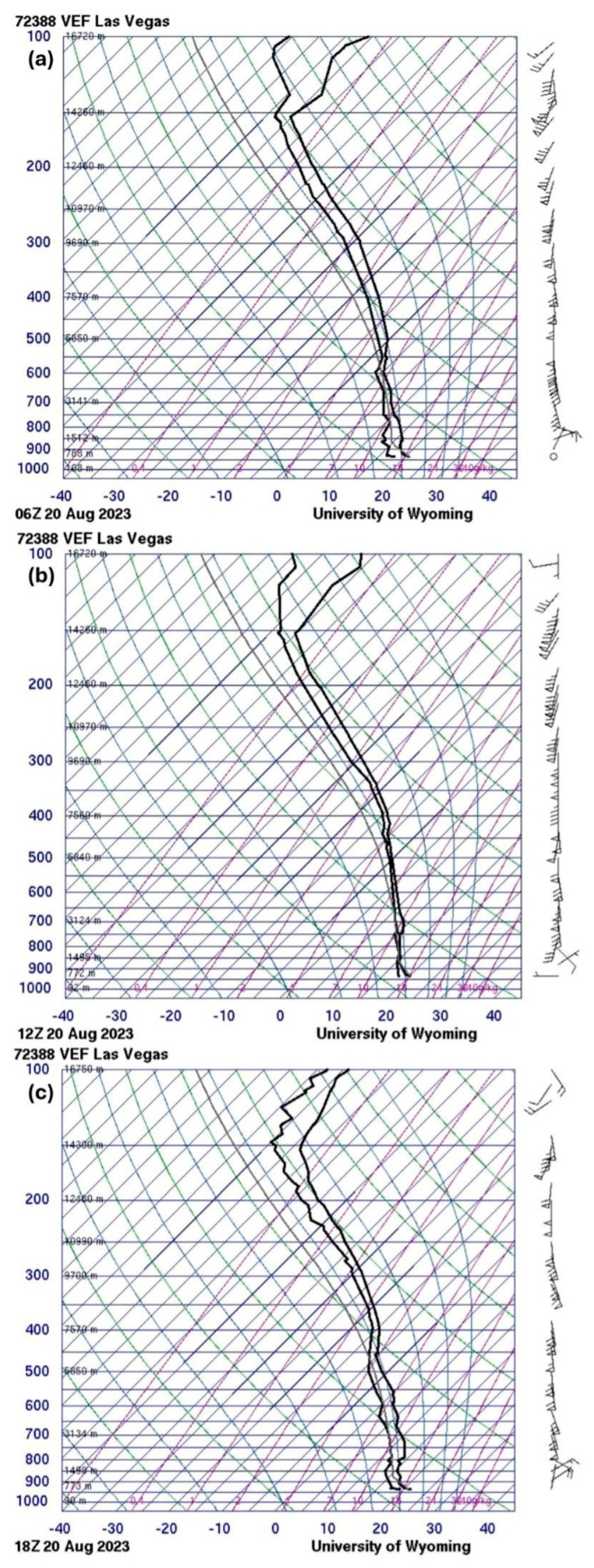
Figure 9 depicts observational soundings for Las Vegas, NV (VEF), valid at 0600 UTC (9a), 1200 UTC (9b), and 1800 UTC (9c) on 20 August 2023. In
Figure 9a, wind speed increases with height, but has a northeasterly component near the surface before veering sharply to a southerly flow aloft. In
Figure 9b, the mid-level jet becomes visible as it strengthens and propagates over VEF. The southerly wind velocity increases vertically from approximately 800 hPa to 600 hPa before decreasing above 600 hPa. This distinguishes the upper-level jet from the mid-level jet, as above 275 hPa, another maximum exists. However, in
Figure 9c, the mid-level jet has merged with the outflow of TC Hilary propagating over land.
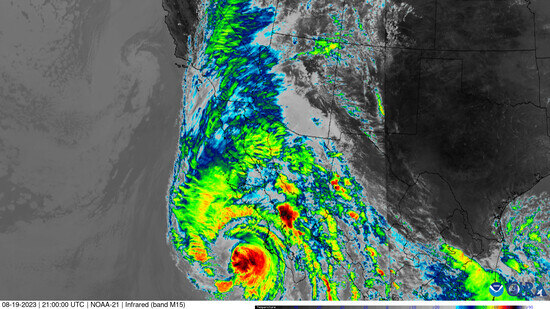
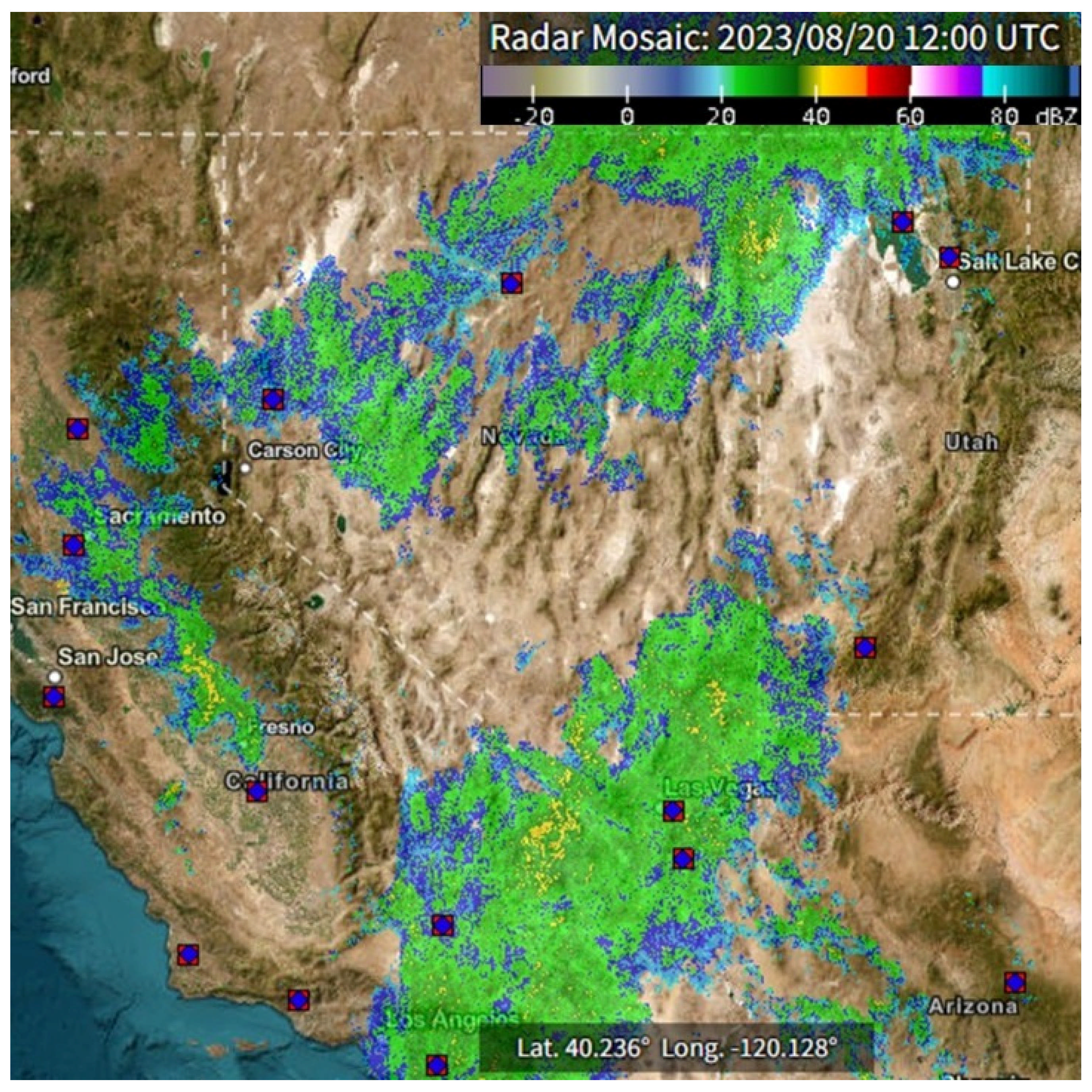
Figure 10, at 1200 UTC 20 August, depicts several MCSs in the radar reflectivity. Most notably, two separate MCSs are present near Las Vegas, NV (i.e., one poleward and another equatorward as indicated by the core reflectivity values of ~40 dBZ). As these MCSs propagate through the region, significant rainfall occurs which is physically separate from the TC Hilary circulation. Additionally, MCSs are located over Fresno, CA, north-central NV, and northwestern UT. Due to the mid-level jet, the environment is conducive for MCSs to form as it facilitates the advection of tropical moisture > 1000 km poleward of the TC remnants. This is consistent with the VEF soundings in
Figure 9 which depict deep layers of near-saturation conditions and moist neutrality. Analysis of the mid-level jet and a validation of the simulation will be shown in the following section.
4.2. Simulated Analyses
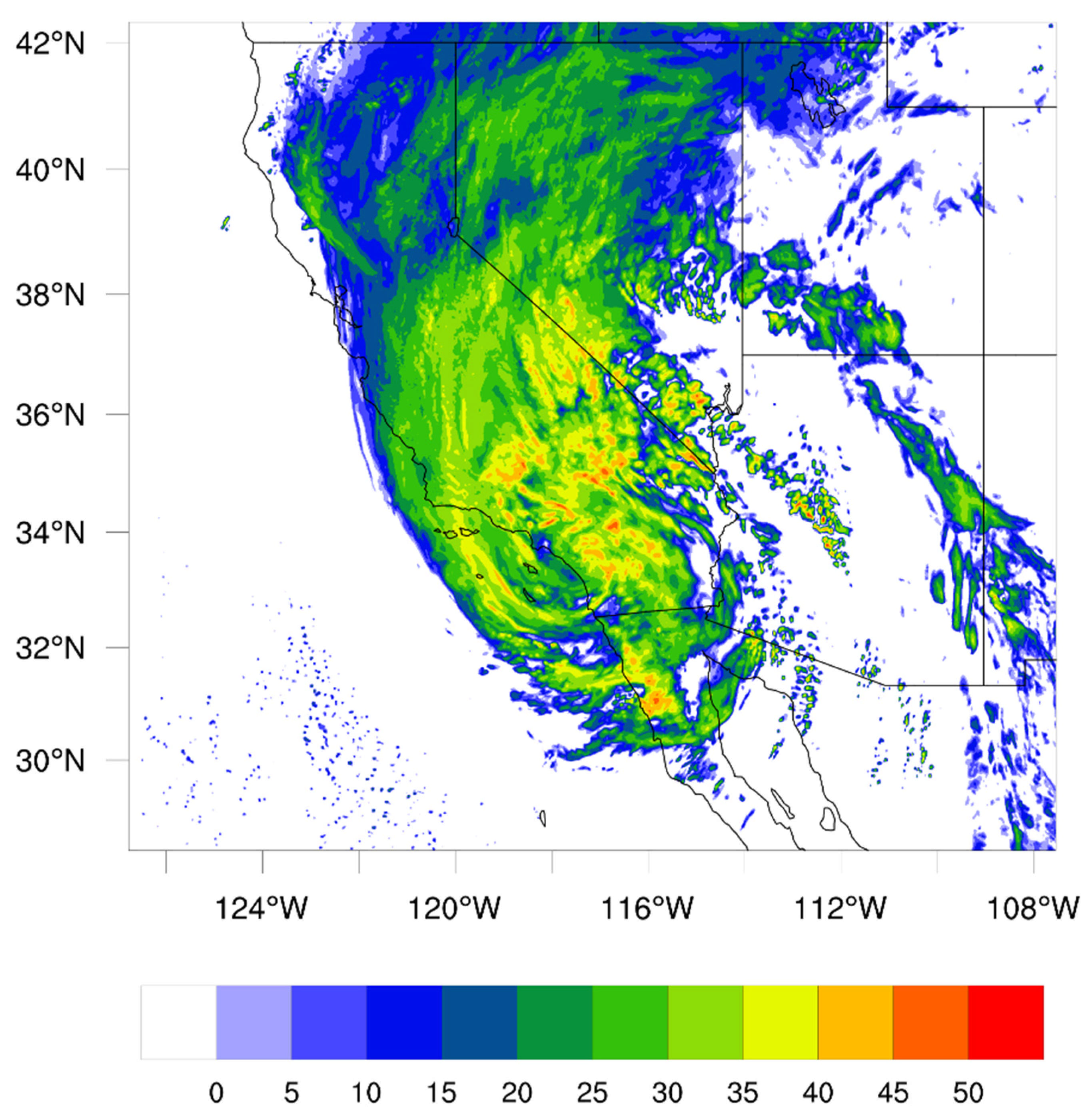
Figure 11 shows the simulated WRF-ARW reflectivity valid at 1200 UTC 20 August. Representative MCSs over north-central CA, north-central NV, and Las Vegas, NV, into southern CA are shown in the simulation. When compared to
Figure 10 observations, the MCS over Las Vegas, NV, and in nearby CA are represented well in terms of location, time, and intensity, i.e., ~45 dBZ. Additionally, in northern NV, broader MCSs with similar reflectivity values are shown, consistent with observations and in proximity to the mid-level jet.
Surface heating in the lower Great Basin region of southwestern UT and eastern NV significantly impacts the formation of the mid-level jet.
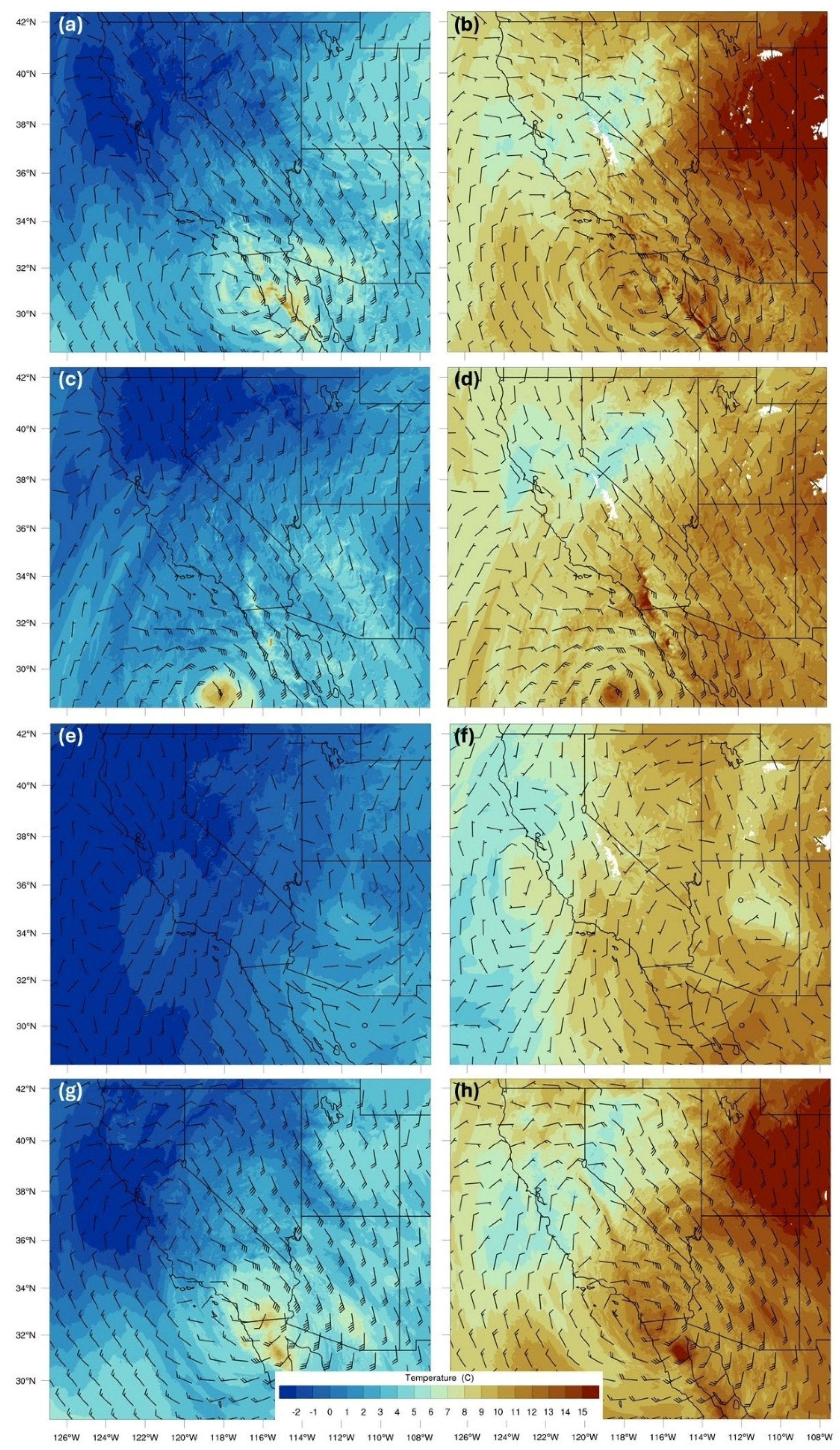
Figure 12 investigates the thermodynamics and wind speed/direction through the low (700 hPa) and mid levels (600 hPa) of the troposphere, valid at 0600 UTC 20 August. Note the larger-scale inverted trough over northern CA and its associated cold pool. This cold pool creates a broad temperature gradient from western CA to western UT, ~12 degrees C/400 km at 600 hPa. The wind profile at 600 hPa indicates a south-southeasterly flow near Las Vegas, NV, while the flow turns more southerly poleward. Shown in
Figure 12b (700 hPa), the initiation of the mid-level jet appears near Las Vegas, NV, in proximity to the 10-degree C/100 km gradient extending from central to eastern NV. Furthermore, with the winds increasing in intensity above 700 hPa to 600 hPa, a separate circulation exists in the mid levels. However, in the NHMFL simulation (
Figure 12c) at 600 hPa, the alignment of the cold pool in northern CA extends further east into northwestern NV. As a result, the pre-existing temperature gradient over central NV becomes less evident. Due to the lack of heat and moisture fluxes over land, the wind speed decreases from ~ 30 ms
−1 to 15 ms
−1.
Figure 12d shows even weaker winds with a more uniform distribution of temperature over the central U.S. When the heat and moisture fluxes are eliminated over land and ocean (simulation NHMFLO,
Figure 12e,f), a completely different synoptic/sub-synoptic simulated atmosphere exists with sub-synoptic fictitious circulations, the lack of TC Hilary, as well as a nonexistent mid-level jet. In
Figure 12g,h, in the ST simulation, wind speeds increase across the continental U.S. because of less friction from the complex topography, allowing for less restricted passage of the TC remnant circulation/expansion. The significant temperature gradient still exists over central NV in
Figure 12h. However, due to the smooth terrain, the mid-level jet has no time to form before the expansion of the TC remnant circulation as it moves poleward. Therefore, no distinction between the mid-level and outflow jet from the TC circulation can be made, which is inconsistent with the observations.
Significant mid-level jet moisture transport can be found in the mid to lower levels of the troposphere.
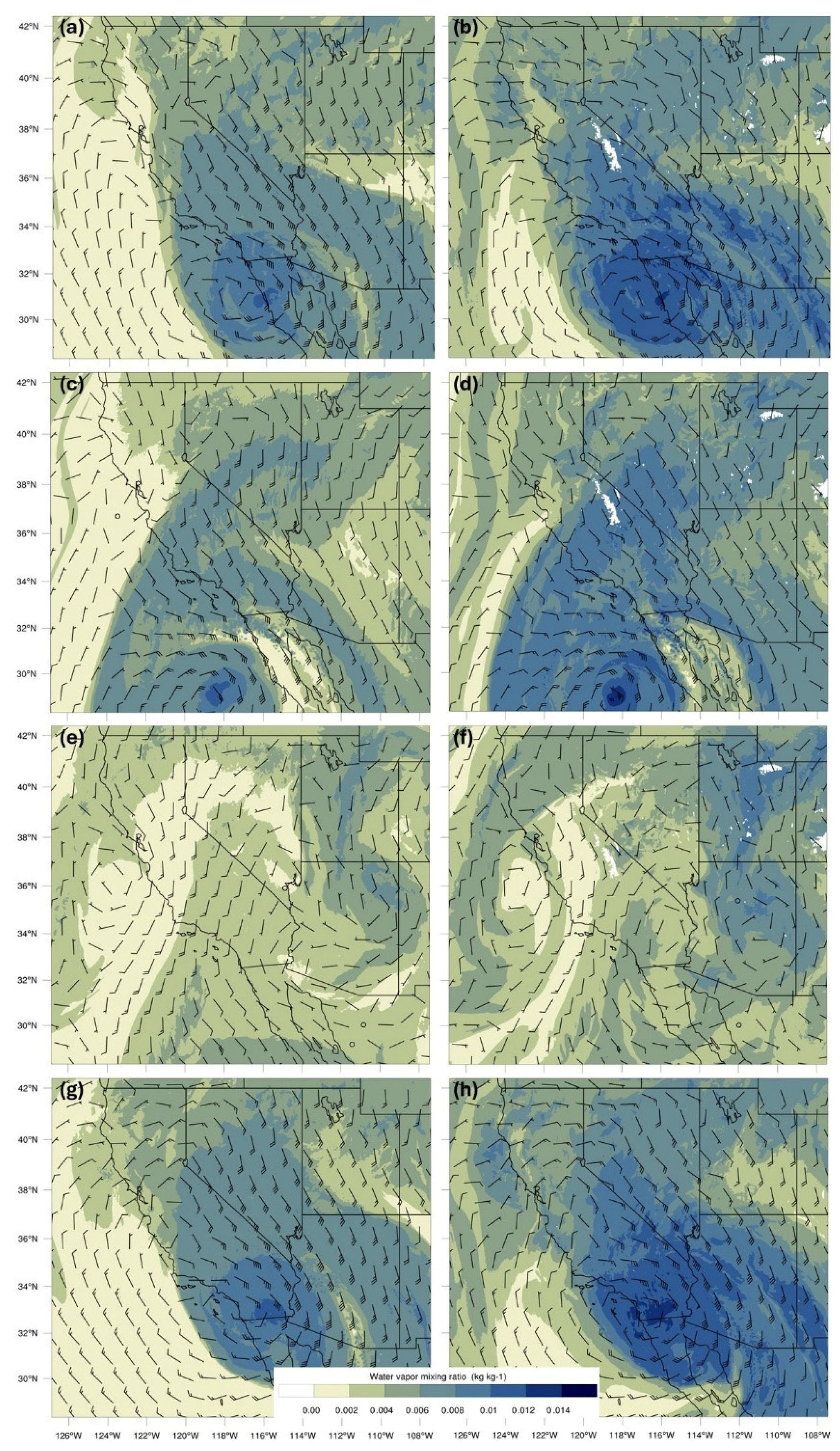
Figure 13 shows the corresponding water vapor mixing ratio (Qv) for the same time, 0600 UTC 20 August, for 600 hPa and 700 hPa as well as wind barbs discussed in
Figure 12. Comparing
Figure 13a–d (CTRL vs. NHMFL simulation) shows how primarily the heat and moisture fluxes affect the Qv concentration over the Great Basin. Along the southern NV and CA border, a decrease in wind speed and lack of Qv are evident. However, at the 700 hPa level,
Figure 13b shows a more significant concentration of Qv over central and southern NV, collocating well with the maximum temperature gradient in
Figure 12b. However, the NHMFL simulation in
Figure 13d shows an anomalous concentration of Qv over central and southern NV with slower wind velocities. This anomalous Qv concentration is attributable to the weak, dry frontal confluence zone diagonally located in the Bay Region of northern CA and extending southwestward deep into the Pacific Ocean, which forces Qv convergence.
Figure 13e,f show a drastically different spread of Qv compared to the CTRL (
Figure 13a,b). With the lack of heat and moisture fluxes over land and ocean (NHMFLO), incoming tropical moisture is negligible while pre-existing moisture over UT and AZ. is unchanged. In the ST simulation (
Figure 13g,h), Qv magnitudes change minimally within the 600–700 hPa layer, but because of less terrain impact in this simulation, the Qv envelope slightly expands.
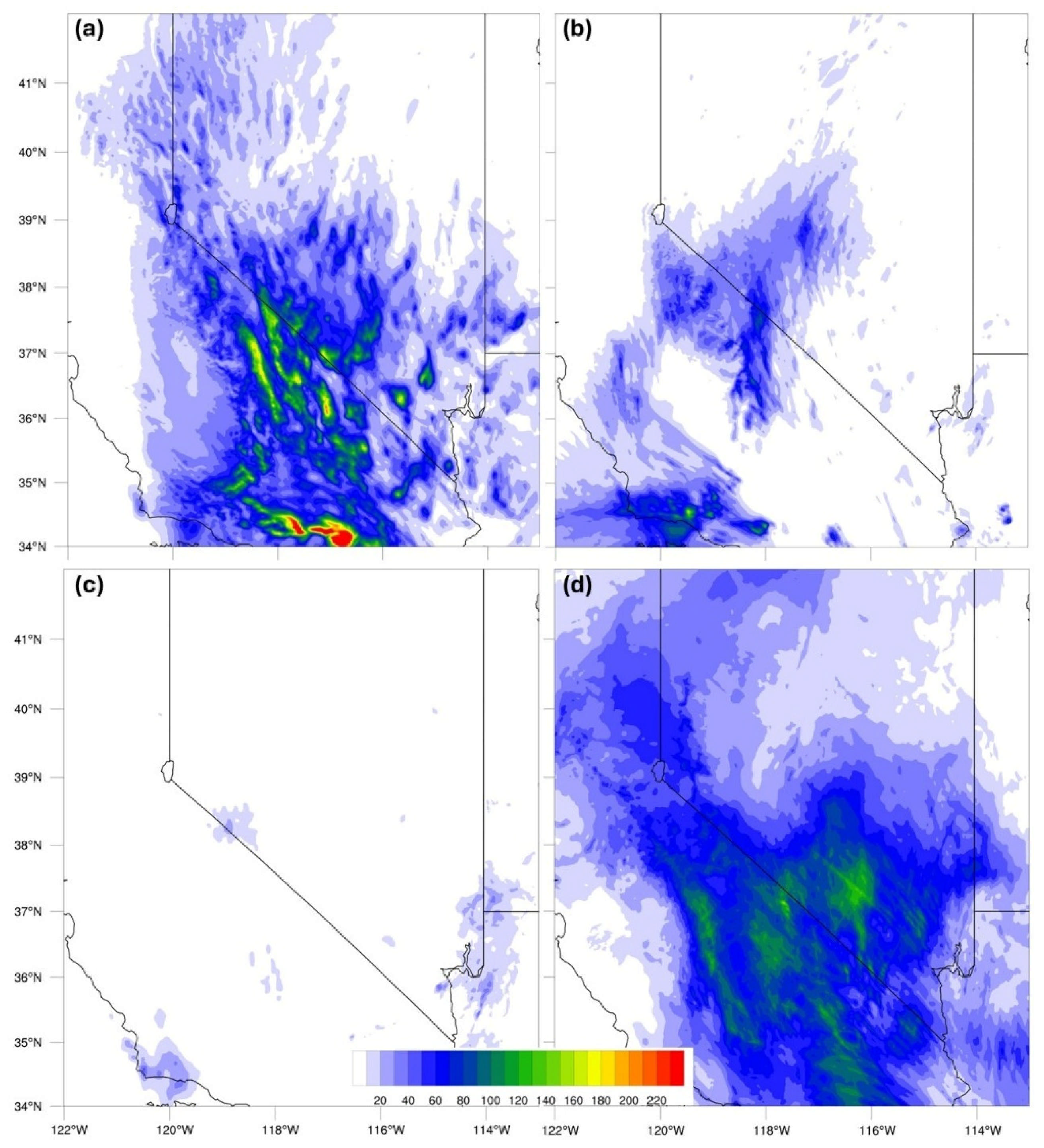
From the accumulated rainfall analysis (
Figure 14a), it is evident that the CTRL case gives an adequate representation of the amount of rainfall and the spread of values compared to observations (
Figure 4) for the period 2100 UTC 19 August to 2100 UTC 20 August. However, in the NHMFL simulation (
Figure 14b), a significant decrease in rainfall exists due to the lack of MCSs caused by lower-mid tropospheric mass and moisture flux diffluence over land resulting from the absence of the mid-level jet. Therefore, it is evident that an important interaction exists between surface heat fluxes and the rainfall associated with the MCSs or the lack thereof along the boundary of the maximum temperature gradient. In the NHMFLO simulation (
Figure 14c), without the tropical moisture being advected into the region, no significant rainfall can occur, demonstrating the importance of heat and moisture fluxes over land and ocean to inland precipitation. For the ST simulation (
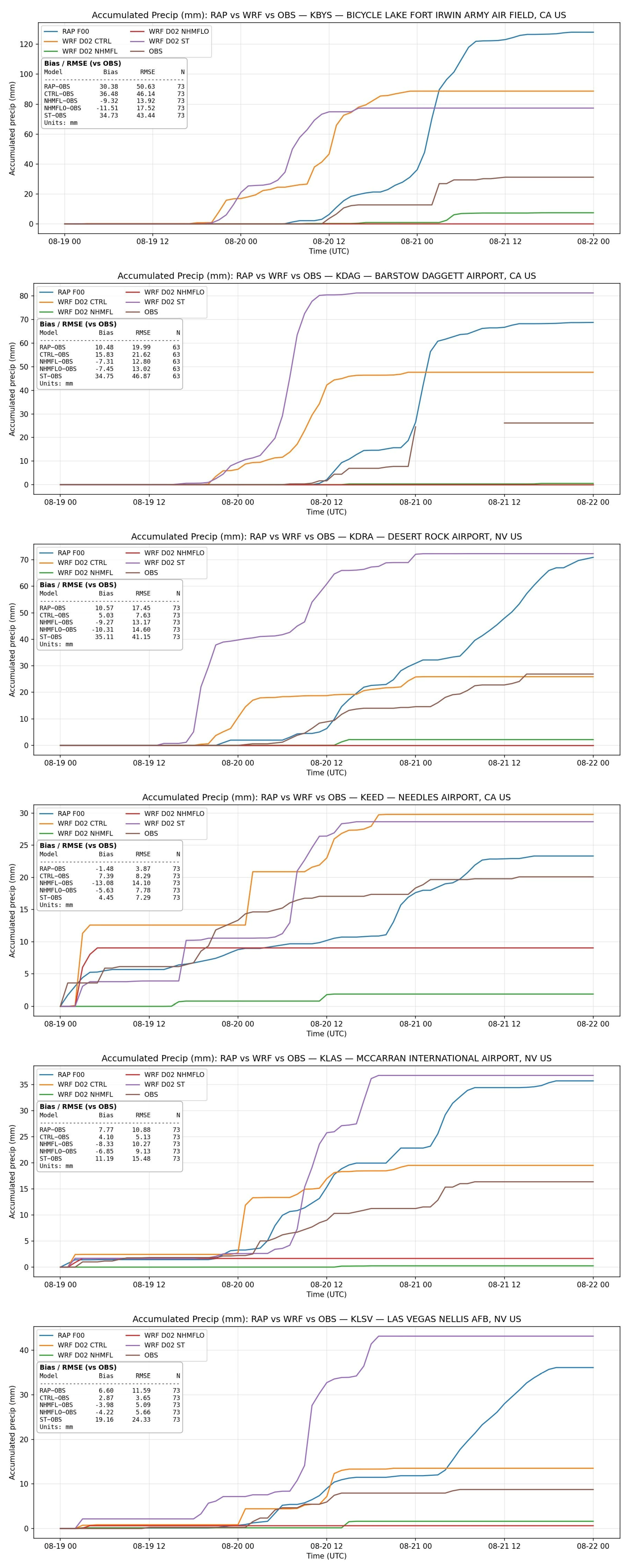
Figure 14d), an overall decrease in precipitation among local mountainous regions exists due to the lower terrain heights even though the spread of Qv extends wider than the CTRL. Without the orographic lifting effects on air parcels, less rainfall is simulated. For ASOS/METAR station analyses of accumulated precipitation, please refer to
Appendix A,
Figure A1.
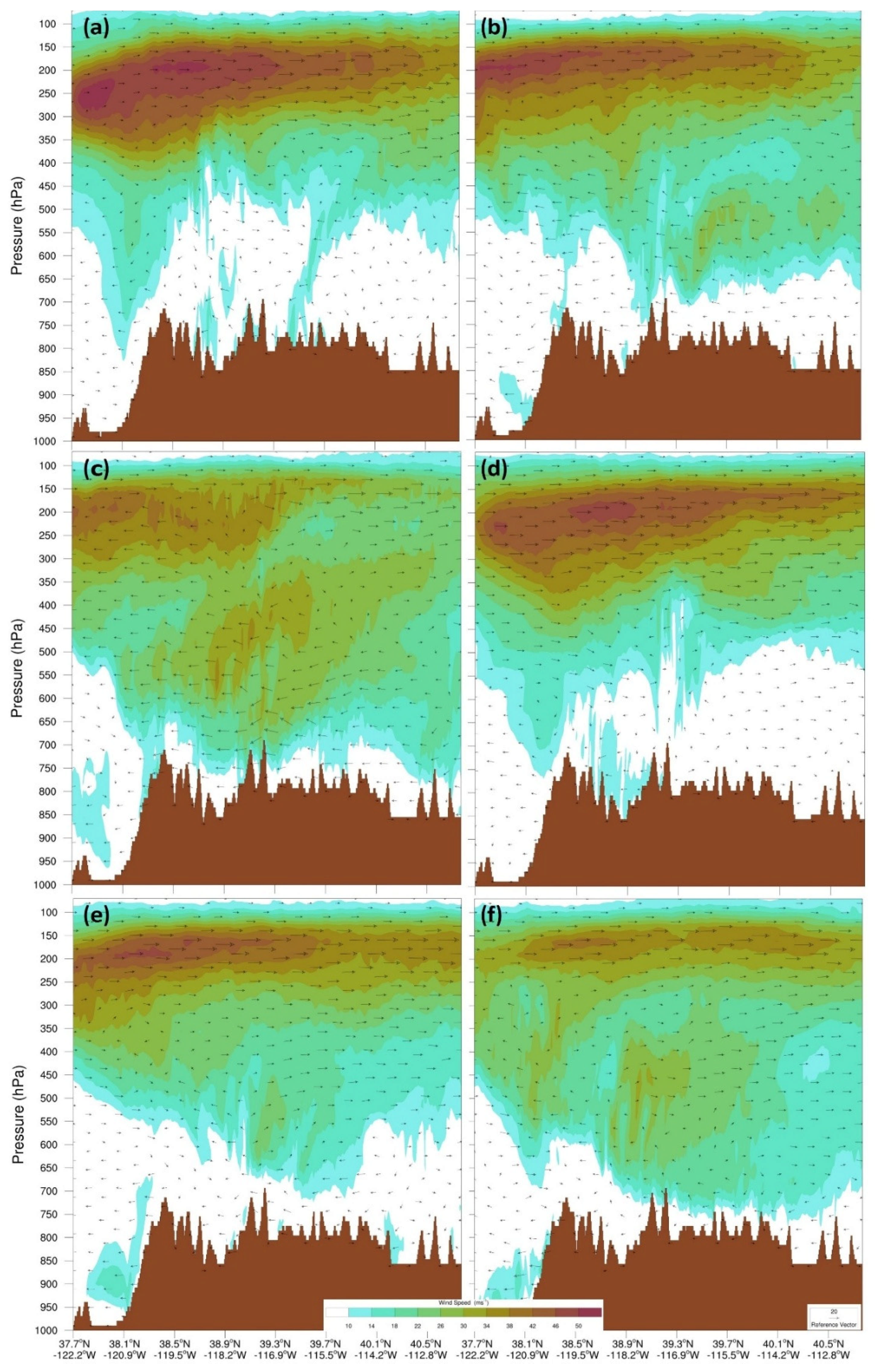
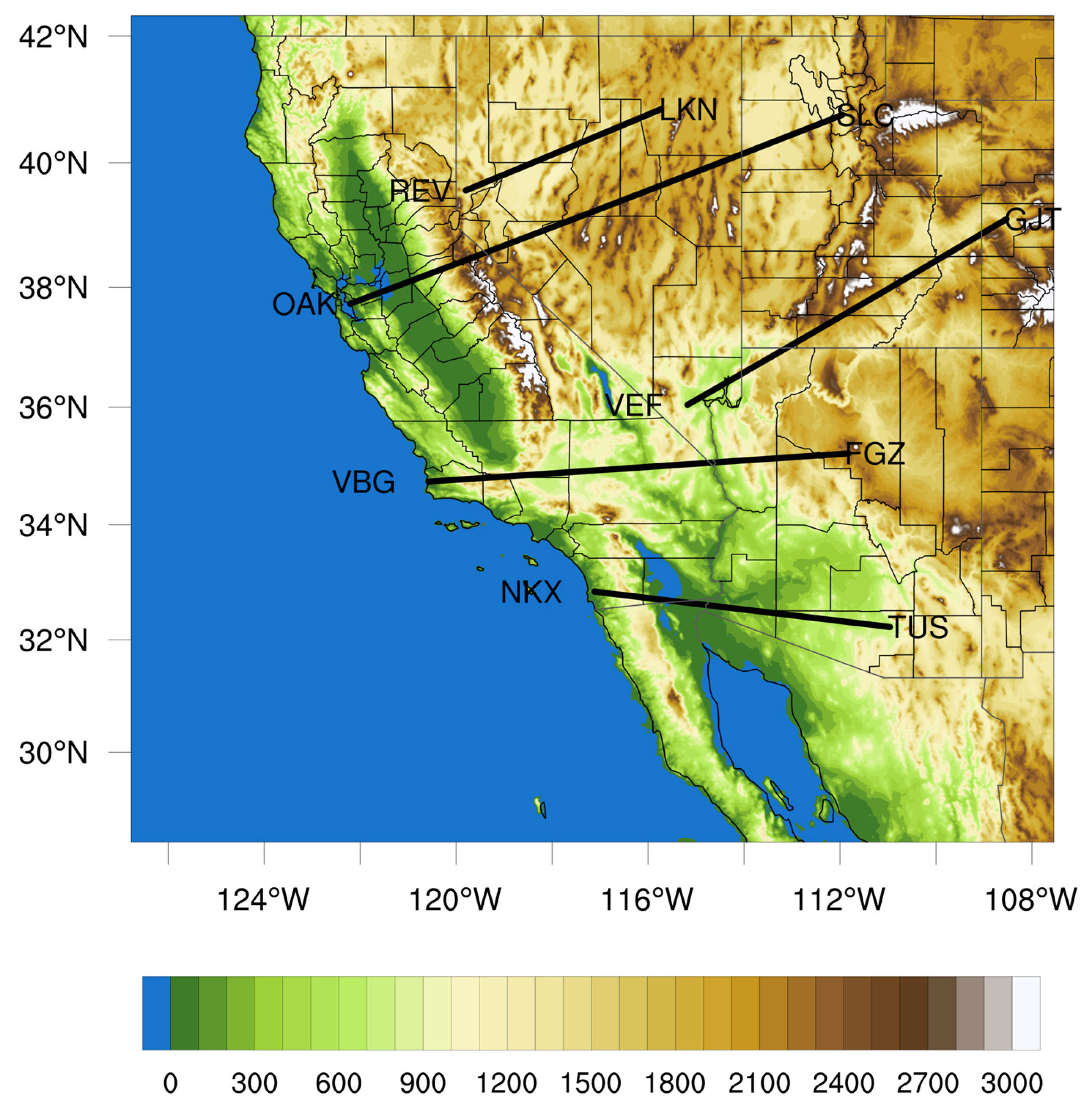
Figure 15 shows the model terrain height m along with five cross-sections: Reno, NV (REV), to Elko, NV (LKN); Oakland, CA (OAK), to Salt Lake City, UT (SLC); Las Vegas, NV (VEF), to Grand Junction, CO (GJT); Vandenburg, CA (VBG), to Flagstaff, AZ (FGZ); and San Diego, CA (NKX), to Tucson, AZ (TUS). Within central and southern NV, the terrain heights are heterogeneous due to localized mountain ranges. The most impactful cross-sections from the CTRL and NHMFL simulations are OAK to SLC and VBG to FGZ.
Figure 16 shows the OAK to SLC cross-section of wind speed and vectors. Panels a–c represent the CTRL while d-f represent the NHMFL valid for 0000 UTC, 0600 UTC, and 1200 UTC 20 August for panels a–c and d–f, respectively. In
Figure 16a, the CTRL simulation captures the various MPS circulations (40.1° N, −114.2° W) to (40.5° N, −112.8° W), (39.3° N, −116.9° W) to (39.7° N, −115.5° W), and centered at (38.9° N, −116.9° W). With these MPS circulations, the upward motion induced by surface heating exists prior to the formation of the mid-level jet. Six hours later, jetogenesis begins from 500–600 hPa and strengthens to wind velocities ~38 ms
−1 in
Figure 16c. The NHMFL simulation shows substantially different results. The various MPS circulations do not exist and a notable change in wind direction occurs below 450 hPa (
Figure 16d). With time, mid-level jetogenesis occurs within an upward motion region of the large-scale MPS. However, this feature is inconsistent with the observational wind speed/direction analysis in
Figure 16e.
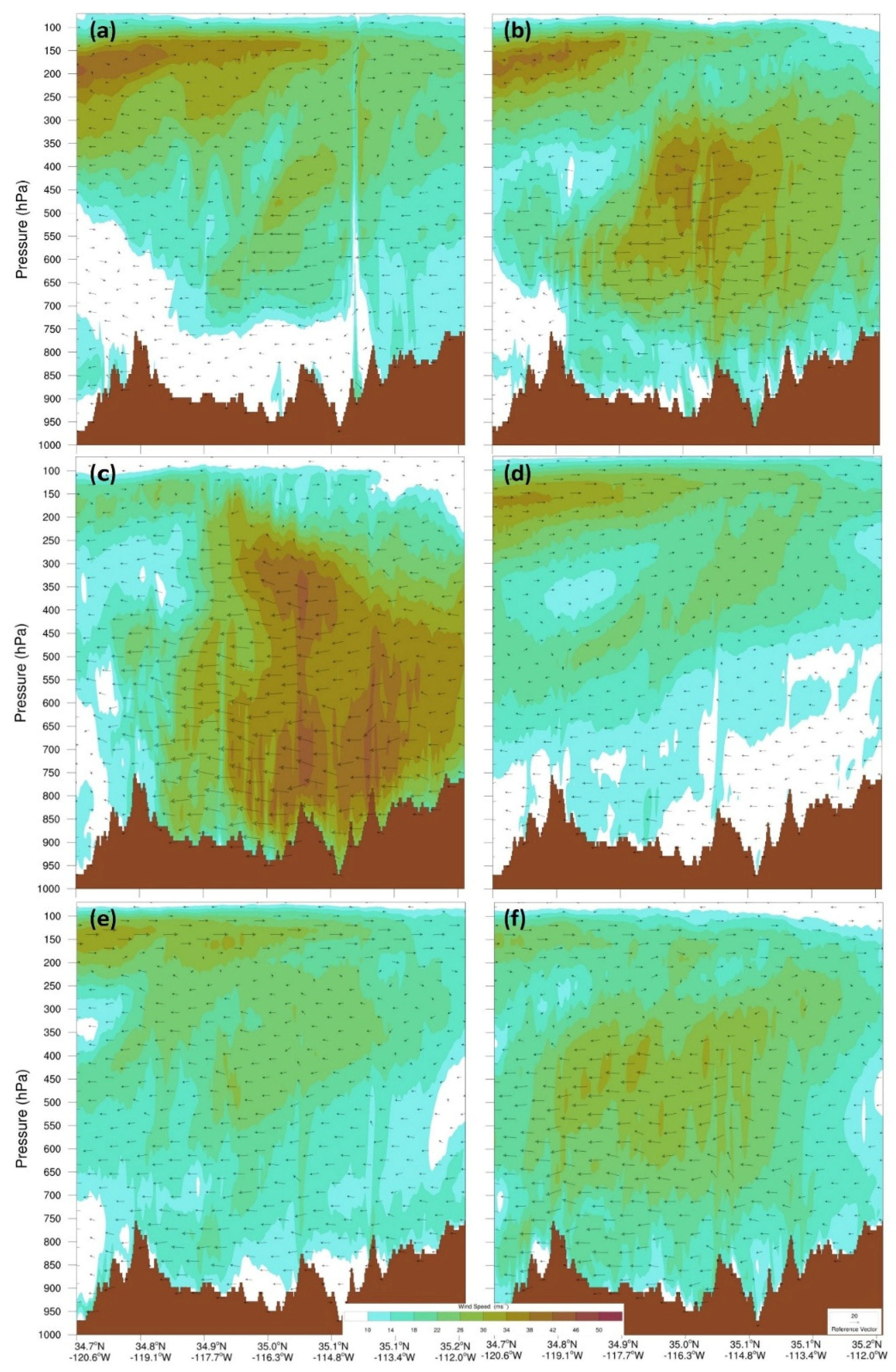
Figure 17 shows the VBG to FGZ cross-section depicting the same times and variables as
Figure 16. Since this cross-section is at a lower latitude than OAK to SLC, the mid-level jet transects this cross-section earlier in
Figure 17a (CTRL). The mid-level jet rapidly increases in both size and magnitude in
Figure 17b. By 1200 UTC 20 August (
Figure 17c), the mid-level jet has intensified to 46 ms
−1 and extended to the surface as it begins interacting with the TC remnant circulation’s outer bands. In the NHMFL simulation, jetogenesis fails to initiate in
Figure 17d, with nearly unsheared flow below 600 hPa. By 0600 UTC 20 August, an extension of the upper-level jet begins descending but lacks magnitude and heterogeneity within the mid-levels. By 1200 UTC 20 August, the upper-level jet exits the region, leaving an ambiguous mid-level jet circulation, but compared to
Figure 17c, the scale and magnitude of the mid-level jet are different. This supports the importance of the heat and moisture fluxes priming the environment for significant jetogenesis. Without heat and moisture fluxes, the simulated mid-level jet differs from the observed jet, forming by a different mechanism and not extending to the surface.
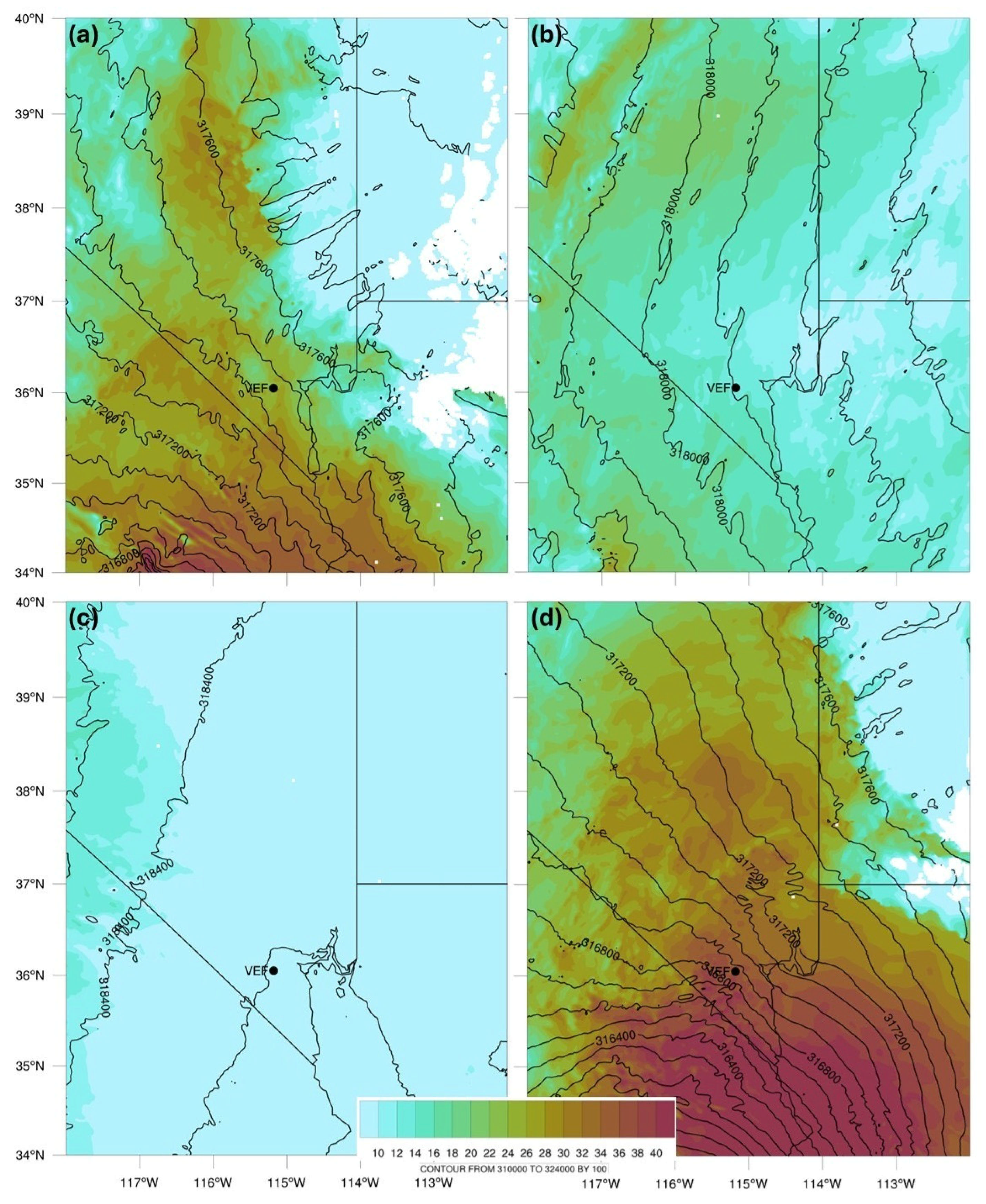
Figure 18 depicts the vertical profile of the 316 K isentrope over eastern NV into western UT and western AZ. This is valid at 0600 UTC 20 August for all cases: CTRL, NHMFL, NHMFLO, and ST. Pressure (hPa) is shaded, and relative humidity is in contoured %.
Figure 18a shows the pressure differences on the 316 K surface. Over central NV, the isentrope varies little with an average pressure of ~575 hPa. In line with the heated regions of the Great Basin, the isentrope descends substantially over eastern NV in less than 10 km, and the pressure changes from ~575 hPa to ~725 hPa, which induces mid-level jetogenesis through a significant horizontal pressure gradient on the sloping isentropic surface. RH also increases by 40% on that sloping isentrope, which is associated with simulated convective activity because of the increase in dewpoint temperatures. The NHMFL simulation in
Figure 18b exhibits a much weaker pressure gradient along the isentrope while maintaining larger RH values over central NV. The pressure gradient of 25 hPa/10 km over central NV is significantly smaller than that of the CTRL and more importantly is oriented nearly perpendicular to the CTRL gradient. Further modification of the heat and moisture fluxes (
Figure 18c), in NHMFLO, stabilizes the atmosphere more than the simulated atmosphere in
Figure 18b. Without heat and moisture fluxes, the atmosphere is closer to static stability rather than simulated convective instability. Pressure varies little over NV, southern CA, western AZ, and UT, while the RH plume reverses its structure compared to the CTRL.
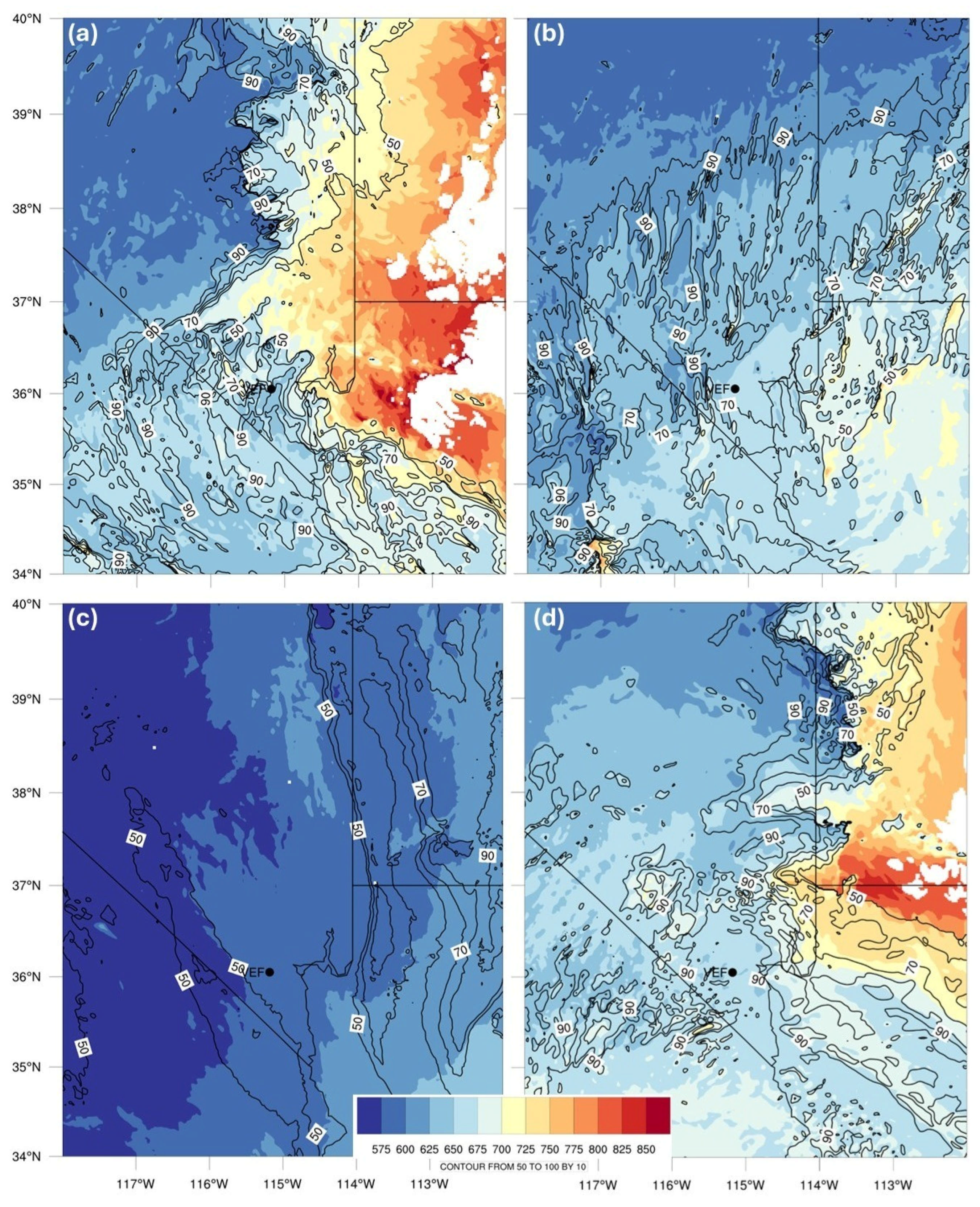
Figure 18d depicts the ST simulation atmosphere which can be compared to the CTRL. Higher-magnitude RH is simulated over central NV while a substantial yet more localized pressure gradient of ~575 hPa to ~750 hPa in 100 km has formed over western UT. Inferences can be made regarding the effects of complex terrain on the interactions of the mid-level jet.
Figure 19 shows wind velocity (shading in ms
−1) and the Montgomery Stream Function (contours of ψ in m
2s
−2) for all simulated 316 K isentropes valid at 0600 UTC 20 August.
Figure 20a depicts the consequences of the significant pressure gradient, as in
Figure 18. The mid-level jet forms parallel to the maximum pressure gradient and can be distinguished from the TC remnant circulation as the jet contains wind velocity values of 32 ms
−1.
Figure 19b shows less variation in faster wind velocities with larger ψ values. Parallel to the perpendicular pressure gradient, seen in
Figure 18b, stronger wind velocities form and exhibit a bimodal circulation over western-central NV. However, the wind velocity decreases by 10 ms
−1 and is oriented diagonally to the observed jet. Consistent with the lack of heat and moisture fluxes over land, the TC remnant circulation falls apart faster after landfall. In
Figure 19c (NHMFLO), no mid-level jet feature exists, with even larger yet less varying values of ψ. In
Figure 19d, the smoothed terrain renders a faster-propagating TC remnant circulation with higher wind velocity values, ~36 ms
−1, but a less distinguishable mid-level jet. This is likely induced by considerably weaker orographic effects. Therefore, the complex terrain, surface heat fluxes, and moisture fluxes play significant roles in the formation, maintenance, and propagation of the mid-level jet.
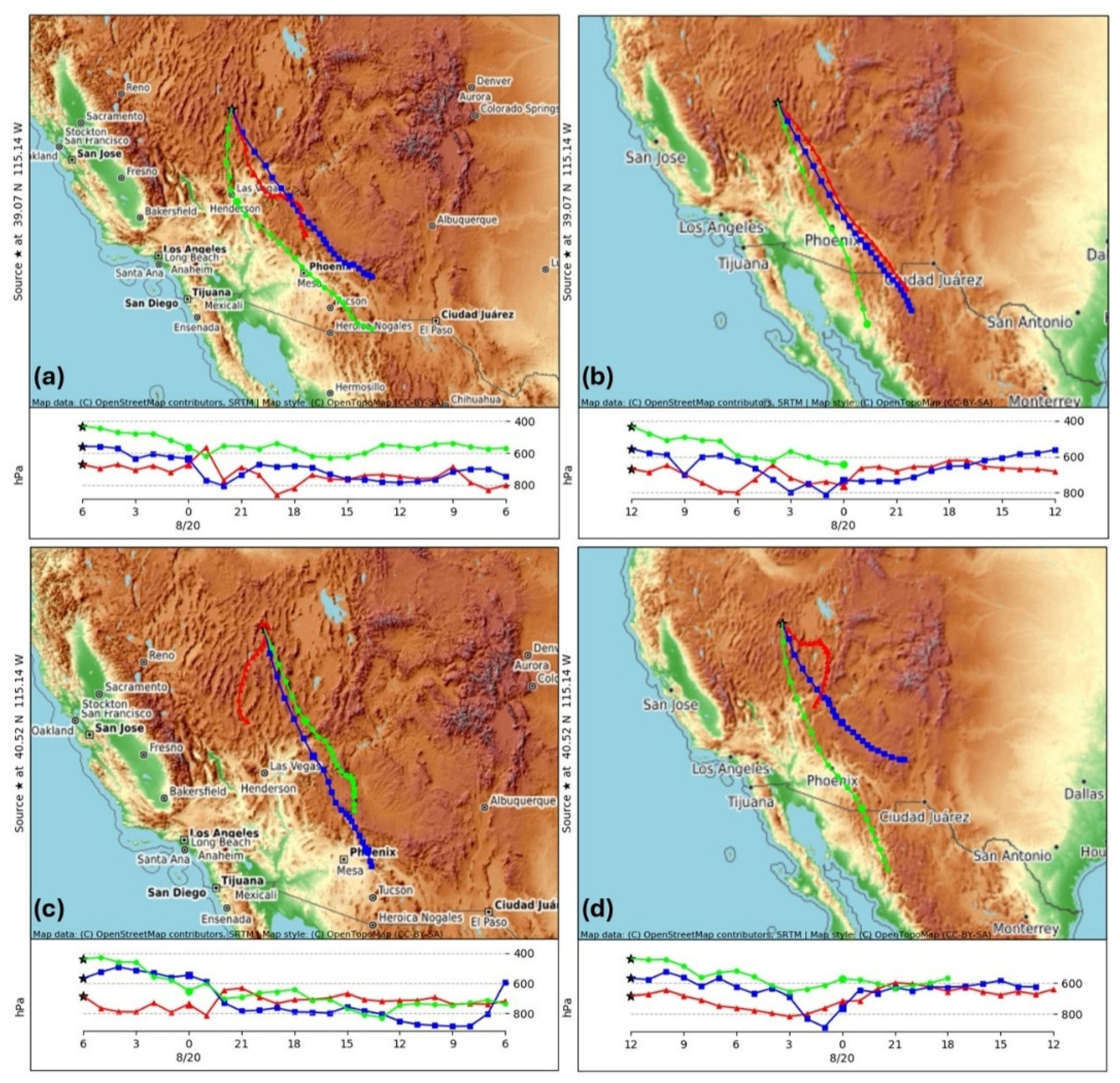
Figure 20 depicts the NOAA Hybrid Single-Particle Lagrangian Integrated Trajectory (HYSPLIT) model [
22] analysis of the WRF-ARW D02 simulation parcel transport.
Figure 20a,b show backward parcel trajectories for the location corresponding to ~322 km poleward of Las Vegas, NV, for 0600 UTC and 1200 UTC 20 August, respectively.
Figure 20c,d represent the location corresponding to ~483 km poleward of Las Vegas, NV. In addition, the backward trajectories are constrained to fit the previous 24 h. The air parcels were released at altitudes of 1.5 km-AGL (red), 3 km-AGL (blue), and 5 km-AGL (green) which roughly represent 700–425 hPa for
Figure 20. For geographical locations, refer to
Appendix A,
Figure A2.
Figure 20a indicates that the air parcels released in the 600–700 hPa layer originate from central AZ, while the 425 hPa air parcel originates from southern AZ. Tracing back the red and blue contours from the final position above Las Vegas, NV, shows the air parcels accelerating northwestward from western AZ to central NV. Prior to 2200 UTC 19 August, the air parcels were oscillating in proximity to the 750 hPa layer. However, near the time of jetogenesis, the air parcels are lifted to the 650–600 hPa level and gain momentum as shown by the increased distance between data points nearing the star location. Similarly for the 5 km-AGL air parcel, as it approaches Las Vegas, NV, from the south, it accelerates and is lifted from ~600 hPa to ~425 hPa. Therefore, an interaction exists along the boundary of the cloud shield of the incoming TC circulation in conjunction with the elevated surface heating lifting the air parcels. Also, in
Figure 20b, the air parcels take a similar path but extend further equatorward into Mexico. By 1200 UTC 20 August, the mid-level jet had expanded with a wind velocity > 30 ms
−1. With the increased air parcel velocity, as traced back to 0000 UTC 20 August, the corresponding air parcels accelerate and rise rapidly with a displacement of nearly 200 hPa within 12 h towards the north-northwest.
Figure 20c indicates a slower and less varying air parcel near the 700 hPa level, as it moves from near 160 km poleward of Las Vegas, NV, to ~483 km poleward of Las Vegas, NV, within the previous 24 h. The 3 km-AGL and 5 km-AGL air parcels again originate near central AZ, with slower velocities until 2200 UTC 19 August. Although their direction remains unchanged, once air parcels cross the boundary of the maximum pressure gradient—marking the shift from stable desert to tropical airmass—they accelerate rapidly and rise ~200 hPa within eight hours. For
Figure 20d, the parcel released around the jetogenesis level, i.e., ~600 hPa, exhibits a clockwise turning in time, starting at 1300 UTC 19 August. Although the level at which the air parcel can be traced back in time and space does not vary prior to 0100 UTC 20 August, considerable ageostrophic forcing takes place in the change in direction of the air parcel as it traverses northwestward and accelerates at 0100 UTC 20 August, this time with a vertical displacement of ~275 hPa.
4.3. Ageostrophic Diagnostics
Consistent with Wolf and Johnson [
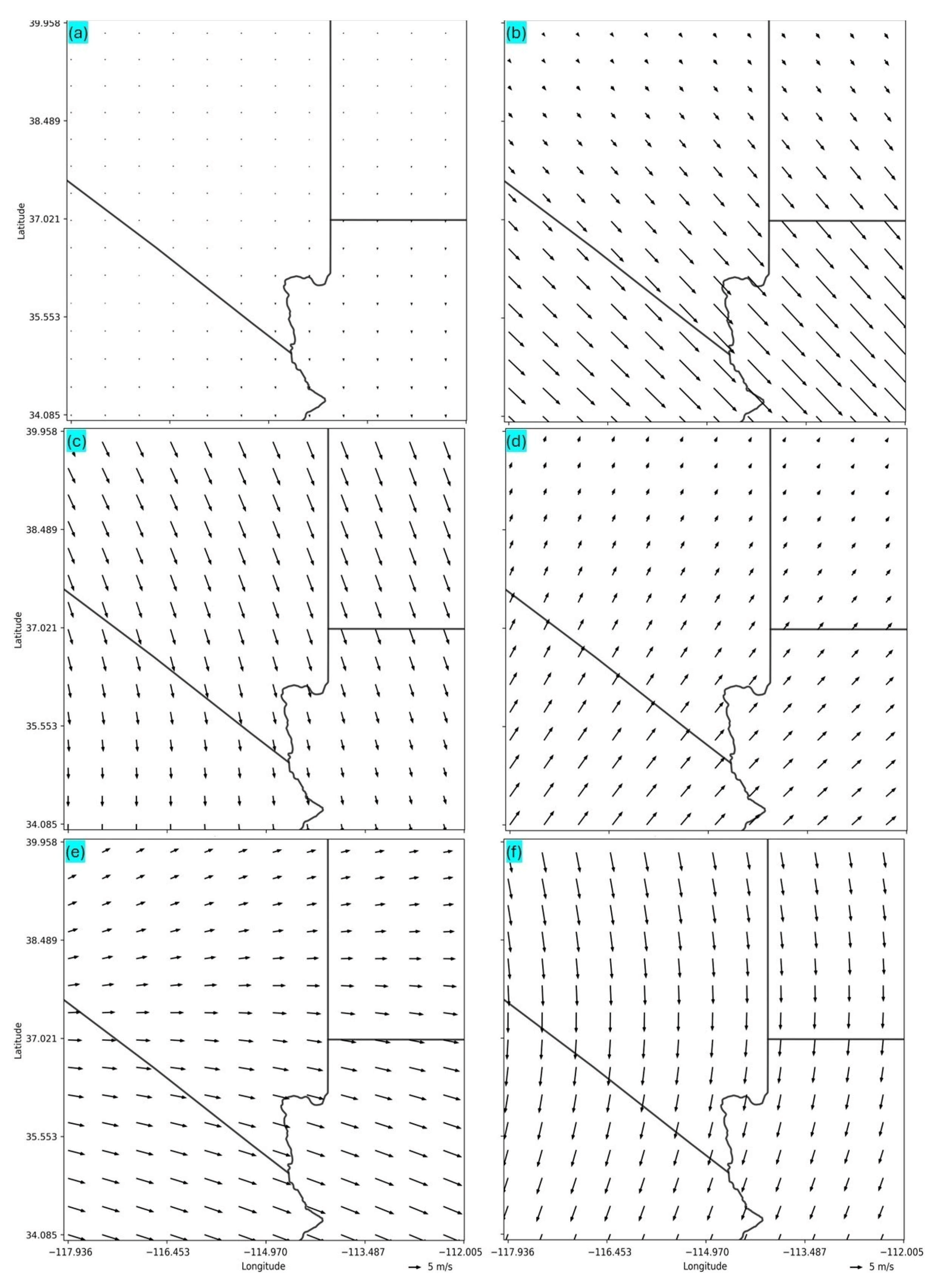
2], the ageostrophic motion of air parcels can be diagnosed to determine the relative impact of isallobaric, inertial advective, and inertial diabatic forcing functions on the formation and maintenance mechanisms of the mid-level jet. The isallobaric motion represents the portion of the ageostrophic wind arising from the time tendency of the horizontal pressure gradients in the isentropic coordinate system. For inertial advective motion, non-uniform spatial differences in geostrophic wind, i.e., differences in the actual wind from the geostrophic wind due to advection, dominate. For inertial diabatic ageostrophic motion, heating or cooling of the surface results in the forcing of air parcels to cross isentropic surfaces, resulting in an upward (downward) mass flux depending on the rising (sinking) motion of the air parcel relative to the isentropic level. A brief analysis of the individual ageostrophic wind forcing terms will be given for the CTRL, and the total ageostrophic motion for the CTRL and NHMFL simulations will be diagnosed. The following analysis will be given from D01, made simpler due to a smoother set of dependent variables.
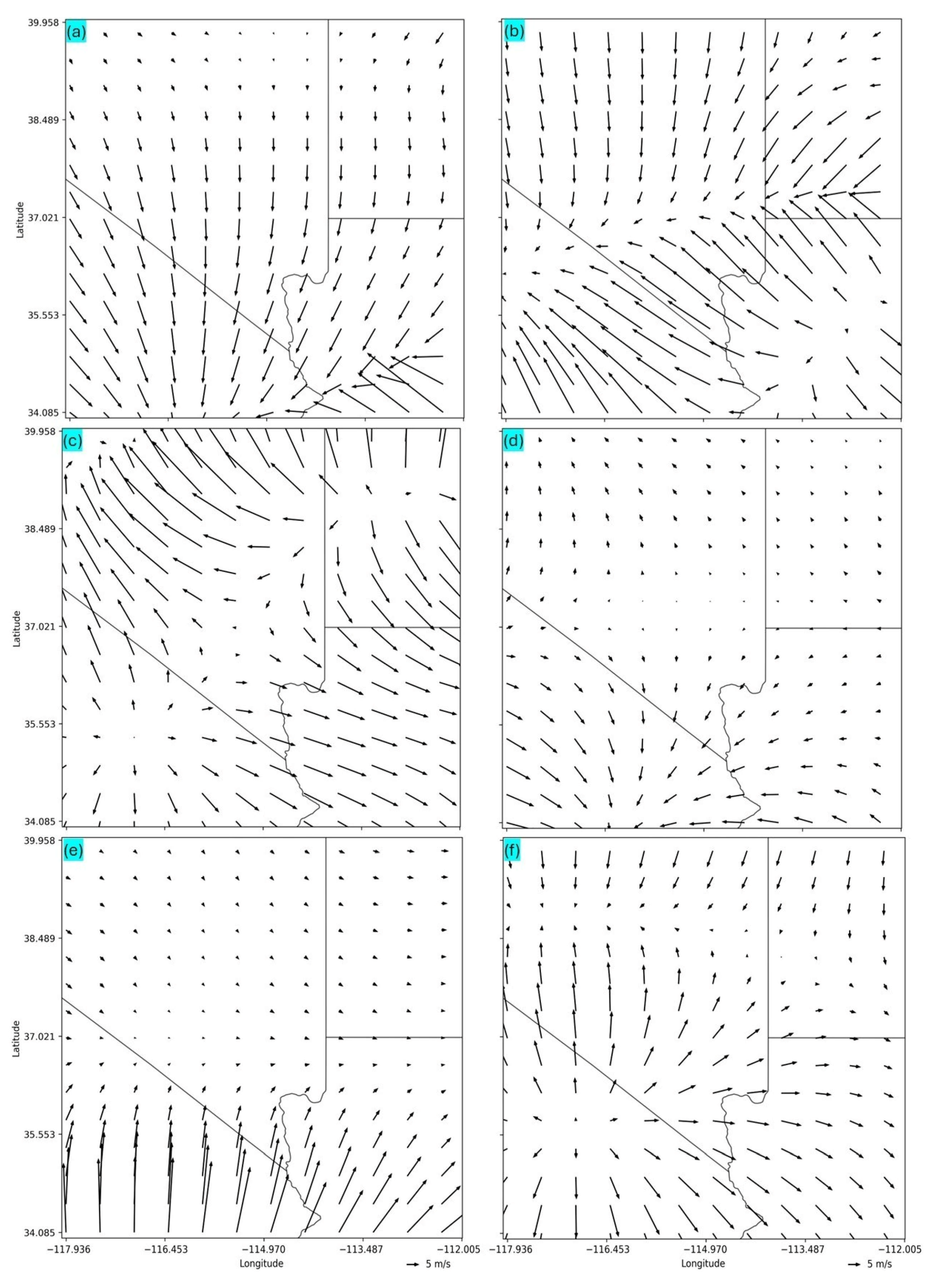
Figure 21 represents the isallobaric component (ms
−1) valid for 0600 UTC, 1200 UTC, and 1800 UTC 20 August depicted on the 308 K (low-level) (
Figure 21a–c) and 320 K (mid-level) isentropes (
Figure 21d–f) for the CTRL. At 0600 UTC 20 August, the isallobaric ageostrophic component is extremely weak across the 308 K isentrope. However, because of the vertical variation in the horizontal pressure gradient existing from west to east in
Figure 18, with time (
Figure 21b), the isallobaric component increases and is directed towards the steepest slope of the isentrope. In
Figure 21c, the isallobaric component shifts equatorward and isallobaric forcing accelerates air motion from 35.5° N to 35.95° N. This equatorward repositioning of isallobaric forcing is indicative of a strengthening east–west pressure gradient. However, on the 320 K isentrope (
Figure 21d), a moderate northeastward-directed isallobaric flow is found with accelerations diagonally across the domain. In
Figure 21e, the flow changes to be primarily eastward with near-constant velocity. By 1800 UTC 20 August, the mid-level isallobaric forcing of the air motion rotates primarily equatorward to south-southeast from northern NV to southeast CA. This mid-level flow shows weak acceleration and clockwise rotation over 12 h, indicating a strengthening high-pressure area on the 320 K surface due to mass convergence in the lower troposphere.
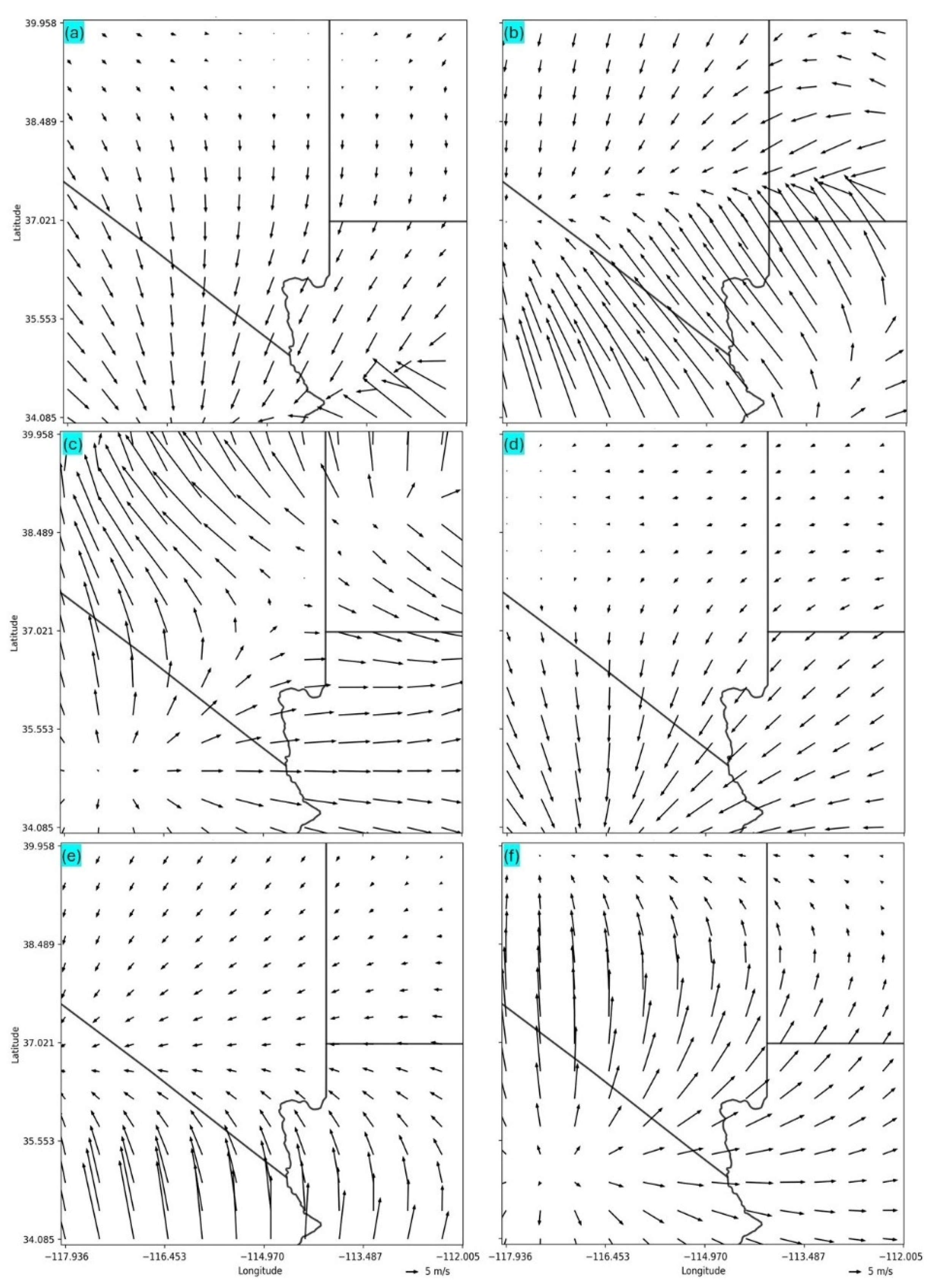
For inertial advective motion,
Figure 22 displays the same time intervals and isentropes in ms
−1 as those in
Figure 21. A weak inertial advective signal is shown in the northern portion of NV and western UT, but the inertial advective signal accelerates equatorward and begins to generate a line of convergence in western AZ. By 1200 UTC 20 August (
Figure 22b), the convergence zone has moved poleward, spanning much of southern CA, southern NV, and part of northwestern AZ, and extending into southwestern UT. A strong inertial advective signal exists, ranging from 20–30 ms
−1, which is displaced between convergence zones. Furthermore, a westward-directed inertial advective signal is also established in western UT. As convergence increases, air parcels ascend and accelerate, leading to a strengthening mid-level jet over time. By 1800 UTC 20 August (
Figure 22c), the stronger northwestward-directed inertial advective motion has propagated six degrees poleward, consistent with the propagation speed of the mid-level jet. On the 320 K isentrope, a similar sequence of inertial advective forcing to 308 K exists. However, the magnitude of the inertial advective term decreases on this isentrope because the influence of low-level forcing weakens vertically. This indicates that the mid-level jet developed from low-level forcing rather than direct upper-level jet forcing.
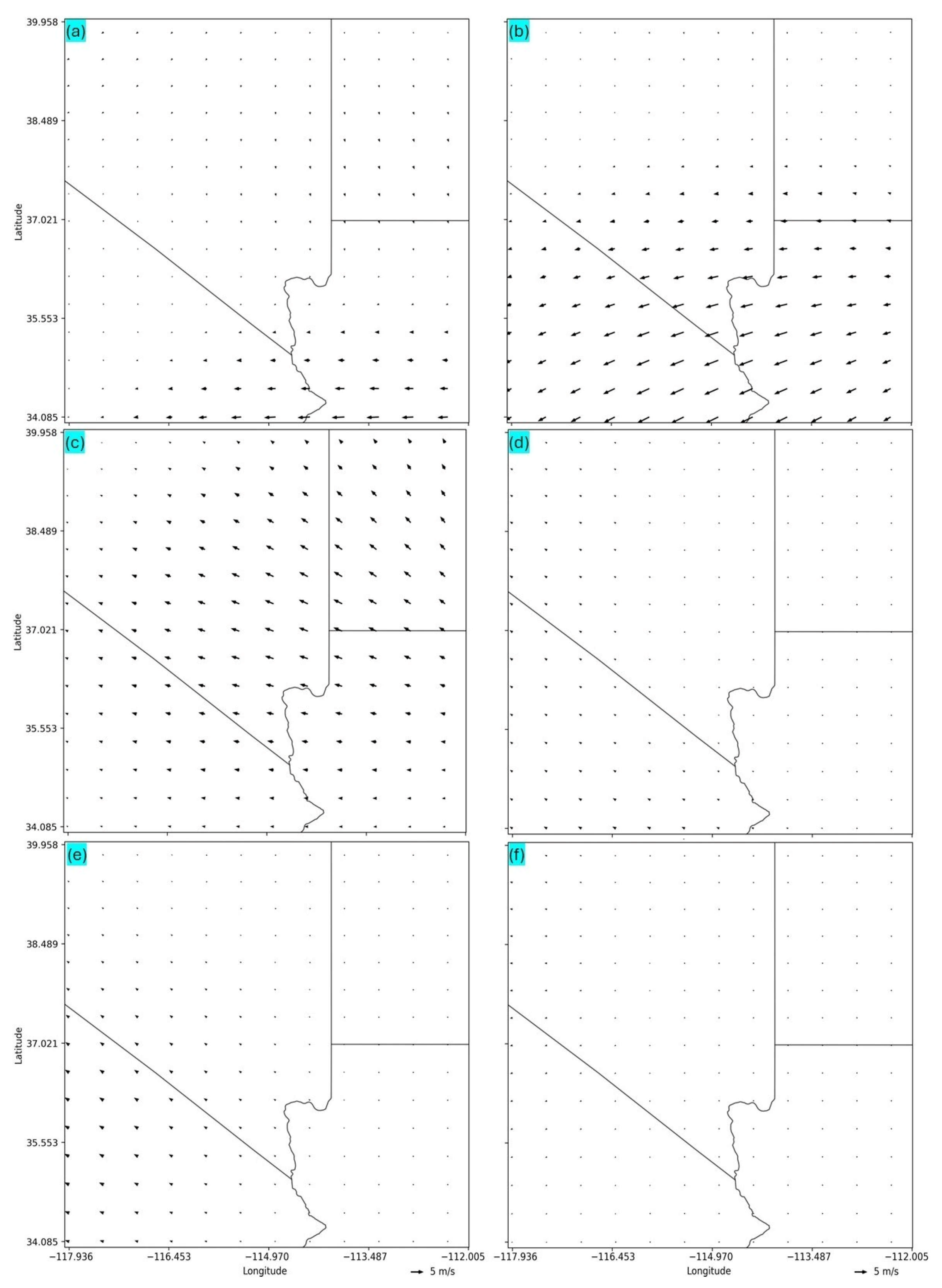
The final term is inertial diabatic forcing.
Figure 23 shows the same time periods and isentropes as the other terms.
Figure 23a initially shows negligible diabatic forcing on the 308 K isentrope poleward of 35.5° N, but equatorward inertial diabatic forcing begins to increase from east to west. Later in
Figure 23b, the inertial diabatic forcing propagated poleward into southern NV and encompasses most of southern CA and western AZ. The persistent east-to-west-directed inertial diabatic forcing highlights the significant role of elevated surface heating in the clear, warm, and dry desert regions to the east-northeast, in contrast to the relatively cloudy, cool, and humid regions influenced by the marine boundary layer to the west-southwest near the TC. In
Figure 23c, the inertial diabatic forcing has progressed and maximized near eastern NV and is directed into the mid-level jet. However, on the 320 K isentrope, the increased elevation reduces impacts from this term, as seen from negligible forcing through this 12 h period in
Figure 23d–f.
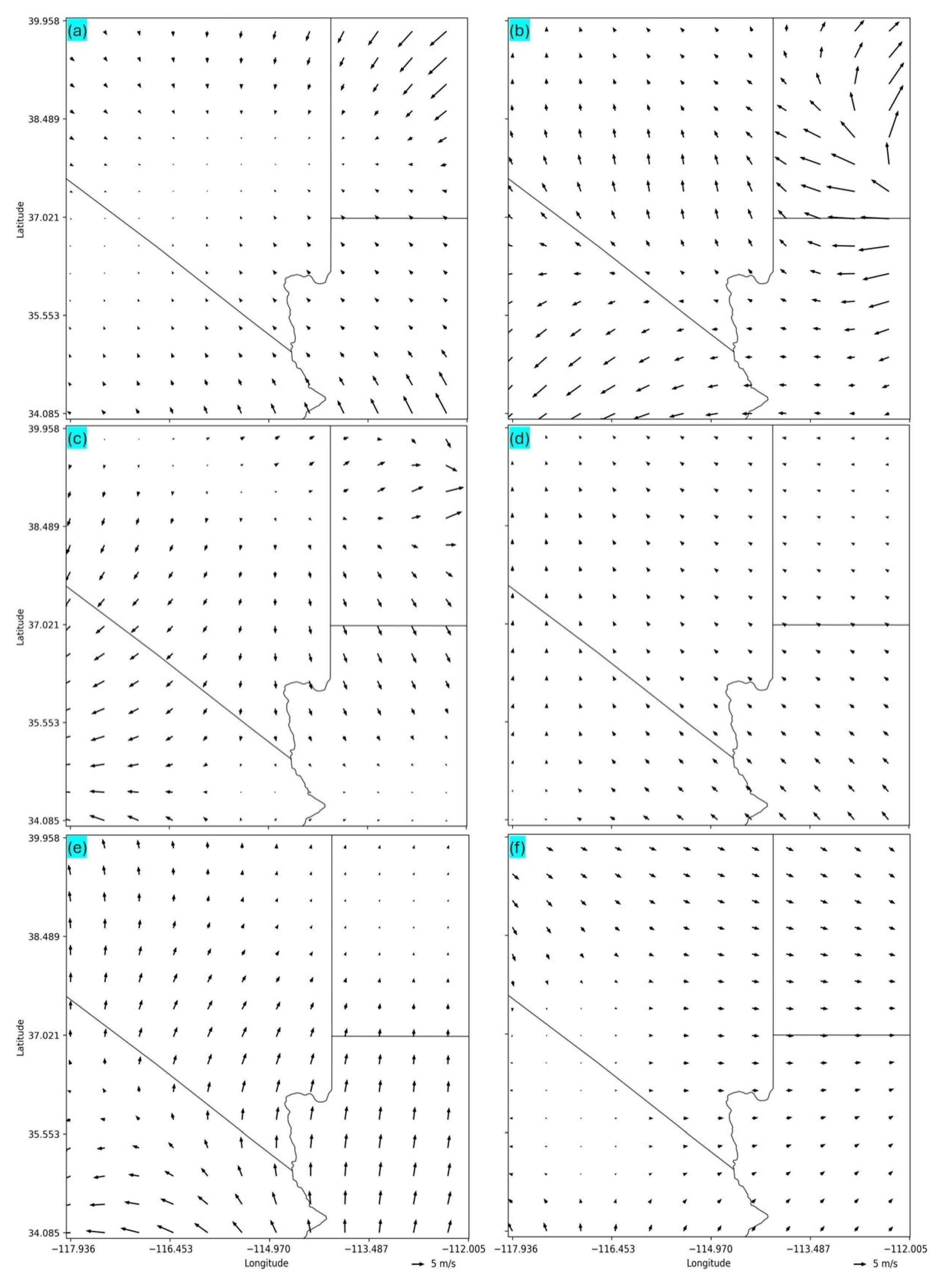
Figure 24 shows the total ageostrophic motion by combining the three terms. The inertial advective and isallobaric terms have the greatest influence on mid-level jetogenesis and would attribute the most to parcel acceleration propagating poleward.
Figure 24a shows the ageostrophic motion on the 308 K isentrope with the significant change in ageostrophic motion in eastern AZ from southwest–northwest. In
Figure 24b, the convergence propagated poleward with the east-to-west-directed flow from western UT into the entrance region of the mid-level jet in eastern NV. In north-central NV, the ageostrophic motion intensifies and propagates equatorward. Later in
Figure 24c, the strongest ageostrophic motion has exited the plot poleward into northern NV along with stronger accelerations. On the 320 K isentrope, the overall ageostrophic motion is weaker than that of the 308 K isentrope, but the rotation of the wind vectors is impactful. Ageostrophic motion is initially weaker poleward of 37° N in
Figure 24d, but a convergence zone remains present in southern CA, though less pronounced than in
Figure 24a. Six hours later in
Figure 24e, a stronger poleward propagation of ageostrophic wind exists equatorward of 36° N; however, by 1800 UTC 20 August, areas of convergence shown in
Figure 24c are replaced by divergence in
Figure 24f, which indicates the importance of converging and rising ageostrophic motion below the mid-level jet and diverging motion above the mid-level jet.
In the NHMFL simulation, total ageostrophic motion is considerably weaker due to the lack of surface-based heat and moisture fluxes. On the 308 K isentrope (
Figure 25a), near-zero motion exists, except around central UT and southwestern AZ, while
Figure 25b shows weak and diverging motion over southern NV which should be the mid-level jet.
Figure 25c shows minimal yet equatorward flow over what should have been the mid-level jet. However, the dynamics of the lower troposphere appear to be more stable and less turbulent. On the 320 K isentrope, relatively uniform ageostrophic motion is simulated with minimal flow changes with time, in
Figure 25d–f, with no significant convergence or divergence. Therefore, without heat and moisture fluxes over land, the favorable lower tropospheric dynamics are negligible and decoupled from any ageostrophic motion to accelerate air parcels.