


A Comparative Analysis of the Synoptic Conditions and Thermodynamics of Two Thundersnow Weather Events in Shaanxi Province, China, During 2023

Abstract
1. Introduction
2. Data and Methodology
3. Results and Analysis
3.1. Overview of Weather Processes
3.2. Variations in Meteorological Elements at Yanliang Airport
3.3. Upper-Level Circulation Situation
3.4. Surface Weather Situation
3.5. Comparative Satellite Monitoring
3.6. Comparative Analysis of the Formation Mechanism of TSSN
3.6.1. Comparison of Water Vapor Conditions
3.6.2. Convective Available Potential Energy (CAPE)
3.6.3. Comparison of Atmospheric Stratification Characteristics
4. Discussion and Conclusions
- (1)
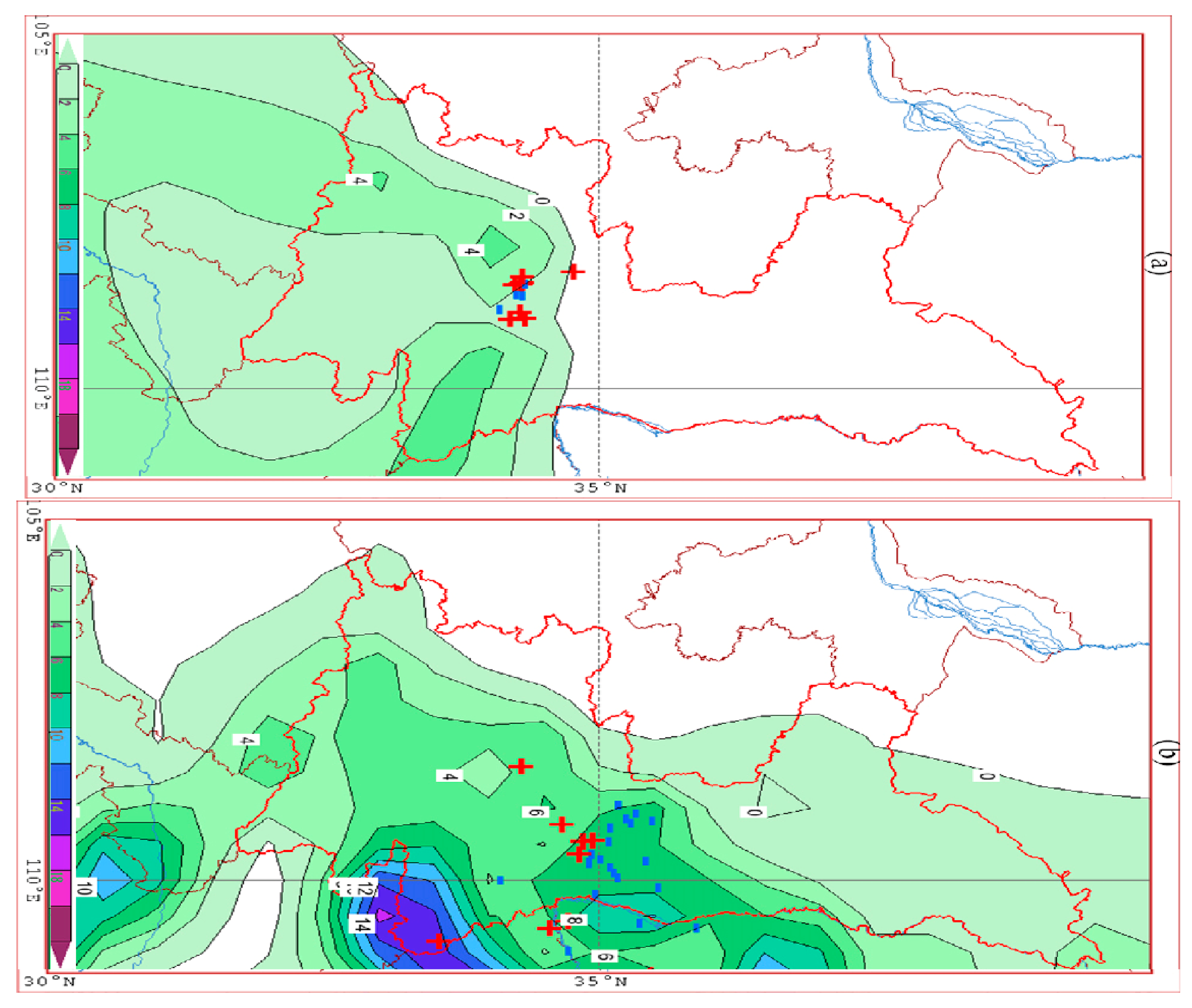
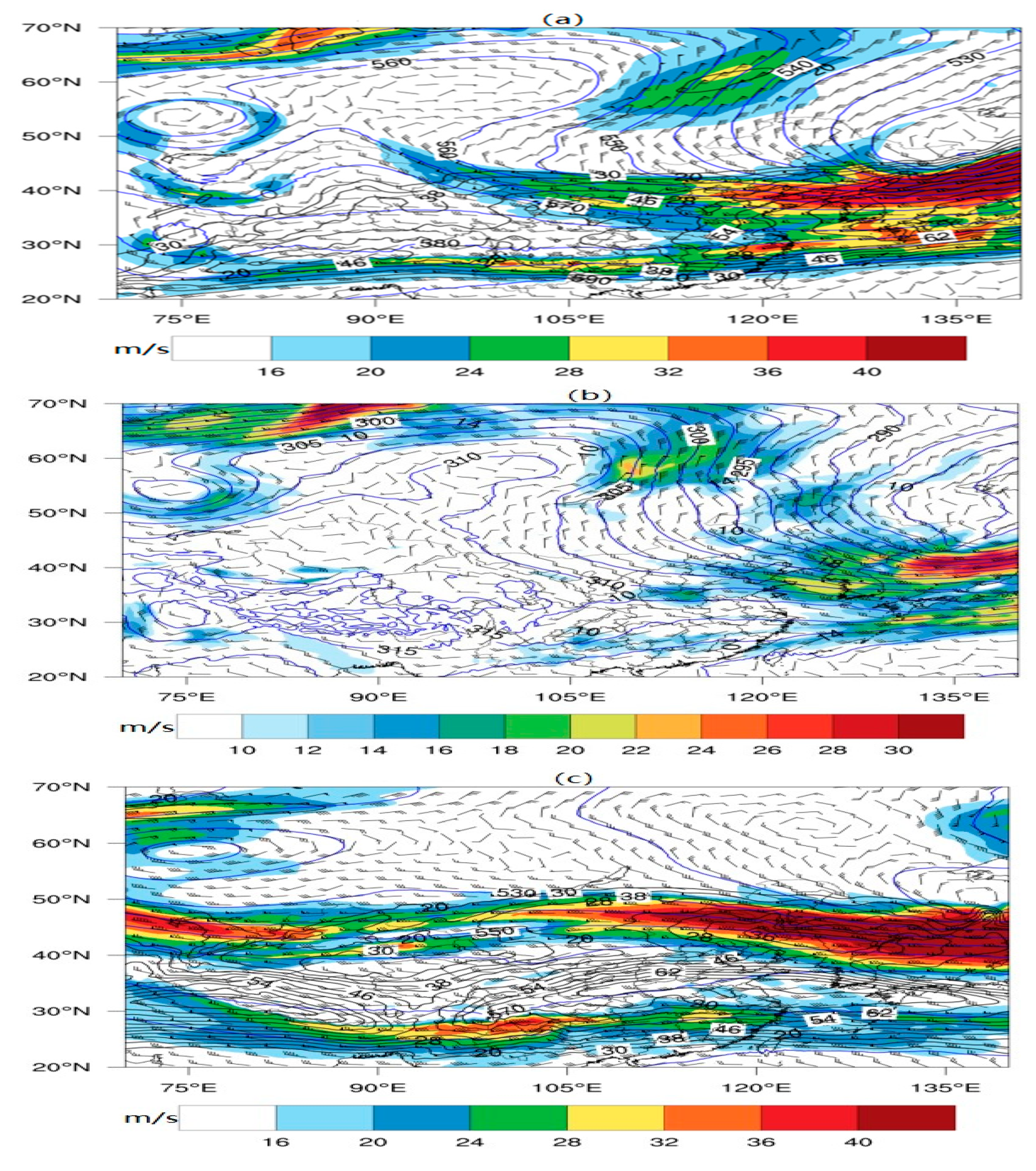
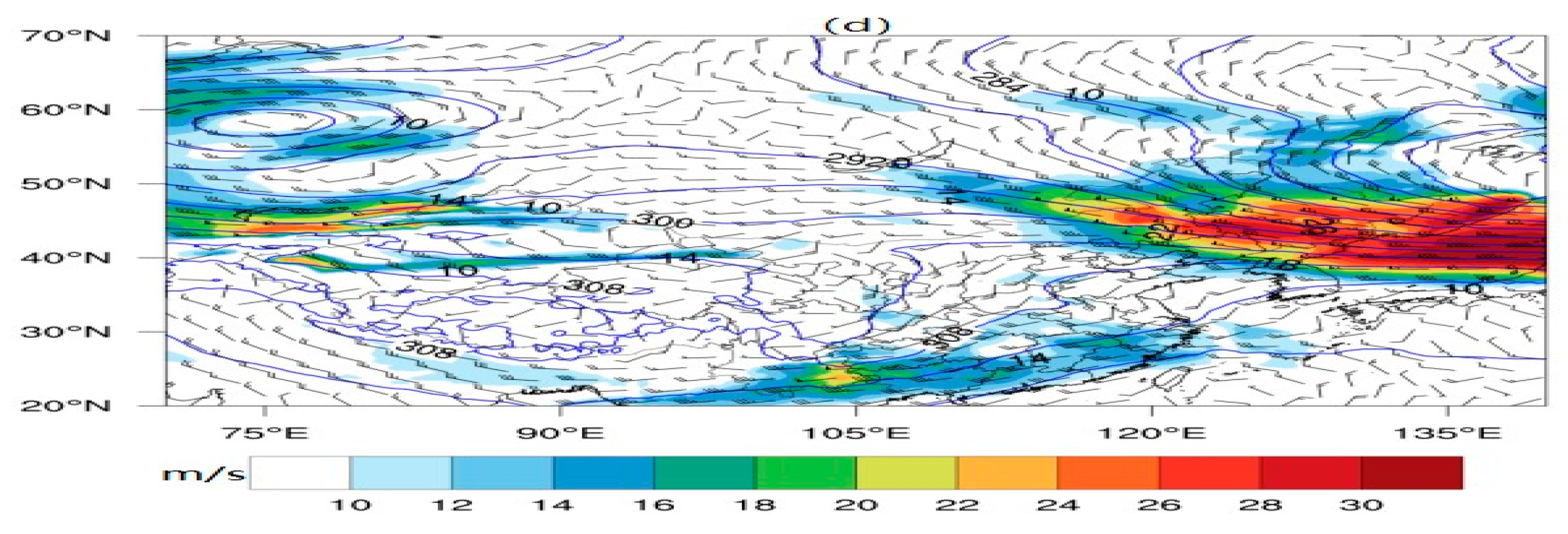
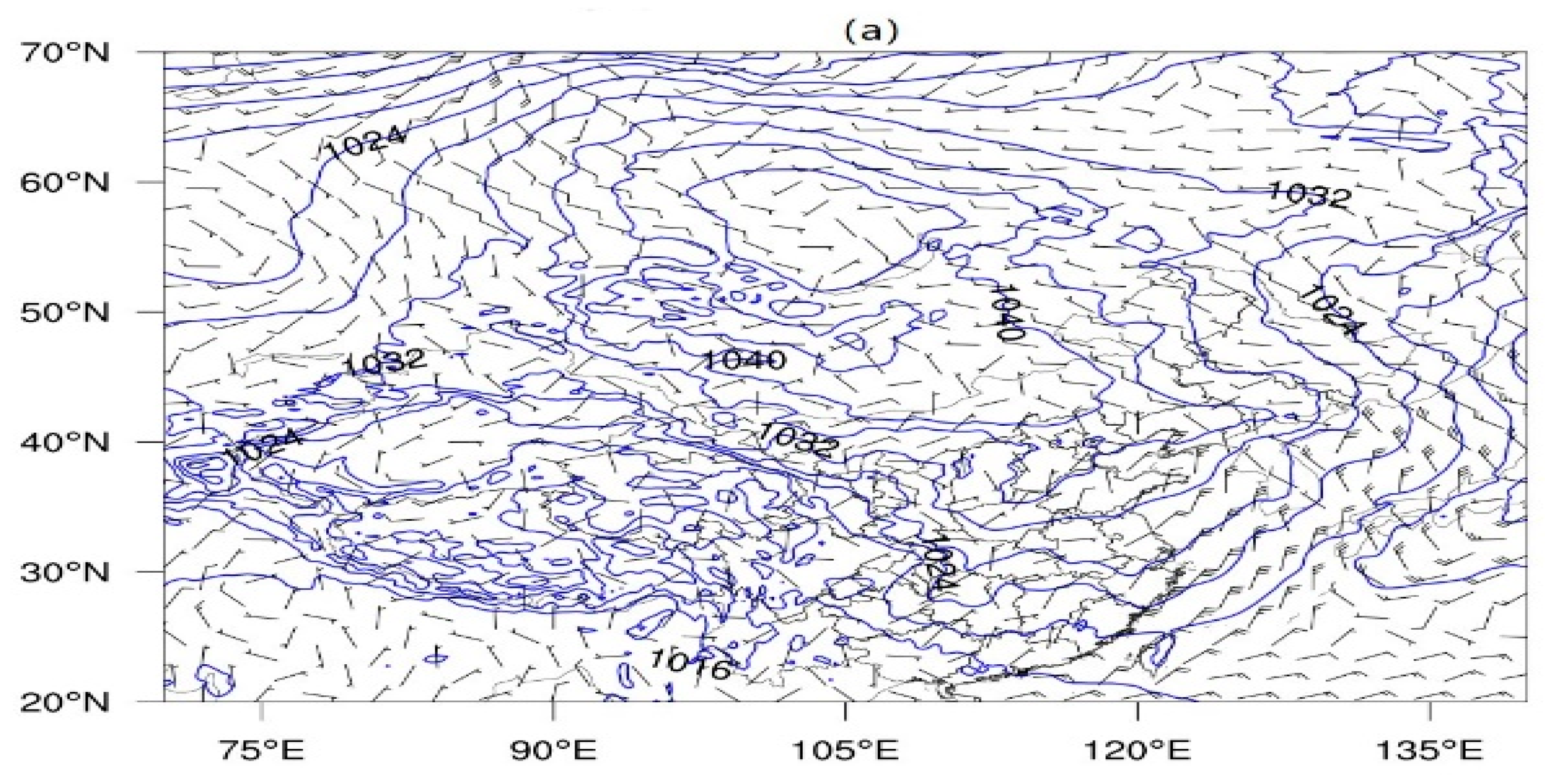
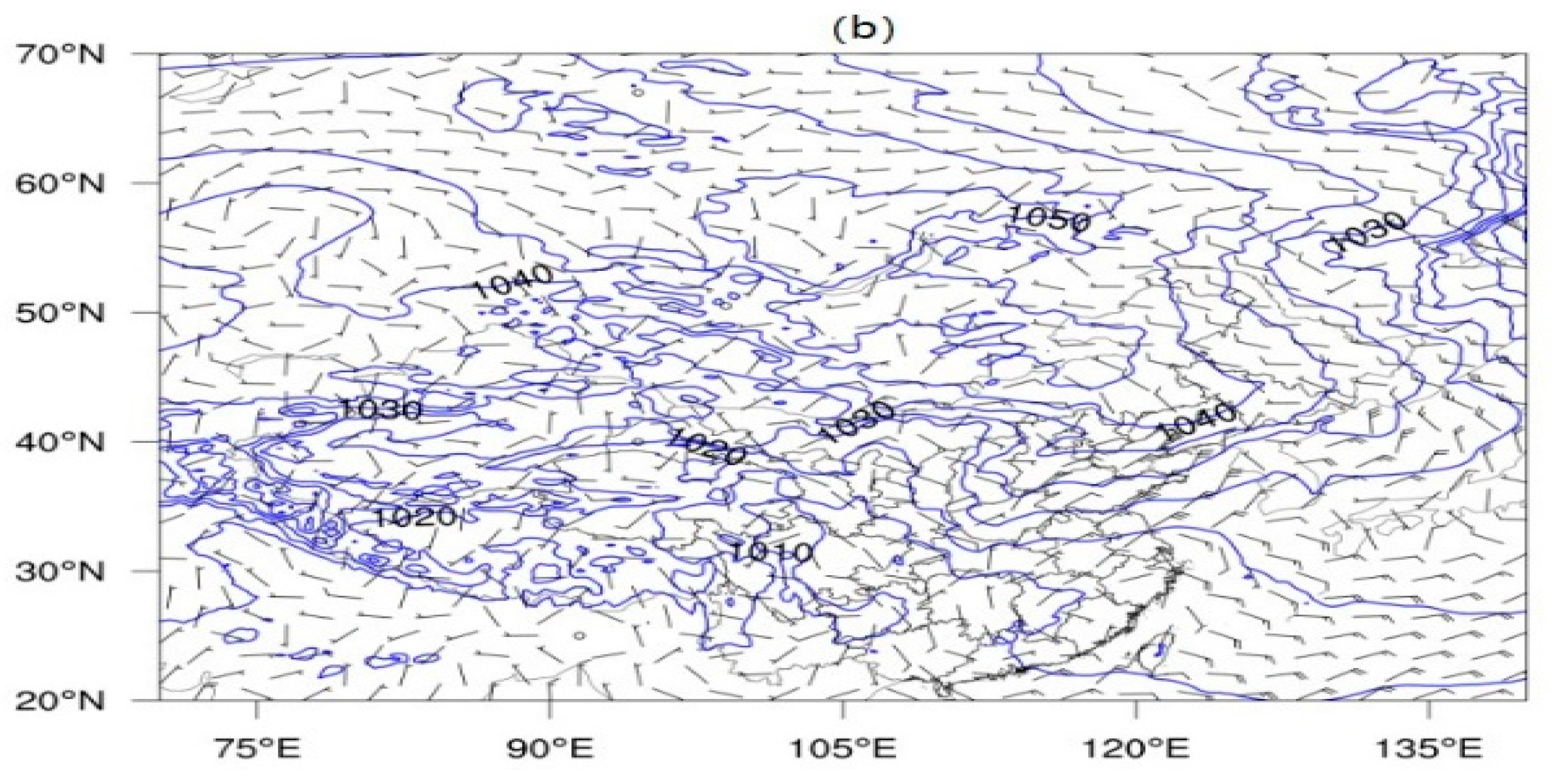
- During the November convective process, the high-latitude circulation background presented a west-high–east-low pattern, with the East Asian trough extending to the northern part of Inner Mongolia, and the circulation was highly meridional with strong cold air moving southward. In the December strong convective process, the mid–high latitude circulation pattern was “two troughs and one ridge”, and the mid–high latitude system was relatively weak. When the November process occurred, Xi’an was located in front of the 700 hPa low-pressure trough, and there was a westerly jet stream at 500 hPa. During the December process, Xi’an was located in front of the southern branch trough at the 700 hPa height level, under the control of strong southwesterly airflow, and the 500 hPa height level was dominated by southwesterly airflow. During both processes, the eastern part of China was under the influence of a high-pressure circulation, with a northerly risk control, and Shaanxi was behind the high-pressure ridge, with a strong pressure gradient force. It was found that the gradient in the first process was greater than that in the second process. The strong continental high-pressure system formed a northerly wind that could transport cold air from the north to the south, forming a cold pad on the ground.
- (2)
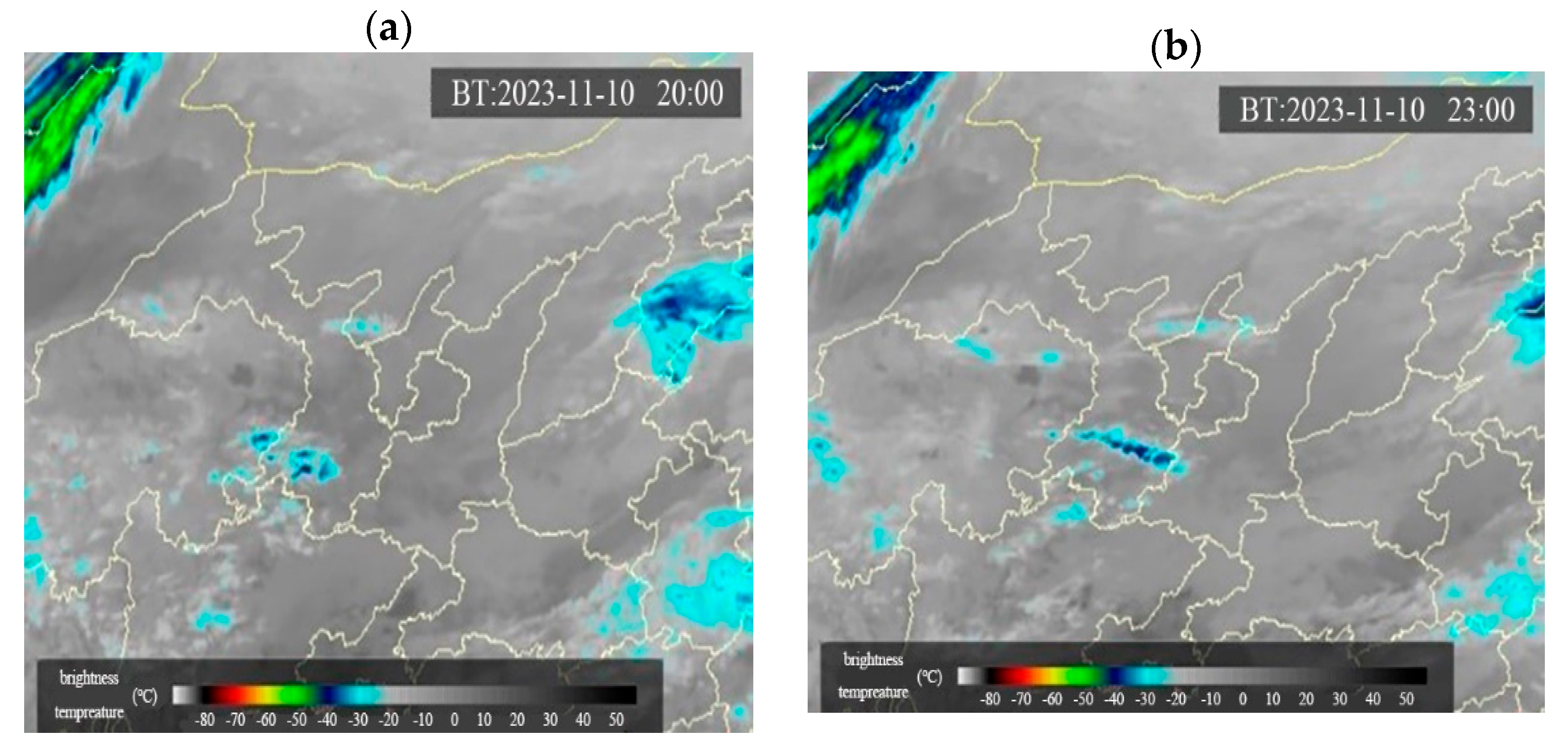
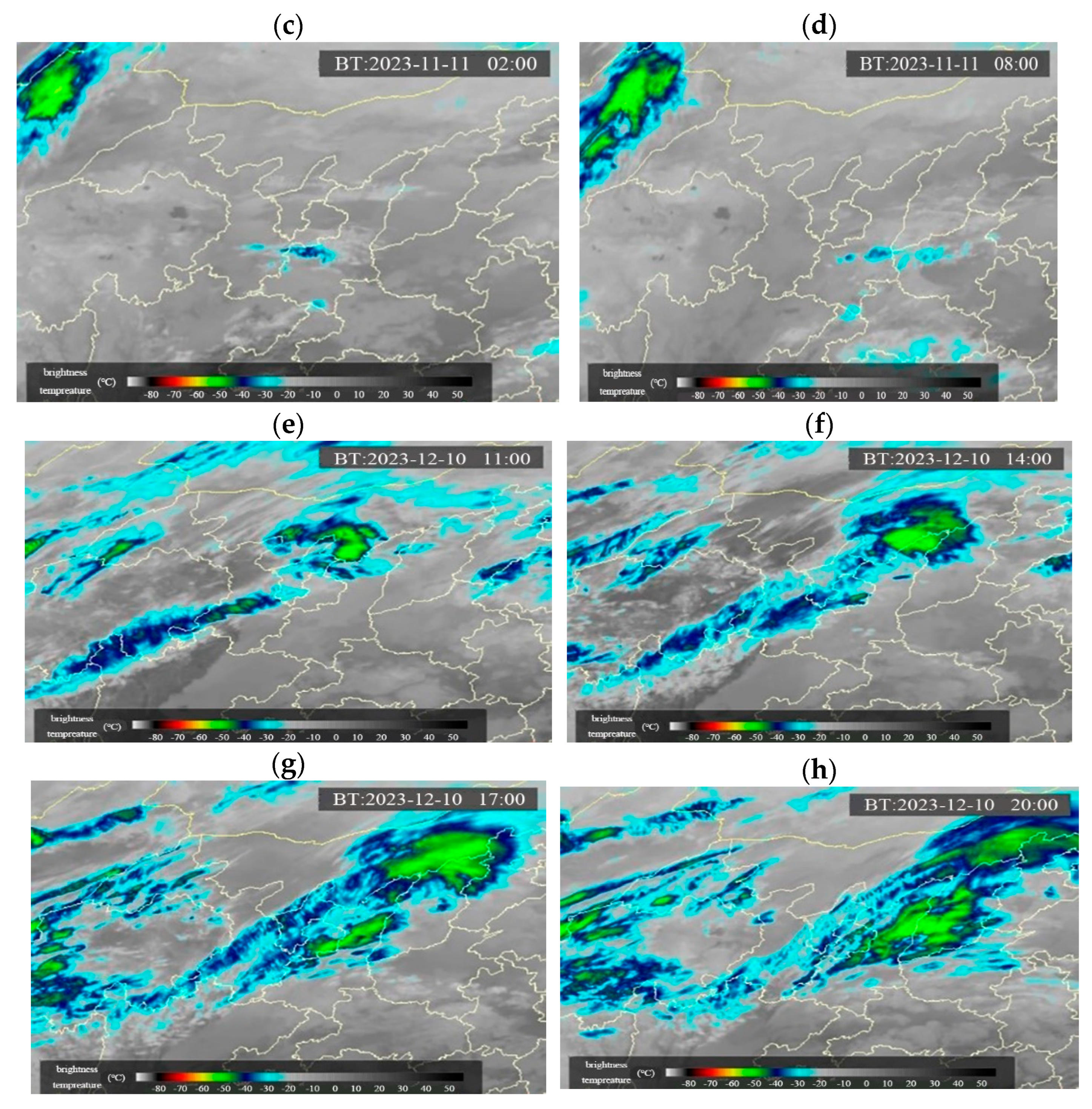
- Through a comparison of the development and evolution patterns of convective clouds, it was discovered that in November 2023, the convective cloud system originated from the eastern side of the plateau, developed and moved eastward under the guidance of the westerly airflow, weakened after passing through the Xi’an area, and continued to move eastward, where the minimum brightness temperature reached −42 °C. During the process in December, the convective cloud system was oriented southwest–northeast and moved eastward and northward under the influence of the southwesterly airflow, with the minimum brightness temperature reaching −55 °C.
- (3)
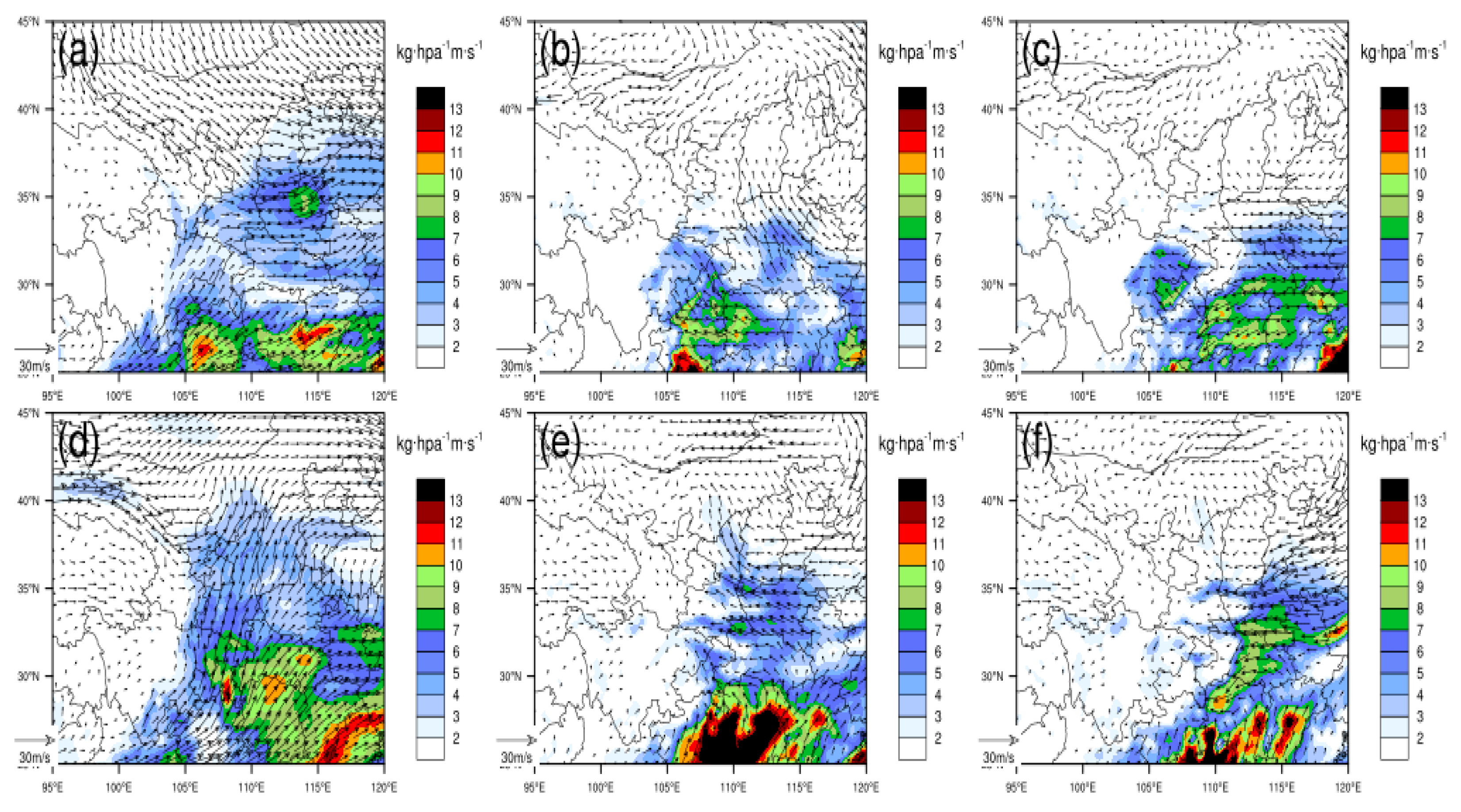
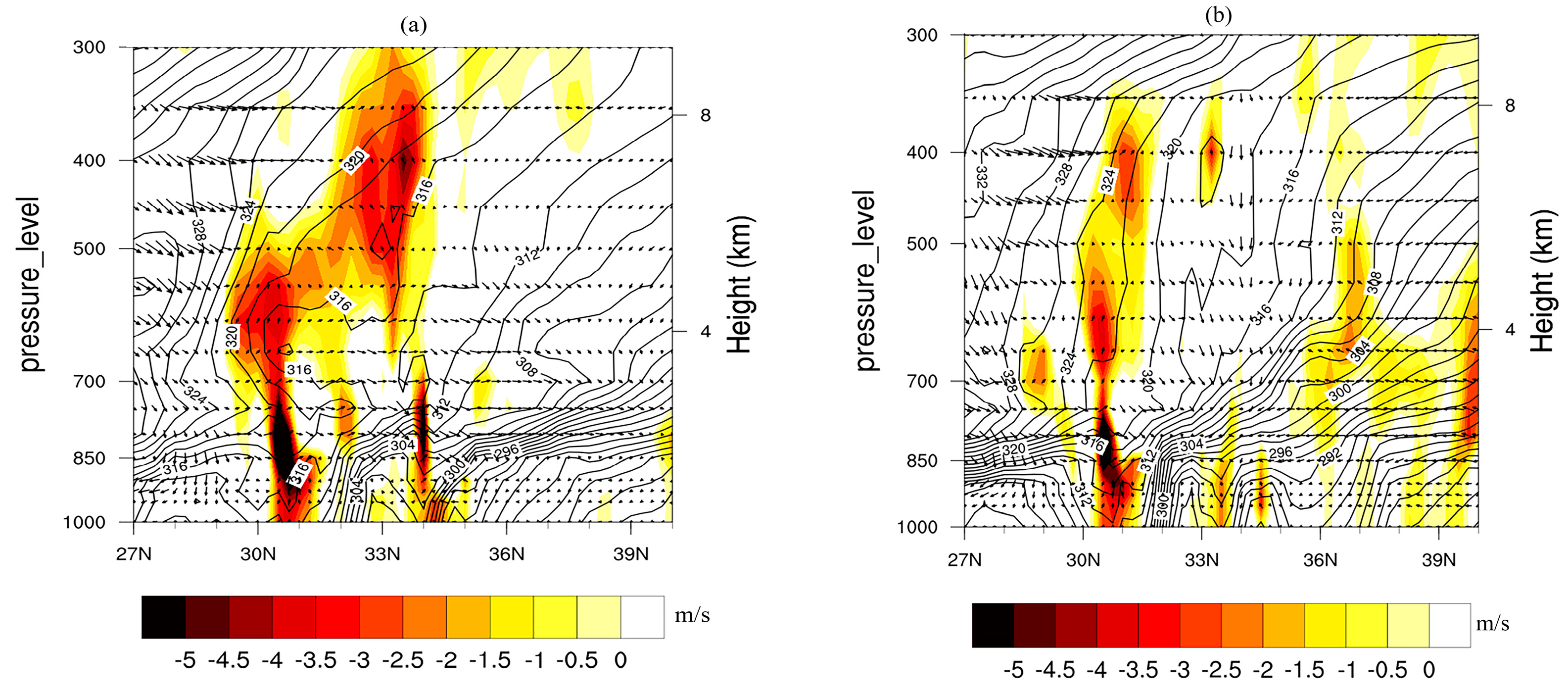
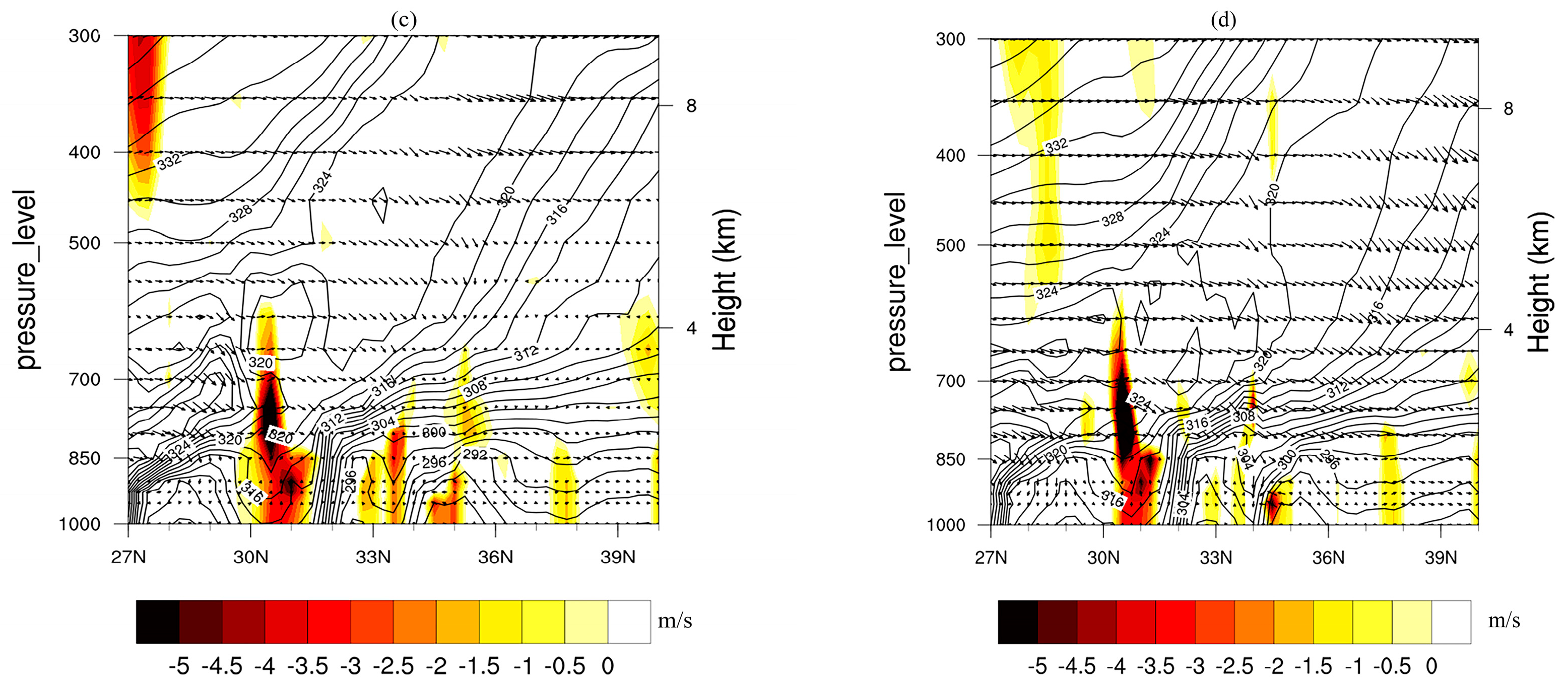
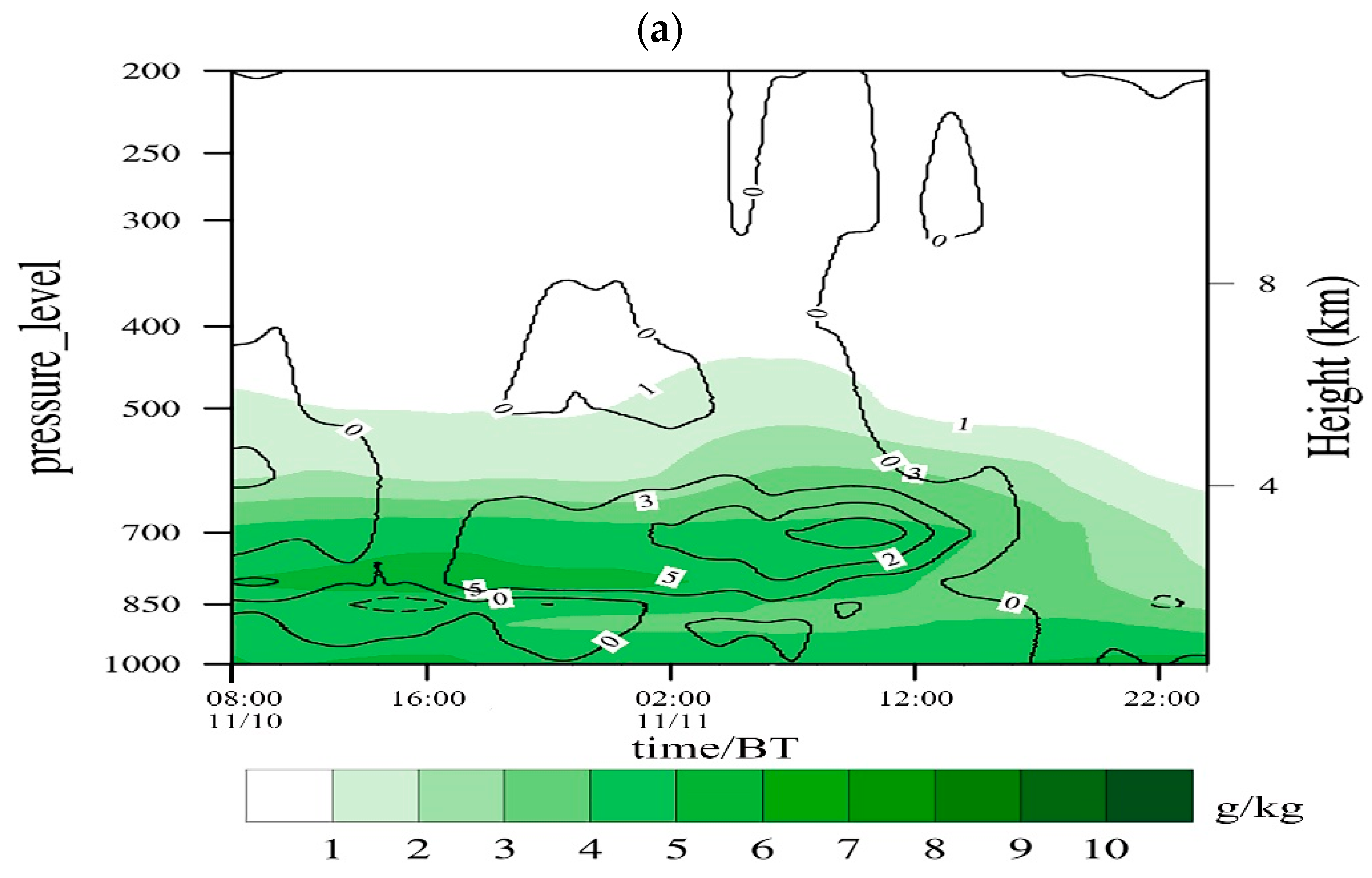
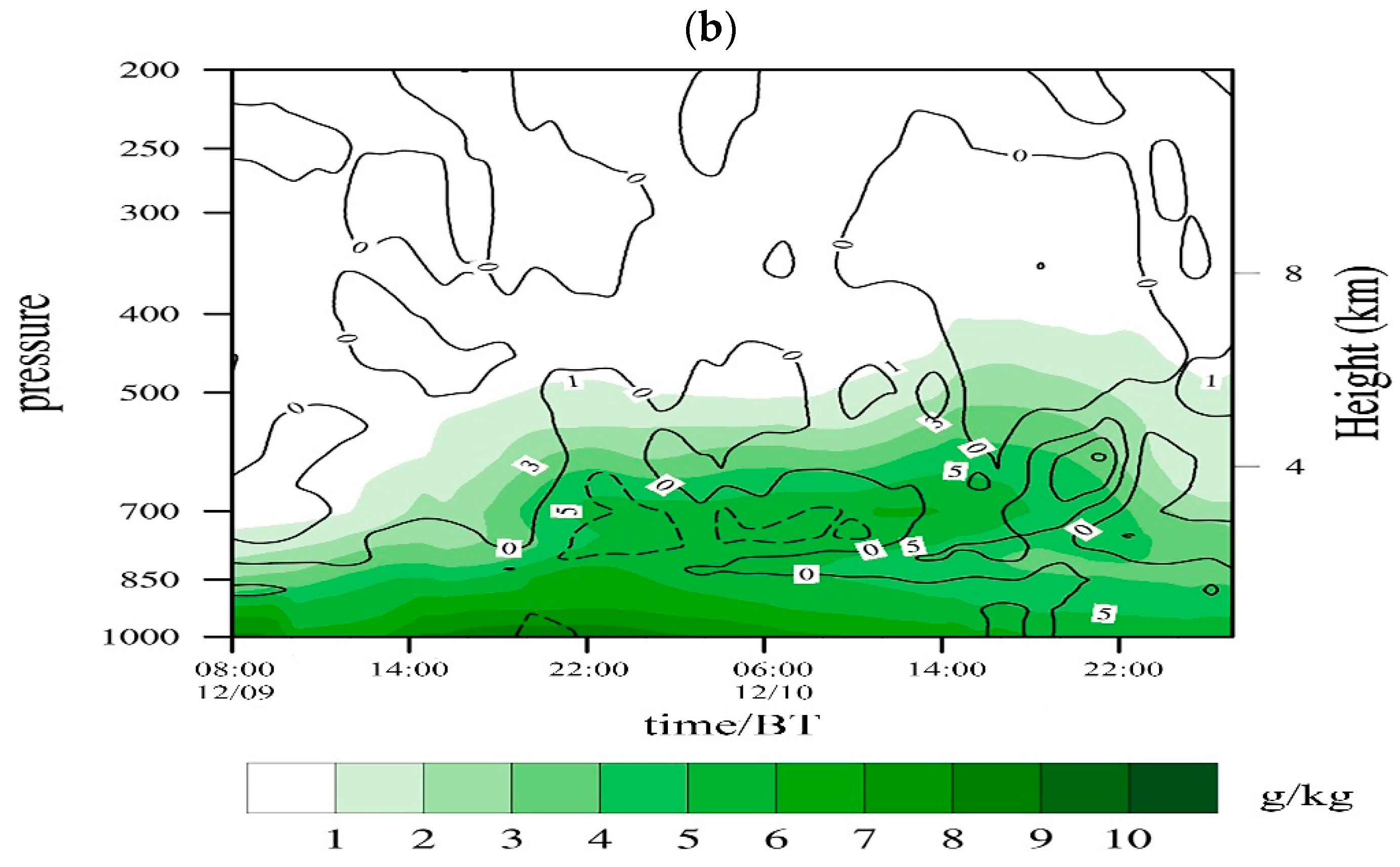
- The main water vapor transport channels for both “thundersnow” processes were at the 700 hPa height level, and the water vapor was guided by the southwestern airflow from the Bay of Bengal to Shaanxi. During the November convective weather process, the northwestern cold air was stronger than that in the December convective process. The longitudinal water vapor channel in the second process was wider than that in the first process, with the water vapor content exceeding 5 kg·m−2·s−1 between 700 hPa and 925 hPa. At the lower level (850 hPa to 925 hPa), due to the strong convergence of the easterly wind speed in the northeast of Xi’an, a large water vapor flux area appeared in this region.
- (4)
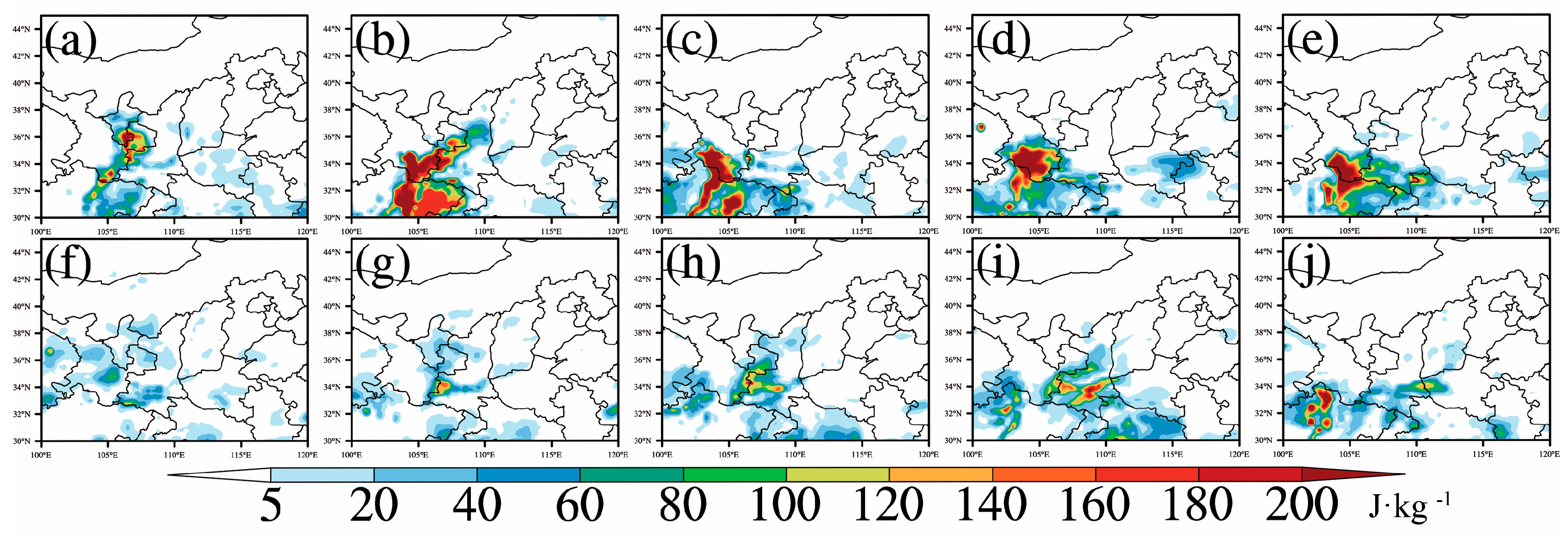
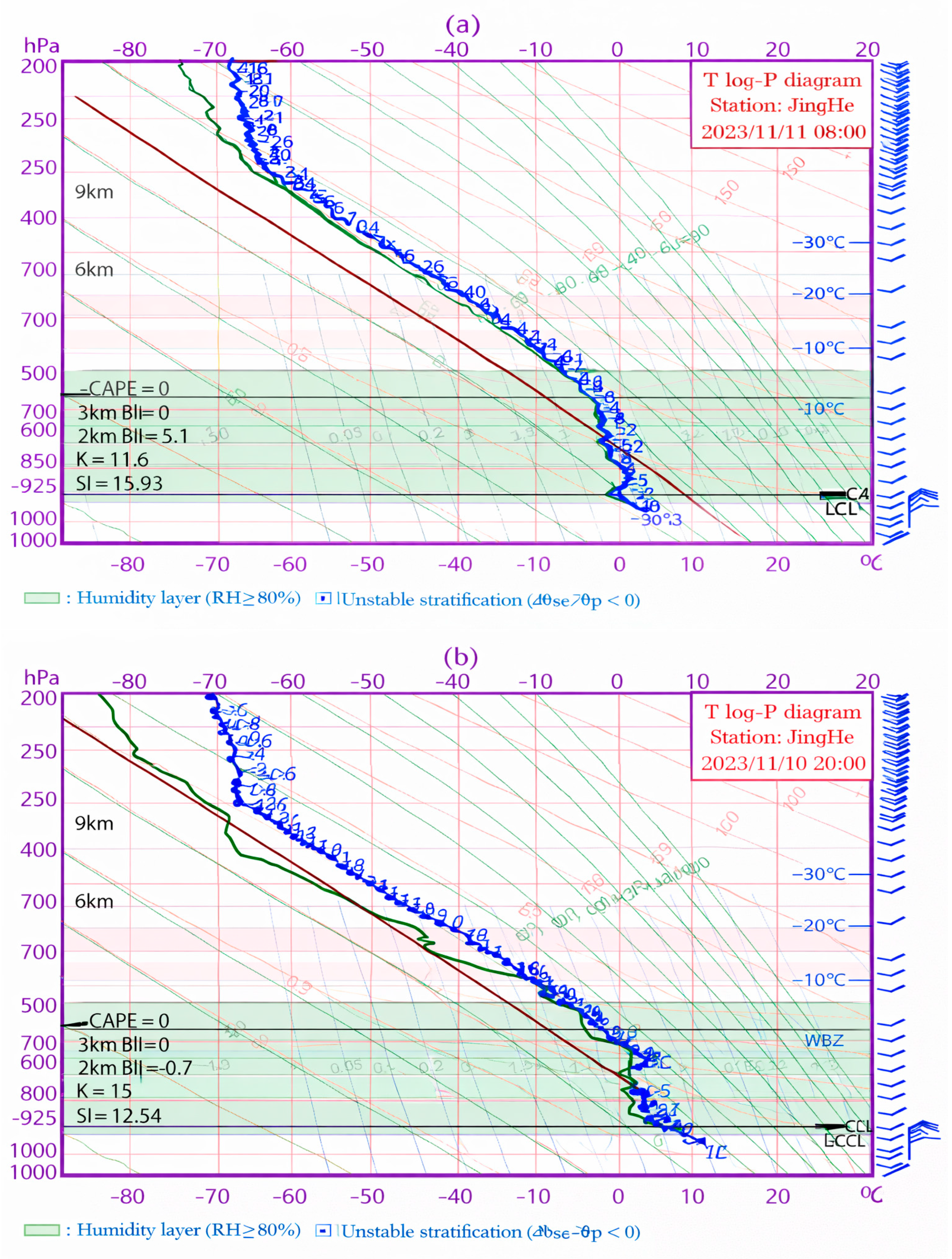
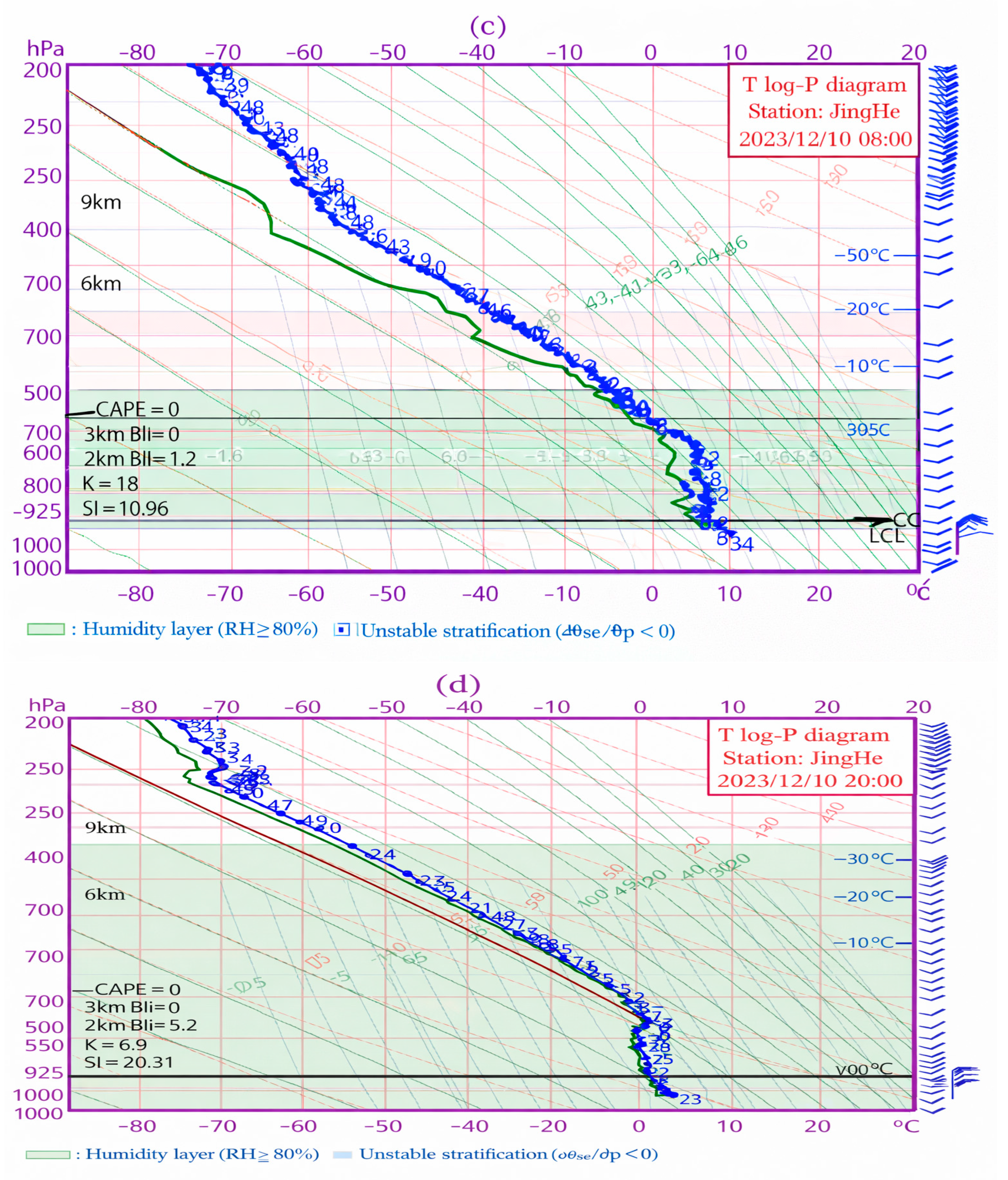
- The high CAPE in both processes occurred from the afternoon to the night. During the first convective process, the CAPE value in Xi’an was very weak, with an east–west band distribution and a position biased southward. During the second convective process, the CAPE value increased with time and moved eastward, with the maximum CAPE value in Xi’an occurring 3 h before the thunderstorm and reaching up to 221 J·kg−1. After the thunderstorm, the CAPE value decreased rapidly. Before both convective processes, there were significant cold pads and inversion layers at Jinghe Station. The cold pad thickness in the November process was 2 km, and the inversion layer was near 770 to 815 hPa, with a thickness of 45 hPa. The cold pad thickness in the December convective process was 0.8 km, and the inversion layer was between 750 and 900 hPa, with a thickness of 150 hPa. Under the influence of the high-latitude large-scale circulation background and the land–atmosphere interaction at night, the cold pad in the November convective process was deeper than that in the December process.
5. Future Work
Author Contributions
Funding
Institutional Review Board Statement
Informed Consent Statement
Data Availability Statement
Conflicts of Interest
References
- Collins, E.G. Meteorology of a Gliding Flight. Nature 1934, 133, 688. [Google Scholar] [CrossRef]
- Grant, B.N. Elevated cold sector severe thunder storms: A preliminary study. Natl. Weather Dig. 1995, 19, 25–31. [Google Scholar]
- Horgan, K.L.; Schultz, D.M.; Hales, J.E., Jr.; Corfidi, S.F.; Johns, R.H. A five-year climatology of elevated severe convective storms in the United States east of the Rocky Mountains. Weather Forecast. 2007, 22, 1031–1042. [Google Scholar] [CrossRef]
- Schultz, M.D.; Vavrek, J.R. An overview of thundersnow. Weather 2009, 64, 274–277. [Google Scholar] [CrossRef]
- Ma, R.; Sun, J.; Yang, X. A 7-yr climatology of the initiation, decay, and morphology of severe convective storms during the warm season over North China. Mon. Weather Rev. 2021, 149, 2599–2612. [Google Scholar] [CrossRef]
- Liu, X.Y.; Yu, H.P.; Sheng, X.; Zhu, C.Q.; Zhao, Q.Y.; Ma, Y.X.; Gou, S. Mechanism analysis of a rare “thunder snow” process in semiarid area. Meteorol. Mon. 2020, 46, 1596–1607. [Google Scholar] [CrossRef]
- Curran, J.T.; Pearson, A.D. Proximity soundings for thunderstorms with snow. In Preprints, Seventh Conference on Severe Local Storms, Denver, CO, USA, 15–17 October 1973; American Meteorological Society: Kansas City, MO, USA, 1971; pp. 118–119. [Google Scholar]
- Chilingarian, A.; Sargsyan, B.; Zazyan, M. An enormous increase in atmospheric positron flux during a summer thunderstorm on Mount Aragats. Radiat. Phys. Chem. 2024, 222, 111819. [Google Scholar] [CrossRef]
- Wang, J.; Ma, Y.; Liu, M.; Huang, T.; Xin, G.; Zhuang, B. Research on Relay Protection and Security Automatic Equipment Based on the Last Decade of Big Data. J. Phys. Conf. Ser. 2022, 2276, 012024. [Google Scholar] [CrossRef]
- Steeneveld, G.; Peerlings, E.E. Mesoscale Model Simulation of a Severe Summer Thunderstorm in The Netherlands: Performance and Uncertainty Assessment for Parameterised and Resolved Convection. Atmosphere 2020, 11, 811. [Google Scholar] [CrossRef]
- Liu, D.; Qie, X.; Peng, L.; Li, W. Charge structure of a summer thunderstorm in North China: Simulation using a Regional Atmospheric Model System. Adv. Atmos. Sci. 2014, 31, 1022–1034. [Google Scholar] [CrossRef]
- Rickenbach, T. Seasonal Changes of Extremes in Isolated and Mesoscale Precipitation for the Southeastern United States. Atmosphere 2018, 9, 309. [Google Scholar] [CrossRef]
- Li, S.; Miao, A.; Wang, H. Cloud image characteristics and maintaining mechanism of a squall line in autumn in Shanxi Province. J. Arid Meteorol. 2019, 37, 312–321. [Google Scholar] [CrossRef]
- Yavuz, V.; Soysal, E.L.; Kara, Y. Statistical analysis of thundersnow events and ERA5-based convective environments across Türkiye. Nat. Hazards 2025, 121, 3293–3312. [Google Scholar] [CrossRef]
- Yavuz, V.; Lupo, A.R.; Fox, N.I.; Deniz, A. A long-term analysis of thundersnow events over the Marmara Region, Turkey. Nat. Hazards 2022, 114, 367–387. [Google Scholar] [CrossRef]
- MacGorman, D.R.; Rust, W.D. The Electrical Nature of Storms; Oxford University Press: Oxford, UK, 1998; p. 422. [Google Scholar]
- Bech, J.; Pineda, N.; Rigo, T.; Aran, M. Remote sensing analysis of a mediterranean thundersnow and low altitude heavy snowfall event. Atmos. Res. 2013, 123, 305–322. [Google Scholar] [CrossRef]
- Dolif Neto, G.; Market, P.S.; Pezza, A.B.; Morales Rodriguez, C.A.; Calvetti, L.; da Silva Dias, P.L.; Escobar, G.C.J. Thundersnow in Brazil: A case study of 22 July 2013. Atmos. Sci. Lett. 2016, 17, 26–32. [Google Scholar] [CrossRef]
- Xu, L.; Zhang, W.; Cao, X.; Zhao, J.; Zhang, Y. A 10-Year Thundersnow Climatology over China. Geophys. Res. Lett. 2022, 49, E2022GL100734. [Google Scholar] [CrossRef]
- Stuart, N.A. Multi-dimensional analysis of an extreme thundersnow event during the 30 December 2000 snowstorm. In Proceedings of the 18th Conference on Weather Analysis and Forecasting, Fort Lauderdale, FL, USA, 1 August 2001; American Meteorological Society: New York, NY, USA, 2001; Volume 18, pp. 223–226. [Google Scholar]
- Mäkelä, A.; Saltikoff, E.; Julkunen, J.; Juga, I.; Gregow, E.; Niemelä, S. Cold-season thunderstorms in Fin land and their effect on aviation safety. Bull. Am. Meteorol. Soc. 2013, 94, 847–858. [Google Scholar] [CrossRef]
- Kumjian, M.R.; Dierling, W. Analysis of thundersnow storms over northern Colorado. Weather Forecast. 2015, 30, 1469–1490. [Google Scholar] [CrossRef]
- Means, L.L. On thunderstorm forecasting in the central united states. Mon. Weather Rev. 1952, 80, 165–189. [Google Scholar] [CrossRef]
- Colman, B.R. Thundertorms above frontal sufaes in eirnoments without positive CAPE: Part I: Aclimatology. Mon. Weather Rev. 1990, 1189, 1103–1122. [Google Scholar] [CrossRef]
- Colman, B.R. Thunderstorms above frontal surfaces in environments without positive CAPE: Part II: Organization and instability mechanisms. Mon. Weather Rev. 1990, 118, 1123–1144. [Google Scholar] [CrossRef]
- Wilson, W.J.; Roberts, D.R. Summary of convective storm initiation and evolution during IHOP: Observational and modeling perspective. Am. Meteorol. Soc. 2016, 134, 23–47. [Google Scholar] [CrossRef]
- Market, P.; Grempler, K.; Sumrall, P.; Henson, C. Analysis of Severe Elevated Thunderstorms over Frontal Surfaces Using DCIN and DCAPE. Atmosphere 2019, 10, 449. [Google Scholar] [CrossRef]
- He, Z.; Zhu, L.; Zhang, X.; Wang, L.; Wu, L.; Xi, L. Diagnosis of the Frontogenesis And Instabilities in Two Continuous Autumn Torrential Rain Days in Henan Province. Meteorol. Mon. 2022, 48, 1101–1115. [Google Scholar] [CrossRef]
- Liu, Z.Y.; Zhou, X.G.; Wang, X.M. Climatic Statistical Analysis of Cold Season Elevated Convection Characteristics in the North China Region of China. Meteorol. Mon. 2018, 44, 258–267. [Google Scholar] [CrossRef]
- Zheng, L.N.; Zhang, Z.H.; Xia, J.D. Classification and Cause Analysis of “Thundersnow” Event in Shandong. Meteorol. Mon. 2019, 45, 1075–1084. [Google Scholar] [CrossRef]
- Gou, D.M.; Zhang, L.N.; Wang, X.M. Analysis of a High-altitude Thunderstorm Weather Process in Shaanxi Province in Early Winter 2016. Meteorol. Mon. 2018, 44, 1404–1413. [Google Scholar]
- Adhikari, A.; Liu, C. Geographical distribution of thundersnow events and their properties from GPM Ku-band radar. J. Geophys. Res. Atmos. 2019, 124, 2031–2048. [Google Scholar] [CrossRef]
- Market, P.S.; Halcomb, C.E.; Ebert, R.L. A climatology of thundersnow events over the contiguous United States. Weather Forecast. 2002, 17, 1290–1295. [Google Scholar] [CrossRef]
- Guo, Z.R.; Tan, G.R.; Duan, W.; Yang, S.Y.; Jiang, Q.H. Spatial and Temporal Distribution of Regional Short-Term Heavy Precipitation Events in Yunnan Province and Classification of Weather System Characteristics. Trans. Atmos. Sci. 2025, 48, 122–135. [Google Scholar] [CrossRef]
- Jin, C.; He, Q.; Huang, Q.; Chen, Z. An Analysis of the Instability Conditions and Water Vapor Transport Characteristics during a Typical Rainstorm in the Tarim Basin. Atmosphere 2024, 15, 210. [Google Scholar] [CrossRef]
- Ma, M.; Qin, L. Analysis of the Ducted Gravity Waves Generated by Elevated Convection over Complex Terrain in China. Atmosphere 2025, 16, 1118. [Google Scholar] [CrossRef]
- Hoffman, K.; Turner, D.D.; Demoz, B.B. Nocturnal Convection Along a Trailing-End Cold Front: Insights from Ground-Based Remote Sensing Observations. Atmosphere 2025, 16, 926. [Google Scholar] [CrossRef]
- Yan, X.; Chen, Q.; Li, Y.; Liao, Y. Comparative Analysis of Summer Deep Convection Systems over the Tibetan Plateau and Sichuan Basin. Atmosphere 2025, 16, 1134. [Google Scholar] [CrossRef]
- Bukowski, J.; van den Heever, S.C. The impact of land surface properties on haboobs and dust lofting. J. Atmos. Sci. 2022, 79, 3195–3218. [Google Scholar] [CrossRef]
- Feng, L.; Song, P.; Zheng, F.; He, Z. Diagnostic Analysis of A Severe Regional Snowstorm Event in the Early Winter of 2016 in Henan Province, China. Chin. J. Atmos. Sci. 2020, 44, 1326. [Google Scholar] [CrossRef]
- Harkema, S.S.; Carey, L.D.; Schultz, C.J.; Mansell, E.R.; Berndt, E.B.; Fierro, A.O.; Matsui, T. Electrification within wintertime stratiform regions sampled during the 2020/2022 NASA IMPACTS field campaign. J. Geophys. Res. Atmos. 2023, 128, e2023JD038708. [Google Scholar] [CrossRef]
- Fernández-Álvarez, J.C.; Pérez-Alarcón, A.; Eiras-Barca, J.; Ramos, A.M.; Rahimi-Esfarjani, S.; Nieto, R.; Gimeno, L. Changes in moisture sources of atmospheric rivers landfalling the Iberian Peninsula with WRF-FLEXPART. J. Geophys. Res. Atmos. 2023, 128, e2022JD037612. [Google Scholar] [CrossRef]
- Yang, J.; Huang, S.; Yang, T.; Zhang, Q.; Deng, Y.; Liu, Y. Impact of ice multiplication on the cloud electrification of a cold-season thunderstorm: A numerical case study. Atmos. Chem. Phys. 2024, 24, 5989–6010. [Google Scholar] [CrossRef]
- Steiger, S.M.; Bruning, E.C.; Chmielewski, V.C.; Stano, G.; Trostel, J.; Calhoun, K.M.; Jesmonth, K.R.; Lamsma, B.; Lang, T.; Laurinaitis, S.; et al. Winter lightning to the lee of Lake Ontario: The Lake-Effect Electrification (LEE) field campaign. Bull. Am. Meteorol. Soc. 2024, 105, E2026–E2046. [Google Scholar] [CrossRef]
Disclaimer/Publisher’s Note: The statements, opinions and data contained in all publications are solely those of the individual author(s) and contributor(s) and not of MDPI and/or the editor(s). MDPI and/or the editor(s) disclaim responsibility for any injury to people or property resulting from any ideas, methods, instructions or products referred to in the content. |
© 2025 by the authors. Licensee MDPI, Basel, Switzerland. This article is an open access article distributed under the terms and conditions of the Creative Commons Attribution (CC BY) license.
Share and Cite
Li, Y.; Ni, H.; Liu, J.; Chou, Y.; Hao, X.; Liu, S. A Comparative Analysis of the Synoptic Conditions and Thermodynamics of Two Thundersnow Weather Events in Shaanxi Province, China, During 2023. Atmosphere 2026, 17, 8. https://doi.org/10.3390/atmos17010008
Li Y, Ni H, Liu J, Chou Y, Hao X, Liu S. A Comparative Analysis of the Synoptic Conditions and Thermodynamics of Two Thundersnow Weather Events in Shaanxi Province, China, During 2023. Atmosphere. 2026; 17(1):8. https://doi.org/10.3390/atmos17010008
Chicago/Turabian StyleLi, Yueqi, Hongbo Ni, Jialu Liu, Yan Chou, Xinkai Hao, and Shaoyang Liu. 2026. "A Comparative Analysis of the Synoptic Conditions and Thermodynamics of Two Thundersnow Weather Events in Shaanxi Province, China, During 2023" Atmosphere 17, no. 1: 8. https://doi.org/10.3390/atmos17010008
APA StyleLi, Y., Ni, H., Liu, J., Chou, Y., Hao, X., & Liu, S. (2026). A Comparative Analysis of the Synoptic Conditions and Thermodynamics of Two Thundersnow Weather Events in Shaanxi Province, China, During 2023. Atmosphere, 17(1), 8. https://doi.org/10.3390/atmos17010008

