Article

An Air-Quality-Based Analysis of NO, NO2, and O3 at a Suburban Mediterranean Site

by
Sofia Eirini Chatoutsidou
,
Iliana Kordonouri
and
Mihalis Lazaridis
*
School of Chemical and Environmental Engineering, Technical University of Crete, 73100 Chania, Greece
*
Author to whom correspondence should be addressed.
Atmosphere 2026, 17(1), 7; https://doi.org/10.3390/atmos17010007 (registering DOI)
Submission received: 14 November 2025 / Revised: 17 December 2025 / Accepted: 18 December 2025 / Published: 22 December 2025
(This article belongs to the Section Air Quality)

Abstract

NO, NO2, and O3 were measured for 1 year at a suburban site in the southeast Mediterranean. NO preserved no seasonality, but significant seasonal variations were obtained for NO2 and O3. These pollutants exhibited inverse trends with higher NO2 levels measured during wintertime, whilst higher O3 levels were measured during summertime. Photochemistry was the primary reason for the opposing variations in both pollutants, although O3 levels were frequently increased due to O3-rich plumes travelling from northeast Europe, highlighting the impact of regional contributions in the measured concentrations. Nevertheless, anthropogenic sources were identified and contributed to both NO and NO2. Diurnal variations analysis showed that NO increased usually in the early morning and was linked with primary emissions from traffic. NO2 increased simultaneously with NO in the early morning, and besides primary vehicle emissions, it was associated with secondary formation from the emitted NO. Moreover, a significant contribution from domestic heating emissions on NO2 was identified in the late evening during wintertime. Overall, a relative burden of weekdays was associated with NO (morning rush hours) and NO2 (morning rush hours, evening), whereas weekends were burdened by O3 due to the weekend effect. Comparison with European Union air quality standards showed that NO2 was considerably lower than the limit values, but a significant number of exceedances were identified for O3, especially during the warmer months. This finding suggested the relative burden of the study site from O3. In conclusion, NO at the study site was influenced by primary traffic emissions, whereas NO2 had both primary and secondary contributions, and together with photochemistry, both pollutants governed O3 diurnal and seasonal cycles.

1. Introduction

Nitrogen oxides (NOx) refer to the mixture of nitric oxide (NO) and nitrogen dioxide (NO2) and are produced primarily from fuel combustion (vehicles, non-road engines, power plants, etc.). They comprise typical air pollutants and can cause significant air pollution episodes, especially in urban and industrial areas, where emissions from burning fossil fuels may become substantial [1,2]. NOX not only pollute the air and cause environmental concerns due to the formation of acid rain [3,4] but can be harmful for human health, causing several respiratory diseases [5,6,7].
Ozone (O3), on the other hand, is not primarily emitted but formed secondarily in the troposphere by photochemical reactions between NOx and volatile organic compounds [8,9]. Tropospheric O3 is initiated by the chemical destruction of NO2, whereby all three pollutants are part of a net cycle that results in a photo-stationary state where reaction rates become equal:
N O 2 + h v N O + O
O + O 2 O 3
N O + O 3 N O 2 + O 2
O3 has significant environmental and climate impacts [10] as well as poses threats to human health such as inflammatory lung injury [11,12,13]. It is a key atmospheric oxidant, and besides local scales, polluted plumes can travel long distances [14].
Owing to their properties and the various chemical transformations in the atmosphere, both O3 and NO2 exhibit strong seasonal and daily cycles [15,16,17,18]. Most commonly, warmer periods with intense sunlight are characterized by elevated O3 concentrations, whereby peak concentrations usually take place during midday. As a net result, NO2 preserves lower levels during midday but increases after sunset. Moreover, primary emissions influence NO and NO2 levels depending on the local contributions [19,20].
NO2 and O3 are criteria pollutants, and the new directive by the European Union [21] has updated the air quality standards based on those proposed by the WHO air quality guidelines [22]. The stricter standards create the necessity to control emissions and lower the pollutant footprint to the environment to improve air quality and the associated health impact. The sum of the two pollutants corresponds to the oxidant capacity, namely, OX (=NO2 + O3), and combined is used as a measure of total oxidants in an area to overcome complexities due to their multiple interconversions [23]. Variations in Ox levels are subject to air quality analysis as well as evaluation of local and regional contributions [24,25].
This study presents yearly measurements of NOx and O3 in a suburban site located in the eastern Mediterranean. The Mediterranean is a hot spot region for O3 pollution, as it is subject to significant regional contributions, together with the impact of ambient conditions provoked by high temperature and radiation that cause O3 accumulation. This work strengthens the scientific literature with ground-level O3 observations in the southeast Mediterranean and links variations in NOx and O3 with regional effects and local scales in light of air quality concerns that can emerge for residents. The primary objectives were to investigate the yearly pollutant variations, assess their levels compared with EU air quality standards, and evaluate the impact of the varying contributors and anthropogenic sources to NOx and O3 concentrations.

2. Materials and Methods

2.1. Site Description

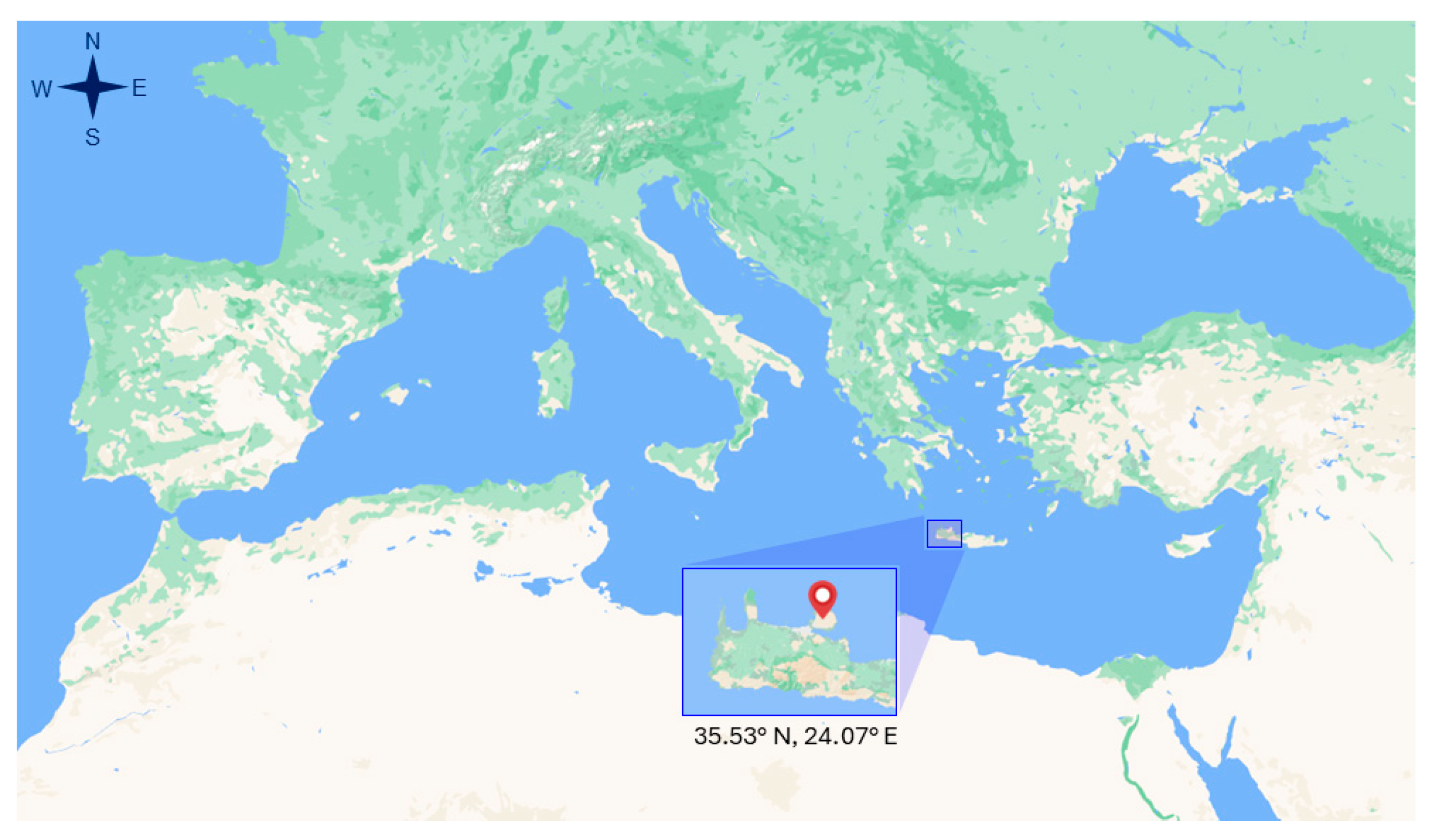
The sampling site corresponds to Akrotiri station (35.53° N, 24.07° E; Figure 1), which is located inside the campus of the Technical University of Crete (Chania, Greece). It is a coastal suburban site, as the sea is 2 km in a northwest direction, and the surrounding area corresponds to a residential area with low population, medium vehicular traffic, and sparse vegetation. The closest urban center is the city of Chania, which is 5 km in the southwest direction. Akrotiri station is part of the monitoring network of atmospheric pollutants in Crete, and besides gaseous pollutants, it monitors particle number and mass concentrations [26,27,28,29].

2.2. Sampling and Instrumentation

Measurements of gaseous pollutants (NO, NO2, O3) correspond to 1 year of sampling during 2023. NO and NO2 concentrations were measured online with an APNA-370 analyzer (Horiba, Kyoto, Japan), and O3 concentrations were measured online with an APOA-370 analyzer (Horiba, Kyoto, Japan). All instruments were calibrated once per month. Data were recorded every 5 min, but hourly concentrations were evaluated in this study. Overall, 8379 hourly concentrations were evaluated for NO, 8387 for NO2, and 8420 for O3, which translates to >95% coverage for the sampling year.
A wind speed sensor 4034BG, a wind direction sensor 4122BG, and a combined temperature/humidity sensor in shelter 3030BG (Theodor Friedrichs and Co., Elmshorn, Germany) measured meteorological parameters with a 10 min log interval [30].

2.3. HYSPLIT Simulations

The HYSLPIT4 (HYbrid Single-Particle Lagrangian Integrated Trajectory) model was implemented to derive the origin of the air masses at the study site. HYSLPIT4 is provided by the Air Resources Laboratory of the National Oceanic and Atmospheric Administration (NOAA) and uses a combination of Lagrangian and Eulerian approaches in order to calculate the movement of the reference frames. For the present application, backward trajectory modelling was performed for 72 h, at 12:00 UTC, at a height of 500 m AGL, and using the coordinates of the study site (35.53° N, 24.07° E).

3. Results and Discussion

3.1. Timeseries

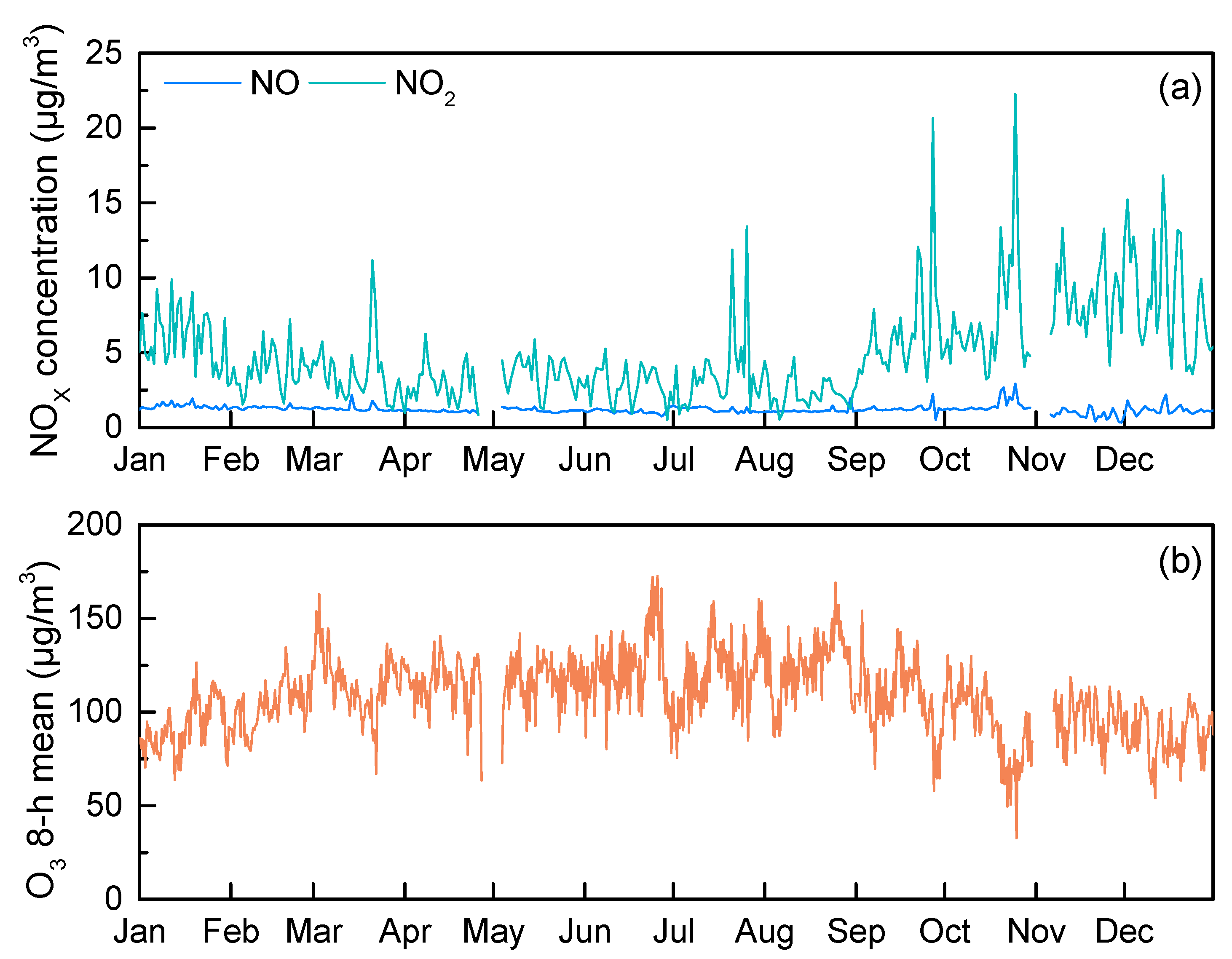
NO and NO2 variations throughout the study year are presented in Figure 2a. NO levels were considerably lower than the corresponding NO2, with 24-h averages ranging between 0.3 and 2.9 μg/m3 and without significant seasonal variations. For NO2, 24 h averages ranged between 0.5 and 22.3 μg/m3, and besides some temporal increases, NO2 exhibited significant seasonality, with higher concentrations measured during wintertime (October, November, December, January). Temporal peaks observed in March, July, October, and November lasted for a few hours within a day and are attributed to primary emissions from vehicles and burning of fossil fuels, whereas the relative increase in NO2 levels from October onward is two-fold: In the first case, NO2 was lower during summer months, as it was consumed for O3 production but increased during wintertime, where photochemical activity was significantly reduced (secondary formation or destruction). In the second case, NO2 levels were increased during wintertime due to primary emission from domestic heating [31,32].
For O3, 8 h averages are presented in Figure 2b, where concentrations ranged between 32.6 and 172.6 μg/m3. Overall, O3 preserved higher concentrations during warmer months and lower concentrations during colder months. This behavior is driven by local photochemistry, whereby O3 exhibits higher levels during summer months due to enhanced photochemistry, but considerably lower concentrations correspond to winter months, as lower temperatures and limited solar radiation inhibit O3 production [33,34].
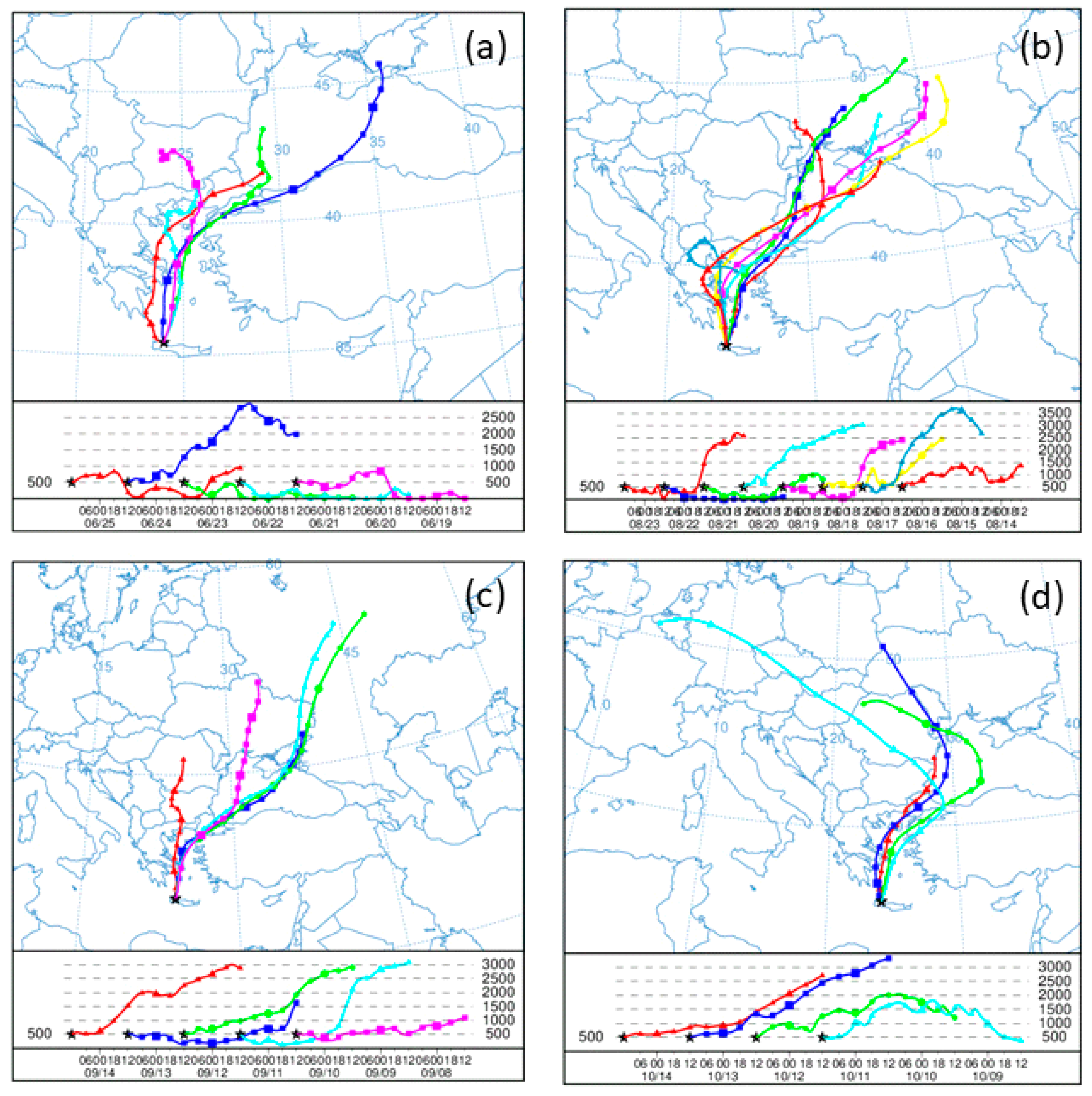
Ground-level O3 and the observed variations are subject to the photochemical cycle characteristics for each site; however, O3 regional transport is another contributor. O3 pollution episodes result in a significant increase in levels, with the Mediterranean being a hot spot for O3 accumulation from varying regions [35]. The impact from long-range O3 transport in the study area has been reported in the past [36] as well as more recently [37]. Several trends of increasing O3 concentrations that lasted for a couple of days can be observed in Figure 2b. These trends are associated with long-range traveling of O3-polluted plumes that significantly affected local O3 concentrations. Such an episode (February) has already been analyzed in a previous work [29], whereby polluted plumes from eastern Europe were the reason for increasing O3 levels. Nevertheless, other periods within the same year are identified such as mid-June, August, September, and October. For all these cases, HYSPLIT simulations suggest a northeastern European origin of air masses that seems to be a major contributor to the study area (Figure 3). O3 concentrations increased by 26.2 μg/m3, 17.3 μg/m3, 23.0 μg/m3, and 14.0 μg/m3 for the periods from the 21st to the 25th of June, the 16th to the 23rd of August, the 10th to the 14th of September, and the 10th to the 14th of October, respectively. In addition, high O3 concentrations in the study region have been recognized before and associated with large-scale subsidence of O3-rich air masses from the upper troposphere under anticyclonic conditions [38].

3.2. Comparison with EU Air Quality Standards

The yearly average concentration of NO2 was 4.9 μg/m3 and was substantially lower compared with the EU calendar year limit (20 μg/m3). In more detail, no exceedances for NO2 were obtained when compared with the different limit values and thresholds proposed by the recent EU directive (2024) (Table 1). In fact, NO2 concentrations were always substantially lower than the respective limit values, which suggests a negligible threat from this pollutant for the study area.
On the other hand, a significant number of exceedances were obtained for O3. Particularly, days with O3 concentrations higher than the 8-hour mean were 274 and were identified in all months, although not equally distributed. Exceedance days were the lowest on December 6 in total, but in warmer months (March to September), exceedances were obtained almost every day. Moreover, analysis with threshold values revealed 13 cases in which O3 concentrations were higher than the information threshold. Altogether, these observations indicate the relative burden of the study site by O3 and the possible health impact that may arise due to population exposure to these concentrations. This is in line with analyses of urban population exposure over Europe that has identified O3 as a significant surrogate for public health [39].

3.3. Diurnal Variations

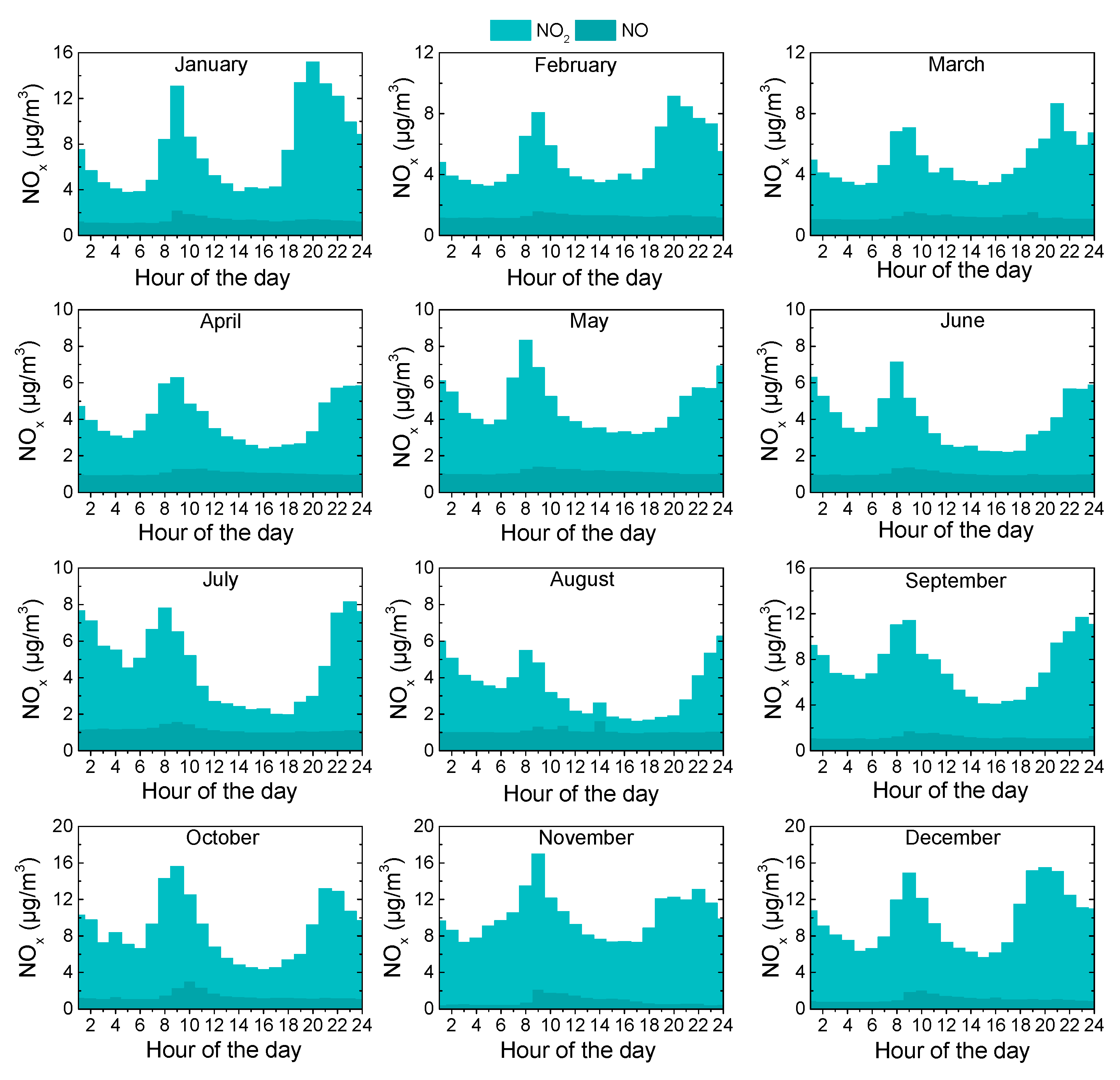
Diurnal variations per month for NO and NO2 indicate times of the day when pollutant concentrations were increased (Figure 4). For NO, an increase during morning (8 a.m.–12 p.m.) was obtained for all months and is directly linked with increased traffic during rush hours and the impact from vehicular emissions. NO is typically measured on the roadside as a primary traffic pollutant [19,40]. For the remaining hours, no significant variations were observed, which suggests that morning rush hours comprise the primary contribution to NO levels at the study site. Average hourly concentrations during morning rush hours ranged between 0.8 and 3.1 μg/m3, whereas for all the remaining hours, they ranged between 0.5 and 1.8 μg/m3.
For NO2, two distinct peaks were observed: one in the morning (8 a.m.–12 p.m.), which coincides with NO peak hours, and one in the evening (after 6 p.m. during the cold season and after 8 p.m. during the warm season). These diurnal variations originate both from anthropogenic contributions and the photochemical cycle. Traffic activity increases NO2 levels due to directly emitted NO2 from diesel vehicles [41], its formation by oxidation of the freshly emitted NO in the morning [15], or due to domestic heating emissions in winter months. The latter is characteristically observed in December and January, where higher late evening NO2 concentrations were measured (>11 μg/m3). In addition, NO2 chemical destruction takes place during daylight (reaction 1); therefore, concentrations are decreased followed by a subsequent increase after sunset [16,18]. Comparable peak concentrations were obtained between the morning and evening increase, with NO2 reaching concentrations up to 14.8 μg/m3 for the former and up to 13.9 μg/m3 for the latter.
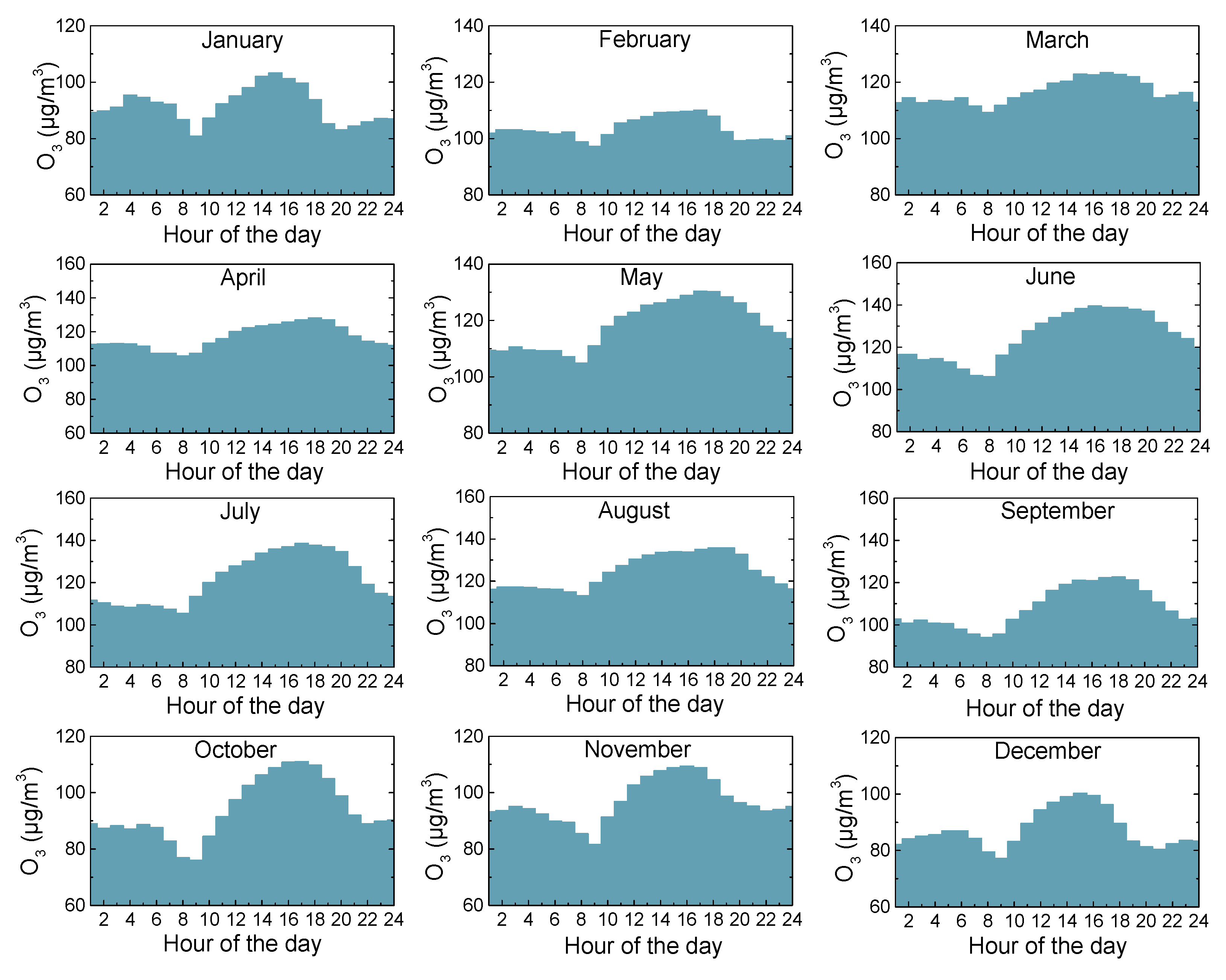
For O3, all diurnal variations (Figure 5) indicate its substantial increase during daytime, which is a direct outcome of its secondary formation in the presence of sunlight [10]. Concentrations increased rapidly after 9 am when solar radiation increased and peaked at midday (3 p.m.) in cold months (January, February, etc.) but later in the evening (6 p.m.) in typical summer months (June–August). Especially during summer months, when solar radiation was substantially increased and the duration of the day was higher compared with winter months, O3 reached the highest levels and preserved them for a couple of hours. For example, midday hourly concentrations of O3 for the typical summer months (June, July and August) lay between 133.7 and 139.5 μg/m3, whereas for the typical winter months (January, February, December), O3 levels lay between 89.6 and 110.1 μg/m3. The numbers correspond to a 36% increase in O3 concentrations during summertime.
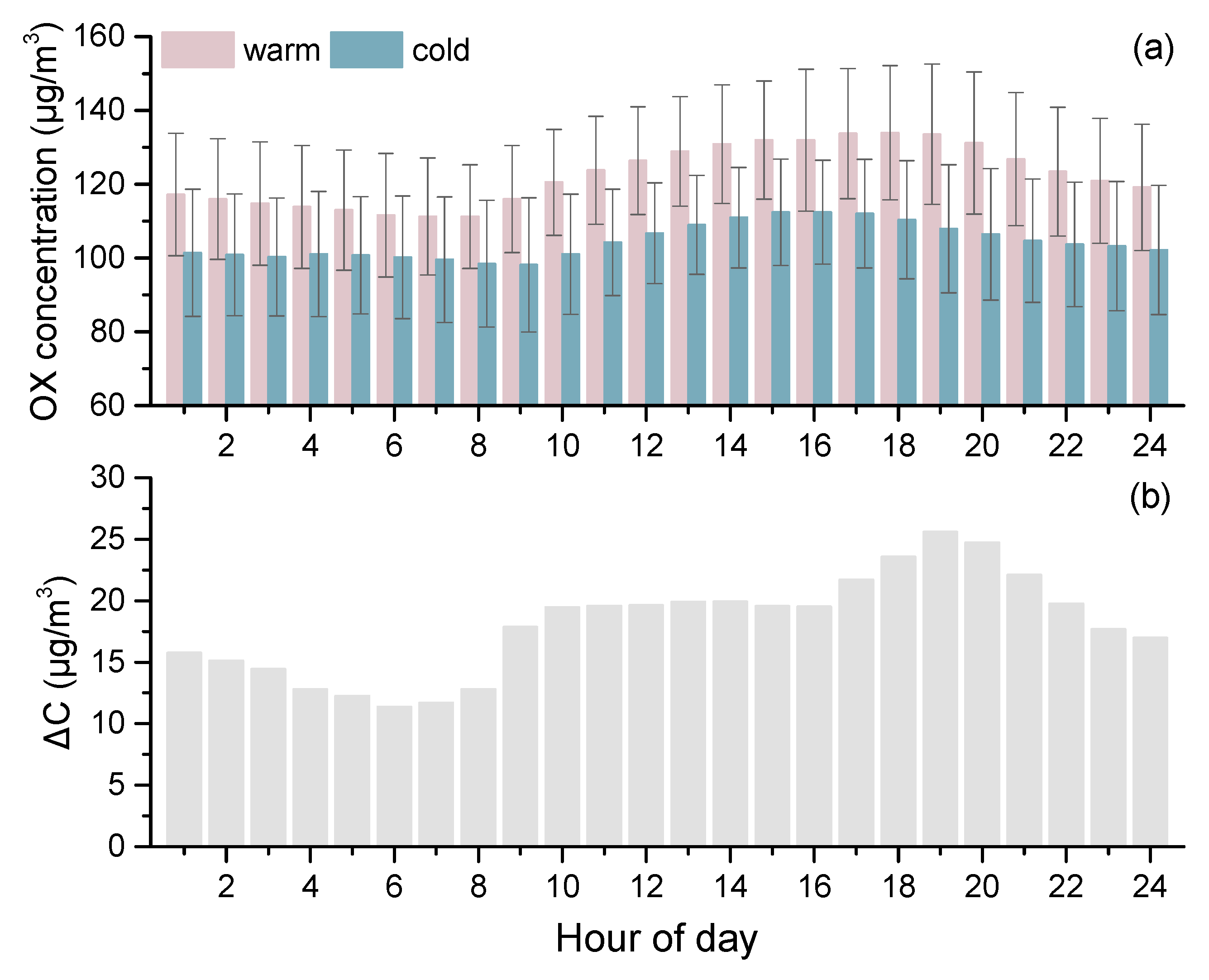
Considering the total oxidants suggests that considerably higher OX concentrations correspond to the warm months (Figure 6a). This is primarily attributed to O3 levels and to a lesser extent to NO2, as O3 preserved considerably higher hourly concentrations than NO2 (Figure 4 and Figure 5). A previous analysis that had been conducted at the study site showed that OX have a dominant regional contribution [29]. Nevertheless, a characteristic diurnal cycle of OX was found, with higher concentrations corresponding to daytime, when photochemistry peaked [18]. More interestingly, it is seen that the difference in OX concentrations between the warm and cold months preserved a constant level between 9 am and 4 p.m. This observation is attributed to the photo-stationary cycle, whereby all reactions (1, 2, and 3) reach equilibrium and result in equivalent interconversions between the pollutants throughout the year.

3.4. O3, NO, and NO2 Relationships

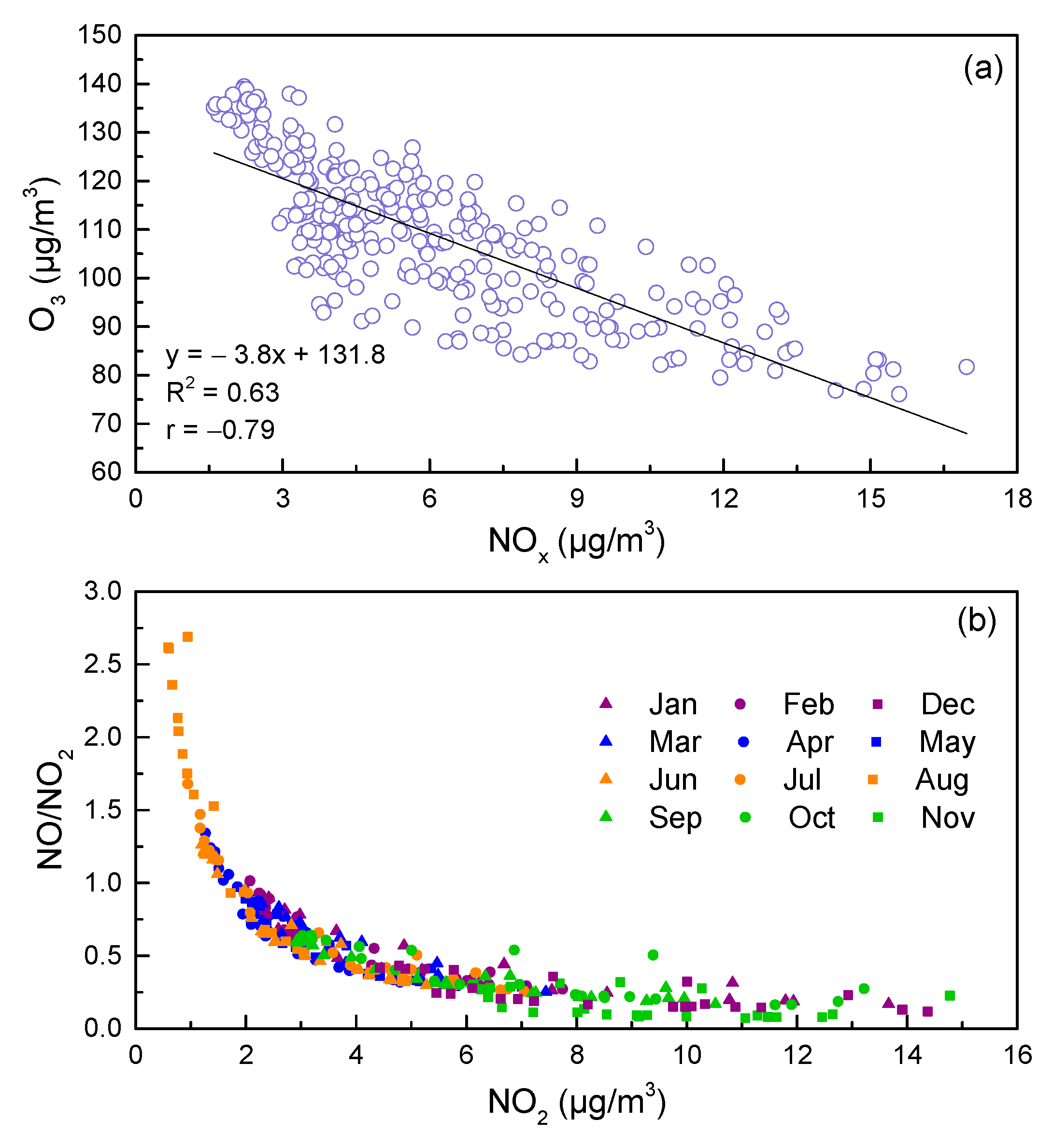
O3 and NOX variations exhibited an inverse relationship, as shown in Figure 7a. O3 concentrations were well described by a linear fit (R2 = 0.63) with a negative Pearson correlation (−0.79), indicating that high O3 concentrations are linked with low NOx concentration and vice versa. Similar observations are reported in other studies [24,42,43,44]. This negative relationship is primarily driven by NO2 concentrations, as its partition to NOx was usually dominating. The negative relationship is due to the impact of chemical reactions that produce or consume the two pollutants. For example, the higher NOx concentrations correspond to nighttime, when NO2 is significantly increased. On the other hand, higher O3 concentrations are linked with lower NOx and correspond to daytime, when photochemistry initiates NO2 destruction, which feeds O3 production. Based on the inverse relationship of O3/NOx, and in the absence of VOC concentrations, it is likely that the site is governed by the VOC-limited regime [24], which is typically observed in urban areas [45,46]. Under this regime, the VOC/NOx ratio is low, and O3 concentrations are more efficiently reduced by a reduction in VOC concentrations, as a reduction in NOx concentrations results in an O3 increase [47,48].
Furthermore, even though NO2 was usually higher than NO, some cases were identified where NO levels exceeded those of NO2. This is demonstrated in Figure 7b, where the ratio NO/NO2 takes values higher than 1 and lies in the lower NO2 region (<2 μg/m3). All these cases correspond to midday hours in summer or spring months when sunlight peaks, and the enhanced photochemistry resulted in a substantial NO2 destruction. The opposite situation was obtained in the higher NO2 region (>2 μg/m3), where NO/NO2 preserved the lowest ratios. For these cases the numbers suggest that NO2 was 4 to 5 times higher than NO, corresponding to nighttime winter and autumn seasons, and besides nighttime chemistry, they were significantly influenced by primary NO2 emitted from domestic heating.

3.5. Weekdays vs. Weekends

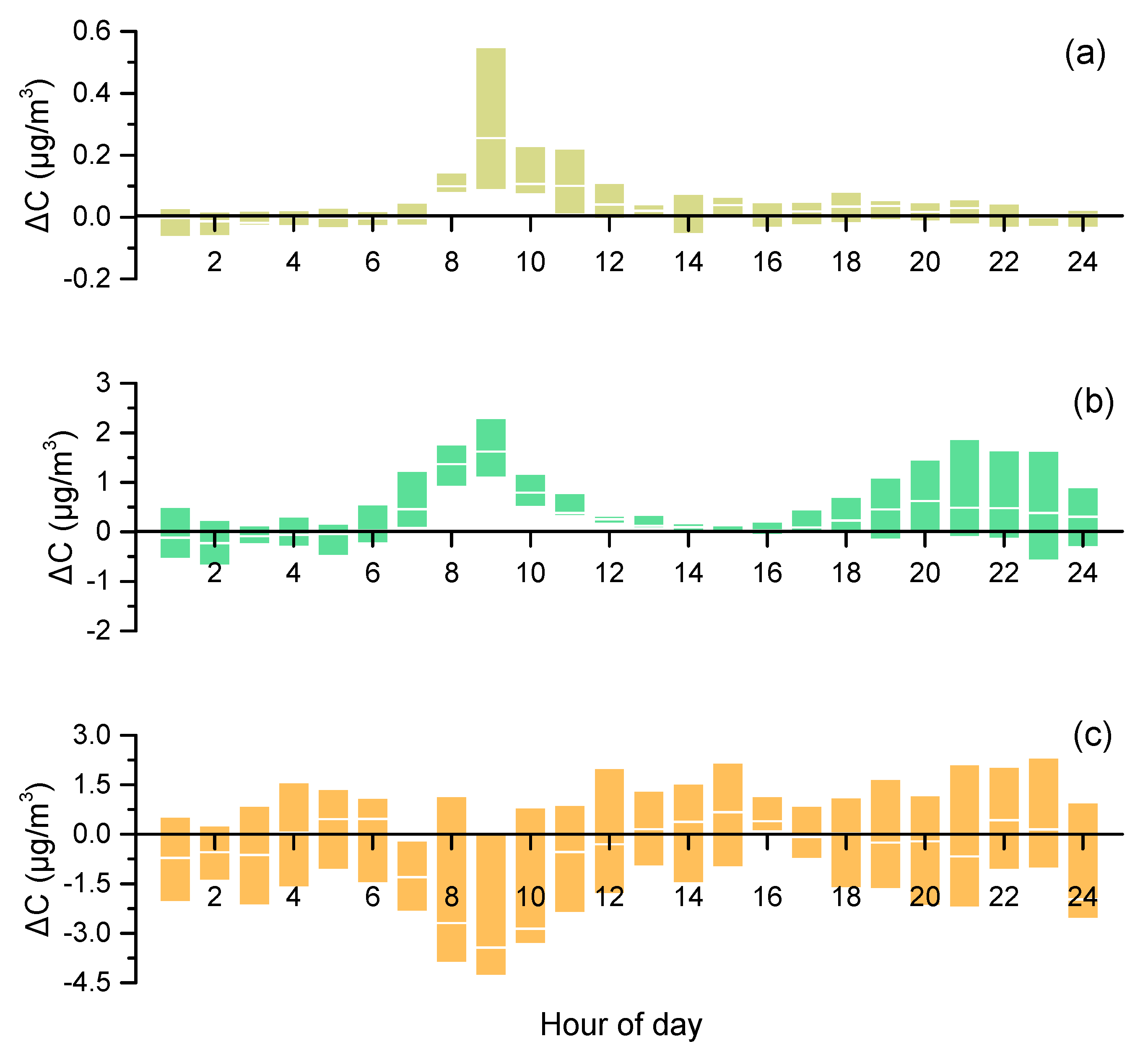
Comparison of hourly concentrations for all pollutants between weekends and weekdays is presented in Figure 8. Concentration differences indicate positive or negative values, which suggest whether higher concentrations were measured on weekdays or weekends, respectively. For NO it is characteristically seen that considerably higher concentrations were measured in morning hours during weekdays (8 a.m.–12 p.m.; Figure 8a). Elevated concentrations lay between 0.1 and 0.5 μg/m3 (25th to 75th percentile), which corresponds to a 14% increase in NO levels on weekdays. Increased primary traffic emissions from nearby streets is the reason, as people practice everyday life activities on weekdays (e.g., going to work, stores and schools opening, etc.). On the other hand, during weekends, most people stay at home; therefore, reduced traffic characterizes the study site. For the rest of the day negligible differences were obtained, which suggest minimal differences from vehicular emissions between weekdays and weekends.
Similarly, for NO2, higher concentrations were measured during weekdays on morning rush hours, which is again associated with increased traffic emissions that contribute to NO2 primary/secondary production (Figure 8b). In this case, the increase was between 0.1 and 2.3 μg/m3 (25th to 75th percentile), which is translated to 42% higher concentrations on weekdays and demonstrates the relatively higher impact of NO2 compared with NO in local air quality. However, a significant increase in NO2 levels was observed in late evening (>6 p.m.) during weekdays. Elevated concentrations ranged between 0.1 and 1.8 μg/m3 and corresponded to a 24% increase. This finding suggests reduced impact compared with morning hours and is not associated with primary emissions, but rather with nighttime chemical reactions. In the absence of sunlight, NO2 consumption becomes important through the reaction with O3 that produces NO3 and N2O5 [49]. Most likely the present observation is linked with lower NO2 consumption during night on weekdays due to lower O3 concentrations. The lower O3 concentrations during weekdays are characteristically seen in Figure 8c, where a significant number of negative values were obtained. This is typically observed in most urban areas [24,42,43,50,51], namely the weekend effect, and is associated with reduced O3 destruction during weekends due to the reduced NOx concentrations or other precursor gases. For example, it is seen that the higher difference in O3 levels between weekdays and weekends was obtained during morning rush hours (−4.3 μg/m3), which is directly linked with reduced NOx on weekends as previously commented.

3.6. Impact of Ambient Conditions

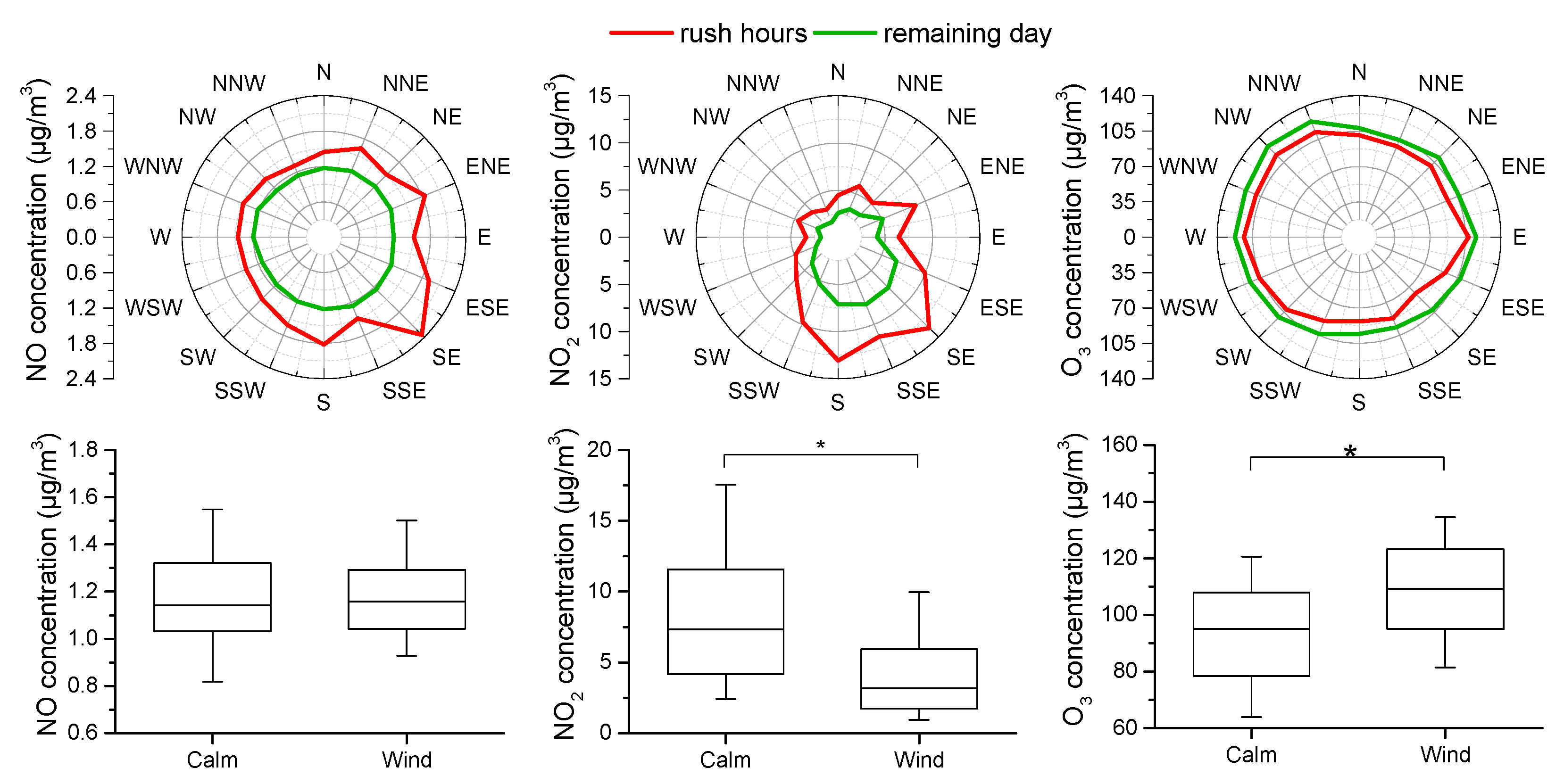
A comparison of NO and NO2 concentrations between the morning rush hours and the remaining day has revealed that directions associated with the urban environment (ENE-SE) are linked with higher concentrations (Figure 9). For both pollutants analysis with wind direction data showed that higher concentrations were obtained when wind was blowing from east-southeast directions. These directions correspond to the main urban area, whereby traffic from the nearby streets provokes an increase in NOX. Moreover, for the remaining day, it was characteristically found that NO preserved a uniform distribution, which demonstrates that the main source of NO at the study site is vehicle emissions. On the other hand, NO2 for the remaining hours of the day preserved a similar distribution as during the morning rush hours (although lower). This difference between the two pollutants suggests the presence of other factors that affect NO2 concentrations at the study site, such as primary heating emissions or secondary sources from other precursor compounds. On average, NO increased by 33% during morning rush hours, whereas NO2 increased by 75%. However, the opposite effect was obtained for O3 during morning rush hours, as an average 10% reduction was obtained. Consumption of O3 through NO titration to produce NO2 is the reason for reduced concentrations. For the same reason but having the opposite effect, slightly higher O3 concentrations correspond to the NW–N directions as weaker O3 destruction rates are associated with a cleaner marine environment.
At the same time, comparison of calms (<1 km/h) with windy hours revealed variable characteristics for the three pollutants (Figure 9). The majority of calm hours corresponded to nighttime or early morning, and the absence or presence of wind did not affect NO levels, and no overall correlation with wind speed was obtained (Table 2). On the other hand, opposite effects were obtained for NO2 and O3. Higher NO2 concentrations are linked with the absence of its photochemical destruction and primary emissions from domestic heating in wintertime, which are enhanced by the stagnant atmospheric conditions and lowering of the boundary layer. In addition, the negative Pearson correlation between NO2 and wind speed (−0.37) implies the influence of air dilution at higher wind speeds. Lower concentrations during calm hours are associated with no O3 production during nighttime, but the weak positive Pearson correlation with wind speed can be associated with transport of O3-rich plumes. For the remaining correlations with the other meteorological variables in Table 2, the higher values were obtained between O3 and temperature (0.48), solar radiation (0.42), and relative humidity (−0.48). All these correlations are indicators that warmer and sunny ambient conditions enhanced O3 formation [52,53].

4. Conclusions

In this work the variations in NO, NO2, and O3 were investigated to identify the main driving factors that affected their levels and characteristics. Measurements were performed at a suburban site; therefore, NOx concentrations were generally low, although specific sources and contributions were recognized.
In particular, NO was characteristically increased during morning rush hours, suggesting the impact of traffic emissions. No seasonality was identified, nor the impact from other anthropogenic sources. On the other hand, the anthropogenic source that affected NO2 levels primarily was domestic heating in the late evening during wintertime. NO2 secondary formation from the emitted NO during morning rush hours was another contribution, accompanied by primary traffic emissions to a lesser extent. In addition, photochemistry was a driving factor for both diurnal and seasonal variations, which dominated O3 variations as well. The two pollutants were linked with a strong negative relationship, demonstrating the crucial role of photochemistry, whereby O3 production was initiated by NO2 destruction during daytime. For this reason, O3 concentrations were enhanced in summertime, when solar radiation is stronger and days last longer. Regional transport of polluted plumes from northeast Europe, as well as large-scale tropospheric subsidence originating from upper tropospheric layers, were additional contributors that elevated O3 concentrations frequently during the study year and lasted for a couple of days.
From an air quality perspective, NO2 levels were constantly lower than the respective EU limit values and thresholds, whereas a significant burden of the study site was recognized by O3, mostly during the warm season. Although NO2 was dominating over NO, midday hours during summer months were characterized by higher NO associated with enhanced photochemical destruction of NO2. Moreover, comparison of pollutant levels between weekdays and weekends revealed the relatively higher concentrations of NO and NO2 on weekdays and the relatively higher concentrations of O3 on weekends. This work highlighted that the NOX and O3 interplay contributes to pollutant levels, and even though suburban environments are characterized by lower concentrations, indirect contributions can affect their variations significantly.

Author Contributions

Conceptualization, S.E.C. and M.L.; methodology, S.E.C. and M.L.; formal analysis, S.E.C. and I.K.; investigation, S.E.C. and I.K.; data curation, S.E.C.; writing—original draft preparation, S.E.C., I.K. and M.L.; writing—review and editing, S.E.C. and M.L.; funding acquisition, M.L. All authors have read and agreed to the published version of the manuscript.

Funding

This work was funded by the PANhellenic infrastructure for Atmospheric Composition and climatEchAnge (PANACEA) Project (MIS 5021516), implemented under the Action Reinforcement of the Research and Innovation Infrastructure, and the Operational Program Competitiveness, Entrepreneurship, and Innovation (NSRF 2014–2020), co-financed by Greece and the European Union (European Regional Development Fund). This work was supported by the NSFR 2014–2020 of the European Union under the SXEDIA initiative (5044838) through the cooperation of the Technical University of Crete, the University of Crete and the Prefecture of Crete (Greece).

Institutional Review Board Statement

Not applicable.

Informed Consent Statement

Not applicable.

Data Availability Statement

Dataset is available on request from the authors.

Conflicts of Interest

The authors declare no conflicts of interest.

References

  1. Wang, L.; Wang, J.; Tan, X.; Fang, C. Analysis of NOx Pollution Characteristics in the Atmospheric Environment in Changchun City. Atmosphere 2020, 11, 30. [Google Scholar] [CrossRef]
  2. Zarghamipour, M.; Malakooti, H.; Bordbar, M.H. Spatio-temporal Analysis of the factors affecting NOx concentration during the evaluation cycle of high pollution episodes in Tehran metropolitan. Atmos. Pollut. Res. 2024, 15, 102177. [Google Scholar] [CrossRef]
  3. Tian, Y.; Jian, H.-M.; Liu, C.-Y.; Gong, J.-C.; Li, P.-F.; Yang, G.-P. Distribution and influencing factors of atmospheric nitrogen oxides (NOx) over the east coast of China in spring: Indication of the sea as a sink of the atmospheric NOx. Mar. Pollut. Bull. 2024, 200, 116095. [Google Scholar] [CrossRef]
  4. Ren, J.; Zhu, L.; Zhang, X.; Luo, Y.; Zhong, X.; Li, B.; Wang, Y.; Zhang, K. Variation characteristics of acid rain in Zhuzhou, Central China over the period 2011–2020. J. Environ. Sci. 2024, 138, 496–505. [Google Scholar] [CrossRef]
  5. Hesterberg, T.W.; Bunn, W.B.; McClellan, R.O.; Hamade, A.K.; Long, C.M.; Valberg, P.A. Critical review of the human data on short-term nitrogen dioxide (NO2) exposures: Evidence for NO2 no-effect levels. Crit. Rev. Toxicol. 2009, 39, 743–781. [Google Scholar] [CrossRef] [PubMed]
  6. Yang, S.; Li, M.; Guo, C.; Requia, W.J.; Sakhvidi, M.J.Z.; Lin, K.; Zhu, Q.; Chen, Z.; Cao, P.; Yang, L.; et al. Associations of long-term exposure to nitrogen oxides with all-cause and cause-specific mortality. Nat. Commun. 2025, 16, 1730. [Google Scholar] [CrossRef]
  7. Taha, S.S.; Idoudi, S.; Alhamdan, N.; Ibrahim, R.H.; Surkatti, R.; Amhamed, A.; Alrebei, O.F. Comprehensive review of health impacts of the exposure to nitrogen oxides (NOx), carbon dioxide (CO2), and particulate matter (PM). J. Hazard. Mater. Adv. 2025, 19, 100771. [Google Scholar] [CrossRef]
  8. Li, K.; Jacob, D.J.; Liao, H.; Kuk, S.K. Ozone pollution in the North China Plain spreading into the late-winter haze season. Proc. Natl. Acad. Sci. USA 2021, 118, e2015797118. [Google Scholar] [CrossRef] [PubMed]
  9. Jiang, Z.; Tang, M.-X.; He, L.; Li, J.-H.; Hong, Y.; He, L.-Y.; Huang, X.-F. Unveiling the HONO Offsetting Effect: Rethinking NOx Emission Controls during Urban Ozone Pollution Episodes. Environ. Sci. Technol. 2025, 59, 22050–22059. [Google Scholar] [CrossRef]
  10. Monks, P.S.; Archibald, A.T.; Colette, A.; Cooper, O.; Coyle, M.; Derwent, R.; Fowler, D.; Granier, C.; Law, K.S.; Mills, G.E.; et al. Tropospheric ozone and its precursors from the urban to the global scale: From air quality to short-lived climate forcer. Atmos. Chem. Phys. 2015, 15, 8889–8973. [Google Scholar] [CrossRef]
  11. Kim, S.-Y.; Kim, E.; Kim, W.J. Health Effects of Ozone on Respiratory Diseases. Tuberc. Respir. Dis. 2020, 83, 6–11. [Google Scholar] [CrossRef]
  12. Gao, A.; You, Z.; Liao, C.; Yin, Z.; Zhang, B.; Zhang, H. Health effects associated with ozone in China: A systematic review. Environ. Pollut. 2025, 367, 125642. [Google Scholar] [CrossRef]
  13. Vongelis, P.; Koulouris, N.G.; Bakakos, P.; Rovina, N. Air Pollution and Effects of Tropospheric Ozone (O3) on Public Health. Int. J. Environ. Res. Public Health 2025, 22, 709. [Google Scholar] [CrossRef] [PubMed]
  14. Cristofanelli, P.; Bonasoni, P. Background ozone in the southern Europe and Mediterranean area: Influence of the transport processes. Environ. Pollut. 2009, 157, 1399–1406. [Google Scholar] [CrossRef]
  15. Tiwari, S.; Dahiya, A.; Kumar, N. Investigation into relationships among NO, NO2, NOx, O3, and CO at an urban background site in Delhi, India. Atmos. Res. 2015, 157, 119–126. [Google Scholar] [CrossRef]
  16. Tong, L.; Zhang, H.; Yu, J.; He, M.; Xu, N.; Zhang, J.; Qian, F.; Feng, J.; Xiao, H. Characteristics of surface ozone and nitrogen oxides at urban, suburban and rural sites in Ningbo, China. Atmos. Res. 2017, 187, 67–68. [Google Scholar] [CrossRef]
  17. Kasparoglu, S.; Incecik, S.; Topcu, S. Spatial and temporal variation of O3, NO and NO2 concentrations at rural and urban sites in Marmara Region of Turkey. Atmos. Pollut. Res. 2018, 9, 1009–1020. [Google Scholar] [CrossRef]
  18. Ravina, M.; Caramitti, G.; Panepinto, D.; Zanetti, M. Air quality and photochemical reactions: Analysis of NOx and NO2 concentrations in the urban area of Turin, Italy. Air Qual. Atmos. Health 2022, 15, 541–558. [Google Scholar] [CrossRef] [PubMed]
  19. Chaney, A.M.; Cryer, D.J.; Nicholl, E.J.; Seaskins, P.W. NO and NO2 interconversion downwind of two different line sources in suburban environments. Atmos. Environ. 2011, 45, 5863–5871. [Google Scholar] [CrossRef]
  20. Melkonyan, A.; Kuttler, W. Long-term analysis of NO, NO2 and O3 concentrations in North Rhine-Westphalia, Germany. Atmos. Environ. 2012, 60, 316–326. [Google Scholar] [CrossRef]
  21. Directive (EU) 2024/1760 of the European Parliament and of the Council of 13 June 2024 on Corporate Sustainability due Diligence and Amending Directive (EU) 2019/1937 and Regulation (EU) 2023/2859. Available online: https://eur-lex.europa.eu/eli/dir/2024/1760/oj/eng (accessed on 10 December 2025).
  22. World Health Organization. WHO Global Air Quality Guidelines. Particulate Matter (PM2.5 and PM10), Ozone, Nitrogen Dioxide and Carbon Monoxide; License CC BY-NC-SA 3.0 IGO; WHO: Geneva, Switzerland, 2021. [Google Scholar]
  23. Clapp, L.J.; Jenkin, M.E. Analysis of the relationship between ambient levels of O3, NO2 and NO as a function of NOx in the UK. Atmos. Environ. 2011, 35, 6391–6405. [Google Scholar] [CrossRef]
  24. Song, F.; Shin, J.Y.; Jusino-Atresino, R.; Go, Y. Relationships among the springtime ground–level NOx, O3 and NO3 in the vicinity of highways in the US East Coast. Atmos. Pollut. Res. 2011, 2, 374–383. [Google Scholar] [CrossRef]
  25. Taheri, A.; Khorsandi, B.L.; Alavi Moghaddam, R.A. Long-term analysis of oxidant (OX = O3 + NO2) and its local and regional levels in Tehran, Iran, a high NOx-saturated condition. Sci. Rep. 2025, 15, 2521. [Google Scholar] [CrossRef] [PubMed]
  26. Kopanakis, I.; Mammi-Galani, E.; Pentari, D.; Glytsos, T.; Lazaridis, M. Ambient Particulate Matter Concentration Levels and their Origin During Dust Event Episodes in the Eastern Mediterranean. Aerosol Sci. Eng. 2018, 2, 61–73. [Google Scholar] [CrossRef]
  27. Kopanakis, Ι.; Chatoutsidou, S.E.; Glytsos, T.; Lazaridis, M. Impact from local sources and variability of fine particle number concentration in a coastal sub-urban site. Atmos. Res. 2018, 213, 136–148. [Google Scholar] [CrossRef]
  28. Chatoutsidou, S.E.; Lazaridis, M. Mass concentrations and elemental analysis of PM2.5 and PM10 in a coastal Mediterranean site: A holistic approach to identify contributing sources and varying factors. Sci. Total Environ. 2022, 838, 155980. [Google Scholar] [CrossRef]
  29. Chatoutsidou, S.E.; Lazaridis, M. Investigating the role of photochemistry and impact of regional and local contributions on gaseous pollutant concentrations (NO, NO2, O3, CO, and SO2) at urban and suburban sites. Atmos. Pollut. Res. 2024, 15, 102322. [Google Scholar] [CrossRef]
  30. Lagouvardos, K.; Kotroni, V.; Bezes, A.; Koletsis, I.; Kopania, T.; Lykoudis, S.; Mazarakis, N.; Papagiannaki, K.; Vougioukas, S. The automatic weather stations NOANN network of the National Observatory of Athens: Operation and database. Geosci. Data J. 2017, 4, 4–16. [Google Scholar] [CrossRef]
  31. Meng, K.; Xu, X.; Cheng, X.; Xu, X.; Qu, X.; Zhu, W.; Ma, C.; Yang, Y.; Zhao, Y. Spatio-temporal variations in SO2 and NO2 emissions caused by heating over the Beijing-Tianjin-Hebei Region constrained by an adaptive nudging method with OMI data. Sci. Total Environ. 2018, 642, 543–552. [Google Scholar] [CrossRef]
  32. Salva, J.; Poništ, J.; Rasulov, O.; Schwarz, M.; Vanek, M.; Sečkár, M. The impact of heating systems scenarios on air pollution at selected residential zone: A case study using AERMOD dispersion model. Environ. Sci. Eur. 2023, 35, 91. [Google Scholar] [CrossRef]
  33. Parrish, D.D.; Galbally, I.E.; Lamar, J.-F.; Horowitz, L.; Shindell, D.T.; Oltmans, S.J.; Derwent, R.; Tanimoto, H.; Labuschagne, C.; Cupeiro, M. Seasonal cycles of O3 in the marine boundary layer: Observation and model simulation comparisons. J. Geophys. Res. Atmos. 2015, 121, 538–557. [Google Scholar] [CrossRef]
  34. Conil, S.; Bergametti, G.; Langrene, L.; Lopez, M.; Masson, O.; Pallares, C.; Ramonet, M. Surface Ozone: Seasonal cycles, trends and events, a new perspective from the OPE station in France over the 2012–2023 period. EGUsphere 2025. [Google Scholar] [CrossRef]
  35. Gaudel, A.; Cooper, O.R.; Ancellet, G.; Barret, B.; Boynard, A.; Burrows, J.P.; Clerbaux, C.; Coheur, P.-F.; Cuesta, J.; Cuevas, E.; et al. Tropospheric Ozone Assessment Report: Present-day distribution and trends of tropospheric ozone relevant to climate and global atmospheric chemistry model evaluation. Elem. Sci. Anthr. 2018, 6, 39. [Google Scholar] [CrossRef]
  36. Kouvarakis, G.; Vrekoussis, M.; Mhalopoulos, N.; Kourtidis, K.; Rappenglueck, B.; Gerasopoulos, E.; Zerefos, C. Spatial and temporal variability of tropospheric ozone (O3) in the boundary layer above the Aegean Sea (eastern Mediterranean). J. Geophys. Res. Atmos. 2000, 107, D18. [Google Scholar] [CrossRef]
  37. Kalabokas, P.; Hjorth, J.; Foret, G.; Dufour, G.; Eremenko, M.; Siour, G.; Cuesta, J.; Beekmann, M. An investigation on the origin of regional springtime ozone episodes in the western Mediterranean. Atmos. Chem. Phys. 2017, 17, 3905–3928. [Google Scholar] [CrossRef]
  38. Kalabokas, P.D.; Cammas, J.-P.; Thouret, V.; Volz-Thomas, A.; Boulanger, D.; Repapis, C.C. Examination of the atmospheric conditions associated with high and low summer ozone levels in the lower troposphere over the easter Mediterranean. Atmos. Chem. Phys. 2013, 13, 10339–10352. [Google Scholar] [CrossRef]
  39. Sicard, P.; Agathokleous, E.; De Marco, A.; Paoletti, E.; Calatayud, V. Urban population exposure to air pollution in Europe over the last decades. Environ. Sci. Eur. 2021, 33, 28. [Google Scholar] [CrossRef]
  40. Kendrick, C.M.; Koonce, P.; George, L.A. Diurnal and seasonal variations of NO, NO2 and PM2.5 mass as a function of traffic volumes alongside an urban arterial. Atmos. Environ. 2015, 122, 133–141. [Google Scholar] [CrossRef]
  41. Carslaw, D.C.; Beevers, S.D.; Tate, J.E.; Westmoreland, E.J.; Williams, M.L. Recent evidence concerning higher NOx emissions from passenger cars and light duty vehicles. Atmos. Environ. 2011, 45, 7053–7063. [Google Scholar] [CrossRef]
  42. Han, S.; Bian, H.; Feng, Y.; Liu, A.; Li, X.; Zeng, F.; Zhang, X. Analysis of the Relationship between O3, NO and NO2 in Tianjin, China. Aerosol Air Qual. Res. 2011, 11, 128–139. [Google Scholar] [CrossRef]
  43. Im, U.; Incecik, S.; Guler, M.; Tek, A.; Topcu, S.; Unal, Y.S.; Yenigun, O.; Kindap, T.; Odman, M.T.; Tayanc, M. Analysis of surface ozone and nitrogen oxides at urban, semi-rural and rural sites in Istanbul, Turkey. Sci. Total Environ. 2013, 443, 920–931. [Google Scholar] [CrossRef]
  44. Pancholi, P.; Kumar, A.; Bikundia, D.S.; Chourasiya, S. An observation of seasonal and diurnal behavior of O3–NOx relationships and local/regional oxidant (OX = O3 + NO2) levels at a semi-arid urban site of western India. Sustain. Environ. Res. 2018, 28, 79–89. [Google Scholar] [CrossRef]
  45. Liu, C.; Xin, Y.; Zhang, C.; Liu, J.; Liu, P.; He, X.; Mu, Y. Ambient volatile organic compounds in urban and industrial regions in Beijing: Characteristics, source apportionment, secondary transformation and health risk assessment. Sci. Total Environ. 2023, 855, 158873. [Google Scholar] [CrossRef]
  46. Qiu, Y.; Wenxuan, C.; Liu, Y.; Song, M.; Tian, X.; Zou, Q.; Lou, W.; Zhang, W.; Li, J.; Zhang, Y. Insights into ozone pollution control in urban areas by decoupling meteorological factors based on machine learning. Atmos. Chem. Phys. 2025, 25, 1749–1763. [Google Scholar] [CrossRef]
  47. Li, Y.; Li, J.; Yang, Z.; Chen, T.; Wang, J.; Ma, J.; Gao, H.; Huang, T. The transition from a nitrogen oxides-limited regime to a volatile organic compounds-limited regime in the petrochemical industrialized Lanzhou City, China. Atmos. Res. 2022, 269, 106035. [Google Scholar] [CrossRef]
  48. Ye, X.; Yang, J.; Wang, R.; Sun, J.; Liu, Z.; Chen, Z.; Li, G.; Shen, Z. From sensitivity regimes to policy action: Evaluating EKMA curve effectiveness with WRF-Chem, OBM, and machine learning. Atmos. Environ. 2026, 365, 121689. [Google Scholar] [CrossRef]
  49. Brown, S.S.; Stutz, J. Nighttime radical observations and chemistry. Chem. Soc. Rev. 2012, 41, 6405–6447. [Google Scholar] [CrossRef]
  50. Qin, Y.; Tonnesen, G.S.; Wang, Z. Weekend/Weekday Differences of Ozone, NOx, CO, VOCs, PM10 and the Light Scatter during Ozone Season in Southern California. Atmos. Environ. 2004, 38, 3069–3087. [Google Scholar] [CrossRef]
  51. Khoder, M.I. Diurnal, seasonal and weekdays–weekends variations of ground level ozone concentrations in an urban area in greater Cairo. Environ. Monit. Assess. 2009, 149, 349–362. [Google Scholar] [CrossRef]
  52. Liu, X.; Wang, Y.; Wasti, S.; Lee, T.; Li, W.; Zhou, S.; Flynn, J.; Sheesley, R.J.; Usenko, S.; Liu, F. Impacts of anthropogenic emissions and meteorology on spring ozone differences in San Antonio, Texas between 2017 and 2021. Sci. Total Environ. 2024, 914, 169693. [Google Scholar] [CrossRef]
  53. Xue, J.; Liao, H.; Li, J. Nighttime ozone excess days and the associated meteorological conditions in the North China Plain from 2015 to 2022. Atmos. Environ. 2024, 330, 120561. [Google Scholar] [CrossRef]
Figure 1. Map of the Mediterranean basin with the location of the sampling site.
Atmosphere 17 00007 g001
Figure 2. Average 24 h concentrations for NO and NO2 (a) and average 8 h concentrations for O3 (b).
Atmosphere 17 00007 g002
Figure 3. HYSPLIT simulations for (a) 21st to 25th of June, (b) 16th to 23rd of August, (c) 10th to 14th of September, and (d) 10th to 14th of October.
Atmosphere 17 00007 g003
Figure 4. Hourly average concentrations of NO and NO2 per month. Scales on the y-axis range based on monthly levels.
Atmosphere 17 00007 g004
Figure 5. Hourly average concentrations of O3 per month. Scales on the y-axis range based on monthly levels.
Atmosphere 17 00007 g005
Figure 6. (a) Diurnal variations (average ± st.dev.) of Ox concentrations for warm (April to September) and cold months (January to March, October to December) and (b) difference in Ox concentrations between warm and cold months.
Atmosphere 17 00007 g006
Figure 7. (a) O3 vs. NOx concentrations and (b) NO/NO2 vs. NO2. Average hourly concentrations per month are plotted (n = 288).
Atmosphere 17 00007 g007
Figure 8. Concentration difference between weekdays and weekends per hour of the day for (a) NO, (b) NO2, and (c) O3. Average hourly concentrations were used from all measured data, with positive values indicating higher concentrations on weekdays. The boxes range from the 25th to 75th percentile, and the horizontal white line is the median (50th percentile).
Atmosphere 17 00007 g008
Figure 9. Comparison of pollutant concentrations (NO, NO2, O3) between morning rush hours and the remaining days (top plots) and comparison of pollutant concentrations (NO, NO2, O3) between calm hours and windy hours. The asterisk indicates statistically significant results (p < 0.05).
Atmosphere 17 00007 g009
Table 1. Comparison of NO2 and O3 concentrations measured at Akrotiri station in 2023 with EU limit values for the protection of human health, information thresholds, and alert thresholds.
Limit ValuesThreshold Threshold
1 h1 dayCalendar yearInformation (1 h)Alert (1 h)
Value200 μg/m350 μg/m320 μg/m3150 μg/m3200 μg/m3
NO2-----
Maximum daily 8-h meanInformation (1 h)Alert (1 h)
Value100 μg/m3180 μg/m3240 μg/m3
O327413-
Table 2. Pearson correlations between the three pollutants and temperature, relative humidity, wind speed, and solar radiation. All correlations were statistically significant (p < 0.05).
TemperatureRelative HumidityWind SpeedSolar Radiation
NO−0.03−0.01−0.030.08
NO2−0.210.24−0.37−0.31
O30.48−0.480.230.42
Disclaimer/Publisher’s Note: The statements, opinions and data contained in all publications are solely those of the individual author(s) and contributor(s) and not of MDPI and/or the editor(s). MDPI and/or the editor(s) disclaim responsibility for any injury to people or property resulting from any ideas, methods, instructions or products referred to in the content.