
Spatiotemporal Evolution Characteristics of Summer Dry-Heat Compound Events in Liaoning Province

Abstract
1. Introduction
2. Study Area and Data Sources
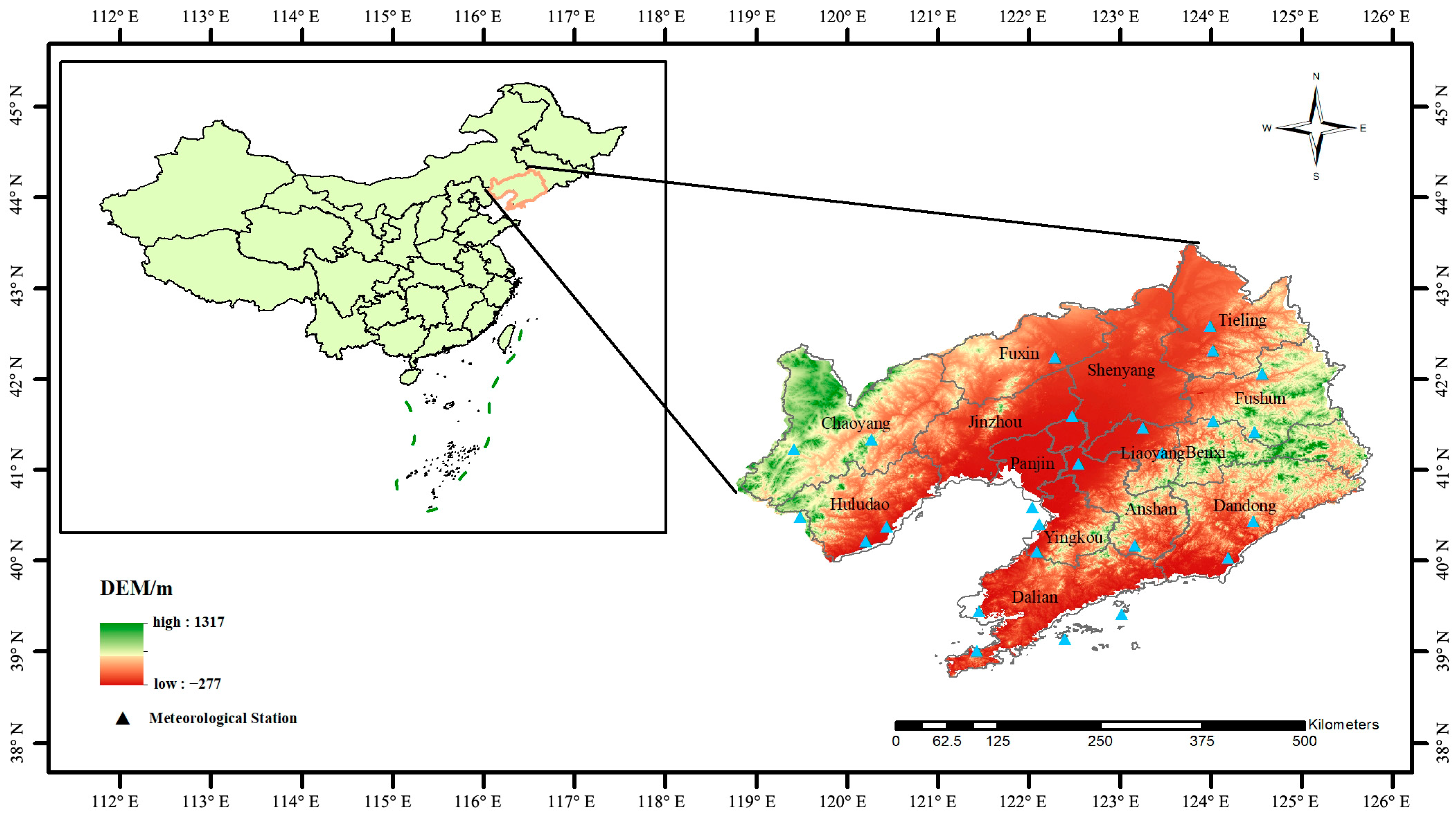
2.1. Study Area
2.2. Data Sources
3. Methodology
3.1. Construction of Index and Classification of Ranks
3.2. Run Theory
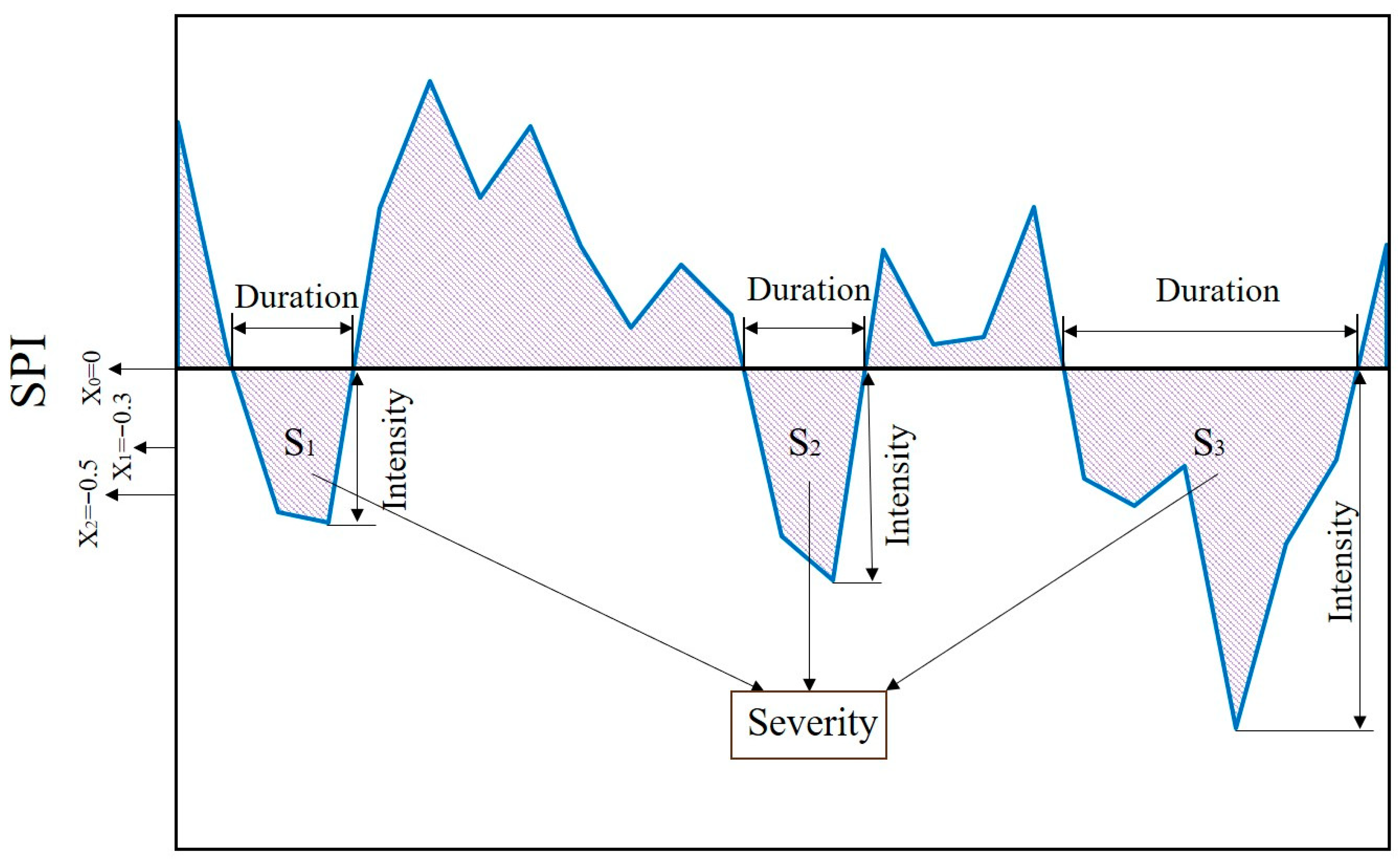
- Handling of small dry-heat events: to avoid attenuation of statistical significance due to interference from short-term weak signals, it is necessary to establish threshold-screening criteria to implement validity assessment and sample integration for microscale dry-heat events.
- Merging of dry-heat events: for serialised dry-heat segments separated by transient wet or cool periods, intelligent splicing of fragmented events is achieved through time-domain continuity analysis to construct complete dry-heat processes with hydrological coherence.
- Initial dry-heat judgement: if the SDHI of a month is lower than the X1 threshold, an initial dry-heat judgement signal is triggered.
- Single-month event filtering: for water-deficit events with a duration of 1 month, when the SDHI value exceeds the X2 threshold, the event-culling operation is performed.
- Associated event fusion: when there is a single-month interval between adjacent dry-heat events and the SDHI for that intervening month does not reach the X0 benchmark value, the event-fusion procedure is initiated. The total duration after fusion is the sum of the original durations plus the number of intervening months, and the total severity is the algebraic sum of the intensities of the sub-events; otherwise, the status of independent events is retained.
3.3. Mann–Kendall Mutation Test
3.4. Copula Function
3.5. Climate Propensity Rate
4. Results and Analysis
4.1. Characterisation of the Distribution of Summer Drought in Liaoning Province
4.1.1. Characterisation of the Temporal Distribution
4.1.2. Characterisation of the Spatial Distribution
4.2. Characterisation of Summer High Temperature Distribution in Liaoning Province
4.2.1. Characterisation of the Temporal Distribution
4.2.2. Characterisation of the Spatial Distribution
4.3. Characterisation of the Distribution of Summer Dry-Heat Complexes in Liaoning Province
4.3.1. Characterisation of the Temporal Distribution
4.3.2. Characterisation of the Spatial Distribution
4.4. Climate Propensity for Summer Drought, High Temperature, and Dry-Heat Events in Liaoning Province
5. Discussion
6. Conclusions
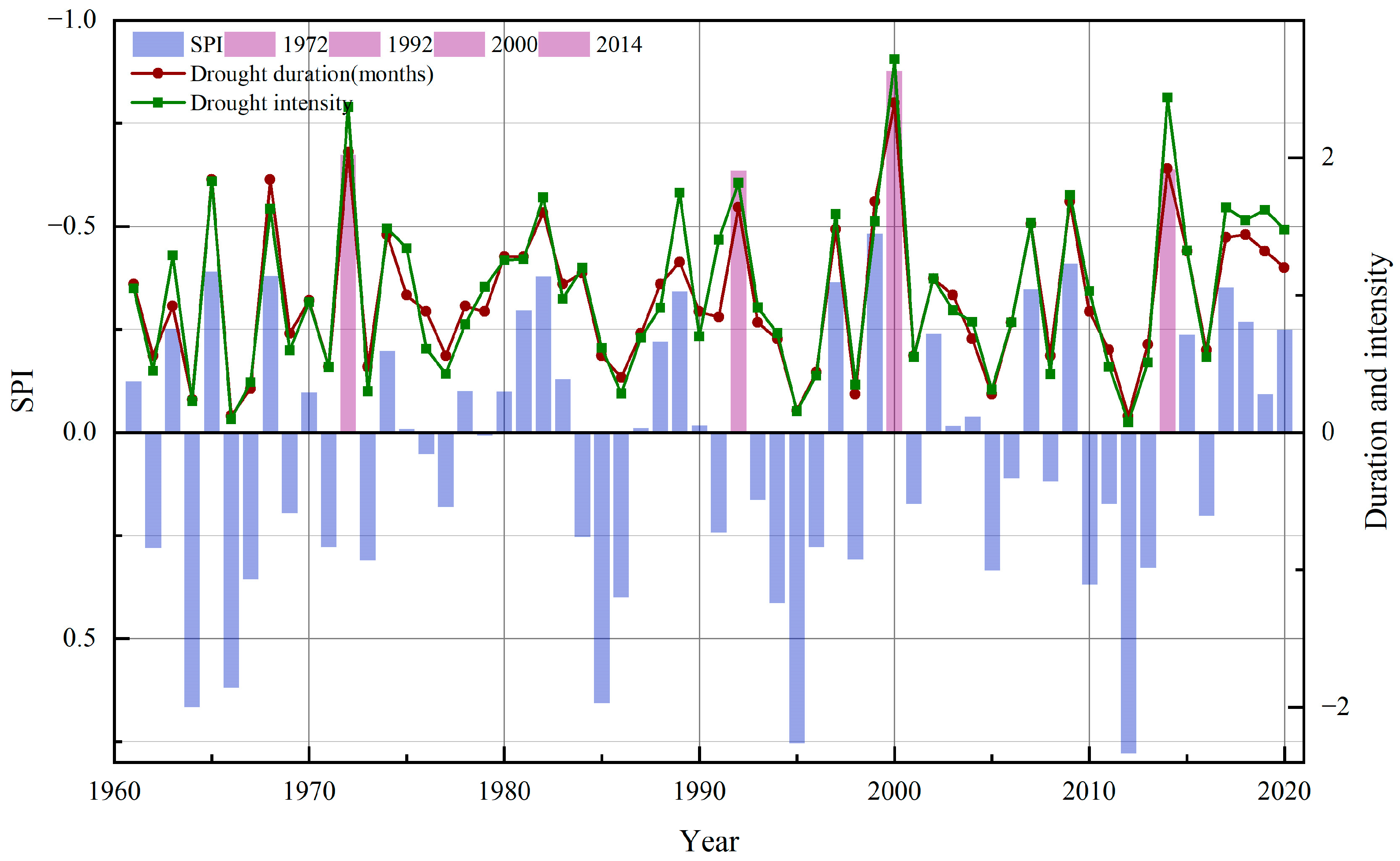
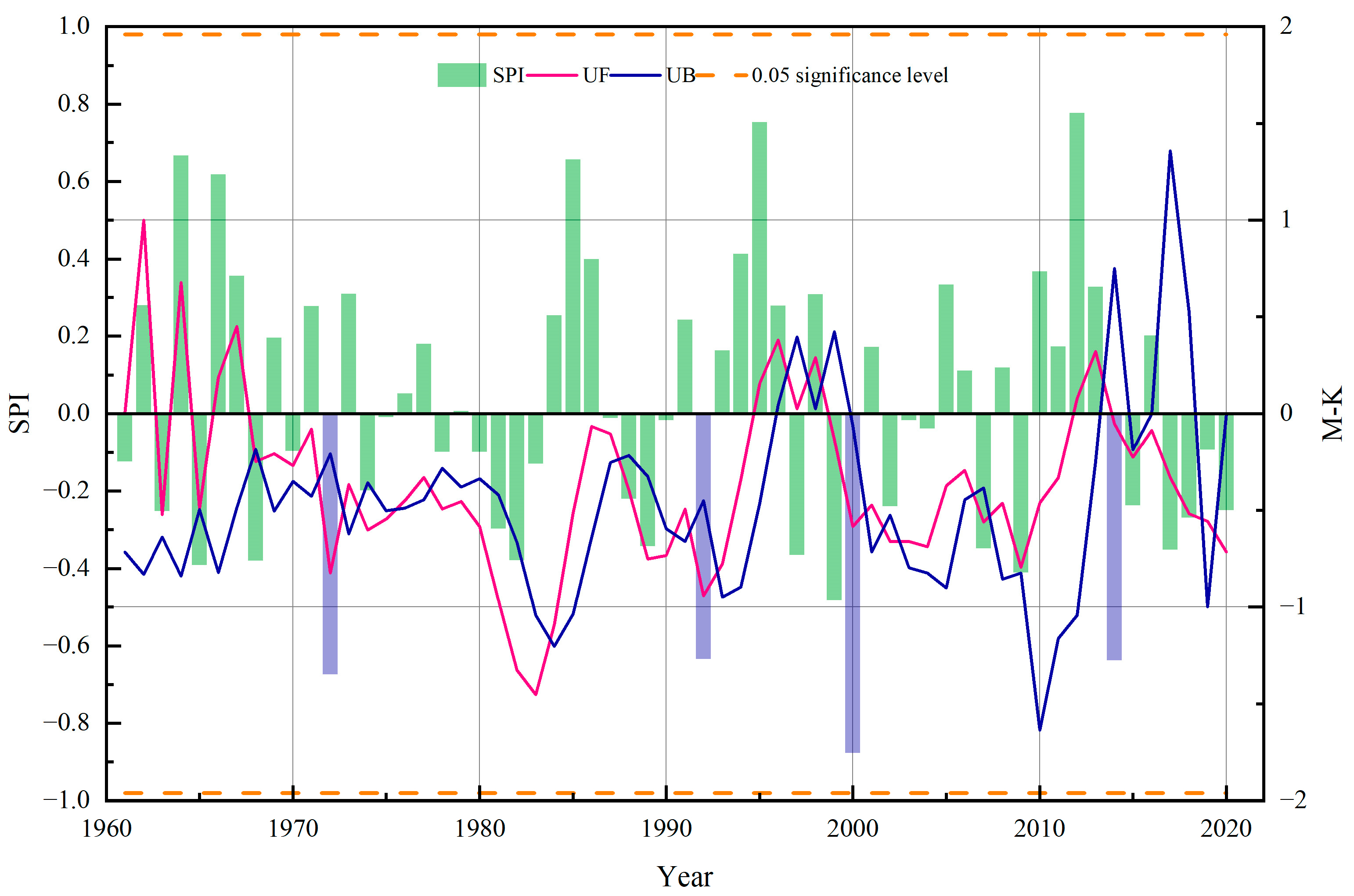
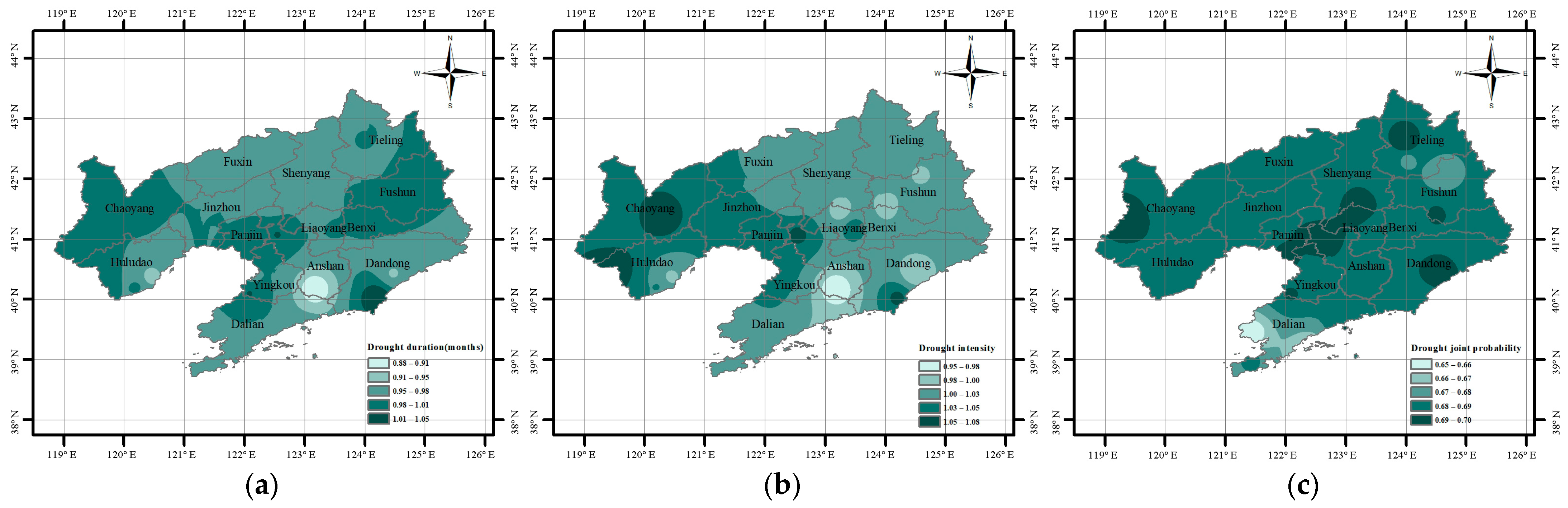
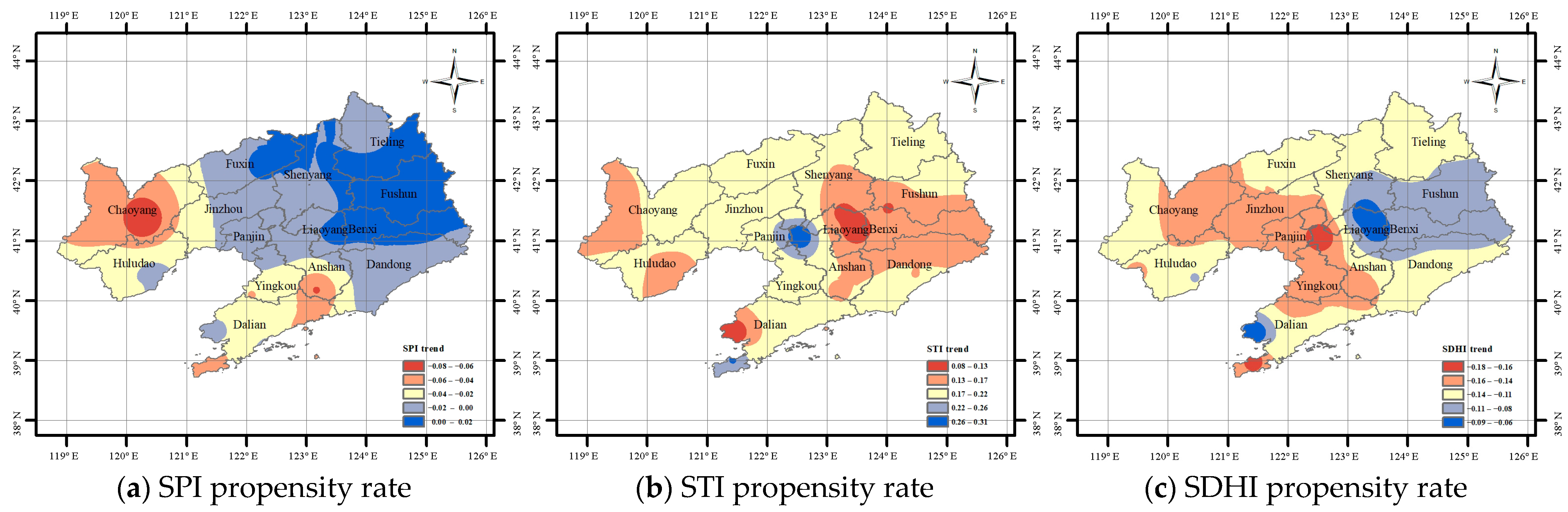
- Drought events occur frequently and show a westward shift in spatial pattern. Although the overall drought trend is not statistically significant, frequency is increasing. High-severity drought areas are concentrated in western Liaoning and parts of Dandong, while coastal and mountainous areas experience shorter durations due to orographic uplift and oceanic regulation. Climate tendency confirms a “wet east and dry west” pattern, with the Chaoyang area exhibiting the most significant drying trend.
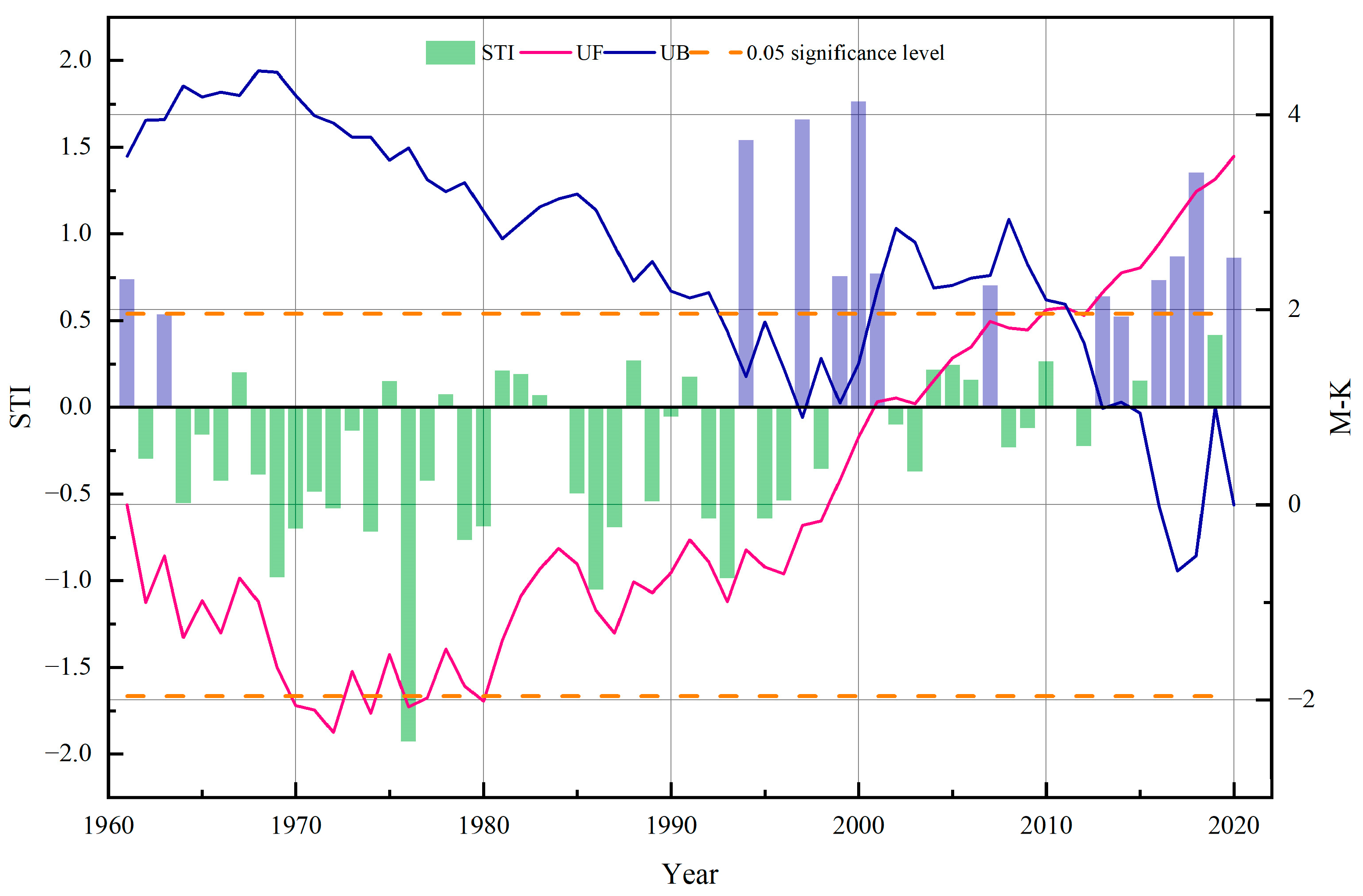
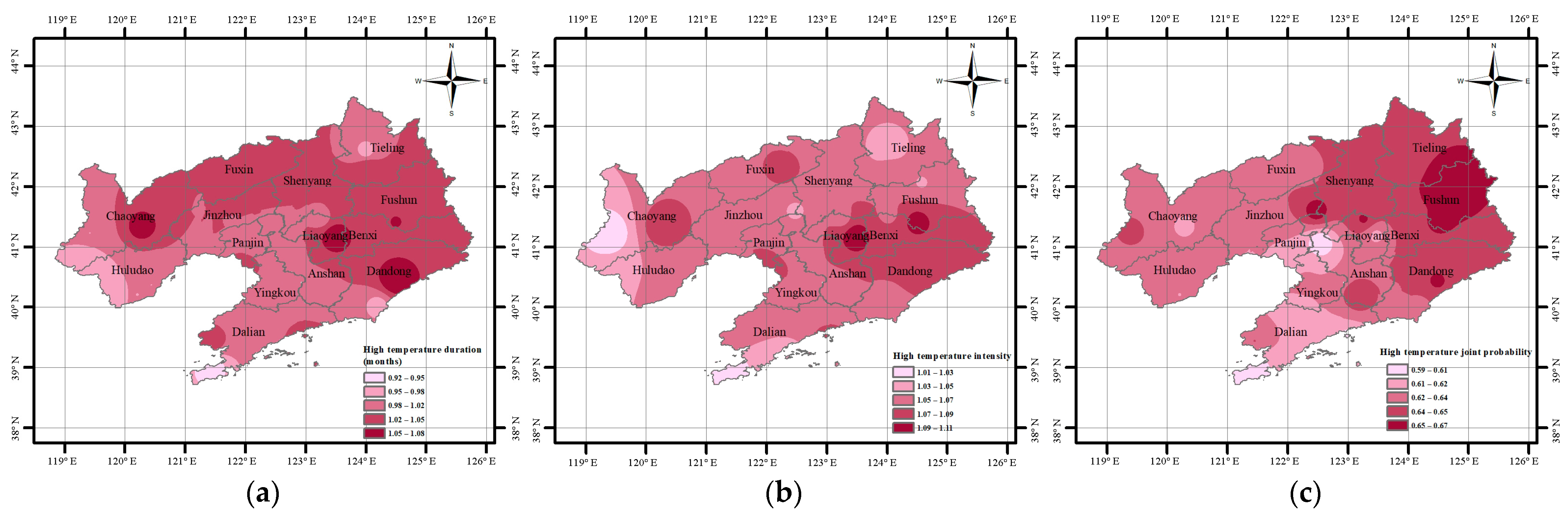
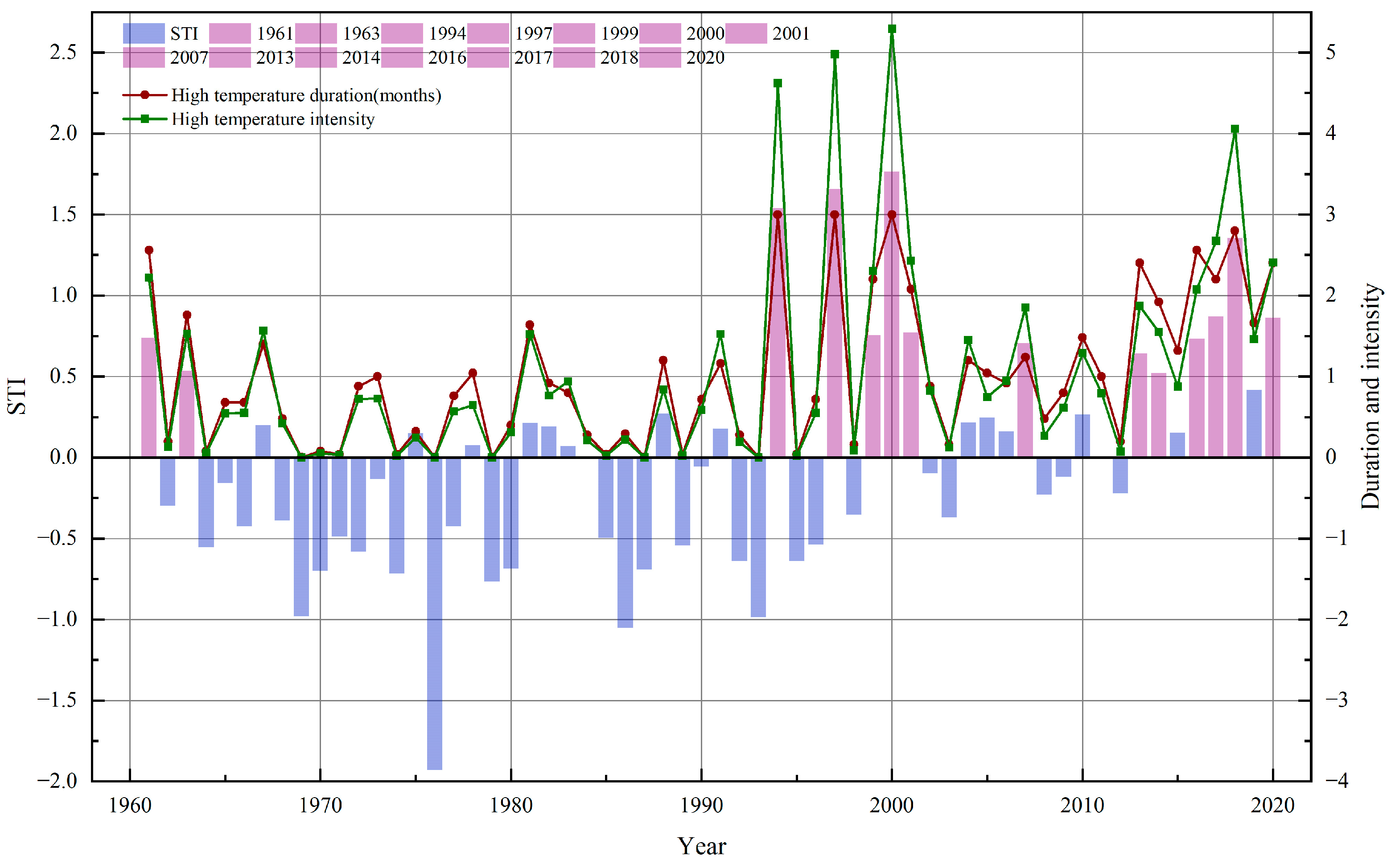
- High-temperature events have intensified markedly, with abrupt changes after 1994 and a detected shift in 2011. Spatially, high-temperature areas are distributed in inland basins and valleys due to terrain “heat-gathering” effects, while highly urbanised areas such as Anshan and Dalian show pronounced warming from urban heat islands. The province exhibits positive STI tendency rates, indicating that topography and human activities shape heat hazard under climate warming.
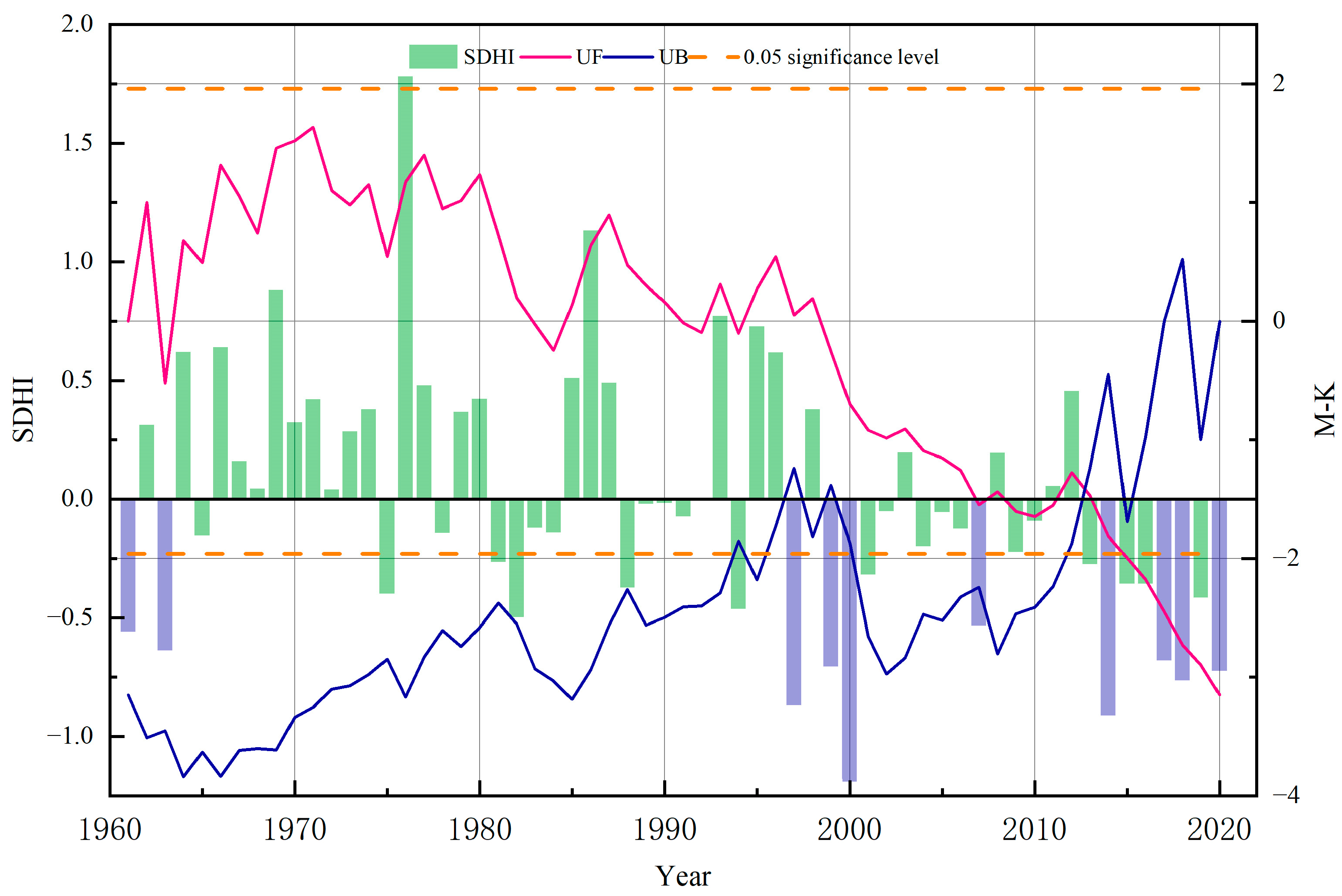
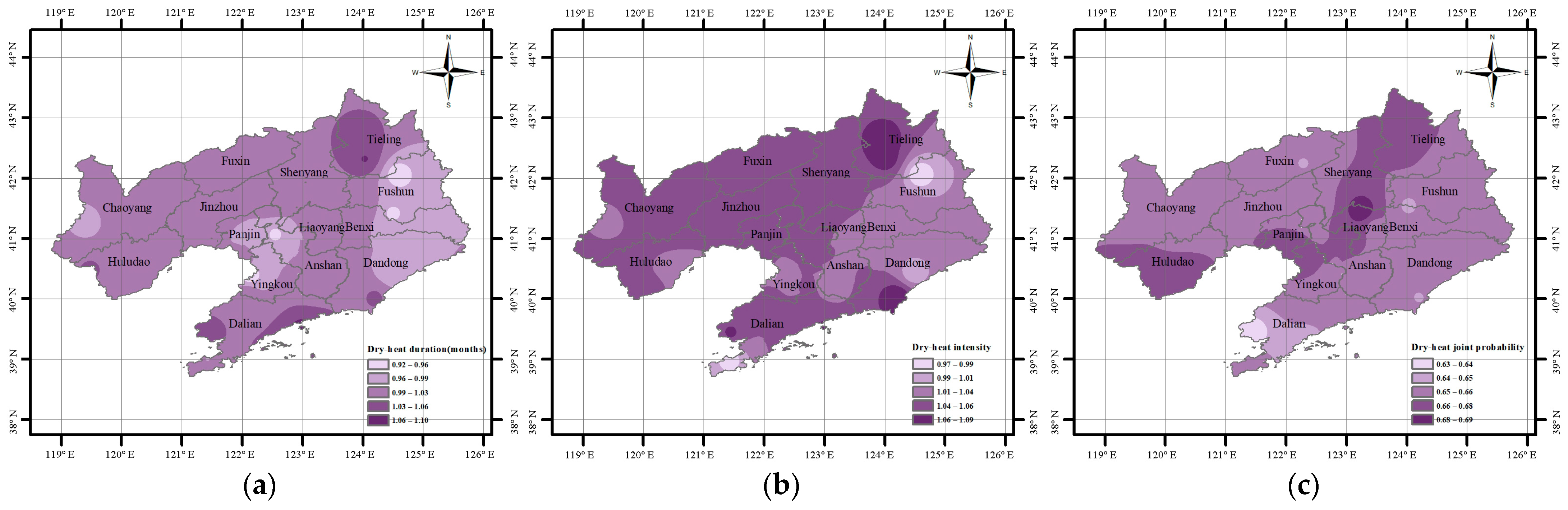
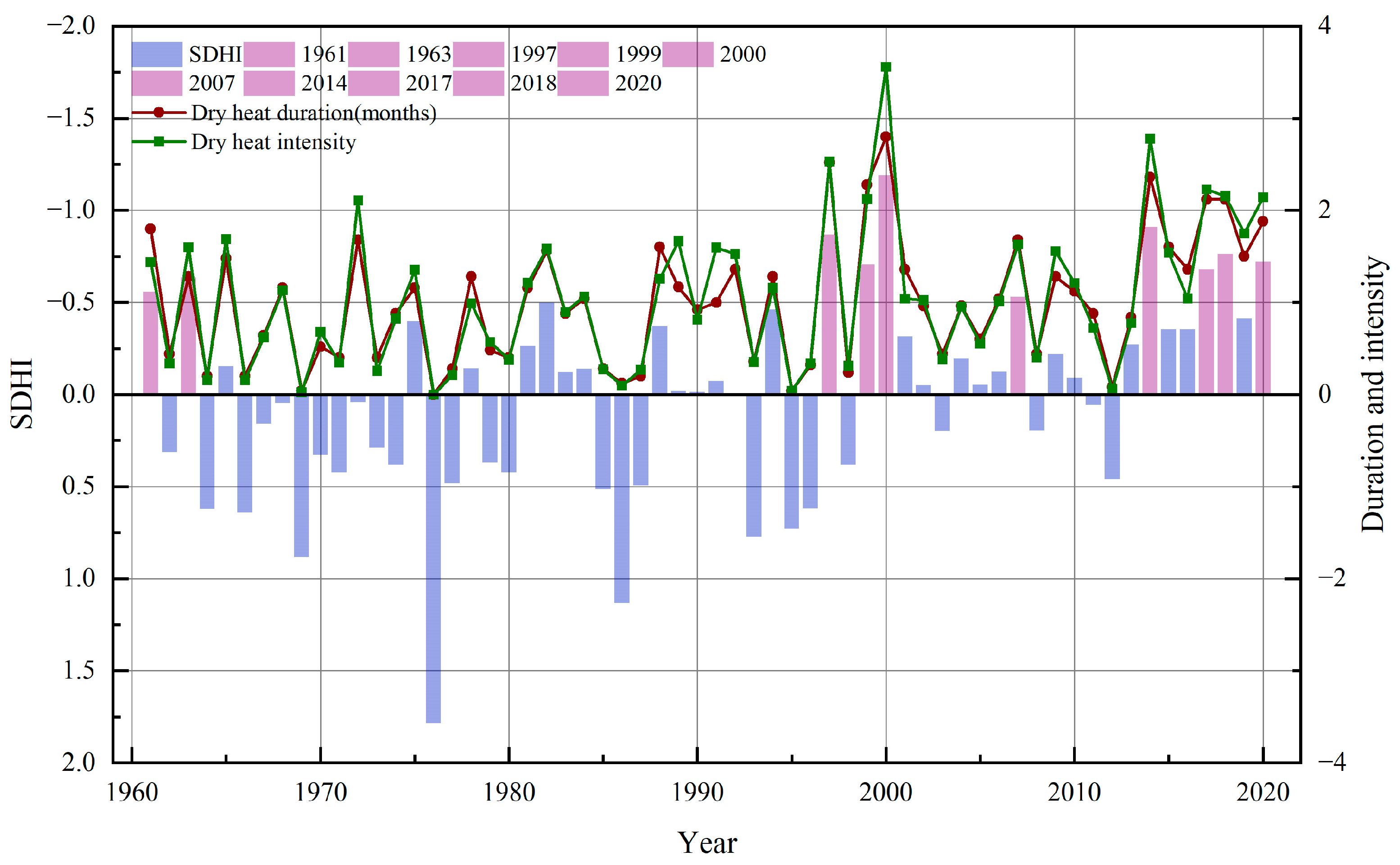
- The frequency of combined dry-heat events has increased significantly, with the latter 30 years experiencing over four times more events than the first 30 years. The year 2000 recorded the most extreme event, and a notable decline in the SDHI after 2015 suggests more frequent and intense compound events. Shenyang, due to urbanisation, has become a high joint-probability centre, whereas mountainous and coastal areas face lower hazards. SDHI tendency rates are negative and spatially consistent with STI, indicating climate warming dominates the intensification of dry-heat compound hazards.
Supplementary Materials
Author Contributions
Funding
Institutional Review Board Statement
Informed Consent Statement
Data Availability Statement
Acknowledgments
Conflicts of Interest
References
- Balting, D.F.; AghaKouchak, A.; Lohmann, G.; Ionita, M. Northern Hemisphere drought risk in a warming climate. NPJ Clim. Atmos. Sci. 2021, 4, 61. [Google Scholar] [CrossRef]
- Yujia, H.; Mengjing, G.; Peng, B.; Jing, L.; Liu, L.; Tian, W. Warming intensifies severe drought over China from 1980 to 2019. Int. J. Climatol. 2022, 43, 1980–1992. [Google Scholar]
- Brunner, M.I.; Swain, D.L.; Gilleland, E.; Wood, A.W. Increasing importance of temperature as a contributor to the spatial extent of streamflow drought. Environ. Res. Lett. 2021, 16, 024038. [Google Scholar] [CrossRef]
- Piao, J.; Chen, W.; Wei, K.; Cai, Q.; Zhu, X.; Du, Z. Increased sandstorm frequency in North China in 2023: Climate change reflection on the Mongolian plateau. Innovation 2023, 4, 100497. [Google Scholar] [CrossRef]
- Mckee, T.B.; Doesken, N.J.; Kleist, J. The relationship of drought frequency and duration of time scales. In Proceedings of the 8th Conference on Applied Climatology, Anaheim, CA, USA, 17–23 January 1993. [Google Scholar]
- Zhang, Q.; Yu, X.; Qiu, R.J.; Liu, Z.G.; Yang, Z.Q. Evolution, severity, and spatial extent of compound drought and heat events in north China based on copula model. Agric. Water Manag. 2022, 273. [Google Scholar] [CrossRef]
- Wu, X.; Hao, Z.; Zhang, X.; Li, C.; Hao, F.H. Evaluation of severity changes of compound dry and hot events in China based on a multivariate multi-index approach. J. Hydrol. 2020, 583, 124508. [Google Scholar] [CrossRef]
- Hao, Z.C.; Hao, F.H.; Singh, V.P.; Zhang, X. Changes in the severity of compound drought and hot extremes over global land areas. Environ. Res. Lett. 2018, 13, 124022. [Google Scholar] [CrossRef]
- Alemu, M.M.; Zaitchik, F.B.; Enku, T.; Worqlul, A.W.; Yimer, E.A.; Griensven, A. Spatiotemporal analysis of drought characteristics across multiple timescales in the upper Blue Nile basin, Ethiopia. Theor. Appl. Climatol. 2025, 156, 435. [Google Scholar] [CrossRef]
- Yu, Y.; Deng, H.; Gao, S.; Wang, J. Drought Evolution in the Yangtze and Yellow River Basins and Its Dual Impact on Ecosystem Carbon Sequestration. Agriculture 2025, 15, 1552. [Google Scholar] [CrossRef]
- Vicente-Serrano, M.S.; Beguería, S.; López-Moreno, J.I. A Multiscalar Drought Index Sensitive to Global Warming: The Standardized Precipitation Evapotranspiration Index. J. Clim. 2010, 23, 1696–1718. [Google Scholar] [CrossRef]
- Li, J.; Wang, Z.; Wu, X.; Zscheischler, J.; Guo, S.; Chen, X. A standardized index for assessing sub-monthly compound dry and hot conditions with application in China. Hydrol. Earth Syst. Sci. 2021, 25, 1587–1601. [Google Scholar] [CrossRef]
- Wang, L.; Zhang, F.; Shi, X.; Zeng, C.; Xiang, Y.; Wang, Y. Assessment of meteorological, agricultural and hydrological droughts in Central Himalaya region under climate change. J. Hydrol. Reg. Stud. 2025, 60, 102586. [Google Scholar] [CrossRef]
- Wang, F.; Wang, Z.; Yang, H.; Zhao, Y. Study of the temporal and spatial patterns of drought in the Yellow River basin based on SPEI. Sci. China Earth Sci. 2018, 61, 1098–1111. [Google Scholar] [CrossRef]
- Chang, J.; Li, Y.; Wang, Y.; Yuan, M. Copula-based drought risk assessment combined with an integrated index in the Wei River Basin, China. J. Hydrol. 2016, 540, 824–834. [Google Scholar] [CrossRef]
- Chen, H.; Zhan, W.; Zhou, B.; Teng, F.; Zhang, J.; Zhou, Y. Impact of Nonuniform Land Surface Warming on Summer Anomalous Extratropical Cyclone Activity Over East Asia. J. Geophys. Res. Atmos. 2019, 124, 10306–10320. [Google Scholar] [CrossRef]
- Dong, B.; Sutton, T.R.; Chen, W.; Liu, X.; Lu, R.; Sun, Y. Abrupt summer warming and changes in temperature extremes over Northeast Asia since the mid-1990s: Drivers and physical processes. Adv. Atmos. Sci. 2016, 33, 1005–1023. [Google Scholar] [CrossRef]
- Cai, Q.; Chen, W.; Chen, S.; Xie, S.P.; Piao, J.; Ma, T.; Lan, X. Recent pronounced warming on the Mongolian Plateau boosted by internal climate variability. Nat. Geosci. 2024, 17, 181–188. [Google Scholar] [CrossRef]
- Nandintsetseg, B.; Boldgiv, B.; Chang, J.; Ciais, P.; Davaanyam, E.; Batbold, A.; Bat, O.T.; Stenseth, N.C. Risk and vulnerability of Mongolian grasslands under climate change. Environ. Res. Lett. 2021, 16, 034035. [Google Scholar] [CrossRef]
- You, G.; Liu, B.; Zou, C.; Li, H.; Shawn, M.K.; He, Y.; Gao, J.; Jia, X.; Altaf, A.M.; Wang, S.; et al. Sensitivity of vegetation dynamics to climate variability in a forest-steppe transition ecozone, north-eastern Inner Mongolia, China. Ecol. Indic. 2021, 120, 106833. [Google Scholar] [CrossRef]
- Chen, J.; An, A.; Gao, G.; Liu, F. From compound climate risks to adaptive governance: Sectoral economic exposure to heat-drought compound events in coastal China. Ocean Coast. Manag. 2025, 267, 107755. [Google Scholar] [CrossRef]
- Munkhjargal, E.; Masato, S.; Banzragch, N. Effects of cold-season climate hazards on livestock health and mortality in Mongolia. Int. J. Disaster Risk Reduct. 2023, 90, 103658. [Google Scholar] [CrossRef]
- Hao, Y.; Hao, Z.; Fu, Y.; Feng, S.; Zhang, X.; Wu, X.; Hao, F. Probabilistic assessments of the impacts of compound dry and hot events on global vegetation during growing seasons. Environ. Res. Lett. 2021, 16, 55–74. [Google Scholar] [CrossRef]
- Gungoa, V.; Kebede, S. Climate variability impact on groundwater quality in Small Island Developing States: Mauritius Island as a case study. Front. Water 2024, 6, 1432908. [Google Scholar] [CrossRef]
- Li’e, L.; Xiaohan, W.; Yan, C.; Jiamin, L.; Yonghua, Z. Drought assessment and development trend in Mu Us Sandy Land based on standardized precipitation and potential evapotranspiration index. Clim. Serv. 2025, 39, 100588. [Google Scholar] [CrossRef]
- Huang, W.; Yang, X.; Li, M.; Zhang, X.; Wang, M.; Dai, S.; Ma, J. Evolution characteristics of seasonal drought in the south of China during the past 58 years based on standardized precipitation index. Editor. Off. Trans. Chin. Soc. Agric. Eng. 2010, 26, 50–59. [Google Scholar]
- Hao, Z.; Hao, F.; Xia, Y.; Singh, V.P.; Zhang, X. A monitoring and prediction system for compound dry and hot events. Environ. Res. Lett. 2019, 14, 114034. [Google Scholar] [CrossRef]
- Zscheischler, J.; Martius, O.; Westra, S.; Bevacqua, E.; Raymond, C.; Horton, R.M.; Hurk, B.; AghaKouchak, A.; Jézéquel, A.; Mahecha, M.D. A typology of compound weather and climate events. Nat. Rev. Earth Environ. 2020, 1, 333–347. [Google Scholar] [CrossRef]
- Wu, J.; Chen, X.; Yao, H.; Gao, L.; Chen, Y.; Liu, M. Non-linear relationship of hydrological drought responding to meteorological drought and impact of a large reservoir. J. Hydrol. 2017, 551, 495–507. [Google Scholar] [CrossRef]
- You, W.; Liu, Z.; Jiang, Z.; Yang, X.; Tang, M.; Wan, X.; Yang, X. Revealing the characteristics and propagation patterns of hydrological drought in Sichuan using GNSS-based runoff estimates. Int. J. Digit. Earth 2025, 18, 2484670. [Google Scholar] [CrossRef]
- Yaşa, İ.; Partal, T. Drought monitoring and trends using innovative methods in Sakarya basin, Türkiye. Hydrol. Sci. J. 2025, 70, 963–974. [Google Scholar] [CrossRef]
- Katsuichiro, G.; Jiandong, R. Assessment of seismic loss dependence using copula. Risk Anal. Off. Publ. Soc. Risk Anal. 2010, 30, 1076–1091. [Google Scholar]
- Sklar, A. Fonctions de Repartition a n Dimensions et Leurs Marges. Publ. Inst. Stat. Univ. Paris 1959, 8, 229–231. [Google Scholar]
- Michele, D.C.; Salvadori, G.; Passoni, G.; Vezzoli, R. A multivariate model of sea storms using copulas. Coast. Eng. 2007, 54, 734–751. [Google Scholar] [CrossRef]
- Kazianka, H.; Pilz, J. Bayesian spatial modeling and interpolation using copulas. Comput. Geosci. 2011, 37, 310–319. [Google Scholar] [CrossRef]
- Saghafian, B.; Mehdikhani, H. Drought characterization using a new copula-based trivariate approach. Nat. Hazards 2014, 72, 1391–1407. [Google Scholar] [CrossRef]
- Hering, C.; Mai, J.F. Moment-based estimation of extendible Marshall-Olkin copulas. Metrika 2012, 75, 601–620. [Google Scholar] [CrossRef]
- Jordanger, L.A.; Tjostheim, D. Model selection of copulas: AIC versus a cross validation copula information criterion. Stat. Probab. Lett. 2014, 92, 249–255. [Google Scholar] [CrossRef]
- Li, D.; Huan, C.; Yang, J.; Gu, H. Temporal and Spatial Distribution Changes, Driving Force Analysis and Simulation Prediction of Ecological Vulnerability in Liaoning Province, China. Land 2022, 11, 1025. [Google Scholar] [CrossRef]
- Ren, P.; Li, P.; Tang, J.; Li, T.; Liu, Z.; Z, X.; Peng, C. Satellite monitoring reveals short-term cumulative and time-lag effect of drought and heat on autumn photosynthetic phenology in subtropical vegetation. Environ. Res. 2023, 239, 117364. [Google Scholar] [CrossRef]
- Tesfaye, Y.; Dechassa, N.; Alemayehu, Y.; Birhan, D.A. Spatiotemporal variability and trends in extreme rainfall and temperature indices in Southeastern Oromia, Ethiopia. Sci. Rep. 2025, 15, 29782. [Google Scholar] [CrossRef]
- Zhao, L.; Lee, X.; Smith, R.B.; Oleson, K. Strong contributions of local background climate to urban heat islands. Nature 2014, 511, 216–219. [Google Scholar] [CrossRef]
- Xue, F.; Liu, C. The influence of moderate ENSO on summer rainfall in eastern China and its comparison with strong ENSO. Chin. Sci. Bull. 2008, 53, 791–800. [Google Scholar] [CrossRef]
- Perkins, E.S.; Alexander, V.L.; Nairn, R.J. Increasing frequency, intensity and duration of observed global heatwaves and warm spells. Geophys. Res. Lett. 2012, 39. [Google Scholar] [CrossRef]
- Dimitra, F.; Mattheos, S. Synergies between Urban Heat Island and Heat Waves in Athens (Greece), during an extremely hot summer (2012). Sci. Rep. 2017, 7, 10973. [Google Scholar] [CrossRef] [PubMed]
- Zscheischler, J.; Seneviratne, I.S. Dependence of drivers affects risks associated with compound events. Sci. Adv. 2017, 3, e1700263. [Google Scholar] [CrossRef]
- Hossein, T.; Patrick, W. Global risk assessment of compound hot-dry events in the context of future climate change and socioeconomic factors. NPJ Clim. Atmos. Sci. 2023, 6, 74. [Google Scholar]
- Luca, D.P.; Donat, G.M. Projected Changes in Hot, Dry, and Compound Hot-Dry Extremes Over Global Land Regions. Geophys. Res. Lett. 2023, 50, e2022GL102493. [Google Scholar]
- Corey, L.; Weston, A.; Angela, R.; Onoriode, C.; Jonas, J.; Sonali, M.; Kyle, F.D.; Megan, K. Compound heat and moisture extreme impacts on global crop yields under climate change. Nat. Rev. Earth Environ. 2022, 3, 872–889. [Google Scholar] [CrossRef]
- Vogel, E.; Donat, G.M.; Alexander, V.L.; Meinshausen, M.; Ray, D.K.; Karoly, D.; Meinshausen, N.; Frieler, K. The effects of climate extremes on global agricultural yields. Environ. Res. Lett. 2019, 14, 054010. [Google Scholar] [CrossRef]
- Tasan, M.; Dąbrowska, J.; Michałowska, K. Surface urban heat islands during heatwaves: Thermal impacts on the built environment in selected polish cities. Build. Environ. 2025, 285, 113603. [Google Scholar] [CrossRef]
- Ao, X.; Wang, L.; Zhi, X.; Gu, W.; Yang, H.; Li, D. Observed synergies between urban heat islands and heat waves and their controlling factors in Shanghai, China Observed synergies between urban heat islands and heat waves and their controlling factors in Shanghai, China. J. Appl. Meteorol. Climatol. 2019, 58, 1955–1972. [Google Scholar] [CrossRef]
- Li, S.; Biljecki, F.; Liu, P.; Stouffs, R. Drivers of day–night intra-surface urban heat island variations under local extreme heat: A case study of Singapore. Sustain. Cities Soc. 2025, 135, 107000. [Google Scholar]
- Zhou, S.; Williams, A.P.; Lintner, B.R.; Berg, A.M.; Zhang, Y.; Keenan, T.F.; Cook, B.I.; Hagemann, S.; Seneviratne, S.I.; Gentine, P. Soil moisture–atmosphere feedbacks mitigate declining water availability in drylands. Nat. Clim. Change 2021, 11, 38–44. [Google Scholar] [CrossRef]
- Kim, D.-H.; Park, K.; Baik, J.J.; Jin, H.-G.; Han, B.-S. Contrasting interactions of urban heat islands with dry and moist heat waves and their implications for urban heat stress. Urban Clim. 2024, 56, 102050. [Google Scholar] [CrossRef]
- Leonard, M.; Westra, S.; Phatak, A.; Jin, H.G.; Han, B.S. A compound event framework for understanding extreme impacts. Wiley Interdiscip. Rev. Clim. Change 2014, 5, 113–128. [Google Scholar] [CrossRef]
- Abella, J.D.; Ahn, H.K. Understanding the 2023 compound dry hazard events across the pan-Asian region. Environ. Res. Lett. 2025, 20, 114003. [Google Scholar] [CrossRef]
- Zhu, J.; Tu, X.; Wen, Q.; Vijay, P.S.; Zhou, Z.; Lin, K. Detecting nonlinear dependence between drought and disaster using information entropy and identification of driving factors by the DPSEEA. J. Hydrol. Reg. Stud. 2025, 60, 102558. [Google Scholar] [CrossRef]
- Wu, X.; Jiang, D.; Yang, Y. ENSO exacerbated the impact of compound dry–hot events on maize yield over China during 1961–2020. Glob. Planet. Change 2025, 251, 104828. [Google Scholar] [CrossRef]
- Ren, W.; Dong, G.; Guo, Y.; Zhu, J.; Yu, Z.; Yang, Y.; Zhu, Y.; Zhang, H.; Zhang, H.; Miao, C. Growth stage-dependent extreme temperature stresses on crop yield. J. Agric. Food Res. 2025, 24, 102443. [Google Scholar] [CrossRef]
- Piao, S.; Ciais, P.; Huang, Y.; Shen, Z.; Peng, S.; Li, J.; Zhou, L.; Liu, H.; Ma, Y.; Ding, Y.; et al. The impacts of climate change on water resources and agriculture in China. Nature 2010, 467, 43–51. [Google Scholar] [CrossRef]
- Jesse, T.; Andrew, B.; Lanier, L.N. Effect of warming temperatures on US wheat yields. Proc. Natl. Acad. Sci. USA 2015, 112, 6931–6936. [Google Scholar]
- Guo, S.; Zhao, J.; Zhao, C.; Guo, E.; Liu, Z.; Harrison, M.T.; Liu, K.; Zhang, T.; Yang, X. Adapting crop land-use in line with a changing climate improves productivity, prosperity and reduces greenhouse gas emissions. Agric. Syst. 2024, 217, 103905. [Google Scholar] [CrossRef]
- Cook, I.B.; Mankin, S.J.; Anchukaitis, J.K. Climate Change and Drought: From Past to Future. Curr. Clim. Change Rep. 2018, 4, 164–179. [Google Scholar] [CrossRef]
- Zhang, Y.; Wang, L.; Li, M.; Wang, W.J.; Ren, J.; Xing, S.; Cong, Y. Temporal and spatial dynamics of drought in the Amur River Basin under climate change: Observed trends, future projections, and driving mechanisms. Clim. Dyn. 2025, 63, 451. [Google Scholar] [CrossRef]








| Hierarchy | SPI | STI | SDHI | Typology |
|---|---|---|---|---|
| 1 | SPI > –0.5 | STI ≤ 0.5 | SDHI > −0.5 | Normal |
| 2 | −1.0 < SPI ≤ −0.5 | 0.5 < STI ≤ 1.0 | −0.8 < SDHI ≤ −0.5 | Mild |
| 3 | −1.5 < SPI ≤ −1.0 | 1.0 < STI ≤ 1.5 | −1.3 < SDHI ≤ −0.8 | Moderate |
| 4 | −2.0 < SPI ≤ −1.5 | 1.5 < STI ≤ 2.0 | −2 < SDHI ≤ −1.6 | Serious |
| 5 | SPI ≤ −2.0 | STI > 2.0 | SDHI ≤ −2.0 | Extreme |
Disclaimer/Publisher’s Note: The statements, opinions and data contained in all publications are solely those of the individual author(s) and contributor(s) and not of MDPI and/or the editor(s). MDPI and/or the editor(s) disclaim responsibility for any injury to people or property resulting from any ideas, methods, instructions or products referred to in the content. |
© 2026 by the authors. Licensee MDPI, Basel, Switzerland. This article is an open access article distributed under the terms and conditions of the Creative Commons Attribution (CC BY) license.
Share and Cite
Bai, X.; Wang, R.; Shan, F.; Cong, L. Spatiotemporal Evolution Characteristics of Summer Dry-Heat Compound Events in Liaoning Province. Atmosphere 2026, 17, 22. https://doi.org/10.3390/atmos17010022
Bai X, Wang R, Shan F, Cong L. Spatiotemporal Evolution Characteristics of Summer Dry-Heat Compound Events in Liaoning Province. Atmosphere. 2026; 17(1):22. https://doi.org/10.3390/atmos17010022
Chicago/Turabian StyleBai, Xiaotian, Rui Wang, Fengjun Shan, and Longpeng Cong. 2026. "Spatiotemporal Evolution Characteristics of Summer Dry-Heat Compound Events in Liaoning Province" Atmosphere 17, no. 1: 22. https://doi.org/10.3390/atmos17010022
APA StyleBai, X., Wang, R., Shan, F., & Cong, L. (2026). Spatiotemporal Evolution Characteristics of Summer Dry-Heat Compound Events in Liaoning Province. Atmosphere, 17(1), 22. https://doi.org/10.3390/atmos17010022