Article

Ice Accretion Forecast for Power Grids Based on Pangu Model and Machine Learning Correction: A Case Study on Late December 2021 in Xinjiang, China

1
Research Institute of Electric Power Science, State Grid Xinjiang Power Company Limited, Urumqi 830001, China
2
Xinjiang Key Laboratory of Extreme Environment Operation and Detection Technology for Power Transmission and Substation Equipment, Urumqi 830001, China
*
Author to whom correspondence should be addressed.
Atmosphere 2026, 17(1), 23; https://doi.org/10.3390/atmos17010023 (registering DOI)
Submission received: 13 November 2025 / Revised: 7 December 2025 / Accepted: 8 December 2025 / Published: 25 December 2025
(This article belongs to the Section Meteorology)

Abstract

During late December 2021, an ice accretion disaster occurred in North Xinjiang, especially in the western part. It is found that the meteorological conditions suitable for the occurrence of ice accretion disasters are when the temperature is between −14 °C and −3 °C, the relative humidity is greater than 80%, the wind speed is between 4.5 m s−1 and 7.5 m s−1, and the pressure is between 919 hPa and 928 hPa. The ice accretion disaster is influenced by large-scale circulation, including the two-trough and one-ridge geopotential height structure in the middle troposphere and the spatially moving Ural Mountain blocking high pressure. Furthermore, using the artificial intelligence-based Pangu model and machine learning algorithms within the application of multiple linear regression and the leave-ten-out cross-validation, a skillful forecast correction model for ice accretion thickness in North Xinjiang is constructed. The prediction model has significant prediction skill for ice accretion thickness in North Xinjiang with 24 h, 48 h, and even 72 h in advance. The findings of the study can improve the timeliness of business system in the short-term and immediate forecast of ice accretion thickness, providing more reliable technical support for the ice prevention and disaster reduction of the power grids.

1. Introduction

Electricity, as the cornerstone driving force for national economic development, relies on a stable supply which is crucial for ensuring the rapid and sound growth of the socio-economy. However, under the global climate change and the frequent extreme weather events, climate-related risks to power infrastructure are becoming increasingly severe [1,2]. Ice accretion on transmission lines—a phenomenon involving the condensation or freezing of glaze, rime, or wet snow on conductors—has emerged as one of the major natural disasters threatening the secure operation of power systems [3,4,5]. Ice accretion not only compromises the normal operation of electrical grids but also triggers severe failures, including tower collapse, conductor breakage, insulator flashover, and short-circuit trips [5,6,7]. These disruptions can lead to power outages, communication blockages, significant inconveniences to daily life, and industrial production, and substantial socio-economic losses.
Xinjiang of China is abundant in electricity resources and exhibits distinct regional and seasonal variations in its climatic conditions. With the implementation of the national “West–East Electricity Transfer” strategy, the scale of the power grid in Xinjiang has undergone leapfrog expansion [8]. However, due to the region’s complex terrain and climate environment, frequent ice-coating weather in winter poses serious threats to the power transmission system, making ice accretion a major hazard for the Xinjiang power grid [9,10,11]. For instance, on 22 November 2015, ice accretion weather caused five consecutive trip-outs on the Datu I line, three of which were successfully reclosed, while two reclosure attempts failed. Between November and December 2016, the Wuda I and II lines experienced four trip-outs in total, and the Jitang I and II lines tripped twice [12]. All these power grid failures occurred during severe ice accretion conditions. The icing process is not only controlled by large-scale weather circulation patterns, but also is influenced by local meteorological elements, such as wind speed, temperature, relative humidity, and pressure [11,13,14,15]. Therefore, studying the synoptic causes of ice accretion on transmission lines in Xinjiang can not only provide targeted disaster prevention measures for local power authorities, but also offer scientific support to improve the ice accretion prediction.
The precise forecast of meteorological elements is the basis for accurately predicting ice accretion. With the development of numerical models, atmospheric observation, and computing capabilities, numerical weather forecasting has become a core part of meteorological prediction [16,17,18]. However, due to the high nonlinearity of the atmospheric system and the error of initial conditions, the numerical model still has obvious uncertainties. In recent years, artificial intelligence (AI)-related technologies have been increasingly applied in meteorological forecasting [19,20,21,22]. In particular, deep learning techniques demonstrate certain advantages over traditional methods in areas such as weather system identification, big data processing, spatiotemporal prediction, and spatial modeling. Within purely data-driven meteorological models, researchers from Huawei Cloud have proposed a novel high-resolution global AI weather forecasting system known as the Pangu weather model [20]. The Pangu model features high computational speed, ease of deployment, and theoretical capability for generating forecasts of indefinite temporal range through iterative processes. Bi et al. [20] indicated that the Pangu model requires only 1.4 s on a single V100 GPU to complete a 24 h forecast, which is approximately 10,000 times faster than traditional numerical methods. Validation results indicate that the root mean square error of global element forecasts generated by the Pangu model has been reduced by more than 10% compared to those of the European Centre for Medium-Range Weather Forecasts (ECMWF). It can be seen from above that an AI model such as the Pangu model can be applied to the research of ice accretion prediction.
According to statistical data from the Xinjiang Power Grid, in late December 2021, transmission lines in North Xinjiang experienced widespread icing events, significantly impacting electricity supply for numerous users. This ice accretion event was characterized by its prolonged duration, extensive coverage, and prevalence across complex terrain. In terms of this, the study focuses on the ice accretion event that occurred from 23 to 27 December 2021. First, the distribution characteristics of the event are investigated using data on icing thickness, temperature, humidity, wind speed, and atmospheric pressure obtained from the Xinjiang Power Grid icing monitoring system. Subsequently, the evolution features of atmospheric circulation and local meteorological elements during the ice accretion process are analyzed based on the fifth generation of ECMWF reanalysis data (ERA5). Finally, an applicability evaluation is conducted to assess the forecasting capability of the Pangu model, driven by the ERA5 data, on this ice accretion event, with the aim of providing a preliminary understanding of the Pangu model’s performance in predicting ice accretion in Xinjiang.

2. Materials and Methods

The ice accretion data adopted in this study is derived from the ice observation data recorded by the online ice accretion monitoring device system deployed in Xinjiang Power Grid, including the ice thickness of transmission lines, temperature, wind speed, relative humidity, pressure, and rainfall amount. The study uses data provided by above monitoring device system during the period from 23 to 27 December 2021. The ice accretion data closest to the following 8 time points each day were selected as the ice accretion monitoring data for that day, including 00:00, 03:00, 06:00, 09:00, 12:00, 15:00, 18:00, and 21:00. If there is no monitoring data within one hour before or after a certain time point, it will be set as missing. 11 ice monitoring stations are considered here, and their information is listed in Table 1. These stations are primarily distributed in North Xinjiang, and their spatial locations are also drawn in Figure 1, including 5 stations in the western part, 4 stations in the central part, and 2 stations in the eastern part of North Xinjiang. In addition, the ERA5 atmospheric reanalysis dataset, with a horizontal resolution of 0.25° × 0.25° from 1991 to 2024, is applied in the study [23].
The Pangu model conducts weather forecasting based on the idea of statistical dynamical models. Its training and testing are carried out on the ERA5 dataset, which includes 43 years of global real-time meteorological data (1979–2021) [24]. Among them, the data from 1979 to 2017 are used as the training set, the data from 2019 as the validation set, and the data from 2018, 2020, and 2021 as the test set. The data used and output by the Pangu model include 13 different pressure layers at vertical height, with five meteorological elements (temperature, humidity, potential, and wind speed in longitude and latitude directions) in each layer, as well as four meteorological elements on the surface (2 m temperature, 10 m wind speed in longitude and latitude directions, and sea level pressure) [20]. The spatial resolution of both products is 0.25° × 0.25°, and the maximum temporal resolution can reach 1 h. The Pangu model mainly has two superiorities: First, it applies the 3D Earth-Specific Transformer method, introducing absolute position encoding related to latitude and height in the transformer module to learn the irregular components of each spatial operation, thereby better processing complex 3D meteorological data. Second, it uses a hierarchical time-domain aggregation strategy to reduce iterative errors [20]. It outperforms the existing weather forecast systems, significantly better than the operational IFS and the previous best AI-based method (i.e., FourCastNet). In the study, the 3 h prediction interval of the Pangu model is applied to match the observed ice accretion series. The Pangu model is forecasted starting from 00:00 every day, and the forecast outputs with validity periods of 24 h, 48 h, and 72 h are analyzed. For instance, for the actual situation on 23 December 2021, the model outputs forecasted from 22 December 2021 are the ones with a forecast period of 24 h, while those forecasted from 21 December 2021 are the ones with a forecast period of 48 h. Similarly, for the actual situation on 25 December 2021, the model outputs forecasted since 24 December 2021 are the ones with a 24 h forecast period, and so on. The 24 h, 48 h, and 72 h predictions in the Pangu model are analyzed and evaluated instead of a longer prediction period, because an initial field that is closer to the reality can largely minimize the initial error, providing higher prediction skill.
To evaluate the prediction performance of the Pangu model, we calculated the root mean square error (MSE), mean absolute error (MAE), and coefficient of determination (R2) of the observed (or/and ERA5) and model outputs:
M S E = i = 1 n ( y i y i ^ ) 2 n
M A E = 1 n i = 1 n y i y i ^
R 2 = 1 ( y i y i ^ ) 2 ( y i y ¯ ) 2
where n is the total sample number, and y i and y ^ i denote the actual and prediction values, respectively. y ¯ is the mean value of actual observation. Smaller MSE or MAE denotes a better fitting effect. For the coefficient of determination, when R2 equals 1, the model perfectly fits the data, and all data points are accurately predicted by the model. When R2 equals 0, the predictive ability of the model is the same as that of directly using the mean for prediction, indicating that the model has not learned effective information. When R2 is less than 1, the model is worse than the simple mean prediction, which may be caused by improper model selection or overfitting/underfitting. In simple terms, the closer R2 is to 1, the better the model fitting effect is. This study combines above three evaluation indicators to choose the best correction algorithm. These three evaluation indicators are not interrelated and are all independent with each other. Thus, they can be integrated to optimize the machine learning algorithms through a relatively objective approach.

3. Results

3.1. The Spatiotemporal Evolution and Meteorological Conditions of the Ice Accretion Process

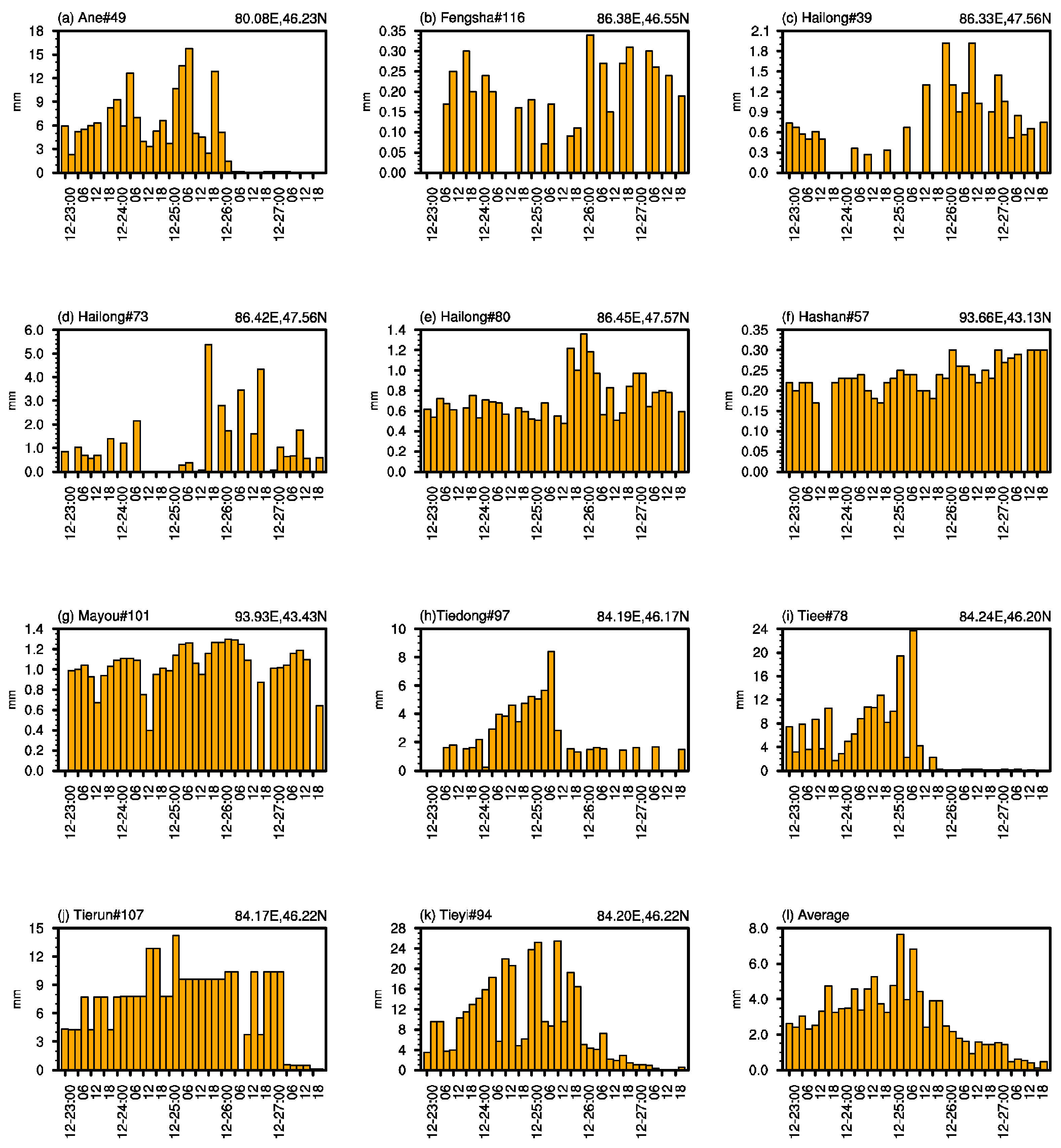
By analyzing the ice accretion disaster and the associated meteorological elements within 11 monitoring stations, we found that most of the ice accretion records occurred during periods with no precipitation. Among a total of 2732 records at 11 stations, there were 2172 records (79.5%) where ice accretion occurred without precipitation, and only 17 records (0.62%) where precipitation was present. Previous studies have pointed out that the rime ice accretion and rain ice accretion are two common types of ice accretion on wires. Among them, rime ice accretion refers to the phenomenon where water vapor directly sublimates in the air layer or supercooled fog droplets directly freeze on the wires to form ice, while rain ice accretion refers to the hard ice layer formed when supercooled raindrops hit the wires near the freezing point and immediately freeze. Hence, the above results indicate that the ice accretion disasters in Xinjiang, especially in North Xinjiang, are mostly rime ice accretion. Figure 2 shows the evolution characteristics of the ice accretion thickness at different stations at eight time points each day from 23 to 27 December 2021. It can be clearly observed that the most severe areas affected by ice accretion disasters primarily occurred in the western part of North Xinjiang, including Ane#49, Tiedong#97, Tiee#78, Tierun#107, and Tieyi#94, with the maximum ice accretion thickness generally exceeding 10 mm. The ice accretion disaster in the central part of North Xinjiang came second, mainly including Hailong#39, Hailong#73, and Hailong#80, with the maximum thickness of the ice accretion approaching or exceeding 1 mm. The eastern part of North Xinjiang is the least affected by ice accretion, including Mayou#101 and Hashan#57, with the ice accretion thickness approaching or being less than 1 mm. In addition, the ice accretion disaster in North Xinjiang has shown clear variations in development and disappearance (Figure 2l). According to the average of multiple stations, the ice accretion thickness gradually increased from 23 to 24 December 2021, reached its peak on 25 December, then began to decline on 26 December, and disappeared on 27 December.
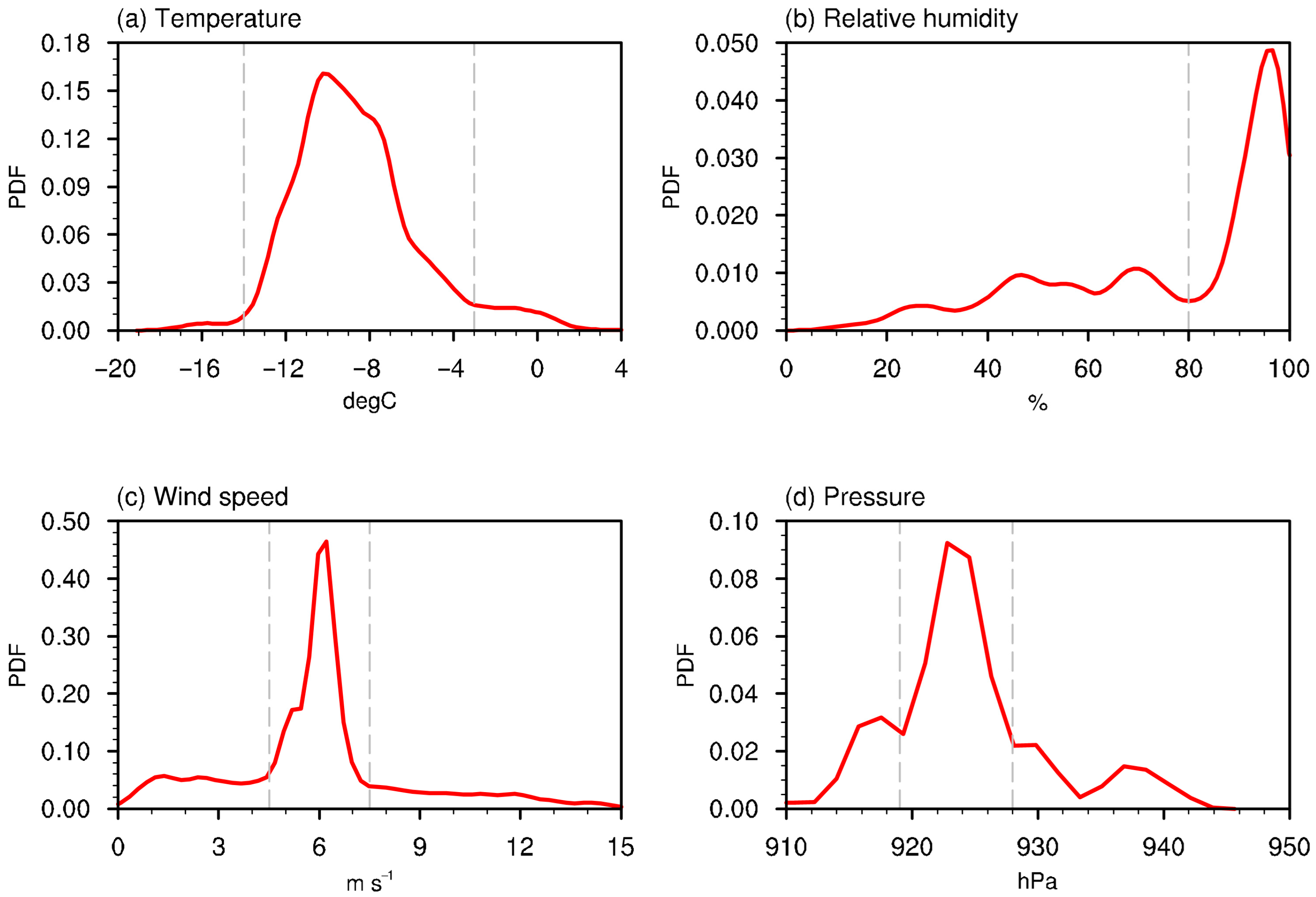
The above results analyzed the ice accretion disaster in the North Xinjiang region in late December 2021 from the perspectives of spatial distribution and temporal evolution. However, ice accretion disasters are closely related to local meteorological factors, so what are the most suitable meteorological conditions that are likely to cause ice accretion disasters in North Xinjiang? To answer this question, we calculated the probability distribution functions (PDF) of surface temperature, surface relative humidity, surface wind speed, and air pressure derived from the monitoring station data of Xinjiang Power Grid when ice accretion disasters occur in North Xinjiang (Figure 3). Since the higher PDF value corresponds to greater occurrence probability, we choose the meteorological conditions suitable for ice accretion disasters when the PDF value of a certain meteorological element begins to increase sharply (the turning point of sudden increase). It also indicates that the probability of ice accretion disaster occurrence has increased sharply. Figure 3 shows that the North Xinjiang region is most prone to icing disasters when the temperature is between −14 °C and −3 °C, the relative humidity is greater than 80%, the wind speed is between 4.5 m s−1 and 7.5 m s−1, and the air pressure is between 919 hPa and 928 hPa. However, it should be noted that these results only qualitatively indicate that there is a relatively high possibility of ice accretion disasters in North Xinjiang occurring within the range of these meteorological elements, but they cannot quantitatively provide the thickness of ice accretion.

3.2. Large-Scale Atmospheric Circulation and Physical Causes for the Ice Accretion Process

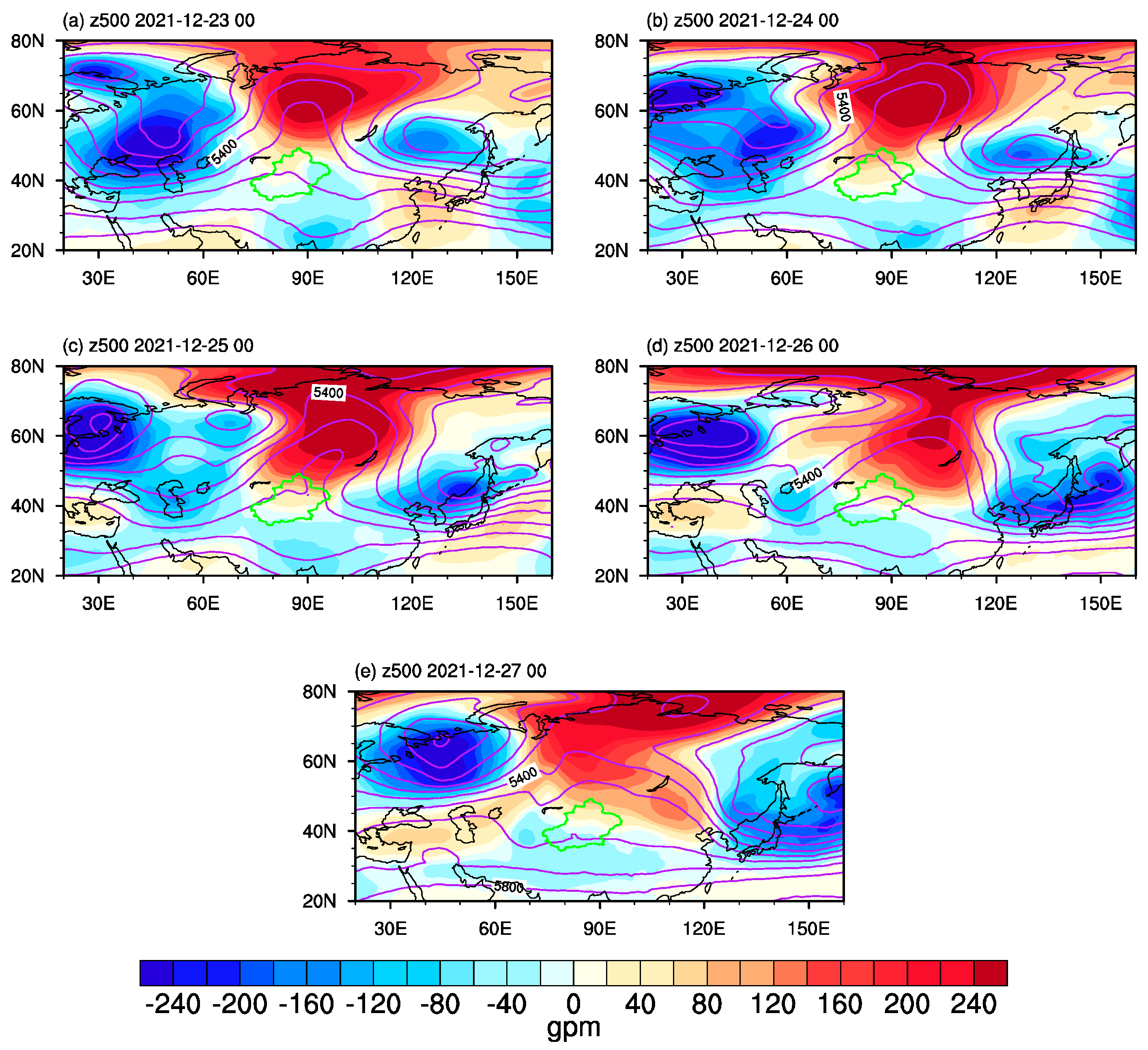
To clarify the weather causes of the ice accretion disaster in North Xinjiang in late December 2021, Figure 4 presents the 500 hPa geopotential height at 00:00 each day from 23 to 27 December, where the colored areas represent the anomalous fields relative to those from 1991 to 2020. On 23 December, The areas east of the Ural Mountains and west of Lake Baikal were controlled by a strong positive geopotential height anomaly, while in Western Europe and Northeast China, there were significant negative height anomalies (Figure 4a). The overall atmospheric circulation in the middle troposphere presented a structure of two troughs and one ridge. In the meantime, North Xinjiang is located at the south of the blocking high pressure, while South Xinjiang is controlled by another weaker negative height anomaly in southern East Asia, resulting in the prevalence of a straight easterly anomaly in the whole of the Xinjiang region. From 24 December to 25 December (Figure 4b,c), the blocking high pressure gradually strengthened and expanded southward and eastward. At this time, most areas of Xinjiang were occupied by positive geopotential height anomalies. The northeasterly anomalies on the east side of the high pressure are conducive to transporting cold air from the middle and high latitudes southward to North Xinjiang, creating ice accretion cooling conditions. From 26 to 27 December (Figure 4d,e), the blocking high pressure continued to move eastward with the weakened magnitude, accompanied by a slight northward contraction, gradually moving out of Xinjiang.
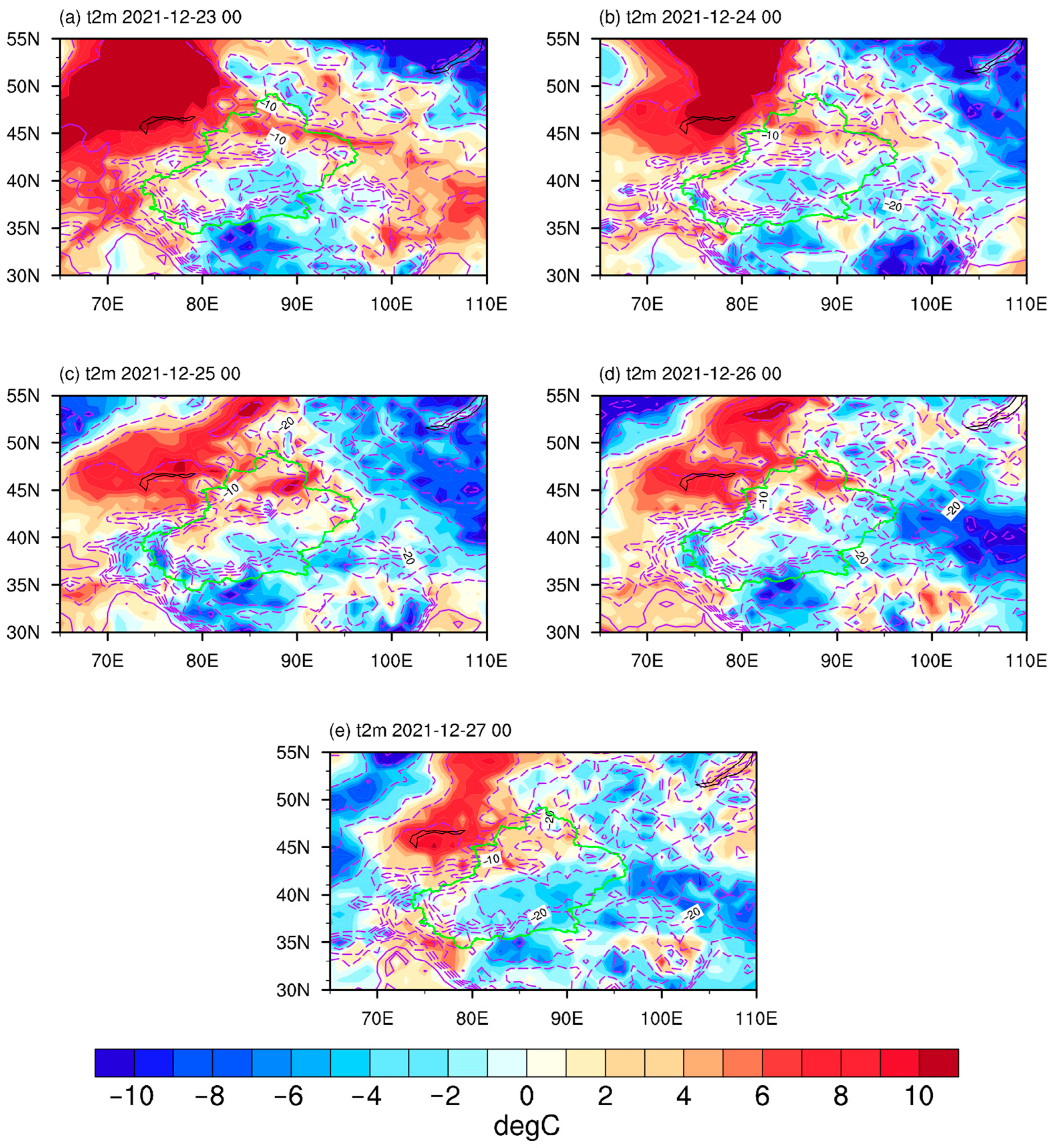
For the meteorological element field, the original 2 m temperature in Xinjiang is generally controlled by sub-zero cold air, but its anomalies present a dipole spatial structure that is negative in the south and positive in the north. Such a temperature pattern makes it easier for ice accretion to form in North Xinjiang due to the appropriate temperature range remaining between −14 °C and −3 °C (Figure 5a–c). In contrast, the overly cold temperatures in South Xinjiang tend to cause water droplets to fall in the form of snowflakes rather than forming ice accretion on the conductors. Comparing Figure 4 and Figure 5, we can see that the 500 hPa geopotential height anomalies are strongly associated with the 2 m temperature anomalies in Xinjiang. For example, North Xinjiang is primarily controlled by positive geopotential height anomalies from 23 to 27 December 2021, which can enhance the solar radiation reaching the surface through the clear-sky radiation effect of the upper high-pressure system, thereby increasing the surface temperature anomalies. South Xinjiang experiences the opposite condition, and it is dominated by negative geopotential height anomalies, decreasing the surface temperature anomalies. However, as the upper-level blocking high pressure gradually moved out of Xinjiang, the warm temperature anomalies in North Xinjiang began to weaken from 23 to 27 December 2021 (Figure 5d,e), and the near-surface temperature here began to drop slowly, reaching above −15 °C. Excessively low temperatures are often not conducive to the formation of ice accretion, thus causing the ice accretion disaster to decline.
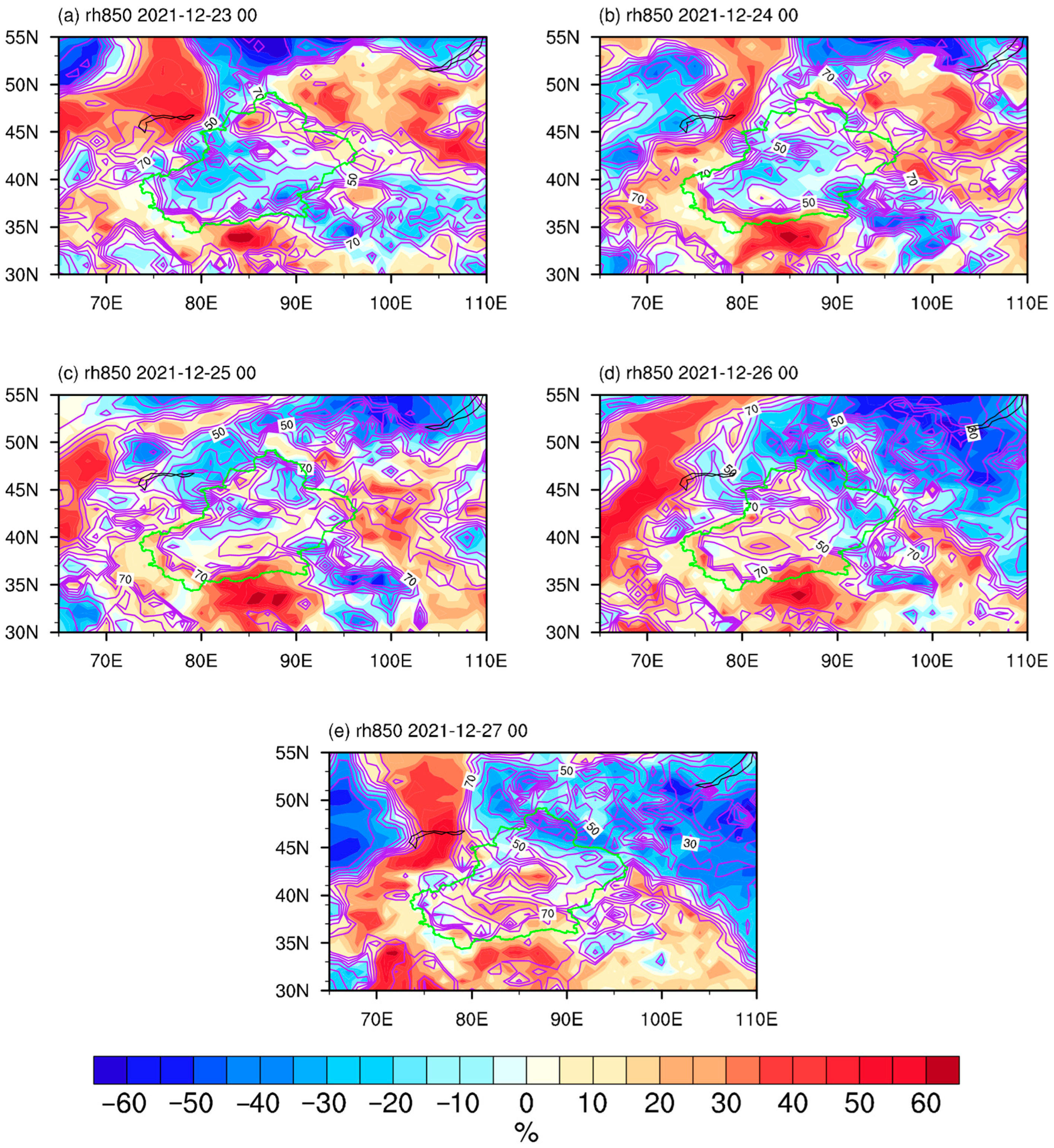
In terms of humidity field, the relative humidity in the lower troposphere of Xinjiang was generally around 50% from 23 to 24 December (Figure 6a,b), which had not yet reached the humidity conditions most conducive to the occurrence of ice accretion disasters (Figure 3b). From 25 to 26 December, as the blocking high pressure in the middle troposphere moved eastward and southward and expanded, the water vapor transport in the lower troposphere has changed, causing the relative humidity in North Xinjiang to be increased (Figure 6c,d) due to southwesterly flows especially in the western part of North Xinjiang (Figure 4c,d). The relative humidity gradually rose to around 80%, which met the favorable conditions for ice accretion. By 27 December, the relative humidity in the area had decreased again (Figure 6e) and the icing disaster had declined because the upper-level high-pressure system moved out of Xinjiang (Figure 4e). Overall, the ice accretion disaster event in North Xinjiang in late December 2021 was mainly influenced by large-scale circulation, including the two-trough and one-ridge geopotential height structure in the middle troposphere and the spatially moving Ural Mountain blocking high pressure. It can significantly affect the temperature and humidity distribution near the surface, thereby changing the meteorological condition configuration of ice accretion disasters, further triggering serious icing incidents.

3.3. A Preliminary Study on Ice Accretion Prediction Based on the Pangu Model

In this section, we will utilize the Pangu model to explore its applicability in predicting the ice accretion disaster in North Xinjiang from 23 to 27 December 2021. As the most severely affected area of the ice accretion disaster emerged in the western part of North Xinjiang, we first selected five stations in the region (Ane#49, Tiedong#97, Tiee#78, Tierun#107, and Tieyi#94), and then bilinearly interpolated the prediction data of the Pangu model to each grid point location. It should be noted that the Pangu model does not directly output the relative humidity. Thus, we use other variables from the model to approximately calculate relative humidity. The calculation formula is as follows [25]:
R H 0.263 p q e x p ( 17.67 T T 0 T 29.65 ) 1
where p and q denote the pressure (Pa) and specific humidity (kg kg−1), and T and T0 are the temperature (K) and the reference temperature (typically 273.16 K), respectively. Note that this approximate equation can help us simply calculate the relative humidity based on temperature, air pressure, and specific humidity. However, it is effective within a specific temperature range with relatively high accuracy, such as −40 °C to +40 °C. Its accuracy will decline in extremely high or low temperatures. Nevertheless, it is still a good enough estimate for relative humidity in Xinjiang in our study.
In addition, considering that the thickness of ice accretion is closely related to temperature, relative humidity, wind speed, and air pressure, to quantify the relationship between them, we adopted the multiple linear regression to construct a statistical model, that is:
i c e t h i c k n e s s = a 0 + a 1 × T + a 2 × R H + a 3 × s p d + a 4 × p
where a0 is the truncation error, and a1 to a4 are the regression coefficients of each variable. RH and spd denote the relative humidity and wind speed, respectively. Then, the statistical equation is further applied to the prediction data of the Pangu model. To test the regression model’s capability and to prevent overfitting of the statistical prediction, the leave-ten-out cross-validation method to Equation (5) is applied. The leave-ten-out method predicts the ice accretion in ten consecutive points based on the information in the remaining points. It can be concluded as three steps. (a) For a series of n observations, we first leave out ten consecutive observations as a test dataset (i.e., 1–10) and develop a regression model based on the remaining n-10 observations (i.e., 11–200). (b) The regression model is then used to predict the ten test data points. (c) The procedure is repeated for different running test groups (i.e., 11–20, 21–30, 31–40, 41–50, …, and 191–200) to predict all observations, yielding a time series of the predicted ice accretion. The leave-ten-out method was applied because we need to conduct the cross-validation on 200 data points (five stations, each with 40 time points from 23 to 27 December 2021), and this sampling method can not only ensure that we have sufficient data points to build a multiple regression model, but also prevent overfitting. Other windows such as leave-five-out and leave-seven-out cross-validation methods are also tested, and the results remain almost the same (not shown). During the cross-validation process, the 24 h, 48 h, and 72 h prediction data are respectively applied. The prediction skill of the regression model is assessed via the linear correlation coefficient:
R = i = 1 n ( y i y ¯ ) ( y i ^ y ^ ¯ ) i = 1 n ( y i y ¯ ) 2 i = 1 n ( y i ^ y ^ ¯ ) 2
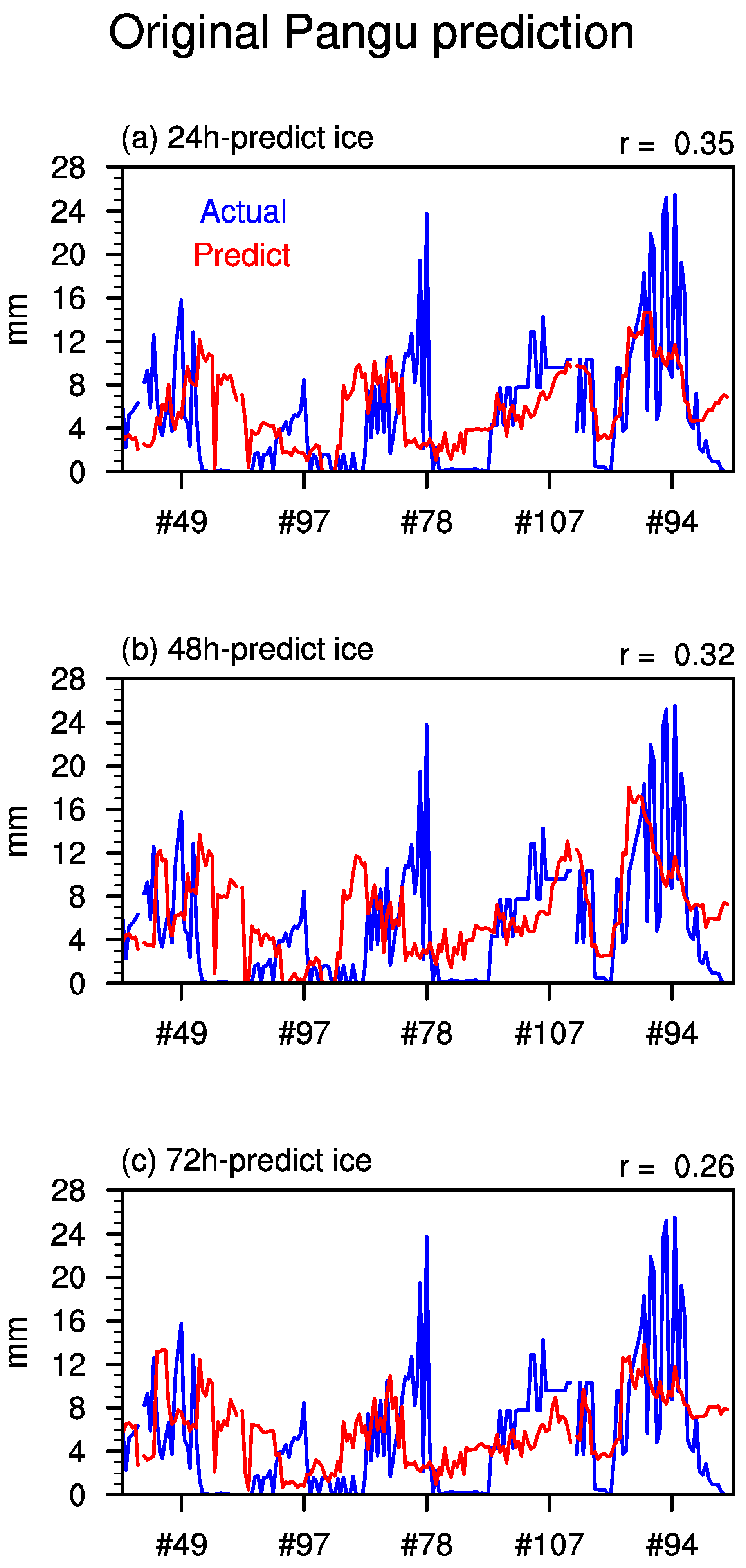
Figure 7 shows the original Pangu model prediction. We can clearly see that the 24 h, 48 h, and 72 h forecasts can generally depict the temporal evolution of ice accretion thickness among different stations; that is, the feature of first increasing and then decreasing from 23 to 27 December 2021. However, most of these predicted ice accretion thicknesses underestimate the actual observed values, especially for #78 and #94. In addition, the predicted peak times of ice accretion thickness almost always lag behind the actual observed peak times. Therefore, the prediction skill of the ice accretion disaster originally predicted by the Pangu model is not very high. For example, in the 24 h forecast, the prediction skill is 0.35 (Figure 7a). In the 48 h forecast, the prediction skill is 0.32 (Figure 7b). In the 72 h forecast, the prediction skill is only 0.26 (Figure 7c). As a result, we need to perform bias correction on the prediction data of the Pangu model to improve its predictive ability for winter ice accretion disasters in North Xinjiang.
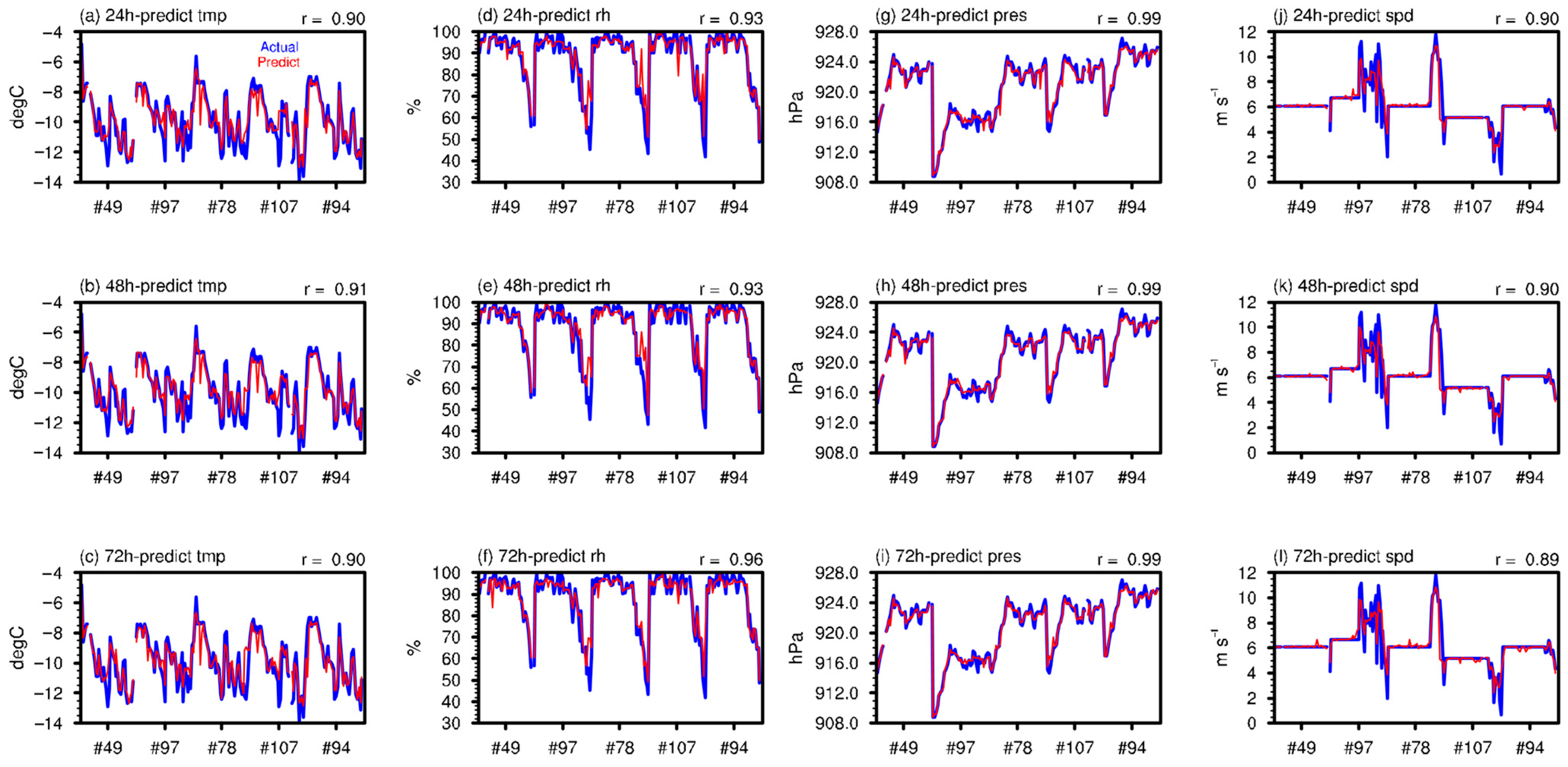
To effectively correct bias of the original Pangu model data such as temperature, relative humidity, wind speed, and air pressure, we adapted six machine learning algorithms, including random forest [26], gradient boosting [27], linear regression [28], ridge regression [29], Support Vector Regression (SVR) [30], and Neural Network [31], for each variable, and selected the optimal correction model based on the MSE, MAE, and R2 of different algorithms. These machine-learning based algorithms can capture the complex nonlinear relationship between input and output of variables well, and also learn the nonlinear mapping between the original observation and the Pangu prediction. Furthermore, these algorithms are data-driven. They do not rely on an understanding of the internal physical structure of the Pangu model, but rather establishes a correction mapping by learning the differences between the predictions of the Pangu model in historical data and the actual observations. Therefore, they have the potential to learn and correct the bias of Pangu mode. On the other hand, our study uses a variety of different machine learning algorithms and selects the one with the best performance; in other words, the most suitable for the current model data. Table 2 provides an example, when we correct the 24 h forecasted temperature data, we calculated three evaluation indicators of six machine learning algorithms. After comparison, we selected gradient boosting as the optimal correction algorithm for this data. When the 24 h forecasted wind speed is corrected, the random forest is selected as the optimal algorithm. Table 3 provides the best machine-learning-based bias-corrected algorithm for Pangu model on each variable at different prediction times, and it is evident that gradient boosting and random forest are better than others. It is worth noting that the above process is automatically run in the script we have written and provides the bias-corrected result without the need for subjective human determination. Figure 8 presents the temperature, relative humidity, pressure, and wind speed data of the Pangu model after bias correction for 24 h, 48 h, and 72 h forecasts, respectively. Obviously, the model data after bias-correction capture the station observations well, and the correlation coefficient between these two can approach or exceed 0.90, above the 99% confidence level, demonstrating a good correction effect. If we observe carefully, we can find that machine learning algorithms have the best bias-correction effects on relative humidity and pressure, while their bias-correction effects on temperature and wind speed are second.
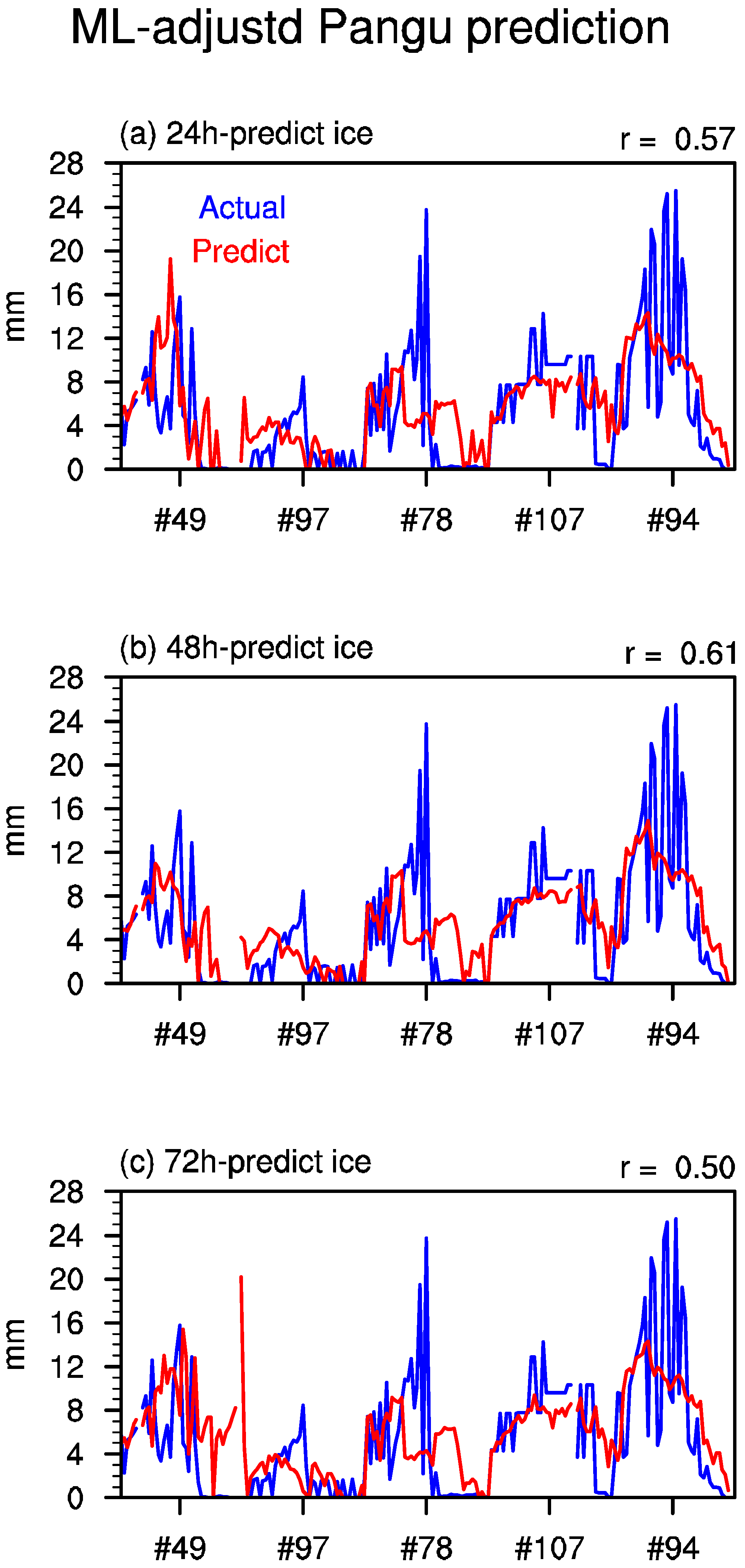
After bias correction, we find that the prediction skill of winter ice accretion thickness in North Xinjiang at different forecast times have all significantly improved (Figure 9). Among them, the prediction skill for 24 h forecast has increased by 62.9%, for 48 h forecast by 90.6%, and for 72 h forecast by 92.3%. A longer forecast time corresponds to a higher improvement of prediction skill, and the prediction skills reached 0.57, 0.61, and 0.50 for 24 h, 48 h, and 72 h forecast, respectively. It should be noted that the bias-corrected Pangu model prediction still needs to improve its predictive ability for the peak of ice accretion, especially at stations #78 and #94. This might be associated with the representative observation data and prediction bias of Pangu mode in these two stations. However, this does not indicate the flaw of our algorithm and the Pangu model. Instead, it points out from another perspective that for some extreme ice accretion events, the current model’s predictions are still limited, and it is necessary to increase observations and improve model performance. Furthermore, the better improvement of Pangu model prediction does not imply that when the Pangu model successfully predicts an ice event, the related meteorological prediction elements must also fall within the suitable meteorological conditions in the observation (Figure 3). This is because the relationship between ice accretion and meteorological elements mentioned above is obtained from observational data. However, due to systematic bias and initial boundary value conditions, the Pangu model cannot perfectly reproduce the observed historical relations, and there is a certain deviation between the predicted meteorological conditions conducive to the occurrence of ice accretion disasters and the observations. Despite this, they provide a better prediction for temporal evolution of ice accretion and have a smaller lag compared to the original prediction (Figure 7).

4. Discussion

Despite the main findings of our paper, there are still several limitations in the study. For instance, the spatial horizontal of the Pangu model outputs is 0.25° × 0.25°. Although sufficient for large-scale areas, it is still rough for micro-area grids such as power grids. The study merely uses bilinear interpolation to interpolate data of the Pangu model onto the target grid points, but this cannot perfectly represent the data in that grid. In the future, methods such as the dynamic downscaling of the Weather Research and Forecasting Model (WRF) or artificial intelligence downscaling can be used to obtain data with higher resolution. In addition, the applicability of the multiple regression prediction model constructed in the study in other regions needs to be reconsidered, since the dominant meteorological factors influencing ice accretion vary in different regions. In spite of these, due to the data-driven machine-learning-based algorithm and the global outputs of Pangu model data, the combined correction and prediction approach proposed in the study has significant reference value and portability for icing accretion events in other regions. Overall, the ice accretion forecast model for North Xinjiang proposed in this study based on the Pangu model and machine learning algorithms can effectively mine the forecast information from multi-source data, significantly improving the timeliness of the business system in the short-term and immediate forecast of ice accretion thickness, and providing more reliable technical support for the ice prevention and disaster reduction of the power grids.

5. Conclusions

Based on the ice accretion thicknesses observation data of Xinjiang Power Grid, ERA5 reanalysis data, and the forecast results of the Pangu model, this study constructed a forecast correction model for ice accretion thicknesses by integrating multi-source data. Through introducing multiple machine learning algorithms, the real-time prediction of ice accretion thicknesses in North Xinjiang for the 24 to 72 h forecast in advance has been developed. The following main conclusions are drawn by applying a typical case study and statistical analysis:
(1) From 23 to 27 December 2023, severe ice accretion disasters occurred in North Xinjiang, especially in the western part. The icing incident gradually developed from 23 to 24 December, reached its peak on the 25 December, and began to decline from the 26 to 27 December. The statistical results show that the meteorological conditions suitable for the occurrence of ice accretion disasters in North Xinjiang are when the temperature is between −14 °C and −3 °C, the relative humidity is greater than 80%, the wind speed is between 4.5 m s−1 and 7.5 m s−1, and the pressure is between 919 hPa and 928 hPa;
(2) The ice accretion disaster event in North Xinjiang in late December 2021 was mainly influenced by large-scale circulation, including the two-trough and one-ridge geopotential height structure in the middle troposphere and the spatially moving Ural Mountain blocking high pressure. It can significantly affect the temperature and humidity distribution near the surface, modulating the meteorological condition configuration of ice accretion disasters, further triggering serious icing incidents;
(3) By using multiple linear regression and the leave-ten-out cross-validation, we found that the Pangu model has a certain predictive ability for this winter ice accretion disaster event in North Xinjiang, but its forecasting ability is still relatively low and cannot meet the actual business needs. To address this issue, we employed machine learning algorithms to correct the bias of the Pangu model data, thereby effectively predicting the ice accretion disaster in North Xinjiang. The prediction skill improved by 60% to 90%, and even 72 h in advance, the prediction skill for the ice accretion disaster still reached 0.50.

Author Contributions

Conceptualization, Y.L. and Y.Y.; methodology, M.L.; software, M.Z.; validation, Y.L. and X.Y.; formal analysis, Y.L.; investigation, Y.Y. and M.Z.; data curation, Y.Y. All authors have read and agreed to the published version of the manuscript.

Funding

This work was supported by the Science and Technology Project of State Grid Xinjiang Power Company Limited (B320DK25000F).

Institutional Review Board Statement

Not applicable.

Informed Consent Statement

Not applicable.

Data Availability Statement

The ice accretion data including the stational meteorological data used in the study was recorded by the online ice accretion monitoring device system deployed in Xinjiang Power Grid. The ERA5 data were accessed from https://cds.climate.copernicus.eu/datasets/ (accessed on 1 November 2025). The Pangu model was accessed from https://github.com/198808xc/Pangu-Weather (accessed on 1 November 2025). The Machine Learning algorithms were run with Python, version 3.10.9.

Acknowledgments

Thanks for the editor and reviewers for their valuable comments and suggestions in improving the manuscript. We thank the online ice accretion monitoring device system deployed in Xinjiang Power Grid for providing the ice accretion data.

Conflicts of Interest

All authors were employed by the company State Grid Xinjiang Power Company Limited. The authors declare no conflicts of interest. The authors also declare that this study received funding from the Science and Technology Project of State Grid Xinjiang Power Company Limited. The funder had provided the data with the study.

References

  1. Schweikert, A.E.; Deinert, M.R. Vulnerability and resilience of power systems infrastructure to natural hazards and climate change. WIREs Clim. Change 2021, 12, e724. [Google Scholar] [CrossRef]
  2. Verschuur, J.; Fernández-Pérez, A.; Mühlhofer, E.; Nirandjan, S.; Borgomeo, E.; Becher, O.; Voskaki, A.; Oughton, E.J.; Stankovski, A.; Greco, S.F.; et al. Quantifying climate risks to infrastructure systems: A comparative review of developments across infrastructure sectors. PLoS Clim. 2024, 3, e0000331. [Google Scholar] [CrossRef]
  3. Wang, S.; Jiang, X. Progress in research on ice accretions on overhead transmission lines and its influence on mechanical and insulating performance. Front. Electr. Electron. Eng. 2012, 7, 326–336. [Google Scholar] [CrossRef]
  4. Bretterklieber, T.; Neumayer, M.; Flatscher, M.; Becke, A.; Brasseur, G. Model based monitoring of ice accretion on overhead power lines. In Proceedings of the 2016 IEEE International Instrumentation and Measurement Technology Conference Proceedings, Taipei, Taiwan, 23–26 May 2016; pp. 1–6. [Google Scholar] [CrossRef]
  5. Van Dyke, P.; Havard, D.; Laneville, A. Effect of Ice and Snow on the Dynamics of~Transmission Line Conductors. In Atmospheric Icing of Power Networks; Farzaneh, M., Ed.; Springer: Dordrecht, The Netherlands, 2008. [Google Scholar] [CrossRef]
  6. Wang, L.; Zhao, X.; Li, S.; Nie, S.; Wang, J.; Liu, J. Preventing Ice Accretion: Design Strategies for Anti-Icing Surfaces. ACS Nano 2025, 19, 36082–36105. [Google Scholar] [CrossRef]
  7. Sun, Y.; Wang, X.; Bie, Z.; Wang, X. Characteristics Analysis and Risk Modeling of Ice Flashover Fault in Power Grids. IEEE Trans. Power Deliv. 2012, 27, 1301–1312. [Google Scholar] [CrossRef]
  8. Ma, L. Inter-Provincial Power Transmission and Its Embodied Carbon Flow in China: Uneven Green Energy Transition Road to East and West. Energies 2021, 15, 176. [Google Scholar] [CrossRef]
  9. Zhao, M.; Dong, X.; Liu, W.; Yue, Y.; Yu, H.; Zheng, Z.; Lei, Z. Fault analysis and comprehensive improvement of Xinjiang power grid transmission lines easy to ice. IET Conf. Proc. 2022, 2021, 1381–1385. [Google Scholar] [CrossRef]
  10. Zhuang, W.; Zhang, L.; Yang, Y. Research on Ice Accumulation of Transmission Lines in Xinjiang. In Proceedings of the 2022 Power System and Green Energy Conference (PSGEC), Shanghai, China, 25–27 August 2022; pp. 1012–1015. [Google Scholar] [CrossRef]
  11. Fu, X.; Zhang, H.; Fan, Q.; Gong, B.; Gu, T.; Liao, Y.; Ye, H.; Hu, T.; Zhang, H.; Li, H. Synoptic Characteristics of a Continuous Ice Covering Event on Ultra-High Voltage Transmission Lines in 2023. In Proceedings of the 2024 4th International Conference on Energy Engineering and Power Systems (EEPS), Hangzhou, China, 9–11 August 2024; pp. 826–830. [Google Scholar] [CrossRef]
  12. Zhang, J.; Li, X.; Zhang, B.; Xu, Y.; Zhou, W.; Jiang, Y.; Liu, M. Analysis of Icing and Ice Shedding Failures on 750 kV Transmission Lines in Xinjiang. Zhejiang Electr. Power 2020, 39, 58–62. (In Chinese) [Google Scholar]
  13. Zhou, Y.; Wan, R.; Sun, J.; Gao, Z.; Yang, J. Influence of key parameters of ice accretion model under coexisting rain and fog weather. Front. Earth Sci. 2023, 10, 1036692. [Google Scholar] [CrossRef]
  14. Cai, Z.; Feng, T.; Xu, X.; Hu, Z.; Cao, X.; Peng, J. Extended-range Forecasts of Power Grid Ice Accretion in Southern China: Case Studies. In Proceedings of the 2019 IEEE 3rd Conference on Energy Internet and Energy System Integration (EI2), Changsha, China, 8–10 November 2019; pp. 2443–2446. [Google Scholar] [CrossRef]
  15. Huang, Y.; Virk, M.S.; Jiang, X. Study of Wind Flow Angle and Velocity on Ice Accretion of Transmission Line Composite Insulators. IEEE Access 2020, 8, 151898–151907. [Google Scholar] [CrossRef]
  16. Musilek, P.; Arnold, D.; Lozowski, E.P. An Ice Accretion Forecasting System (IAFS) for Power Transmission Lines Using Numerical Weather Prediction. SOLA 2009, 5, 25–28. [Google Scholar] [CrossRef]
  17. Hosek, J.; Musilek, P.; Lozowski, E.; Pytlak, P. Forecasting severe ice storms using numerical weather prediction: The March 2010 Newfoundland event. Nat. Hazards Earth Syst. Sci. 2011, 11, 587–595. [Google Scholar] [CrossRef]
  18. DeGaetano, A.T.; Belcher, B.N.; Spier, P.L. Short-Term Ice Accretion Forecasts for Electric Utilities Using the Weather Research and Forecasting Model and a Modified Precipitation-Type Algorithm. Weather Forecast. 2008, 23, 838–853. [Google Scholar] [CrossRef]
  19. Chen, L.; Zhong, X.; Zhang, F.; Cheng, Y.; Xu, Y.; Qi, Y.; Li, H. FuXi: A cascade machine learning forecasting system for 15-day global weather forecast. npj Clim. Atmos. Sci. 2023, 6, 190. [Google Scholar] [CrossRef]
  20. Bi, K.; Xie, L.; Zhang, H.; Chen, X.; Gu, X.; Tian, Q. Accurate medium-range global weather forecasting with 3D neural networks. Nature 2023, 619, 533–538. [Google Scholar] [CrossRef] [PubMed]
  21. Lang, S.; Alexe, M.; Chantry, M.; Dramsch, J.; Pinault, F.; Raoult, B.; Bouallègue, Z.B.; Clare, M.; Lessig, C.; Magnusson, L. AIFS: A New Ecmwf Forecasting System. ECMWF Newsletter. 2024. Available online: https://www.ecmwf.int/en/newsletter/178/news/aifs-new-ecmwf-forecasting-system (accessed on 1 November 2025).
  22. Sun, J.; Cao, Z.; Li, H.; Qian, S.; Xin, W.; Limin, Y.; Wei, X. Application of Artificial Intelligence Technology to Numerical Weather Prediction. J. Appl. Meteorol. Sci. 2021, 32, 1–11. (In Chinese) [Google Scholar]
  23. Hersbach, H.; Bell, B.; Berrisford, P.; Hirahara, S.; Horányi, A.; Muñoz-Sabater, J.; Nicolas, J.; Peubey, C.; Radu, R.; Schepers, D.; et al. The ERA5 global reanalysis. Q. J. R. Meteorol. Soc. 2020, 146, 1999–2049. [Google Scholar] [CrossRef]
  24. Yao, K.; Zhu, X.; Yun, T.; Hao, Y.; Sun, Y.; Qin, Y. Applicability Assessment of the Pangu Weather Forecast Model in Northeast China. Desert Oasis Meteorol. 2025, 19, 157–164. (In Chinese) [Google Scholar]
  25. Earth Science. How do I Convert Specific Humidity to Relative Humidity? 2016. Available online: https://earthscience.stackexchange.com/questions/2360/how-do-i-convert-specific-humidity-to-relative-humidity (accessed on 1 November 2025).
  26. Liu, Y.; Wang, Y.; Zhang, J. New Machine Learning Algorithm: Random Forest. In Information Computing and Applications. ICICA. Lecture Notes in Computer Science; Liu, B., Ma, M., Chang, J., Eds.; Springer: Berlin/Heidelberg, Germany, 2012; Volume 7473. [Google Scholar] [CrossRef]
  27. Bentéjac, C.; Csörgő, A.; Martínez-Muñoz, G. A comparative analysis of gradient boosting algorithms. Artif. Intell. Rev. 2020, 54, 1937–1967. [Google Scholar] [CrossRef]
  28. Maulud, D.; Abdulazeez, A.M. A Review on Linear Regression Comprehensive in Machine Learning. J. Appl. Sci. Technol. Trends 2020, 1, 140–147. [Google Scholar] [CrossRef]
  29. Rajan, M.P. An Efficient Ridge Regression Algorithm with Parameter Estimation for Data Analysis in Machine Learning. SN Comput. Sci. 2022, 3, 171. [Google Scholar] [CrossRef]
  30. Awad, M.; Khanna, R. Support Vector Regression. In Efficient Learning Machines; Apress: Berkeley, CA, USA, 2015. [Google Scholar] [CrossRef]
  31. Lin, E.; Tsai, S.J. Machine Learning in Neural Networks. In Frontiers in Psychiatry. Advances in Experimental Medicine and Biology; Kim, Y.K., Ed.; Springer: Singapore, 2019; Volume 1192. [Google Scholar] [CrossRef]
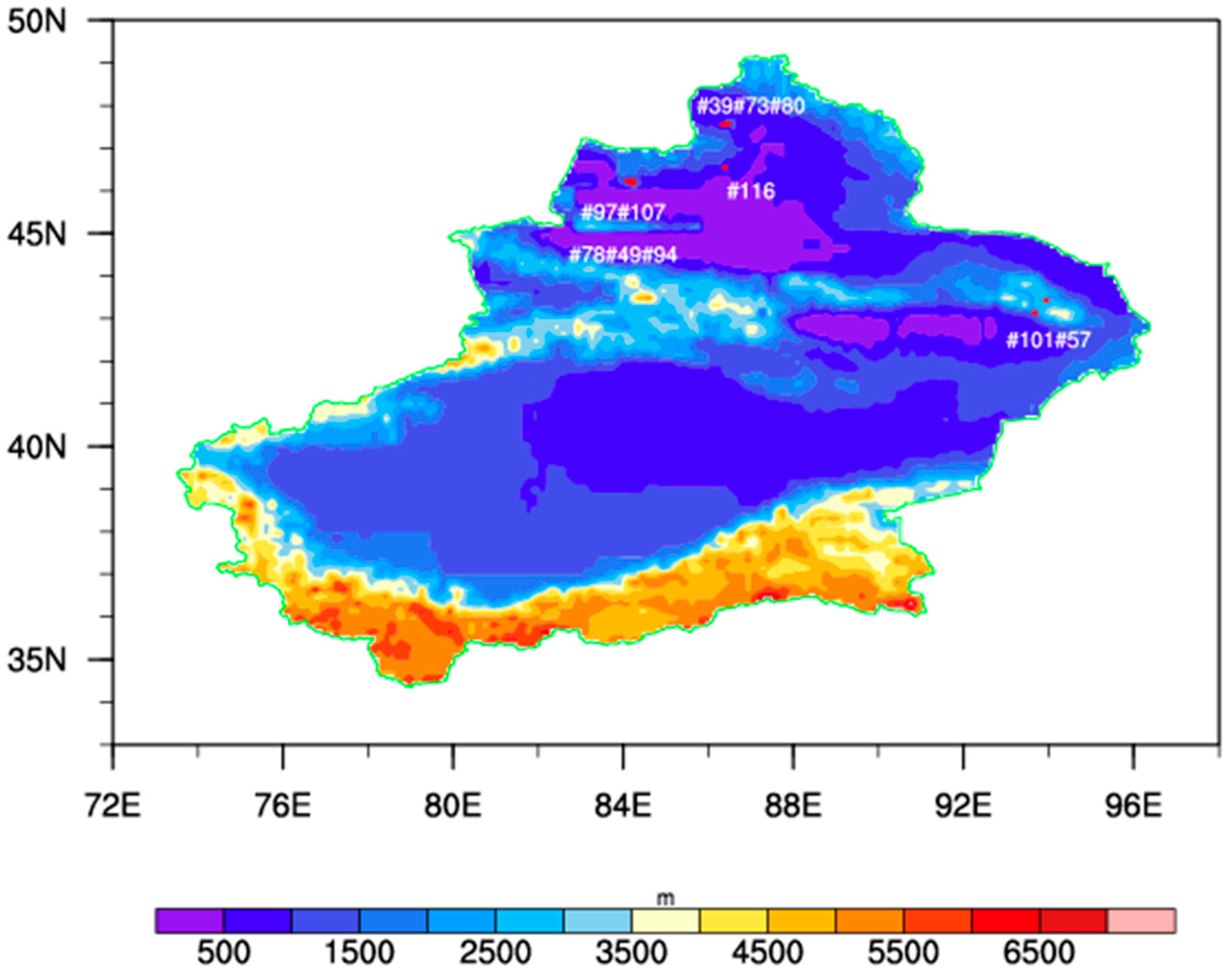
Figure 1. Topography (shade, unit: m) of Xinjiang, China, and spatial distribution of observation stations (red points).
Atmosphere 17 00023 g001
Figure 2. The temporal evolution of ice accretion thickness (unit: mm) in the observation at 11 stations and multiple-station average in North Xinjiang from 23 to 27 December 2021.
Atmosphere 17 00023 g002
Figure 3. PDF distribution of (a) temperature, (b) relative humidity, (c) wind speed, (d) pressure in the observation at 11 stations in North Xinjiang from 23 to 27 December 2021 when ice accretion disaster emerges. The dashed gray lines indicate the appropriate range of meteorological parameters for ice accretion disaster.
Atmosphere 17 00023 g003
Figure 4. Geopotential height (purple contour, CI = 100 gpm) and the anomalies (shade, SI = 20 gpm) relative to 1991–2020 in ERA5 on (a) 23 December 00:00, (b) 24 December 00:00, (c) 25 December 00:00, (d) 26 December 00:00 (e), and 27 December 00:00, 2021, respectively. The green region denotes Xinjiang, China.
Atmosphere 17 00023 g004
Figure 5. The near-surface temperature at 2 m (purple contour, CI = 5 °C) and the anomalies (shade, SI = 1 °C) relative to 1991–2020 in ERA5 on (a) 23 December 00:00, (b) 24 December 00:00, (c) 25 December 00:00, (d) 26 December 00:00, and (e) 27 December 00:00, 2021, respectively. The green region denotes Xinjiang, China. The dashed purple lines denote negative temperature values.
Atmosphere 17 00023 g005
Figure 6. The relative humidity at 850 hPa (purple contour, CI = 5%) and the anomalies (shade, SI = 5%) relative to 1991–2020 in ERA5 on (a) 23 December 00:00, (b) 24 December 00:00, (c) 25 December 00:00, (d) 26 December 00:00, and (e) 27 December 00:00, 2021, respectively. The green region denotes Xinjiang, China.
Atmosphere 17 00023 g006
Figure 7. Observation (blue line) and prediction (red line) of ice accretion thickness (unit: mm) in North Xinjiang from 23 to 27 December 2021 based on the Pangu model data for the (a) 24 h, (b) 48 h, and (c) 72 h prediction in advance, respectively.
Atmosphere 17 00023 g007
Figure 8. Actual observation (blue) and bias-corrected Pangu model data (red) of (ac) temperature (degC), (df) relative humidity (unit: %), (gi) pressure (unit: hPa), and (jl) wind speed (unit: m s−1) at five stations in the western part of North Xinjiang from 23 to 27 December 2021 for the (a,d,g,j) 24 h forecast, (b,e,h,k) 48 h forecast, and (c,f,i,l) 72 h forecast, respectively.
Atmosphere 17 00023 g008
Figure 9. Observation (blue line) and prediction (red line) of ice accretion thickness (unit: mm) in North Xinjiang from 23 to 27 December 2021 based on the bias-corrected Pangu model data via the leave-ten-out cross-validation for the (a) 24 h, (b) 48 h, and (c) 72 h forecast, respectively.
Atmosphere 17 00023 g009
Table 1. The stational data used in the study recorded by the online ice accretion monitoring device system deployed in Xinjiang Power Grid.
NameIDLonLat
Ane#4984.08° E46.23° N
Fengsha#11686.38° E46.55° N
Hailong#3986.33° E47.56° N
Hailong#7386.43° E47.56° N
Hailong#8086.45° E47.57° N
Hashan#5793.66° E43.13° N
Mayou#10193.93° E43.43° N
Tiedong#9784.19° E46.17° N
Tiee#7884.24° E46.20° N
Tierun#10784.17° E46.22° N
Tieyi#9484.20° E46.22° N
Table 2. Evaluation on bias-corrected Pangu model data via machine learning algorithms for 24 h predicted temperature (upper) and wind speed (lower). Bold font indicates the best correction algorithm.
24 h Predicted TemperatureMSEMAER2
Random Forest2.361.280.13
Gradient Boosting2.331.220.14
Linear Regression3.161.47−0.17
Ridge Regression3.271.57−0.21
SVR3.401.51−0.26
Neural Network3.651.51−0.35
24 h predicted wind speedMSEMAER2
Random Forest1.660.610.48
Gradient Boosting1.790.700.43
Linear Regression2.881.200.09
Ridge Regression2.851.180.10
SVR2.971.000.06
Neural Network2.141.070.32
Table 3. Best machine-learning-based bias-corrected algorithm for the Pangu model on each variable at different prediction times.
Variables24 h Prediction48 h Prediction72 h Prediction
TemperatureGradient BoostingGradient BoostingGradient Boosting
Relative humidityGradient BoostingGradient BoostingGradient Boosting
PressureGradient BoostingGradient BoostingGradient Boosting
Wind speedRandom ForestRandom ForestRandom Forest
Disclaimer/Publisher’s Note: The statements, opinions and data contained in all publications are solely those of the individual author(s) and contributor(s) and not of MDPI and/or the editor(s). MDPI and/or the editor(s) disclaim responsibility for any injury to people or property resulting from any ideas, methods, instructions or products referred to in the content.