Article

Seasonal and Regional Variations in CO2 Concentrations: A Large-Scale Sensor-Based Study from Croatian Schools Using Machine Learning


1
The Lisbon Council, 1040 Brussels, Belgium
2
SMART SENSE d.o.o., 10000 Zagreb, Croatia
3
Croatian Academic and Research Network—CARNET, 10000 Zagreb, Croatia
4
Division of Environmental Hygiene, Institute for Medical Research and Occupational Health, 10000 Zagreb, Croatia
5
Department of Civil and Environmental Engineering, Imperial College London, Skempton Building, South Kensington Campus, London SW7 2BX, UK
6
The Laboratory for Chemical and Biomedical Informatics, Institute for Anthropological Research, 10000 Zagreb, Croatia
7
Faculty of Food Technology Osijek, Josip Juraj Strossmayer University of Osijek, 31000 Osijek, Croatia
*
Author to whom correspondence should be addressed.
These authors contributed equally to this work.
Atmosphere 2026, 17(1), 106; https://doi.org/10.3390/atmos17010106
Submission received: 11 December 2025 / Revised: 12 January 2026 / Accepted: 19 January 2026 / Published: 20 January 2026
(This article belongs to the Special Issue Enhancing Indoor Air Quality: Monitoring, Analysis and Assessment)

Abstract

This study investigates indoor CO2 levels in Croatian schools to identify environmental and temporal factors influencing classroom air quality. Using data from hundreds of low-cost sensors installed in 243 schools, we analyze seasonal patterns and differences in CO2 concentrations between schools. In two-shift schools, the longer occupied period was associated with CO2 remaining elevated later in the day. Time-series forecasting with the Prophet model accounts for seasonal variations, while statistical analyses quantify variability and identify key factors driving concentration differences. Additionally, Land Use Regression (LUR) models are developed and compared with direct sensor measurements at the school level to assess their association with CO2 levels across different counties in the country. The results reveal consistent seasonal trends and notable local differences between schools, emphasizing the importance of detailed monitoring in environments with vulnerable populations. This research offers insights into the strengths and limitations of statistical and modeling methods for school-based air quality assessment and provides recommendations for enhancing monitoring strategies in similar large-scale networks.

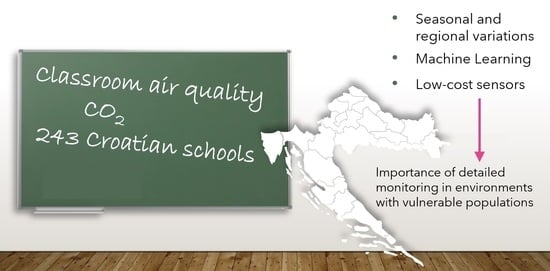
Graphical Abstract

1. Introduction

Indoor air quality (IAQ) significantly influences human health, comfort, and performance. People spend about 85–90% of their time indoors, often in environments where pollutant levels can surpass outdoor concentrations [1,2]. Schools are especially important because children typically spend 6–8 h daily in classrooms during key developmental stages. High occupant density and limited ventilation make these environments particularly susceptible to elevated pollutant levels, including carbon dioxide (CO2) [3]. Among various IAQ indicators, CO2 concentration is commonly used as a proxy for ventilation effectiveness and occupancy [4]. While CO2 is not directly toxic at typical indoor levels, elevated levels are closely linked to the accumulation of other indoor pollutants, such as volatile organic compounds (VOCs) and particulate matter (PM) [5,6,7,8,9]. Importantly, many studies have found links between increased indoor CO2 concentrations and adverse effects on cognitive performance, attention, and decision-making, particularly in children and adolescents whose respiratory and neurological systems are still developing [10]. School-aged children are a sensitive population due to their higher breathing rates relative to body weight and the large proportion of time spent indoors, often 30–40 h per week in classrooms. Prolonged exposure to elevated indoor CO2 concentrations associated with insufficient ventilation can cause headaches, fatigue, drowsiness, and reduced learning ability, with possible long-lasting effects on respiratory health and academic success [11,12]. The World Health Organization (WHO) and other global agencies recommend keeping indoor CO2 levels below 1000 ppm as an indicator of proper ventilation [2]. However, multiple studies in Europe show that school CO2 levels often exceed this limit, especially during winter when windows are kept closed for heat conservation and in older buildings without mechanical ventilation systems [6,13]. A recent systematic review of naturally ventilated primary schools reported a median classroom CO2 concentration of 1487 ppm, with 81% of classrooms exceeding 1000 ppm during occupied periods. Detailed field studies further indicate that measured classroom CO2 concentrations commonly range between 1200 and 3000 ppm, with peak values exceeding 4000 ppm in poorly ventilated classrooms, particularly during the heating season [4]. In Croatia, classroom CO2 concentrations measured during the heating season consistently exceeded guideline values, with mean levels ranging from approximately 1500 to over 4300 ppm across urban and rural schools [14].
While the importance of proper ventilation in schools is widely acknowledged, large-scale, multi-factor analyses that combine environmental, meteorological, and temporal factors influencing indoor CO2 levels remain scarce. Past studies have often been limited to small numbers of schools, brief sampling periods, or localized areas [15,16]. Additionally, few studies examine how outdoor environmental factors, such as land use, traffic, vegetation, and building density, indirectly affect IAQ by influencing outdoor air composition and ventilation practices. The relationship between indoor–outdoor temperature differences, weather conditions, and occupancy patterns also remains insufficiently understood, despite their clear role in shaping classroom CO2 levels. Evidence from Croatia is similarly limited to localized pilot studies. Investigations documented CO2 concentrations far above recommended guidelines during the heating season in 20 elementary schools, with higher levels in continental than coastal regions [14]. Additional work in Osijek schools (eastern Croatia) found elevated indoor levels of benzene, formaldehyde, and nitrogen dioxide in classrooms affected by dampness and insufficient ventilation [17]. Despite these findings, Croatia still lacks comprehensive, nationwide IAQ assessments that evaluate how land use, climate, and building operation jointly shape indoor CO2 dynamics in schools.
This study fills these research gaps by conducting a nationwide, data-driven analysis of indoor CO2 levels in 243 schools across Croatia, representing various climate and land-use settings. Indoor measurements of CO2, temperature, and relative humidity were combined with high-resolution environmental descriptors and meteorological data to examine the factors influencing IAQ in educational environments. This research offers one of the first large-scale assessments of IAQ in Croatian schools. It is the result of the Horizon EDIAQI project [18], which aims to understand children’s exposure to indoor air conditions, including temperature, relative humidity, and CO2. The analysis assesses regional differences, seasonal variations, and their causes, and how local land-use conditions affect IAQ.
By combining land-use details, weather factors, and machine learning (ML) techniques, this research provides the most comprehensive assessment of indoor CO2 behavior in schools in this area so far. In this context, ML-based time-series decomposition is used not as a standalone predictive contribution, but as an interpretative tool to disentangle overlapping daily, weekly, and seasonal drivers of indoor CO2 dynamics, thereby validating the role of school operational patterns alongside climatic influences. Besides improving understanding of how CO2 levels vary across space and time, the study emphasizes the public health importance of maintaining proper ventilation in schools. The results can support evidence-based actions to enhance classroom air quality, inform national ventilation standards, and ultimately help create healthier, more productive learning environments for children in different climates and urban areas.

2. Materials and Methods

2.1. Data Preparation

The study was carried out across Croatia, a South-East European country situated at the crossroads of Central and Mediterranean Europe. Croatia spans approximately 56,600 km2 and has a long Adriatic coastline to the west. The country features diverse geographical and climatic characteristics, ranging from coastal Mediterranean zones to continental lowlands and mountainous regions [19,20]. Geographically, Croatia can be divided into three main regions [21]: (1) the Pannonian lowlands in the north and east, which have a continental climate with warm summers and cold winters; (2) the Dinaric mountain range, serving as a transitional zone with cooler temperatures and higher precipitation; and (3) the Adriatic coastal area, which has a Mediterranean climate with mild, wet winters and hot, dry summers.
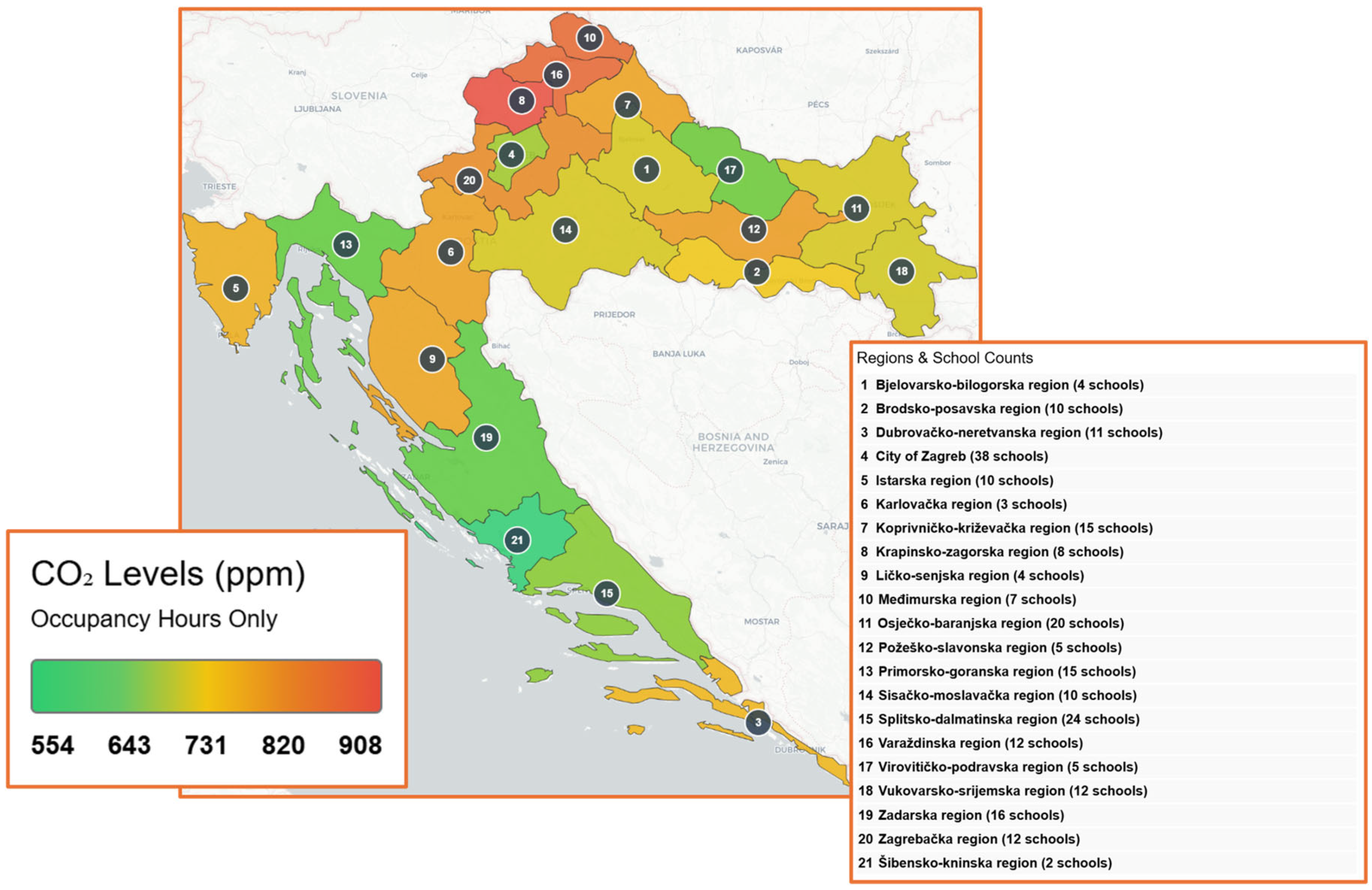
These climatic differences affect both outdoor and indoor environmental conditions, including building ventilation. Croatia is divided into 20 counties and the city of Zagreb for administrative purposes. The schools in this study were spread across all regions, offering a representative sample of the country’s diverse climate and urban areas. A total of 243 schools participated, each with at least one year of continuous IAQ data. Zagreb had the highest number of monitored schools (38), reflecting its dense urban environment and large population. Other counties with notable representation included Splitsko-dalmatinska (24 schools), Osječko-baranjska (20), Zadarska (16), and Koprivničko-križevačka (15). Regions with smaller populations, such as Karlovačka, Ličko-senjska, and Šibensko-kninska, had fewer schools (2–4) included in the dataset. Figure 1 shows the spatial distribution of participating schools across Croatian counties and displays the average CO2 levels during occupancy hours. This extensive geographical coverage enables a comprehensive analysis of how geographic, climatic, and land use factors influence indoor CO2 levels across various environments in Croatia.

2.2. Data and Methods Used

A nationwide indoor air quality (IAQ) monitoring system was deployed across schools in Croatia to evaluate and improve classroom environmental conditions. Each selected classroom was fitted with Sensees® (SMART SENSE d.o.o., Zagreb, Croatia) Indoor Air Quality Sensor Units designed for continuous, autonomous measurement of CO2, temperature, relative humidity, and atmospheric pressure (Figure S3 in Supplementary Materials). CO2 levels were measured using non-dispersive infrared (NDIR) absorption technology with autocalibration (range 0–5000 ppm, accuracy ± 50 ppm). Temperature was recorded within a range of −25 °C to +85 °C (accuracy ± 0.3 °C), and relative humidity ranged from 0 to 100% RH (accuracy ± 4%). Pressure measurements covered 260–1260 hPa (accuracy ± 0.2 hPa). All devices were powered by AC adapters and installed either as wall-mounted or portable units, depending on classroom layout. Each unit weighed approximately 0.6 kg and operated continuously during school hours. Sensor data were wirelessly transmitted to the cloud via Wi-Fi, with additional options like NB-IoT or LoRaWAN for wider coverage. The plug-and-play setup allowed for automatic synchronization with AERO® (SMART SENSE d.o.o., Zagreb, Croatia), a centralized data management platform that aggregated and stored all IAQ data. The AERO system (version 9.8) provided web and mobile (iOS and Android) access for real-time visualization, data analysis, and long-term environmental monitoring. Automated data validation and drift correction were implemented to ensure data consistency throughout the network. The analysis was based on indoor environmental measurements collected from 370 schools across Croatia as part of a national monitoring initiative, of which 243 schools with at least 1 full year of continuous data were included. Each school had one or more classrooms equipped with sensors, and when multiple classrooms were available, mean values were calculated to obtain representative school-level observations. The analysis focused on hours when classrooms were expected to be occupied by students. To identify these periods, several filtering steps were applied. First, all nighttime hours (21:00–07:00), during which schools are closed, as well as weekends, were excluded. Additionally, all Croatian public holidays and school vacation periods were removed. These filtering steps collectively excluded approximately 65% of the original dataset. It was also necessary to distinguish between schools operating in a single shift and those with two daily shifts, as Croatian schools may follow either schedule. Two-shift schools typically operate from 08:00–13:00 and 13:00–19:00 approximately, while one-shift schools operate from 08:00–14:00. Shift identification was performed using a detection algorithm based on dynamic CO2-derived occupancy thresholds. The first step involved estimating a baseline CO2 concentration defined as the 25th percentile of each school’s daily CO2 distribution. Using Equation (1), an occupancy threshold (OC) was calculated as:
O C = X C O 2 + 0.3 Y C O 2 X C O 2
where Y C O 2 represents the maximum daily CO2 concentration, X C O 2 is the current CO2 concentration measurement. This thresholding heuristic is introduced in this study as a simple and interpretable rule to approximate the onset of occupancy-related CO2 increases. The factor of 0.30 was selected empirically based on evaluations of threshold performance across schools. The factor was chosen empirically during method development by testing multiple candidate fractions of the daily CO2 amplitude and selecting the value that most consistently captured the first sustained CO2 rise across schools with different operating schedules (one- and two-shift) and climatic settings, while avoiding overly sensitive thresholds on noisy days. Using this method, 78.2% of schools were classified as operating in two shifts, while 21.8% operated in a single shift. After all filtering and shift-identification procedures, 34% of the original dataset remained and was used for analyses limited to occupancy hours. Figure S1 shows examples of a one-shift school and a two-shift school. To account for external conditions, meteorological variables, including outdoor temperature and humidity, were obtained from weather stations at the schools. For schools without on-site stations, data from the geographically nearest station were used, determined by calculating the great-circle distance between the school and surrounding stations using the haversine formula. Precipitation and total rain column were extracted from the ERA5 reanalysis dataset at hourly resolution, and each school was matched to its nearest grid cell. These outdoor parameters were used to derive the indoor–outdoor temperature difference (ΔT) and to assess the influence of weather conditions on indoor CO2 accumulation. Additionally, over 500 land-use and built-environment features were derived for circular buffers of 5000 m around each school using a LUR framework, capturing characteristics such as traffic intensity, building density, vegetation, and industrial land coverage. Where needed, outlier features were identified and removed using a rolling interquartile range (IQR) filter, and missing values were imputed with a multivariate iterative algorithm to ensure data continuity. Temporal features, including hour, day, week, month, and season, were created to capture daily and seasonal variability in classroom conditions. For the purposes of this analysis, seasons were defined based on calendar months as follows: winter (December–February), spring (March–May), summer (June–September), and autumn (October–November). The summer season includes September, as regular school activities resume after the summer holiday. The number of measurement days per season ranged from 10 in summer to 62 in autumn, due to differences in school holidays and break periods.
Descriptive statistics summarized indoor CO2, temperature, and humidity across seasons, regions, and school types, with visualizations revealing temporal and spatial patterns. Spearman correlation coefficients were calculated to examine relationships among CO2, thermal comfort parameters, and climate indicators, including the indoor–outdoor temperature difference (ΔT) and precipitation intensity. Dimensionality reduction in land-use features was performed using Principal Component Analysis (PCA) [22,23,24,25], retaining 95% of the total variance, followed by K-means clustering to identify characteristic land-use types around schools. The optimal number of clusters was determined using a combination of the elbow method and silhouette analysis. K-means clustering was evaluated for cluster numbers ranging from 2 to 10. The elbow method was used to assess changes in the within-cluster sum of squared errors, while silhouette scores were calculated to evaluate cluster cohesion and separation. The final number of clusters was selected by combining the results of both criteria to achieve a balance between statistical robustness and interpretability. Based on this approach, four clusters were identified as optimal for describing land-use variability around schools. A similar method was applied to climate data from nearby weather stations: PCA was used to reduce the dimensionality of meteorological variables while retaining 95% of the total variance, and the resulting components were clustered using K-means to identify typical climate patterns influencing each school. Predictive modeling was conducted with the Prophet time-series model [26,27,28,29]. The Prophet model forecasted hourly and daily values of CO2, temperature, and humidity, including daily, weekly, and yearly seasonality, along with custom regressors for school occupancy cycles. All statistical and spatial analyses were performed in Python (version 3.11, www.python.org) using the pandas, numpy, scikit-learn, prophet, and matplotlib libraries.

3. Results and Discussion

3.1. Seasonal and Regional Variability of Indoor CO2, Temperature, and Humidity

To provide an overview of indoor environmental conditions in Croatian schools, the analysis began with an assessment of seasonal changes in CO2, temperature, and humidity. This step establishes the baseline variability before examining how spatial, climatic, and land-use factors influence classroom air quality. Table 1 presents the descriptive statistics for these parameters by season. Count represents the number of valid hourly measurements retained after filtering for occupancy hours and quality-control checks. Minor differences between CO2, temperature, and relative humidity counts possibly arise from variable-specific data completeness and occasional sensor dropouts. The relatively high standard deviation for CO2 reflects its strong short-term variability driven by occupancy density, ventilation behavior, and school schedule, whereas temperature and relative humidity are more stable due to mechanical or thermal regulation. During winter, average CO2 concentrations were highest at approximately 965 ppm, often exceeding 1000 ppm. This aligns with decreased natural ventilation when windows are kept closed. Winter CO2 peaks exceeding 1000 ppm in Croatian classrooms are consistent with European studies reporting similar seasonal ventilation deficits [4,13]. Winter also had the lowest average relative humidity, around 40.64%. In spring, average CO2 levels decreased to about 832 ppm, accompanied by slightly higher indoor temperatures and a gradual increase in relative humidity. Summer recorded the lowest average CO2 concentrations at approximately 798 ppm, likely due to increased ventilation from open windows with higher outside temperatures; it is important to note that this period begins in September.
Indoor temperatures peaked in summer, averaging about 24.9 °C, while relative humidity reached its highest average of roughly 54%, following outdoor weather patterns. During autumn, CO2 levels increased again (approximately 830 ppm) as outdoor temperatures dropped and classrooms became more enclosed. RH values were similar to those in summer (around 53%). Overall, the results demonstrate a strong seasonal pattern in indoor environmental conditions. Higher CO2 levels during colder months indicate that ventilation is the primary factor affecting air quality, whereas warmer seasons offer better conditions due to increased natural air exchange. Notably, winter median and upper-percentile CO2 concentrations frequently exceeded the commonly recommended threshold of 1000 ppm, indicating prolonged periods of inadequate ventilation in occupied classrooms. Similar seasonal trends with elevated winter CO2 levels have been reported in other European studies [30,31].
Table S1 in the Supplementary Materials presents descriptive statistics for the measured variables across Croatia’s 20 counties and the City of Zagreb. Regional trends were identified, reflecting differences in climate, urbanization, and building characteristics throughout the country. The highest average CO2 concentrations were found in Krapinsko-zagorska (≈1037 ppm), Brodsko-posavska (≈1019 ppm), Međimurska (≈1012 ppm), and Varaždinska (≈1010 ppm) counties. These elevated values may be linked to a combination of continental climate conditions, in which lower outdoor temperatures limit window ventilation, and to structural features of older school buildings. The lowest mean CO2 levels were observed in Sisačko-moslavačka (≈638 ppm) and Virovitičko-podravska (≈688 ppm) regions, suggesting better ventilation or lower occupancy density. The City of Zagreb, with the largest sample size (38 schools), had an average CO2 concentration of about 861 ppm. These county-level differences should be interpreted with caution, as indoor CO2 concentrations primarily reflect classroom-level factors such as occupancy density, ventilation efficiency, school operation mode (one-shift vs. two-shift), and building characteristics, which may vary substantially between schools within the same region. Regarding climate indicators, average indoor temperatures ranged from approximately 22.4 °C to 23.2 °C, following the expected north–south gradient. Higher average indoor temperatures were recorded in Zagrebačka, Osječko-baranjska, and coastal regions such as Šibensko-kninska, consistent with their warmer outdoor climates.
Relative humidity showed moderate regional variation (around 43–55%), with slightly higher averages in coastal and continental areas, including Istarska, Krapinsko-zagorska, and Dubrovačko-neretvanska counties, where maritime and orographic influences increase ambient moisture. Overall, these regional differences indicate that both climatic zones and building environments influence indoor CO2 levels and microclimatic conditions in Croatian schools. These characteristics, including reduced natural ventilation due to low outdoor temperatures and structural limitations of older school buildings are common factors influencing indoor CO2 accumulation in schools across Europe and have been repeatedly highlighted in the literature [13,32]. Coastal and mountainous counties generally exhibited lower CO2 levels and higher humidity, while continental regions showed higher CO2 levels and lower relative humidity, highlighting the need for region-specific ventilation and energy-efficiency strategies. The only region exempt from this pattern is Šibensko-kninska, due to its diverse topography, with part lying on the coast and part in a mountainous area.
Table S2 in the Supplementary Materials summarizes the descriptive statistics for the measured variables by school type. The dataset includes 180 elementary schools and 63 high schools, representing most Croatian educational buildings with continuous IAQ monitoring. Both school types exhibited similar indoor conditions, although elementary schools tended to have slightly higher CO2 levels (approximately 875 ppm) than high schools (approximately 824 ppm). This difference may reflect higher classroom occupancy densities, younger student age groups with longer indoor stays, and generally smaller classroom volumes in elementary facilities. The variability in CO2 was greater in high schools (standard deviation approximately 705 ppm), indicating a wider range of ventilation performance across buildings. Average indoor temperatures were nearly identical across school types (≈22.8 °C), indicating consistent practices in thermal management and building energy efficiency. Relative humidity averaged around 49% in elementary schools and 47% in high schools, with similar seasonal fluctuations, staying within the comfort ranges recommended for learning environments. These findings suggest that ventilation efficiency and daylight management may vary by educational level, underscoring the need to tailor IAQ interventions to each school’s occupancy and design features.
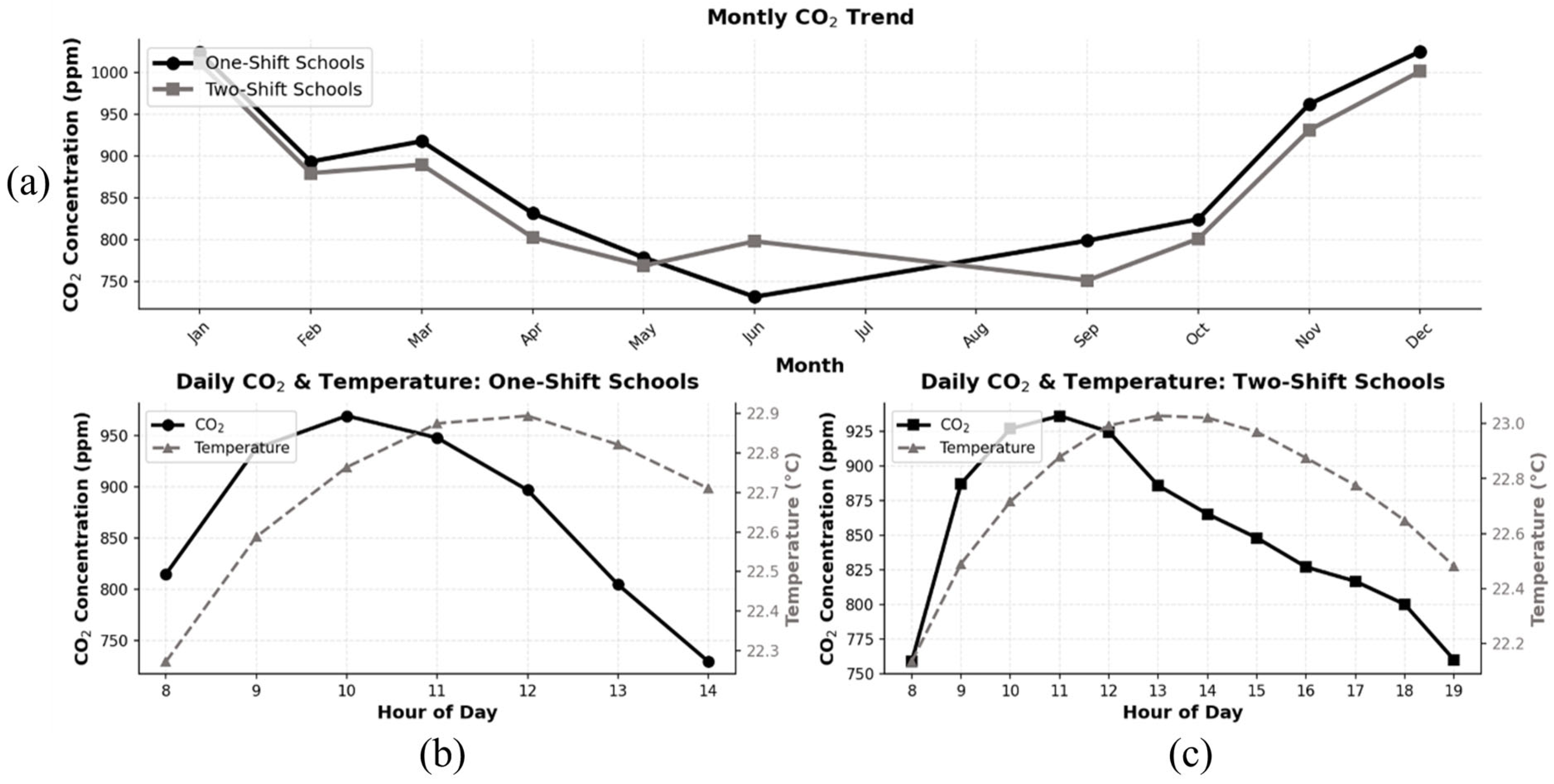
To better understand how IAQ varies over time in Croatian schools, seasonal and hourly CO2 levels were analyzed for both one-shift and two-shift schools (Figure 2). The monthly trends confirmed earlier observed seasonal patterns, with higher concentrations during winter and lower levels in summer, late spring, and early autumn, reflecting differences in ventilation rates and outdoor conditions. The hourly graph (Figure 2b,c) further illustrates the impact of occupancy, showing consistent daily peaks in CO2 levels around 10:00 in one-shift schools and around 11:00 in two-shift schools. In one-shift schools, both temperature and CO2 levels rise in the morning and then decline in the afternoon. This can be interpreted as the effect of natural ventilation, where CO2 accumulates during teaching hours due to occupant emissions and then decreases as air exchange increases (e.g., window airing during breaks and/or after classes). In two-shift schools, the same trend occurs but shifts to the early afternoon, between 14:00 and 15:00, likely due to shift changes, which delay the effects of ventilation and occupancy.

3.2. Land-Use Influences on Indoor CO2 Concentrations

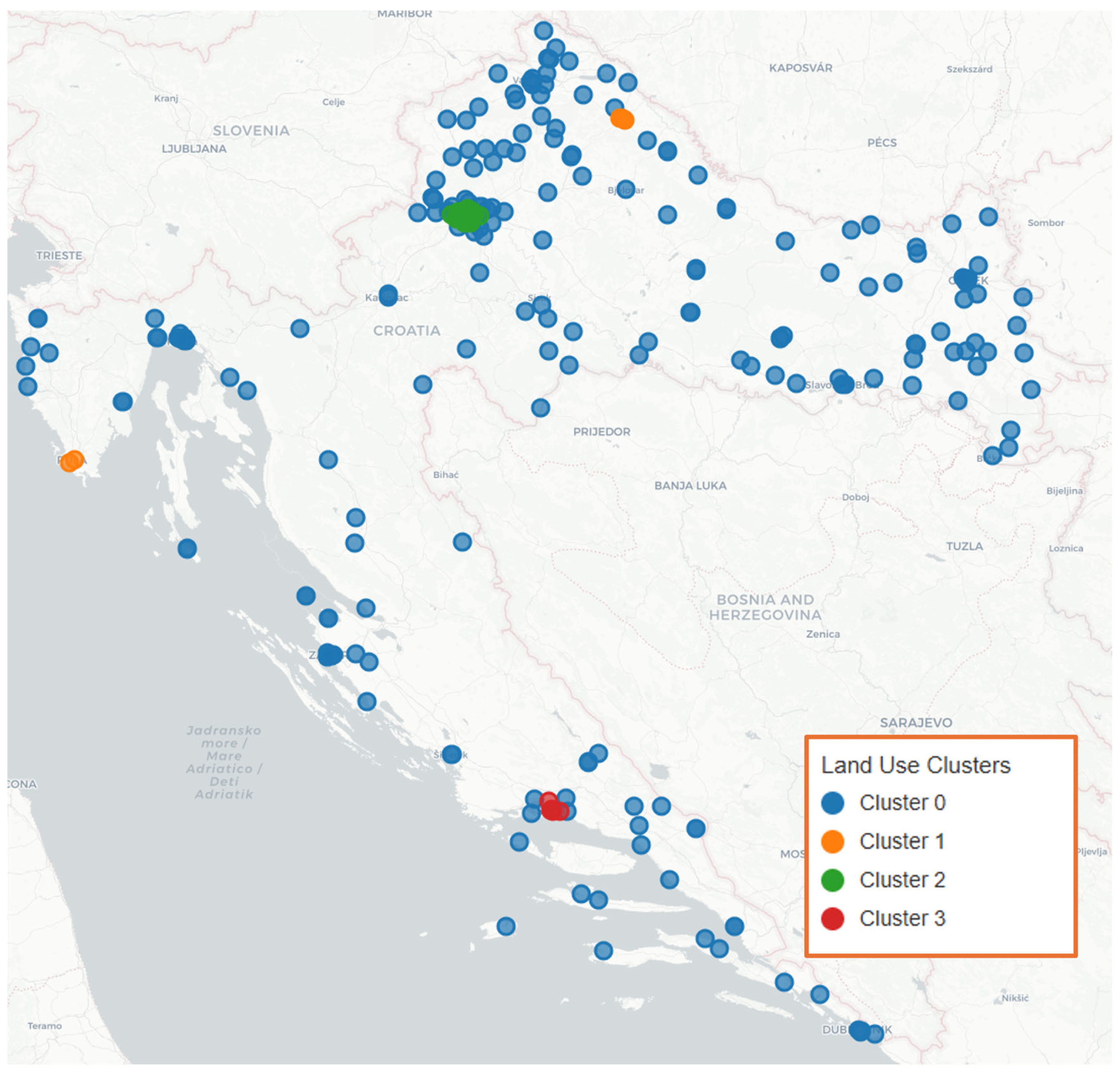
To examine spatial differences in indoor CO2 levels, land-use characteristics within a 5 km radius around each school were analyzed. PCA was applied to the land-use features, accounting for 95% of the total variance. After that, four clusters were created using K-means clustering, representing distinct land-use environments with varying levels of urbanization, vegetation cover, and proximity to transportation infrastructure, with the optimal number of clusters determined using the elbow method and silhouette analysis (Figure 3).
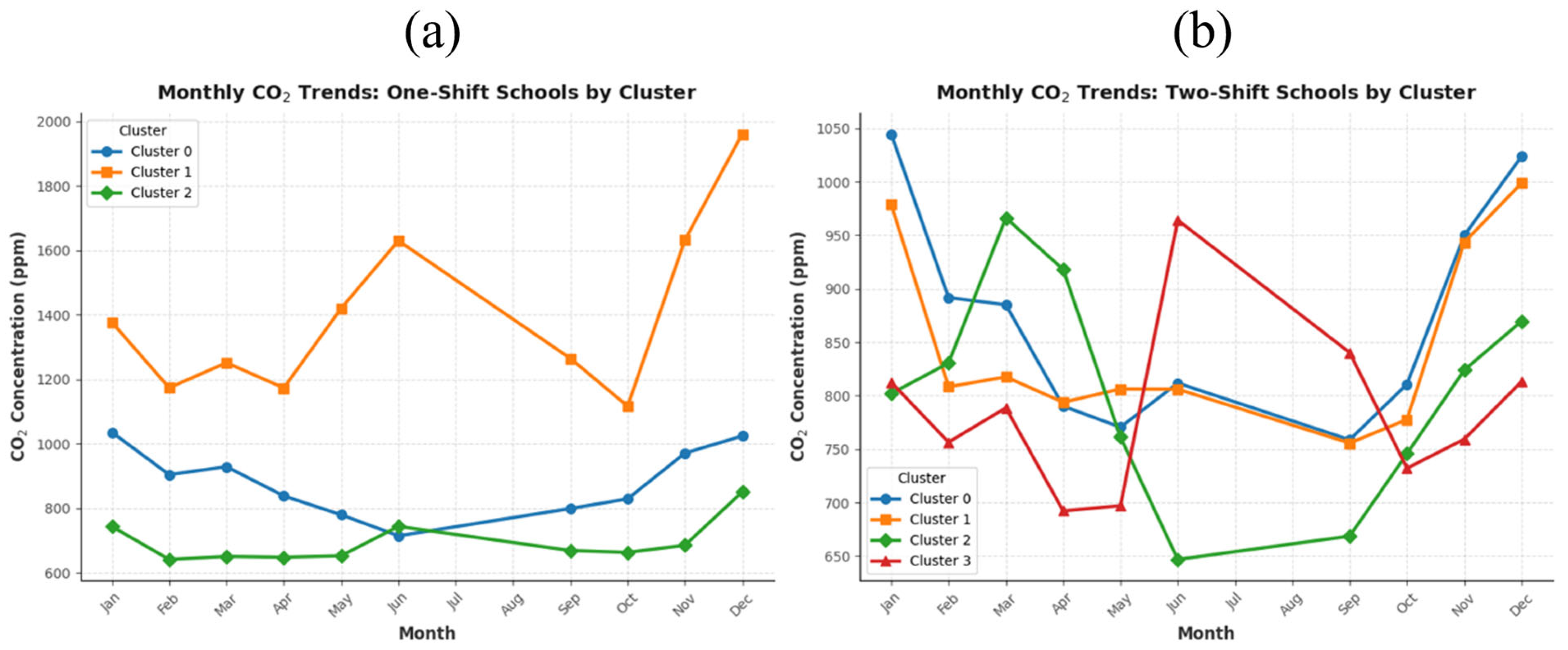
Monthly CO2 concentration of occupancy hours and their trends for each land-use cluster are shown in Figure 4. Figure 4a shows the trends for one-shift schools, where only three of the four clusters are detected. Cluster 1 shows the highest mean values, while Cluster 2 has the lowest. However, Clusters 1 and 2 exhibit roughly the same trend: CO2, while Cluster 0 shows different behavior during summer. For two-shift schools, shown in Figure 4b, all four clusters are present. Clusters 0 and 1 have the highest values during winter. Cluster 2 displays unusually high values in early spring, followed by a notable drop. Cluster 3 has the highest values in late spring and in early and late summer.
To better interpret the observed CO2 differences across clusters, it is important to understand their land-use characteristics. Cluster 2 stands out most clearly, characterized by dense urban structure, high building coverage, and extensive transport infrastructure. Because classroom CO2 is dominated by occupant emissions, these land-use characteristics can be interpreted as proxies for building/urban context and ventilation-related behavior (e.g., constraints or preferences regarding window opening), rather than as direct indoor CO2 sources. Other clusters share similar traits, with slightly lower residential density and limited vegetation cover, but also with somewhat lower commercial and industrial activity. This is expected, as Cluster 2 corresponds to Croatia’s largest city, Zagreb, while Cluster 3 represents Split, the second-largest city, which is more focused on tourism. In dense urban settings, additional constraints (noise, thermal comfort, or concerns about outdoor pollution) may reduce the willingness to open windows, thereby contributing to higher and more persistent CO2 levels during occupied hours. Urban areas can also exhibit elevated outdoor/background CO2 (known as “urban CO2 dome”), which may raise the indoor baseline level and reduce the effective dilution gradient during airing compared with less urban surroundings [33,34,35].

3.3. Climate Influences on Indoor CO2 Concentrations

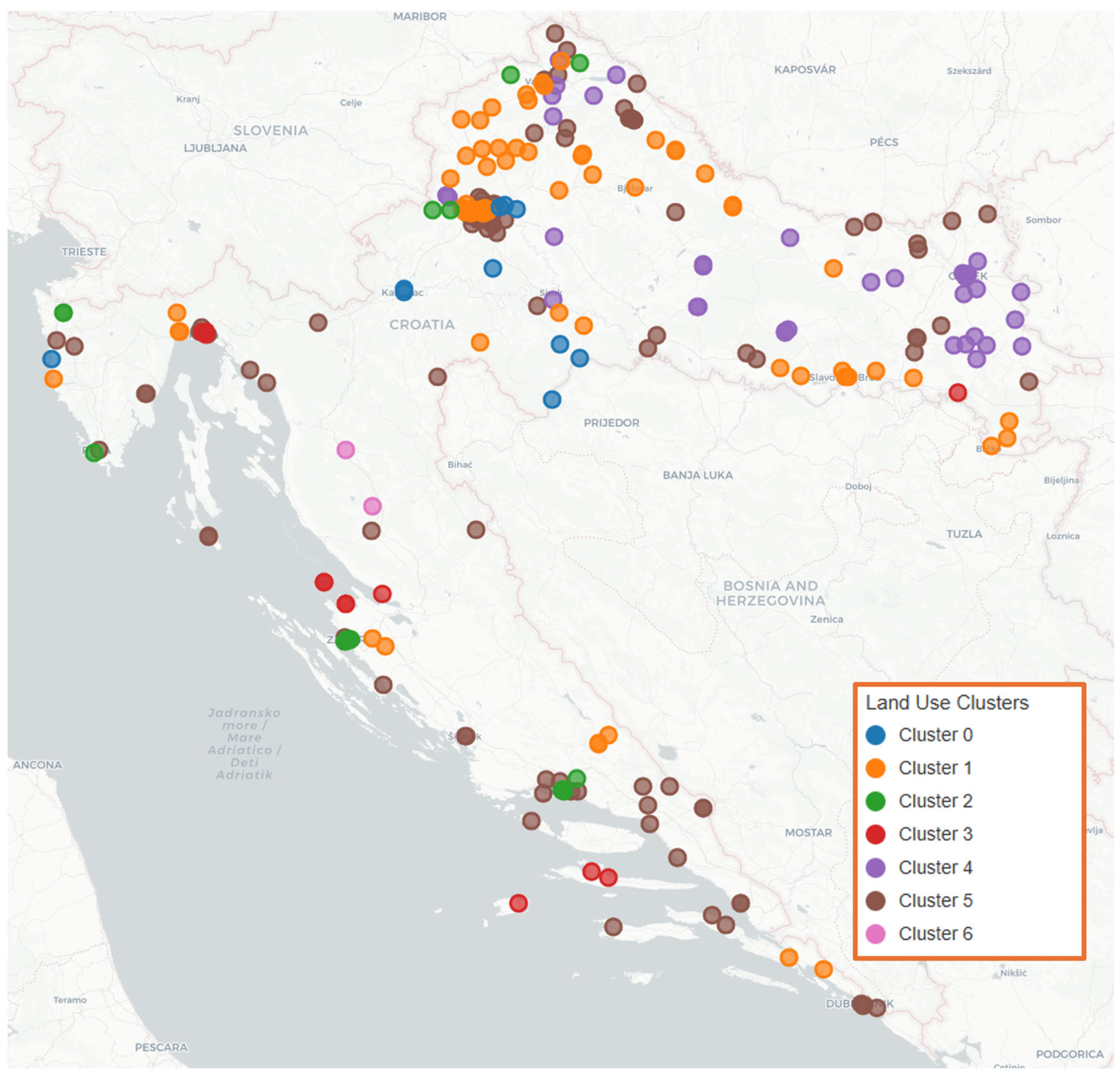
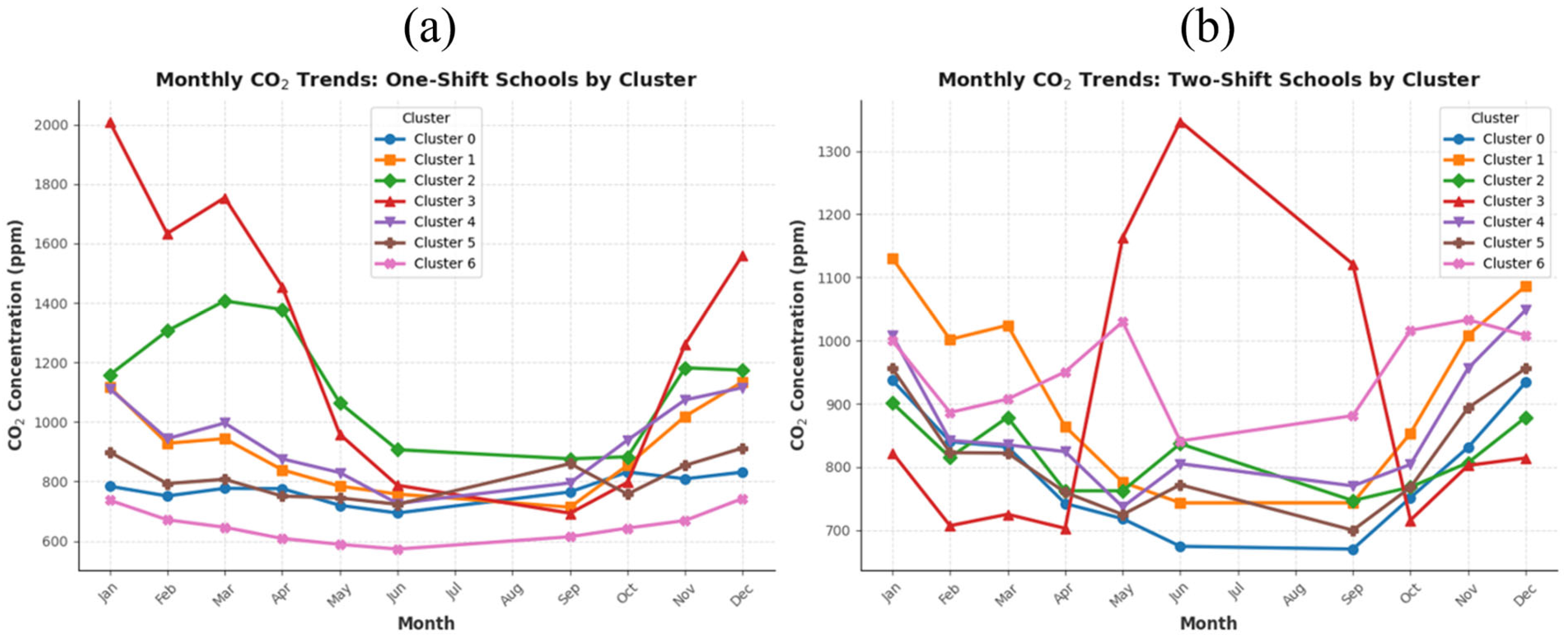
To assess how regional climate conditions influence indoor CO2 variability, the same clustering method used for land-use data was applied to meteorological data from weather stations. The extracted features were scaled and reduced using PCA to retain 95% of the variance, then clustered using K-means, with the optimal number of clusters determined using the elbow method. This procedure identified groups of schools with similar climate conditions (Figure 5). The spatial distribution of clusters reflects the country’s geographic and climate differences, with continental clusters mainly in the northern and eastern lowlands and coastal clusters along the Adriatic region. Monthly CO2 concentration trends for occupancy hours are shown in Figure 6 for both one- and two-shift schools. Despite a general seasonal pattern consistent across clusters, notable differences in magnitude and variability are apparent. Differences between climate clusters likely reflect season-dependent ventilation and infiltration effects—reduced window opening during the heating season and higher outdoor CO2 in dense urban areas can both elevate indoor baselines.
Cluster 0, located in the northwestern continental region, shows smaller drops in CO2 concentrations in one-shift schools than in two-shift schools, as expected, since afternoon temperatures are higher and ventilation is better. However, winter concentrations are higher for two-shift schools (≈1000 ppm) than for one-shift schools (≈800 ppm). Clusters 1 and 2, mostly spread across continental and partially coastal areas, have moderately higher winter levels (≈800 ppm) and stable summer levels, indicating warm-continental conditions with moderate seasonal variation. A practical implication is that wintertime two-shift operation may increase the probability of elevated CO2 persisting into the afternoon, so the second shift could be more affected unless additional airing occurs between shifts. Cluster 2, however, shows an increase in one-shift schools in the monthly mean values through April, whereas this trend is not seen in two-shift schools. Cluster 3, representing the coastal region, shows the highest CO2 concentrations among all clusters for one-shift schools, but the opposite trend appears for two-shift schools. In late spring, concentrations rise to a maximum of about 1300 ppm. Clusters 4 and 5 show similar patterns in both one-shift and two-shift schools, with concentrations decreasing during the warmer months and increasing in winter. Cluster 6, located in a high-elevation transitional region between the Adriatic and continental climates, has the lowest concentration of one-shift schools across all clusters. In two-shift schools, however, a large spike occurs in May. This isolated increase may reflect short-term changes in school operation (atypical occupancy patterns, exam periods) or ventilation behavior rather than climate alone. Such cluster-specific anomalies highlight that operational factors can modulate climate-related ventilation constraints, particularly in two-shift schools. Overall, the clusters reflect Croatia’s geographical differences: coastal and high-elevation areas maintain lower, more stable CO2 levels, while continental lowlands experience higher peaks during winter.
Figure 6. Monthly CO2 concentrations by climate clusters for one-shift schools (a) and two-shift schools (b).
Atmosphere 17 00106 g006

3.4. Effect of Indoor–Outdoor Temperature Difference (ΔT) on CO2

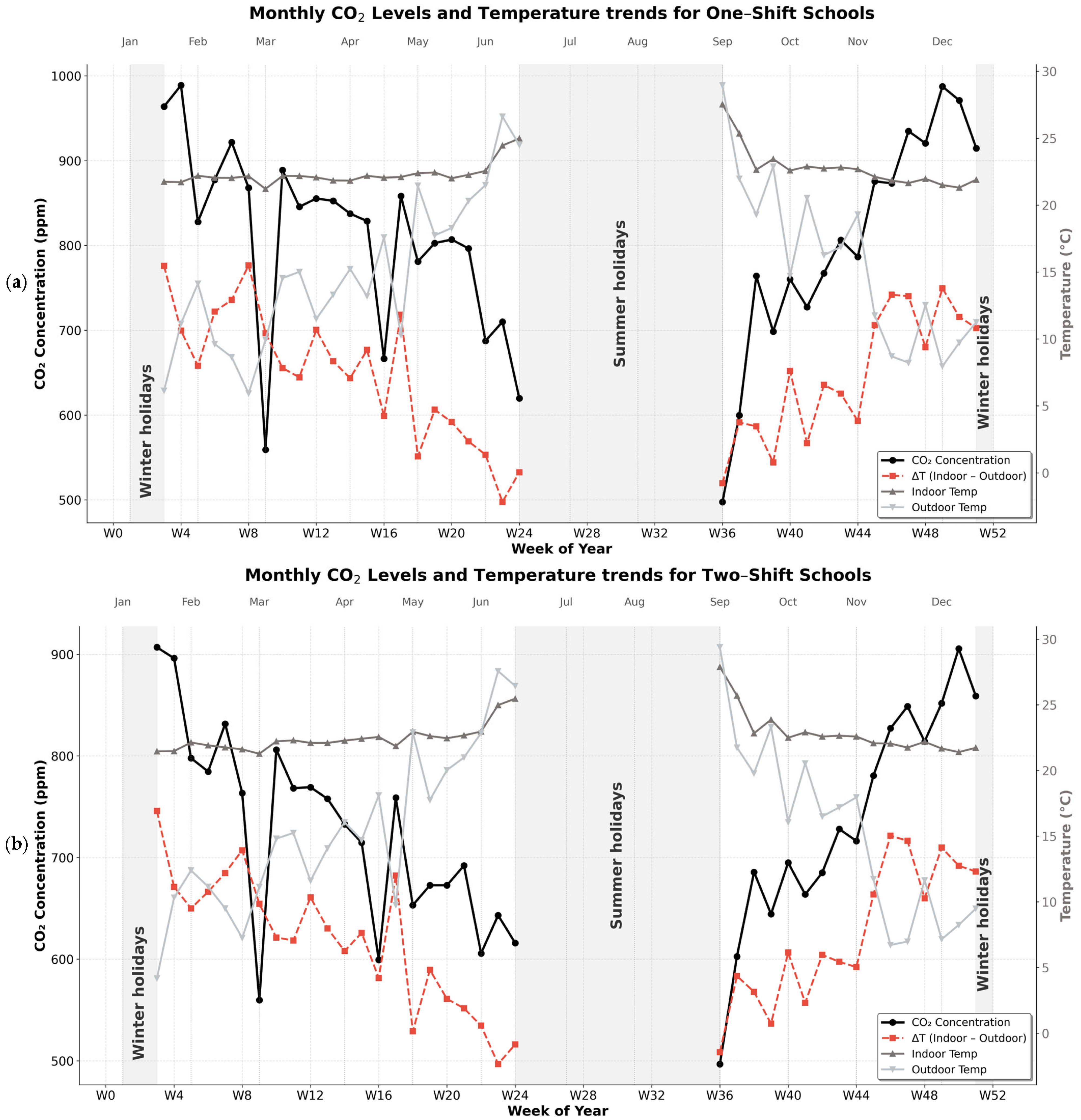
To further evaluate how thermal conditions influence IAQ, the link between indoor–outdoor temperature differences (ΔT) and CO2 levels was examined (Figure 7). Each school was connected to its nearest weather station, and ΔT was determined as the difference between indoor and outdoor temperatures. The results reveal that CO2 levels and ΔT exhibit opposite seasonal patterns, with higher CO2 levels occurring alongside larger temperature differences during the heating season (winter and early spring), when window opening and ventilation are usually limited. In summer, ΔT approaches zero, indicating better alignment between indoor and outdoor conditions and enhanced natural ventilation, resulting in the lowest CO2 levels of the year. Indoor temperature remains relatively stable throughout the year, while outdoor temperature exhibits seasonal variation, driving changes in ΔT and influencing classroom air renewal efficiency. There is no difference in trends across school-based programs on shifts, but in the winter, concentrations are higher in one-shift schools when comparing week-to-week contractions. These findings confirm that thermal gradients between indoor and outdoor environments represent an important driver for CO2 accumulation in schools in Croatia, particularly under colder climatic conditions. Similar heating-season increases in classroom CO2 linked to reduced natural ventilation in cold outdoor conditions have been widely reported in school IAQ studies [36].

3.5. Effect of Precipitation on CO2

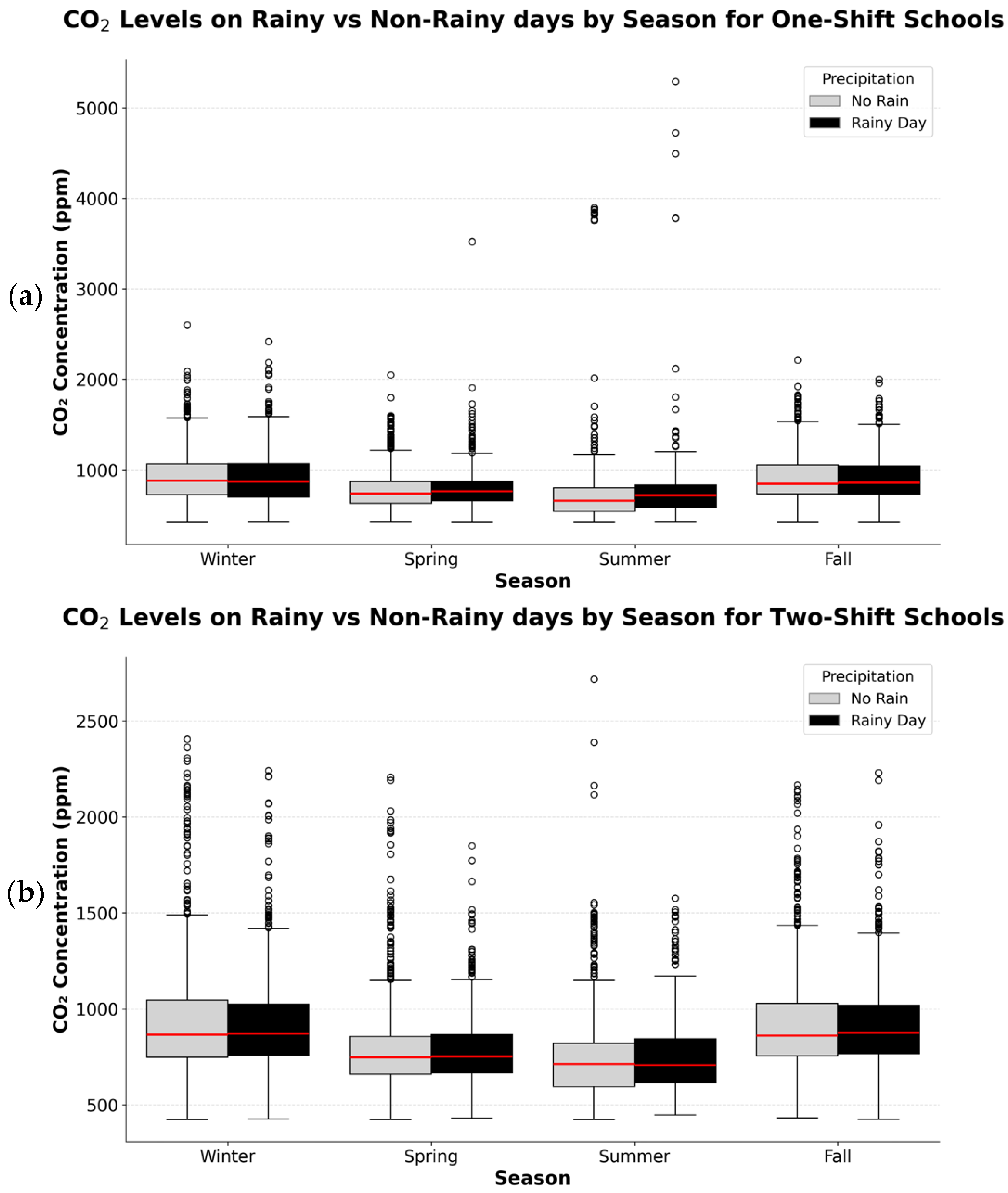
To evaluate the influence of precipitation on IAQ, daily CO2 data from schools were merged with satellite-derived precipitation estimates and aggregated by school, region, and season (Figure 8).
The monthly comparison of average CO2 levels and total precipitation shows a generally inverse seasonal pattern, with higher rainfall occurring when CO2 levels are lower, especially in late spring, late summer and early autumn for both school types. This suggests that increased precipitation often coincides with milder outdoor conditions and better natural ventilation. However, when comparing rainy and non-rainy days directly, small but consistent differences in CO2 levels were seen across seasons. During spring and autumn, average CO2 levels were about 3–5% higher on rainy days, indicating reduced window opening and lower ventilation rates during wet weather. In winter and summer, differences were minimal, probably because ventilation is already limited during the heating season and windows tend to be open in warm weather this is also the case for both school types. This effect is likely behavioral (reduced window opening during rainfall), as reported in studies of window-opening patterns in naturally ventilated buildings [37].
Figure 7. Monthly variations in indoor CO2 concentration, indoor and outdoor temperature, and temperature difference (ΔT) across Croatian schools for both one (a) and two shifts (b).
Atmosphere 17 00106 g007
Figure 8. Seasonal differences in CO2 concentrations on rainy and non-rainy days for one-shift schools (a) and two-shift schools (b).
Atmosphere 17 00106 g008

3.6. Seasonality Analysis Using Machine Learning

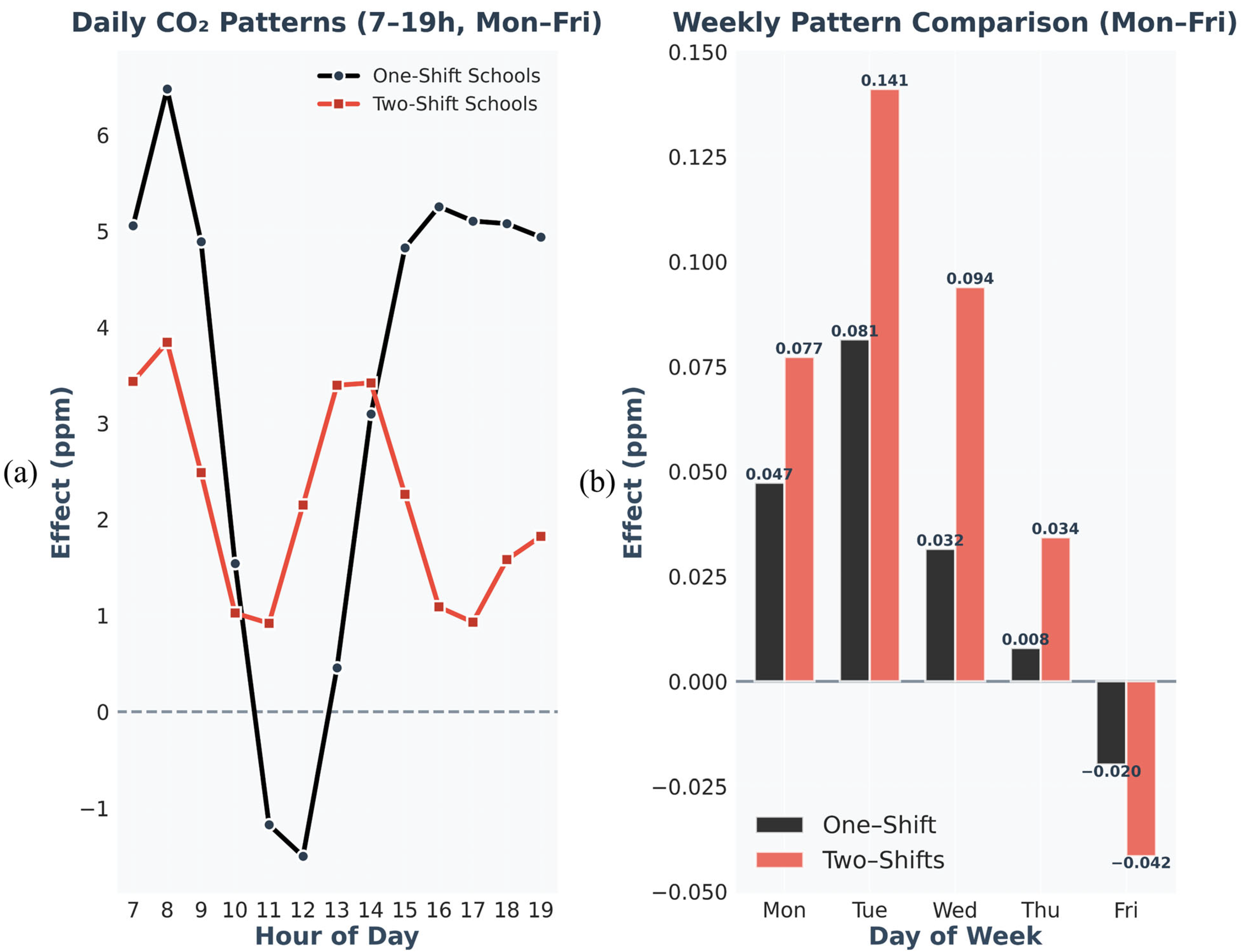
The purpose of the machine-learning-based seasonality analysis presented in this section is not to introduce a novel forecasting methodology, but to quantitatively decompose and validate the temporal drivers of indoor CO2 variability observed across the national school monitoring network. While seasonal trends in CO2 are well known, conventional descriptive statistics cannot fully isolate overlapping temporal effects arising from daily occupancy cycles, weekly school schedules, and annual ventilation constraints. The Prophet model is therefore applied as an interpretable time-series decomposition tool to separate these components and to confirm that the observed CO2 patterns are primarily driven by school operational structure (one-shift versus two-shift operation), rather than by external climatic or land-use factors alone. The long-term forecast (Figure S2) combines historical CO2 data with multi-year predictions, incorporating long-term trends and multiple seasonal variations, but only during occupancy hours. The time-series pattern illustrates how the operational shift pattern mainly influences CO2 concentrations in schools. The long-term CO2 forecasts for both school types display similar annual seasonal patterns. Concentrations are higher during colder months (winter), when natural window ventilation is limited, and lower during summer months, reflecting reduced occupancy and increased airflow. One-shift schools have an average concentration of 747 ppm with a standard deviation of 172.0, which is a 26.2% increase compared to hours when the school is unoccupied. This indicates moderate ventilation overall, with frequent periods of high concentration around 1000 ppm, peaking at 1205 ppm. For two-shift schools, the overall average is 737 ppm, but the maximum concentration reached 1252 ppm. Comparing the two shifts reveals an 8.4% difference between the first shift (average = 769 ppm) and the second shift (average = 705 ppm). The Prophet confidence interval is notably broader for two-shift schools, indicating greater variability or uncertainty in their long-term CO2 levels. Figure 9a shows the daily pattern component with explicitly isolated hourly occupancy. For the one-shift schools, the pattern is unimodal, characterized by a sharp morning rise and an early peak, with an effect greater than 6 ppm around 8:00 AM, corresponding to the start of the school day. This is followed by a mid-day dip (∼−1 ppm around 11:00 AM–1:00 PM), likely during lunch or recess, before stabilizing at a moderate positive level (∼5 ppm) in the afternoon.
For the two-shift schools, the pattern is bimodal, clearly reflecting the staggered daily usage. It shows a moderate morning rise peaking around 8:00 AM (about 4 ppm effect), followed by a clearing period. A second distinct peak occurs in the afternoon, reaching its maximum around 2:00 PM–3:00 PM (roughly 3 ppm), which aligns perfectly with the start of the second school shift. This confirms that the two-shift operation extends the period of elevated CO2 load into the late afternoon while spreading out the overall daily peak. Figure 9b displays the weekly pattern component, illustrating the total daily CO2 effect of occupancy hours relative to the weekly average (Monday to Friday). Both school types show a general decrease in CO2 effect as the week progresses toward Friday. The highest positive deviations occur mid-week, with Tuesday being the peak day for both models. Two-shift schools consistently exhibit a higher positive CO2 impact on Monday, Tuesday, Wednesday, and Thursday compared to one-shift schools. The Tuesday peak is notably higher at 0.141 ppm (two-shift) versus 0.081 ppm (one-shift). This suggests that the longer operational hours in two-shift schools lead to a greater, sustained weekly CO2 buildup on main usage days, potentially challenging the ventilation system’s capacity for daily clearance. These trends confirm that both seasonal ventilation deficits (measured by the long-term forecast) and occupancy-driven load (measured by daily/weekly decomposition) strongly influence indoor CO2 levels. The two-shift model uniquely produces a bimodal daily load pattern and a higher sustained weekly CO2 level throughout the school week compared to the unimodal pattern observed in one-shift schools.
Recent evidence indicates that indoor CO2 concentrations exceeding 1000 ppm levels frequently observed in the present dataset during the heating season can directly affect cognitive performance, not merely serve as indicators of ventilation quality. A 2012 study [37] reported noticeable declines in decision-making ability at concentrations around and above 1000 ppm in controlled exposure studies. Since winter CO2 levels in many Croatian classrooms often surpass this threshold, these findings raise concerns that poor ventilation during the heating season could reduce students’ attention and learning efficiency. This highlights the need to keep CO2 levels below recommended limits in schools.
Because class size and classroom volume were not available, CO2 concentrations could not be normalized per occupant and per-person ventilation indicators (e.g., L/s per person) could not be derived. In addition, the absence of simultaneous outdoor CO2 measurements did not allow quantitative estimation of air exchange rates using CO2 mass-balance approaches. Information on occupancy dynamics and window-opening behavior was also not available. Consequently, part of the between-school and between-region variability may reflect differences in occupancy density, room size, and ventilation practices rather than ventilation rates alone. Future research would benefit from collecting basic occupancy data, classroom geometry, outdoor CO2 concentrations, and ventilation behavior metadata to enable a more explicit separation of source strength and air exchange.

4. Conclusions

This study provides a detailed, data-driven characterization of IAQ across 243 Croatian schools by integrating high-resolution IAQ monitoring with land-use indicators, meteorological data, and predictive modeling. Clear seasonal and regional differences in CO2 were observed, with higher concentrations during winter and in continental areas, reflecting the combined influence of climate, occupancy habits, and ventilation practices. Land-use and climate-based clustering revealed spatial variability, demonstrating that both the surrounding urban environment and local weather influence indoor conditions. Temperature difference (ΔT), school-hour activity, and outdoor relative humidity emerged as main determinants of indoor CO2, confirming that both human presence and external microclimate strongly affect IAQ. In two-shift schools, the extended occupied period may increase the likelihood that elevated CO2 persists into the afternoon unless classrooms are adequately aired between shifts. Given that a substantial fraction of classrooms exceeded commonly accepted CO2 thresholds during occupancy hours, especially in winter, the findings underline the need for ventilation strategies that explicitly protect children’s health, comfort, and learning performance. Prophet forecasting and ML models successfully captured daily and seasonal trends, isolating the contributions of occupancy patterns and climate to CO2 variability. Together, these findings highlight the value of combining multi-source environmental datasets with advanced analytical tools to support ventilation management and exposure mitigation in educational buildings. The analytical framework developed here provides a foundation for future real-time IAQ monitoring and forecasting systems, with the potential to improve health protection and energy efficiency in schools.

Supplementary Materials

The following supporting information can be downloaded at https://www.mdpi.com/article/10.3390/atmos17010106/s1, Figure S1: Example of school shift selection; Figure S2: Complete Prophet Forecast for both school types; Figure S3: Design of the Sensees® indoor air quality sensor unit; Table S1: Descriptive statistics of indoor CO2 concentration (ppm), temperature (°C) and relative humidity (%) by Croatian administrative regions; Table S2: Descriptive statistics of indoor CO2 concentration (ppm), temperature (°C) and relative humidity (%) by type of school.

Author Contributions

Conceptualization, V.P., N.R., H.B. and M.L.; Data curation, H.M., G.Š. and T.M.; Formal analysis, V.P.; Investigation, V.P., N.R. and H.B.; Methodology, V.P. and M.L.; Resources, G.Š., T.M., F.M., G.P. and M.L.; Supervision, H.M., F.M., G.P. and M.L.; Visualization, V.P.; Writing—original draft, V.P. and N.R.; Writing—review and editing, M.L., G.Š., T.M., H.M., H.B., F.M. and G.P. All authors have read and agreed to the published version of the manuscript.

Funding

This study was funded by the Horizon Europe programme under the Horizon EDIAQI project, Grant ID: 101057497 (which supports M.L.). N.R. and V.P. are supported by the EU-Commission Grant Nr. 101217310—NextAIRE. N.R. and G.P. are supported by Next Generation EU under the EnvironPollutHealth project, Program Contract of 8 December 2023, Class: 643-02/23-01/00016, Reg. no. 533-03-23-0006.

Institutional Review Board Statement

Not applicable.

Informed Consent Statement

Not applicable.

Data Availability Statement

The data that supports the findings of this study are available from the corresponding author, (N.R.), upon reasonable request.

Acknowledgments

During the preparation of this manuscript, the authors used ChatGPT (OpenAI, GPT-4) to assist in reviewing and refining written content, as well as for support in developing and debugging code. The authors have reviewed and edited all outputs and take full responsibility for the accuracy and integrity of the final manuscript.

Conflicts of Interest

Authors Valentino Petrić and Hana Matanović was employed by the SMART SENSE d.o.o. The remaining authors declare that the research was conducted in the absence of any commercial or financial relationships that could be construed as a potential conflict of interest.

References

  1. Diffey, B.L. An Overview Analysis of the Time People Spend Outdoors: Time Spent Outdoors. Br. J. Dermatol. 2011, 164, 848–854. [Google Scholar] [CrossRef]
  2. WHO Guidelines for Indoor Air Quality: Selected Pollutants. Available online: https://www.who.int/publications/i/item/9789289002134 (accessed on 10 December 2025).
  3. De Gennaro, G.; Dambruoso, P.R.; Loiotile, A.D.; Di Gilio, A.; Giungato, P.; Tutino, M.; Marzocca, A.; Mazzone, A.; Palmisani, J.; Porcelli, F. Indoor Air Quality in Schools. Environ. Chem. Lett. 2014, 12, 467–482. [Google Scholar] [CrossRef]
  4. Honan, D.; Gallagher, J.; Garvey, J.; Littlewood, J. Indoor Air Quality in Naturally Ventilated Primary Schools: A Systematic Review of the Assessment & Impacts of CO2 Levels. Buildings 2024, 14, 4003. [Google Scholar] [CrossRef]
  5. Becerra, J.A.; Lizana, J.; Gil, M.; Barrios-Padura, A.; Blondeau, P.; Chacartegui, R. Identification of Potential Indoor Air Pollutants in Schools. J. Clean. Prod. 2020, 242, 118420. [Google Scholar] [CrossRef]
  6. Chatzidiakou, L.; Mumovic, D.; Summerfield, A.J. What Do We Know about Indoor Air Quality in School Classrooms? A Critical Review of the Literature. Intell. Build. Int. 2012, 4, 228–259. [Google Scholar] [CrossRef]
  7. Johnson, D.L.; Lynch, R.A.; Floyd, E.L.; Wang, J.; Bartels, J.N. Indoor Air Quality in Classrooms: Environmental Measures and Effective Ventilation Rate Modeling in Urban Elementary Schools. Build. Environ. 2018, 136, 185–197. [Google Scholar] [CrossRef]
  8. Račić, N.; Terzić, I.; Karlović, N.; Bošnjaković, A.; Terzić, T.; Jakovljević, I.; Pehnec, G.; Horvat, T.; Gajski, G.; Gerić, M.; et al. Volatile Organic Compounds (VOCs) and Polycyclic Aromatic Hydrocarbons (PAHs) in Indoor Environments: A Review and Analysis of Measured Concentrations in Europe. Indoor Air 2025, 2025, 5945455. [Google Scholar] [CrossRef]
  9. Stabile, L.; Dell’Isola, M.; Russi, A.; Massimo, A.; Buonanno, G. The Effect of Natural Ventilation Strategy on Indoor Air Quality in Schools. Sci. Total Environ. 2017, 595, 894–902. [Google Scholar] [CrossRef]
  10. Annesi-Maesano, I.; Baiz, N.; Banerjee, S.; Rudnai, P.; Rive, S. The Sinphonie Group Indoor Air Quality and Sources in Schools and Related Health Effects. J. Toxicol. Environ. Health Part B 2013, 16, 491–550. [Google Scholar] [CrossRef]
  11. Jia, L.-R.; Han, J.; Chen, X.; Li, Q.-Y.; Lee, C.-C.; Fung, Y.-H. Interaction between Thermal Comfort, Indoor Air Quality and Ventilation Energy Consumption of Educational Buildings: A Comprehensive Review. Buildings 2021, 11, 591. [Google Scholar] [CrossRef]
  12. Maung, T.Z.; Bishop, J.E.; Holt, E.; Turner, A.M.; Pfrang, C. Indoor Air Pollution and the Health of Vulnerable Groups: A Systematic Review Focused on Particulate Matter (PM), Volatile Organic Compounds (VOCs) and Their Effects on Children and People with Pre-Existing Lung Disease. Int. J. Environ. Res. Public Health 2022, 19, 8752. [Google Scholar] [CrossRef]
  13. Fromme, H.; Heitmann, D.; Dietrich, S.; Schierl, R.; Körner, W.; Kiranoglu, M.; Zapf, A.; Twardella, D. Air quality in schools—Classroom levels of carbon dioxide (CO2), volatile organic compounds (VOC), aldehydes, endotoxins and cat allergen. Gesundheitswesen 2008, 70, 88–97. [Google Scholar] [CrossRef] [PubMed]
  14. Brdarić, D.; Capak, K.; Gvozdić, V.; Barišin, A.; Jelinić, J.D.; Egorov, A.; Šapina, M.; Kalambura, S.; Kramarić, K. Indoor Carbon Dioxide Concentrations in Croatian Elementary School Classrooms during the Heating Season. Arch. Ind. Hyg. Toxicol. 2019, 70, 296–302. [Google Scholar] [CrossRef] [PubMed]
  15. Godwin, C.; Batterman, S. Indoor Air Quality in Michigan Schools. Indoor Air 2007, 17, 109–121. [Google Scholar] [CrossRef] [PubMed]
  16. Madureira, J.; Paciência, I.; Pereira, C.; Teixeira, J.P.; Fernandes, E.D.O. Indoor Air Quality in Portuguese Schools: Levels and Sources of Pollutants. Indoor Air 2016, 26, 526–537. [Google Scholar] [CrossRef]
  17. Brdarić, D.; Kovač-Andrić, E.; Šapina, M.; Kramarić, K.; Lutz, N.; Perković, T.; Egorov, A. Indoor Air Pollution with Benzene, Formaldehyde, and Nitrogen Dioxide in Schools in Osijek, Croatia. Air Qual. Atmos. Health 2019, 12, 963–968. [Google Scholar] [CrossRef]
  18. Lovrić, M.; Gajski, G.; Fernández-Agüera, J.; Pöhlker, M.; Gursch, H.; The EDIAQI Consortium; Borg, A.; Switters, J.; Mureddu, F. Evidence Driven Indoor Air Quality Improvement: An Innovative and Interdisciplinary Approach to Improving Indoor Air Quality. BioFactors 2025, 51, e2126. [Google Scholar] [CrossRef]
  19. Bice, D.; Montanari, A.; Vučetić, V.; Vučetić, M. The Influence of Regional and Global Climatic Oscillations on Croatian Climate. Int. J. Climatol. 2012, 32, 1537–1557. [Google Scholar] [CrossRef]
  20. Halamić, J.; Peh, Z.; Miko, S.; Galović, L.; Sorsa, A. Geochemical Atlas of the Republic of Croatia; University of Natural Resources and Applied Life Sciences (BOKU): Vienna, Austria, 2008. [Google Scholar]
  21. Velić, J.; Malvić, T.; Cvetković, M.; Velić, I. Stratigraphy and petroleum geology of the Croatian part of the Adriatic basin. J. Pet. Geol. 2015, 38, 281–300. [Google Scholar] [CrossRef]
  22. Azmi, W.N.F.W.; Pillai, T.R.; Latif, M.T.; Koshy, S.; Shaharudin, R. Application of Land Use Regression Model to Assess Outdoor Air Pollution Exposure: A Review. Environ. Adv. 2023, 11, 100353. [Google Scholar] [CrossRef]
  23. Ma, X.; Zou, B.; Deng, J.; Gao, J.; Longley, I.; Xiao, S.; Guo, B.; Wu, Y.; Xu, T.; Xu, X.; et al. A Comprehensive Review of the Development of Land Use Regression Approaches for Modeling Spatiotemporal Variations of Ambient Air Pollution: A Perspective from 2011 to 2023. Environ. Int. 2024, 183, 108430. [Google Scholar] [CrossRef] [PubMed]
  24. Bro, R.; Smilde, A.K. Principal Component Analysis. Anal. Methods 2014, 6, 2812–2831. [Google Scholar] [CrossRef]
  25. Souza, J.B.; Reisen, V.A.; Franco, G.C.; Ispány, M.; Bondon, P.; Santos, J.M. Generalized Additive Models with Principal Component Analysis: An Application to Time Series of Respiratory Disease and Air Pollution Data. J. R. Stat. Soc. Ser. C Appl. Stat. 2018, 67, 453–480. [Google Scholar] [CrossRef]
  26. Hasnain, A.; Sheng, Y.; Hashmi, M.Z.; Bhatti, U.A.; Hussain, A.; Hameed, M.; Marjan, S.; Bazai, S.U.; Hossain, M.A.; Sahabuddin, M.; et al. Time Series Analysis and Forecasting of Air Pollutants Based on Prophet Forecasting Model in Jiangsu Province, China. Front. Environ. Sci. 2022, 10, 945628. [Google Scholar] [CrossRef]
  27. Si, M.; Du, K. Development of a Predictive Emissions Model Using a Gradient Boosting Machine Learning Method. Environ. Technol. Innov. 2020, 20, 101028. [Google Scholar] [CrossRef]
  28. Wen, H.-T.; Lu, J.-H.; Jhang, D.-S. Features Importance Analysis of Diesel Vehicles’ NOx and CO2 Emission Predictions in Real Road Driving Based on Gradient Boosting Regression Model. Int. J. Environ. Res. Public Health 2021, 18, 13044. [Google Scholar] [CrossRef]
  29. Rosbach, J.; Krop, E.; Vonk, M.; Van Ginkel, J.; Meliefste, C.; De Wind, S.; Gehring, U.; Brunekreef, B. Classroom Ventilation and Indoor Air Quality-Results from the FRESH Intervention Study. Indoor Air 2016, 26, 538–545. [Google Scholar] [CrossRef]
  30. Muelas, Á.; Remacha, P.; Pina, A.; Tizné, E.; El-Kadmiri, S.; Ruiz, A.; Aranda, D.; Ballester, J. Analysis of Different Ventilation Strategies and CO2 Distribution in a Naturally Ventilated Classroom. Atmos. Environ. 2022, 283, 119176. [Google Scholar] [CrossRef]
  31. Broadway, L.A.; Aycock, H.; Broadway, A.; Russell, T.; Endsley, A.; Harley, B.; Colmorgan, A.; Drafts, T.; Estey, D.; Syfert, T. Building Age Is a Determining Factor of Indoor CO2 Levels in a University Setting. Indoor Environ. 2025, 2, 100100. [Google Scholar] [CrossRef]
  32. Xia, T.; Raneses, J.; Schmiesing, B.; Garcia, R.; Walding, A.; DeMajo, R.; Schulz, A.; Batterman, S.A. How Teacher Behaviors and Perceptions, Air Change Rates, and Portable Air Purifiers Affect Indoor Air Quality in Naturally Ventilated Schools. Front. Public Health 2024, 12, 1427116. [Google Scholar] [CrossRef]
  33. Majd, E.; McCormack, M.; Davis, M.; Curriero, F.; Berman, J.; Connolly, F.; Leaf, P.; Rule, A.; Green, T.; Clemons-Erby, D.; et al. Indoor Air Quality in Inner-City Schools and Its Associations with Building Characteristics and Environmental Factors. Environ. Res. 2019, 170, 83–91. [Google Scholar] [CrossRef]
  34. Jacobson, M.Z. Enhancement of Local Air Pollution by Urban CO2 Domes. Environ. Sci. Technol. 2010, 44, 2497–2502. [Google Scholar] [CrossRef]
  35. Sadrizadeh, S.; Yao, R.; Yuan, F.; Awbi, H.; Bahnfleth, W.; Bi, Y.; Cao, G.; Croitoru, C.; De Dear, R.; Haghighat, F.; et al. Indoor Air Quality and Health in Schools: A Critical Review for Developing the Roadmap for the Future School Environment. J. Build. Eng. 2022, 57, 104908. [Google Scholar] [CrossRef]
  36. Yao, M.; Zhao, B. Window Opening Behavior of Occupants in Residential Buildings in Beijing. Build. Environ. 2017, 124, 441–449. [Google Scholar] [CrossRef]
  37. Tillett, T. Don’t Hold Your Breath: Indoor CO2 Exposure and Impaired Decision Making. Environ. Health Perspect. 2012, 120, a475. [Google Scholar] [CrossRef][Green Version]
Figure 1. Spatial distribution of the participating schools across Croatian counties and the corresponding mean indoor CO2 concentrations during occupancy hours. County-level values represent aggregated averages across schools.
Atmosphere 17 00106 g001
Figure 2. Seasonal variations in indoor CO2 concentration (a) and hourly variations (b,c) of indoor CO2 concentration and temperature across Croatian schools for both shifts.
Atmosphere 17 00106 g002
Figure 3. Spatial distribution of schools grouped by land-use clusters derived from PCA and K-means analysis within a 5 km buffer for CO2 concentrations.
Atmosphere 17 00106 g003
Figure 4. Monthly CO2 concentrations by land use clusters for both one-shift (a) and two-shift (b) schools.
Atmosphere 17 00106 g004
Figure 5. Spatial distribution of schools grouped by land-use clusters derived from PCA and K-means analysis for temperature.
Atmosphere 17 00106 g005
Figure 9. Seasonal pattern of CO2 concentrations. Daily CO2 trends for occupancy hours (a), and weekly pattern comparison (b).
Atmosphere 17 00106 g009
Table 1. Seasonal descriptive statistics of indoor CO2 concentration (ppm), temperature (°C) and relative humidity (%) across all monitored schools in Croatia for occupancy hours. Count indicates the number of valid hourly measurements after filtering for occupancy hours and data quality.
SeasonVariableCountMeanStd25%Median75%95%99%
WinterCO2/ppm183,506965.05620.57627.17822.361101.411878.653044.82
T/°C183,97821.772.0220.6021.8923.0924.8426.36
RH/%183,97840.648.6034.6339.6645.9056.2964.48
SpringCO2/ppm231,679832.55644.41559.25704.21916.921502.882569.82
T/°C232,05922.591.7121.5322.6123.6825.3526.66
RH/%232,05946.809.3740.2046.7253.2962.0168.50
SummerCO2/ppm41,248798.96667.01532.83635.73836.601581.703067.04
T/°C41,32024.911.7623.7824.9126.0027.8429.31
RH/%41,32053.927.9748.1753.7359.5366.6672.99
AutumnCO2/ppm221,985829.51538.27562.10709.33934.181522.672399.36
T/°C222,21423.352.3321.8123.1224.7127.4130.01
RH/%222,21453.339.2346.9353.5259.5768.3374.68
Disclaimer/Publisher’s Note: The statements, opinions and data contained in all publications are solely those of the individual author(s) and contributor(s) and not of MDPI and/or the editor(s). MDPI and/or the editor(s) disclaim responsibility for any injury to people or property resulting from any ideas, methods, instructions or products referred to in the content.