Article

Drivers of PM10 Retention by Black Locust Post-Mining Restoration Plantations
by
Chariton Sachanidis
1,
Mariangela N. Fotelli
2,*,
Nikos Markos
2,
Nikolaos M. Fyllas
3 and
Kalliopi Radoglou
1
1
Department of Forestry and Management of the Environment and Natural Resources, Democritus University of the Thrace, GR-68200 Orestiada, Greece
2
Forest Research Institute, Hellenic Agricultural Organization Dimitra, Vassilika, GR-57006 Thessaloniki, Greece
3
Section of Ecology and Taxonomy, Department of Biology, National and Kapodistrian University of Athens. GR-15772 Athens, Greece
*
Author to whom correspondence should be addressed.
Atmosphere 2025, 16(5), 555; https://doi.org/10.3390/atmos16050555
Submission received: 22 March 2025 / Revised: 16 April 2025 / Accepted: 25 April 2025 / Published: 7 May 2025
(This article belongs to the Special Issue Dispersion and Mitigation of Atmospheric Pollutants)

Abstract

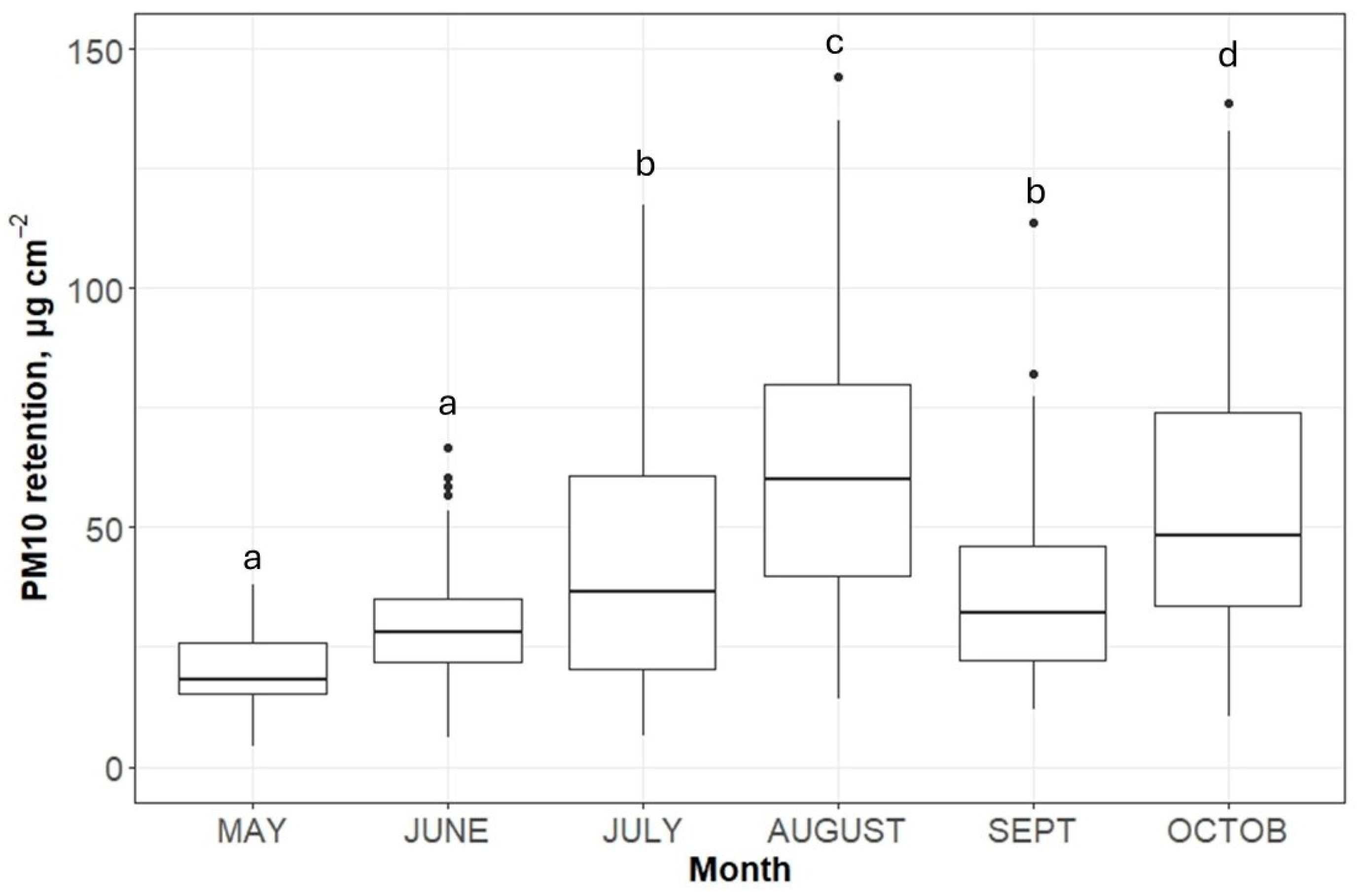
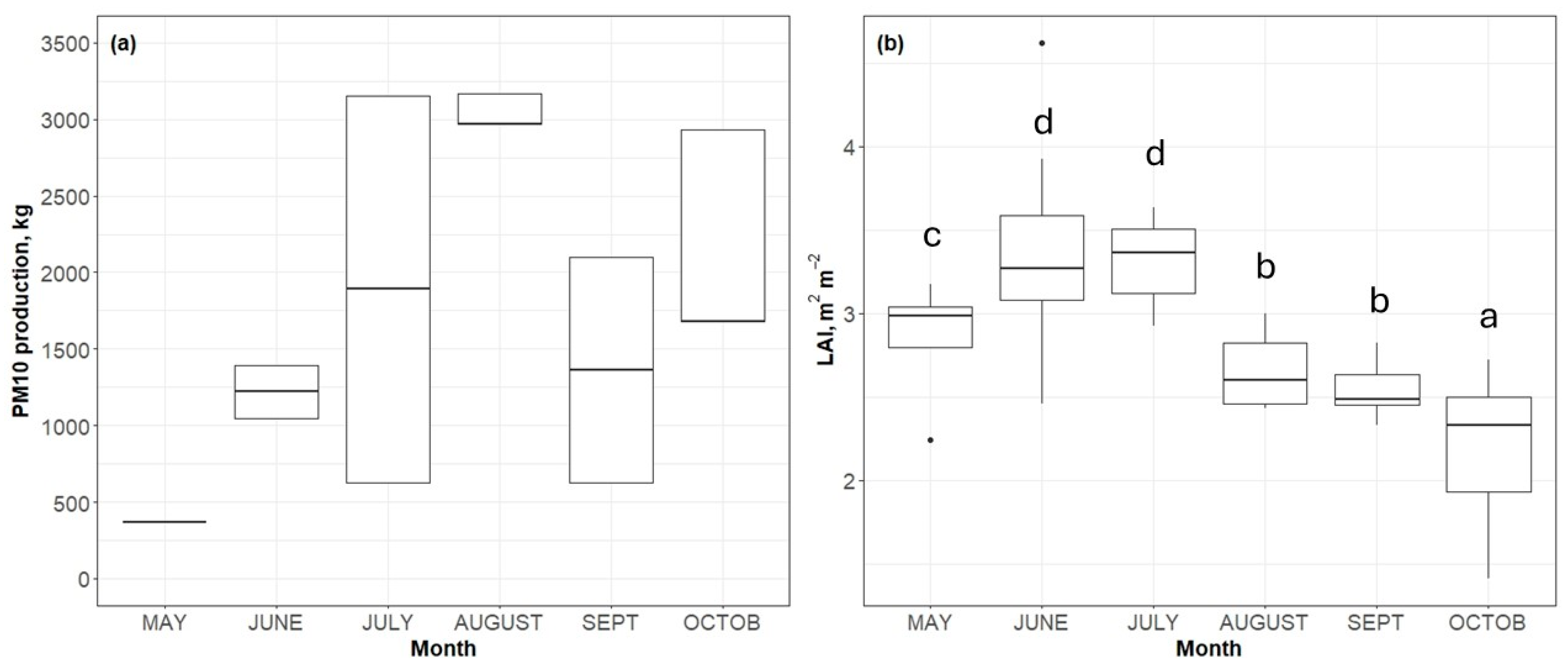
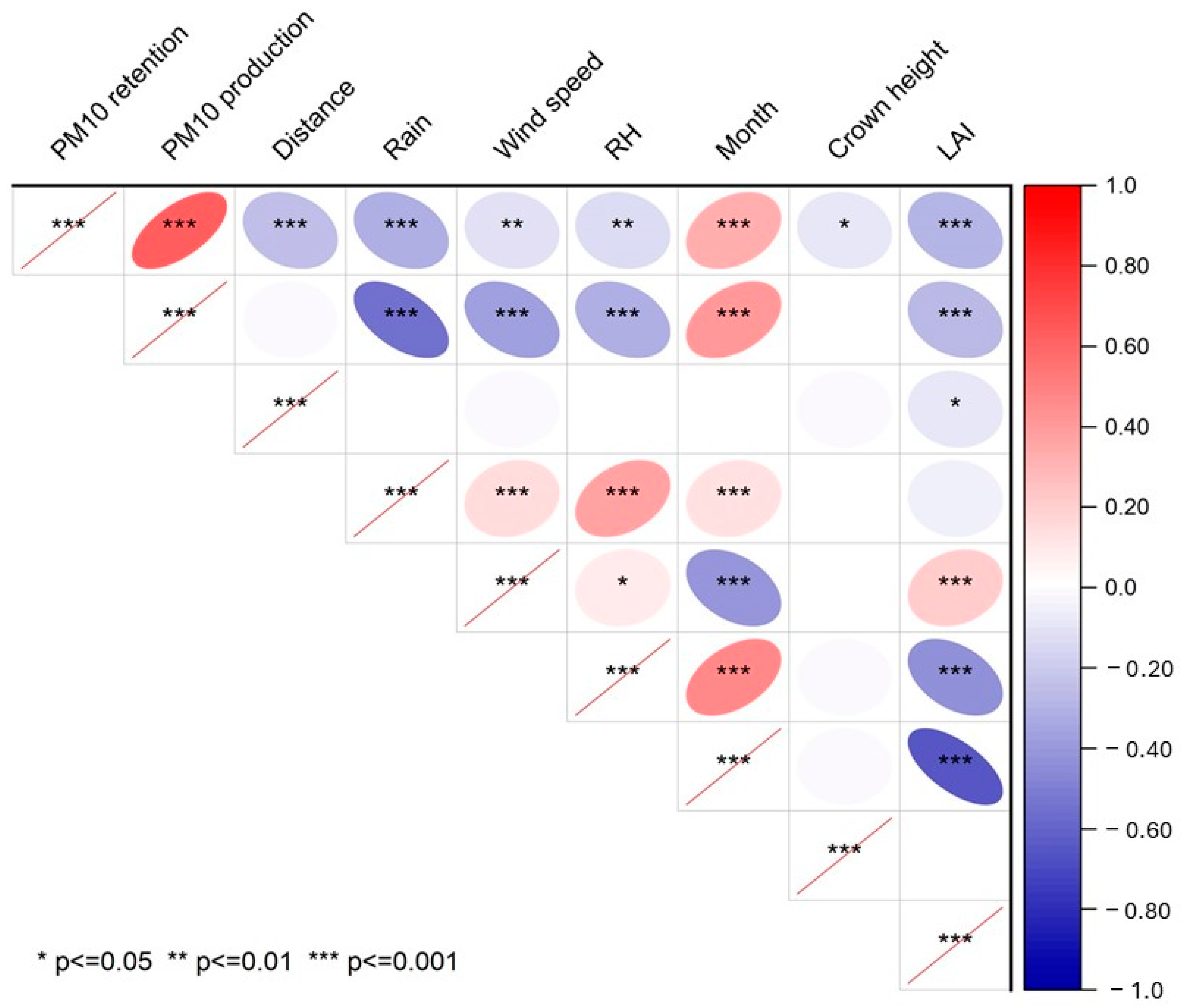
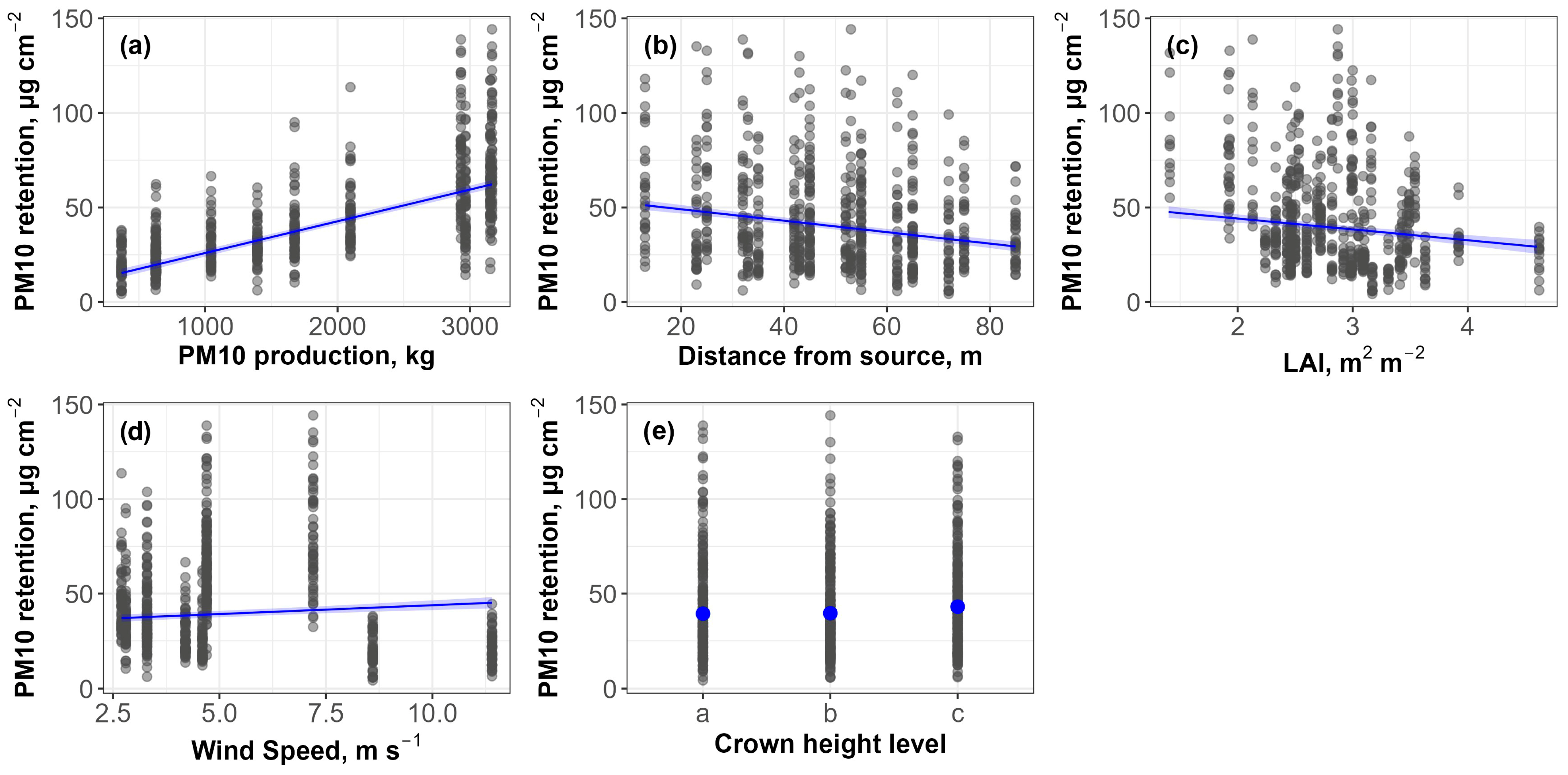
Atmospheric pollution due to an increased particulate matter (PM) concentration imposes a threat for human health. This is particularly true for regions with intensive industrial activity and nature-based solutions, such as tree plantations, are adopted to mitigate the phenomenon. Here, we report on the case of the lignite complex of western Macedonia (LCWM), the largest in Greece, where extensive Robinia pseudoacacia L. plantations have been established during the last 40 years for post-mining reclamation, but their PM retention capacity and the controlling parameters have not been assessed to date. Thus, during the 2021 growth season (May to October), we determined the PM10 capture by leaves sampled twice per month, across four 10-m long transects, each consisting of five trees, and at three different heights along the tree canopy. During the same period, we also measured the leaf area index (LAI) of the plantations and collected climatic data, as well as data on PM10 production by the belt conveyors system, the main polluting source at the site. We estimated that the plantations’ foliage captures on average c. 42.85 μg cm−2 PM10 and we developed a robust linear model that describes PM10 retention on a leaf area basis, as a function of PM10 production, LAI (a proxy of seasonal changes in leaf area), distance from the emitting source, and wind speed and foliage height within the crown. The accuracy of the estimates and the performance of the model were tested with the bootstrap cross-validate resampling technique. PM10 retention increased in spring and early summer following the increase in LAI, but its peak in August and October was controlled by the highest PM10 production, due to elevated energy demands. Moreover, PM10 retention was facilitated by wind speed, and it was higher at the lower part of the trees’ canopy. On the contrary, the PM10 load on the trees’ foliage decreased with an increasing distance from the conveyor belt system and the frontline of the plantations. Our findings support the positive role of R. pseudoacacia plantations for PM10 retention at heavily polluted areas, such as the lignite mines in Greece, and provide a model for the estimation of PM10 retention by their foliage based on basic environmental drivers and characteristics of the plantations, which could be helpful for planning their future management.
Keywords: air pollution; surface mining; Robinia pseudoacacia; climatic parameters; phenology; distance; tree crown air pollution; surface mining; Robinia pseudoacacia; climatic parameters; phenology; distance; tree crown