Article

Influence of Humidity on FFP Masks with Electret Filter Media Under Real-Life Wearing Conditions


Institute of Particle Process Engineering, University of Kaiserslautern-Landau, 67663 Kaiserslautern, Germany
*
Author to whom correspondence should be addressed.
Atmosphere 2025, 16(1), 62; https://doi.org/10.3390/atmos16010062
Submission received: 16 December 2024 / Revised: 3 January 2025 / Accepted: 7 January 2025 / Published: 8 January 2025
(This article belongs to the Special Issue Electrostatics of Atmospheric Aerosols (2nd Edition))

Abstract

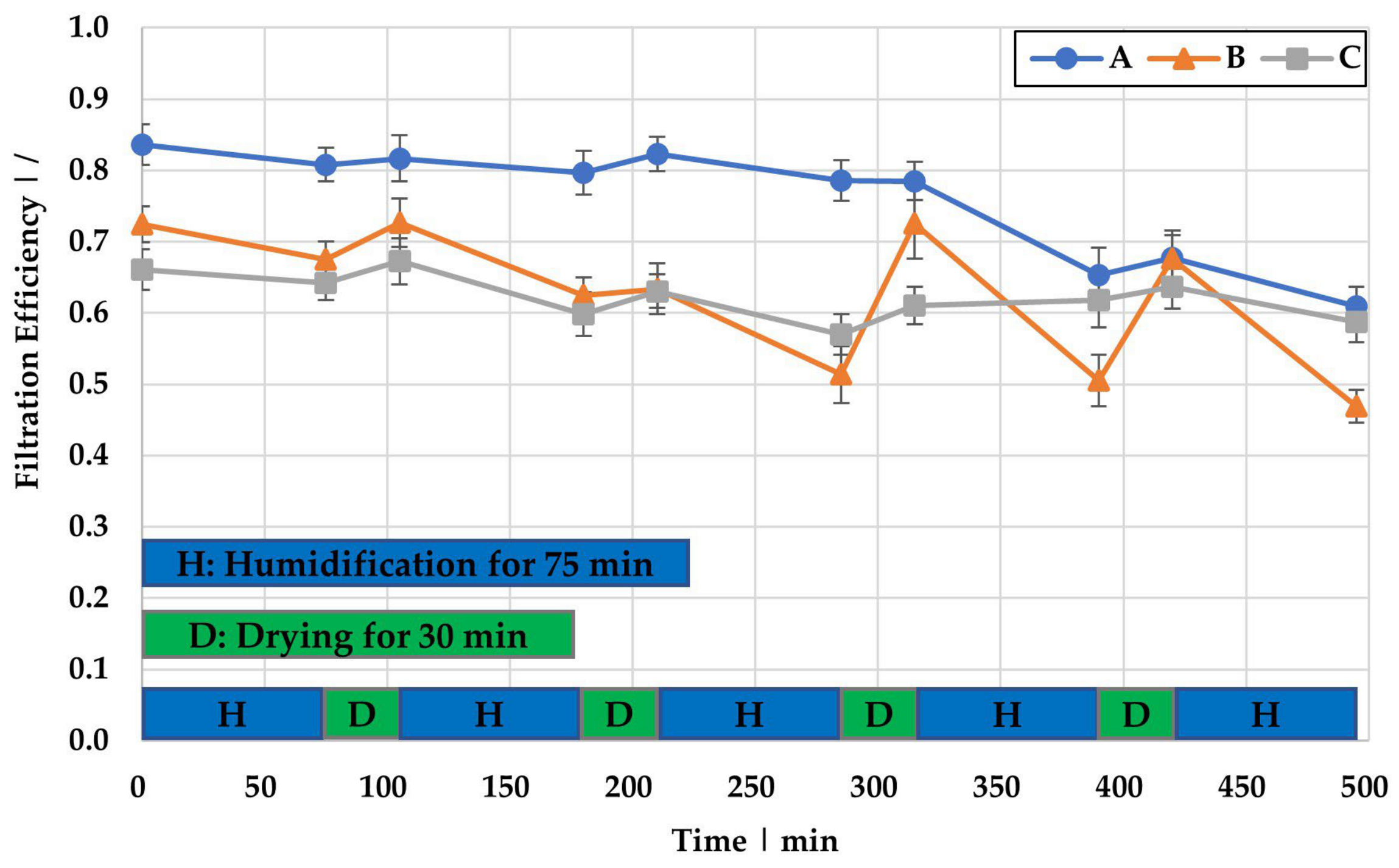
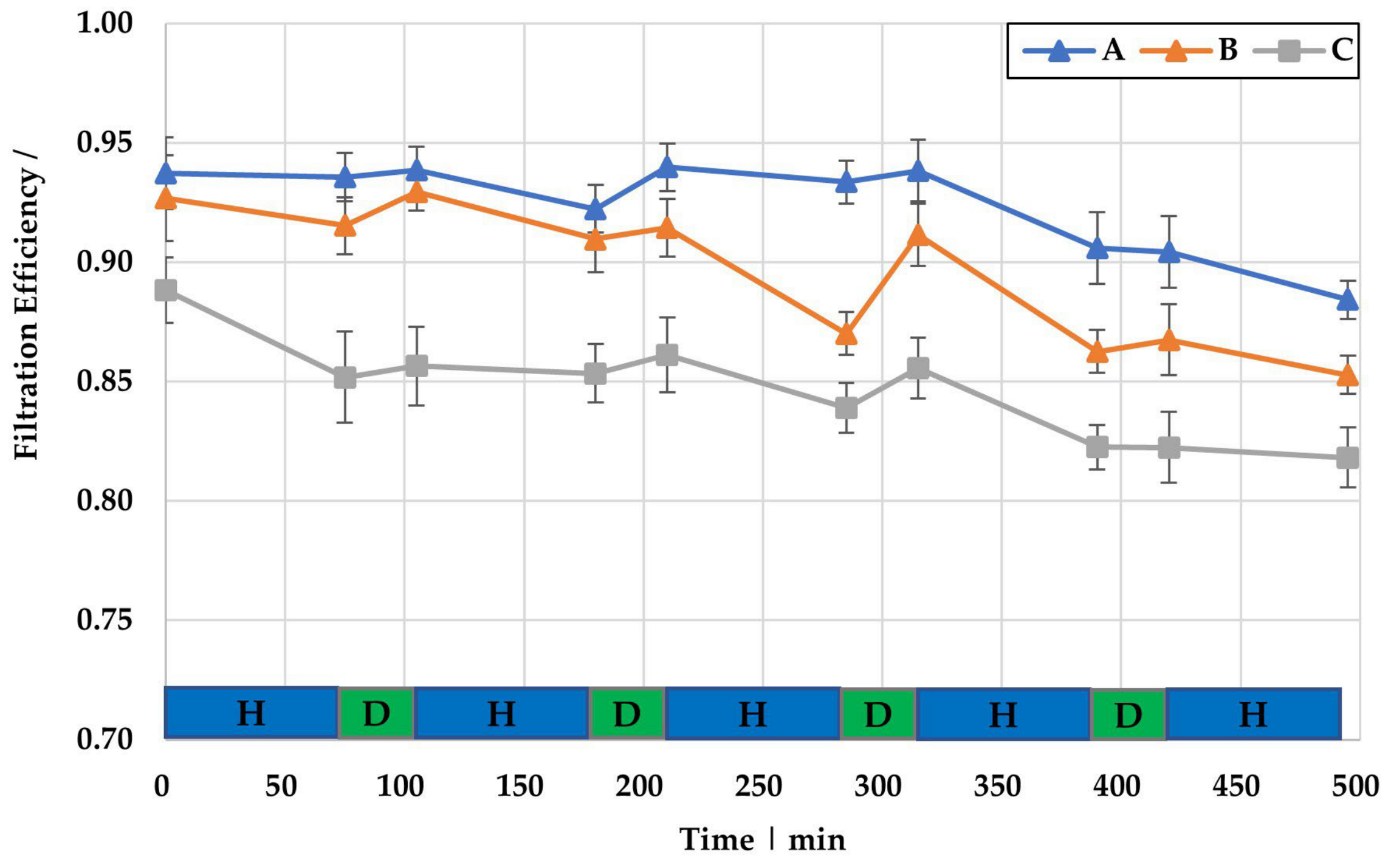
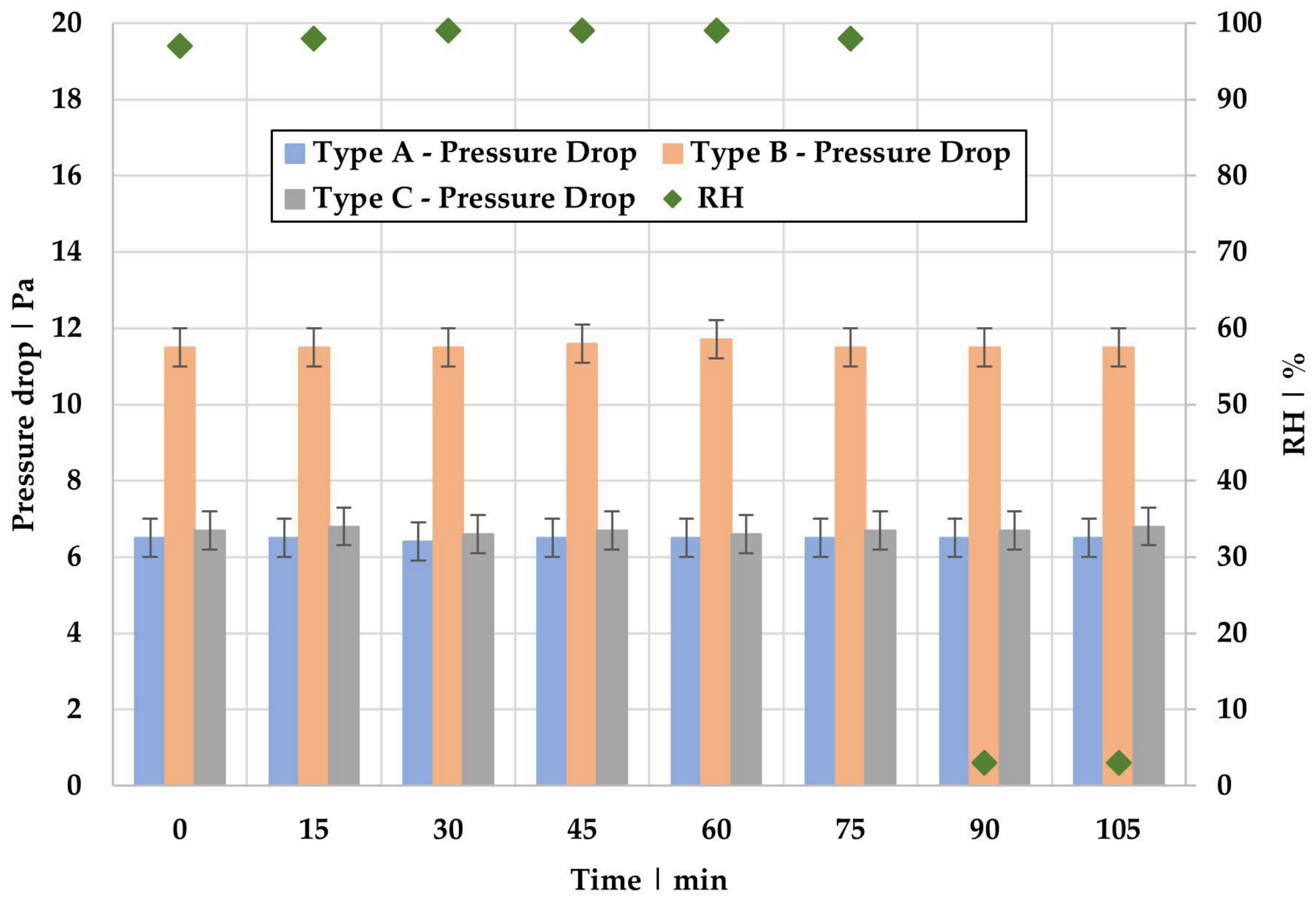
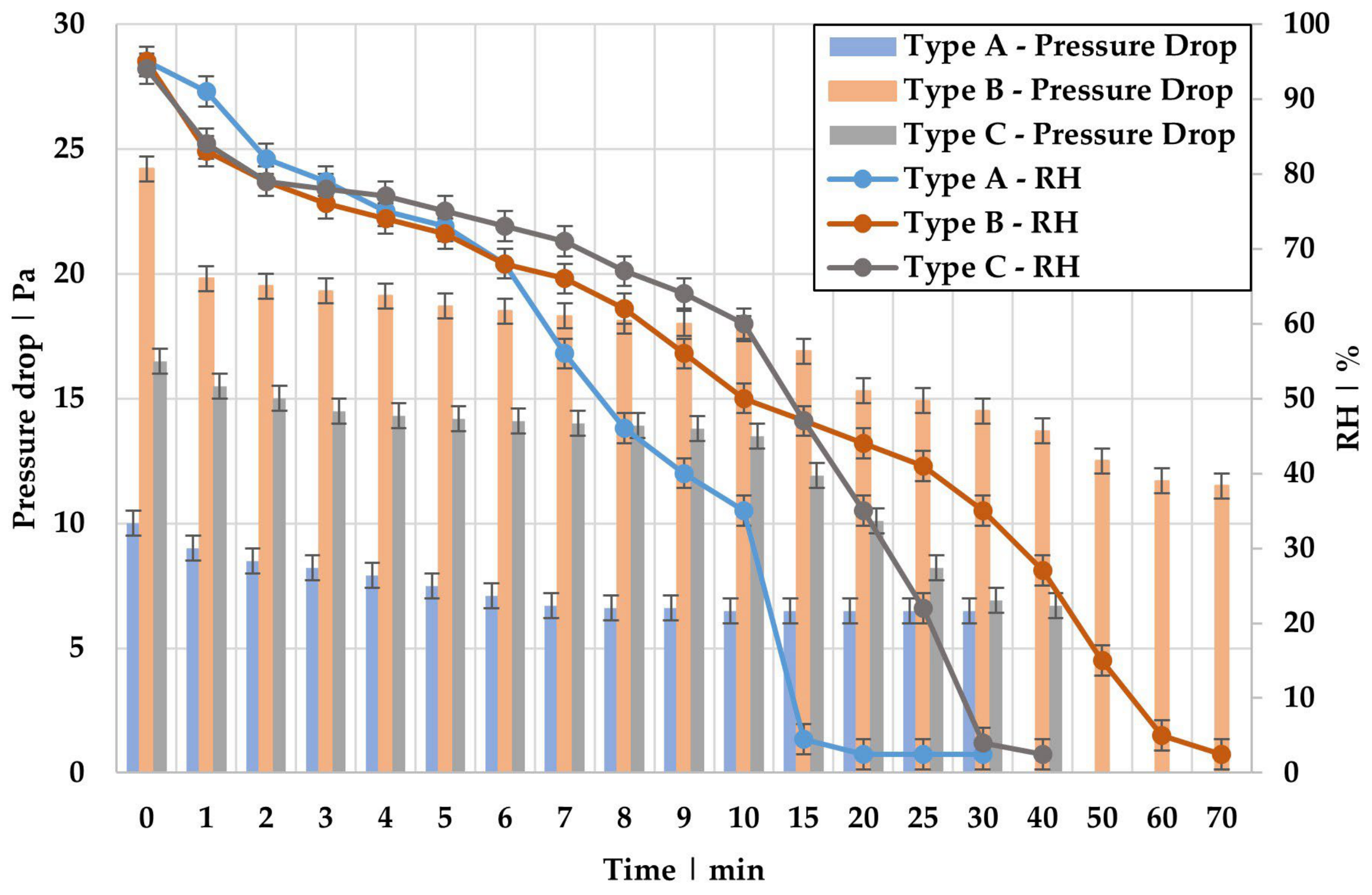
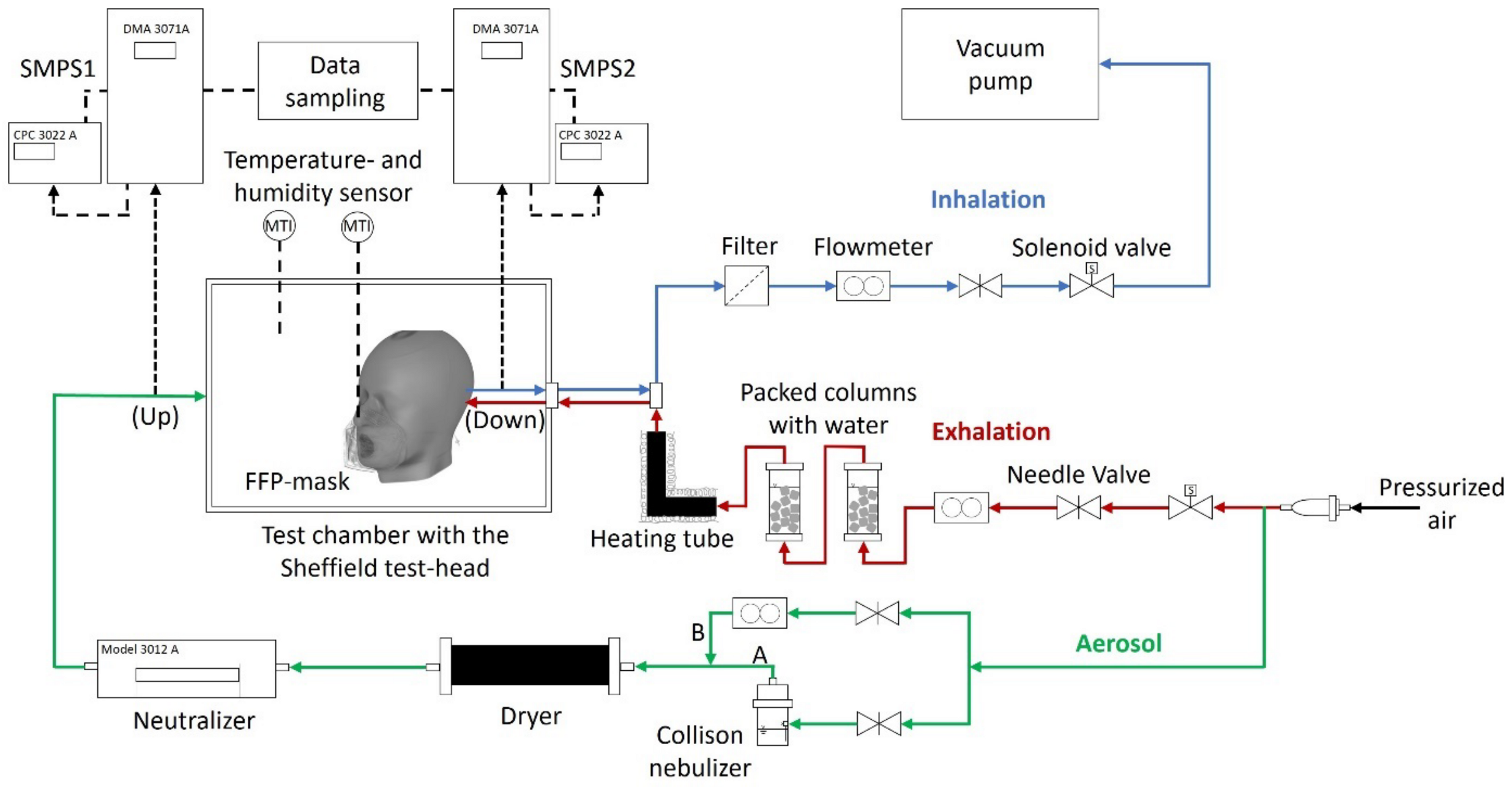
Most FFP (Filtering Face Piece) masks are made from nonwoven filter media that are electrostatically charged, resulting in the additional electrostatic capture mechanism of particles. The protective effect of these masks is therefore mainly dependent on the electric field surrounding the charged fibers. Upon prolonged wear, the mask becomes saturated with exhaled air, resulting in humidification on the wearer’s side. However, speaking, coughing, or sneezing also generate droplets, which can deposit on the mask from the person wearing it, as well as from other people. In order to investigate this influence on the filtration efficiency and the existing electric field, an experimental study was carried out. To imitate human breathing, a test setup was constructed using a Sheffield Head with different types of masks. This was followed by the cyclical humidification and drying of the masks through simulated breathing. By observing these phases in detail using sample sections, it was possible to continuously record the water content in the samples, the relative humidity, and the pressure drop (breathing resistance). The results demonstrate that moisture has an impact on the filtration efficiency of the electret FFP masks when worn under real-life conditions and that the initial condition can be restored with sufficient drying time.
Keywords: electric field; electret filter media; face mask; filtration efficiency; influence of humidity; real-life wearing condition electric field; electret filter media; face mask; filtration efficiency; influence of humidity; real-life wearing condition