Case Report

Indoor Concentration Distributions of Ammonia and Sulfur-Based Odorous Substances According to Types of Laying Hen Houses in South Korea


1
Department of Safety Engineering, Seoul National University of Science & Technology, Seoul 01811, Republic of Korea
2
Animal Environment Division, National Institute of Animal Science, RDA, Wanju 55365, Republic of Korea
*
Author to whom correspondence should be addressed.
Atmosphere 2024, 15(8), 980; https://doi.org/10.3390/atmos15080980
Submission received: 19 June 2024 / Revised: 6 August 2024 / Accepted: 12 August 2024 / Published: 15 August 2024
(This article belongs to the Section Air Pollution Control)

Abstract

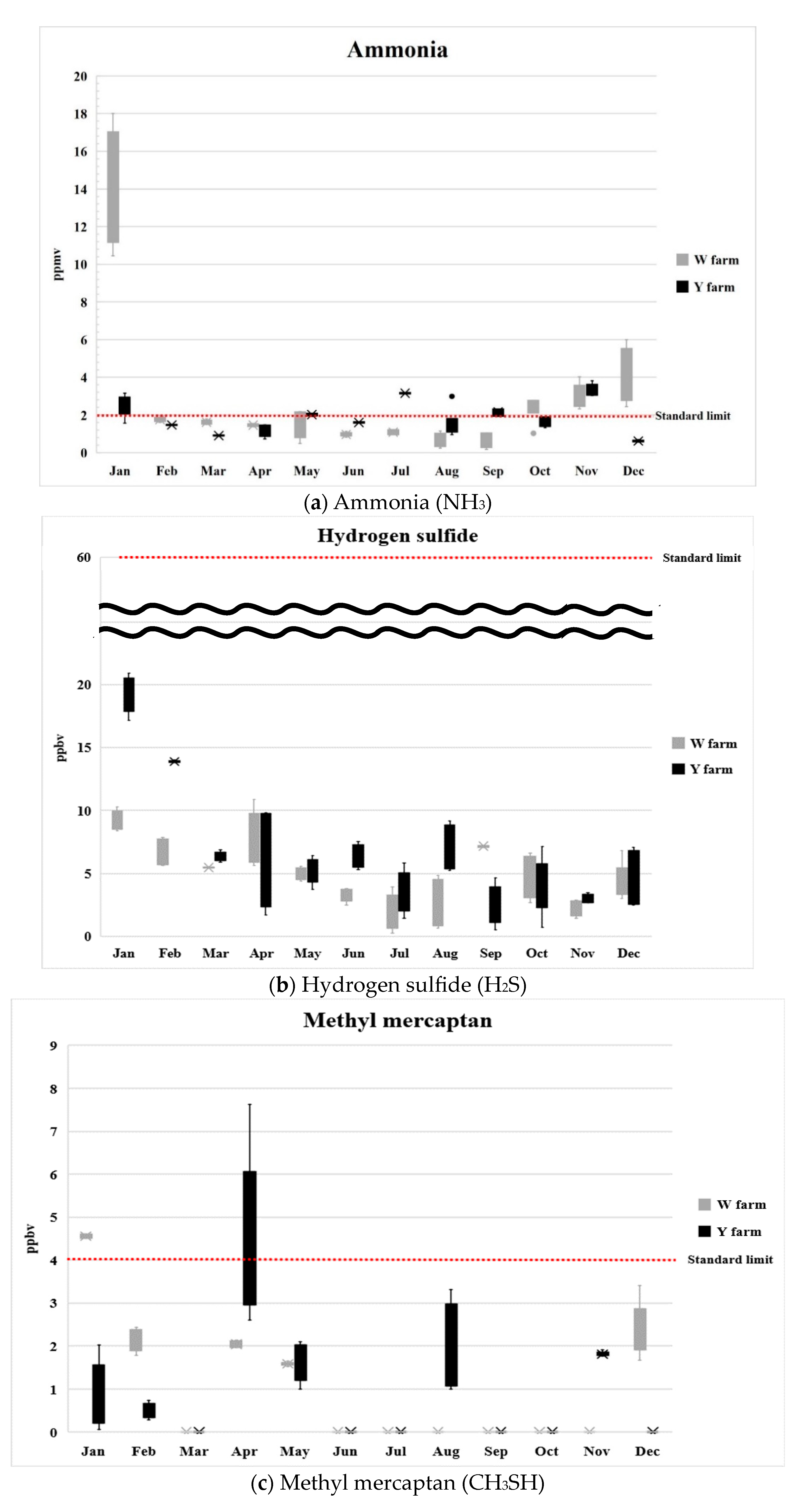
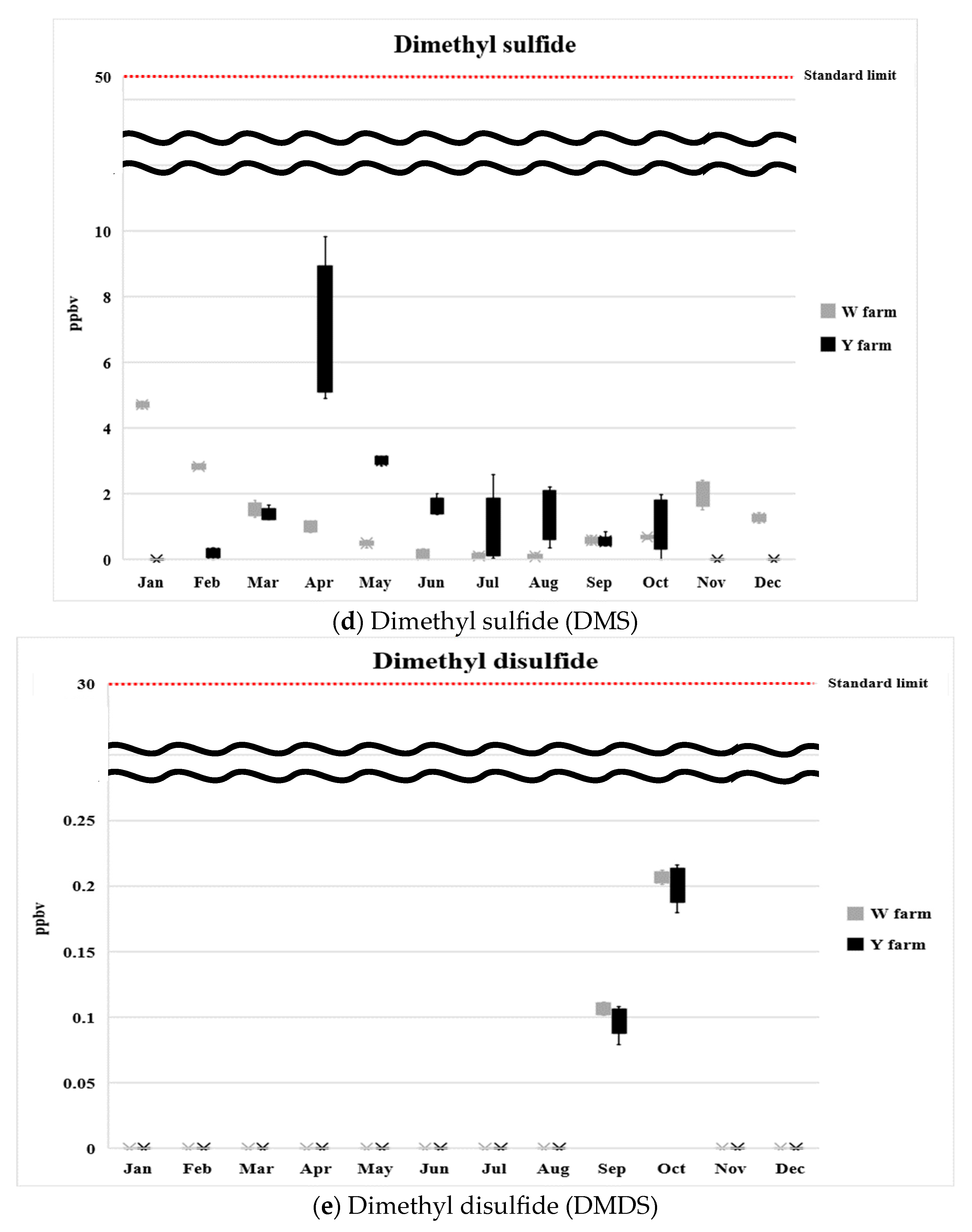
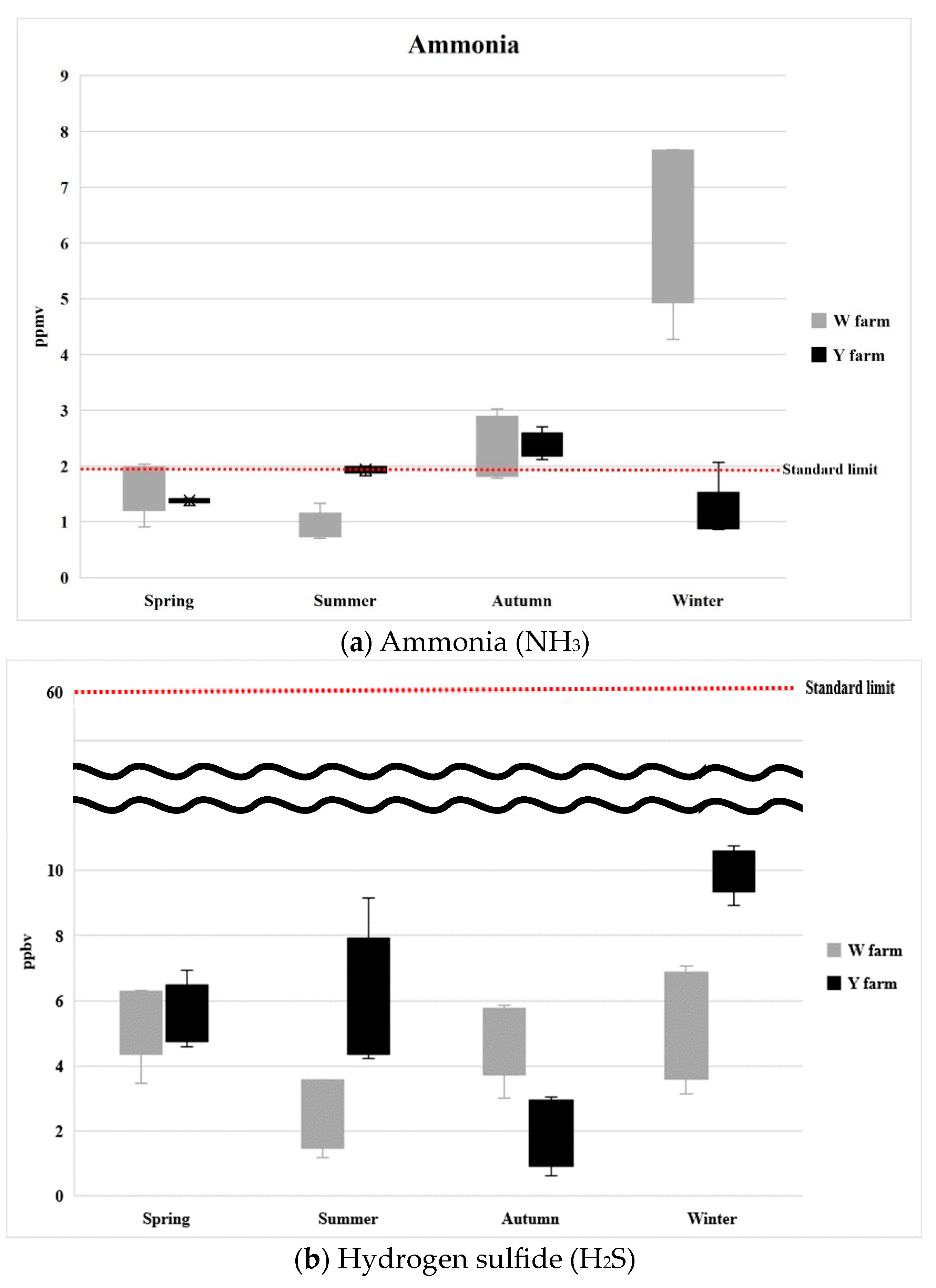
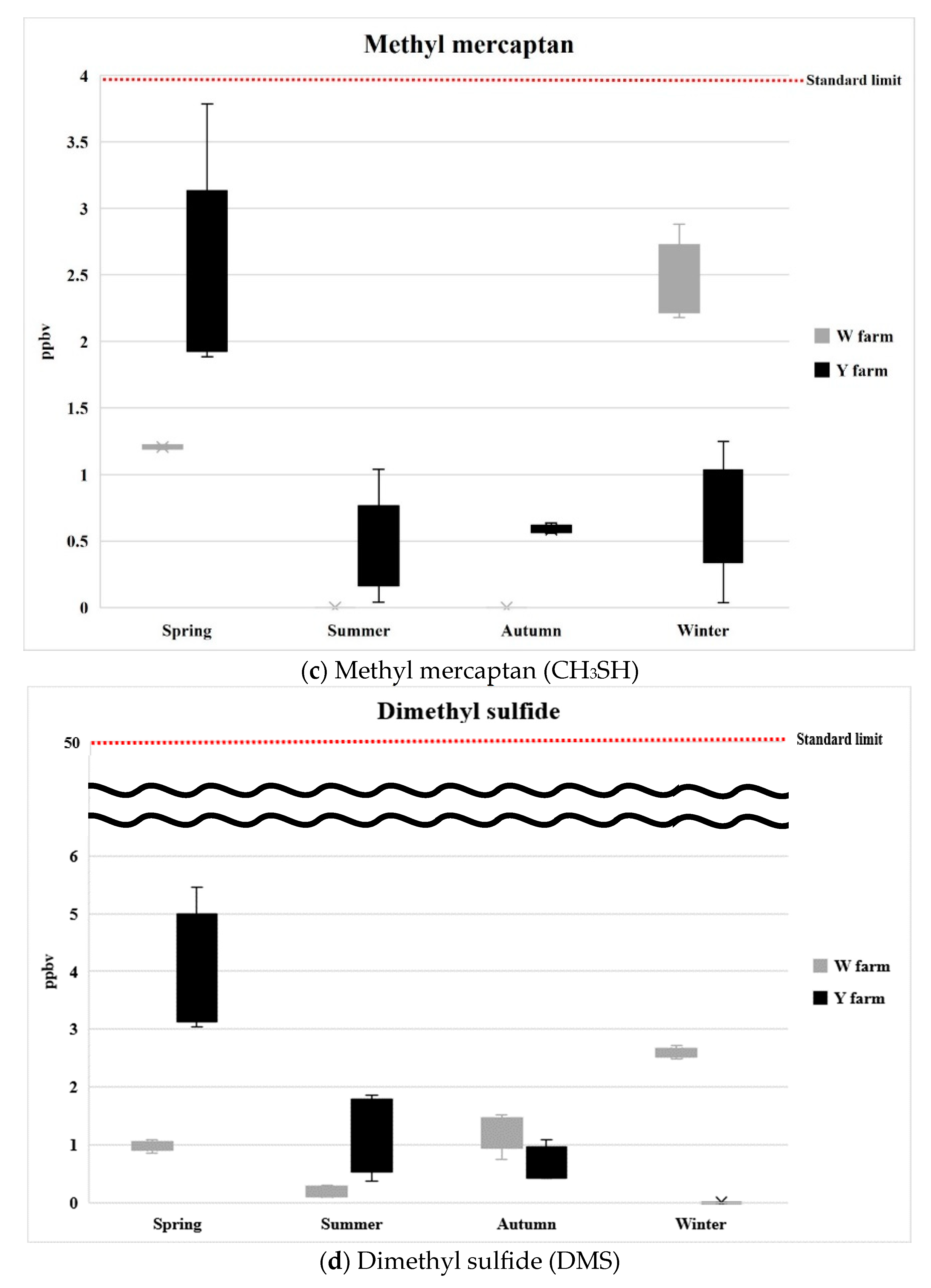
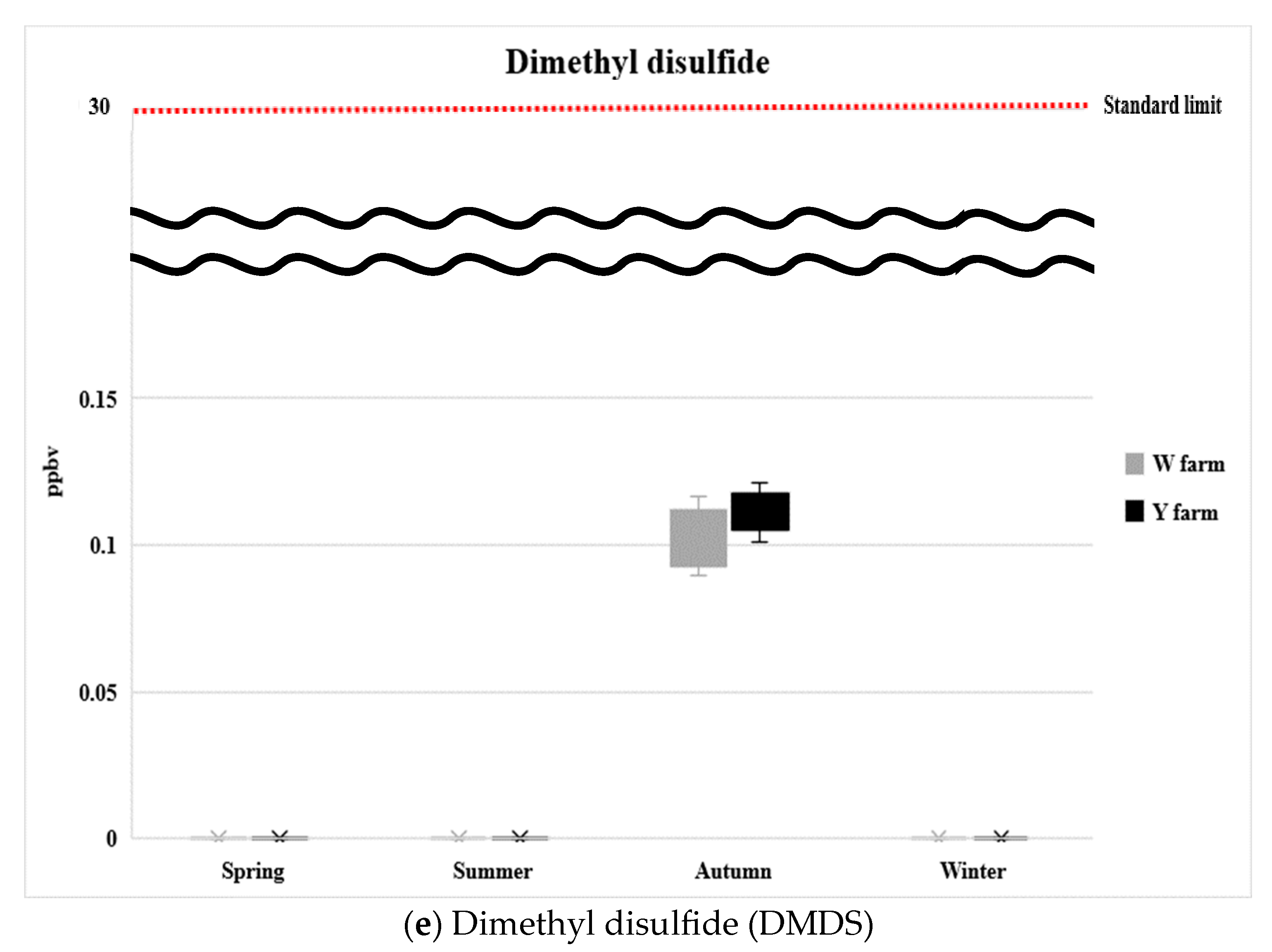
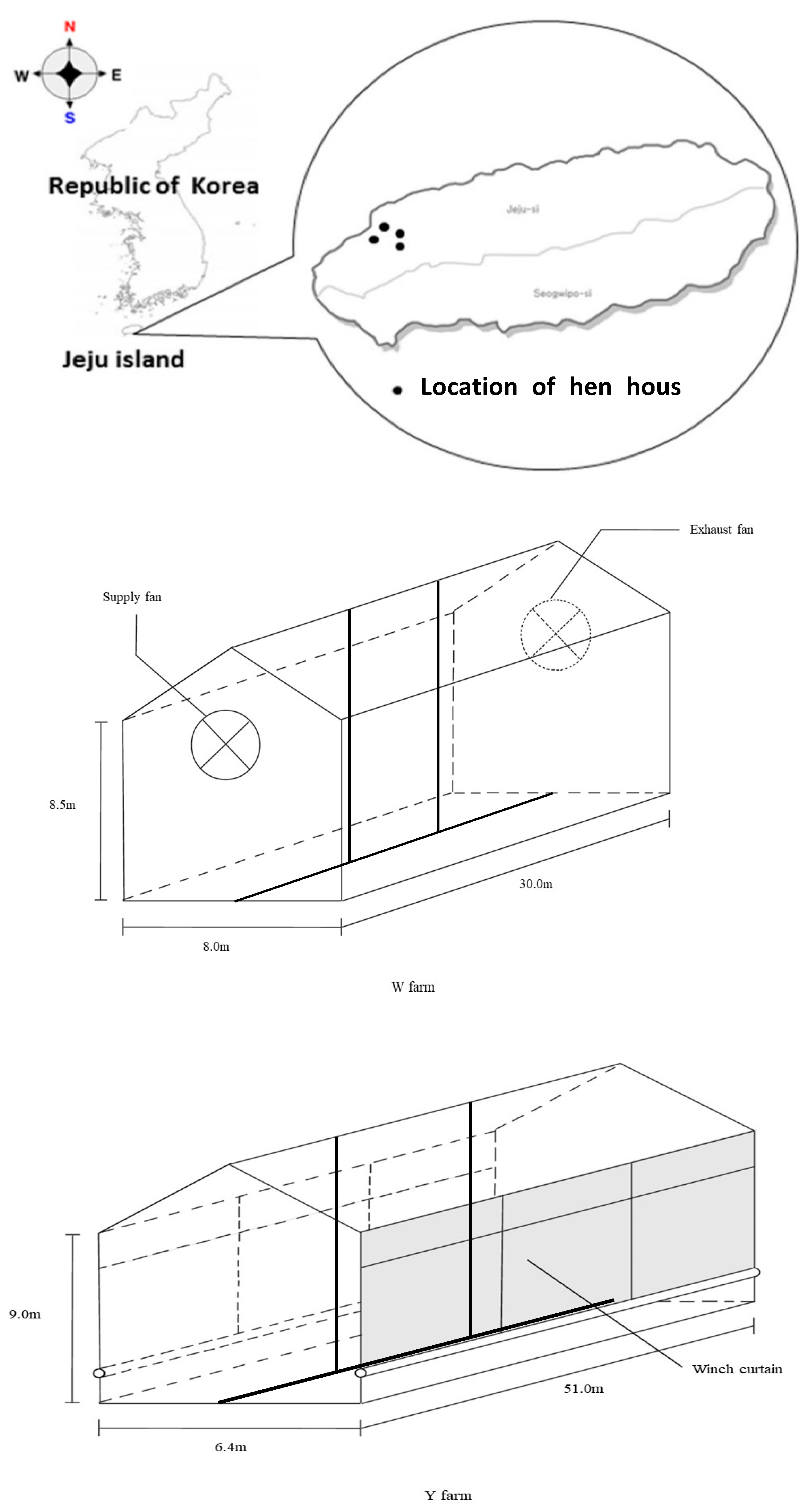
In South Korea, environmental complaints related to livestock odors continue to increase, and various efforts are underway to overcome them. An objective of this study is to monitor indoor concentrations of ammonia and sulfur-based odorous substances emitted from laying hen houses in South Korea through on-site visits for one year to understand their temporal emission patterns. The highest concentration was found in ammonia (NH3), at 6.92 ppmv, followed by hydrogen sulfide (H2S), at 8.98 ppbv. The concentrations of methyl mercaptan (CH3SH), dimethyl sulfide (DMS), and dimethyldisulfide (DMDS) ranged from sub ppbv to 10 ppbv. In general, there was no consistent concentration distribution of ammonia and sulfur-based odorous substances in laying hen houses between those with forced ventilation and natural ventilation. Regarding the seasonal distribution of odorous compounds, their concentrations in winter season (December to February) when the ventilation rate in laying hen houses decreased were generally higher than those in the summer season (June to August) when the ventilation rate in poultry buildings was relatively high, which is applied to properly maintain the thermal environment in laying hen houses. The limitation of this study is that unexpected conditions such as clearance of laying hen houses, chicken shipments, and disorders of exhaust fans were not controlled for intentionally due to on-site investigations.
Keywords: ammonia; sulfur-based odorous substance; laying hen house; seasonal distribution ammonia; sulfur-based odorous substance; laying hen house; seasonal distribution