Article

Research on Radar Echo Extrapolation Method by Fusing Environment Grid Point Field Information


School of Electrical and Information Engineering, Tianjin University, Tianjin 300072, China
*
Author to whom correspondence should be addressed.
Atmosphere 2023, 14(6), 980; https://doi.org/10.3390/atmos14060980
Submission received: 27 April 2023 / Revised: 31 May 2023 / Accepted: 1 June 2023 / Published: 5 June 2023
(This article belongs to the Section Atmospheric Techniques, Instruments, and Modeling)

Abstract

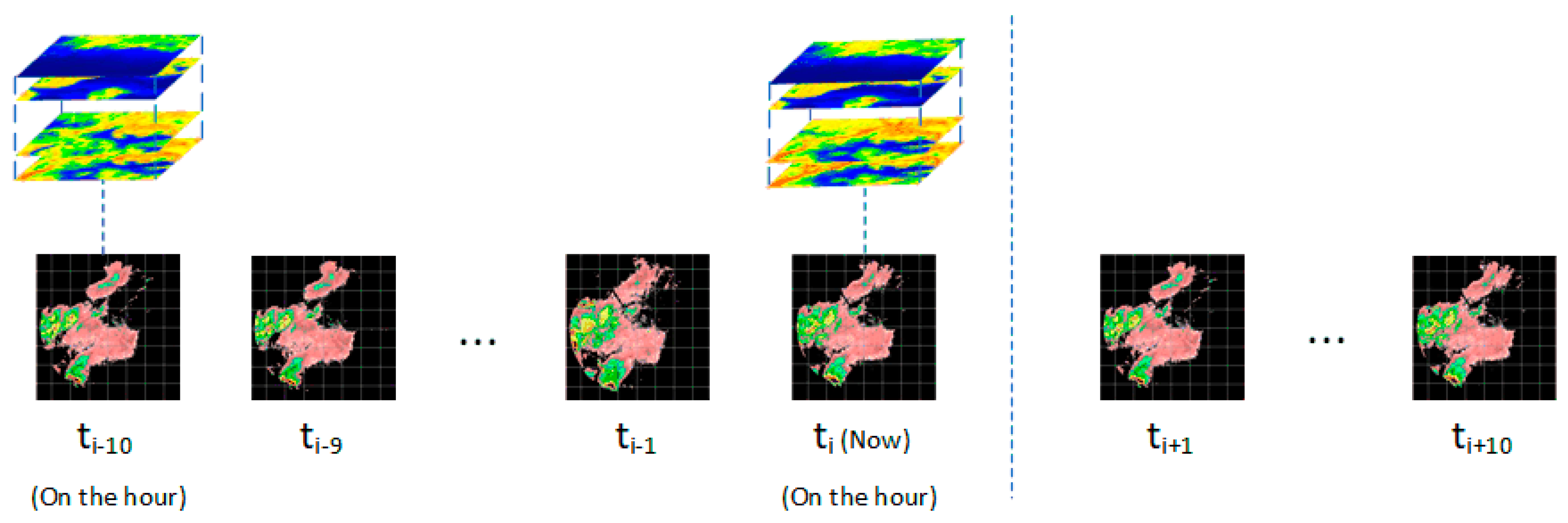
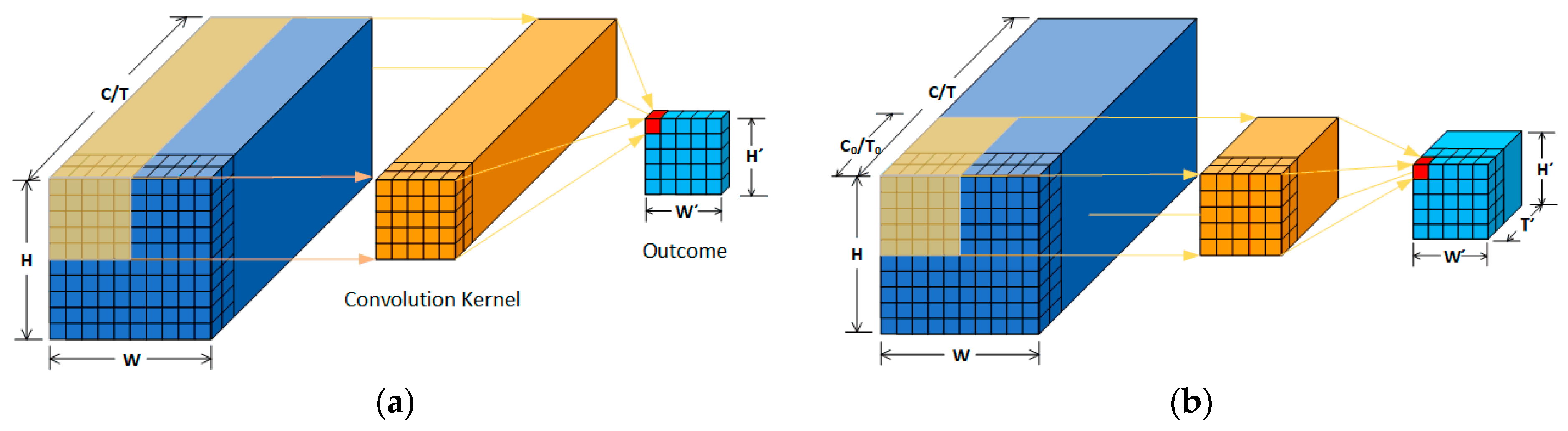
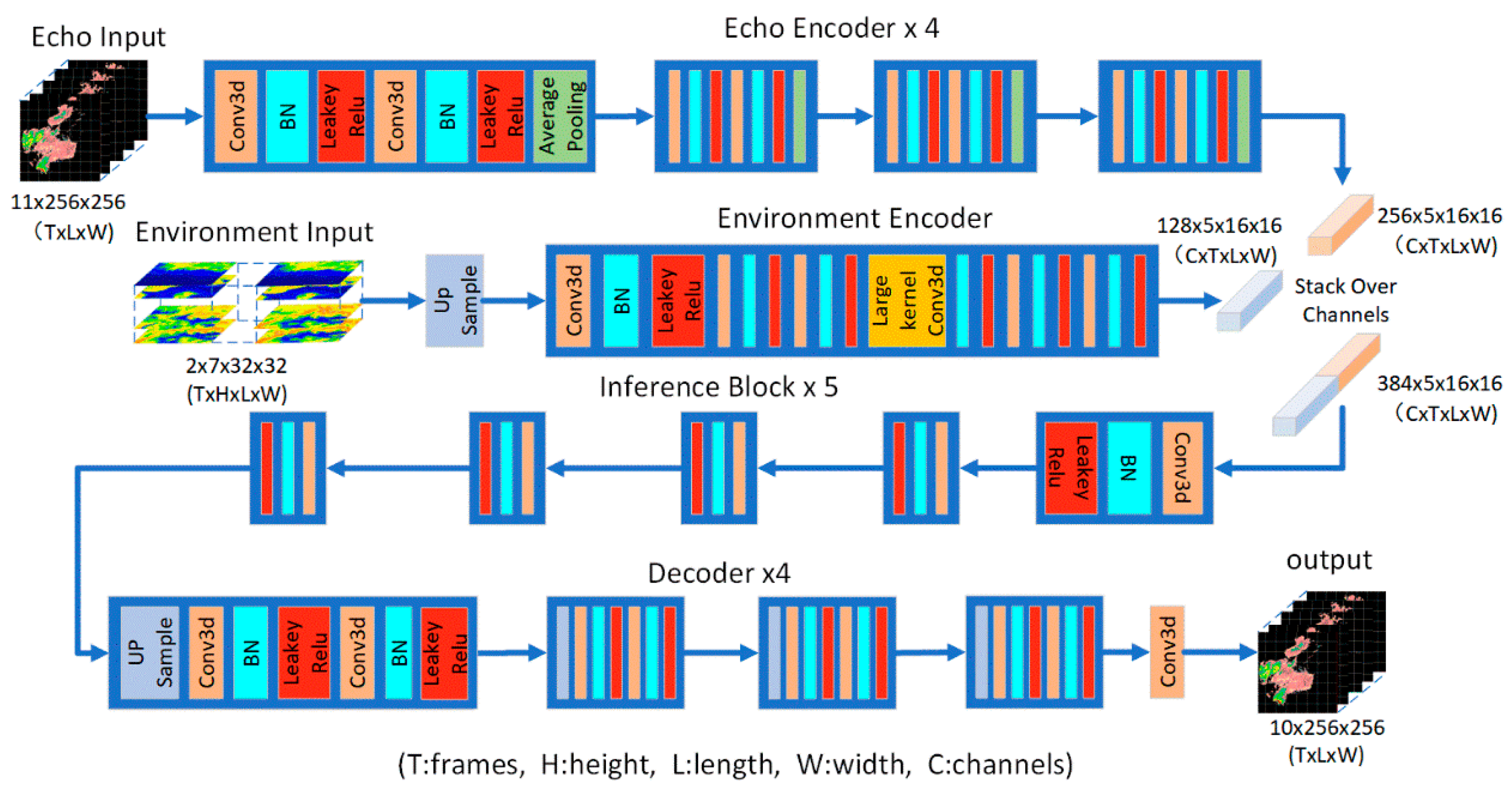
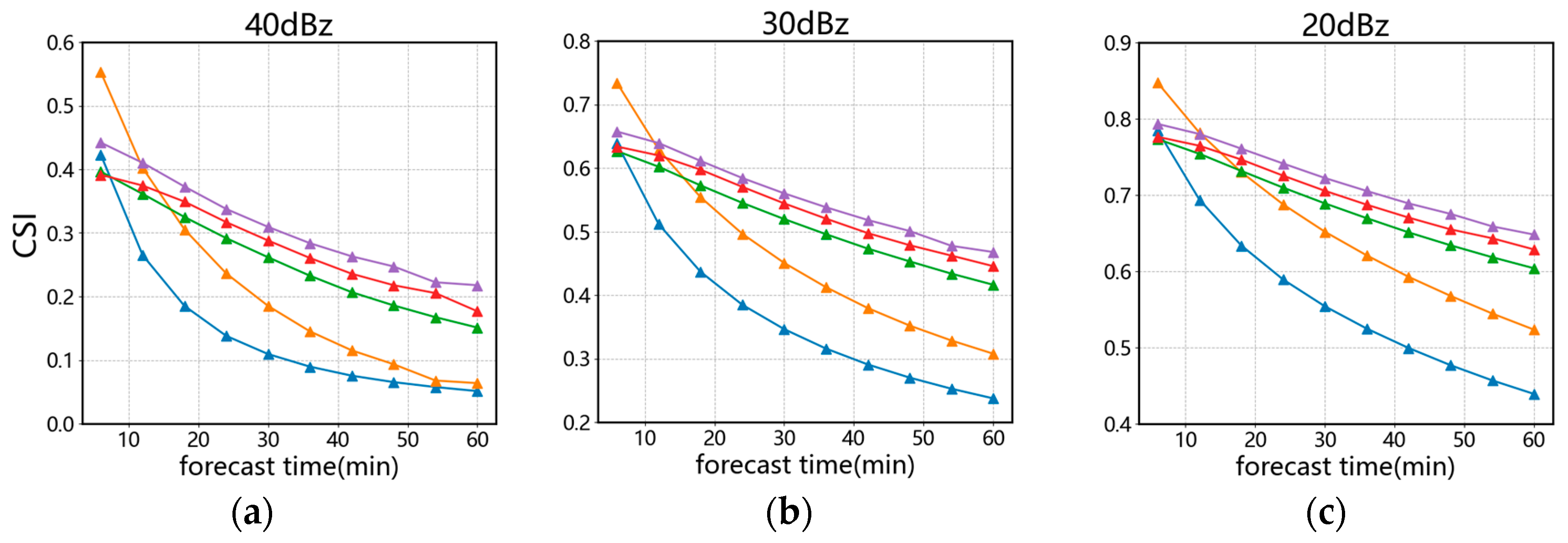
Short-term extrapolation by weather radar observations is one of the main tools for making weather forecasts. Recently, deep learning has been gradually applied to radar extrapolation techniques, achieving significant results. However, for radar echo images containing strong convective systems, it is difficult to obtain high-quality results with long-term extrapolation. Additionally, there are few attempts and discussions to incorporate environmental factors governing the occurrence and development of convective storms into the training process. To demonstrate the positive effect of environmental factors on radar echo extrapolation tasks, this paper designs a three-dimensional convolutional neural network. The paper outlines the processing steps for matching radar echo images with environmental data in the spatio–temporal dimension. Additionally, it develops an experimental study on the effectiveness of seven physical elements and their combinations in improving the quality of radar echo extrapolation. Furthermore, a loss function is adopted to guide the training process of the model to pay more attention to strong convective systems. The quantitative statistical evaluation shows the critical success index (CSI) of our model’s prediction is improved by 3.42% (threshold = 40 dBZ) and 2.35% (threshold = 30 dBZ) after incorporating specific environmental field data. Two representative cases indicate that environmental factors provide essential information about convective systems, especially in predicting the birth, extinction, merging, and splitting of convective cells.
Keywords: radar echo extrapolation; 3D convolution; environment field radar echo extrapolation; 3D convolution; environment field