Article

A Study on Radiological Hazard Assessment for Jordan Research and Training Reactor

1
Department of Nuclear and Radiation Safety, University of Science and Technology, Daejeon 34113, Republic of Korea
2
Korea Atomic Energy Research Institute, Daejeon 34057, Republic of Korea
*
Author to whom correspondence should be addressed.
Atmosphere 2023, 14(5), 859; https://doi.org/10.3390/atmos14050859
Submission received: 6 April 2023 / Revised: 8 May 2023 / Accepted: 9 May 2023 / Published: 11 May 2023

Abstract

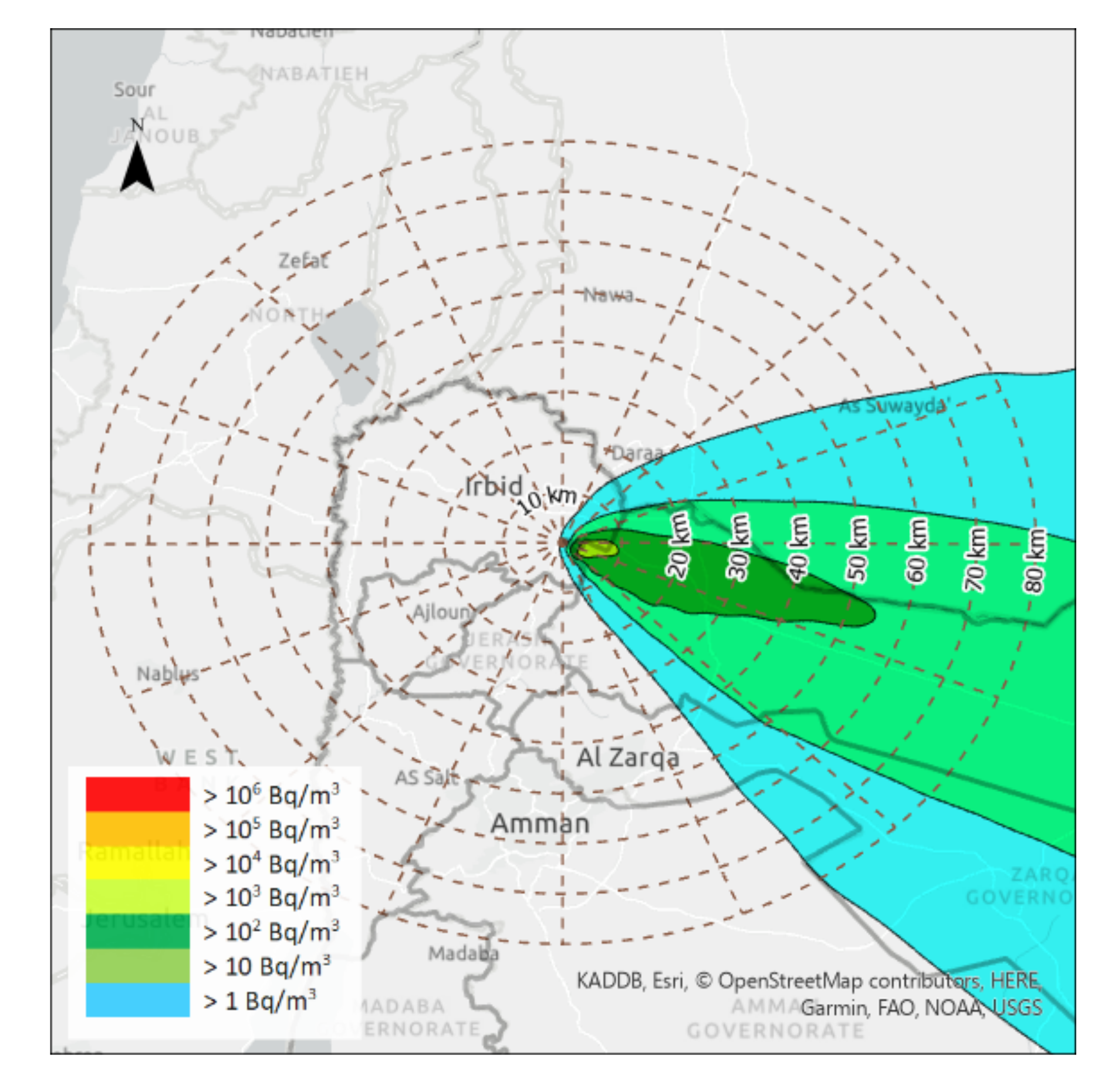
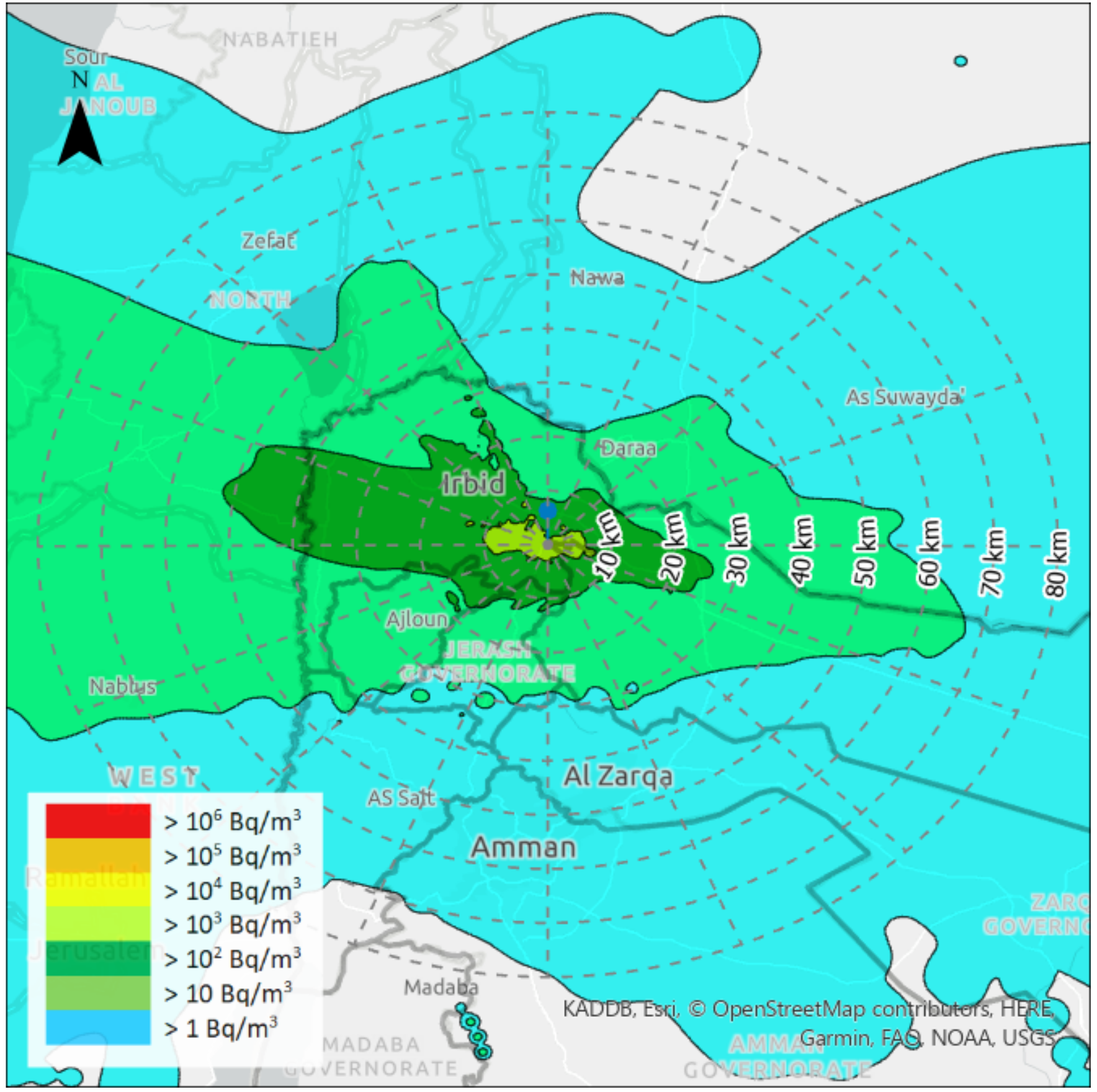
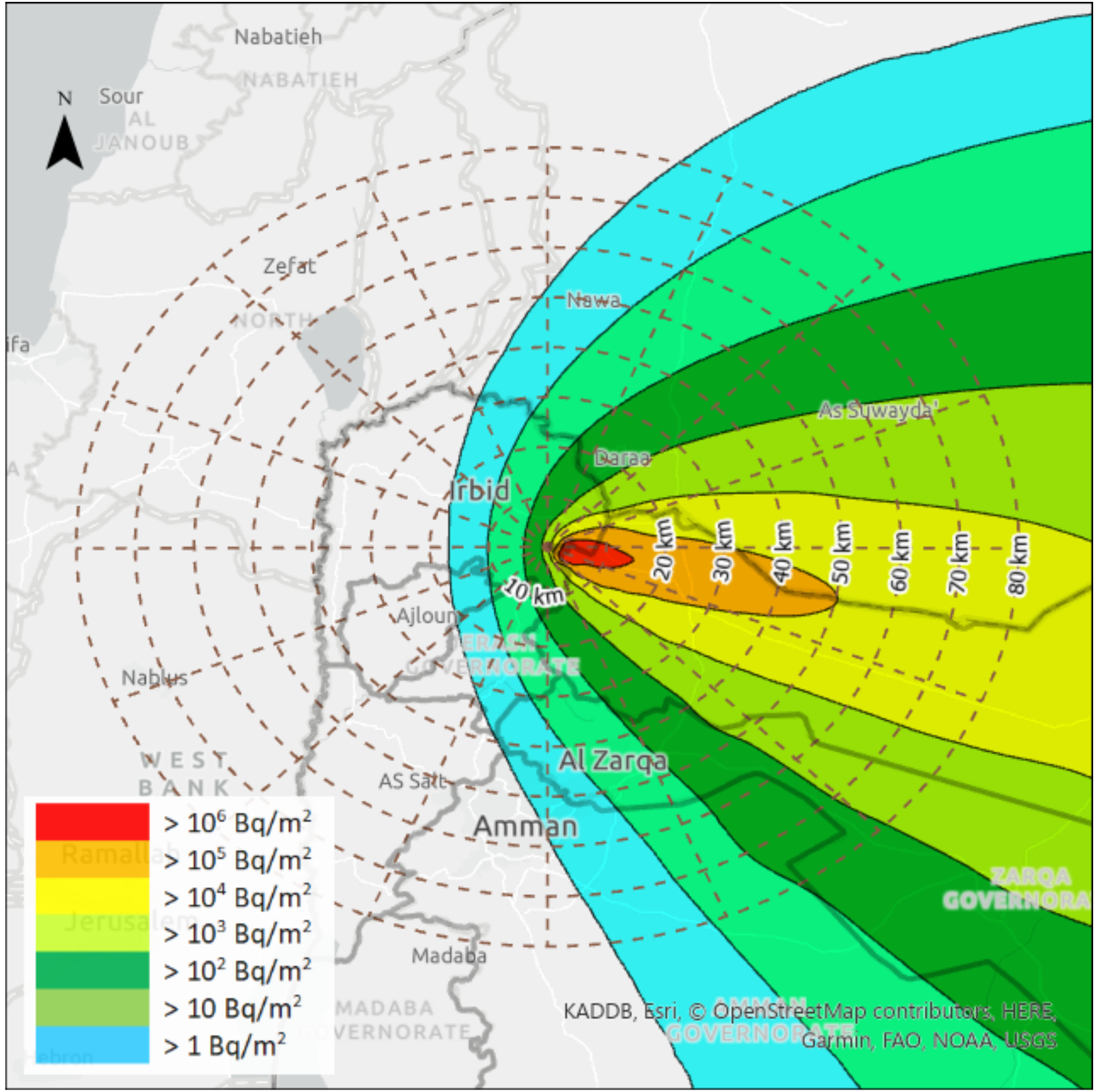
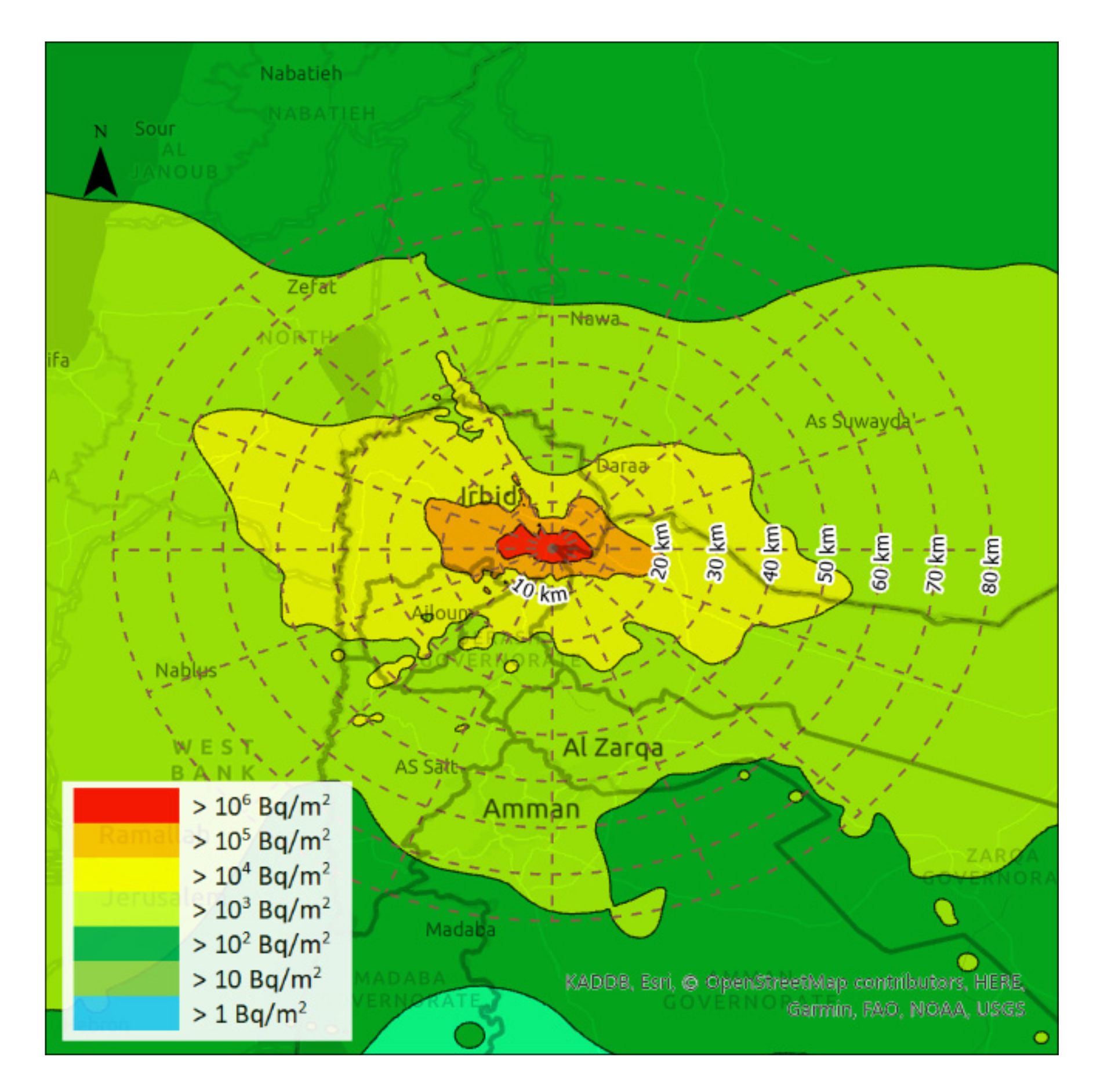
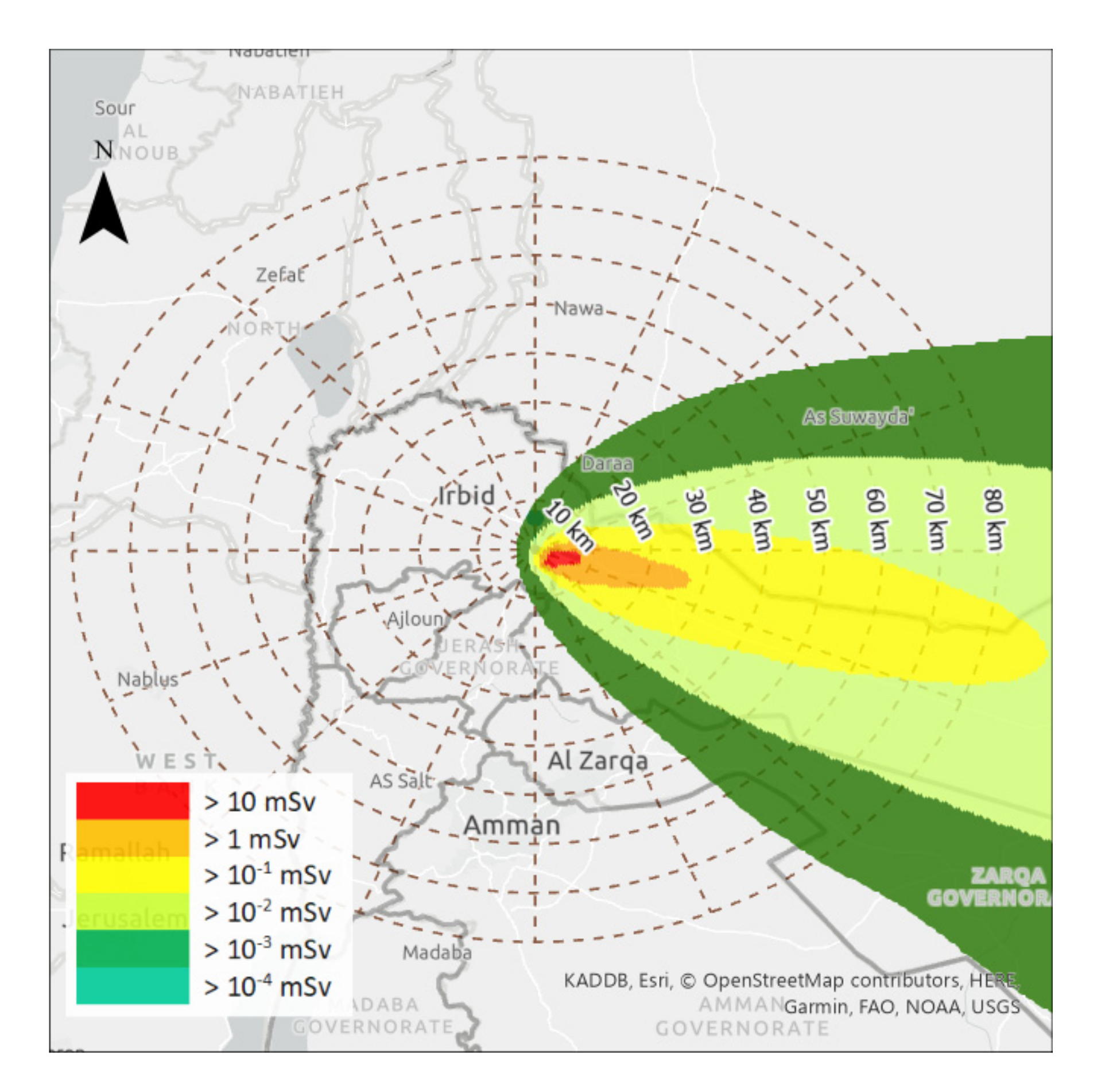
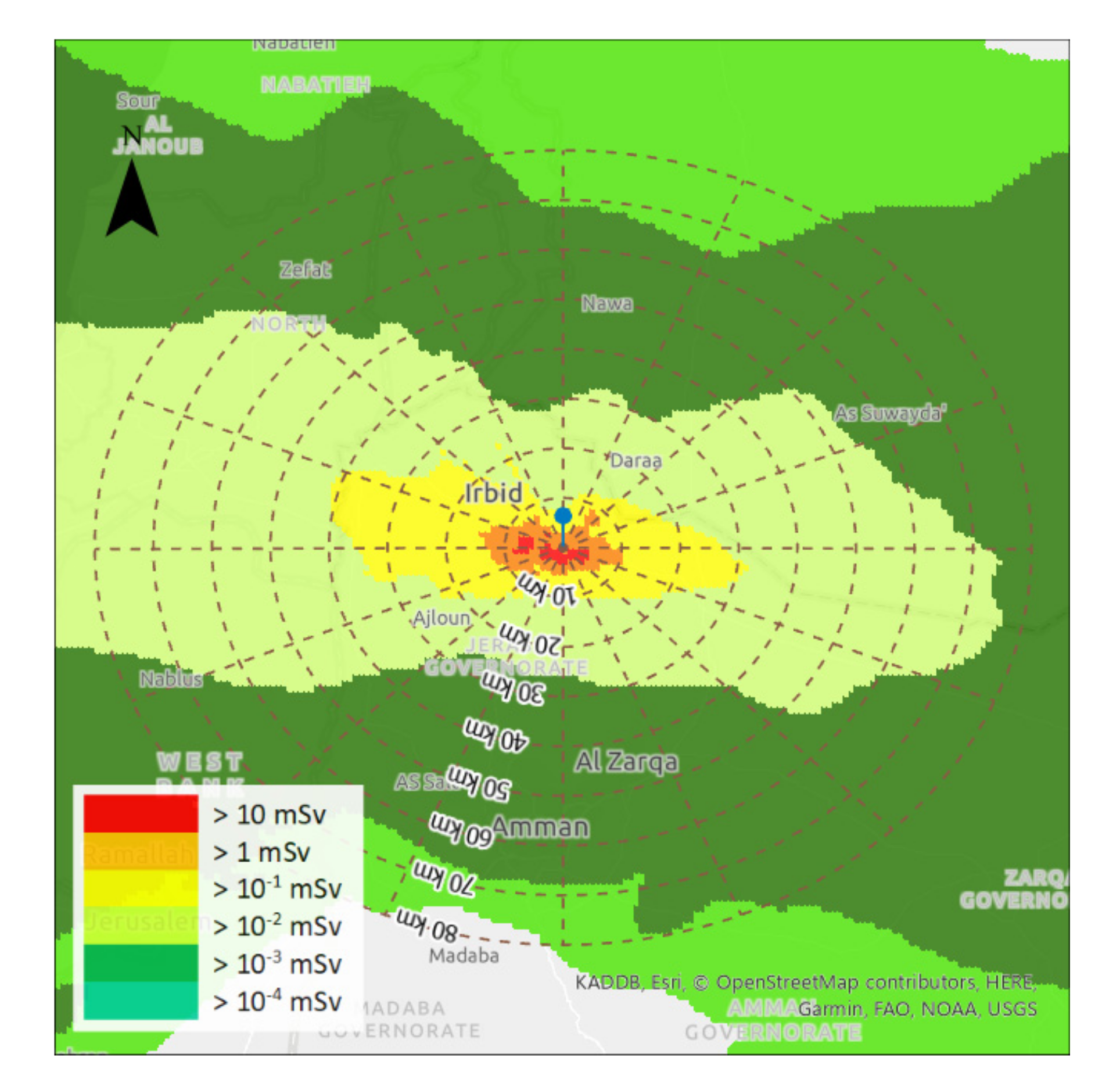
Numerical simulations of atmospheric dispersion and dose assessment were performed for the Jordan Research and Training Reactor (JRTR) to evaluate its radiological effects on surrounding population and the environment. A three-dimensional atmospheric dispersion model was applied to investigate the behavior of the radionuclides released into the air, and a dose assessment model was used to estimate the radiological impact on the population residing in nearby cities around the JRTR. Considering full core meltdown an accidental scenario, most of the source term was assumed to be released from the JRTR. Simulations were performed to calculate the air and deposition concentrations of radioactive materials for July 2013 and January 2014. The monthly averaged values of concentrations, depositions, and dose rates were analyzed to identify the most harmful effects in each month. The results showed that relatively harmful effects occurred in January 2014, and the total annual dose rate was estimated to be approximately 1 mSv outside the 10 km radius from JRTR. However, the impact of a nuclear accident is not as severe as it might seem, as the affected area is not highly populated, and appropriate protective measures can significantly reduce the radiation exposure. This study provides useful information for emergency preparedness and response planning to mitigate the radiological consequences of a nuclear accident at the JRTR.
Keywords: atmospheric dispersion; nuclear accident; radionuclides; radiological impact atmospheric dispersion; nuclear accident; radionuclides; radiological impact