Article

Equivalent Current Systems of Quiet Ionosphere during the 24th Solar Cycle Derived from the Geomagnetic Records in China

1
Institute of Geophysics, China Earthquake Administration, Beijing 100081, China
2
Center of Geomagnetic Network of China, Beijing 100081, China
3
Institute of Earthquake Forecasting, China Earthquake Administration, Beijing 100036, China
*
Author to whom correspondence should be addressed.
Atmosphere 2022, 13(11), 1843; https://doi.org/10.3390/atmos13111843
Submission received: 6 September 2022 / Revised: 28 October 2022 / Accepted: 2 November 2022 / Published: 5 November 2022
(This article belongs to the Section Upper Atmosphere)

Abstract

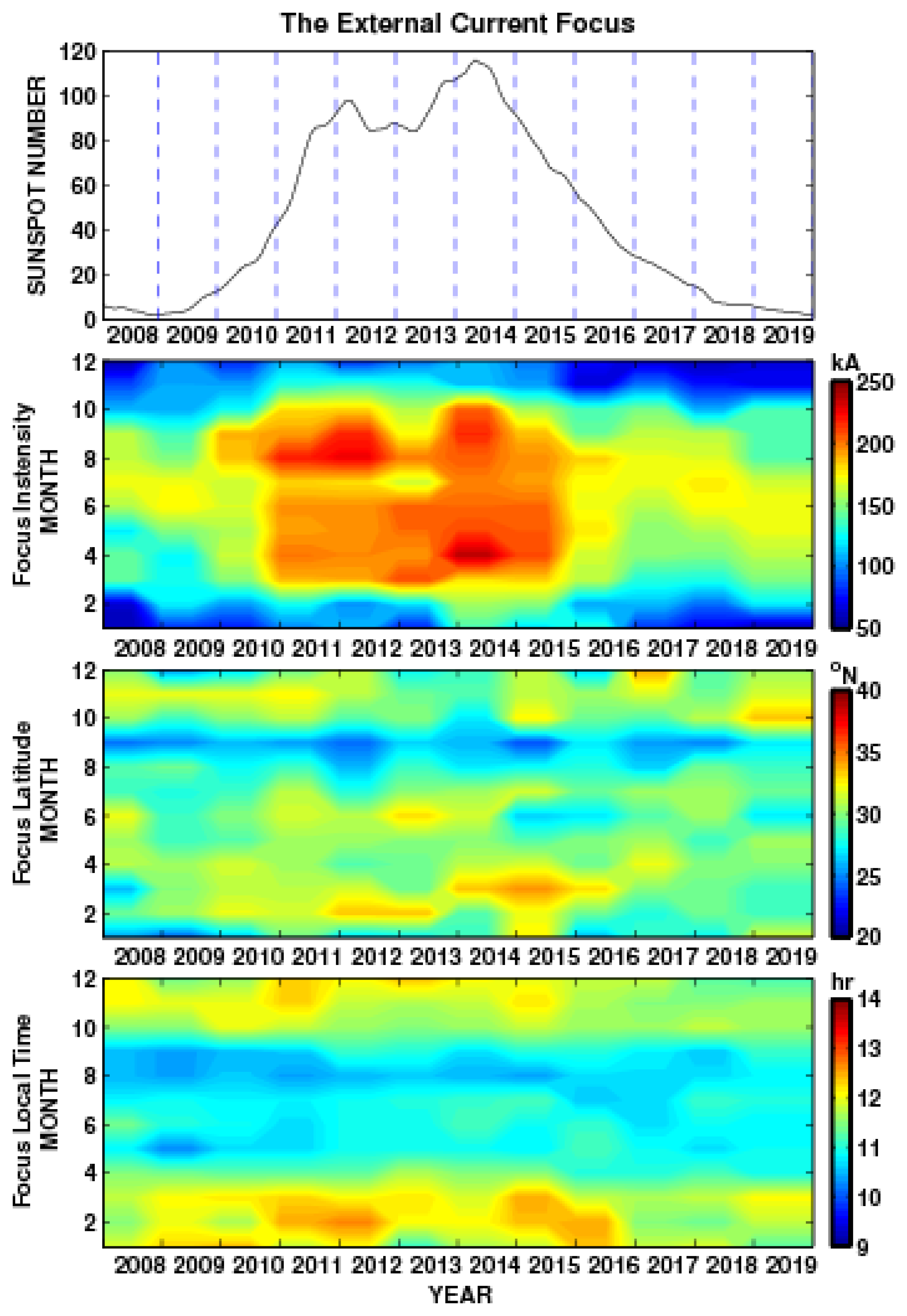
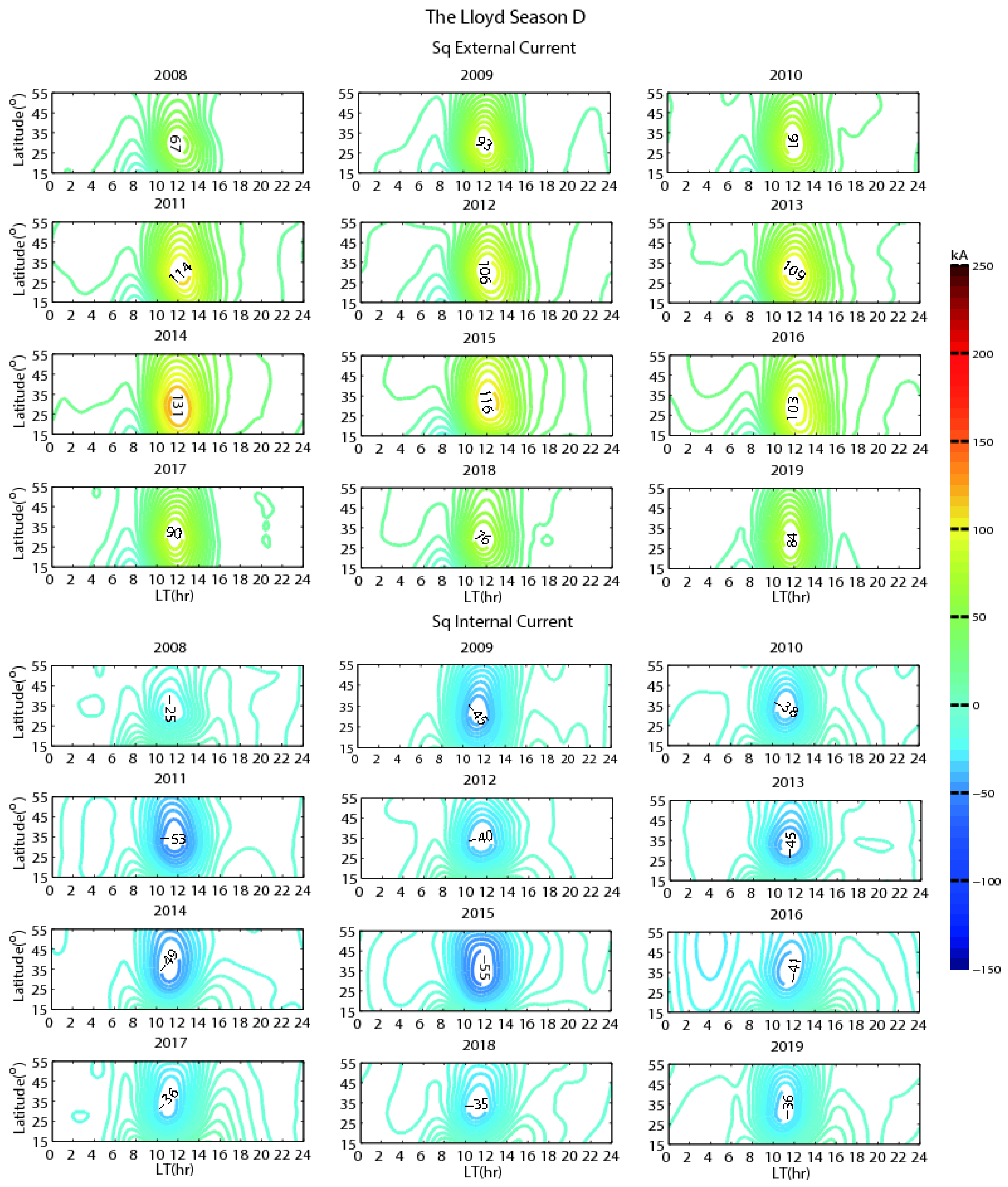
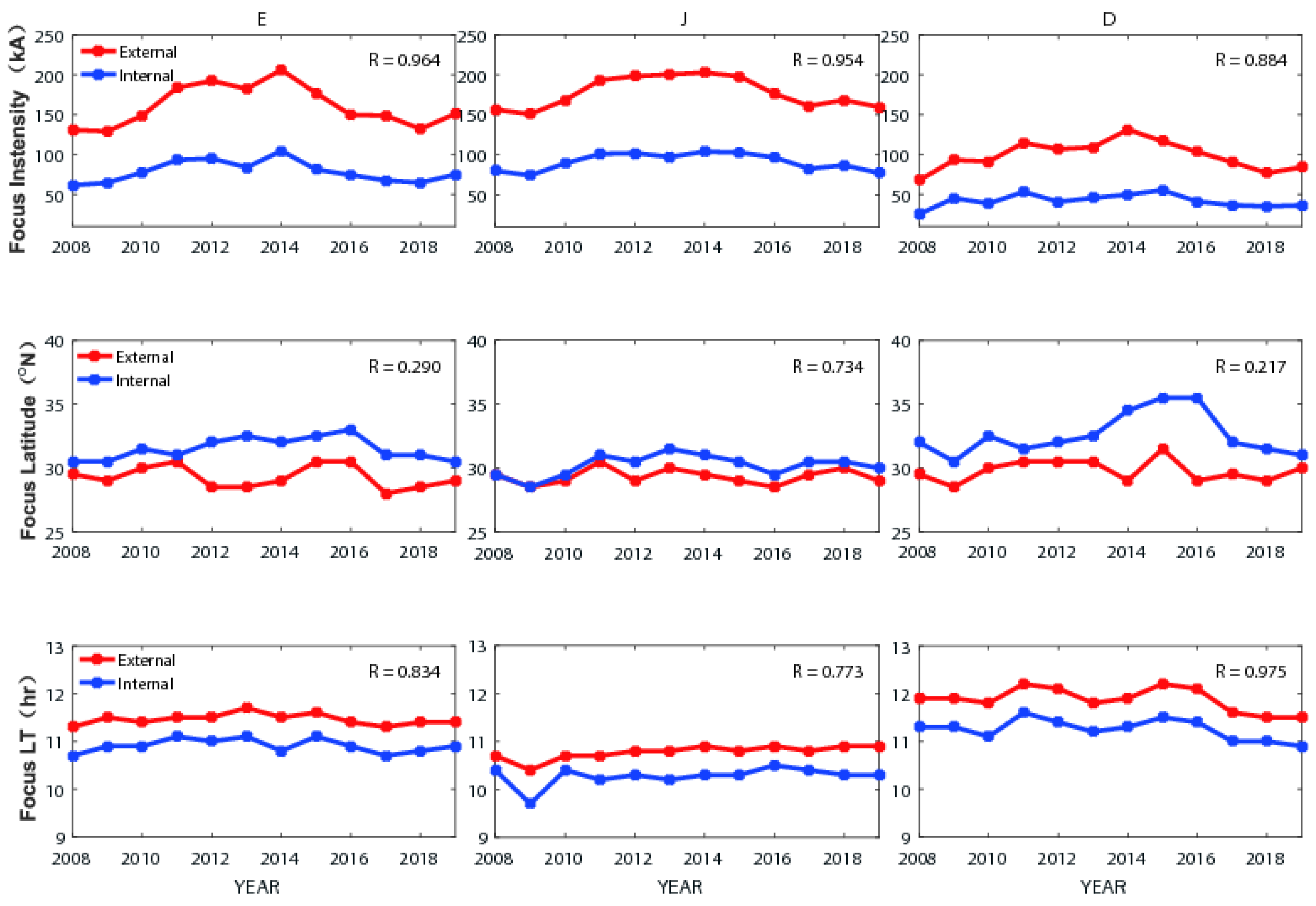
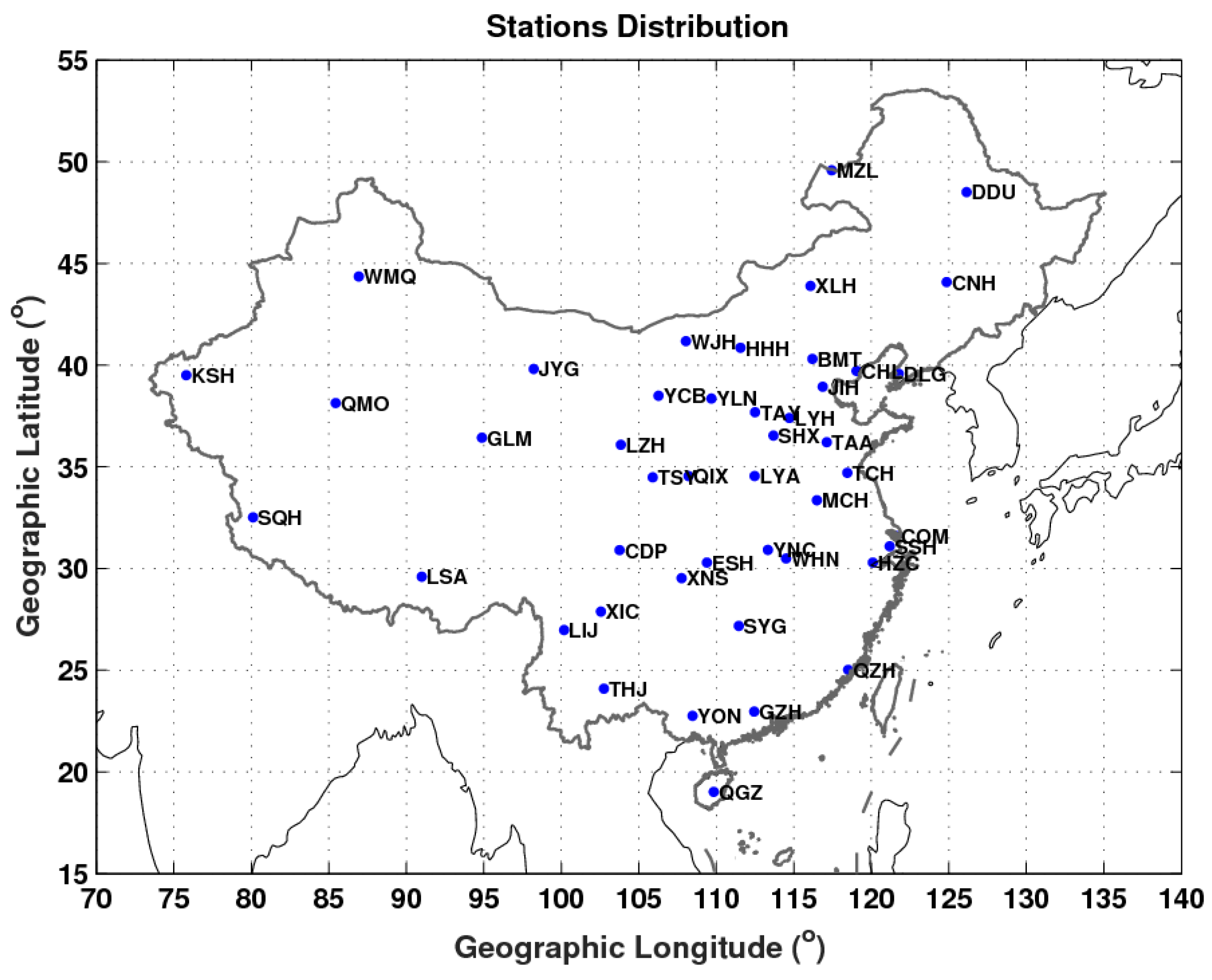
External and internal equivalent current systems of solar quiet (Sq) were obtained using the spherical harmonic analysis (SHA) method with a “mirror” technique based on geomagnetic records from 46 stations in China during 2008–2019. It is the first attempt to investigate Sq currents using so many stations in the China region for a long period. On the basis of criterion Kp ≤ 2+, geomagnetic vector data were selected to represent monthly Sq variations. After calculating the equivalent currents for each month and each Lloyd season, Sq variation was analyzed in relation to the solar cycle and season. The intensities of both external and internal Sq currents were found consistent with solar activity for the same month or season, while the positions of the current foci were evidently unaffected by solar activity. The intensities of Sq currents also exhibited primary semiannual (annual) variation in the periods of high (low) solar activity. The latitude of the internal current vortex showed evident seasonal variation in Lloyd seasons with high (low) values in the D (J) season, while the external current vortex exhibited no obvious seasonal variation. The strongest correlation between external and internal foci was found in D season, and the internal current foci usually appeared 20–40 min earlier than the external ones. Owing to the complex mechanisms behind Sq variation, some findings will need further analysis in the future.
Keywords: equivalent current; solar quiet; ionosphere; geomagnetic records; solar cycle equivalent current; solar quiet; ionosphere; geomagnetic records; solar cycle