Article

Polar Middle Atmospheric Responses to Medium Energy Electron (MEE) Precipitation Using Numerical Model Simulations


1
Korea Polar Research Institute, Incheon 21990, Korea
2
Department of Polar Science, Korea University of Science and Technology, Incheon 21990, Korea
3
Space Science Division, Korea Astronomy and Space Science Institute, Daejeon 34055, Korea
4
Department of Astronomy and Space Science, Korea University of Science and Technology, Incheon 21990, Korea
5
Department of Physics, University of Otago, Dunedin 9016, New Zealand
6
Sodankylä Geophysical Observatory, University of Oulu, 99600 Tähteläntie, Finland
7
Department of Astronomy and Space Science, Chungbuk National University, Cheongju 28644, Korea
*
Author to whom correspondence should be addressed.
Atmosphere 2021, 12(2), 133; https://doi.org/10.3390/atmos12020133
Submission received: 9 December 2020 / Revised: 15 January 2021 / Accepted: 15 January 2021 / Published: 20 January 2021
(This article belongs to the Section Upper Atmosphere)

Abstract

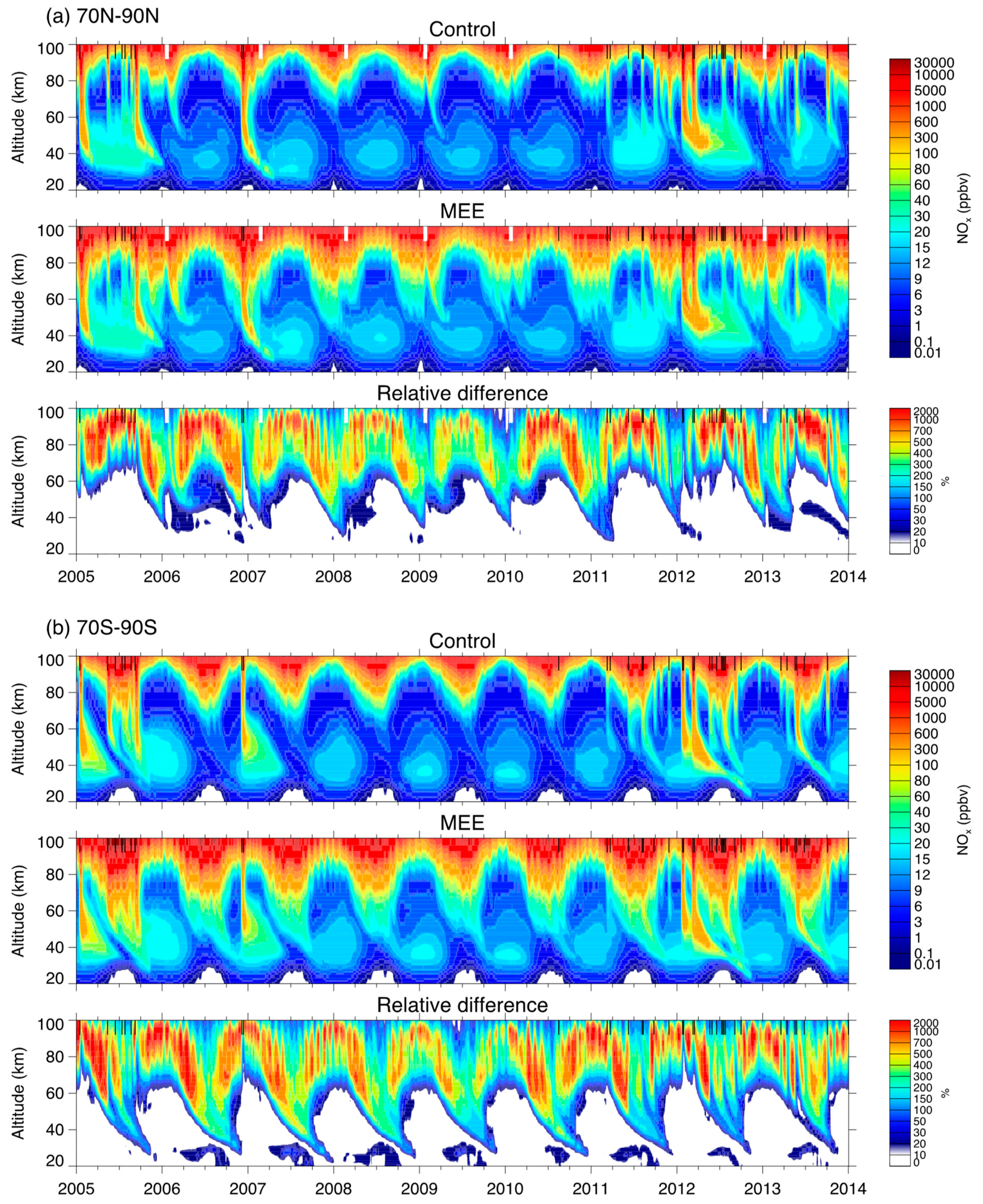
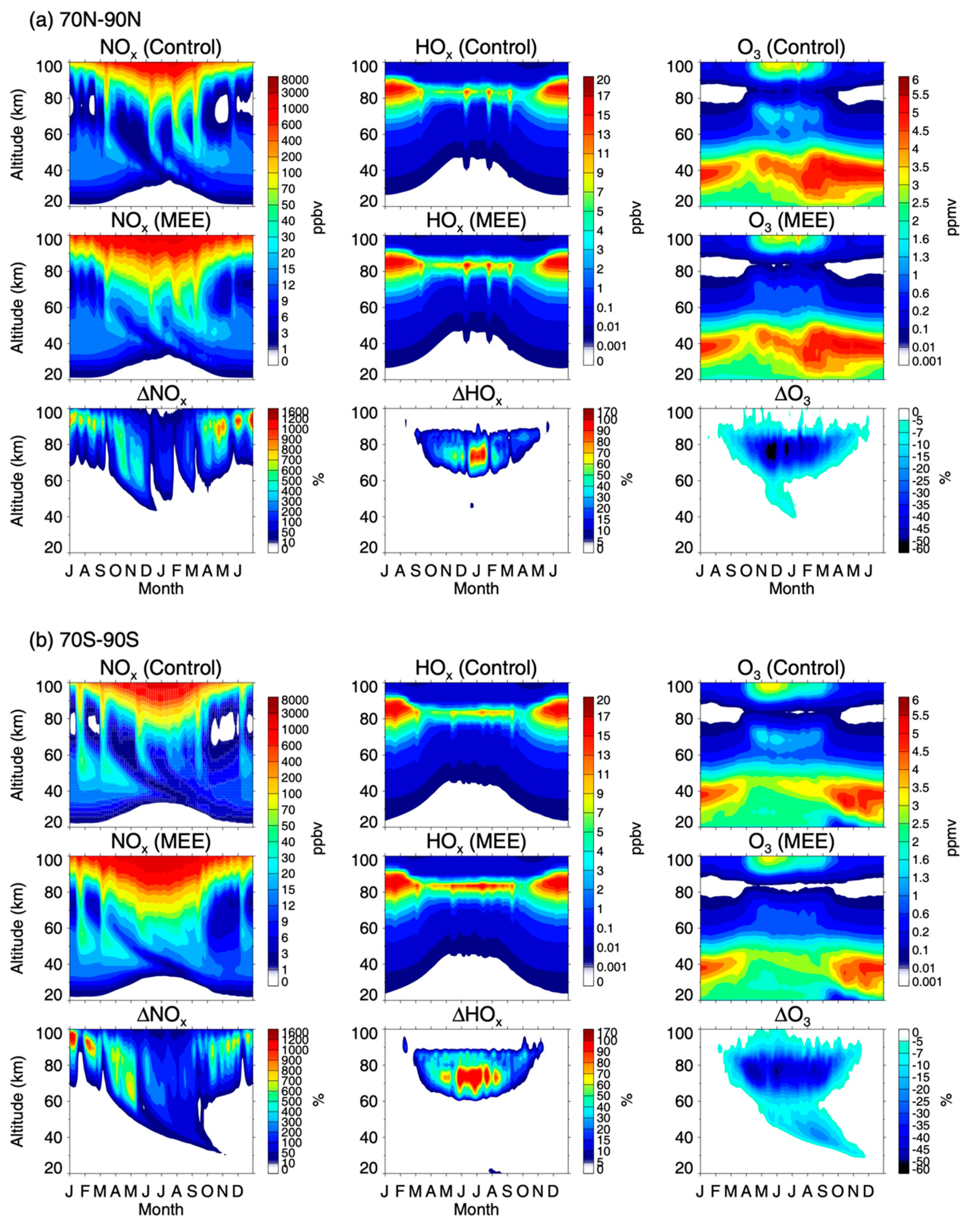
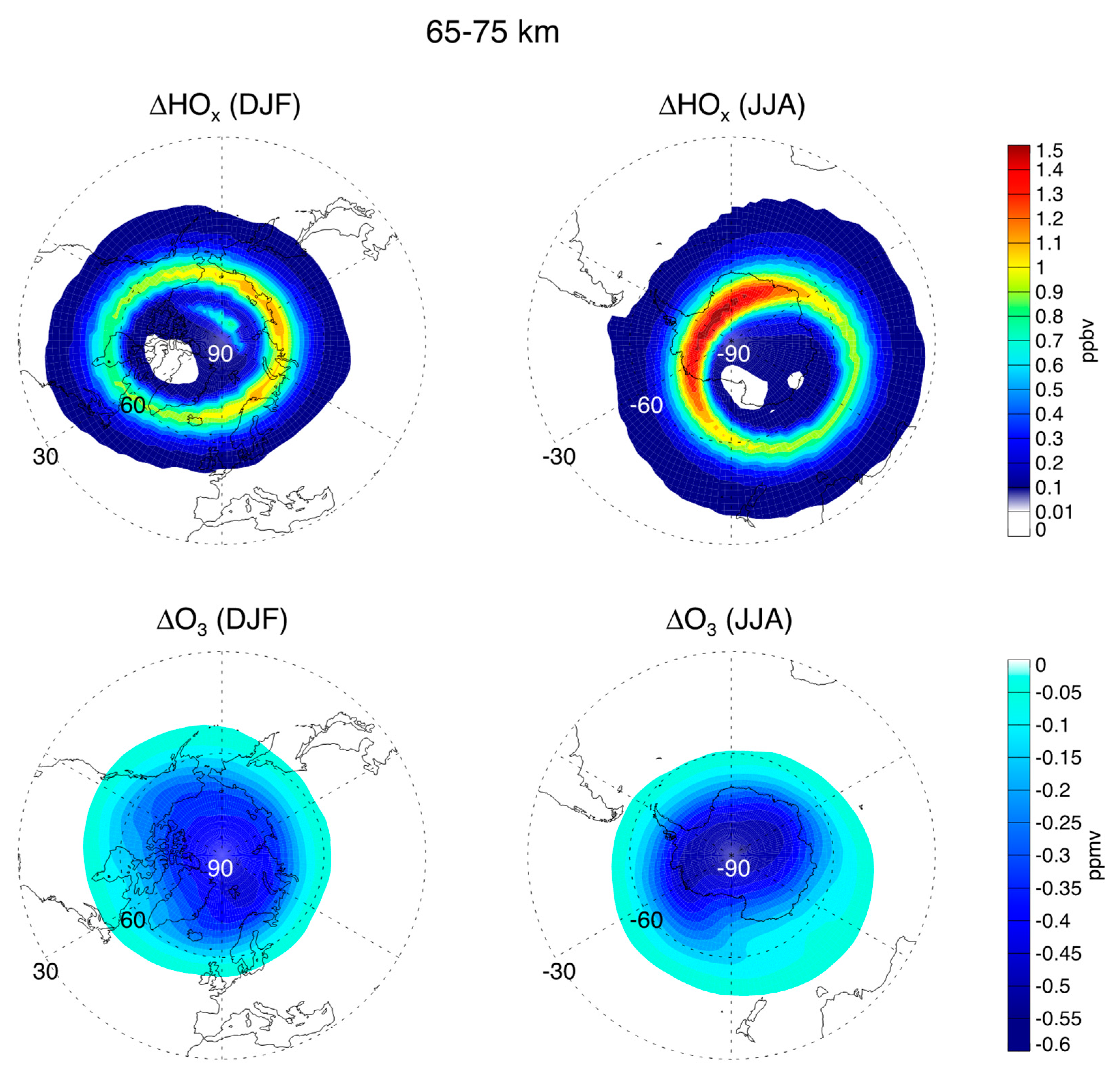
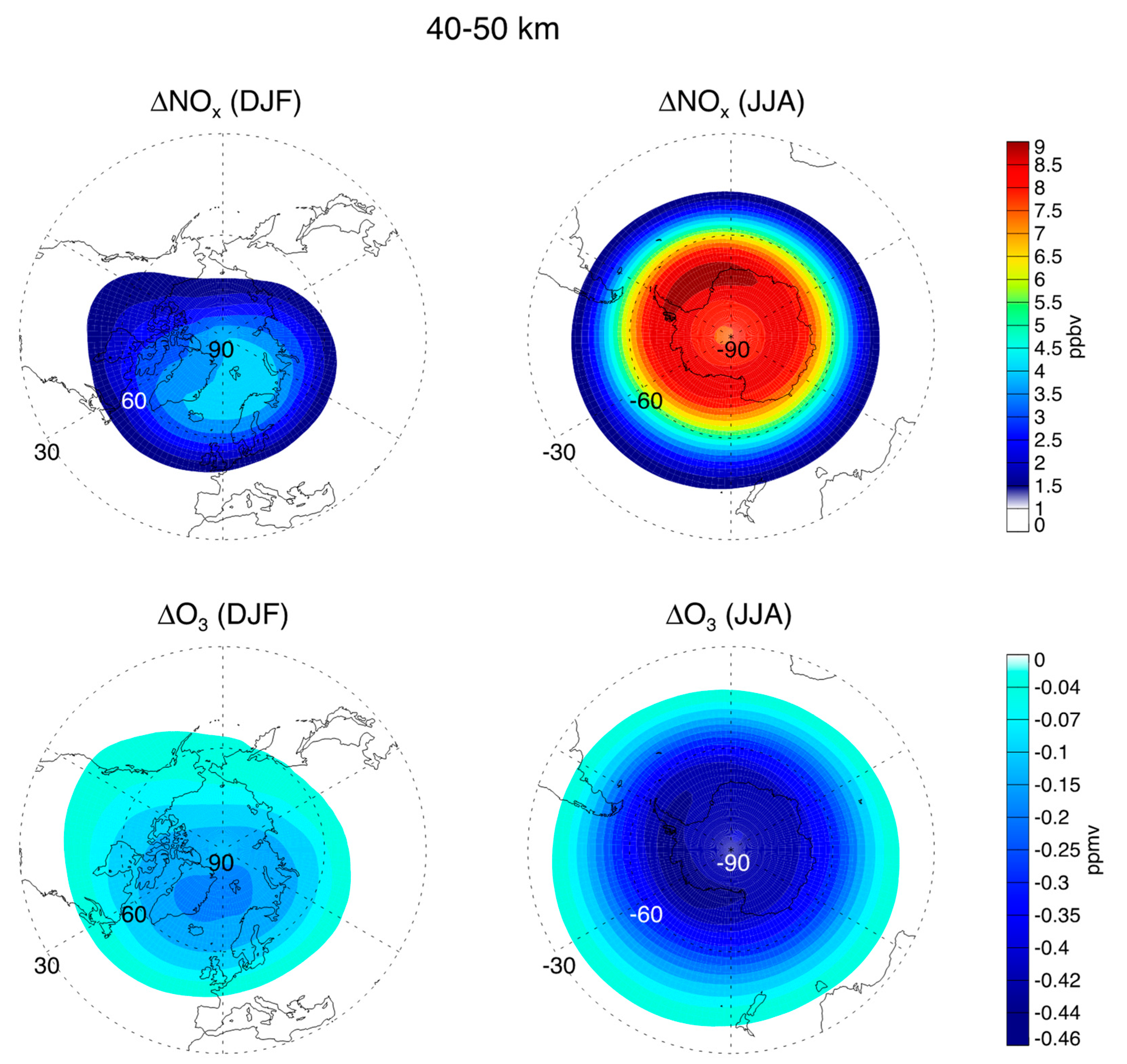
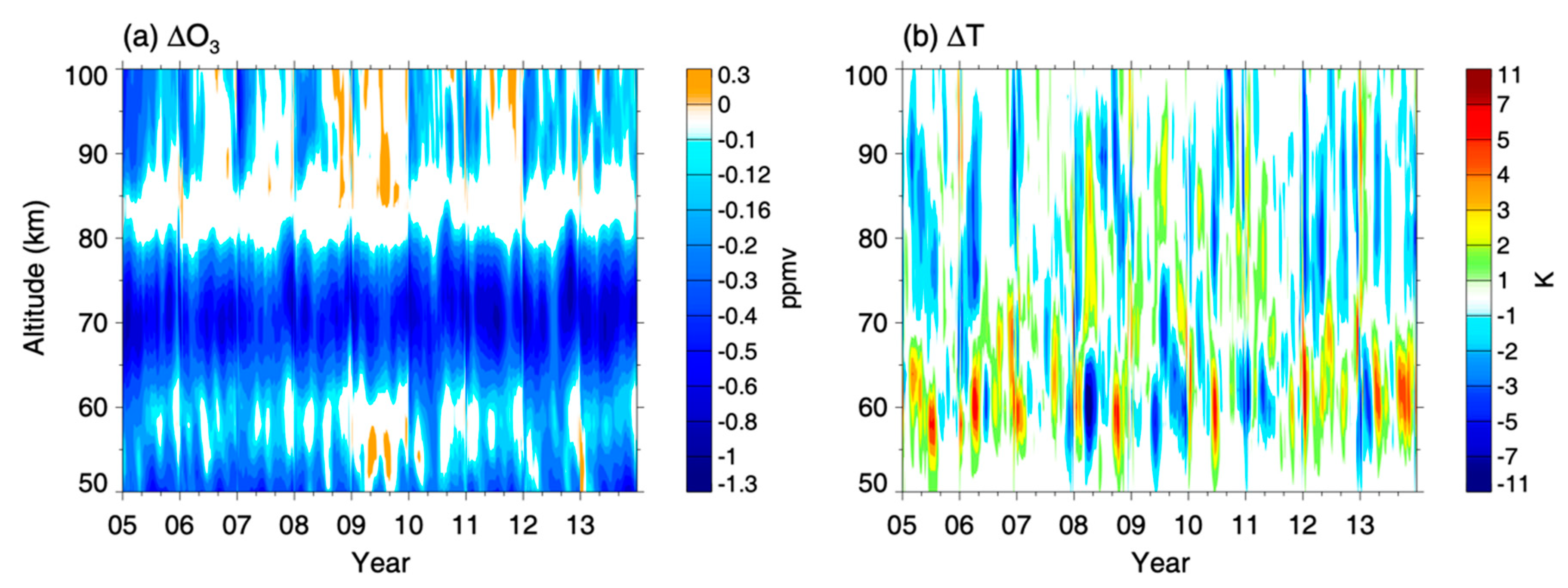
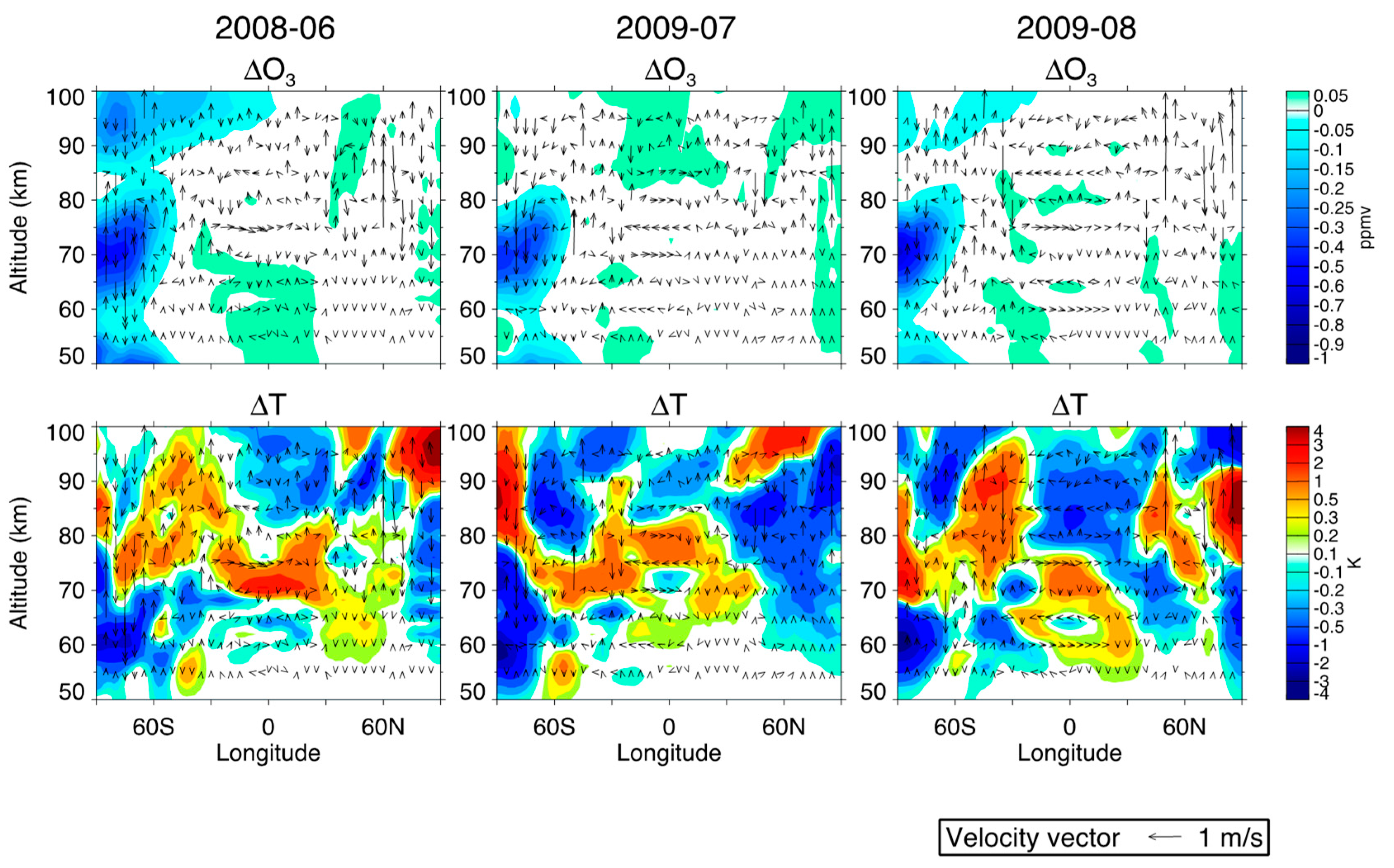
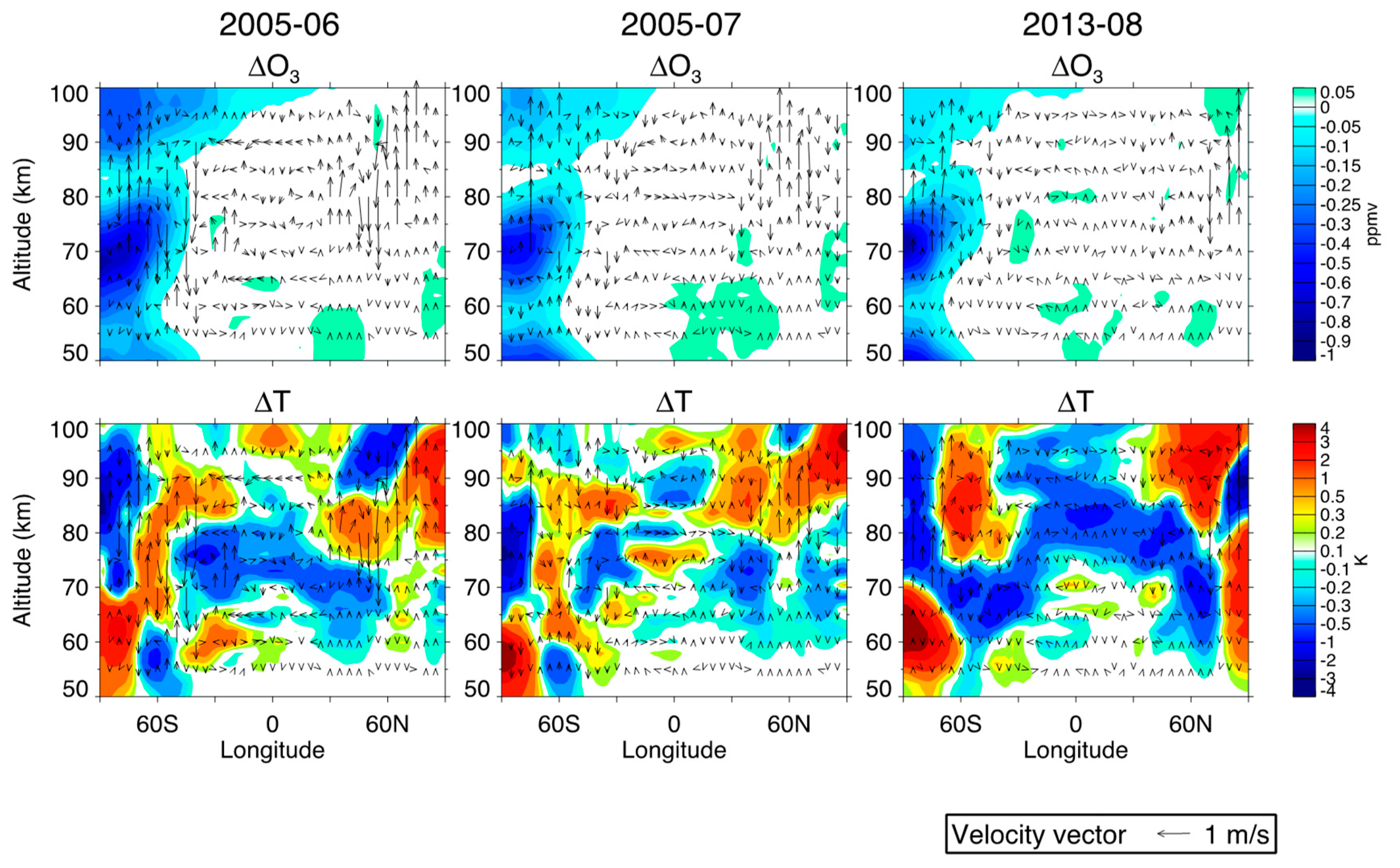
Energetic particle precipitation (EPP) is known to be an important source of chemical changes in the polar middle atmosphere in winter. Recent modeling studies further suggest that chemical changes induced by EPP can also cause dynamic changes in the middle atmosphere. In this study, we investigated the atmospheric responses to the precipitation of medium-to-high energy electrons (MEEs) over the period 2005–2013 using the Specific Dynamics Whole Atmosphere Community Climate Model (SD-WACCM). Our results show that the MEE precipitation significantly increases the amounts of NOx and HOx, resulting in mesospheric and stratospheric ozone losses by up to 60% and 25% respectively during polar winter. The MEE-induced ozone loss generally increases the temperature in the lower mesosphere but decreases the temperature in the upper mesosphere with large year-to-year variability, not only by radiative effects but also by adiabatic effects. The adiabatic effects by meridional circulation changes may be dominant for the mesospheric temperature changes. In particular, the meridional circulation changes occasionally act in opposite ways to vary the temperature in terms of height variations, especially at around the solar minimum period with low geomagnetic activity, which cancels out the temperature changes to make the average small in the polar mesosphere for the 9-year period.
Keywords: medium energy electron (MEE); energetic electron precipitation (EEP); mesosphere; odd-nitrogen; odd-hydrogen; ozone loss medium energy electron (MEE); energetic electron precipitation (EEP); mesosphere; odd-nitrogen; odd-hydrogen; ozone loss