miRNA as a Prognostic Marker in Small Lung Cell Carcinoma
 , , , , , , , and
Abstract
1. Introduction
2. Materials and Methods
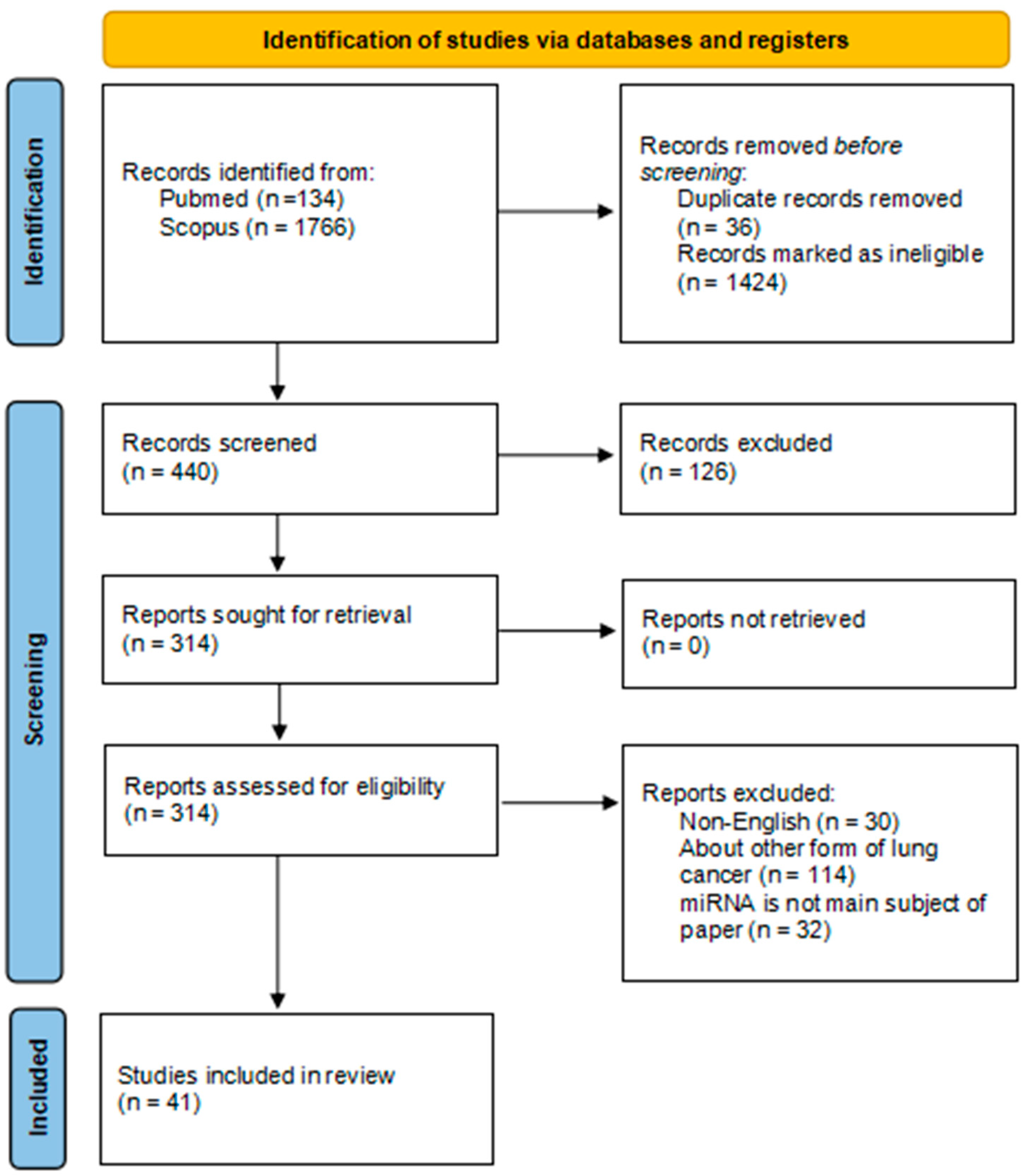
3. Results
4. Discussion
4.1. Predictive Markers of Treatment
4.1.1. miR-7-5p
4.1.2. miR-22-3p
4.1.3. miR-200b
4.1.4. miR-495
4.1.5. miR-134
4.1.6. miR-335 and miR-335-5p
4.1.7. miR-24-3p
4.1.8. miR-30a-5p
4.1.9. miR-181b
4.1.10. miR-100
4.2. Prognostic miRNAs
4.2.1. miR-1
4.2.2. miR-30a-3p
4.2.3. miR-494
5. Conclusions
Author Contributions
Funding
Institutional Review Board Statement
Informed Consent Statement
Data Availability Statement
Conflicts of Interest
Abbreviations
| ABL | Abelson tyrosine kinase |
| ACE2 | Angiotensin-converting enzyme 2 |
| AKT | Protein kinase B |
| ATG4A | Autophagy-related gene 4A |
| BMX | Bone marrow tyrosine kinase gene on chromosome X (ETK/BMX) |
| CXCR4 | C-X-C chemokine receptor type 4 |
| DNA | Deoxyribonucleic acid |
| DONSON | Downstream neighbor of SON |
| EMT | Epithelial–mesenchymal transition |
| ERK1/2 | Extracellular signal-regulated kinase 1/2 |
| EVs | Extracellular vesicles |
| FOXM1 | Forkhead box protein M1 |
| HOXA1 | Homeobox protein A1 |
| HR | Homologous recombination |
| IGF1R | Insulin-like growth factor 1 receptor |
| lncRNA | Long non-coding RNA |
| LOH | Loss of heterozygosity |
| MDR | Multidrug resistance |
| MMP | Matrix metalloproteinase |
| mRNA | Messenger RNA |
| mTOR | Mechanistic target of rapamycin |
| PARP1 | Poly (ADP-ribose) polymerase 1 |
| PI3K | Phosphoinositide 3-kinase |
| PIM2 | Proto-oncogene serine/threonine-protein kinase Pim-2 |
| PTEN | Phosphatase and tensin homolog |
| qRT-PCR | Quantitative real-time polymerase chain reaction |
| RANKL | Receptor activator of nuclear factor kappa-B ligand |
| RB1 | Retinoblastoma gene |
| RRM2 | Ribonucleotide reductase regulatory subunit M2 |
| SCLC | Small-cell lung carcinoma |
| SOX2 | SRY-box transcription factor 2 |
| SOX21-AS1 | SOX21 antisense RNA 1 |
| TGF-β | Transforming growth factor beta |
| TP53 | Tumor protein p53 |
| VP16 | Etoposide (VP-16) |
| WBP5 | WW domain-binding protein 5 |
| WRNIP1 | Werner helicase-interacting protein 1 |
| WWOX | WW domain-containing oxidoreductase |
| YAP1 | Yes-associated protein 1 |
| ZEB2 | Zinc finger E-box binding homeobox 2 |
References
- Saviana, M.; Romano, G.; McElroy, J.; Nigita, G.; Distefano, R.; Toft, R.; Calore, F.; Le, P.; Morales, D.D.V.; Atmajoana, S.; et al. A plasma miRNA-based classifier for small cell lung cancer diagnosis. Front. Oncol. 2023, 13, 1255527. [Google Scholar] [CrossRef]
- Rudin, C.M.; Brambilla, E.; Faivre-Finn, C.; Sage, J. Small-cell lung cancer. Nat. Rev. Dis. Prim. 2021, 7, 3. [Google Scholar] [CrossRef]
- Rueschhoff, A.B.; Moore, A.W.; Jasahui, M.R.P. Lung Cancer Staging—A Clinical Practice Review. J. Respir. 2024, 4, 50–61. [Google Scholar] [CrossRef]
- Solé, C.; Lawrie, C.H. MicroRNAs in Metastasis and the Tumour Microenvironment. Int. J. Mol. Sci. 2021, 22, 4859. [Google Scholar] [CrossRef]
- Kousar, K.; Ahmad, T.; Abduh, M.S.; Kanwal, B.; Shah, S.S.; Naseer, F.; Anjum, S. miRNAs in Regulation of Tumor Microenvironment, Chemotherapy Resistance, Immunotherapy Modulation and miRNA Therapeutics in Cancer. Int. J. Mol. Sci. 2022, 23, 13822. [Google Scholar] [CrossRef]
- Smolarz, B.; Durczyński, A.; Romanowicz, H.; Szyłło, K.; Hogendorf, P. miRNAs in Cancer (Review of Literature). Int. J. Mol. Sci. 2022, 23, 2805. [Google Scholar] [CrossRef] [PubMed]
- Singh, S.; Saxena, S.; Sharma, H.; Paudel, K.R.; Chakraborty, A.; MacLoughlin, R.; Oliver, B.G.; Gupta, G.; Negi, P.; Singh, S.K.; et al. Emerging role of tumor suppressing microRNAs as therapeutics in managing non-small cell lung cancer. Pathol. Res. Pract. 2024, 256, 155222. [Google Scholar] [CrossRef] [PubMed]
- Mens, M.M.J.; Ghanbari, M. Cell Cycle Regulation of Stem Cells by MicroRNAs. Stem Cell Rev. Rep. 2018, 14, 309–322. [Google Scholar] [CrossRef]
- Li, N.; Long, B.; Han, W.; Yuan, S.; Wang, K. microRNAs: Important regulators of stem cells. Stem Cell Res. Ther. 2017, 8, 110. [Google Scholar] [CrossRef]
- El Founini, Y.; Chaoui, I.; Dehbi, H.; El Mzibri, M.; Abounader, R.; Guessous, F. MicroRNAs: Key Regulators in Lung Cancer. MicroRNA 2021, 10, 109–122. [Google Scholar] [CrossRef] [PubMed]
- Cardoso, A.P.F.; Banerjee, M.; Nail, A.N.; Lykoudi, A.; States, J.C. miRNA dysregulation is an emerging modulator of genomic instability. Semin. Cancer Biol. 2021, 76, 120–131. [Google Scholar] [CrossRef]
- Martinez-Espinosa, I.; Serrato, J.A.; Ortiz-Quintero, B. The Role of Exosome-Derived microRNA on Lung Cancer Metastasis Progression. Biomolecules 2023, 13, 1574. [Google Scholar] [CrossRef]
- Kim, D.H.; Park, H.; Choi, Y.J.; Im, K.; Lee, C.W.; Kim, D.-S.; Pack, C.-G.; Kim, H.-Y.; Choi, C.-M.; Lee, J.C.; et al. Identification of exosomal microRNA panel as diagnostic and prognostic biomarker for small cell lung cancer. Biomark. Res. 2023, 11, 80. [Google Scholar] [CrossRef]
- Zhang, Y.; Bi, J.; Huang, J.; Tang, Y.; Du, S.; Li, P. Exosome: A Review of Its Classification, Isolation Techniques, Storage, Diagnostic and Targeted Therapy Applications. Int. J. Nanomed. 2020, 15, 6917–6934. [Google Scholar] [CrossRef] [PubMed]
- Liu, Y.-J.; Wang, C. A review of the regulatory mechanisms of extracellular vesicles-mediated intercellular communication. Cell Commun. Signal. 2023, 21, 77. [Google Scholar] [CrossRef] [PubMed]
- Lu, S.; Kong, H.; Hou, Y.; Ge, D.; Huang, W.; Ou, J.; Yang, D.; Zhang, L.; Wu, G.; Song, Y.; et al. Two plasma microRNA panels for diagnosis and subtype discrimination of lung cancer. Lung Cancer 2018, 123, 44–51. [Google Scholar] [CrossRef]
- Sadeghi, M.S.; Lotfi, M.; Soltani, N.; Farmani, E.; Fernandez, J.H.O.; Akhlaghitehrani, S.; Mohammed, S.H.; Yasamineh, S.; Kalajahi, H.G.; Gholizadeh, O. Recent advances on high-efficiency of microRNAs in different types of lung cancer: A comprehensive review. Cancer Cell Int. 2023, 23, 284. [Google Scholar] [CrossRef] [PubMed]
- Shafat, Z.; Ahmed, M.M.; Almajhdi, F.N.; Hussain, T.; Parveen, S.; Ahmed, A. Identification of the Key miRNAs and Genes Associated with the Regulation of Non-Small Cell Lung Cancer: A Network-Based Approach. Genes 2022, 13, 1174. [Google Scholar] [CrossRef] [PubMed] [PubMed Central]
- Sromek, M.; Głogowski, M.; Chechlińska, M.; Kulińczak, M.; Zajdel, M.; Żeber-Lubecka, N.; Bałabas, A.; Szafron, Ł.M.; Kulecka, M.; Siwicki, J.K. Persistent and novel changes in plasma microRNA profiles in patients with non-small cell lung cancer following tumour resection. Transl. Lung Cancer Res. 2025, 14, 677–706. [Google Scholar] [CrossRef] [PubMed] [PubMed Central]
- Weidle, U.H.; Nopora, A. MicroRNAs Involved in Small-cell Lung Cancer as Possible Agents for Treatment and Identification of New Targets. Cancer Genom. Proteom. 2021, 18, 591–603. [Google Scholar] [CrossRef]
- Page, M.J.; McKenzie, J.E.; Bossuyt, P.M.; Boutron, I.; Hoffmann, T.C.; Mulrow, C.D.; Shamseer, L.; Tetzlaff, J.M.; Akl, E.A.; Brennan, S.E.; et al. The PRISMA 2020 statement: An updated guideline for reporting systematic reviews. BMJ 2021, 372, n71. [Google Scholar] [CrossRef] [PubMed]
- Ohdaira, H.; Sekiguchi, M.; Miyata, K.; Yoshida, K. MicroRNA-494 suppresses cell proliferation and induces senescence in A549 lung cancer cells. Cell Prolif. 2011, 45, 32–38. [Google Scholar] [CrossRef]
- Liu, Y.; Lai, L.; Chen, Q.; Song, Y.; Xu, S.; Ma, F.; Wang, X.; Wang, J.; Yu, H.; Cao, X.; et al. MicroRNA-494 is required for the accumulation and functions of tumor-expanded myeloid-derived suppressor cells via targeting of PTEN. J. Immunol. 2012, 188, 5500–5510. [Google Scholar] [CrossRef] [PubMed]
- Hua, J.; Wang, X.; Ma, L.; Li, J.; Cao, G.; Zhang, S.; Lin, W. CircVAPA promotes small cell lung cancer progression by modulating the miR-377-3p and miR-494-3p/IGF1R/AKT axis. Mol. Cancer 2022, 21, 123. [Google Scholar] [CrossRef]
- Humphries, B.; Yang, C. The microRNA-200 family: Small molecules with novel roles in cancer development, progression and therapy. Oncotarget 2015, 6, 6472–6498. [Google Scholar] [CrossRef] [PubMed]
- Chen, S.; Tu, Y.; Yuan, H.; Shi, Z.; Guo, Y.; Gong, W.; Tu, S. Regulatory functions of miR-200b-3p in tumor development (Review). Oncol. Rep. 2022, 47, 96. [Google Scholar] [CrossRef]
- Fang, S.; Zeng, X.; Zhu, W.; Tang, R.; Chao, Y.; Guo, L. Zinc finger E-box-binding homeobox 2 (ZEB2) regulated by miR-200b contributes to multi-drug resistance of small cell lung cancer. Exp. Mol. Pathol. 2014, 96, 438–444. [Google Scholar] [CrossRef]
- Wei, T.; Zhu, W.; Fang, S.; Zeng, X.; Huang, J.; Yang, J.; Zhang, J.; Guo, L. miR-495 promotes the chemoresistance of SCLC through the epithelial-mesenchymal transition via Etk/BMX. Am. J. Cancer Res. 2017, 7, 628–646. [Google Scholar]
- Xiao, F.; Bai, Y.; Chen, Z.; Li, Y.; Luo, L.; Huang, J.; Yang, J.; Liao, H.; Guo, L. Downregulation of HOXA1 gene affects small cell lung cancer cell survival and chemoresistance under the regulation of miR-100. Eur. J. Cancer 2014, 50, 1541–1554. [Google Scholar] [CrossRef]
- Khan, P.; Siddiqui, J.A.; Kshirsagar, P.G.; Venkata, R.C.; Maurya, S.K.; Mirzapoiazova, T.; Perumal, N.; Chaudhary, S.; Kanchan, R.K.; Fatima, M.; et al. MicroRNA-1 attenuates the growth and metastasis of small cell lung cancer through CXCR4/FOXM1/RRM2 axis. Mol. Cancer 2023, 22, 1. [Google Scholar] [CrossRef]
- Pandey, M.; Mukhopadhyay, A.; Sharawat, S.K.; Kumar, S. Role of microRNAs in regulating cell proliferation, metastasis and chemoresistance and their applications as cancer biomarkers in small cell lung cancer. Biochim. Biophys. Acta (BBA) Rev. Cancer 2021, 1876, 188552. [Google Scholar] [CrossRef]
- Lai, J.; Yang, H.; Zhu, Y.; Ruan, M.; Huang, Y.; Zhang, Q. MiR-7-5p-mediated downregulation of PARP1 impacts DNA homologous recombination repair and resistance to doxorubicin in small cell lung cancer. BMC Cancer 2019, 19, 602. [Google Scholar] [CrossRef]
- Tang, R.; Lei, Y.; Hu, B.; Yang, J.; Fang, S.; Wang, Q.; Li, M.; Guo, L. WW domain binding protein 5 induces multidrug resistance of small cell lung cancer under the regulation of miR-335 through the Hippo pathway. Br. J. Cancer 2016, 115, 243–251. [Google Scholar] [CrossRef]
- Luo, Y.; Tong, L.; Meng, H.; Zhu, W.; Guo, L.; Wei, T.; Zhang, J. MiR-335 regulates the chemo-radioresistance of small cell lung cancer cells by targeting PARP-1. Gene 2017, 600, 9–15. [Google Scholar] [CrossRef]
- Gong, M.; Ma, J.; Guillemette, R.; Zhou, M.; Yang, Y.; Yang, Y.; Hock, J.M.; Yu, X. miR-335 inhibits small cell lung cancer bone metastases via IGF-IR and RANKL pathways. Mol. Cancer Res. 2014, 12, 101–110. [Google Scholar] [CrossRef]
- Jiang, W.; Han, X.; Wang, J.; Wang, L.; Xu, Z.; Wei, Q.; Zhang, W.; Wang, H. miR-22 enhances the radiosensitivity of small-cell lung cancer by targeting the WRNIP1. J. Cell. Biochem. 2019, 120, 17650–17661. [Google Scholar] [CrossRef] [PubMed]
- Pan, J.-Y.; Zhang, F.; Sun, C.-C.; Li, S.-J.; Li, G.; Gong, F.-Y.; Bo, T.; He, J.; Hua, R.-X.; Hu, W.-D.; et al. miR-134: A Human Cancer Suppressor? Mol. Ther. Nucleic Acids 2017, 6, 140–149. [Google Scholar] [CrossRef] [PubMed]
- Chen, T.; Gao, F.; Feng, S.; Yang, T.; Chen, M. MicroRNA-134 regulates lung cancer cell H69 growth and apoptosis by targeting WWOX gene and suppressing the ERK1/2 signaling pathway. Biochem. Biophys. Res. Commun. 2015, 464, 748–754. [Google Scholar] [CrossRef] [PubMed]
- Pan, B.; Chen, Y.; Song, H.; Xu, Y.; Wang, R.; Chen, L. Mir-24-3p downregulation contributes to VP16-DDP resistance in small-cell lung cancer by targeting ATG4A. Oncotarget 2015, 6, 317–331. [Google Scholar] [CrossRef]
- Wang, F.; Gu, T.; Chen, Y.; Chen, Y.; Xiong, D.; Zhu, Y. Long non-coding RNA SOX21-AS1 modulates lung cancer progress upon microRNA miR-24-3p/PIM2 axis. Bioengineered 2021, 12, 6724–6737. [Google Scholar] [CrossRef]
- Tanigawa, K.; Misono, S.; Mizuno, K.; Asai, S.; Suetsugu, T.; Uchida, A.; Kawano, M.; Inoue, H.; Seki, N. MicroRNA signature of small-cell lung cancer after treatment failure: Impact on oncogenic targets by miR-30a-3p control. Mol. Oncol. 2023, 17, 328–343. [Google Scholar] [CrossRef]
- Yang, X.; Bai, F.; Xu, Y.; Chen, Y.; Chen, L. Intensified Beclin-1 Mediated by Low Expression of Mir-30a-5p Promotes Chemoresistance in Human Small Cell Lung Cancer. Cell. Physiol. Biochem. 2017, 43, 1126–1139. [Google Scholar] [CrossRef]
- Yang, G.; Wang, W.; Han, S.; Xu, S.; Liu, H. Effect of microRNA-181b on the biological characteristics and clinical drug resistance of small-cell lung cancer by targeting angiotensin converting enzyme 2. Thorac. Cancer 2022, 13, 742–749. [Google Scholar] [CrossRef] [PubMed]
- Paz-Ares, L.; Reck, M.; Peters, S.; Borghaei, H.; Herbst, R.; Siddiqui, M.; Cuchelkar, V.; Bhatt, K.; Chakrabarti, D.; Wang, L.; et al. EP14.01-015 IMforte: A Phase III Study of Lurbinectedin and Atezolizumab Versus Atezolizumab as Maintenance Therapy in ES-SCLC. J. Thorac. Oncol. 2022, 17, S532–S533. [Google Scholar] [CrossRef]
- Mountzios, G.; Sun, L.; Cho, B.C.; Demirci, U.; Baka, S.; Gümüş, M.; Lugini, A.; Zhu, B.; Yu, Y.; Korantzis, I.; et al. Tarlatamab in Small-Cell Lung Cancer after Platinum-Based Chemotherapy. N. Engl. J. Med. 2025, 393, 349–361. [Google Scholar] [CrossRef]
- Cui, F.; Hao, Z.; Li, J.; Zhang, Y.; Li, X.; He, J. SOX2 mediates cisplatin resistance in small-cell lung cancer with downregulated expression of hsa-miR-340-5p. Mol. Genet. Genom. Med. 2020, 8, e1195. [Google Scholar] [CrossRef] [PubMed]
- Randomized Phase III Trial Investigating the Survival Benefit of Adding Thoracic Radiotherapy to Durvalumab (MEDI4736) Immunotherapy Plus Chemotherapy in Extensive Stage Small-Cell Lung Cancer. ClinicalTrials.gov identifier NCT05223647. Updated 6 June 2025. Available online: https://www.clinicaltrials.gov/study/NCT05223647 (accessed on 13 November 2025).
- Small Extracellular Vesicle miRNAs as Predictive Biomarkers for Immunochemotherapy Efficacy in Extensive-Stage Small Cell Lung Cancer. ClinicalTrials.gov Identifier NCT07070011. Updated 17 July 2025. Available online: https://clinicaltrials.gov/study/NCT07070011 (accessed on 13 November 2025).
- Di Martino, M.T.; Tagliaferri, P.; Tassone, P. MicroRNA in cancer therapy: Breakthroughs and challenges in early clinical applications. J. Exp. Clin. Cancer Res. 2025, 44, 126. [Google Scholar] [CrossRef]


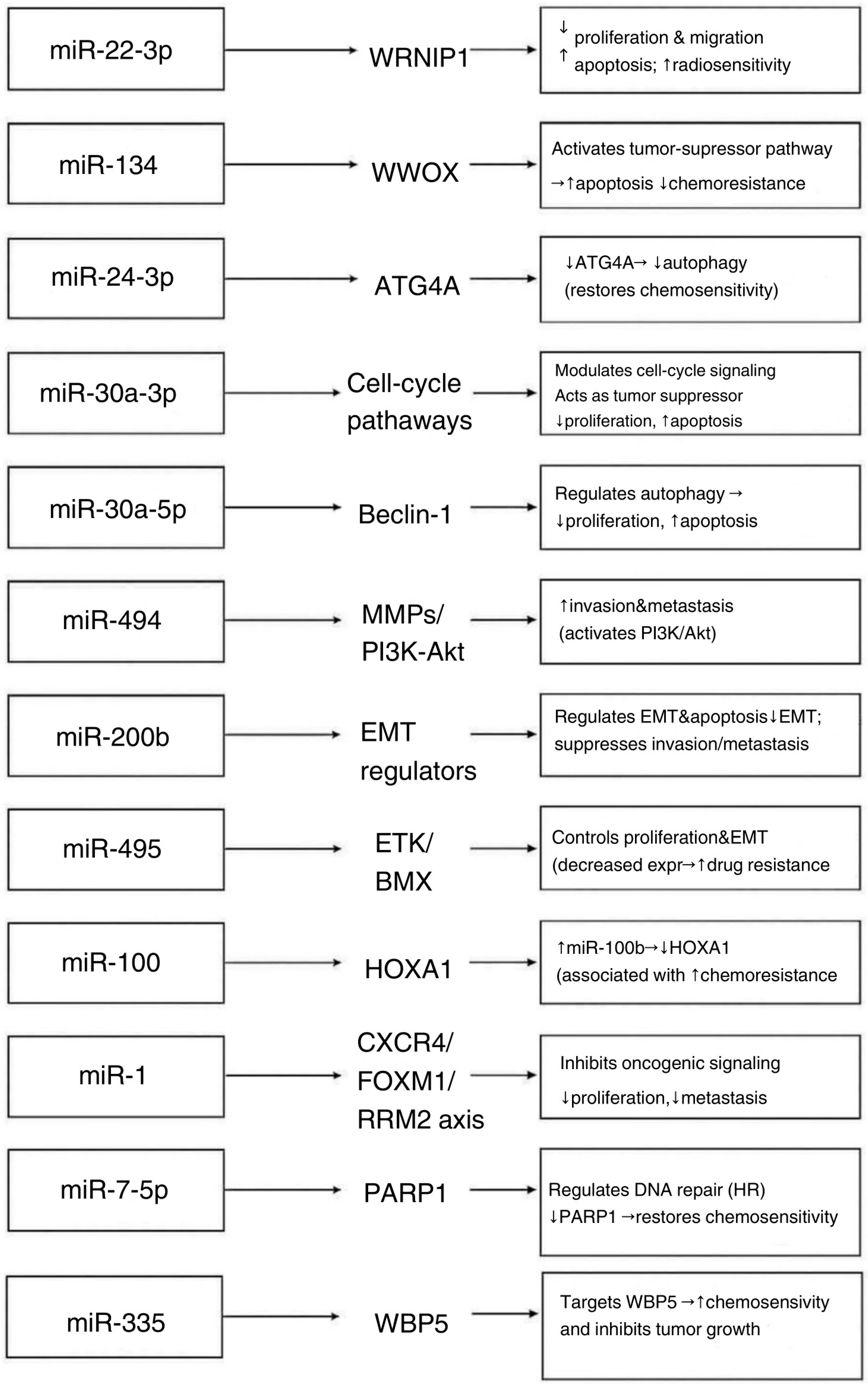
| miRNA | Expression Trend in SCLC | Function in Normal Cells | Role as a Prognostic or Functional Marker in SCLC | Sample Type | Cohort Size | Endpoint | Signalling Cascades | Correlation with Patient Outcomes |
|---|---|---|---|---|---|---|---|---|
| miR-494 | Upregulated | Not assessed | Promotes MMP expression, enhancing invasion and metastasis; activates the PI3K/Akt signaling pathway [22,23,24] | Cell lines (A549) [18] SCLC tissues, RNA-seq data of serum samples [24] | 6 paired SCLC tissues and the RNA-seq data of serum samples from 36 SCLC patients and 118 healthy controls [24] | Proliferation, colony formation [22,24] | PI3K/Akt activation via PTEN suppression [23,24]; TGF-β1–driven MMP signalling [23]; circVAPA–IGF1R/AKT axis [24] | Promotes invasion and metastasis [23,24]; contributes to tumour progression [24]; no OS data reported |
| miR-200b | Downregulated | Regulates epithelial–mesenchymal transition (EMT) and apoptosis [25] | Reduced miR-200b promotes EMT; its overexpression suppresses invasion and metastasis [25] | Tissue samples [25] | 65 SCLC tissues [25] | Multi-drug resistance via ZEB2 [25] | TGF-β/EMT via ZEB2 [25,26,27] | Association with EMT and multidrug resistance [27]; no survival correlations reported |
| miR-495 | Downregulated | Controls proliferation and EMT-related signaling via ETK/BMX [28] | Decreased expression enhances drug resistance and correlates with advanced disease stage [28] | Clinical specimens + cell lines (NCI-H446 and NCI-H69) [28] | 86 SCLC tissues and 60 normal lung tissues [28] | Chemoresistance via ETK/BMX [28] | ETK/BMX–EMT signalling axis [28] | Low miR-495 and high ETK/BMX correlate with advanced stage and shorter survival [28] |
| miR-100 | Upregulated | Not assessed | Increased miR-100 expression suppresses HOXA1, contributing to chemoresistance; low HOXA1 correlates with poorer prognosis and shorter survival [29] | Clinical specimens + cell lines (H69AR and H69) [29] | 63 SCLC tissue samples and 29 blood samples [29] | Chemoresistance via HOXA1 [29] | HOXA1 regulatory axis [29] | Low HOXA1 associated with worse prognosis and shorter OS (p < 0.001) [29] |
| miR-1 | Downregulated | Not assessed | Inhibits oncogenic signaling and cell proliferation; suppresses metastasis by targeting CXCR4/FOXM1/RRM2 axis [30] | Tumor tissues + serum [30] | 35 tumor samples and 8 serum samples [30] | Growth and metastasis suppression [30] | CXCR4/FOXM1/RRM2 axis [30] | Tumour-suppressive role; no clinical OS data reported [30] |
| miR-7-5p | Downregulated | Not assessed | Regulates doxorubicin-induced homologous recombination repair; restores chemosensitivity through PARP1 downregulation [31,32] | Cell lines [H69HR and H69] [32] | In vitro only [32] | Chemoresistance (doxorubicin) [32] | PARP1–RAD51–BRCA1 HR repair pathway [31,32] | Low miR-7-5p contributes to doxorubicin resistance [32]; no patient-based outcome data |
| miR-335 | Downregulated | Not assessed | Targets WBP5; its downregulation leads to increased WBP5 expression, promoting multidrug resistance, enhanced proliferation and migration, and reduced apoptosis; restoration of miR-335 enhances chemosensitivity and inhibits tumor growth [33,34,35] | Cell lines (H69HR, H69, H446) [30,31] and 62 SCLC biopsy samples [33] | In vitro studies [30,31] 62 SCLC biopsy samples [33] | Chemosensitivity; multidrug resistance via WBP5/Hippo signaling [33,34,35] | WBP5–ABL–MST2–YAP1 (Hippo pathway) [33,34,35] | Low miR-335 → high WBP5 → MDR and shorter survival [33] |
| miR-22-3p | Downregulated | Not assessed | Suppresses proliferation and migration; induces apoptosis; increases radiosensitivity via WRNIP1 targeting [36] | Cell lines (BEAS-2B, NCI-H446and HEK293T) [36] | In vitro only [36] | Radiosensitivity [36] | WRNIP1-dependent DNA damage response [36] | Radiosensitizing effect; no clinical correlation data reported |
| miR-134 | Downregulated | Activates WWOX tumor-suppressor pathway promoting apoptosis [37,38] | Reduces MRP1/ABCC1 expression, decreasing chemoresistance and improving outcomes [37,38] | Cell lines (H69) [38] | In vitro only [38] | Chemiresensitivity [38] | WWOX → ERK1/2 inhibition [38]; MRP1/ABCC1 regulation [38] | Reduced chemoresistance; improved drug response [38] |
| miR-335-5p | Downregulated | Expressed during embryogenesis and early cell differentiation; involved in regulation of DNA repair pathways [34,35] | Downregulation of miR-335-5p leads to upregulation of PARP1, contributing to impaired DNA repair, cisplatin resistance and reduced radiosensitivity; decreased miR-335-5p expression also enhances migration and bone metastasis via deregulation of IGF-IR and RANKL. Restoration of miR-335-5p expression suppresses these metastatic and drug-resistant phenotypes and improves sensitivity to cytotoxic therapy [33,34,35]. | SCLC cell lines (H69/H69AR, H446) and tumor biopsy specimens [23,24,25,26,27,28,29,30,31,32,33,34,35] | 62 SCLC biopsy samples [29] + in vitro studies [34,35] | Multidrug resistance (PARP1), radioresistance, migration and bone metastasis (IGF-IR/RANKL) [33,34,35] | PARP1 DNA repair [30]; IGF-IR/RANKL bone-metastasis signalling [31]; WBP5 axis [33,34,35] | Low levels linked to chemoresistance, radioresistance, migration, bone metastasis [33,34,35] |
| miR-24-3p | Downregulated | Modulates autophagy by targeting autophagy-related gene 4A (ATG4A) [39] | Suppresses ATG4A expression, thereby inhibiting autophagy and potentially restoring chemosensitivity in resistant SCLC cells [39] | Cell lines (H446/EP and H446) [39] | In vivo only [39] | Chemoresistance (cisplatin/etoposide combination (VP16–DDP) [39] | ATG4A-mediated autophagy [39]; SOX21-AS1/PIM2 axis [40] | VP16–cisplatin resistance mediated by ATG4A; proliferation/migration/apoptosis regulation [39,40] |
| miR-30a-3p | Downregulated | Modulates cell-cycle-related signaling pathways [41] | Acts as tumor suppressor; inhibits proliferation and induces apoptosis [41] | SCLC tissues + SCLC cell lines (SBC-3 and H82) [41] | 3 clinical specimens of SCLC, 3 normal clinical specimens [41] | Proliferation, apoptosis [41] | DONSON-related cell-cycle pathway [41] | Tumour-suppressive; clinical data limited to n = 3 [41] |
| miR-30a-5p | Downregulated | Regulates autophagy via Beclin-1 [42] | Inhibits proliferation and induces apoptosis through Beclin-1-mediated pathway confirmed in SCLC and other lung cancer models [42] | SCLC tissues + SCLC cell lines (9H446/EP and Letp/EP) [42] | 8 clinical specimens of SCLC, 4 normal clinical specimens [42] | Chemoresistance, apoptosis [42] | Beclin-1/autophagy pathway [42] | Cisplatin resistance driven by excessive autophagy [42] |
| miR-181b | Downregulated | Not assessed | Downregulation of miR-181b increases ACE2 expression, promoting SCLC cell proliferation, migration and cisplatin resistance; restoration of miR-181b suppresses ACE2 and enhances chemosensitivity [43] | SCLC cell lines (H446, H446/DDP) and serum samples from SCLC patients [43] | 30 SCLC serum samples and 30 non-SCLC controls; functional assays in cell lines [43] | Chemoresistance mediated through ACE2 regulation [43] | ACE2 signalling axis [43] | Low miR-181b → cisplatin resistance, proliferation, migration; circulating levels change during chemotherapy [43] |
Disclaimer/Publisher’s Note: The statements, opinions and data contained in all publications are solely those of the individual author(s) and contributor(s) and not of MDPI and/or the editor(s). MDPI and/or the editor(s) disclaim responsibility for any injury to people or property resulting from any ideas, methods, instructions or products referred to in the content. |
© 2025 by the authors. Licensee MDPI, Basel, Switzerland. This article is an open access article distributed under the terms and conditions of the Creative Commons Attribution (CC BY) license (https://creativecommons.org/licenses/by/4.0/).
Share and Cite
Bednarz, M.; Osińska, A.; Durda, J.; Kędra, M.; Boruch, M.; Gontarz, J.; Petniak, A.; Kocki, J.; Gil-Kulik, P. miRNA as a Prognostic Marker in Small Lung Cell Carcinoma. Genes 2025, 16, 1465. https://doi.org/10.3390/genes16121465
Bednarz M, Osińska A, Durda J, Kędra M, Boruch M, Gontarz J, Petniak A, Kocki J, Gil-Kulik P. miRNA as a Prognostic Marker in Small Lung Cell Carcinoma. Genes. 2025; 16(12):1465. https://doi.org/10.3390/genes16121465
Chicago/Turabian StyleBednarz, Michał, Aleksandra Osińska, Julia Durda, Milena Kędra, Michalina Boruch, Julia Gontarz, Alicja Petniak, Janusz Kocki, and Paulina Gil-Kulik. 2025. "miRNA as a Prognostic Marker in Small Lung Cell Carcinoma" Genes 16, no. 12: 1465. https://doi.org/10.3390/genes16121465
APA StyleBednarz, M., Osińska, A., Durda, J., Kędra, M., Boruch, M., Gontarz, J., Petniak, A., Kocki, J., & Gil-Kulik, P. (2025). miRNA as a Prognostic Marker in Small Lung Cell Carcinoma. Genes, 16(12), 1465. https://doi.org/10.3390/genes16121465