Chromosomal Instability and Telomere Attrition in Systemic Sclerosis: A Historical Perspective


Abstract
1. Introduction
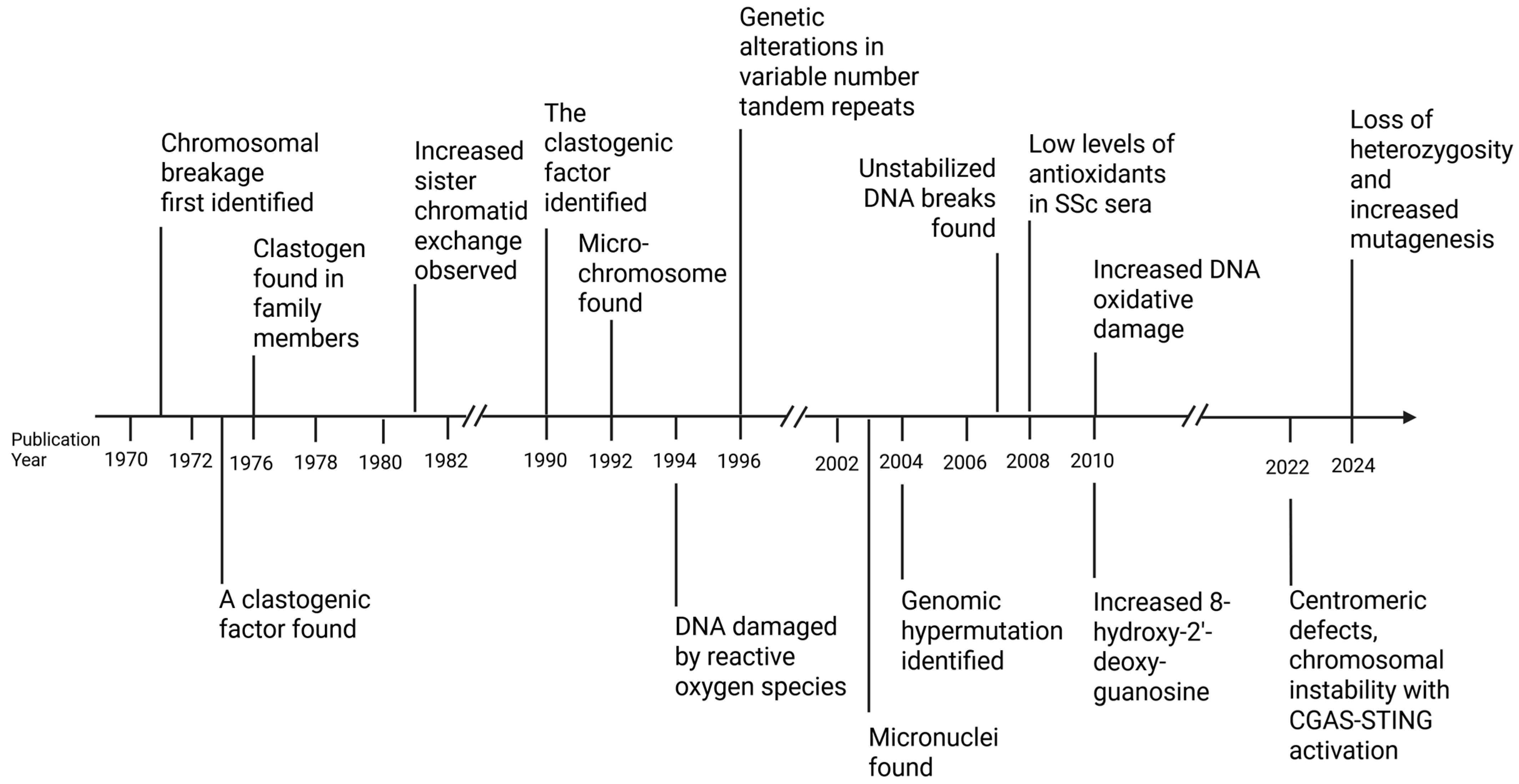
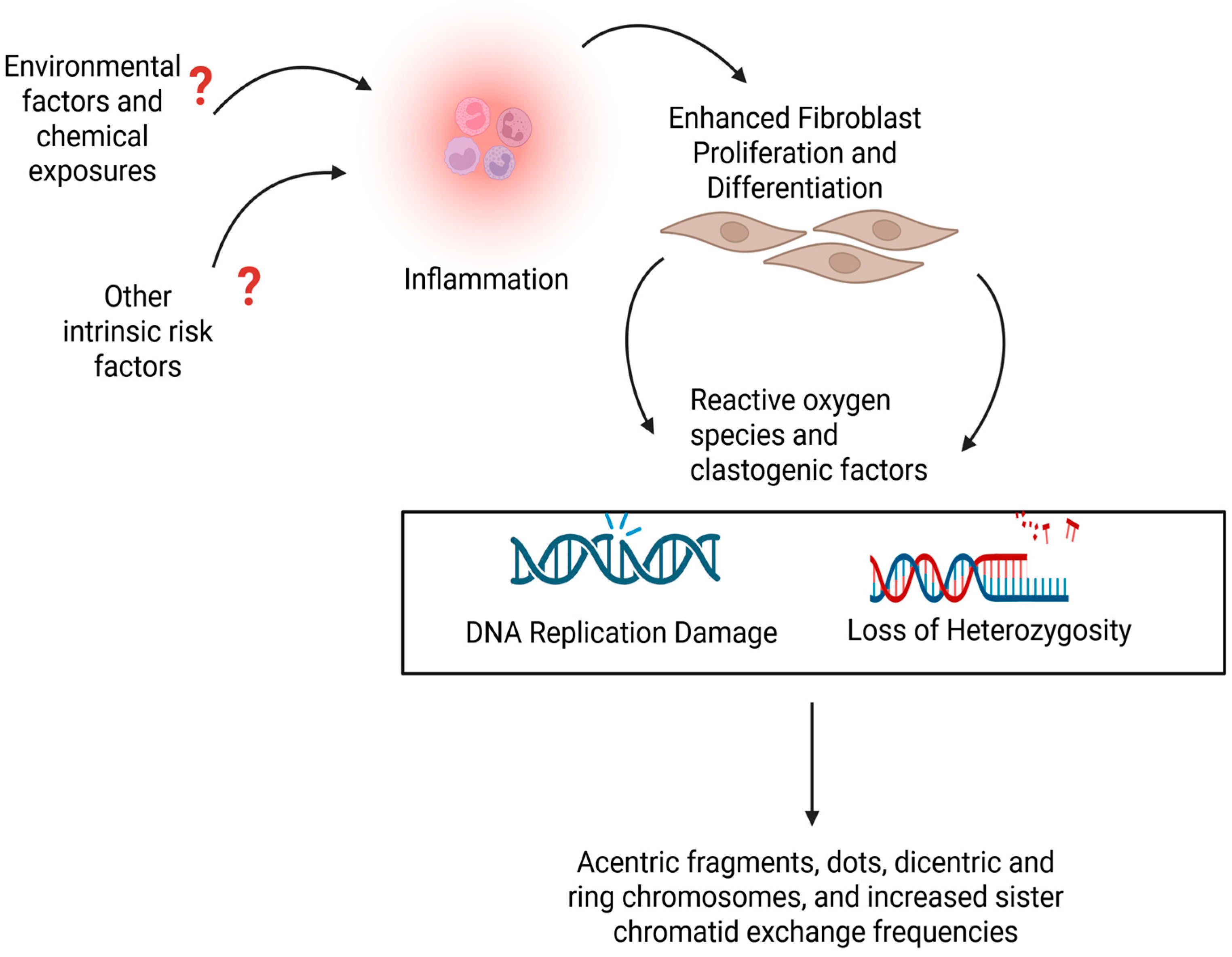
2. Chromosomal Abnormalities in SSc
3. Key SSc Autoantibodies and Chromosomal Instability
3.1. Centromeric Autoantibodies
3.2. Topoisomerase I Autoantibodies

| Autoantibody Profile | Key Findings and Implications | References |
|---|---|---|
| Autoantibodies against centromeric proteins | CENP-A, CENP-B, and CENP-C autoantibodies can penetrate the nucleus and are associated with increased aneuploidy, chromosomal breaks, and elevated micronuclei | [20,21,53,56] |
| Autoantibody against topoisomerase I (Scl70) | Scl70 can penetrate the nucleus. Scl70 can prevent the formation of the Topo I-DNA complex, impede replication, and cause genomic instability. Patients with Scl70 have been associated with unstable DNA breaks and micronuclei. | [60] |
| RNA polymerase III | RNA polymerase III can repair double-stranded DNA breaks. It is currently unknown whether this autoantibody penetrates the nucleus, but if it does, it could affect RNA polymerase III function, contributing to DNA damage. | [66] |
3.3. RNA Polymerase III Autoantibodies
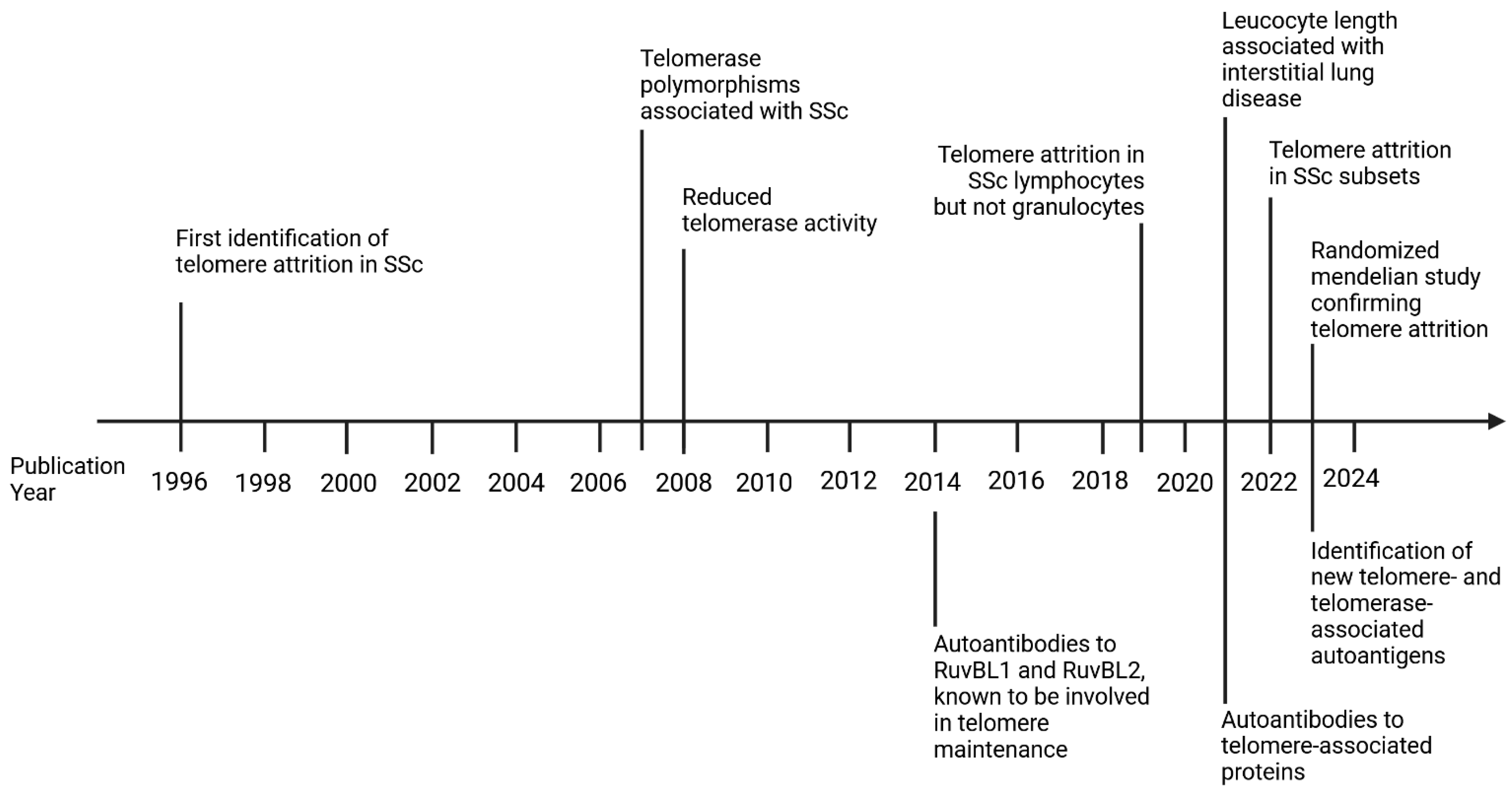
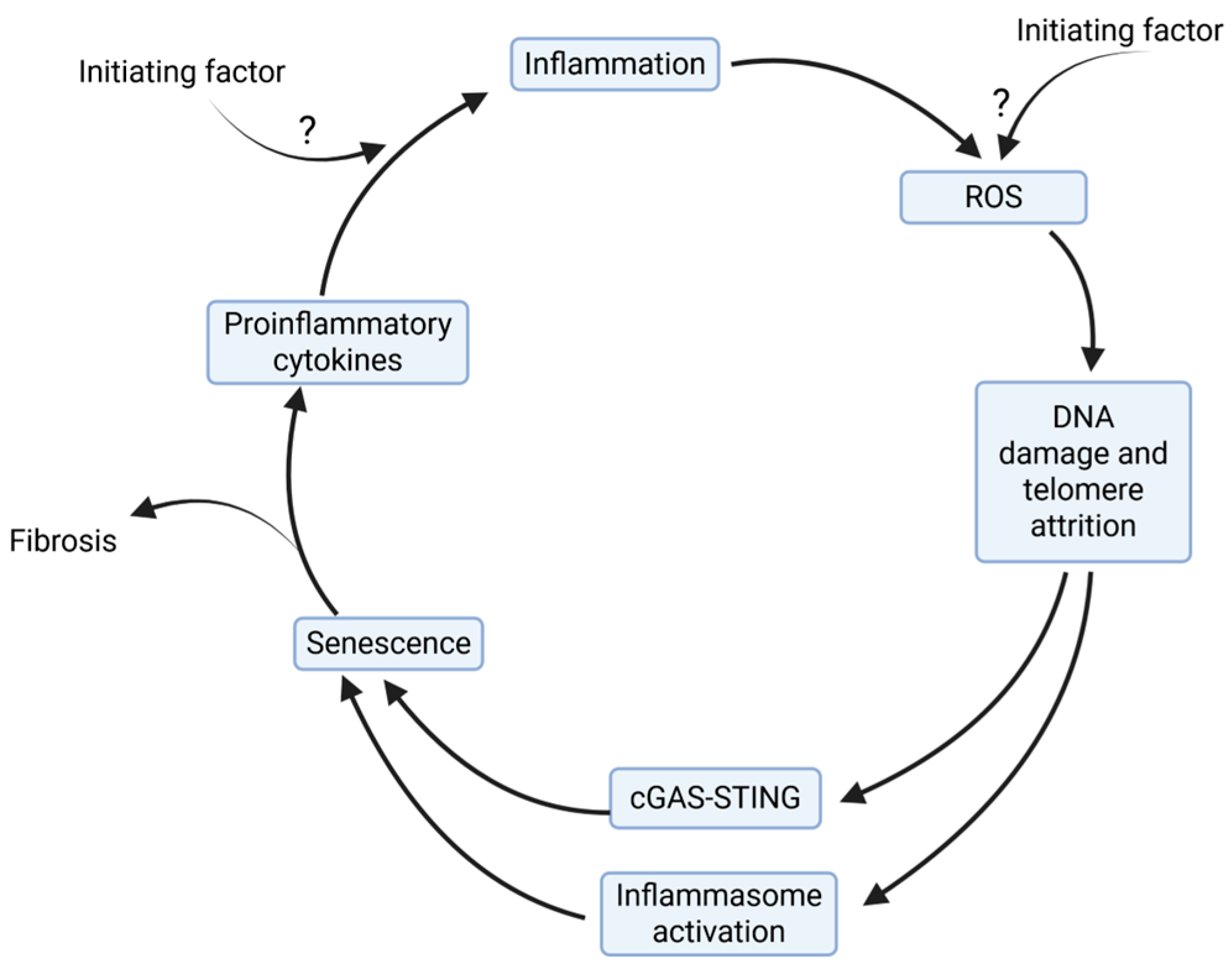
4. SSc and Telomere Attrition
Autoantibodies Targeting Telomere-Associated Proteins in SSc
5. Telomere Attrition and Chromosomal Instability in SSc-like Fibrotic Diseases
6. Inflammatory Triggers of Telomere Attrition and Chromosomal Instability in SSc and SSc-like Fibrotic Diseases
7. Discussion
Funding
Institutional Review Board Statement
Informed Consent Statement
Data Availability Statement
Conflicts of Interest
References
- Stochmal, A.; Czuwara, J.; Trojanowska, M.; Rudnicka, L. Antinuclear Antibodies in Systemic Sclerosis: An Update. Clin. Rev. Allergy Immunol. 2020, 58, 40–51. [Google Scholar] [CrossRef] [PubMed]
- LeRoy, E.C. Raynaud’s phenomenon, scleroderma, overlap syndromes and other fibrosing syndromes. Curr. Opin. Rheumatol. 1993, 4, 821–824. [Google Scholar]
- Volkmann, E.R.; Fischer, A. Update on Morbidity and Mortality in Systemic Sclerosis-Related Interstitial Lung Disease. J. Scleroderma Relat. Disord. 2021, 6, 11–20. [Google Scholar] [CrossRef]
- van den Hoogen, F.; Khanna, D.; Fransen, J.; Johnson, S.R.; Baron, M.; Tyndall, A.; Matucci-Cerinic, M.; Naden, R.P.; Medsger, T.A., Jr.; Carreira, P.E.; et al. 2013 classification criteria for systemic sclerosis: An American college of rheumatology/European league against rheumatism collaborative initiative. Ann. Rheum. Dis. 2013, 72, 1747–1755. [Google Scholar] [CrossRef] [PubMed]
- Ren, J.; Guan, X.; Lv, W.; Yan, Y.; Si, Y.; Yang, S.; Yin, C. A retrospective analysis of 38,652 amniotic fluid karyotype. Front. Genet. 2025, 16, 1655290. [Google Scholar] [CrossRef]
- Poot, M.; Hochstenbach, R. Prevalence and Phenotypic Impact of Robertsonian Translocations. Mol. Syndr. 2021, 12, 1–11. [Google Scholar] [CrossRef] [PubMed]
- Kurahashi, H.; Inagaki, H.; Ohye, T.; Kogo, H.; Tsutsumi, M.; Kato, T.; Tong, M.; Emanuel, B.S. The constitutional t(11;22): Implications for a novel mechanism responsible for gross chromosomal rearrangements. Clin. Genet. 2010, 78, 299–309. [Google Scholar] [CrossRef]
- Teo, S.H.; Tan, M.; Knight, L.; Yeo, S.H.; Ng, I. Pericentric inversion 9--incidence and clinical significance. Ann. Acad. Med. Singap. 1995, 24, 302–304. [Google Scholar]
- Aurias, A. (Ed.) Acquired Chromosomal Aberrations in Normal Individuals; RCR Press, Inc.: Fernandina Beach, FL, USA, 1993; pp. 125–139. [Google Scholar]
- Manno, R.L.; Wigley, F.M.; Gelber, A.C.; Hummers, L.K. Late-age onset systemic sclerosis. J. Rheumatol. 2011, 38, 1317–1325. [Google Scholar] [CrossRef][Green Version]
- Moinzadeh, P.; Kuhr, K.; Siegert, E.; Mueller-Ladner, U.; Riemekasten, G.; Günther, C.; Kötter, I.; Henes, J.; Blank, N.; Zeidler, G.; et al. Older age onset of systemic sclerosis-accelerated disease progression in all disease subsets. Rheumatology 2020, 59, 3380–3389. [Google Scholar] [CrossRef]
- Stephens, C.O.; Briggs, D.C.; Whyte, J.; Artlett, C.M.; Scherbakov, A.B.; Olsen, N.; Gusseva, N.G.; McHugh, N.J.; Maddison, P.J.; Welsh, K.I.; et al. Familial scleroderma--evidence for environmental versus genetic trigger. Br. J. Rheumatol. 1994, 33, 1131–1135. [Google Scholar] [CrossRef]
- Englert, H.; Small-McMahon, J.; Chambers, P.; O’Connor, H.; Davis, K.; Manolios, N.; White, R.; Dracos, G.; Brooks, P. Familial risk estimation in systemic sclerosis. Aust.N. Z. J. Med. 1999, 29, 36–41. [Google Scholar] [CrossRef]
- Emerit, I.; Housset, E.; de Grouchy, J.; Camus, J.P. Chromosomal breakage in diffuse scleroderma. A study of 27 patients. Rev. Eur. Etud. Clin. Biol. 1971, 16, 684–694. [Google Scholar]
- Emerit, I.; Levy, A.; Housset, E. Generalized scleroderma and chromosome breakage. Demonstration of a breaking factor in patients serum. Ann. Genet. 1973, 16, 135–138. [Google Scholar] [PubMed]
- Emerit, I.; Levy, A.; Housset, E. Breakage factor in systemic sclerosis and protector effect of L-cysteine. Humangenetik 1974, 25, 221–226. [Google Scholar] [CrossRef] [PubMed]
- Emerit, I.; Housset, E.; Feingold, J. Chromosomal breakage and scleroderma: Studies in family members. J. Lab. Clin. Med. 1976, 88, 81–86. [Google Scholar]
- Haaf, T.; Sumner, A.T.; Köhler, J.; Willard, H.F.; Schmid, M. A microchromosome derived from chromosome 11 in a patient with the CREST syndrome of scleroderma. Cytogenet. Cell Genet. 1992, 60, 12–17. [Google Scholar] [CrossRef] [PubMed]
- Dutrillaux, B.; Aurias, A.; Couturier, J.; Croquette, M.E.; Viegas-Pequignot, E. Multiple telomeric fusions and chain configurations in human somatic chromosomes. Chromosomes Today 1977, 6, 37–44. [Google Scholar]
- Majone, F.; Cozzi, F.; Tonello, M.; Olivieri, S.; Montaldi, A.; Favaro, M.; Visentin, S.; Luisetto, R.; Ruffatti, A. Unstabilized DNA breaks in lymphocytes of patients with different subsets of systemic sclerosis. Ann. N. Y. Acad. Sci. 2007, 1108, 240–248. [Google Scholar] [CrossRef]
- Porciello, G.; Scarpato, R.; Ferri, C.; Storino, F.; Cagetti, F.; Morozzi, G.; Bellisai, F.; Migliore, L.; Marcolongo, R.; Galeazzi, M. Spontaneous chromosome damage (micronuclei) in systemic sclerosis and Raynaud’s phenomenon. J. Rheumatol. 2003, 30, 1244–1247. [Google Scholar]
- Paul, S.; Kaplan, M.H.; Khanna, D.; McCourt, P.M.; Saha, A.K.; Tsou, P.S.; Anand, M.; Radecki, A.; Mourad, M.; Sawalha, A.H.; et al. Centromere defects, chromosome instability, and cGAS-STING activation in systemic sclerosis. Nat. Commun. 2022, 13, 7074. [Google Scholar] [CrossRef]
- Martins, E.P.; Fuzzi, H.T.; Kayser, C.; Alarcon, R.T.; Rocha, M.G.; Chauffaille, M.L.; Andrade, L.E. Increased chromosome damage in systemic sclerosis skin fibroblasts. Scand. J. Rheumatol. 2010, 39, 398–401. [Google Scholar] [CrossRef]
- Sherer, G.K.; Jackson, B.B.; LeRoy, E.C. Chromosome breakage and sister chromatid exchange frequencies in scleroderma. Arthritis Rheum. 1981, 24, 1409–1413. [Google Scholar] [CrossRef]
- Auclair, C.; Gouyette, A.; Levy, A.; Emerit, I. Clastogenic inosine nucleotide as components of the chromosomal breakage factor in scleroderma patients. Arch. Biochem. Biophys. 1990, 278, 238–244. [Google Scholar] [CrossRef]
- Emerit, I. Reactive oxygen species, chromosome mutation, and cancer: Possible role of clastogenic factors in carcinogenesis. Free Radic. Biol. Med. 1994, 16, 99–109. [Google Scholar] [CrossRef] [PubMed]
- Emerit, I.; Michelson, A.M. Chromosome instability in human and murine autoimmune disease: Anticlastogenic effect of superoxide dismutase. Acta Physiol. Scand. Suppl. 1980, 492, 59–65. [Google Scholar] [PubMed]
- Kovacs, I.B.; Meyrick, R.H.; Mackay, T.A.R.; Rustin, M.H.A.; Kirby, J.D.T. Increased chemiluminescence of polymorphonuclear leukocytes from patients with progressive systemic sclerosis. Clin. Sci. 1986, 70, 257–261. [Google Scholar] [CrossRef] [PubMed]
- Sambo, P.; Jannino, L.; Candela, M.; Salvi, A.; Donini, M.; Dusi, S.; Luchetti, M.M.; Gabrielli, A. Monocytes of patients wiht systemic sclerosis (scleroderma spontaneously release in vitro increased amounts of superoxide anion. J. Investig. Dermatol. 1999, 112, 78–84. [Google Scholar] [CrossRef][Green Version]
- Sambo, P.; Baroni, S.S.; Luchetti, M.; Paroncini, P.; Dusi, S.; Orlandini, G.; Gabrielli, A. Oxidative stress in scleroderma: Maintenance of scleroderma fibroblast phenotype by the constitutive up-regulation of reactive oxygen species generation through the NADPH oxidase complex pathway. Arthritis Rheum. 2001, 44, 2653–2664. [Google Scholar] [CrossRef]
- Yasuoka, H.; Garrett, S.M.; Nguyen, X.X.; Artlett, C.M.; Feghali-Bostwick, C.A. NADPH oxidase-mediated induction of reactive oxygen species and extracellular matrix deposition by insulin-like growth factor binding protein-5. Am. J. Physiol. Lung Cell. Mol. Physiol. 2019, 316, L644–L655. [Google Scholar] [CrossRef]
- Sfrent-Cornateanu, R.; Mihai, C.; Stoian, I.; Lixandru, D.; Bara, C.; Moldoveanu, E. Antioxidant defense capacity in scleroderma patients. Clin. Chem. Lab. Med. 2008, 46, 836–841. [Google Scholar] [CrossRef]
- Avouac, J.; Borderie, D.; Ekindjian, O.G.; Kahan, A.; Allanore, Y. High DNA oxidative damage in systemic sclerosis. J. Rheumatol. 2010, 37, 2540–2547. [Google Scholar] [CrossRef]
- Zhou, C.F.; Yu, J.F.; Zhang, J.X.; Jiang, T.; Xu, S.H.; Yu, Q.Y.; Zhu, Q.X. N-acetylcysteine attenuates subcutaneous administration of bleomycin-induced skin fibrosis and oxidative stress in a mouse model of scleroderma. Clin. Exp. Dermatol. 2013, 38, 403–409. [Google Scholar] [CrossRef]
- Dooley, A.; Shi-Wen, X.; Aden, N.; Tranah, T.; Desai, N.; Denton, C.P.; Abraham, D.J.; Bruckdorfer, R. Modulation of collagen type I, fibronectin and dermal fibroblast function and activity, in systemic sclerosis by the antioxidant epigallocatechin-3-gallate. Rheumatology 2010, 49, 2024–2036. [Google Scholar] [CrossRef]
- Mizushima, Y.; Hoshi, K.; Yanagawa, A.; Takano, K. Topical application of superoxide dismutase cream. Drugs Exptl. Clin. Res. 1991, XVII, 127–131. [Google Scholar]
- Roberts-Thomson, P.J.; Male, D.A.; Walker, J.G.; Cox, S.R.; Shen, X.; Smith, M.D.; Ahern, M.J.; Turner, D.R. Genomic instability in scleroderma. Asian Pac. J. Allergy Immunol. 2004, 22, 153–158. [Google Scholar] [PubMed]
- Artlett, C.M.; Black, C.M.; Briggs, D.C.; Stephens, C.; Welsh, K.I. DNA allelic alterations within VNTR loci of scleroderma families. Br. J. Rheumatol. 1996, 35, 1216–1222. [Google Scholar] [CrossRef] [PubMed]
- Palomino, G.M.; Bassi, C.L.; Wastowski, I.J.; Xavier, D.J.; Lucisano-Valim, Y.M.; Crispim, J.C.; Rassi, D.M.; Marques-Neto, J.F.; Sakamoto-Hojo, E.T.; Moreau, P.; et al. Patients with systemic sclerosis present increased DNA damage differentially associated with DNA repair gene polymorphisms. J. Rheumatol. 2014, 41, 458–465. [Google Scholar] [CrossRef]
- Vijayraghavan, S.; Blouin, T.; McCollum, J.; Porcher, L.; Virard, F.; Zavadil, J.; Feghali-Bostwick, C.; Saini, N. Widespread mutagenesis and chromosomal instability shape somatic genomes in systemic sclerosis. Nat. Commun. 2024, 15, 8889. [Google Scholar] [CrossRef]
- Derk, C.T.; Rasheed, M.; Artlett, C.M.; Jimenez, S.A. A cohort study of cancer incidence in systemic sclerosis. J. Rheumatol. 2006, 33, 1113–1116. [Google Scholar]
- Derk, C.T.; Sakkas, L.I.; Rasheed, M.; Artlett, C.; Jimenez, S.A. Autoantibodies in patients with systemic sclerosis and cancer: A case-control study. J. Rheumatol. 2003, 30, 1994–1996. [Google Scholar] [PubMed]
- Barnes, J.; Mayes, M.D. Epidemiology of systemic sclerosis: Incidence, prevalence, survival, risk factors, malignancy, and environmental triggers. Curr. Opin. Rheumatol. 2012, 24, 165–170. [Google Scholar] [CrossRef] [PubMed]
- Mecoli, C.A.; Rosen, A.; Casciola-Rosen, L.; Shah, A.A. Advances at the Interface of Cancer and Systemic Sclerosis. J. Scleroderma Relat. Disord. 2021, 6, 50–57. [Google Scholar] [CrossRef]
- Jarzabek-Chorzelska, M.; Blaszczyk, M.; Kolacinska-Strasz, Z.; Chorzelski, T.; Jabłońska, S.; Maul, G.G. Antikinetochore and antitopoisomerase I antibodies in systemic scleroderma: Comparative study using immunoblotted recombinant antigens, immunofluorescence, and double immunodiffusion. Arch. Dermatol. Res. 1990, 282, 76–83. [Google Scholar] [CrossRef]
- Fanning, G.C.; Welsh, K.I.; Bunn, C.; Du Bois, R.; Black, C.M. HLA associations in three mutually exclusive autoantibody subgroups in UK systemic sclerosis patients. Br. J. Rheumatol. 1998, 37, 201–207. [Google Scholar] [CrossRef]
- Noble, P.W.; Bernatsky, S.; Clarke, A.E.; Isenberg, D.A.; Ramsey-Goldman, R.; Hansen, J.E. DNA-damaging autoantibodies and cancer: The lupus butterfly theory. Nat. Rev. Rheumatol. 2016, 12, 429–434. [Google Scholar] [CrossRef]
- Hansen, J.E.; Chan, G.; Liu, Y.; Hegan, D.C.; Dalal, S.; Dray, E.; Kwon, Y.; Xu, Y.; Xu, X.; Peterson-Roth, E.; et al. Targeting cancer with a lupus autoantibody. Sci. Transl. Med. 2012, 4, 157ra142. [Google Scholar] [CrossRef]
- Noble, P.W.; Chan, G.; Young, M.R.; Weisbart, R.H.; Hansen, J.E. Optimizing a lupus autoantibody for targeted cancer therapy. Cancer Res. 2015, 75, 2285–2291. [Google Scholar] [CrossRef]
- Rattray, Z.; Dubljevic, V.; Rattray, N.J.W.; Greenwood, D.L.; Johnson, C.H.; Campbell, J.A.; Hansen, J.E. Re-engineering and evaluation of anti-DNA autoantibody 3E10 for therapeutic applications. Biochem. Biophys. Res. Commun. 2018, 496, 858–864. [Google Scholar] [CrossRef]
- Hansen, J.E.; Tse, C.M.; Chan, G.; Heinze, E.R.; Nishimura, R.N.; Weisbart, R.H. Intranuclear protein transduction through a nucleoside salvage pathway. J. Biol. Chem. 2007, 282, 20790–20793. [Google Scholar] [CrossRef] [PubMed]
- Deng, S.X.; Hanson, E.; Sanz, I. In vivo cell penetration and intracellular transport of anti-Sm and anti-La autoantibodies. Int. Immunol. 2000, 12, 415–423. [Google Scholar] [CrossRef]
- Jabs, E.W.; Tuck-Muller, C.M.; Anhalt, G.J.; Earnshaw, W.; Wise, R.A.; Wigley, F. Cytogenetic survey in systemic sclerosis: Correlation of aneuploidy with the presence of anticentromere antibodies. Cytogenet. Cell Genet. 1993, 63, 169–175. [Google Scholar] [CrossRef]
- Vafa, O.; Shelby, R.D.; Sullivan, K.F. CENP-A associated complex satellite DNA in the kinetochore of the Indian muntjac. Chromosoma 1999, 108, 367–374. [Google Scholar] [CrossRef]
- Sugimoto, K.; Fukuda, R.; Himeno, M. Centromere/kinetochore localization of human centromere protein A (CENP-A) exogenously expressed as a fusion to green fluorescent protein. Cell Struct. Funct. 2000, 25, 253–261. [Google Scholar] [CrossRef][Green Version]
- Patterson, K.A.; Walker, J.G.; Roberts-Thomson, P.J.; Bull, C.F.; Fenech, M. Evidence of chromosomal damage in scleroderma. Pathology 2022, 54, 131–133. [Google Scholar] [CrossRef] [PubMed]
- Stewart, L.; Redinbo, M.R.; Qiu, X.; Hol, W.G.; Champoux, J.J. A model for the mechanism of human topoisomerase I. Science 1998, 279, 1534–1541. [Google Scholar] [CrossRef]
- Douvas, A.S.; Achten, M.; Tan, E.M. Identification of a nuclear protein (Scl-70) as a unique target of human antinuclear antibodies in scleroderma. J. Biol. Chem. 1979, 254, 10514–10522. [Google Scholar] [CrossRef] [PubMed]
- Shero, J.H.; Bordwell, B.; Rothfield, N.F.; Earnshaw, W.C. High titres of autoantibodies to topoisomerase 1 (Scl-70) in sera from scleroderma patients. Science 1986, 231, 737–740. [Google Scholar] [CrossRef] [PubMed]
- May, C.K.; Noble, P.W.; Herzog, E.L.; Meffre, E.; Hansen, J.E. Nuclear-penetrating scleroderma autoantibody inhibits topoisomerase 1 cleavage complex formation. Biochem. Biophys. Res. Commun. 2024, 720, 150123. [Google Scholar] [CrossRef]
- Postow, L.; Crisona, N.J.; Peter, B.J.; Hardy, C.D.; Cozzarelli, N.R. Topological challenges to DNA replication: Conformations at the fork. Proc. Natl. Acad. Sci. USA 2001, 98, 8219–8226. [Google Scholar] [CrossRef]
- Cortés, F.; Piñero, J.; Ortiz, T. Importance of replication fork progression for the induction of chromosome damage and SCE by inhibitors of DNA topoisomerases. Mutat. Res. 1993, 303, 71–76. [Google Scholar] [CrossRef] [PubMed]
- Ulukan, H.; Muller, M.T.; Swaan, P.W. Downregulation of topoisomerase I in differentiating human intestinal epithelial cells. Int. J. Cancer 2001, 94, 200–207. [Google Scholar] [CrossRef][Green Version]
- Avemann, K.; Knippers, R.; Koller, T.; Sogo, J.M. Camptothecin, a specific inhibitor of type I DNA topoisomerase, induces DNA breakage at replication forks. Mol. Cell Biol. 1988, 8, 3026–3034. [Google Scholar] [CrossRef]
- Pomerantz, R.T.; O’Donnell, M. What happens when replication and transcription complexes collide? Cell Cycle 2010, 9, 2537–2543. [Google Scholar] [CrossRef]
- Liu, S.; Hua, Y.; Wang, J.; Li, L.; Yuan, J.; Zhang, B.; Wang, Z.; Ji, J.; Kong, D. RNA polymerase III is required for the repair of DNA double-strand breaks by homologous recombination. Cell 2021, 184, 1314–1329.e1310. [Google Scholar] [CrossRef]
- Hamaguchi, Y.; Kodera, M.; Matsushita, T.; Hasegawa, M.; Inaba, Y.; Usuda, T.; Kuwana, M.; Takehara, K.; Fujimoto, M. Clinical and immunologic predictors of scleroderma renal crisis in Japanese systemic sclerosis patients with anti-RNA polymerase III autoantibodies. Arthritis Rheumatol. 2015, 67, 1045–1052. [Google Scholar] [CrossRef]
- Terras, S.; Hartenstein, H.; Höxtermann, S.; Gambichler, T.; Kreuter, A. RNA polymerase III autoantibodies may indicate renal and more severe skin involvement in systemic sclerosis. Int. J. Dermatol. 2016, 55, 882–885. [Google Scholar] [CrossRef]
- Lazzaroni, M.G.; Airò, P. Anti-RNA polymerase III antibodies in patients with suspected and definite systemic sclerosis: Why and how to screen. J. Scleroderma Relat. Disord. 2018, 3, 214–220. [Google Scholar] [CrossRef]
- Elhannani, A.; Martel, M.E.; Collet, A.; Chepy, A.; Sanges, S.; Hachulla, É.; Dubucquoi, S.; Launay, D.; Sobanski, V. Anti-RNA polymerase III antibodies in systemic sclerosis: Prevalence and clinical associations from a systematic review and meta-analysis. Rheumatology 2025, 84, 1099–1100. [Google Scholar] [CrossRef]
- Schramm, L.; Hernandez, N. Recruitment of RNA polymerase III to its target promoters. Genes Dev. 2002, 16, 2593–2620. [Google Scholar] [CrossRef] [PubMed]
- Muller, H.J. The remaking of chromosomes. Collect. Net. 1938, XIII, 181–198. [Google Scholar]
- Okuda, K.; Bardeguez, A.; Gardner, J.P.; Rodriguez, P.; Ganesh, V.; Kimura, M.; Skurnick, J.; Awad, G.; Aviv, A. Telomere length in the newborn. Pediatr. Res. 2002, 52, 377–381. [Google Scholar] [CrossRef]
- Henderson, E.R.; Blackburn, E.H. An overhanging 3’ terminus is a conserved feature of telomeres. Mol. Cell. Biol. 1989, 9, 345–348. [Google Scholar] [CrossRef] [PubMed]
- Weiner, A.M. Eukaryotic nuclear telomeres: Molecular fossils of the RNP world? Cell 1988, 52, 155–158. [Google Scholar] [CrossRef]
- Passos, J.F.; Saretzki, G.; von Zglinicki, T. DNA damage in telomeres and mitochondria during cellular senescence: Is there a connection? Nucleic Acids Res. 2007, 35, 7505–7513. [Google Scholar] [CrossRef]
- Allsopp, R.C.; Vaziri, H.; Patterson, C.; Goldstein, S.; Younglai, E.V.; Futcher, A.B.; Greider, C.W.; Harley, C.B. Telomere length predicts replicative capacity of human fibroblasts. Proc. Natl. Acad. Sci. USA 1992, 89, 10114–10118. [Google Scholar] [CrossRef]
- Bailey, S.M.; Murnane, J.P. Telomeres, chromosome instability and cancer. Nucleic Acids Res. 2006, 34, 2408–2417. [Google Scholar] [CrossRef]
- Muraki, K.; Nyhan, K.; Han, L.; Murnane, J.P. Mechanisms of telomere loss and their consequences for chromosome instability. Front. Oncol. 2012, 2, 135. [Google Scholar] [CrossRef]
- Gisselsson, D.; Pettersson, L.; Höglund, M.; Heidenblad, M.; Gorunova, L.; Wiegant, J.; Mertens, F.; Dal Cin, P.; Mitelman, F.; Mandahl, N. Chromosomal breakage-fusion-bridge events cause genetic intratumor heterogeneity. Proc. Natl. Acad. Sci. USA 2000, 97, 5357–5362. [Google Scholar] [CrossRef] [PubMed]
- Markiewicz-Potoczny, M.; Denchi, E.L. Telomere Protection in Stem Cells. Cold Spring Harb. Perspect. Biol. 2025, 17. [Google Scholar] [CrossRef] [PubMed]
- Artlett, C.M.; Black, C.M.; Briggs, D.C.; Stephens, C.O.; Welsh, K.I. Telomere reduction in scleroderma patients: A possible cause for chromosomal instability. Br. J. Rheumatol. 1996, 35, 732–737. [Google Scholar]
- Lakota, K.; Hanumanthu, V.S.; Agrawal, R.; Carns, M.; Armanios, M.; Varga, J. Short lymphocyte, but not granulocyte, telomere length in a subset of patients with systemic sclerosis. Ann. Rheum. Dis. 2019, 78, 1142–1144. [Google Scholar] [CrossRef]
- Wareing, N.; Mohan, V.; Taherian, R.; Volkmann, E.R.; Lyons, M.A.; Wilhalme, H.; Roth, M.D.; Estrada, Y.M.R.M.; Skaug, B.; Mayes, M.D.; et al. Blood Neutrophil Count and Neutrophil-to-Lymphocyte Ratio for Prediction of Disease Progression and Mortality in Two Independent Systemic Sclerosis Cohorts. Arthritis Care Res. 2023, 75, 648–656. [Google Scholar] [CrossRef]
- Liu, S.; Chung, M.P.; Ley, B.; French, S.; Elicker, B.M.; Fiorentino, D.F.; Chung, L.S.; Boin, F.; Wolters, P.J. Peripheral blood leucocyte telomere length is associated with progression of interstitial lung disease in systemic sclerosis. Thorax 2021, 76, 1186–1192. [Google Scholar] [CrossRef]
- Yang, M.M.; Lee, S.; Neely, J.; Hinchcliff, M.; Wolters, P.J.; Sirota, M. Gene expression meta-analysis reveals aging and cellular senescence signatures in scleroderma-associated interstitial lung disease. Front. Immunol. 2024, 15, 1326922. [Google Scholar] [CrossRef] [PubMed]
- Usategui, A.; Municio, C.; Arias-Salgado, E.G.; Martín, M.; Fernández-Varas, B.; Del Rey, M.J.; Carreira, P.; González, A.; Criado, G.; Perona, R.; et al. Evidence of telomere attrition and a potential role for DNA damage in systemic sclerosis. Immun. Ageing 2022, 19, 7. [Google Scholar] [CrossRef] [PubMed]
- MacIntyre, A.; Brouilette, S.W.; Lamb, K.; Radhakrishnan, K.; McGlynn, L.; Chee, M.M.; Parkinson, E.K.; Freeman, D.; Madhok, R.; Shiels, P.G. Association of increased telomere lengths in limited scleroderma, with a lack of age-related telomere erosion. Ann. Rheum. Dis. 2008, 67, 1780–1782. [Google Scholar] [CrossRef]
- Rodriguez-Martin, I.; Villanueva-Martin, G.; Guillen-Del-Castillo, A.; Ortego-Centeno, N.; Callejas, J.L.; Simeón-Aznar, C.P.; Martin, J.; Acosta-Herrera, M. Contribution of Telomere Length to Systemic Sclerosis Onset: A Mendelian Randomization Study. Int. J. Mol. Sci. 2023, 24, 15589. [Google Scholar] [CrossRef] [PubMed]
- Tarhan, F.; Vural, F.; Kosova, B.; Aksu, K.; Cogulu, O.; Keser, G.; Gündüz, C.; Tombuloglu, M.; Oder, G.; Karaca, E.; et al. Telomerase activity in connective tissue diseases: Elevated in rheumatoid arthritis, but markedly decreased in systemic sclerosis. Rheumatol. Int. 2008, 28, 579–583. [Google Scholar] [CrossRef]
- Ohtsuka, T.; Yamakage, A.; Yamazaki, S. The polymorphism of telomerase RNA component gene in patients with systemic sclerosis. Br. J. Dermatol. 2002, 147, 250–254. [Google Scholar] [CrossRef]
- Adler, B.L.; Boin, F.; Wolters, P.J.; Bingham, C.O.; Shah, A.A.; Greider, C.; Casciola-Rosen, L.; Rosen, A. Autoantibodies targeting telomere-associated proteins in systemic sclerosis. Ann. Rheum. Dis. 2021, 80, 912–919. [Google Scholar] [CrossRef]
- Vulsteke, J.B.; Smith, V.; Bonroy, C.; Derua, R.; Blockmans, D.; De Haes, P.; Vanderschueren, S.; Lenaerts, J.L.; Claeys, K.G.; Wuyts, W.A.; et al. Identification of new telomere- and telomerase-associated autoantigens in systemic sclerosis. J. Autoimmun. 2023, 135, 102988. [Google Scholar] [CrossRef] [PubMed]
- Kaji, K.; Fertig, N.; Medsger, T.A., Jr.; Satoh, T.; Hoshino, K.; Hamaguchi, Y.; Hasegawa, M.; Lucas, M.; Schnure, A.; Ogawa, F.; et al. Autoantibodies to RuvBL1 and RuvBL2: A novel systemic sclerosis-related antibody associated with diffuse cutaneous and skeletal muscle involvement. Arthritis Care Res. 2014, 66, 575–584. [Google Scholar] [CrossRef]
- Di Pietro, L.; Chiccoli, F.; Salvati, L.; Vivarelli, E.; Vultaggio, A.; Matucci, A.; Bentow, C.; Mahler, M.; Parronchi, P.; Palterer, B. Anti-RuvBL1/2 Autoantibodies Detection in a Patient with Overlap Systemic Sclerosis and Polymyositis. Antibodies 2023, 12, 13. [Google Scholar] [CrossRef]
- Emerit, I.; Cerutti, P. Clastogenic activity from Bloom syndrome fibroblast cultures. Proc. Natl. Acad. Sci. USA 1981, 78, 1868–1872. [Google Scholar] [CrossRef] [PubMed]
- Emerit, I.; Michelson, A.M. Mechanism of photosensitivity in systemic lupus erythematosus patients. Proc. Natl. Acad. Sci. USA 1981, 78, 2537–2540. [Google Scholar] [CrossRef] [PubMed]
- Bhusate, L.L.; Herbert, K.E.; Scott, D.L.; Perrett, D. Increased DNA strand breaks in mononuclear cells from patients with rheumatoid arthritis. Ann. Rheum. Dis. 1992, 51, 8–12. [Google Scholar] [CrossRef]
- Emerit, I.; Antunes, J.; Silva, J.M.; Freitas, J.; Pinheiro, T.; Filipe, P. Clastogenic plasma factors in psoriasis--comparison of phototherapy and anti-TNF-α treatments. Photochem. Photobiol. 2011, 87, 1427–1432. [Google Scholar] [CrossRef]
- Emerit, I.; Serejo, F.; Filipe, P.; Alaoui Youssefi, A.; Fernandes, A.; Costa, A.; Freitas, J.; Ramalho, F.; Baptista, A.; Carneiro de Moura, M. Clastogenic factors as biomarkers of oxidative stress in chronic hepatitis C. Digestion 2000, 62, 200–207. [Google Scholar] [CrossRef]
- Tolchin, S.F.; Winkelstein, A.; Rodnan, G.P.; Pan, S.F.; Nankin, H.R. Chromosomal abnormalities from cyclophosphamide therapy in rheumatoid arthritis and progressive systemic sclerosis (scleroderma). Arthritis Rheum. 1974, 17, 375–382. [Google Scholar] [CrossRef]
- Cloos, J.; Reid, C.B.; van der Sterre, M.L.; Tobi, H.; Leemans, C.R.; Snow, G.B.; Braakhuis, B.J. A comparison of bleomycin-induced damage in lymphocytes and primary oral fibroblasts and keratinocytes in 30 subjects. Mutagenesis 1999, 14, 87–93. [Google Scholar] [CrossRef][Green Version]
- Cloos, J.; Temmink, O.; Ceelen, M.; Snel, M.H.; Leemans, C.R.; Braakhuis, B.J. Involvement of cell cycle control in bleomycin-induced mutagen sensitivity. Environ. Mol. Mutagen. 2002, 40, 79–84. [Google Scholar] [CrossRef] [PubMed]
- Urbańska, M.; Sofińska, K.; Czaja, M.; Szymoński, K.; Skirlińska-Nosek, K.; Seweryn, S.; Lupa, D.; Szymoński, M.; Lipiec, E. Molecular alterations in metaphase chromosomes induced by bleomycin. Spectrochim. Acta A Mol. Biomol. Spectrosc. 2024, 312, 124026. [Google Scholar] [CrossRef] [PubMed]
- Lal, A.S.; Begum, S.K.; Bharadwaj, S.S.; Lalitha, V.; Vijayalakshmi, J.; Paul, S.F.D.; Maddaly, R. Bleomycin-induced genotoxicity in vitro in human peripheral blood lymphocytes evidenced as complex chromosome- and chromatid-type aberrations. Toxicol. Vitr. 2019, 54, 367–374. [Google Scholar] [CrossRef] [PubMed]
- Bolzán, A.D.; Bianchi, M.S. DNA and chromosome damage induced by bleomycin in mammalian cells: An update. Mutat. Res. Rev. Mutat. Res. 2018, 775, 51–62. [Google Scholar] [CrossRef] [PubMed]
- Bretza, J.; Goldman, J.A. Scleroderma simulating vinyl chloride disease. J. Occup. Med. 1979, 21, 436–438. [Google Scholar]
- Black, C.M.; Welsh, K.I.; Walker, A.E.; Bernstein, R.M.; Catoggio, L.J.; McGregor, A.R.; Lloyd Jones, J.K. Genetic susceptibility to scleroderma-like syndrome induced by vinyl chloride. Lancet 1983, 321, 53–55. [Google Scholar] [CrossRef]
- Maricq, H.R.; Johnson, M.N.; Whetstone, C.L.; LeRoy, E.C. Capillary abnormalities in polyvinyl chloride production workers. Examination by in vivo microscopy. JAMA 1976, 236, 1368–1371. [Google Scholar] [CrossRef]
- Hahn, E.; Aderka, D.; Suprun, H.; Shtamler, B. Occupational acroosteolysis in vinyl chloride workers in Israel. Isr. J. Med. Sci. 1979, 15, 218–222. [Google Scholar]
- Nicholson, W.J.; Henneberger, P.K.; Seidman, H. Occupational hazards in the VC-PVC industry. Prog. Clin. Biol. Res. 1984, 141, 155–175. [Google Scholar]
- Hansteen, I.L.; Hillestad, L.; Thiis-Evensen, E.; Heldaas, S.S. Effects of vinyl chloride in man: A cytogenetic follow-up study. Mutat. Res. 1978, 51, 271–278. [Google Scholar] [CrossRef] [PubMed]
- Flindt-Hansen, H.; Isager, H. Scleroderma after occupational exposure to trichlorethylene and trichlorethane. Acta Derm. Venereol. 1987, 67, 263–264. [Google Scholar] [CrossRef]
- Lockey, J.E.; Kelly, C.R.; Cannon, G.W.; Colby, T.V.; Aldrich, V.; Livingston, G.K. Progressive systemic sclerosis associated with exposure to trichloroethylene. J. Occup. Med. 1987, 29, 493–496. [Google Scholar]
- Yanez Diaz, S.; Moran, M.; Unamuno, P.; Armijo, M. Silica and trichloroethylene induced progressive systemic sclerosis. Dermatology 1992, 182, 98–102. [Google Scholar] [CrossRef]
- Czirjak, L.; Schlammadinger, J.; Szegedi, G. Systemic sclerosis and exposure to trichloroethylene. Dermatology 1993, 186, 236. [Google Scholar] [CrossRef]
- Giver, C.R.; Wong, R.; Moore, D.H., 2nd; Pallavicini, M.G. Dermal benzene and trichloroethylene induce aneuploidy in immature hematopoietic subpopulations in vivo. Environ. Mol. Mutagen. 2001, 37, 185–194. [Google Scholar] [CrossRef]
- Rubio-Rivas, M.; Moreno, R.; Corbella, X. Occupational and environmental scleroderma. Systematic review and meta-analysis. Clin. Rheumatol. 2017, 36, 569–582. [Google Scholar] [CrossRef]
- Diot, E.; Lesire, V.; Guilmot, J.L.; Metzger, M.D.; Pilore, R.; Rogier, S.; Stadler, M.; Diot, P.; Lemarie, E.; Lasfargues, G. Systemic sclerosis and occupational risk factors: A case-control study. Occup. Environ. Med. 2002, 59, 545–549. [Google Scholar] [CrossRef] [PubMed]
- Zhou, Y.; Wang, K.; Wang, B.; Pu, Y.; Zhang, J. Occupational benzene exposure and the risk of genetic damage: A systematic review and meta-analysis. BMC Public Health 2020, 20, 1113. [Google Scholar] [CrossRef] [PubMed]
- Silvestre, R.T.; Bravo, M.; Santiago, F.; Delmonico, L.; Scherrer, L.; Otero, U.B.; Liehr, T.; Alves, G.; Chantre-Justino, M.; Ornellas, M.H. Hypermethylation in Gene Promoters Are Induced by Chronic Exposure to Benzene, Toluene, Ethylbenzene and Xylenes. Pak. J. Biol. Sci. 2020, 23, 518–525. [Google Scholar] [CrossRef]
- Villalba-Campos, M.; Chuaire-Noack, L.; Sánchez-Corredor, M.C.; Rondón-Lagos, M. High chromosomal instability in workers occupationally exposed to solvents and paint removers. Mol. Cytogenet. 2016, 9, 46. [Google Scholar] [CrossRef]
- Brasington, R.D., Jr.; Thorpe-Swenson, A.J. Systemic sclerosis associated with cutaneous exposure to solvent: Case report and review of the literature. Arthritis Rheum. 1991, 34, 631–633. [Google Scholar] [CrossRef] [PubMed]
- Alonso-Ruiz, A.; Zea-Mendoza, A.C.; Salazar-Vallinas, J.M.; Rocamora-Ripoll, A.; Beltrán-Gutiérrez, J. Toxic oil syndrome: A syndrome with features overlapping those of various forms of scleroderma. Semin. Arthritis Rheum. 1986, 15, 200–212. [Google Scholar] [CrossRef]
- Phillips, D.H.; Hewer, A.; Arlt, V.M. 32P-postlabeling analysis of DNA adducts. Methods Mol. Biol. 2005, 291, 3–12. [Google Scholar] [CrossRef]
- Kanaya, N. Activation of aniline by extracts from plants and induction of chromosomal damages in Chinese hamster ovary cells. Genes Genet. Syst. 1996, 71, 319–322. [Google Scholar] [CrossRef][Green Version]
- Stefanidou, M.E.; Hatzi, V.I.; Terzoudi, G.I.; Loutsidou, A.C.; Maravelias, C.P. Effect of cocaine and crack on the ploidy status of Tetrahymena pyriformis: A study using DNA image analysis. Cytotechnology 2011, 63, 35–40. [Google Scholar] [CrossRef] [PubMed]
- Attoussi, S.; Faulkner, M.L.; Oso, A.; Umoru, B. Cocaine-induced scleroderma and scleroderma renal crisis. South. Med. J. 1998, 91, 961–963. [Google Scholar] [CrossRef]
- Andreussi, R.; Silva, L.M.B.; da Silva, H.C.; Luppino-Assad, A.P.; Andrade, D.C.O.; Sampaio-Barros, P.D. Systemic sclerosis induced by the use of cocaine: Is there an association? Rheumatol. Int. 2019, 39, 387–393. [Google Scholar] [CrossRef] [PubMed]
- Landers, D.; Hehir, D.; Murphy, G. Three distinct presentations of systemic sclerosis in patients with previous silica dust exposure. BMJ Case Rep. 2025, 18, e264237. [Google Scholar] [CrossRef]
- Freire, M.; Sopeña, B.; Bravo, S.; Spuch, C.; Argibay, A.; Estévez, M.; Pena, C.; Naya, M.; Lama, A.; González-Quintela, A. Serum Proteomic Markers in Patients with Systemic Sclerosis in Relation to Silica Exposure. J. Clin. Med. 2025, 14, 2019. [Google Scholar] [CrossRef]
- Wultsch, G.; Setayesh, T.; Kundi, M.; Kment, M.; Nersesyan, A.; Fenech, M.; Knasmüller, S. Induction of DNA damage as a consequence of occupational exposure to crystalline silica: A review and meta-analysis. Mutat. Res. Rev. Mutat. Res. 2021, 787, 108349. [Google Scholar] [CrossRef] [PubMed]
- Yan, K.; Ma, Y.; Shi, X.; Liang, C.; Ding, R.; Sun, Z.; Duan, J. Long-term SiNPs exposure induced genetic instability and malignant transformation via SQSTM1/p62-mediated autophagy dysfunction in lungs. Mater. Today Bio 2025, 33, 101972. [Google Scholar] [CrossRef]
- Freire, M.; Sopeña, B.; González-Quintela, A.; Guillén Del Castillo, A.; Moraga, E.C.; Lledó-Ibañez, G.M.; Rubio-Rivas, M.; Trapiella, L.; Argibay, A.; Tolosa, C.; et al. Exposure to different occupational chemicals and clinical phenotype of a cohort of patients with systemic sclerosis. Autoimmun. Rev. 2024, 23, 103542. [Google Scholar] [CrossRef]
- Abbot, S.; Bossingham, D.; Proudman, S.; de Costa, C.; Ho-Huynh, A. Risk factors for the development of systemic sclerosis: A systematic review of the literature. Rheumatol. Adv. Pract. 2018, 2, rky041. [Google Scholar] [CrossRef]
- Varga, J.; Peltonen, J.; Uitto, J.; Jimenez, S. Development of diffuse fasciitis with eosinophilia during L-tryptophan treatment: Demonstration of elevated type I collagen gene expression in affected tissues: A Clinicopathologic Study of Four Patients. Ann. Intern. Med. 1990, 112, 344–351. [Google Scholar] [CrossRef] [PubMed]
- Silver, R.M.; Heyes, M.P.; Maize, J.C.; Quearry, B.; Vionnet-Fuasset, M.; Sternberg, E.M. Scleroderma, fasciitis, and eosinophilia associated with the ingestion of tryptophan. N. Engl. J. Med. 1990, 322, 874–881. [Google Scholar] [CrossRef]
- Artlett, C.M.; Sassi-Gaha, S.; Rieger, J.L.; Boesteanu, A.C.; Feghali-Bostwick, C.A.; Katsikis, P.D. The inflammasome activating caspase-1 mediates fibrosis and myofibroblast differentiation in systemic sclerosis. Arthritis Rheum. 2011, 63, 3563–3574. [Google Scholar] [CrossRef] [PubMed]
- Kerr, L.D.; Spiera, H. Scleroderma in association with the use of bleomycin: A report of 3 cases. J. Rheumatol. 1992, 19, 294–296. [Google Scholar]
- Kim, K.H.; Yoon, T.J.; Oh, C.W.; Ko, G.H.; Kim, T.H. A case of bleomycin-induced scleroderma. J. Korean Med. Sci. 1996, 11, 454–456. [Google Scholar] [CrossRef]
- Passiu, G.; Cauli, A.; Atzeni, F.; Aledda, M.; Dessole, G.; Sanna, G.; Nurchis, P.; Vacca, A.; Garau, P.; Laudadio, M.; et al. Bleomycin-induced scleroderma: Report of a case with a chronic course rather than the typical acute/subacute self-limiting form. Clin. Rheumatol. 1999, 18, 422–424. [Google Scholar] [CrossRef]
- Limoli, C.L.; Kaplan, M.I.; Phillips, J.W.; Adair, G.M.; Morgan, W.F. Differential induction of chromosomal instability by DNA strand-breaking agents. Cancer Res. 1997, 57, 4048–4056. [Google Scholar] [PubMed]
- Oberley, L.W.; Buettner, G.R. Role of superoxide dismutase in cancer: A review. Cancer Res. 1979, 39, 1141–1149. [Google Scholar]
- Sausville, E.A.; Stein, R.W.; Peisach, J.; Horwitz, S.B. Properties and products of the degradation of DNA by bleomycin and iron(II). Biochemistry 1978, 17, 2746–2754. [Google Scholar] [CrossRef] [PubMed]
- Rodriguez, L.O.; Hecht, S.M. Iron(II)-bleomycin. Biochemical and spectral properties in the presence of radical scavengers. Biochem. Biophys. Res. Commun. 1982, 104, 1470–1476. [Google Scholar] [CrossRef]
- Bartsch, H.; Malaveille, C.; Barbin, A.; Bresil, H.; Tomatis, L.; Montesano, R. Mutagenicity and metabolism of vinyl chloride and related compounds. Environ. Health Perspect. 1976, 17, 193–198. [Google Scholar] [CrossRef]
- Czirják, L.; Szegedi, G. Benzene exposure and systemic sclerosis. Ann. Intern. Med. 1987, 107, 118. [Google Scholar] [CrossRef] [PubMed]
- Borghini, A.; Poscia, A.; Bosello, S.; Teleman, A.A.; Bocci, M.; Iodice, L.; Ferraccioli, G.; La Milìa, D.I.; Moscato, U. Environmental Pollution by Benzene and PM(10) and Clinical Manifestations of Systemic Sclerosis: A Correlation Study. Int. J. Environ. Res. Public Health 2017, 14, 1297. [Google Scholar] [CrossRef]
- Rithidech, K.; Dunn, J.J.; Bond, V.P.; Gordon, C.R.; Cronkite, E.P. Characterization of genetic instability in radiation- and benzene-induced murine acute leukemia. Mutat. Res. 1999, 428, 33–39. [Google Scholar] [CrossRef]
- Rush, P.J.; Bell, M.J.; Fam, A.G. Toxic oil syndrome (Spanish oil disease) and chemically induced scleroderma-like conditions. J. Rheumatol. 1984, 11, 262–264. [Google Scholar]
- Dupont, A.; Majithia, V.; Ahmad, S.; McMurray, R. Nephrogenic fibrosing dermopathy, a new mimicker of systemic sclerosis. Am. J. Med. Sci. 2005, 330, 192–194. [Google Scholar] [CrossRef] [PubMed]
- Jimenez, S.A.; Artlett, C.M.; Sandorfi, N.; Derk, C.; Latinis, K.; Sawaya, H.; Haddad, R.; Shanahan, J.C. Dialysis-associated systemic fibrosis (nephrogenic fibrosing dermopathy): Study of inflammatory cells and transforming growth factor beta1 expression in affected skin. Arthritis Rheum. 2004, 50, 2660–2666. [Google Scholar] [CrossRef] [PubMed]
- Phelps, R.G.; Fleischmajer, R. Clinical, pathologic, and immunopathologic manifestations of the toxic oil syndrome. Analysis of fourteen cases. J. Am. Acad. Dermatol. 1988, 18, 313–324. [Google Scholar] [CrossRef]
- Posada de la Paz, M.; Philen, R.M.; Borda, A.I. Toxic oil syndrome: The perspective after 20 years. Epidemiol. Rev. 2001, 23, 231–247. [Google Scholar] [CrossRef]
- Russell, E.; McMahon, S.J.; Russell, B.; Mohamud, H.; McGarry, C.K.; Schettino, G.; Prise, K.M. Effects of Gadolinium MRI Contrast Agents on DNA Damage and Cell Survival when Used in Combination with Radiation. Radiat. Res. 2020, 194, 298–309. [Google Scholar] [CrossRef] [PubMed]
- Pinto, T.G.; Dedivits, R.A.; Ribeiro, D.A. Do Gadolinium-Based Contrasts Represent a High Risk for Genotoxicity in Mammalian Cells? A Systematic Review. J. Appl. Toxicol. 2025, 45, 1935–1946. [Google Scholar] [CrossRef]
- Aryal, B.K.; Khuder, S.A.; Schaub, E.A. Meta-analysis of systemic sclerosis and exposure to solvents. Am. J. Ind. Med. 2001, 40, 271–274. [Google Scholar] [CrossRef]
- Kettaneh, A.; Al Moufti, O.; Tiev, K.P.; Chayet, C.; Tolédano, C.; Fabre, B.; Fardet, L.; Cabane, J. Occupational exposure to solvents and gender-related risk of systemic sclerosis: A metaanalysis of case-control studies. J. Rheumatol. 2007, 34, 97–103. [Google Scholar] [PubMed]
- Barragán-Martínez, C.; Speck-Hernández, C.A.; Montoya-Ortiz, G.; Mantilla, R.D.; Anaya, J.M.; Rojas-Villarraga, A. Organic solvents as risk factor for autoimmune diseases: A systematic review and meta-analysis. PLoS ONE 2012, 7, e51506. [Google Scholar] [CrossRef]
- Kosarek, N.N.; Romano, M.E.; Moen, E.L.; Simms, R.W.; Erickson, A.; Khanna, D.; Pioli, P.A.; Whitfield, M.L. Geographic Clustering of Systemic Sclerosis in Areas of Environmental Pollution. Arthritis Care Res. 2025, 77, 855–866. [Google Scholar] [CrossRef]
- Cayuela, L.; Pereyra-Rodríguez, J.J.; Ramos, P.C.; Grande, N.G.; Cayuela, A. Unveiling spatial clusters of systemic sclerosis mortality in Spain: A comprehensive geographical analysis. Med. Clin. 2025, 164, 403–409. [Google Scholar] [CrossRef]
- Kassamali, B.; Kassamali, A.A.; Muntyanu, A.; Netchiporouk, E.; Vleugels, R.A.; LaChance, A. Geographic distribution and environmental triggers of systemic sclerosis cases from 2 large academic tertiary centers in Massachusetts. J. Am. Acad. Dermatol. 2022, 86, 925–927. [Google Scholar] [CrossRef] [PubMed]
- Radić, M.; Martinović Kaliterna, D.; Fabijanić, D.; Radić, J. Prevalence of systemic sclerosis in Split-Dalmatia county in Southern Croatia. Clin. Rheumatol. 2010, 29, 419–421. [Google Scholar] [CrossRef]
- Silman, A.J.; Howard, Y.; Hicklin, A.J.; Black, C.M. Geographical clustering of scleroderma in south and west London. Br. J. Rheumatol. 1990, 29, 92–96. [Google Scholar] [CrossRef]
- Walker, U.A.; Tyndall, A.; Czirják, L.; Denton, C.P.; Farge-Bancel, D.; Kowal-Bielecka, O.; Müller-Ladner, U.; Matucci-Cerinic, M. Geographical variation of disease manifestations in systemic sclerosis: A report from the EULAR Scleroderma Trials and Research (EUSTAR) group database. Ann. Rheum. Dis. 2009, 68, 856–862. [Google Scholar] [CrossRef]
- Roberts-Thomson, P.J.; Jones, M.; Hakendorf, P.; Kencana Dharmapatni, A.A.S.S.; MacFarlane, J.G.; Smith, M.D.; Ahern, M.J. Scleroderma in South Australia: Epidemiological observations of possible pathogenic significance. Int. Med. J. 2001, 31, 220–221. [Google Scholar] [CrossRef]
- Sadatpour, O.; Azizan, A.; Kavosi, H.; Vodjgani, M.; Farhadi, E.; Mahmoudi, M. Systemic sclerosis, main culprits and involved signaling pathways. Inflamm. Res. Off. J. Eur. Histamine Res. Soc. 2025, 74, 158. [Google Scholar] [CrossRef] [PubMed]
- Nguyen, T.H.; Nguyen, H.H.; Nguyen, T.D.; Tran, V.T.; Nguyen, H.A.; Pham, D.V. NLRP3 inflammasome activation contributes to the development of the pro-fibrotic phenotype of lung fibroblasts. Biochem. Pharmacol. 2024, 229, 116496. [Google Scholar] [CrossRef] [PubMed]
- Feng, J.; Liu, H.; Jiang, K.; Gong, X.; Huang, R.; Zhou, C.; Mao, J.; Chen, Y.; Xu, H.; Zhang, X.; et al. Enhanced oxidative stress aggravates BLM-induced pulmonary fibrosis by promoting cellular senescence through enhancing NLRP3 activation. Life Sci. 2024, 358, 123128. [Google Scholar] [CrossRef]
- Rivadeneira, D.B.; Thosar, S.; Quann, K.; Gunn, W.G.; Dean, V.G.; Xie, B.; Parise, A.; McGovern, A.C.; Spahr, K.; Lontos, K.; et al. Oxidative-stress-induced telomere instability drives T cell dysfunction in cancer. Immunity 2025, 58, 2524–2540.e2525. [Google Scholar] [CrossRef]
- Oikawa, S.; Tada-Oikawa, S.; Kawanishi, S. Site-specific DNA damage at the GGG sequence by UVA involves acceleration of telomere shortening. Biochemistry 2001, 40, 4763–4768. [Google Scholar] [CrossRef]
- Sekoguchi, S.; Nakajima, T.; Moriguchi, M.; Jo, M.; Nishikawa, T.; Katagishi, T.; Kimura, H.; Minami, M.; Itoh, Y.; Kagawa, K.; et al. Role of cell-cycle turnover and oxidative stress in telomere shortening and cellular senescence in patients with chronic hepatitis C. J. Gastroenterol. Hepatol. 2007, 22, 182–190. [Google Scholar] [CrossRef] [PubMed]
- Kuchino, Y.; Mori, F.; Kasai, H.; Inoue, H.; Iwai, S.; Miura, K.; Ohtsuka, E.; Nishimura, S. Misreading of DNA templates containing 8-hydroxydeoxyguanosine at the modified base and at adjacent residues. Nature 1987, 327, 77–79. [Google Scholar] [CrossRef]
- Barnes, R.P.; de Rosa, M.; Thosar, S.A.; Detwiler, A.C.; Roginskaya, V.; Van Houten, B.; Bruchez, M.P.; Stewart-Ornstein, J.; Opresko, P.L. Telomeric 8-oxo-guanine drives rapid premature senescence in the absence of telomere shortening. Nat. Struct. Mol. Biol. 2022, 29, 639–652. [Google Scholar] [CrossRef] [PubMed]
- Fouquerel, E.; Barnes, R.P.; Uttam, S.; Watkins, S.C.; Bruchez, M.P.; Opresko, P.L. Targeted and Persistent 8-Oxoguanine Base Damage at Telomeres Promotes Telomere Loss and Crisis. Mol. Cell 2019, 75, 117–130.e116. [Google Scholar] [CrossRef]
- Pejenaute, Á.; Cortés, A.; Marqués, J.; Montero, L.; Beloqui, Ó.; Fortuño, A.; Martí, A.; Orbe, J.; Zalba, G. NADPH Oxidase Overactivity Underlies Telomere Shortening in Human Atherosclerosis. Int. J. Mol. Sci. 2020, 21, 1434. [Google Scholar] [CrossRef]
- Bhargava, R.; Fischer, M.; O’Sullivan, R.J. Genome rearrangements associated with aberrant telomere maintenance. Curr. Opin. Genet. Dev. 2020, 60, 31–40. [Google Scholar] [CrossRef]
- Cleal, K.; Baird, D.M. Catastrophic Endgames: Emerging Mechanisms of Telomere-Driven Genomic Instability. Trends Genet. 2020, 36, 347–359. [Google Scholar] [CrossRef]
- Goto, M. Werner’s syndrome: From clinics to genetics. Clin. Exp. Rheumatol. 2000, 18, 760–766. [Google Scholar]
- Foti, R.; Leonardi, R.; Rondinone, R.; Di Gangi, M.; Leonetti, C.; Canova, M.; Doria, A. Scleroderma-like disorders. Autoimmun. Rev. 2008, 7, 331–339. [Google Scholar] [CrossRef]
- Dunn, H.G.; Meuwissen, H.; Livingstone, C.S.; Pump, K.K. Ataxia-Telangiectasia. Can. Med. Assoc. J. 1964, 91, 1106–1118. [Google Scholar]
- Duecker, R.; Baer, P.; Eickmeier, O.; Strecker, M.; Kurz, J.; Schaible, A.; Henrich, D.; Zielen, S.; Schubert, R. Oxidative stress-driven pulmonary inflammation and fibrosis in a mouse model of human ataxia-telangiectasia. Redox Biol. 2018, 14, 645–655. [Google Scholar] [CrossRef]
- Barreto, T.L.N.; de Carvalho Filho, R.J.; Shigueoka, D.C.; Fonseca, F.L.A.; Ferreira, A.C.; Kochi, C.; Aranda, C.S.; Sarni, R.O.S. Hepatic fibrosis: A manifestation of the liver disease evolution in patients with Ataxia-telangiectasia. Orphanet J. Rare Dis. 2023, 18, 105. [Google Scholar] [CrossRef]
- Alonso-González, A.; Véliz-Flores, I.; Tosco-Herrera, E.; González-Barbuzano, S.; Mendoza-Alvarez, A.; Galván-Fernández, H.; Sastre, L.; Fernández-Varas, B.; Corrales, A.; Rubio-Rodríguez, L.A.; et al. A tiered strategy to identify relevant genetic variants in familial pulmonary fibrosis: A proof of concept for the clinical practice. Eur. J. Hum. Genet. 2025, 33, 1509–1519. [Google Scholar] [CrossRef]
- Alder, J.K.; Armanios, M. Telomere-mediated lung disease. Physiol. Rev. 2022, 102, 1703–1720. [Google Scholar] [CrossRef]
- Dahlqvist, C.; Planté-Bordeneuve, T.; Muca, T.; de Leener, A.; Ghaye, B.; Coche, E.; Decottignies, A.; van Dievoet, M.A.; Froidure, A. Use of Telomere Length as a Biomarker in Idiopathic Pulmonary Fibrosis. Lung 2025, 203, 78. [Google Scholar] [CrossRef]
- Cortesão, C.; Balanco, L.; Ferreira, P.G. Familial pulmonary fibrosis with dyskeratosis congenita associated with a rare RTEL1 gene mutation. BMJ Case Rep. 2025, 18, e265092. [Google Scholar] [CrossRef]
- Roka, K.; Solomou, E.; Kattamis, A.; Stiakaki, E. Telomere biology disorders: From dyskeratosis congenita and beyond. Postgrad. Med. J. 2024, 100, 879–889. [Google Scholar] [CrossRef]
- Batista, L.F.Z.; Dokal, I.; Parker, R. Telomere biology disorders: Time for moving towards the clinic? Trends Mol. Med. 2022, 28, 882–891. [Google Scholar] [CrossRef] [PubMed]
- Thakur, W.; Anwar, N.; Samad, S.; Fatima, N.; Ahmed, R.; Tariq, F.; Ashfaq, J.; Sharif, S.; Borhany, M. Assessment of Hepatic Profile in Acquired Aplastic Anemia: An Experience from Pakistan. Cureus 2022, 14, e29079. [Google Scholar] [CrossRef] [PubMed]
- Snyder, A.J.; Campbell, K.M.; Lane, A.; Mehta, P.A.; Myers, K.; Davies, S.M.; Koo, J. Liver abnormalities are frequent and persistent in patients with Fanconi anemia. Blood Adv. 2024, 8, 1427–1438. [Google Scholar] [CrossRef] [PubMed]
- Schroader, J.H.; Handley, M.T.; Reddy, K. Inosine triphosphate pyrophosphatase: A guardian of the cellular nucleotide pool and potential mediator of RNA function. Wiley Interdiscip. Rev. RNA 2023, 14, e1790. [Google Scholar] [CrossRef]
- Ji, D.; Stepchenkova, E.I.; Cui, J.; Menezes, M.R.; Pavlov, Y.I.; Kool, E.T. Measuring deaminated nucleotide surveillance enzyme ITPA activity with an ATP-releasing nucleotide chimera. Nucleic Acids Res. 2017, 45, 11515–11524. [Google Scholar] [CrossRef][Green Version]
- Wu, S.; Jiang, L.; Lei, L.; Fu, C.; Huang, J.; Hu, Y.; Dong, Y.; Chen, J.; Zeng, Q. Crosstalk between G-quadruplex and ROS. Cell Death Dis. 2023, 14, 37. [Google Scholar] [CrossRef]
- Rech, L.; Abdellatif, M.; Pöttler, M.; Stangl, V.; Mabotuwana, N.; Hardy, S.; Rainer, P.P. Small molecule STING inhibition improves myocardial infarction remodeling. Life Sci. 2022, 291, 120263. [Google Scholar] [CrossRef]
- Shen, R.; Yang, K.; Cheng, X.; Guo, C.; Xing, X.; Sun, H.; Liu, D.; Liu, X.; Wang, D. Accumulation of polystyrene microplastics induces liver fibrosis by activating cGAS/STING pathway. Environ. Pollut. 2022, 300, 118986. [Google Scholar] [CrossRef]
- Zhang, D.; Liu, Y.; Zhu, Y.; Zhang, Q.; Guan, H.; Liu, S.; Chen, S.; Mei, C.; Chen, C.; Liao, Z.; et al. A non-canonical cGAS-STING-PERK pathway facilitates the translational program critical for senescence and organ fibrosis. Nat. Cell Biol. 2022, 24, 766–782. [Google Scholar] [CrossRef]
- Wang, L.; Zhang, Y.; Ren, Y.; Yang, X.; Ben, H.; Zhao, F.; Yang, S.; Wang, L.; Qing, J. Pharmacological targeting of cGAS/STING-YAP axis suppresses pathological angiogenesis and ameliorates organ fibrosis. Eur. J. Pharmacol. 2022, 932, 175241. [Google Scholar] [CrossRef] [PubMed]
- Jiang, A.; Liu, J.; Wang, Y.; Zhang, C. cGAS-STING signaling pathway promotes hypoxia-induced renal fibrosis by regulating PFKFB3-mediated glycolysis. Free Radic. Biol. Med. 2023, 208, 516–529. [Google Scholar] [CrossRef]
- Gairola, S.; Kaundal, R.K. Amlexanox alleviates renal inflammation and fibrosis by inhibiting cGAS/STING/TBK1 and TGF-β1/Smad signaling. Eur. J. Pharmacol. 2025, 1007, 178266. [Google Scholar] [CrossRef] [PubMed]
- Luo, W.; Xu, G.; Song, Z.; Mu, W.; Wen, J.; Hui, S.; Zhao, J.; Zhan, X.; Bai, Z.; Xiao, X. Licorice extract inhibits the cGAS-STING pathway and protects against non-alcoholic steatohepatitis. Front. Pharmacol. 2023, 14, 1160445. [Google Scholar] [CrossRef] [PubMed]


| Chemical | SSc-like Manifestations | Chromosomal Abnormalities | References |
|---|---|---|---|
| Bleomycin | Skin and lung fibrosis | Double-strand breaks, translocations, deletions, and dicentric chromosomes | [102,103,104,105,106] |
| Vinyl chloride | SSc-like skin thickening, liver fibrosis, lung fibrosis, Raynaud’s phenomenon | Not directly responsible for causing DNA damage, but its metabolites can induce DNA damage, causing breaks, fragments, deletions, dicentric chromosomes, and translocations | [107,108,109,110,111,112] |
| Trichloroethylene | SSc-like skin changes, Raynaud’s phenomenon, lung and kidney fibrosis | Increased sister chromatid exchange, increased DNA methylation, and aneuploidy | [113,114,115,116,117,118] |
| Benzene | SSc-like skin changes | Aneuploidy, increased sister chromatid exchange, micronuclei, hypermethylation, and other chromosomal aberrations | [117,119,120,121] |
| Xylene | Sclerodermatous skin changes | Breaks, aneuploidy, hypermethylation | [119,121,122,123] |
| Toxic oil (aniline) | SSc-like skin changes, Raynaud’s phenomenon, pulmonary hypertension, collagen vascular disease | Single- and double-strand breaks, and sister chromatid exchange | [124,125,126] |
| Cocaine | DcSSc, digital ulcers, and SSc renal crisis | Genomic instability and aneuploidy | [127,128,129] |
| Silica | Raynaud’s phenomenon, skin thickening, | Micronuclei and DNA breaks, and other chromosomal aberrations | [118,130,131,132,133,134,135] |
| L-tryptophan (Peak E **) | Dermal fibrosis and eosinophilic fasciitis | Indirectly causes chronic inflammation and oxidative stress that can lead to chromosomal instability | [136,137] |
Disclaimer/Publisher’s Note: The statements, opinions and data contained in all publications are solely those of the individual author(s) and contributor(s) and not of MDPI and/or the editor(s). MDPI and/or the editor(s) disclaim responsibility for any injury to people or property resulting from any ideas, methods, instructions or products referred to in the content. |
© 2025 by the author. Licensee MDPI, Basel, Switzerland. This article is an open access article distributed under the terms and conditions of the Creative Commons Attribution (CC BY) license (https://creativecommons.org/licenses/by/4.0/).
Share and Cite
Artlett, C.M. Chromosomal Instability and Telomere Attrition in Systemic Sclerosis: A Historical Perspective. Genes 2025, 16, 1466. https://doi.org/10.3390/genes16121466
Artlett CM. Chromosomal Instability and Telomere Attrition in Systemic Sclerosis: A Historical Perspective. Genes. 2025; 16(12):1466. https://doi.org/10.3390/genes16121466
Chicago/Turabian StyleArtlett, Carol M. 2025. "Chromosomal Instability and Telomere Attrition in Systemic Sclerosis: A Historical Perspective" Genes 16, no. 12: 1466. https://doi.org/10.3390/genes16121466
APA StyleArtlett, C. M. (2025). Chromosomal Instability and Telomere Attrition in Systemic Sclerosis: A Historical Perspective. Genes, 16(12), 1466. https://doi.org/10.3390/genes16121466