1. Introduction
As an important local sheep breed resource in Xinjiang, the genetic selection and breeding of Qira Black Sheep have progressed relatively slowly over a long period. Currently, molecular-assisted marker technology is regarded as a feasible strategy for achieving rapid selection and efficient breeding of this breed [
1]. Numerous studies have indicated that the polymorphism and expression levels of the
CYP11A1 gene are closely associated with reproductive traits in sheep, and it is considered a potential molecular marker for improving litter size [
2]. This gene encodes cytochrome P450 family 11 subfamily A member 1, a key enzyme in steroid hormone synthesis [
3]. Located in the inner mitochondrial membrane, it catalyzes the conversion of cholesterol to pregnenolone—the initial step in steroid hormone biosynthesis [
4,
5]. Furthermore, CYP11A1 has been demonstrated to be involved in regulating various physiological processes in livestock, including reproduction, growth, metabolism, and stress response [
6,
7].
The crucial role of CYP11A1 has also been observed in other species. For instance, in pigs, its expression level changes dynamically during ovarian development and pregnancy, correlating closely with steroidogenic demands, suggesting its involvement in ovarian function regulation through gene–metabolite collaborative networks [
8]. Simultaneously, retinoic acid can enhance ovarian steroidogenic capacity via the MESP2/STAR/CYP11A1 pathway, which is crucial for maintaining normal ovarian function and reproductive health [
9]. Moreover, CYP11A1 expression exhibits stage-specificity during development; it is highly expressed in the early stages of follicular development in mice but decreases in mature follicles [
10,
11], indicating its potential core role in early steroidogenesis and follicular growth.
In livestock, bovine studies have further revealed the complex regulatory role of CYP11A1 in follicular physiology. In cattle, changes in the expression of this gene can serve as an indicator of the physiological status of follicles during growth and atresia; however, CYP11A1-mediated expression of steroidogenic genes is suppressed when follicular development becomes less dependent on FSH [
12]. Additionally,
N-carbamylglutamate and
l-arginine may influence steroidogenesis in granulosa cells by modulating CYP11A1 expression [
13]. On the other hand, environmental contaminants like PFOA can significantly inhibit steroidogenesis by downregulating CYP11A1 expression and may further impair mitochondrial function and cellular metabolism [
14]. These findings suggest that the molecular marker effects of CYP11A1 may be partially mediated through glucocorticoids, yet its core regulatory mechanism in sheep remains to be fully elucidated.
As an important component of the local livestock industry, the reproductive performance, growth efficiency, and stress resistance of the Qira Black Sheep directly impact breeding profitability. Therefore, a systematic investigation into the function and regulatory mechanisms of the
CYP11A1 gene is of great significance for enhancing the productivity and adaptability of this breed. Beyond classical genetic regulation, epigenetic mechanisms such as DNA methylation and histone modifications play key roles in regulating CYP11A1 expression [
15]. As observed in mammals, elevated DNA methylation levels can lead to down-regulation of CYP11A1 expression, consequently impairing steroid hormone synthesis [
16]. Therefore, this study aims to investigate the impact of
CYP11A1 gene methylation on its expression and its role in follicular GCs of Qira Black Sheep. Exploring the stage-specific epigenetic regulatory mechanisms of
CYP11A1 is expected to provide new targets and strategies for genetic improvement of reproductive performance in sheep.
2. Materials and Methods
2.1. Ethical Statement
All experimental protocols involving Ovis aries strictly followed the relevant guidelines set by the Science and Technology Ethics Committee of Tarim University (Approval ID: TUEC2023-060).
2.2. GCs Obtain and Culture
Twelve healthy Qira Black sheep (aged 1.5~2 years, weighing 50 ± 2 kg) were purchased from the Cele County Conservation Farm in Hotan, Xinjiang, China, and were slaughtered at the local slaughterhouse. Twenty-four ovaries were obtained and transported to the laboratory in saline solution (0.9% NaCl) containing an antibiotic–antimycotic agent (1%) (100 IU/mL penicillin and 50 mg/mL streptomycin), maintained at a temperature of 30–35 °C. In the laboratory, ovaries were washed twice in warm physiological saline solution, and follicles were punctured with an 18-gauge needle attached to a 10 mL syringe to collect granulosa cells (GCs). The following three distinct groups of follicle sizes were used: Small (2~3.4 mm), Moderate (3.5~5.4 mm), and Large (>5.5 mm) in diameter, which correspond to the same groups used in a previous paper published [
17].
Cells were cultured with DMEM/F-12 medium (Hyclone, Logan, UT, USA) supplemented with 10% fetal calf serum (Gibco, Waltham, MA, USA). Cell lines were cultured at 37 °C with 5% CO2. 3-deazaadenosine (DAA) (CAS No.1338466-77-5) was purchased from Sigma Chemical Co., (St. Louis, MO, USA).
2.3. Quantitative RT-PCR (qRT-PCR)
Total RNA was extracted from ovarian tissues and GCs using Trizol reagent (Invitrogen, Carlsbad, CA, USA). Reverse transcription was carried out in strict accordance with the manufacturer’s protocol. The specific procedure was as follows: Total RNA was extracted from GCs obtained from different groups strictly according to the instructions of the RNAiso Plus reagent kit (TaKaRa, Somerset, NJ, USA), and reverse transcription was subsequently carried out using the PrimeScript RT reagent Kit (TaKaRa, Dalian, China). The primers for qRT-PCR were synthesized by RiboBio (Guangzhou, China), and their sequences are listed in
Table 1.
β-actin was used as the endogenous control.
2.4. The Methylation Analysis by Sulfite Sequencing
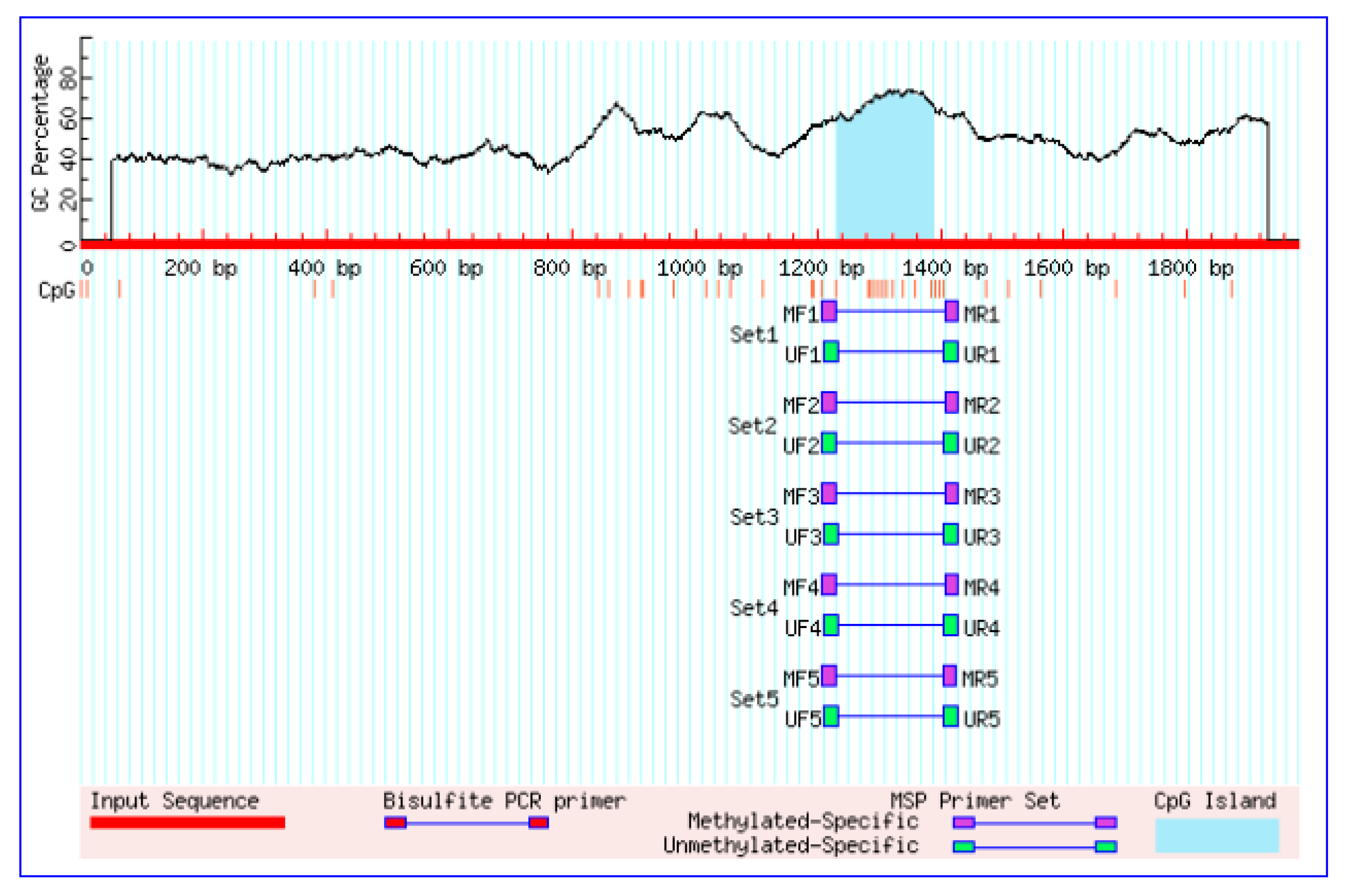
The corresponding DNA samples were treated using the DNA bisulfite Conversion Kit (Tiangen Biochemical Technology Co., Ltd., Beijing, China). After treatment, the cytosine C at the CpG sites that did not undergo methylation and the C at the non-CpG sites in the DNA sample sequence were all converted to thymine T, while the C at the methylated CpG sites remained unchanged. The Methprimerer 1.0 (
http://www.urogene.org/cgi-bin/methprimer/methprimer.cgi, accessed on 1 November 2025) software was used to search for regions rich in CpG sites near the
CYP11A1 gene promoter and convert the C at non-CpG sites into T. Subsequently, semi-nested PCR primers were designed on the transformed sequences, as follows: 5′-GGAAAGGAGTACGTCAAGGC (forward) and 3′-CGTACTGCAGCATGTGACTC (reverse). The target fragment amplified by the medial primers was purified and ligated with the pMD19-T vector (TaKaRa, Dalian, China) at 4 °C for 16 h. It was transferred to the competent cells of the top 10 Escherichia coli (BMED, Beijing, China), 500 µL of liquid medium was added, and it was cultured on a shaker at 37 °C and 170 r/min for 40 min. Subsequently, it was coated on ampicillin solid culture substrate plates containing isopropyl-β-
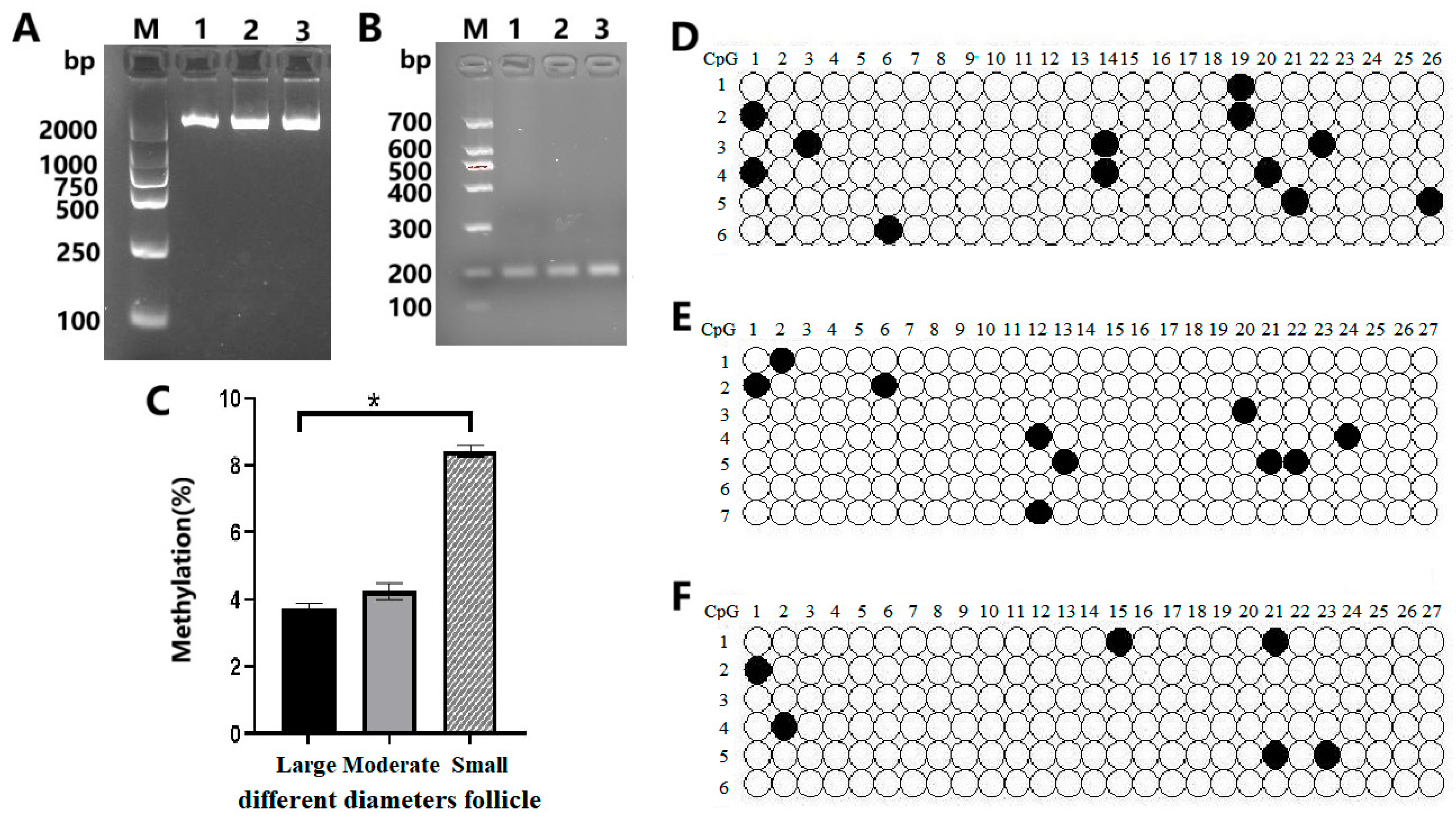
d-thiogalactoside (IPTG) and X-gal and incubated at a constant temperature of 37 °C for 12 to 14 h. Positive monoclonal colonies were picked and placed in a liquid medium containing ampicillin and cultured at 37 °C and 170 r/min for 15 h. Colony PCR was performed on monoclonal strains using internal primers (IN-F and IN-R), with an annealing temperature of 51 °C. The PCR products were then processed and sequenced using the PyroMark Q48 ID Pyrosequencing system (Qiagen, Hilden, Germany). The amplification products were detected by electrophoresis using 1.5% agarose gel. At least 20 bacterial solutions with correct amplification bands were selected from each tissue and sent to Shanghai Sangon Biotech for sequencing. The sequencing results were viewed using Chromas 2.4.1 and DNAMAN 8.0. The methylation status of each CpG site in the amplified fragment was analyzed.
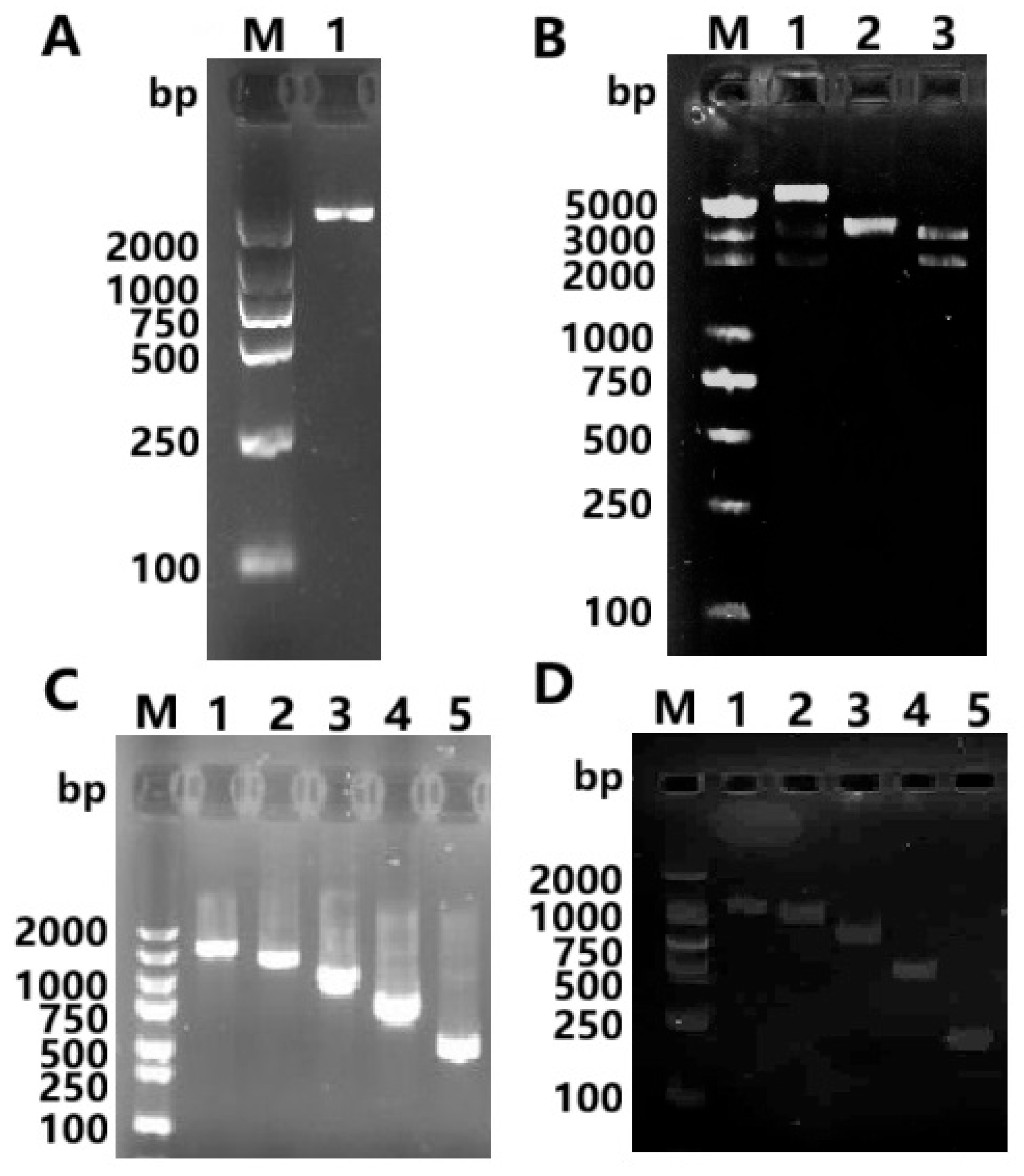
2.5. Cloning of Promoter Fragments and Vector Construction
Based on the
CYP11A1 promoter sequence obtained through cloning, the upstream primers of five truncated fragments were designed, respectively, at −1950 (PF1), −1552 (PF2), −1250 (PF3), −550 (PF4), and −233 (PF5) BPS using the software Primer Premier 6.0 (
Table 1). Primer synthesis was carried out by Sangon Biotech (Shanghai, China) Co., Ltd. Downstream, the
CYP11A1 promoter amplification primer was used, and the
KpnI and
BgLII (Abcm, Sydney NSW, Australia) digestion sites were added at the 5′ ends of the upstream and downstream primers, respectively. Using pMD19-T-
CYP11A1 (Promega, Madison, WI, USA) as the template, PCR amplification of truncated fragments of different lengths was carried out, and the amplification procedure was the same as that of the promoter clone part. The correctly sequenced truncated fragments were ligated with pMD19-T at 16 °C for 12 h. After transformation, monoclonal colonies were picked for expanded culture and plasmid extraction. The restriction digestion products were mixed with the pGL3-Basic vector (Invitrogen, Yingjie Company, Nanchang, China) and incubated at 4 °C to carry out an overnight ligation reaction. After the ligation product was transfected into target cells, the medium was replaced every 24 h during the subsequent cell culture process. The digestion products were ligated with the pGL3-Basic vector (Invitrogen) at 4 °C overnight. After transformation, the plasmids were extracted for enzyme digestion and identification, and the positive plasmids were handed over to Sangon Biotech (Shanghai, China) Co., Ltd. for sequencing.
2.6. Cell Transfection and Dual-Luciferase Activity Detection
GCs were cultivated in an incubator at 37 °C and 5% CO2. The medium was changed every 24 h. When the cell density reached 80% to 90%, they were transferred to 48-well plates. After 24 h of culture, the cell density reached 70–80%. Five recombinant plasmids with different deletion fragments were co-transfected with the renilla luciferase reporter gene vector pRLTK (Promega, Madison, USA) into sheep GCs (the mass ratio of recombinant plasmids to internal reference plasmids was 50:1). Cells were collected 48 h after transfection. Then, 20 µL of 1× PLB cell lysis buffer was added to each well. The cells were lysed at room temperature for 20 min. The luciferase activity was detected using the dual-luciferase reporter gene assay kit to determine the activity of each missing fragment.
2.7. Methylation Identification In Vitro
M.SssI (NEB) can specifically recognize the CG site of the nucleotide sequence on double-stranded DNA, and S-adenosine methionine methylates the cytosine residue C. The experimental procedure was as described in a previous paper [
18]. Briefly, the luciferase expression vector
CYP11A1-211 of the
CYP11A1 gene was constructed by in vitro methylation modification.
M.SssI was added to the experimental group, while
M.SssI was not added to the control group, and water was added for supplementation. The methylation modification system is as follows: expression vector 2 µL, in vitro methylase
M.SssI 2 µL, S-adenosine methionine (SAM) 0.5 µL, 10× buffer 2 buffer solution 10 µL, ddH
2O 85.5 µL, and the total system 100 µL. DNA was purified and recovered in a 37 °C water bath for 16 h, and the concentration was detected. Methylated and unmethylated plasmid DNA were treated with methylation-sensitive enzyme
HpaII (NEB).
2.8. Construction of CYP11A1 Overexpression Plasmid and siRNA
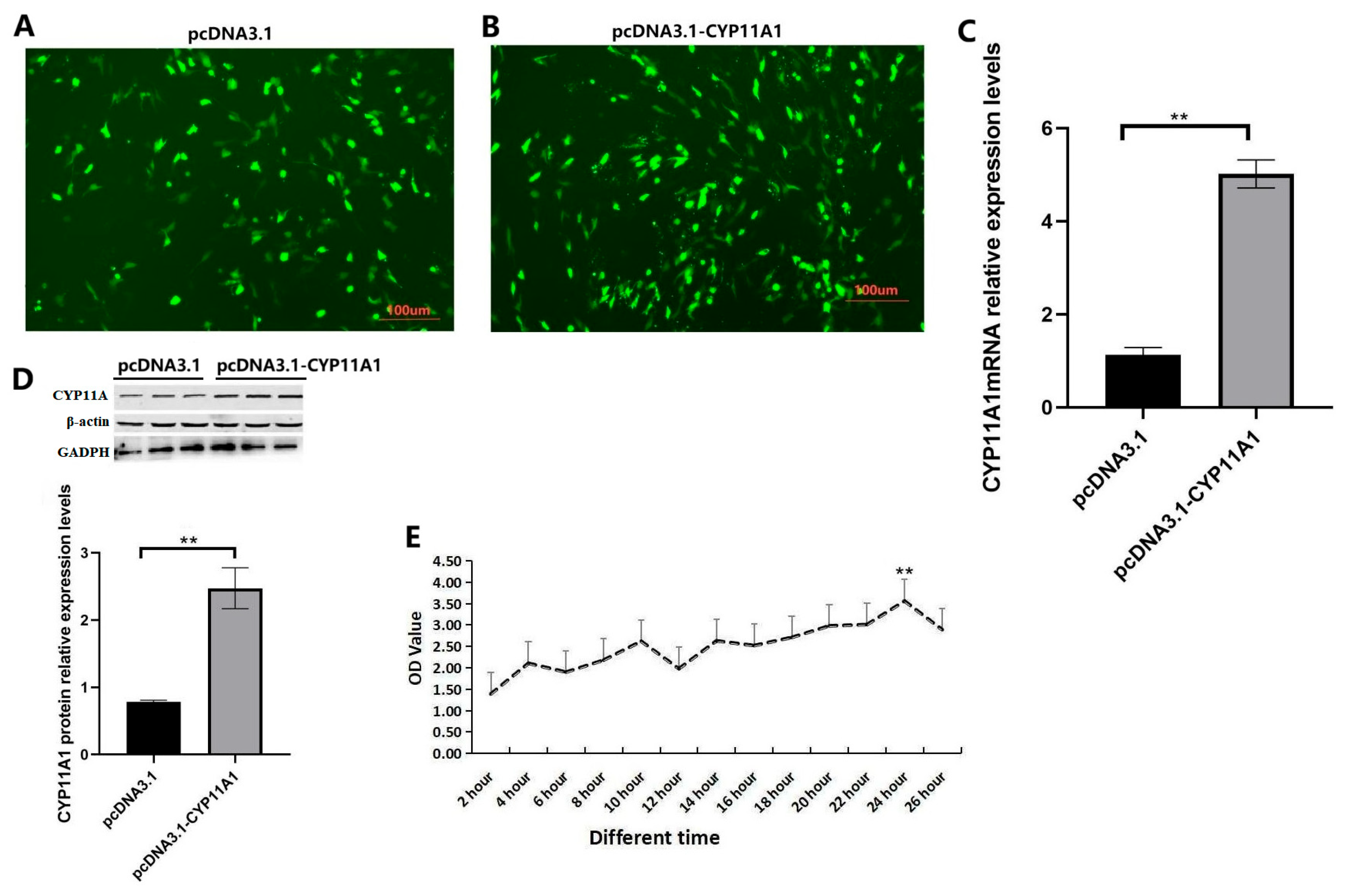
GCs were cultured in DMEM-F12 medium supplemented with 10% FBS at 37 °C in a 5% CO2 atmosphere. CYP11A1 cDNA was cloned from human testis cDNA and inserted into the pcDNA3.1 plasmid with BamHI and EcoRI restrictive enzyme sites. Lipofectamine3000 Transfection Reagent (L3000015, Invitrogen), following Invitrogen’s protocol, was used to transfect the GCs with pcDNA-3.1-CYP11A1. The transfection efficiency of pcDNA-3.1-CYP11A1 into GCs was confirmed by Western blotting; an increasing amount of plasmid DNA (500 ng, 1250 ng, and 2000 ng) was transfected into BeWo cells to decide upon the optimal concentration. The role of CYP11A1 expression during GCs was studied by transfecting GCs in vitro with the plasmid encoding using lipofectamine 3000 reagent (Invitrogen, Carsbad, CA, USA) or small interfering RNA (siRNA) against CYP11A1 using lipofectamine RNAi MAX reagent (Invitrogen, Carsbad, USA) immediately after isolation. Sequences of CYP11A1 siRNA were as follows: GCUG ACCAGUGACAAUGACTT (sense) and GUCAUUGUCA CUGGUCAGCTT (antisense) (GenePharma Co., Ltd., Suzhou, China). Randomly scrambled siRNA served as a negative control. GCs were collected for total RNA and protein extraction, and the conditioned cultured medium was collected for progesterone measurement 48 h after transfection.
2.9. Immunofluorescence
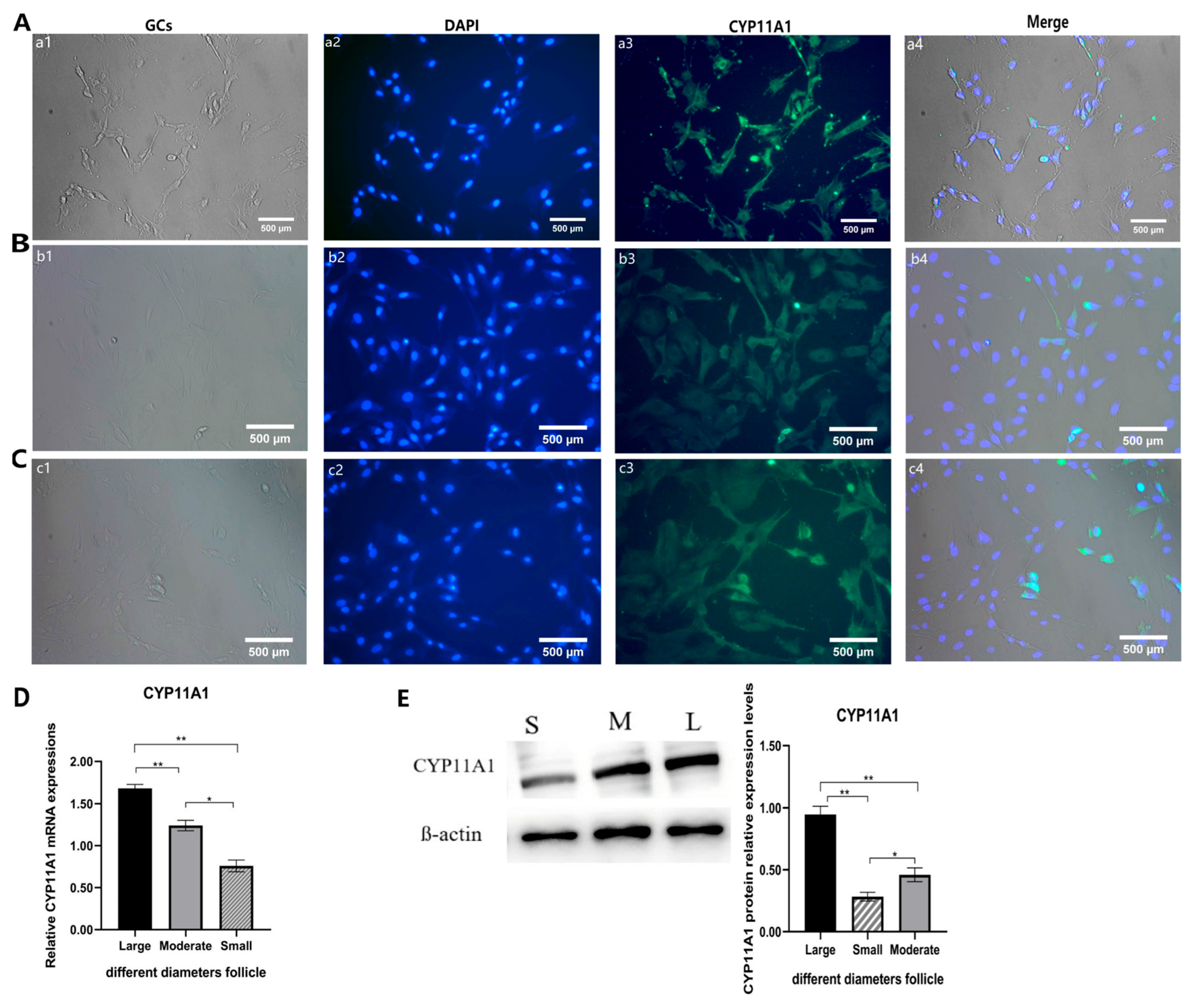
The expression intensity and pattern of CYP11A1 in GCs were determined by immunofluorescence staining. After different treatments, cells, at RT, were fixed for 30 min with 4% (w/v) paraformaldehyde, permeabilized for 10 min with 0.1% Triton X-100 (T9284-500 ML, Sigma Life Science, Darmstadt, Germany), and then blocked with 1% (w/v) albumin bovine V (BS043E, Biosharp) for 1 h. The cells were incubated with the primary antibodies against CYP11A1 (1:1000, Abcam, Cambridge, UK; catalog No. v175408, RRID: AB_2721042), followed by incubation with a goat anti-rabbit IgG secondary antibody (1 µg/mL, Alexa Fluor 488, A11008, Invitrogen) and goat anti-mouse fluorescence in isothiocyanateconjugated IgG (1:150, Invitrogen). The nuclei were labeled by DAPI (4′,6-diamidino-2-phenylindole1:1000). Cells were imaged by confocal microscopy (Olympus FV1000, Olympus, Tokyo, Japan). For immunostaining the mitochondria, an anti-Cox-IV antibody (Zen Bioscience, Chengdu, China) was used. Four random fields in three wells per group were counted (for the figures for the migrating cells) using Image J 2.14.0 software.
2.10. Western Blotting
Total cellular protein was extracted from cultured GCs using the radioimmunoprecipitation assay lysis buffer (Active Motif, Carlsbad, CA, USA) containing a mixture of phosphatase and protease inhibitors (Roche, Basel, Switzerland). After determination of protein concentration, the protein abundance of
CYP11A1 was determined following a standard protocol of Western blotting, as described previously [
19].
Briefly, 30 μg of protein was electrophoresed in a 9% sodium dodecyl sulfate–polyacrylamide gel and transferred to the nitrocellulose membrane (Merck Millipore, Billerica, MA, USA). After blocking with 5% nonfat milk, the membrane was incubated with primary antibodies against CYP11A1 (1:1000, Abcam; catalog No. v175408, RRID: AB_2721042) and GAPDH (1:10,000, Proteintech, Rosemont, IL, USA; catalog No. 60004-1, RRID: AB_2107436), respectively, overnight at 4 °C. After washing with Tween 20/ Tris-buffered salt solution, the membrane was incubated with horseradish peroxidase-conjugated corresponding secondary antibody (Proteintech) for 1 h. The bands with peroxidase activity were detected with a chemiluminescence detection system (Merck Millipore) and visualized using a G-Box chemiluminescence image capture system (Syngene, Bengaluru, Karnataka). The ratio of band density of CYP11A1 to that of GAPDH was calculated to indicate the abundance of CYP11A1.
2.11. CCK-8 Assay
Cells were plated in 96-well plates at a density of 5 × 10³ cells in 100 µL medium per well 24 h before the experiment. The cell viability was examined by a CCK-8 kit (Dojindo Laboratories, Kumamoto, Japan) according to the manufacturer’s instruction.
2.12. Statistical Analysis
The SPSS19.0 software package and GraphPad Prism 7 (GraphPad Software, La Jolla, CA, USA) were used to perform all statistical analysis. Log-rank test was used for Kaplan–Meier survival analysis. Data are expressed as the mean ± SD of at least 3 independent experiments, and statistical evaluation was performed using one-way analysis of variance (ANOVA) or Student’s t-tests. Values of p < 0.05 or p < 0.01 are considered statistically significant.
2.13. Availability of Data and Materials
The datasets generated and/or analyzed during the current study are available from the corresponding author on reasonable request.
4. Discussion
GCs are important functional cells of follicles. However, as the dominant follicle grows, the ability of GCs to produce estradiol weakens, affecting their development. The expression of CYP11A1 is the main reason for follicles acquiring the ability to produce estrogen [
20]. CYP11A1 is a stable, hydrophilic, relatively conserved protein with antioxidant and steroid hormone synthesis functions. When the follicle reaches approximately 1mm and is located in the secondary follicle, CYP11A1 is detected, and the function of CYP11A1 mainly occurs in the dominant follicle [
21]. With a continuous increase in CYP11A1 activity, it reaches a significant level in the GCs of the follicles before ovulation in the final stage of the follicular phase. CYP11A1 is also expressed in GCs from primary follicles to pre-ovulatory follicles. The expression of CYP11A1 ensures that the conversion of GCs to TCs to produce estradiol has high activity, ultimately fulfilling the requirements for the growth and development of dominant follicles. In the later stage of the follicular phase, GCs acquire the ability to produce P4. The main reason is that FSH induces LHR generation on GCs and promotes the luteinization of GCs [
22]. CYP11A1 is a stable, hydrophilic, relatively conserved protein with antioxidant and steroid hormone synthesis functions. Once the egg is released, GCs transform into granulocytic luteal cells, which have the typical ultrastructure of GCs that produce CYP11A1. The cytoplasm contains abundant smooth endoplasmic reticulum, and the mitochondria have tubular cristae containing a large number of lipid droplets. Before ovulation and shortly after ovulation, GCs express a large amount of CYP11A1, which has the ability to produce P4 and E2 and maintains the stable development function of GCs [
23]. CYP11A1 is mainly expressed in the corpus luteum and GCs of the ovary. The transcription factor controlling the expression of
CYP11A1 in these cells seems to be LHR1 located in the follicular membrane cells [
24]. LHR1 activates the transcription of
CYP11A1 through the binding site SF1RE in the proximal (−38/−46) and upstream UCRS (−1603/−1617) regions. GCs specifically disrupt the
LHR1 gene, resulting in reduced expressions of Star and CYP11A1 and decreased progesterone synthesis. This proves the importance of LHR1 in the expression of
CYP11A1 in the ovary and steroid production [
25]. CREB1 and GATA-4 are crucial for the
CYP11A1 transcription of GCs in luminal follicles. In the early stage of follicular development, CREB1 and GATA-4 synergistically regulate
CYP11A1 in a camp-dependent manner. After ovulation, FRA2 replaces CREB1 to regulate the expression of
CYP11A1 in luteal GCs [
26].
In this study, the RT-PCR direct sequencing method based on SNP was used to analyze the imprinting status in GCs of different diameters of sheep follicles (L, M, and S). It was found that the expression of the
CYP11A1 in GCs in the L, M, and S groups was different, indicating that the imprinting of the
CYP11A1 gene was specific in follicular cells at different developmental stages. DNA methylation is an important epigenetic modification that plays a crucial role in regulating the selective expression of genes in mammals and maintaining genomic stability to ensure normal life processes such as growth and development of the organism (Mattei et al., 2022) [
27]. During ovarian development, hypomethylation of promoter DNA is the key to inducing gene expression, while both a reduction in transcriptional activity and hypermethylation of DNA can lead to the inhibition of gene activation. CpG islands are often located near transcriptional regulatory regions, especially in the promoter regions of genes. By adding -CH3 to cytosine at CpG sites, they prevent RNA polymerase from recognizing transcription factors, thereby blocking the transcriptional regulation of GCs’ proliferation and differentiation by genes in ovarian GCs [
28,
29]. Hypermethylation of the CpG site in the
CYP11A1 promoter region of the mouse ovary (increasing by 17.16~64.28%) can interrupt steroid production. Changes in the methylation levels of imprinted genes
H19 and
Peg3 may also lead to ovarian dysfunction [
30]. This will be the subject of continued exploration of the intergenerational or cross-generational genetic mechanism of
CYP11A1 methylation on ovarian function in domestic animals, and intervention measures will be proposed regarding whether ovarian function impairment can be reversed by changing the
CYP11A1 methylation status. The
CYP11A1 imprinted gene may be regulated by the DMR (Differentially methylated Region) in the promoter region, affecting its expression [
31]. In sheep, in this study, the CpG island of the
CYP11A1 gene promoter was analyzed by nicosulfate sequencing. It was found that the
CYP11A1 gene showed light methylation in GCs in L, M, and S. The degree of methylation decreased with an increase in follicular diameter, and there were differences between the L and M groups, while there were no differences in other groups. It is indicated that the imprinting of the
CYP11A1 gene in dominant follicular GCs may be related to DNA methylation modification, but it cannot be ruled out that it is also regulated by other epigenetic modifications.
The imprinting of the
CYP11A1 gene in the growing and developing ovaries may be regulated by other epigenetic modifications besides DNA methylation. Studies in human placental trophoblast cells have confirmed that the methylation rate of CpG sites in the
CYP11A1 promoter is significantly reduced, and the expression of DNA methyltransferase (DNMT1) and enrichment in the
CYP11A1 promoter are in trophoblast synthylation. DNMT1 not only increases the methylation of CpG sites in the
CYP11A1 promoter, but also reduces the expression of
CYP11A1 and the production of progesterone. Similarly, it was found that there were multiple C/EBPα binding sites in the promoters of
CYP11A1 and DNMT1, and C/EBPα played a dual role in the regulation of
CYP11A1 during the synthesis process. C/EBPα not only directly drives the expression of
CYP11A1, but also indirectly drives the reduction in methylation at the CpG site of the
CYP11A1 promoter by down-regulating DNMT1, resulting in an increase in progesterone production during the synthesis process [
32].
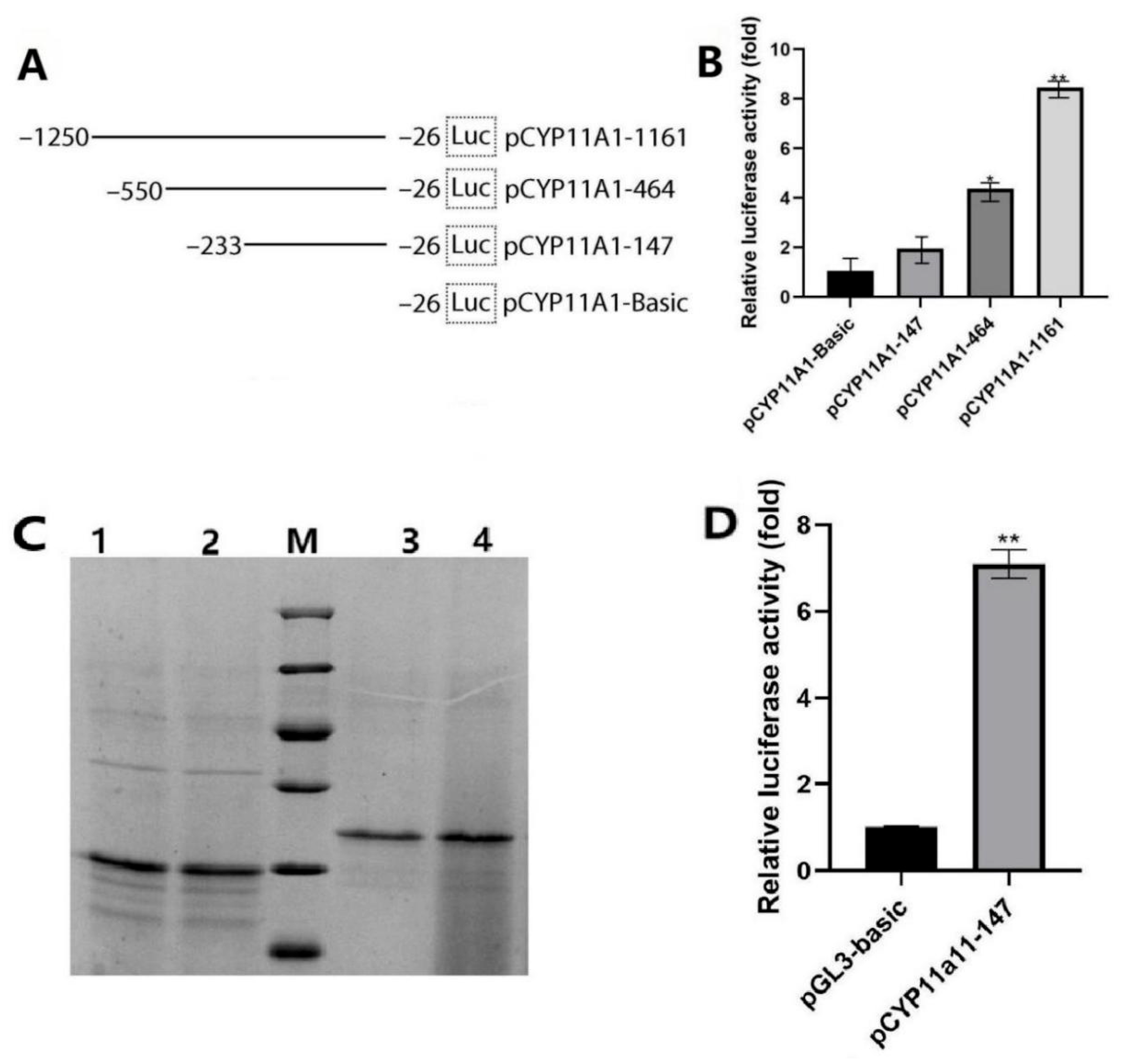
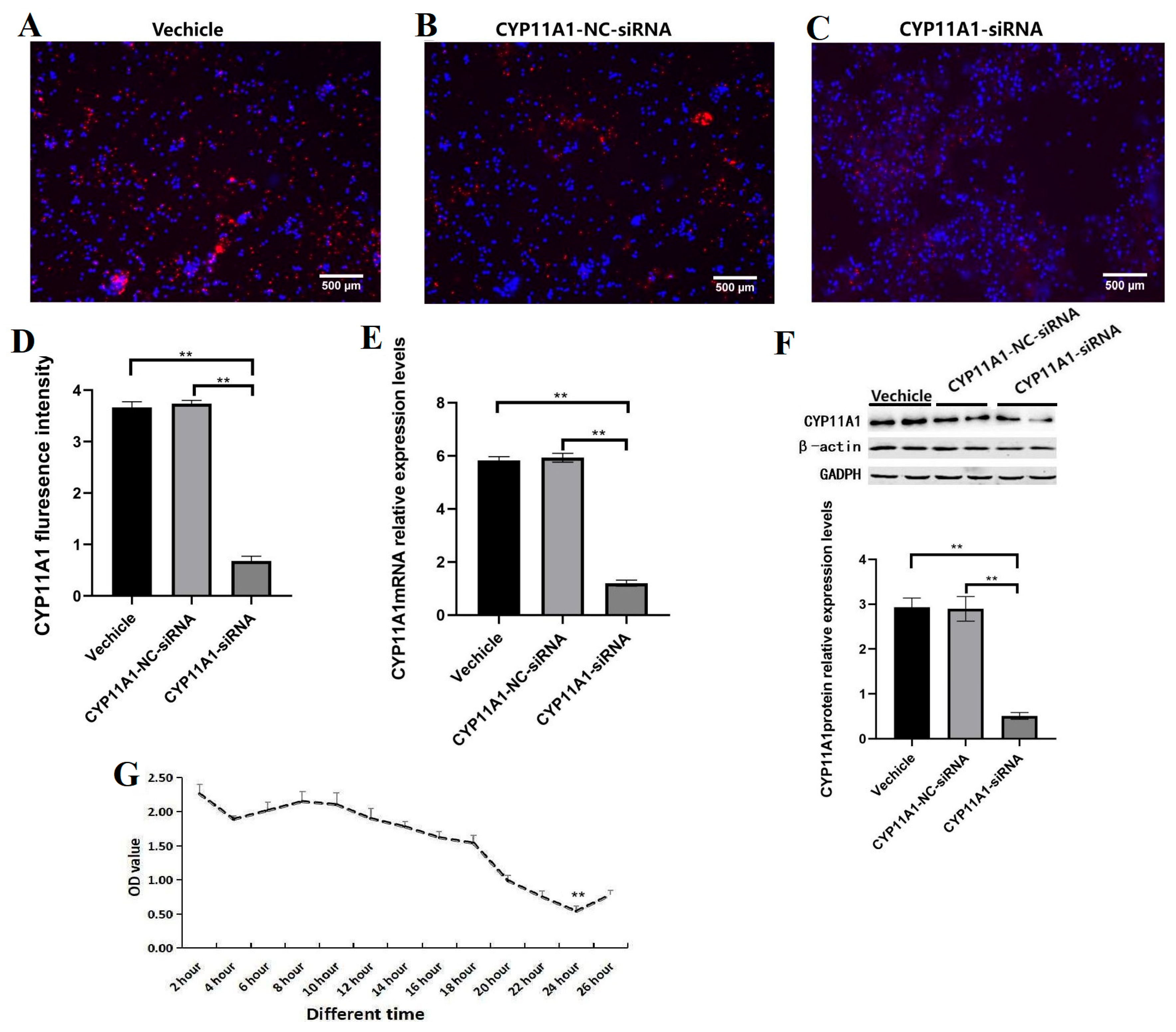
Our research results have enriched the imprinting function of the CYP11A1 gene in GCs during sheep developmental stages, which can provide a reference basis for further studies on the function and imprinting regulatory mechanism of the CYP11A1 gene. Further, the imprinting of the CYP11A1 gene promoter was carried out for cloning, and the full length of the 5′ regulatory region of the promoter was obtained, which was 2060bp. The truncated expression vectors of five promoter regions of different lengths of the CYP11A1 gene were successfully constructed. It can be found from the research results that there may be a positive regulatory element (HoXD10) in each of the −464/+155 regions of the 5′-regulatory region of the CYP11A1 gene in GCs. The relative expression activity of luciferase was detected 24 h later. After methylation treatment, the core promoter activity of the CYP11A1 gene promoter was extremely significantly reduced. The CYP11A1 gene in sheep GCs is controlled by another unique set of transcription factors. Most of the cis-regulatory elements and transcription factors of CYP11A1 transcription were obtained through the study of promoter deletion and the analysis of DNA-binding proteins in electrophoretic transfer. Through precise regulation of CYP11A1 gene expression, it may be possible to improve reproductive traits in sheep, offering molecular targets for breeding new varieties with high reproductive performance. In molecular breeding applications, the regulatory element information of this gene can be used to develop genetic markers, facilitating the selection of breeding sheep with superior reproductive traits. Although these data are valuable, it should be noted that the shorter promoter fragments of CYP11A1 were obtained from the endogenous promoter environment, so further evaluation is needed. We further conducted over-expression/RNAi on the shorter promoter fragment of CYP11A1. After 24 h of in vitro GC transfection, it was found that 24 h after overexpression of the CYP11A1 gene, the relative expression levels of CYP11A1 mRNA and protein in GCs showed multiple changes compared with the truncated levels of the control group, which were significantly higher than those of the control group. The cell proliferation level increased significantly at 24 h. Conversely, after 48 h of CYP11A1-siRNA-211, the fluorescence signal intensity of CYP11A1 protein in GCs was significantly lower than that in the Vehicle and CYP11A1-NC-siRNA groups. This indicates that CYP11A1-siRNA-211 has a significant inhibitory effect on the development of GCs. Researchers speculate that the most likely cause of this phenomenon may be the oxidative imbalance of GCs. The oxidation imbalance of GCs leads to premature ovarian failure in sheep and shortens the reproductive years of ewes in actual production. This suggests that subsequent studies can focus on the molecular mechanism of GCs’ oxidation by the CYP11A1 gene. Based on the above results, it is further confirmed that CYP11A1 plays a key regulatory role in the regulation of GCs in sheep. These studies provide reliable data support for the implementation of this project.