Article

Mutations Linked to Insecticide Resistance Not Detected in the Ace-1 or VGSC Genes in Nyssorhynchus darlingi from Multiple Localities in Amazonian Brazil and Peru

by
Sara A. Bickersmith
1,
John D. Jurczynski
1,2,
Maria Anice Mureb Sallum
3,
Leonardo S. M. Chaves
3,
Eduardo S. Bergo
4,
Gloria A. D. Rodriguez
5,
Clara A. Morante
5,
Carlos T. Rios
5,
Marlon P. Saavedra
6,
Freddy Alava
7,
Dionicia Gamboa
6,8,9,
Joseph M. Vinetz
6,8,10 and
Jan E. Conn
1,2,*
1
Wadsworth Center, New York State Department of Health, Albany, NY 12201, USA
2
Department of Biomedical Sciences, School of Public Health, University at Albany, State University of New York, Albany, NY 12222, USA
3
Departamento de Epidemiologia, Faculdade de Saúde Pública, Universidade de São Paulo, São Paulo 01246-904, Brazil
4
Secretaria de Estado da Saúde de São Paulo, Instituto Pasteur, São Paulo 01027-000, Brazil
5
Laboratorio de Referencia Regional de Loreto, Gerencia Regional de Salud de Loreto (GERESA), Loreto 16001, Peru
6
Laboratorio ICEMR-Amazonia, Laboratorios de Investigacion y Desarrollo, Facultad de Ciencias e Ingeniería, Universidad Peruana Cayetano Heredia, Lima 15102, Peru
7
Gerencia Regional de Salud de Loreto (GERESA), Loreto 16001, Peru
8
Instituto de Medicina Tropical “Alexander von Humboldt”, Universidad Peruana Cayetano Heredia, Lima 15102, Peru
9
Departamento de Ciencias Celulares y Moleculares, Facultad de Ciencias e Ingeniería, Universidad Peruana Cayetano Heredia, Lima 15102, Peru
10
Section of Infectious Diseases, Department of Internal Medicine, Yale University School of Medicine, New Haven, CT 06520, USA
*
Author to whom correspondence should be addressed.
Genes 2023, 14(10), 1892; https://doi.org/10.3390/genes14101892
Submission received: 24 August 2023 / Revised: 20 September 2023 / Accepted: 22 September 2023 / Published: 29 September 2023

Abstract

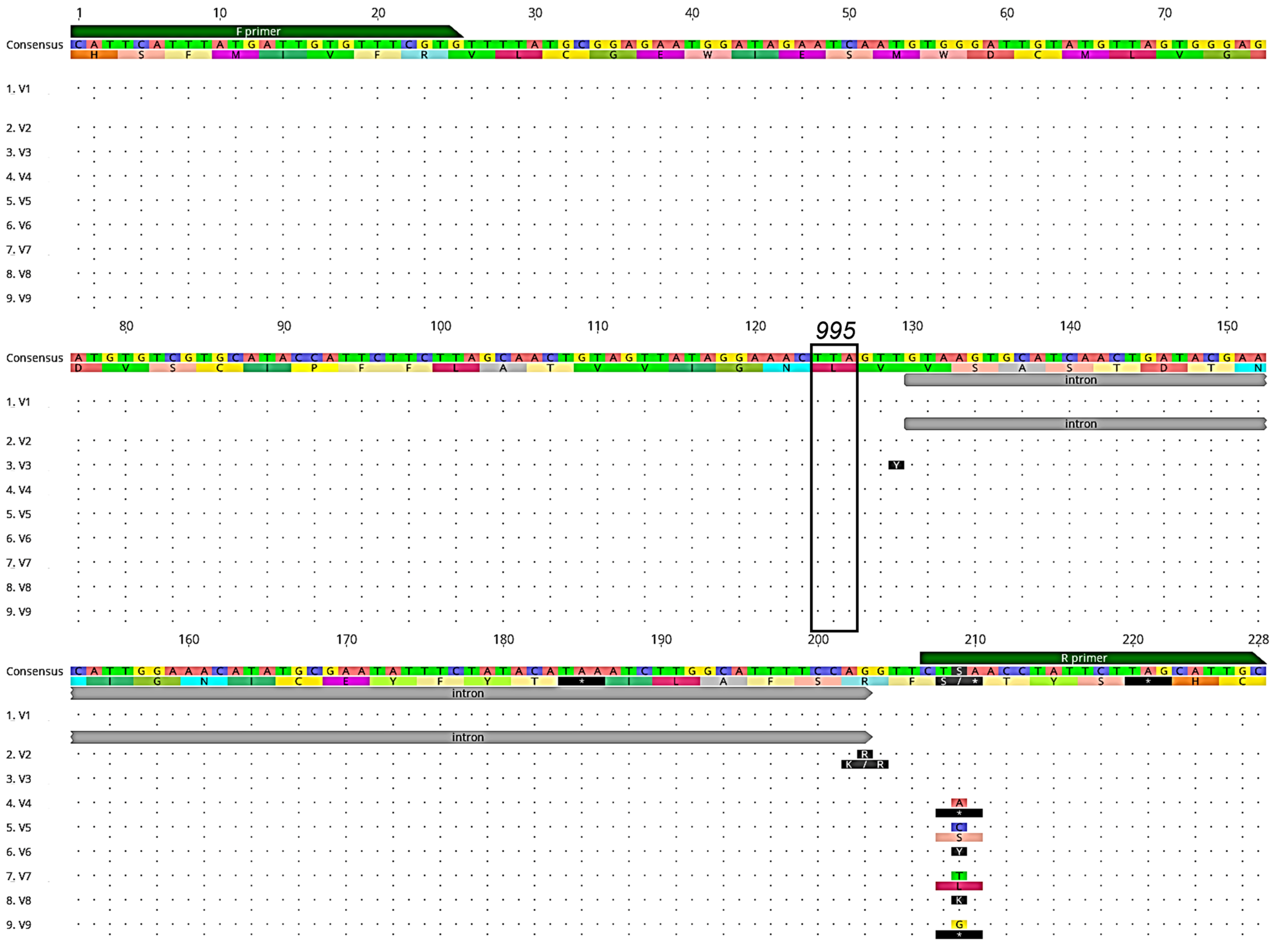
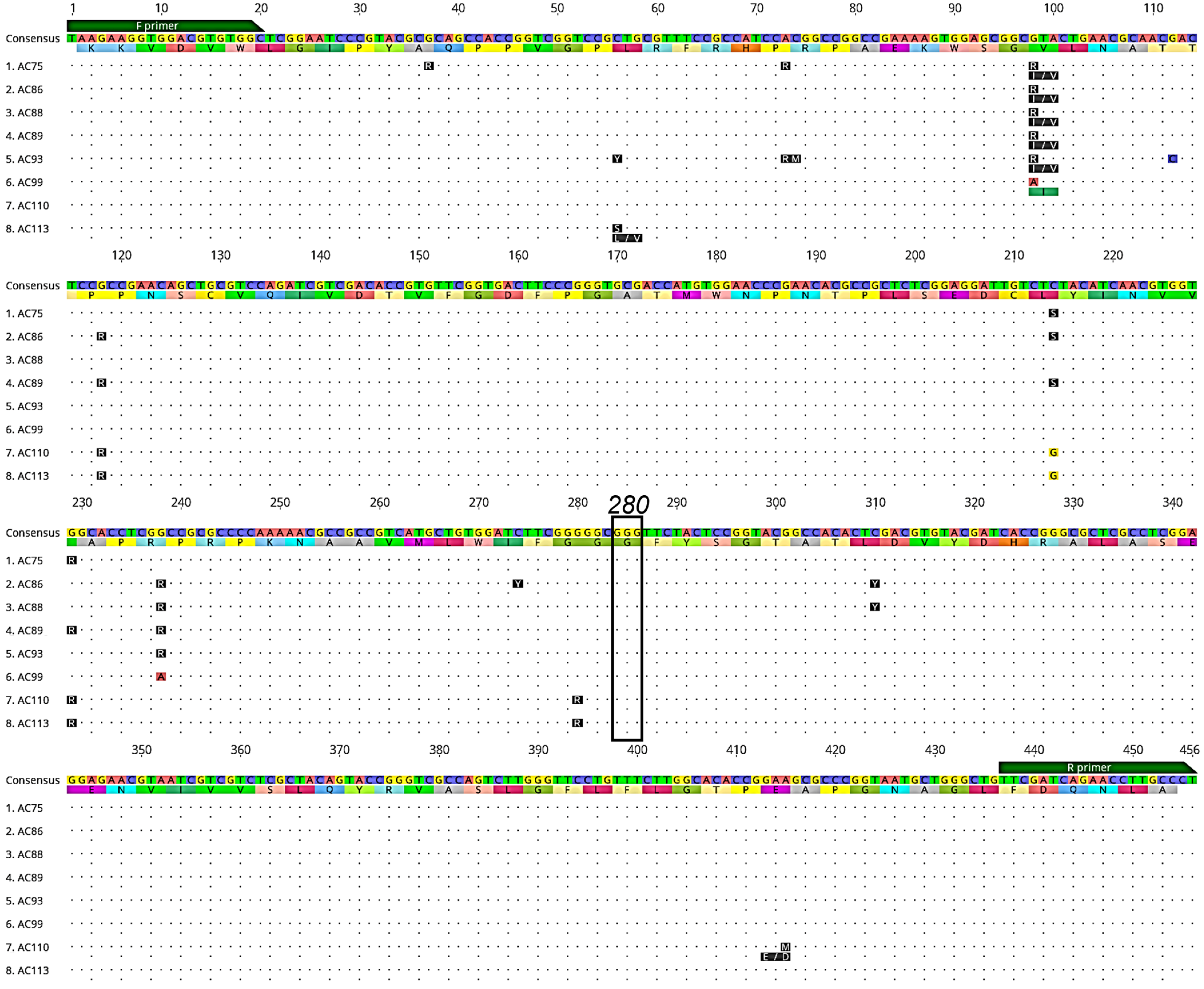
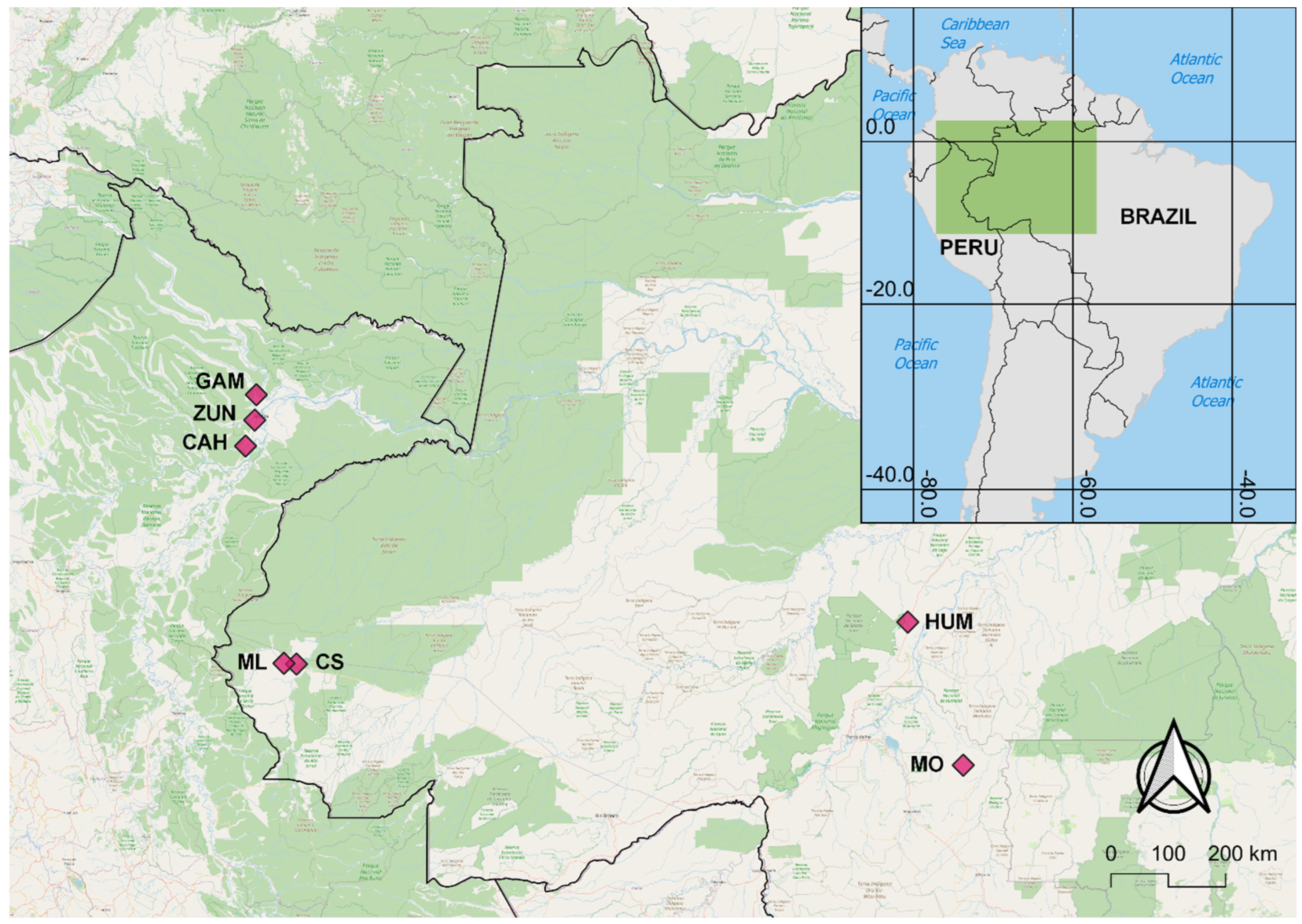
Indoor residual spray (IRS), mainly employing pyrethroid insecticides, is the most common intervention for preventing malaria transmission in many regions of Latin America; the use of long-lasting insecticidal nets (LLINs) has been more limited. Knockdown resistance (kdr) is a well-characterized target-site resistance mechanism associated with pyrethroid and DDT resistance. Most mutations detected in acetylcholinesterase-1 (Ace-1) and voltage-gated sodium channel (VGSC) genes are non-synonymous, resulting in a change in amino acid, leading to the non-binding of the insecticide. In the present study, we analyzed target-site resistance in Nyssorhynchus darlingi, the primary malaria vector in the Amazon, in multiple malaria endemic localities. We screened 988 wild-caught specimens of Ny. darlingi from three localities in Amazonian Peru and four in Amazonian Brazil. Collections were conducted between 2014 and 2021. The criteria were Amazonian localities with a recent history as malaria hotspots, primary transmission by Ny. darlingi, and the use of both IRS and LLINs as interventions. Fragments of Ace-1 (456 bp) and VGSC (228 bp) were amplified, sequenced, and aligned with Ny. darlingi sequences available in GenBank. We detected only synonymous mutations in the frequently reported Ace-1 codon 280 known to confer resistance to organophosphates and carbamates, but detected three non-synonymous mutations in other regions of the gene. Similarly, no mutations linked to insecticide resistance were detected in the frequently reported codon (995) at the S6 segment of domain II of VGSC. The lack of genotypic detection of insecticide resistance mutations by sequencing the Ace-1 and VGSC genes from multiple Ny. darlingi populations in Brazil and Peru could be associated with low-intensity resistance, or possibly the main resistance mechanism is metabolic.
Keywords: Nyssorhynchus darlingi; insecticide resistance; Ace-1; VGSC; Brazil; Peru Nyssorhynchus darlingi; insecticide resistance; Ace-1; VGSC; Brazil; Peru