Review

Parvalbumin: A Major Fish Allergen and a Forensically Relevant Marker

1
Institute for Environmental Studies, Faculty of Science, Charles University, Benatska 2, 128 01 Prague, Czech Republic
2
Department of Chemistry, Biochemistry and Food Microbiology, Food Research Institute Prague, Radiová 1285/7, 102 31 Prague, Czech Republic
3
Department of Biochemistry and Microbiology, University of Chemistry and Technology, Prague, Technická 5, 166 28 Prague, Czech Republic
*
Author to whom correspondence should be addressed.
Genes 2023, 14(1), 223; https://doi.org/10.3390/genes14010223
Submission received: 22 November 2022 / Revised: 19 December 2022 / Accepted: 11 January 2023 / Published: 14 January 2023
(This article belongs to the Special Issue Genomics in Aquaculture and Fisheries)

Abstract

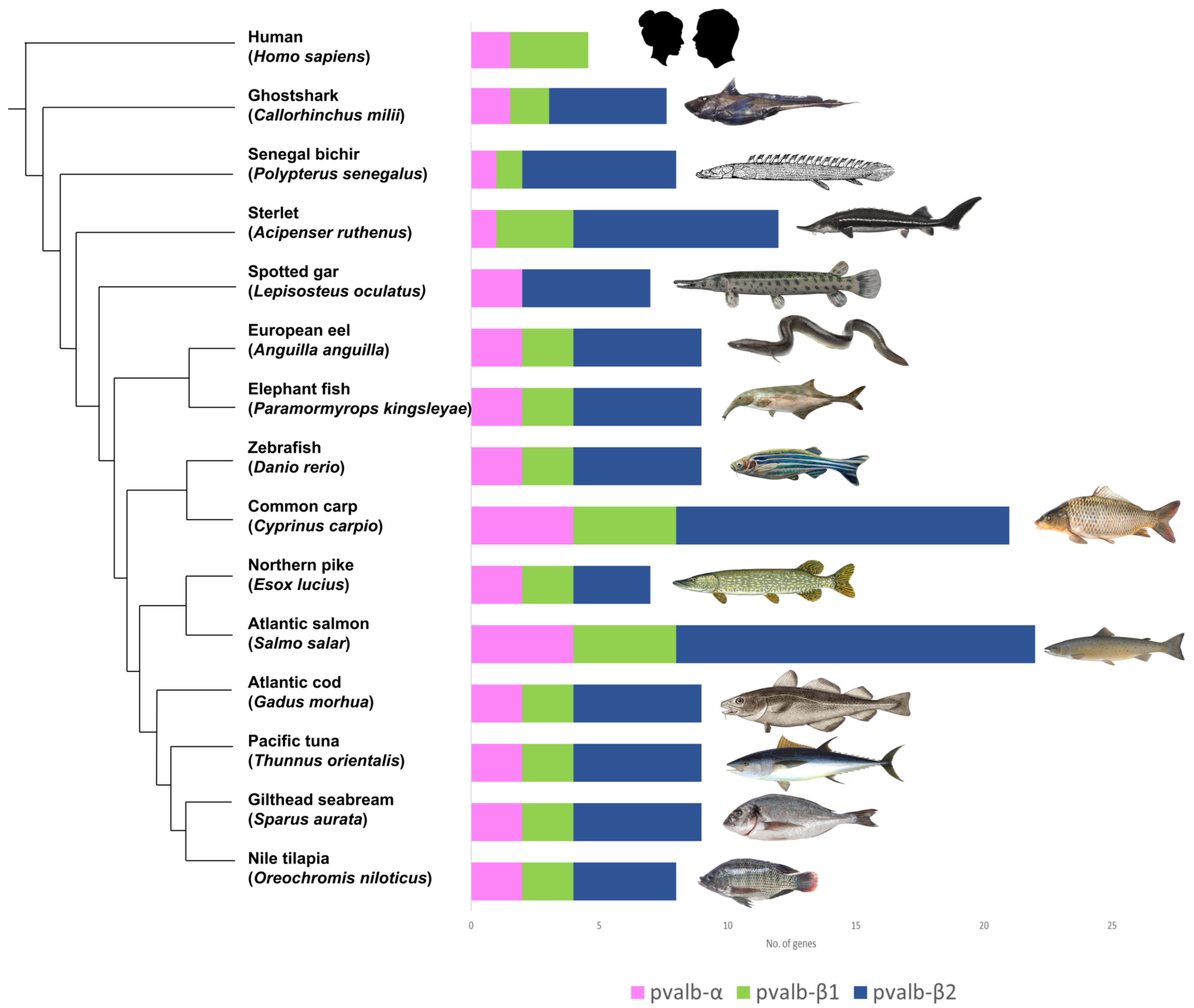
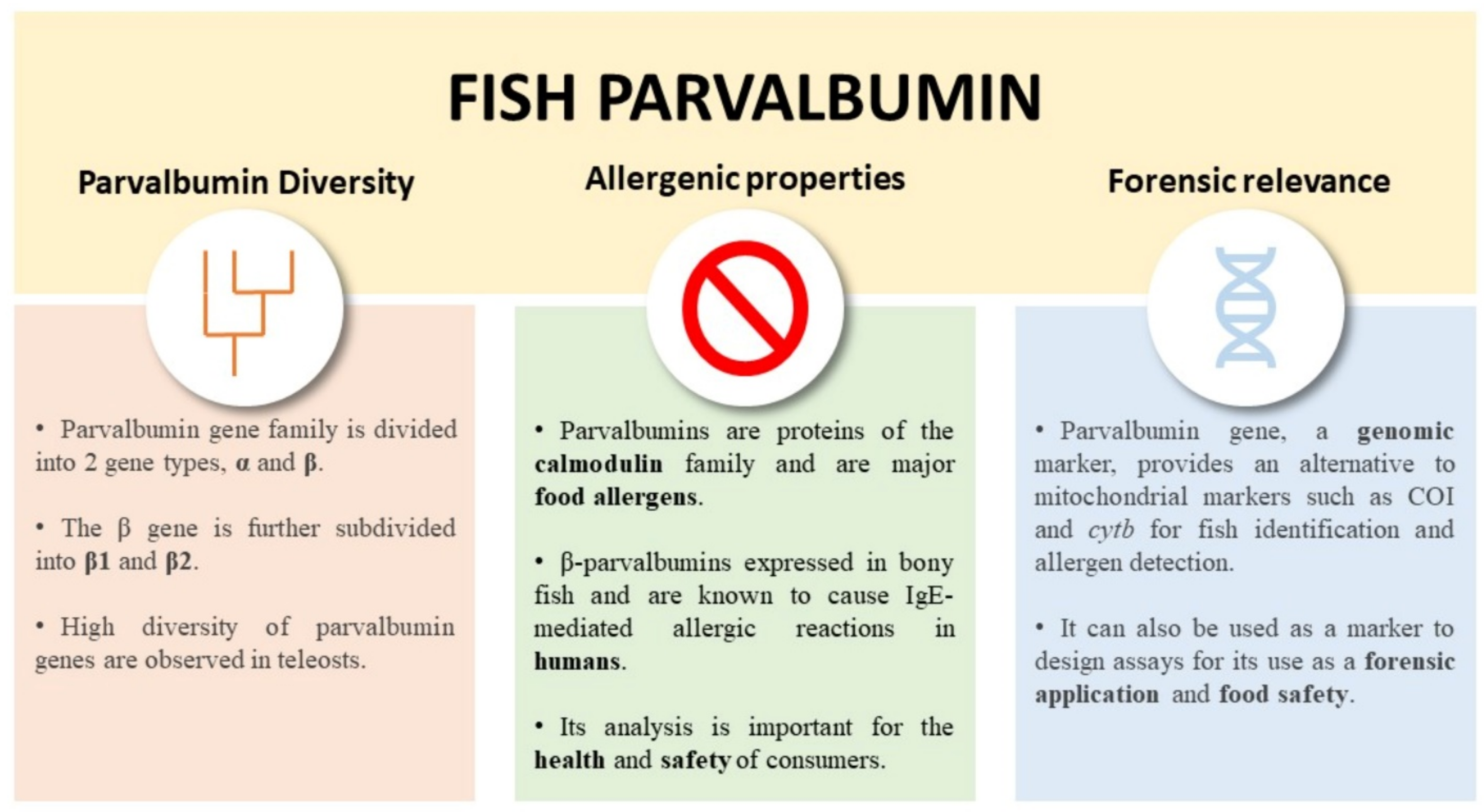
Parvalbumins (PVALBs) are low molecular weight calcium-binding proteins. In addition to their role in many biological processes, PVALBs play an important role in regulating Ca2+ switching in muscles with fast-twitch fibres in addition to their role in many biological processes. The PVALB gene family is divided into two gene types, alpha (α) and beta (β), with the β gene further divided into two gene types, beta1 (β1) and beta2 (β2), carrying traces of whole genome duplication. A large variety of commonly consumed fish species contain PVALB proteins which are known to cause fish allergies. More than 95% of all fish-induced food allergies are caused by PVALB proteins. The authentication of fish species has become increasingly important as the seafood industry continues to grow and the growth brings with it many cases of food fraud. Since the PVALB gene plays an important role in the initiation of allergic reactions, it has been used for decades to develop alternate assays for fish identification. A brief review of the significance of the fish PVALB genes is presented in this article, which covers evolutionary diversity, allergic properties, and potential use as a forensic marker.
Keywords: parvalbumin; fish identification; allergen; gene diversity; forensic marker parvalbumin; fish identification; allergen; gene diversity; forensic marker